

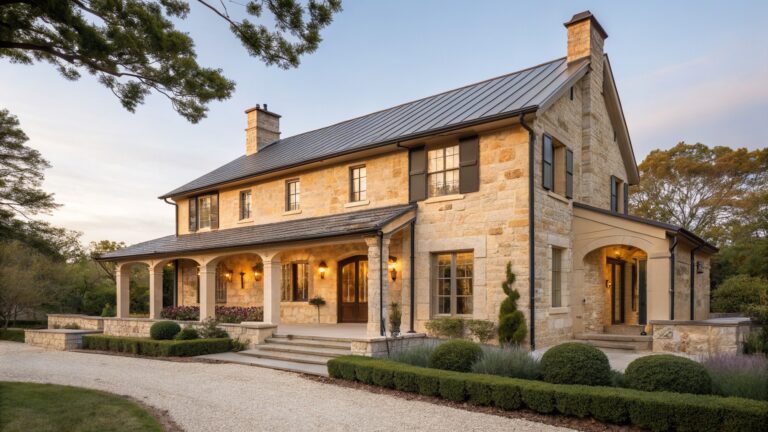
When I look at old farmhouses the exteriors that feel most settled are the ones where stone was chosen to match the local light and soil tones rather than just the latest trend.
That kind of match makes the facade read as part of the landscape instead of sitting on top of it.
Not every stone works the same way.
I have seen plenty of houses where a mismatched material pulled the eye away from the entry and the roof angles that should stand out.
Over time I have learned to check how the stone will weather before committing to a full exterior update.
Arched Entries In Stone Farmhouses
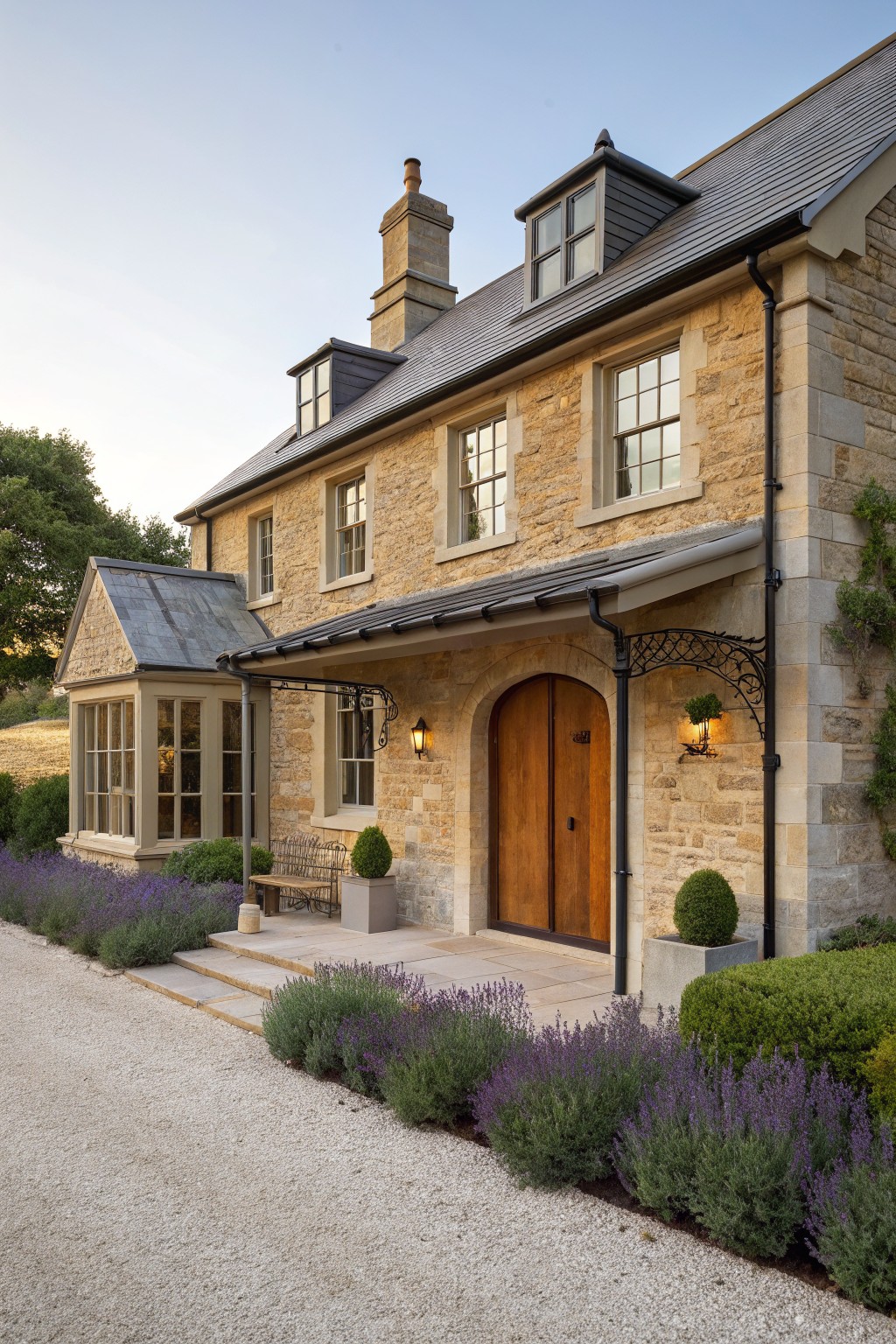
An arched doorway set into the stone wall gives the front of the house a clear focal point without adding extra trim or decoration. The curve breaks up the flat surface of the stone and makes the entry feel more welcoming while still looking sturdy and simple.
This works best on homes that already use natural stone as the main material. Keep the door itself plain, use a dark wood tone, and avoid busy hardware so the arch and the stone carry the look. It fits both older farmhouses and newer builds that want the same quiet, traditional feel.
Mixing Stone With White Siding On Farmhouse Exteriors
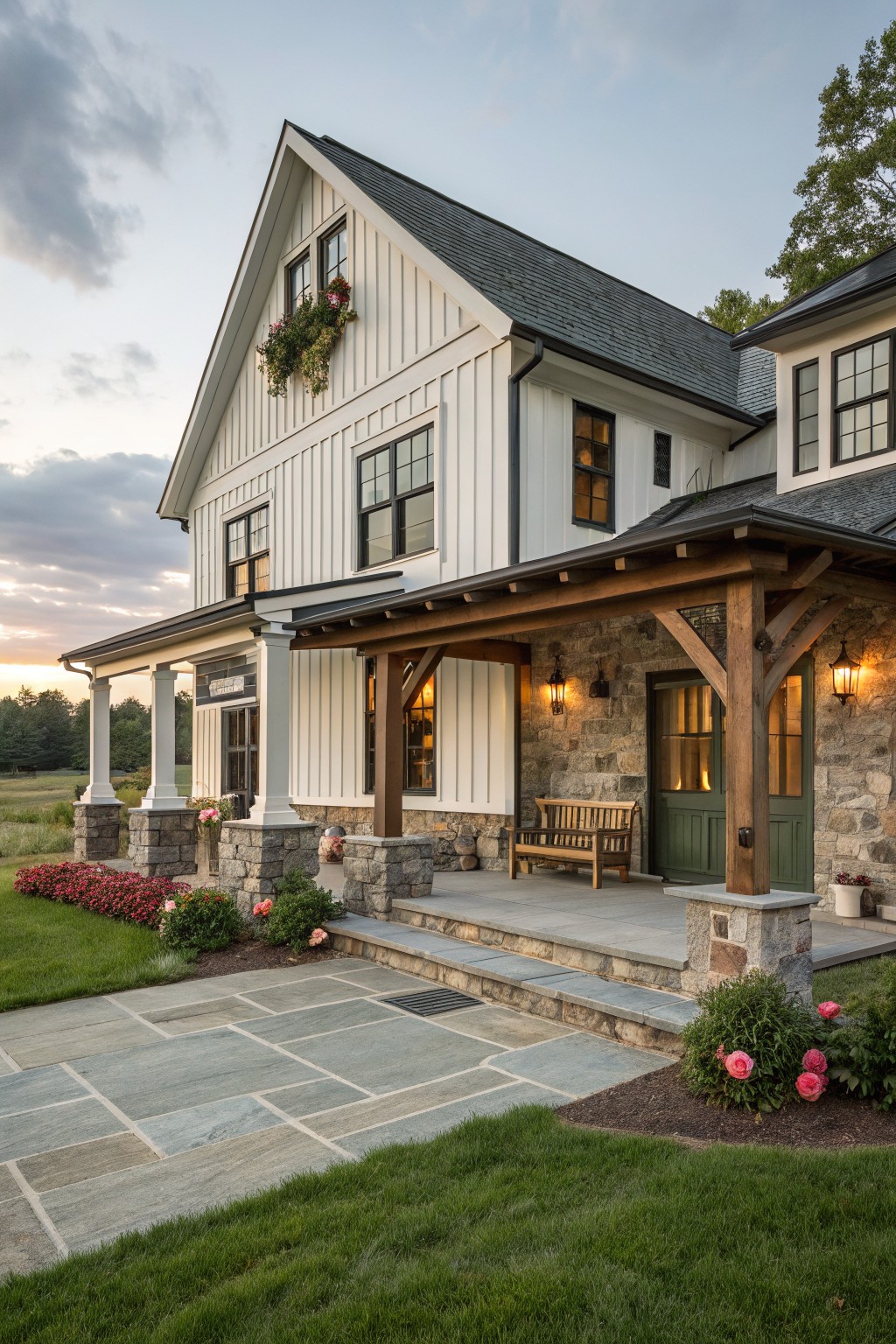
Stone works well as a base material because it gives the house weight and ties it to the ground. In this design the lower walls and porch columns use a natural stone that contrasts with the clean white vertical siding above. That mix keeps the look simple but still feels substantial.
This approach suits homes with gabled roofs and open porches. Keep the stone to the foundation and support areas so it does not overwhelm the rest of the facade. White siding above helps the house feel lighter and brighter while the stone handles the heavier visual job at ground level.
Pair Stone With Wood Accents
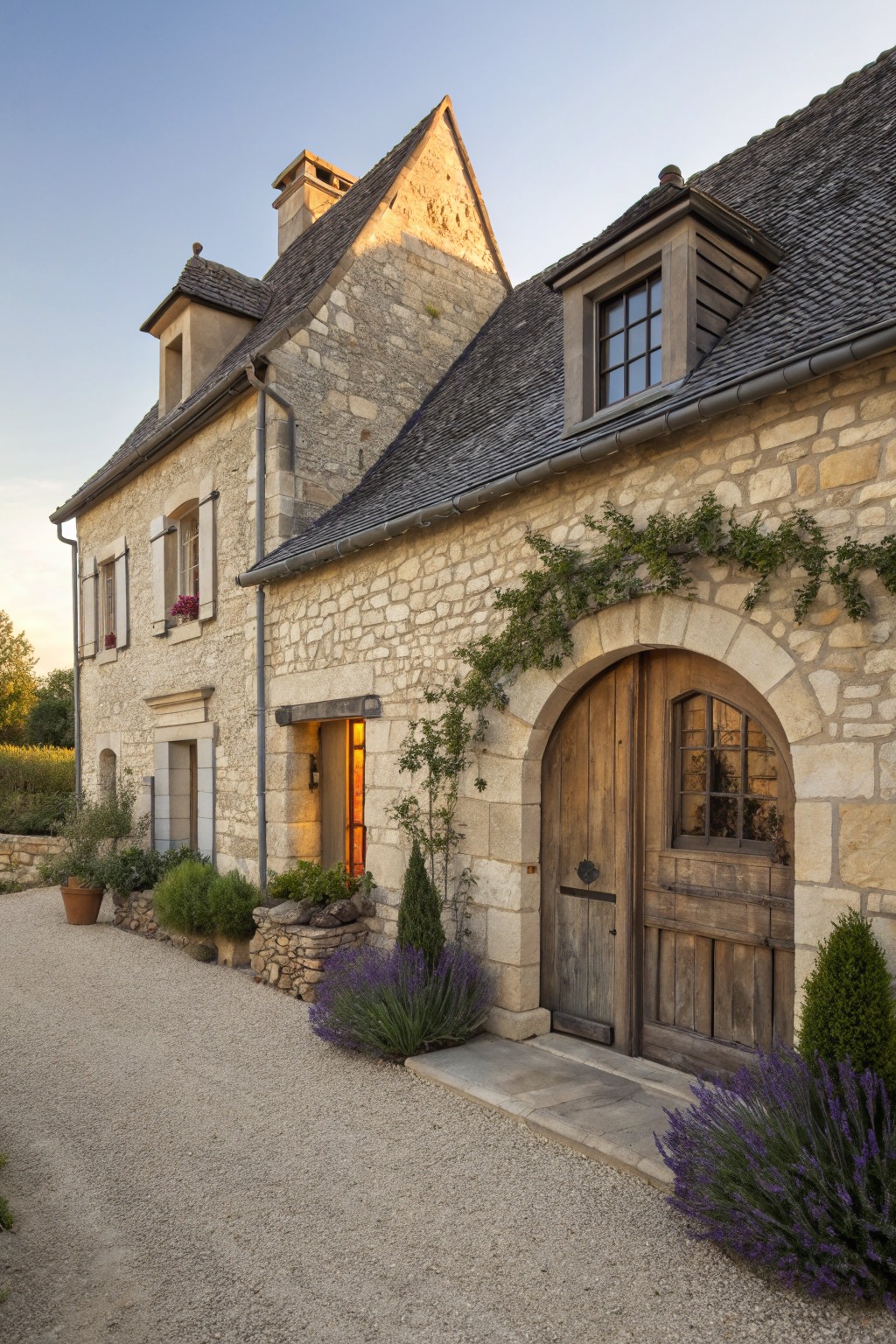
Stone walls already bring plenty of texture, but they can feel heavy without something warmer next to them. Adding wood doors and window frames gives the surface a softer look while keeping the natural feel that works so well on farmhouses. The contrast makes the stone stand out more without extra decoration.
This approach suits older homes or new builds that want a simple, grounded style. Keep the wood tones warm and let the stone stay mostly untouched so the two materials balance each other. Too much matching between them can flatten the effect.
Stone Foundations And Retaining Walls
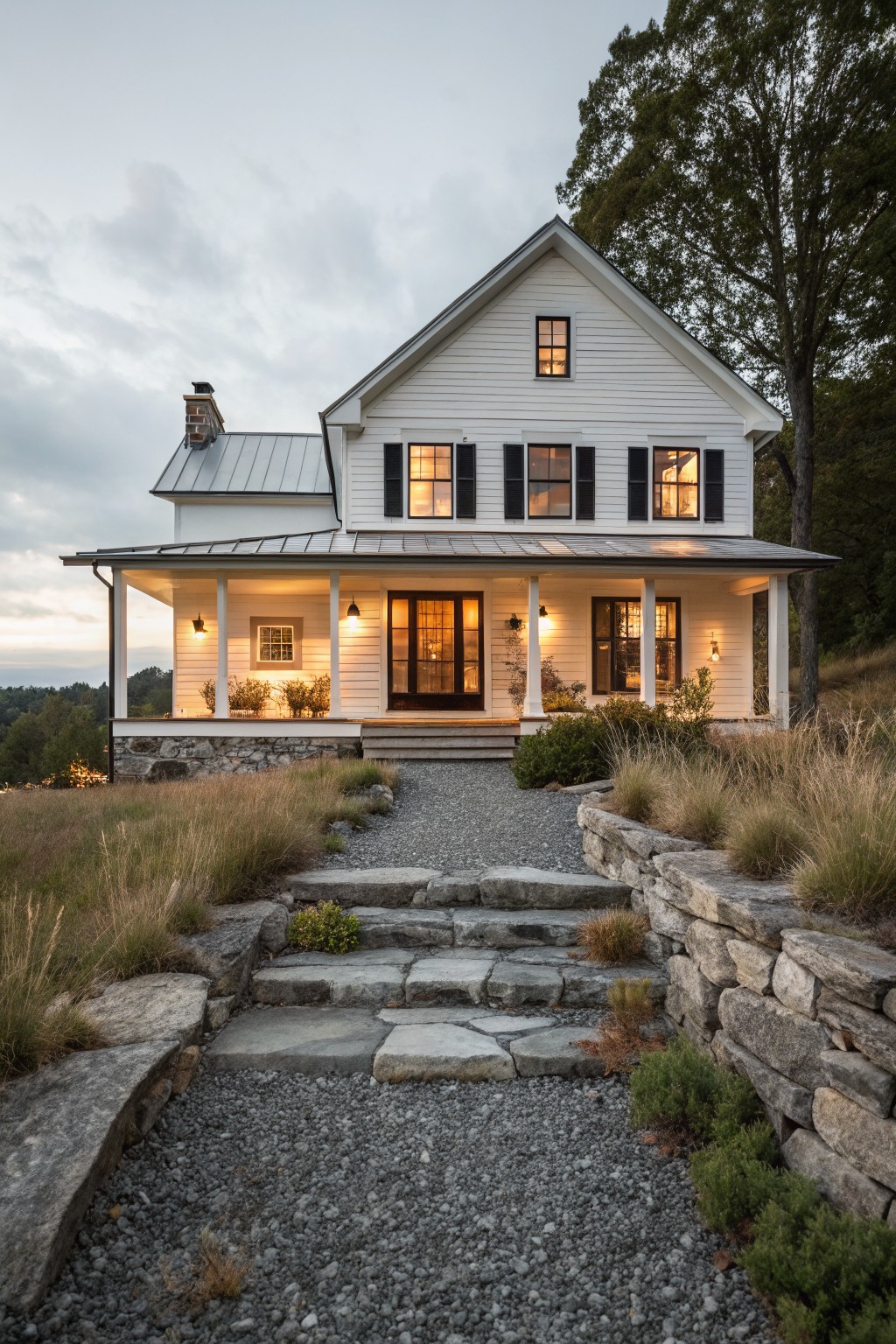
A stone foundation gives the house a solid base that feels tied to the land. It works especially well on sloped sites where you need retaining walls anyway, and it keeps the white siding from looking too light or floating above the ground. The stone also adds texture that pairs naturally with gravel paths and simple plantings.
This approach suits older farmhouses or new builds meant to look established. Use the same stone for the foundation, steps, and low walls so everything reads as one material choice rather than separate pieces. Keep the stone colors muted and let the house sit low on the site instead of stacking too much height.
Mix Stone With Wood Siding
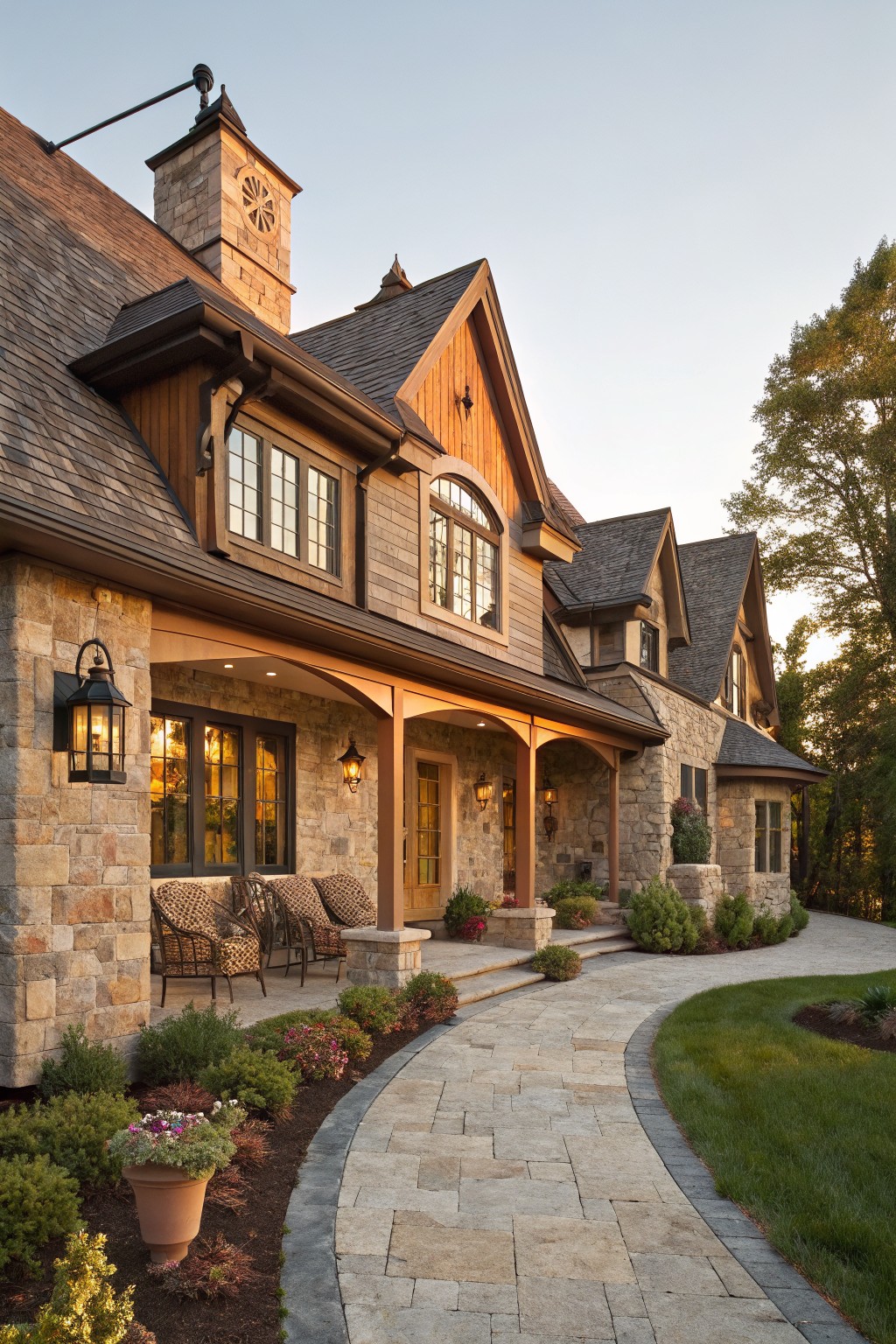
Stone and wood work well together on a farmhouse because the stone gives weight and permanence while the wood keeps the look softer. This mix shows up clearly here with the lower walls in stone and the upper sections in wood siding.
It suits homes that want a natural finish without feeling too heavy. Keep the stone on the base and around the porch, then let the wood handle the gables and rooflines so the house does not feel too uniform.
Mix Stone With Painted Siding
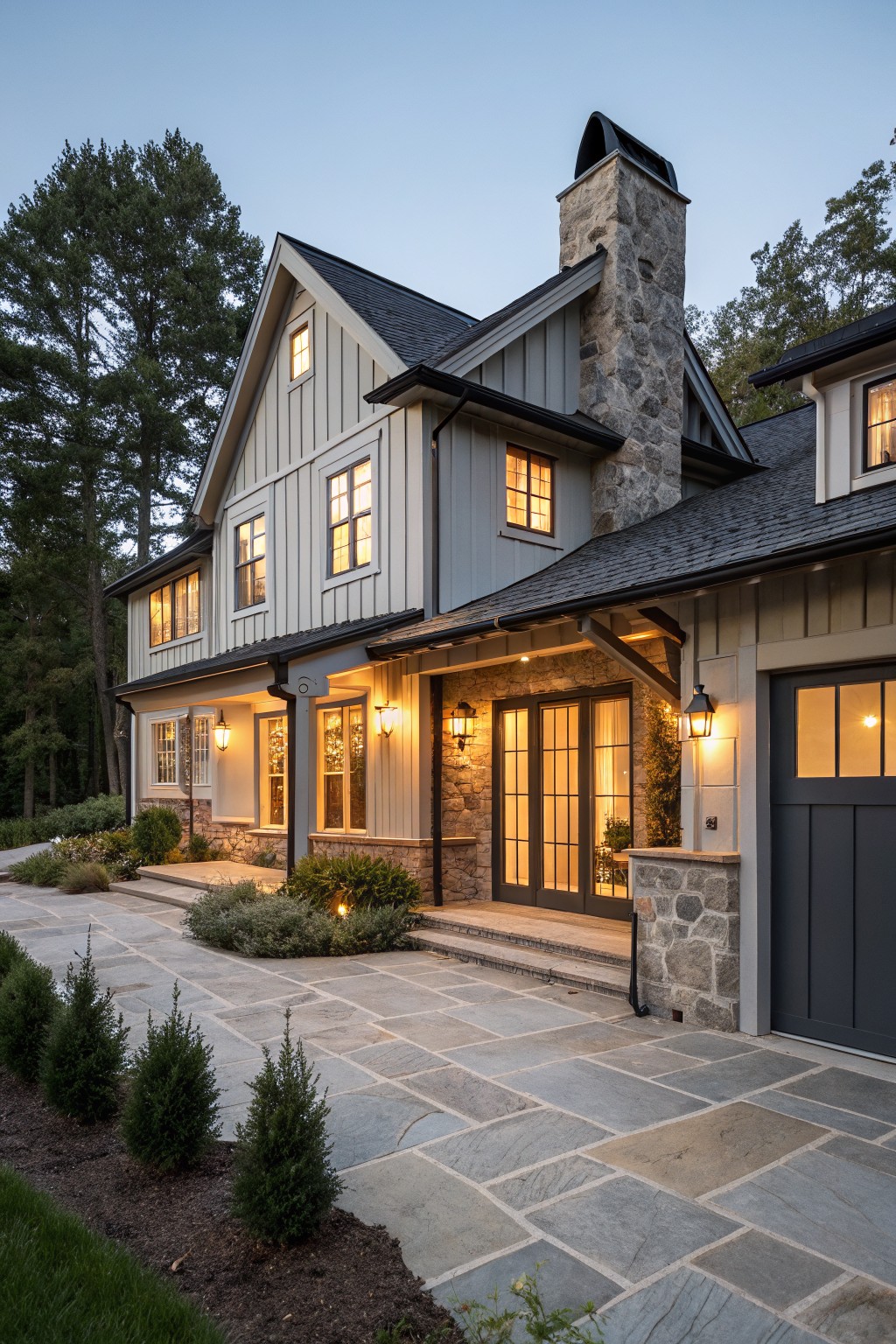
Stone works well with painted siding because it breaks up the flat look of a large wall without taking over the whole house. In this example the gray siding stays simple while the stone adds weight around the doors and up the chimney. The contrast keeps the exterior from feeling too plain or too heavy.
This approach suits farmhouses and similar styles where you want some texture but still need the house to feel light. Use stone on the lower sections or key spots like the entry and chimney rather than covering everything. Keep the siding color soft so the stone stands out without fighting it.
Combine Stone With Wood Siding
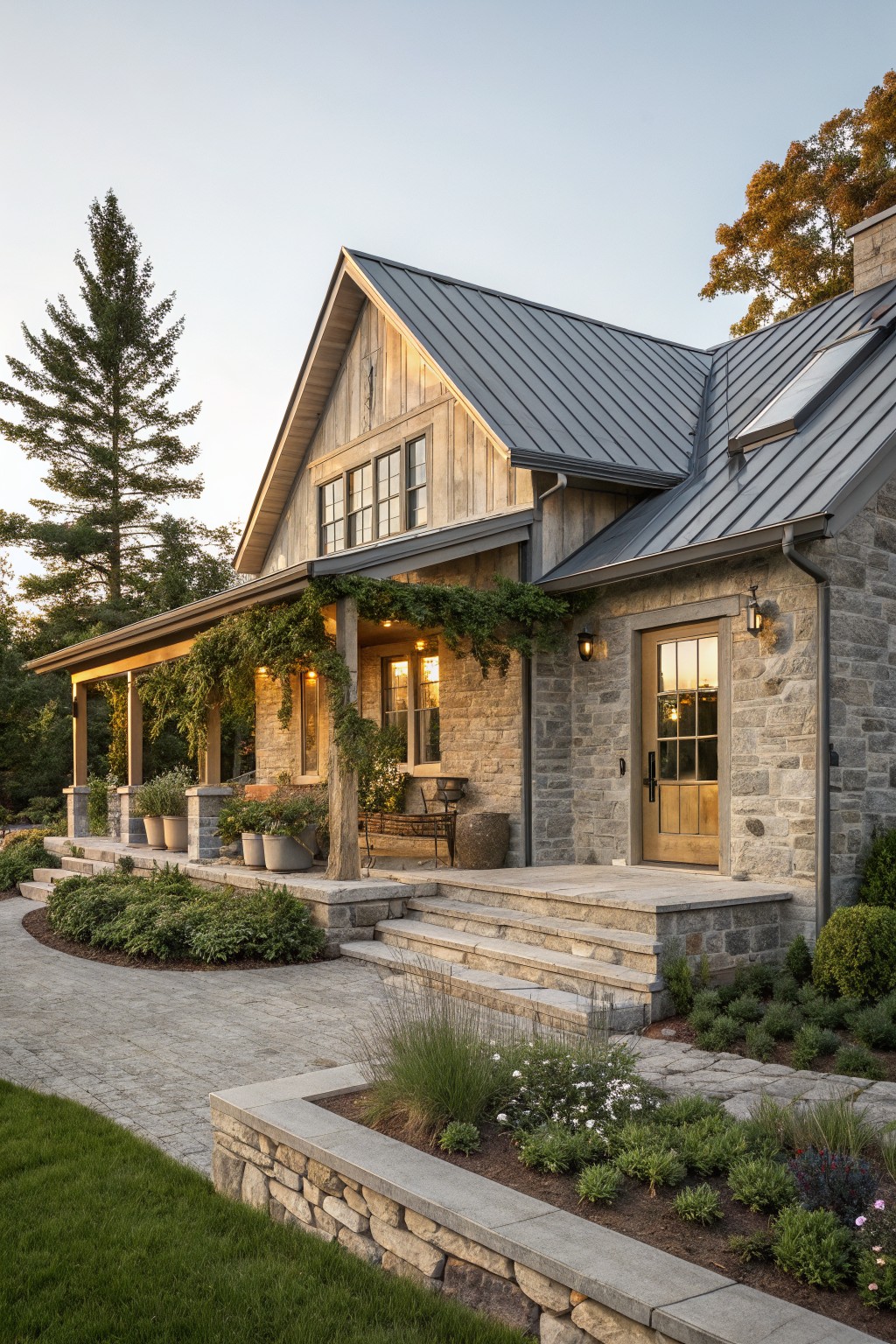
Stone on the lower walls paired with wood siding above gives a house a solid base while keeping the overall look lighter. This mix works especially well on farmhouses because it adds texture without making the whole exterior feel heavy or uniform.
The approach suits homes with a simple roofline and a few gables. Keep the stone height consistent around the front and let the wood carry the upper sections so the materials stay balanced.
Stone With A Dark Metal Roof
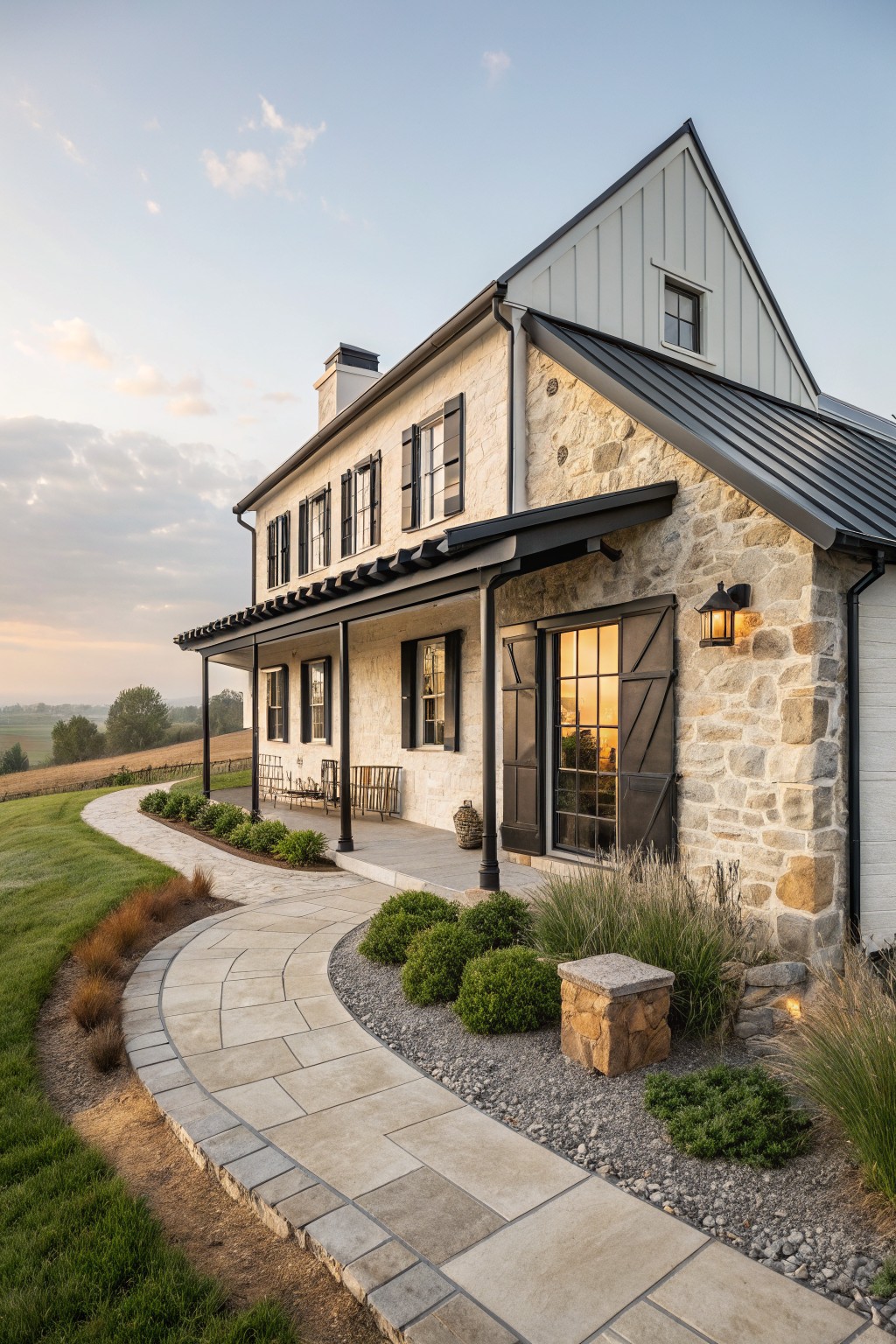
Stone gives a farmhouse that solid, grounded look that holds up over time. It feels natural against fields and hills, and the texture keeps the house from looking too plain even when the design stays simple.
Use it on the main walls and pair it with a dark metal roof and black trim. This works best on homes with some land around them. Watch the stone colors though, and make sure they vary a little so the surface does not go flat.
Stone That Connects the House to the Yard
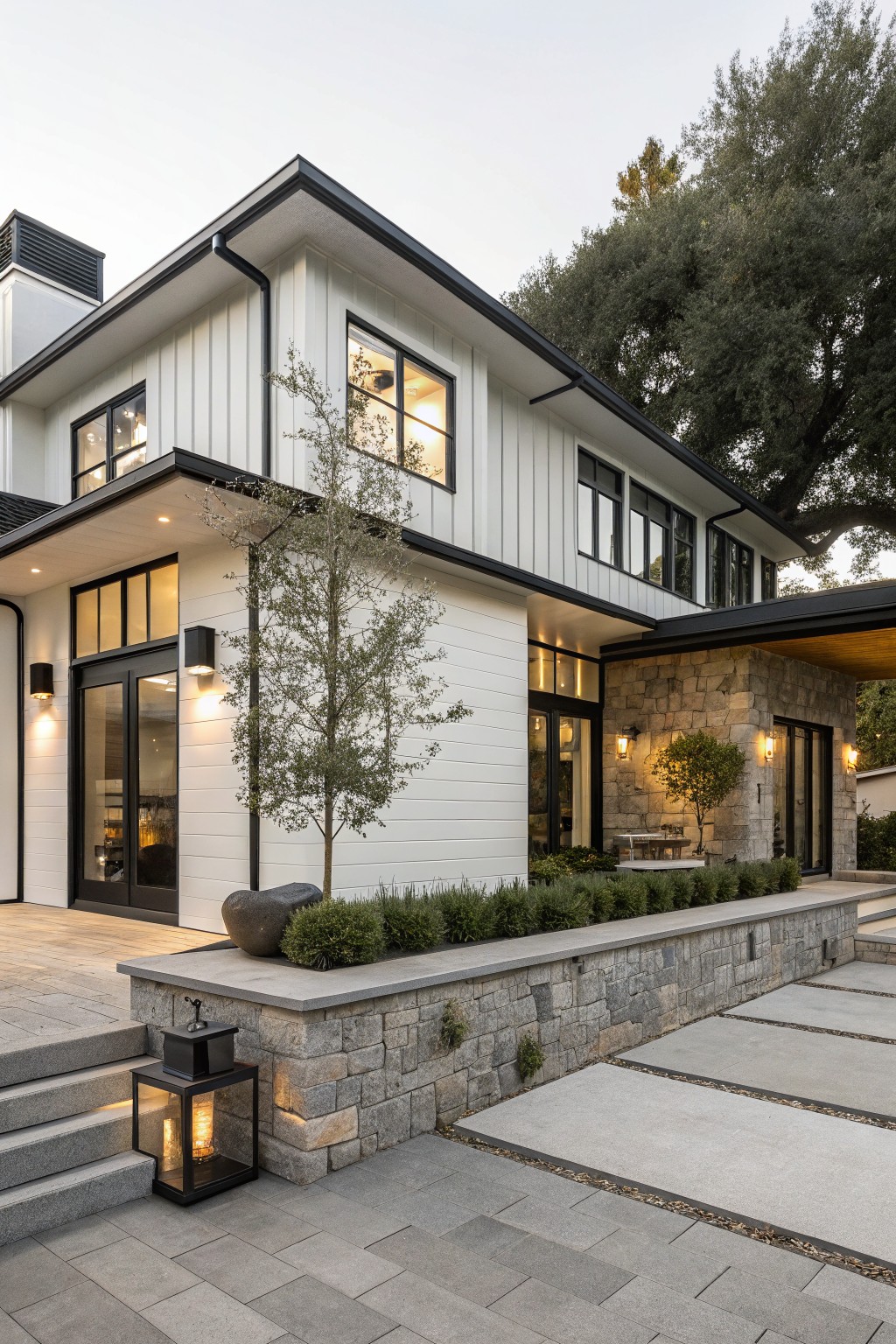
Stone used on both the house and the surrounding walls helps the whole place feel settled. When the same material runs from the foundation into a low retaining wall or raised bed, the house looks like it belongs on the site instead of sitting on top of it. This works especially well on farmhouses where you want a natural finish without extra ornament.
Try repeating the stone on any visible base or step area so the eye follows it outward. It suits homes with simple siding and gives the yard a bit of structure that still feels soft once plants fill in. Just keep the wall heights modest so the stone stays an accent rather than a barrier.
Use a Slatted Wood Roof in the Courtyard
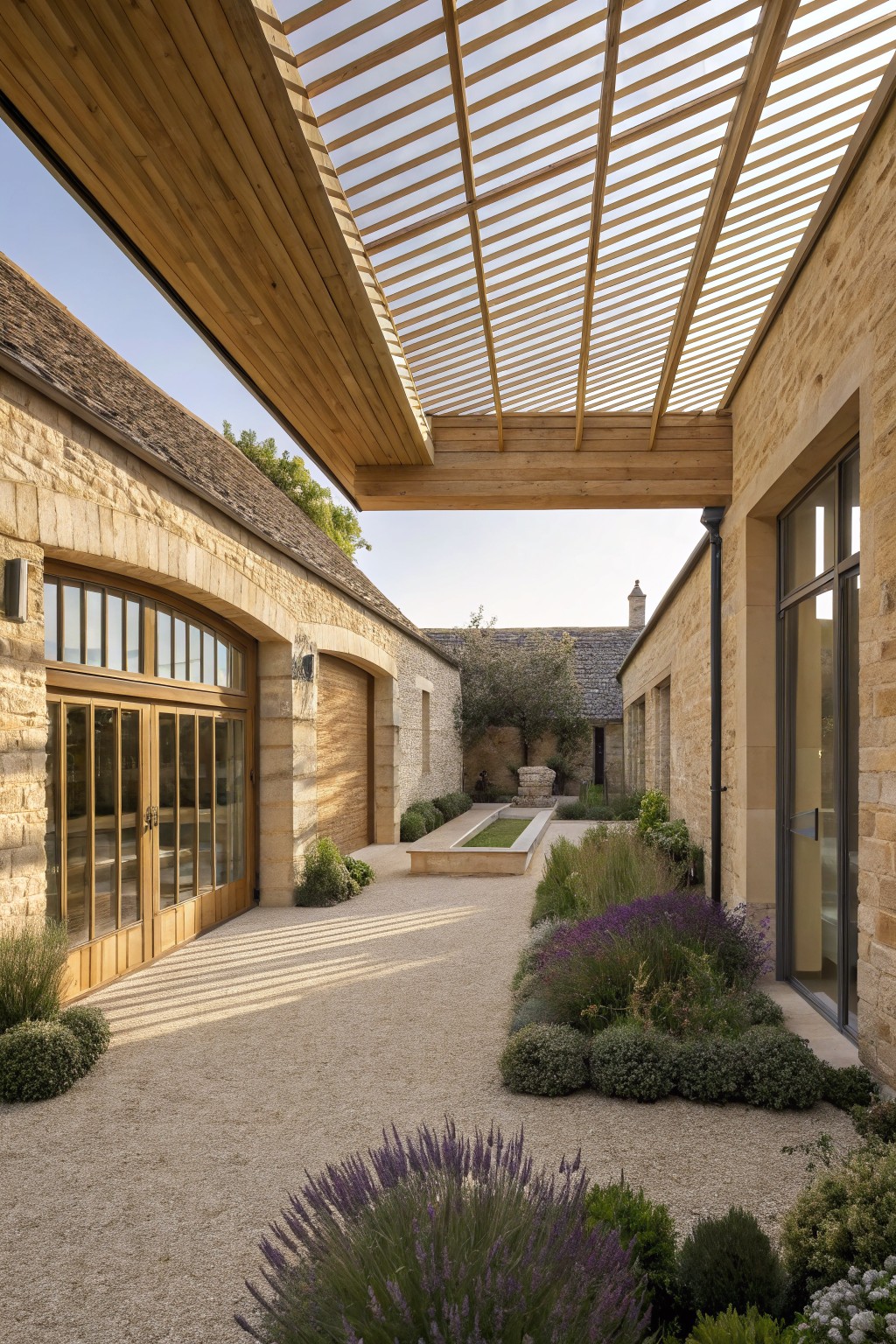
A slatted wood roof works well over a gravel courtyard because it lets in plenty of light while still giving the space some shape and a bit of cover. The wood warms up the stone walls around it and keeps the whole area from feeling too open or bare.
This setup suits a stone farmhouse where the buildings already form a natural enclosure. Keep the planting low and simple around the edges so the wood and stone stay the main focus.
Stone Around The Front Door
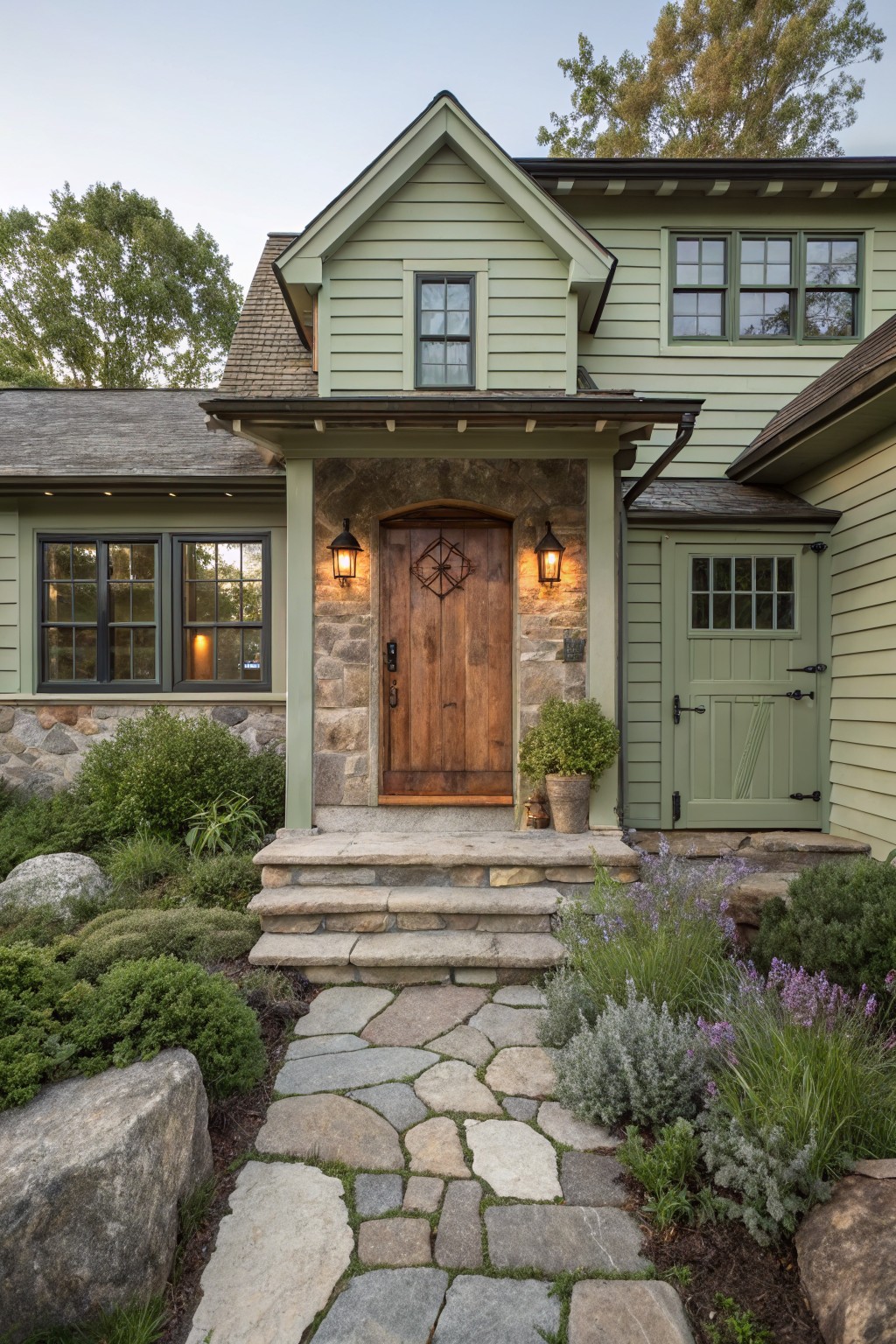
Stone around the front door adds a sturdy base that helps a painted siding house feel more grounded. It works especially well on farmhouses because it brings in natural texture without needing a full stone exterior. The wood door set into the stone makes the entry feel solid and welcoming at the same time.
This approach suits homes where you want to keep most of the siding but still add some weight at the main door. Keep the stone to the entry wall and steps so it stays focused. It pairs best with simple lighting and a clear path leading up to the door.
Stone And Wood On The Facade
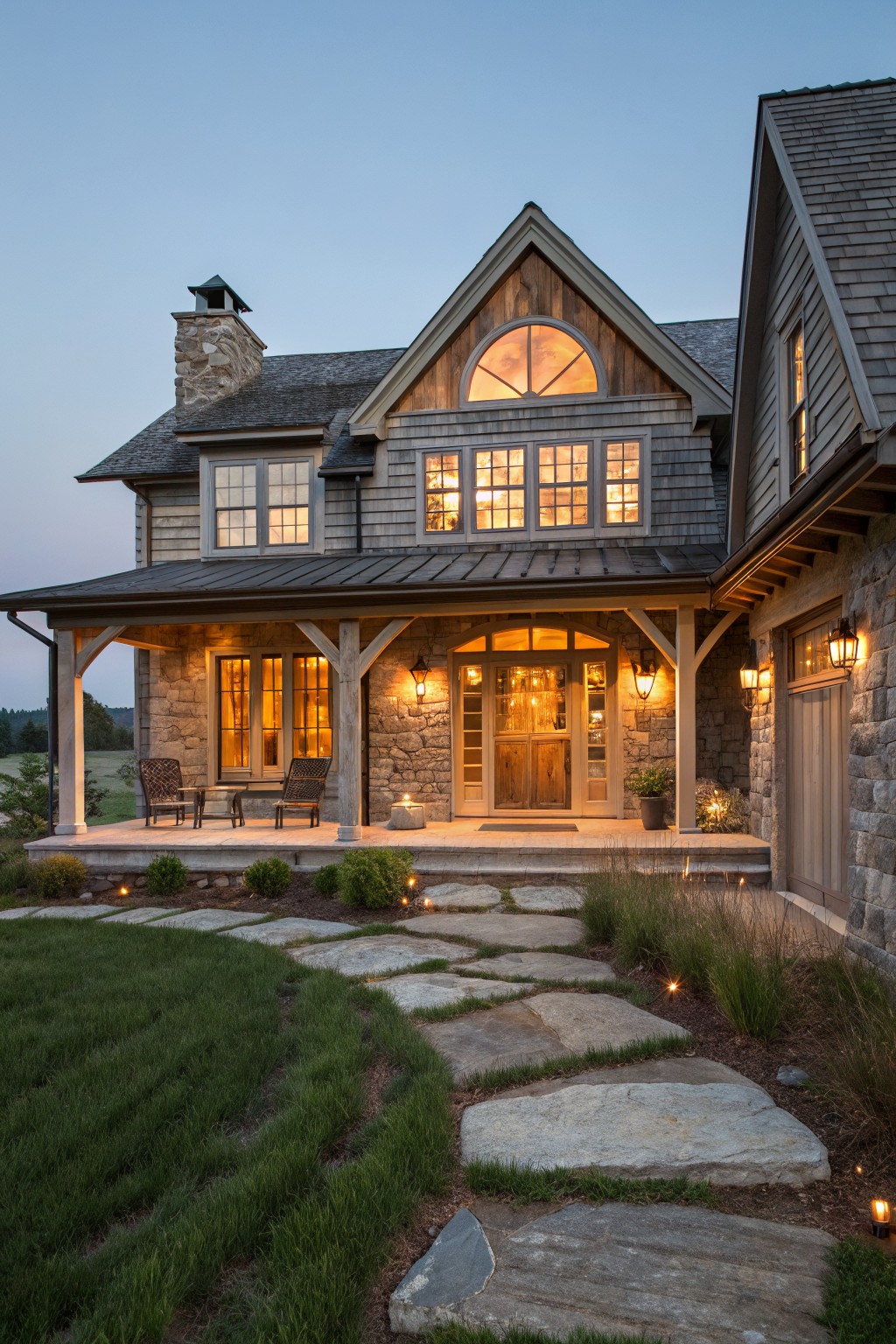
Stone and wood work together here to give the house a grounded, natural look without extra decoration. The stone covers the lower walls and chimney while wood siding and heavy beams handle the upper sections and porch structure.
This mix suits farmhouses or homes in open settings where you want the exterior to feel solid but still warm. Keep the stone on the base and main accents, then let wood take over on the gables and trim so the whole front stays balanced.
Combine Stone With White Siding
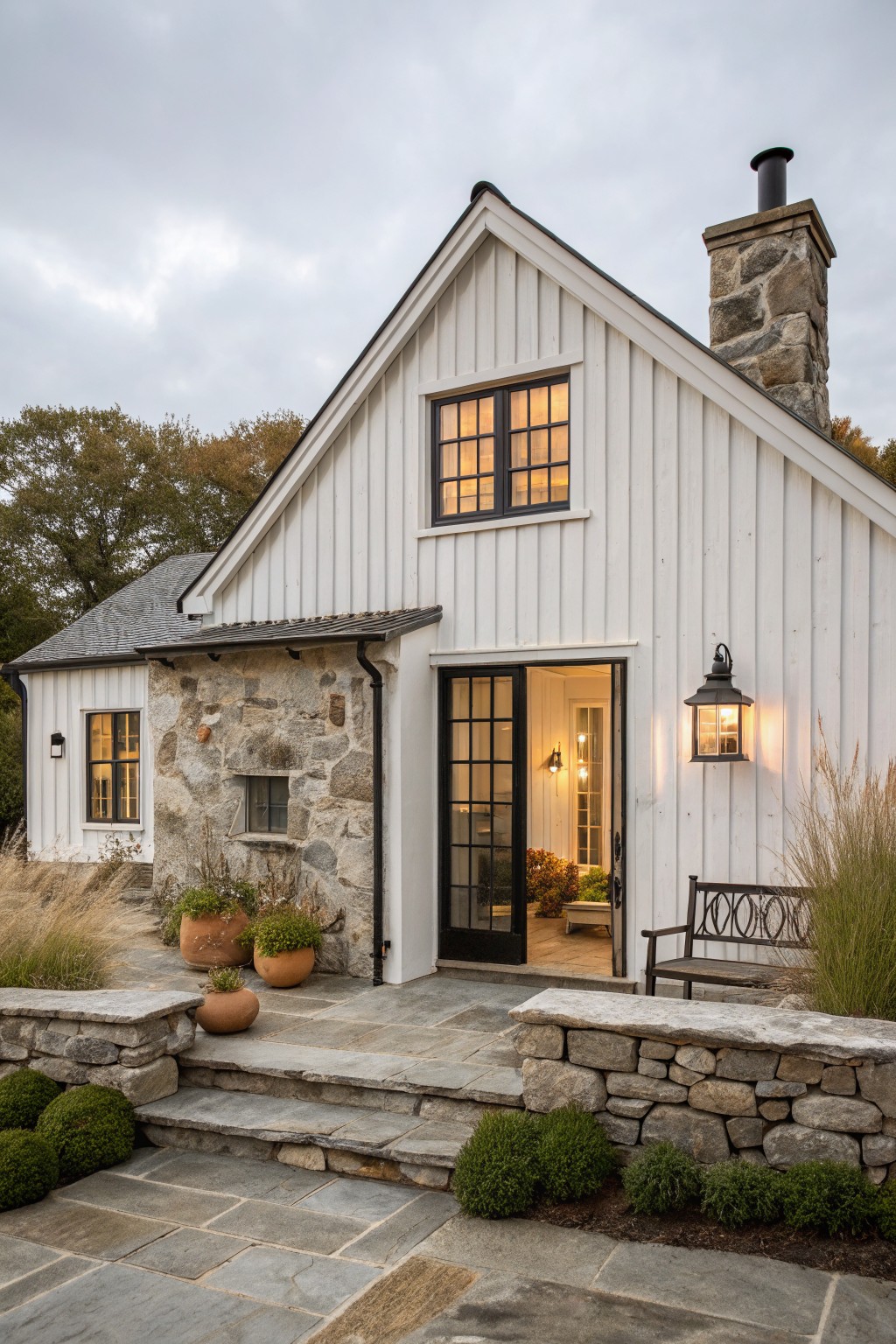
Mixing stone with white siding gives a farmhouse exterior more weight and texture without making it feel heavy. The stone adds a natural element that grounds the bright siding and helps the house blend into its surroundings over time.
This works best on homes with simple shapes where you can limit the stone to a chimney or lower wall sections. Too much stone can darken the look, so keep the white as the main surface and let the stone serve as accents.
Use a Turret to Shape the Roofline
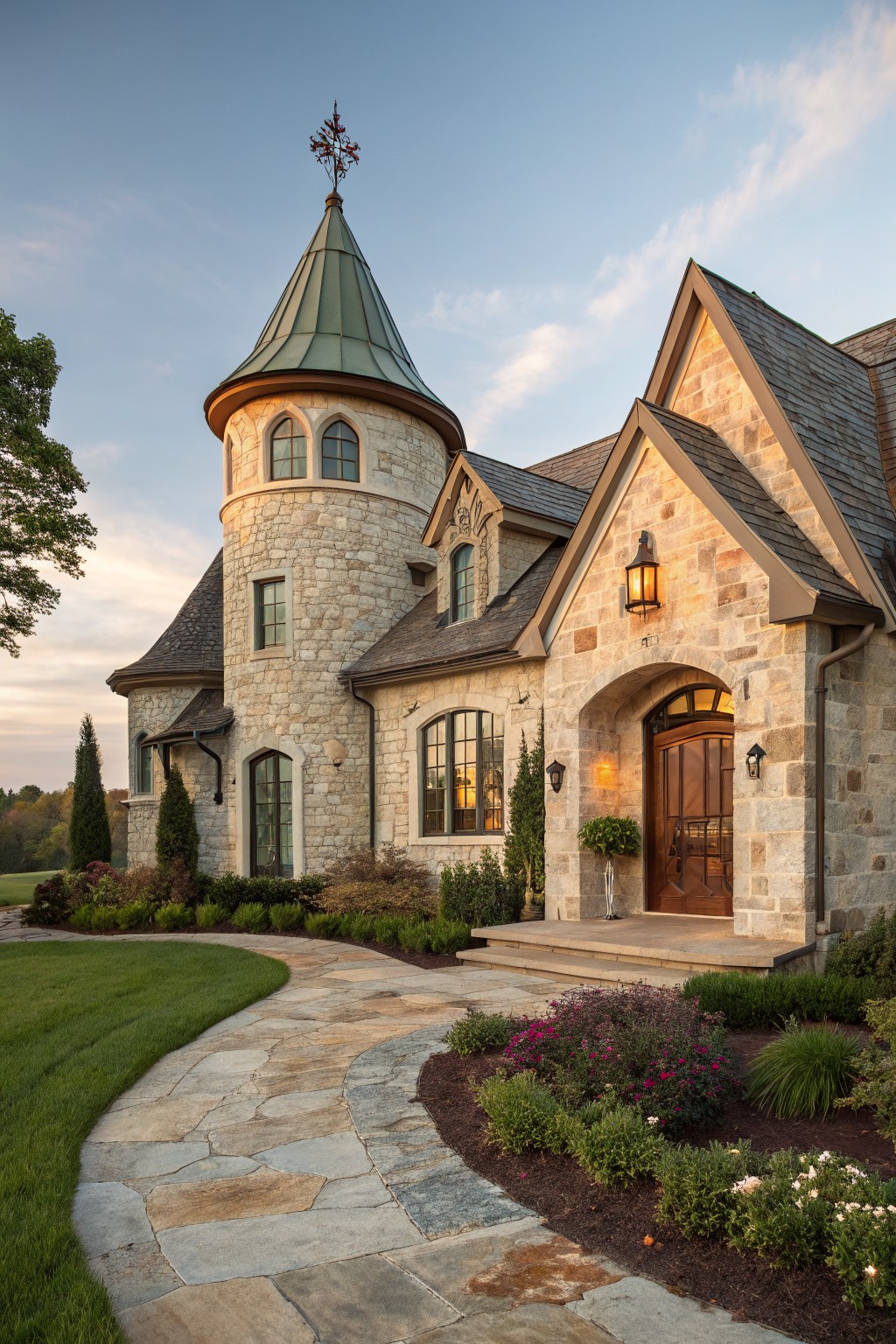
A turret gives a stone farmhouse more presence by breaking up flat walls and long roof runs. The rounded form also lets the stonework catch light differently throughout the day.
This works best on homes with enough land around them so the shape can be seen from the road. Match the turret roof material and pitch to the main roof so the whole house still reads as one building.
Stone Walls For Sloped Sites
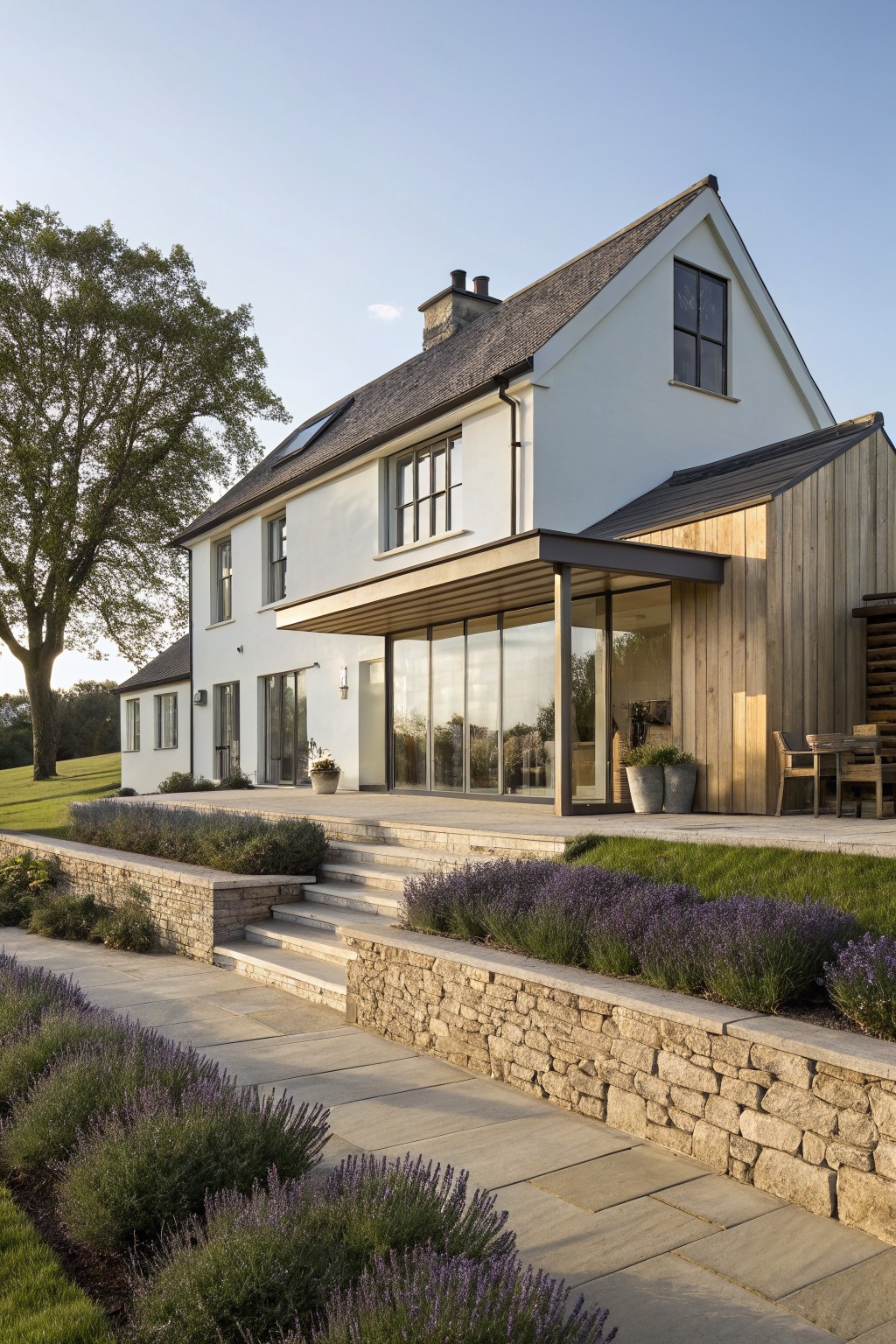
Stone retaining walls work well on properties that slope because they turn a problem into a feature. They create flat areas for walking and planting while giving the house a solid base that feels tied to the ground. In this setup the walls step down gradually, which keeps the scale of the house from feeling too tall.
They suit older farmhouses or new builds that want a settled look. Use the same local stone for the walls and any steps so everything reads as one material. Keep the planting simple on the terraces so the stone stays the main texture.
Stone at the Entry
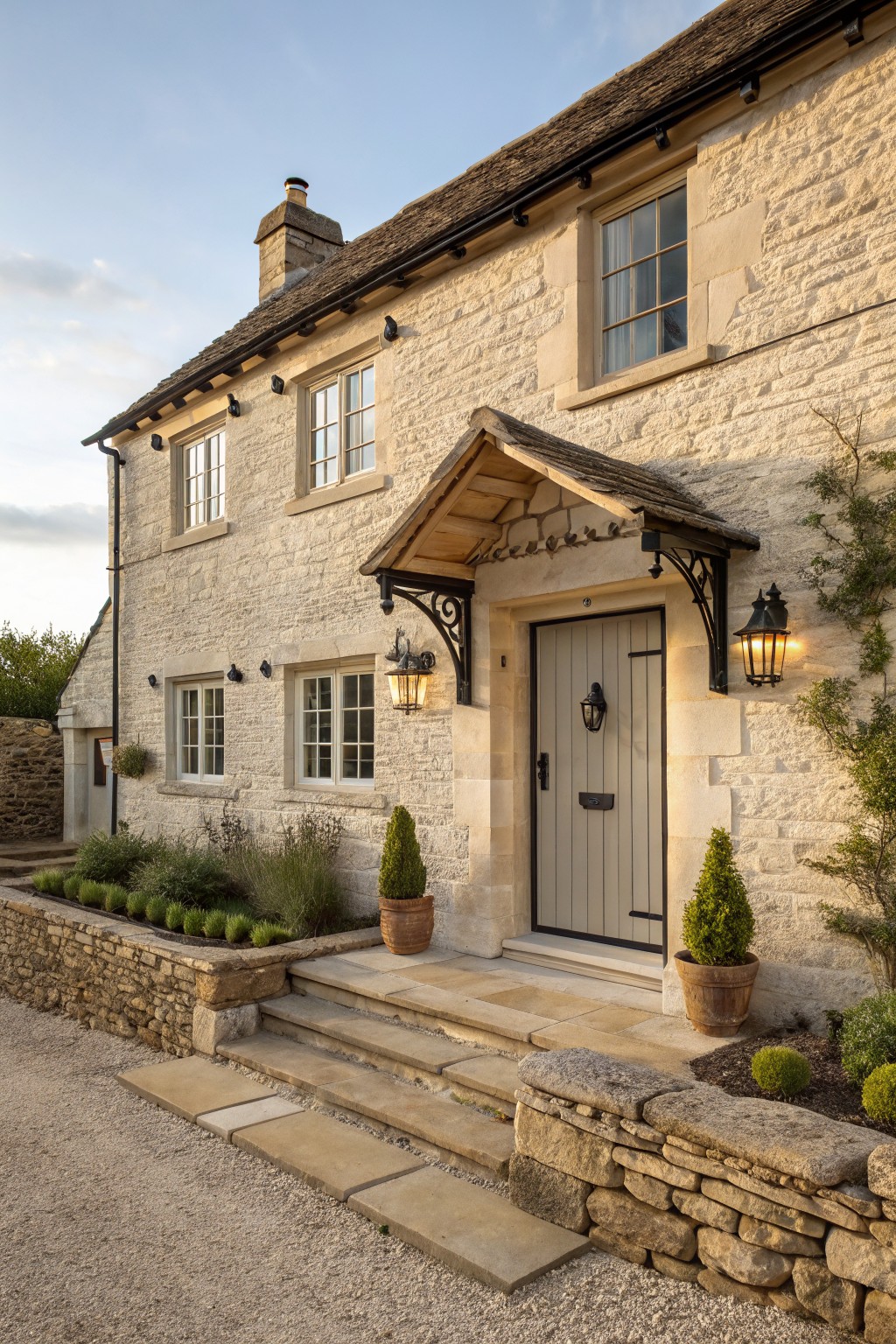
Many stone farmhouses gain a lot from keeping the entry built in the same material as the main walls. It gives the doorway real presence and makes the whole front feel more connected instead of added on later. The stone does the work of making the entrance feel solid without needing fancy trim.
This approach works best on simpler houses where the door itself stays plain. It suits older farmhouses especially, since the goal is usually to keep the materials honest and consistent. Just watch that the stone color and size match the rest of the house so it does not stand out in the wrong way.
Stone Foundation with a Matching Chimney
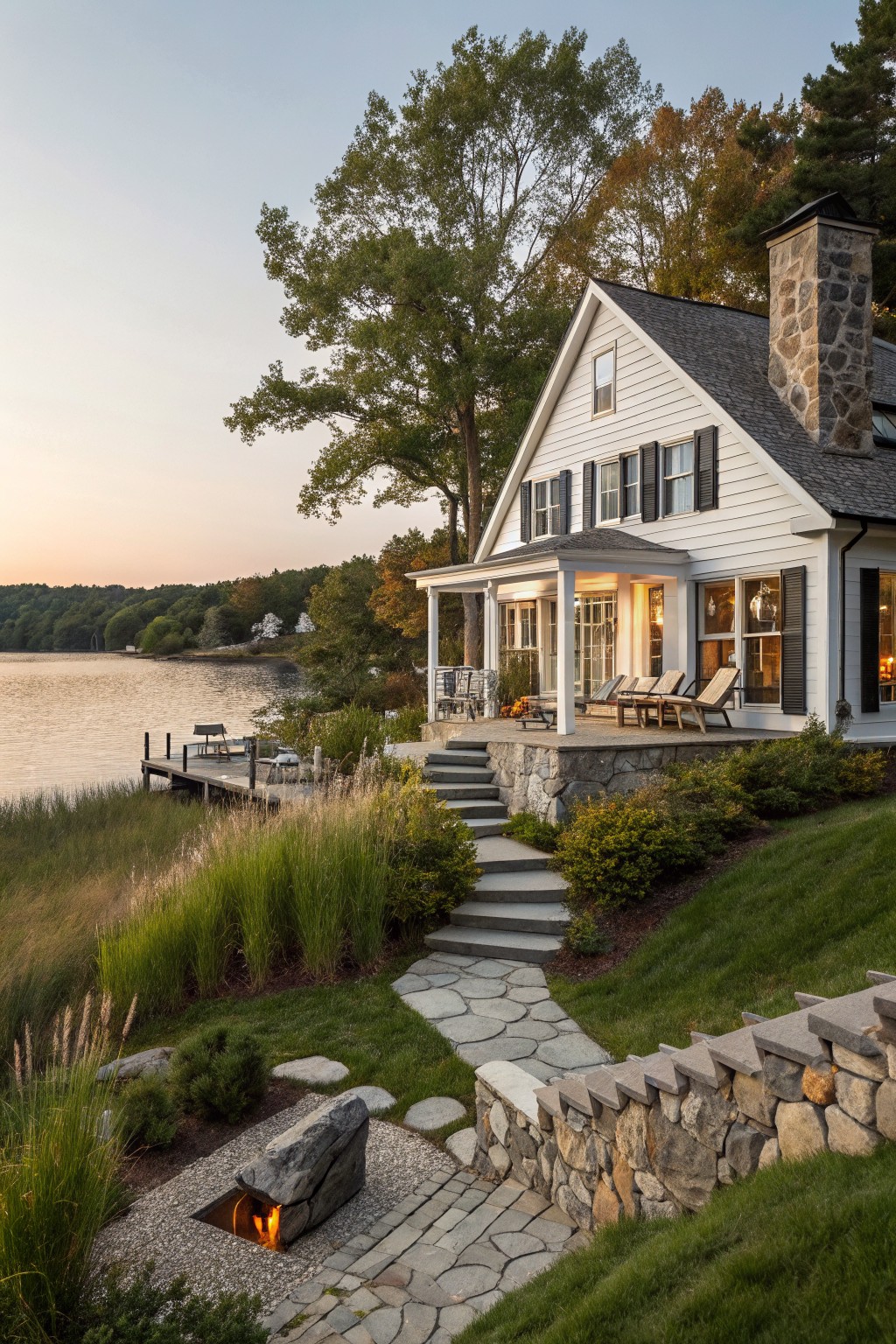
Stone on the foundation and chimney gives a farmhouse real weight. It keeps the white siding from looking too light and helps the whole house feel settled into the ground rather than just placed there.
This works best on sloped lots or sites near water where the grade needs handling. Keep the stone in just those two places so it reads as part of the structure instead of added decoration.
Stone With Wood Siding On The Facade
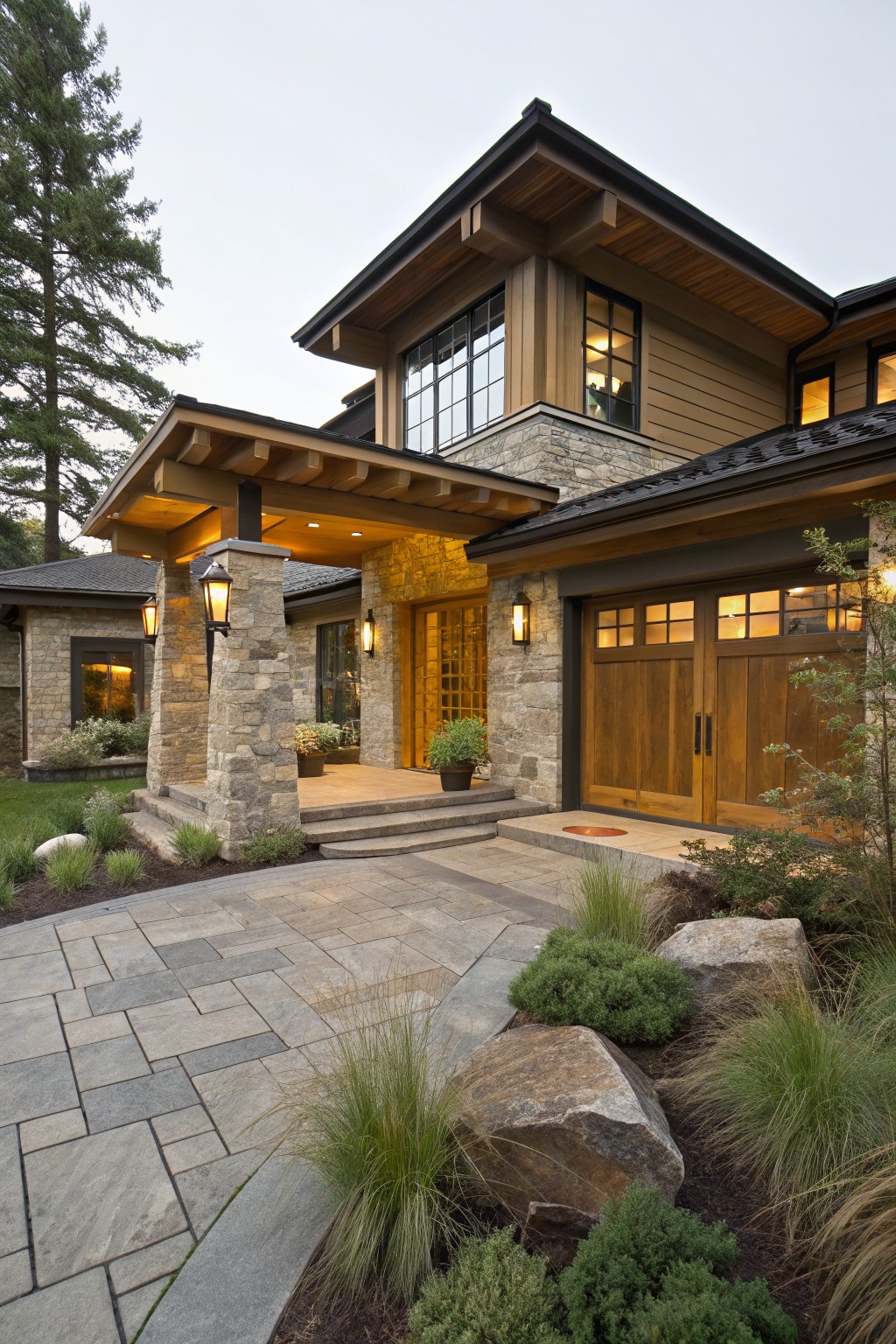
Stone works well when it covers just part of the front instead of the whole house. The lower walls and porch columns stay in stone while the upper sections keep wood siding. This mix adds weight at the base and keeps the look lighter higher up. It also gives the house a settled, older feel without needing a full stone rebuild.
This approach suits homes that already have wood siding and need more texture near the ground. Keep the stone sections simple and let the wood carry the rest of the color. Too much stone can make the front feel heavy, so balance the two materials by size rather than trying to match them exactly.
Combine Stone With Wood On The Facade
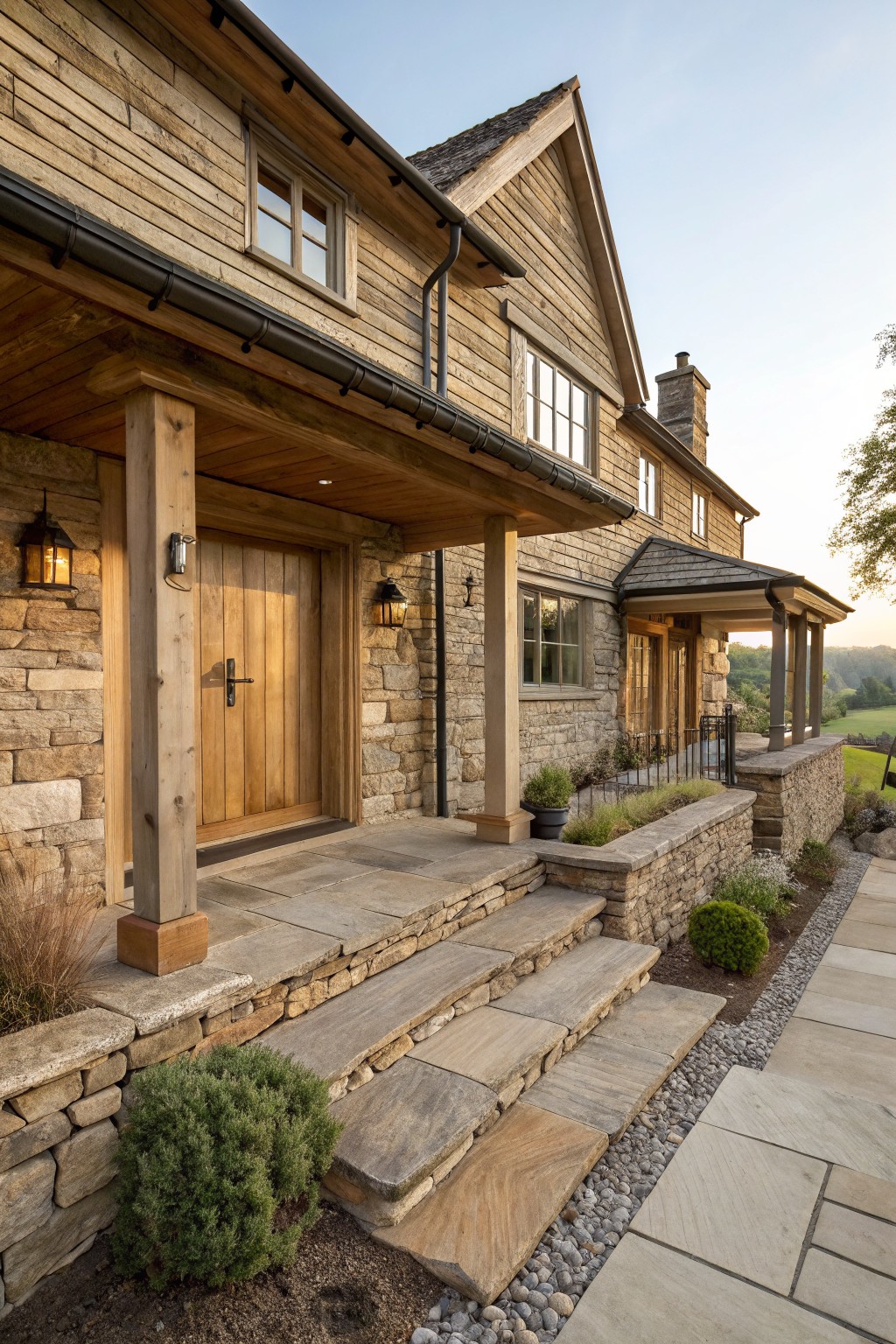
Stone and wood work well together because each material softens the other. The stone adds weight and a sense of permanence, while the wood brings warmth and a more lived-in feel. On many farmhouses this mix keeps the exterior from looking too heavy or too light.
Try using stone on the lower walls and around the entry, then switch to wood siding higher up. Match the tones so the change feels natural rather than forced. This works best on homes with simple rooflines and plenty of windows to break up the surfaces.
Stone Across The Full Facade
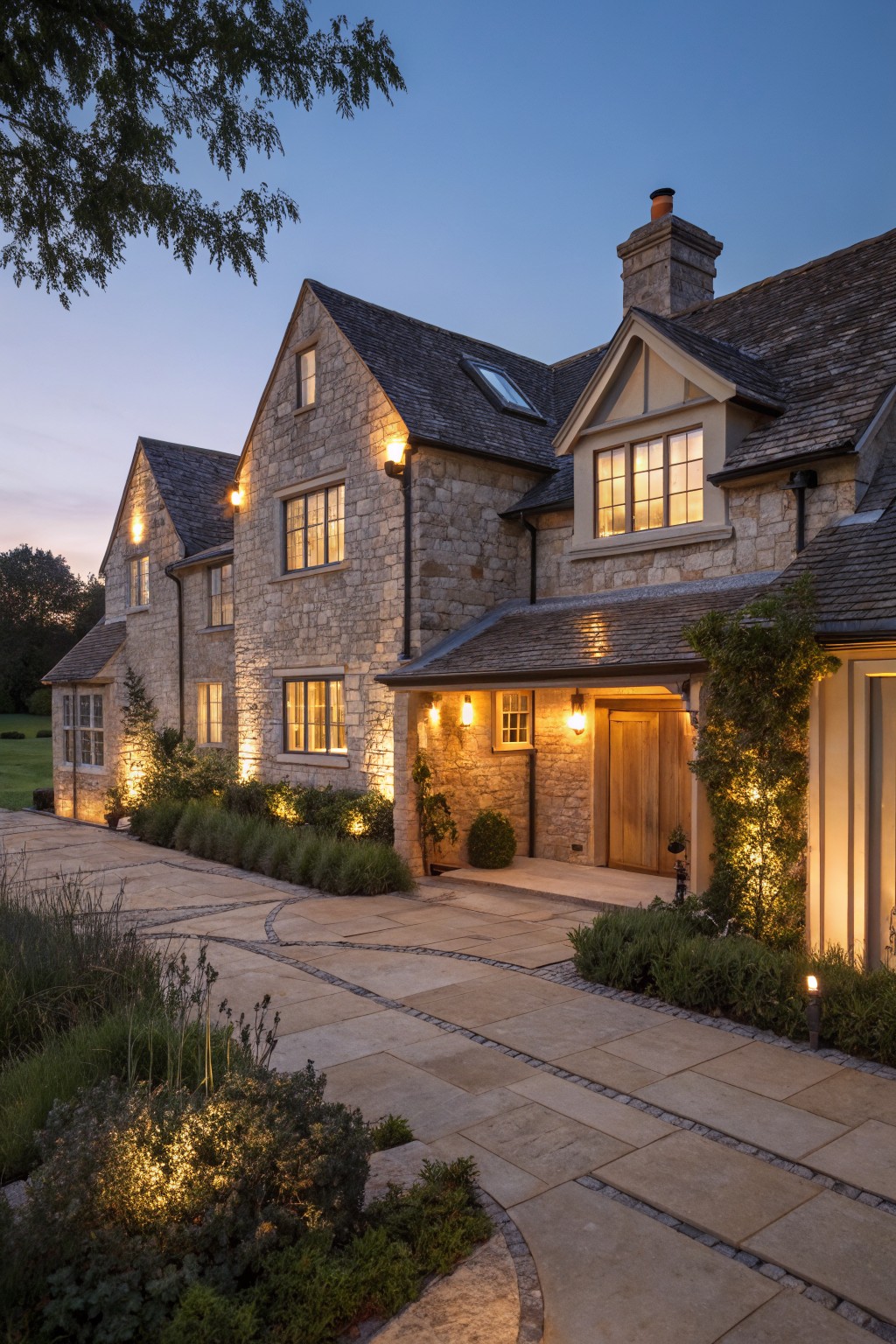
A full stone exterior gives a farmhouse that solid, grounded look without needing much else to make it feel finished. The material handles most of the visual weight on its own, especially when the stone varies slightly in tone and size the way it does here.
This approach works best on homes with simple rooflines and clear gable shapes. It suits older properties or new builds that want to feel established right away. Just keep the trim minimal and let the stone carry the character.
Mix Stone And Stucco For A Balanced Look
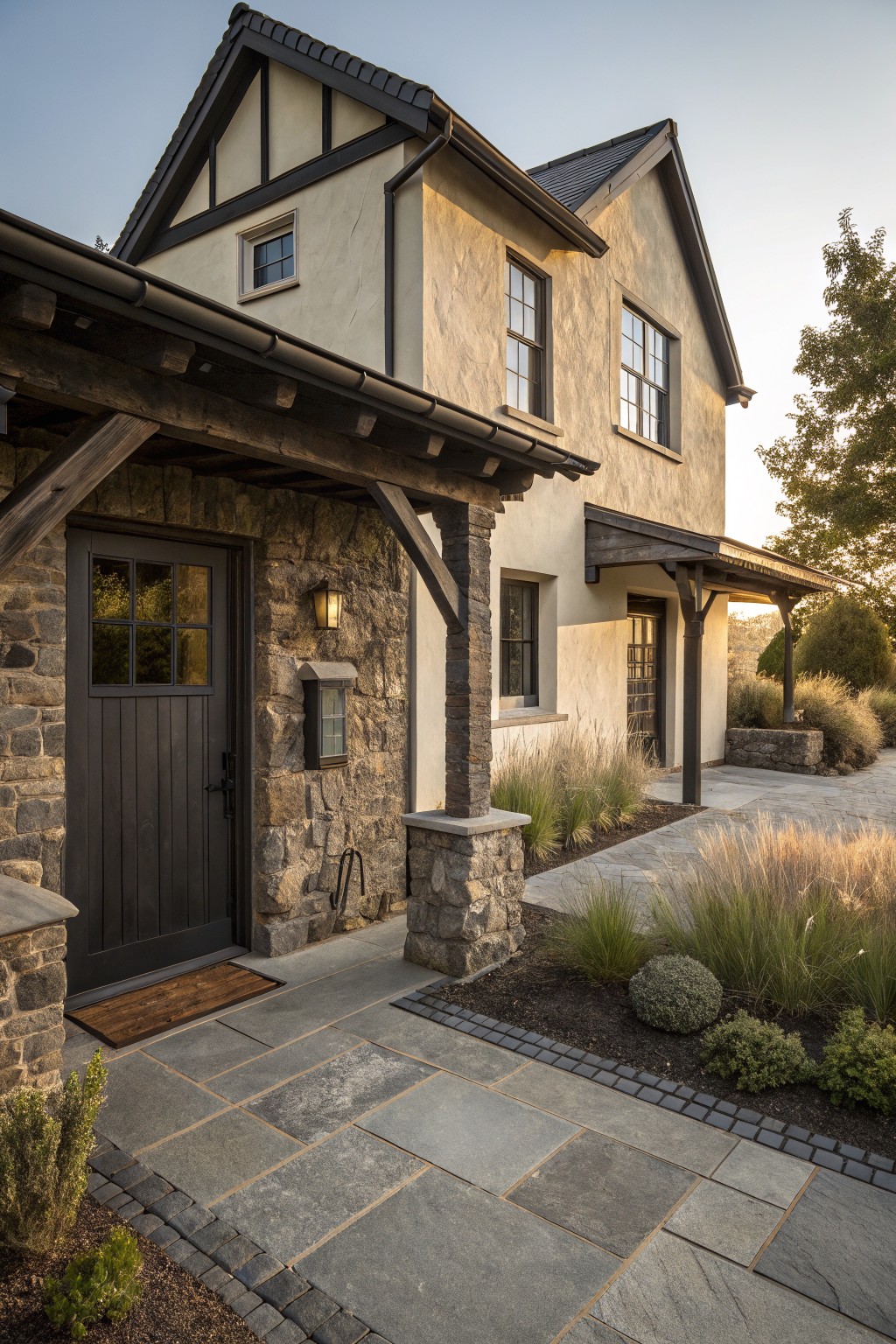
Stone and stucco make a strong pair on farmhouse exteriors. The stone adds weight and texture at the base or around the entry while the stucco keeps the upper walls lighter and simpler. This mix feels natural without looking heavy or overly busy.
It works best on homes that already have some stone nearby, like a retaining wall or chimney. Keep the stone sections focused around doors, corners, or columns so the contrast stays clear. Too much stone can make the house feel dark, so let the stucco do most of the work above.
Stone Arches Over Entry Doors
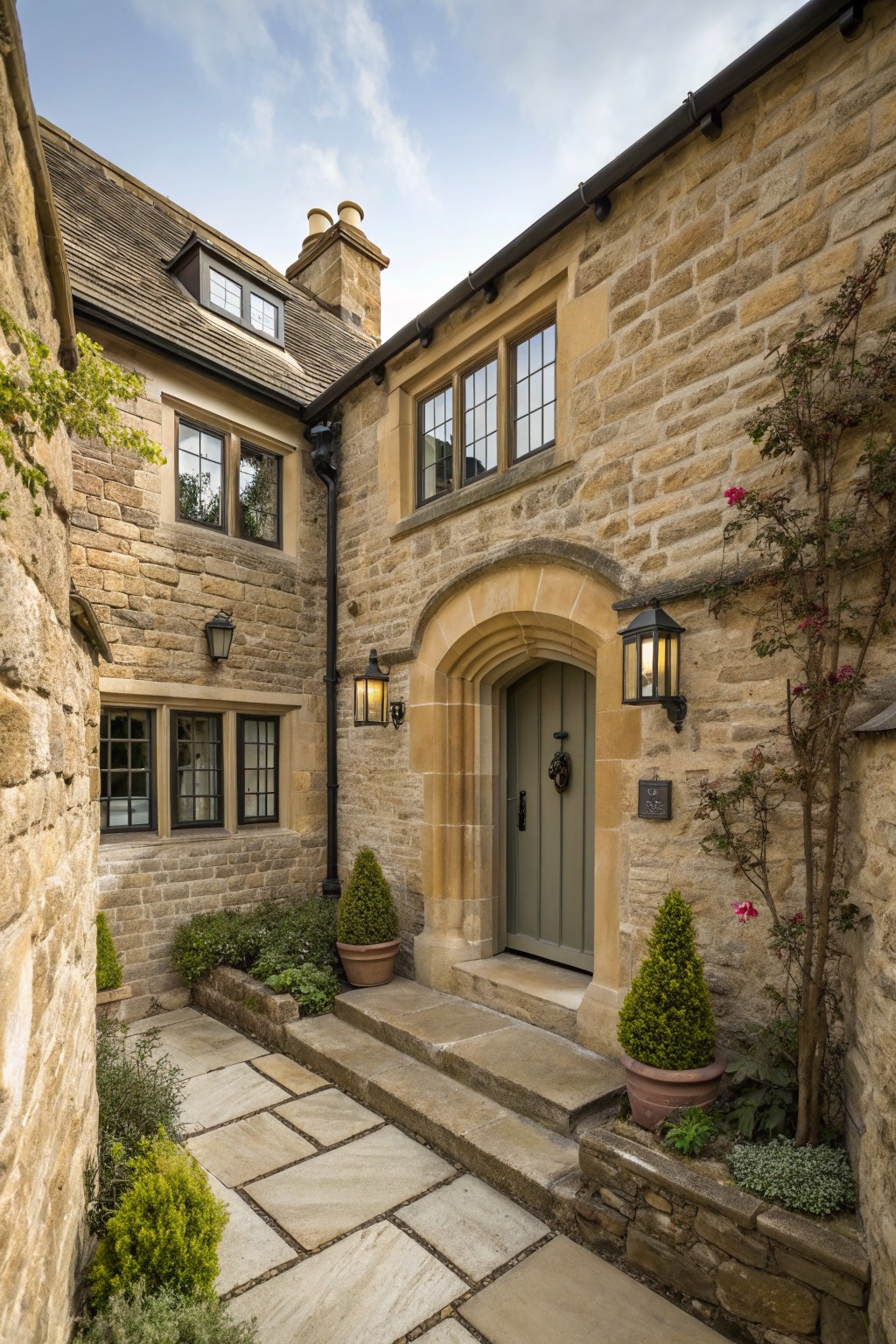
An arched stone surround around the front door gives a stone farmhouse a clear focal point without needing extra trim or decoration. It works because the curve softens the heavy look of the wall while still feeling solid and permanent.
This detail suits homes already built from the same stone, since the arch can be cut from matching material. Keep the door color simple so the stone remains the main feature, and avoid adding too many plants right against the arch if you want the shape to stay visible.
Frequently Asked Questions
Q: How do I pick stones that suit my local weather without overthinking it?
A: Check farmhouses already standing in your area and note what holds up. Those stones already match the rain, sun, and freeze cycles you face. Copy that same type for the easiest win.
Q: Can I tackle a small stone patch on my own or should I call someone?
A: A single wall section often works fine as a weekend job if you keep the area under ten feet wide. Start at the bottom and work up so each row locks in place. Anything bigger needs a crew to stay straight and level.
Q: What happens to stone after a few winters of road salt and heavy snow?
A: Rinse the base every spring to clear the salt before it eats into the surface. A simple hose and soft brush usually does the job. Skip harsh cleaners that strip the natural finish.
