

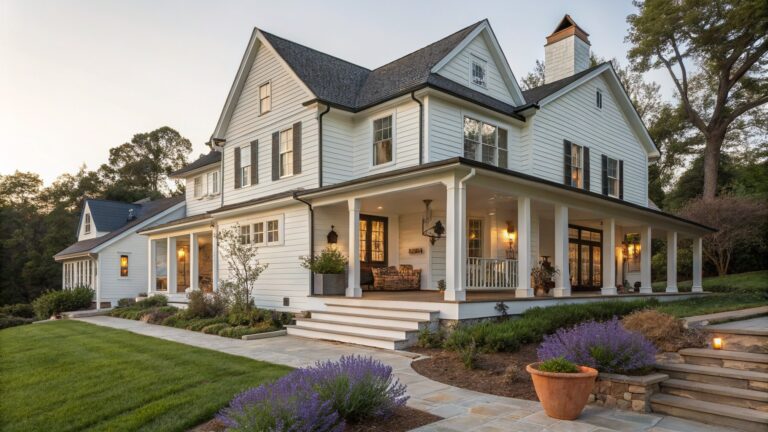
I have always noticed that a wrap around porch changes how a farmhouse reads from the road more than almost any other single feature.
The way the roof extends and the posts are spaced can either pull the whole front together or leave it looking a little unfinished once you see it in person.
Trying the layout on the actual site helps more than drawings do.
Materials for the floor and railings need to match the siding and trim or the whole exterior starts to feel patched rather than planned.
Over the years I have found that the porches that hold up best are the ones where the builder thought about how water would move and how the structure would age.
Wrap The Porch Around Multiple Sides
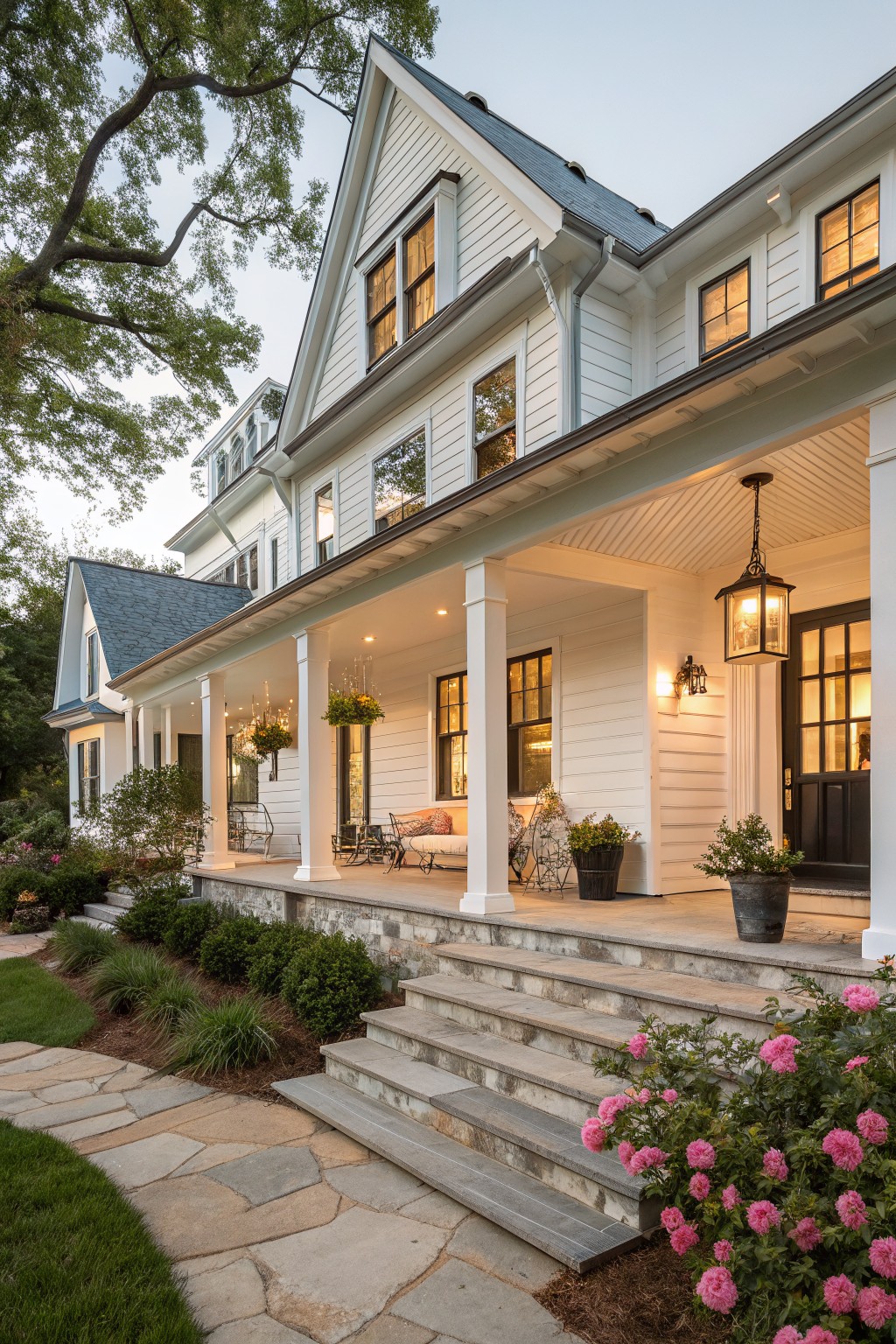
A wrap around porch gives a farmhouse more outdoor room without adding a separate structure. It turns the corners of the house into usable space, so you get shade and seating on at least two sides instead of just the front. The long run of columns and roof also softens the look of a tall gable and ties the whole exterior together.
This works best on houses that sit on a bit of land where the sides are visible from the street or yard. Keep the porch depth consistent so the lines stay clean, and match the railing and column style to the rest of the trim. Avoid cutting the porch short at the corner if you want the full effect.
Wrap the Porch to Add Multiple Outdoor Spots
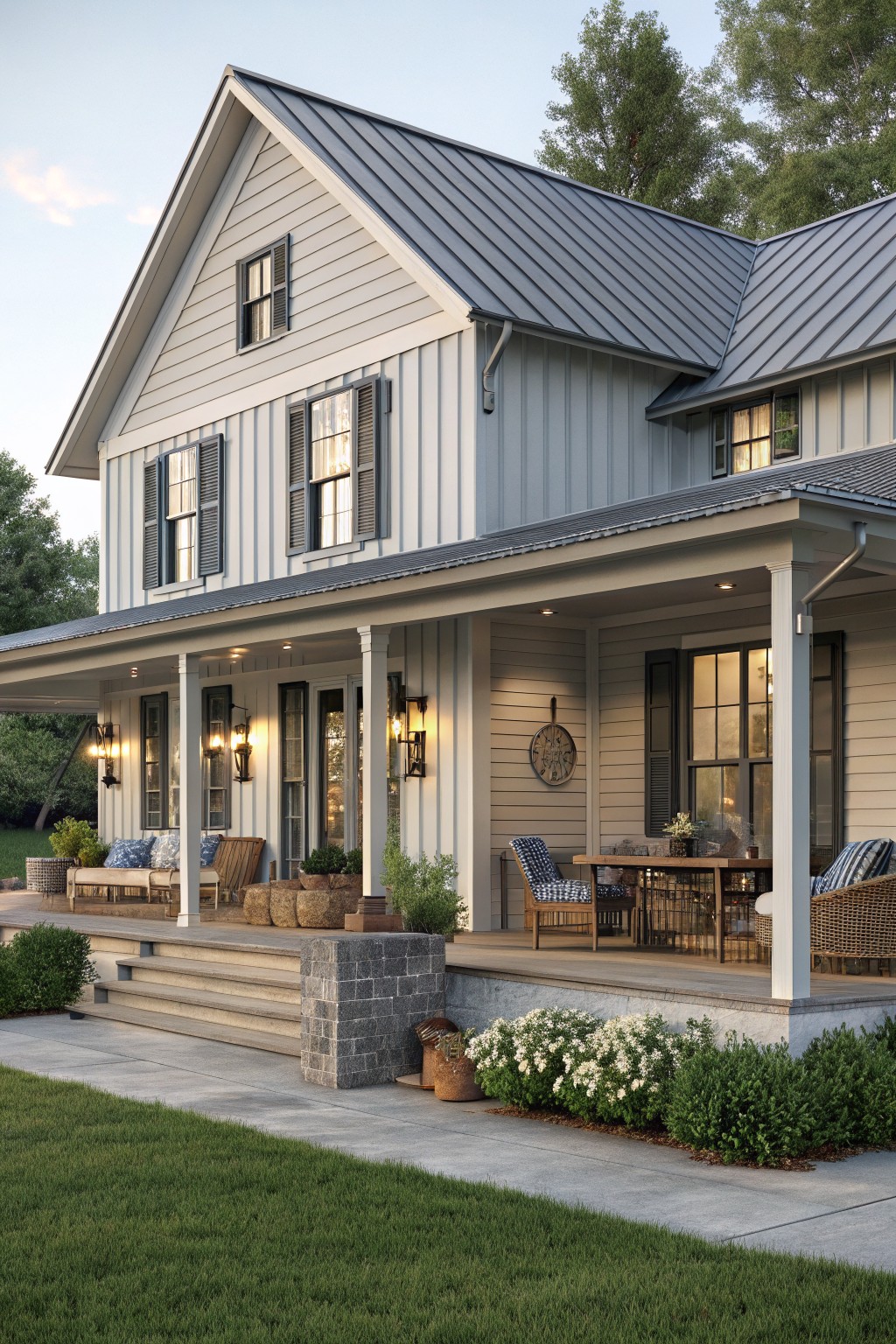
A wrap around porch works best when it gives you more than one place to sit. This house shows how the same porch can hold a dining table on one side and cushioned chairs on the other without feeling crowded.
The layout suits farmhouses that have a long front and side face. It turns the porch into real living space instead of just a walkway, and it stays useful even when the weather changes.
Stone Piers On A Wrap Around Porch
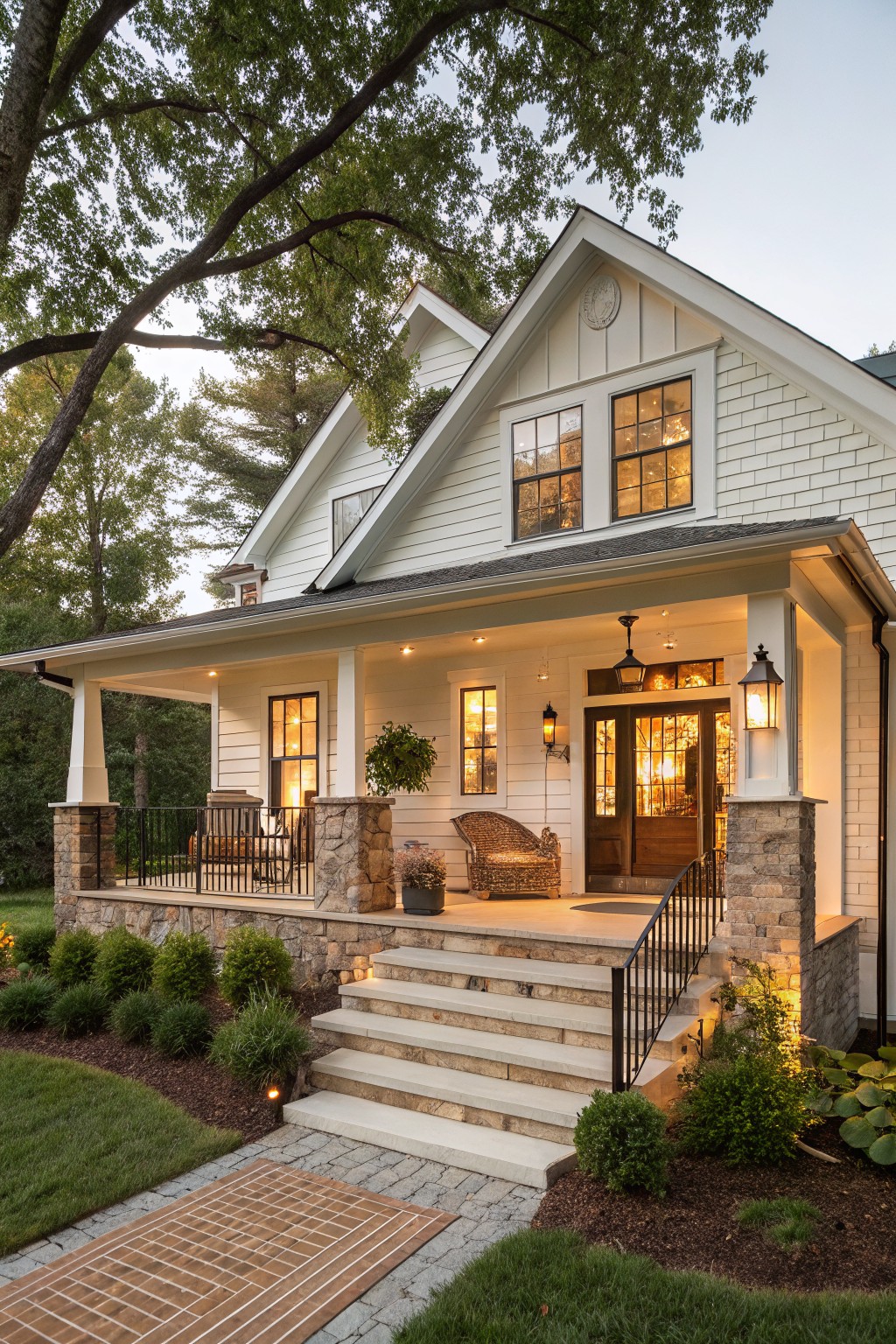
Stone piers give a wrap around porch a solid base that feels like part of the house instead of something added on later. They help the structure look grounded and keep the whole front from feeling too light or delicate.
This works best on homes that already have some stone at the foundation level. Keep the piers fairly wide and simple so they support the posts without crowding the space underneath the roof.
Wrap The Porch Around The House
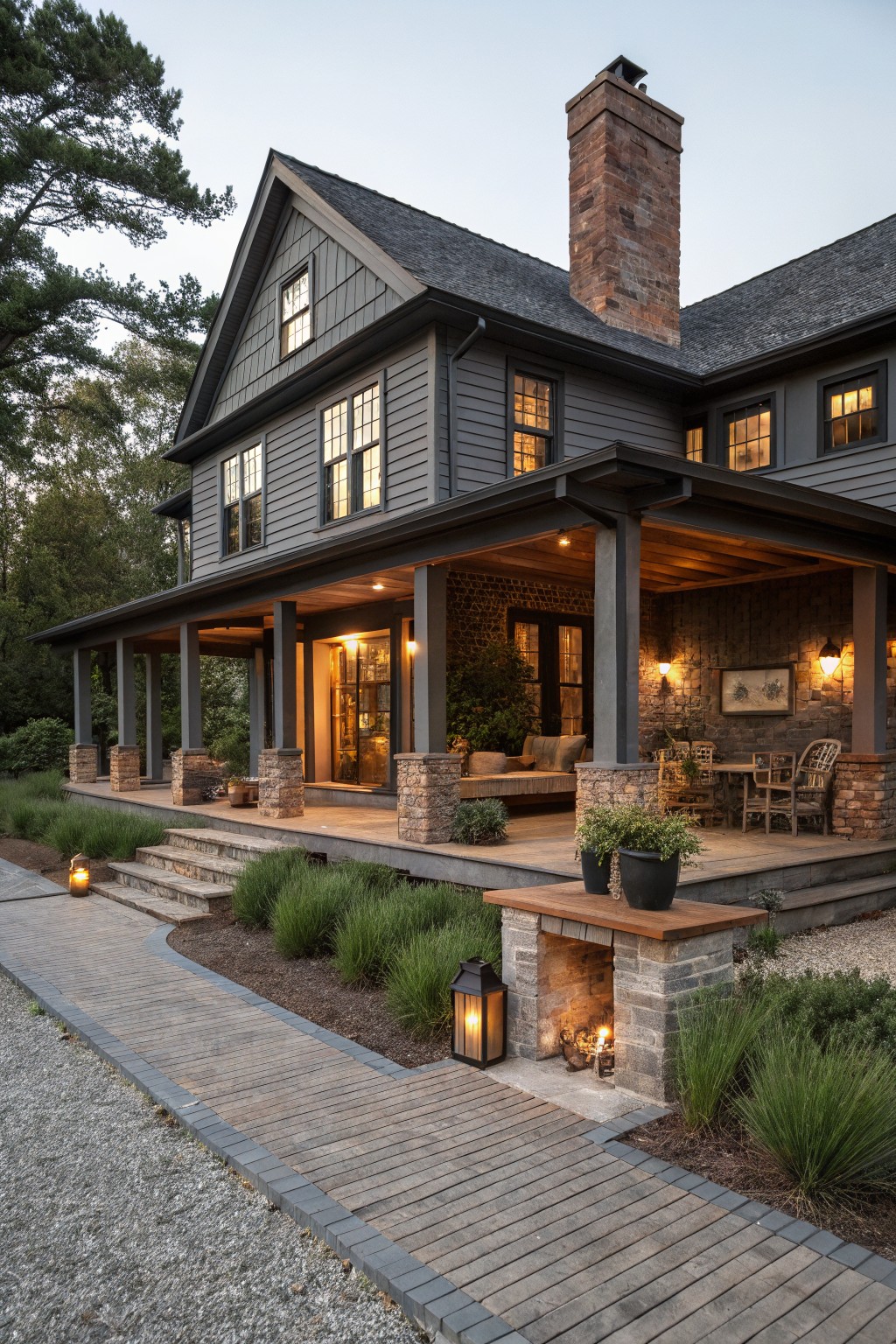
A wrap around porch gives you space to move from the front of the house to the side without stepping off the deck. It turns what could be a simple entry into a longer stretch of usable outdoor area that feels connected to the whole exterior.
This layout works best on homes with room on at least two sides. Keep the supports heavy and simple so the porch looks built in rather than added later. Stone bases help tie it to the rest of the house and keep the look balanced.
Hanging Swings On A Wrap Around Porch
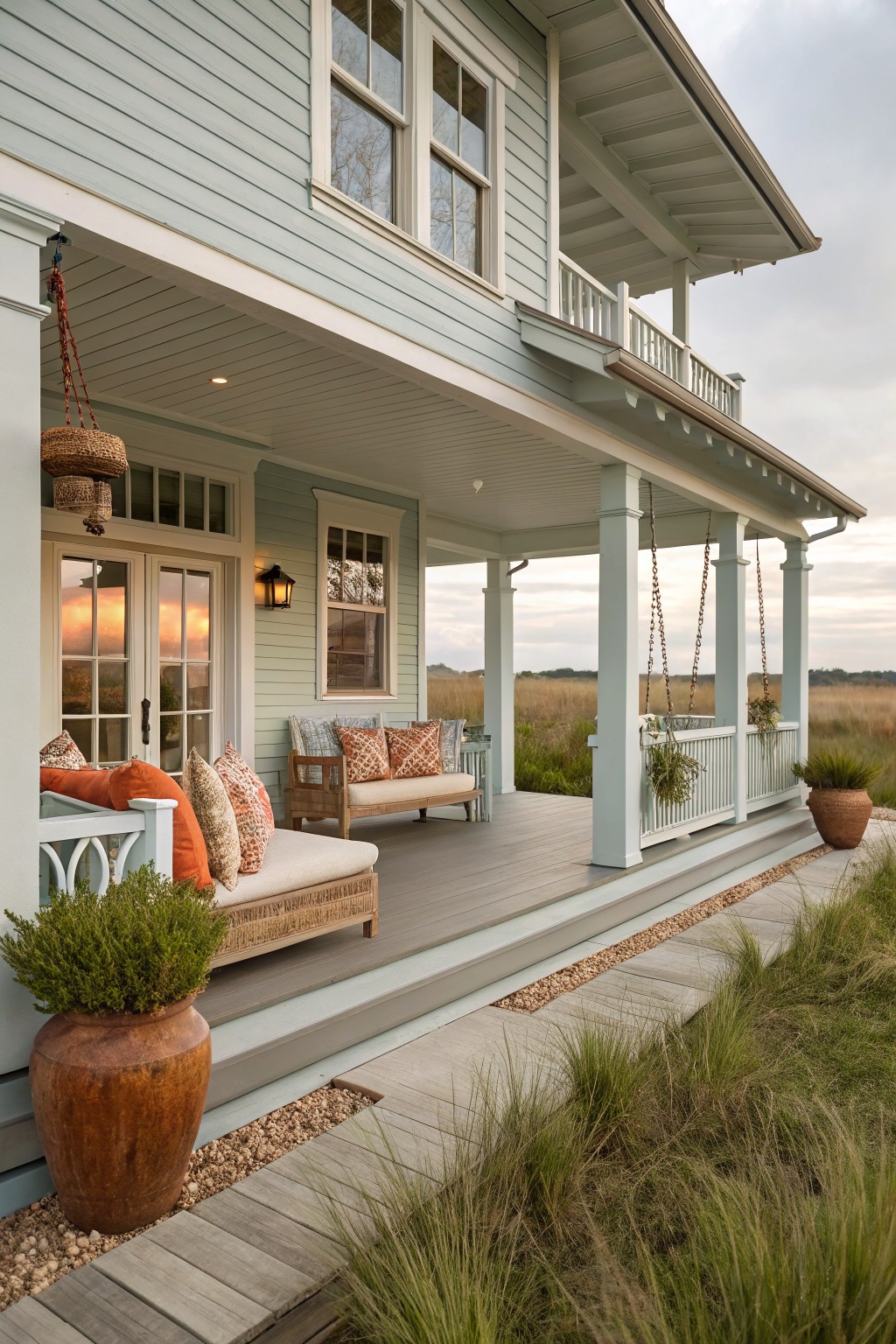
Hanging swings give a wrap around porch a relaxed feel without crowding the floor space. They let you add seating in several spots along the length, which works well when the porch turns a corner and opens up different views.
This setup suits farmhouse homes that already have a good amount of roof coverage. Just check that the joists can handle the weight and use sturdy chains so the swings stay steady over time.
Extend the Porch All the Way Around
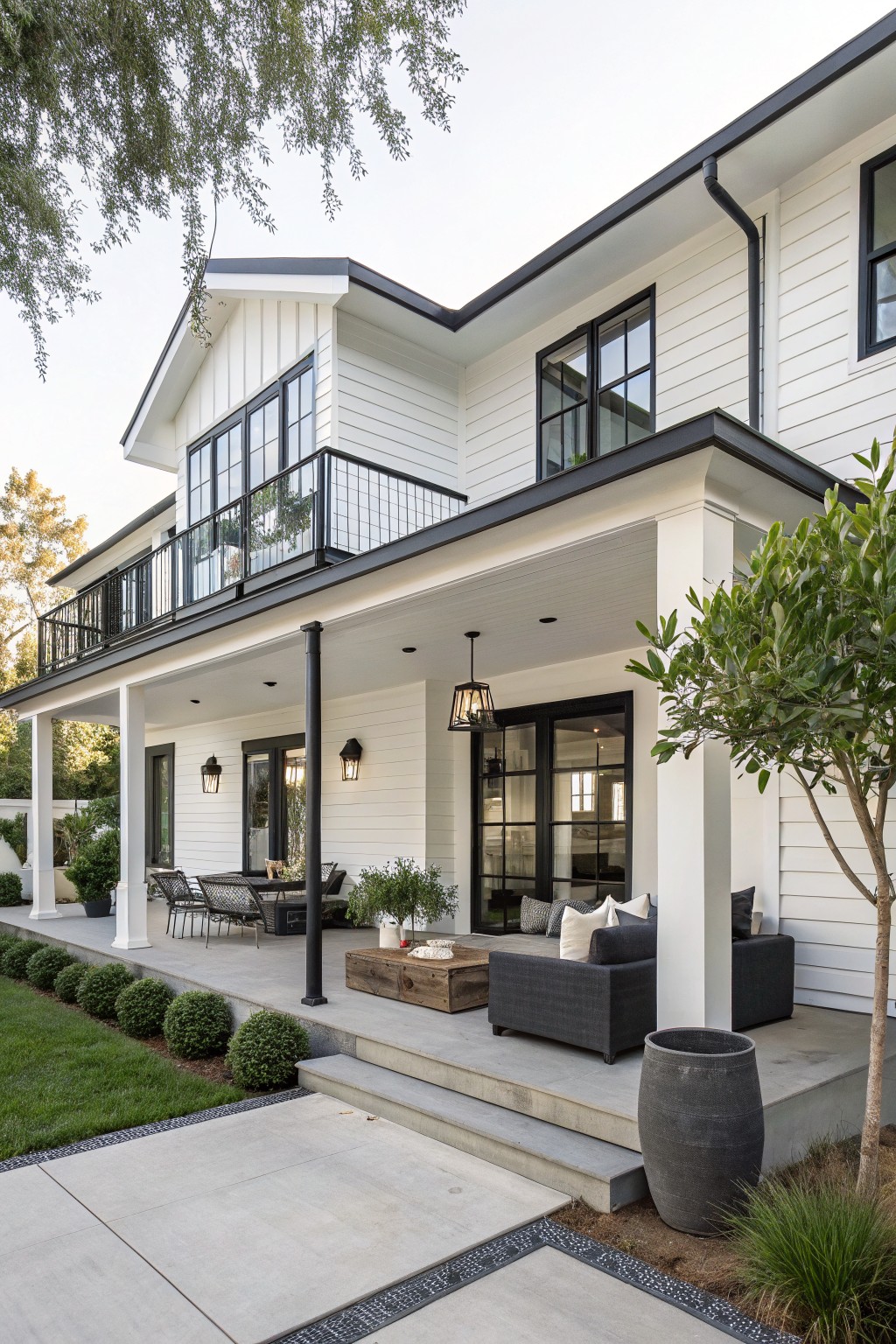
A wrap around porch gives you more outdoor space without needing a huge yard. It turns the sides of the house into usable areas instead of leaving them empty, which works especially well on farmhouse styles where the roofline already supports it. The black posts and railing here keep the whole thing looking clean and tied together with the windows.
This layout suits homes that have room on at least two sides and get decent shade. It lets you place a dining table in one spot and a sofa grouping in another so different parts of the day feel comfortable. Just make sure the posts do not block main walkways or views from inside.
Thick Timber Posts for a Wrap Around Porch
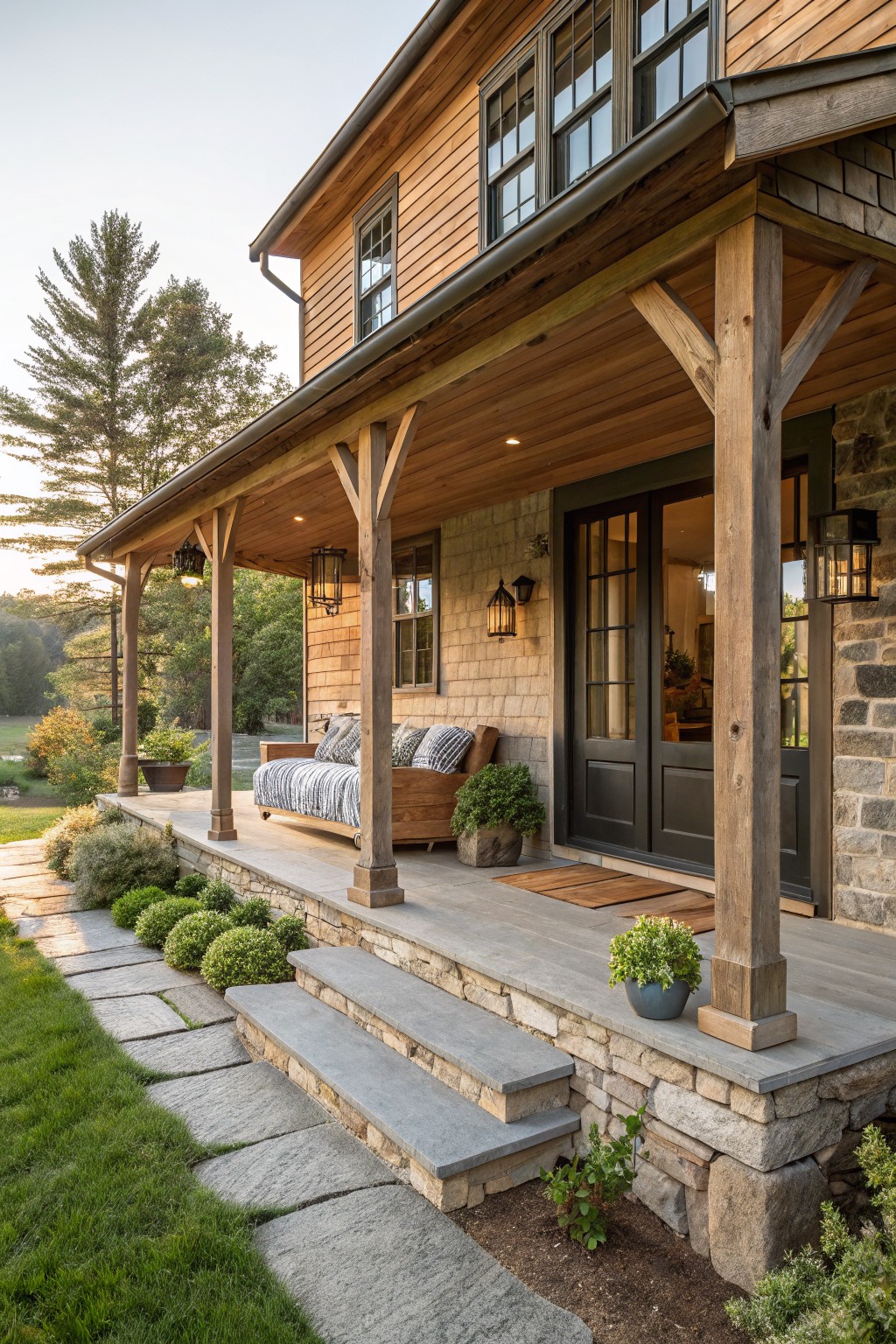
A wrap around porch gains real presence when the posts are thick and the beams are left exposed. The heavy wood gives the porch weight so it feels like part of the house instead of something added on later.
This works especially well on farmhouses that already use stone or wood siding. Match the posts to the roof overhangs and keep the finish simple so the porch looks built rather than decorated.
Wrap Around Porches That Extend The Sides
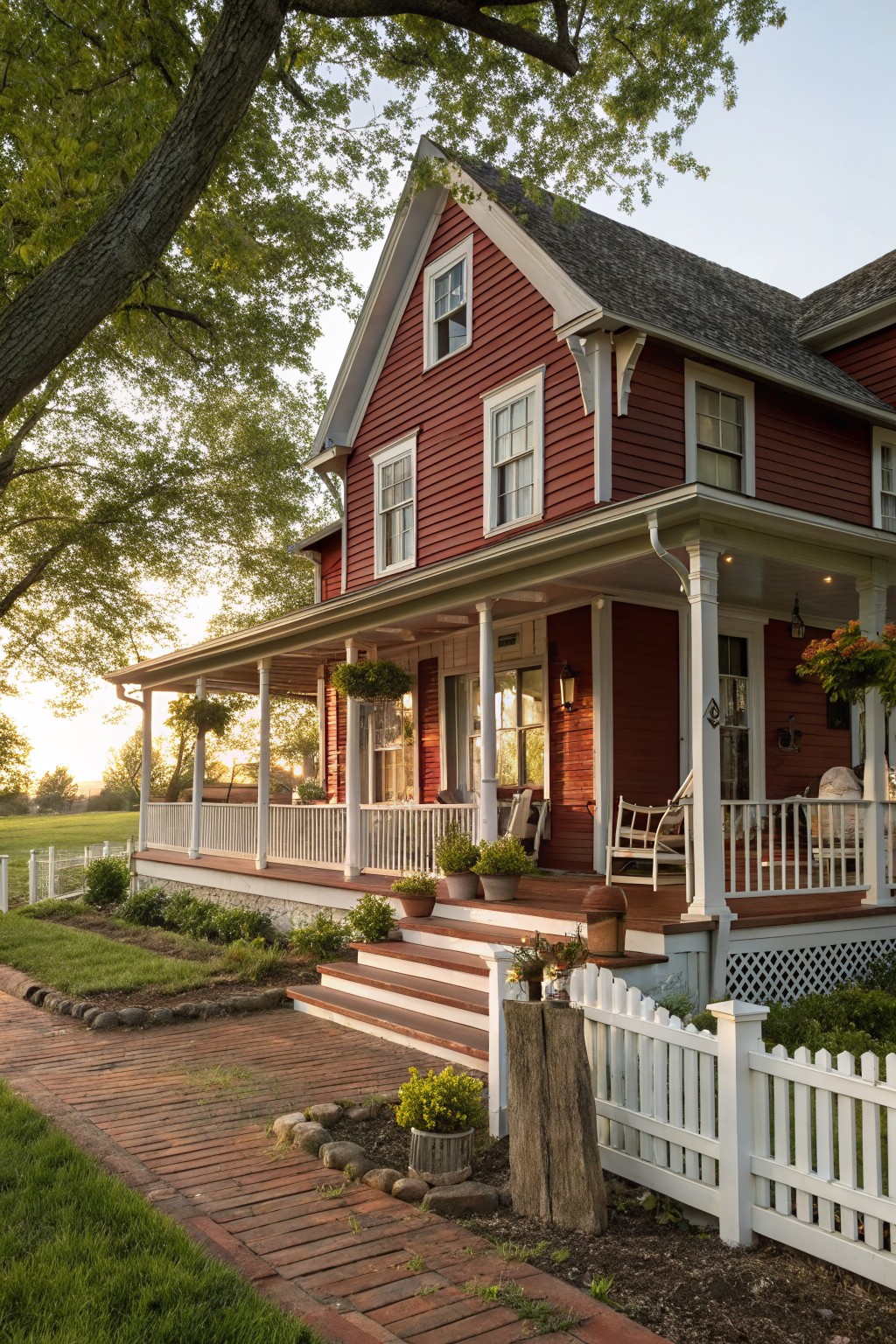
A wrap around porch gives the house more outdoor room without adding another structure. It turns the corner so you can sit on either side depending on the weather or the view you want that day.
This works well on farmhouses that already have a good amount of yard space. Keep the railings simple and the floor material consistent so the porch feels like one long surface instead of two separate areas.
Wrap the Porch Around the Corner
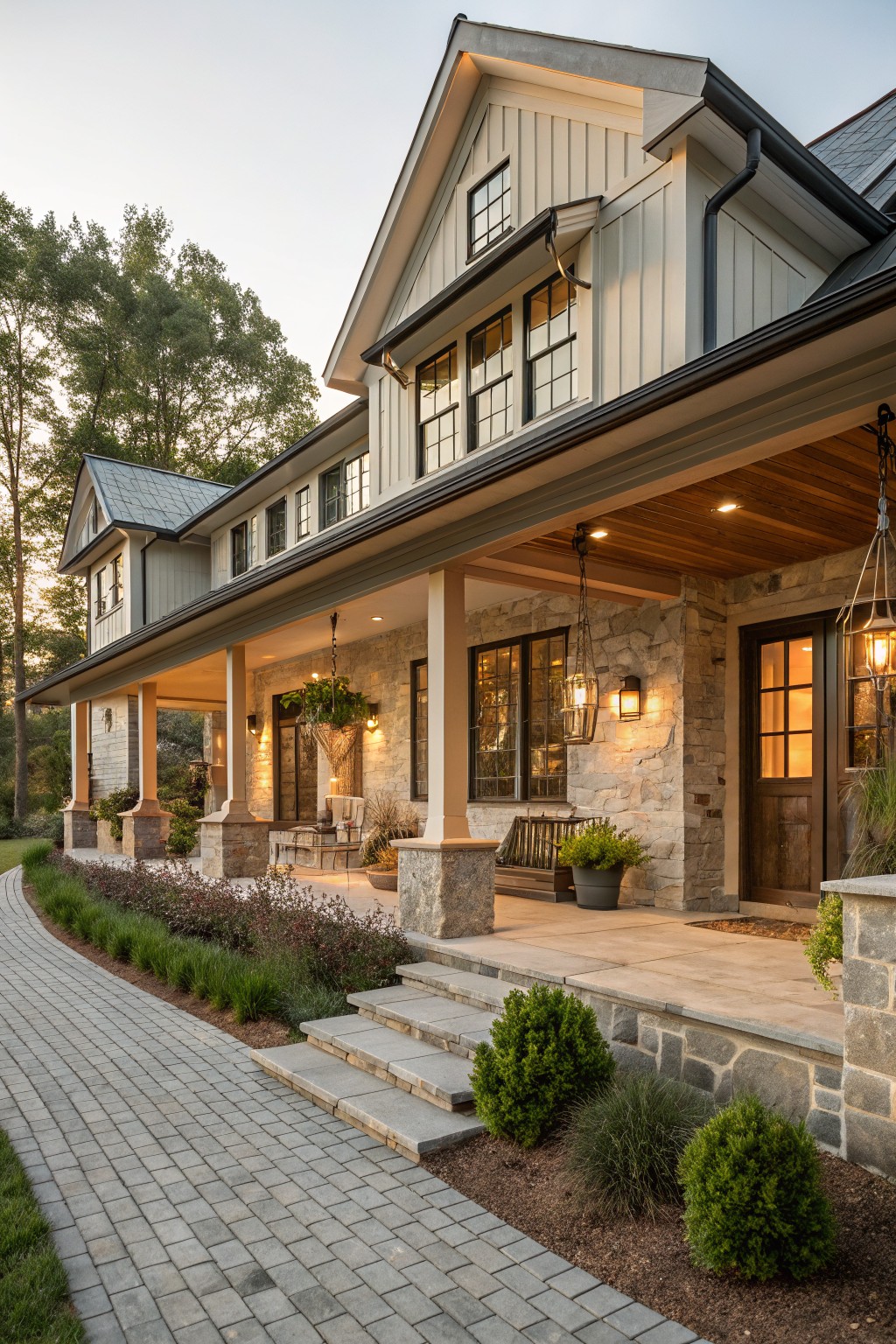
A wrap around porch that continues past the front and turns the side of the house gives the exterior a more balanced shape. It spreads out the seating areas and keeps the facade from feeling too tall or flat.
This layout works best on homes with a similar roof pitch and a good amount of side wall space. Keep the column bases simple and match the materials already used on the lower part of the house so everything stays consistent.
Wrap Around Porches That Follow the House Shape
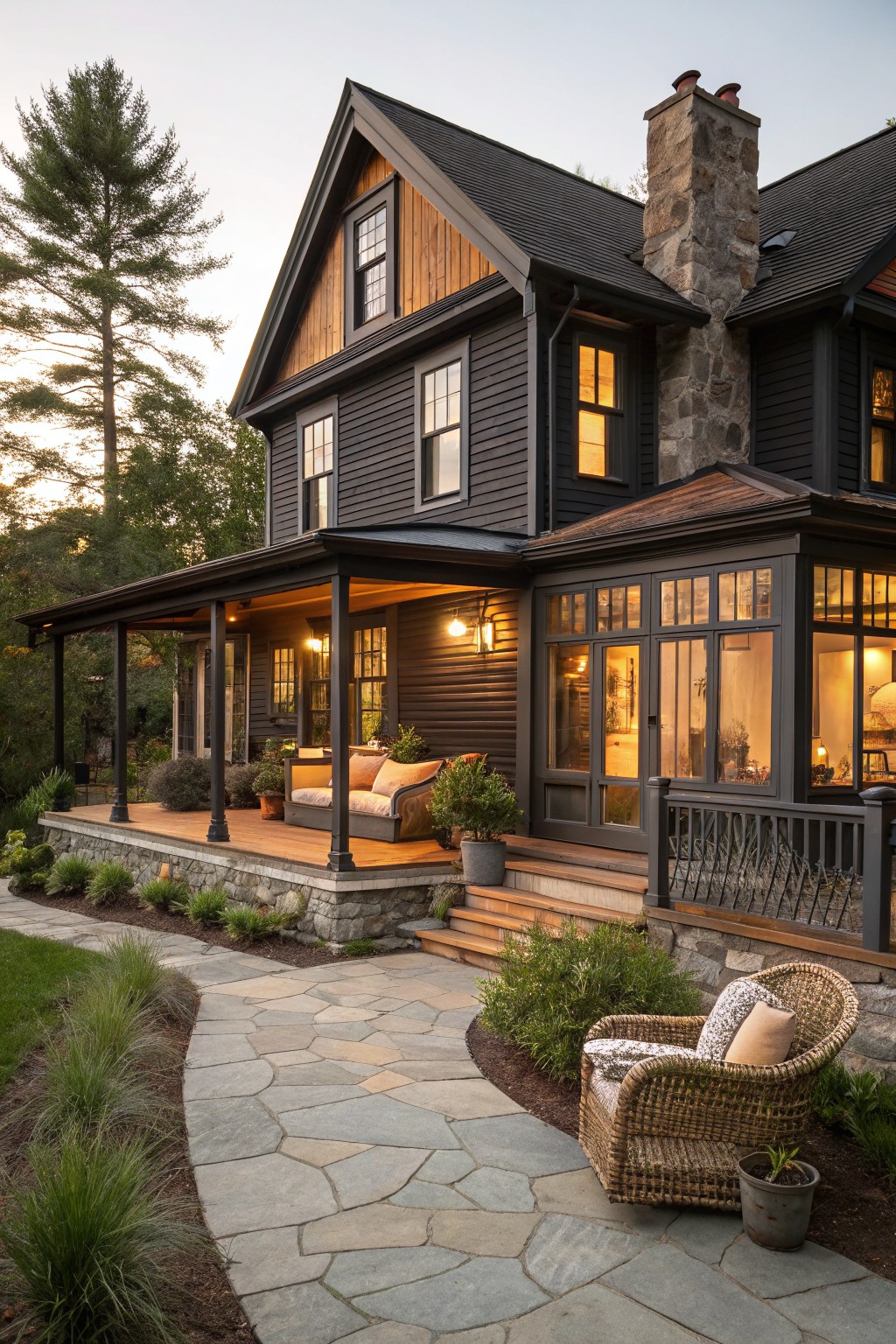
A wrap around porch gives the house more usable outdoor space without making the addition feel separate. It turns the corner of the home into a natural extension of the interior rooms, which works especially well on two story farmhouses that sit on slightly raised foundations.
This layout suits homes with dark siding and simple rooflines. Keep the porch depth consistent so the seating areas stay shaded and the stone base helps the whole thing settle into the site without looking added on later.
Wrap Around Porches That Follow the House Lines
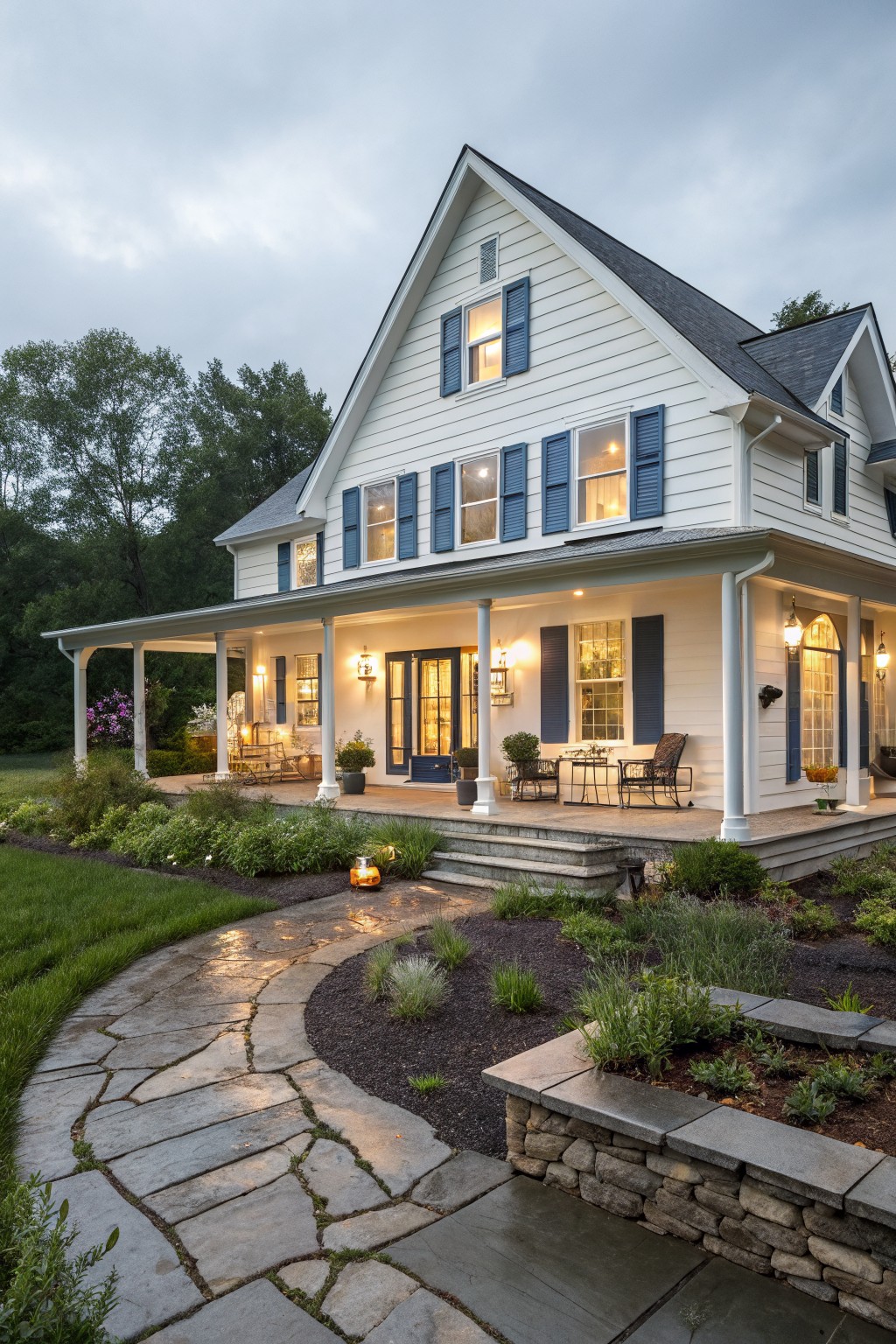
A wrap around porch feels more natural when it runs along the front and turns the corner without a break. This keeps the outdoor space connected and gives you separate areas for sitting instead of one long stretch that never gets used.
It works best on simple farmhouse shapes where the roof and trim can carry through. Match the porch columns and railings to the house so the whole thing looks built in rather than added later.
Add A Fireplace To Your Porch
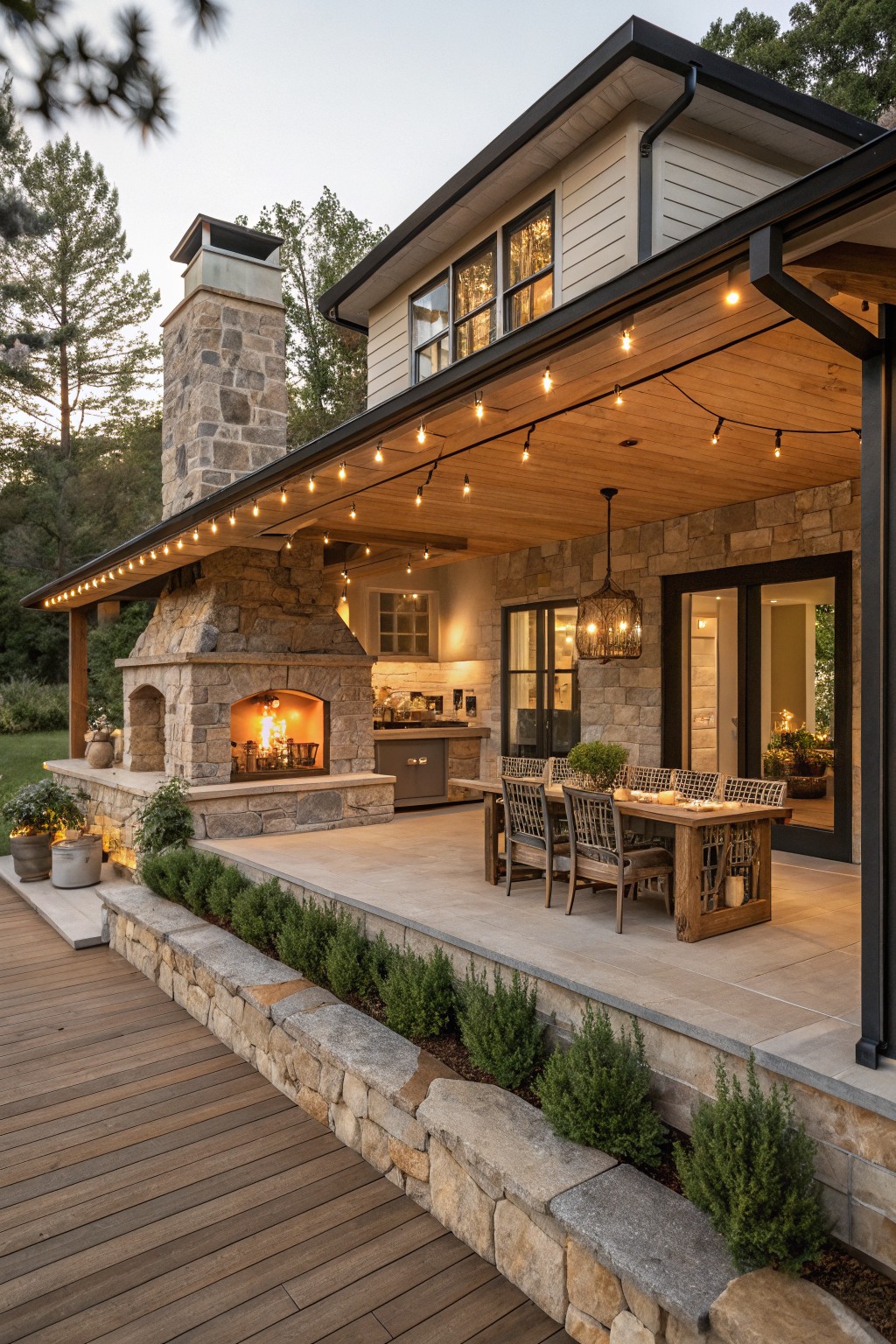
A fireplace changes how a wrap around porch gets used. It turns the space into somewhere people actually sit after the sun goes down instead of just walking through on the way inside.
This works best on larger farmhouses where the porch has room for seating on more than one side. Keep the stone or brickwork in scale with the house so it feels like part of the structure rather than something added later.
Wrap The Porch Around The House
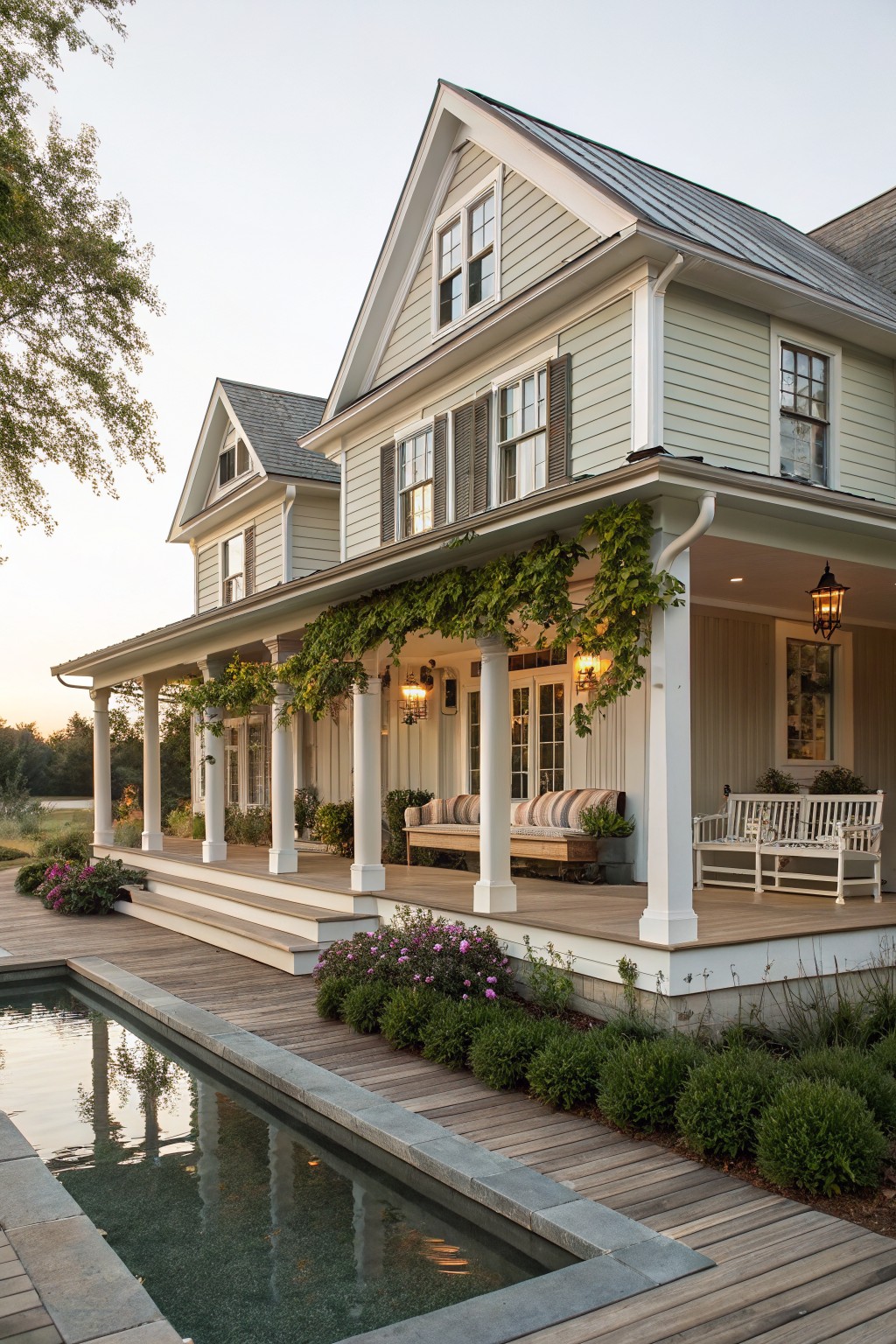
A wrap around porch gives the exterior a more connected look and adds usable space on more than one side of the house. It works especially well on farmhouses because it softens the lines of the building and makes the whole front feel more open.
This layout suits homes with a straightforward shape and room to spare on the sides. Keep the same materials and column style all the way around so the porch reads as one piece instead of several separate sections.
Wrap Around Porches With Stone Bases
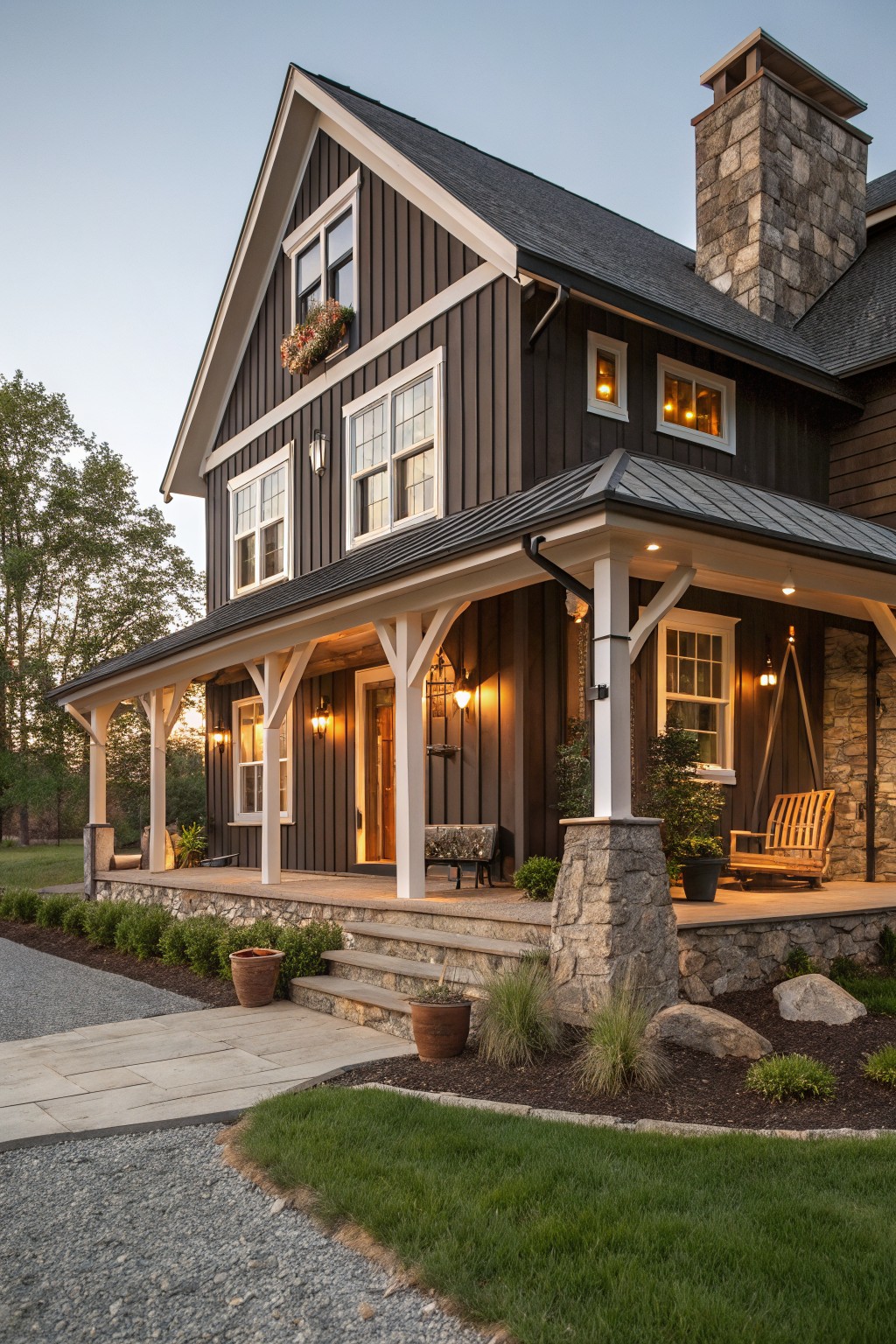
A wrap around porch gains a lot of character when the posts sit on stone piers instead of wood or concrete. The mix breaks up the long run of the porch and gives the whole front a sturdier, more settled look that works especially well with dark siding.
This approach fits older farmhouses or new builds that want the same feel. Keep the stone simple and match the height of the piers to any other stone already on the house so the materials feel connected rather than added on later.
Let the Porch Wrap Around the Corner
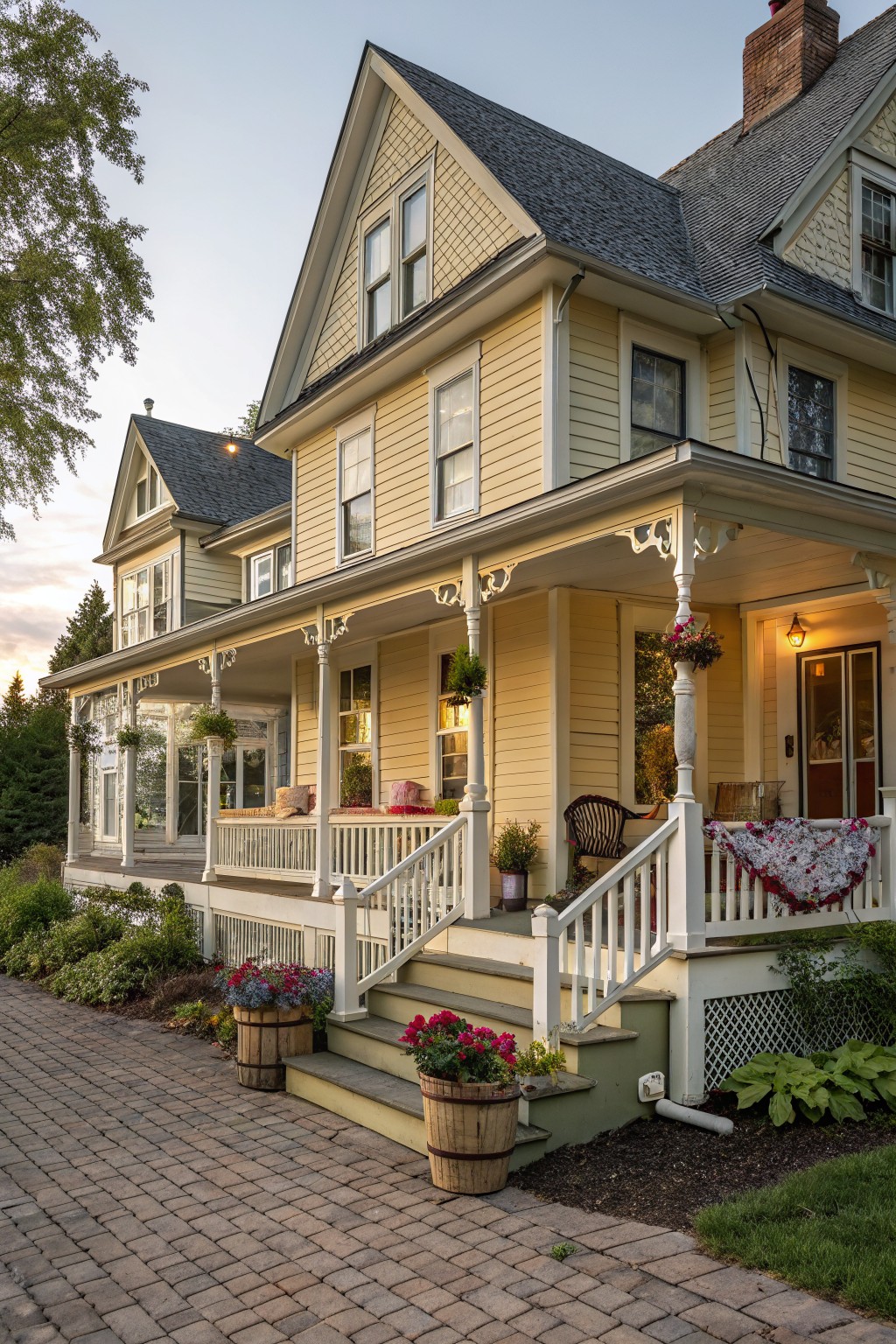
A wrap-around porch gains a lot when it turns the side of the house instead of stopping at the front wall. The extra length gives more room for chairs and planters, and the house feels more settled on its lot. The turn also softens the overall shape so the rooflines and siding read as one piece.
This works best on farmhouses that already have a side door or a visible gable end. Keep the same post style and railing height as you go around the corner, and check that the roof overhang stays consistent so the porch does not look added on later.
Wrap the Porch Around the House
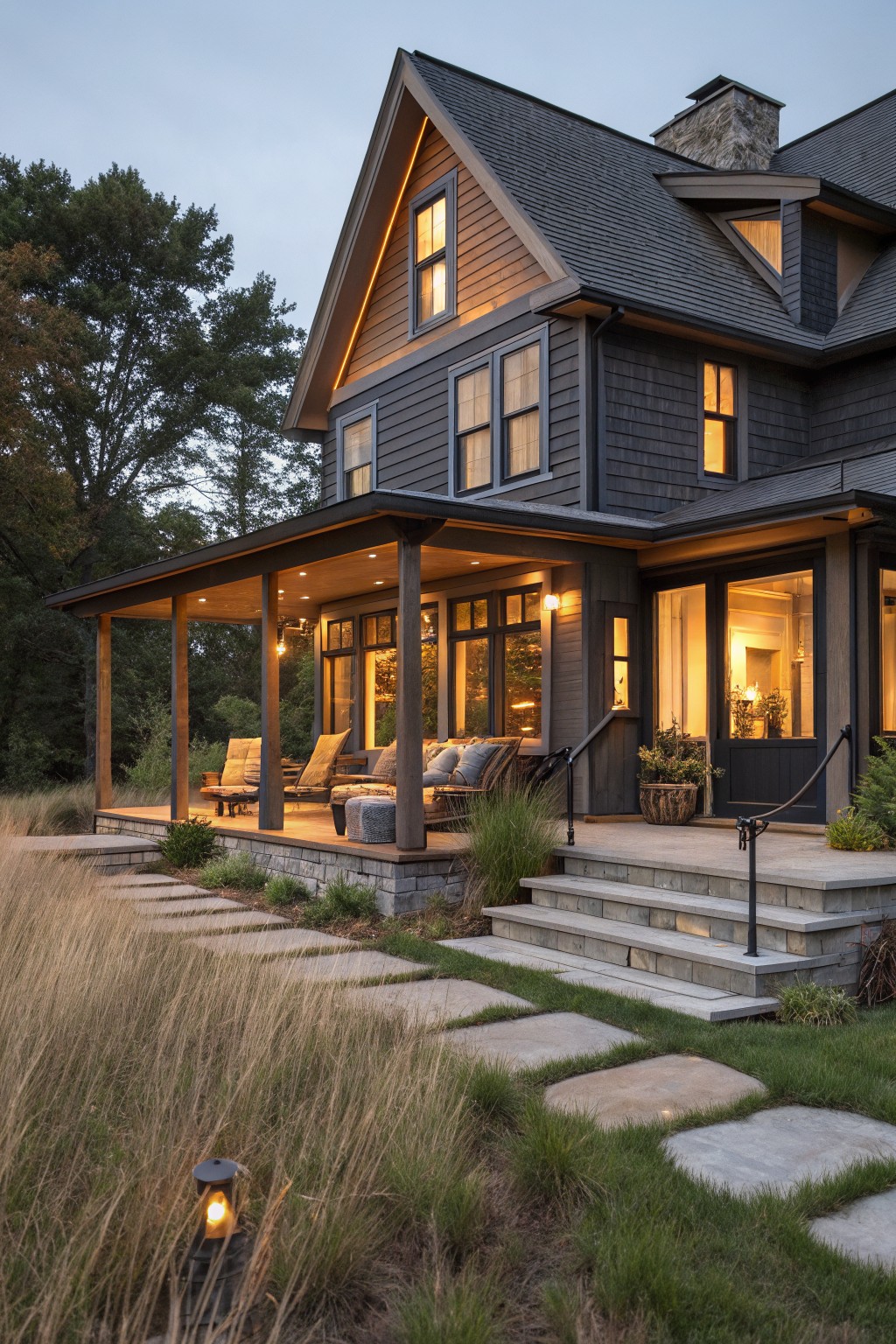
A porch that keeps going past the front door gives you more usable outdoor space without much extra building. It turns one side into several spots for sitting, and the house feels more connected to the yard as a result.
This layout works best on homes with straightforward shapes where the porch can follow the walls without complicated turns. Keep the furniture simple in each section so people actually use the whole length instead of crowding just one end.
Wrap the Porch Around Two Sides
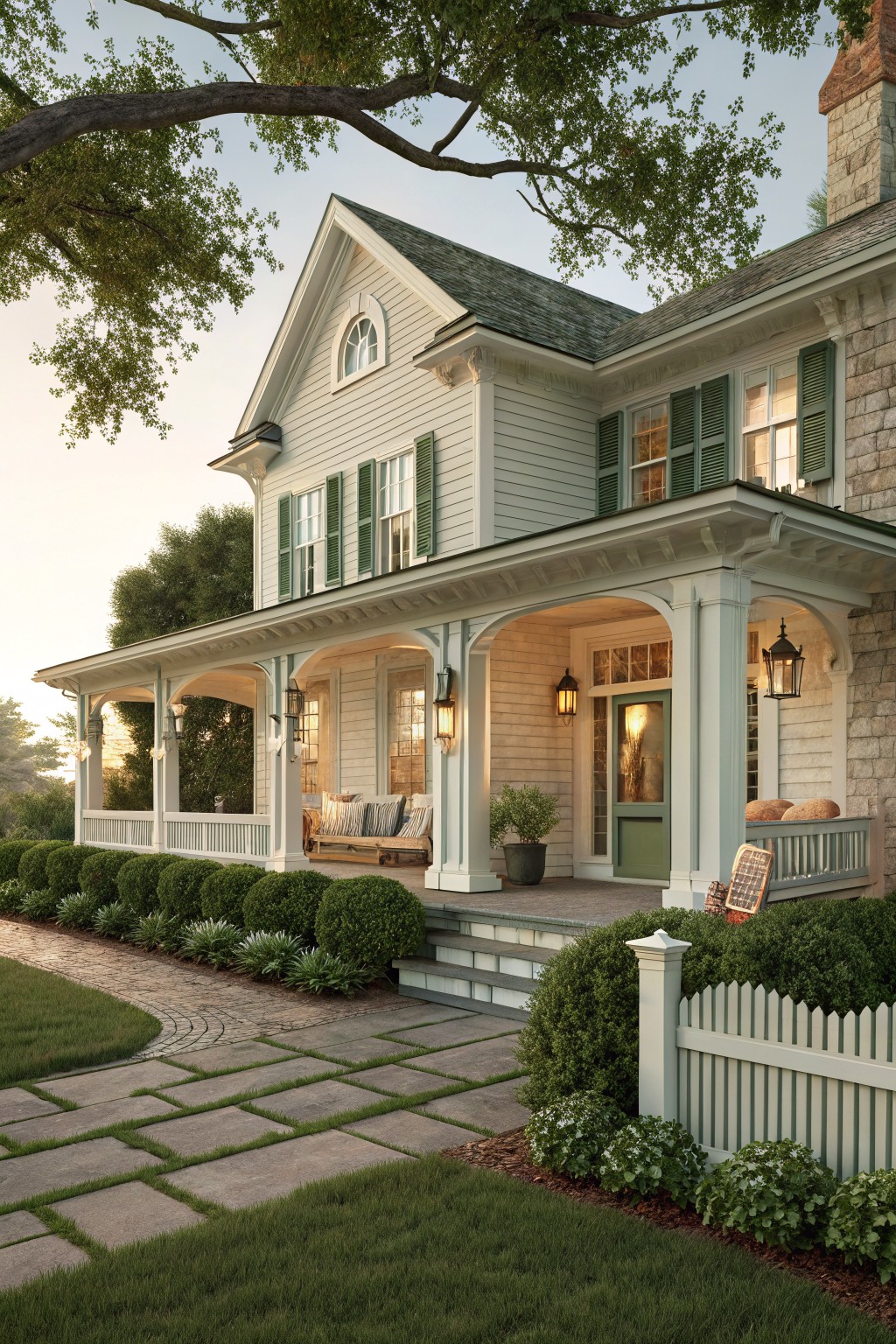
A wrap-around porch lets you use more of the house exterior without adding another structure. It turns the corner so you get seating and entry points on both the front and side, which makes the whole house feel more open and connected to the yard.
This layout works well on simple farmhouse shapes where the roofline already turns. Keep the columns, railing, and roof height the same as you go around the corner so it reads as one porch instead of two separate pieces.
Outdoor Dining On A Wraparound Porch
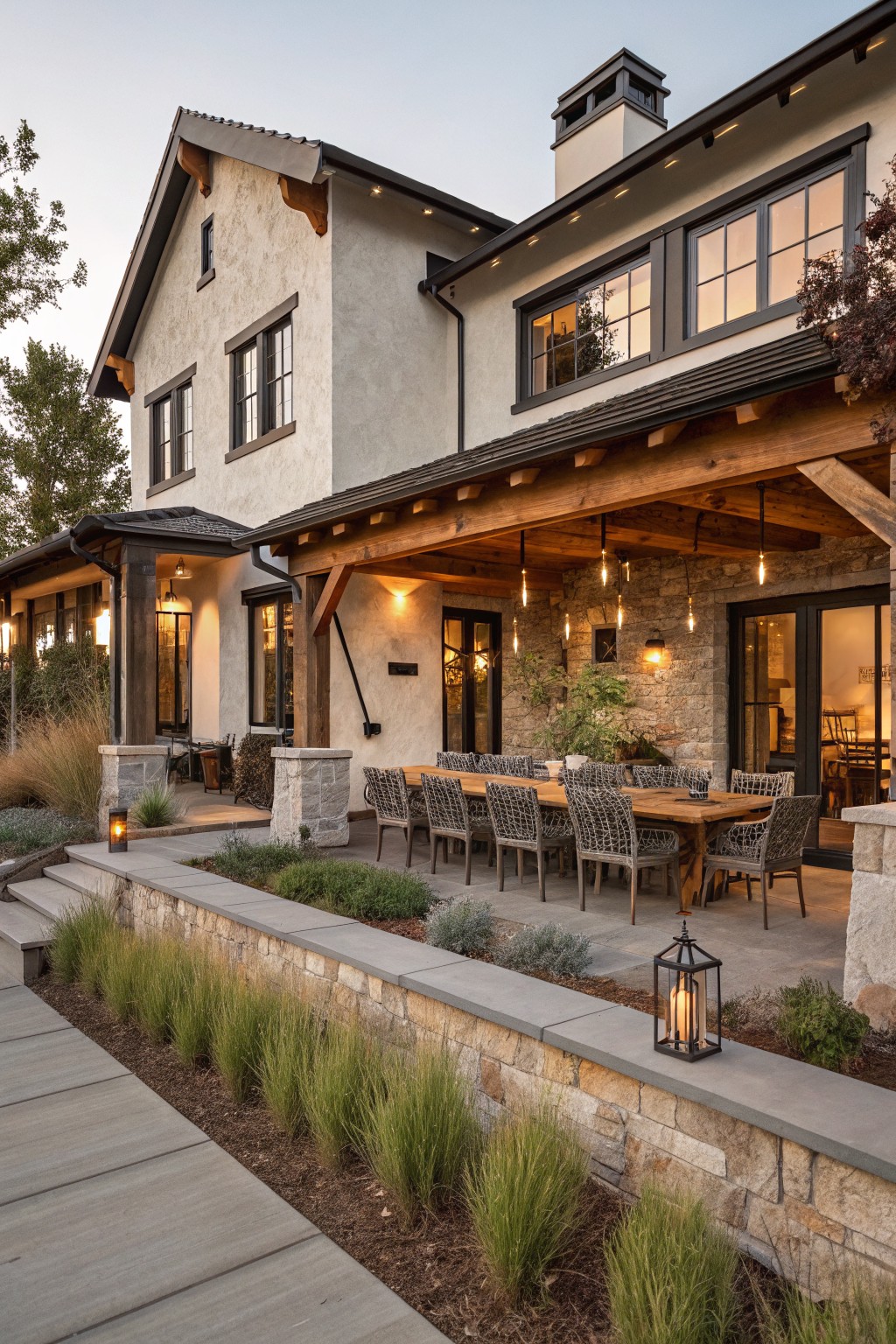
A long table placed right under the porch roof turns the space into a real dining spot instead of just a walkway. The wood ceiling and hanging lights make it feel sheltered while still being outside, which works well on farmhouses that get evening use.
This setup suits homes with a deep porch overhang and a fairly level area along the back or side. Keep the table centered so chairs can pull out easily and the path around it stays clear. Stone bases on the posts help tie the dining area to the rest of the house without adding extra walls.
Wrap The Porch All The Way Around
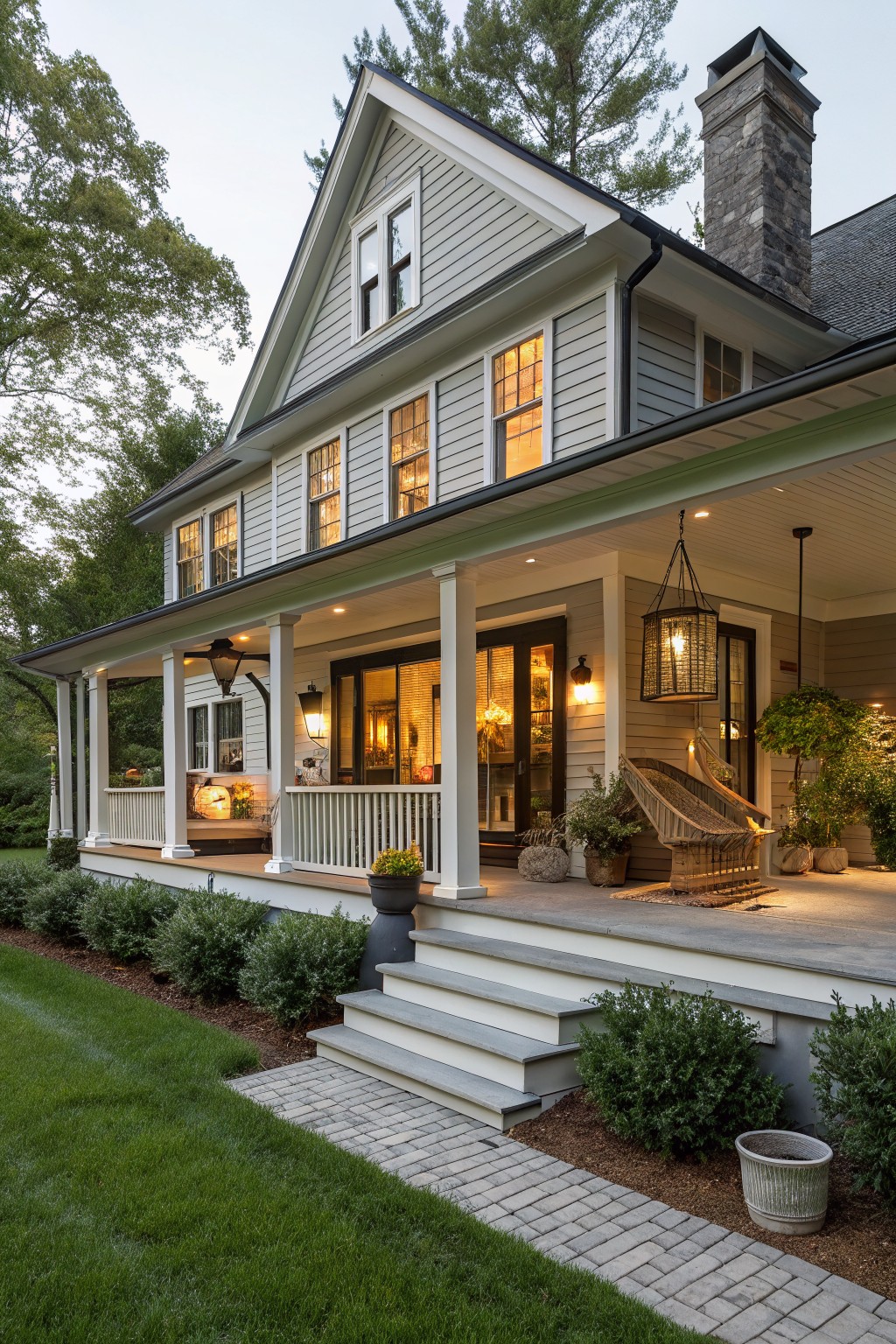
A wrap around porch gives the whole front of the house a more finished feel. It turns what could be a plain facade into something that feels open and connected on more than one side.
This approach works well on farmhouses that have room for the porch to turn the corner. Keep the posts and railing straightforward so the porch looks built with the house rather than added on later.
Frequently Asked Questions
Q: What flooring material stands up best to all kinds of weather on a wrap around porch?
A: Painted or stained wood planks give that true farmhouse feel and hold up fine if you treat them right. Just sweep often and reapply sealant every couple of years. Skip cheap composites if you want the authentic look.
Q: How do I decide on the height of the porch floor?
A: Match it to your main entry doors so stepping out feels natural. A standard height around eight inches works for most farmhouses and keeps water from pooling inside during storms. Test it with a few boards first to see how it sits with your siding.
Q: What type of railing keeps the farmhouse style without blocking views?
A: Simple square balusters in white or natural wood let the porch feel open while adding just enough detail. Space them evenly and keep the top rail wide enough to rest a drink on. This setup works well with most siding colors you already have.
