

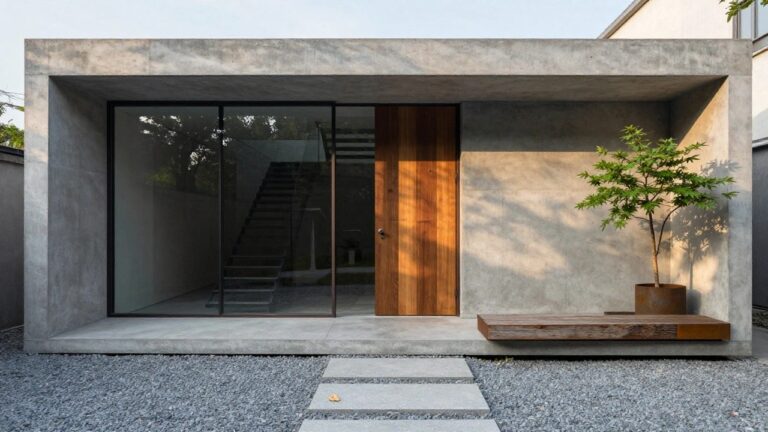
When you pull up to a house, the facade hits you first, with its mix of materials and rooflines telling a story before you even step inside.
I’ve noticed that the best modern exteriors balance sharp angles with natural textures, like weathered wood against sleek metal, so they age well instead of looking dated fast.
Those entryways that frame the door with unexpected asymmetry draw your eye right in from the street.
Pushing boundaries doesn’t mean chaos.
A few of these ideas have me thinking about how they’d adapt to a sloped lot like mine, worth saving to test against real sunlight and shadows.
Black Cladding Over White Walls
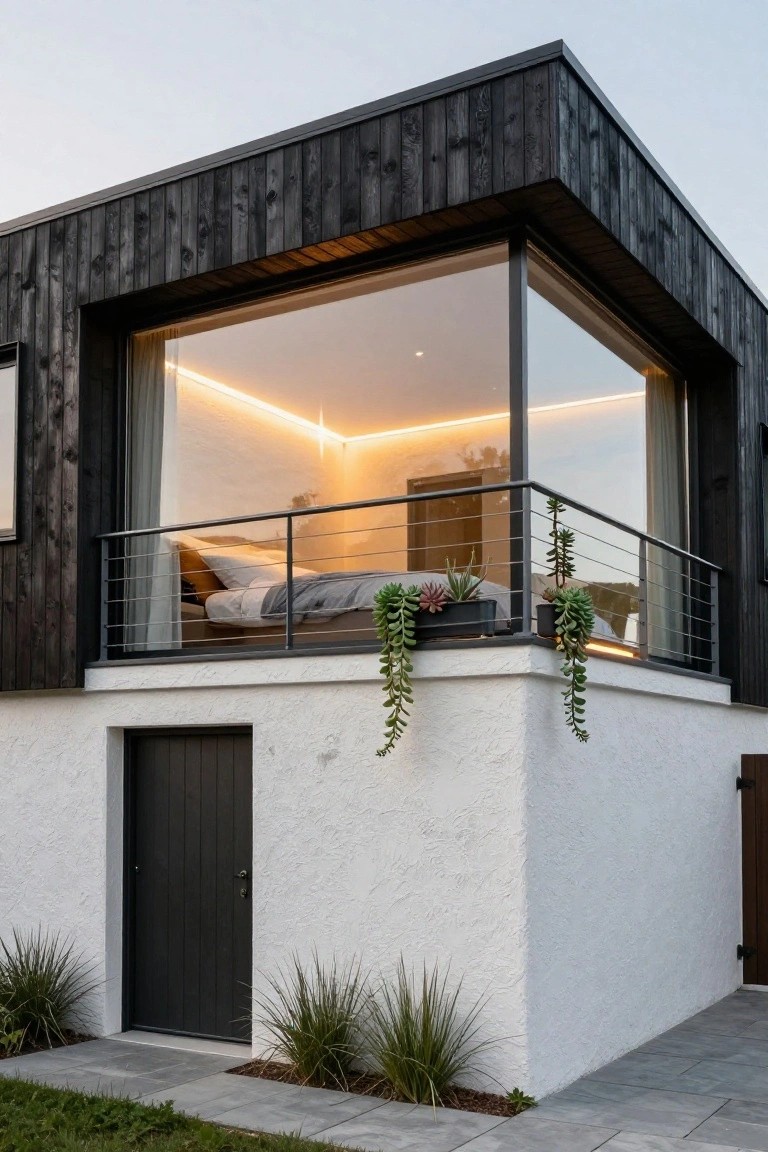
One look at this house and you see how black wood cladding over a white plaster base makes a strong modern statement. The dark upper part feels solid and sleek, while the light bottom keeps things from getting too heavy. That corner window pulls it all together, letting the inside peek out without overwhelming the street view.
This setup works best on corner lots or homes that need some punch without going all black. Pair it with simple plants at the base like those grasses here, and it stays low fuss. Just make sure the cladding is treated wood to handle weather, or it could fade fast.
Rounded Arches for Entryways
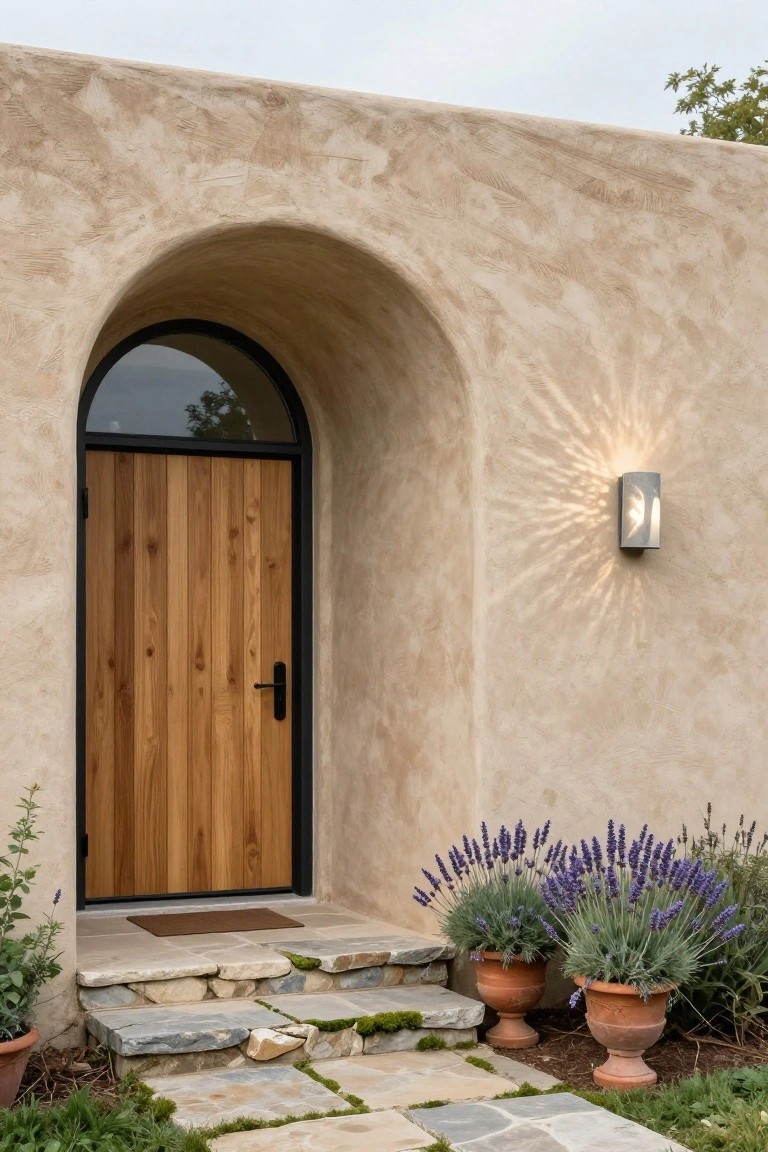
Rounded arches like this one take a simple door and turn it into something that feels more open and friendly right from the street. The curve softens all those straight lines you see on most modern houses. Paired with natural wood on the door and a bit of black framing, it pulls in that old adobe look without going full traditional. The wall light adds just enough glow at night too.
You can pull this off on homes in warmer climates or anywhere you want a bit more character up front. Stick to earthy stucco or plaster walls and keep plants like lavender nearby to tie it to the ground. Watch the scale though. Too big and it overwhelms a small entry. Works best where steps lead right up.
Corten Steel Cladding for Modern Facades
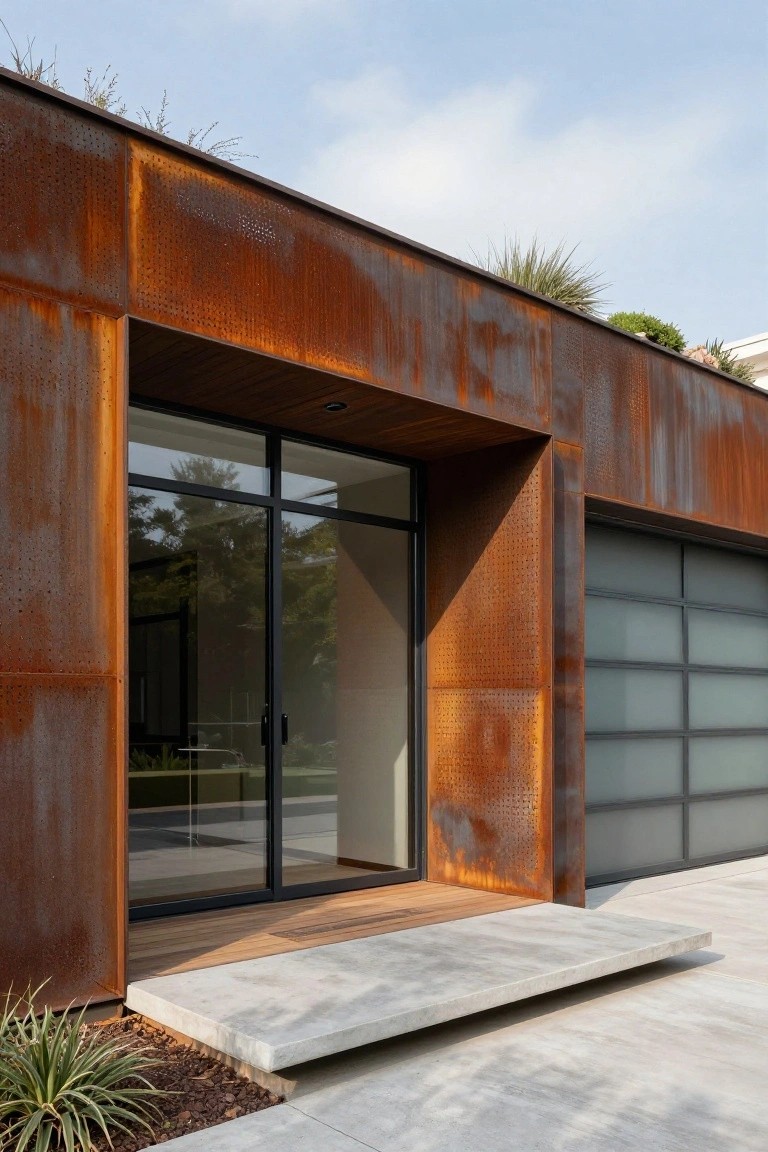
Homes with corten steel panels like this one get a lot of their character from that rusty orange finish. The metal weathers naturally into a patina that looks tough and lived-in, framing the glass entry doors without overwhelming the clean lines. It’s a simple way to add texture to a plain boxy shape.
Use it on side walls or accents around entries where you want low-maintenance drama. Fits best on contemporary houses in areas with some rain to help the rust set. Keep plants low around the base so they don’t hide the effect… and watch for any staining on paths below.
Mixing Materials for Modern Facade Interest
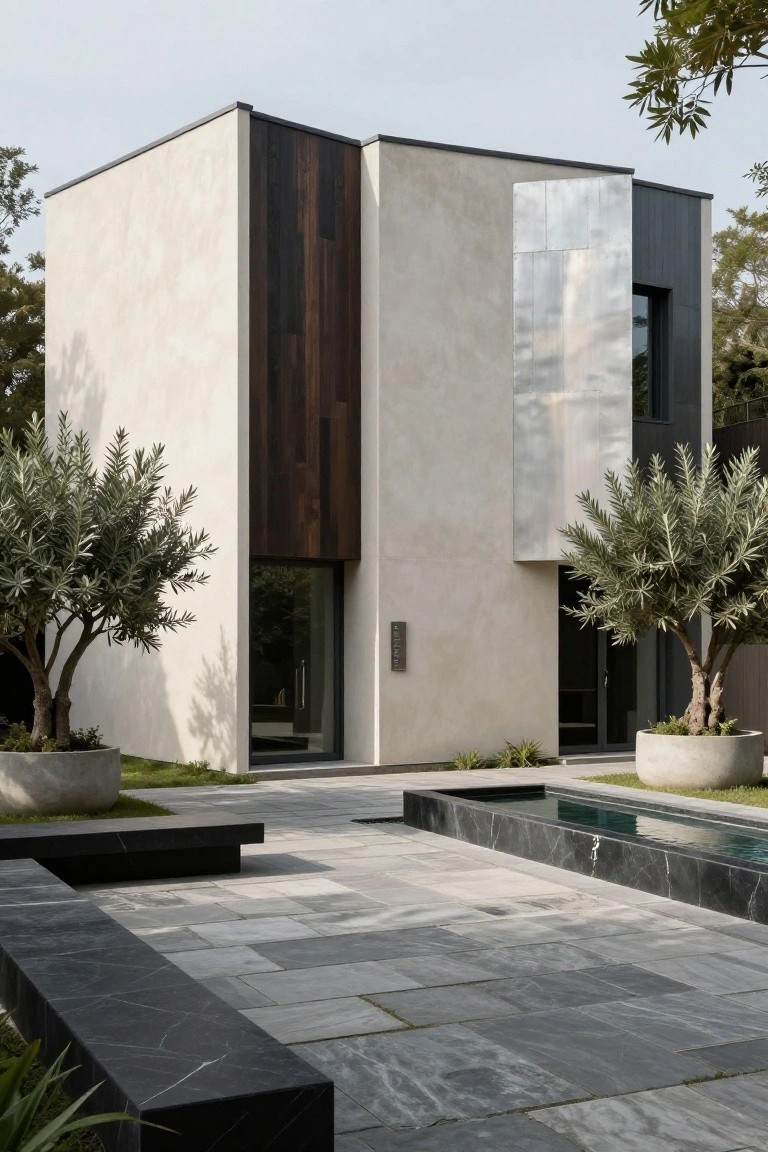
A simple white stucco base paired with a tall vertical panel of dark wood and a sleek metal accent gives this house front real texture. It keeps things clean but adds enough contrast to make the place stand out from plain modern boxes. The wood brings some natural feel, the metal a sharp modern touch.
You can pull this off on mid-sized homes where you want curb appeal without too much fuss. Pick materials that weather well together, like cedar or ipe for the wood. Scale them to your house height so it doesn’t look patched on. Works best with big windows nearby to let light play off everything.
Rear Glass Walls to Deck
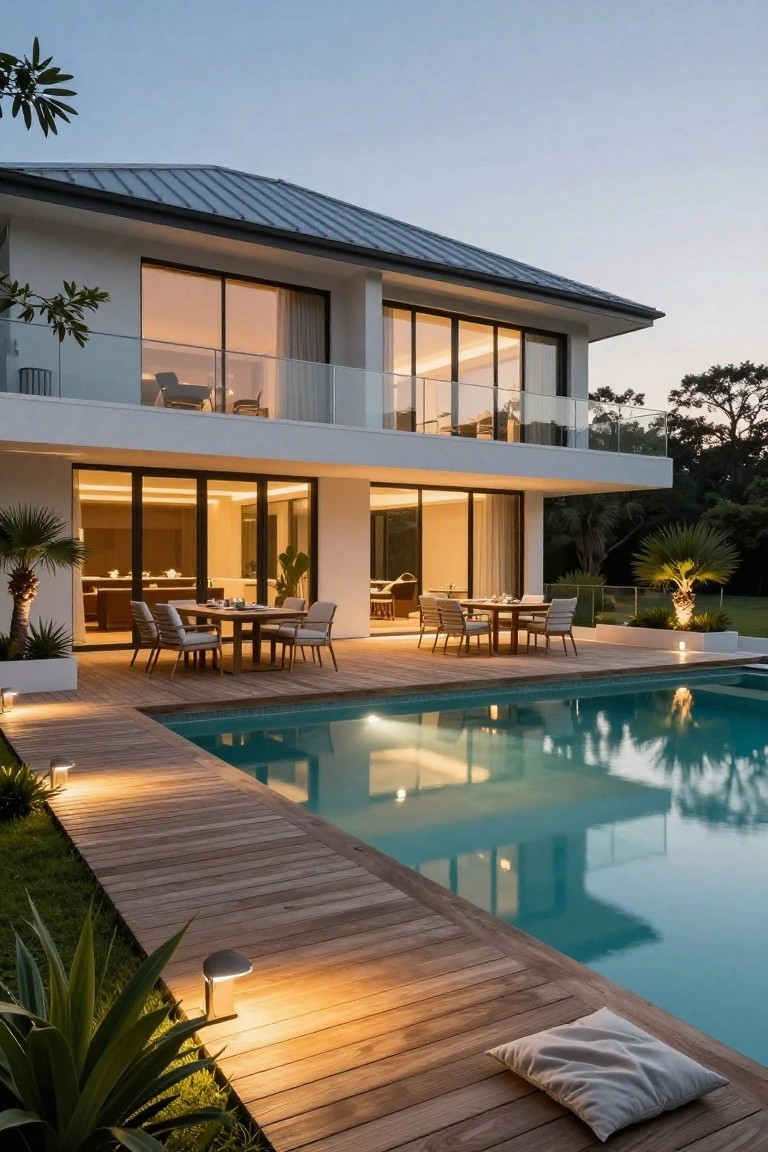
The back of this house leans heavy on glass, with tall sliding doors downstairs and a full glass balcony up top. It pulls the inside right out to the wooden deck and pool without a break. That warm evening light spilling out makes the whole setup feel alive and easy to use.
This works great on modern homes in warm spots where you live outdoors half the time. Line it up with a pool or terrace for the best flow. Go for good quality glass so it stays efficient, and sheer drapes handle bugs or glare (or nosy neighbors).
Linear Water Channels in Courtyards
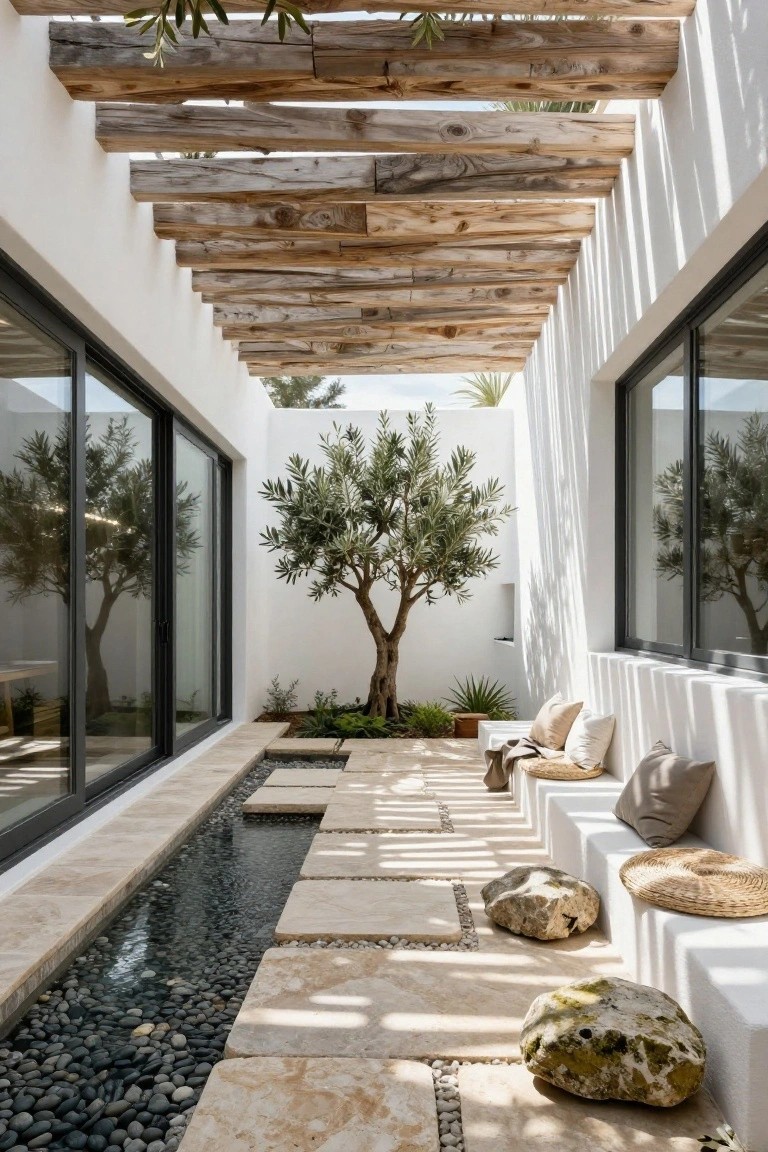
A narrow water channel runs right alongside the stone path here, filled with dark pebbles for a soft trickle sound. It pulls your eye down the space toward the benches and olive tree without needing much room. That quiet movement makes the whole courtyard feel alive and restful, especially under the wood beams overhead.
You can add one like this in tight spots between house walls or rooms. Line it with pebbles to keep maintenance low, and make sure the water recirculates. It suits sunny Mediterranean-style patios or modern backyards where you want calm flow leading to seating. Just watch the slope so water doesn’t pool.
Cantilevered Wood Over Concrete Base
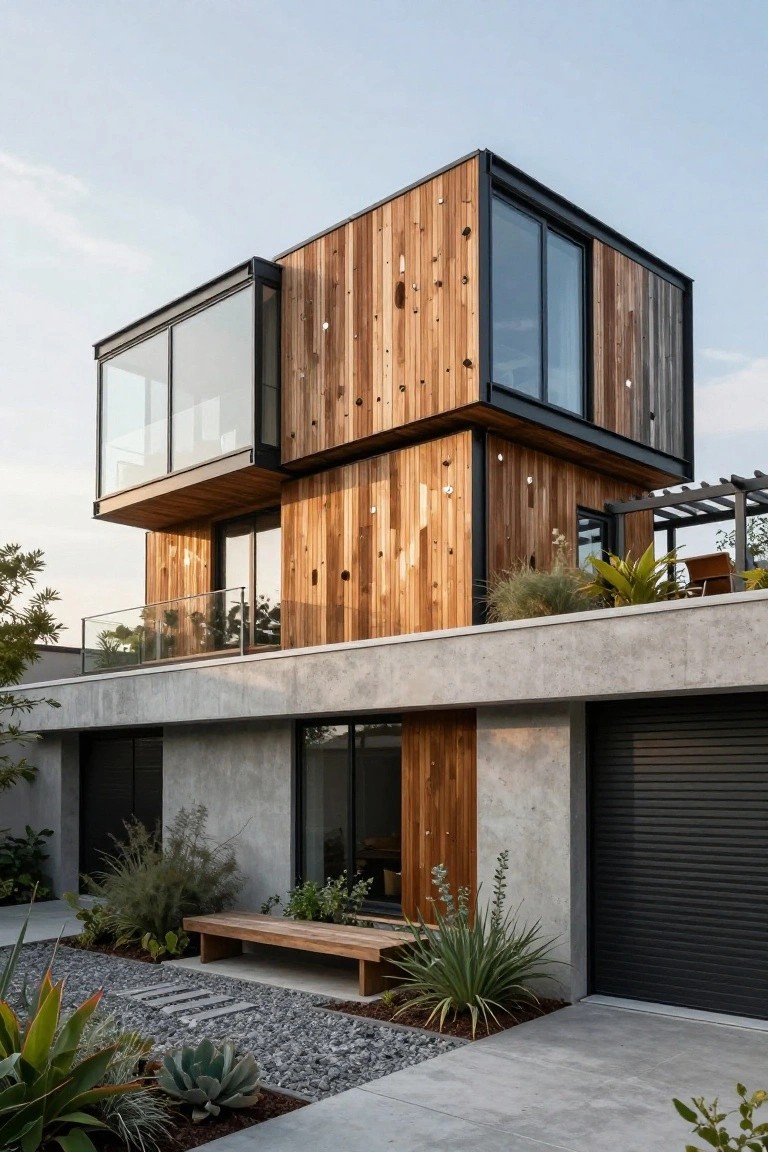
One smart way to give a modern house some real presence is stacking a cantilevered wooden upper level right over a plain concrete base. The wood planks, with their warm tones and subtle texture, push out over the edge, while the concrete below keeps everything solid and low-key. Large glass windows on both levels let light flood in, making the whole thing feel open yet structured.
This setup suits narrower lots or places with a view to capture, since the overhang creates a sheltered entry or patio below. It fits homes aiming for that clean industrial vibe without going cold, especially if you add simple gravel paths and tough plants like agaves around the base. Watch the proportions though, the wood box shouldn’t overwhelm the ground level.
Weathered Wood Cladding on Beach Houses
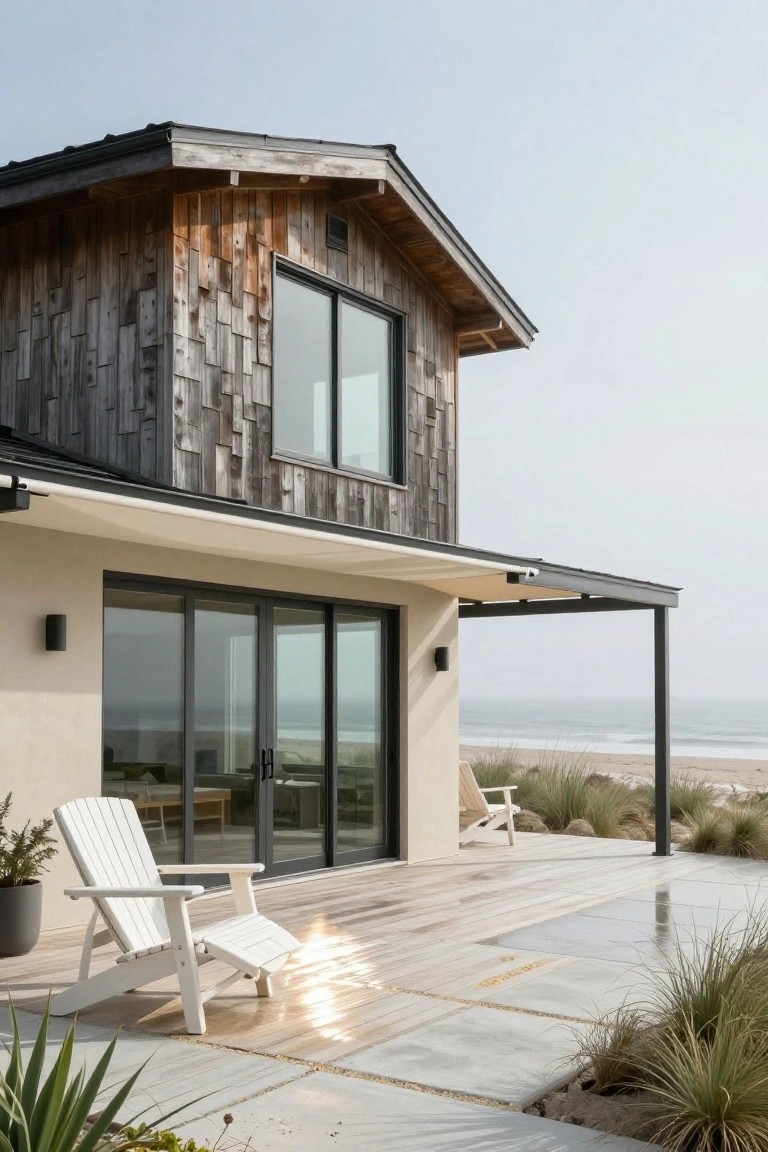
Weathered wood cladding like you see here takes a modern beach house and gives it some honest coastal soul. The upper walls have that dark, rough-textured siding that picks up on driftwood vibes from nearby dunes, while the smoother stucco base keeps things grounded. Big glass sliders pull the inside right out to the deck. It’s a simple way to add depth without overdoing it.
This look fits best on waterfront spots or anywhere wind and salt are factors. Pair the wood with clean metal details and plenty of glass to stay contemporary. Go for naturally aged cedar or something pre-weathered so it doesn’t look fake from day one. Skip it on super urban lots, though. It shines where nature sets the tone.
Stone Walls Paired with Brass Cladding
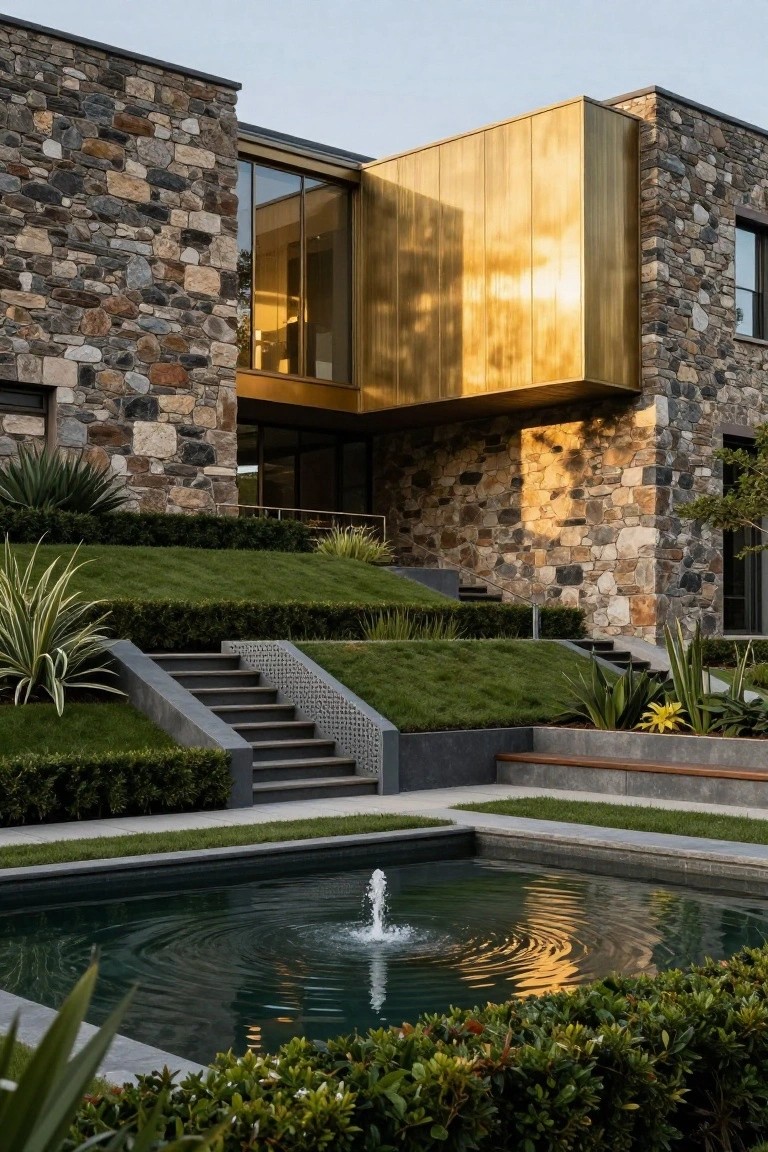
One way to give your home a fresh modern edge is to mix rough natural stone walls with smooth brass cladding on key parts of the facade. In this setup, the textured stone covers most of the base and sides, handling the everyday rugged look, while a brass box juts out as the main feature. It catches the light in a way that makes the house pop without feeling too flashy. That contrast keeps things interesting from the street.
You can pull this off on a sloped lot where the stone grounds the build into the landscape. Pick reclaimed or local stone for the walls to tie into your site, then add brass panels on an extension or entry volume. It works best for homes aiming for that upscale casual vibe. Just seal the brass well to avoid quick weathering, and keep surrounding plants simple so they don’t steal the show.
Climbing Vines on Dark Facades
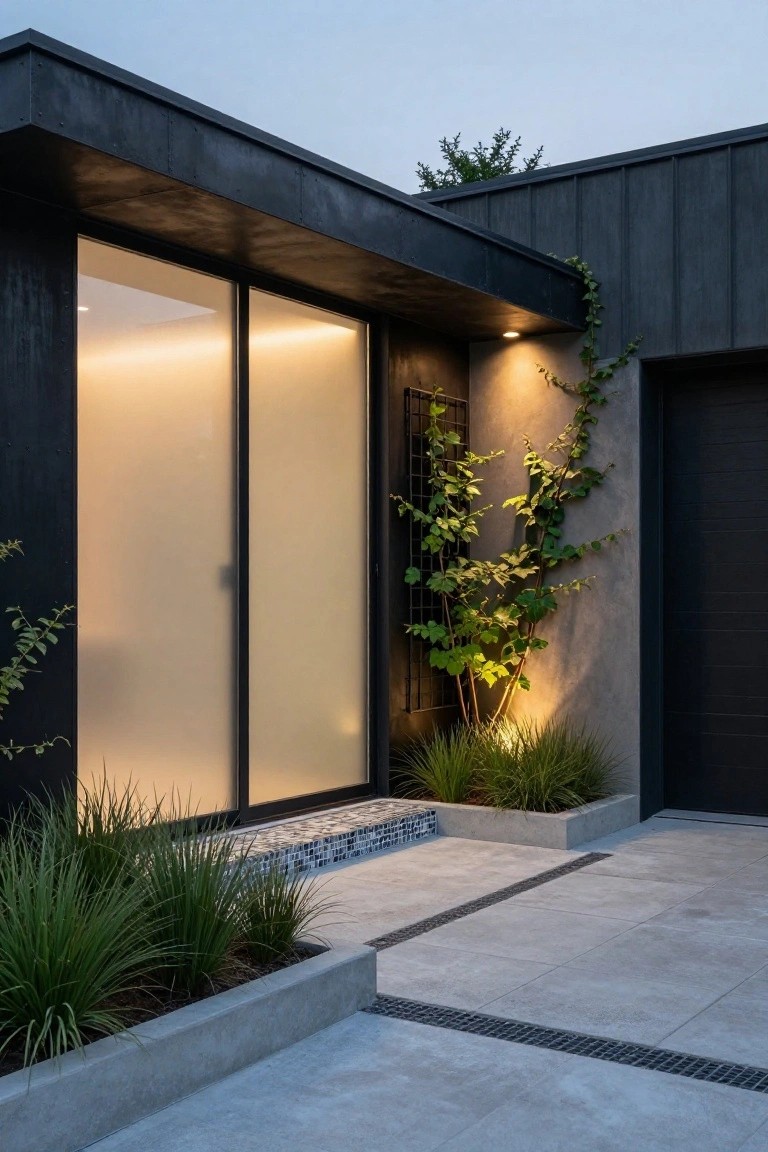
One simple way to warm up a stark modern exterior is to add climbing vines on a metal trellis right against the wall. In this setup, the green leaves climb up next to large frosted glass doors, breaking up the black timber cladding without cluttering the look. It pulls the eye to the entry and ties the house to the yard naturally.
This works best on homes with flat, bold walls like charred wood or concrete panels. Pick a sturdy trellis that sits flush, plant something vigorous like ivy or grapevine at the base, and let it grow. Keep it near paths or doors for impact. Just trim it back now and then so it stays neat.
Extending Indoor Living to the Pool Terrace
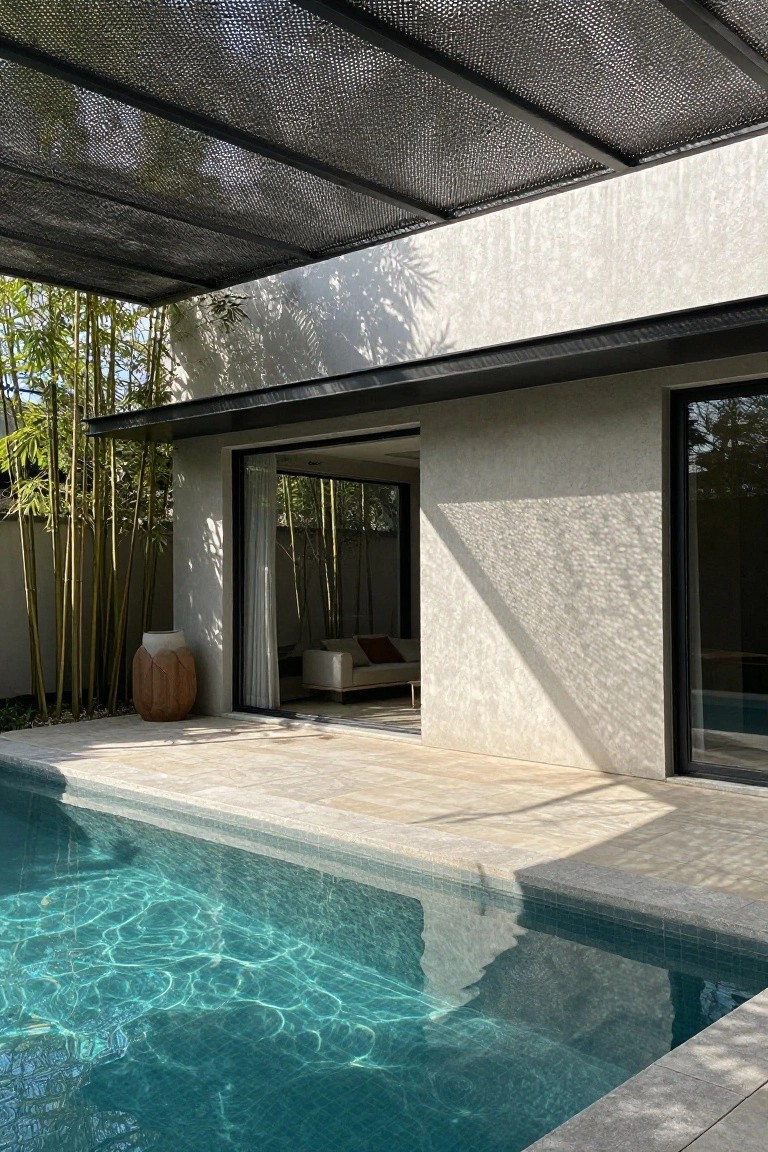
Big sliding glass doors like these make the pool feel part of the house. You see the white sofa inside right next to the deck, with the pool water just steps away. It pulls everything together into one easy space. Folks who try this say it changes how they use their home, especially on nice days.
This idea fits modern houses in warm areas where outdoors matters. Go for doors that slide all the way open, and add some screening like bamboo to keep it private. Watch the floor materials so they don’t get too slippery when wet. It’s straightforward for anyone updating a backyard setup.
Living Green Roofs on Modern Outbuildings
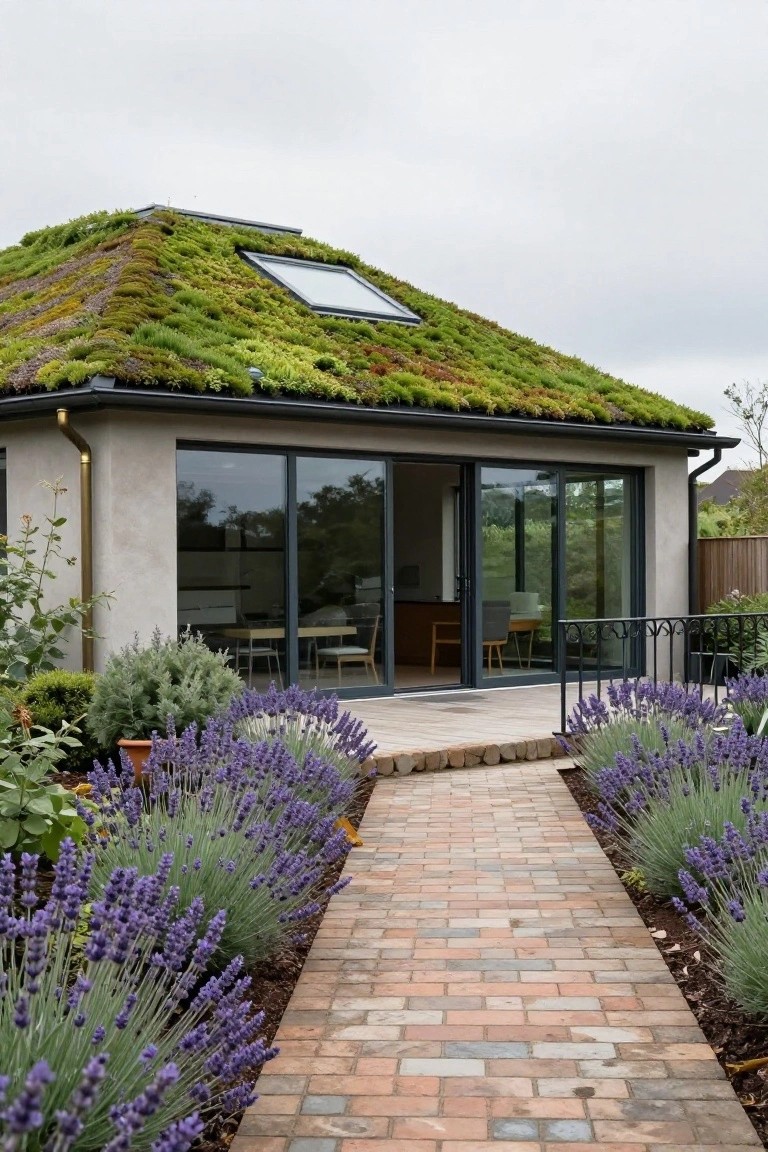
A green roof covered in sedum plants turns a simple garden studio into something that feels part of the landscape. It softens the hard lines of the stucco walls and glass doors. Plus it helps with insulation and rainwater runoff. Folks like how it pushes that modern look toward something more natural without going overboard.
These work best on smaller structures like sheds or home offices where the roof pitch is low. Check your building can handle the weight first. Pair it with a simple path and plantings nearby to tie it all together. Maintenance stays easy if you pick hardy plants like sedum.
Black Vertical Cladding for Modern Facades
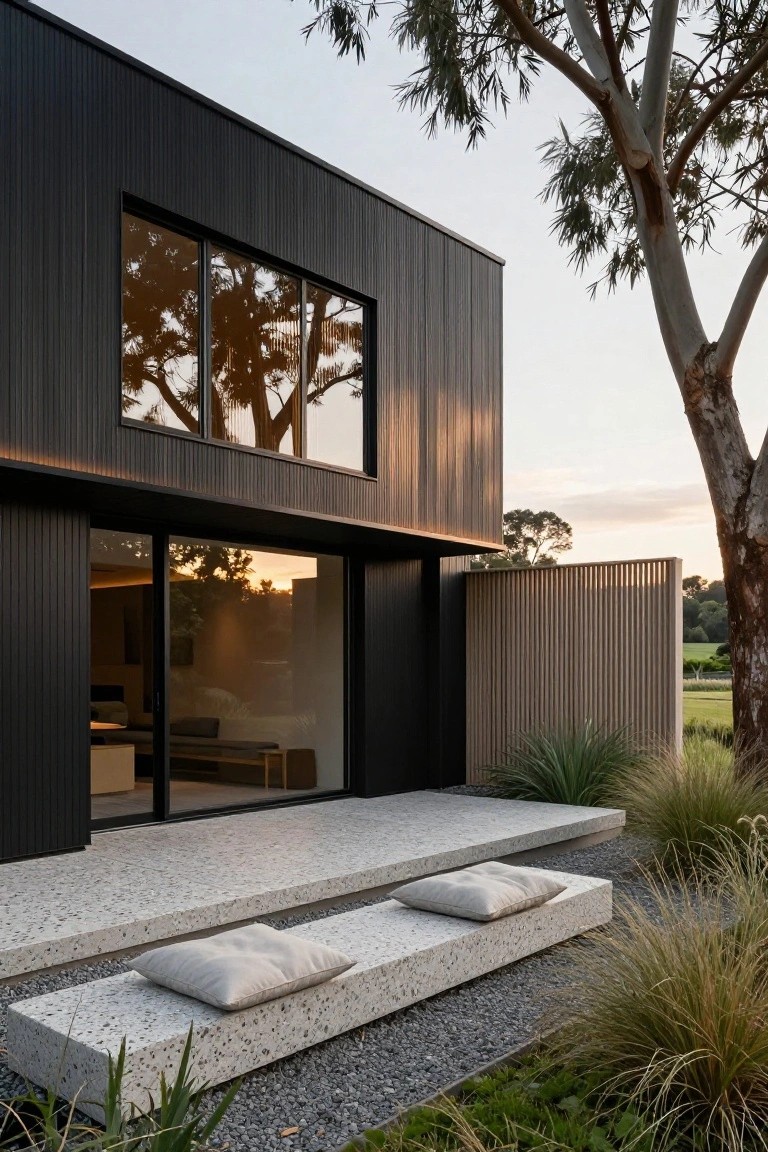
This house uses dark vertical timber cladding over its simple box shape. It gives the whole exterior a strong, unified look that feels current but not fussy. The black tone picks up shadows from nearby trees and holds its own against the open landscape. Large glass panels along one side let you see straight through to the inside, which keeps things feeling open.
You can pull this off on a new build or even a remodel where you want low-key drama. It suits spots with gum trees or open fields, like rural Australia. Just seal the wood well to handle weather, and keep landscaping simple with grasses so the cladding stays the focus. Those built-in concrete benches out front extend the living area without extra furniture.
Black Timber Framing on White Walls
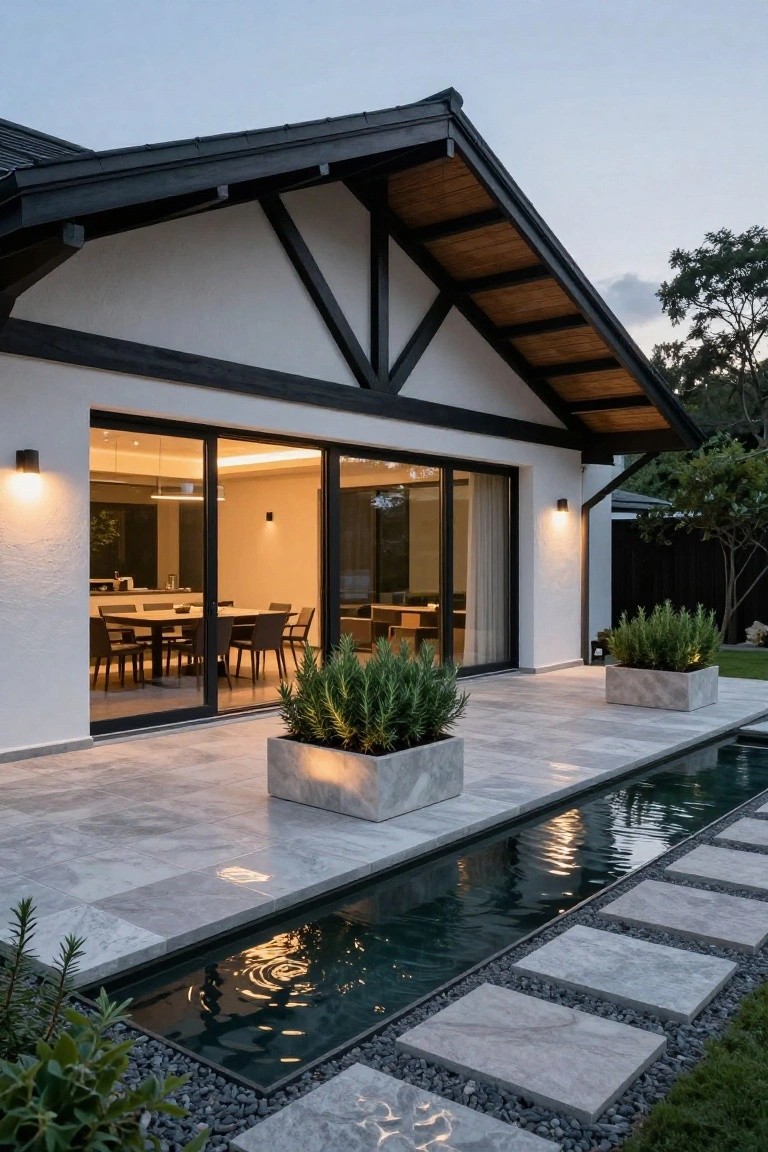
This look uses strong black timber beams set right into crisp white walls. It pulls your eye up to the roofline and gives the whole side of the house real structure. The simple contrast feels modern but nods to older timber homes, and it works even better when you see the warm lights inside through big glass doors.
Try it on a house with flat or gently sloped roofs where you want clean lines without too much fuss. It suits milder climates since the white bounces light around. Keep the beams sealed against rain, and don’t overdo extras on the walls… let the frames do the talking.
Boxwoods Beside the Entry Steps
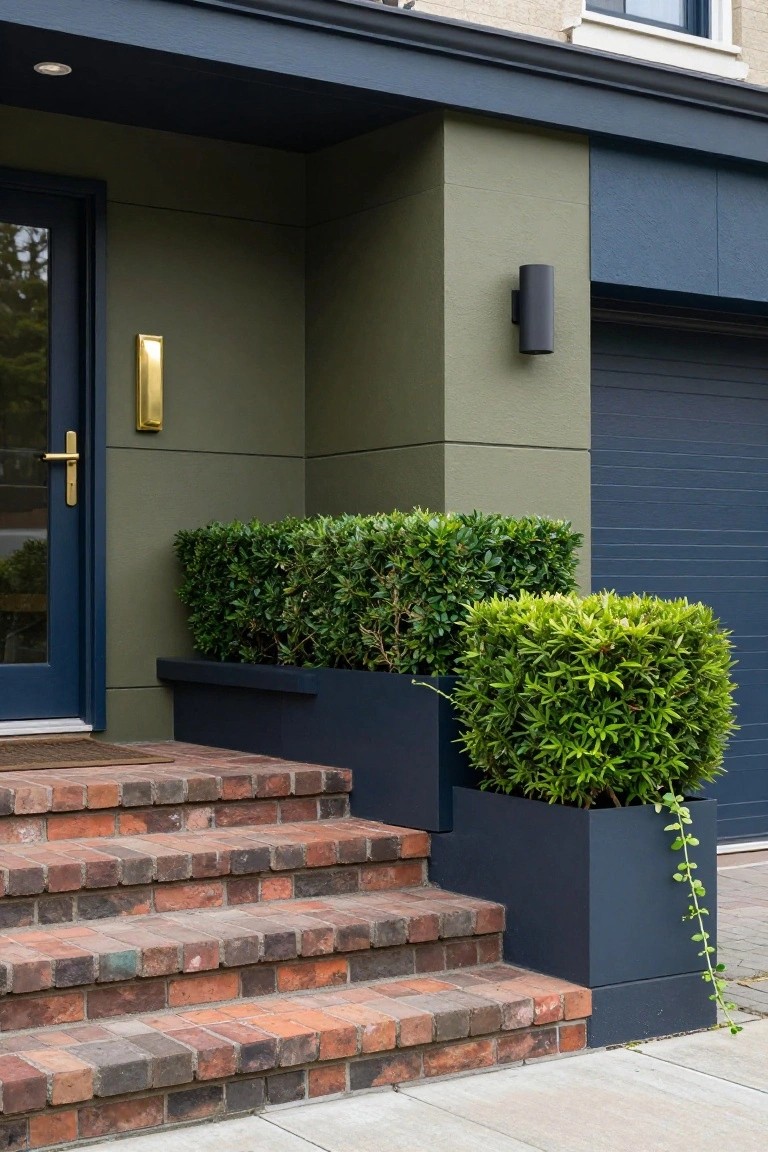
Neat round boxwoods planted right by the brick steps give this entry a clean, ordered look. They line up perfectly with the stairs and sit in tall navy planters that match the door color. That symmetry pulls the eye straight to the front door. It works because the greenery softens the hard lines of the house siding without taking over.
Put boxwoods like this along steps that lead to your door, especially if your home has modern neutral walls. Scale the plants to fit. medium size fits most spots. It suits townhouses or homes on small lots where you want polish up front. Skip if your steps are super narrow. the planters might crowd things.
Frequently Asked Questions
Q: These ideas look amazing, but will they work in a rainy climate?
A: Go for materials like powder-coated metal or fiber cement that shrug off water without warping. Seal everything tight during install, and add subtle drainage channels. They hold up great and keep that sleek look year-round.
Q: How do I pick just one idea without regretting it later?
A: Walk around your house and spot the weakest spot, like a dull entryway. Test that area first with paint or temporary cladding. It builds confidence before you go bigger.
Q: Can I pull off these looks on a tight budget?
A: Start with high-impact swaps like bold front doors or unexpected window frames. Hunt salvage yards for cool accents that cost next to nothing. You get the wow factor without breaking the bank.
Q: What about neighbors griping over the bold changes?
A: Chat them up early with sketches or article pics. And point out how it boosts curb appeal for the whole street. Most come around quick.
