

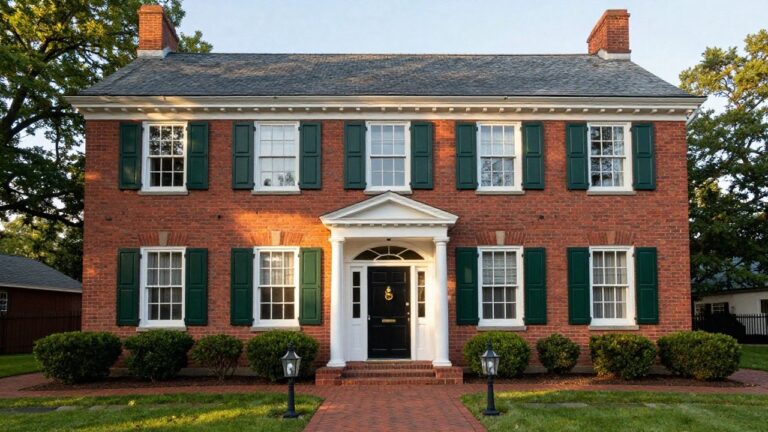
I’ve driven past plenty of colonial homes over the years, and their exteriors always catch my eye for how steadily they hold their ground on the street. Symmetry in the facade, from the balanced windows to the steep rooflines, creates that instant curb appeal without feeling forced or fussy. Materials like brick or shingled siding weather real life well, keeping the house looking sharp even after decades. I usually find myself noting how a simple columned entry makes the whole front read as welcoming yet dignified. Those details stick.
Classic Brick Colonial Facade
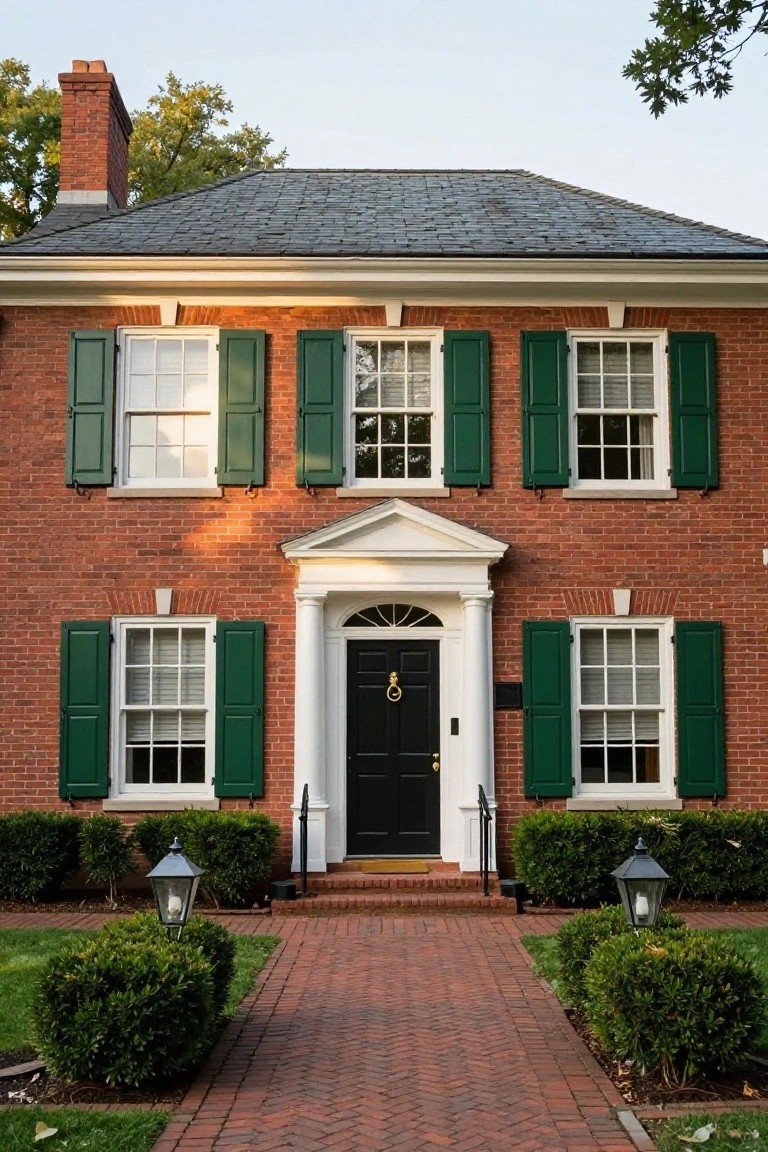
Red brick houses like this one have a way of looking right at home no matter the years. The deep red tones set off those green shutters perfectly, and the white trim around the windows and door keeps everything sharp and balanced. It’s a look that’s been solid for generations in Colonial style homes.
You see this setup working best on two-story houses with good symmetry. Add a simple portico like the one here with columns, and it frames the entry without overdoing it. Brick paths and low boxwoods along the front tie it in nicely, especially if you’re aiming for that welcoming curb appeal on a standard lot. Just keep the shutters true to the windows’ size so it doesn’t feel off.
Pilasters Frame a Timeless Rowhouse Facade
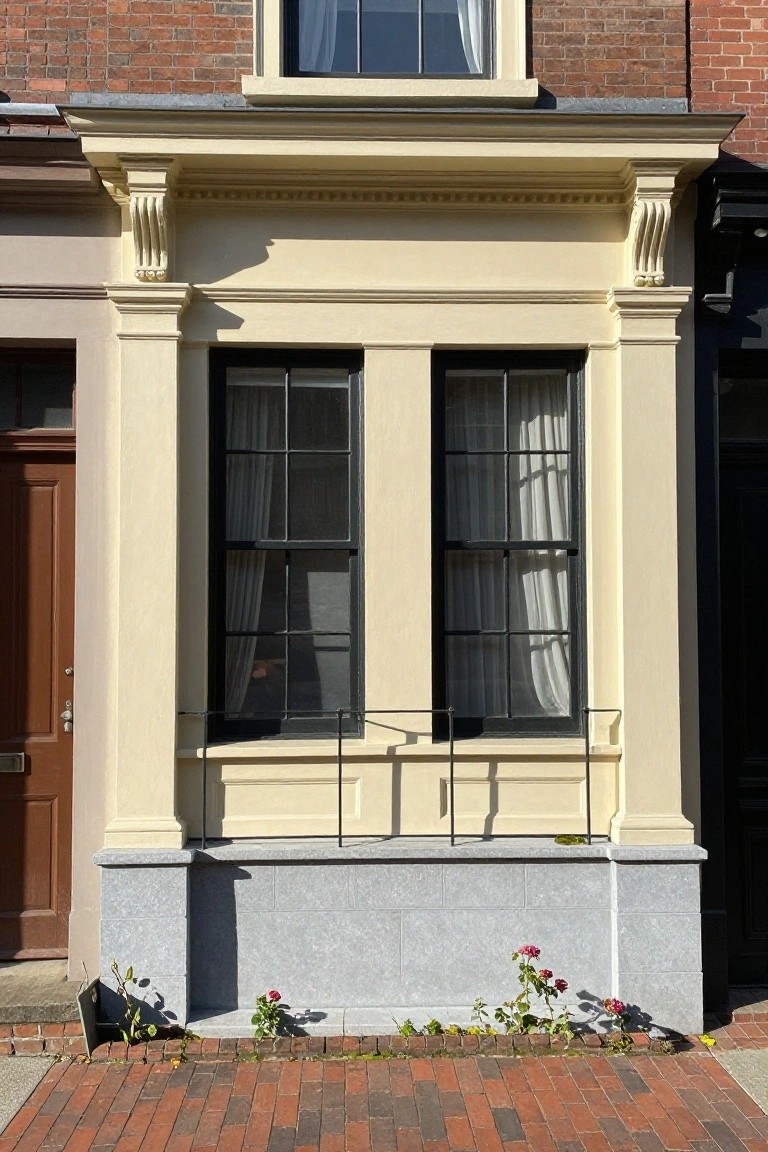
Tall pilasters like these rise up the front of the house, flanking the paired black windows and creating that temple-like look so common in older colonial rowhouses. The cream-colored central section stands out against the brick on either side, and it pulls the whole facade together without much fuss. Those details give even a narrow urban home some real presence on the street.
You see this treatment a lot in places like Boston or Philly, where rowhouses need a little architectural lift. Paint the pilasters and body a soft pale shade to highlight the moldings, pair with dark window frames for crisp lines, and keep the base in stone for grounding. It suits attached homes best, especially if you’re aiming for that classic feel without overdoing it.
Classic Columned Porch
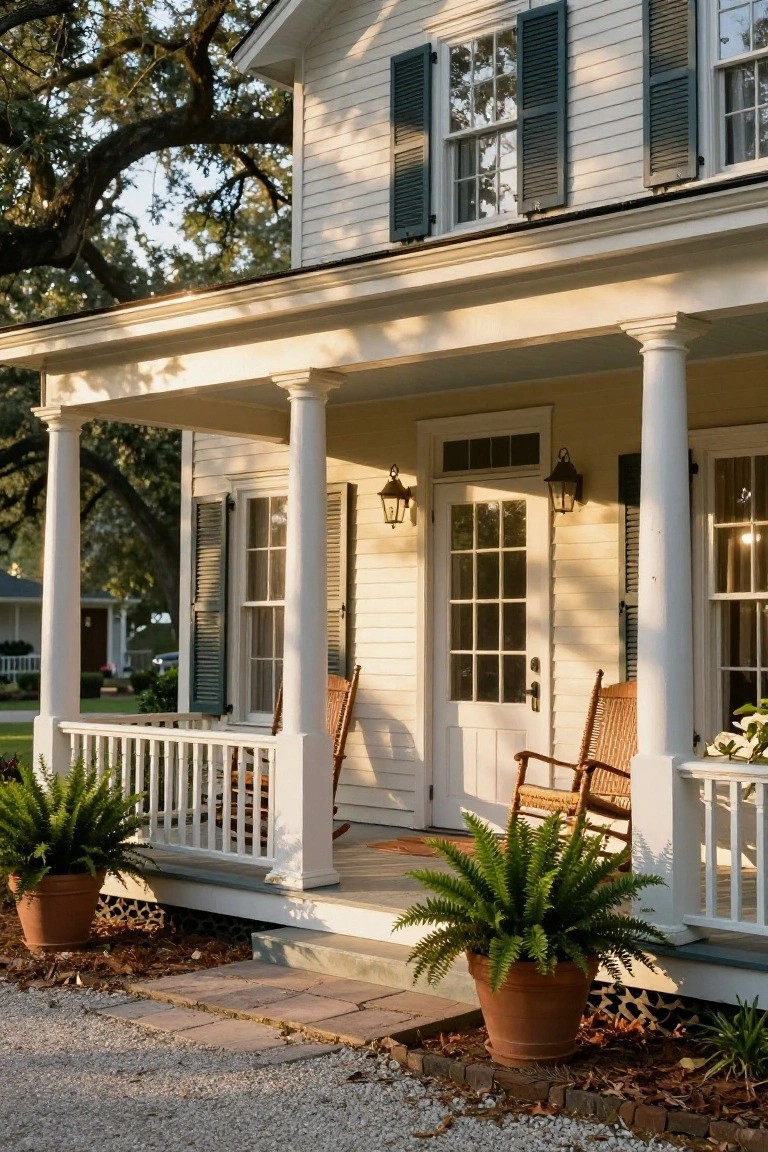
A columned porch like this one takes a simple white colonial house and turns it into something truly welcoming. Those tall, smooth columns frame the front door just right, while a couple of rocking chairs sit ready for an afternoon chat. It’s that easy Southern touch that makes the whole facade feel lived-in and friendly, without any fuss.
Put this on homes with a bit of front yard space, especially in warmer spots where you actually use the porch. Keep the columns painted to match the house siding, add low plants at the base, and skip heavy clutter. It suits older neighborhoods best, where it blends right in and boosts curb appeal year-round.
Shingle Siding for Enduring Colonial Charm
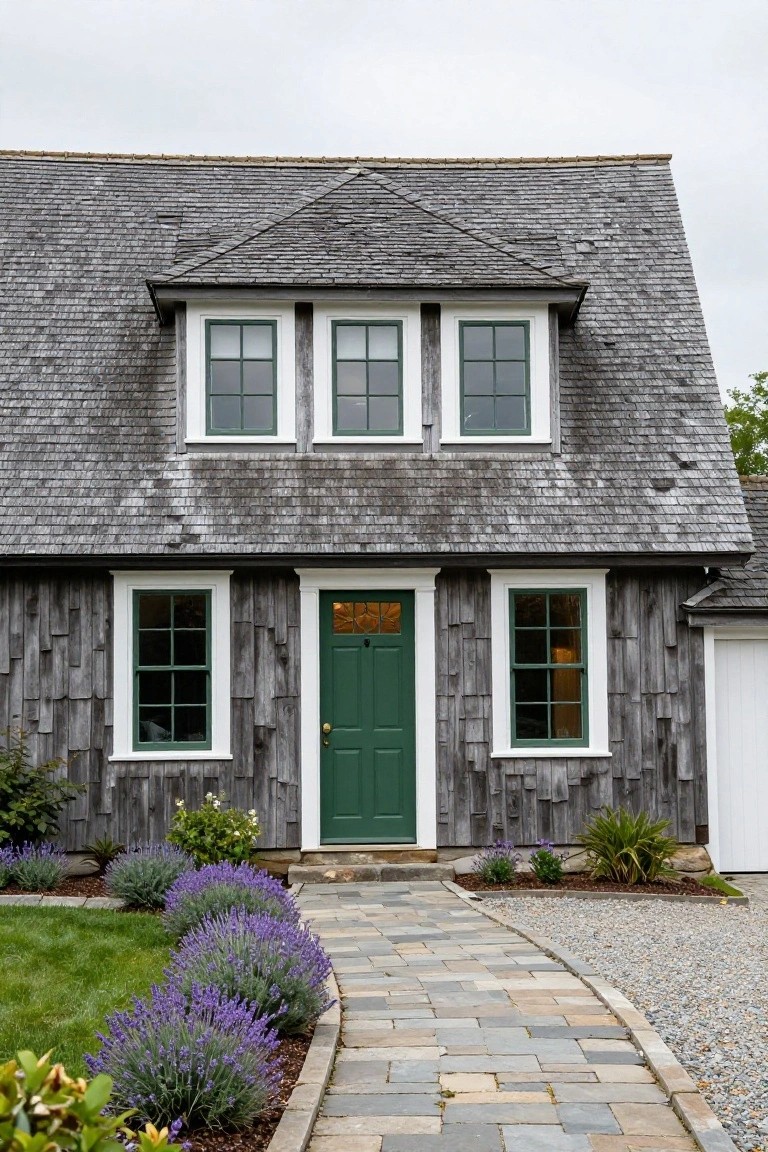
Shingle siding gives this Colonial home a rugged, lived-in feel that fits right into traditional designs. The gray cedar shakes cover the whole facade, from the steep dormer roof down to the base, creating texture without much fuss. Paired with white window trim and that green front door, it keeps things simple yet striking. It’s the kind of look that ages well over time.
You see this style a lot in coastal areas or New England spots where weather adds to the patina naturally. To pull it off, go for untreated cedar or similar that weathers to gray, and keep trim crisp white for contrast. It works best on homes with balanced windows and a clear entry path. Just make sure the siding is installed right to avoid moisture issues down the line.
Red Door on Shingle Colonial
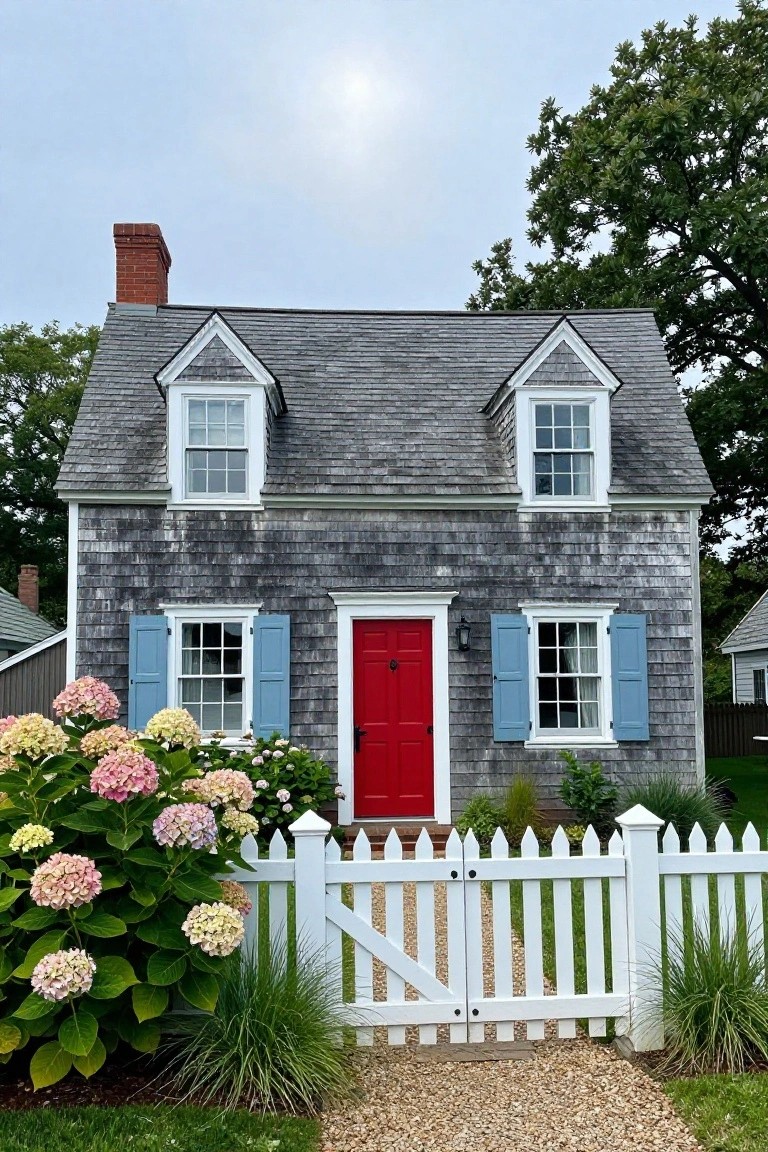
A bright red front door grabs your eye right away on this gray shingle house. The neutral siding and blue shutters let that pop of color do its job, making the entry feel more welcoming and alive. It’s a simple change that fits right into traditional colonial looks, especially with the white trim around the windows.
This works best on homes with muted exteriors like shingles or clapboard. Go for it if your house sits back from the street a bit… the color pulls people in. Keep landscaping low-key, like those hydrangeas by the fence, so the door stays the star. Avoid reds that clash with brick chimneys though.
Black Door in Stone Surround
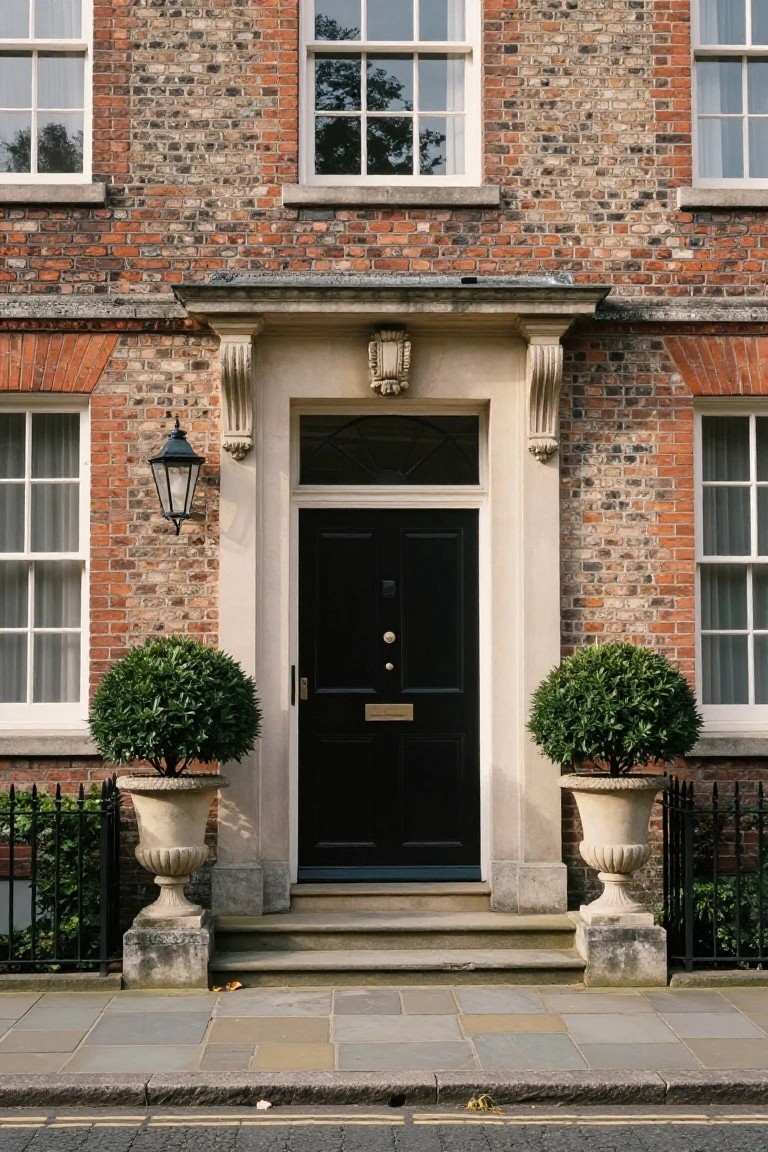
A black front door tucked into a pale stone surround like this one gives a brick house that pulled-together classic look. The pediment and slim columns frame the entry just right, making it the focal point without stealing from the brickwork. Add a single lantern and matching urns with boxwoods on either side, and you’ve got instant symmetry and polish.
This works best on narrower townhouses or row homes where the entry needs to stand out from the street. Keep the stone light to contrast the red brick, and scale the urns to your steps. Skip it on super modern builds, though. It suits period homes that want a touch of formality but nothing fussy.
Classic Colonial Portico Entry
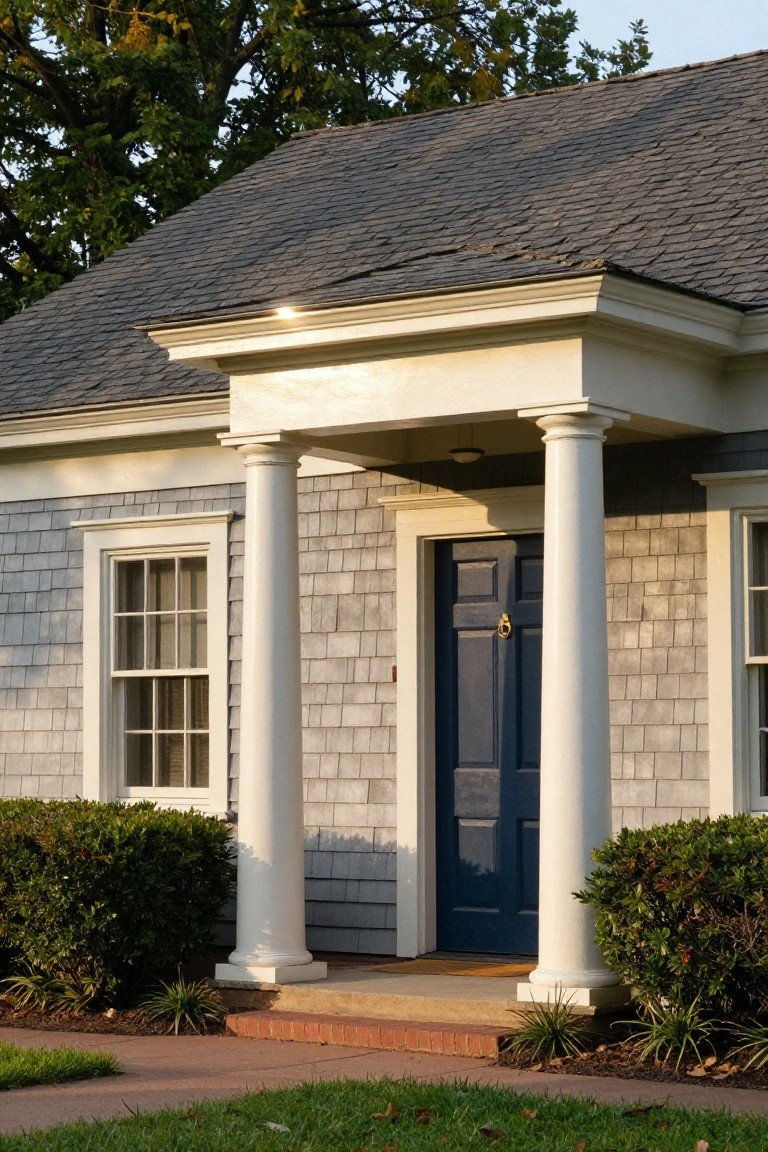
A front portico like this one, with its clean white columns supporting a simple pediment, gives any Colonial house that instant traditional charm. The fluted columns frame the navy door just right, pulling the eye straight to the entrance without any fuss. It’s a look that’s been around forever because it works, making even a modest home feel established and inviting from the curb.
You can pull this off on smaller single-story Colonials or cottages, especially with shingle siding to keep things grounded. Stick to white columns against a darker door for contrast, and add boxwood shrubs on either side for balance. Just watch the scale, though. Too beefy columns can overpower a cozy facade.
Rustic Stone House with Timber Porch
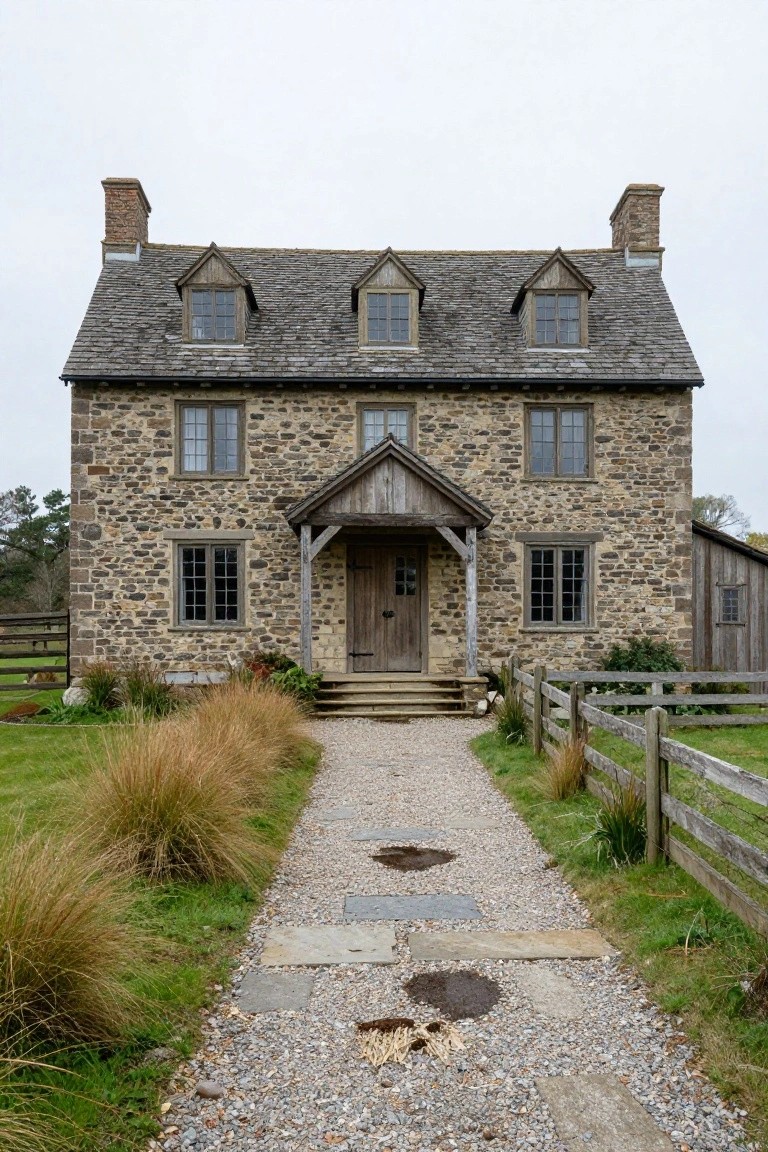
There’s something solid and comforting about a colonial home built from rugged stone, topped with a steep slate roof. What really pulls it together here is the simple wooden porch sheltering the front door. It adds a touch of warmth to all that heavy stone without overdoing it. Folks have used this mix for ages because stone handles weather well and the timber porch makes the place feel lived-in right away.
You can pull this off on older homes or new builds in rural spots or suburbs where you want that enduring look. Frame the porch with local stone to match, keep the wood weathered naturally, and lead right to it with a plain gravel path. Skip fancy add-ons. It suits families who like low-key charm that doesn’t need much upkeep.
Classic Brick Colonial with Reflecting Pool
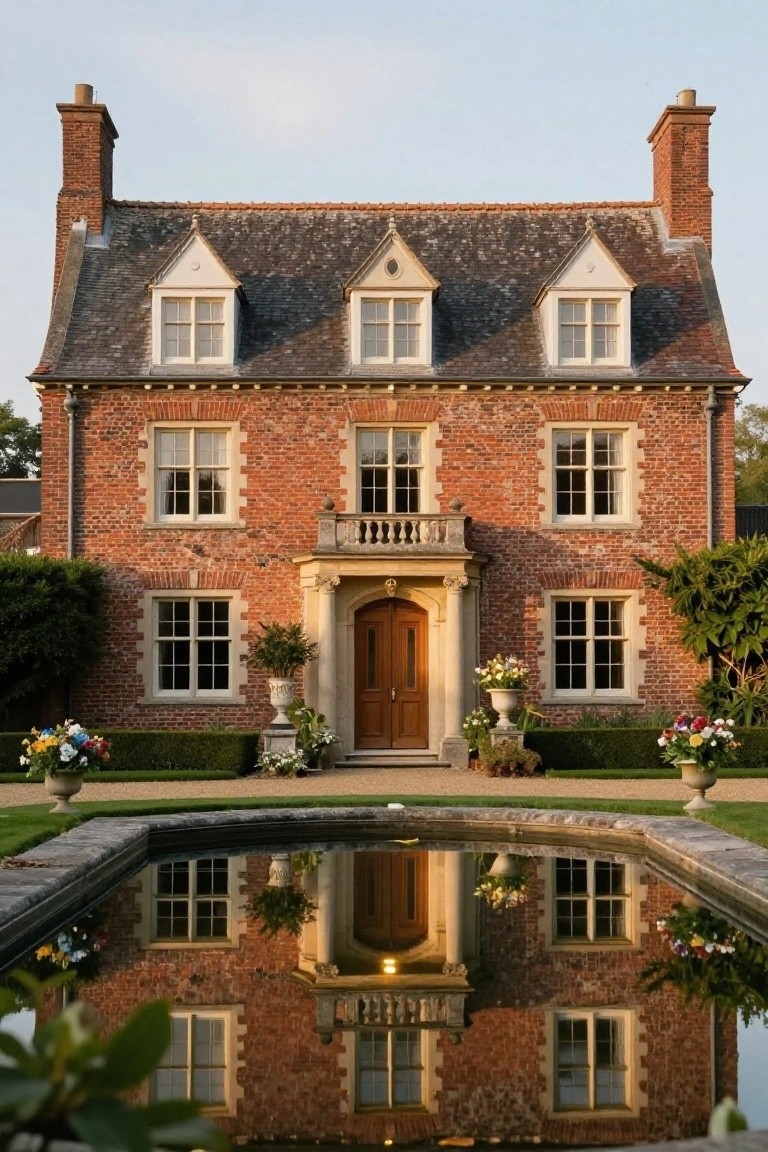
One look at this house and you see how a simple reflecting pool pulls everything together. The red brick walls, tall chimneys, and those evenly spaced windows all get mirrored right there in the calm water. It makes the whole front feel twice as grand without much effort. Traditional colonials like this one already have that solid, balanced look. But the pool adds a quiet formality that fits right in.
You can try this on a bigger front yard where there’s room for a rectangular pool maybe 20 feet long. Keep the edges simple with stone coping and low hedges around it. Plant some color in pots nearby to frame things. It works best on homes with straight-on symmetry so the reflection stays clean. Just make sure the water stays still. Windy spots might blur it.
Classic Colonial White Siding with Dark Accents
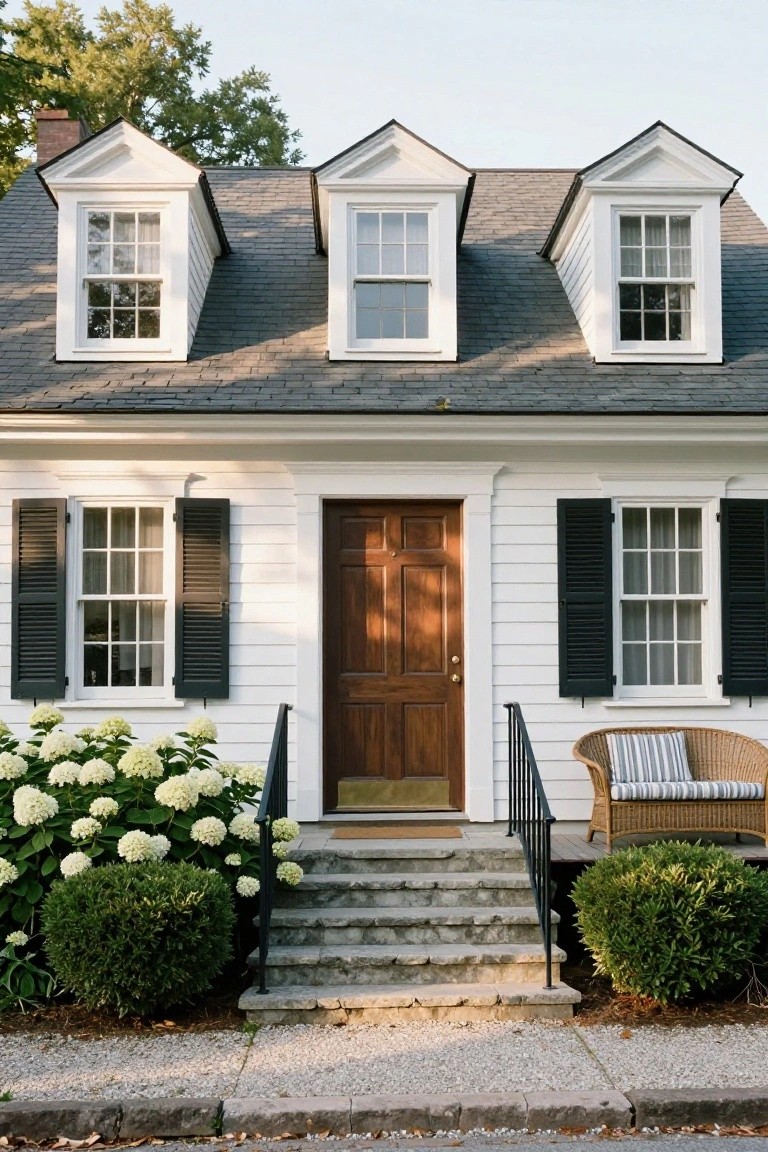
White clapboard siding keeps a colonial house looking clean and crisp. Pair it with black shutters and a dark wood front door like this one. That simple contrast adds depth without much fuss. The dark tones pull your eye right to the entry. And those big hydrangea bushes on either side frame it nicely.
This setup works best on smaller homes where you want a welcoming feel up front. It suits most neighborhoods too. Just make sure the door is stained a deep mahogany or walnut shade. Avoid anything too red. Stain it every couple years to keep the color rich.
Crisp White Colonial Siding
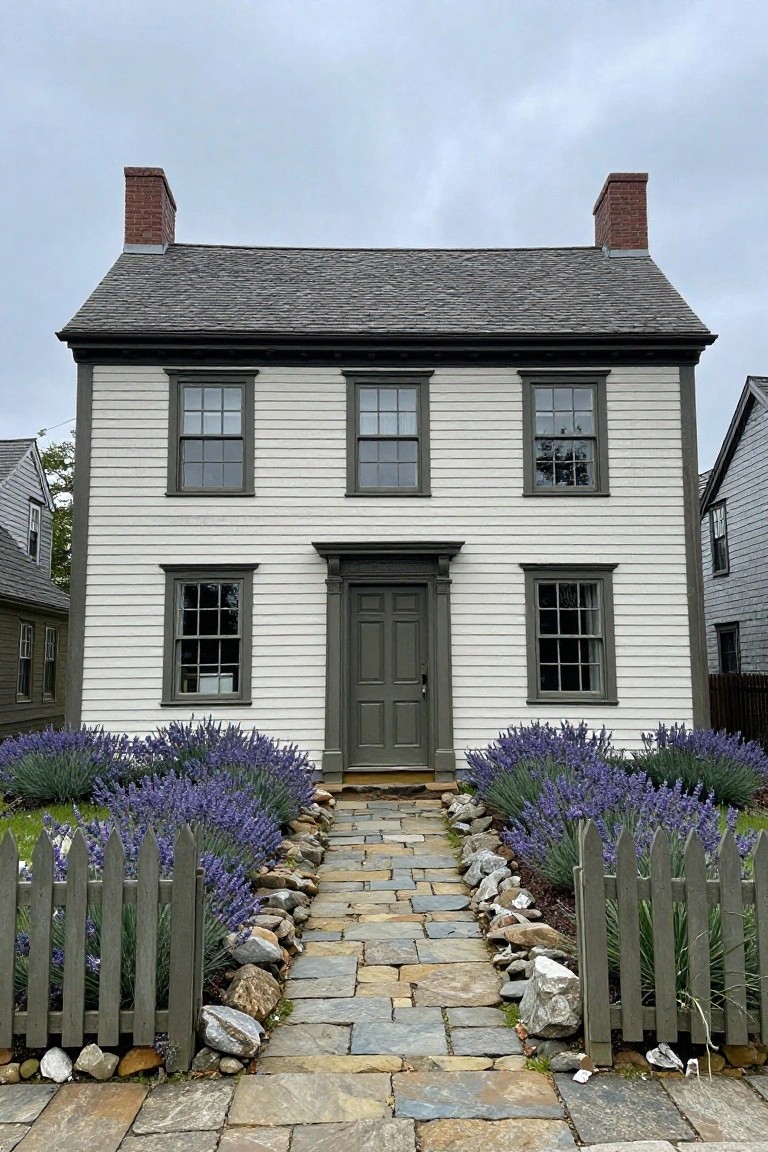
White clapboard siding like this keeps a colonial house looking clean and fresh year round. The dark trim around the windows and door adds just enough contrast without overwhelming the simple lines. Symmetrical placement pulls it all together nicely.
You can pull this off on most any colonial style home, old or new. Keep the door a bold green for that pop, and line the entry path with low plants like lavender. It softens the front without much upkeep.
Shingle Style House with Porch
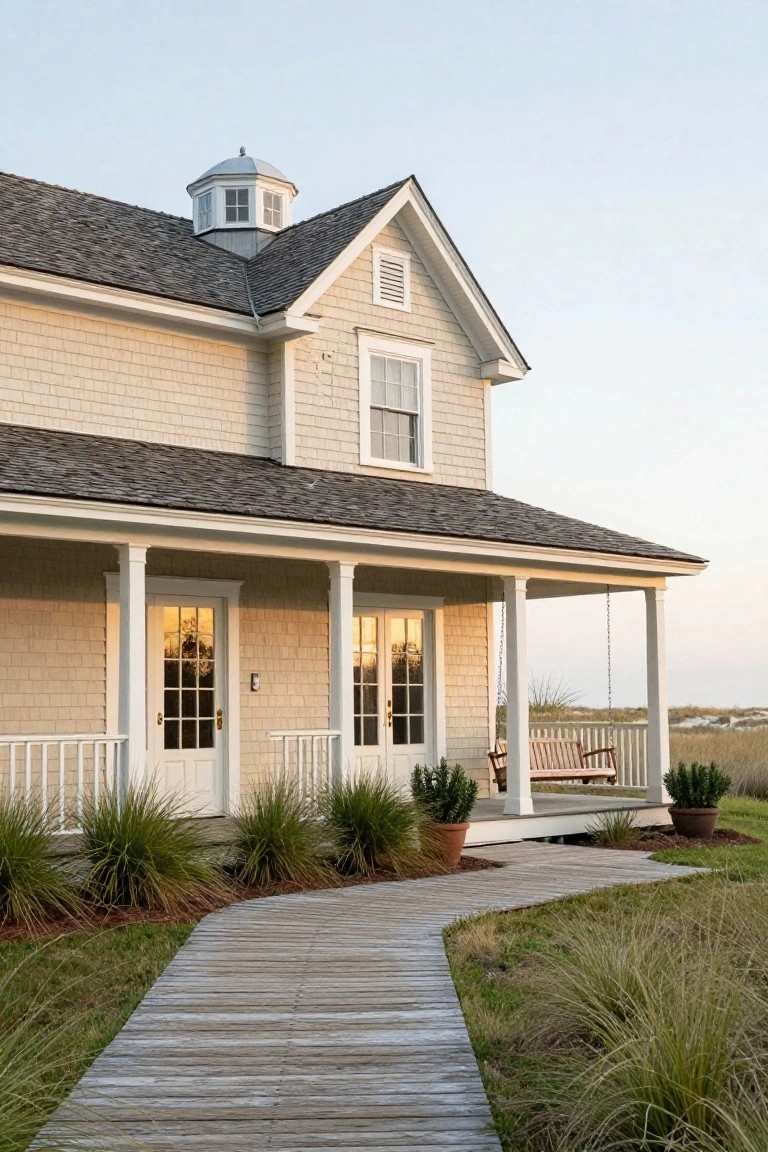
Shingle siding on a colonial house like this one keeps things looking solid and timeless. The wide porch wraps around the front, with tall columns and a simple swing that pulls you right in. It’s that mix of texture from the shingles and clean porch lines that makes the whole facade feel easy and lived-in, especially against a coastal backdrop.
This setup works best on homes in beachy or rural spots where you want curb appeal without fuss. Go for light beige shingles and white trim to stay traditional, then add a boardwalk path from the yard to the door. Skip busy landscaping. Keep plants low like sea grasses so the house stays the star.
Teal Siding on a Classic Colonial House
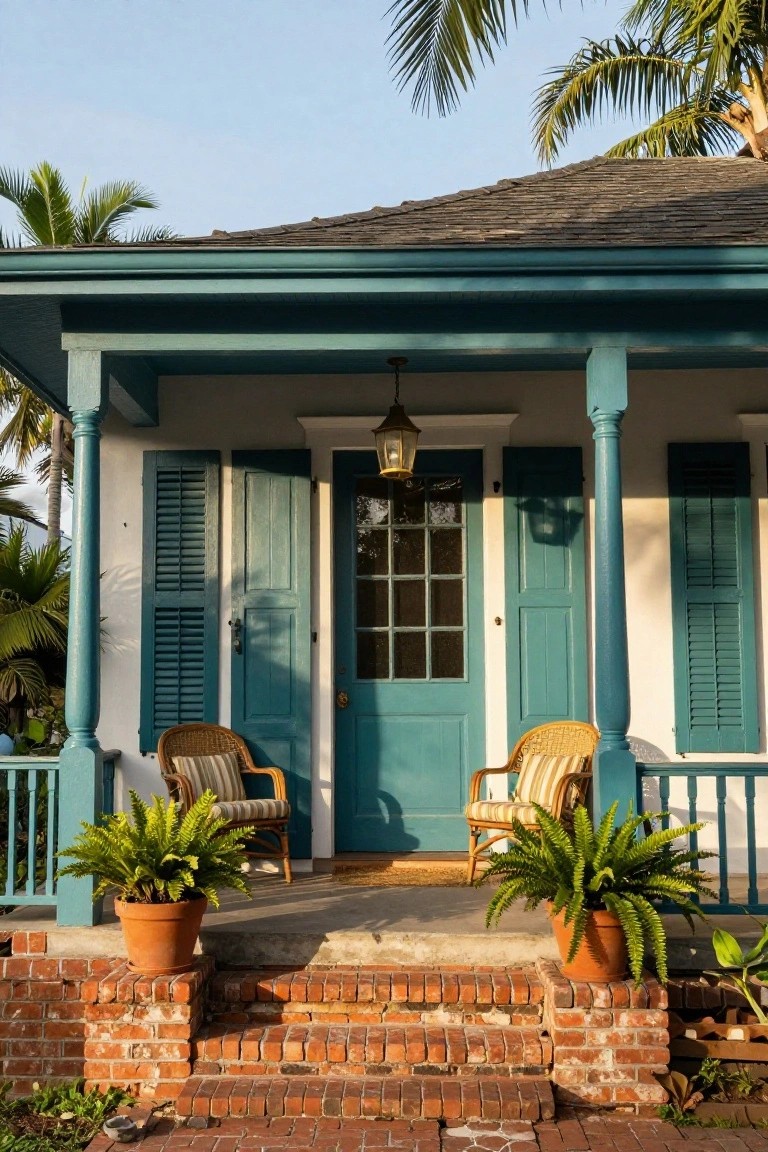
A traditional colonial exterior like this one gets a lively update with teal siding on the walls, doors, and shutters. The white columns and trim keep everything crisp and balanced. It works because the color nods to coastal roots, making the house feel welcoming and a bit more playful than plain white or beige versions.
You can pull this off on shotgun-style homes or Creole cottages, especially in mild climates with palms nearby. Stick to high-quality exterior paint that holds up to sun and humidity. Simple porch chairs and potted ferns frame the entry nicely… without much fuss.
Window Boxes on Brick Townhouses
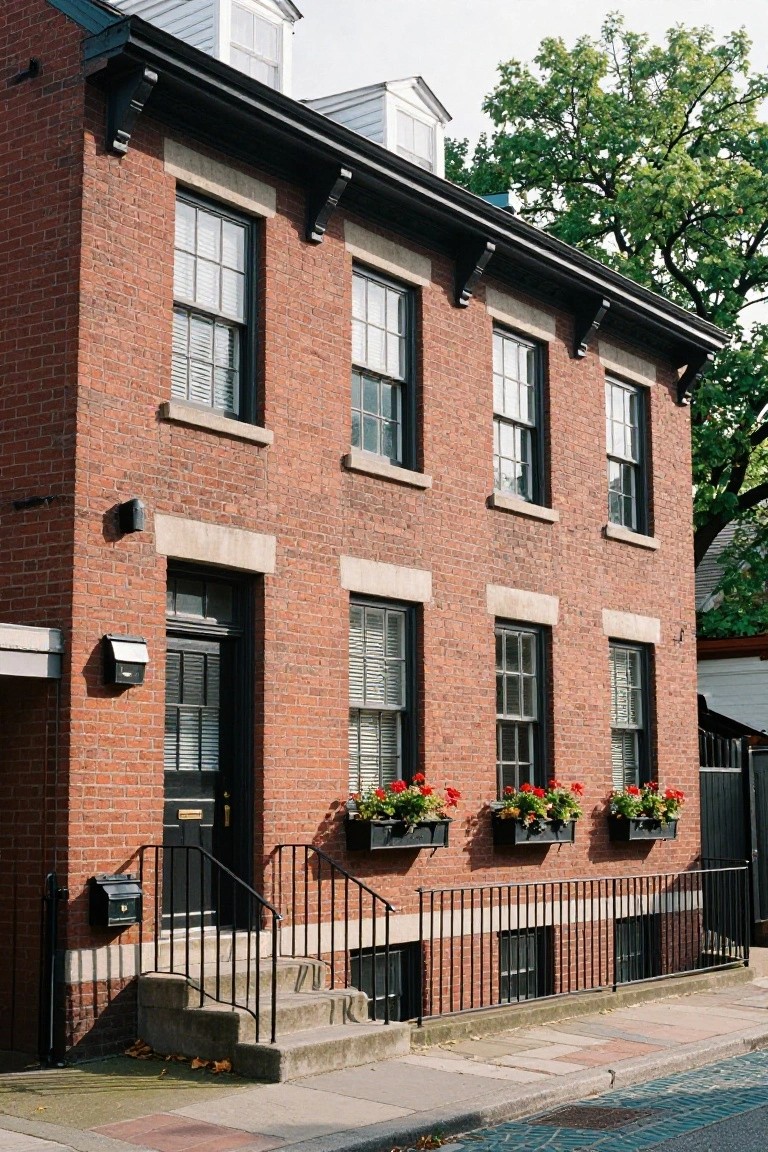
Flower boxes tucked under the windows are a simple way to add color to a classic brick exterior. On this red brick house, the red geraniums spill out against the black shutters and trim. It gives the whole facade a fresh, lived-in feel that fits right into traditional colonial neighborhoods.
These boxes work best on homes with evenly spaced windows, like rowhouses or townhouses. Go for hardy plants that handle some sun, and mount sturdy ones to match the architecture. They perk up the entry without changing the structure. Just watch the watering on hot days.
Pedimented Portico Entry
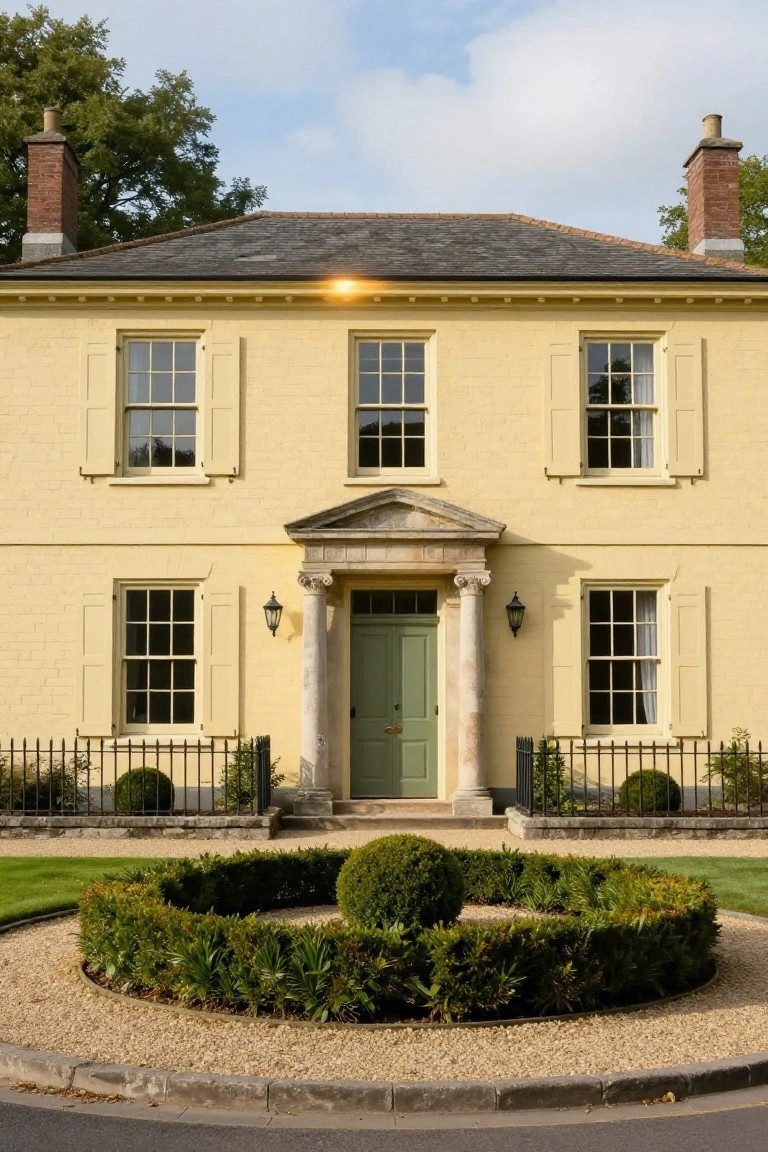
A pedimented portico like this one takes a plain painted house and turns the front door into the star. The stone top and paired columns sit right over the green door. They add just enough formality to make the place look put-together. Paired with the even row of windows, it keeps that balanced Colonial feel folks have liked for years.
You see this work best on two-story homes with clapboard or painted brick sides. Pick pale yellow or soft cream for the walls to let the stone pop. It suits quiet streets or older neighborhoods. Keep plantings simple around the base, like low boxwoods, so the entry stays the focus. One thing. Make sure the proportions match your house height or it can look off.
Symmetrical Entry with Lanterns and Planters
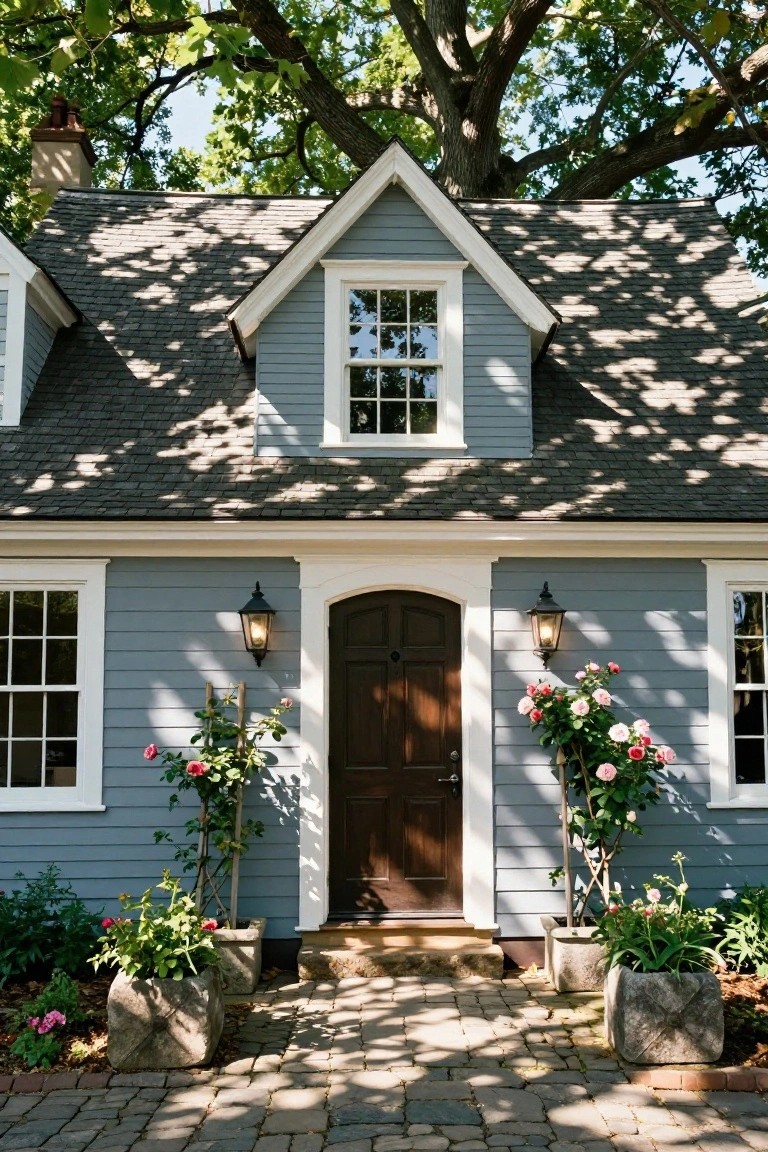
A classic move for colonial homes is flanking the front door with matching lanterns and tall planters. Here, black lanterns hang on either side of a dark arched door, while stone pots hold climbing roses with pink blooms. That setup pulls everything together. It gives the entry balance without much fuss.
Try this on clapboard houses like this light blue one. Pick lanterns that match your trim, and go for evergreens or climbers in big pots for year-round interest. Stone or concrete bases stay put in wind. Just keep the plants pruned so they don’t block the door.
Crisp White Siding with Black Front Door
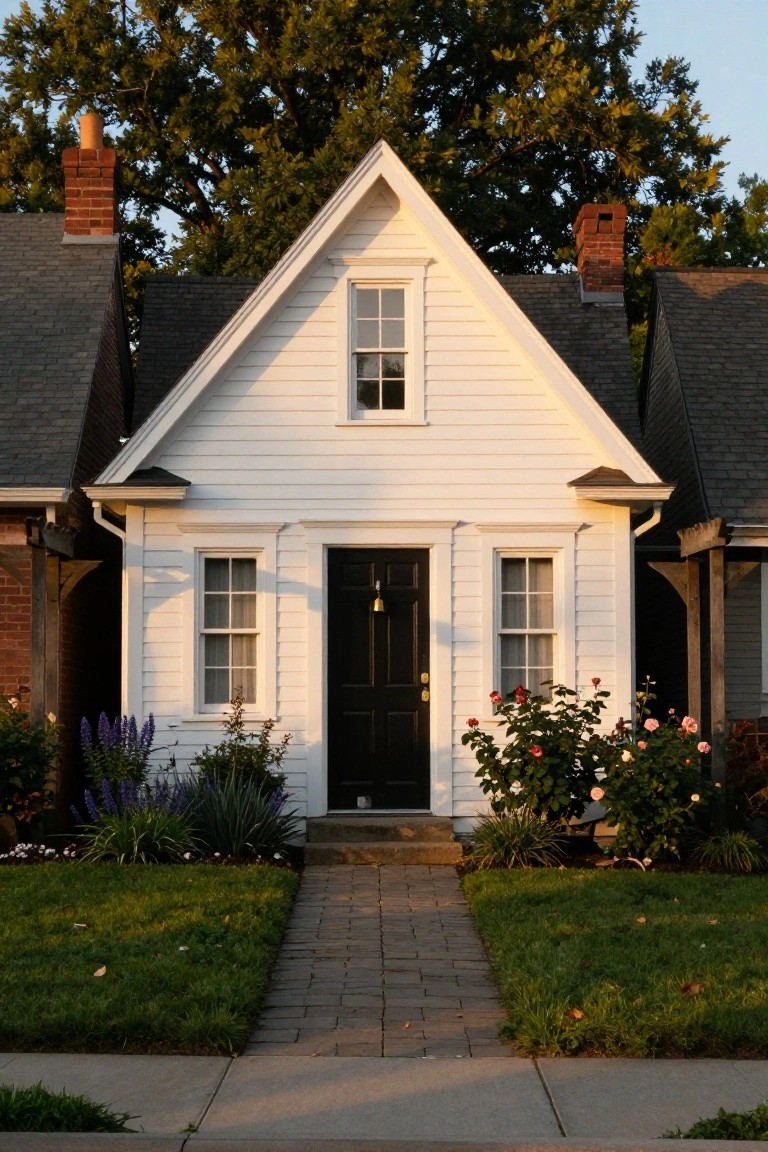
Nothing says traditional Colonial quite like crisp white clapboard siding on a simple gabled house. But here, the black front door pulls it all together. That high contrast makes the entry pop against the bright white, drawing the eye without extra trim or decorations. It’s clean and straightforward, the kind of look that fits right into older neighborhoods.
Try this on compact homes with symmetrical facades. A glossy black door on fresh white siding works best where you want curb appeal that lasts. Pair it with a straight paver path and some roses or lilac bushes along the sides. Skip bold colors elsewhere, or it might feel busy… just let the door do its job.
Crisp White Siding with a Blue Entry Door
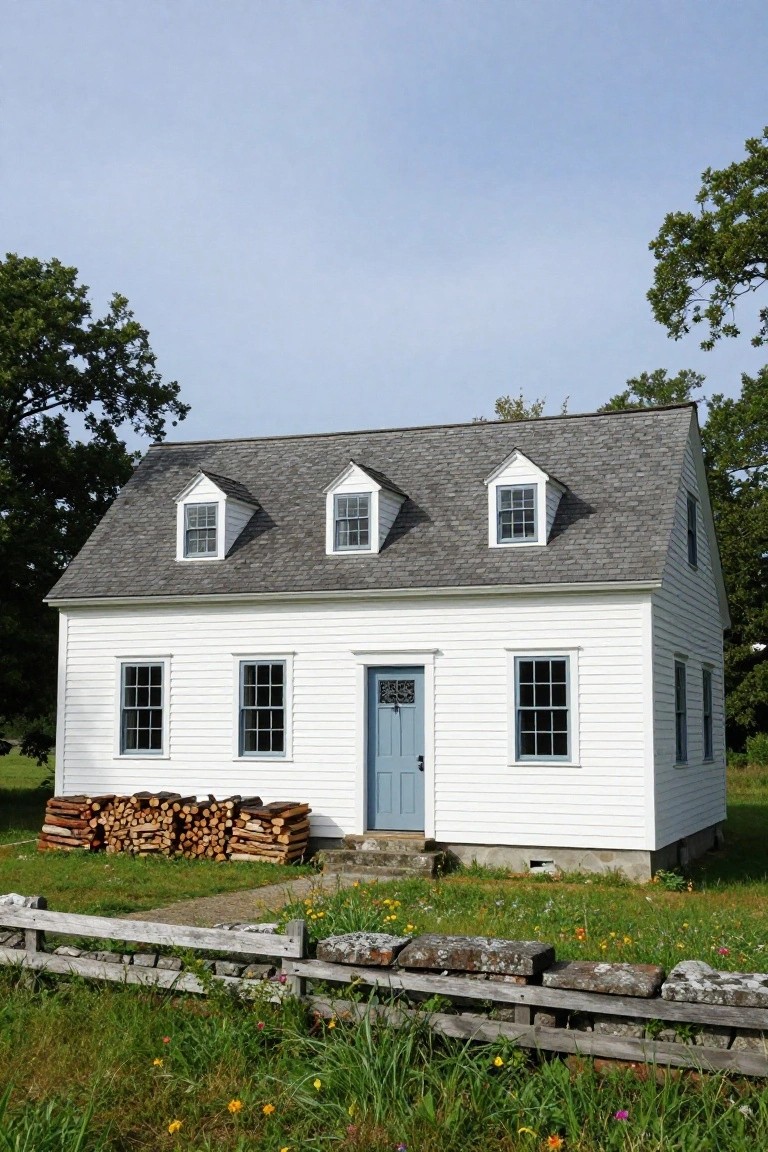
A classic Colonial house like this one proves how simple it can be to add personality to a plain white exterior. The smooth clapboard siding gives that clean, timeless look folks have loved for generations, especially with the gray shingle roof and those neat dormer windows. But it’s the blue door that pulls your eye right to the front. It says welcome without overdoing it.
Try this on a saltbox or Cape style home in a rural or suburban spot. The color stands out against the white but stays true to tradition, maybe nod to coastal New England vibes. Stack some firewood next to the steps like here. Keeps things practical too. Just make sure the door hardware matches the blue so it doesn’t clash.
Cream Siding with Red Door Accents
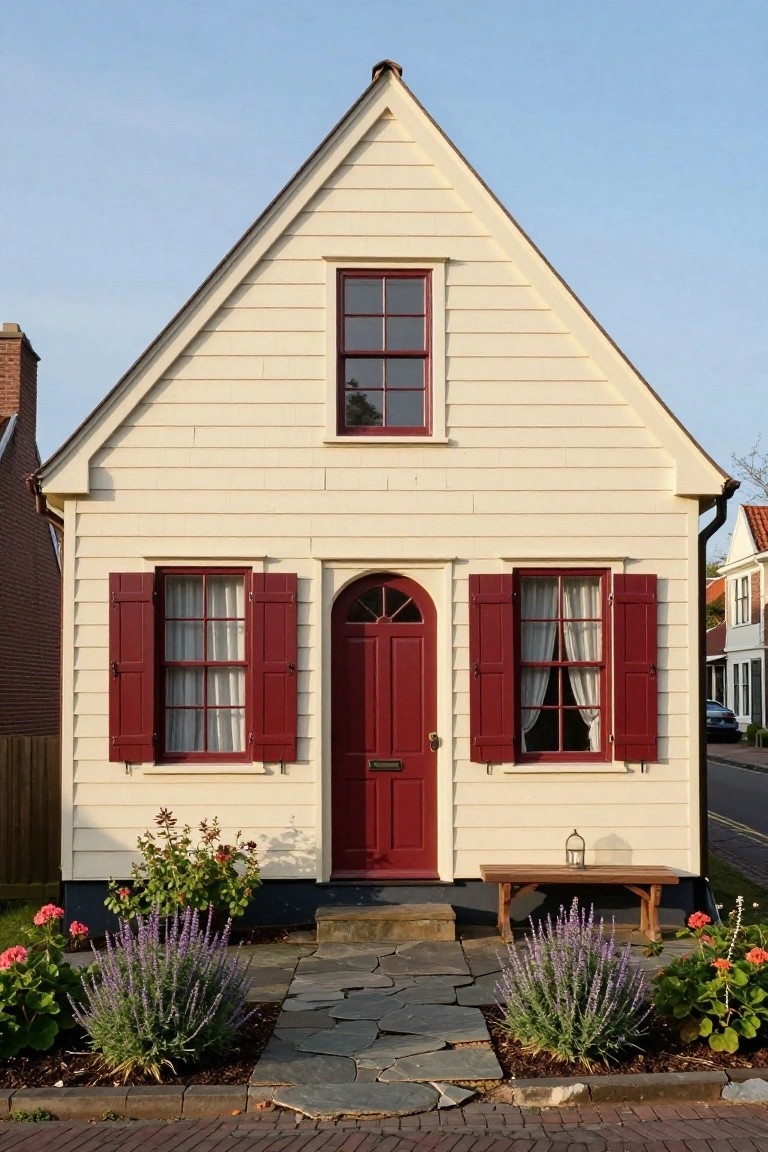
A soft cream clapboard siding paired with a bold red front door and shutters gives this colonial house its standout charm. The pale walls let the red pop at the entry without fighting the clean gabled lines or symmetrical windows. It’s a simple way to add color that feels right at home on traditional facades.
This look works best on compact homes like cottages or row houses where you need quick curb appeal. Pick a classic barn red for the door and trim to keep it timeless, and add low plants along the path for balance. Skip it on larger estates, though. The scale might get lost.
Classic Columned Portico Entry
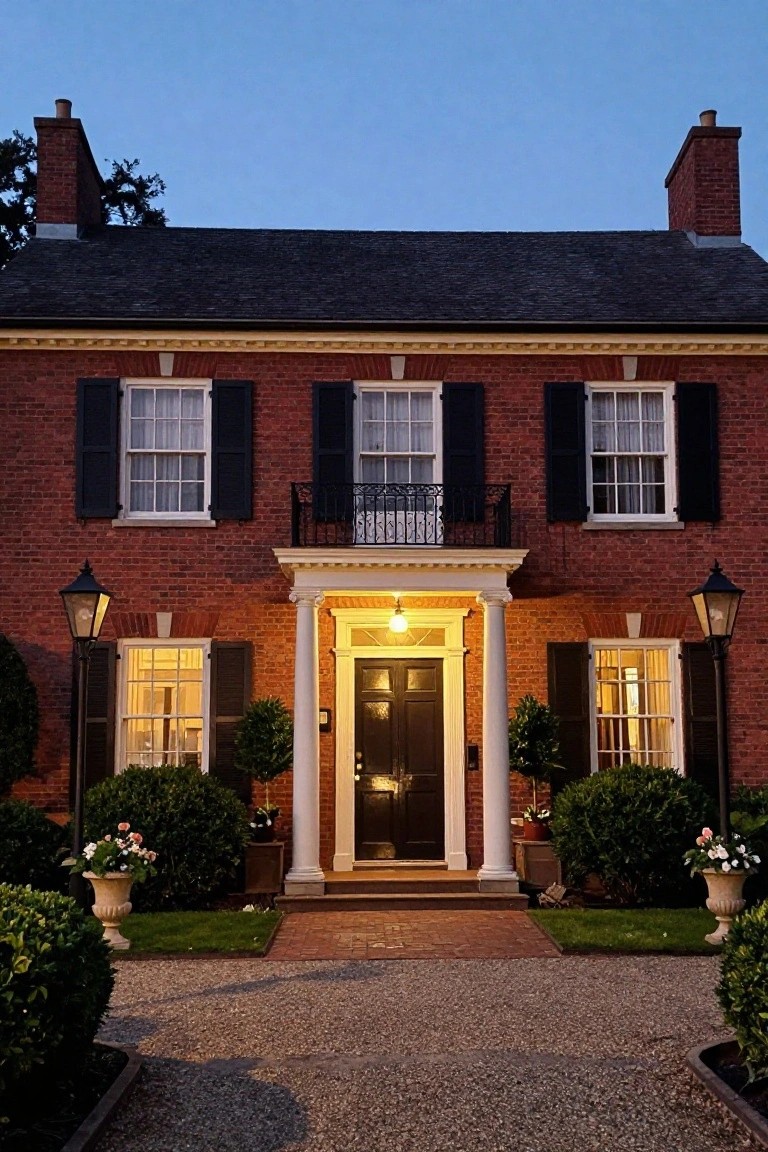
A columned portico like this one sits right over the front door on a brick colonial house. It pulls the whole facade together with clean white columns against the red brick. That setup gives off real traditional charm without trying too hard. The black lanterns on either side add just enough light to make it welcoming at dusk.
You see this kind of entry on older homes in the South or Northeast, where it fits the style perfectly. It works best on two-story houses with balanced windows. If you’re adding one, keep the columns simple and paint them white to stand out. Just make sure the roofline matches so it doesn’t look tacked on.
Green Door on Crisp White Colonial Exterior
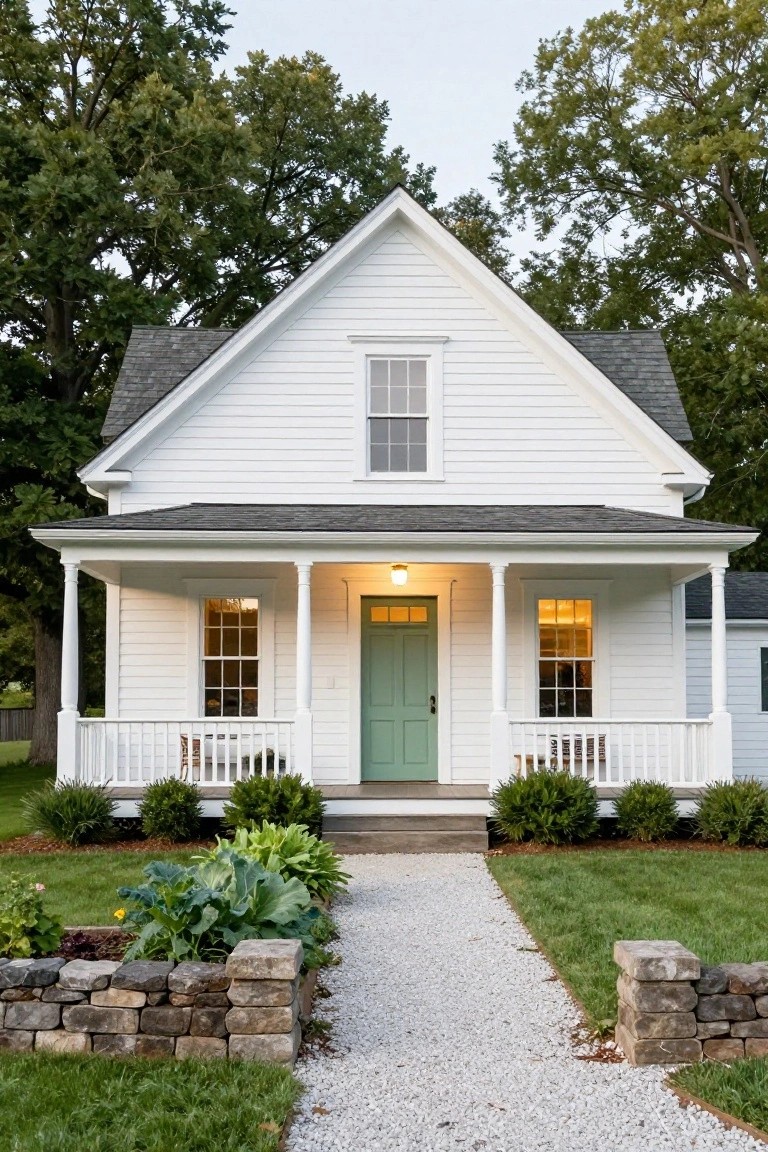
There’s something about a fresh white colonial house that just feels right, especially when you add a soft green door right at the entry. It keeps the clean, traditional lines but brings a bit of color that makes the place look lived-in and friendly. The white clapboard siding and dark roof stay classic, while that door pulls your eye in without overwhelming the look.
This works great on smaller colonials or farmhouses where you want curb appeal without big changes. Paint your door in a muted sage or seafoam green, pair it with black shutters if you have them, and keep the porch simple with white railings. It suits shady spots under big trees too, since the white bounces light around. Just stick to one color pop, or it starts feeling busy.
Frequently Asked Questions
Q: How do I pick paint colors that nod to classic Colonial without going overboard?
A: Go for creamy whites or soft grays on the body, paired with crisp black or deep green trim.
They pull from history but feel fresh today. Swatch them outside at different times of day.
Q: My siding looks tired. What’s a simple weekend fix?
A: Rent a pressure washer and blast off years of grime. Follow up with a single coat of semi-gloss paint matched to the original shade.
You’ll see the house glow again…
Q: And what about front doors? How do I choose one that fits?
A: Hunt for a paneled wood door in a bold color like red or navy. Add brass hardware for that authentic kick. It draws eyes right to the entrance.
Q: Can modern landscaping work with Colonial symmetry?
A: Line the walk with low boxwoods and flank the porch with symmetrical urns. Skip wildflowers, they clash. This setup frames the house perfectly.
