

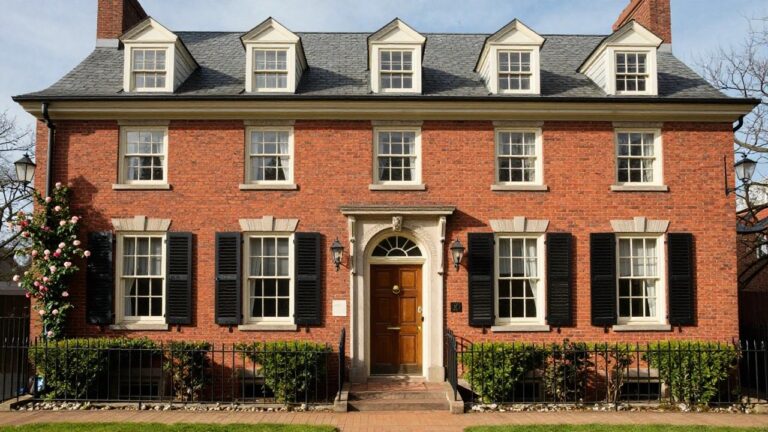
I’ve always admired how 1800s colonial exteriors command attention from the street with their clean lines and balanced proportions. A few years back, I walked around an old neighborhood and realized the best ones rely on rooflines that frame the facade just right, avoiding that top-heavy look some replicas get. Curb appeal starts there, with materials like weathered clapboard or fieldstone that age gracefully and draw your eye to the entry without overwhelming the whole house. What makes these styles endure is how they mix symmetry with practical touches, like shutters that actually fit the windows. They’re worth sketching for your next renovation tweak.
Classic Pedimented Entryway
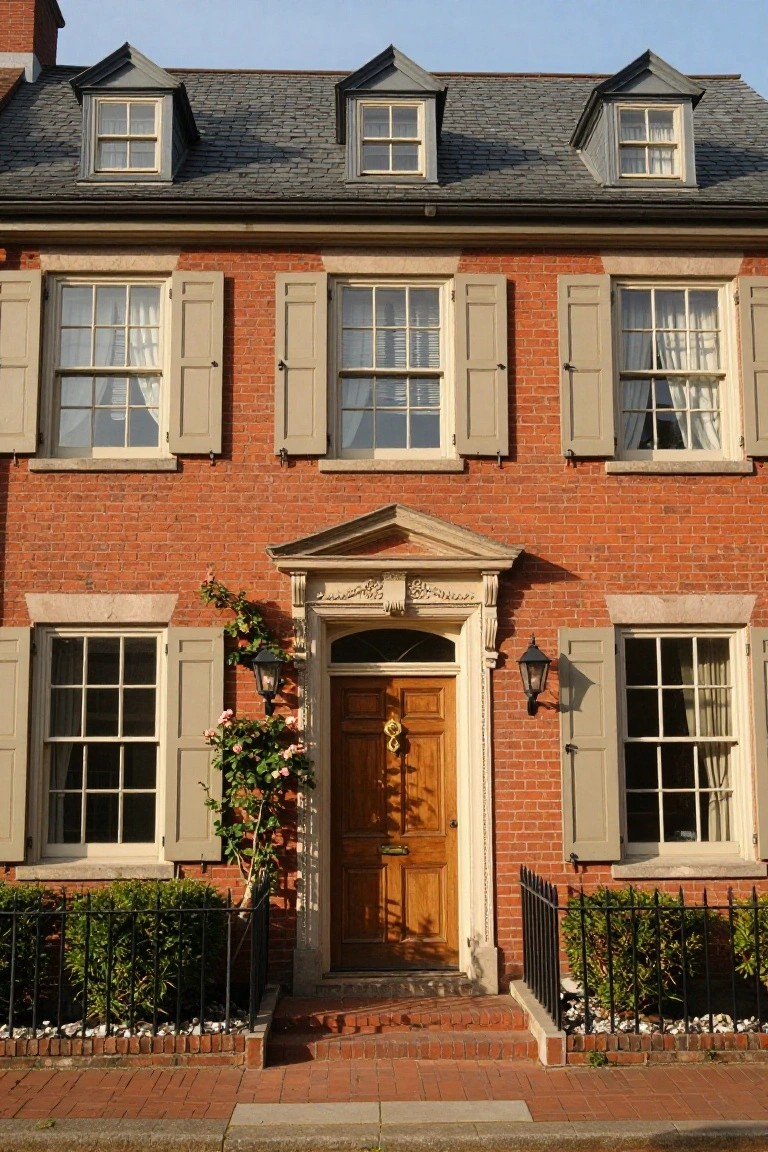
A pedimented entry like this one gives a Colonial house that solid, welcoming feel right from the street. The carved stone surround over the wood door pulls your eye straight to the front, making the whole facade look put-together and historic. Brass hardware on the door adds just enough shine without overdoing it, and the matching lanterns on each side keep things balanced.
You can add this kind of entry to a brick renovation pretty easily if your house already has some symmetry. It works best on two- or three-story homes from the 1800s era. Keep the proportions right so it doesn’t overwhelm the door… and pair it with climbing roses or boxwoods at the base for that extra touch of charm.
Classic Columned Porch
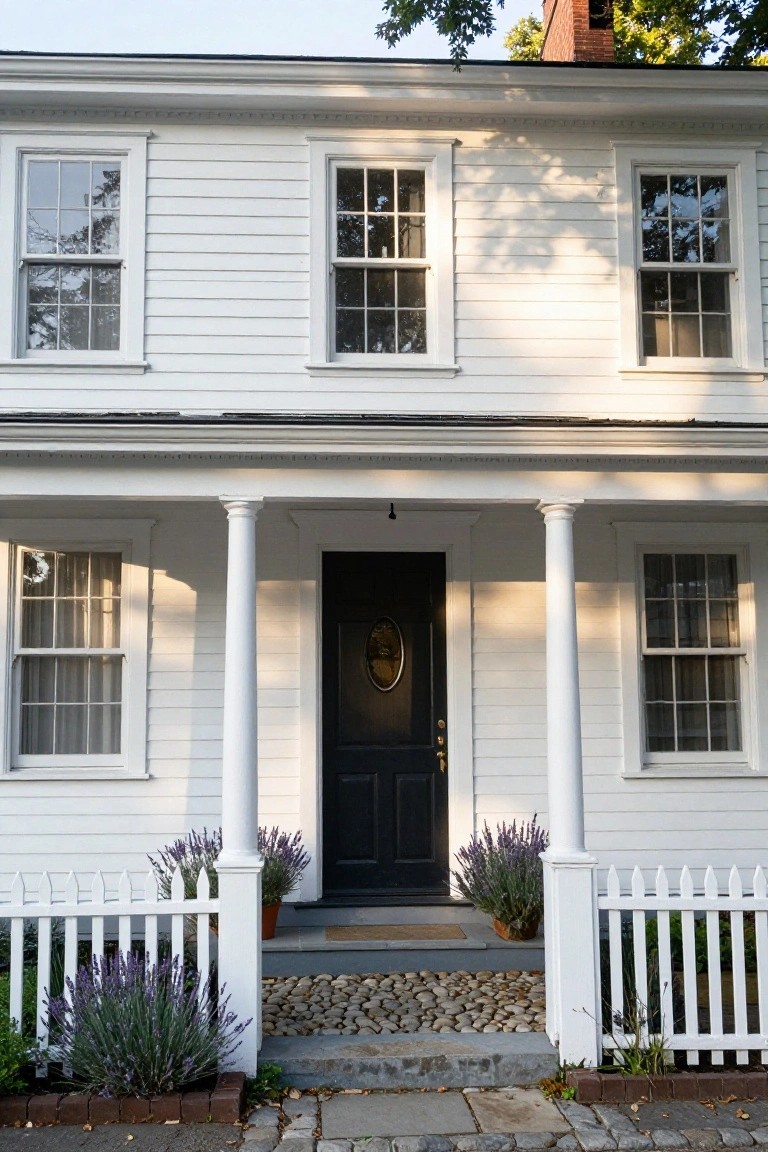
A columned porch like this one gives an 1800s Colonial house that solid, balanced look right at the front. The fluted white columns stand tall against the clapboard siding and frame the black door perfectly. It pulls everything together without much fuss.
These porches work best on homes with some symmetry already, like evenly spaced windows. Add them during a renovation to boost curb appeal, especially if you have a picket fence nearby. Just keep the columns in proportion to your entry so they don’t overwhelm a smaller space.
Classic Columned Front Porch
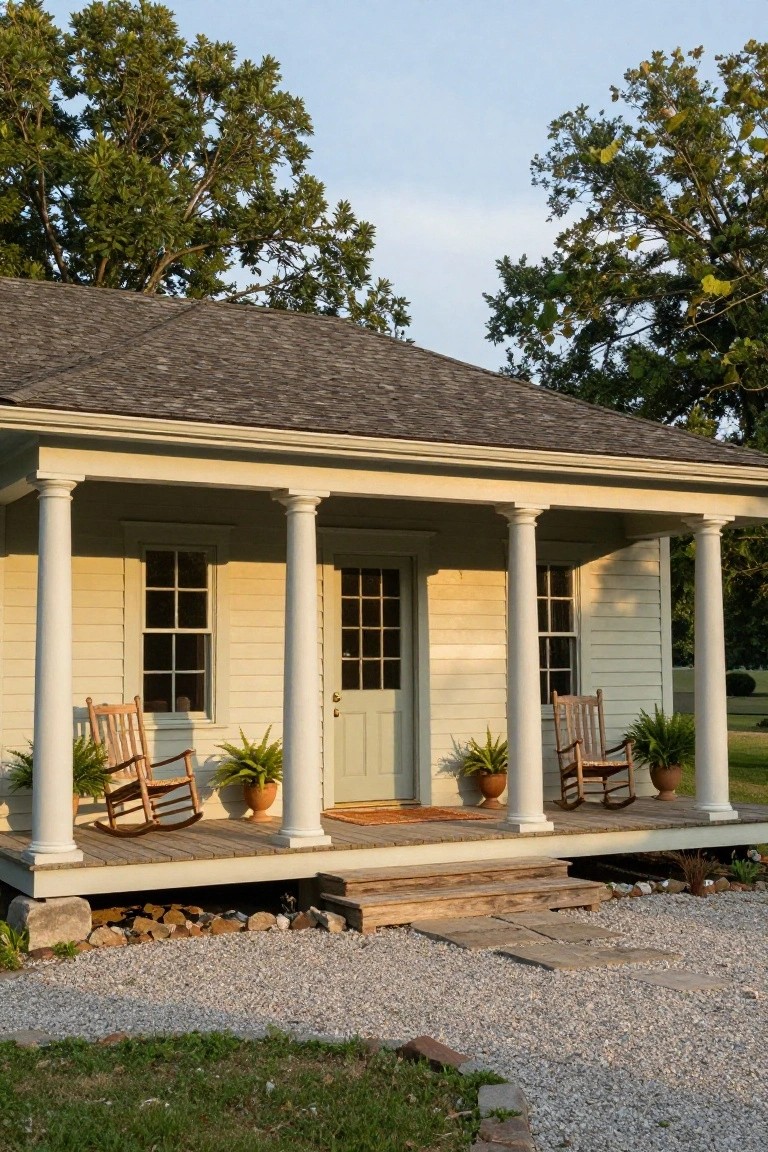
A covered front porch like this one, supported by tall white columns, brings back that straightforward 1800s Colonial feel. The smooth fluted columns stand out against the light siding and frame the entry just right. Add a couple of rocking chairs and potted ferns, and it turns the whole facade into something approachable and timeless.
This setup works great on modest homes where you want more presence without overbuilding. It suits level lots with room for a few steps up from a gravel path. Stick to white paint on the columns for crisp contrast, and keep seating simple. Skip heavy decorations to let the architecture do the talking.
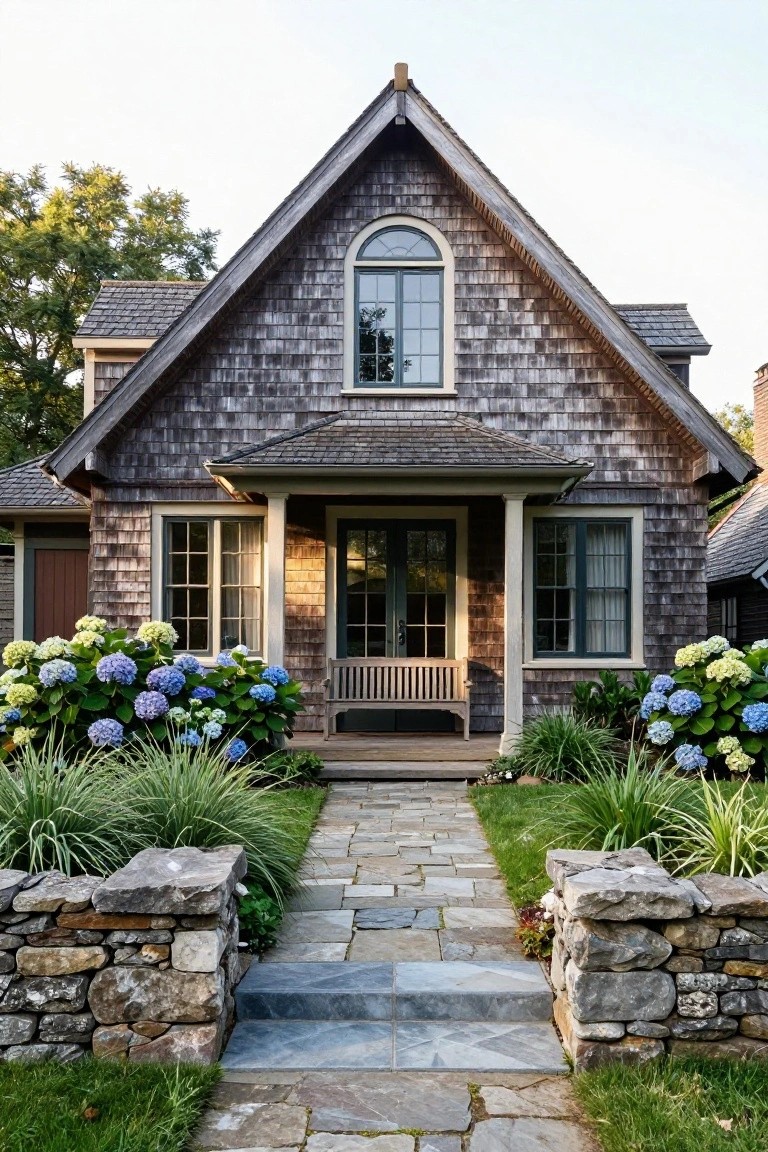
Porch Entry with Picket Fence
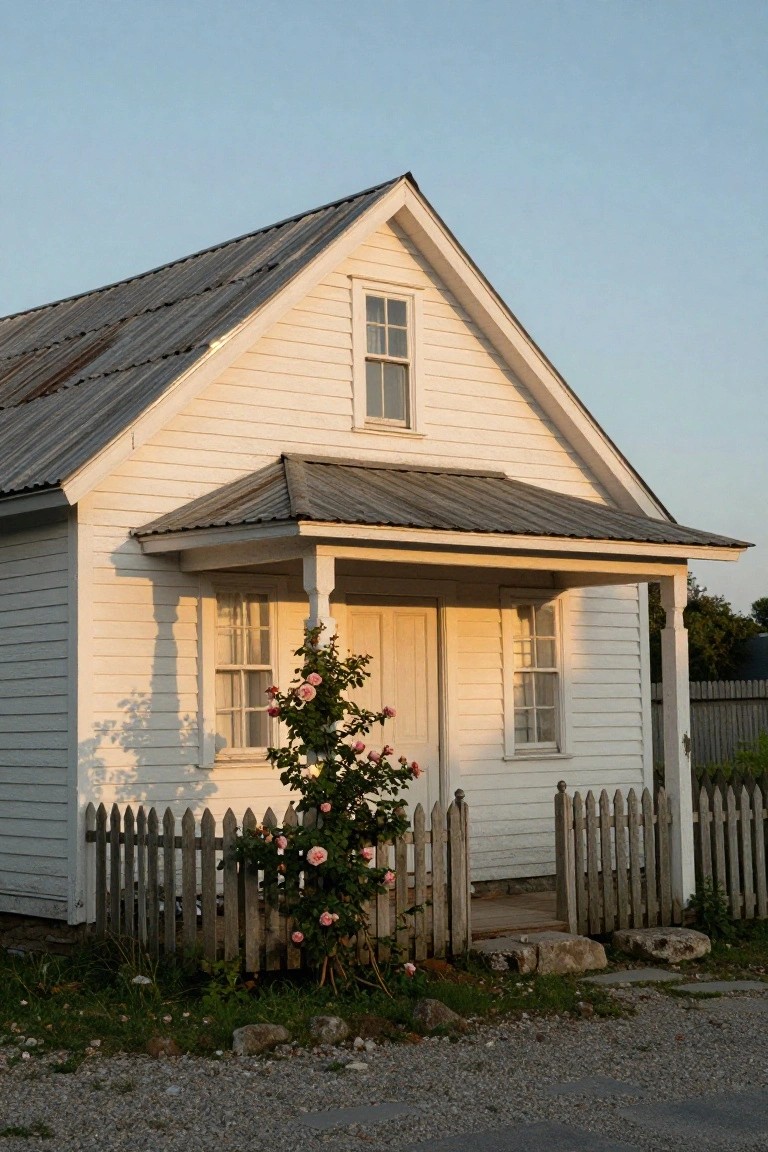
A simple picket fence right at the porch steps makes the front door feel more like home. You see it here on this white clapboard cottage, where the fence lines up neat with the porch posts and lets climbing roses grow up through it. That setup pulls your eye straight to the entry without any fuss, and it fits right into older colonial styles that keep things straightforward.
Try this on a small house facing the street or a driveway. Paint the fence to match your siding, pick roses that don’t need much pruning, and keep the gate wide enough for easy walk-through. It suits modest lots where you want curb appeal that ages well over time, but skip it if your porch sits high off the ground.
Weathered Gray Shingles with Navy Door
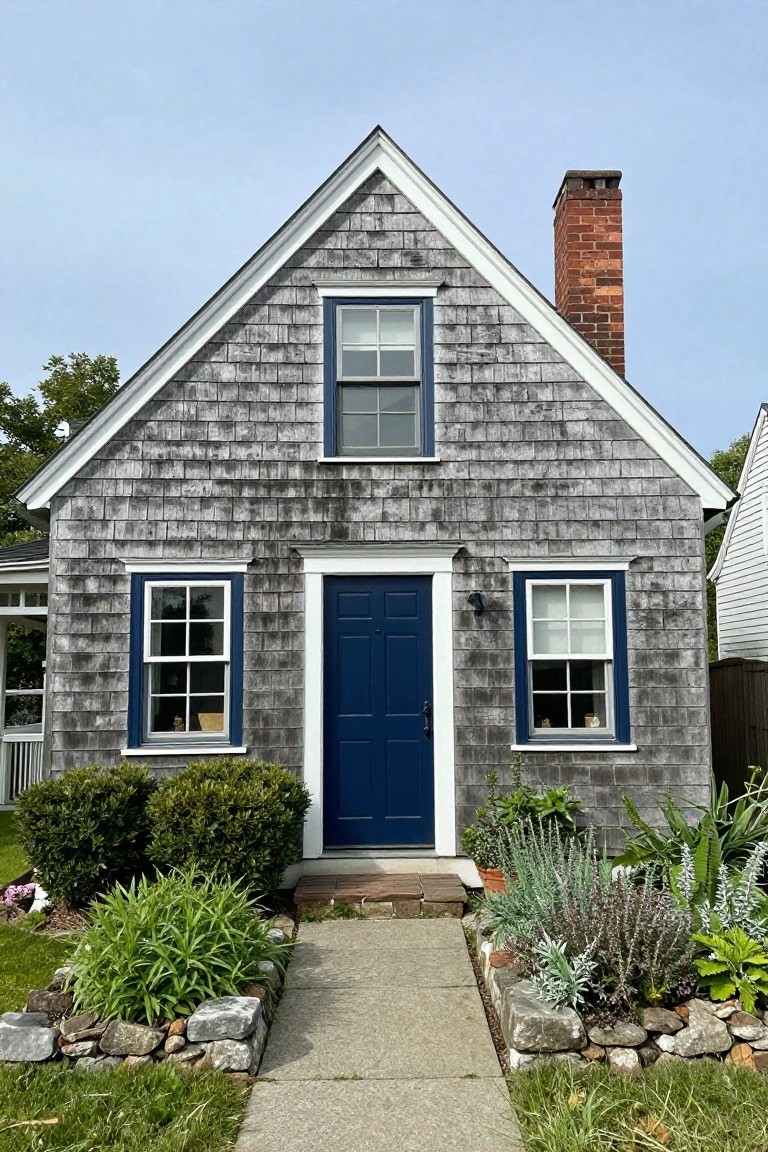
Gray shingles give this colonial house that lived-in New England look. They’re paired here with a deep navy front door and matching window frames, all set off by clean white trim. The simple gable roof and brick chimney keep things straightforward. That navy door pulls your eye right to the entry. It makes the place feel solid and welcoming at the same time.
You can pull this off on smaller homes from the 1800s, especially in coastal spots where shingles handle weather well. Let the shingles age naturally for texture. Pick a true navy paint for the door, nothing too bright. Skip fancy add-ons. Just add a stone path and low shrubs out front. Works best where you want classic without upkeep headaches.
Classic Blue Porch Ceiling
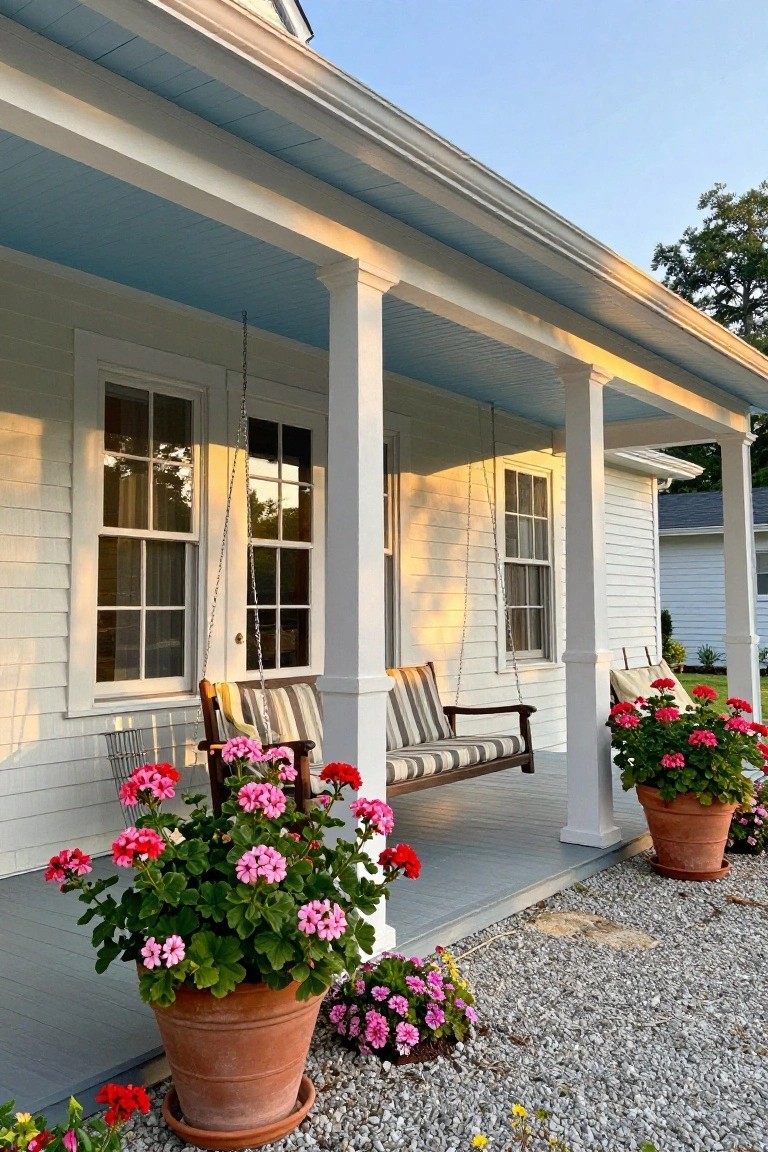
That light blue ceiling on the porch catches your eye right away. It’s an old-school detail you see a lot on Colonial homes, especially down South. The color makes the underside feel airy, like more sky, and folks say it even keeps bugs from nesting up there. Paired with white columns and siding, it gives the whole front a fresh, crisp look without much fuss.
For a renovation, paint your porch ceiling in a soft blue like this one. Pick an exterior paint rated for porches so it holds up to weather. It suits covered porches on older homes best, adding that welcoming touch to a simple facade. Just avoid dark shades, or it might feel heavy.
Columned Portico Entry

Tall white columns like these frame the front door and create that instant sense of classic grandeur. They stand out against the clean white siding and pair nicely with green shutters for a fresh pop of color. It’s a look that says old Southern home without trying too hard.
You can add this to a Colonial renovation by matching the column height to your porch roofline. It works best on two-story houses with balanced windows. Keep the base simple with brick steps, and skip fancy capitals if your budget is tight… the scale does most of the talking.
Shingle Style Coastal Facades
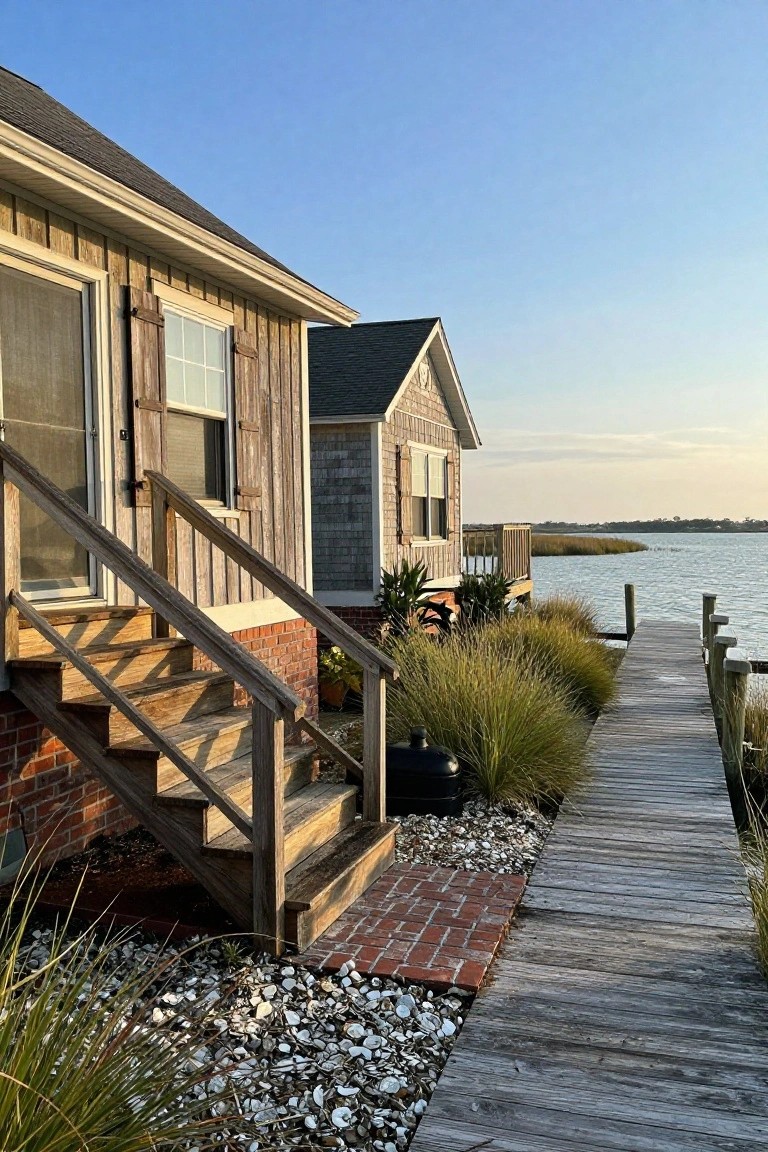
Shingle siding like this takes an old colonial house and makes it feel right at home by the water. The dark, weathered look on these cottages blends with the marsh grasses and oyster shell paths without trying too hard. It’s a style that started back in the late 1800s, giving homes that solid, lived-in character that newer builds just can’t match.
You see it a lot on waterfront spots where humidity and salt air would wreck anything fancier. Pair it with a low brick base to keep floodwater out, and run a simple wooden pier straight off the yard. It suits low-country or island renovations best, but watch the maintenance, or it’ll go gray faster than you think.
Shingle Siding Over Brick Base
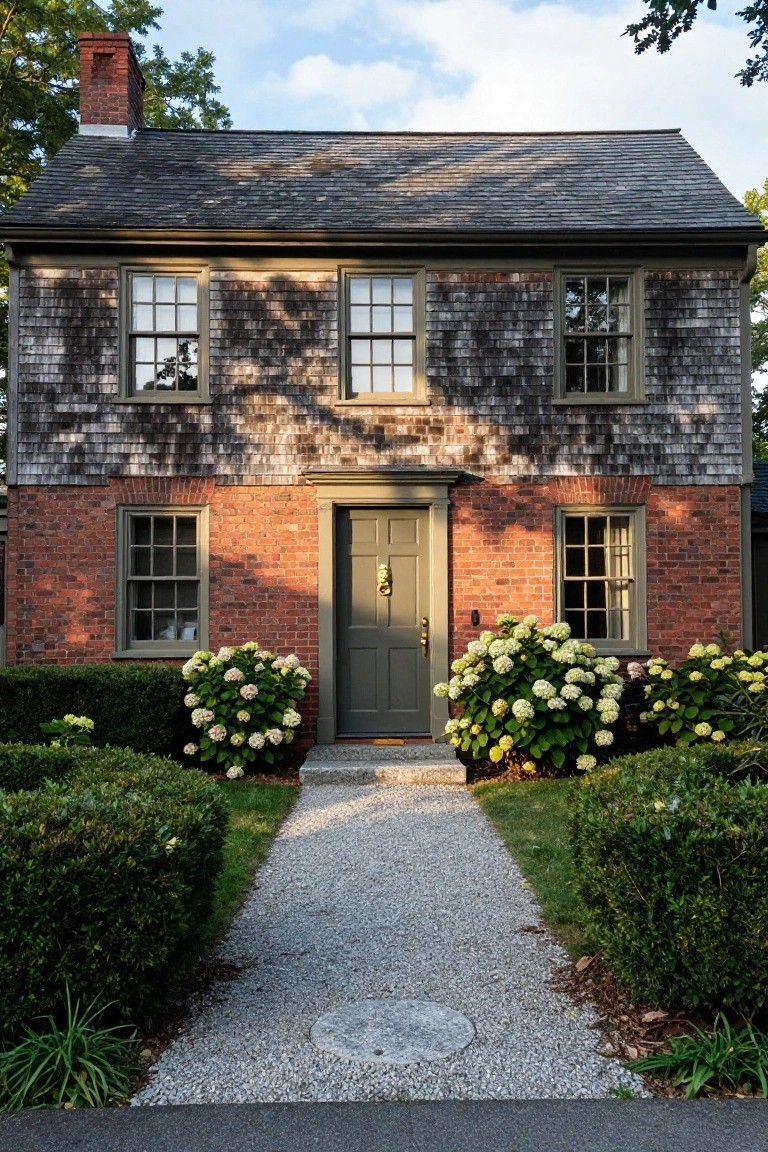
One look that pulls together a lot of old Colonial houses is shingle siding up top over a solid brick base down low. It gives the place a sturdy, grounded feel right away. The shingles catch light and shadow in a way brick can’t, adding some texture without much fuss. In this setup, the dark green door sits right in the middle, and those big hydrangea bushes on either side keep things simple and full.
This works best on homes from the 1700s or early 1800s that need a refresh. If your foundation is already brick, just add shingles above for that layered look. Skip fancy trim. It suits spots with trees nearby, where the siding blends in naturally. Watch the scale though. Too big a house and it might look off balance.
Black Door on Brick Colonial Facade
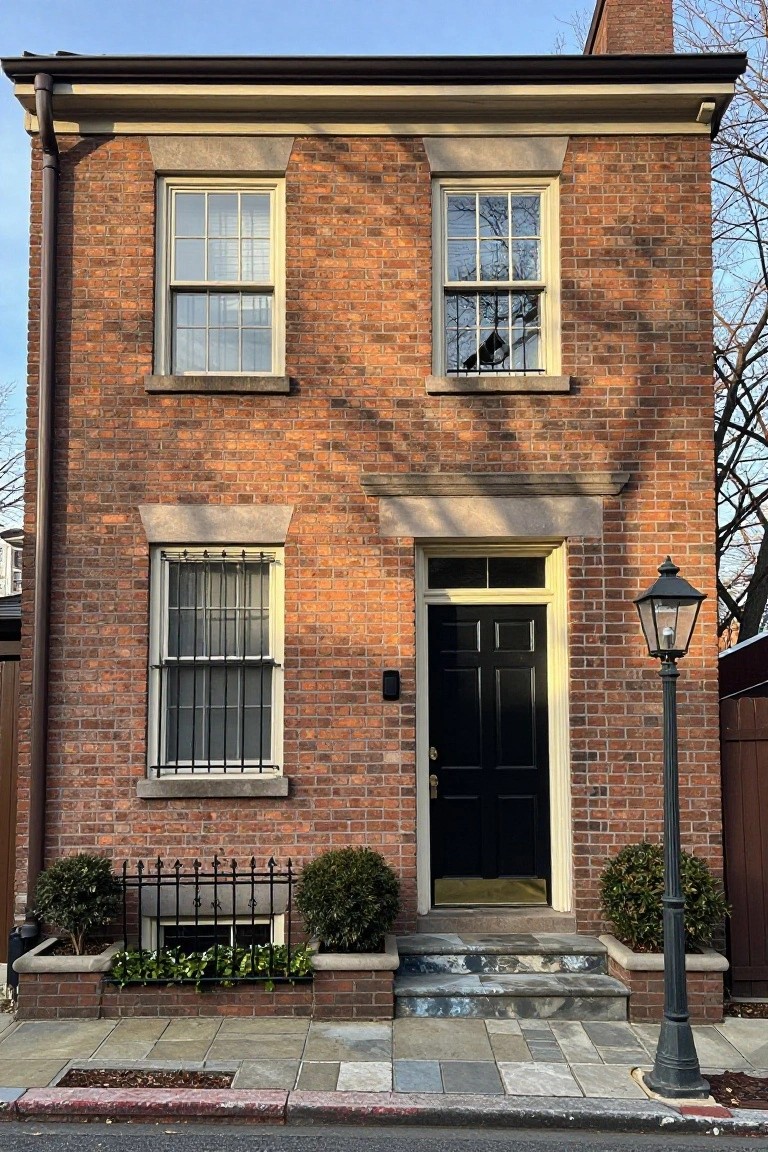
A black front door stands out strong against the warm red brick of this 1800s-style townhouse. It gives the whole entry a crisp, pulled-together look without much fuss. The iron grilles on the windows and basement add that extra layer of detail, keeping things secure while nodding to the house’s older roots.
This setup works great on narrow urban rowhouses or any classic brick exterior looking for a simple refresh. Paint your door a deep black, flank it with low boxwoods in those raised beds, and you’ve got instant curb appeal. Skip anything too fancy around it… let the contrast do the talking. Fits older neighborhoods where you want timeless over trendy.
Classic Clapboard Bathhouse Shed
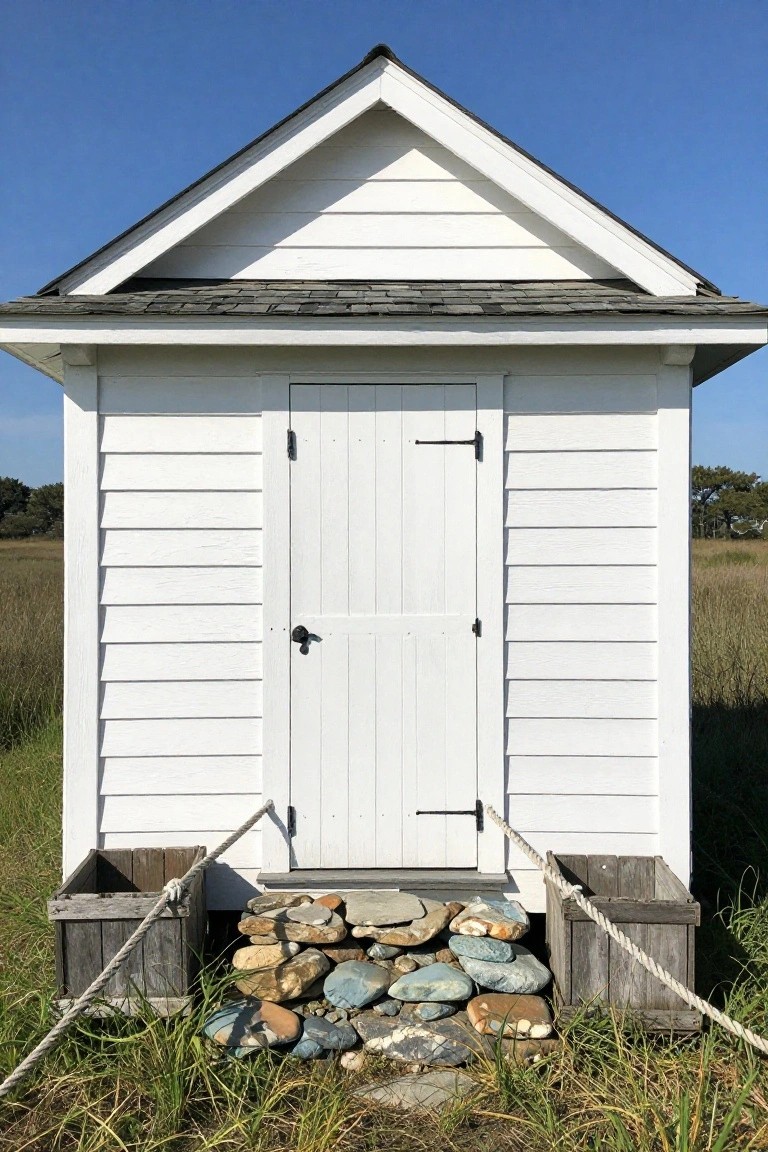
Small outbuildings like this clapboard bathhouse fit right into an 1800s colonial setup. The white siding and simple gabled roof give it that clean, no-fuss look that was common back then, especially near the coast. It stands on a low stone base that keeps it off the damp ground, and the plain door with black hardware keeps things straightforward.
You can add one of these to a backyard or near a guest cottage for storage or a changing spot. It works best on properties with open grass or marshy edges, where the white paint pops against the green. Just make sure the stones are solid for stability, and match the roof shingles to your main house.
Wooden Porch Hood Entry
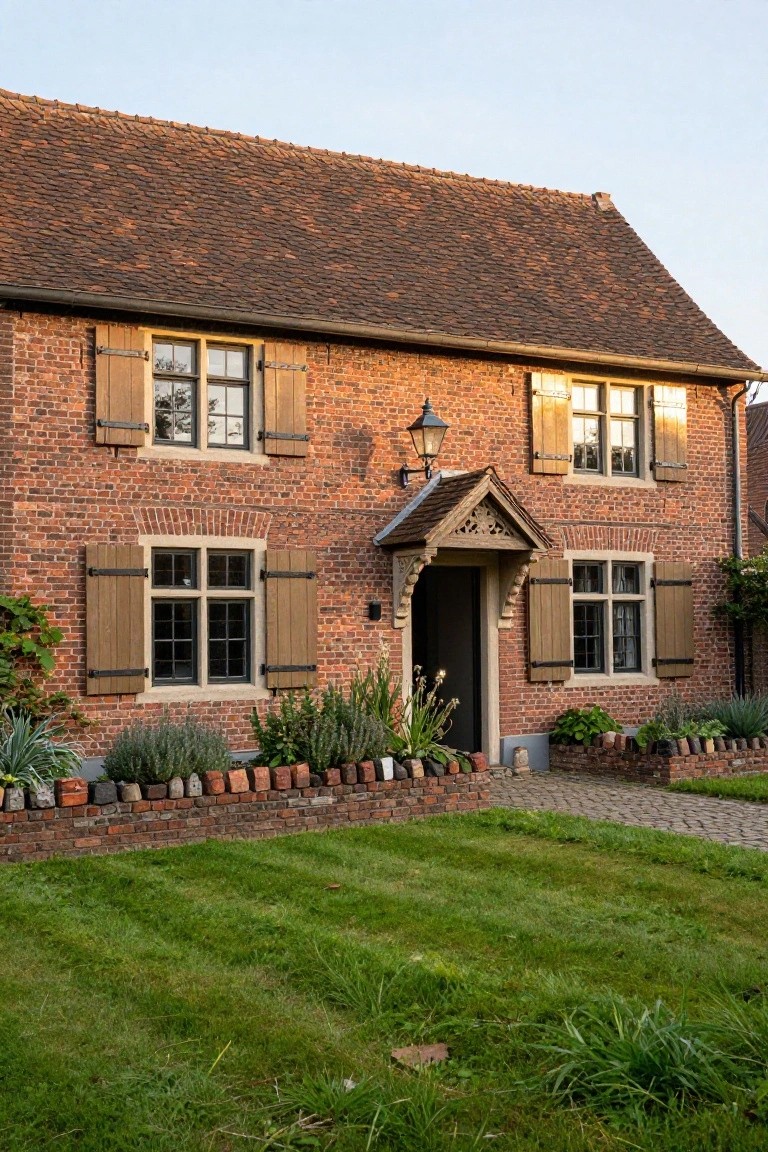
A simple wooden hood over the front door can turn a plain brick facade into something with real character. Here, the carved details on the timber stand out against the warm brick walls and pair well with the matching wooden shutters. It gives the house that settled-in, historic feel without overdoing it.
This works best on colonial or farmhouse renovations where you want to highlight the entry. Use reclaimed wood for authenticity, add a lantern for evening light, and keep the door dark to let the hood pop. It suits homes with some age to them. Just seal the wood well against rain.
Carriage Garage Update for Colonial Homes
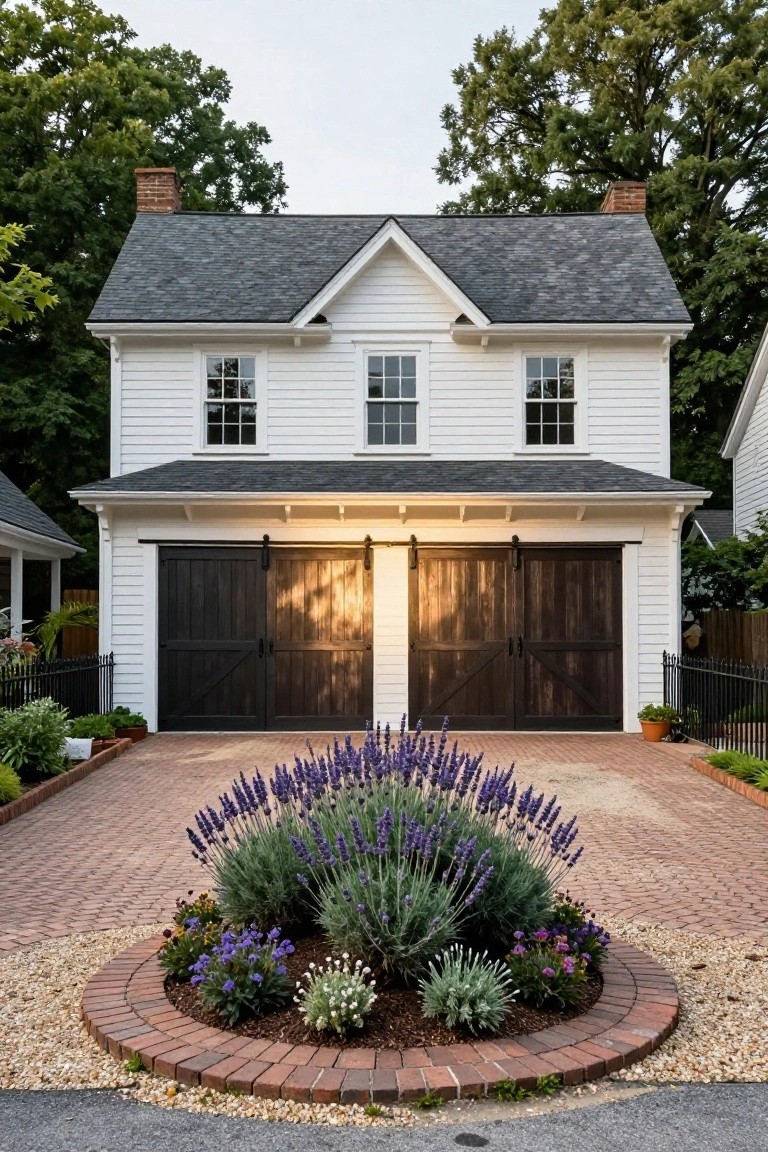
A simple way to refresh an 1800s colonial is adding a carriage-style garage like this one. The white clapboard siding keeps that classic look intact, but the dark barn doors slide open for a fresh twist. It pulls the eye right to the front without overwhelming the house’s gabled roofline.
This setup suits narrower driveways or town lots where space is tight. Use brick pavers for the apron and tuck in low plants like lavender around the edges. Just match the roof pitch to your main house so it blends, not sticks out.
Rustic Stone and Wood Facade
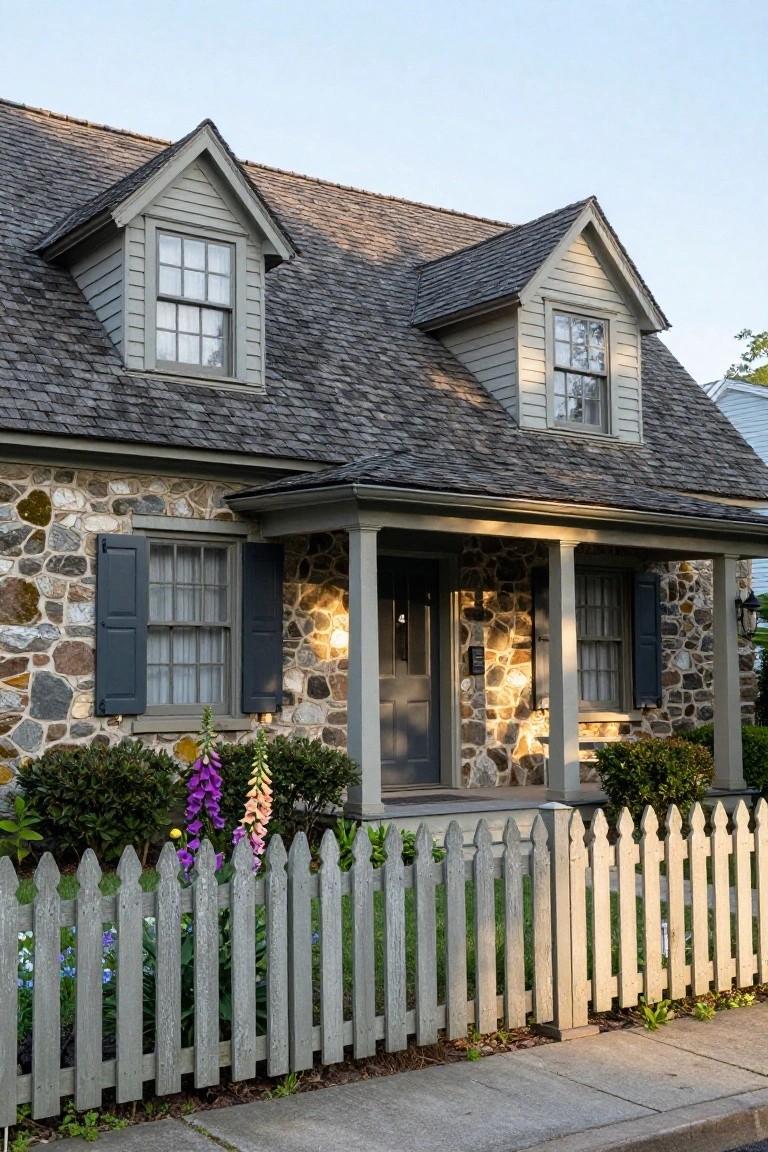
One look at this kind of Colonial exterior tells you it’s built to last. The lower walls use rugged fieldstone that pulls from the natural surroundings, while the upper story shifts to simple wood clapboard and shingled roof. That switch creates balance. Stone down low feels sturdy and ties the house to the ground. Wood above keeps things lighter and more approachable. It’s a combo that nods to old farmhouses without going overboard.
You can pull this off on many older homes during a reno, especially if your foundation is solid enough for added stone facing. Stick to muted grays or earth tones so it doesn’t compete with landscaping. A basic covered porch like the one here pulls it all together for everyday curb appeal. Just watch the scale. Stone works best on single or story-and-a-half houses, not super tall ones.
Classic Columned Porch Entry
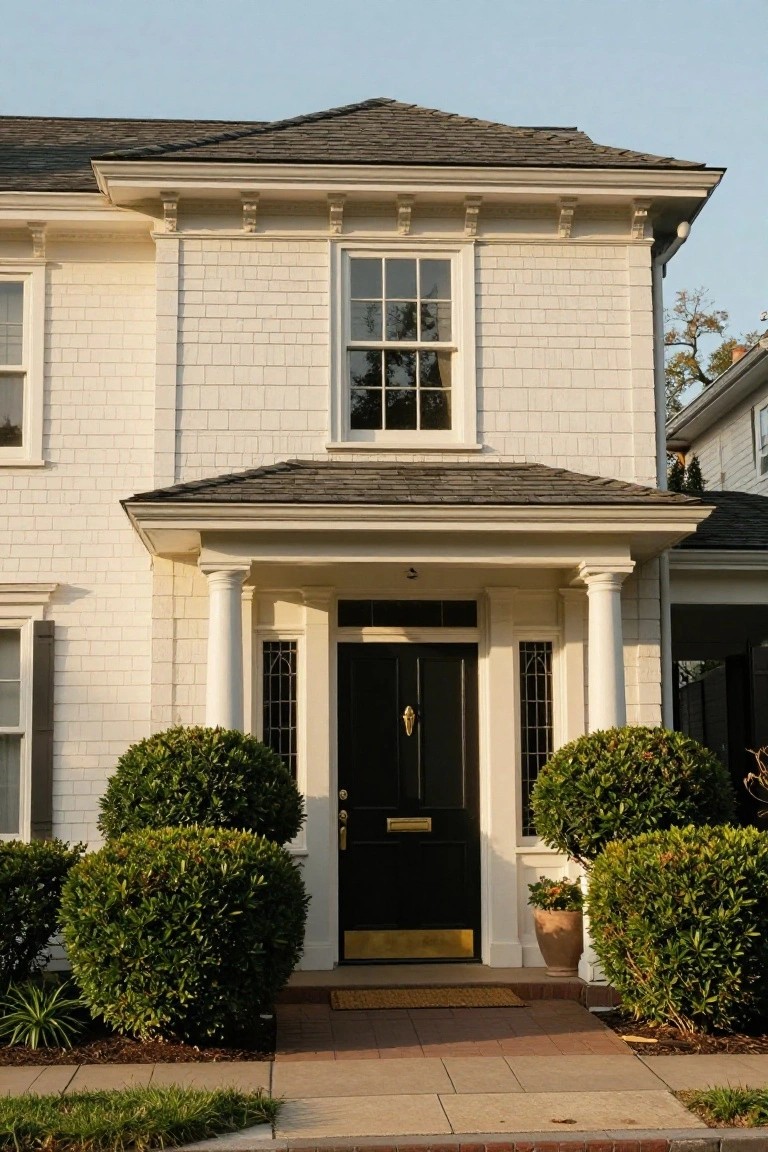
A columned porch like this pulls together the front of a Colonial house. Those two white columns hold up a simple gabled roof over the door. It makes the entry feel formal but not fussy. The black door adds some punch against the white siding. Folks renovating older homes keep coming back to this setup because it nods to 1800s roots while looking sharp today.
You can add one to a plain facade pretty easily. It works best on two-story houses with some height. Flank the steps with round boxwoods for balance. Just make sure the columns match your siding scale. Paint them regularly or they start looking tired fast.
Classic Porch Swing Setup
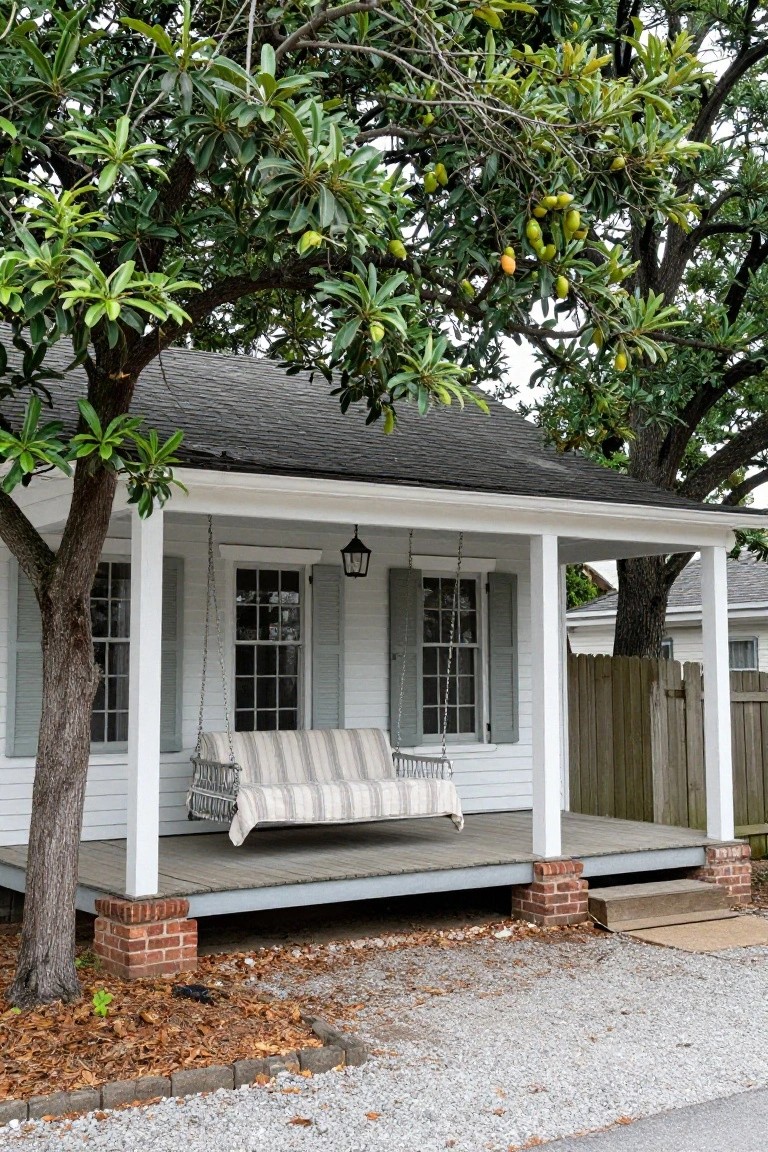
A hanging porch swing like this one turns a simple colonial front porch into the heart of the house. It’s all about that easy spot to sit and watch the day go by, especially under the shade of big oak branches. The white columns and railing keep things straightforward and timeless, pulling the eye right to the porch without any fuss.
This works great on compact 1800s-style cottages, particularly in warmer spots where you want outdoor living without much upkeep. Bolt the swing securely to the porch beam, add weatherproof cushions in stripes or solids, and you’re set. Keep the porch raised on bricks if you’re in a damp area… it handles moisture better than a slab.
Rustic Plaster and Stone Facades
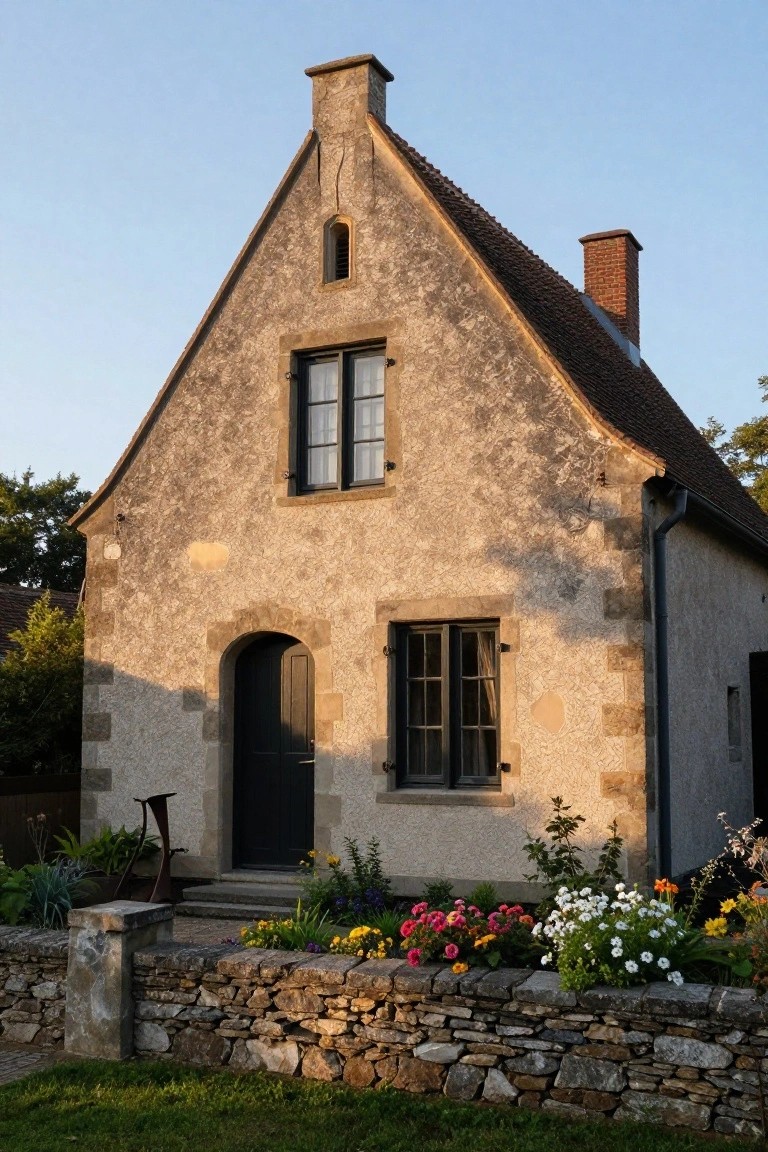
Old colonial homes often have that rough plaster look over stone walls. It gives the house a real sense of age and history without much fuss. The texture catches the light just right, especially in the evening, and pairs well with a simple steep roof like this one. It’s not smooth modern stucco. This is more like what you’d see on farmhouses from the 1800s, built to last.
For a renovation, try applying a coarse plaster mix over your existing stone or block base. Keep the entry arched if you can, with a dark wood door for contrast. It works best on smaller homes in rural spots or suburbs wanting that European colonial feel. Just make sure the plaster is breathable so moisture doesn’t trap. A low flower bed out front ties it together nicely.
Gray Shingle Pavilion by the Beach
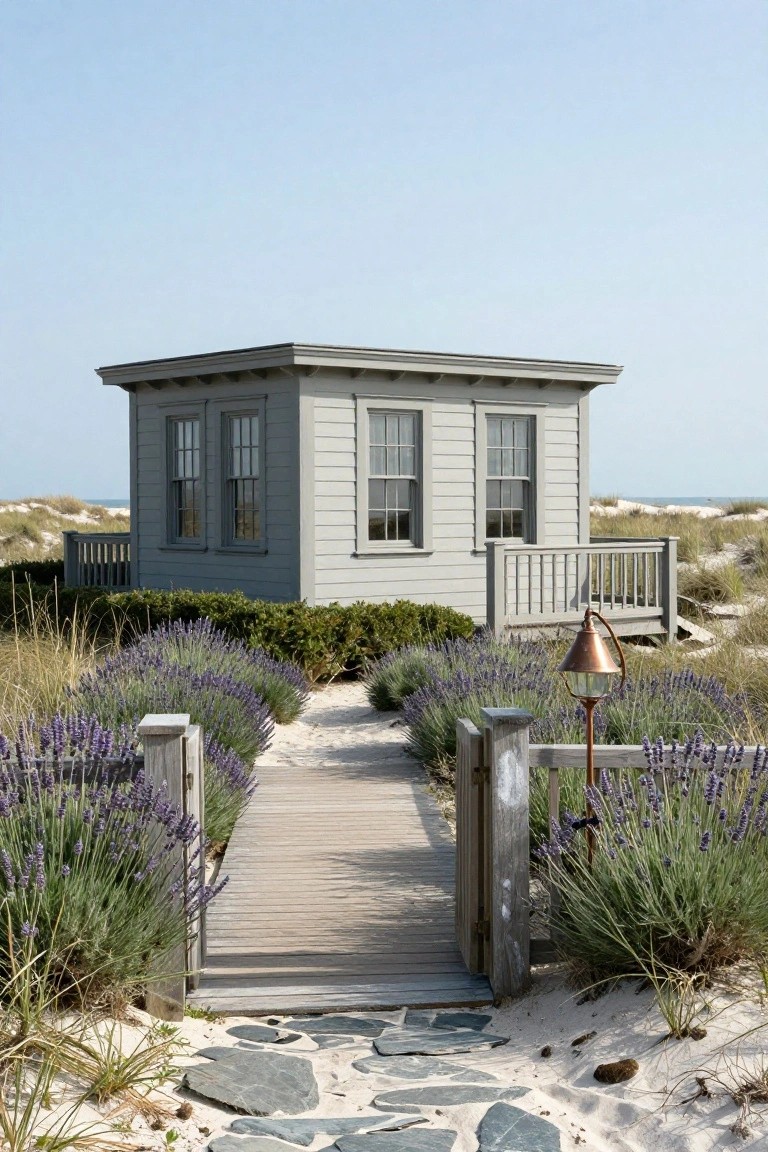
Small structures like this gray shingle pavilion capture that easy coastal colonial feel. The soft siding weathers nicely against dunes and sea grass, keeping things simple and tied to the landscape. Multi-pane windows and a basic deck railing add just enough detail without overdoing it.
You could add one to a beachfront property as a guest spot or changing area. It works best where you want low upkeep and a nod to older New England styles. Stick to muted grays so it doesn’t stand out too much from the sand.
Classic Colonial in Soft Yellow
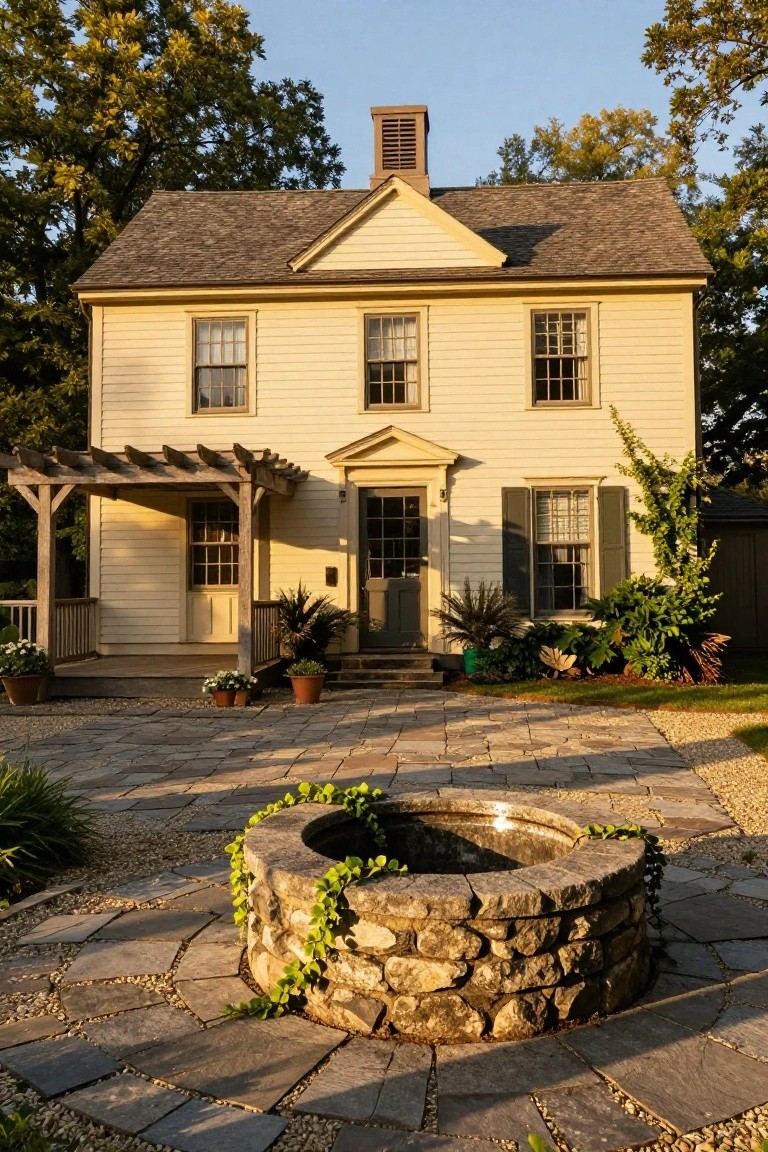
A soft yellow paint on clapboard siding gives this 1800s colonial a fresh, lived-in look that fits right into its wooded setting. The color picks up the warm light of late afternoon without overpowering the simple gable roof and evenly spaced windows. It keeps that straightforward historic feel homeowners chase when renovating older places.
Try this shade on a cape or saltbox style if your house has clean lines and a front-facing gable. It works best east of the Mississippi where autumn trees frame it nicely. Just stick to quality exterior paint, since clapboard shows wear fast in humid spots.
Shingle Siding Over Brick Base
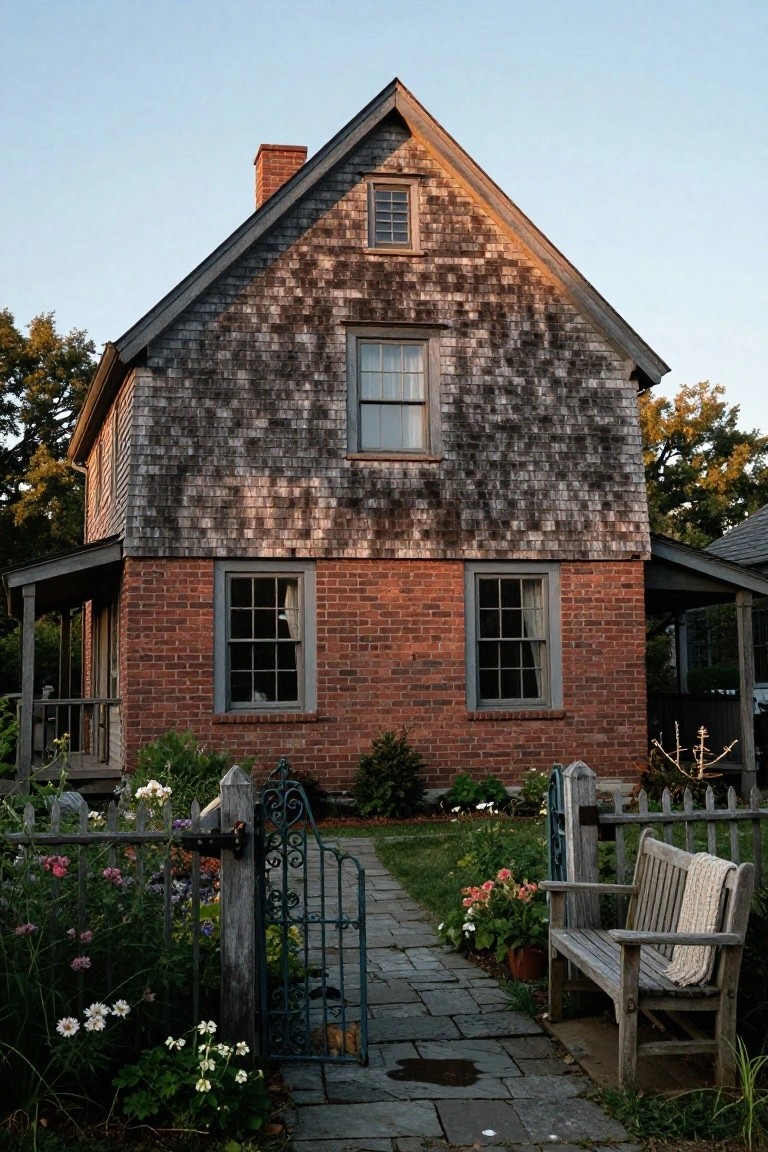
Houses from the 1800s often mixed rough shingle siding up top with a solid brick base below. It creates that sturdy yet aged look you see in older Colonial homes. The shingles weather to a soft gray, while the brick stays firm and grounded. Simple windows and a chimney tie it all together without much fuss.
This combo fits sloped-roof Colonials in places with changing weather. If you’re renovating, source real cedar shingles and match the brick to local styles. Let time do the work on the patina. It keeps things practical for porches and gardens out front.
Symmetrical Brick Colonial Facade
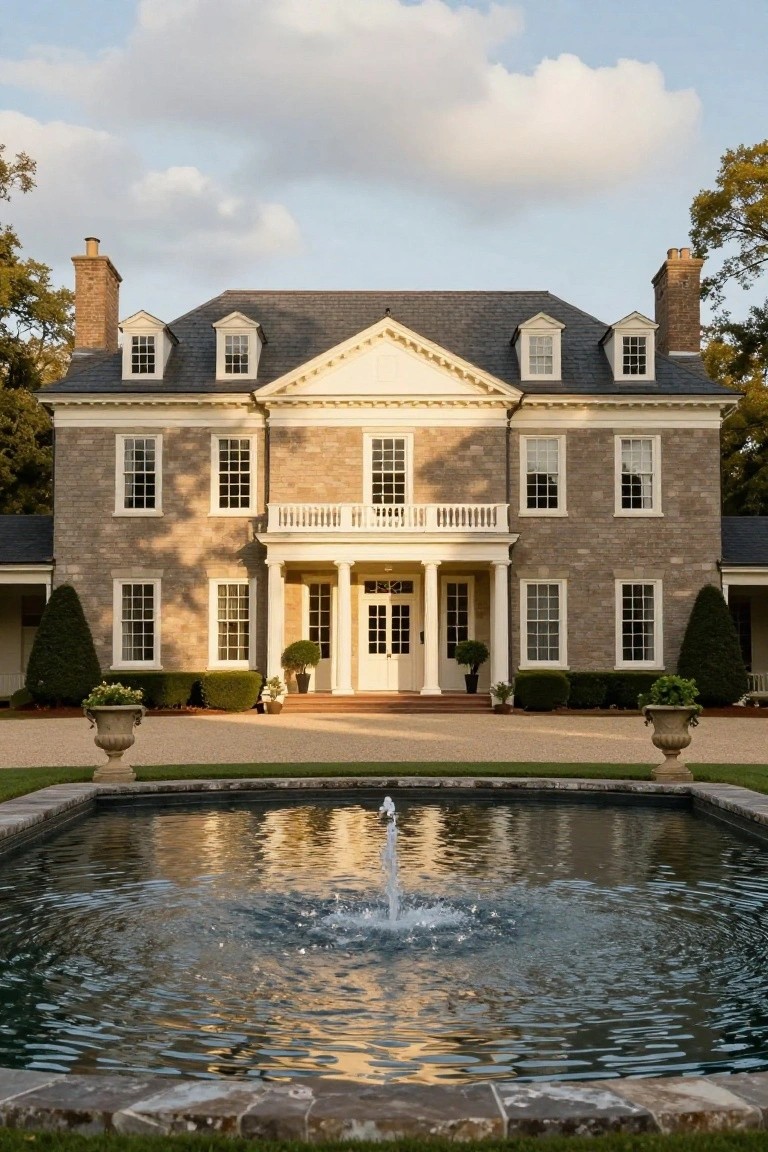
A symmetrical brick facade like this pulls together the front of a colonial home in a way that feels steady and right. The central entry sits under a white pediment with columns, and matching dormers top it off. Brick in soft tones pairs with crisp white trim for that 1800s look that doesn’t fade over time. It’s all about balance. Nothing sticks out too much.
You can add this to a renovation by keeping windows even and the door dead center. It suits bigger homes on open lots, maybe with a gravel drive and simple pool out front. Skip it on small or modern lots, though. Scale matters here.
Frequently Asked Questions
Q: How do I figure out my house’s exact colonial style from these 22? A: Walk around and note the roof shape, window sizes, and door details. Line them up against the photos in the article. You’ll spot your match fast that way.
Q: Can I mix elements from different 1800s styles on my exterior? A: Pick two that share similar lines, like Federal and Greek Revival. Swap porch columns from one onto your base style. It keeps things balanced without looking jumbled.
Q: What’s the quickest update for more curb appeal? A: Freshen the trim paint in crisp white or soft cream. Hang reproduction lanterns by the door. Neighbors will notice right away.
Q: How do I source authentic-looking materials without breaking the bank? A: Scout salvage yards for old doors or hardware first. Order clapboard siding or shutters from lumber mills that cut to order. You get the real feel on a budget.
