

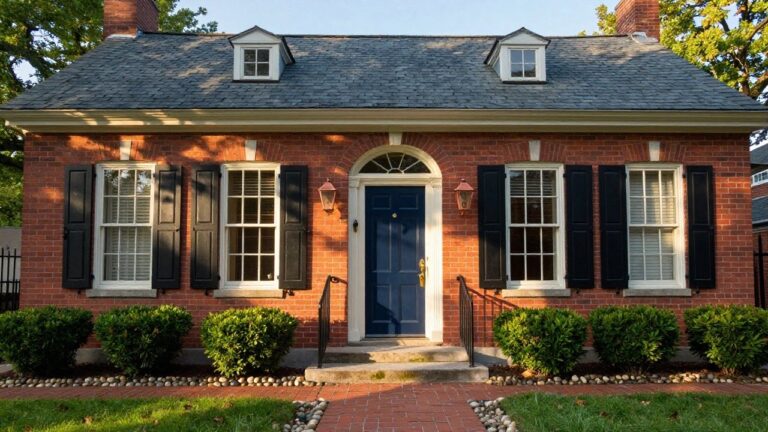
When I walk up to a Colonial house, the paint colors on the siding and trim set the tone right away, either pulling the symmetrical facade together or throwing it off. Good choices respect the steep rooflines and prominent entries, making the whole exterior feel balanced from the curb without clashing against brick or stone accents. I’ve tested a few combinations on friends’ homes over the years, and the ones that work best shift slightly with natural light across seasons. Curb appeal hinges on that harmony. You’ll find practical options here that translate well to real houses, worth sketching out for your own project.
Navy Blue Door on Red Brick
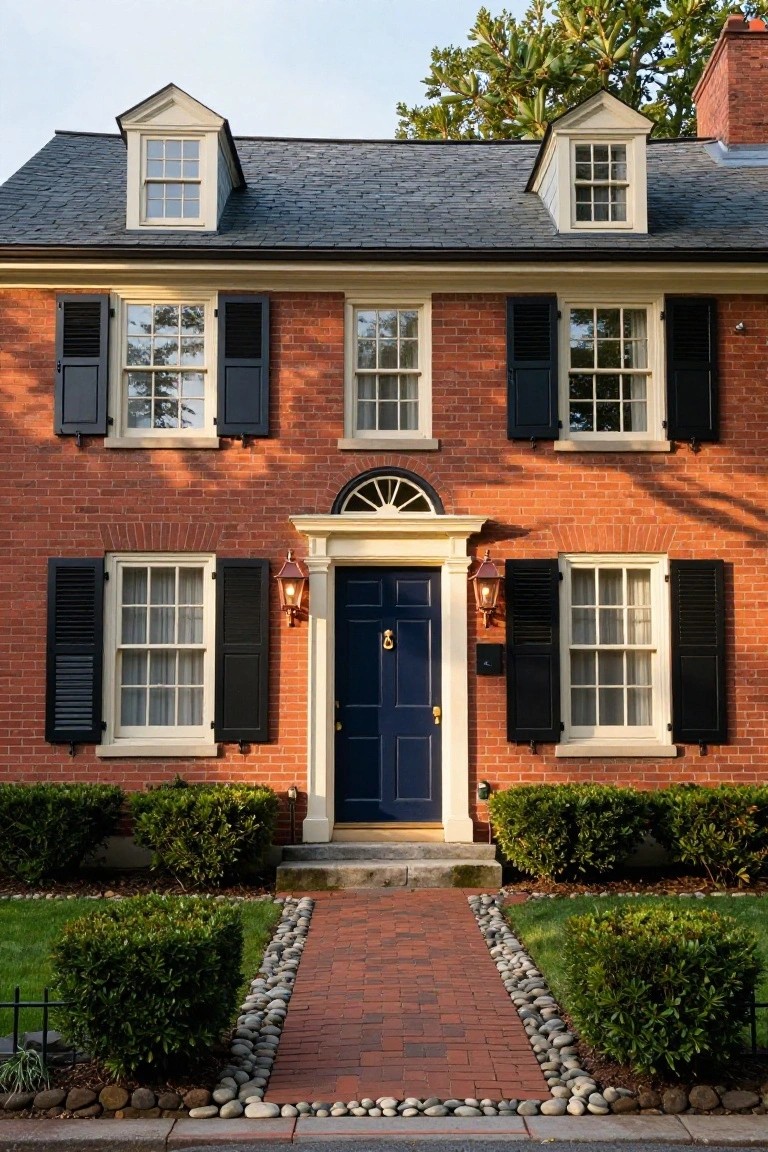
A navy blue front door really stands out against the warm tones of red brick. It gives a colonial house that crisp, classic feel without going overboard. Pair it with black shutters and cream trim like this, and the whole facade pulls together nicely. The blue adds just enough color to make the entry welcoming.
This works best on traditional brick homes in older neighborhoods. Go for a glossy finish on the door to catch the light. Make sure the hardware is brass or black to match. Skip it if your brick is too orange, though. Might clash a bit.
Red Door on White Colonial Siding
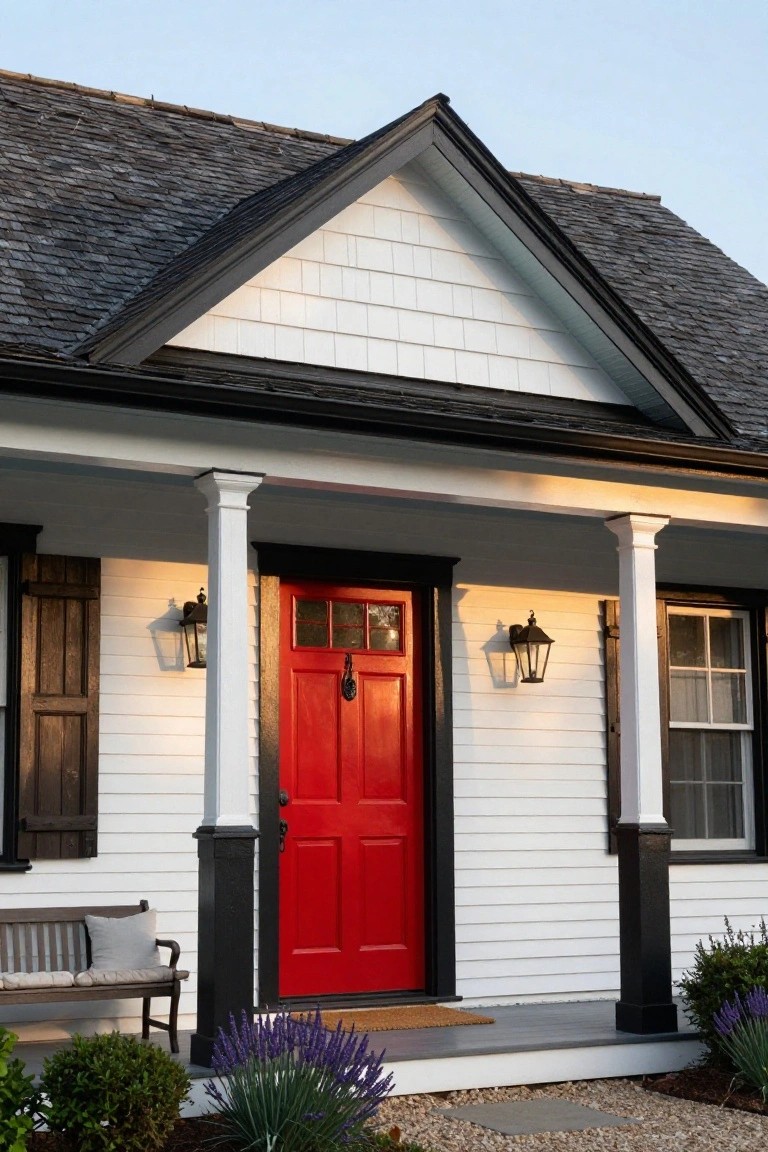
A bright red front door stands out nicely against plain white clapboard siding and black trim details. It gives a classic colonial house that extra bit of welcome without much fuss. The porch columns and lanterns frame it just right, making the entry feel friendly right from the street.
This color combo fits older homes in town or country settings. Go for a solid red paint that holds up outside, pair it with fresh white siding, and use black on shutters or posts for clean lines. Skip it if your house has too many colors already… it shines best kept simple.
Navy Blue Siding on Colonial Houses
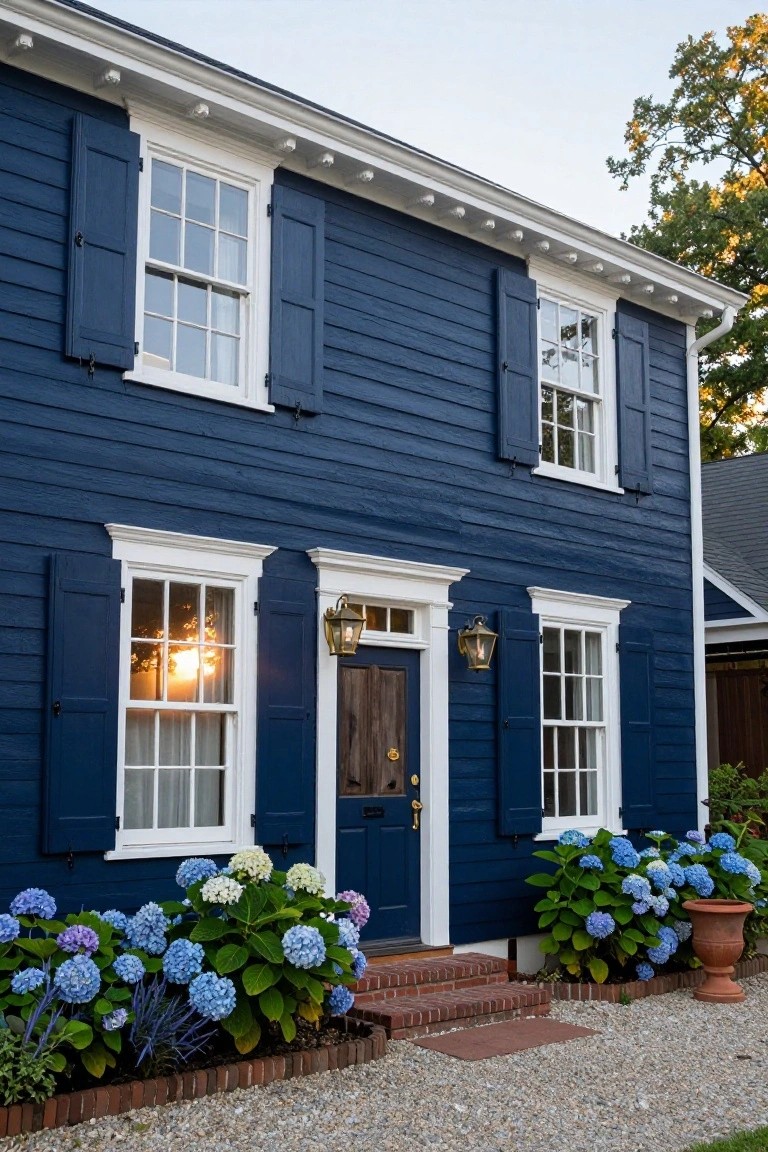
A deep navy blue siding like this turns a standard colonial into something with real presence. The color picks up on classic New England vibes without going overboard. White trim keeps the windows and door sharp, and a few blue hydrangeas out front echo it just right.
This paint choice suits older homes with clapboard siding, especially where you want curb appeal that lasts through seasons. It holds up well in shaded spots or cooler climates. Go for high-quality exterior paint to avoid chalking, and test a sample first since navy can shift under different lights.
Bold Yellow Door on Gray Siding
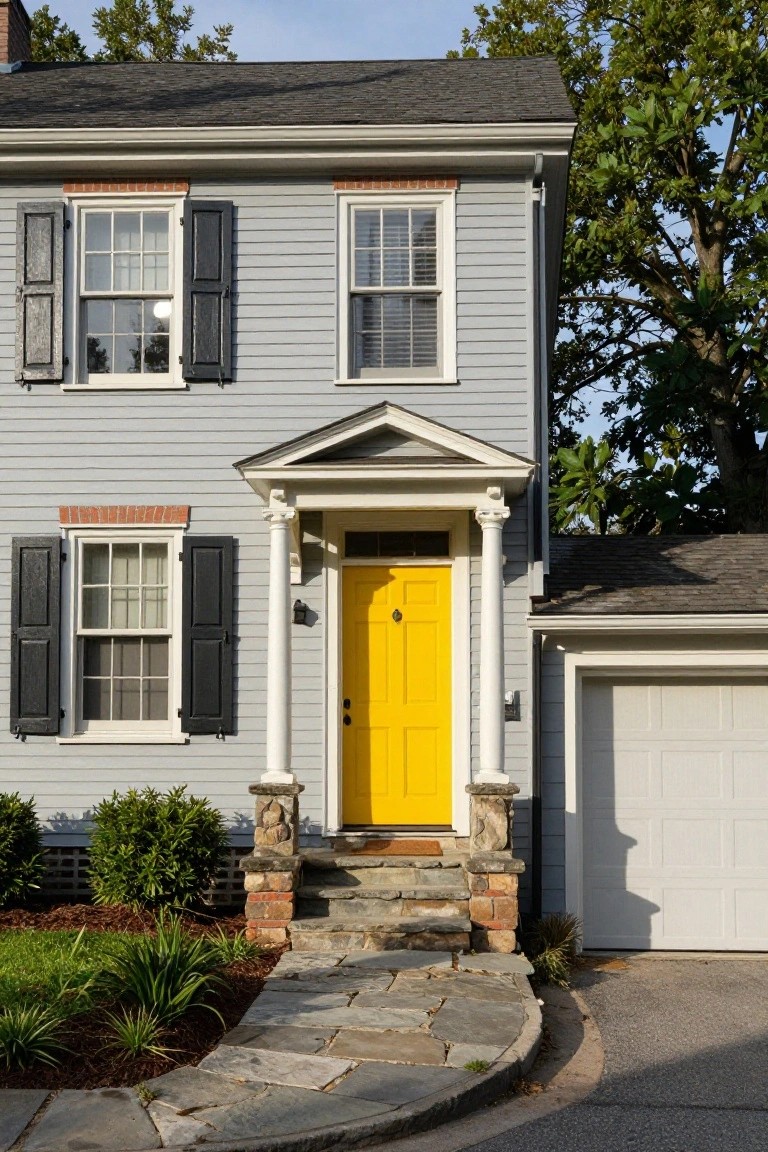
A yellow front door really wakes up a classic gray colonial house. That soft gray siding keeps things calm and traditional, but the bright yellow pulls your eye right to the entry. Black shutters add some nice contrast without overdoing it, and it all feels fresh yet tied to the house’s older style.
This works best on homes with neutral siding tones like grays or beiges, especially in neighborhoods where you want a little cheer without going overboard. Pick a true yellow, not too orange or pale, and pair it with stone steps or simple landscaping to keep the focus on the door. Just make sure the trim stays white or off-white so it doesn’t compete.
Red Brick Paired with Cream Trim
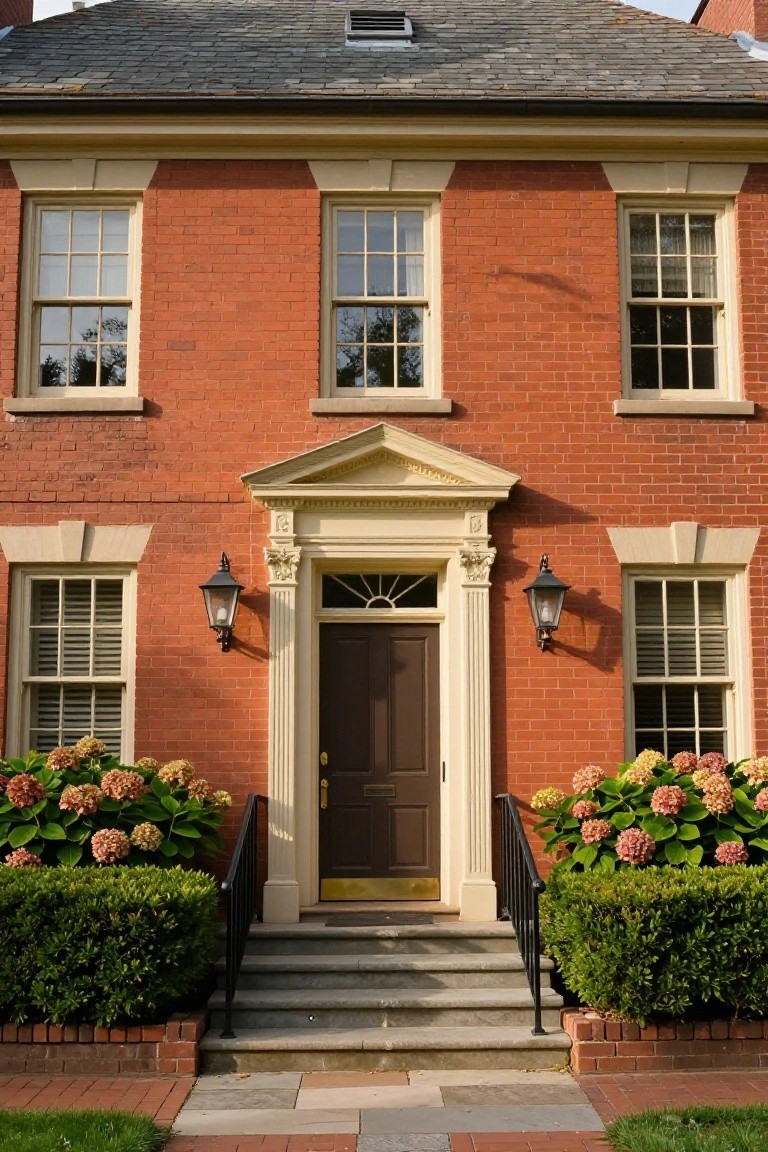
Red brick houses like this one get a fresh lift from cream-colored trim around the windows and entry. The warm tones in the brick play right off the soft cream paint. It keeps things classic without going too stark white. Those lanterns and the pedimented door pull it all together nicely.
This combo suits older colonial homes in established areas. Pick a creamy off-white with yellow undertones to match the brick’s warmth. Paint the door a deep brown or black for contrast. Boxwoods and hydrangeas at the base tie it in without overwhelming.
Green Shutters on White Siding
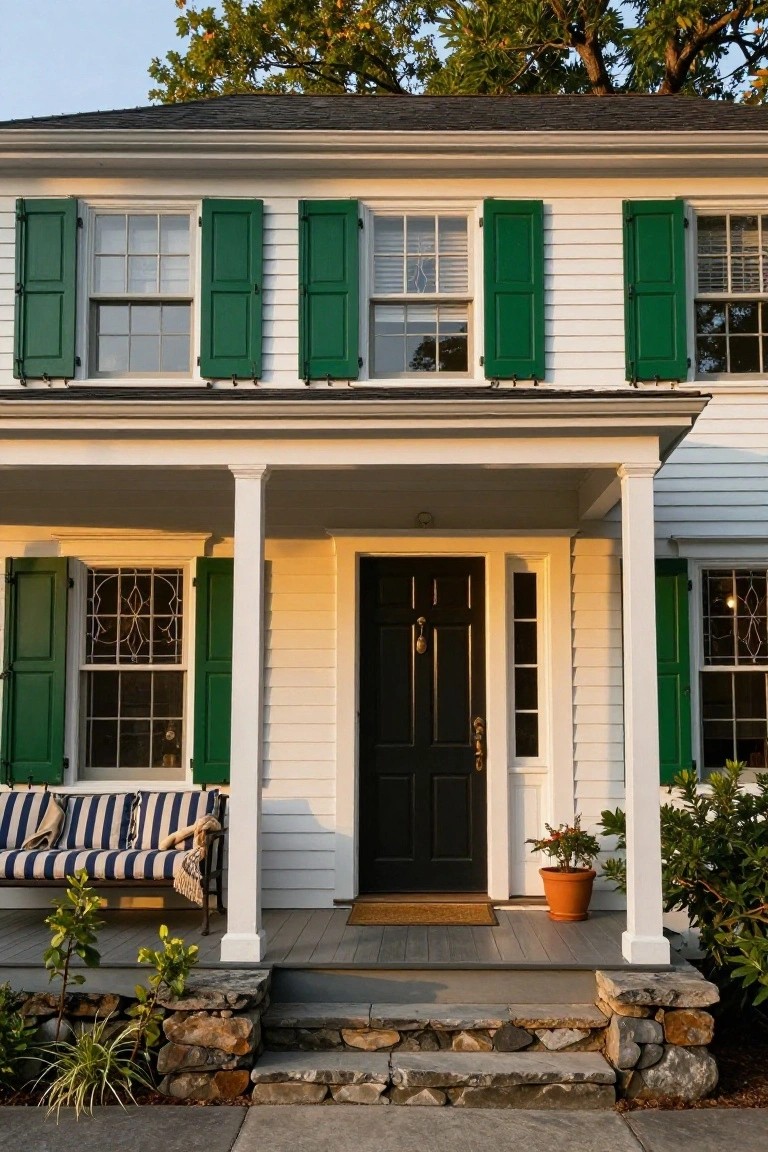
White siding gives a clean base for any colonial home. Add green shutters, and you get that fresh pop people notice right away. A black door pulls it together without overdoing things. It’s simple. Works year round.
Try this on homes with lots of windows. The green repeats across the front nicely. Pick a true green, not too bright. It suits older neighborhoods where you want classic but not boring. Just keep the trim white too.
Dark Siding with White Trim
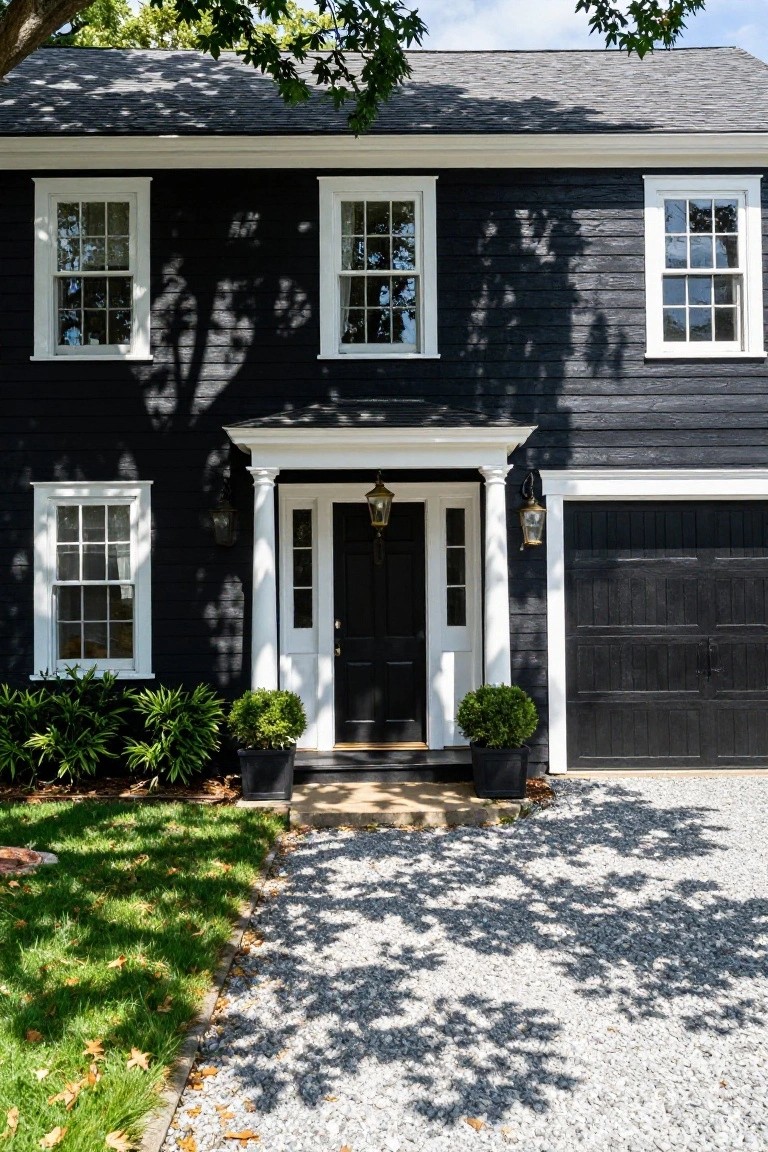
Dark siding like this deep charcoal shade turns a classic colonial house into something bold and fresh. The white trim around the windows, door, and porch columns keeps everything crisp and tied to the traditional style. It stands out nicely against green lawns and trees, making the front yard feel put together without much fuss.
Try this on homes that already have good rooflines and balanced windows. It suits suburbs or older neighborhoods where you want curb appeal that lasts. Just clean the siding now and then since dirt shows up more on dark colors. Boxwoods by the entry add a simple touch that fits right in.
Soft Blue Siding on Shingle Colonial Homes
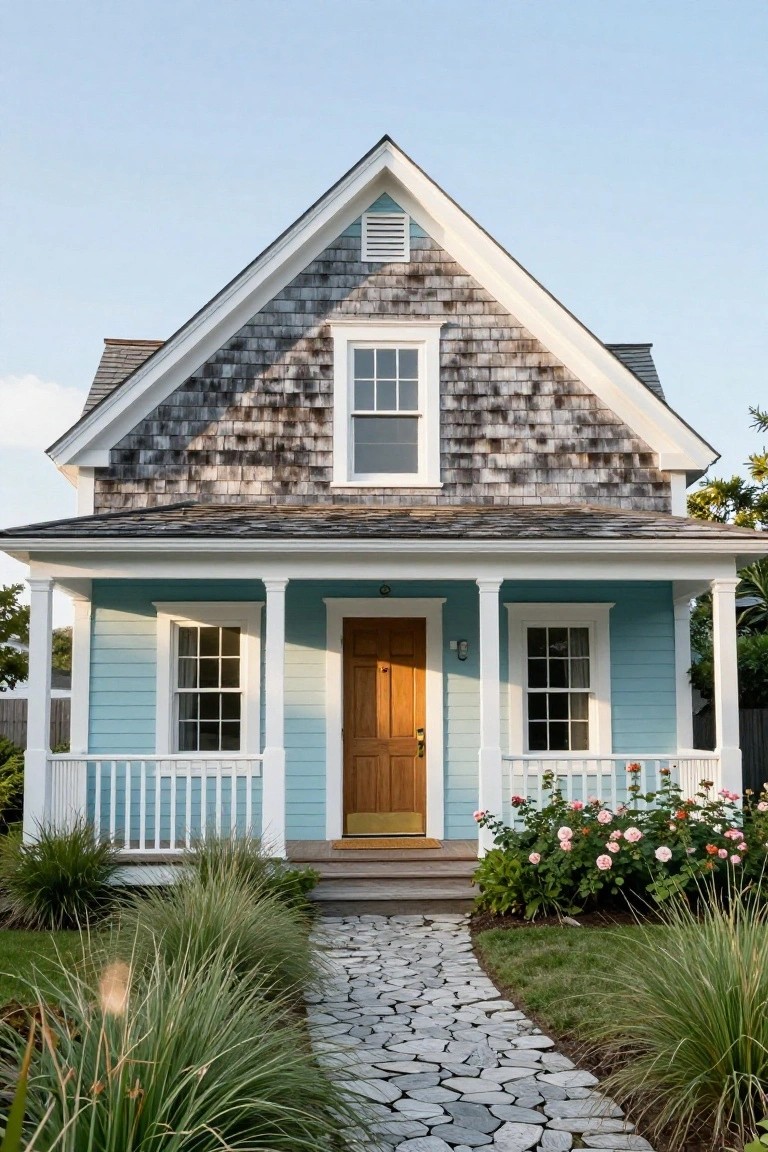
This soft blue paint on the siding gives a classic shingle-style colonial house a fresh coastal feel. It works because the pale shade picks up sky and water tones without overwhelming the architecture. White trim keeps everything crisp around the windows and porch columns, while the natural wood door adds just enough warmth. The shingle roof in gray ties right in.
Try this color on smaller homes or cottages where you want curb appeal that feels light and approachable. It suits coastal or beachy areas best, or anywhere with mild weather. Pair it with simple landscaping like low grasses and a stone path to keep the focus on the house. Steer clear if your home has too much dark brick nearby, as the blue might look off.
Brick Facade with Gray Trim
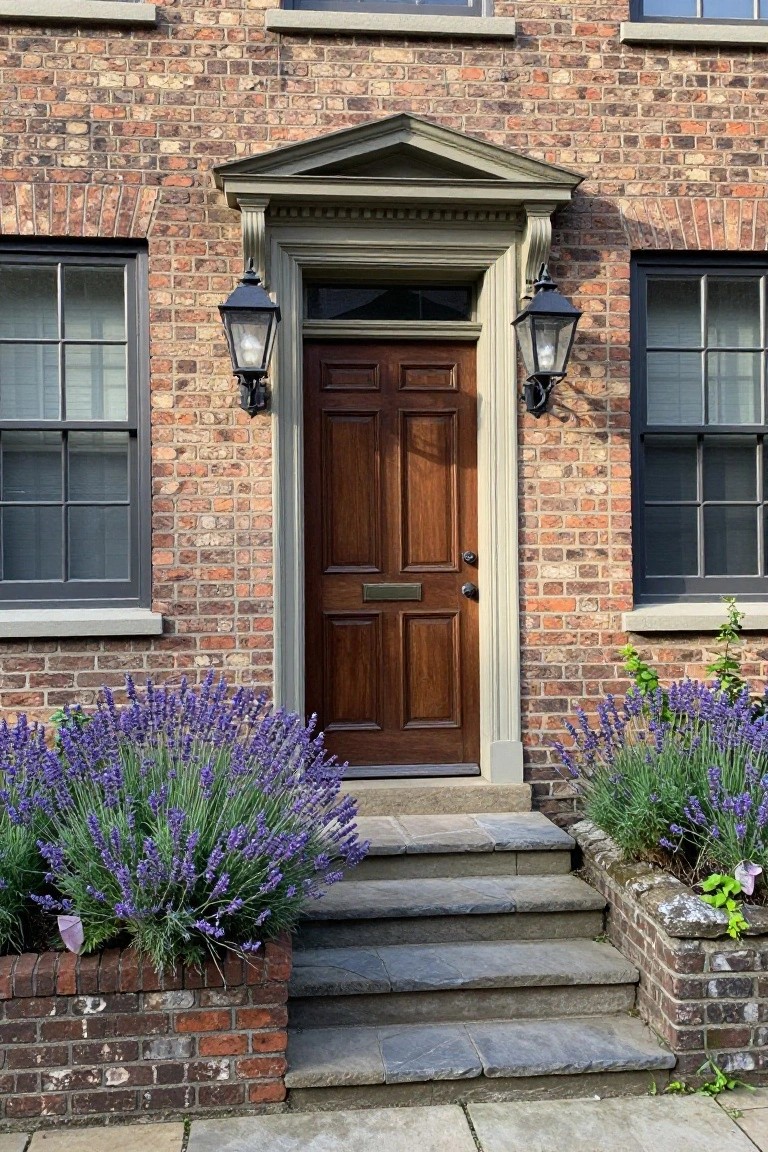
A classic look for colonial homes comes from leaving the brick unpainted and just painting the trim in a soft gray. It lets the warm tones of the brick show through while the gray gives clean lines around the windows and door frame. That simple choice keeps the house looking sharp and timeless, especially with a dark stained door right in the center.
This setup fits older brick houses best, where you want to update without a full repaint. Go for a gray with a hint of green to match aged brick. Add lanterns on either side for evening light. Watch for trim that’s peeling though, since it pulls focus if not fresh.
Soft Gray Siding with Black Door
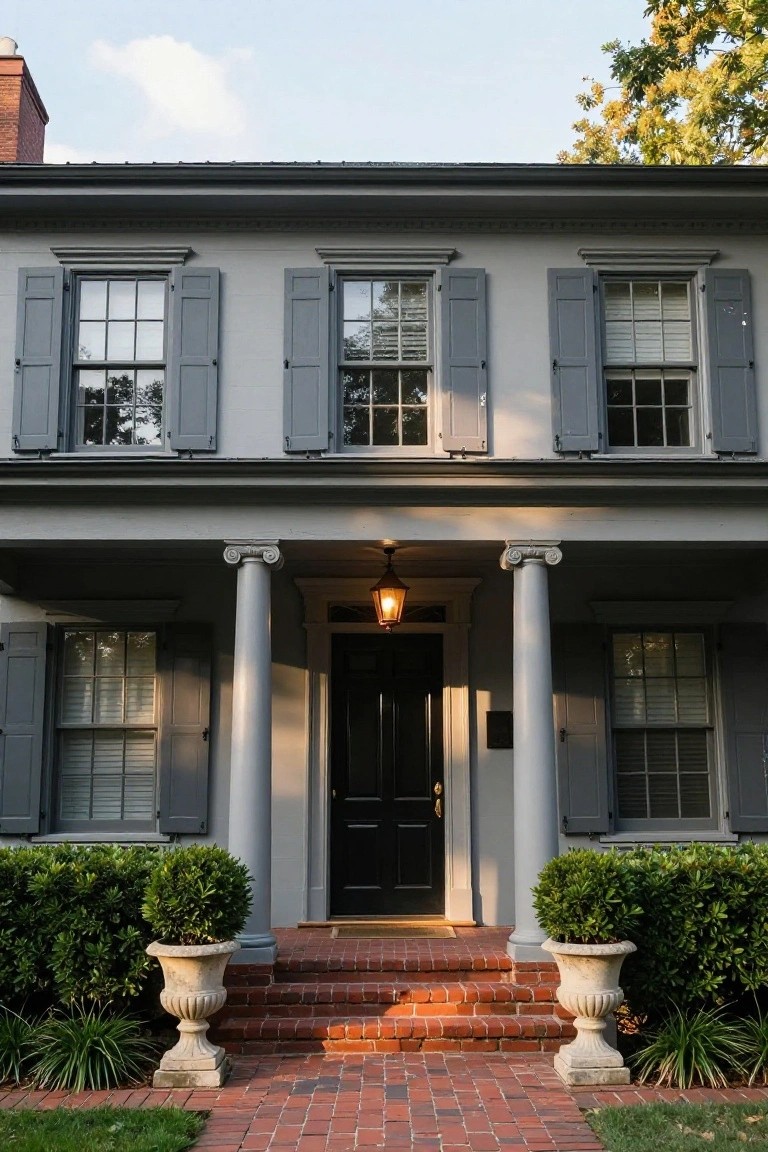
A soft light gray on the siding keeps this Colonial house looking clean and timeless. The gray shutters blend right in while the black front door adds some punch without overdoing it. White columns on the porch stand out just enough to frame the entry nicely.
This color setup suits older homes with brick steps or a bit of red in the chimney. It freshens up the look for curb appeal. Stick to matte finishes so it doesn’t glare, and keep plantings simple like those boxwood urns.
Pale Beige Siding with Teal Door
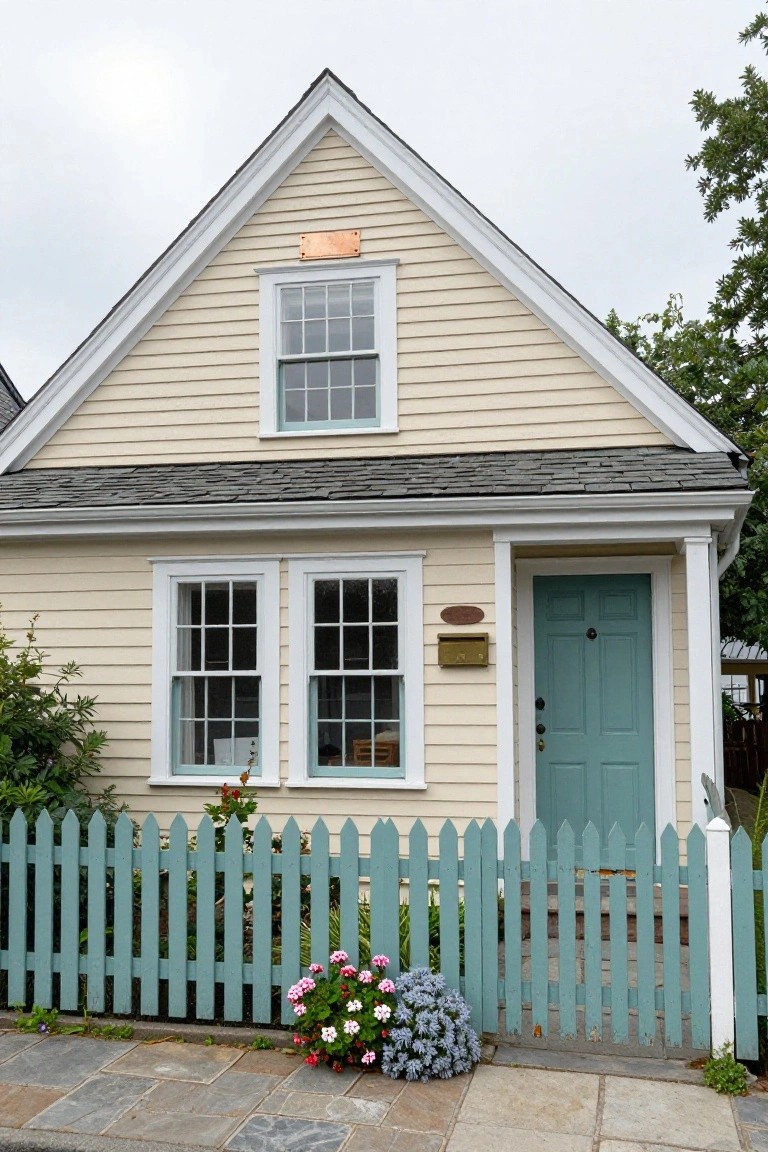
A pale beige siding like this gives a colonial house that quiet, classic feel without being too stark. The teal front door stands out just right against it, adding some coastal energy that keeps the whole front from looking plain. White trim around the windows and roofline ties it all together neatly.
This combo suits older neighborhoods or smaller homes where you want curb appeal without big changes. Pick a muted teal to match the soft siding, and think about echoing it on a fence if your yard allows. It holds up well in shady spots too.
Soft Yellow Siding with Sage Green Shutters
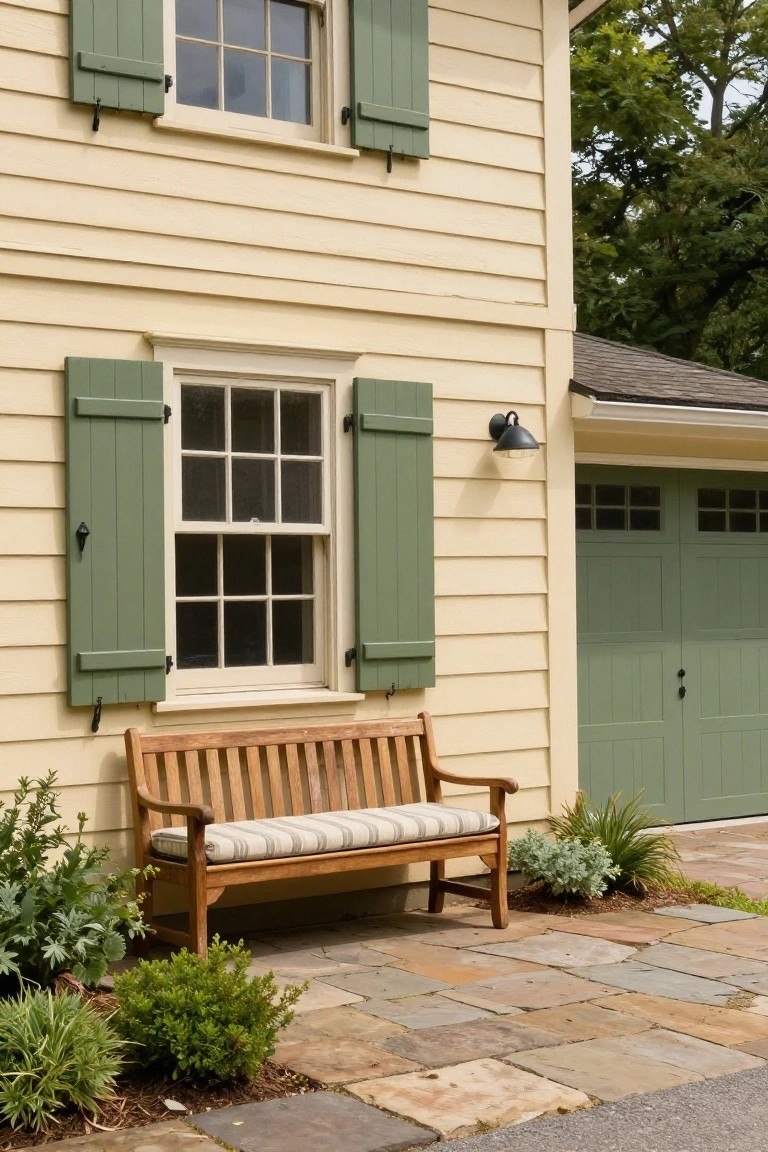
A pale buttery yellow on the siding gives this Colonial house a gentle, sunny feel without being too bold. Pairing it with sage green shutters and a matching garage door keeps things coordinated and fresh. The green tones echo the trees nearby, making the house blend nicely into its setting.
This combo works best on homes with clapboard siding and plenty of windows to show off the shutters. It suits traditional neighborhoods or older properties looking for an update that stays classic. Just make sure the green isn’t too dark, or it might overpower the soft yellow base.
Red Door on Gray Siding
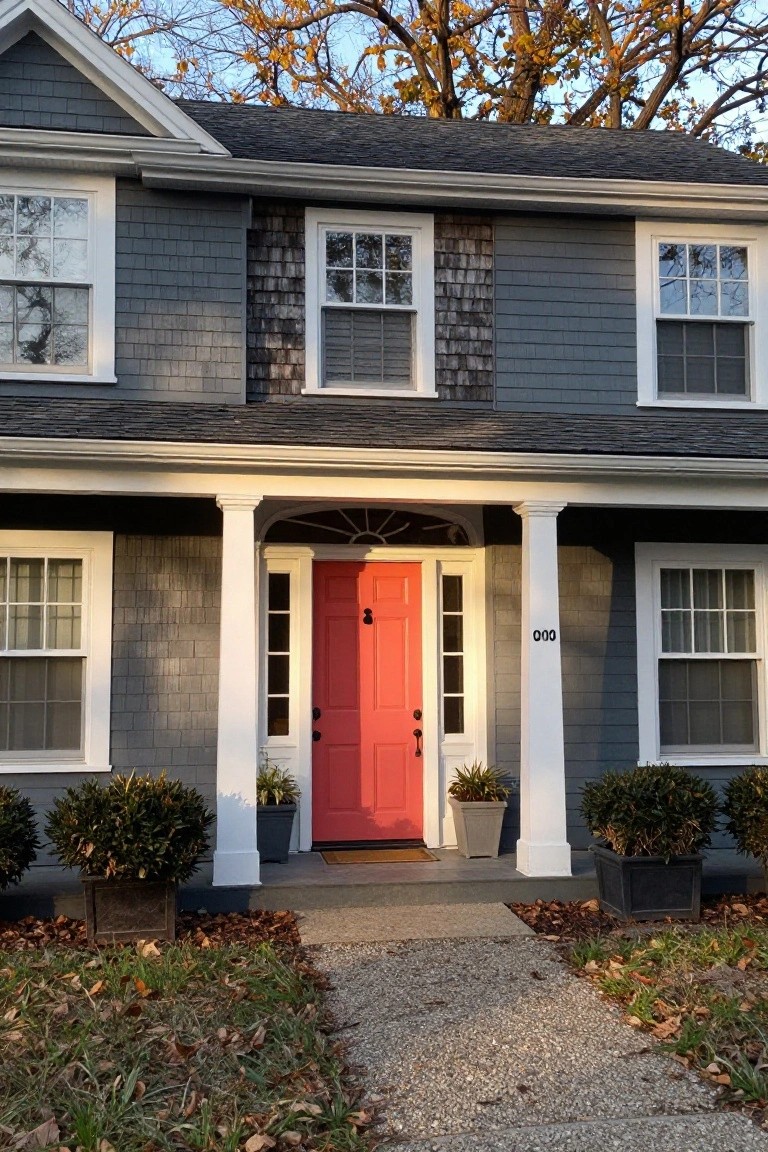
A red front door like this one grabs attention on a quiet gray Colonial house. The siding has that shaker texture, mostly neutral tones, and white trim all around. But the door? It’s bright red, double-wide, and right there in the center porch. That contrast makes the entry feel welcoming. Folks notice it from the street.
This works best on two-story homes with porches and columns. Stick to a true red, not too orange. Gray siding in medium tones holds up year-round, especially with some evergreens nearby. Just keep the rest simple so the door stays the star. Avoid if your neighborhood goes all beige.
White Walls with Black Trim
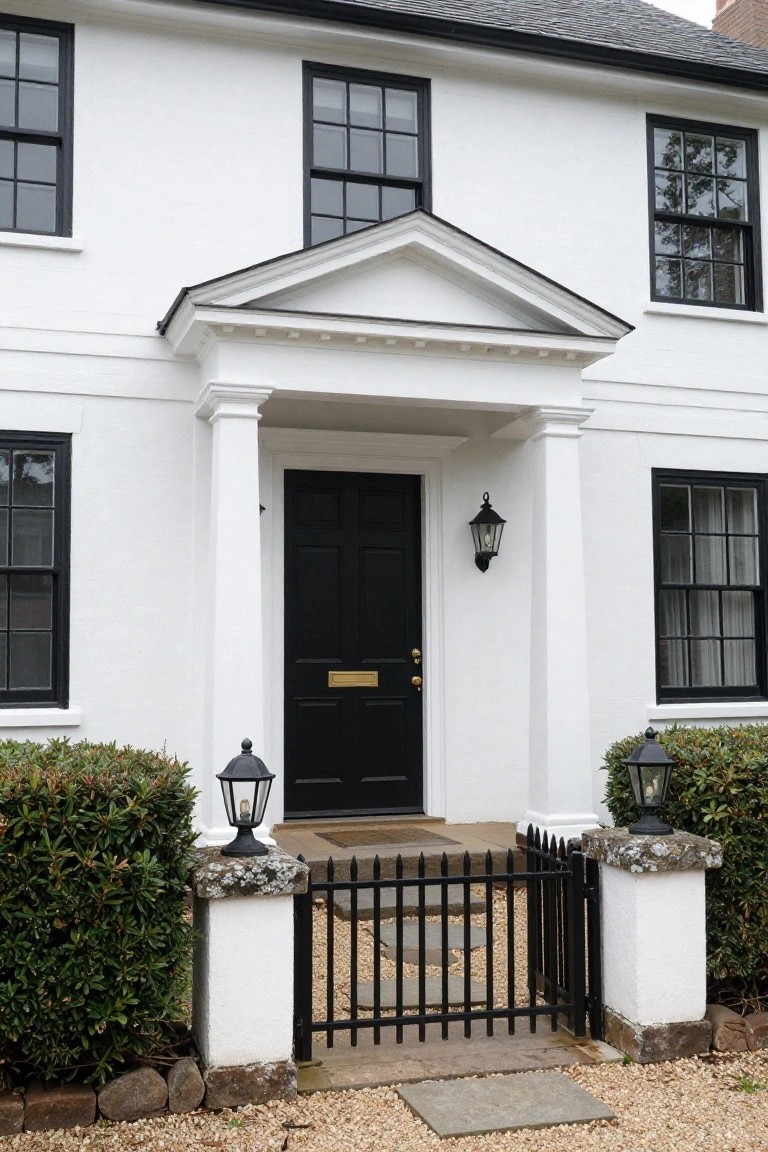
A simple white paint on the house body works wonders when you pair it with black window frames and a black front door. The sharp contrast highlights the colonial shape, from the tall columns to the pediment over the entry. Those black lanterns on either side add just enough detail without clutter.
This setup suits older homes or ones with good bones in a traditional neighborhood. It stays fresh year-round if you power wash the white siding now and then. Trim back the boxwoods so they frame the gate nicely, not hide it.
Soft Blue Siding on a Colonial Facade
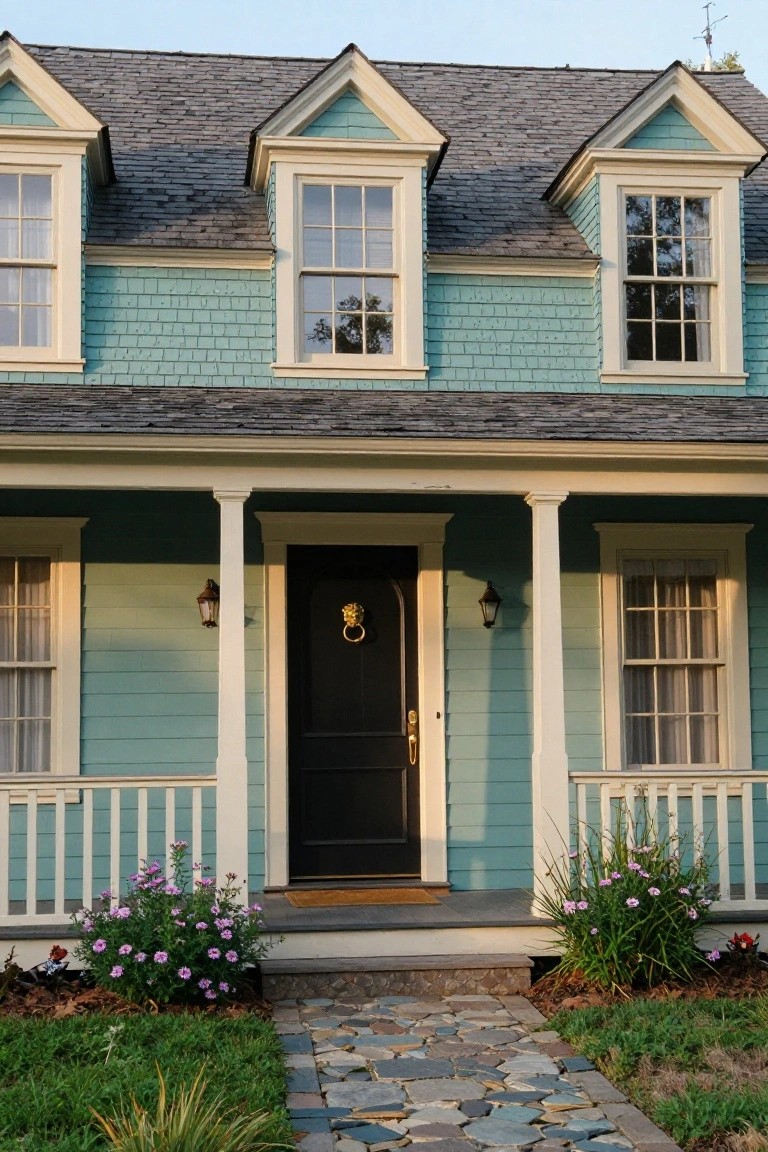
A soft blue siding like this one freshens up a traditional Colonial house without going overboard. It plays nice with the white trim around the windows and porch columns, and that black front door adds just enough punch to make the entry pop. The color feels light and breezy, especially with the gray shingles up top.
This setup suits older homes in mild weather spots, where the blue won’t fade too fast. Pick a shade with some gray in it to avoid looking too beachy if you’re inland. Pair it with simple plantings along the walk to keep the focus on the house itself.
Navy Blue Door on Soft Gray Siding
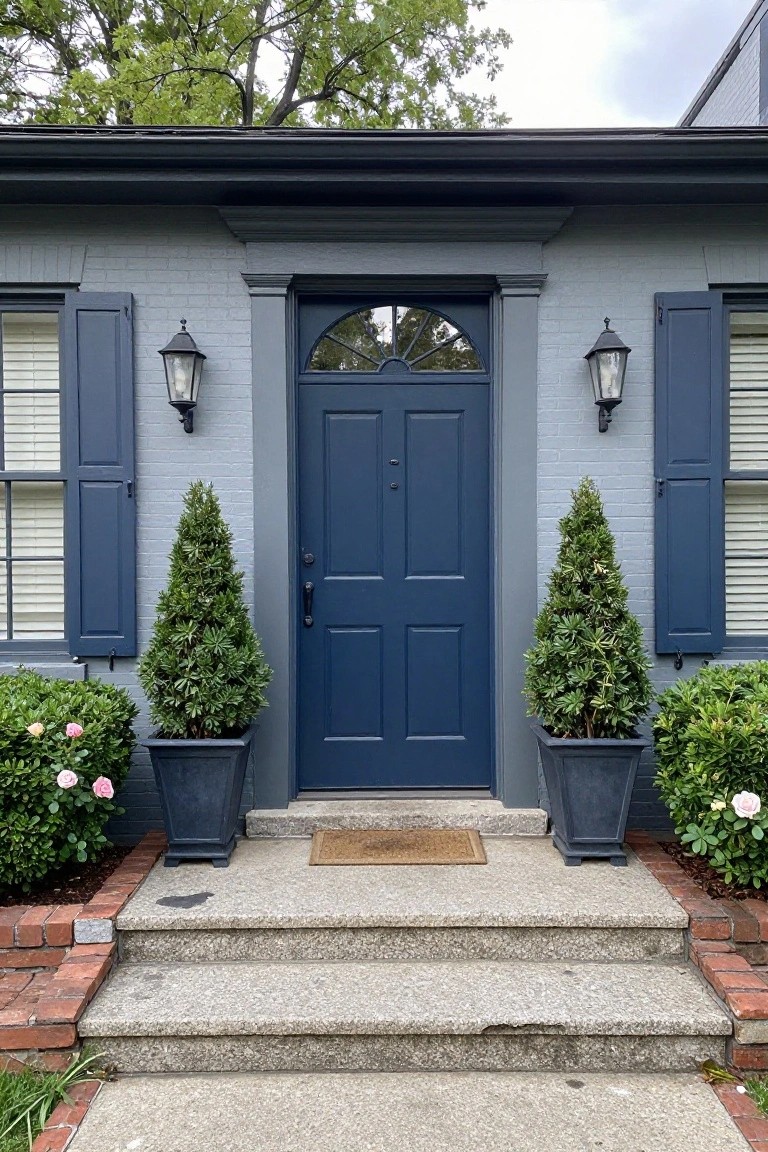
A soft gray exterior paint sets up a calm base for this colonial home, and the navy blue front door takes center stage. Matching navy shutters on the flanking windows tie it all together without overwhelming the look. Those deep blue tones add just enough punch to make the entry feel welcoming, especially with the simple lanterns and potted topiaries framing things out front.
This color combo works best on homes with clean lines and brick accents at the base. It suits milder climates where you want year-round curb appeal that doesn’t fade fast. Keep white trim around the door and windows to let the blue stand out… and test samples in different lights before committing.
Soft Mint Green Siding
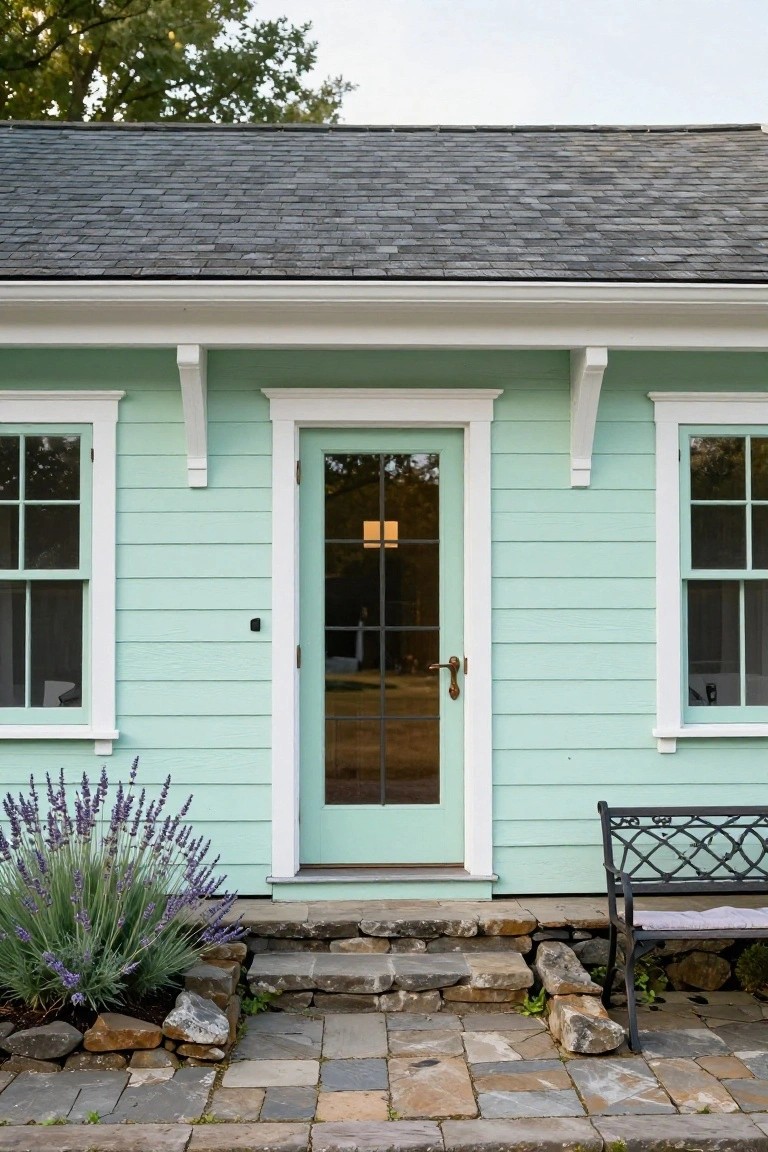
A soft mint green like this on colonial clapboard siding brings a quiet freshness to the facade. It tones down the usual bold whites or yellows you see on these homes, making the place feel approachable and a bit beachy without going overboard. White trim around the windows and door keeps everything crisp and lets the green do its thing.
This color suits older colonials with simple gable roofs and symmetrical windows best, especially where you have some stone or plants at the entry. Pair it with a matching door and maybe a bench nearby for extra welcome. Skip it on super shady lots, though. The green needs good light to stay lively.
Soft Cream Siding with Dark Shutters
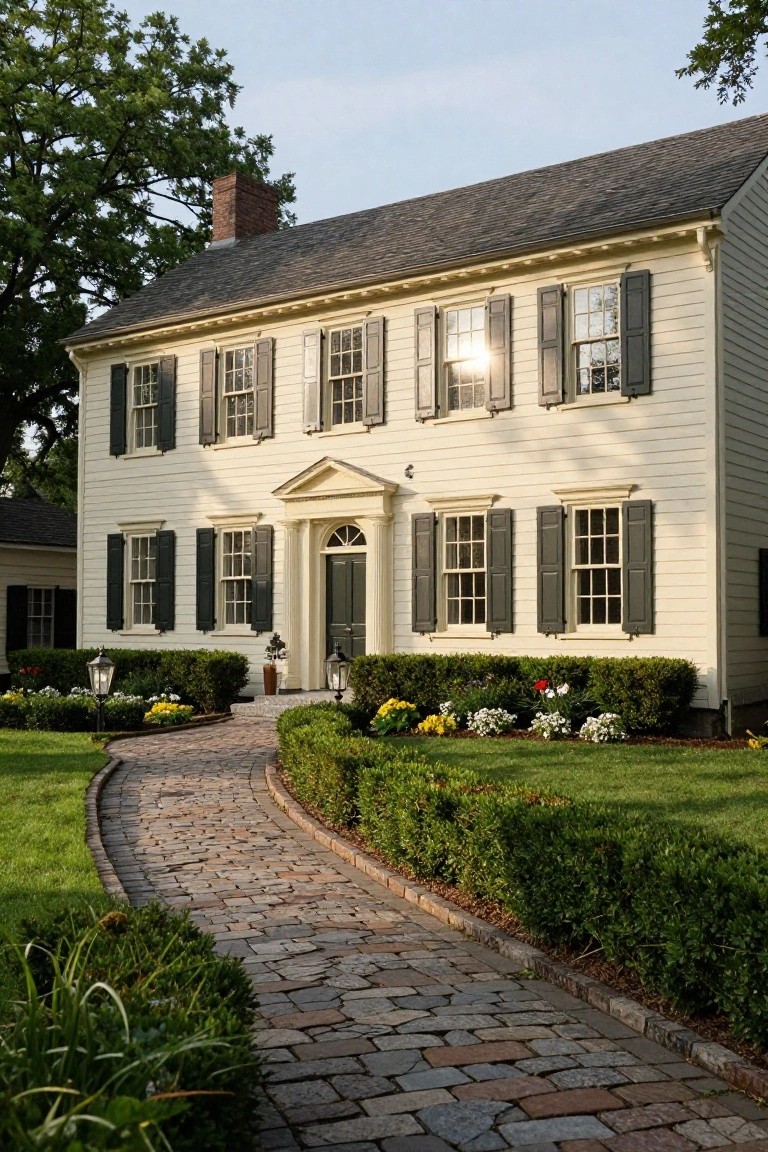
A soft cream white on the siding gives this colonial house a gentle glow that fits right into its tree-lined spot. Pair it with dark green shutters like these, and you get that classic contrast without going too stark. The dark front door pulls it all together too. It’s a look that stays clean and bright even as the light shifts through the day.
This color combo works best on traditional two-story colonials with symmetric windows. Pick a warm cream to avoid looking too yellow, and go for deep green or black shutters that match your trim. It suits older neighborhoods or homes with brick accents. Just test samples in morning and afternoon light first.
Muted Green Siding with White Trim
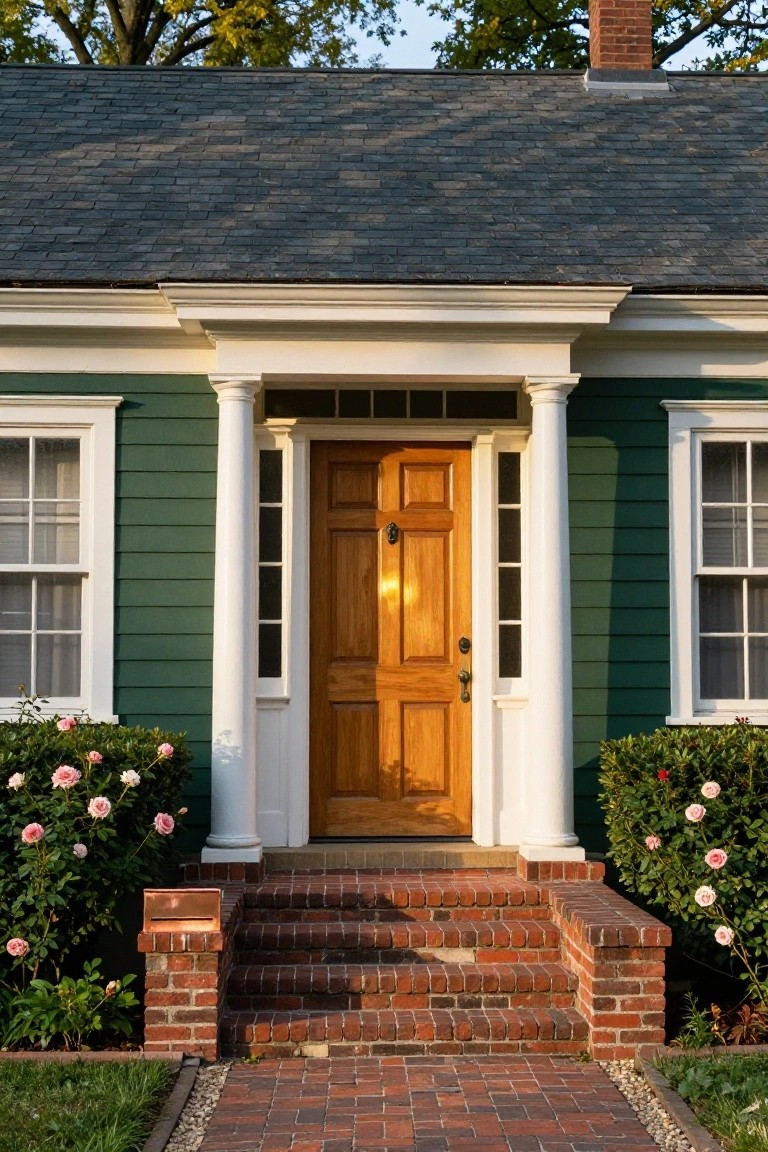
A muted green siding like this one freshens up a classic Colonial facade without overwhelming the architecture. The soft green nods to nature, especially with those rose bushes nearby, while the white trim keeps everything crisp and traditional. It makes the house feel welcoming yet grounded.
This color combo suits older homes with columns and paneled doors. Pick a green that’s not too yellow for cooler climates, and pair it with a natural wood entry to let the siding shine. Avoid super glossy finishes, though, to keep the look settled in.
Beige Walls with Dark Front Door
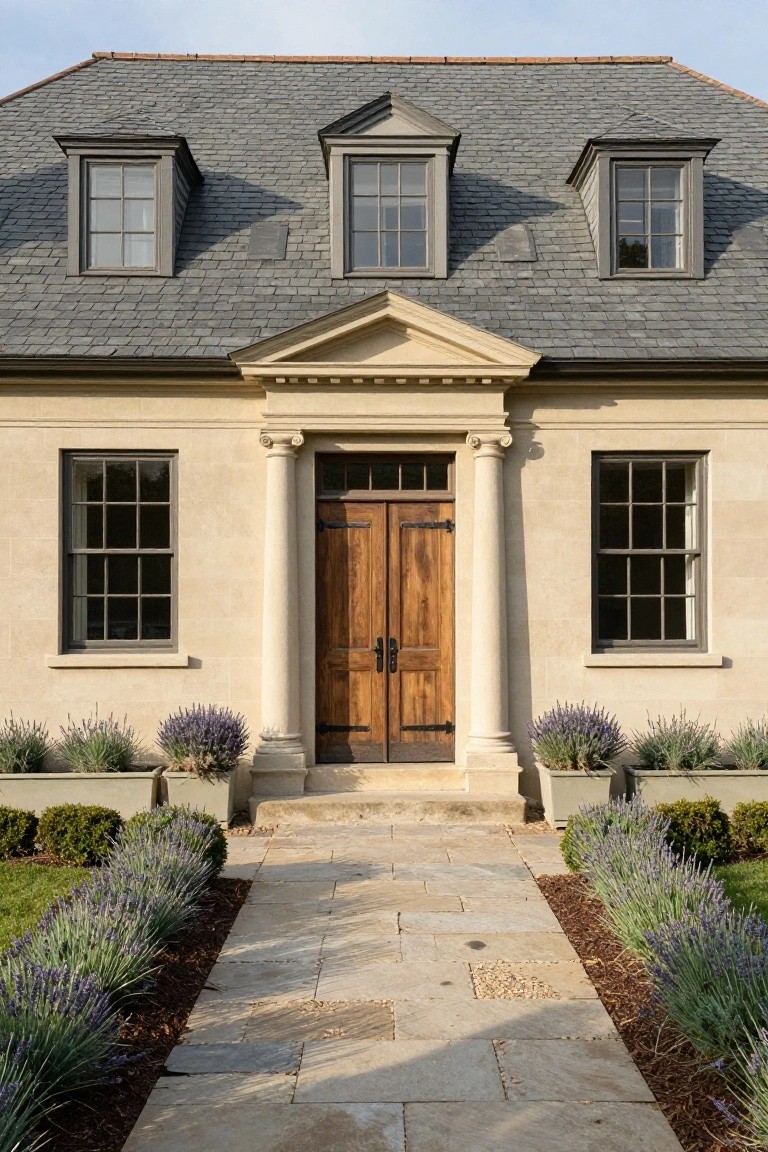
A soft beige on the exterior walls pairs perfectly with a dark-stained wood door for that timeless colonial look. The light color keeps things calm and lets the house sit easy against green lawns or gardens. That dark door adds just enough punch to draw folks right up the path, without overwhelming the whole facade.
Try this on a two-story colonial or cape style home, especially if it’s got columns or a pediment above the entry. Go for a warm beige paint like a limestone shade, then stain the double doors in walnut or ebony. Flank the stone walkway with low lavender plants… it ties everything together nicely. Avoid cooler grays here, they can feel too modern.
Navy Door on Cream Siding
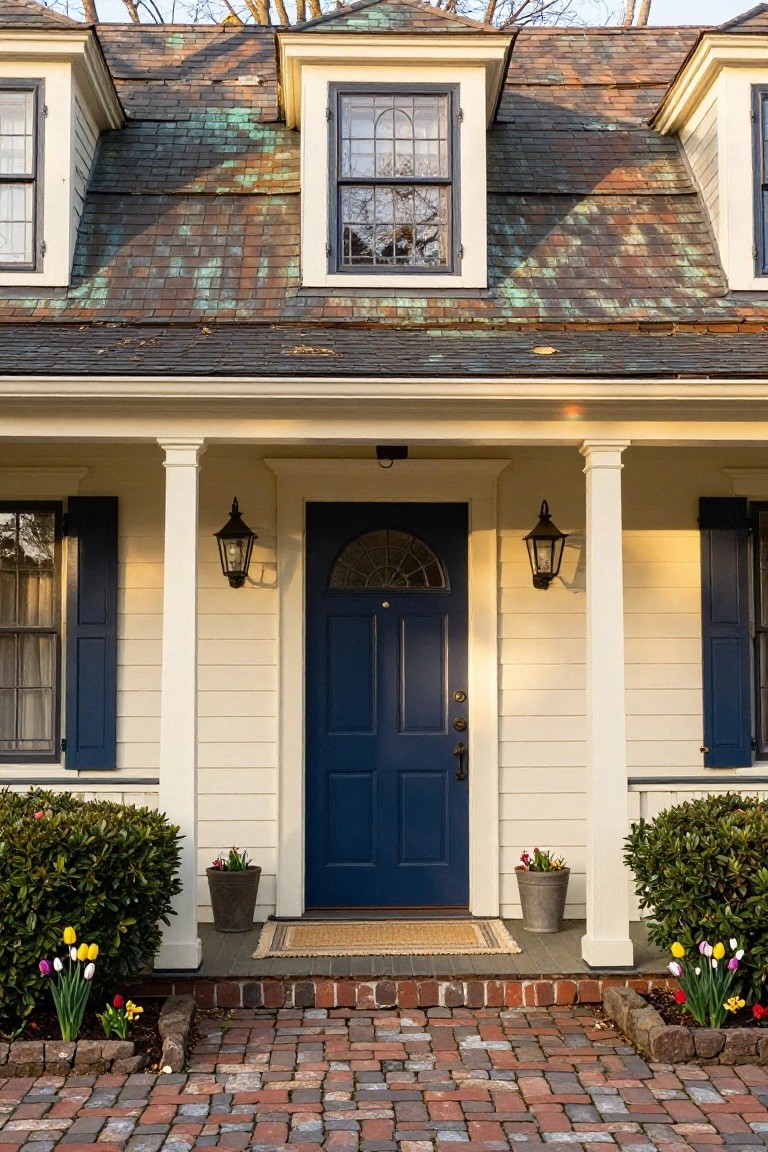
A navy blue front door stands out clean and strong against soft cream siding on this colonial house. That pale yellow-cream tone lifts the whole facade without overpowering the architecture. The dark door pulls your eye to the entry, making the porch feel more welcoming. Shutters in the same navy repeat the color just right.
This setup fits older homes with clapboard siding and columns. It works in any light, from morning sun to overcast days. Go for a true navy, not blackish, so it stays crisp year-round. Add lanterns and potted tulips like here to frame the door without much fuss.
Light Blue Siding on Colonial Homes
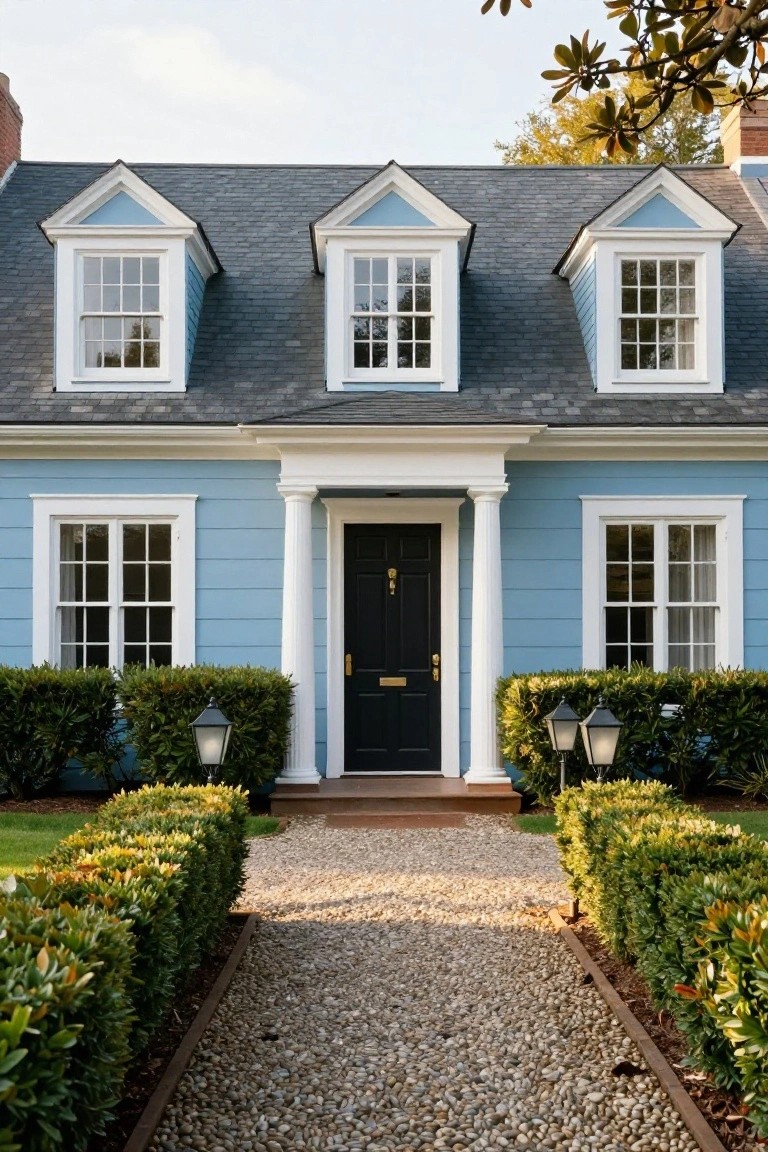
A soft light blue on the siding brings a cool, relaxed feel to this classic colonial front. White trim outlines the dormers and windows nicely, while the black door stands out as a solid focal point. Boxwood hedges and lanterns along the path keep things simple and welcoming.
This color scheme suits older homes or ones with brick chimneys and slate roofs. It holds up well in sunny spots without fading too fast. Just make sure the trim paint is a true bright white to avoid any muddy look… and test samples in morning light first.
Red Exterior with Green Shutters
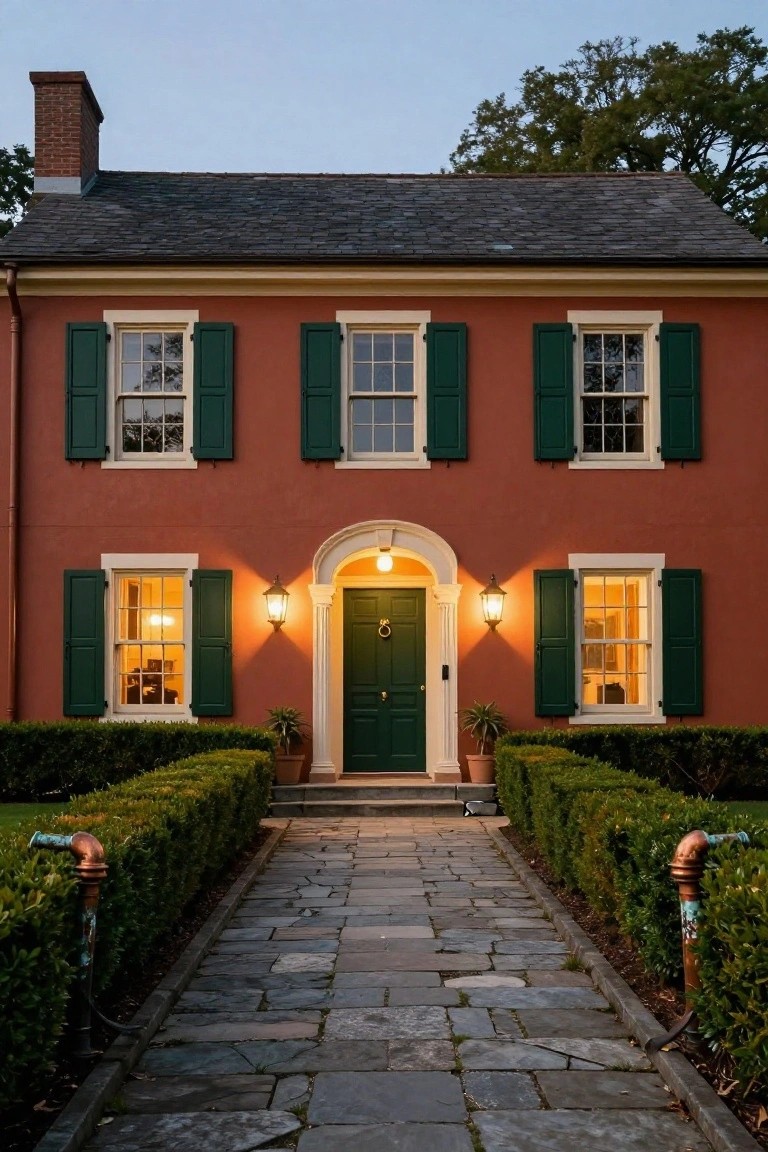
A red body paint like this one brings out the best in colonial homes. It has that warm, traditional feel without going too bold. Pair it with green shutters, and you get nice contrast that makes the windows pop. White trim around the doors and edges keeps everything crisp. Those lanterns by the entry add a welcoming touch at dusk.
This setup works great on homes with simple lines and slate roofs. It suits older neighborhoods or places where you want curb appeal that lasts. Go for a muted red to avoid clashing with trees or lawns nearby. Boxwoods along the path help frame it all without much upkeep.
Frequently Asked Questions
Q: What if my Colonial house faces north and stays shady most of the day?
A: Go for warmer tones like soft beiges or taupes. They bounce light around better and keep the facade from looking dingy. Test a sample board in that shade first.
Q: Can I mix a modern twist with these classic Colonial colors?
A: Pair a bold front door in navy or red with neutral siding. It nods to tradition but adds personality. Just keep the body and trim muted so the door pops.
Q: How do I handle painting around old wood trim without mess?
A: Tape off edges with painter’s tape and feather the paint with a brush first. Wipe drips right away with a damp cloth. This keeps crisp lines on detailed Colonial moldings.
Q: Brick accents on my Colonial – what paint won’t clash?
A: Stick to earth tones like greige or light sage on the wood parts. They blend smoothly with red or brown brick. And skip stark whites; they fight the warmth.
