

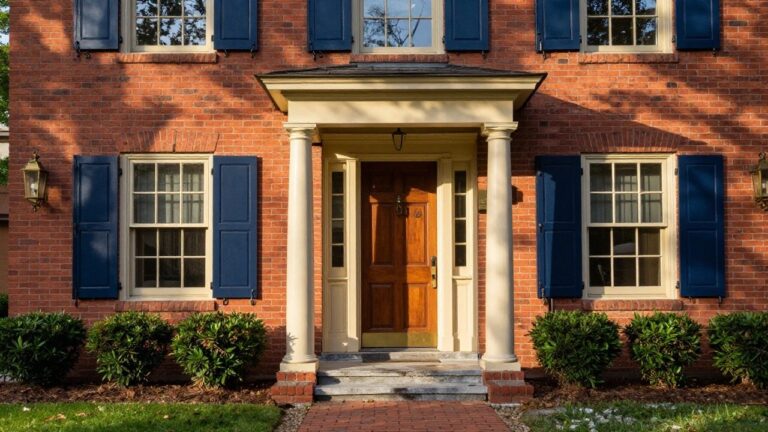
I’ve always admired the symmetric facades of Colonial houses, but I’ve seen too many where peeling paint or mismatched shutters dull that classic street presence. When we first looked at ours, the entry porch felt like the main focal point from the curb, pulling everything together or throwing it off depending on the details. Updating the siding material or roofline accents can shift how the whole house reads without tearing everything down. Neighbors notice the front door hardware and window surrounds right away, and those small choices often make the exterior feel cohesive and lived-in. I’d test the shutter refresh on our place next spring.
Classic Columned Portico
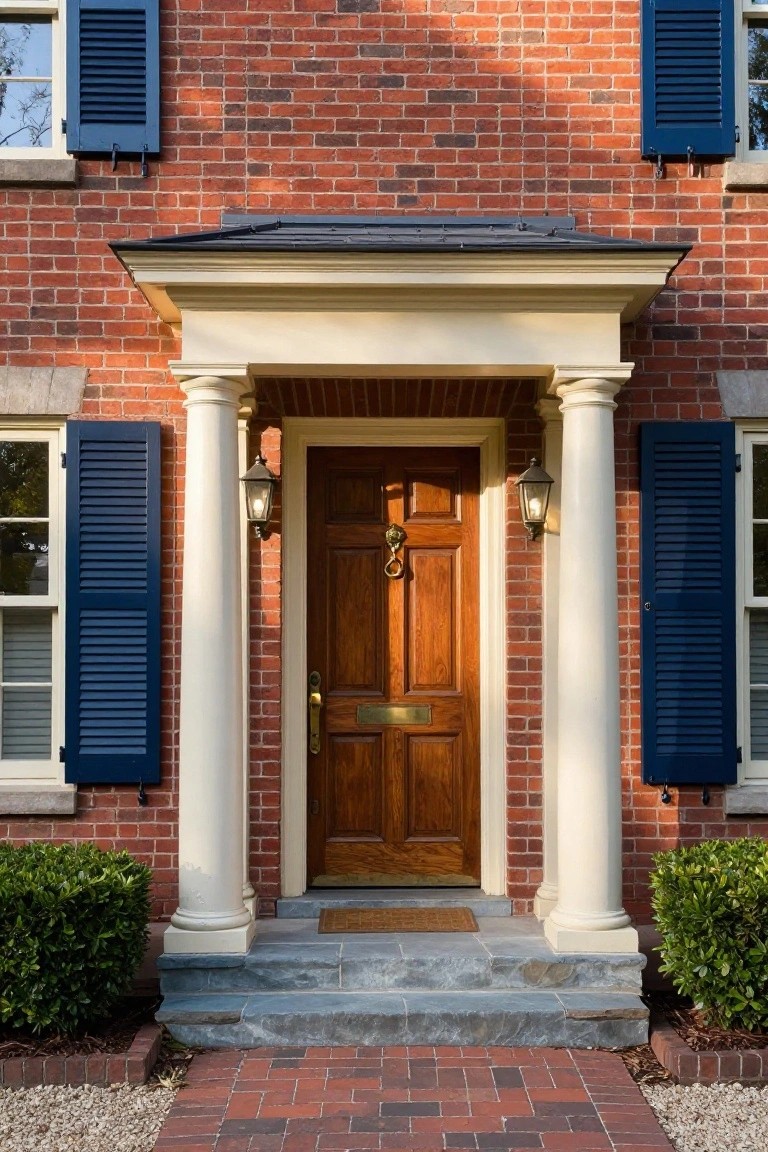
A columned portico like this one takes a basic front door and turns it into a proper focal point. Those clean white columns paired with the simple pediment roof give the whole facade that balanced Colonial feel without overdoing it. The brick house and blue shutters just fall into place around it, making the entry look welcoming right from the street.
This works best on traditional homes where you want to highlight the door without a full porch rebuild. Stick to symmetrical columns and lanterns on either side for that steady rhythm. It’s a solid update for curb appeal, especially if your house already has some brick or siding that can contrast nicely. Just keep the scale right so it doesn’t overwhelm a smaller entry.
Green Front Door Refresh
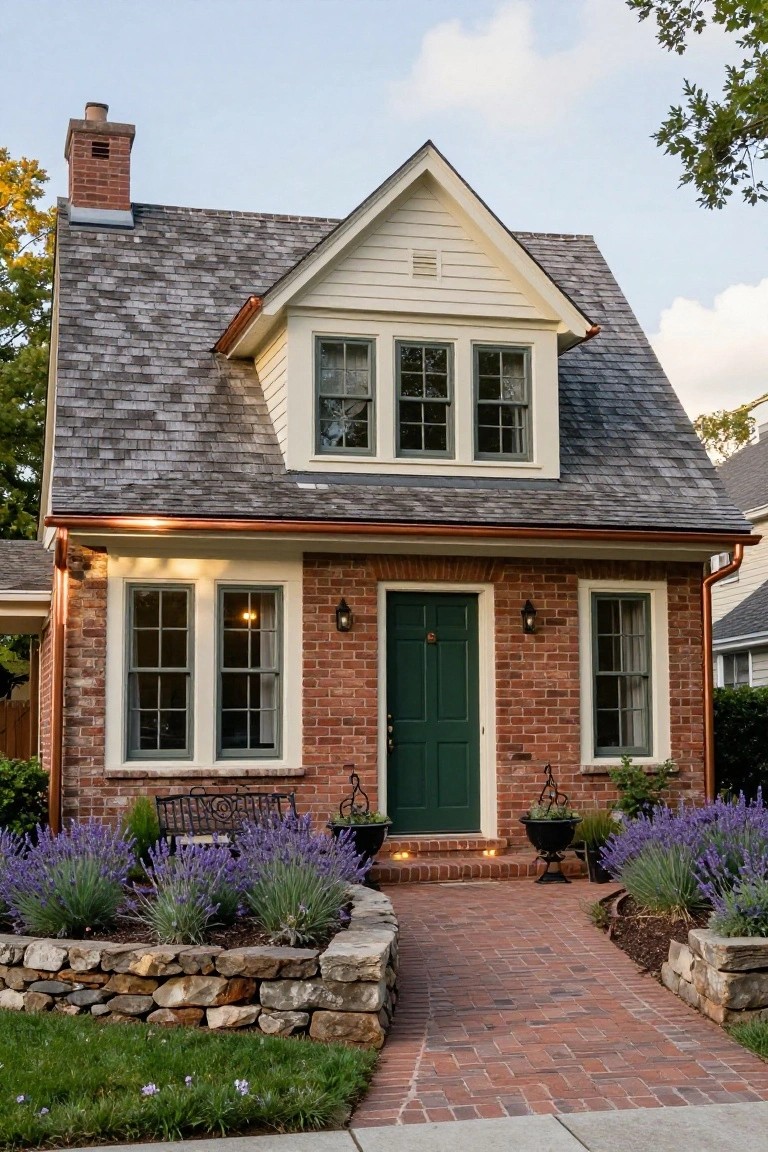
A deep green front door stands out nicely on a Colonial house like this. It pulls the eye right to the entry without overwhelming the brick base or cream siding. The matching green window frames tie it all together, and simple lanterns on each side make it feel more welcoming.
This update suits compact older homes where you want quick curb appeal. Use exterior-grade paint in a semi-gloss finish for easy cleaning, and balance it with neutral landscaping like lavender beds nearby. Skip super bright shades though. They can clash with traditional brick.
Dark Garage Door Upgrade
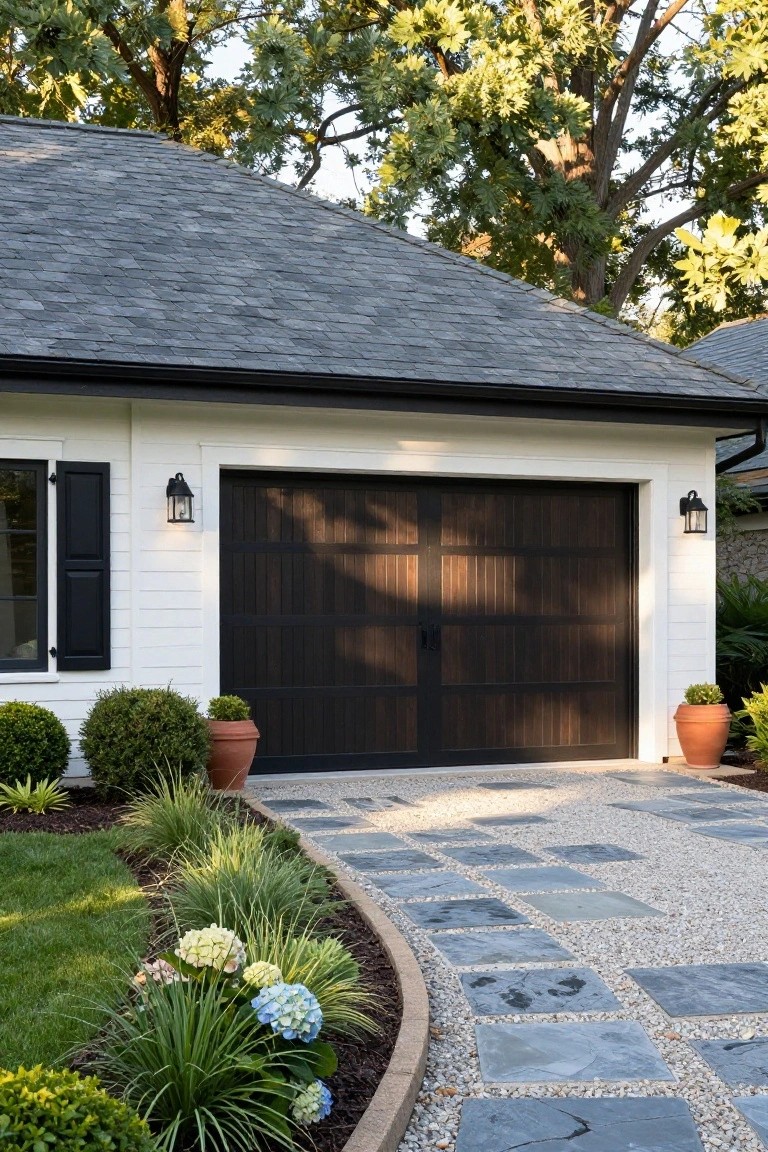
One easy update for a colonial house exterior is going with a dark-stained garage door. Here, the rich wood tone stands out nicely against the white siding. It adds a bit of warmth and depth right where people notice it most, the front approach. That paneled style keeps things classic but feels fresh.
This kind of change suits simpler facades with black trim details. Pick a sturdy wood door and add matching lanterns on each side. It pulls the entry together without much fuss. Just seal it well to handle the weather.
Columned Porch for Colonial Updates
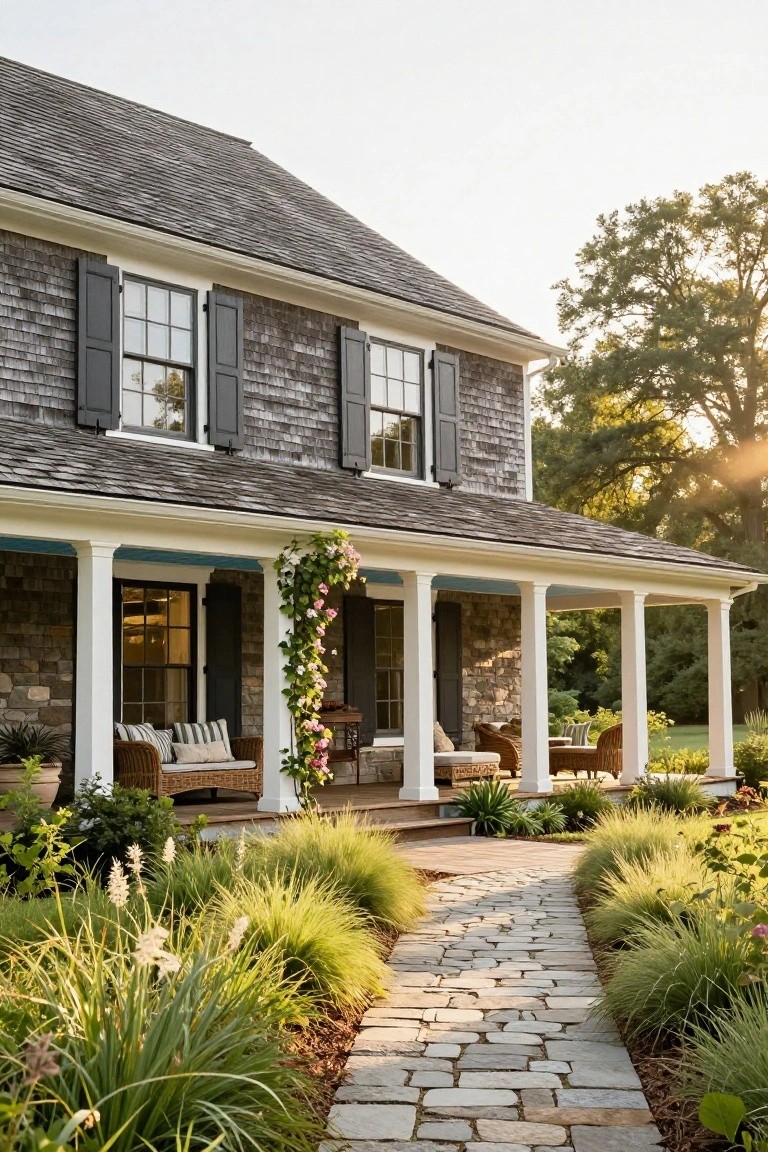
A columned porch like this one takes a shingle-sided colonial house and gives it that instant classic look people notice right away. The white columns stand out clean against the textured shingles and stone base, while simple wicker chairs and climbing flowers add a lived-in feel without much fuss. It’s a straightforward way to make the front of the house feel more open and friendly.
This works best on homes with some roof overhang already, so you can add columns without big structural changes. Go for smooth white columns to contrast rough siding, and keep furniture basic. Skip heavy landscaping at first, just edge the path with tall grasses to guide folks right to the door. It suits older colonials needing a refresh, but watch the scale, columns shouldn’t overwhelm a smaller house.
Frame Your Entry with a Portico
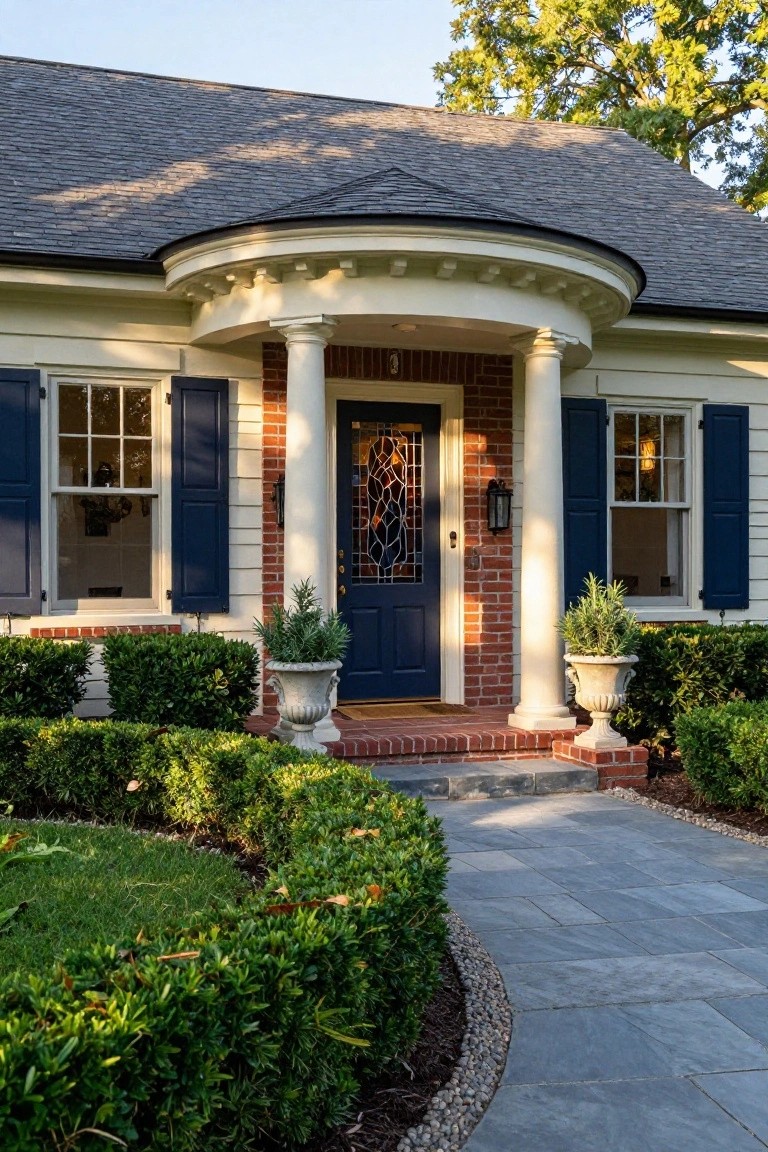
A portico like this one pulls the front door into focus on a colonial house. The curved roofline and fluted columns add a touch of formality without overdoing it. That navy door stands out against the cream siding and brick base. It makes the whole facade feel more put-together and inviting right from the street.
This setup suits older homes wanting classic curb appeal. Build it over an existing door if the foundation allows. Pair it with simple shrubs along the path to keep things clean. Skip fancy details unless your house already has them. Works best where you have some height in the front.
Add a Copper Awning Over the Front Door
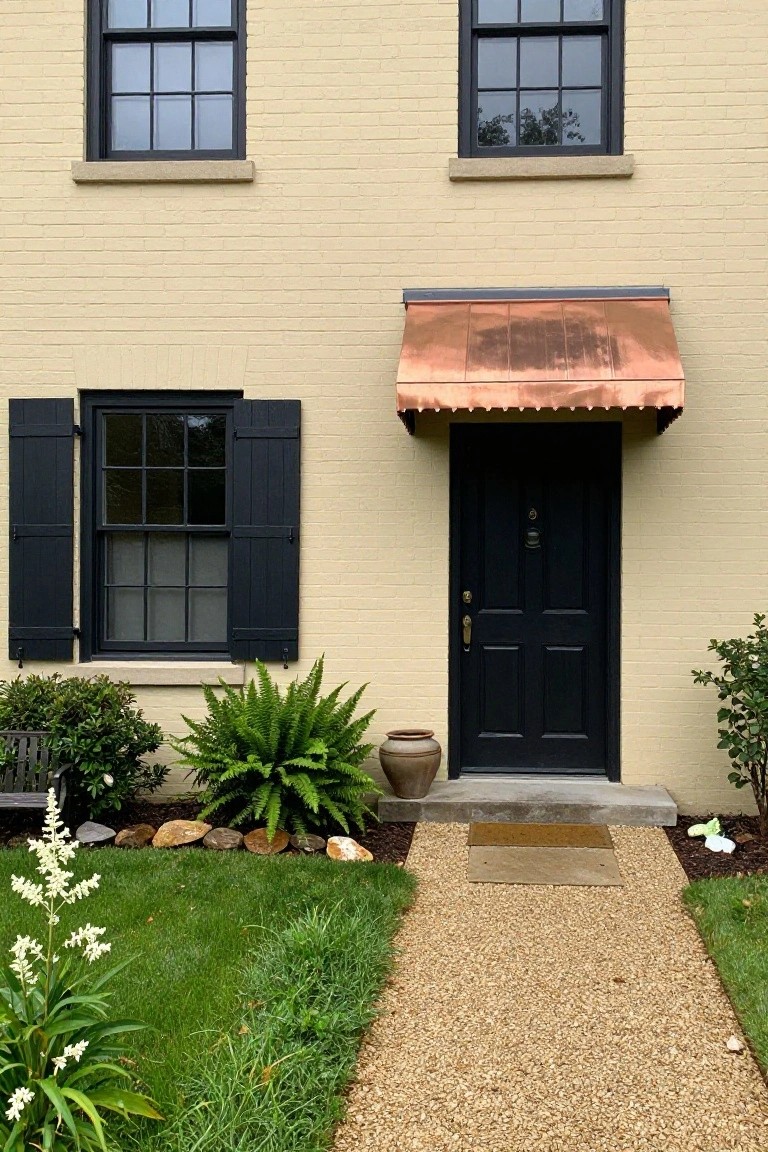
A copper awning like this one sits right above the entry door on a beige brick Colonial house. It picks up a bit of green patina already, which looks right at home against the light walls and black door below. That small addition pulls the eye straight to the entrance without much fuss. It’s a straightforward way to give an older facade some character that improves over time.
You can add one like this to most front entries, especially where you want low upkeep that gets better looking. It suits traditional brick or siding homes best. Just make sure it’s sized right for the door, and keep plants nearby to frame it. Avoid super modern doors, though. The copper softens things naturally.
Wood Door Entry Update
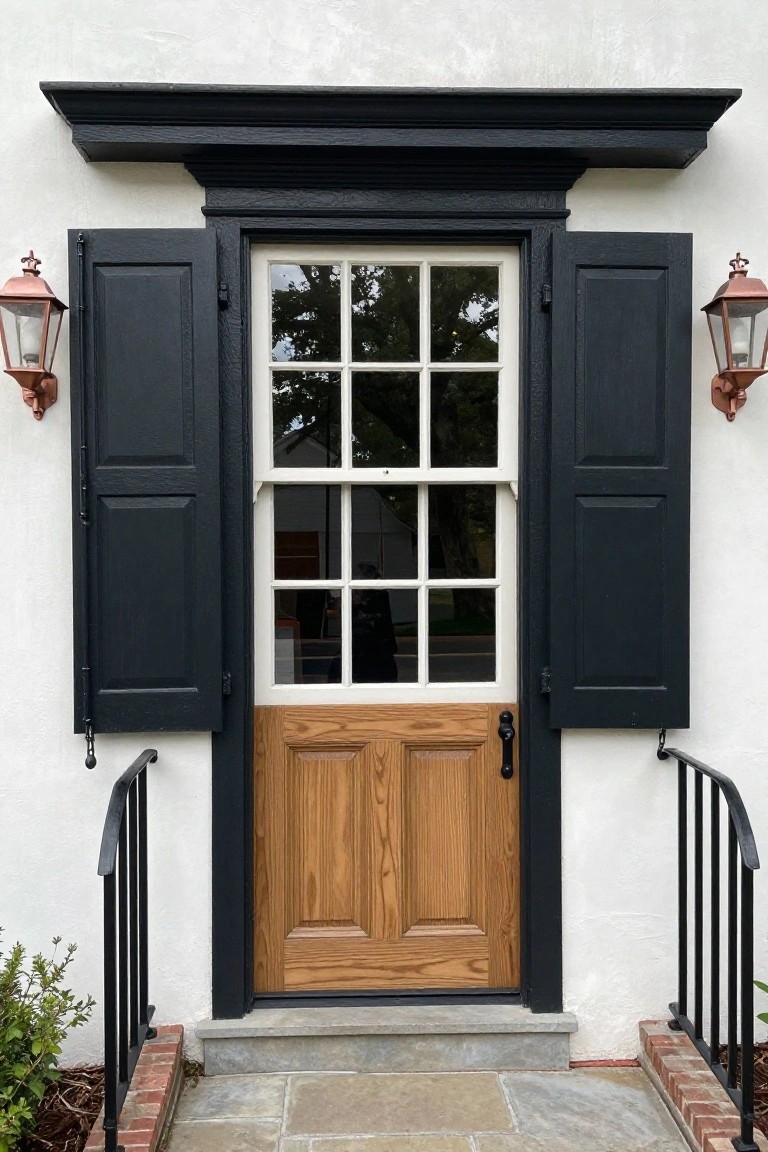
A solid oak front door like this one warms up a crisp white colonial exterior. The natural wood grain stands out against the black shutters and trim, giving the entry a welcoming feel that’s classic but fresh. No need for bold colors or extras. This simple swap draws the eye right where you want it.
It suits most colonial or traditional homes with light walls and dark accents. Choose a door with clean paneling and subtle hardware to keep things balanced. Works best on a covered stoop like this. Just make sure the wood finish matches your climate, and you’ll see the difference from the street.
Flagstone Path with Stone Edging
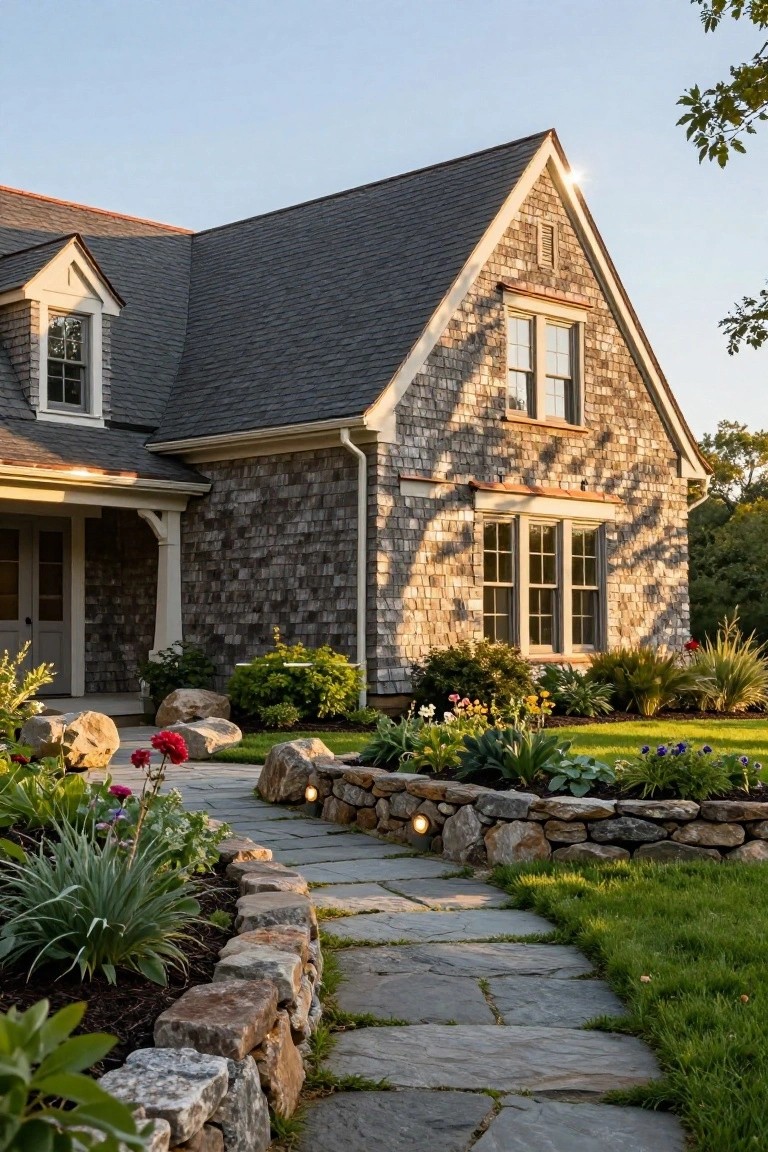
A flagstone path like this one winds gently from the street to the front porch, edged by low dry-stacked stone walls and big boulders. It pulls the eye right to the house without feeling too formal. Paired with the shingle siding, it gives a Colonial home that settled-in coastal feel, like it’s always been there.
This works best on homes with some slope or uneven ground, where the stone walls help level things out naturally. Pick local fieldstone and flagstone to keep costs down and the look authentic. Just make sure the path is wide enough for two people, about four feet, and add low plantings along the edges to soften it more.
Porch Bench Seating
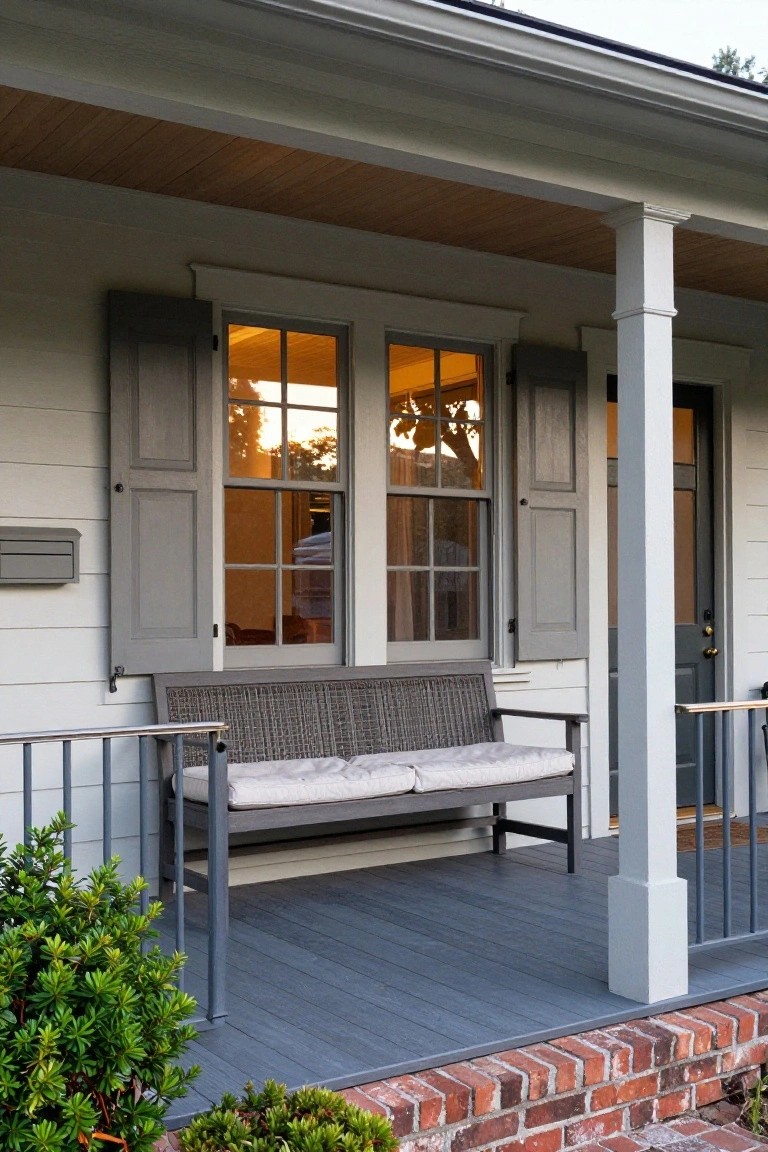
A bench on the front porch adds an easy layer of welcome to a colonial exterior. Here the gray woven one with simple cushions fits right in next to the door and windows. It turns the porch from plain walkway into a spot people notice and want to use.
Go for a bench in tones that echo your shutters or siding, like this neutral gray. It suits covered porches on older homes best, especially with room for plants nearby. Just make sure it’s sturdy enough for daily sitting.
Wood Garage Doors Warm Up Stucco Facades
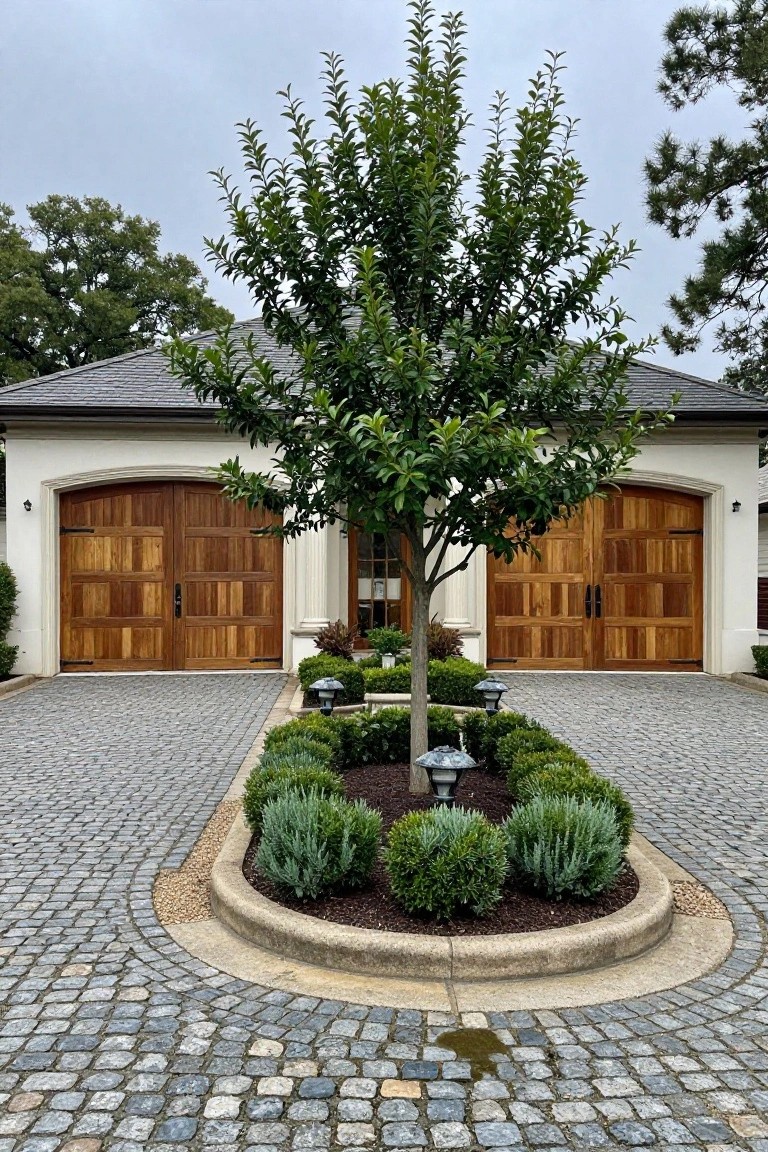
One simple way to refresh a colonial exterior is swapping out plain garage doors for ones made from rich wood. These vertical paneled doors in a warm tone stand out nicely against light stucco walls. They add a touch of traditional character without overwhelming the clean lines of the house.
This works best on homes with neutral exteriors that need more depth up front. Go for arched tops if your garage openings allow it. They suit driveways like this cobblestone one, where the doors draw the eye right to the entry. Just make sure the wood is sealed well against weather.
Red Door and Entry Trim Update
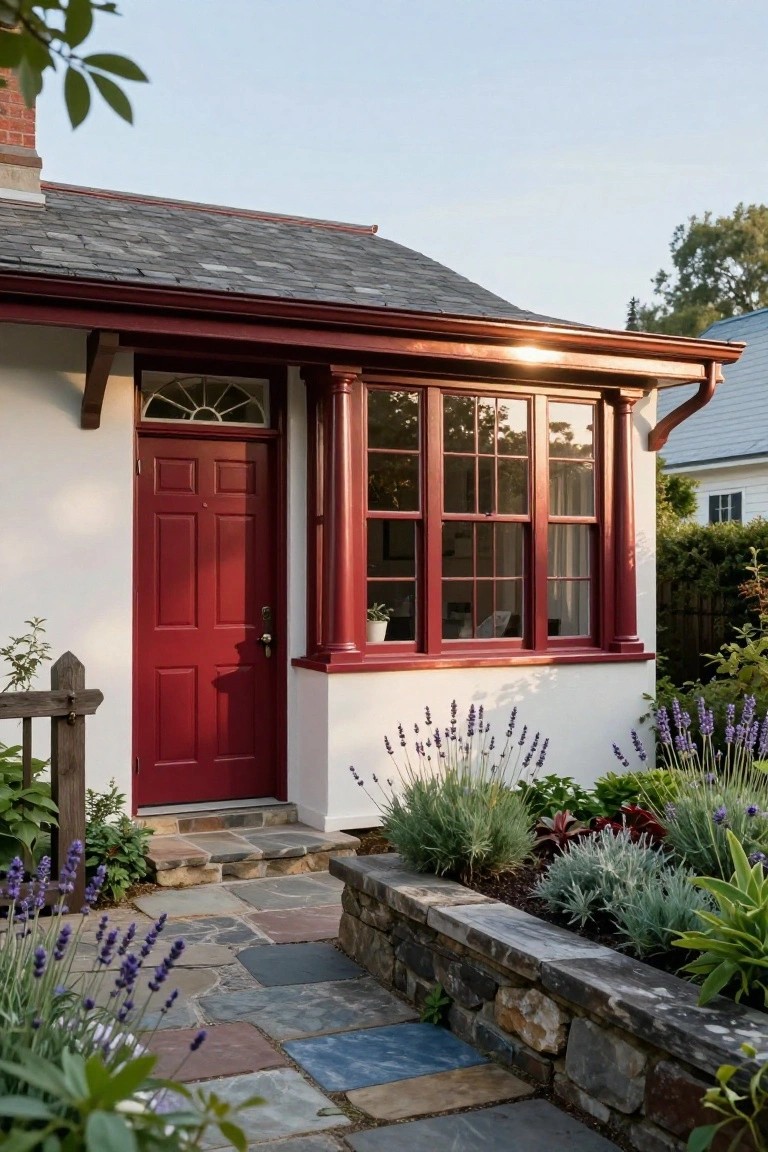
A red front door grabs attention right away on a colonial house. Pair it with matching red trim around the entry window, like this bay setup against white siding, and you get instant curb appeal. It’s a straightforward way to refresh the facade while keeping that classic look intact.
This works best on traditional homes with simple lines and neutral walls. Go for a durable exterior paint in a true red shade to hold up over seasons. Check your trim first, too, since freshening it ties everything together nicely. Just right for neighborhoods that like a touch of color.
Black Front Door on White Colonial Siding
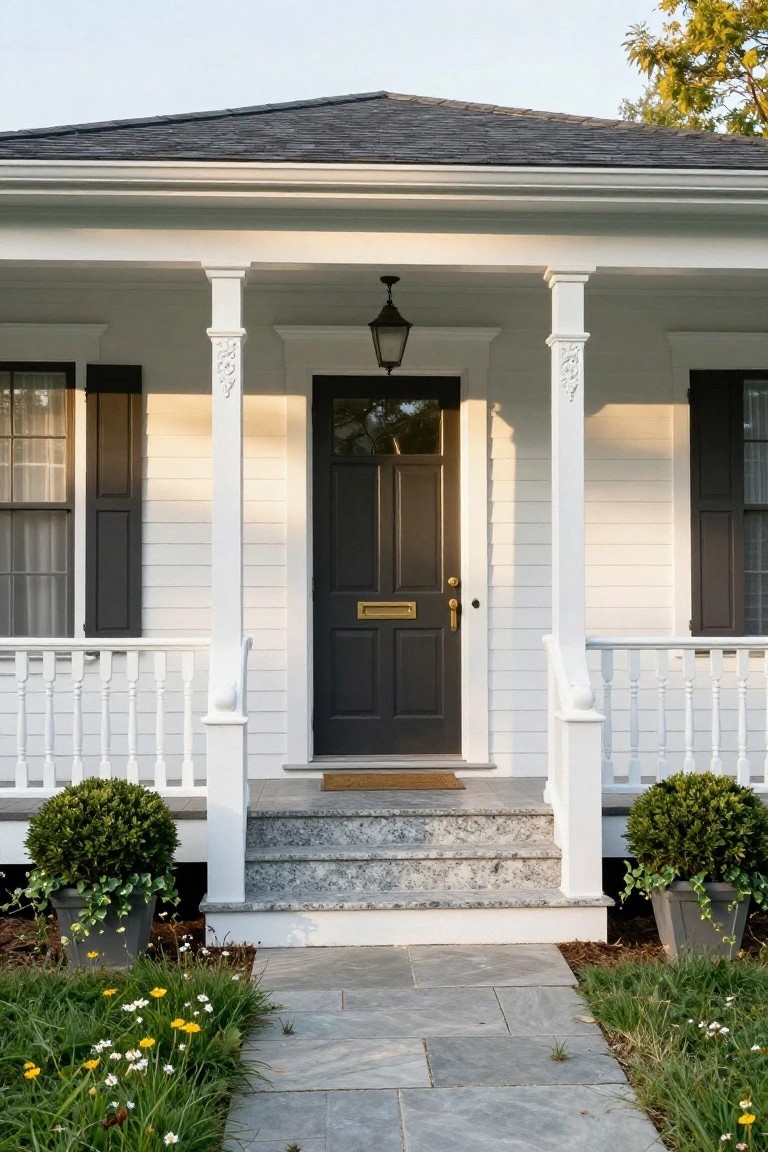
A simple way to update an older colonial is swapping the front door for a deep black one. Against crisp white siding it creates real contrast that pulls your eye right to the entry. No need for major work. The dark color feels fresh and modern but still fits the traditional style.
This works best on houses with clean white or light exteriors and black shutters already in place. Pick a solid wood door with some hardware like a brass knocker for detail. It suits quiet neighborhoods where you want curb appeal without standing out too much. Just make sure the paint seals well against weather.
Crisp Black Trim on White Siding
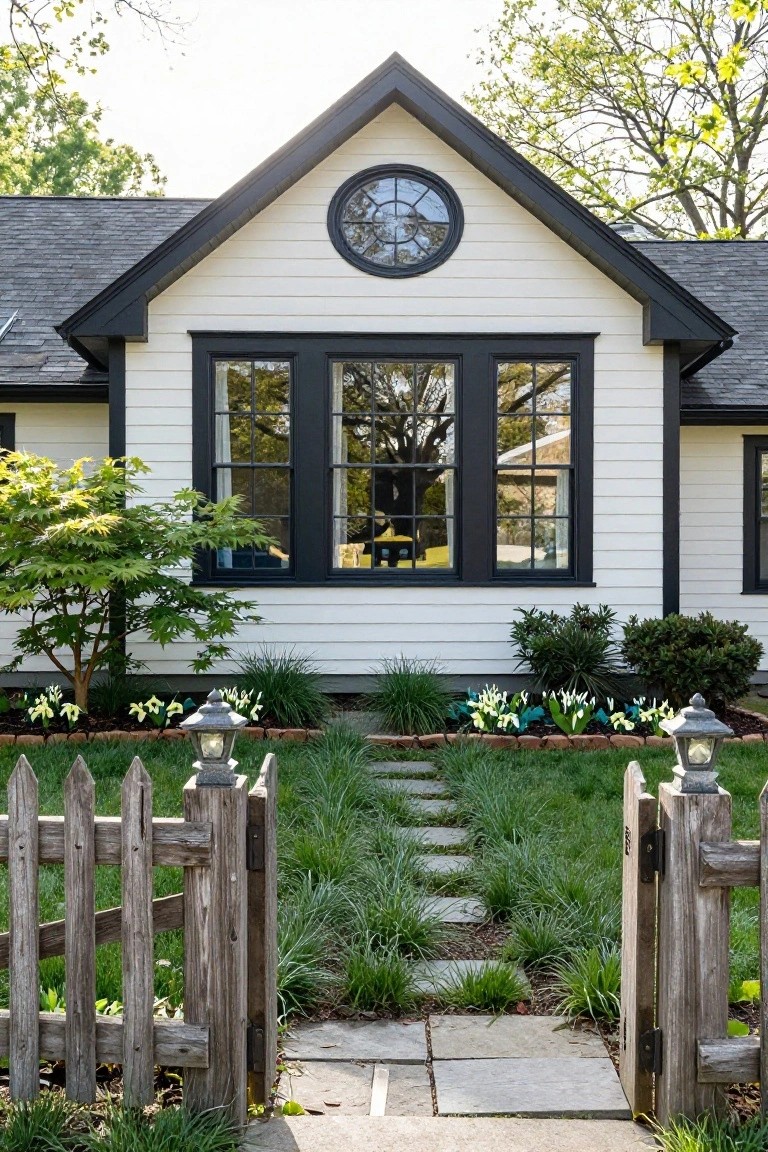
Painting the trim black against white siding is a straightforward update for Colonial houses. It defines the windows and roofline clearly, like the big front panes and that round gable window here. The contrast feels fresh but still nods to the house’s classic shape.
This approach suits older homes needing a modern edge without big changes. It works on any size facade, especially with simple plantings out front. Go for matte black paint to keep it low-key, and test a small area first for how the sun hits it.
Updating with Copper Downspouts
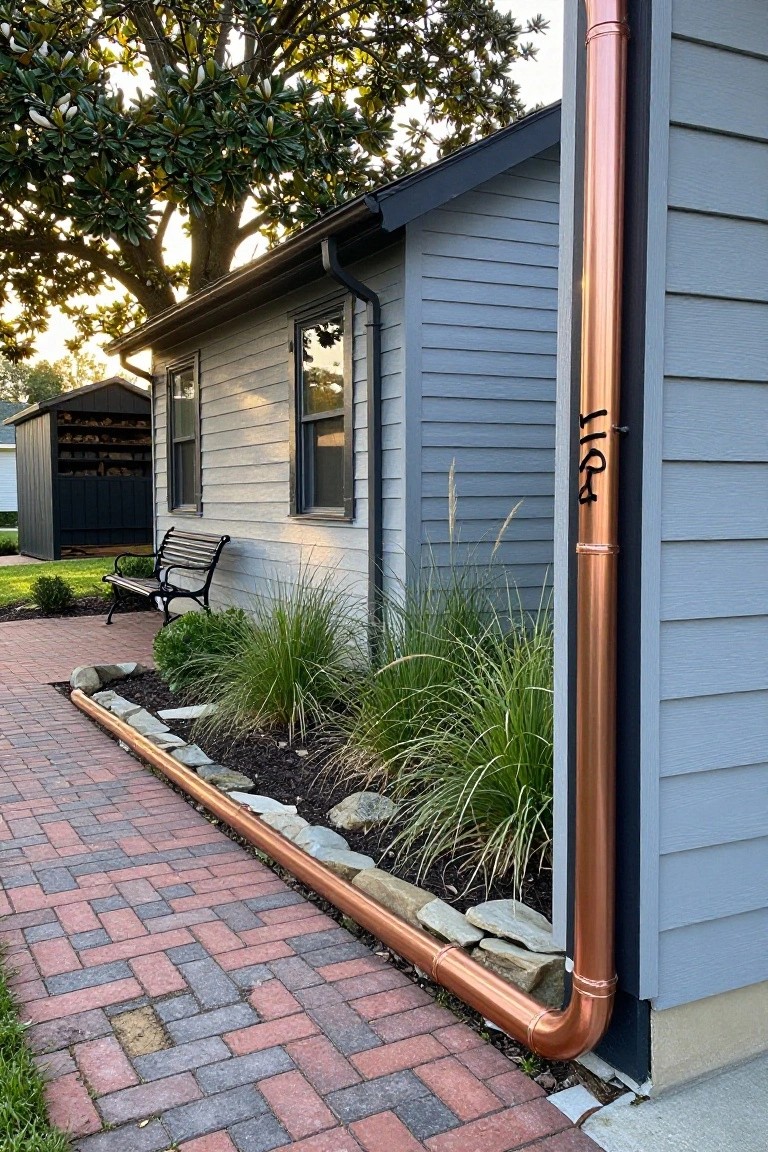
Copper downspouts give this Colonial exterior a fresh pop of color and shine that pulls the eye right away. Against the soft gray siding, that bright metal looks sharp now but will mellow into a nice green patina over the years. It’s a small change that nods to traditional craftsmanship without going overboard.
These work best on homes with neutral siding colors, especially if you want something low-key that ages well. Run them down the corners near entry paths or garden beds, like the grasses and brick walkway here. Just plan for the upfront cost, since copper isn’t cheap, but it lasts forever.
Classic Portico Entry
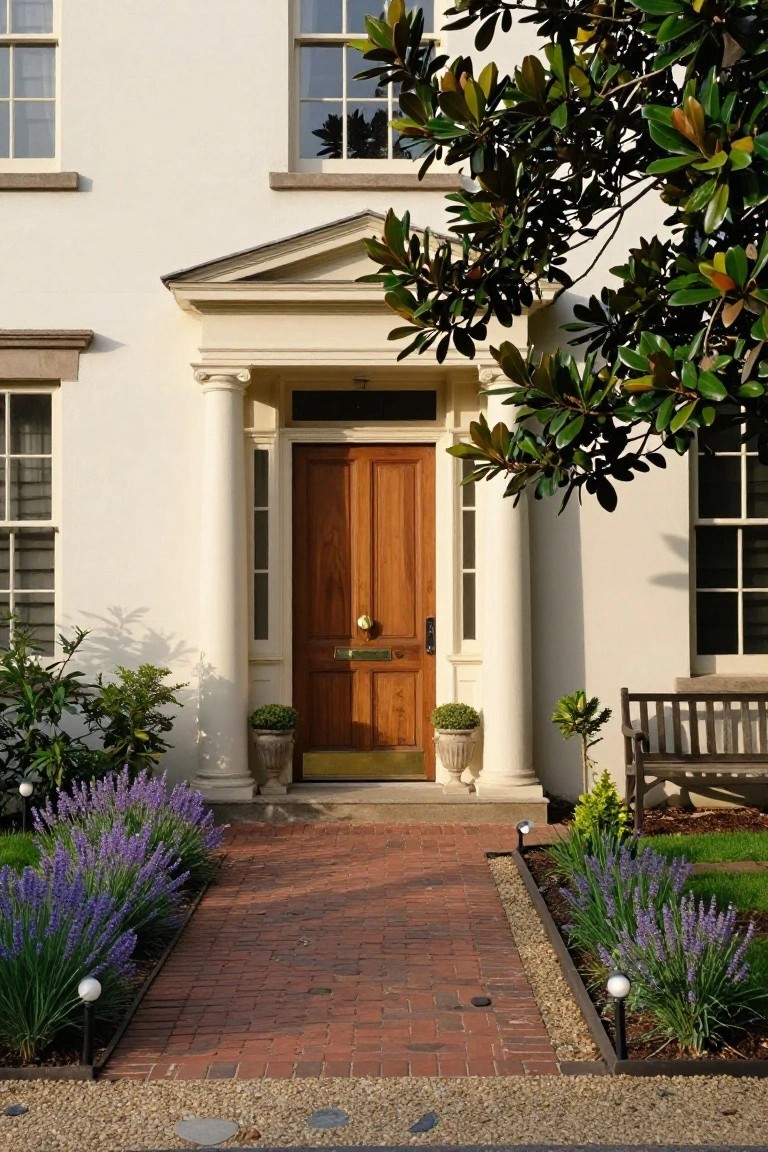
A portico like this one turns a plain front door into something special. Those fluted columns and the small pediment overhead give the white colonial house a touch of real architecture. It pulls your eye right to the warm wood double doors, and the brass details add just enough shine.
This setup suits older homes that need a curb appeal lift. Keep the path brick or stone for that grounded feel, and add low plants like lavender on both sides to frame it neatly. Skip anything too busy around the edges, or it loses that clean look.
Wooden Front Door Boosts Curb Appeal
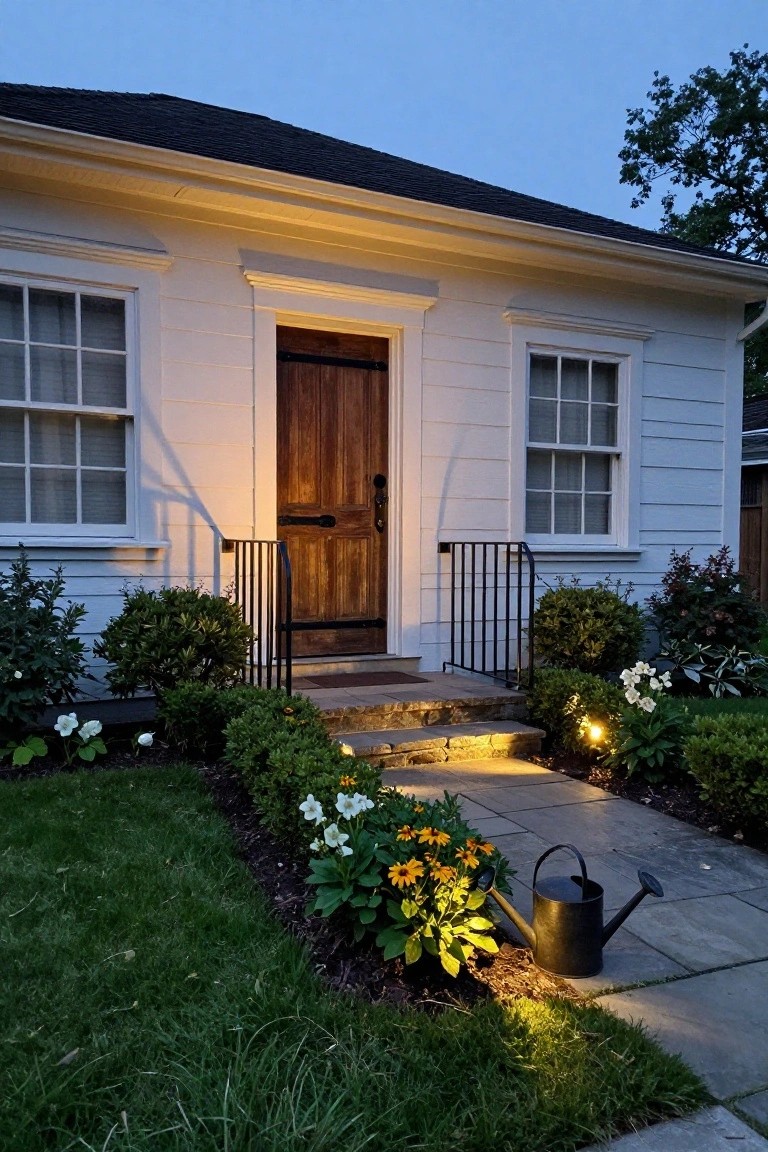
A simple swap like this wooden front door shows how much character it adds to a colonial exterior. The dark wood stands out against the white siding and keeps things feeling classic yet a touch rustic. It draws the eye right to the entry without much fuss.
This works best on traditional homes where you want warmth up front. Go for a solid panel door that matches your door size, then add path lights for evenings. Skip anything too carved up, or it might clash with the clean lines.
Green Door Entry Boosts Colonial Curb Appeal
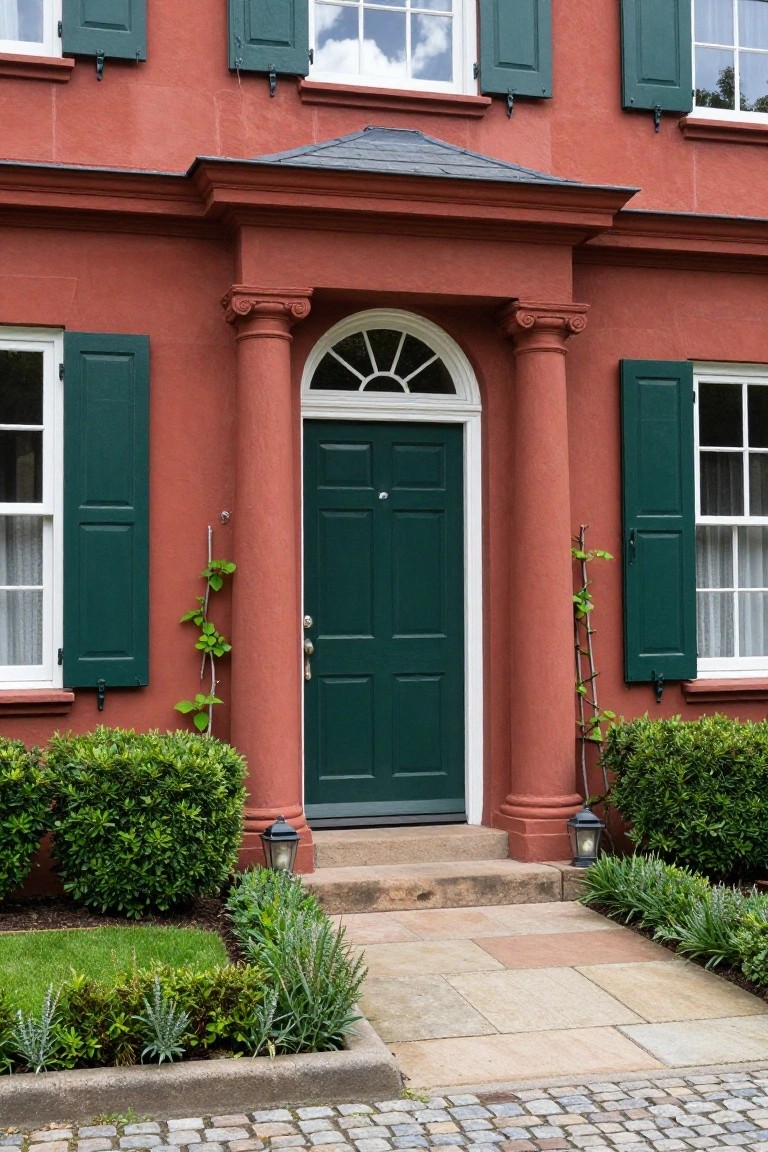
A deep green front door like this one turns a simple colonial facade into something that really stands out. The color pops against red brick walls, and matching green shutters tie it all together without much fuss. Add in those white columns around the entry, and you get that classic look that feels fresh but not overdone. It’s a straightforward update that draws eyes right to the front door.
This works best on brick or stucco colonials where you want more personality up front. Paint the door first, then match the shutters if they need it. Go for lanterns on either side to light it up at night. Skip it on super modern houses, though. It suits older homes that could use a welcoming touch.
Copper Roof Accents on Colonial Features
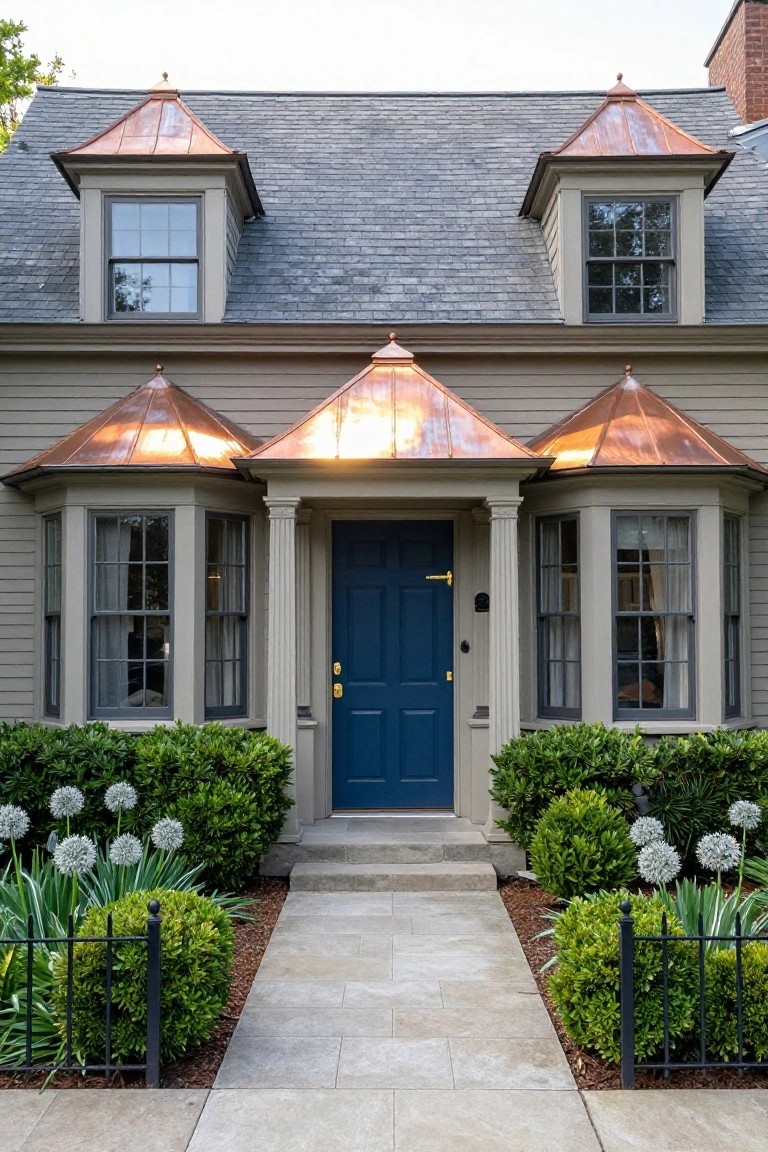
One simple way to update a colonial exterior is adding copper roofs to dormers and entry porches. Here, the patinaed copper tops the two dormers and the entry canopy, picking up the afternoon light against the slate main roof and gray shingles. It gives the house that settled-in historic feel without looking brand new or fake.
These accents work best on traditional homes with slate or asphalt roofs, since the copper contrasts nicely but blends over time as it weathers to green. Pair it with a bold door color like this navy blue, and keep plantings simple with boxwoods along the path. Skip it if your roofline is too plain, though. It needs those peaks to shine.
Frame the Entry with a Climbing Vine Arch
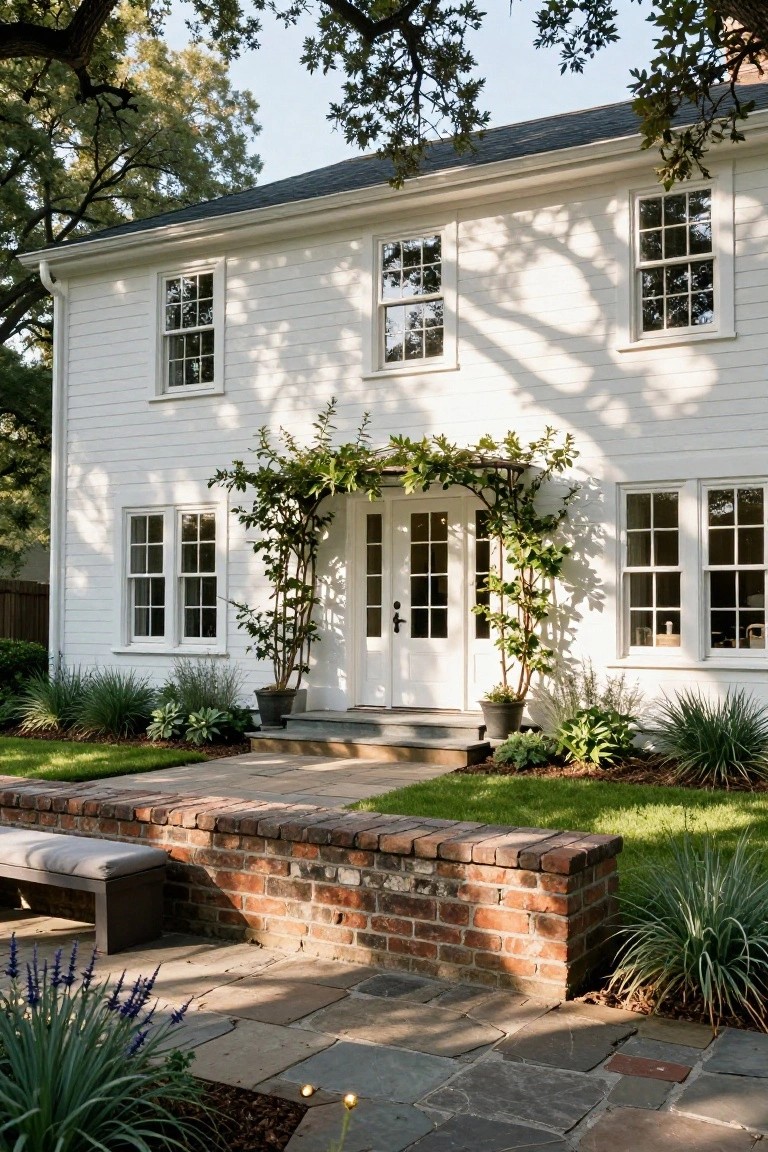
A climbing vine arch over the front doors gives a colonial house that extra touch of charm. It frames the white double doors just right and softens the clean lines of the clapboard siding. That green canopy stands out against the light walls, pulling focus to the entrance without much effort.
This update fits older homes with a formal front step. Go for a sturdy metal trellis you can train vines like trumpet vine or wisteria up over time. Add matching pots on either side for steady growth. Works best where you have some sun and space for the roots to spread.
Stone Colonial with Black Shutters
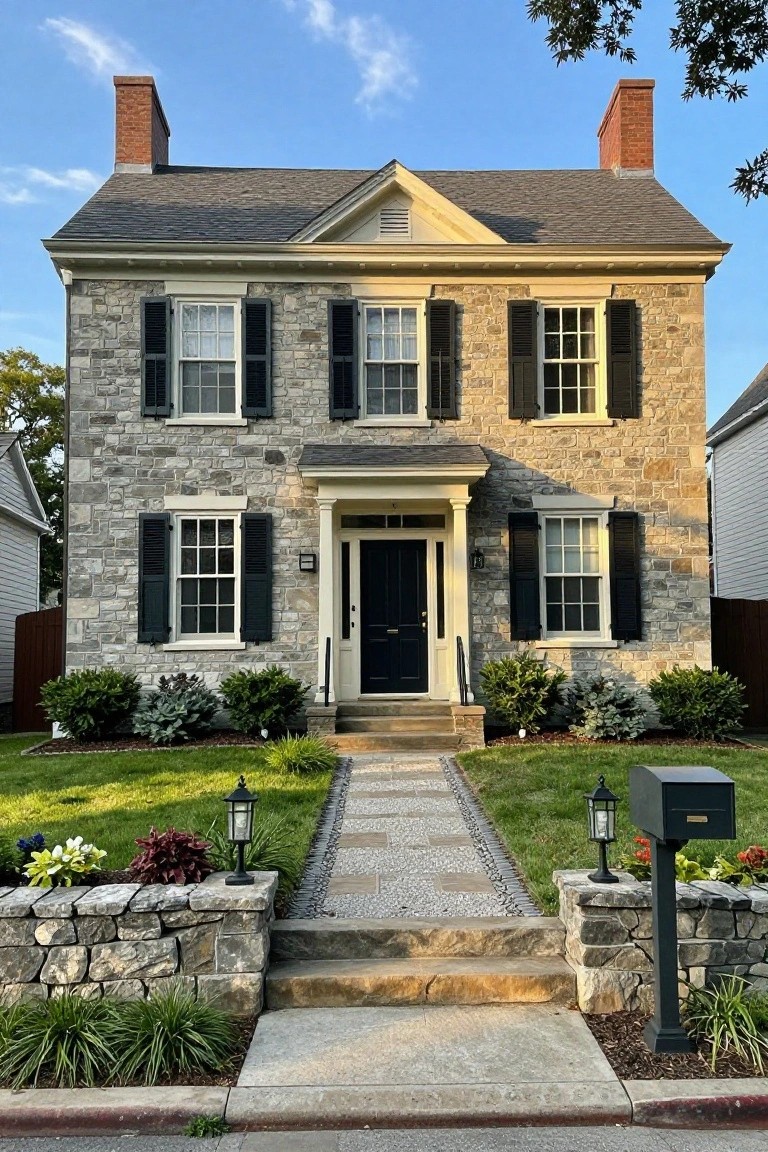
A textured stone facade like this one brings real weight and character to a colonial house. The rough gray stone feels sturdy and natural. Black shutters pull it together by framing the windows sharply. They add that classic punch without much fuss.
This setup works best on symmetric homes from the 1700s or later updates. Paint or replace shutters in matte black to match a dark front door. Keep landscaping simple around the entry so the house stays the focus. It holds up well in any climate too.
Frequently Asked Questions
Q: What’s the quickest project for instant curb appeal?
A: Replace your dated house numbers and add beefy lanterns by the door. You knock it out in a couple hours. Neighbors notice right away.
Q: Can a newbie like me handle painting the trim?
A: Grab a steady ladder and good brushes, then start with the easiest spots like window frames. Tape off cleanly to avoid drips on siding. Practice on a small section first so you build confidence.
Q: How do I pick colors that scream classic Colonial?
A: Lean toward soft whites, sages, or charcoals that echo history without going overboard. Walk your neighborhood for real-life inspo on what ages well. Test swatches at different times of day.
Q: But what if my budget’s super tight?
A: Power wash the siding and declutter the porch. That alone shaves years off the house. Save bigger stuff for later.
