

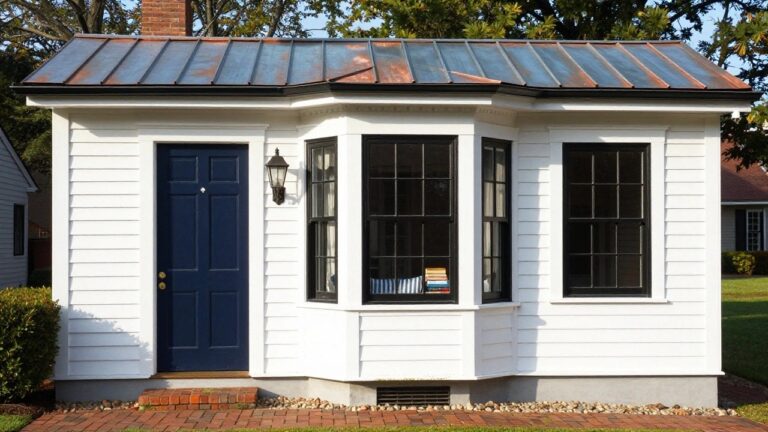
When I spot a Colonial house from the street, bay windows often make the difference between a flat facade and one that pulls you in with real depth and character.
They balance those classic symmetrical lines so well, especially when the proportions echo the roofline and trim.
I once walked past a place where mismatched bays clashed with the clapboard siding, and it just looked tacked on instead of integrated.
From the curb, people notice how those windows play with light and shadow first, turning a standard exterior into something memorable.
The ones in this collection show practical ways to add that appeal without straying too far from tradition.
Octagonal Bay Window with Copper Roof
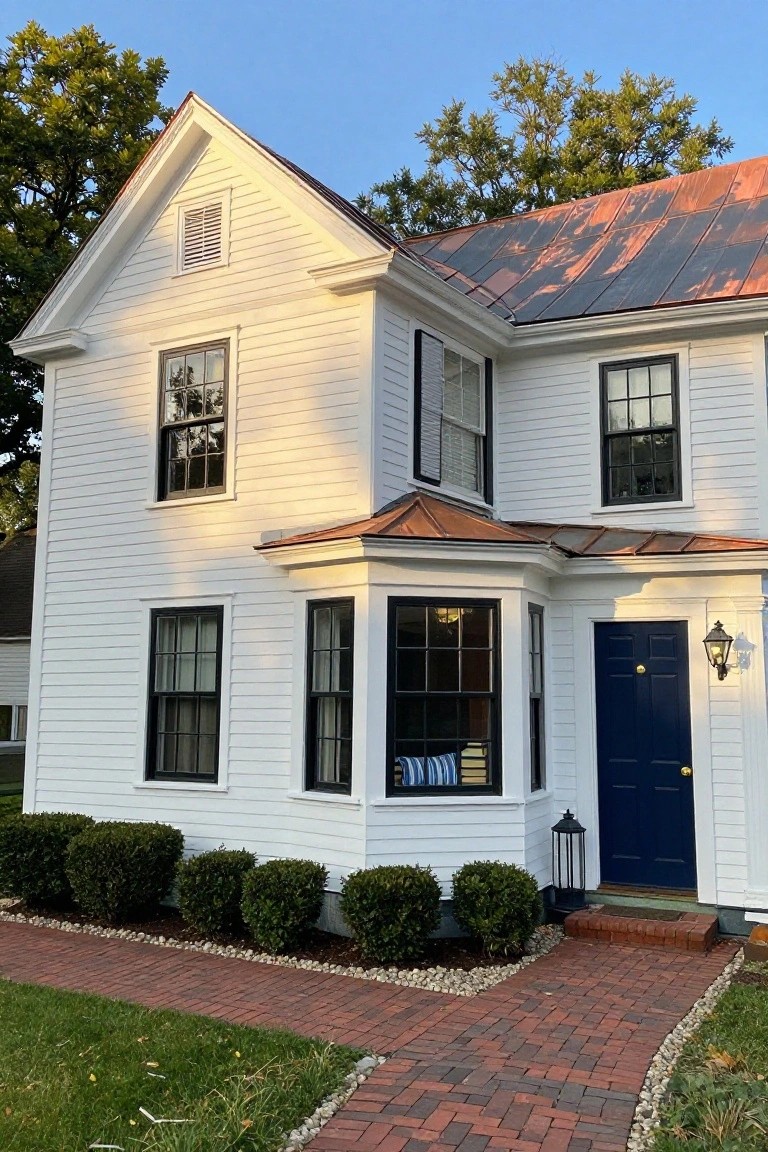
A copper-roofed octagonal bay window like this one gives a plain colonial exterior real personality. Set against white clapboard siding and black window frames, the rounded shape and that metal roof pull your eye right to it. Over time, the copper develops a patina that fits right in with the house’s age, making the whole front feel more established and welcoming.
This detail shines on older-style homes in suburban spots with some mature trees around. It boosts curb appeal without big changes, especially if you add a brick path leading up and simple shrubs on the sides. One thing to note: copper needs occasional cleaning to hold its look, but that’s easy enough for most homeowners.
Curved Bay Window on Brick Colonial Facade
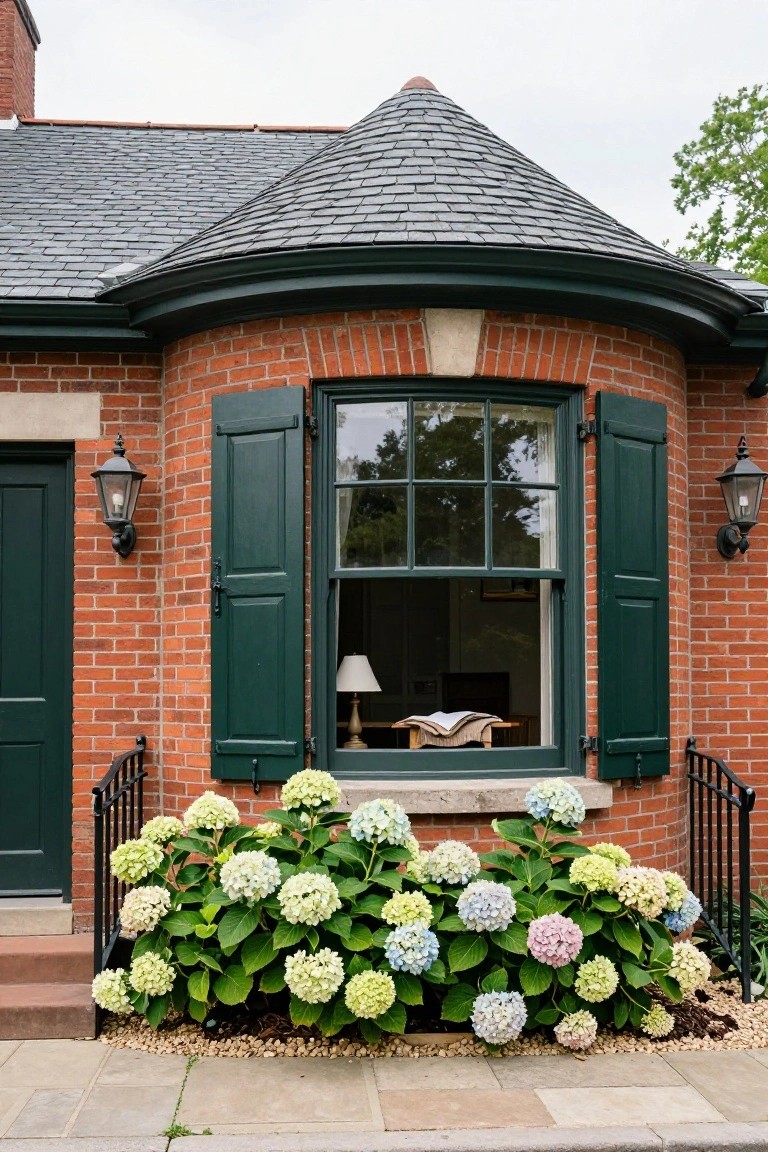
A curved bay window like this one really pulls a colonial brick house together. It juts out just enough to break up the flat brick wall, and those green shutters make it pop without trying too hard. Add big hydrangea bushes on both sides of the entry, and you get instant curb appeal that feels settled and right for the style.
These work best on homes with some historic vibe, especially where the street has other brick houses. Keep the plants rounded and not too tall so they frame the door nicely. Match the shutters to any trim color on nearby homes, and it blends in while standing out.
Octagonal Pavilion Bay Windows
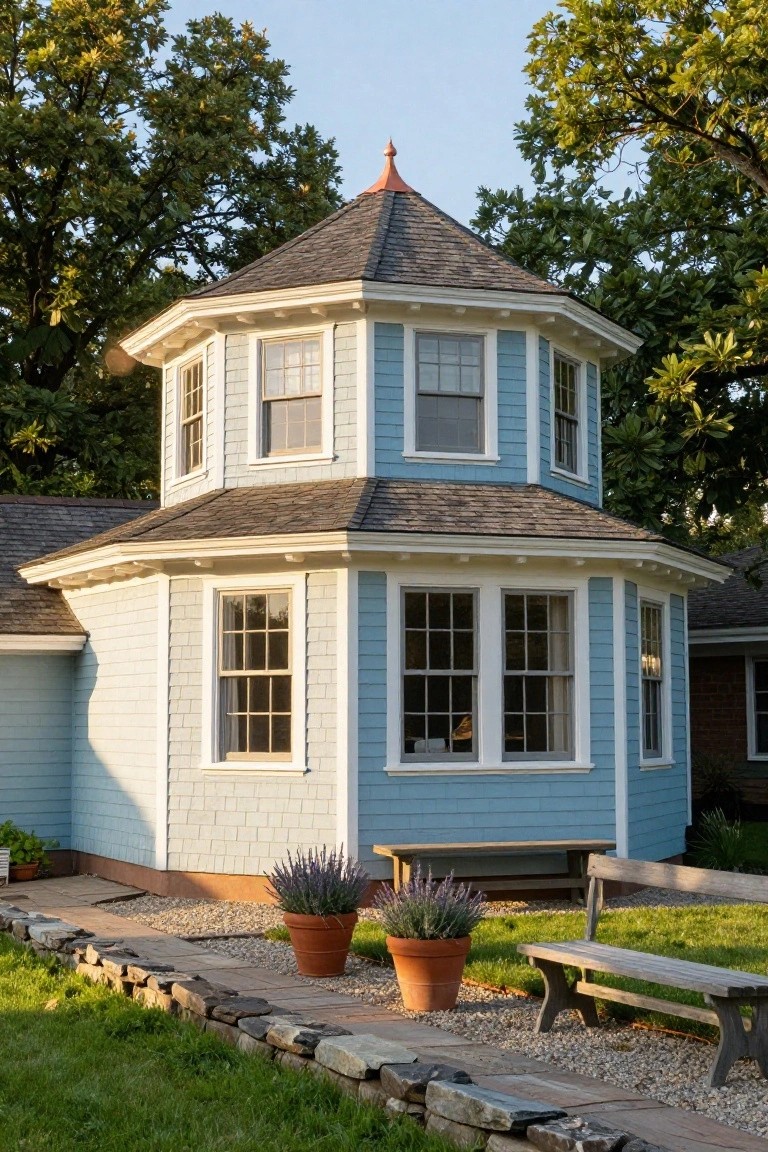
A small octagonal pavilion like this pulls off bay windows in a fresh way. Set off to the side of the house, it uses the protruding glass to catch light and create a little nook that feels both private and part of the yard. The blue shingles and white trim keep it tied to colonial roots, making the whole setup look settled and right at home.
Try this in a side garden or near the garage where it won’t compete with the front door. Flank it with potted lavender or similar low plants, add a plain bench out front. It suits older homes with some yard space. Just keep the scale small so it enhances rather than distracts.
Symmetrical Windows Define Colonial Curb Appeal
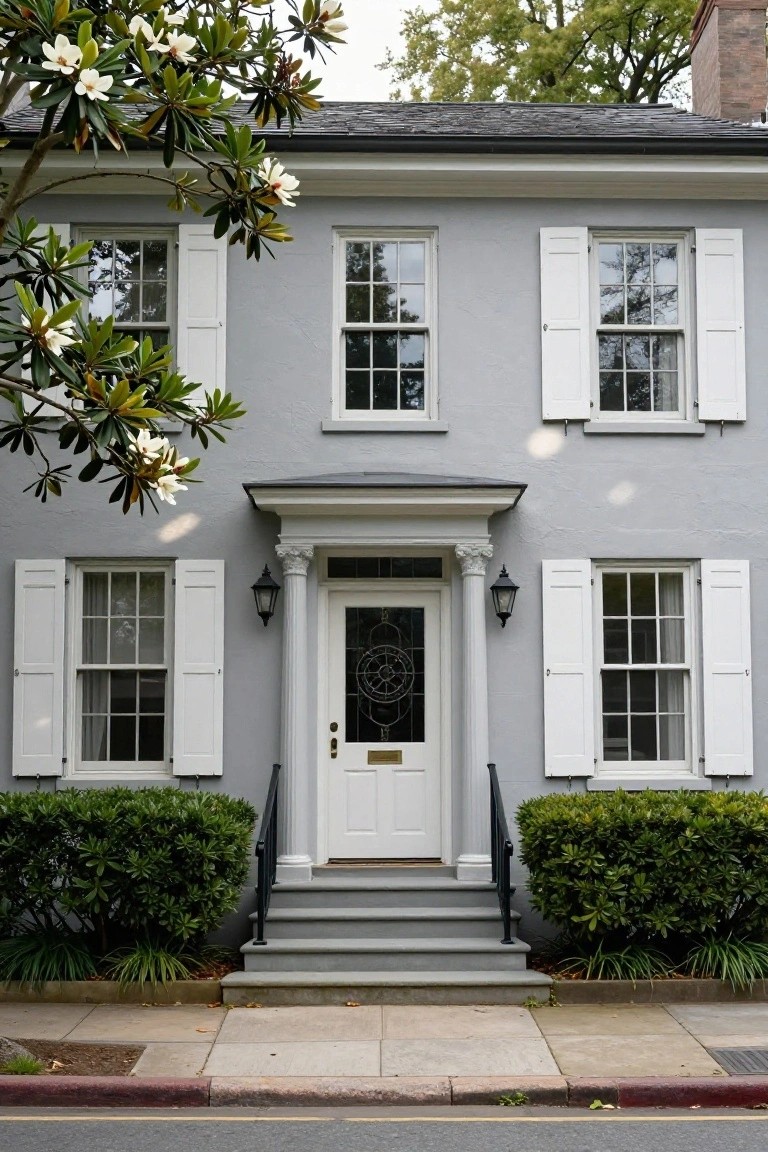
A soft gray exterior like this one keeps things calm and easy on the eyes. The windows line up perfectly across both floors, with white shutters that pull the look together. That balance makes the house feel steady and put-together right from the street. Add in the simple entry porch, and it all says classic without trying too hard.
This setup works best on older homes or revivals in town neighborhoods. Paint your siding in a light gray tone, then crisp white for trim and shutters. Keep plantings low around the base, like those boxwoods here. It suits spots with some tree cover. Just match the roof dark so the gray doesn’t wash out.
Bay Windows with Green Shutters
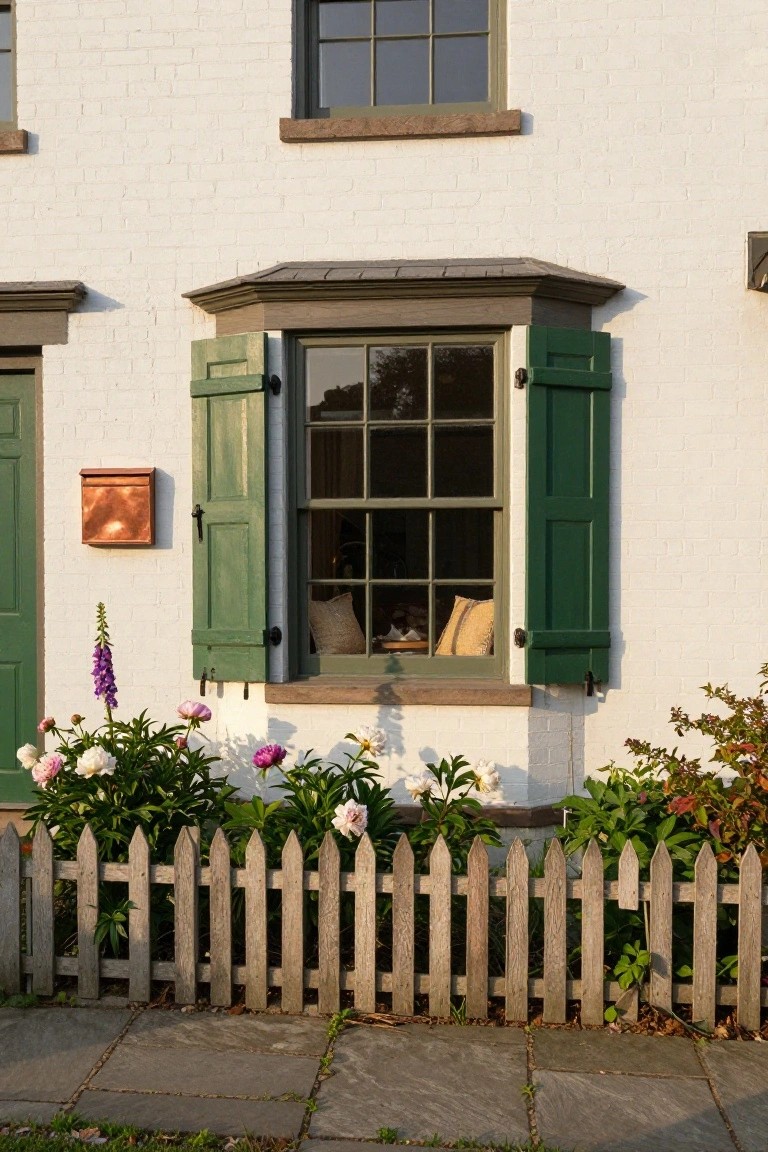
A bay window like this one stands out on a simple white colonial house. The green shutters pull it together, giving that old-school charm without much fuss. They frame the window just right, making the whole front feel balanced and welcoming.
Try this on homes with clean brick or siding. Add a picket fence and a few flowers at the base for extra appeal. It suits quieter neighborhoods… keeps things traditional but not stuffy.
Bay Windows Glowing with Interior Light
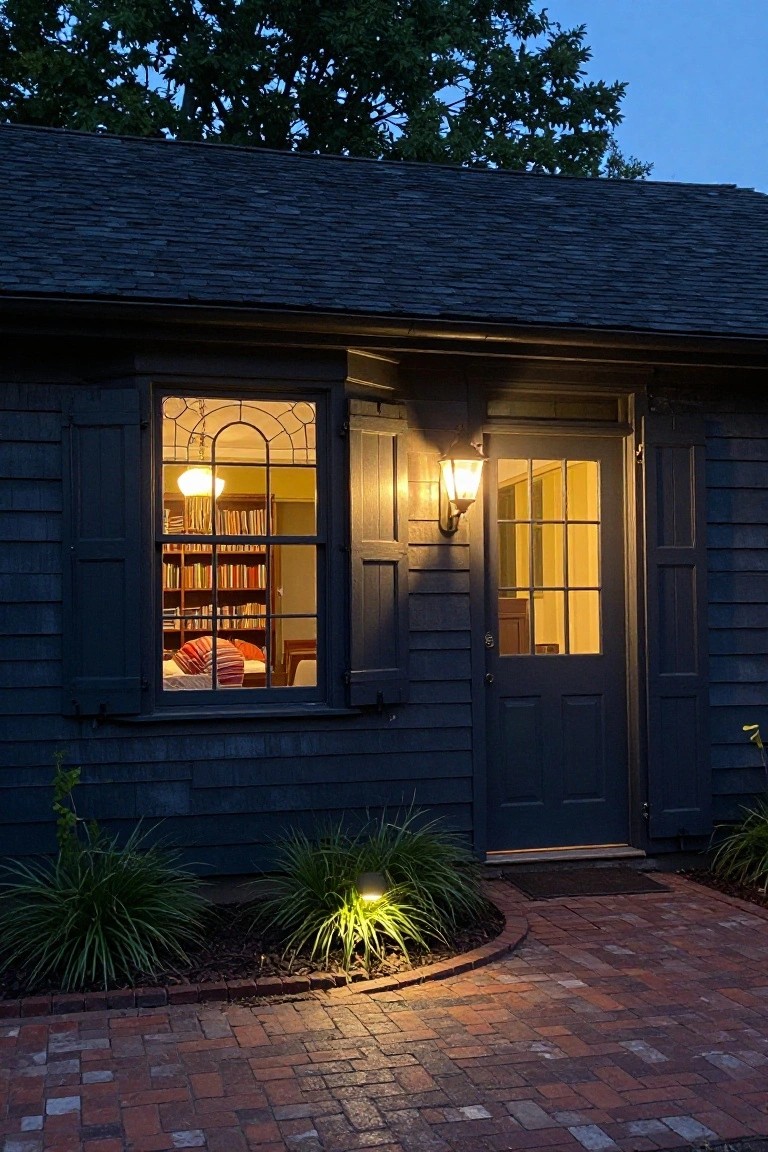
One simple way to make a colonial house stand out after dark is letting warm light spill out through the bay windows. In this shingle-sided home, the glow from a lamp inside highlights the bookshelves and bed, turning the window into a cozy focal point. Paired with the lantern by the door, it draws the eye right to the entry without much effort.
This works best on darker exteriors like navy shingles, where the contrast makes everything pop. Use soft bulbs inside and motion lights outside for safety. It suits homes with deep window seats or built-ins. Just keep shades up in the evening, and avoid bright white lights that wash everything out.
Copper Roof Bay Window Charm
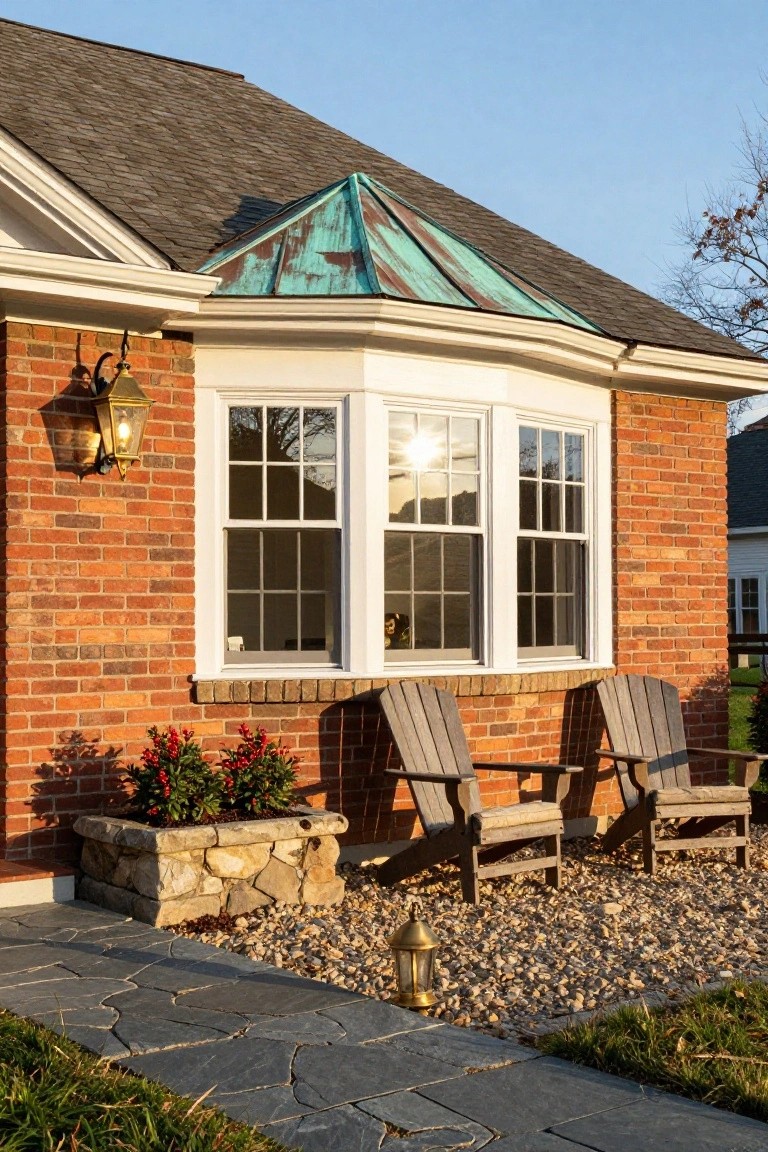
That greenish patina on the copper roof over the bay window gives this colonial brick house a settled-in look. It stands out against the red brick walls and white trim, hinting at age and craftsmanship without being flashy. Folks notice it right away from the street.
Try this on traditional homes with brick or stone facades, especially if you want subtle history. The low-sloped copper pairs well with simple additions like lanterns or a couple chairs nearby. Start with pre-weathered copper if you don’t want to wait years for the color.
Shingle Siding Gives Colonial Homes Real Character
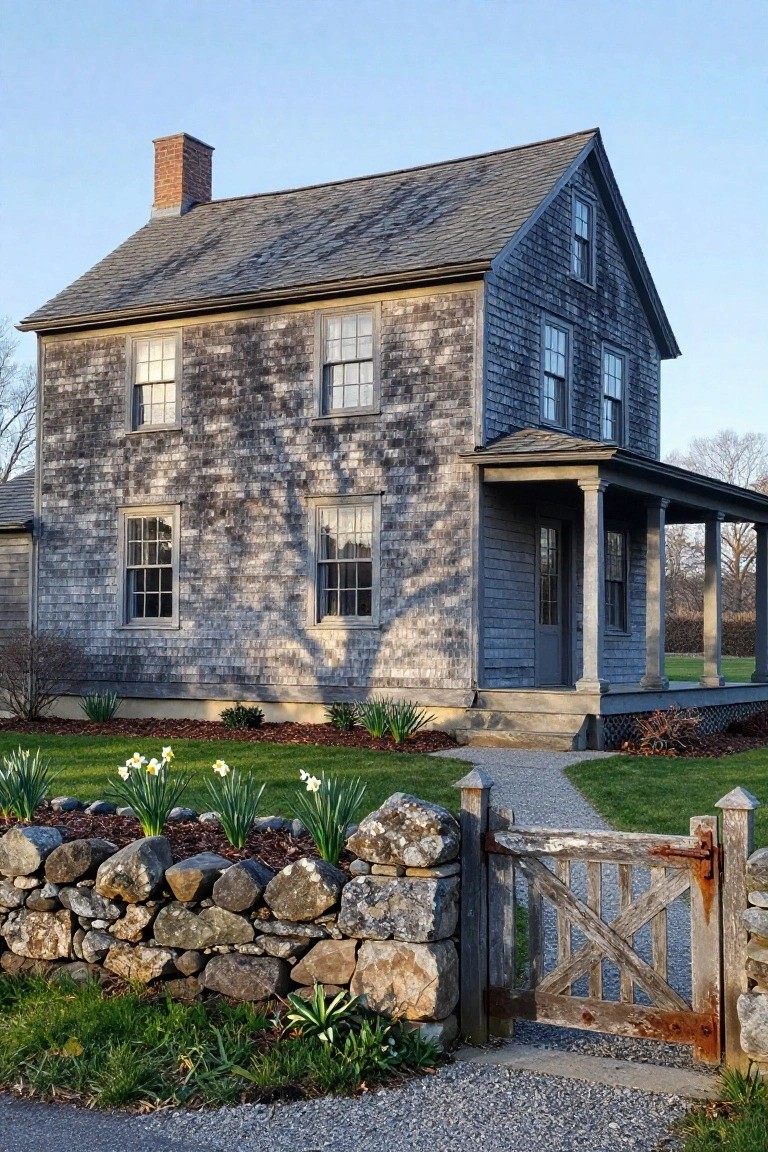
Shingle siding covers this colonial house in a textured gray that looks naturally aged. It wraps the whole facade smoothly, from the steep roof down to the foundation. That rough surface catches the light in a way smooth clapboard never does. It makes the place feel settled and real, like it’s been there a hundred years.
You see this a lot on older East Coast homes, and it works best where you want low upkeep that improves over time. Let the shingles weather on their own, no paint needed. Pair it with a simple porch like this one, and stone edging at the entry. Skip it if your area gets too much humidity, though. It holds up fine in dry or coastal spots.
Red Trim Pops on Pale Colonial Walls
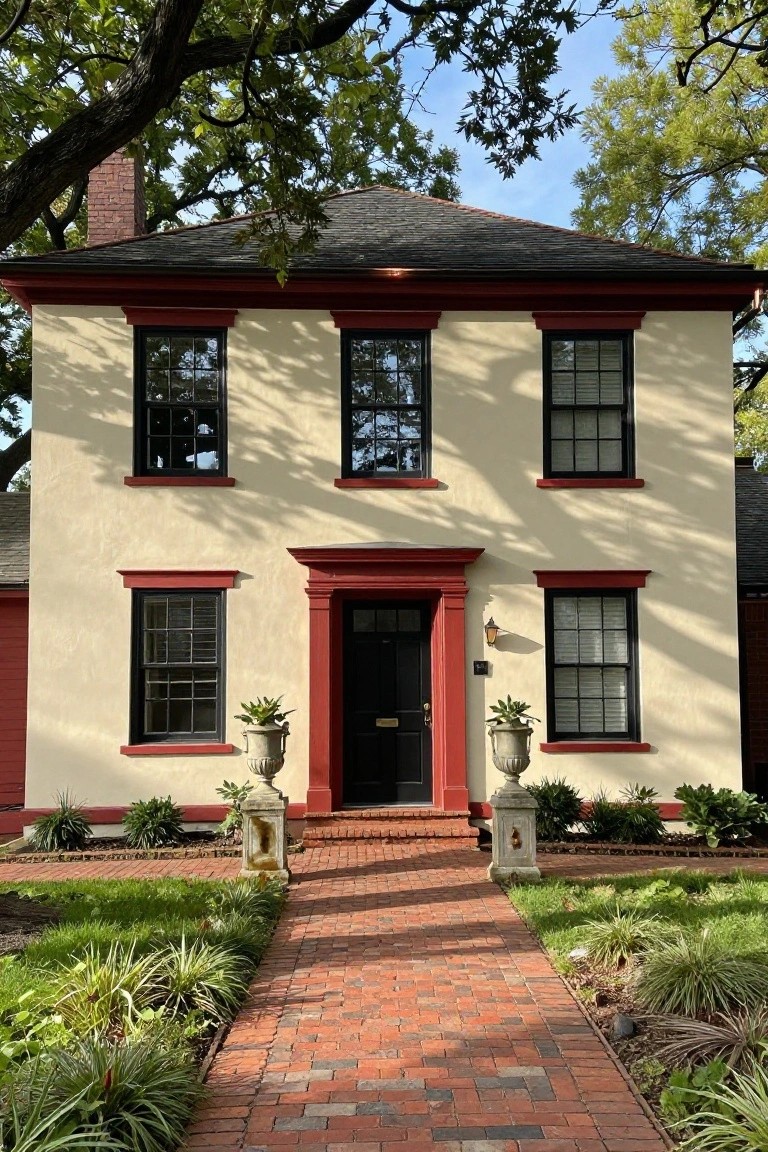
One simple way to make a Colonial house stand out is with red trim against light walls. It pulls the eye right to the windows and front door without much effort. The black window frames add extra definition, and those red headers above them keep things sharp and traditional. On this cream house, it gives a fresh take on classic style that feels welcoming from the street.
Try it on homes with simple siding like clapboard or stucco. It works best where you want contrast but not overwhelming color. Pair the red with brick paths or stone accents for balance. Just keep the red consistent on all trim pieces so it doesn’t look patchy.
Colonial Porch with Gentle Curve
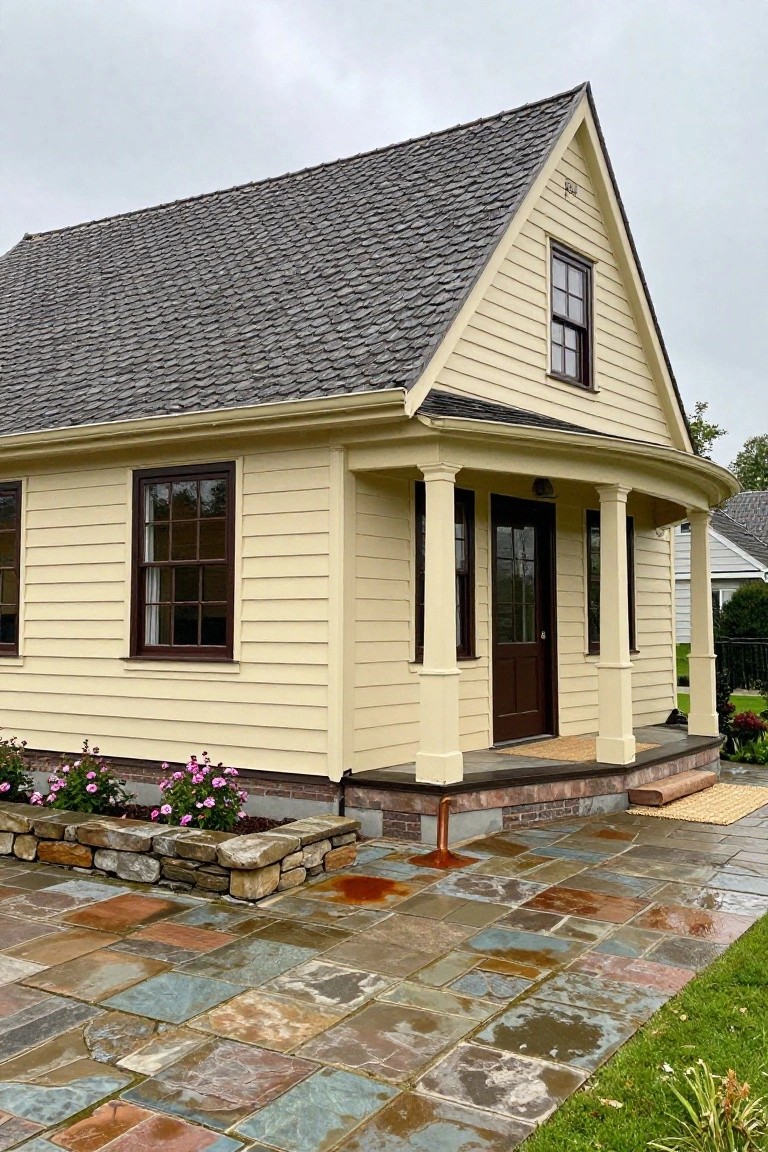
A curved porch like this one softens the straight lines of a classic colonial house. It wraps gently around the front corner, held up by simple round columns. The pale yellow clapboard and dark wood door keep things traditional, but that curve makes the entry feel more open and friendly right from the street.
This works best on smaller colonials or cottages where you want to add some personality without big changes. Pair it with a stone or brick base for stability, and keep plants low around the edges so the porch stays the focus. Skip it if your lot is tight. It pulls people in without trying too hard.
Bay Windows with Climbing Roses
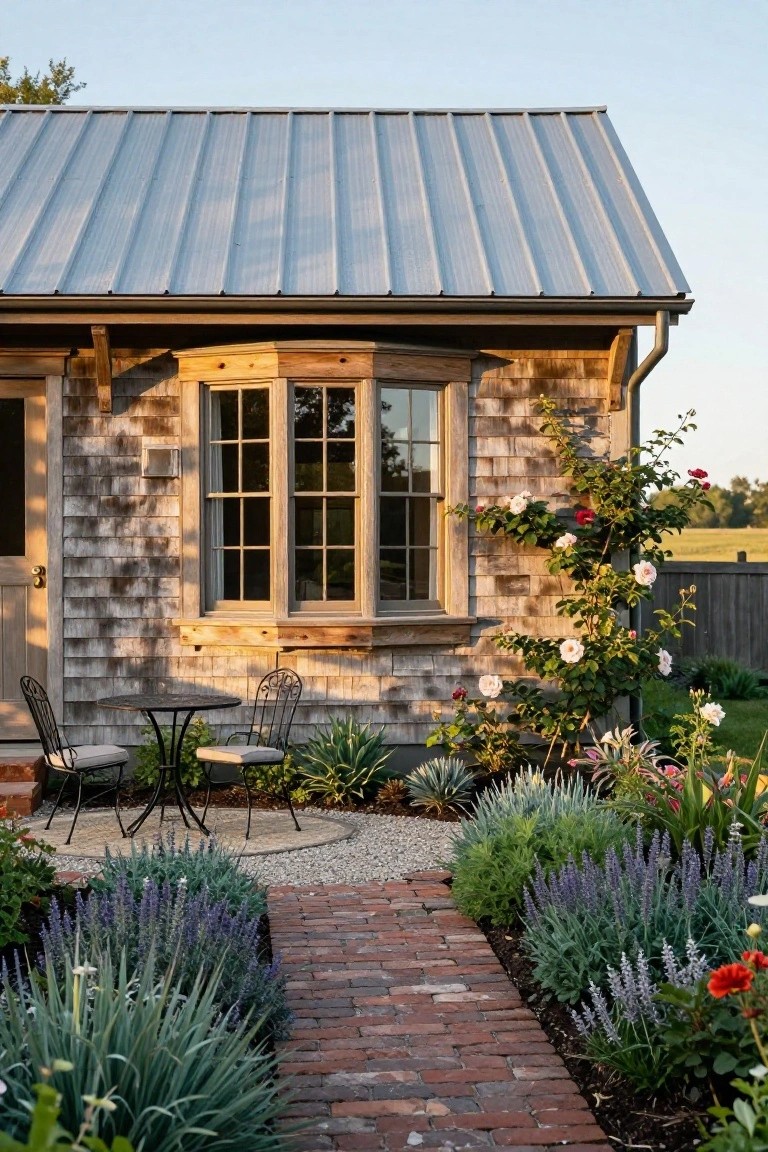
A bay window like this one on a shingled cottage really pops when climbing roses grow up alongside it. The roses soften the wood frame and add color without overwhelming the architecture. It’s a simple way to make a plain exterior feel more lived-in and charming, especially as the sun hits in the late afternoon.
You can pull this off on colonial or cottage homes with some wall space next to the window. Pick tough, repeat-blooming varieties that won’t damage the siding. Plant them a foot or so out, train the canes up with ties, and prune yearly. Skip it on super-modern facades… it suits older styles best.
Colonial Brick Entry Bay Window
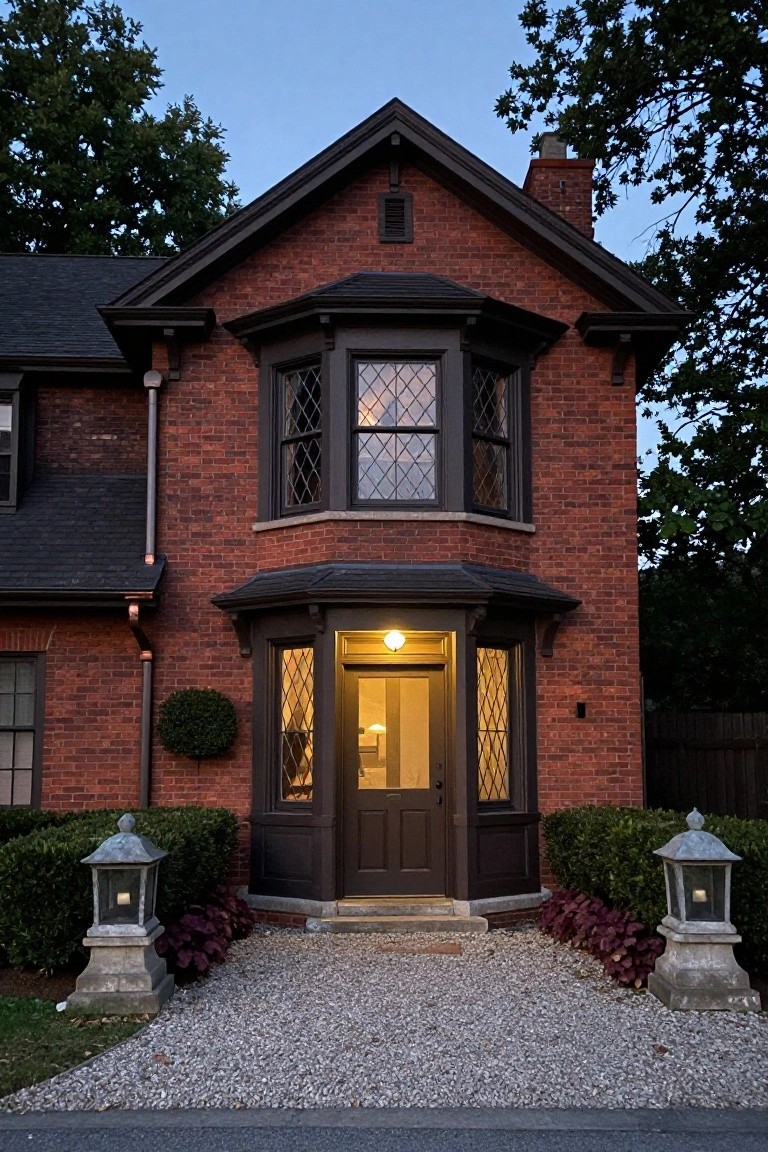
A classic red brick Colonial gets a real lift from this tall bay window built right into the entry porch. The leaded glass panes catch the light nicely, and that dark wood frame pops against the brick without overwhelming it. It’s a simple way to make the front of the house feel more detailed and welcoming, especially as dusk sets in.
This setup works best on traditional homes where you want to highlight the door area. Keep the framing bold but not too shiny, and add low plants or lanterns nearby to frame it out. Avoid crowding the path, though. Just enough gravel or stone keeps it practical for everyday use.
Bay Entryway with Nautical Door
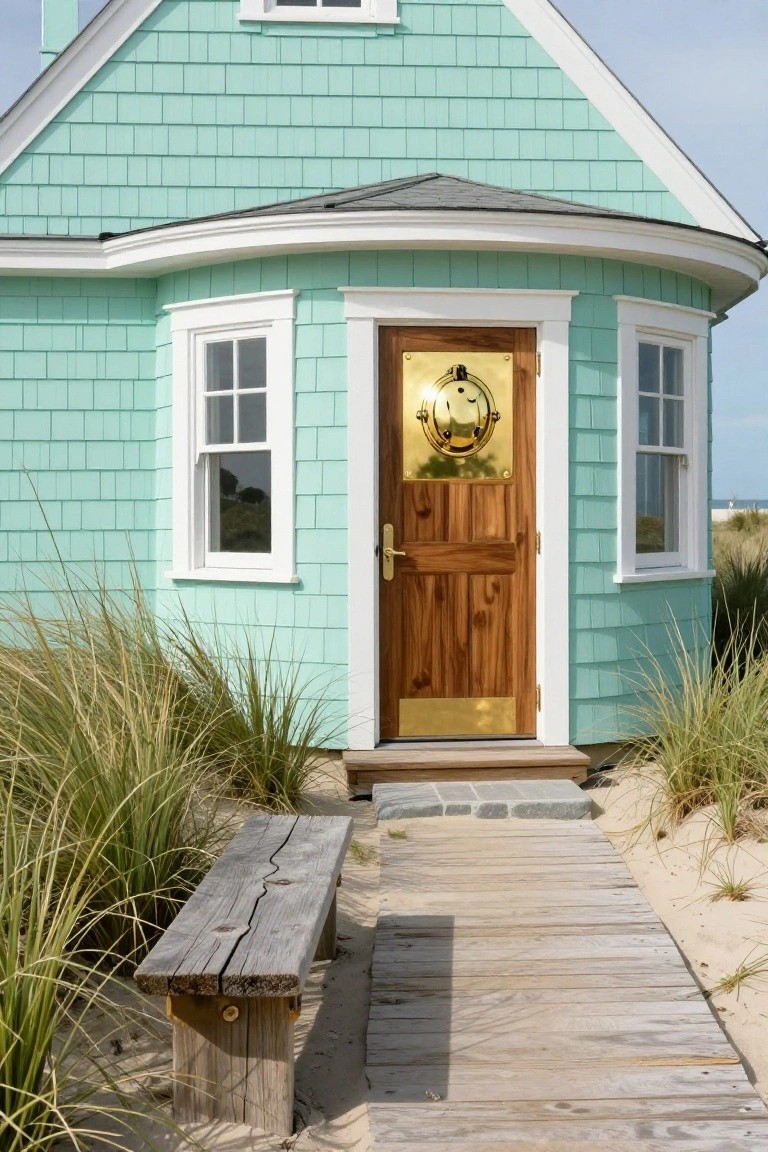
This little bay entry sticks out on the house facade. It’s curved around a solid cedar door with a brass porthole right in the middle. The teal shingles make it pop against the beach setting, and that porthole adds a sailor touch without overdoing it. Folks notice it first thing, makes the whole front feel more like a getaway spot.
You can pull this off on colonial-style homes near water or even inland if you want coastal charm. Go for warm wood tones on the door to contrast cooler shingle colors. Keep the path simple, like weathered boards leading up. Just make sure the porthole is real glass, not fake, so it lets in light.
Arched Bay Window Above the Entry
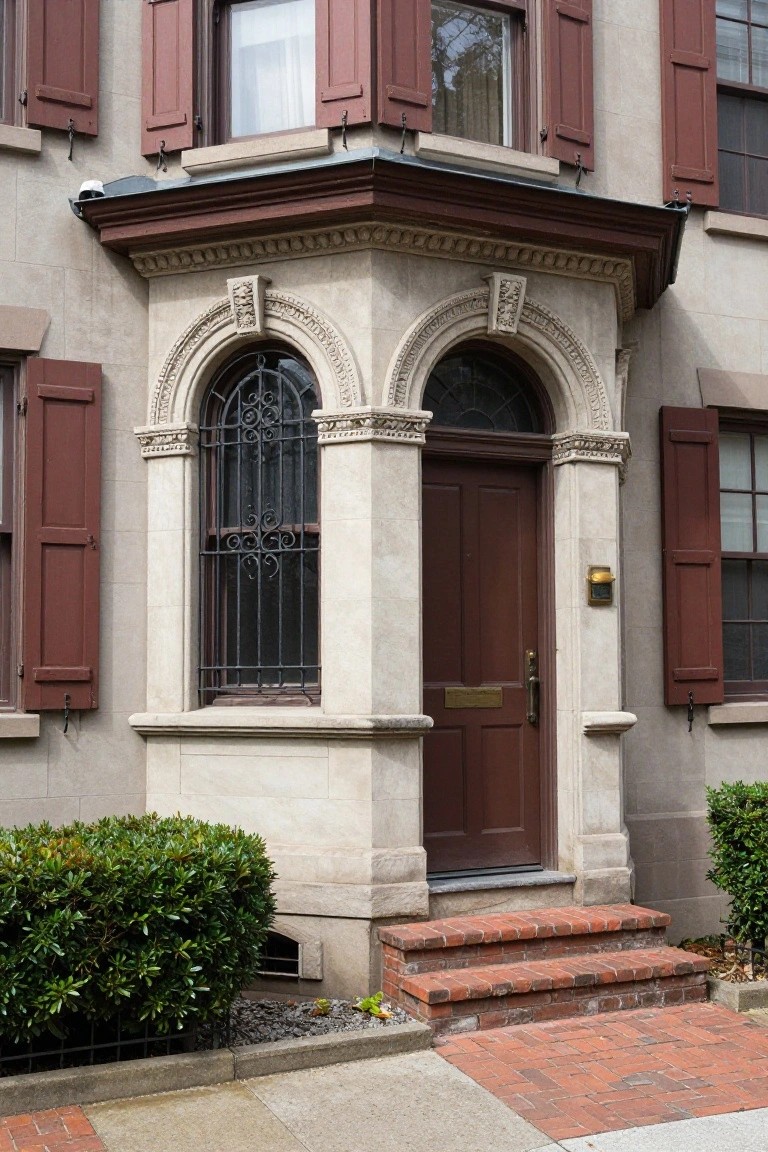
One simple way to make a colonial house front more interesting is adding an arched bay window right over the entry door. It pulls the eye up with that graceful curve and the wrought iron grille inside. The stone detailing around it gives a solid, classic feel that fits older rowhouses or townhomes without looking overdone.
This works best on narrow facades where you want height and detail without taking up yard space. Pair it with a dark wood door and matching shutters like the red ones here, then keep plantings simple with boxwoods at the base. Skip anything too busy around the steps so the bay stays the focus.
Bay Windows Under a Classic Porch
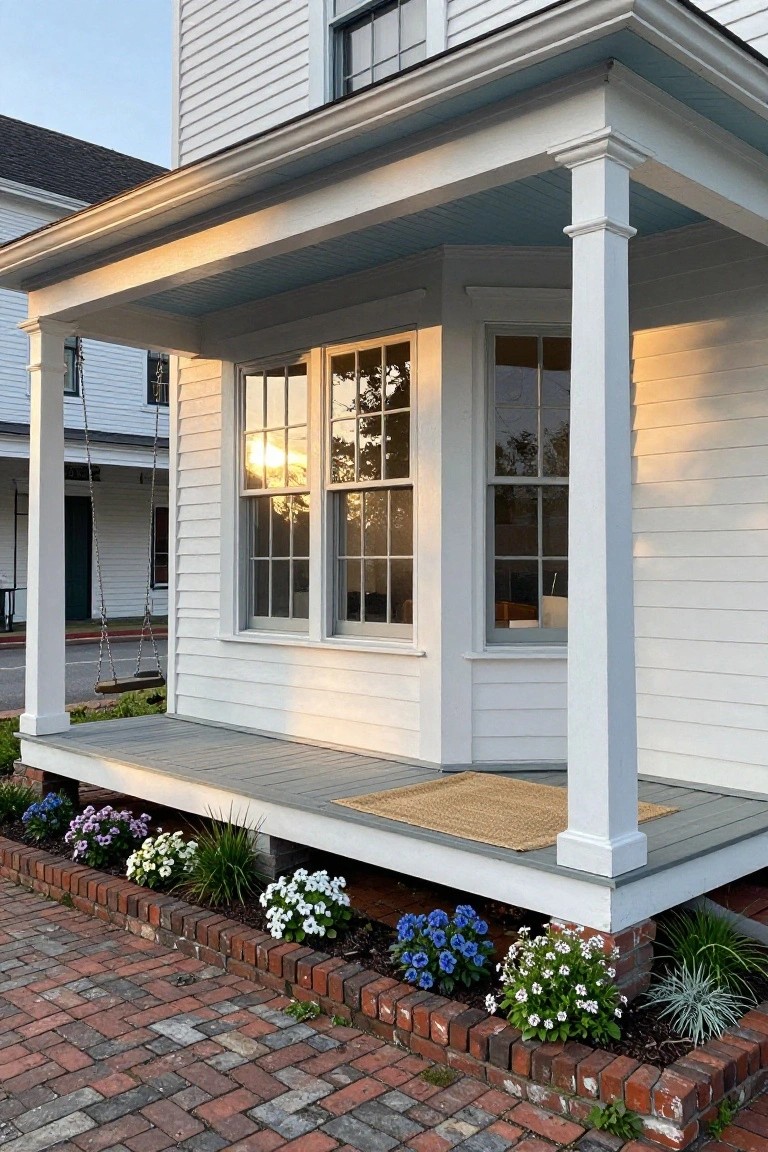
Bay windows like these bring extra dimension to a colonial house exterior. Tucked right under the porch overhang, they make the facade feel deeper and more interesting from the street. The white clapboard siding keeps things crisp, while the subtle blue ceiling adds a traditional touch that pulls the eye up.
This look suits older homes or new builds aiming for that timeless curb appeal. Plant low flowers along the base to soften the edges without blocking the windows. It shines on side views or walk-up approaches, especially with a brick path leading in.
Black Shutters Define a Gray Colonial Facade
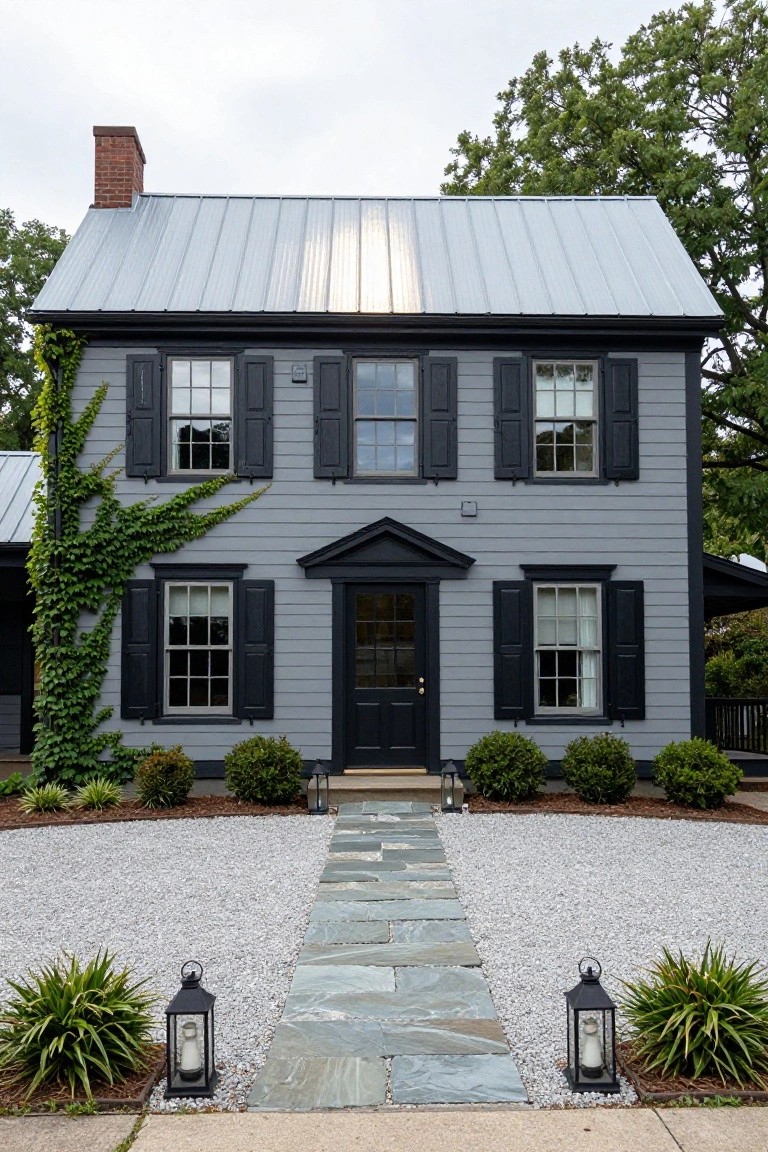
Black shutters and trim stand out nicely against softer gray siding on this colonial house. That dark contrast gives the whole front a sharper look without feeling too busy. It pulls your eye right to the windows and door, making the place feel put-together and classic at the same time.
You can pull this off on most older homes with simple siding. Just paint the trim and shutters a true black, and keep the body a light to medium gray. Works best where you want some punch up front. Skip it if your house already has bold colors elsewhere… might fight them.
Arched Bay Windows Boost Colonial Charm
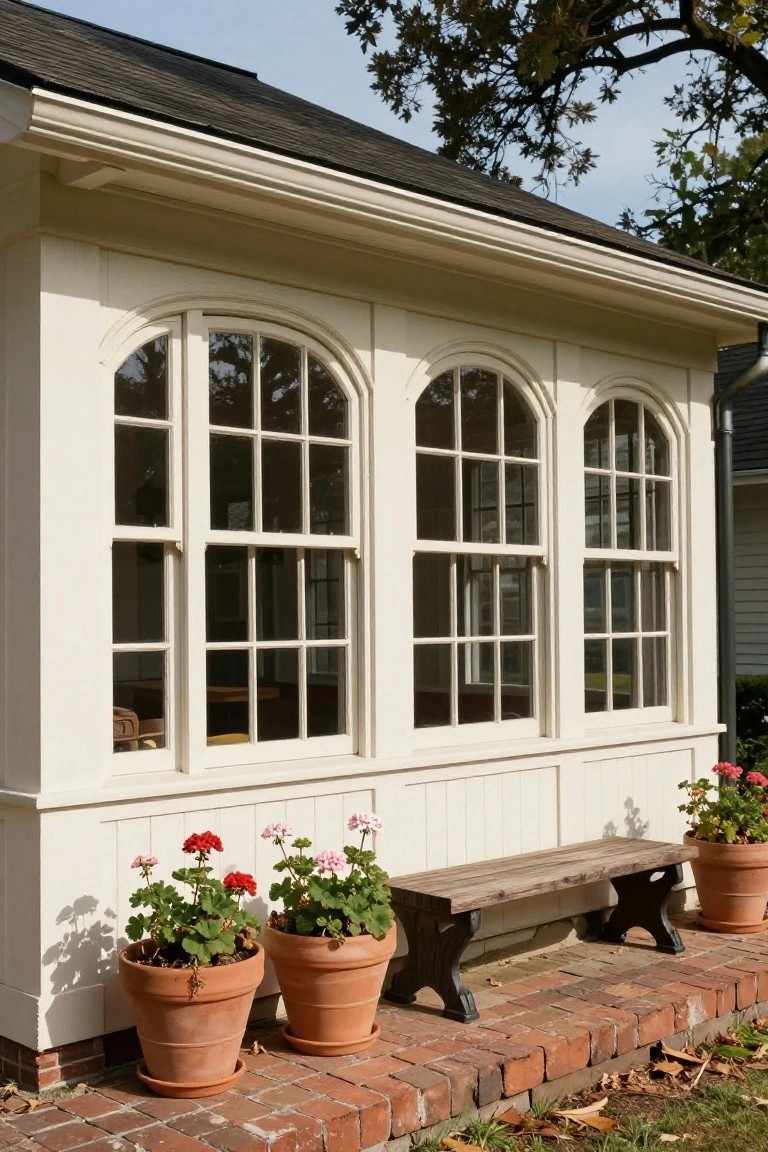
These tall arched bay windows give a colonial exterior that soft touch of elegance. The multi-pane glass and curved tops fit right into traditional styles without feeling too fussy. White clapboard around them keeps things clean and bright. A few potted geraniums nearby tie it to the garden nicely.
You can add them to a side addition like a sunroom or garden shed where they catch the light. They work best on homes with simple lines already. Just make sure the proportions match your roof pitch. Skip them if your spot gets too much direct sun, or the glass might need extra tinting.
Garden Pavilion Bay Windows
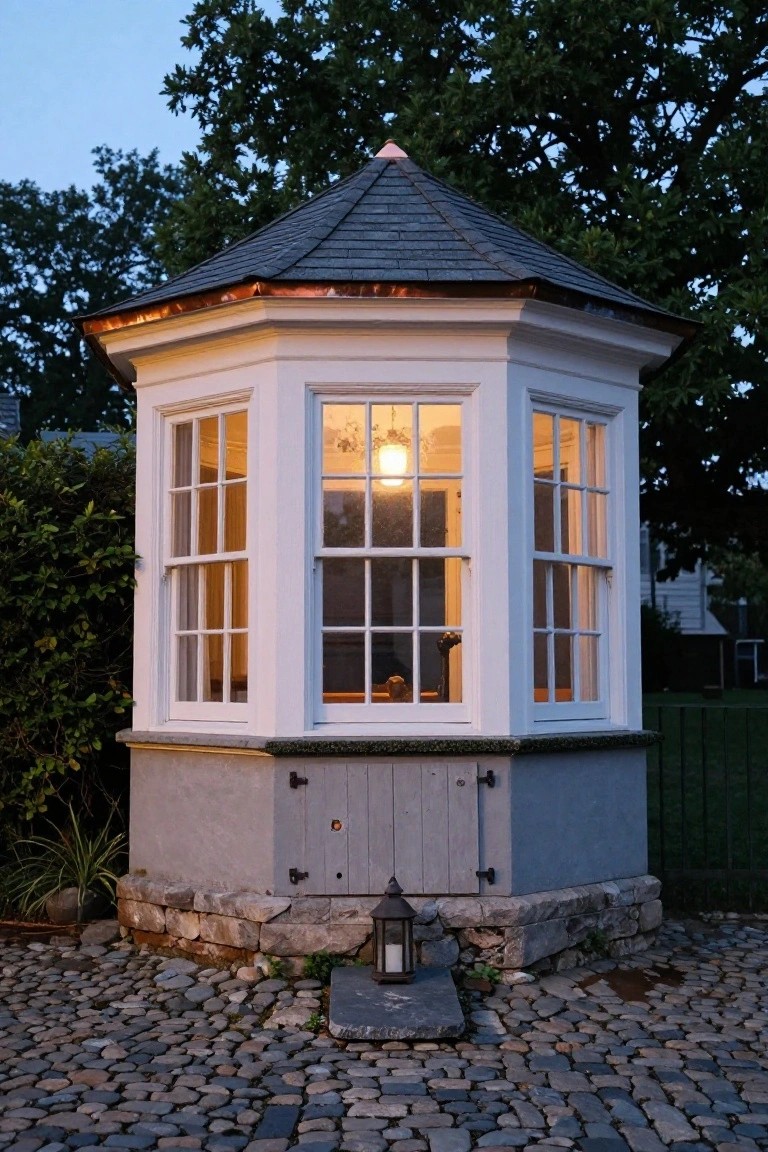
A small octagonal pavilion like this one uses bay windows on all sides to pull in light and create a focal point in the yard. The multi-paned glass and warm interior glow make it stand out at dusk, especially with copper roof edges that age nicely over time. It fits right into colonial-style properties, adding a bit of whimsy without taking over the main house.
Place one near a path or fence where it can catch the eye from the street. It suits homes with established gardens or room for a side feature. Keep the base sturdy with stone or brick, and add a simple lantern out front for evening appeal. Just make sure the scale stays small so it feels like an accent, not a second house.
Frequently Asked Questions
Q: Can I add bay windows to my current Colonial house without messing up the look?
A: Stick to proportions that echo your home’s original windows, like three equal panes on top. Builders often match the grid patterns from your existing setup. That keeps everything harmonious and boosts that classic curb appeal.
Q: What material works best for bay windows on a Colonial exterior?
A: Go with wood or fiberglass clad in wood for an authentic feel. They mimic the traditional Colonial vibe while holding up to weather. Paint them to blend seamlessly.
Q: How do bay windows change the inside light in a Colonial home?
A: They pull in tons more natural light, making rooms feel bigger and brighter. Position them on the front for that welcoming glow passersby notice too.
Q: Do bay windows add real value to my Colonial house?
A: Yes, they freshen up the facade and appeal to buyers who love period details. Just ensure quality installation to avoid future headaches.
