

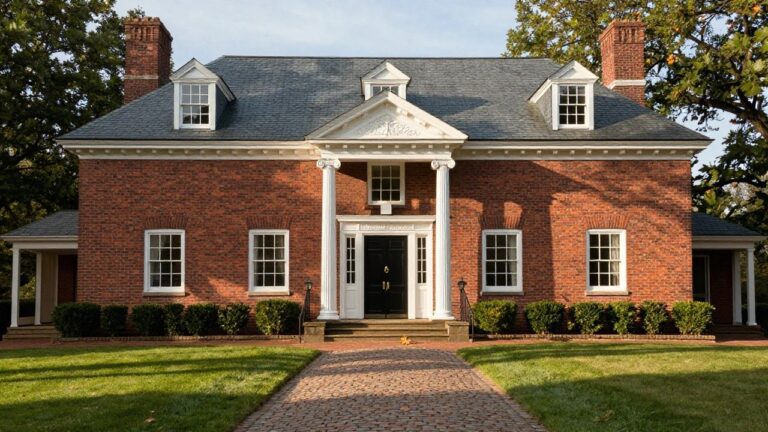
When I drive by a large Colonial mansion, the exterior’s first impression hinges on how well the facade balances bold symmetry with subtle material shifts.
Brick bases paired with clapboard siding often ground the design, making it feel solid and timeless from the street.
I’ve always thought the entry portico pulls you in most effectively when it’s scaled just right, not overwhelming the roofline.
Certain window arrangements catch the eye next, especially those double-hung styles that add rhythm without clutter.
A few of these caught my attention for how they’d adapt to real neighborhoods, holding their impact year after year.
Classic Columned Portico Entry
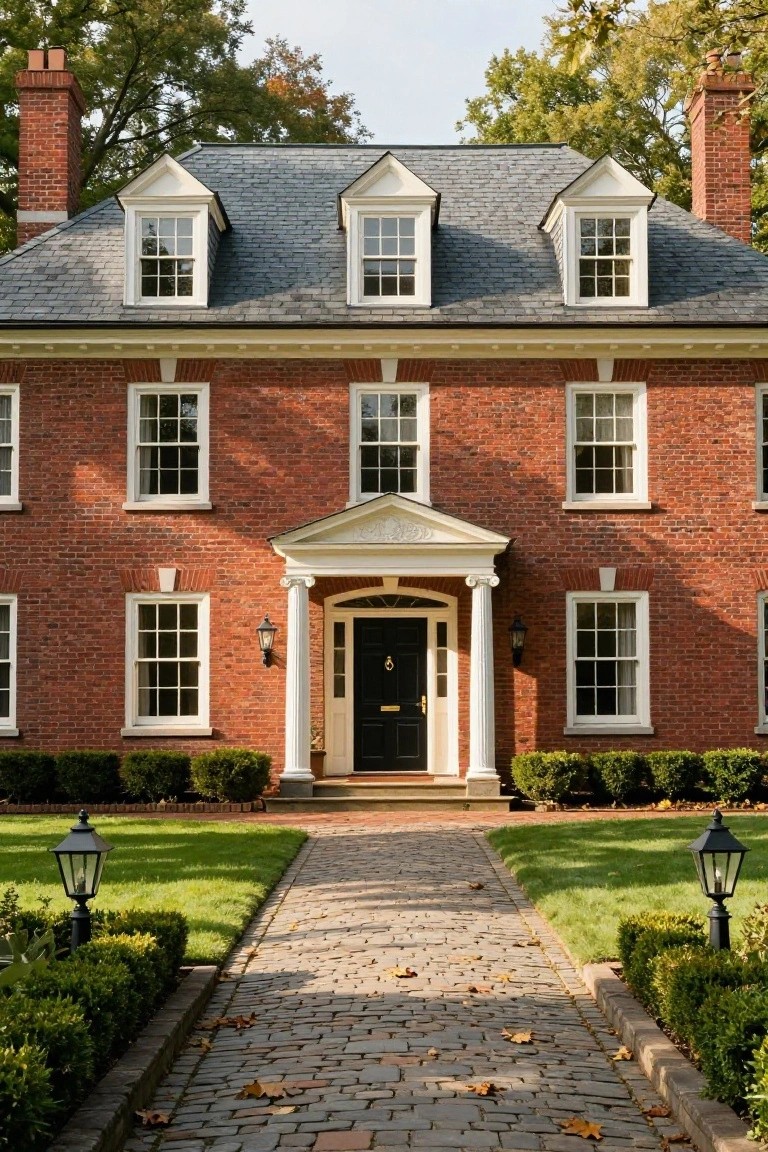
A columned portico like this one sits right over the front door. It gives the whole house that solid colonial feel without trying too hard. The white pediment and columns stand out clean against the red brick. And those lanterns on each side light up the entry just right at dusk.
This setup works best on larger homes where you want some formality up front. Put it on a brick or stone facade facing the street. Keep the path simple, like cobblestones here, leading straight in. Skip it if your lot is tight… might feel too grand.
Recommended Products

✅【Versatile Use】—Guardian of the Family. Provides smooth, vinyl siding mounting block for exterior accessories such as light fixtures, cameras, national flag, and fixture doorbells on all wall plate types including T-111, HardieLank lap wall plates and flat surfaces.

UL Listed for Safety: Certified for electrical safety and reliability when installing exterior lighting or fixtures

【Premium Quality】With textured and paintable white surface, this siding mounting block is made of solid and sturdy plastic material. You may also paint the fixture to finish with your desired colors to match the color with your vinyl siding or just fine left with its natural off-white color. Only fit for 4 inch to 10 inch height vinyl siding with 1/2 inch lap.
Classic Navy Shutters on White Colonial Siding
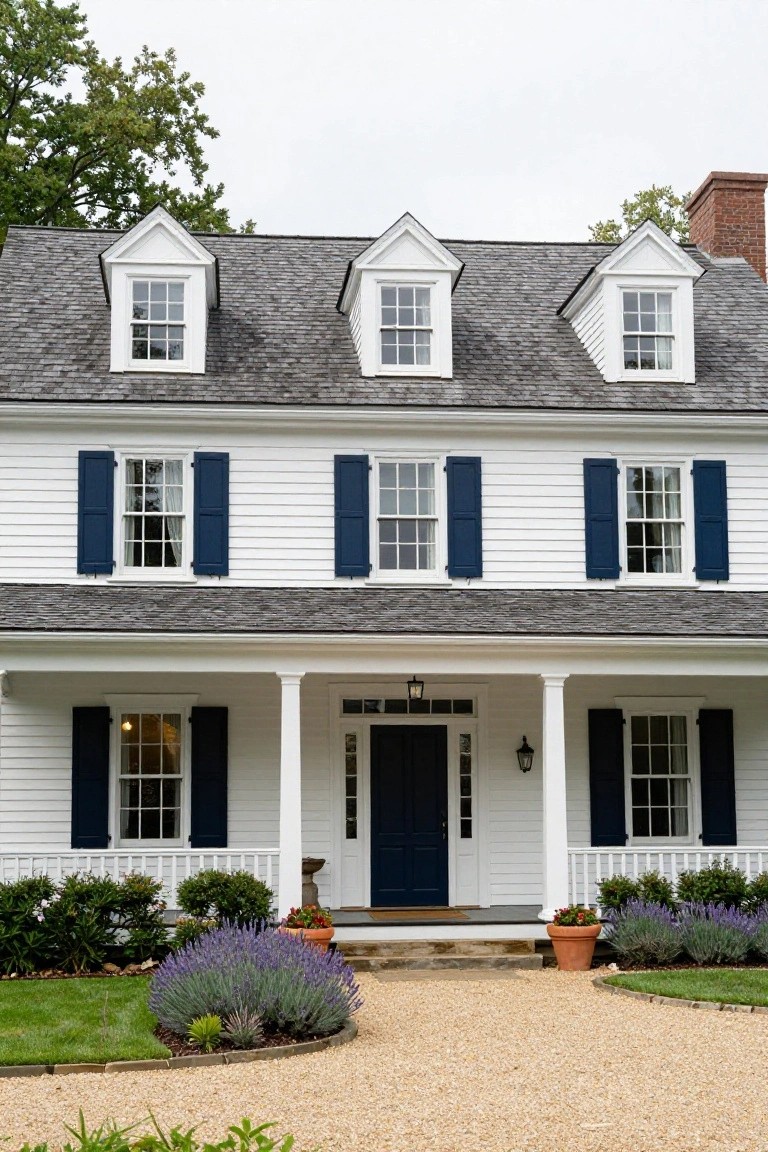
Navy blue shutters give this white colonial house a clean, sharp edge that feels fresh yet traditional. The deep color pops against the bright siding, framing the windows without overwhelming the simple lines of the facade. It’s a look that’s easy to spot from the street and sticks around year after year.
This setup works best on larger homes with balanced windows, like this two-story design with its front porch and dormers. Match the shutters to a navy front door for extra pull, and it boosts curb appeal right away. Skip it on busier facades, though. Too much pattern nearby can muddle the effect.
Symmetrical Facade with Central Portico
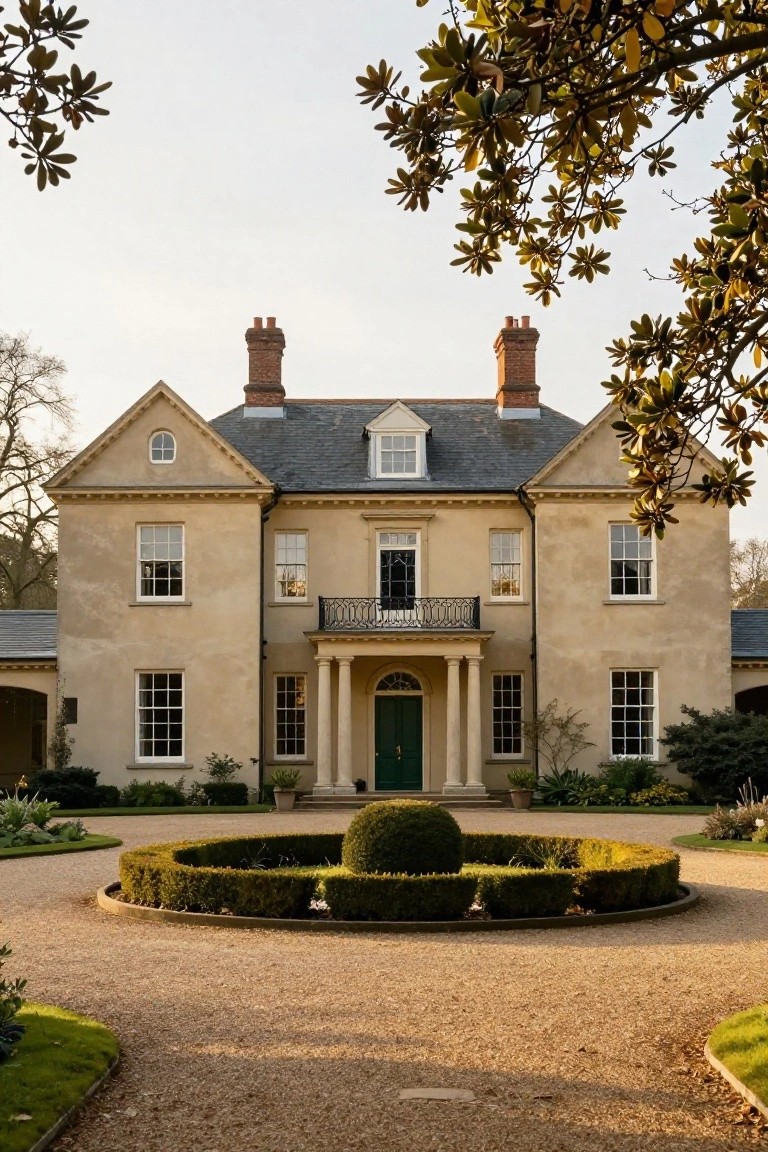
A symmetrical facade like this one takes a colonial house and gives it real presence right from the street. The central portico with its columns frames the green front door perfectly. That setup pulls your eye straight to the entrance. It feels balanced and welcoming without trying too hard.
This works best on bigger homes where you have room for wings on each side. Pair it with pale stucco walls to keep things light. A circular driveway out front adds to the approach. Just make sure the columns match the scale. Smaller houses can feel off if you force it.
Classic Red Brick Colonial Facade
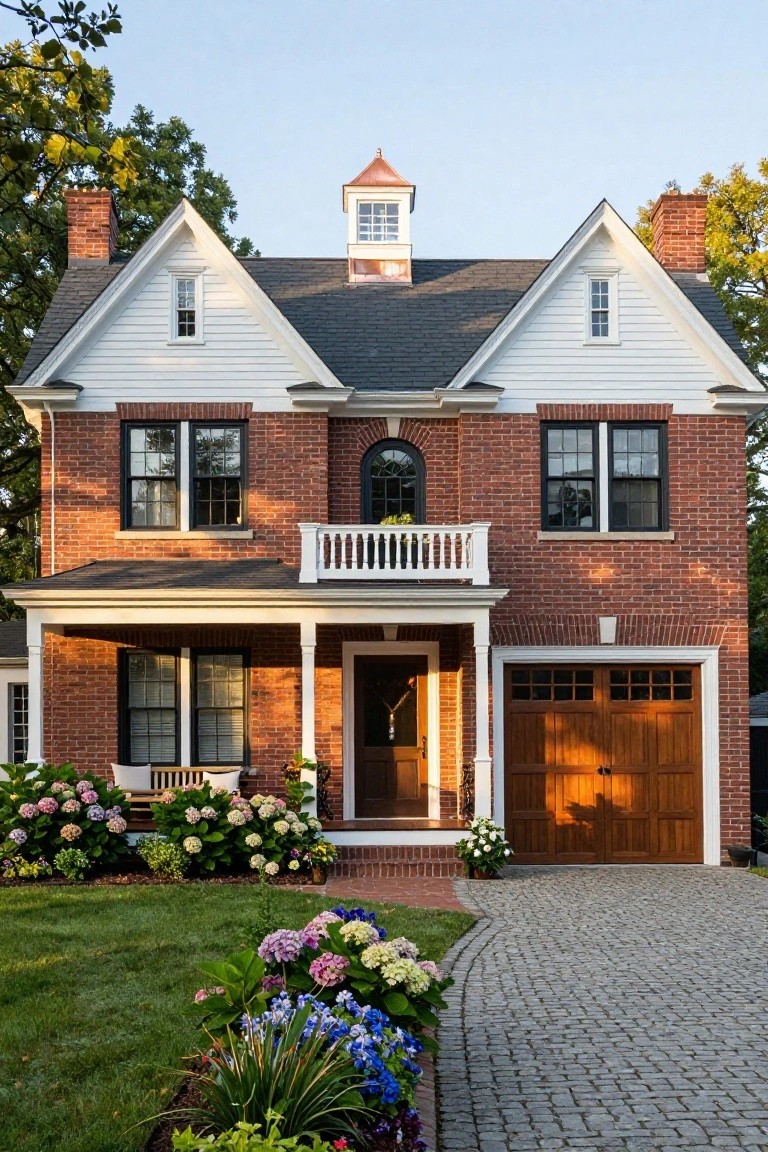
Red brick forms the solid base of this colonial house, paired with white clapboard on the gabled upper sections. That simple contrast gives the whole front a warm, grounded feel without looking too heavy. The dark windows and copper cupola up top add just enough detail to make it interesting.
This setup suits bigger homes in older neighborhoods where you want curb appeal that lasts. Use it on two-story designs with a front porch to pull people in. Keep the brick clean and the white fresh, and it stays low fuss over time.
Arched Stone Entry with Wisteria
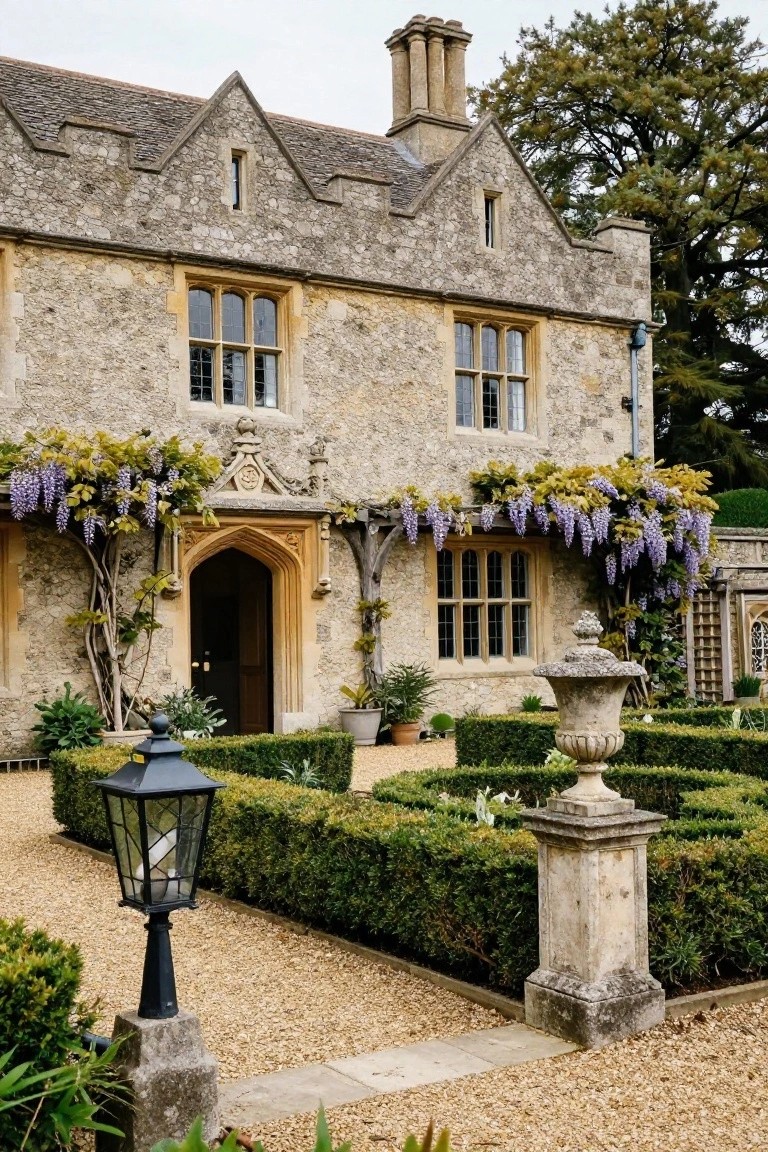
Wisteria vines tumbling over a Gothic arched doorway like this turn a solid stone facade into something welcoming and alive. The purple flowers hang heavy in spring, softening the hard lines of the old stone walls and that carved stone detail above the door. It’s a simple way to add color and movement to a colonial style house that might otherwise feel too stern.
You can pull this off on larger homes with south-facing entries where the vines get enough sun. Plant sturdy wisteria at the base, train it up a wooden support over the arch, and trim it back yearly to keep the door clear. Low boxwood hedges along the path help frame it all… works great in mild climates, less so where frost hits hard.
Colonial Facade with Dark Shingle Siding
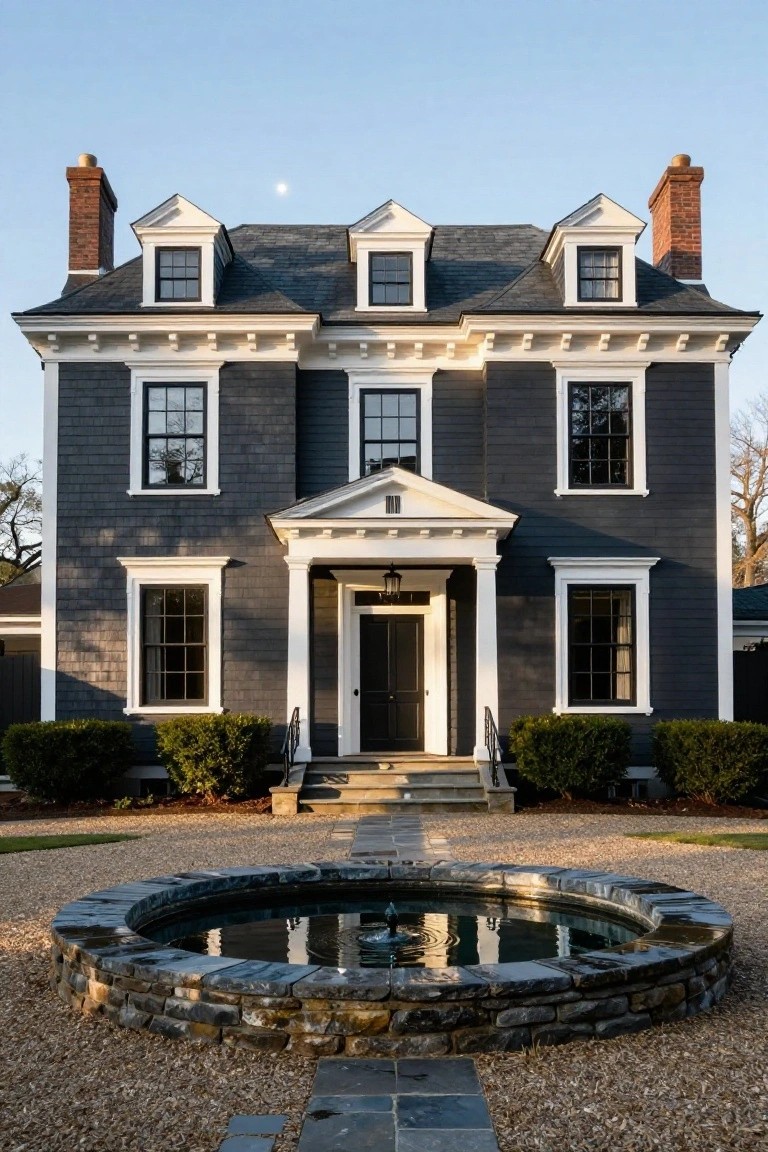
Dark shingle siding in a deep gray covers this colonial house from top to bottom. White trim outlines every window and the wide portico entry. That simple contrast freshens up the classic style. It feels current but still rooted in tradition.
This approach suits bigger homes on open lots. Scale matters. Pair it with black-framed windows and stone steps at the door. Boxwoods along the sides keep things neat without stealing focus.
Timeless White Brick Colonial Facade
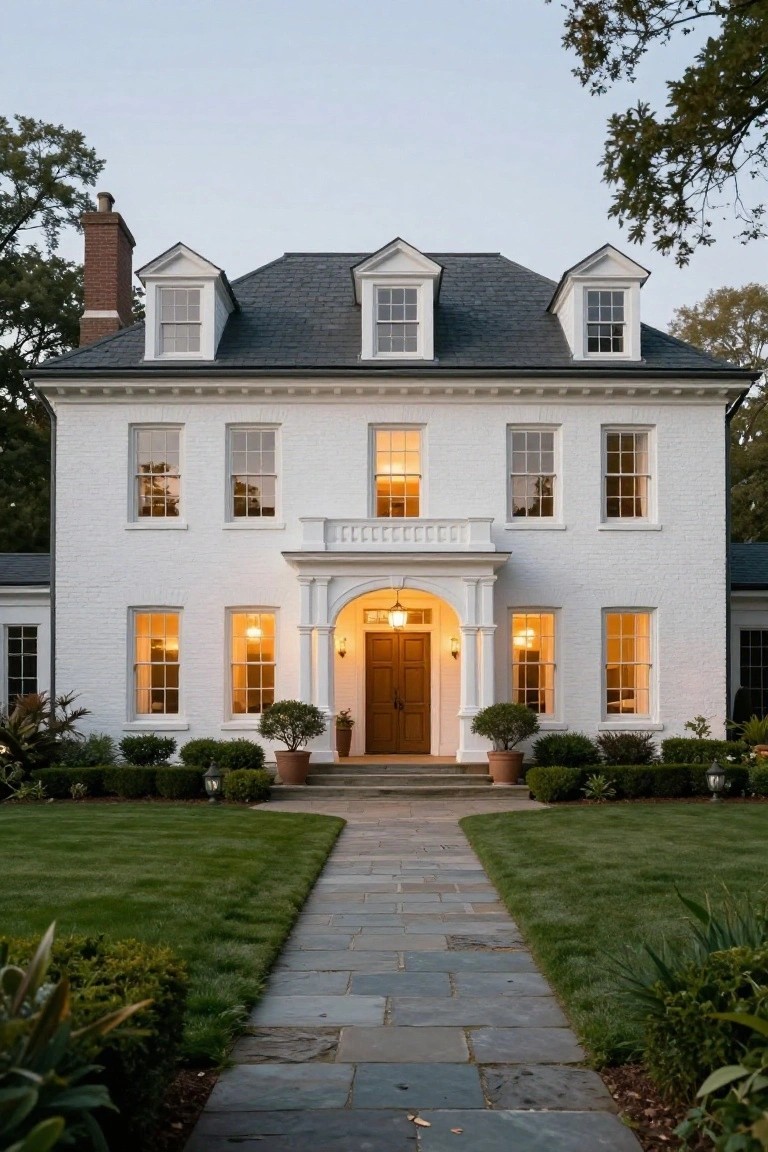
White brick gives this colonial house a crisp, enduring look that feels both historic and fresh. The symmetry pulls it all together. Tall windows line up perfectly across the front. And that portico with its columns frames the entry just right, making the whole place welcoming from the street.
You can pull this off on bigger homes where scale matters. It suits traditional neighborhoods or open lots. Stick to dark slate roofing to contrast the white. Keep landscaping simple so the facade stays the star. One thing. Scale the portico to your door height or it might overwhelm.
Soft Gray Colonial Facades
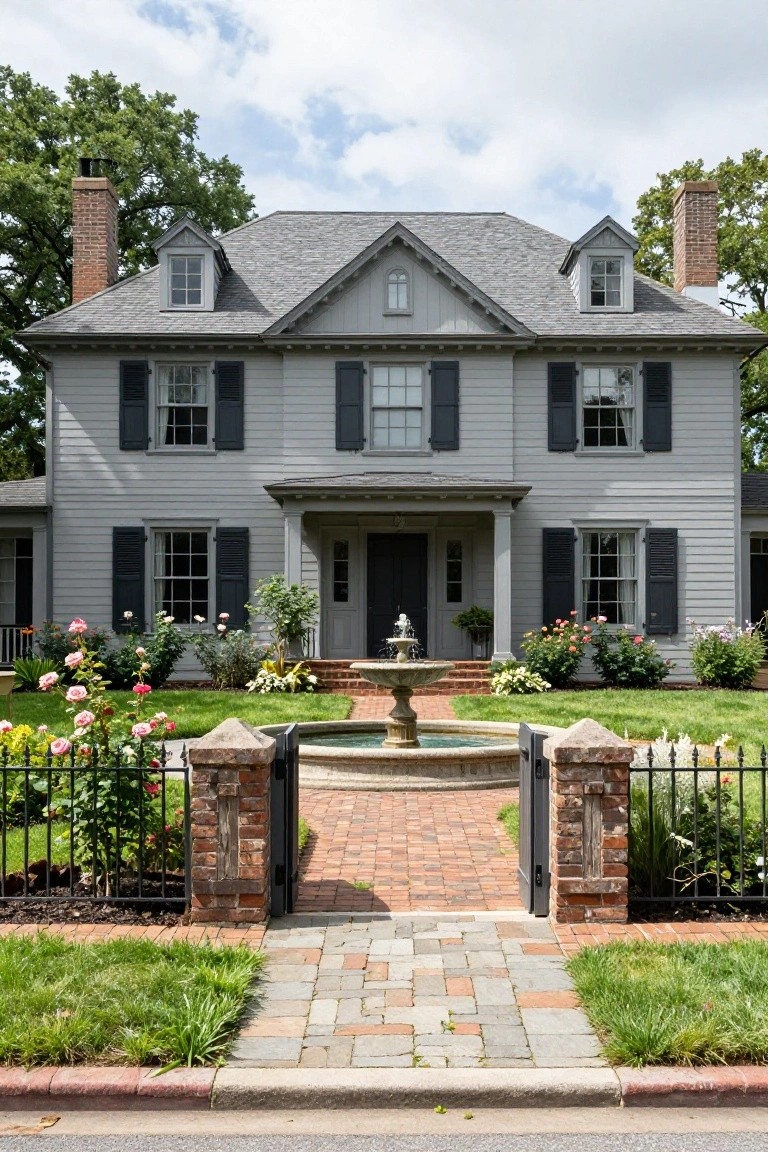
A soft gray siding like this takes the classic colonial shape and makes it feel fresh without losing that traditional charm. The black shutters give just enough contrast to make the windows and front door stand out. Paired with the simple gabled roofline, it keeps the house looking balanced and easy on the eyes from the street.
This look suits bigger homes in older neighborhoods where you want curb appeal that doesn’t shout. Use it on clapboard or shingle-style siding, and tie in brick accents on paths or pillars to ground it. Skip bold colors. It holds up well in humid spots too, staying low-key over time.
Symmetrical Brick Facade Design
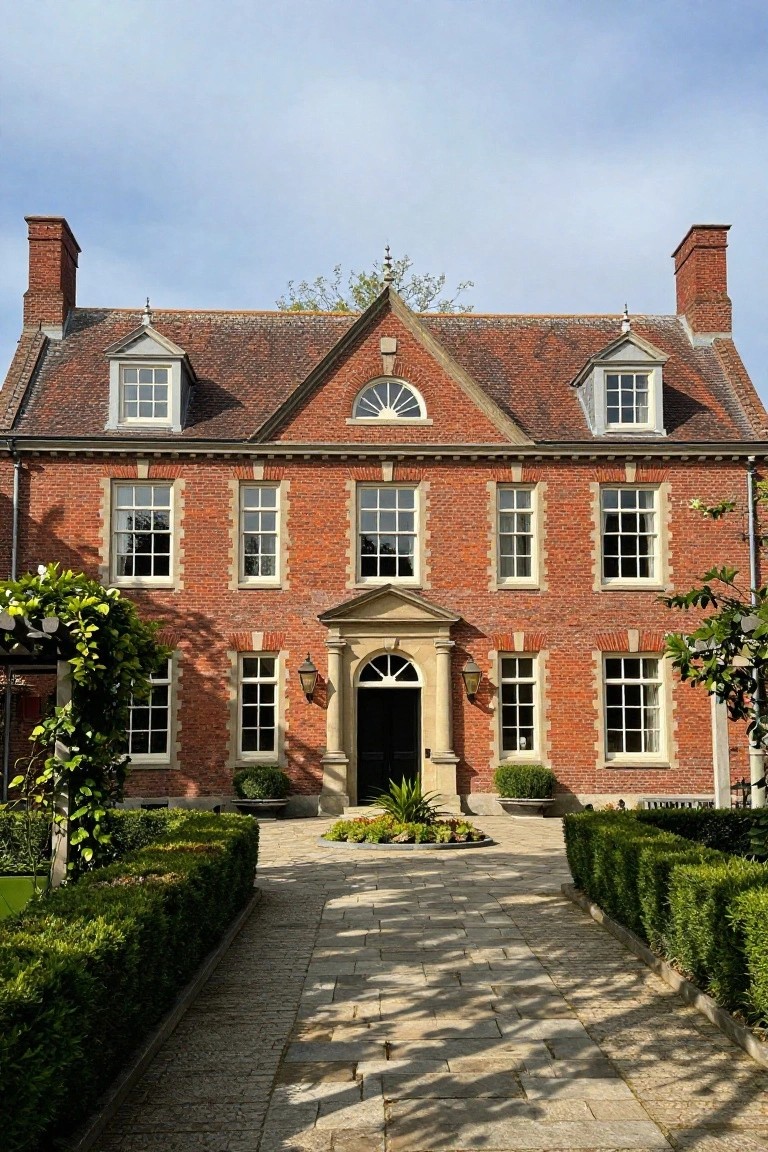
A symmetrical brick facade like this one hits that classic colonial note right away. Red brick walls stack up evenly with matching windows on each side of the door. The pediment over the entry pulls your eye straight in. Boxwood hedges line the path, keeping things neat and formal.
This setup works well for bigger homes on open lots. Line the walkway with low hedges to frame the front without blocking the view. Add lanterns by the door for light at night. It suits older neighborhoods where you want steady curb appeal, not flash. Just keep the brick clean, or it starts looking tired.
Classic Portico Entry
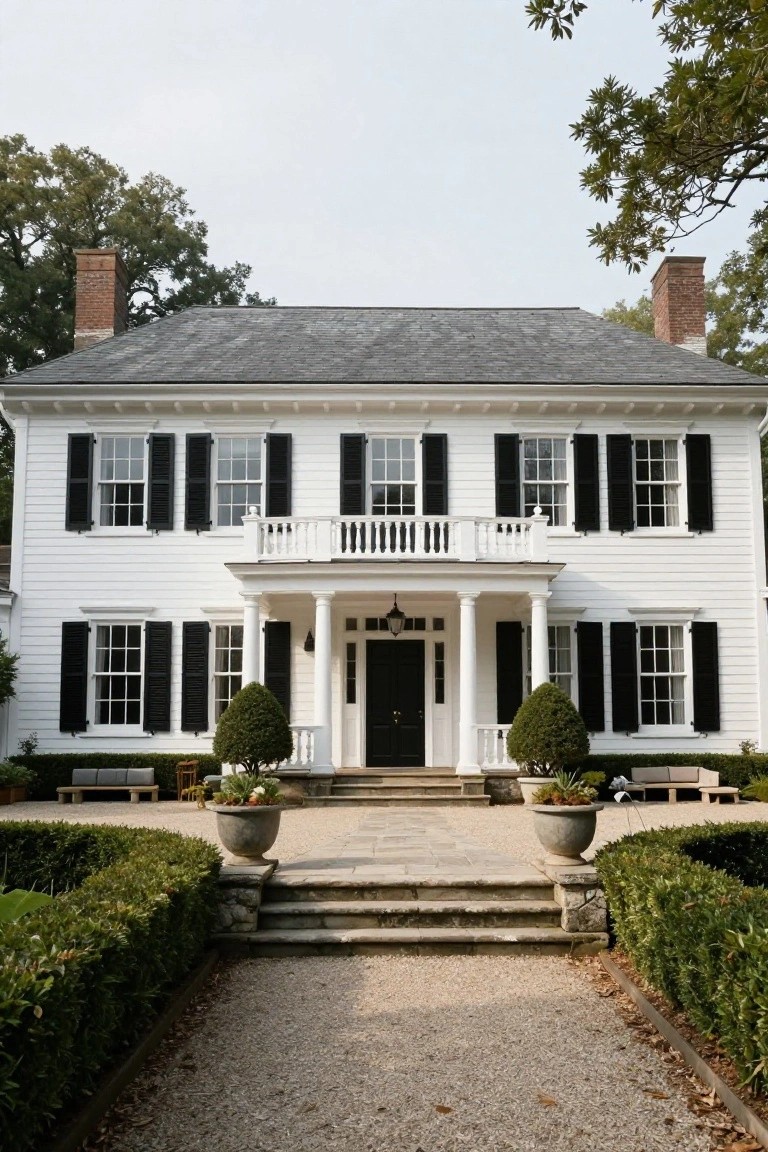
A columned portico like this one frames the front door perfectly. It pulls the eye right to the entrance and gives the whole house a sense of tradition and welcome. The white siding and black door keep things crisp without trying too hard.
This setup shines on bigger colonial homes where you want curb appeal that lasts. Build it with sturdy columns and wide steps, then add a gravel path out front. It suits spots with some trees around, but watch the scale on smaller lots.
Balanced Brick Colonial Facade
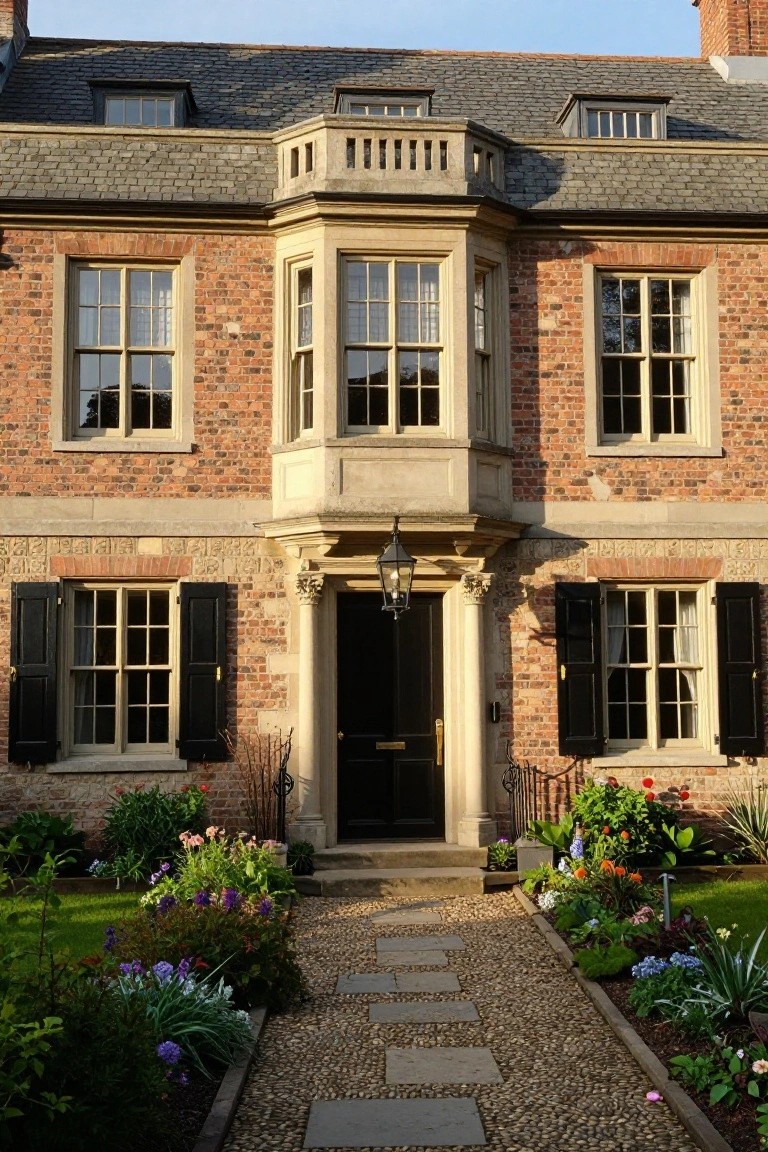
A good colonial exterior like this one relies on even rows of windows across the brick front to make the house feel steady and put-together. That central bay window in stone breaks up the brick just enough without messing up the symmetry, and the entry sits right in the middle where it belongs. Folks notice the balance first. It gives the place a calm, established look.
Try this on bigger homes with room for that kind of frontage. Match the brick color to your area’s style, then use stone or lighter trim for the key spots like the bay and door surround. A simple path pulls it all forward. Skip busy details… let the shape do the talking.
Symmetrical Stone Facade Design
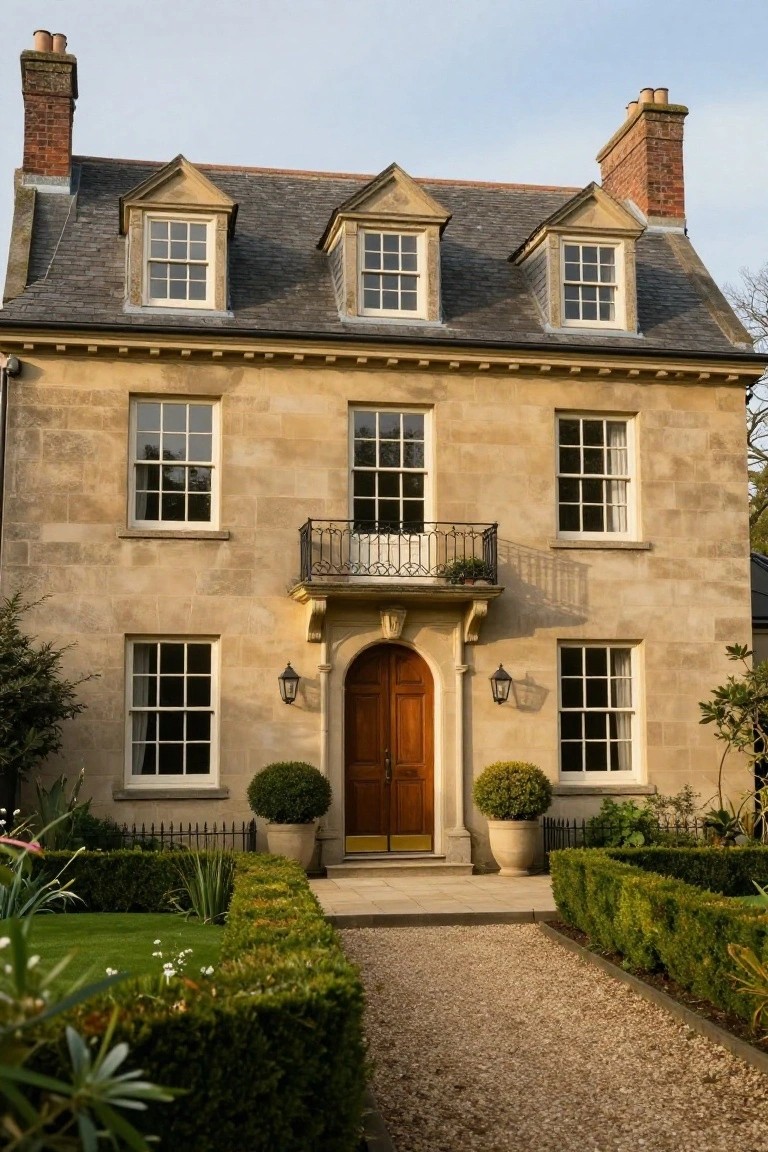
A symmetrical facade like this one uses honey-colored stone to give a colonial house real presence. The balanced windows across three levels, plus dormers up top, create that even rhythm people notice first. And the centered entry with its arched surround pulls everything together without trying too hard.
This look suits bigger homes in rural or suburban spots where the stone can shine against green lawns. Keep landscaping simple, like those clipped boxwoods here, so the architecture stays the star. Skip busy plantings that fight for attention.
Classic Columned Porch on a Colonial Facade
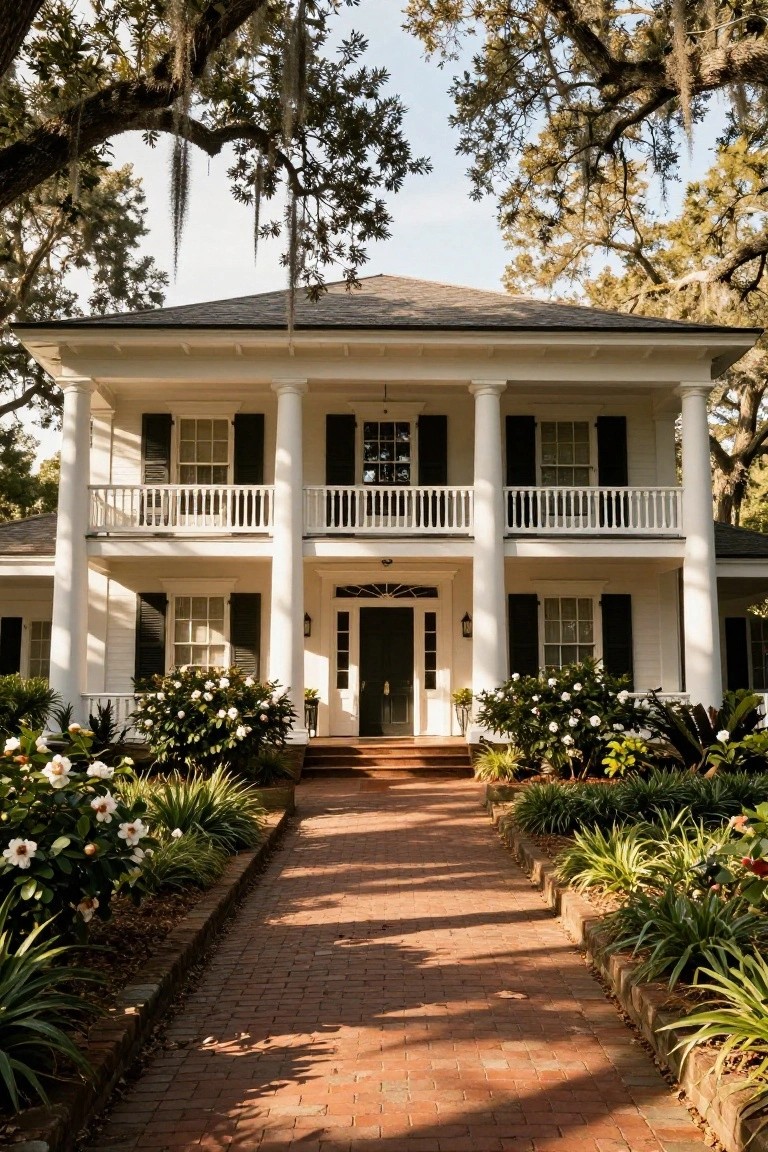
Tall white columns like these carry a lot of the weight in making a colonial house look grand and settled. They frame the front door and balcony just right, pulling the eye up to show off the full two stories without any extra fuss. That symmetry feels balanced and sure of itself, especially with black shutters marking the windows.
This kind of porch setup shines on bigger homes in warmer spots where oaks and moss hang around. Line the entry path with brick and tuck in some white gardenias or similar low shrubs along the edges. It keeps the focus on the house but softens the approach a bit. Just make sure the columns are properly scaled so they don’t overwhelm a smaller lot.
Climbing Roses Over the Entry Door
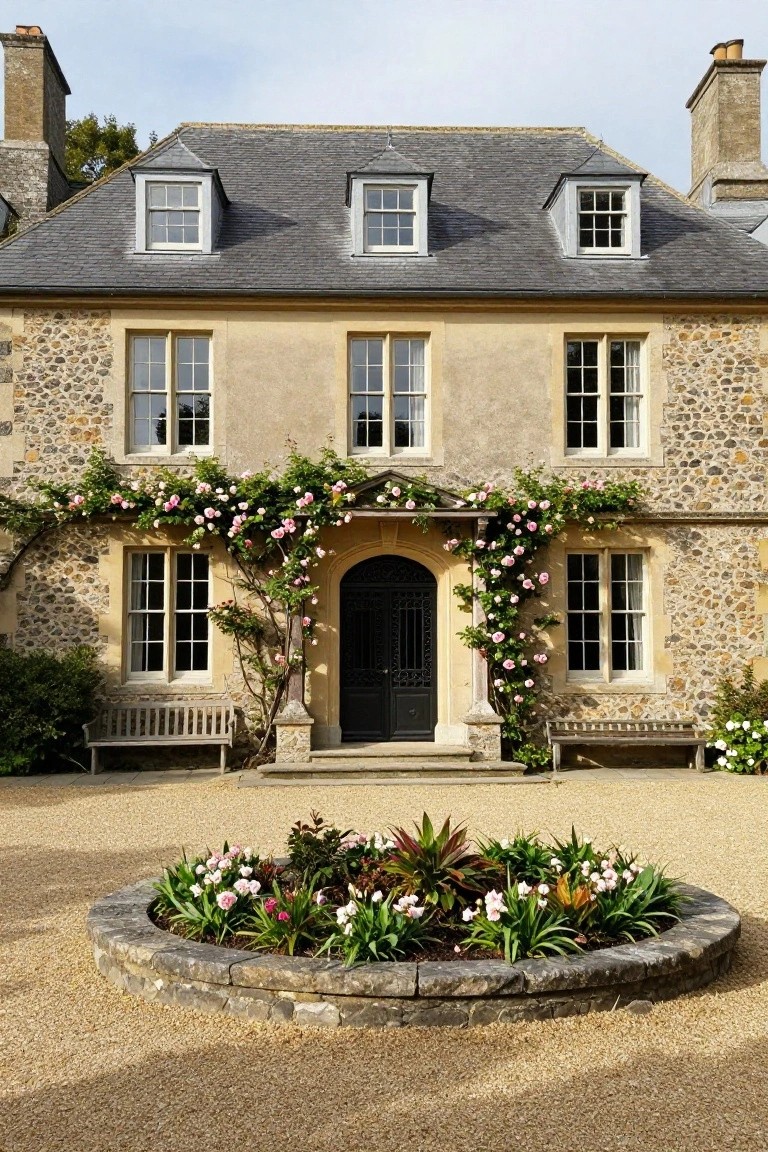
Climbing roses draped over the front door give this colonial house a soft, welcoming feel. The pink blooms trail down from an archway above the black door, softening the mix of stone walls and beige stucco. It pulls your eye right to the entrance without much fuss.
This works well on larger homes with simple facades. Plant rambling roses that bloom a lot, train them up a metal arch or wood support, and keep the base pruned. It suits gravel driveways or paths since the plants won’t mind low water once established. Just pick tough varieties for your zone.
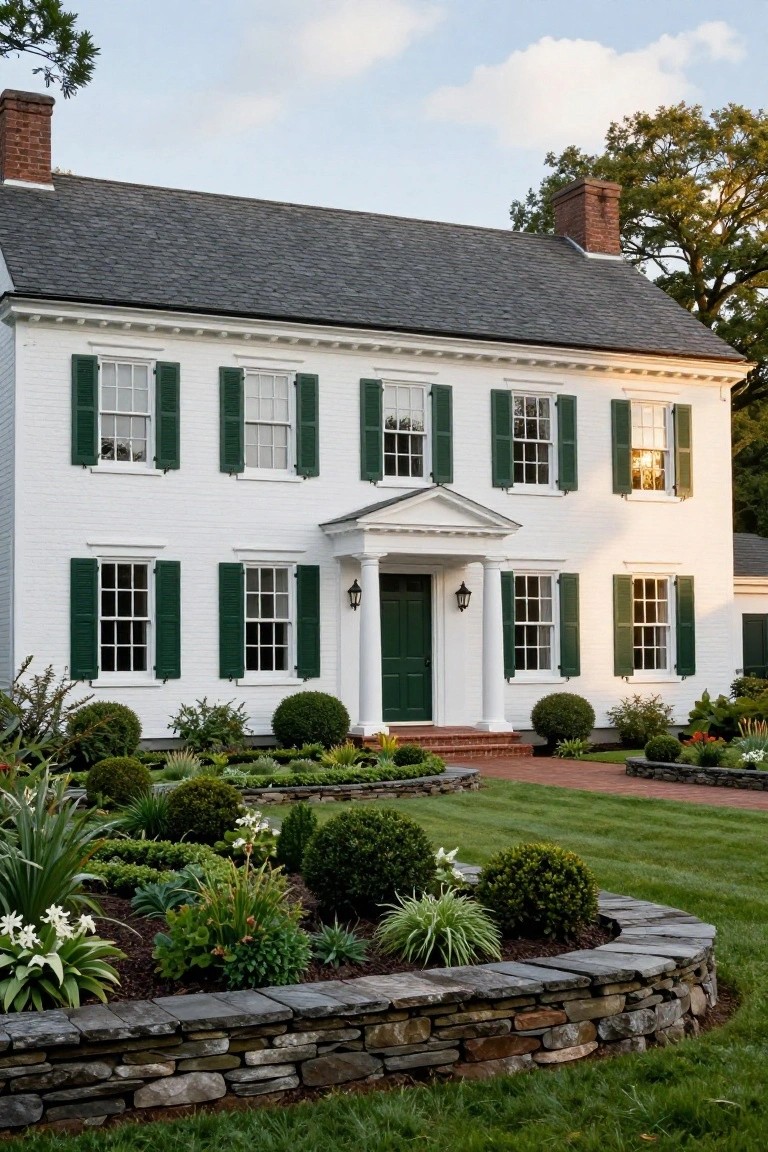
Red Brick Facade with Dark Window Frames
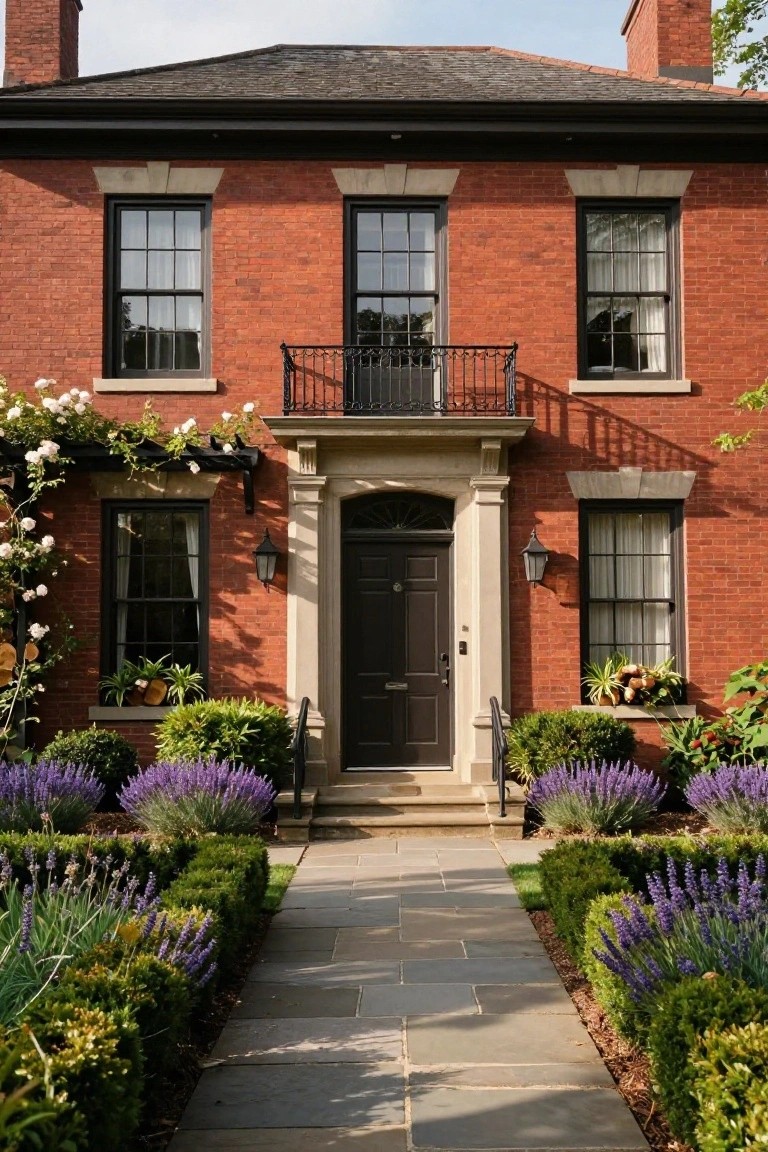
Red brick has long been a go-to for colonial homes. It gives that solid, enduring look folks associate with older neighborhoods. What makes this one stand out is the black frames around the windows and door. They sharpen the edges and let the brick’s warm color take center stage. Up top, the iron balcony railing repeats that dark note without overdoing it.
This setup works best on bigger two-story houses where symmetry matters. Line up the windows just right, and add a straight slate path out front to lead eyes to the entry. It keeps things formal yet easy to maintain. Skip busy details on the trim though. Let the brick and black do the talking.
Sunny Yellow Colonial Exterior
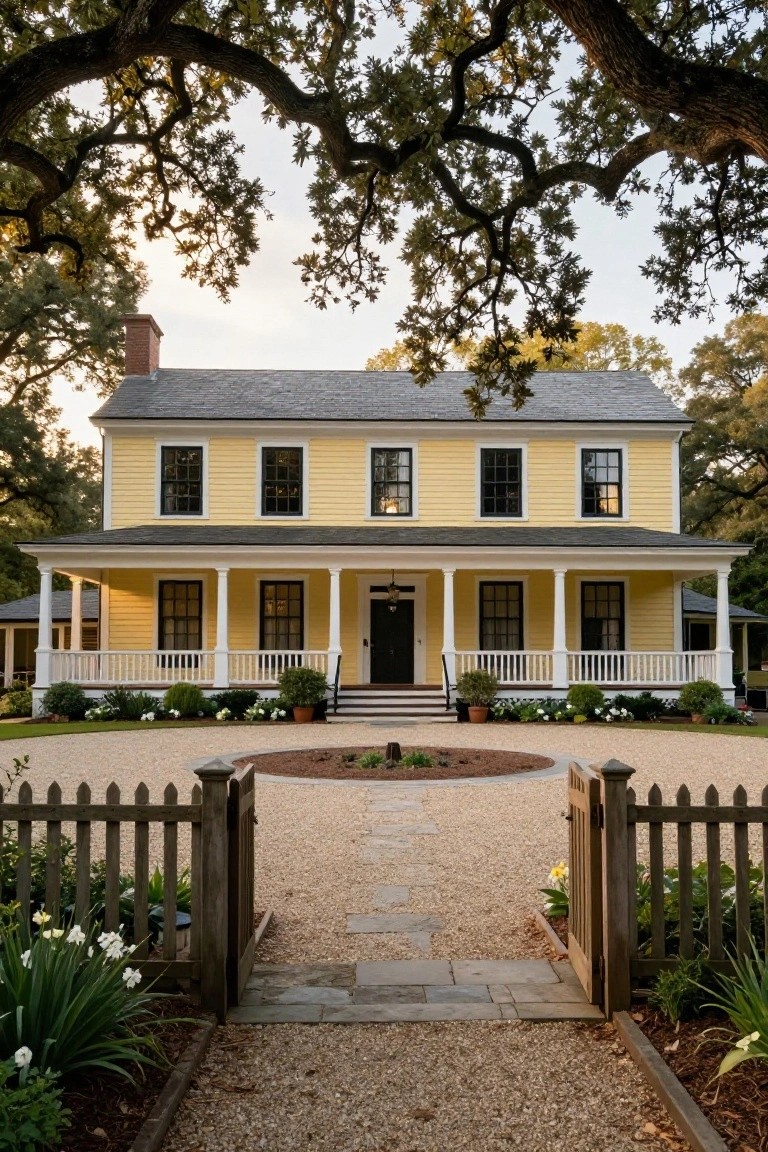
A classic colonial house like this one really comes alive with sunny yellow siding. It keeps the traditional shape but adds a cheerful warmth that makes the place feel more approachable right from the street. Black window frames give it sharp definition, and white porch columns keep things clean and balanced.
This look suits bigger homes on larger lots, especially where trees frame the view. Use gravel for the driveway to echo the casual vibe, and add a simple picket gate at the entry. Skip it on tiny lots though. It can overwhelm small spaces.
Navy Blue Siding on a Colonial House
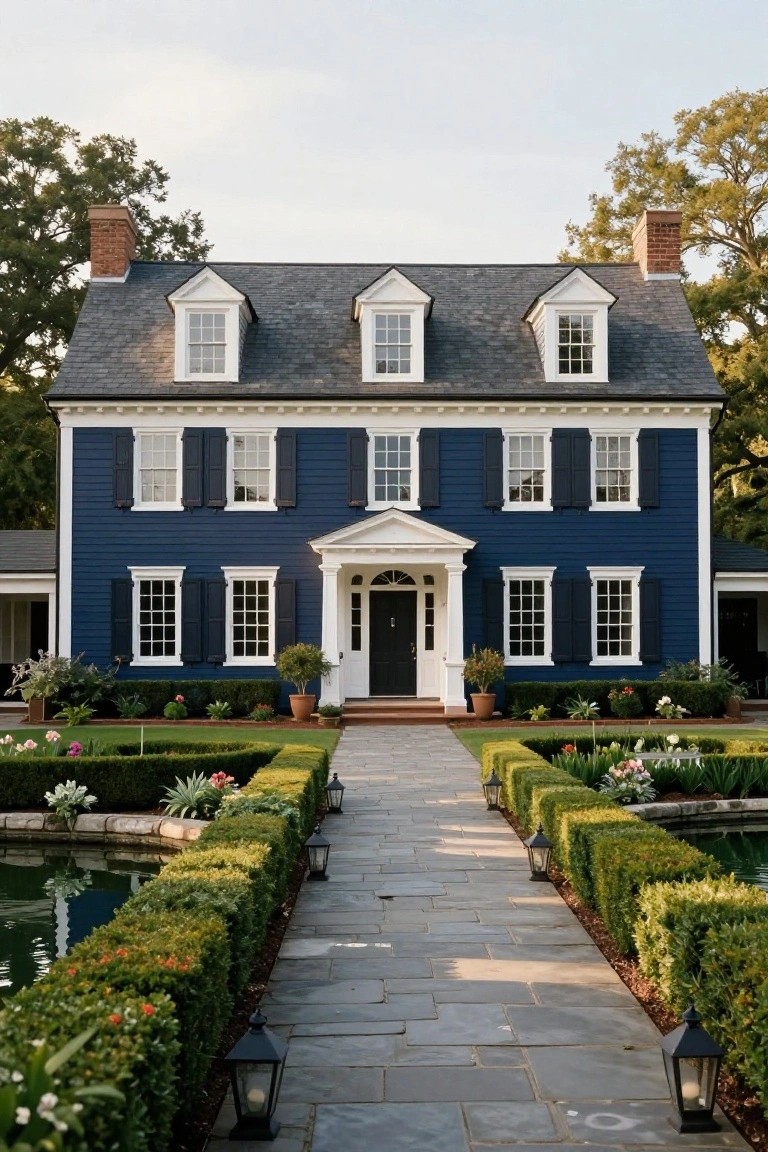
A deep navy blue paint job turns a traditional colonial house into something that really stands out. The color picks up on classic architecture like the gabled roof and symmetrical windows without feeling too trendy. White trim around the doors and edges sharpens everything up. Brick chimneys add a bit of warmth too. It’s a simple change that gives the whole front a fresh, confident look.
This works best on larger homes where the bold color won’t overwhelm. Pair it with crisp white accents and keep landscaping neat, like boxwood hedges along a stone path. It suits suburbs or country spots with some trees around. Just make sure the paint is high-quality exterior grade. It holds up well and keeps the house looking sharp year-round.
Classical Columned Portico
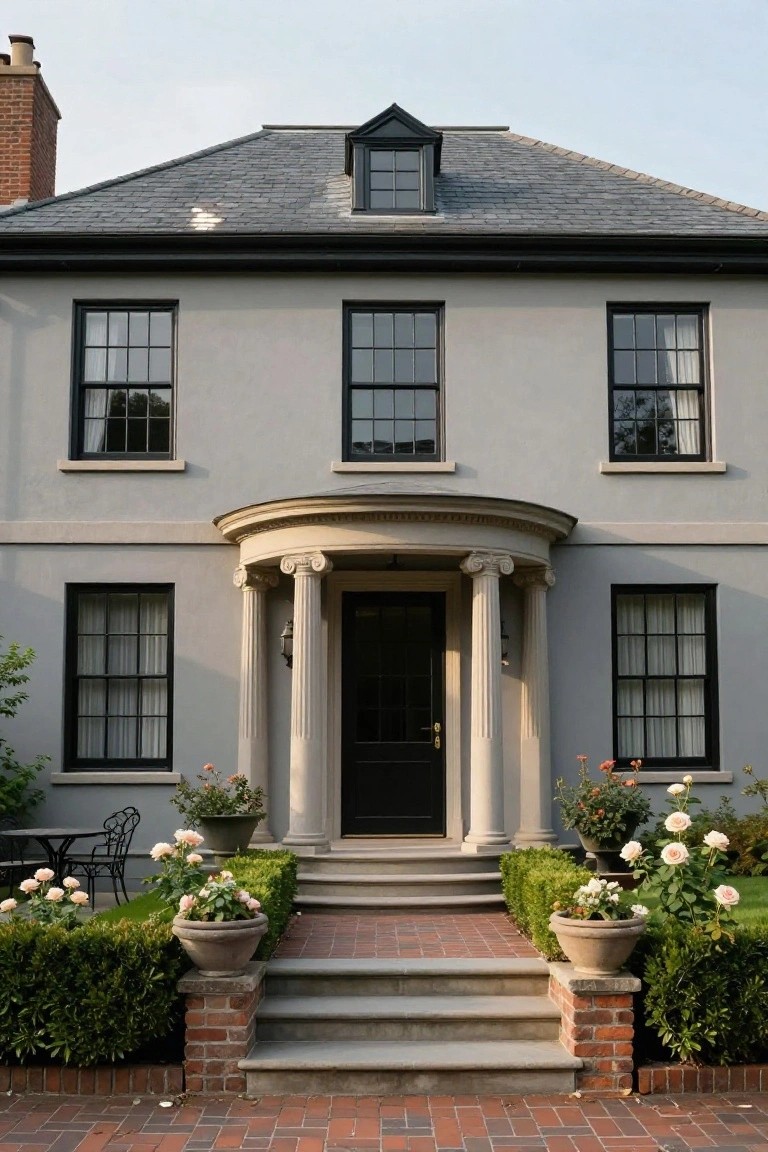
A columned portico like this one frames the front door with clean lines and a bit of height. It pulls classical details into a modern colonial look, making the entry feel grand but not fussy. Those fluted columns against the gray siding really draw the eye right where you want it.
This setup suits bigger homes with some front yard space. Pair it with wide brick steps and low plantings at the base to keep things balanced. It adds welcome without much upkeep, though scale it to your house so it fits naturally.
Classic Colonial Wraparound Porch
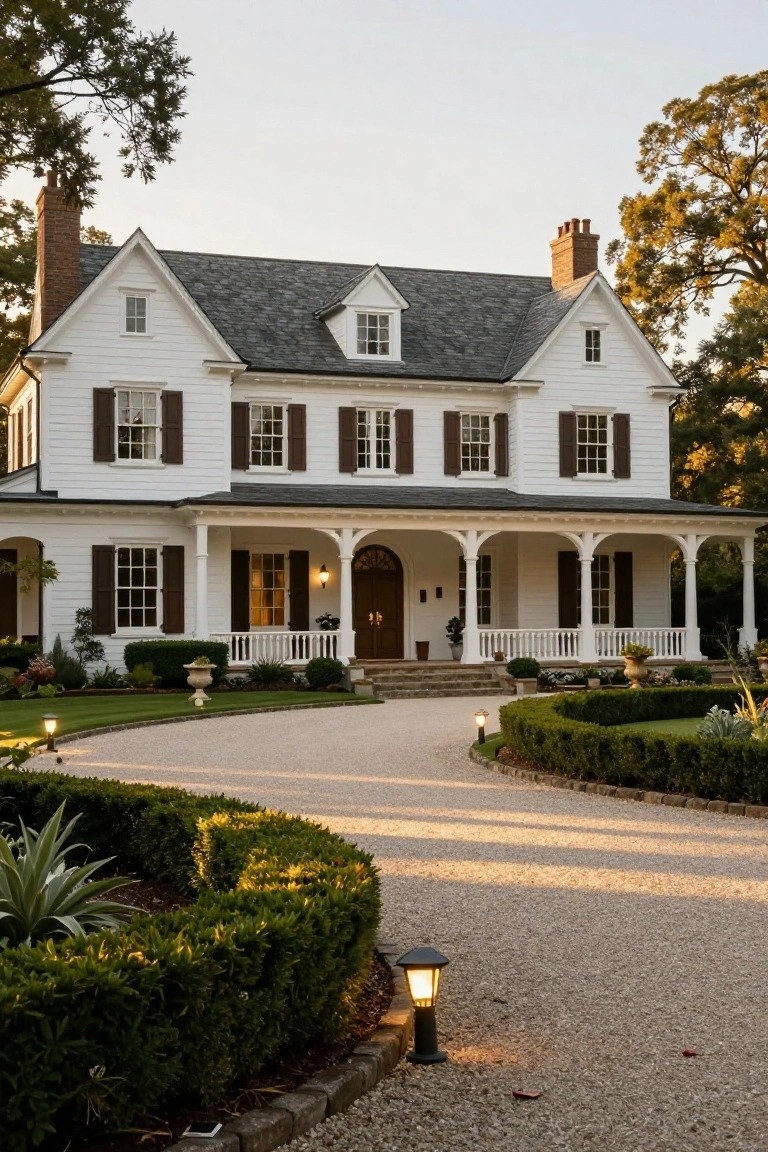
A wraparound porch like this one takes a large colonial house and makes it feel more approachable right from the street. The white siding and dark shutters give it that crisp traditional look, while the porch stretches across the front and side, wrapping the house in a layer of hospitality. It’s a simple way to add scale without overwhelming the architecture.
This design works best on bigger homes with some yard space, where the porch can connect to a driveway or garden path. Keep the columns sturdy but not too fancy, and add a few potted plants near the steps for extra life. It suits family homes in suburban or rural spots, but watch the maintenance on those rails if you’re in a rainy area.
Frequently Asked Questions
Q: How do I pick colors that make my Colonial mansion pop like those designs?
A: Stick to crisp whites or soft grays for the siding. Paint the trim a contrasting shade like black or navy. That crisp setup draws the eye and nods to tradition without trying too hard.
Q: Can I add modern touches to a classic Colonial exterior?
A: Swap in black-framed windows against white clapboard. It sharpens the look while keeping the symmetry intact. Balance it out so the old charm wins.
Q: What’s a quick fix for curb appeal on my big Colonial house?
A: Upgrade the front porch columns. Fresh white paint and simple brackets transform the entrance fast.
Q: Which plants frame a Colonial mansion best?
A: Plant boxwoods in straight lines along the walk. Add hydrangeas near the foundation for soft color bursts. They echo the house’s order and stay low fuss.
