

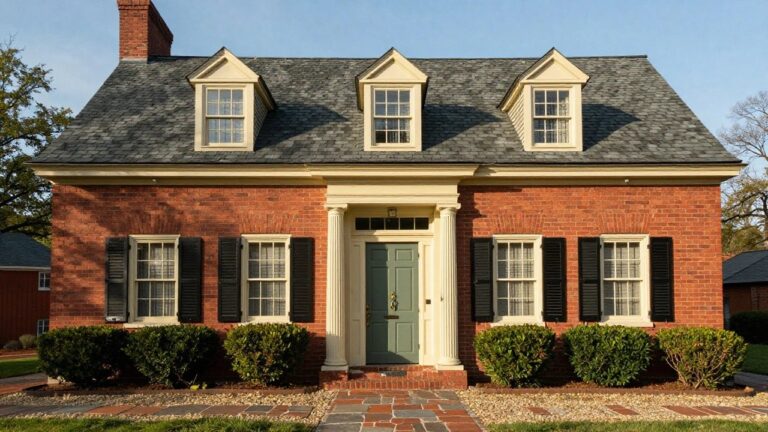
I’ve noticed how colonial houses often hold onto that classic symmetry, but their facades can start to feel heavy or dated without some thoughtful updates to materials and rooflines. When friends pull into my driveway, they always comment first on the entry porch and how the siding catches the light from different angles. A few years ago, I tested black trim against the beige brick on a colonial neighbor’s place, and it grounded the whole front without overwhelming the proportions. These kinds of changes build real curb appeal that lasts through seasons, not just looks good in photos. Certain tweaks really shift how a home reads from the outside.
Frame the Entry with Columns and Pediment
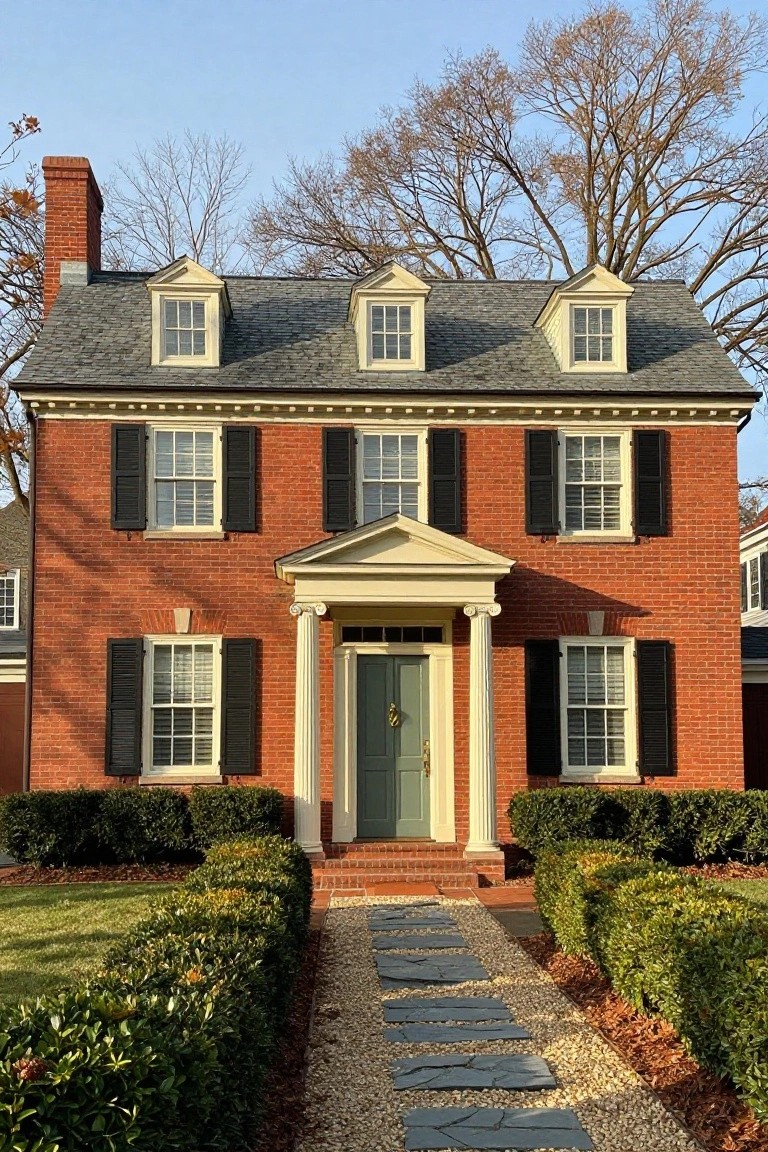
A columned portico like this one takes a basic front door and makes it the star of the house. The white pediment and paired columns sit right over the door, pulling the eye up and creating that balanced colonial look. On brick it stands out clean and sharp, without much fuss.
This setup suits two-story homes with a centered entry already in place. Brick or stone facades handle the white trim best, so it doesn’t look slapped on. Add boxwoods along the sides for some structure, and keep the path simple with flat stones. Skip it if your door sits off to one side, though.
Entry Pilasters for a Balanced Look
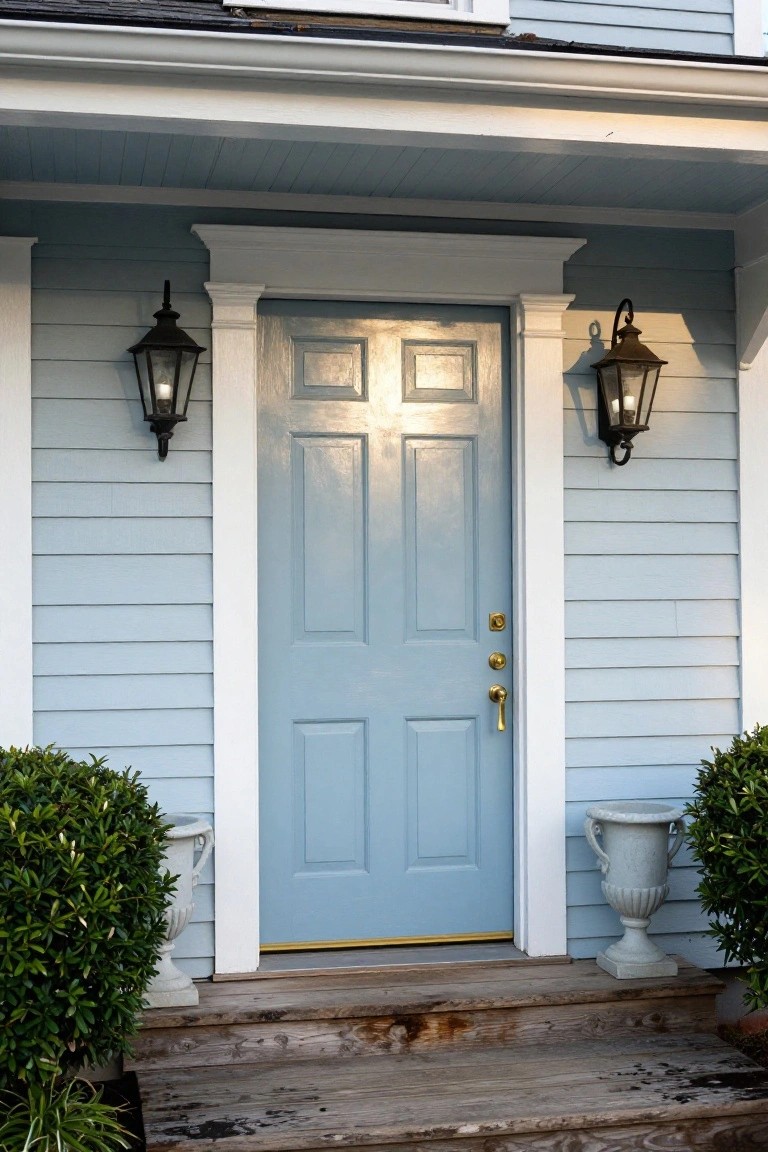
White pilasters flanking the front door add real structure to this colonial exterior. They stand out nice against the light blue siding and make the blue paneled door feel like the main event. It’s a simple way to give the whole facade more definition without changing much else.
These work best on covered porches or steps where they protect the trim. Paint them crisp white to contrast siding colors, and pair with lanterns for evening light. Traditional homes pull this off easiest, but watch scale on smaller entries so they don’t overwhelm.
Red Front Door on White Siding
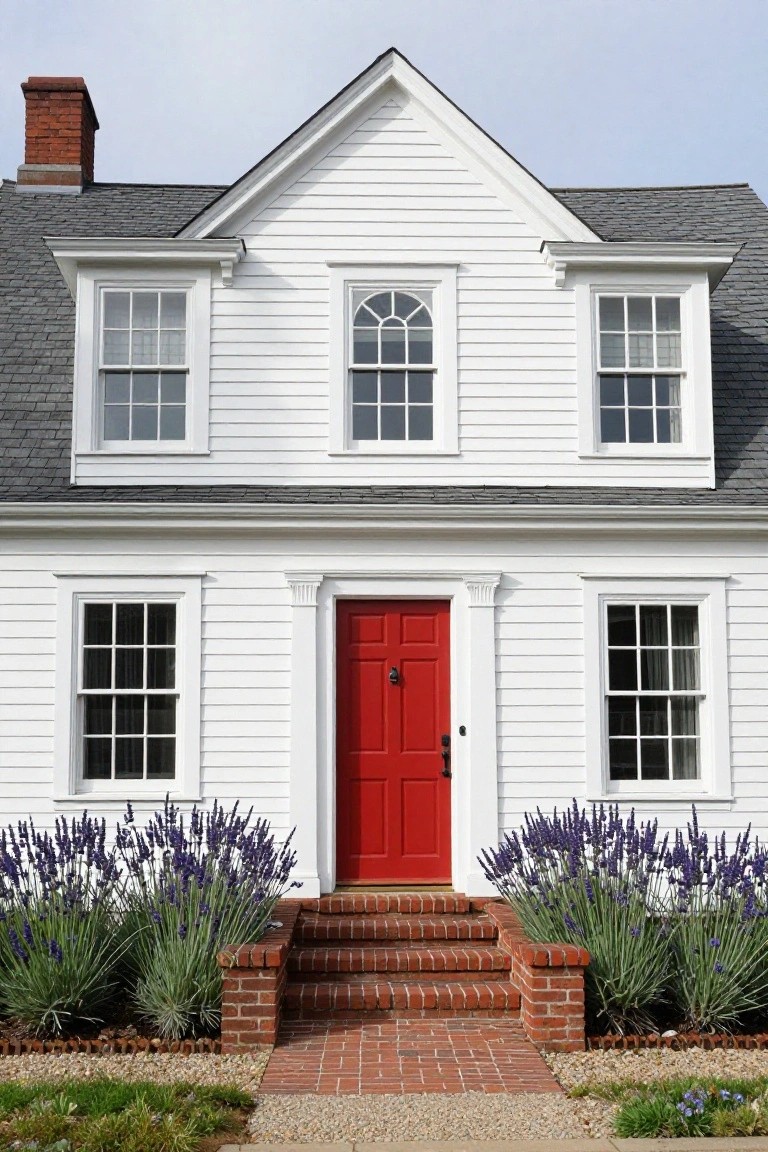
A bright red door like this one pulls the eye right to the entry on a classic white colonial house. It adds a simple pop of color against all that clean siding, without messing up the traditional look. Folks notice it from the street, and it makes the place feel more welcoming.
This works best on older style homes that need a little life up front. Just paint a solid wood or fiberglass door in a true red, maybe with black hardware for contrast. Flank the steps with low plants like lavender to keep things tidy. Skip it if your house has too much color already.
Frame Porch Columns with Climbing Roses
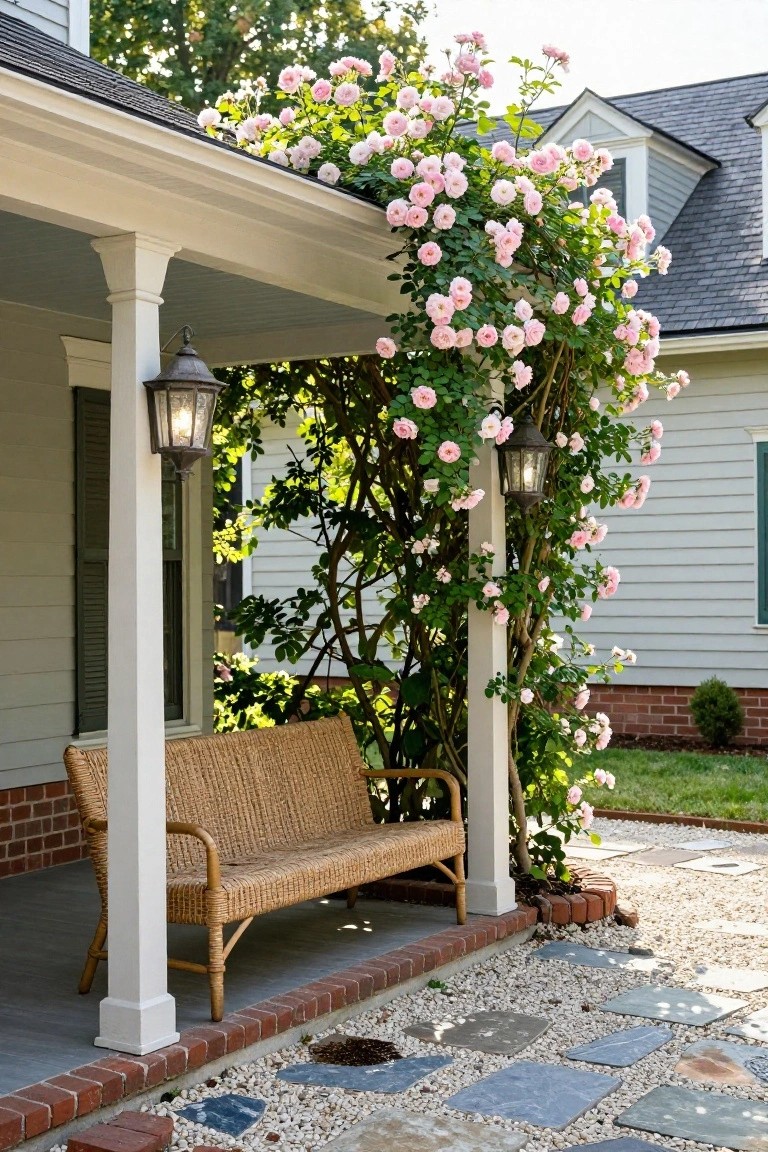
White columns on a Colonial porch give that clean, classic look. But draping them with climbing roses takes it up a notch. The soft pink blooms here spill over the posts, adding color and a bit of romance without much fuss. It keeps the architecture sharp while feeling more lived-in and welcoming right from the street.
Pick an everblooming variety like ‘New Dawn’ that won’t take over. Train the vines loosely up the columns with ties at first, then let them go. This works great on traditional homes with covered porches. Just trim back in late winter to keep things tidy, and watch for aphids on the new growth.
Brick Base with Clapboard Siding
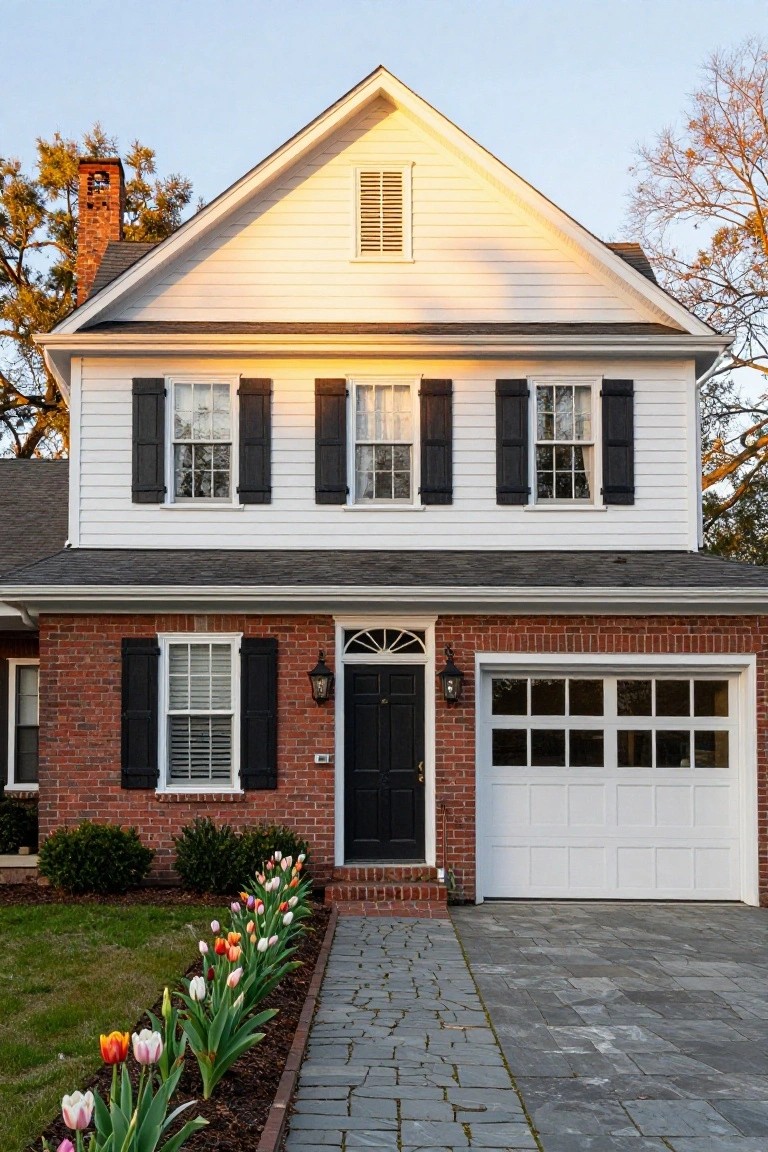
A solid brick lower level paired with white clapboard siding up top gives this Colonial house a classic, balanced look. The brick adds weight and tradition to the foundation and garage area. Clapboard keeps the upper story bright against the sky. Black shutters and trim tie it all together neatly.
This setup suits most suburban homes with two stories and a gable roof. It boosts curb appeal right away and holds up well over time. Brick handles weather fine, while siding stays easy to paint. Add a flower bed edging the walk like those tulips here, and it feels even more put-together.
Columns Frame a Welcoming Entry
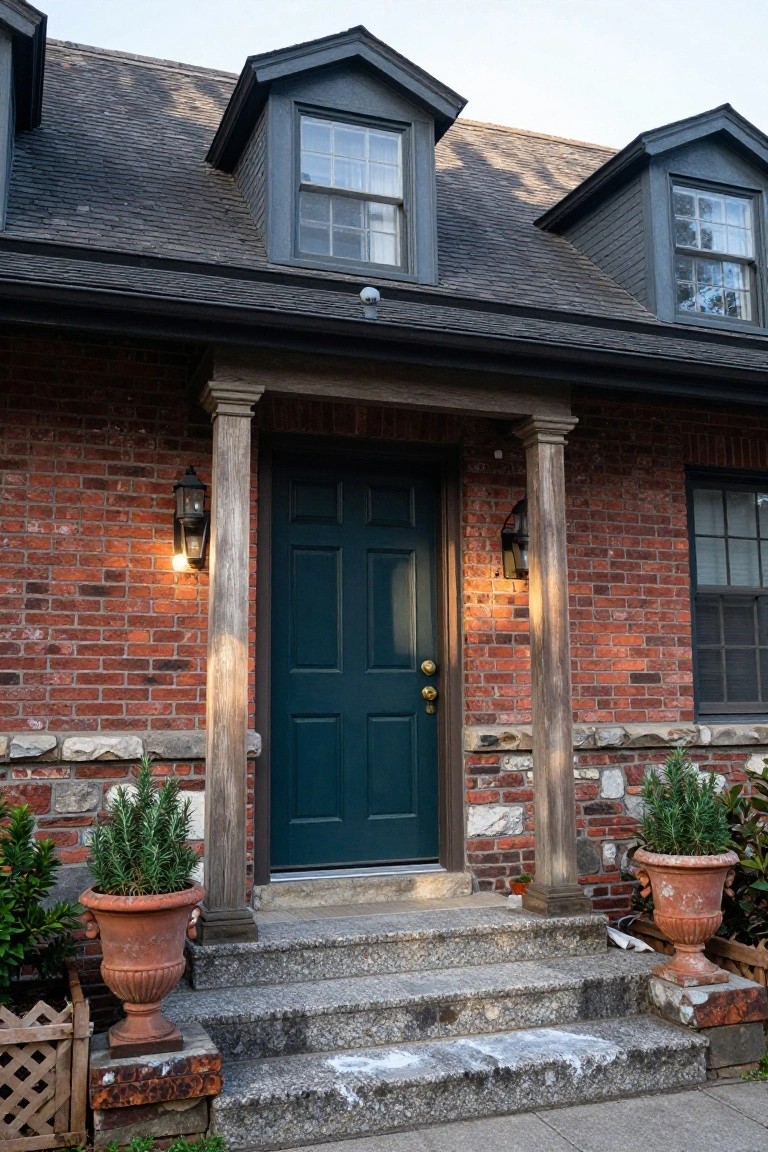
A pair of sturdy wooden columns supports a small roof over the front door here. They give this brick house that solid colonial feel without overdoing it. The dark green door sits right in the middle, pulling your eye straight to the entrance. Paired with lanterns on each side, it turns a simple doorway into something with real presence.
This setup works best on homes with brick or stone facades where you want a touch of tradition. Keep the columns painted or stained to weather nicely, and add matching lights for evenings. It suits older neighborhoods or any place aiming for curb appeal that lasts. Just make sure the steps below are wide enough to match.
Soft Yellow Siding with Blue Shutters
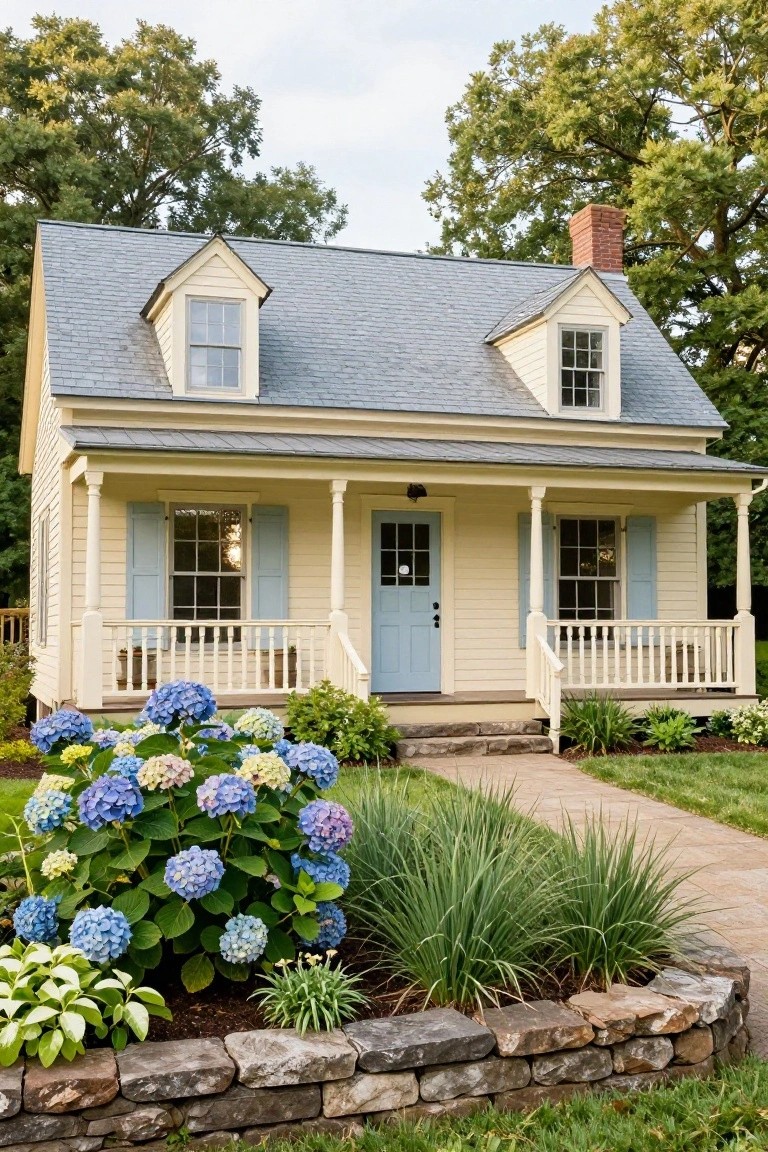
A pale yellow siding like this gives a Colonial house a fresh, sunny look without going too bright. Paired with crisp blue shutters and a matching front door, it creates nice contrast that makes the facade pop against green trees and grass. The color choice keeps things cheerful and classic, especially on a small cottage-style home with a porch.
This setup works best on homes in shady spots or northern climates where you want warmth from the yellow. Pick a buttery shade of yellow for the clapboards, then go for a medium blue on shutters to tie in sky or hydrangea blooms nearby. Avoid stark whites, though. They can make the house feel too plain next to the yellow.
Window Boxes Add Simple Charm
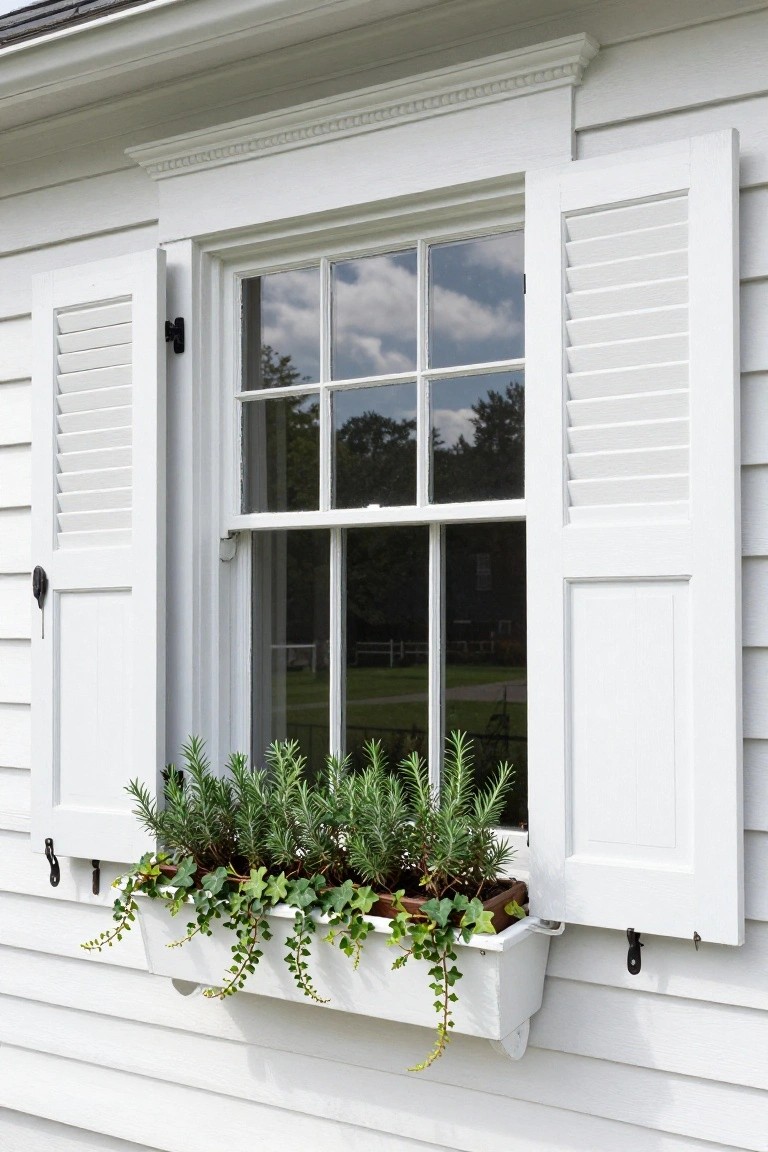
Window boxes like this one, tucked under a classic multipane window, give a plain white house that extra bit of personality. Filled with rosemary sprigs and trailing ivy, they soften the sharp lines of the clapboard siding and shutters without much effort. It’s a small touch that nods to old colonial style, making the front feel more welcoming right away.
These work best on homes with balanced windows, especially double-hungs. Pick low-water plants that trail over the edges, and mount a plain white box to blend in. They suit any colonial revival house… just keep an eye on watering in hot spells, or the greenery fades fast.
Create a Covered Porch Entry
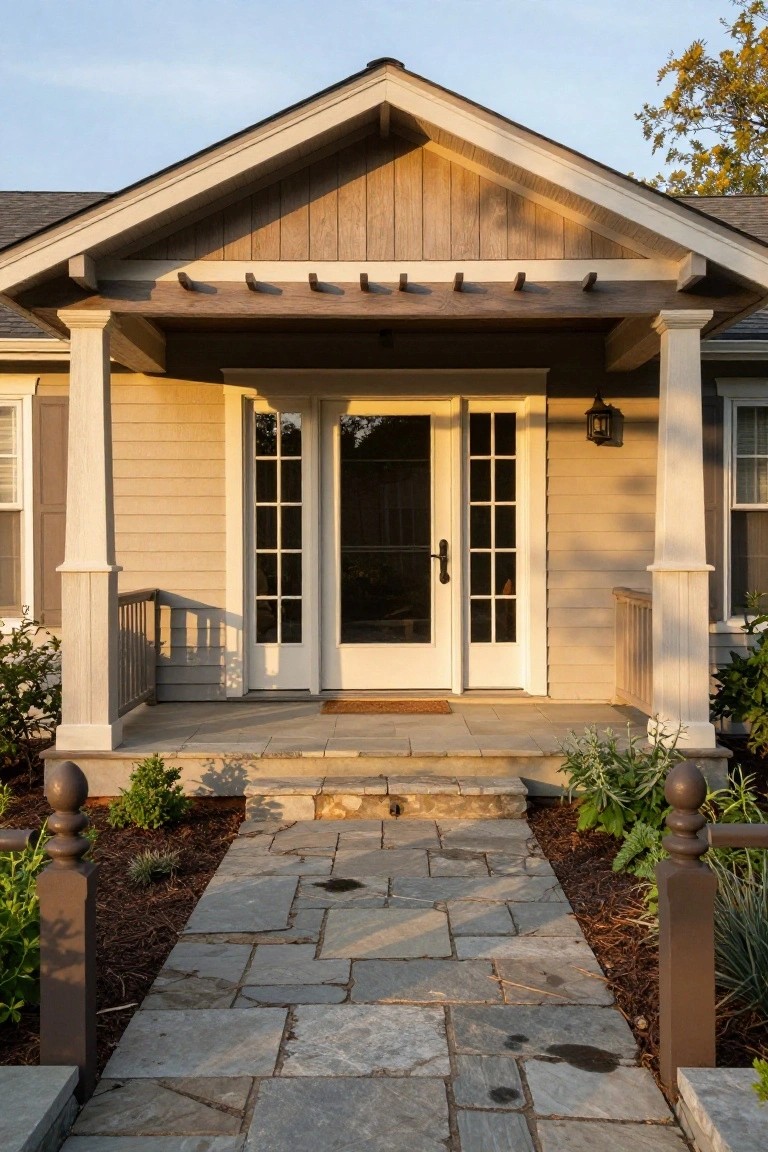
A covered porch right over the front door does a lot for a Colonial house. It pulls the eye straight to the entrance with those simple columns and wood beams overhead. This setup makes the facade feel balanced and gives some shelter on rainy days. The beige siding and white trim keep it clean without much fuss.
Put this on homes where you have room out front. Line the porch with a stone path like the flagstone one here to guide people in. It suits traditional neighborhoods best. Just make sure the roof line matches your main gable so it doesn’t stick out too much.
Flank the Front Door with Matching Urn Planters
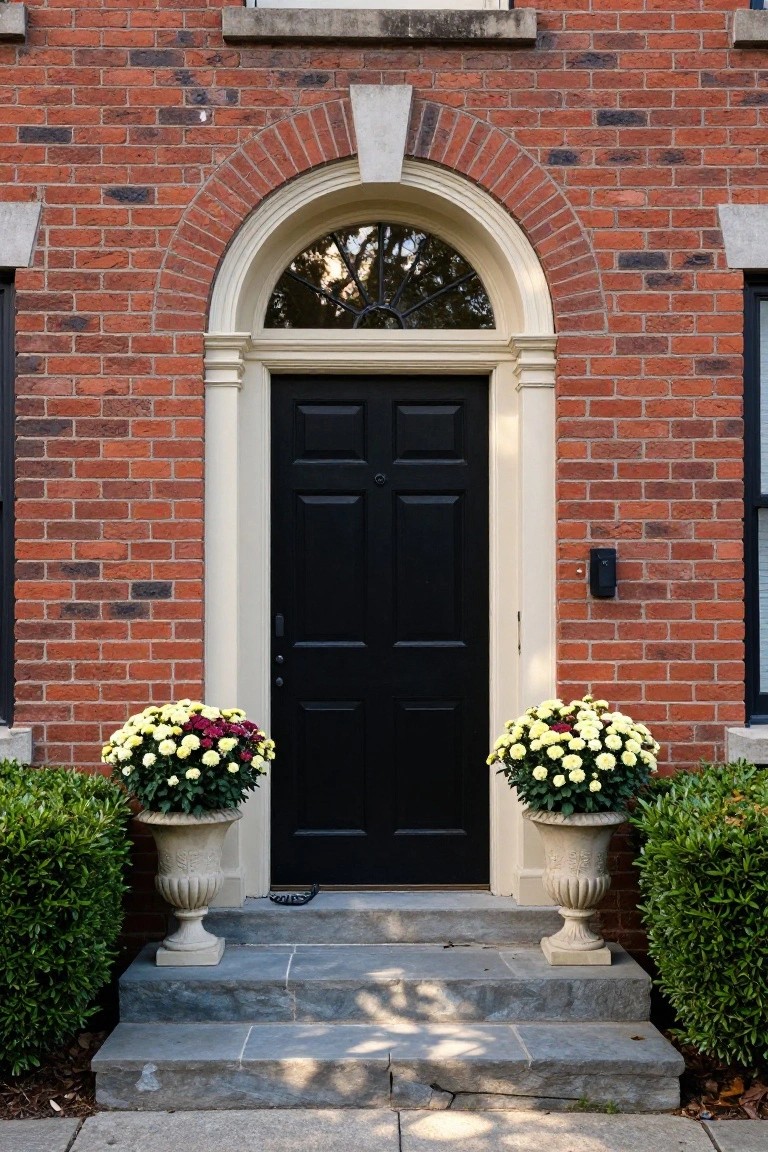
One simple way to boost curb appeal on a colonial house is to place a pair of urns right on either side of the front door. These tall stone urns filled with blooming flowers like mums add a touch of color and formality without changing the architecture. The symmetry pulls the eye straight to the entry. It makes the whole facade feel more put-together and welcoming.
This works best on brick homes with steps leading up to a classic door setup. Pick seasonal plants that match your door color. Black doors pair nicely with yellow or pink blooms. Keep the urns the same height and style so they don’t compete with the house. On smaller entries it might feel too much so scale them down a bit.
Copper Flashing on Roof Details
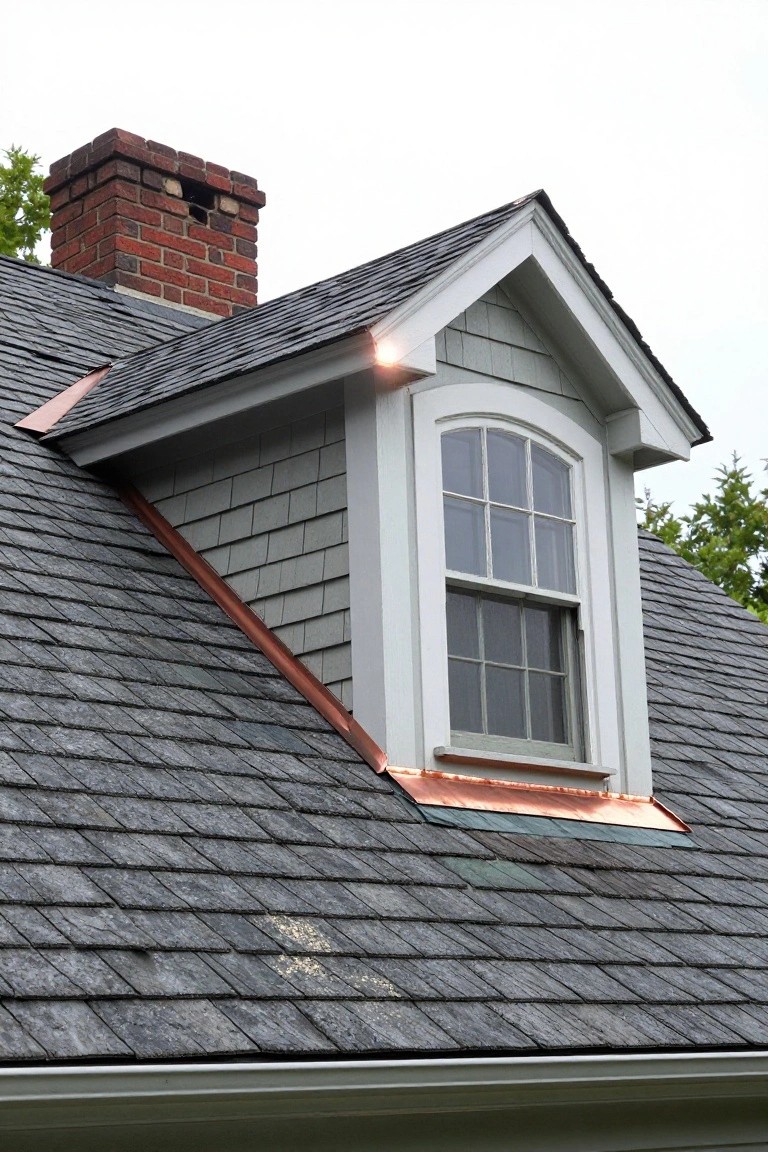
One simple way to give a colonial roof some extra character is copper flashing around dormers and chimneys. In this setup, the bright copper strip along the dormer apron and valley catches the light now, but it will turn to that nice green patina over time. It fits right in with dark shingles and brick without overpowering the look.
You can add it to roof valleys, dormer bases, or even chimney saddles on older homes or new builds aiming for that classic feel. It works best where you want subtle shine that ages well. Just make sure it’s installed tight to keep water out, or you’ll have headaches later.
Recommended Products

Item Description: Endurathane Double Raised Pilaster w/ Attached 14 1/4" Plinth, 8"W x 96"H x 2 3/4"P, Plinth Can Be Trimmed Up to 11 1/4", High Density Polyurethane, Factory Primed White, Sold Each

Item Description: Endurathane Double Raised Pilaster, 7"W x 87"H x 2 3/8"P, Plinth Can Be Trimmed Up to 12" High Density Polyurethane, Factory Primed White, Sold As A Pair

Item Description: Endurathane Fluted Pilaster w/ Attached 13 3/8" Plinth, 5"W x 90"H x 2"D, Plinth Can Be Trimmed Up to 10 3/8", High Density Polyurethane, Factory Primed White, Sold As A Pair
Highlight the Entry with a Red Door
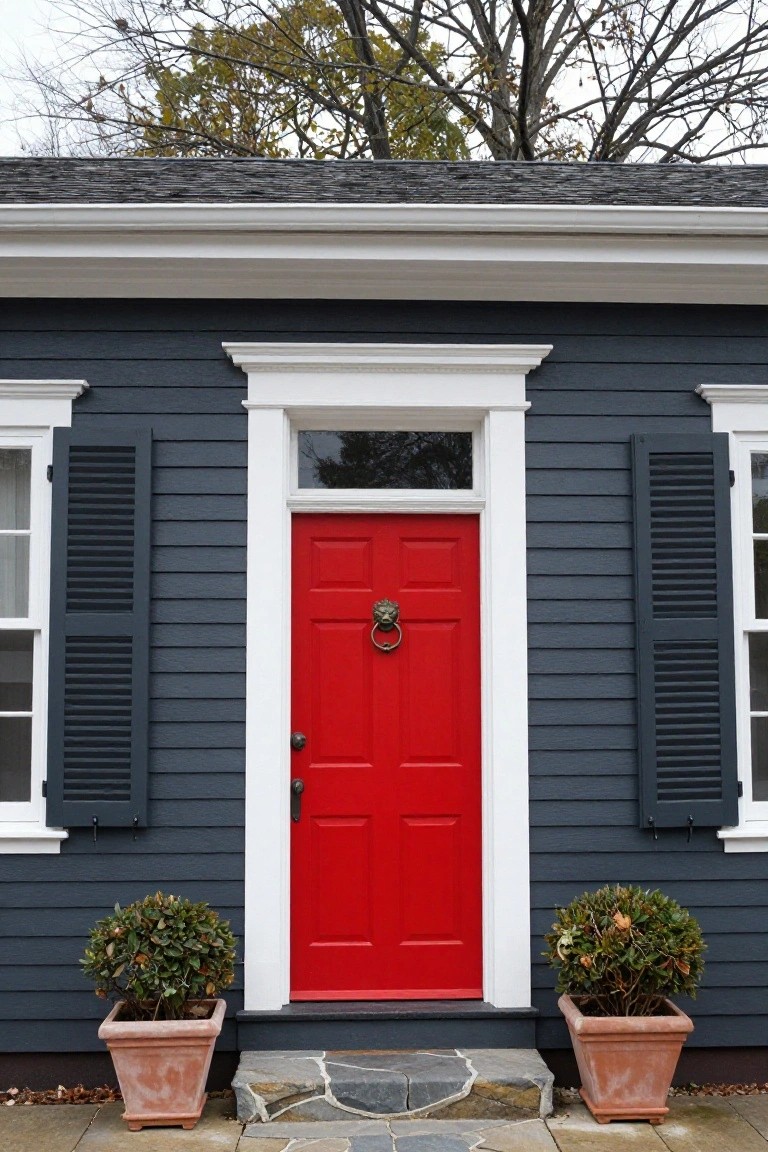
A red front door pulls the eye right to the entrance on this navy house. The dark siding and white trim make the color pop without much effort. It’s a simple way to add life to a classic Colonial front, especially with a brass knocker for that extra touch.
This works best on darker exteriors where the contrast shows up. Try it on homes with clapboard siding or shutters. Just keep the rest of the trim clean and white… no need for more color. Boxwoods in pots on either side finish it off nicely.
Symmetrical Porch Columns
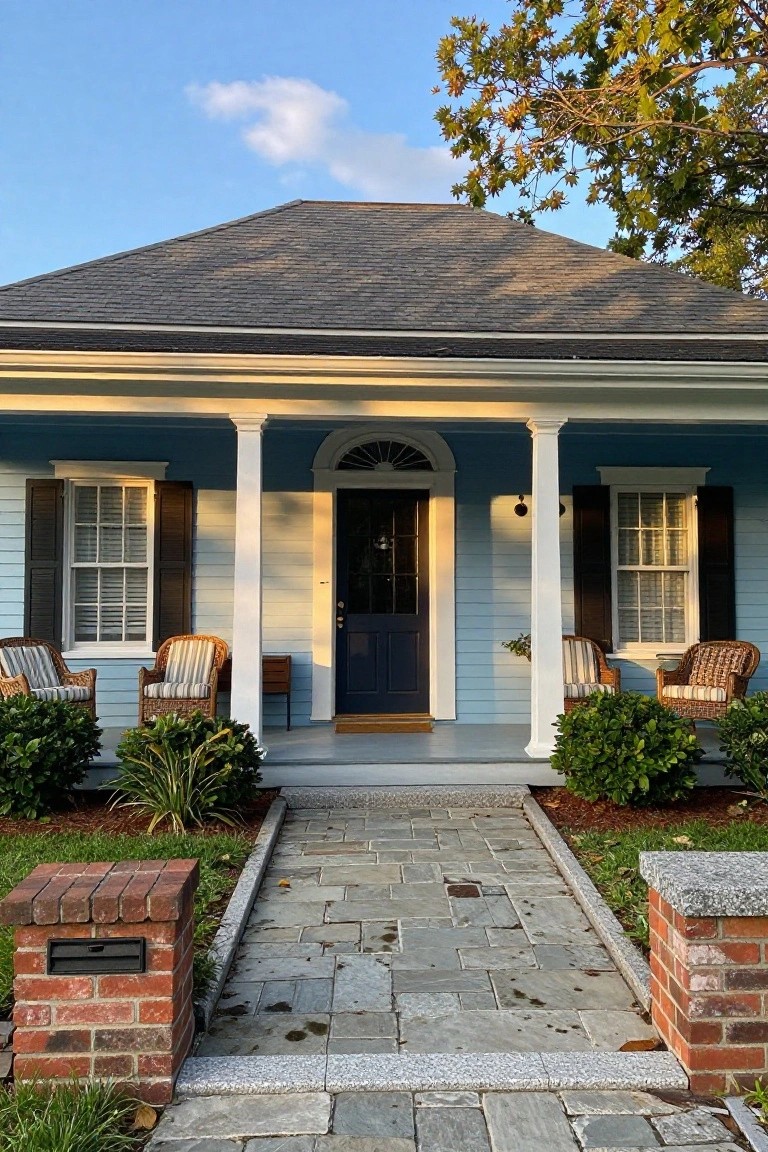
Tall white columns like these on a colonial porch create perfect balance across the front of the house. They line up with the paired windows and draw your eye right to the dark entry door. That setup makes the whole facade feel put-together and a bit grand without trying too hard.
You can add columns like this to most traditional homes, especially ones with a raised foundation. Keep them fluted for detail, and set wicker chairs nearby for everyday use. They suit milder climates where porches get real action.
Lantern Lights Flanking the Front Door
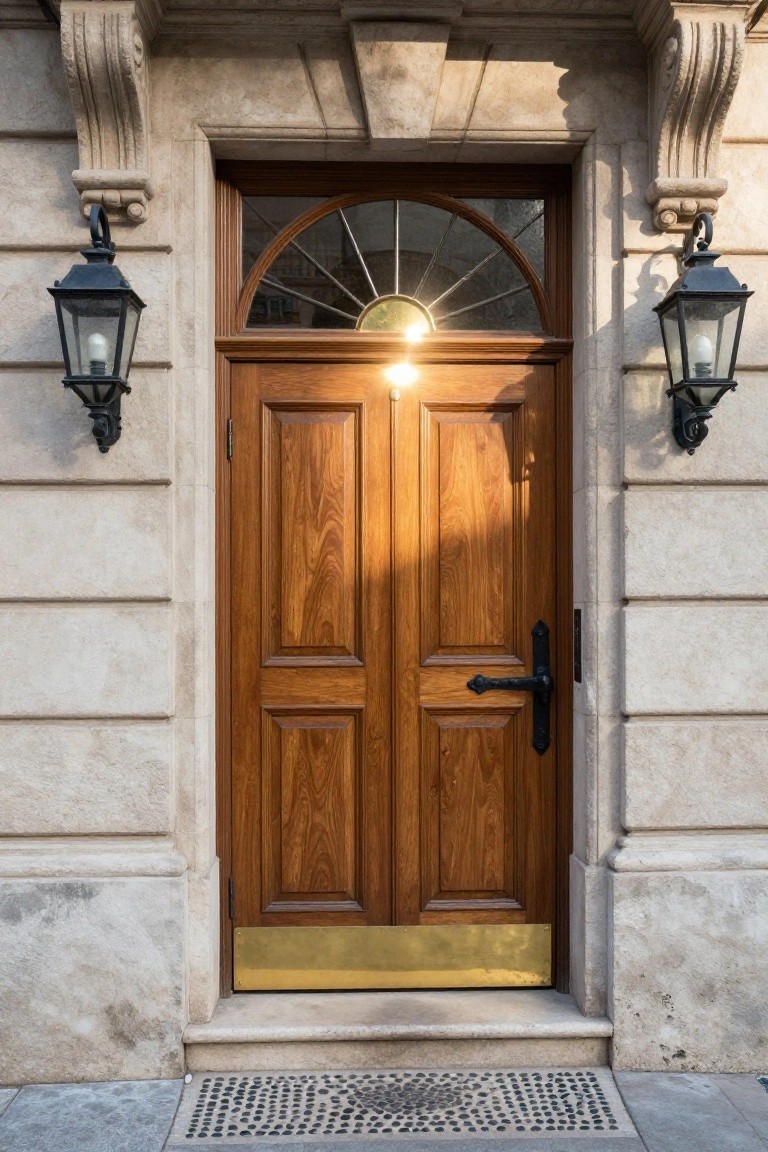
Placing matching black lanterns on each side of the front door does a lot for that classic colonial look. They light up the entry just right, especially as the sun goes down, and draw attention to the wooden door without much fuss. In this setup, the lanterns sit high on the stone walls, keeping things balanced and welcoming.
You can add them to most any traditional facade, like stone or brick, where you want a bit more curb appeal. Mount them about eye level, wire for automatic dusk lighting if you like, and pick a style that echoes your door hardware. They work best on homes with some height at the entry. Just keep the bulbs soft so it doesn’t feel too bright.
Classic Portico Entry
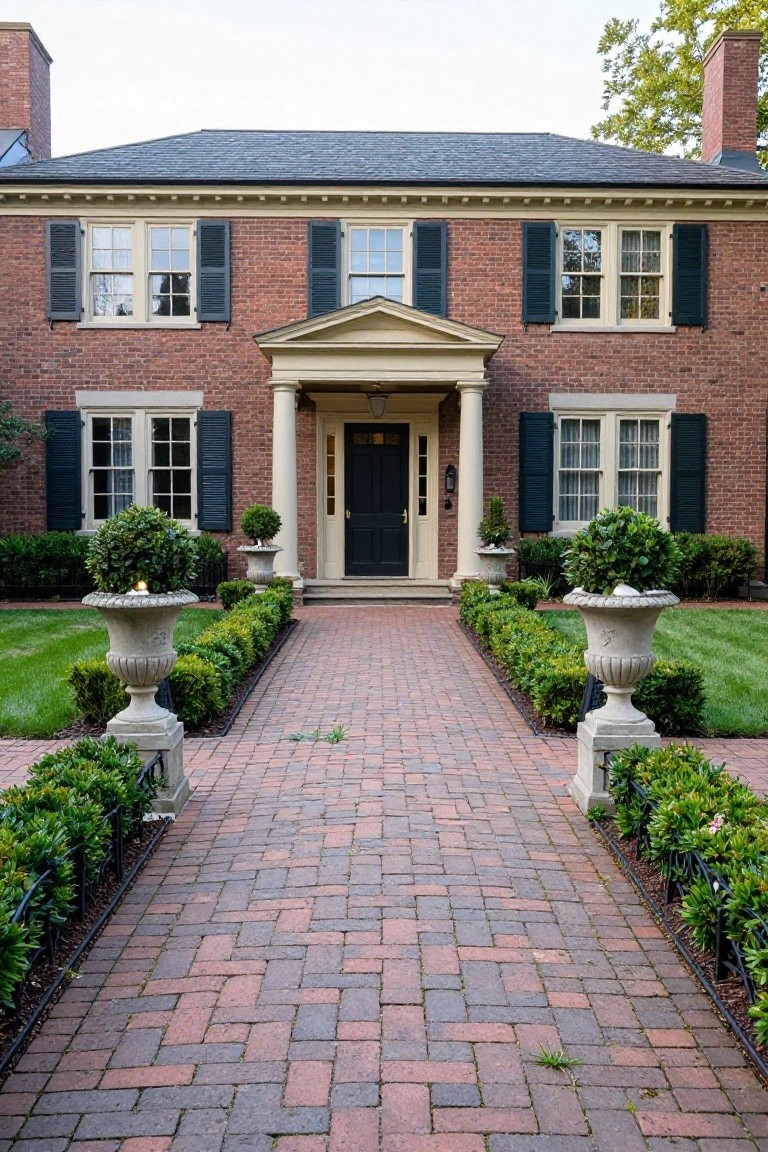
A portico like this one sits right over the front door with tall columns holding up a simple pediment. It pulls the eye straight to the entrance on a colonial-style house. The symmetry makes the whole facade feel balanced and formal without trying too hard. Black door against red brick keeps it sharp.
This works best on brick or stone homes with even window spacing. Add it to update an older colonial or give a plain entry some weight. Keep columns plain and paint trim a soft cream to match. Skip it on super modern houses though. It shines where you want that old-school welcome.
Built-In Grills in Matching House Colors
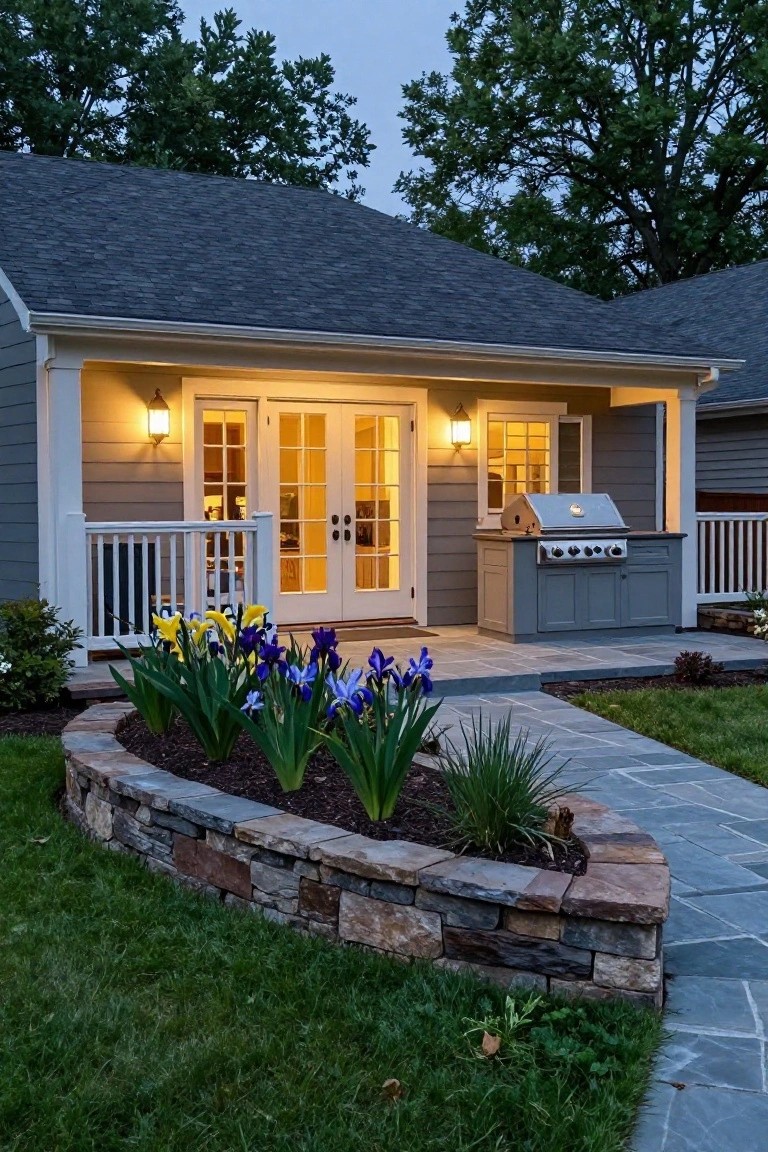
One simple way to make your backyard feel like part of the house is to build a grill station with cabinets painted the same color as your siding. In this setup, the gray cabinets sit right outside the French doors and look like they grew out of the wall. It pulls the patio into the home design without any jarring breaks.
This works best on homes with a covered patio or deck off the kitchen. Pick a sturdy cabinet base that handles weather, then add your grill on top. It suits family houses where you grill a lot. Just keep it close to the doors for easy food trips inside. Skip bright colors unless your house pulls them off already.
Carved Corbels for Added Character
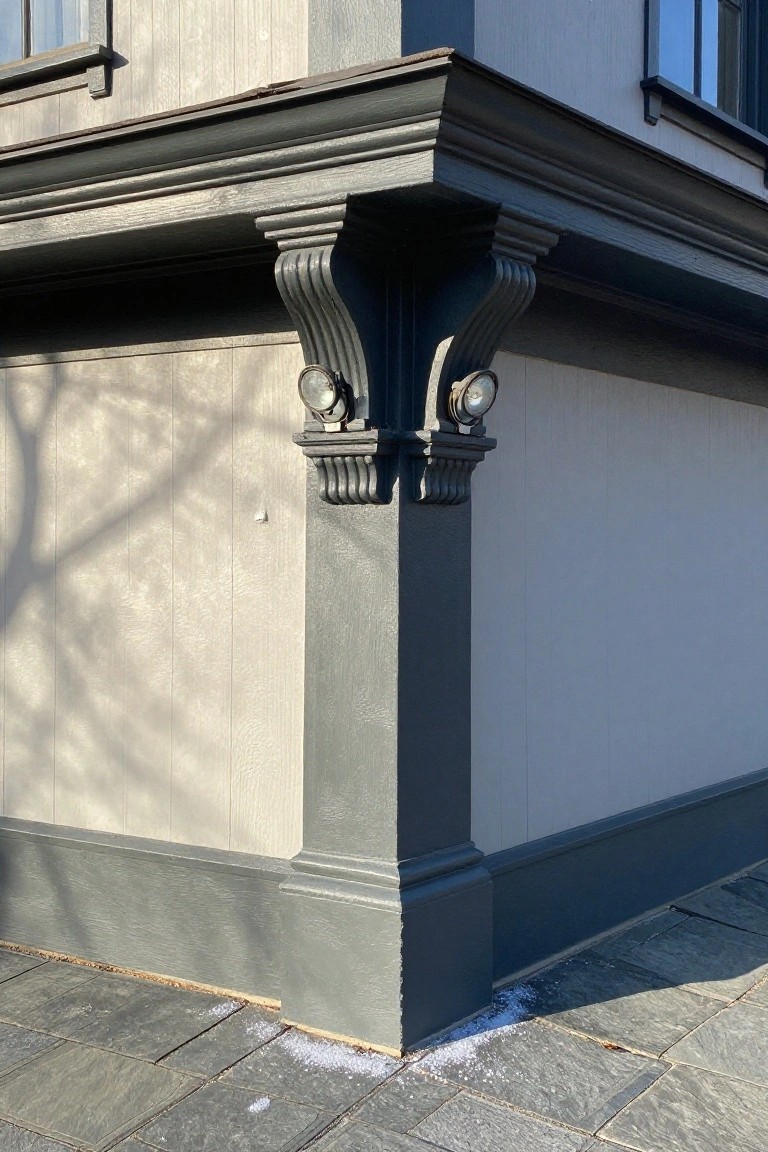
Carved corbels like these tucked under the eaves bring a touch of old-school colonial style to an otherwise simple house. Painted dark against the light gray siding, they make the corner column and overhang feel more substantial without much effort. Those wall lanterns tucked into the brackets just finish the look nicely.
You can pull this off on homes with plain vertical siding or board and batten. Keep the corbels bold but not too big, maybe 12 to 18 inches deep. Paint them to match doors or shutters so everything ties together. It suits two-story houses especially well, giving the base some weight.
Classic Gabled Garage Design
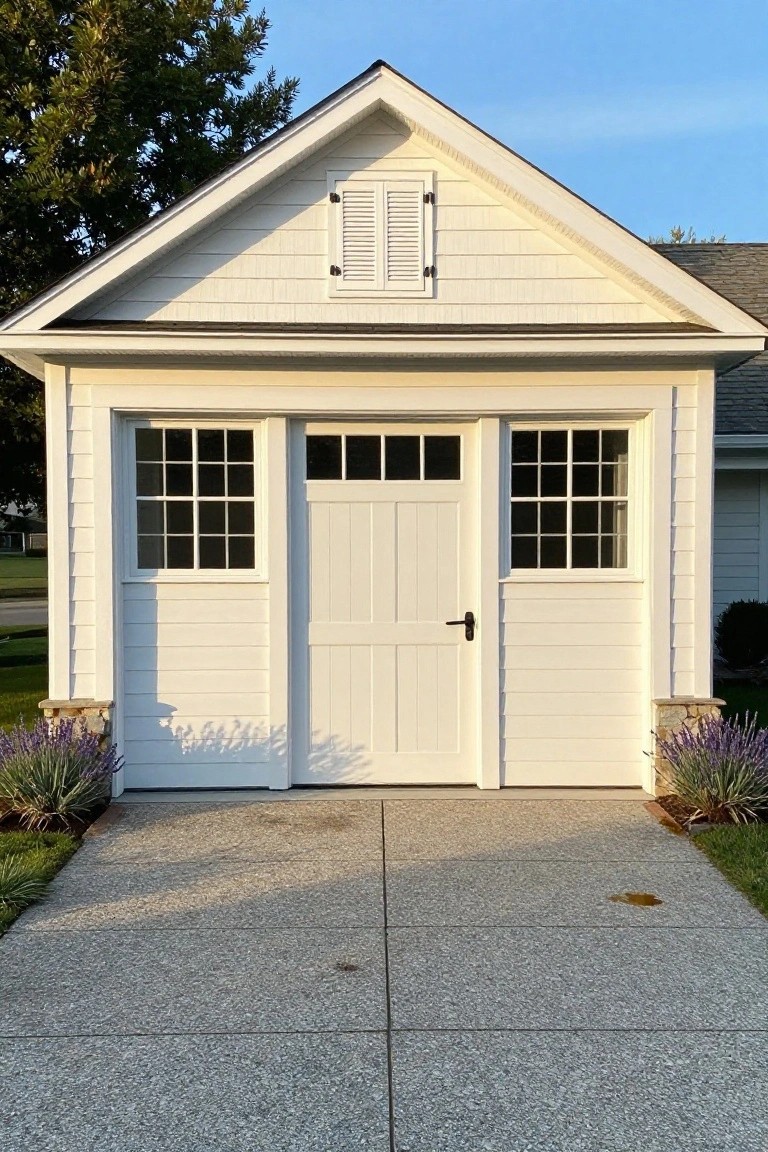
A small detached garage like this one pulls off that perfect Colonial look with its simple gabled roof and white shingle siding. The setup is all about balance. Tall multi-pane windows sit on each side of the wide center door, making the whole thing feel like a little house rather than just storage. It fits right in without trying too hard.
This style shines on smaller properties or as a side addition to a main Colonial home. Match the siding and roof pitch to your house, then keep the concrete pad plain and add low plants like lavender along the base. Skip busy details. It keeps maintenance easy and boosts curb appeal from the street.
Porch Swings Boost Outdoor Comfort
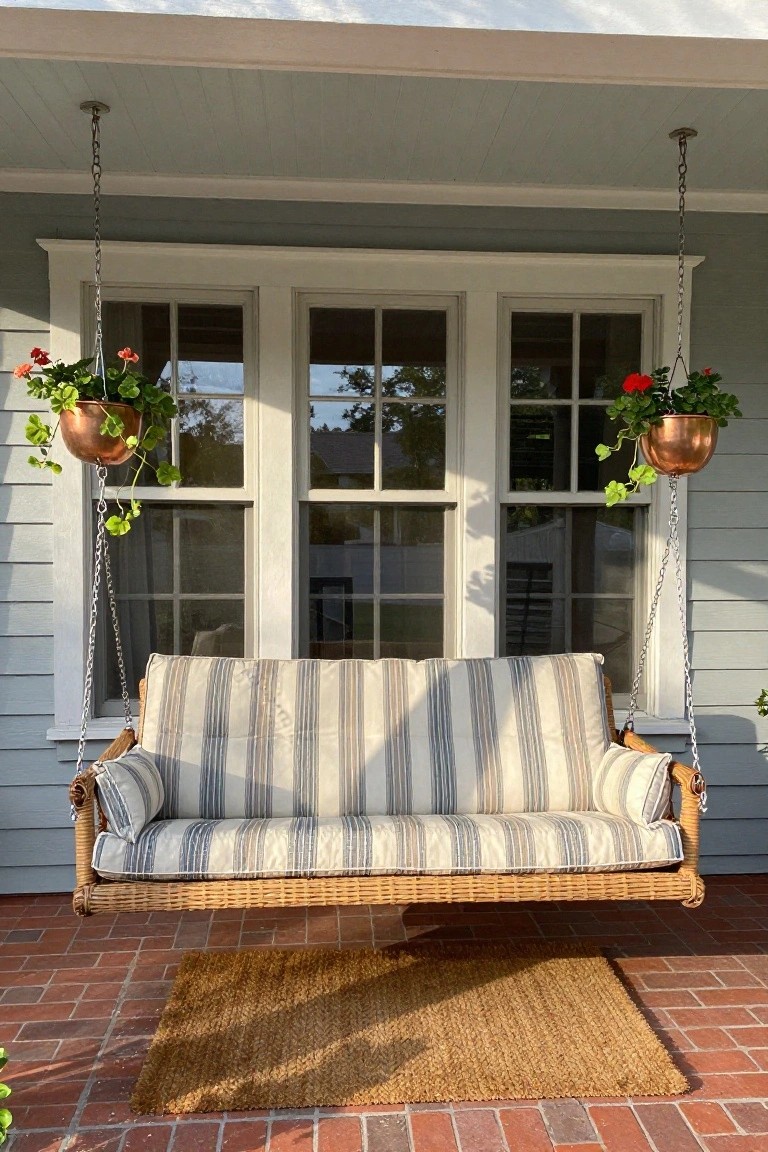
A porch swing like this one fits right into a colonial home’s front porch. It hangs simply from chains, with wide cushions in easy stripes for sitting. The gentle sway makes it perfect for morning coffee or evening chats. Folks have used swings on porches for years because they turn a plain spot into something you actually want to use.
Put one where you have good ceiling height and solid beams. Rattan frames hold up well outside, and add pillows for color. It works best on covered porches facing the yard or street. Just keep chains tight and cushions weatherproof. Skip it if your porch is too narrow.
Navy Blue Shutters Define Colonial Windows
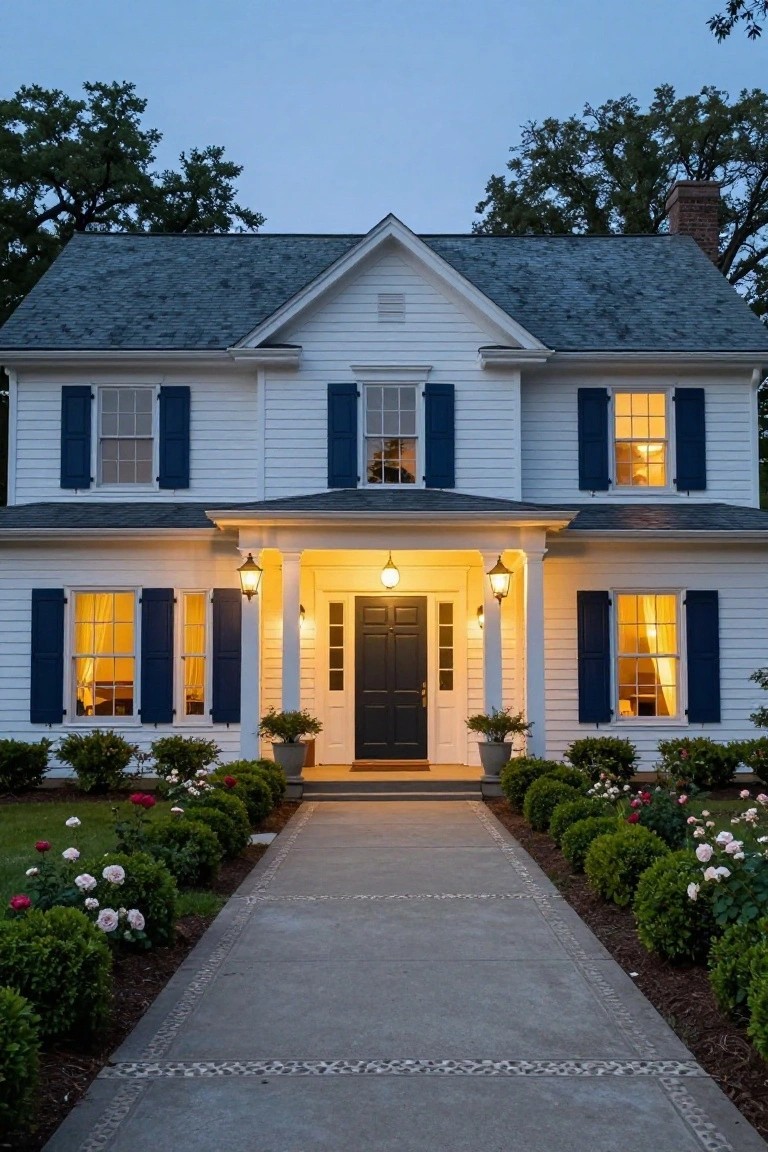
White colonial houses look sharp with navy blue shutters. They give the windows a clean outline that stands out against the siding. In this setup, the deep blue pulls focus to the symmetrical windows without overpowering the simple white body. It’s a look that’s been around for ages because it feels balanced and easy on the eyes, especially when lights glow from inside at dusk.
Try this on any classic two-story home with clapboard siding. Paint matching shutters on both floors for rhythm. Keep the front door dark to tie it together. It works best where you want subtle color that lasts through seasons. Just make sure the blue is a true navy, not too bright.
Frequently Asked Questions
Q: What’s the fastest way to give my Colonial house that instant curb appeal boost?
A: Hang exterior lanterns or sconces by the front door. They light up the entry and nod to traditional symmetry. Pick black iron ones for easy drama.
Q: How do I pick siding that looks authentic but holds up to weather?
A: Go for fiber cement boards with a clapboard profile. They mimic wood perfectly and shrug off rain or sun. Nail the texture first, then color.
Q: But what if my porch roof sags—does that ruin the whole Colonial vibe?
A: Straighten it with new brackets or posts right away. It frames everything else perfectly. Skip that, and no trim saves the look.
Q: Can I add window boxes without messing up the clean lines?
A: Absolutely, mount simple wooden ones under sills on the second story. Fill with trailing ivy for softness. They add life… just don’t overcrowd.
