

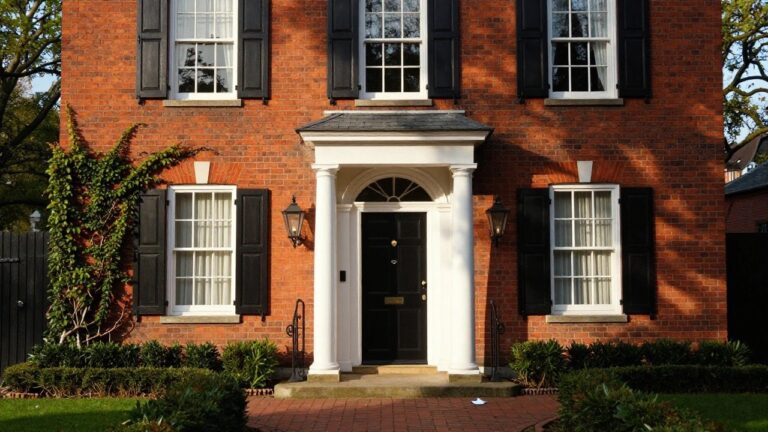
Colonial houses have a way of commanding attention from the street with their balanced proportions and classic symmetry that feels steady and lived-in.
I’ve driven past plenty that lose their charm when the siding clashes with the roofline or the entry looks like an afterthought.
What draws me in most are the facades where owners chose materials like clapboard or brick that weather beautifully over time.
Nail the details on windows and shutters, and suddenly the whole exterior reads as polished yet approachable.
Some of these ideas are ones I’d screenshot to test on a real home someday.
Classic Portico Entry
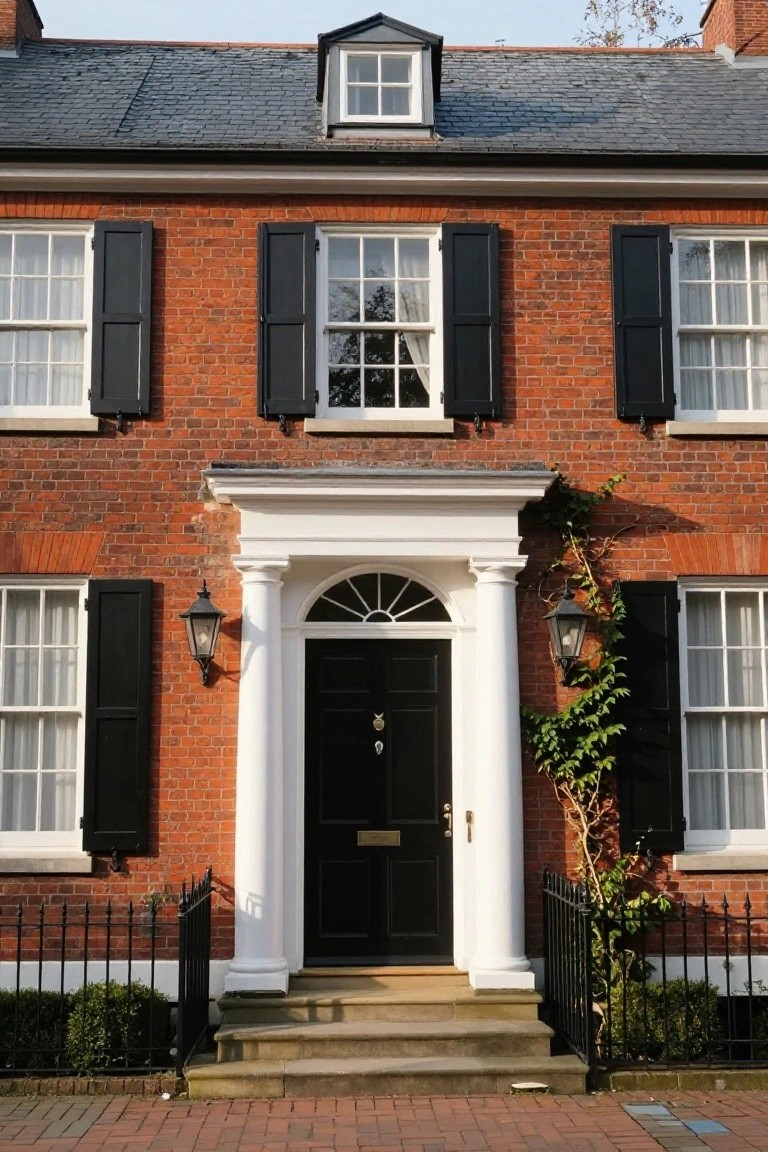
A portico like this one frames the front door in a simple, formal way. White columns hold up a small pediment right over the black door, set against solid red brick walls. Paired with black shutters on the tall windows, it creates clean lines that feel right at home on a colonial-style house.
This works well on two- or three-story brick homes where you want the entry to stand out without extra fuss. Add matching lanterns on each side for light at night. It suits urban row houses or suburban spots with some front yard. Scale it to your door height so it doesn’t overwhelm.
Symmetrical Columned Porch
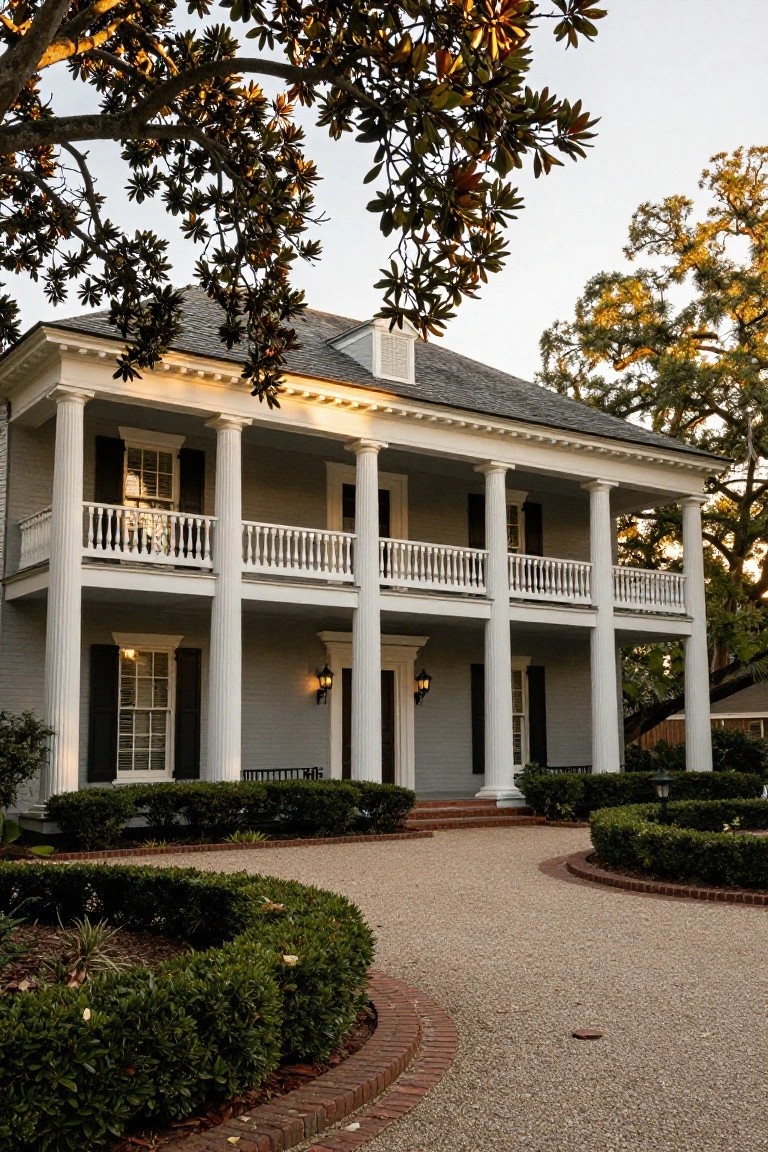
A symmetrical columned porch like this one gives a colonial home real presence from the street. Tall fluted columns rise through two stories, holding up a balcony and wide porch that wraps the front. It pulls the eye right to the centered door, and those magnolia branches overhead just add to the easy Southern feel.
This setup works great on brick or clapboard houses in milder areas where porches get used. Keep the columns white against pale siding, and edge the driveway with low boxwoods for clean lines. Skip heavy trim. It suits family homes that need curb appeal without constant upkeep.
Classic Paneled Wooden Front Door
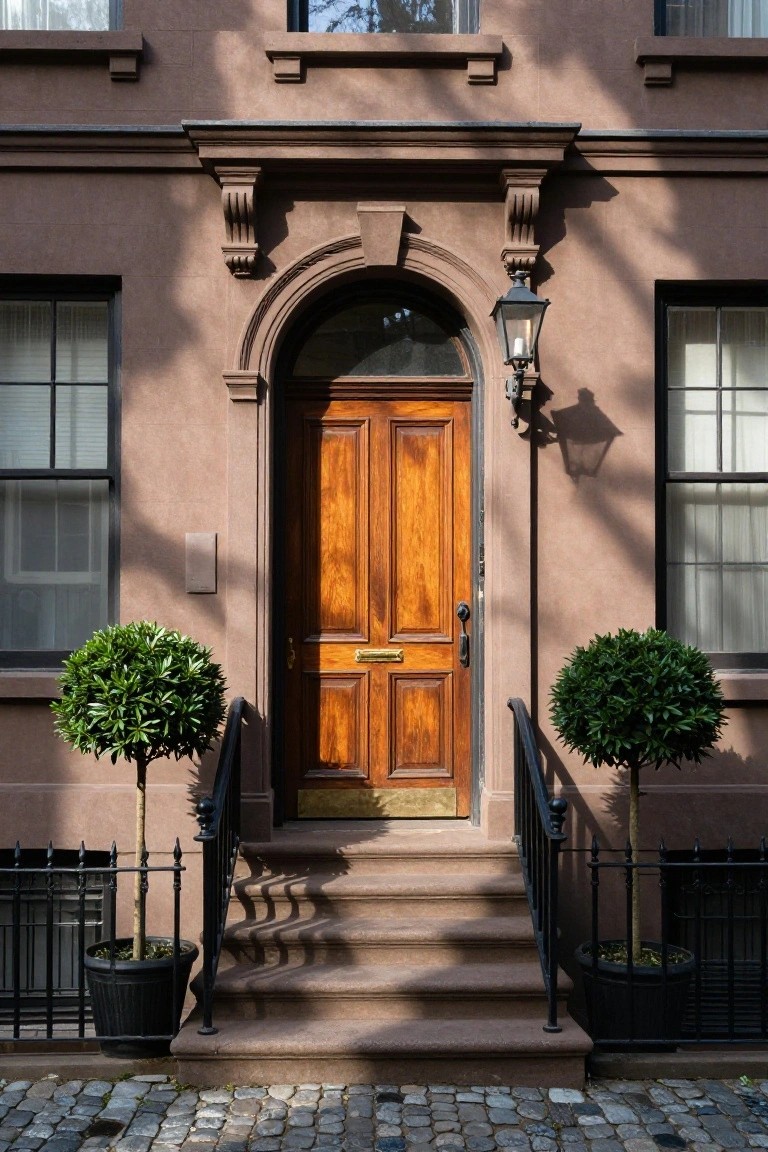
A paneled wooden front door like this one pulls the whole facade together in a simple, strong way. The deep wood grain and brass knocker stand out against the brick without trying too hard. It gives off that solid, lived-in colonial vibe folks have loved for years.
Try this on a brownstone or any narrower urban home where you want the entry to feel important. Flank it with matching potted topiaries for balance… keeps things neat and adds a bit of green. Just make sure the hardware shines up nice, since that’s part of the charm.
Colonial White Brick Facade
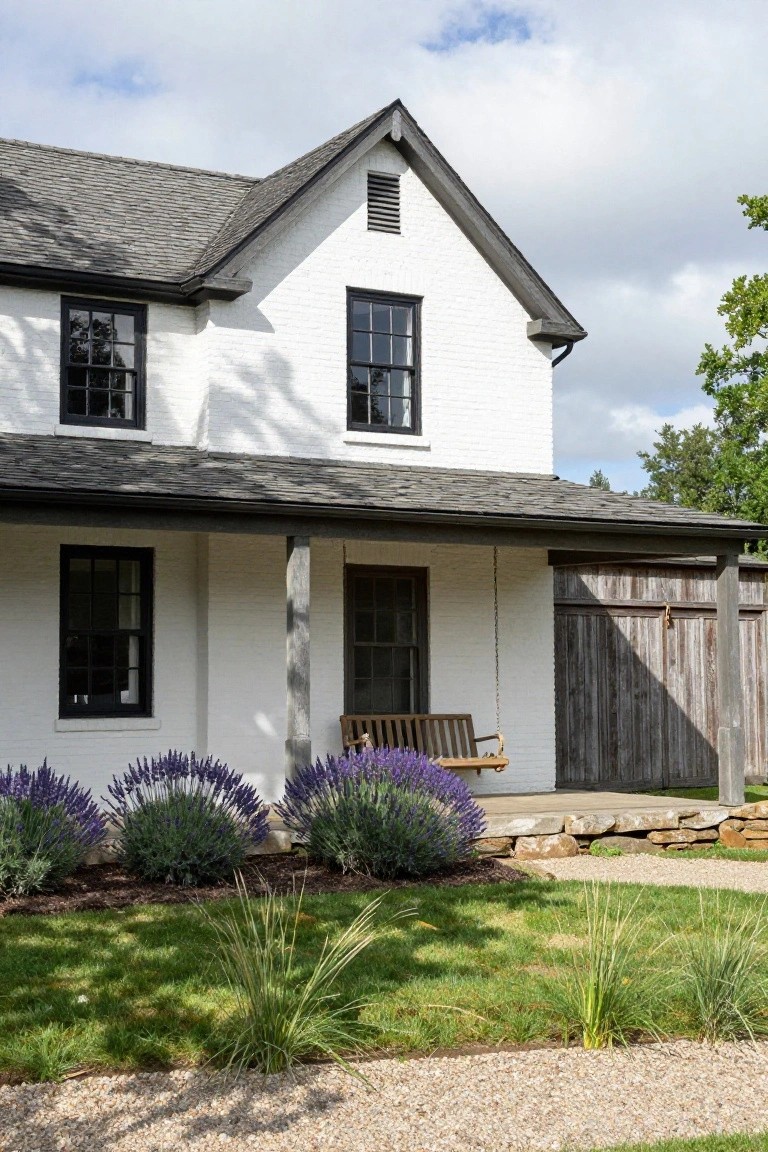
White brick exteriors bring back that classic colonial feel in a clean way. They look bright against the sky and hold up well over time. Here the black window frames and trim add a sharp edge that keeps it from looking too plain. It pulls the whole front together nicely.
This look fits homes with straightforward shapes like gables and porches. Try it on a two-story house where you want curb appeal without much fuss. Go for soft plants like lavender at the base to frame things out. Watch the roof color though. Gray shingles keep it grounded.
Coastal Shingle Porch Design
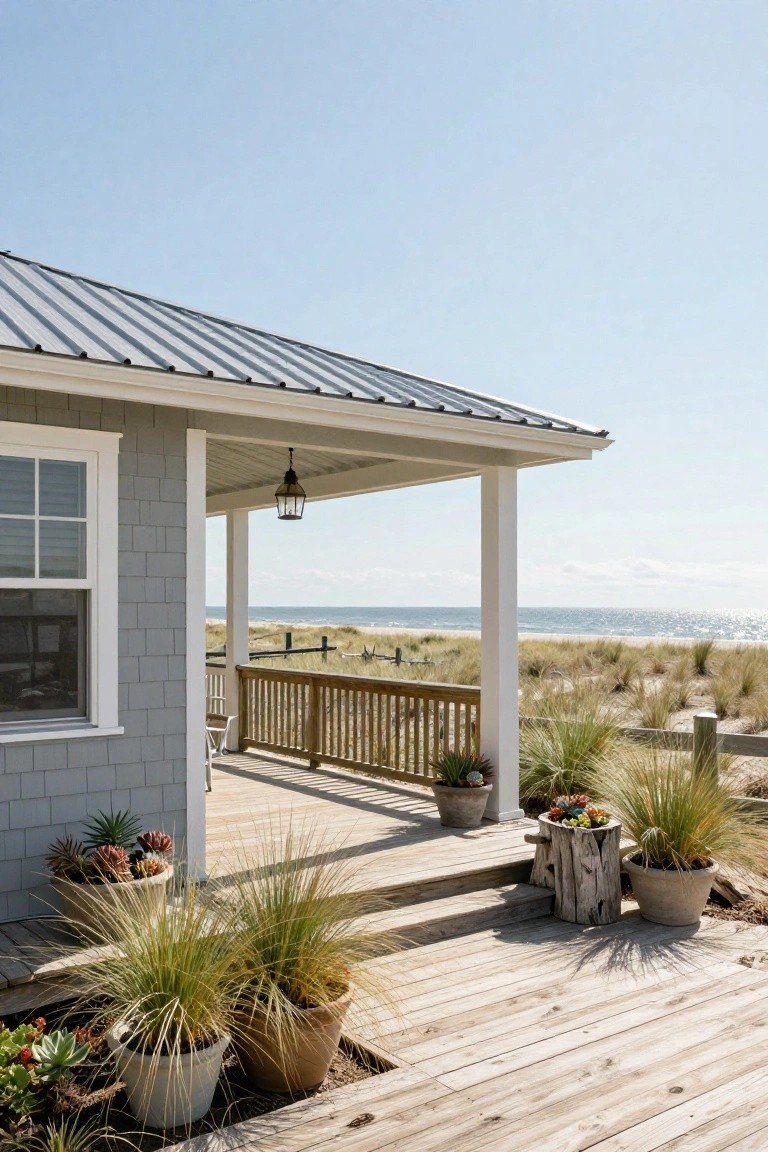
A shingle-sided house like this pulls off a relaxed beach look with its deep covered porch. Gray shingles climb up the walls under a simple metal roof, and white posts hold up the shade while a wood deck stretches toward the dunes. It feels sturdy yet open, perfect for spotting waves from your spot by the railing.
Try this on homes raised above sand or grass, where you want indoor comfort spilling outside. Pair the shingles with natural wood decking and a few pots of dune grass for that easy tie-in. It suits colonial styles aiming for low-key seaside charm, but skip it on flat lots without a view.
White Colonial with Green Shutters
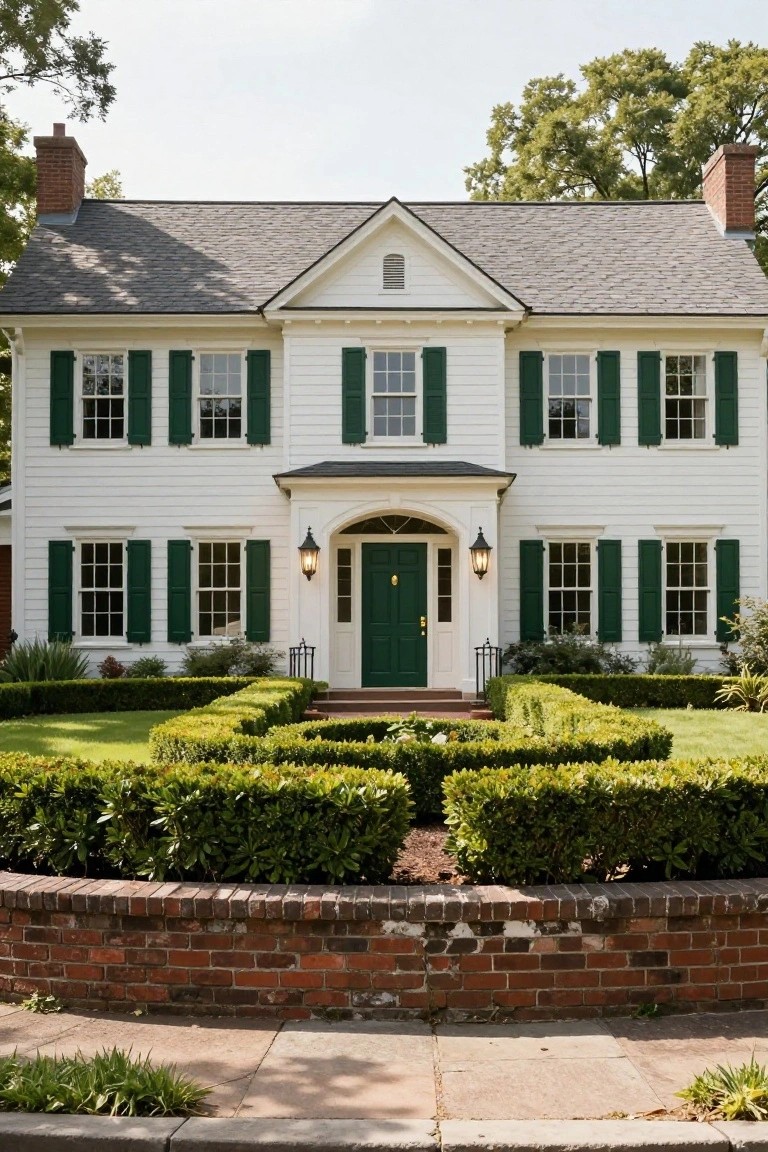
A clean white clapboard house like this one really shines when you add deep green shutters on the windows and a matching green door at the entry. The contrast pops without being too much. It keeps things crisp and traditional, especially on a classic colonial shape with its gabled roof and balanced windows.
This setup works best on homes with good symmetry and some front yard space. Pick a glossy green paint for the shutters and door to catch the light. Frame the entry with boxwood hedges if you can. Skip it on super modern houses though. It might feel out of place there.
Stone Turret Entryway
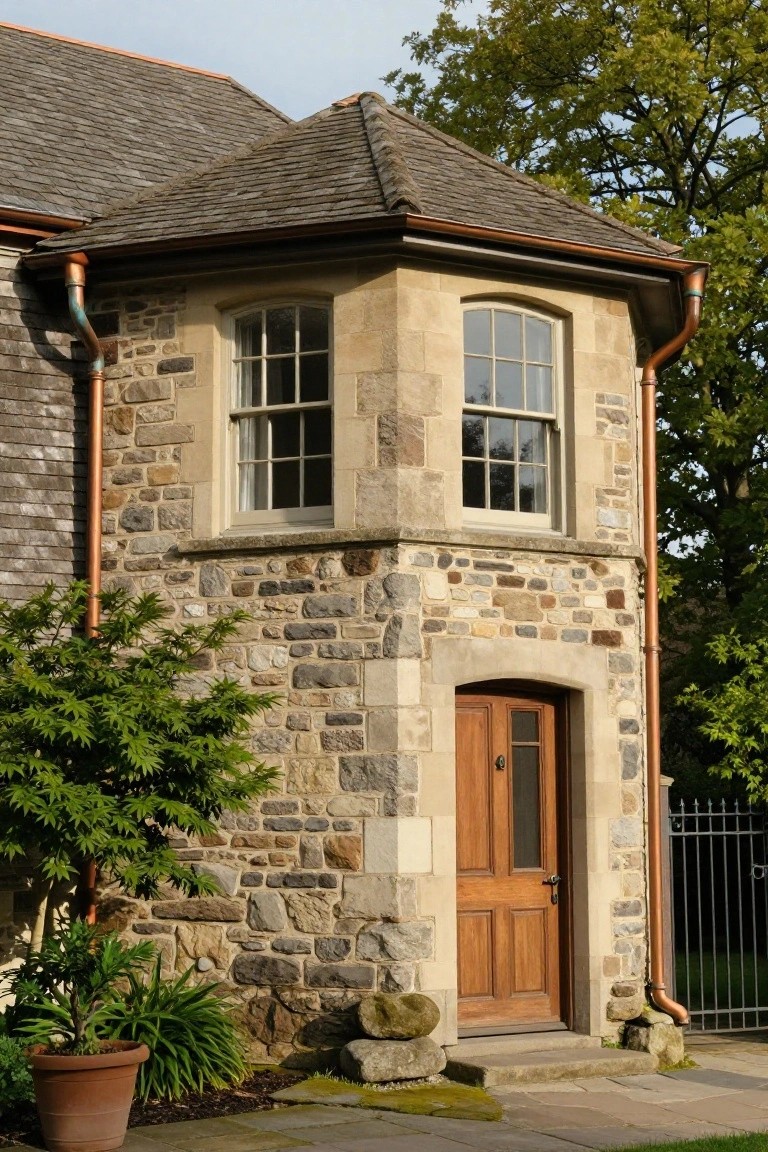
A stone turret like this one gives a colonial house that extra bit of old-world character. It’s built from rugged stone blocks in different shades, with a slate roof that slopes just right and tall multi-pane windows that let in plenty of light. The copper downspouts add a nice touch too. They start bright but age to that green patina over time, which fits perfectly with the natural stone.
You can pull this off on homes with traditional lines, especially if you’re adding onto a side entry or corner. Keep the door simple, like dark wood with panels, and frame it in an arch for that welcoming feel. It works best where you have some yard space for plants around the base… just don’t overcrowd it. Stone masons can match local quarry rock to blend right in.
Dark Siding with White Trim
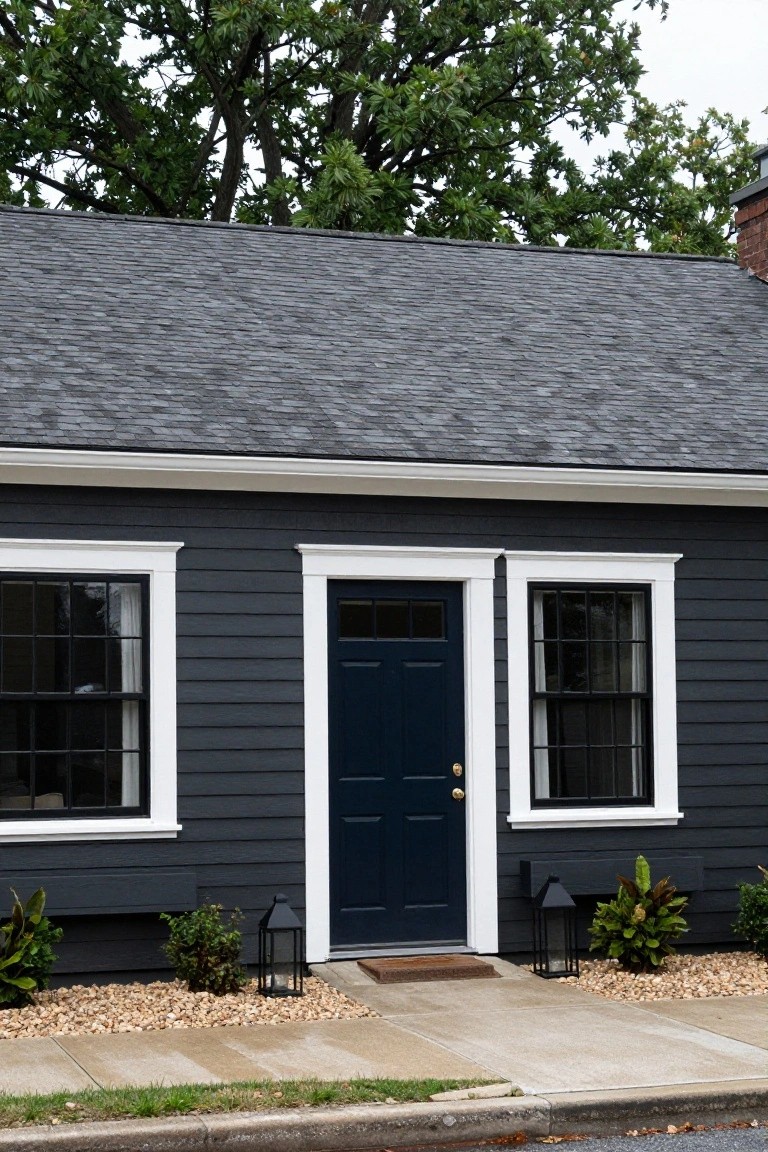
A deep navy siding like this on a Colonial house really freshens up the classic clapboard look. White trim around the windows and door keeps things sharp and clean. That navy front door adds just enough pop without overdoing it.
This setup works best on straightforward homes like Colonials or saltboxes. Use durable exterior paint rated for your climate. Pair it with simple lanterns by the steps. Avoid busier trim details… they can muddle the clean lines.
Shingled Exterior with Turquoise Door
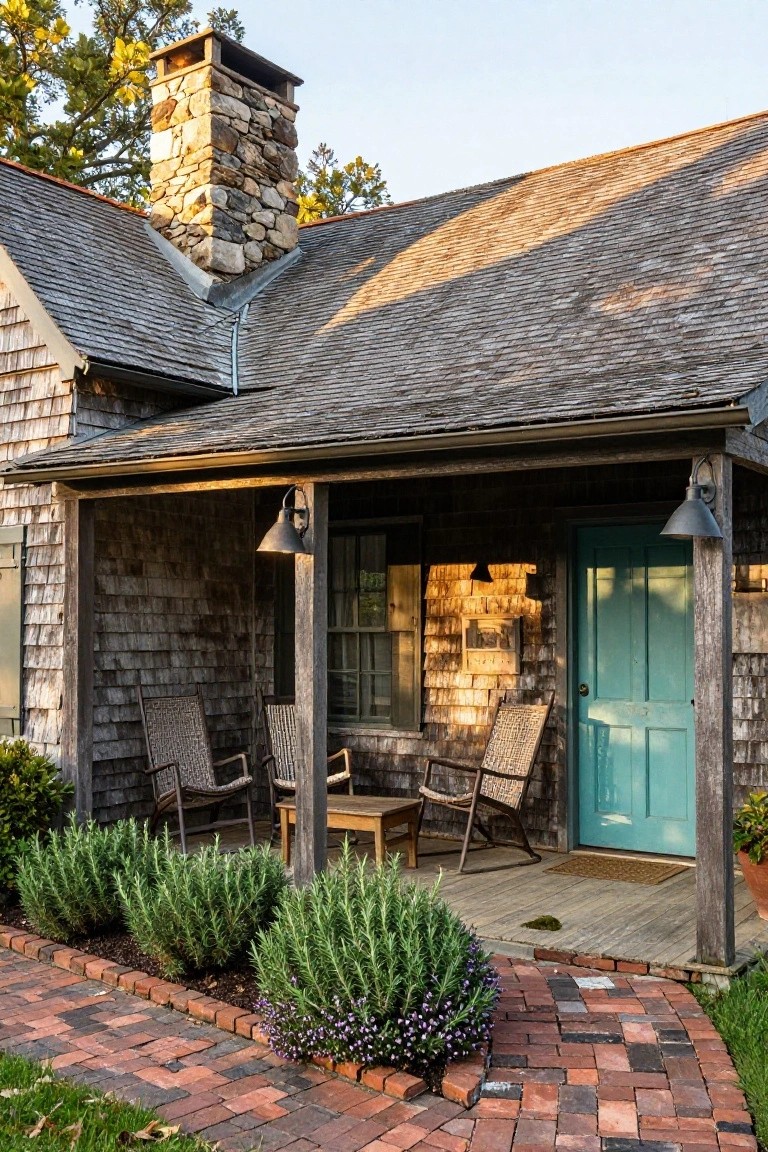
A turquoise front door stands out nicely against the soft gray tones of shingle siding on this cottage. It pulls the eye right to the entry without clashing, and the stone chimney nearby keeps things grounded in that classic colonial feel.
This works best on older-style homes in wooded or seaside spots where you want a bit of cheer. Go for a bold but not screaming shade, and keep the porch simple with chairs and lanterns. Steer clear of matching trim colors, or it’ll lose that punch.
Cozy Courtyard Patio Nook
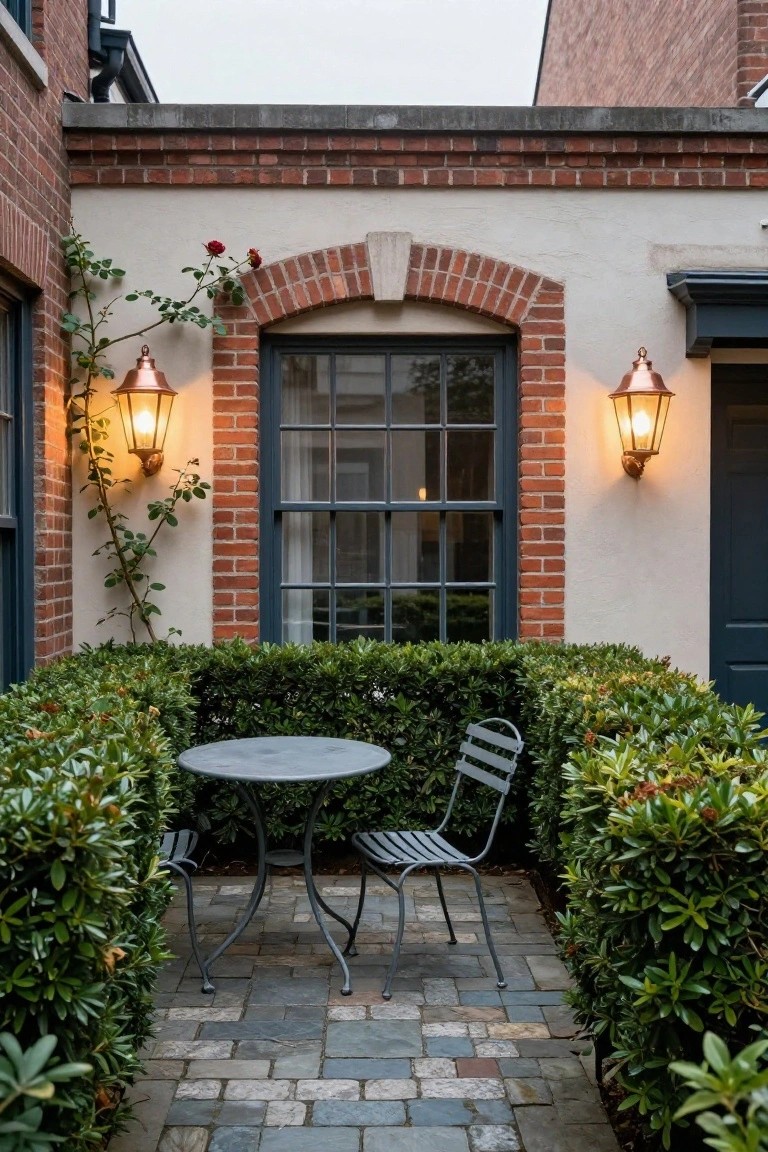
Tucked away behind low boxwood hedges, this little patio setup feels like a secret spot right off the house. The simple gray metal table and two chairs keep it practical for coffee or a quick read, while the brick walls and soft lantern light make it cozy without much fuss. It’s a nice way to borrow some outdoor time in a small space, especially on colonial-style homes where courtyards fit right in.
You can pull this off in any side yard or alleyway along the house, as long as you have about 10 by 10 feet to work with. Plant the hedges thick for real privacy, add climbers like roses on the walls for a bit more charm, and pick lanterns that match the architecture. It suits older brick homes best, keeps maintenance low, and turns dead space into something usable year-round.
White Colonial with Navy Shutters
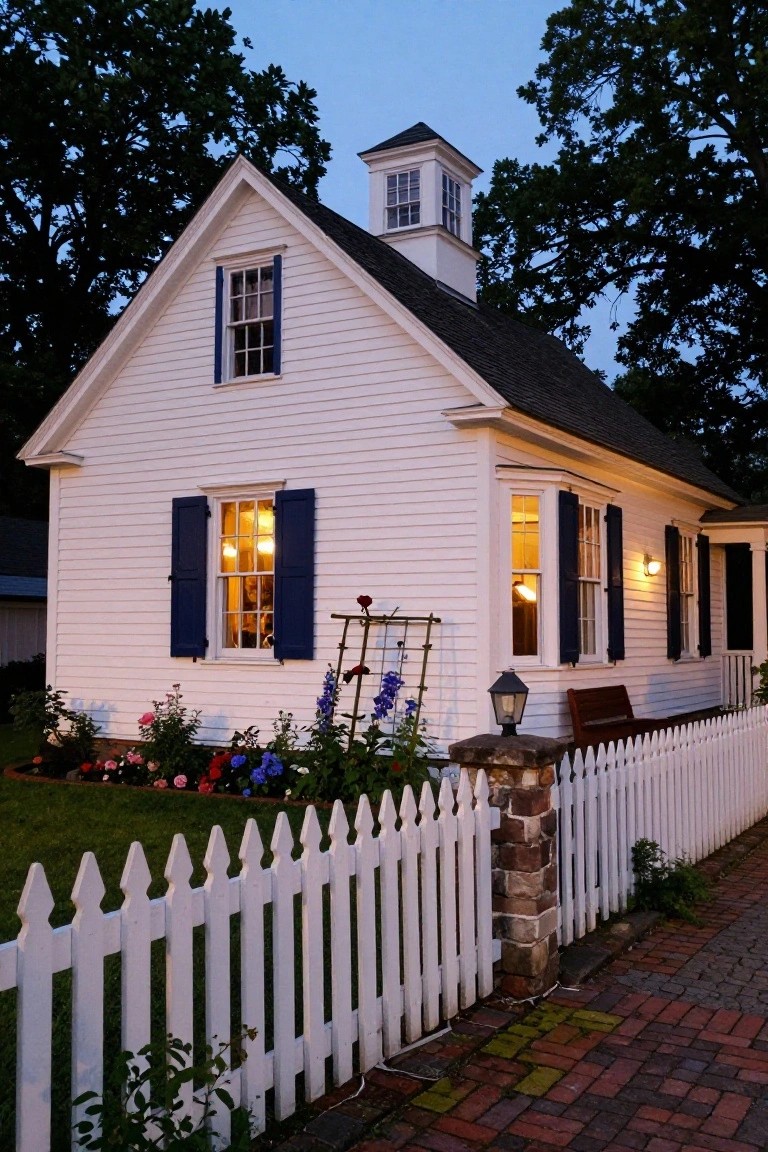
Nothing beats the simple charm of a white clapboard house finished with navy blue shutters. This combo has been around forever because it just works. The white keeps things clean and bright. The navy adds a bit of color without overwhelming the look. At dusk like this, with lights glowing through the windows, it feels extra welcoming.
Try it on a modest two-story colonial or saltbox style home. Pair the shutters with a white picket fence out front to tie it all together. It suits older neighborhoods or quiet rural spots best. Skip it if your house has a lot of modern lines, though. The contrast might fight those.
Black Front Door on Light Siding
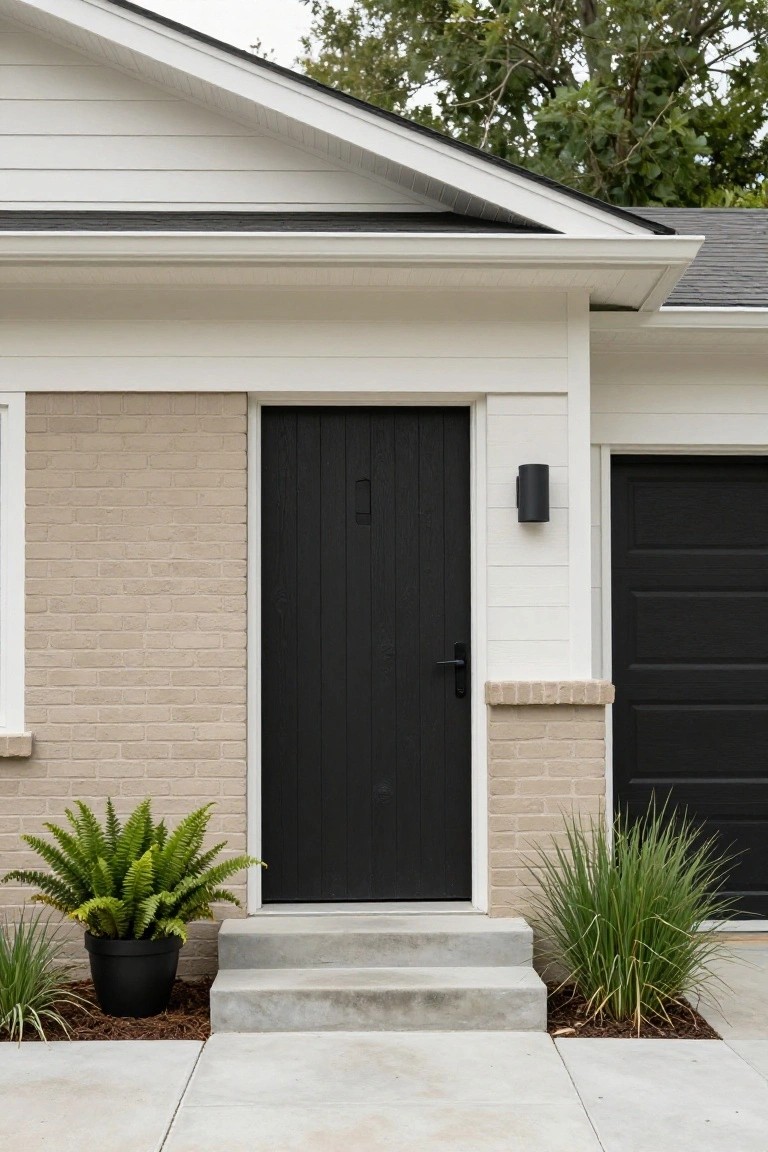
A black front door stands out strong against light siding and beige brick. It pulls focus to the entry without much else needed. The paneled style keeps a nod to colonial roots but feels fresh on a simple facade like this one.
This works best on homes with neutral tones already in place. Go for it if your house has white trim or light brick base. Just match the black to garage doors or lights for clean lines. Skip busy colors nearby so the door does the talking.
Brick and Clapboard Colonial Facade
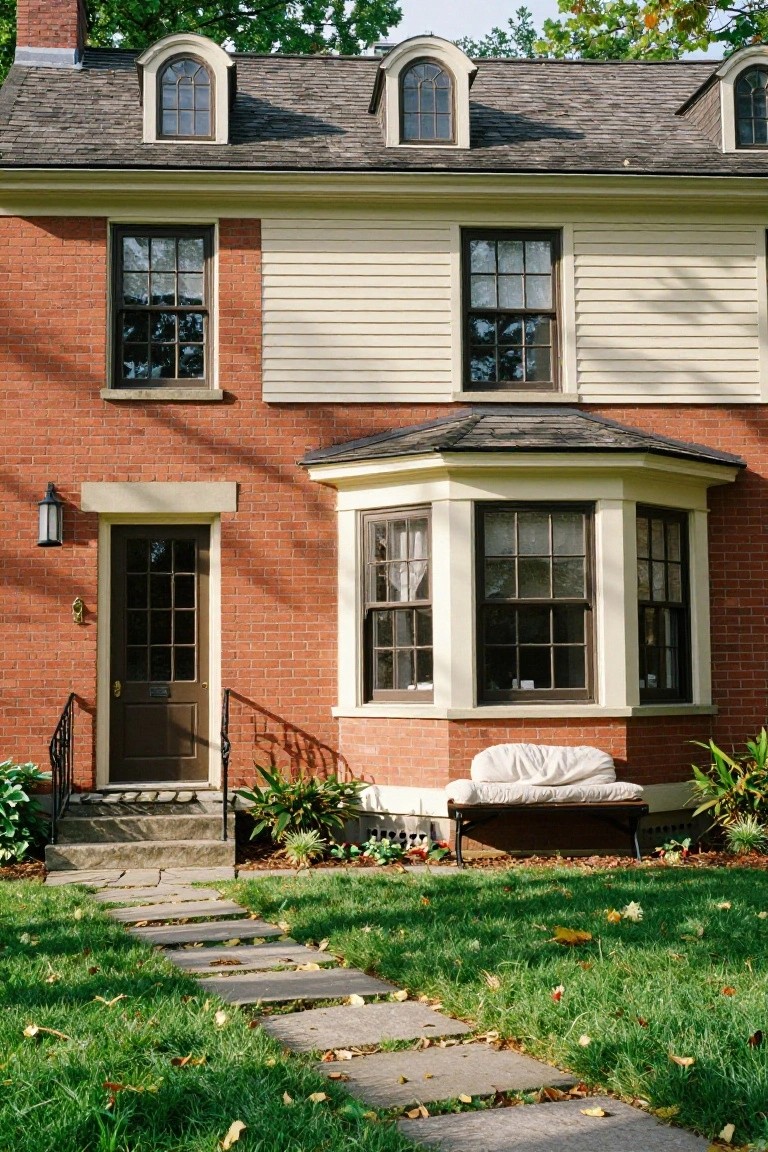
One look that shows up a lot in older colonial homes is pairing red brick on the bottom with light clapboard siding up top. It gives the house a solid base that feels sturdy, while the siding keeps things from looking too heavy. That mix shows here with the brick wrapping around the entry and the cream siding filling out the upper stories and bay window. Dark trim and a slate roof pull it together without much fuss.
This setup works best on two-story houses in neighborhoods with some mature trees. The brick handles weather well, and the clapboard adds a softer touch that fits right into town or suburb settings. Just make sure the colors stay true to the period, nothing too modern or bright, or it starts to feel off.
Poolside Porch with Rattan Seating
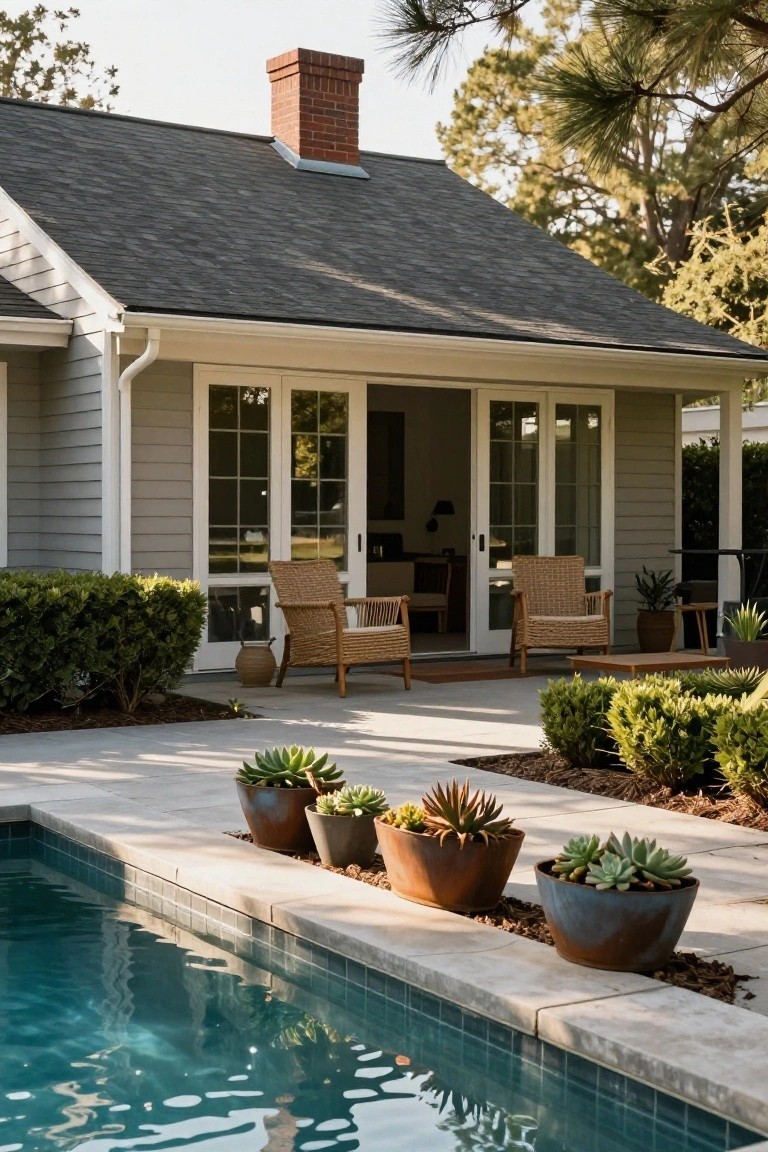
A simple porch area like this pulls your colonial house right into outdoor living. With French doors swung open and a couple of rattan chairs tucked near the pool, it turns a side patio into a spot for coffee or evening chats. The casual setup fits the house’s clean siding and roofline without fuss, keeping things light and connected.
Try it on homes with a side entry or yard space. Pick chairs that hold up to sun and rain, maybe add a side table for drinks. It suits warmer spots best… just keep plants low like those succulents so nothing blocks the view.
Classic Red Brick Facade with Columned Portico
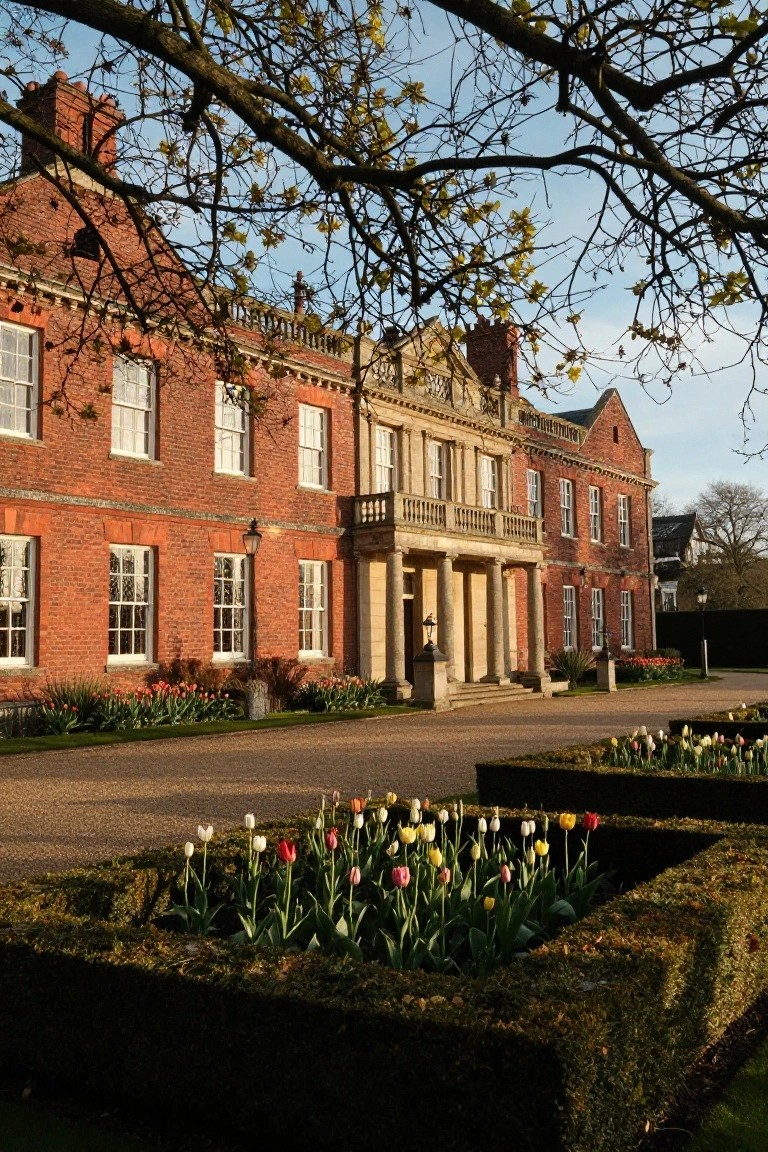
A red brick house like this one pulls off that timeless colonial look with its even rows of windows and a central portico held up by stone columns. The brick gives a solid, warm base while the lighter stone entry adds just enough contrast to highlight the front door without stealing the show. It’s the kind of setup that makes the house look put-together from the street.
You can pull this off on traditional homes in suburban spots or even country settings. Keep the landscaping simple, like those tulip beds edged in boxwood, so it frames the entrance nicely but stays low-key. Avoid too much clutter around the base, or it muddies the clean lines.
Porch Swing with Hanging Flowers
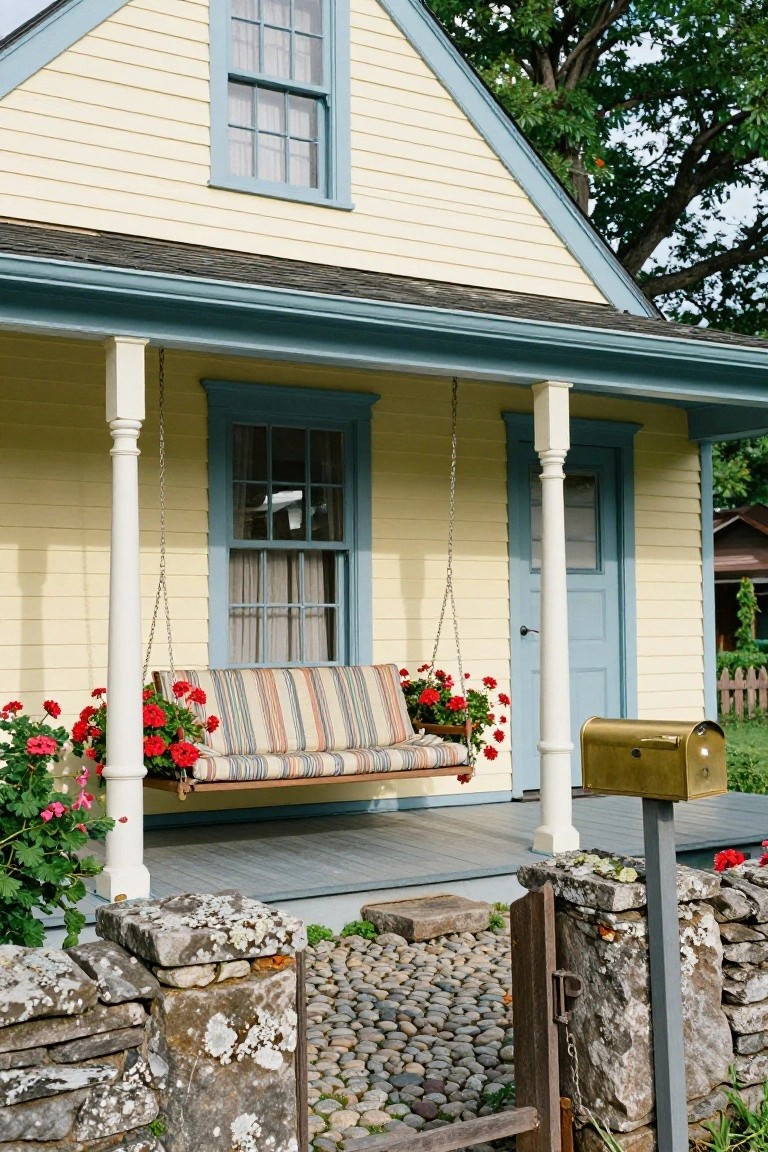
A simple porch swing like this one makes any front porch feel more lived-in and welcoming. Hung from chains between the posts, it has a cushy striped seat and those red geranium baskets dangling right off the chains for easy color. It’s a low-key way to add personality without much effort, especially on older-style homes.
Put one on a covered porch where you get some shade. It works great for Colonial houses with their tall ceilings and posts. Just make sure the chains and hooks are solid, and pick tough flowers that handle sun. Skip it if your porch is too narrow… won’t swing right.
Frequently Asked Questions
Q: Can I add modern lights to my Colonial exterior without it looking off? A: Stick to lantern-style fixtures that echo old-world lanterns but use LED bulbs for efficiency. Mount them at eye level on either side of the door to frame the entrance nicely. They blend right in and give your home that warm glow at night.
Q: What’s a quick fix for faded Colonial siding? A: Power wash it first to knock off years of grime, then slap on a fresh coat of semi-gloss paint in a soft taupe or greige. That alone revives the crisp lines Colonial homes are known for.
Q: How do I choose shutters that actually fit my Colonial house?
A: Measure your windows precisely, then pick board-and-batten shutters that hang in the top third of the window frame. Go for a color two shades deeper than your siding, like navy on beige.
Q: But won’t black trim make my Colonial feel too dark? A: Black trim pops against lighter siding and nods to historic ironwork. Pair it with creamy white accents to keep things balanced and bright. Test a small section first if you’re worried.
