


When you drive by a colonial house, the facade hits you first with its straight lines, steep roof, and evenly spaced windows that demand attention from the street.
Cream paints wrap those sharp edges in a gentle hush, letting the architecture breathe without shouting.
I tried a pale cream on a friend’s clapboard siding once, paired with weathered brick, and it made the entry porch feel like it belonged to the landscape instead of dominating it.
Shades vary just enough to highlight rooflines or trim without clashing.
These pairings prove how real exteriors come alive when you test creams against your actual materials, saving the ones that settle the look just right.
Red Door on Cream Colonial Facade
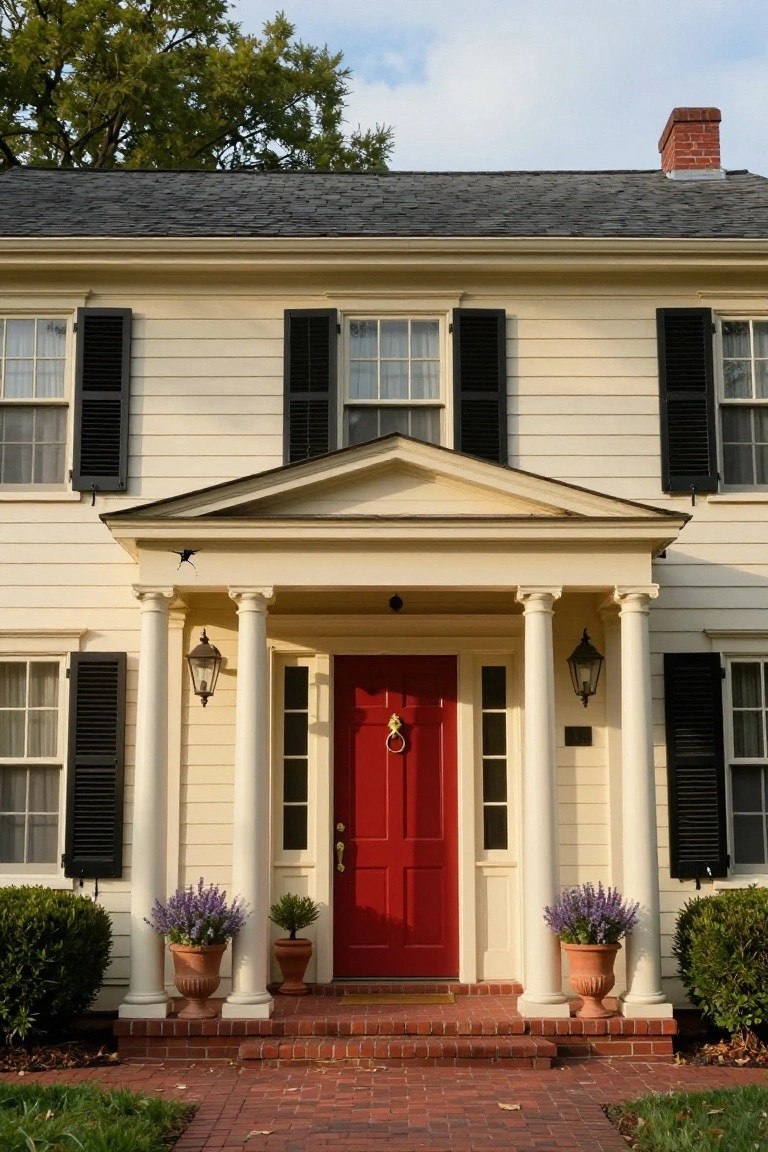
A soft cream siding keeps this colonial house from feeling too stark or formal. Black shutters give the windows some shape. That red front door pulls it all together at the entry, making the place feel more approachable right away.
Put this combo on older homes with good porch columns. It works best where you want a little color without going overboard. Skip it if your trim is already dark, or it might fight the cream.
Cream Walls with Green Trim on Colonial Homes
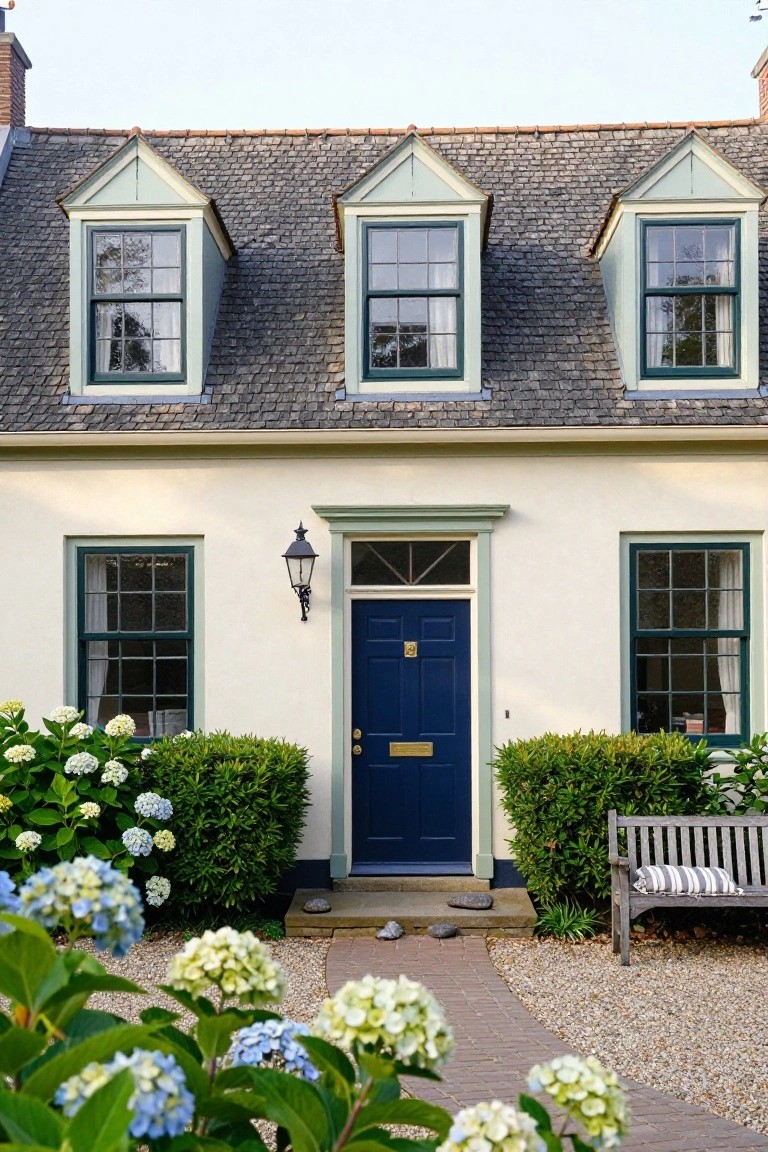
A soft cream color on the exterior walls gives this colonial house a gentle, lived-in feel. The green frames around the windows pick up on that without overpowering things. And that navy blue door right in the center pulls it all together nicely.
This setup suits older homes in town or country spots where you want curb appeal but nothing too bold. Paint the walls in a warm cream to handle sun better. Add boxwood hedges on the sides like here. Just keep the trim matte so it doesn’t shine too much.
Cream Colonial with Turquoise Front Door
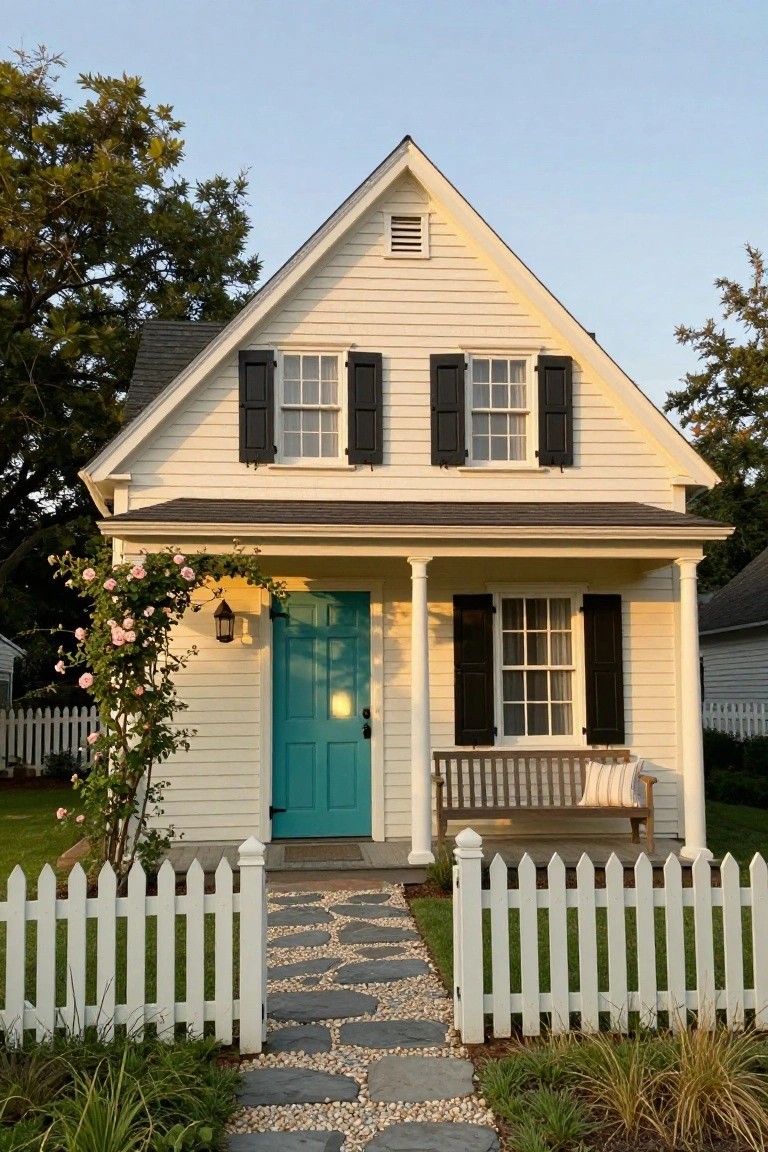
A soft cream siding on this colonial house keeps things light and classic. But that turquoise door changes everything. It pulls your eye right to the entry without clashing. The black shutters add some crisp lines, and the porch sets it off nicely. It’s a simple way to make a plain cream exterior feel more alive.
Try this on older colonials or cottages that need a lift. Pick a door color like turquoise that echoes nearby plants or sky. Keep the rest neutral so it doesn’t fight the house. Works great with a bench and some climbing roses nearby. Just make sure the hardware matches the bold shade.
Cream Colonial Entry with Lavender Sides
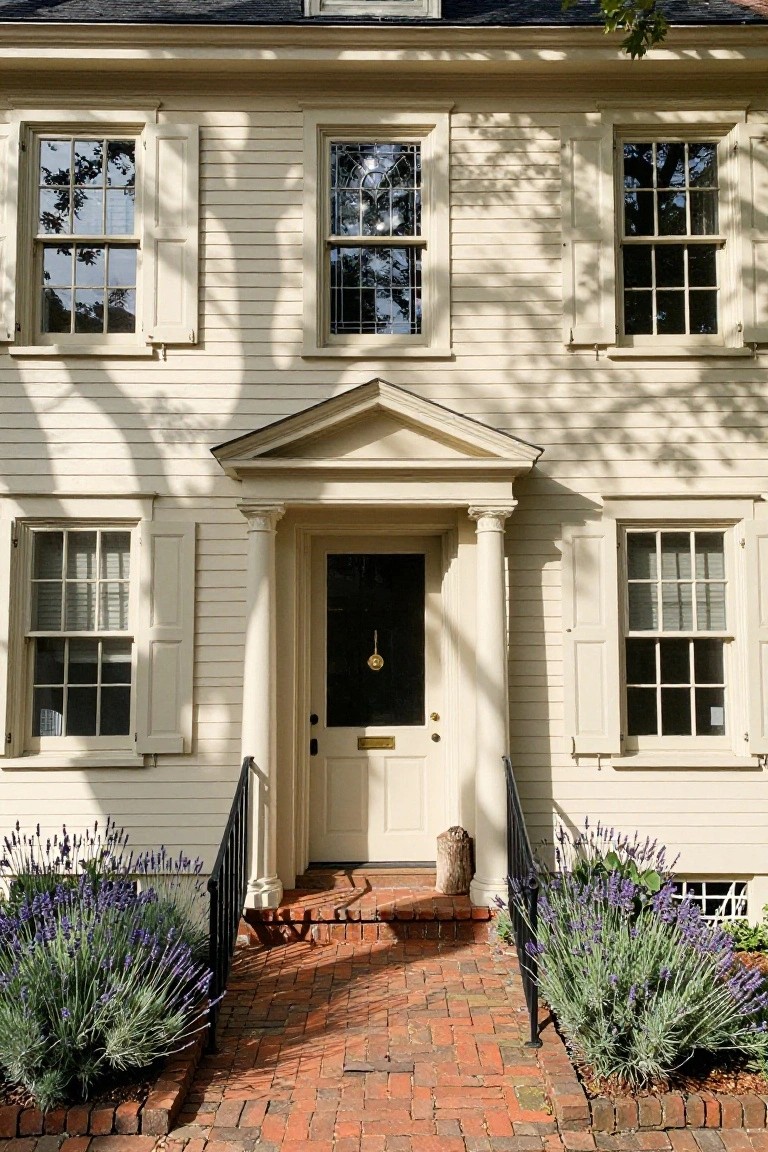
Lavender bushes planted right along the entry steps add a gentle purple touch to this pale cream colonial house. The soft color plays nicely against the clapboard siding and keeps the whole front from looking too stark. It’s a simple way to bring some life without overpowering the classic lines.
Try this on homes with straight-up symmetry like this one. The low-growing lavender stays tidy and comes back each year. Just make sure the path stays clear for walking, and pick a spot with good sun. Works best on smaller front yards where you want subtle color.
Cream Stucco with Black Trim
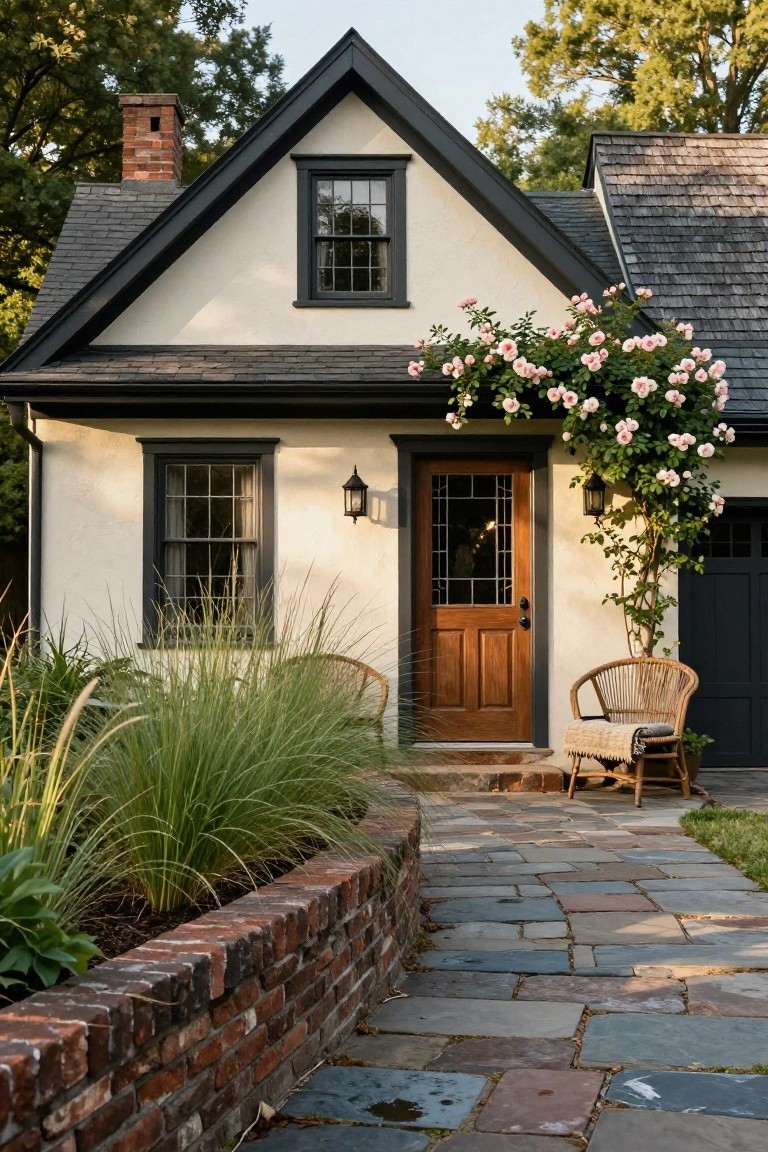
A soft cream stucco covers the walls of this colonial-style house. Black trim outlines the windows and roof edges, giving it clean lines. Pink climbing roses trail over one side, easing the sharper contrasts for a gentler feel overall.
This setup works well on compact homes tucked into wooded spots. Train the roses up a trellis by the entry door, like near that wooden one with the lantern. Pick a pale cream that picks up garden tones, and keep the black trim matte to avoid glare.
Navy Shutters Add Punch to Cream Colonial Siding
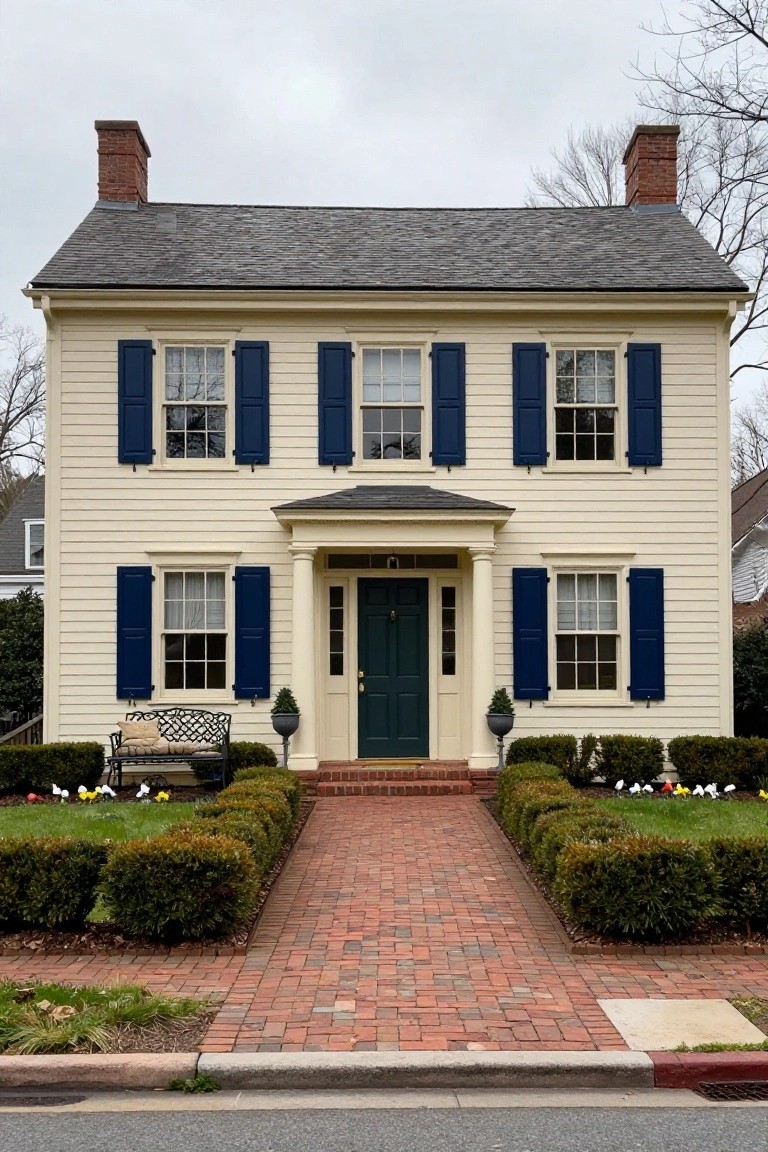
A light cream siding like this one on a classic two-story colonial keeps the whole facade feeling soft and easy on the eyes. Navy blue shutters give it some needed contrast. They stand out against the pale walls without making things feel too busy. That dark green door ties right in.
This setup works great on homes from the early 1800s or modern takes on colonial style. Paint the siding in a warm cream tone first. Then pick shutters in a true navy. It suits shady streets or spots with overcast skies… keeps the house from blending into the background.
Cream Colonial with Blue Shutters
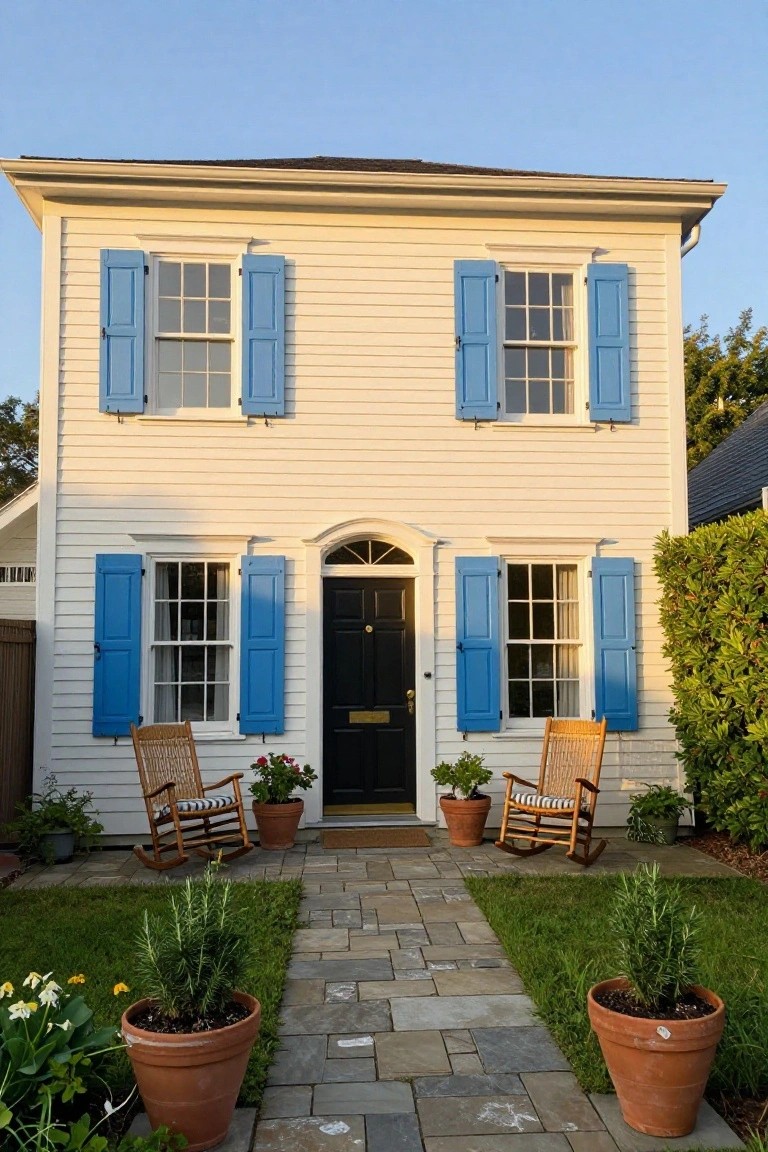
A light cream siding on this colonial-style house sets a soft, easy base that feels welcoming from the street. The blue shutters stand out just enough to add personality and tie into coastal or garden vibes, without making the whole facade too bold. That black door pulls it together nicely.
This setup suits older neighborhoods or suburbs where you want classic charm but nothing too stark. Use it on two-story homes with good window balance. Stick to simple plant pots nearby, and skip heavy landscaping so the colors stay the focus.
Cream Colonial Front Softened by Entry Ferns
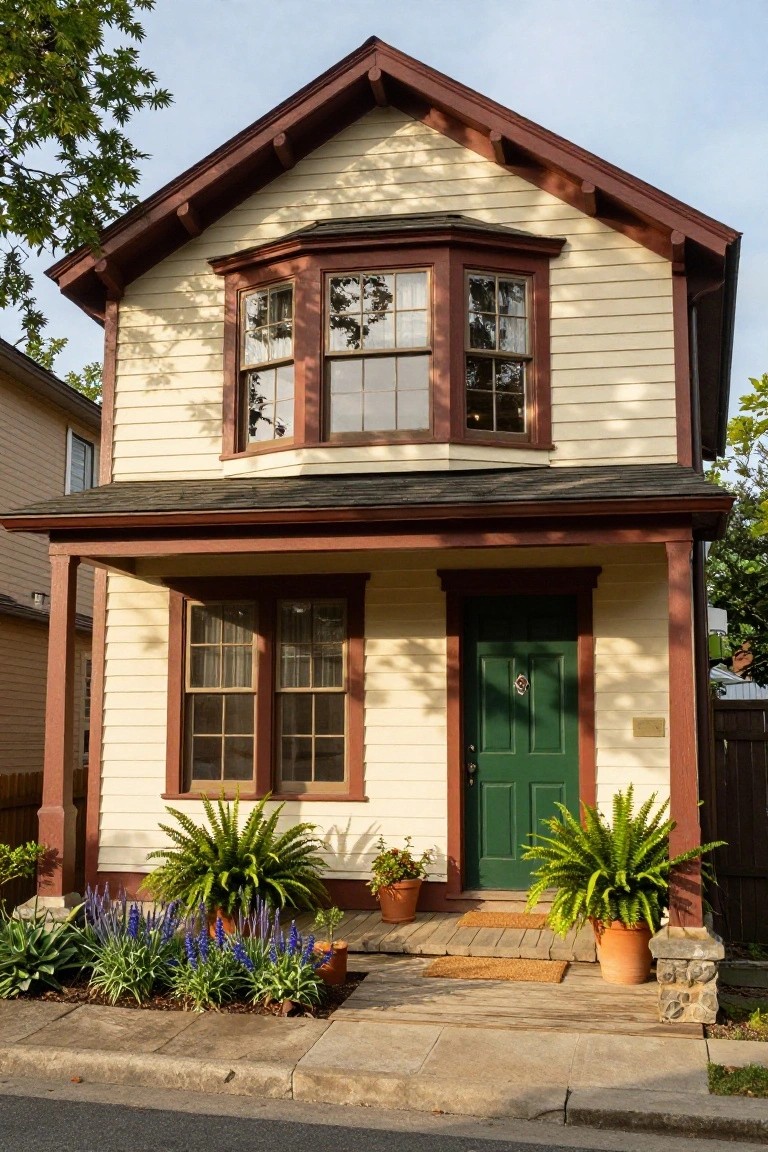
A classic cream clapboard colonial like this one gets a gentle touch with large ferns planted right at the porch steps. The soft yellow tones of the siding pair nicely with the bold green door, but it’s those full, feathery plants that pull it all together. They add life and hide a bit of the hard edges, making the house look more approachable from the street.
Put ferns or similar lush greens in pots flanking your entry if you have a shady porch spot. This works great on two-story homes in town settings, where you want easy upkeep and year-round interest. Just pick bigger pots to match the scale, and keep them watered since they like the moisture.
Warm Wood Door on Cream Colonial
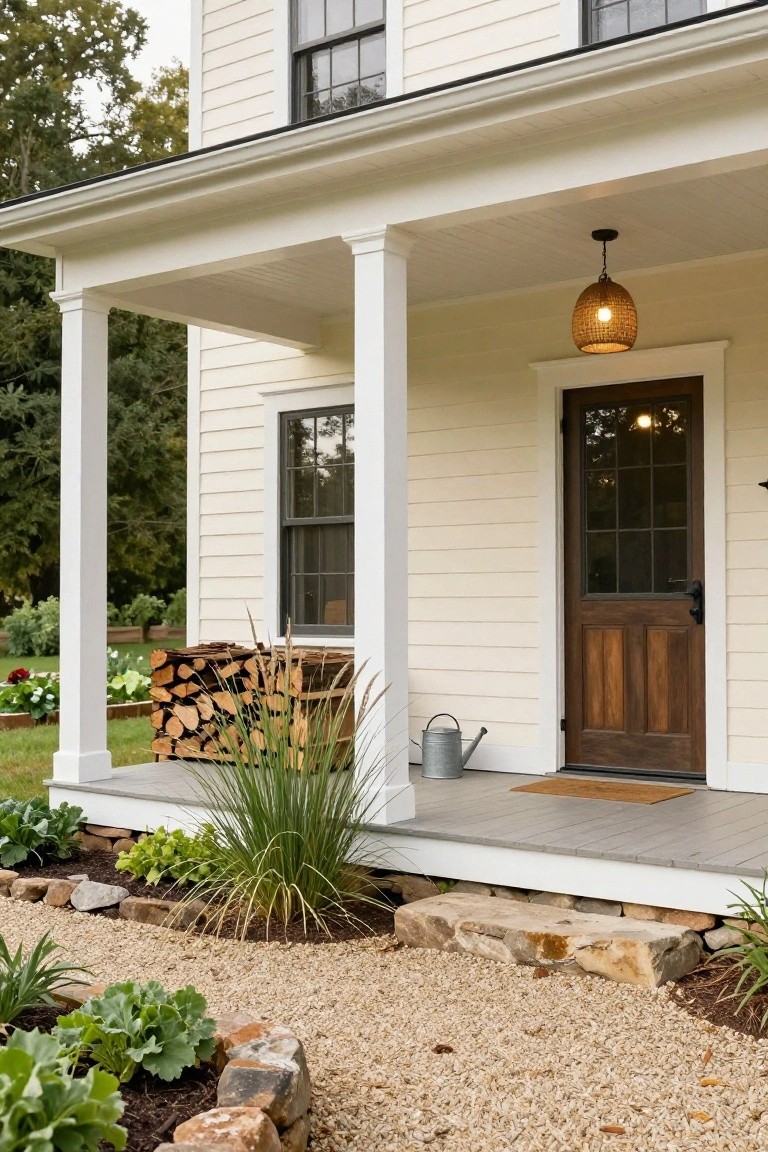
A dark wood front door like this one brings real life to a soft cream exterior. The rich brown panels and divided glass lights draw you straight to the entry without clashing. On a colonial like this, it fits right in with the white porch columns and clapboard siding. Keeps things classic but not bland.
This works great on farmhouses or older homes in rural spots. Hang it under a simple porch roof, and add a few plants nearby for balance. Skip glossy finishes though. Go for something weathered to match the natural feel.
Black Door on Cream Brick Facade
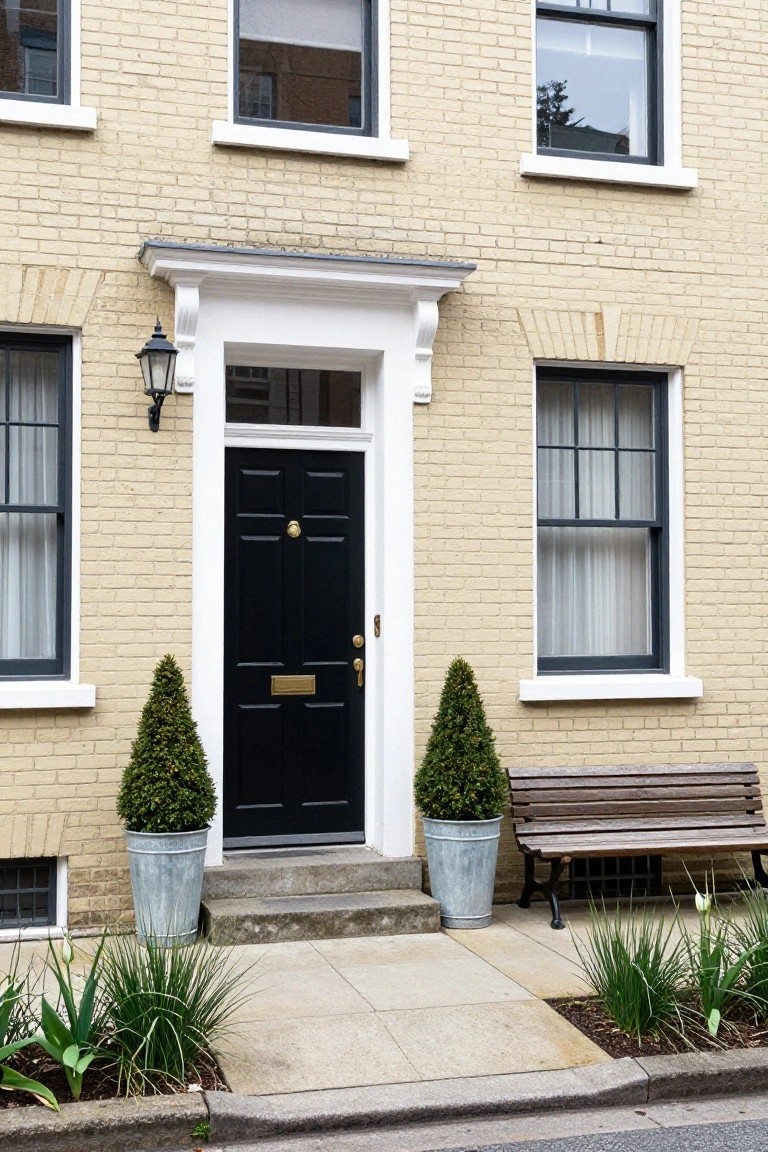
A black front door gives a cream brick house some needed contrast. The soft beige bricks stay calm and understated, but that dark door pulls your eye right to the entry. It keeps the whole front from looking too bland, especially on these older colonial townhouses.
Try this on narrow street-facing homes where you want a sharp focal point. Add matching topiary pots on either side, like the ones here, to frame it nicely. It suits urban spots well, just make sure the door hardware shines a bit for that polished touch.
Cream Walls with Yellow Trim
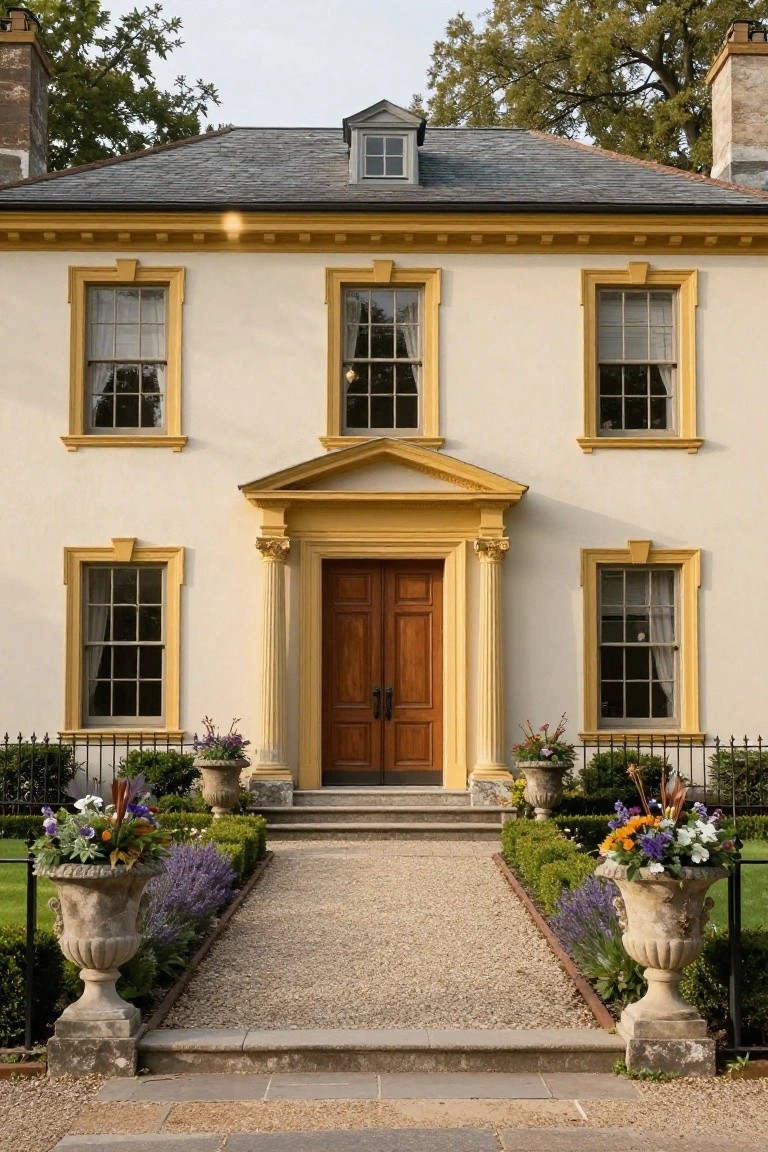
A classic colonial house like this one looks fresh when you paint the walls a soft cream and outline everything in warm yellow trim. The cream keeps things calm and easy on the eyes while the yellow adds a bit of cheer around the windows and entry. It softens the bold architecture without losing that traditional feel.
This combo suits older homes with good symmetry and slate roofs. Pick shades that lean toward mustard for the trim so it warms up in sunlight. Pair it with simple gravel paths and potted flowers out front. Avoid cooler yellows though… they can clash.
Navy Shutters on Cream Colonial Siding
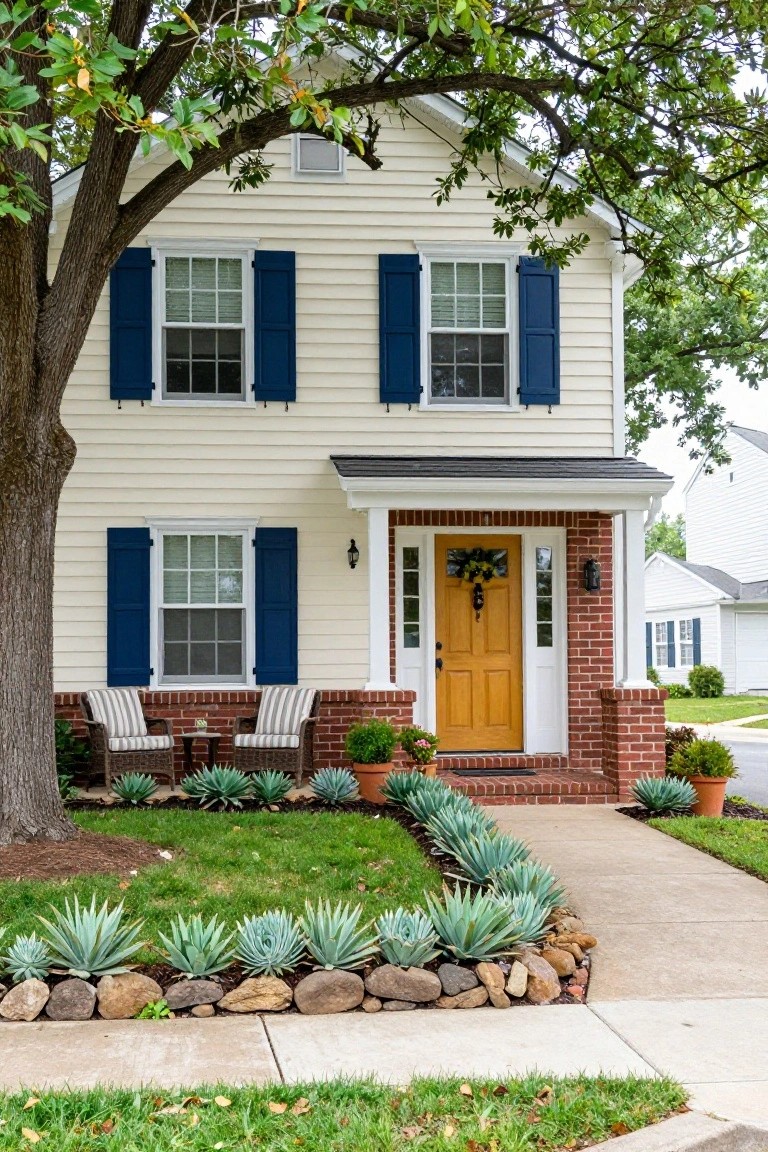
A cream-colored colonial house looks gentle and easy on the eyes, especially when you add navy blue shutters like these. The soft siding tone keeps the whole facade from feeling too stark or busy. Those shutters pull your eye to the windows without overpowering the light color. And with a sunny yellow door up front, it all ties together nicely.
Try this on a two-story home with good window placement. It suits older neighborhoods where you want classic lines but something fresh. Brick around the porch base helps ground it. Just make sure the shutters match the door hardware so nothing clashes.
Cream Colonial with Green Shutters
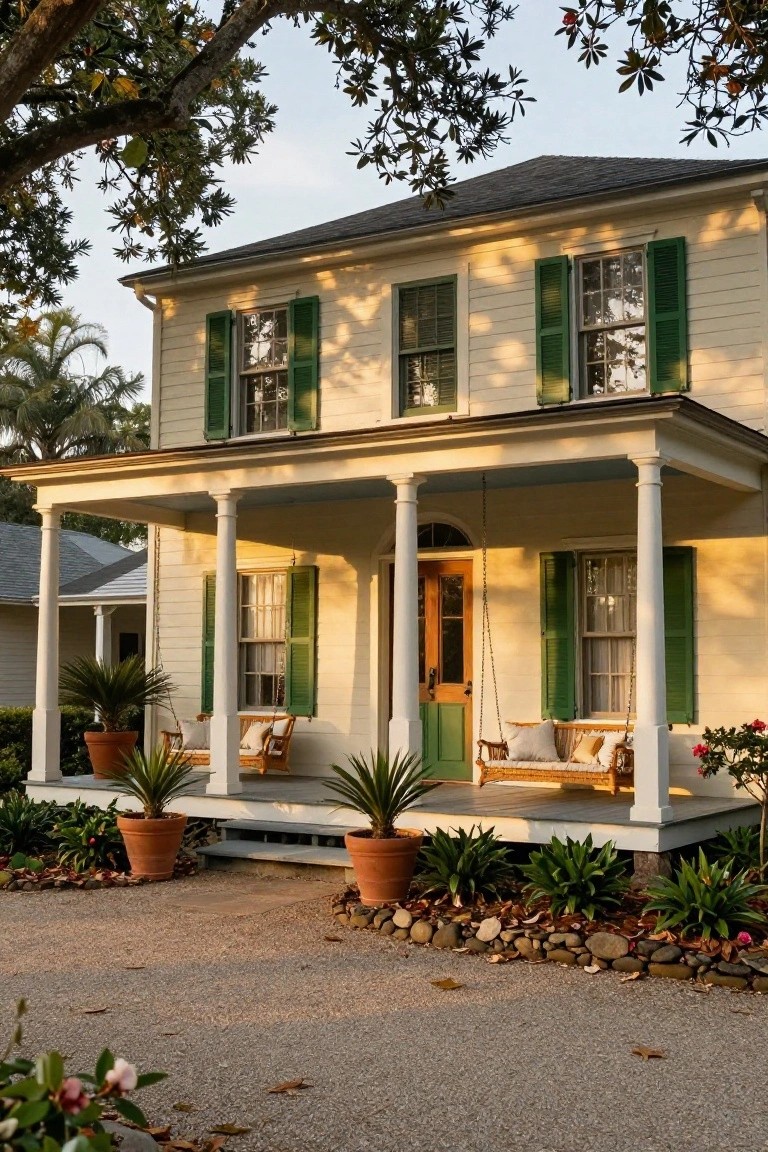
A light cream paint on the clapboard siding works well here to ease up the formal lines of a classic colonial house. Those deep green shutters add just enough contrast without overpowering things. And the porch swing? It pulls you right in for that lived-in feel.
This color combo suits older homes in mild climates, especially where you want curb appeal without too much upkeep. Pair it with simple potted plants on the porch and keep the trim white. Skip bold colors elsewhere, or it might feel busy.
Cream Colonial with Climbing White Roses
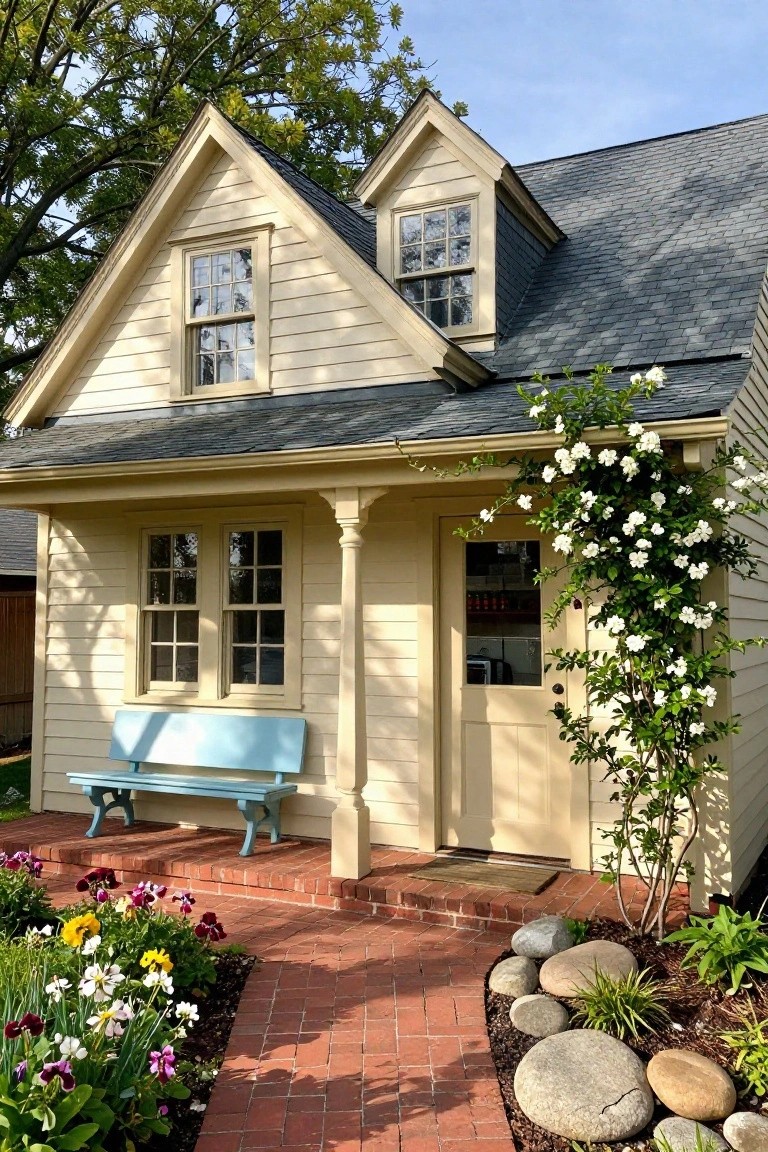
A simple cream clapboard house like this one gets a gentle lift from white climbing roses trailing up the porch posts. The pale siding and dark roof stay crisp. But those roses add life right at eye level. They make the front feel less stark. More like a cozy spot you’d want to sit on that blue bench.
Plant white climbers on the porch side of light-painted colonials. They suit smaller homes or cottages best. Train them loosely so they don’t hide the door. Pair with a few colorful flowers along the path. Watch they get enough sun or they won’t bloom much.
Cream Siding with Teal Door Accents
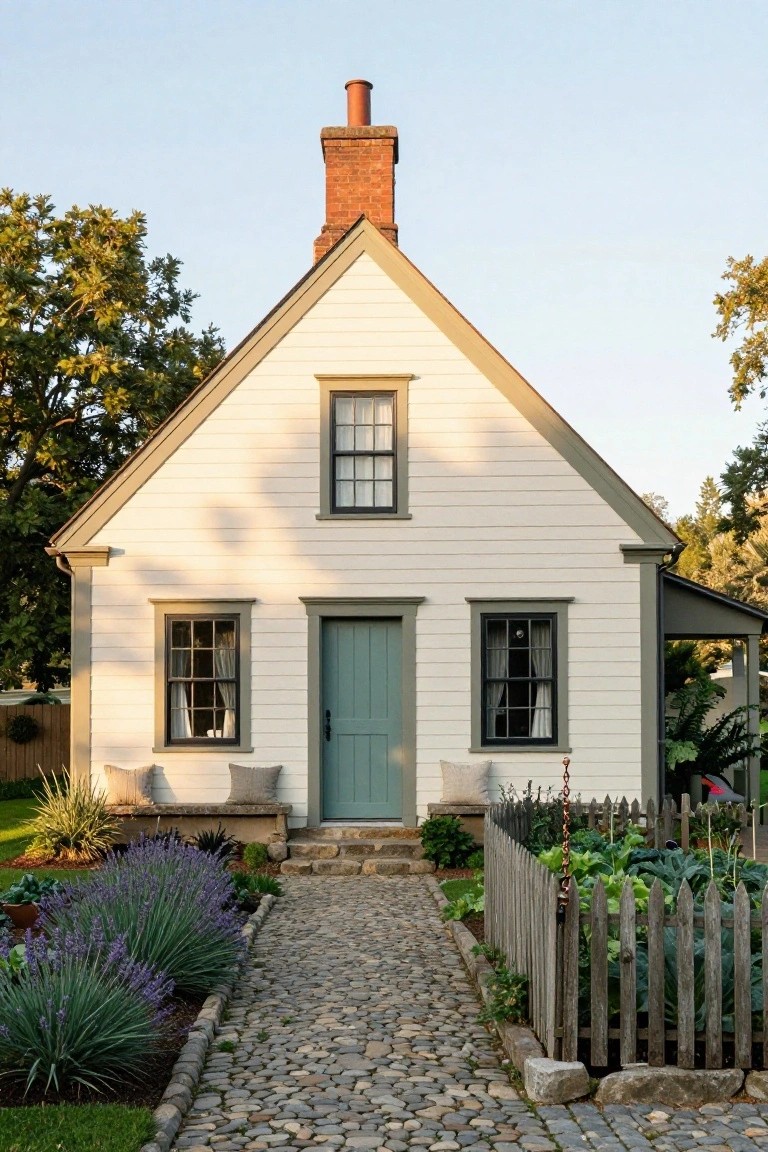
A soft cream paint on the clapboard siding takes the edge off a classic colonial shape. It feels less stark than bright white, more like something that’s been there a while. That teal front door pulls your eye right to the entry, but stays calm next to the cream. Dark green frames around the windows tie it together without much fuss.
This setup suits older neighborhoods or homes backed by trees. Go for it on single-story or gabled colonials under 2,000 square feet. Keep plantings low around the path so the colors stay clear. One thing. Skip glossy finishes on the door. They can look too new. Matte holds the soft vibe better.
Soft Cream Siding with Gray Trim
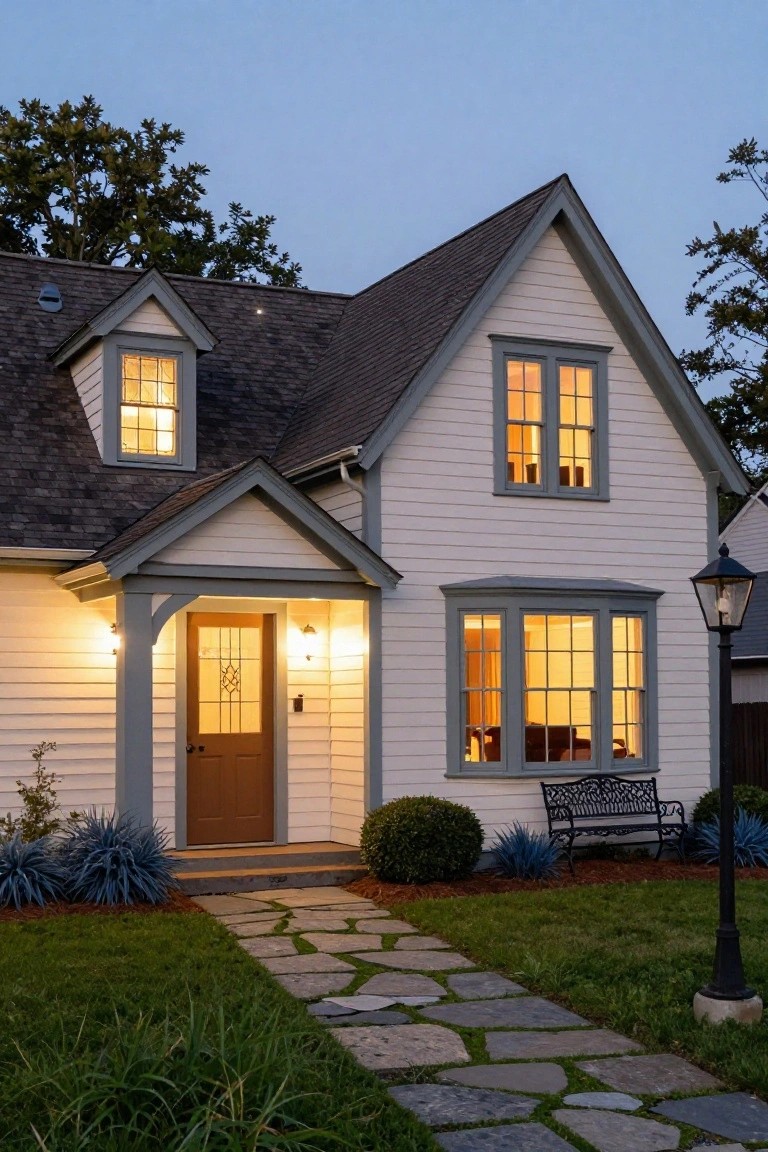
This setup takes a classic colonial house and gives it a gentler feel. The pale cream siding looks clean against the darker gray trim around the windows and roofline. Warm lights from the windows and porch pull it together at dusk. It keeps things traditional without feeling stark.
Try this on homes with simple gables and front porches. The cream works best in shady spots or cooler climates where it stays bright. Pair it with stone paths and low plants like agave for balance. Just make sure the trim is a true medium gray. Too light and it washes out.
Cream Stucco with a Warm Wood Door
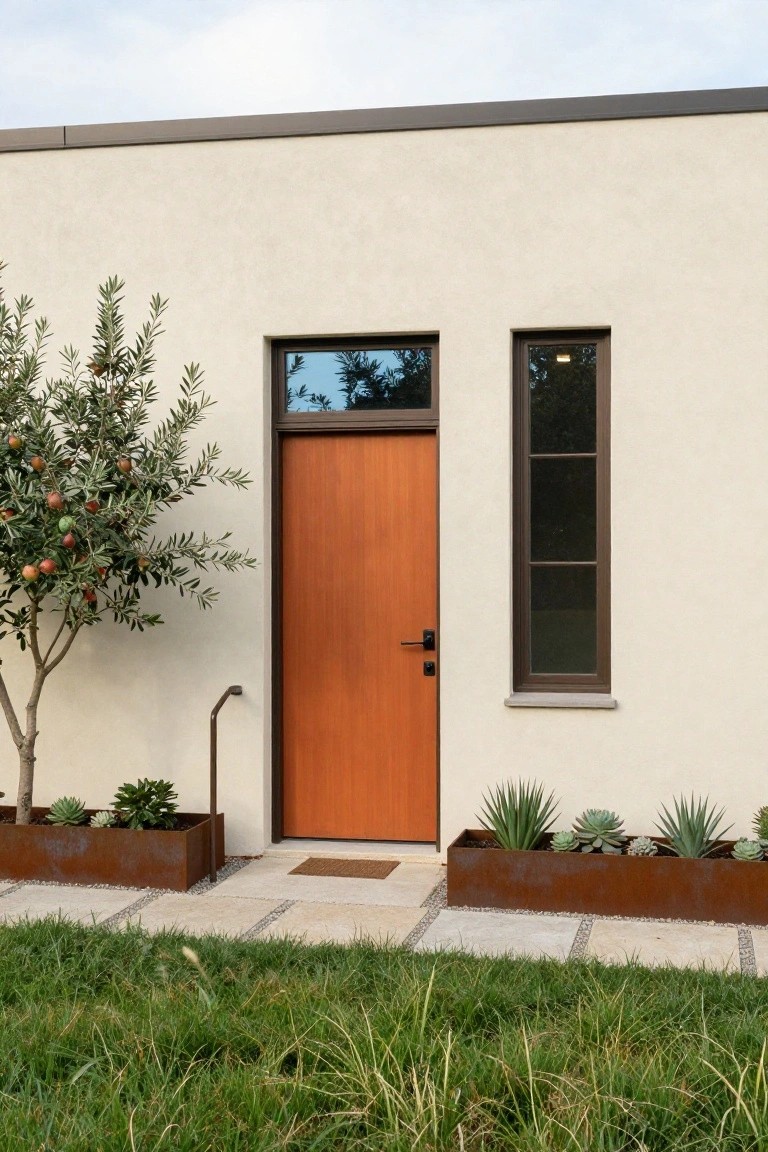
A simple way to make a cream exterior feel more inviting is with a solid wood entry door in a warm orange tone. Here the cream stucco walls stay neutral and clean, but that door pulls your eye right to the front and adds a bit of natural warmth without much fuss. The olive tree nearby picks up on that earthy feel too.
This works well on homes with plain facades, especially if you want to keep things low-key modern or even update an older colonial style. Go for a door that’s substantial but not carved up, and pair it with simple plantings like succulents in metal boxes. Just make sure the wood finish matches your climate so it doesn’t fade fast.
Cream Colonial Porch Front
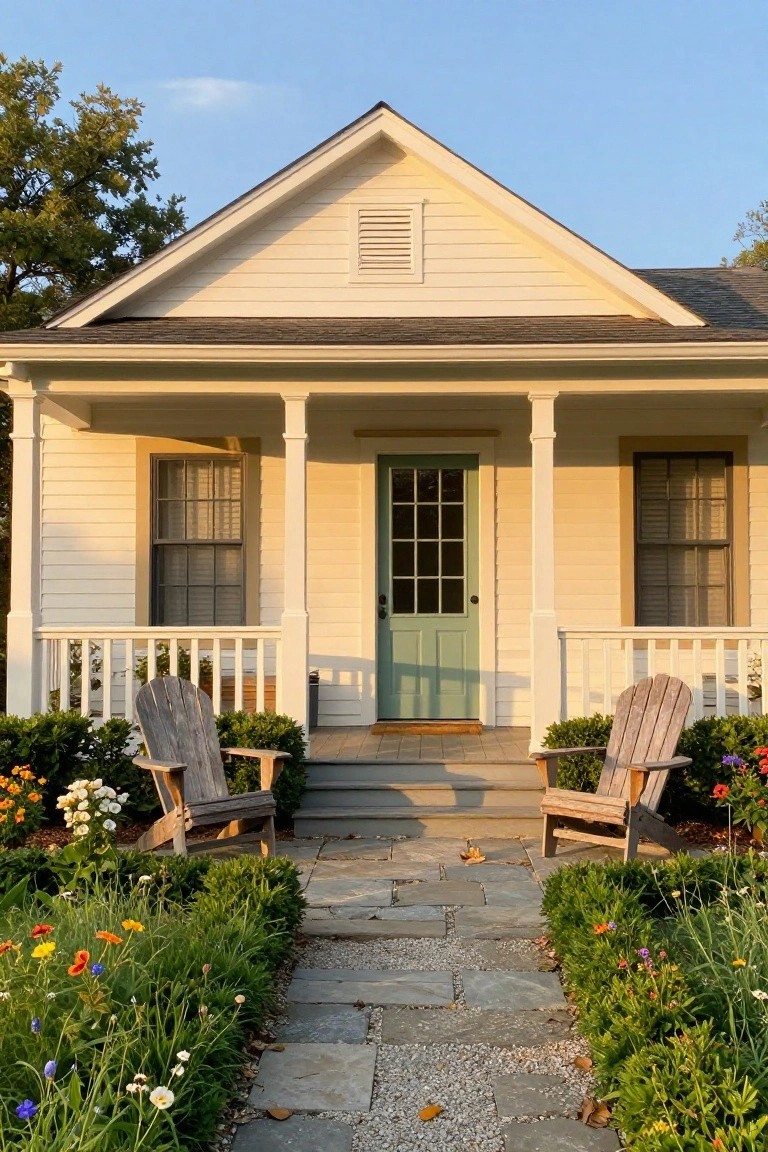
A light cream clapboard siding like this takes the edges off a traditional colonial house. It keeps the classic gable roof and porch columns but makes everything feel calmer and more approachable. That soft yellow-cream tone with white trim avoids the brighter whites that can make older styles look too crisp.
Try this on homes with a covered front porch where you want easy curb appeal. The color holds up well in sunny spots and pairs nicely with a pop of color on the door, like teal here. Add a couple chairs and some path edging, and it suits family neighborhoods without much upkeep.
Frequently Asked Questions
Q: How do I pick the right cream shade for my sunny south-facing colonial?
A: Head to a paint store and snag sample pots of a few warm creams with yellow or beige undertones. Slap them on poster board and prop it against your siding at different times of day. You will spot the one that stays soft and inviting even in harsh light.
Q: What trim color pairs best with cream to keep things soft?
A: Try a pale gray trim. It adds gentle definition without sharp edges. Off-white works great too if you match its warmth to the cream siding.
Q: Does cream hide dirt okay on a busy street house?
A: Cream shrugs off grime way better than bright white. Quick hose downs keep it looking fresh. Pressure wash every couple years and you are set.
Q: How do I tie in landscaping with these cream schemes?
A: Plant soft green shrubs like boxwood along the foundation. They ground the cream nicely. And mulch with natural browns to echo the cozy vibe.
