

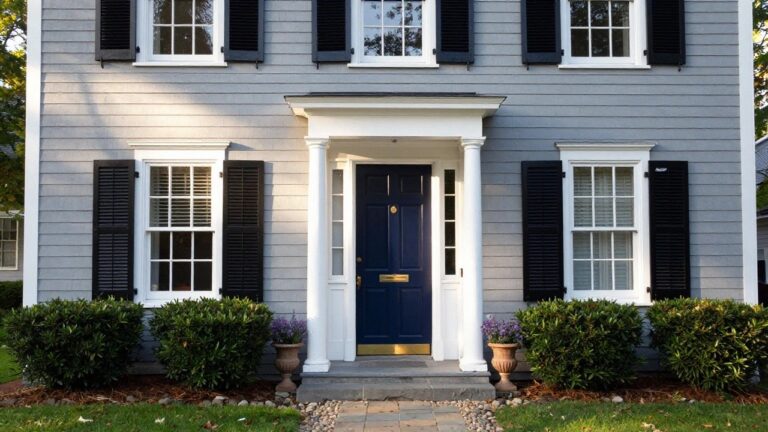
I’ve noticed that one-story colonials draw you in most when their exteriors let the classic symmetry breathe without extra flourishes. The roofline sweeping cleanly into a centered entry door often makes the biggest difference in curb appeal from the street. I remember eyeing a neighbor’s house where mismatched siding threw off the whole facade balance in person. Designs that pair simple clapboard or brick with restrained shutters tend to hold up better over the years. A handful of these caught my attention enough to jot down for tweaking a plain front someday.
Colonial Entry with Navy Door
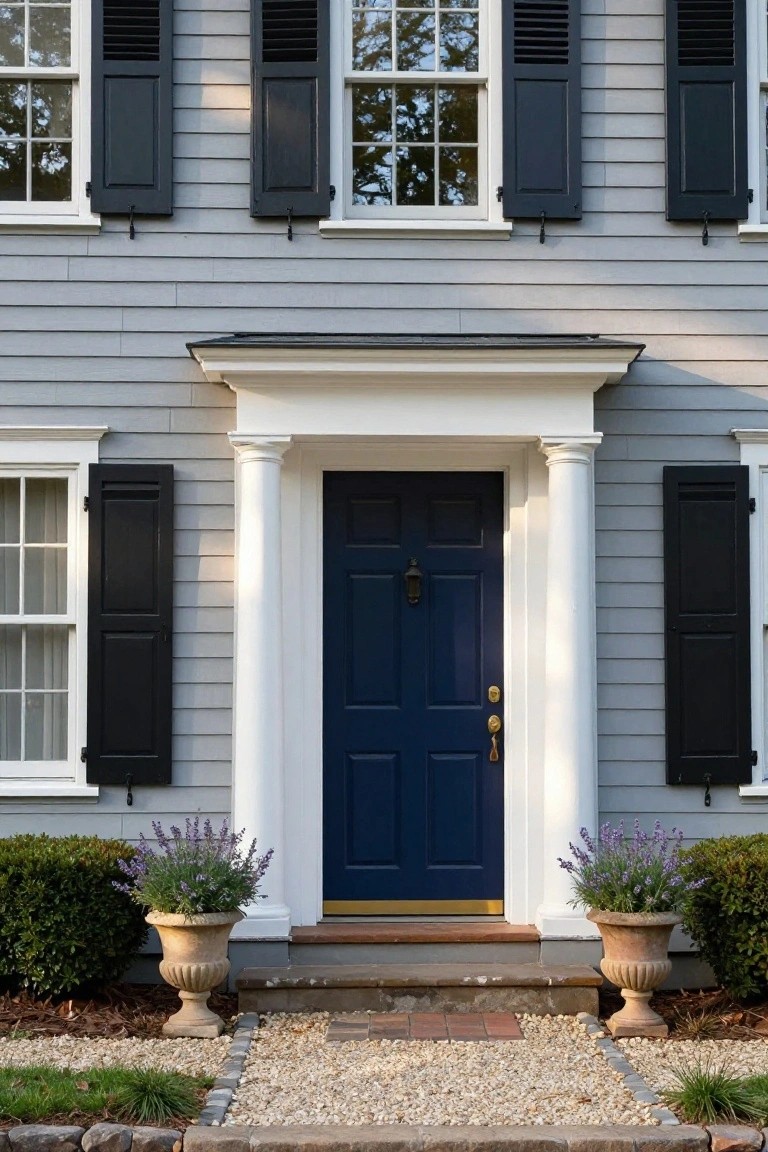
A navy blue front door gives this one-story colonial a clear focal point right at the entry. Against the soft gray shingles and crisp white columns, it pulls your eye without much fuss. Black shutters nearby repeat the dark tone, keeping the look tied together and classic.
This setup suits simpler homes like ranches or colonials in neutral shades. Go for a glossy finish on the door to catch light, and add matching pots with lavender or boxwood on either side. It boosts curb appeal fast, but skip it if your siding is already dark… might blend too much.
Yellow Door on Brick Colonial
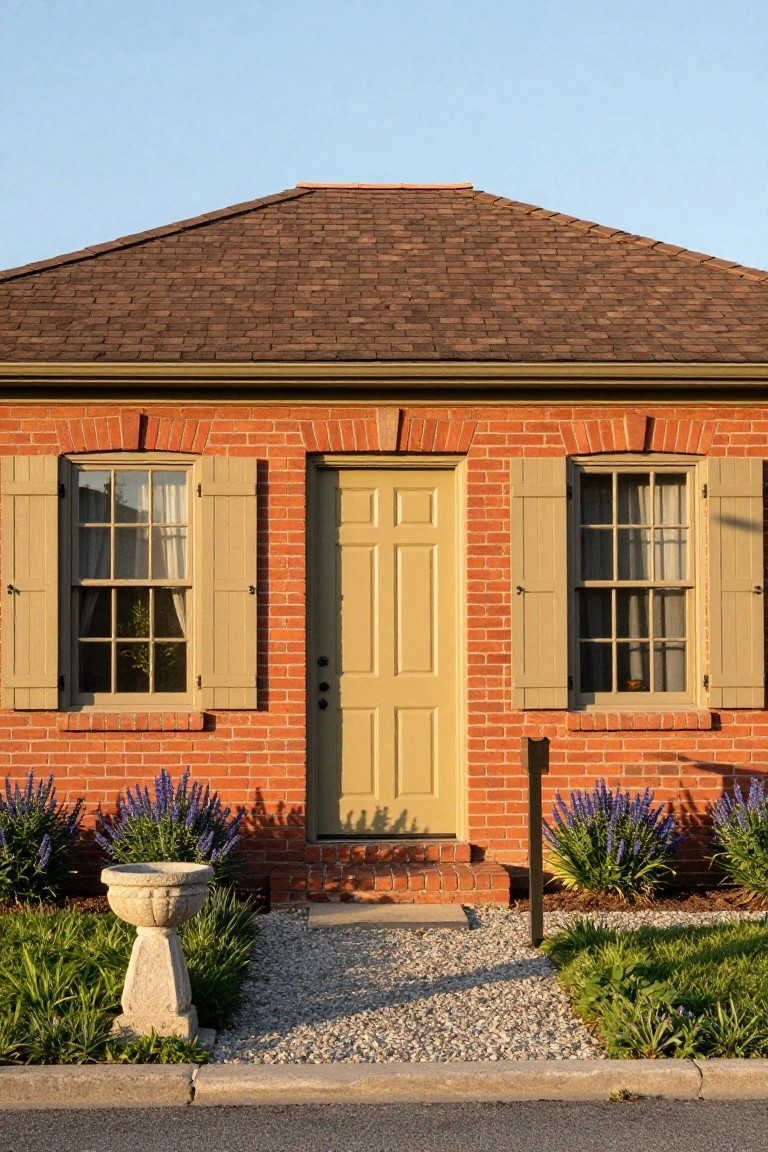
A simple yellow door like this one brightens up a classic red brick colonial without changing much else. It sits right in the center of the facade, framed by those arched brick windows and matching shutters. The color pops just enough to draw folks to the entry, making the whole house feel more lived-in and friendly.
This works best on one-story colonials where you want curb appeal on a budget. Stick to muted yellows so they don’t clash with the brick, and keep the landscaping low-key around it, like lavender beds or gravel paths. Avoid going too bold if your roof is dark… it might fight the warmth.
Simple Colonial Porch Entry
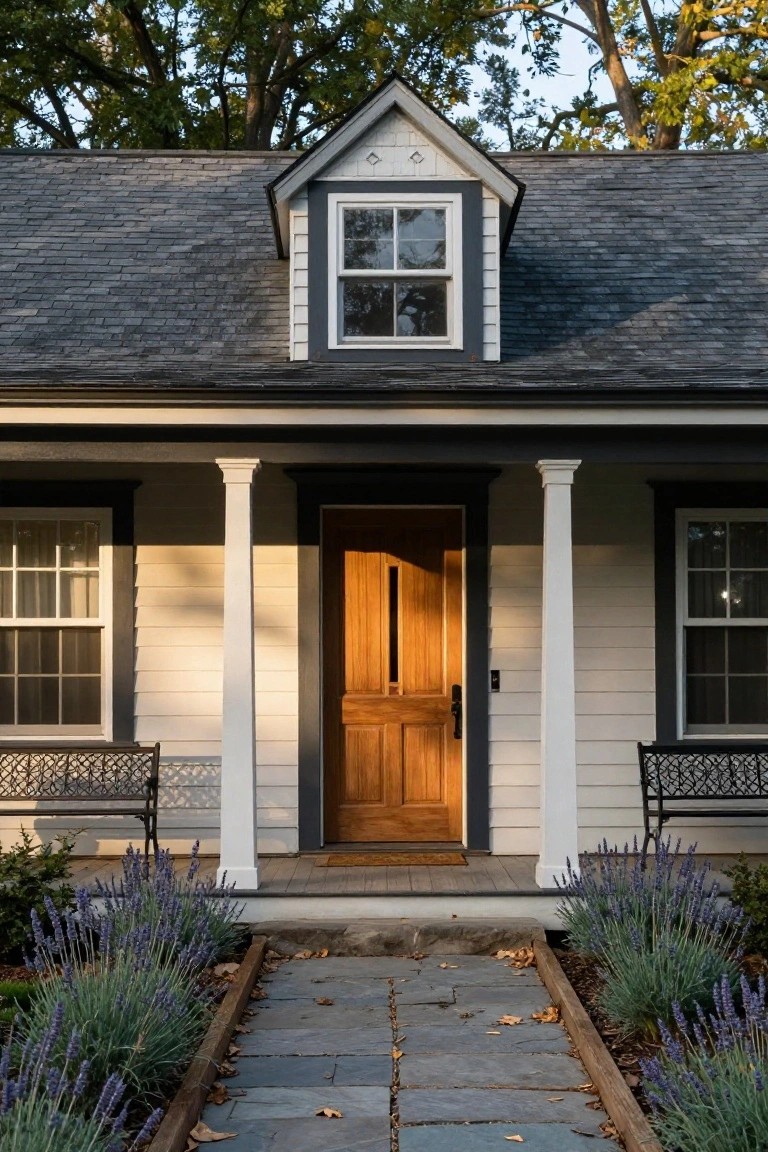
A front porch like this one makes a one-story colonial house feel right at home in any neighborhood. Tall white columns support the roof over the wooden door, keeping things balanced and open. The dark trim on the white siding adds just enough contrast to pull your eye to the entry without overwhelming the clean lines.
You can pull this off on most flat lots where you want classic style on a budget. Frame the door with matching columns and pick a solid wood one for warmth. Line the path with low lavender or similar plants to soften the edges. It suits family homes that need good curb appeal year-round.
Green Door on a Simple Colonial Facade
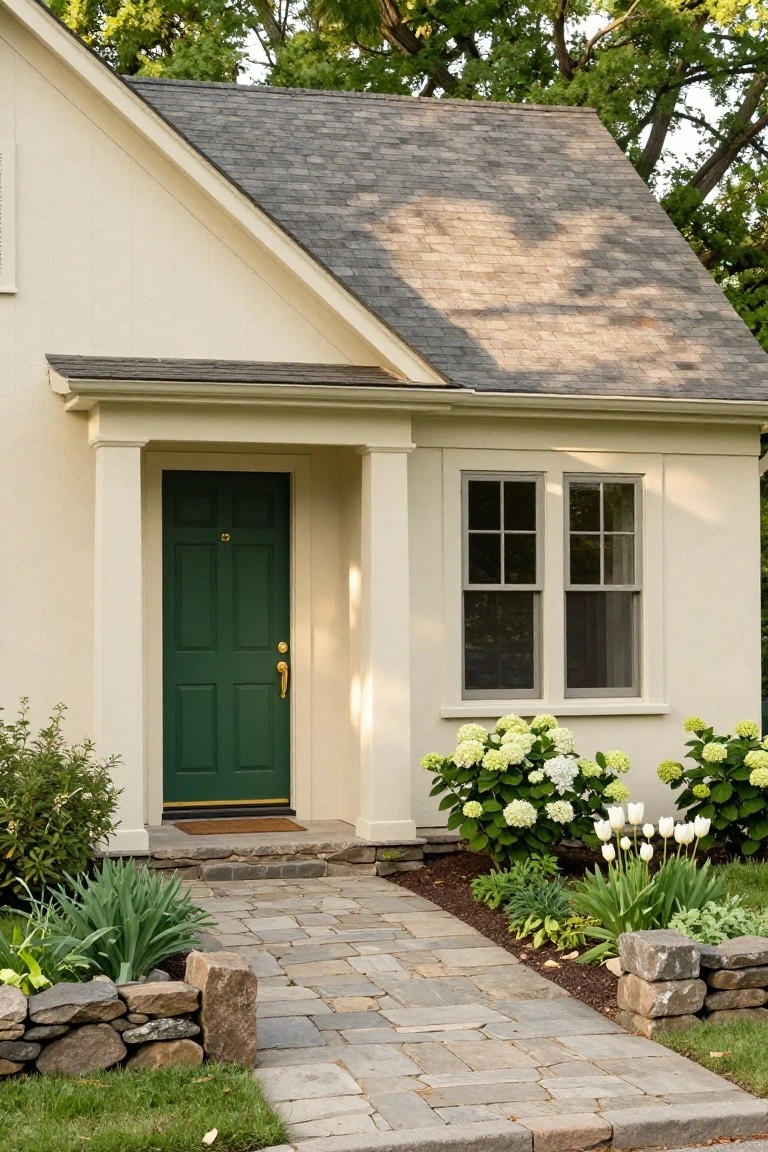
A green front door like this one gives a plain beige colonial house some real personality. The light siding and gray roof stay neutral, so the door becomes the main focal point without trying too hard. It’s a straightforward way to make the entry welcoming, especially on a one-story home where everything shows up front.
This look fits older neighborhoods or suburban spots where you want classic lines but a bit of color. Go for a deep green on a paneled door with brass hardware, and keep the porch simple with columns. Add a stone path and some bushes nearby to tie it in. Just make sure the green isn’t too bright, or it might clash with the yard.
Classic Colonial Facade with Teal Door
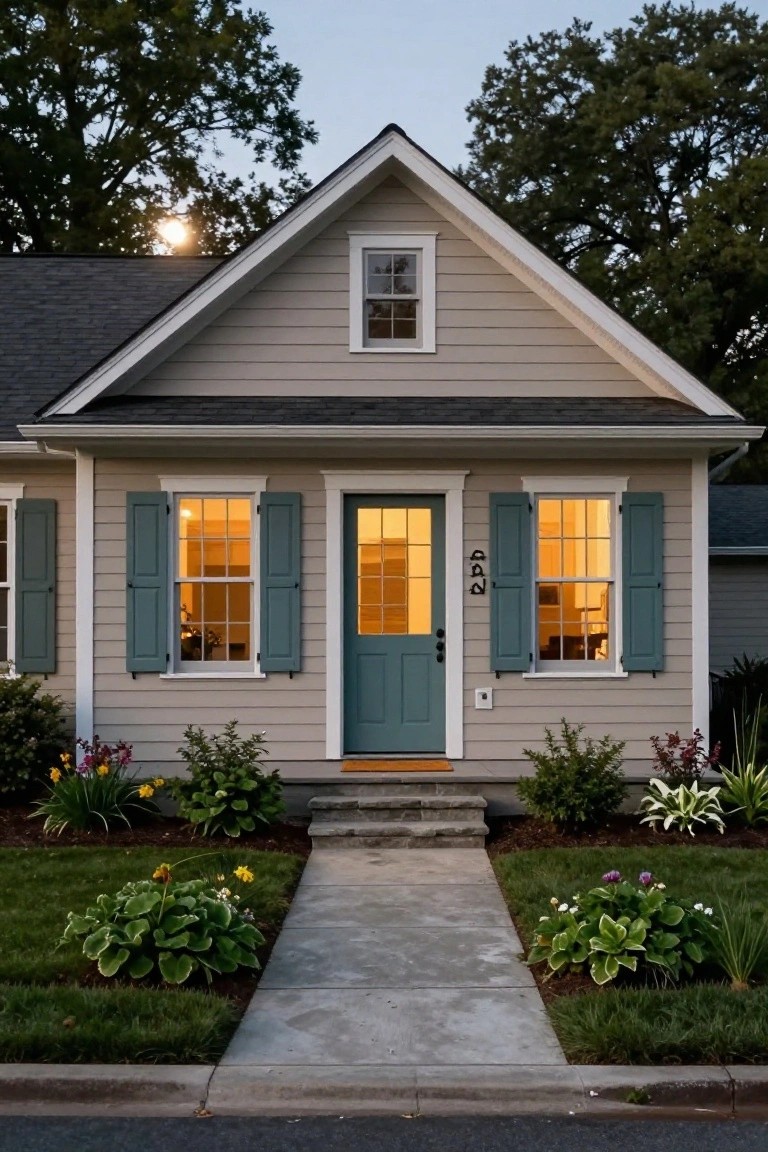
A soft gray clapboard siding covers this one-story colonial, giving it that clean, timeless look without any fuss. The teal front door stands out nicely against the neutral tones, pulling your eye right to the entry. Paired with matching shutters and simple stone steps, it feels welcoming but stays understated.
This setup works best on smaller homes in older neighborhoods where you want curb appeal without big changes. Go for a sturdy door with glass panels to let light in, and keep plantings low around the path so the house stays the focus. Just make sure the color matches your trim so it doesn’t look slapped on.
Shingle Siding on a Compact Colonial
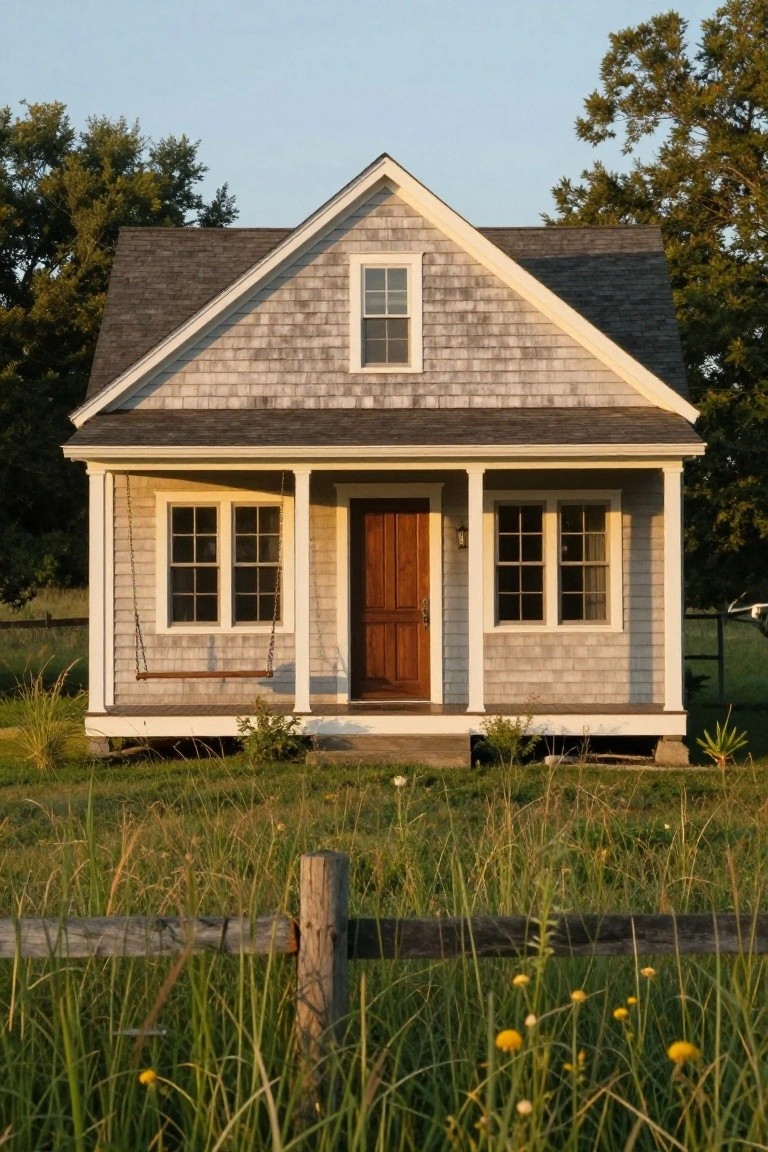
Shingle siding gives this one-story colonial a textured, lived-in look that fits right into a rural or wooded spot. The gray cedar shakes cover the whole facade, broken up by clean white trim around the windows and porch. It keeps things simple without looking plain, especially with that small porch out front holding a swing.
This style works best on smaller homes where you want low upkeep and a nod to older coastal houses. Pair it with a bold door color like the red one here to pull eyes to the entry. Skip it if your lot is super formal, though. It shines where grass and trees frame the house naturally.
Frosted Glass Front Door
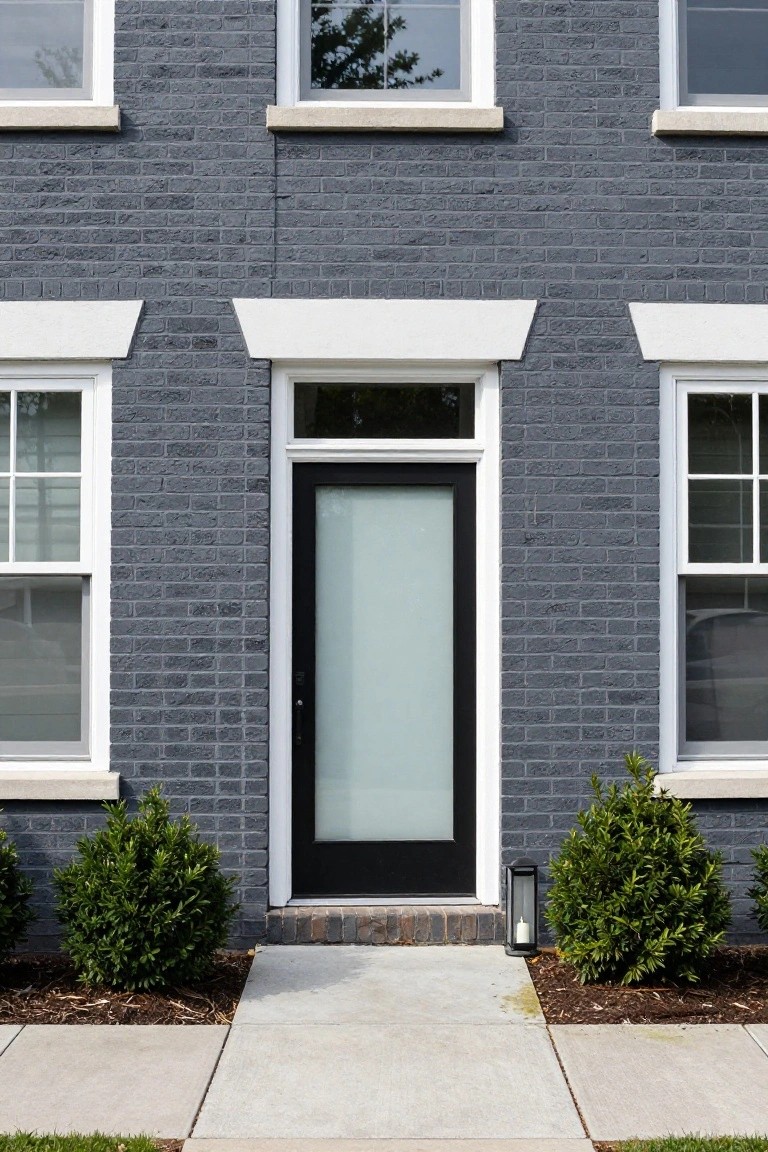
A frosted glass panel in the front door lets natural light filter into the entry without giving a clear view inside. That’s handy for a one-story colonial where you want some welcoming glow but not full exposure. Here it sits in a black frame against gray brick, keeping things clean and simple.
This works best on straightforward brick facades that need a quiet update. Try it on homes with white window trim for that subtle contrast. Just keep plantings low like these boxwoods so the door stays the focal point. Avoid busy patterns on the glass if your house leans traditional.
White Brick Colonial with Blue Shutters
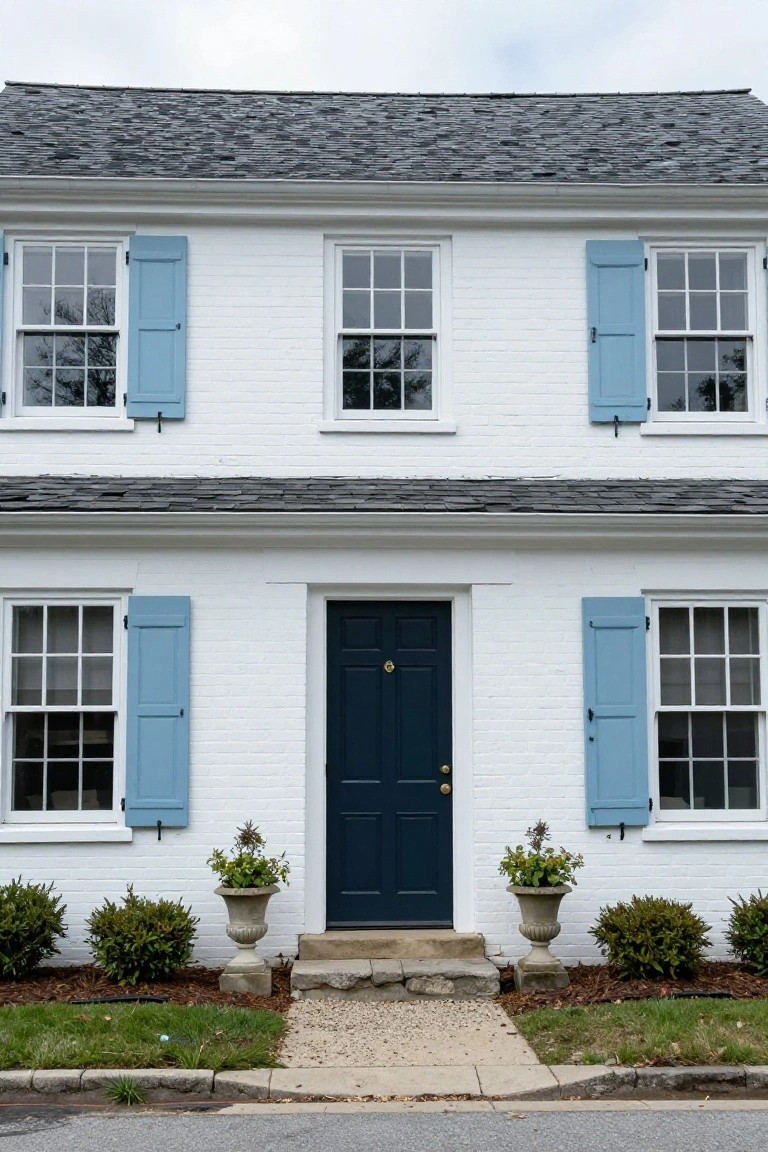
White brick gives this colonial house a clean, bright base that feels fresh year round. The blue shutters on every window add just enough color to make the front stand out, while keeping the look simple and balanced. A dark front door centers everything without overwhelming the facade.
This setup works well on one-story colonials where you want curb appeal that doesn’t need constant upkeep. Add matching urn planters by the entry for a bit more structure. It suits quieter neighborhoods… just make sure the brick is properly sealed to handle weather.
Black Door on White Siding
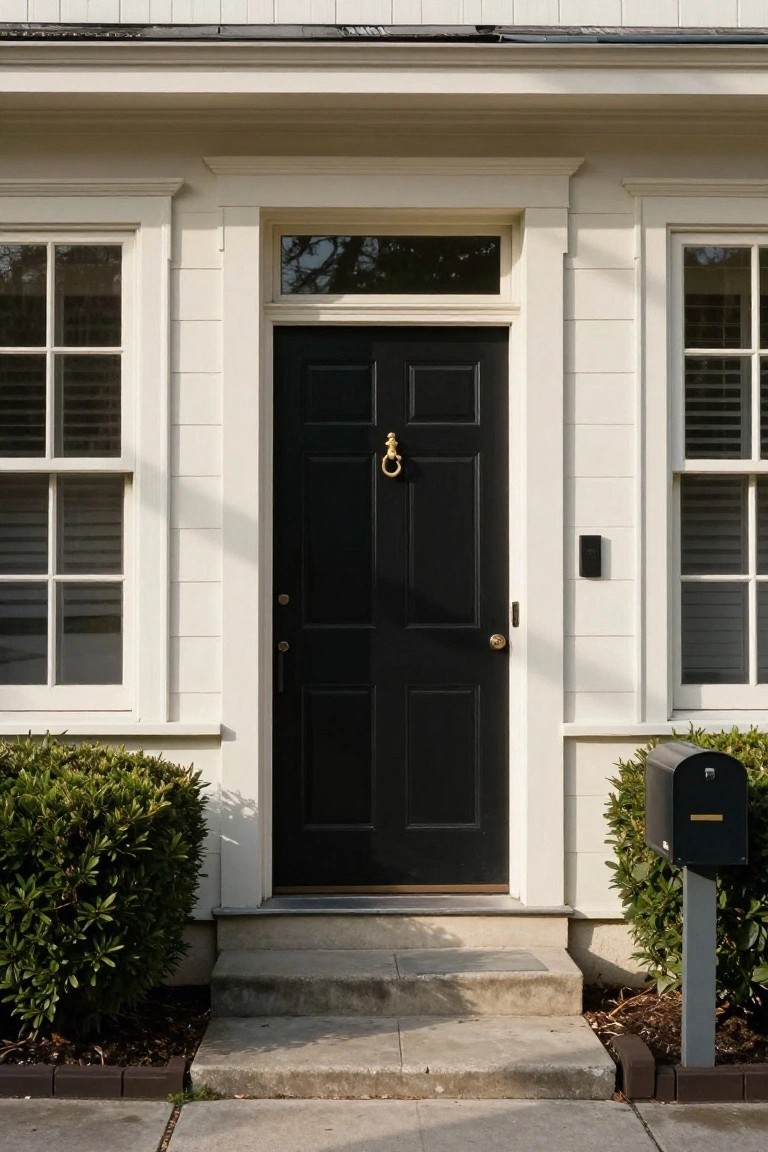
A black front door stands out clean and sharp against white siding like this. That deep color pulls your eye right to the entry, and the gold knocker gives it a little polish. On a one-story colonial, it keeps the look simple but not boring.
This setup fits homes with straightforward lines. Paint the door black, add a brass handle if you want, and you’re set. It works best where you don’t want fuss, just something that says welcome without trying too hard. Skip busy hardware though.
Classic White Colonial with Teal Door
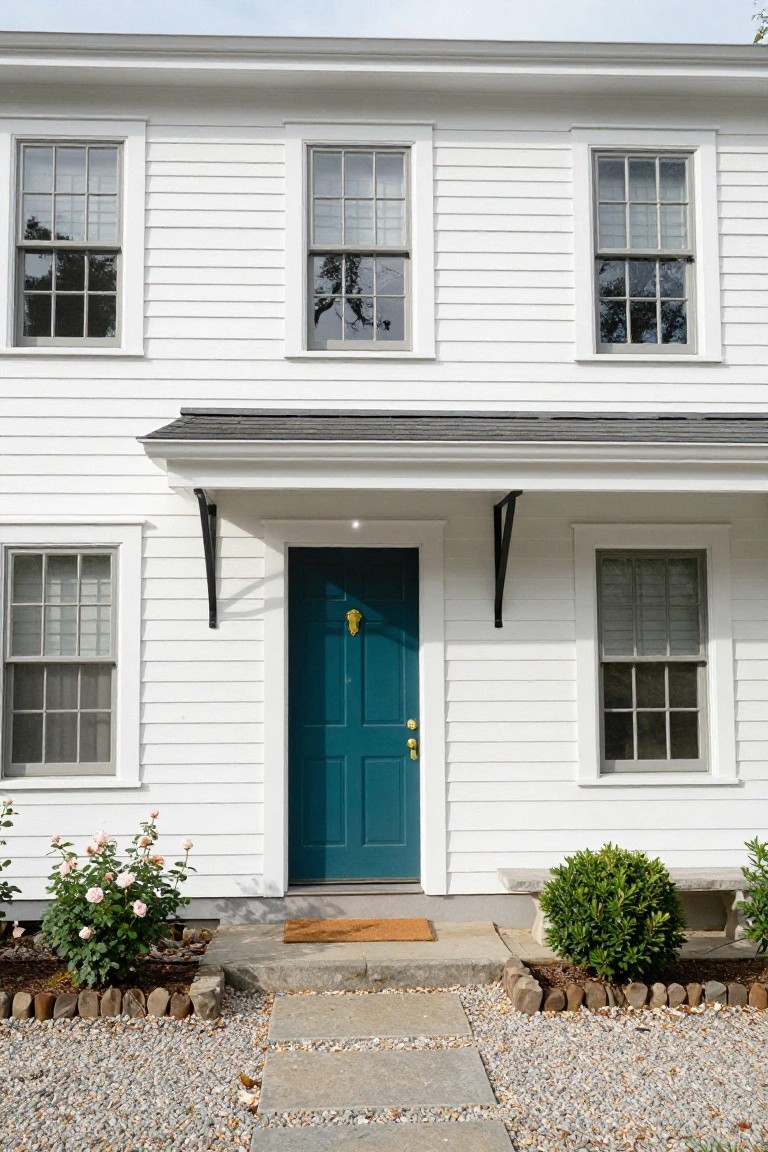
A simple white clapboard house like this one gets a lot from just one bold choice. That teal front door pulls your eye straight to the entrance and gives the whole facade some life. It keeps the colonial style clean and traditional but adds enough color to make the house memorable from the street.
This works best on straightforward one-story homes where you want curb appeal without much fuss. Go for a glossy teal or similar shade on a paneled door, pair it with brass hardware, and keep the siding bright white. Skip it if your house has busy trim or landscaping already in place.
Symmetrical Colonial Facade
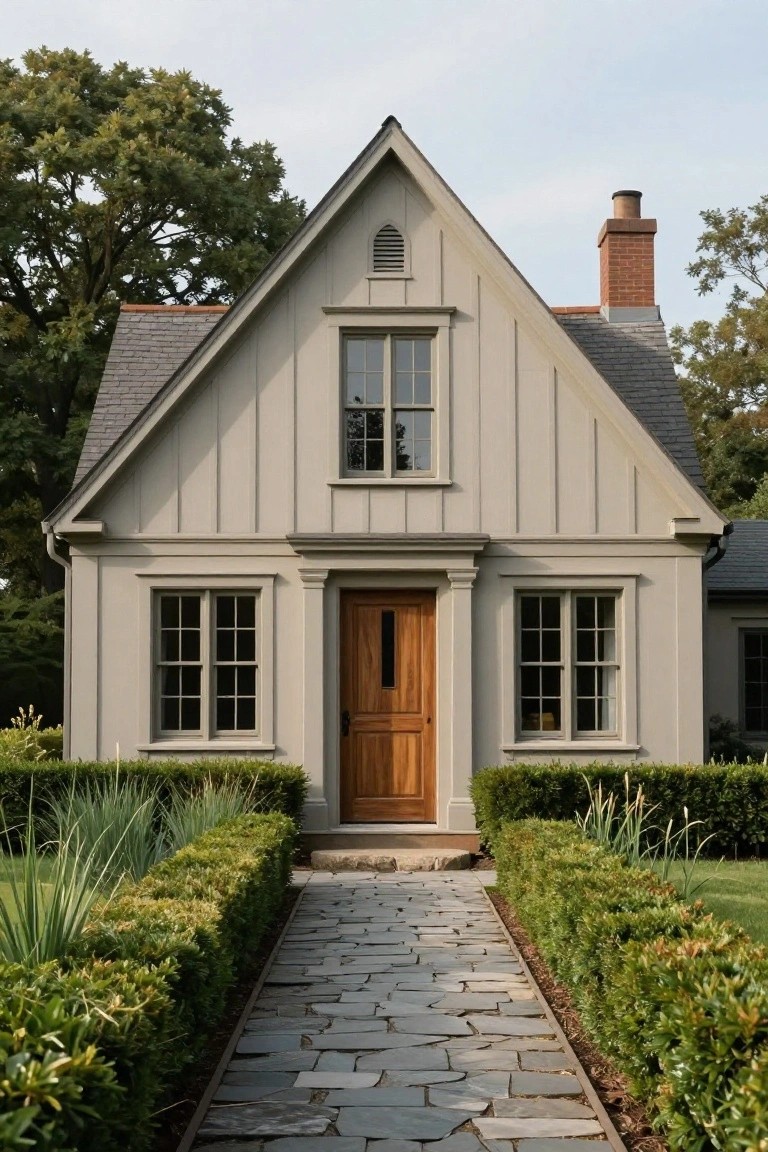
A one-story Colonial like this one nails symmetry right at the front. Equal windows on each side of the wood door, all under that steep gable roof. The soft greige clapboard keeps it from looking stark. It’s simple Colonial charm that feels steady and right at home.
This setup works best on smaller lots where you want presence without overwhelming the yard. Frame the stone path with low boxwood hedges, like here, to guide folks in. Stick to neutral siding colors so it ages well… no bold paints that fade fast. Fits most any neighborhood aiming for that classic feel.
Recommended Products

All-Weather Porch Lights: Our outdoor sconce lights are built to last, made with durable metal and tough glass that can withstand any weather condition, from sunny days to snowy nights. Designed with high-quality materials, these outdoor light fixtures ensure long-lasting brightness and resistance to rust and corrosion, maintaining their flawless appearance year after year

Durapoly Post Trim Kits sold separately from posts

◆Specification: Product Size(L*H): 27*88cm/10.63*34.65in; Net Weight: 2.5kg/5.51lbs; Each Bearing Capacity: About 50kg/110.23lb
Framing the Entry with Potted Olive Trees
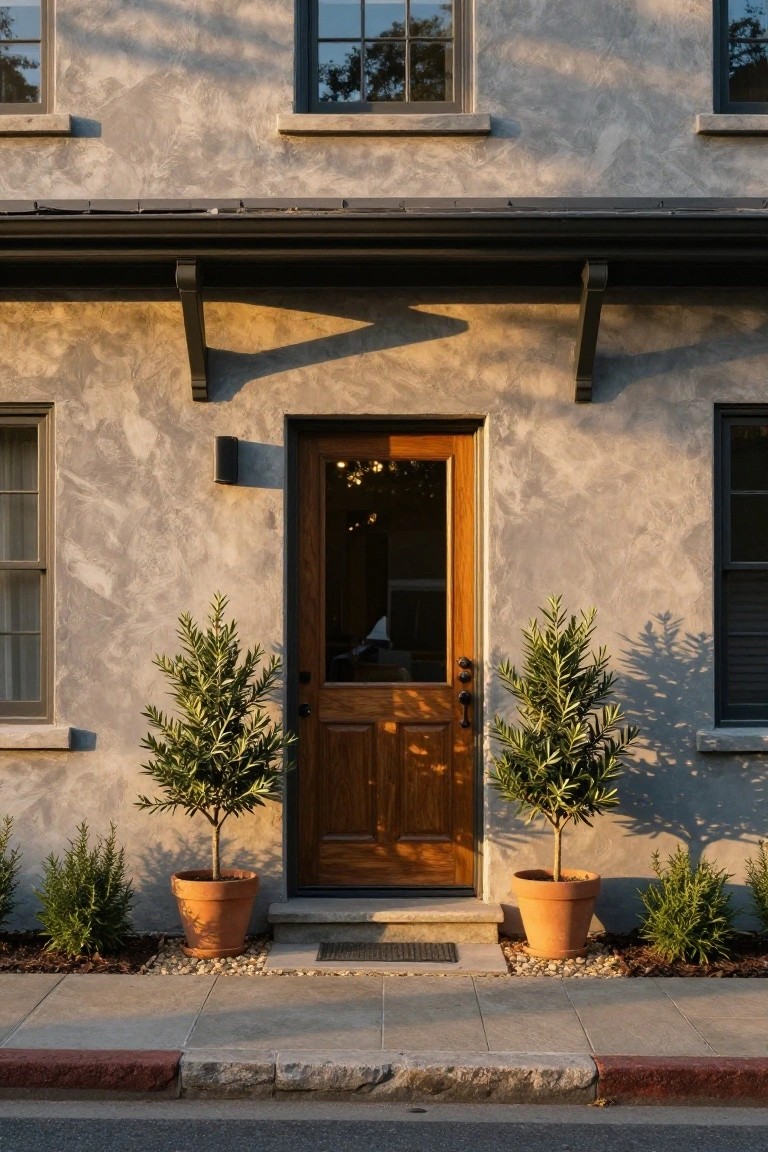
A pair of olive trees in matching terracotta pots sits right on either side of the front door here. They frame the wood door nicely against the stucco walls without taking over the space. It’s a straightforward way to add some life and pull focus to the entry on a one-story house.
This works best where you want low-key curb appeal that doesn’t need much upkeep. Go for mature trees in oversized pots so they look established fast, and keep the path clear in front. It suits colonial styles in warmer spots… just watch they get enough sun.
Blue Door on Neutral Siding
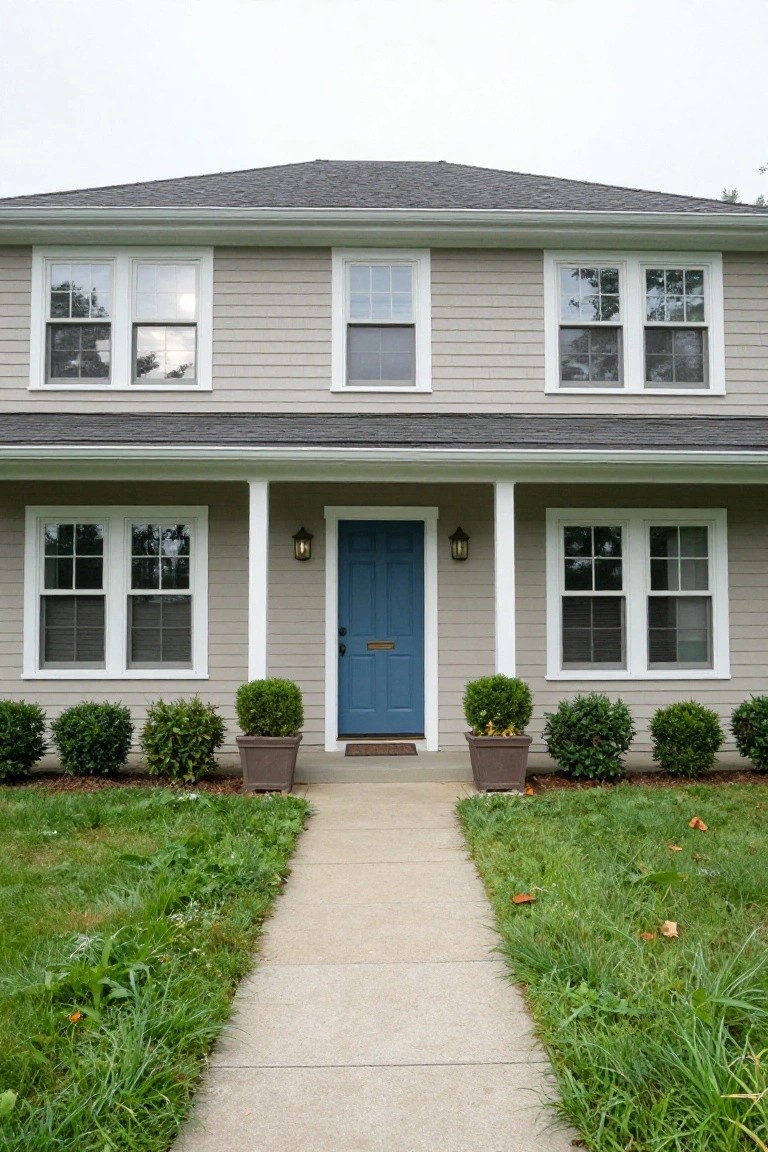
A blue front door like this one pulls the eye right to the entry on a simple gray house. The siding stays low-key in that soft beige-gray tone, so the door does the work of adding personality without much fuss. White trim around the windows and porch keeps everything clean and classic.
This setup fits one-story colonials on a standard lot. Go for a semigloss blue paint that holds up to weather, and flank it with a couple boxwoods for balance. Skip busy landscaping here. It keeps the front welcoming but not overdone.
Black Door on White Siding
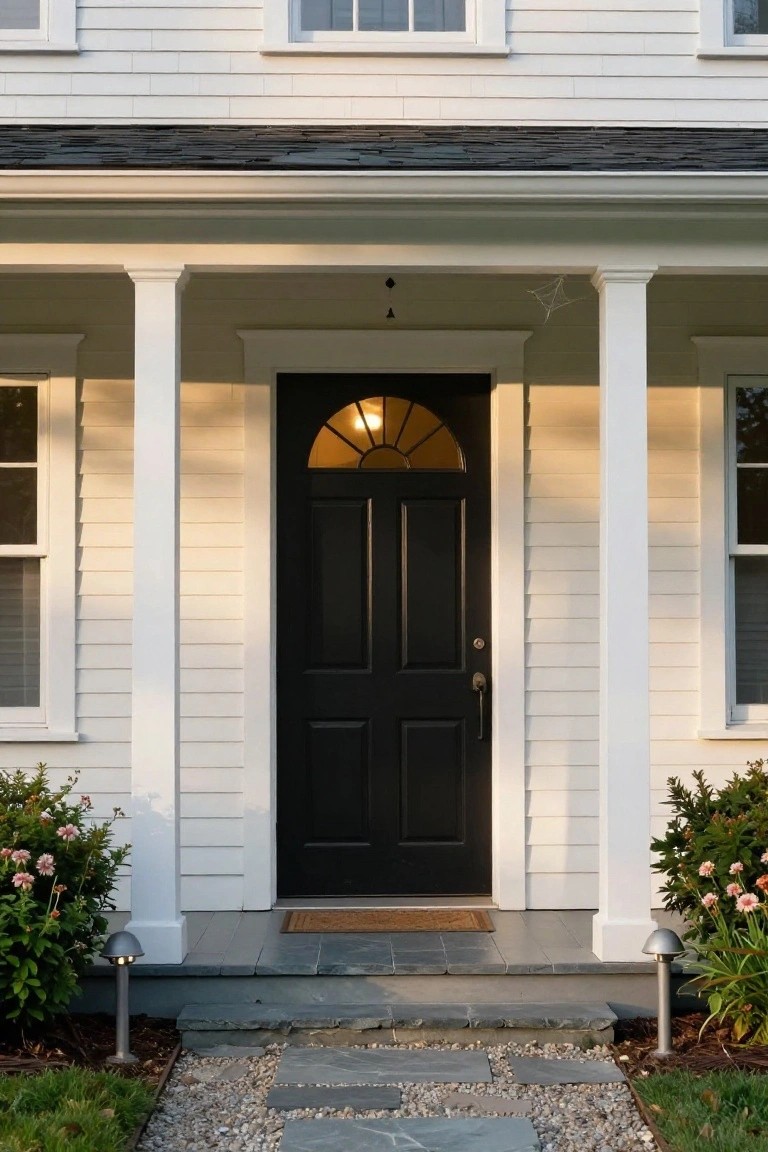
A black front door pops against white clapboard siding like this. It keeps the colonial facade clean and bold. Those porch columns frame the entry without extra fuss, and the fan window adds just enough detail.
This works well on one-story colonials in any neighborhood. Go for a solid paneled door in matte black to hold up over time. Plant low shrubs along the path to guide folks right to it. Skip bold trim colors that fight the contrast.
Red Door Entry on Stone Colonial Facade
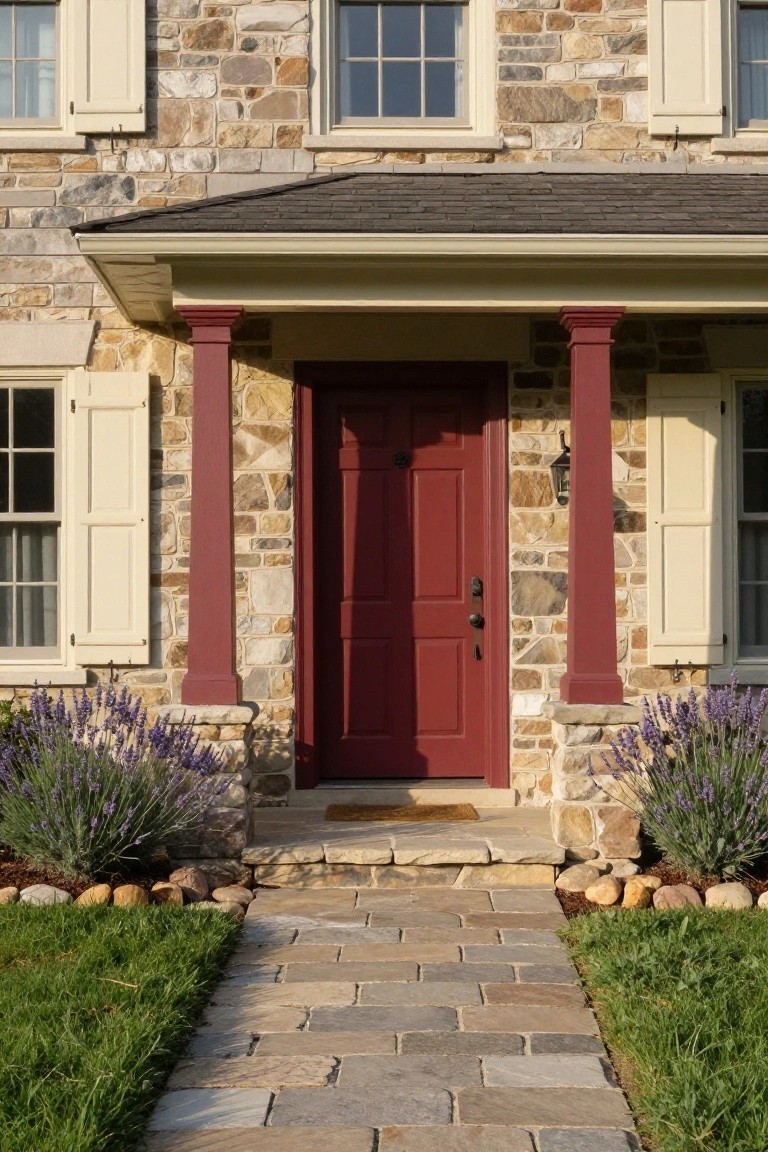
A red front door stands out nicely against the neutral tones of a stone exterior like this. The mix of fieldstone walls and simple columns gives that classic colonial feel without overdoing it. That bold color pulls your eye right to the entry and makes the whole front porch more inviting. It’s a straightforward way to add some personality to a plain one-story house.
You can pull this off on most suburban homes with stone or stucco siding. Just keep the landscaping simple, like low lavender bushes on the sides, and a stone path leading up. It works best where you want curb appeal that lasts year-round. Skip busy details around the door so the color does the main job.
Warm Wood Door on Blue Siding
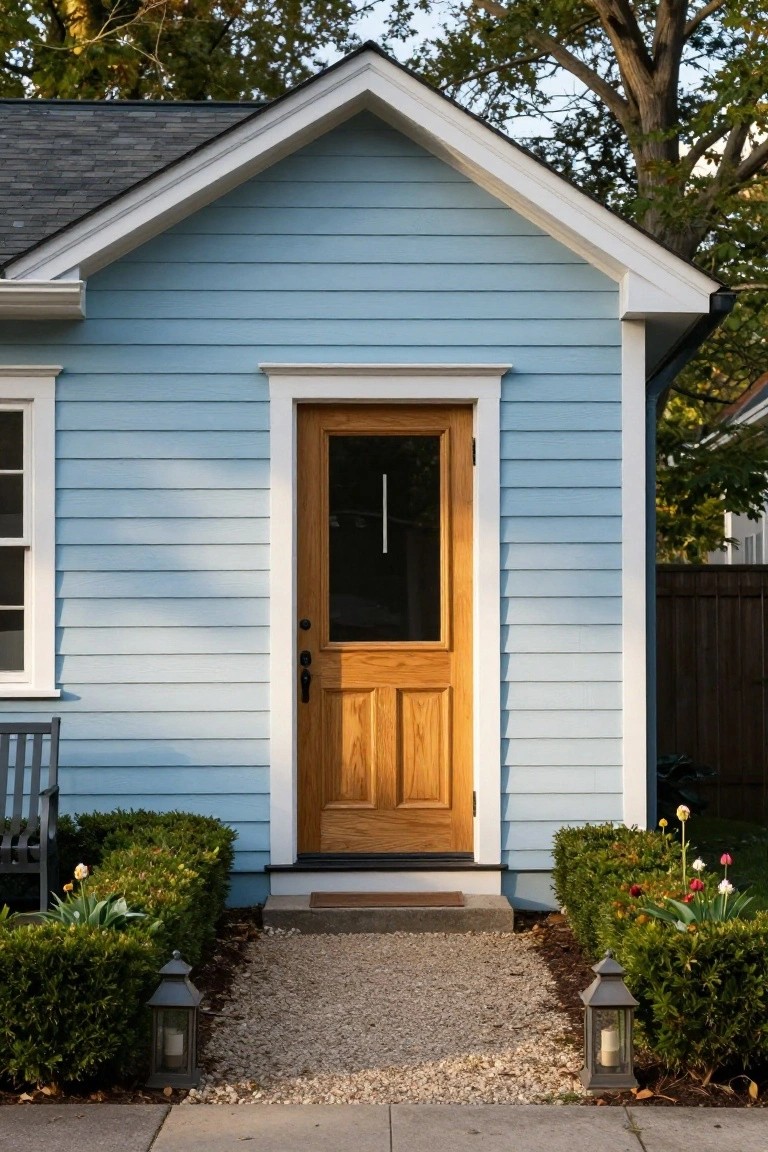
A rich oak front door like this one warms up the cool tones of light blue clapboard siding on a one-story colonial. The paneled wood and glass insert draw your eye straight to the entry. It keeps the look simple and traditional, without needing extra decorations.
This works well on smaller homes or cottages where you want that classic feel but nothing fussy. Frame the door with low boxwoods and a gravel path leading up. Just make sure the wood finish matches your climate so it holds up over time.
Framing the Entry with Matching Potted Trees
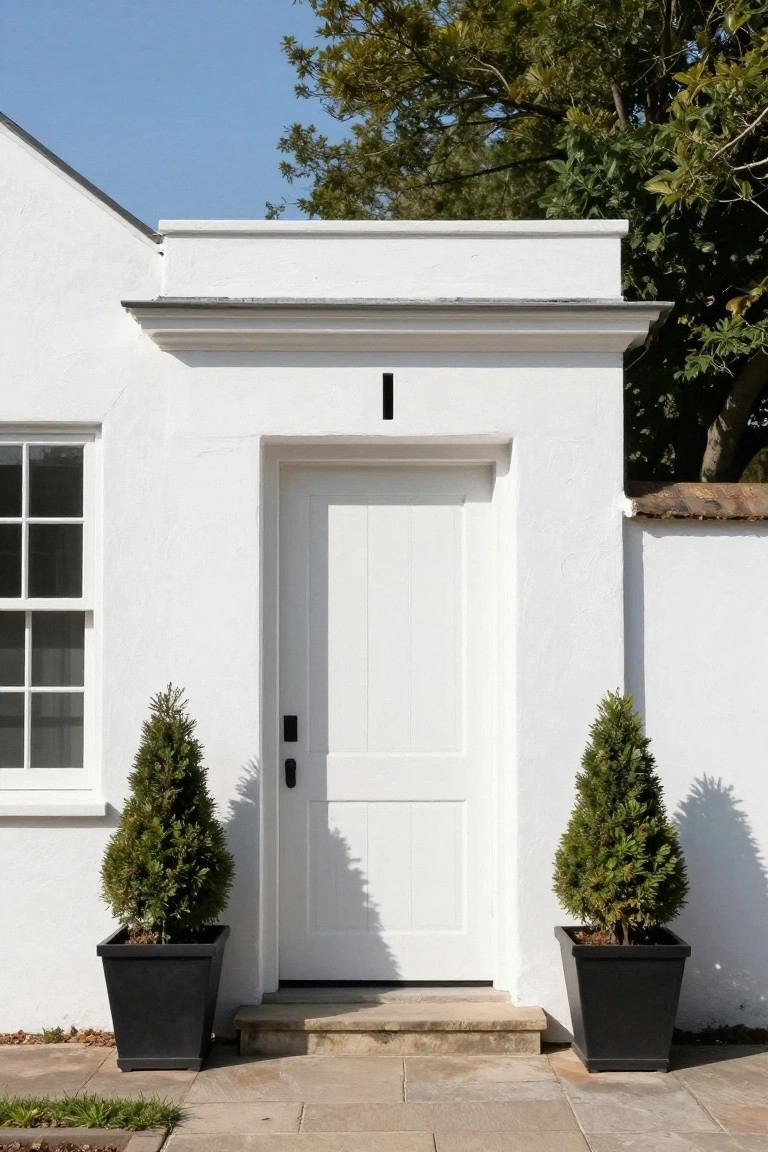
One easy way to give a colonial front door some polish is to set matching potted trees on either side. These conical evergreens in black pots do the trick here, lining up perfectly with the white door and steps. It pulls the eye right to the entrance without any extra work. The symmetry feels classic and settled, especially on a clean one-story facade like this.
This setup works best on smaller porches or stoops where you want curb appeal but not a big landscape project. Go for slow-growing conifers that stay neat on their own. They suit traditional homes in town or suburbs. Just keep the pots simple and the same size. Skip it if your steps are super narrow… might crowd things.
Shingle Siding with Teal Door
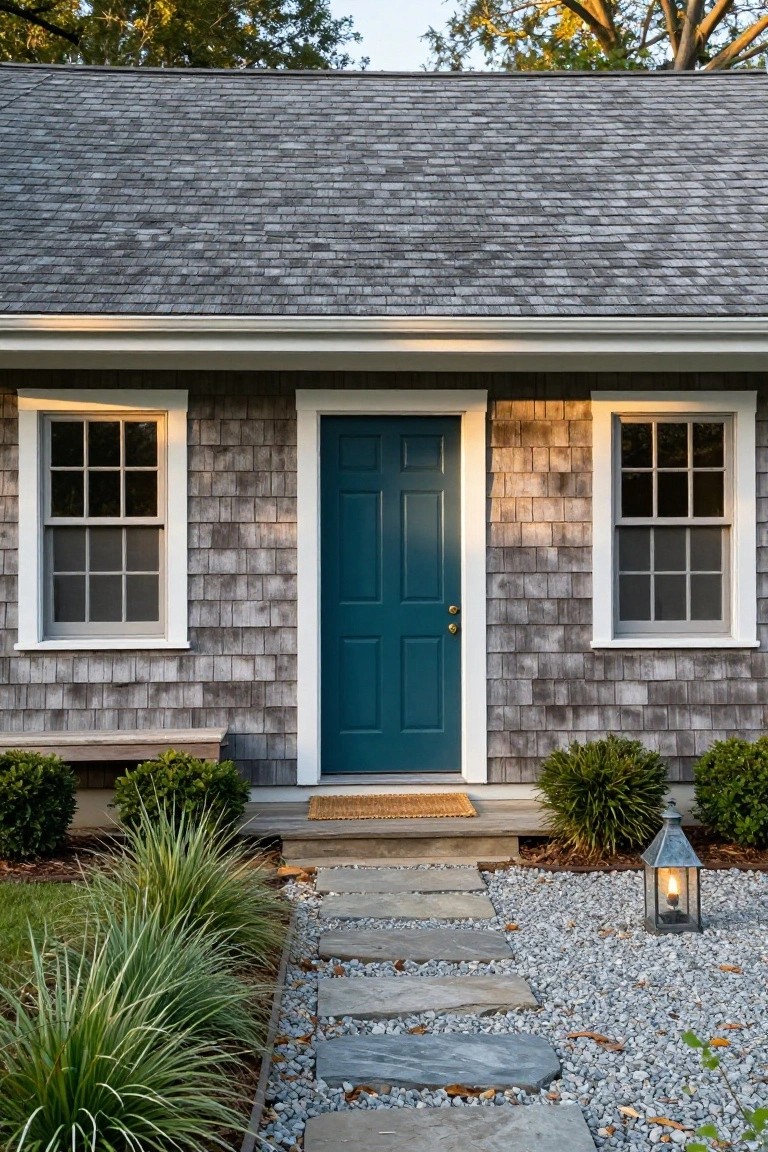
Shingle siding gives this one-story colonial a textured, classic look that’s easy to like. The soft gray shakes cover the whole facade, making things feel settled and timeless. Then there’s that teal door right in the middle. It stands out without trying too hard, pulling focus to the entry and giving the house some quiet personality.
This setup works best on smaller homes where you want curb appeal but not a lot of upkeep. Pair neutral shingles with a door in teal or navy, keep the trim white, and add a stone path if you can. It suits casual neighborhoods or spots near the water. Just make sure the door color plays nice with your plants out front.
Black Brick with White Columns
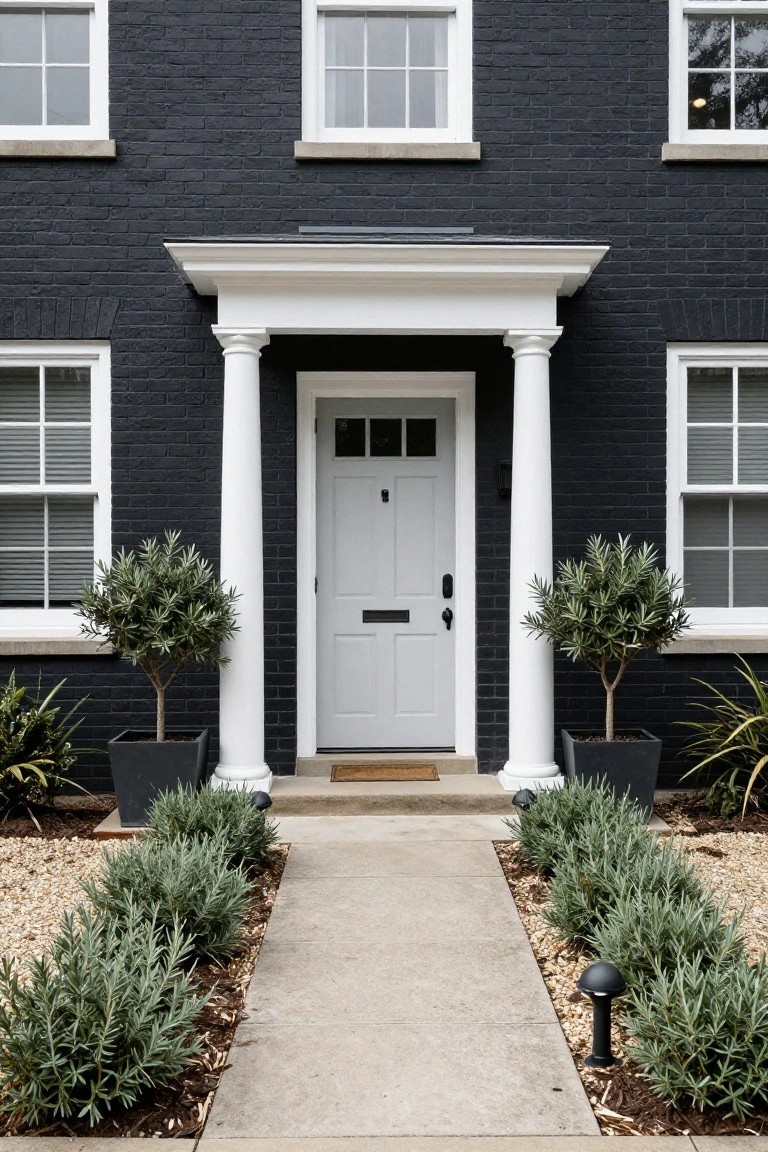
Black brick gives this one-story colonial a strong, modern edge while keeping things simple. The deep color makes the house stand out without much fuss. White columns and trim pop right against it. That contrast feels clean and bold. Flanking olive trees add just a touch of green without overdoing the landscaping.
Try this on a straightforward facade where you want curb appeal that lasts. It works best on homes with clean lines like this one. White paint on the portico keeps maintenance easy. Skip busy details around the door. Let the black and white do the talking… and pair it with low plants along the walk for balance.
Wooden Front Door on White Siding
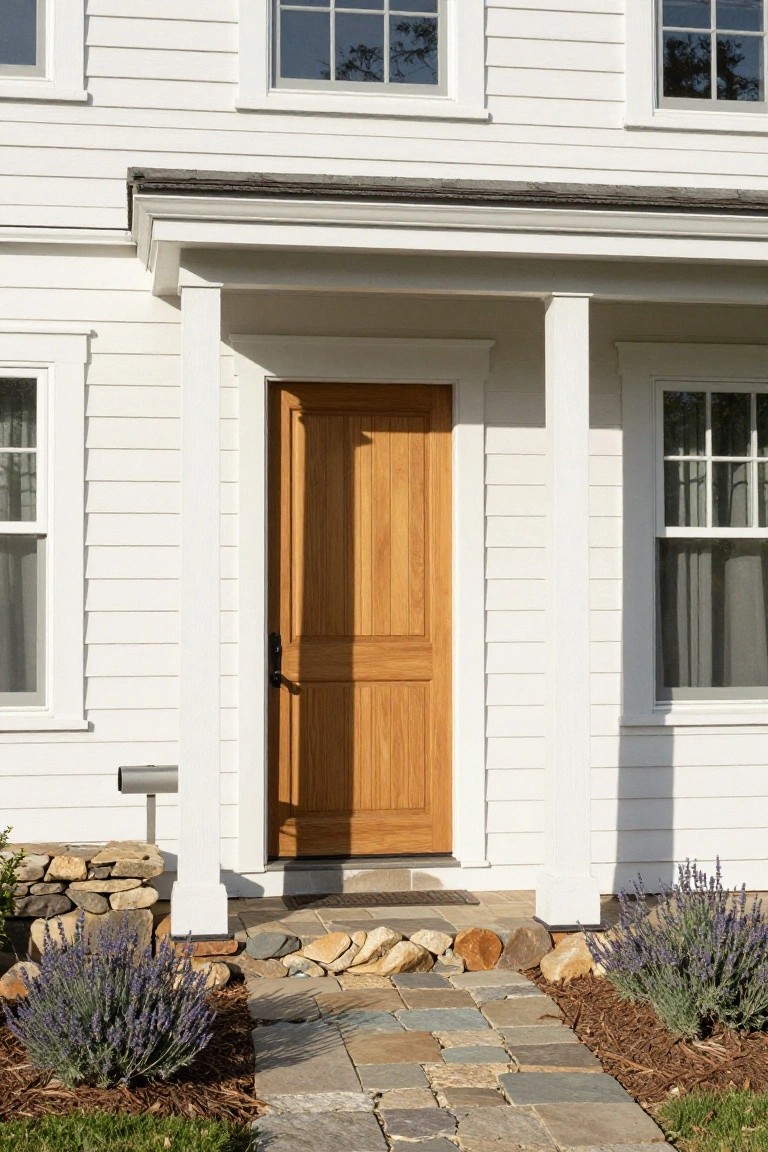
A wooden front door like this one stands out nicely on a plain white Colonial house. The rich oak panels pull your eye to the entry without much else going on. It keeps things simple but adds that bit of traditional feel homes from this style often need.
This works best on one-story homes where the facade stays clean and uncluttered. Go for a paneled door in a medium tone, maybe with black hardware. It fits right with basic columns and a short stone path. Skip it if your house has too many colors already.
Frequently Asked Questions
Q: How do I pick siding that fits a simple one-story Colonial without much upkeep?
A: Stick to clapboard or board-and-batten vinyl siding in neutral tones like soft gray or beige. It mimics traditional wood but shrugs off rain and dirt way better. Just hose it down once a year to keep that crisp look.
Q: What’s the easiest update for the front door on these designs?
A: Swap in a classic paneled wood door with a subtle glass insert. Paint it a deep navy or black to pop against light siding. That single change draws eyes right to the entry.
Q: Can I add shutters and still keep things straightforward?
A: Yes, grab louvered ones that match your siding color exactly. Hang them flat against the windows, no tilt. They nod to Colonial roots without cluttering the clean lines.
Q: How do plants work with these exteriors?
A: Plant boxwoods or low hydrangeas in straight rows along the foundation. Skip the wildflowers, they fight the symmetry. Trim them neat every spring.
