

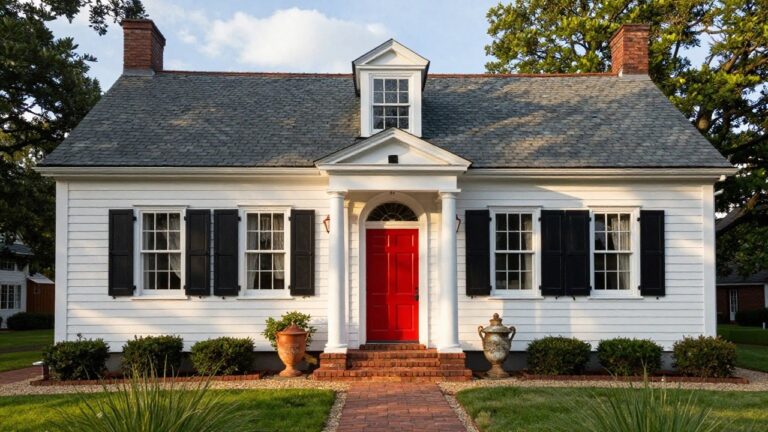
Colonial houses have that classic symmetry in their facades and rooflines that makes curb appeal depend almost entirely on color choices.
I remember walking our neighborhood and realizing how a soft siding color paired with crisp white trim can make even an older home look freshly maintained.
The schemes that work best respect the brick or clapboard materials while drawing the eye to the centered entry without overwhelming the overall shape.
Shutters in a deeper shade often ground the look just right.
A couple of these have me thinking about how they’d adapt to a house like mine someday.
Red Door on White Colonial Siding
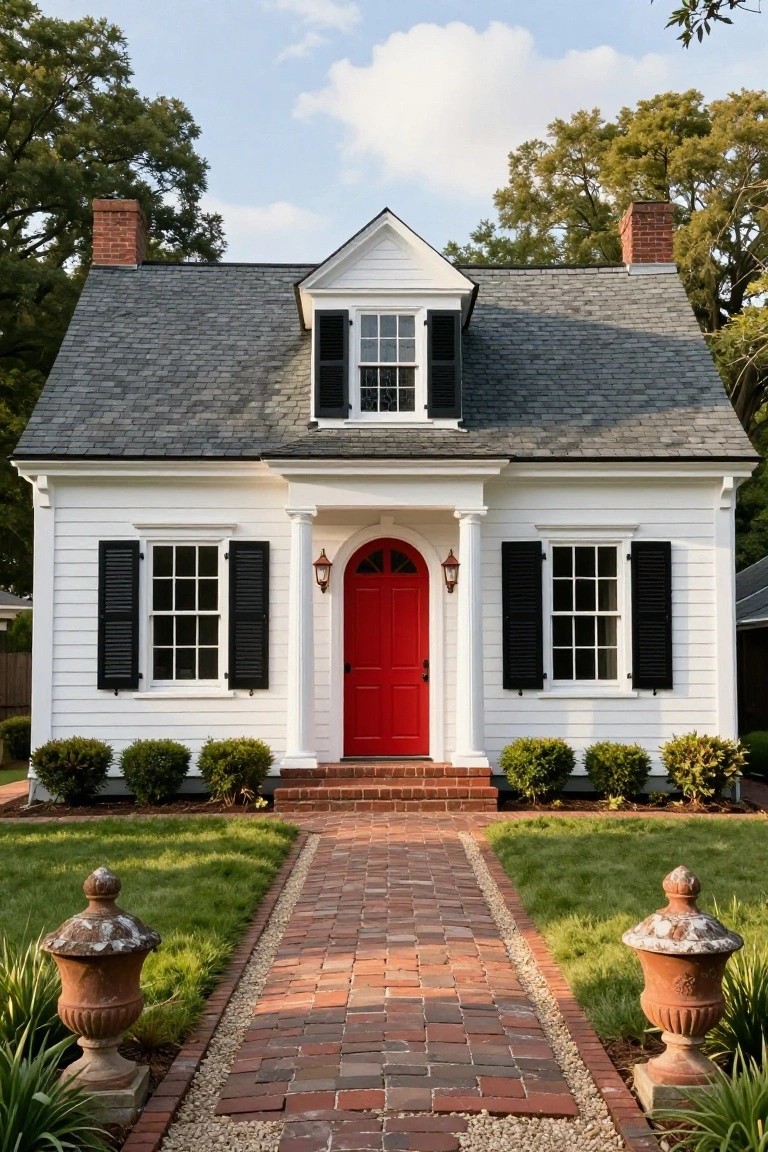
A bright red front door stands out nicely against crisp white clapboard siding on this Colonial house. Black shutters add some contrast around the windows, keeping things sharp and traditional. That red color pulls your eye right to the entry without messing up the clean look.
This works well on smaller homes or older ones getting a refresh. It suits places with green lawns and simple plantings, like boxwoods along the front. Just make sure the door quality matches the house so it doesn’t fade fast.
Navy Blue Siding with White Trim
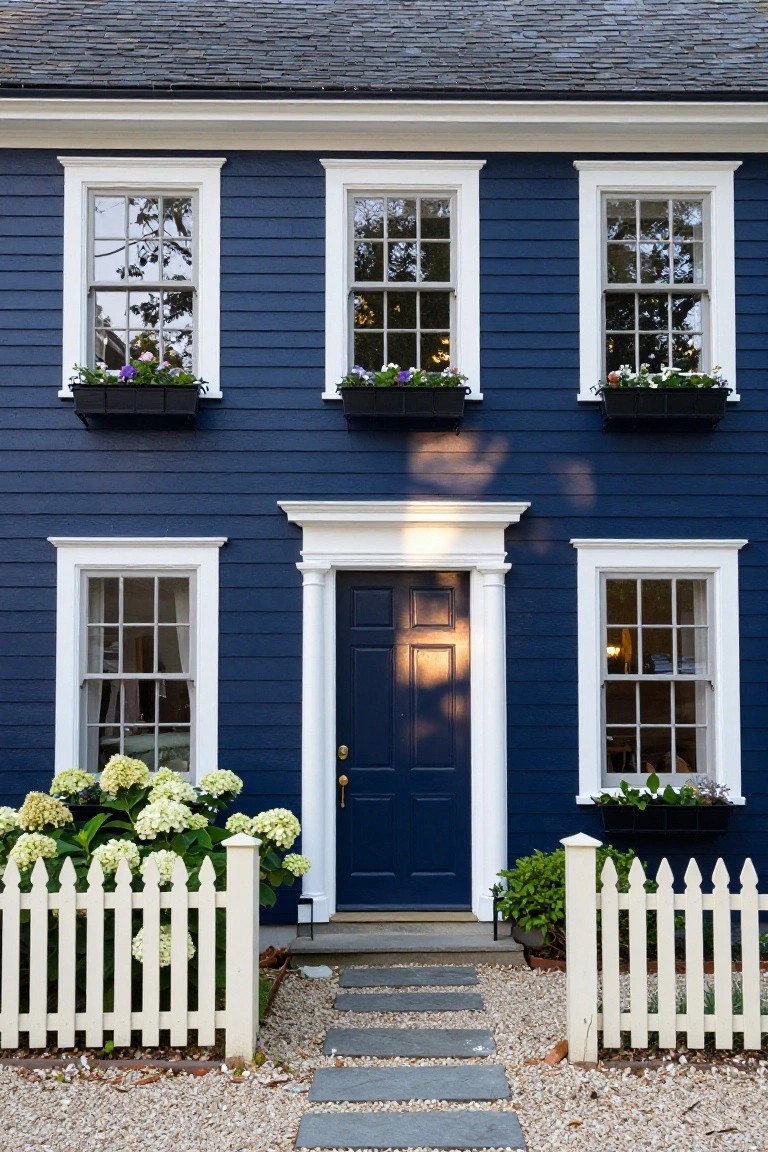
A deep navy blue on the clapboard siding paired with crisp white trim makes this colonial stand out in a clean, classic way. The blue reads almost black from a distance but lightens up close, and the white keeps everything sharp and balanced. Window boxes with flowers tie it together without much fuss.
This scheme works best on older homes with good bones, especially in neighborhoods with some green around. Go for it if your house faces north or you want low upkeep colors that hide dirt. Stick to semigloss on the trim so it stays fresh longer.
Cream Brick with Sage Green Shutters
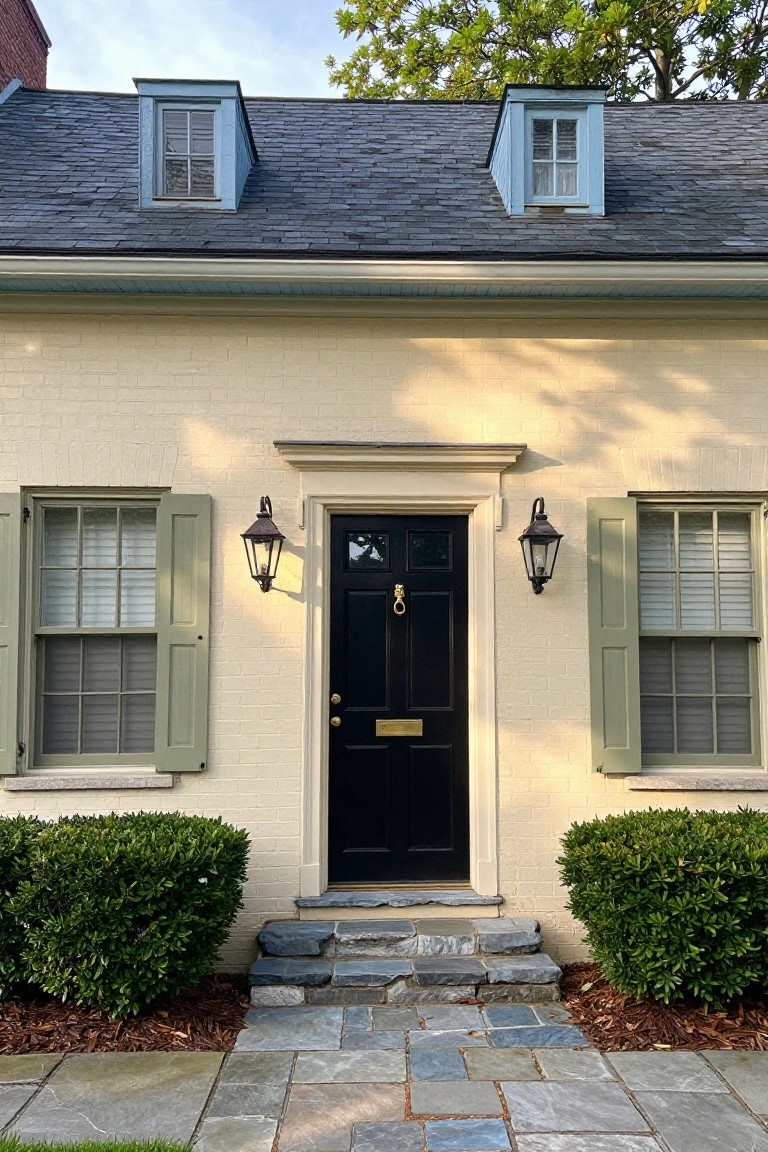
A light cream brick gives this colonial house a soft, aged feel that fits right into older neighborhoods. The sage green shutters pull back from bold colors, keeping things calm next to the cream. That black door up front? It marks the entry without overpowering the rest.
This setup works best on homes with slate roofs and dormer windows. It suits traditional colonials facing the street. Go for boxwoods at the base to tie it together… keeps maintenance low too. Avoid super vibrant greens, though. They can fight the brick.
Gray Siding with a Yellow Front Door
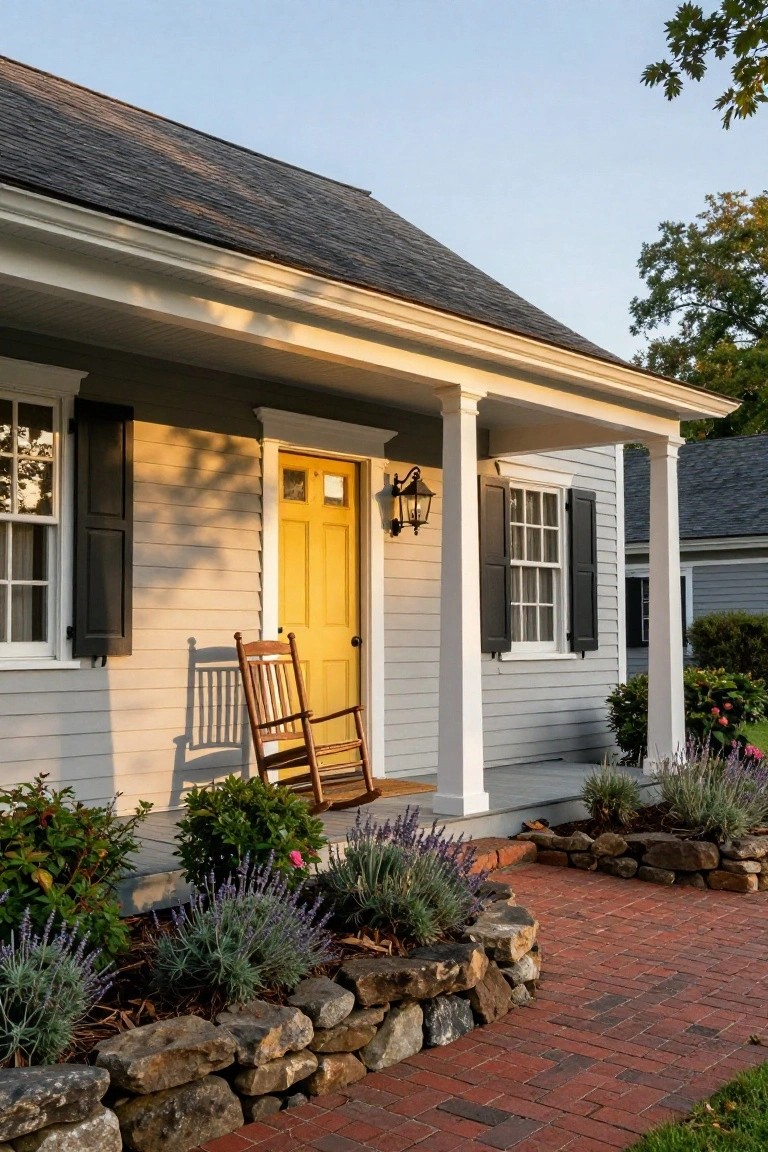
A soft gray siding like this sets a quiet, classic tone on a colonial house. It lets the bright yellow door take center stage at the entry, pulling your eye right to the porch without much fuss. White trim on the columns and black shutters add clean lines that keep the whole front balanced and easy on the eyes.
This setup works well on smaller homes or ones tucked into neighborhoods with lots of greenery. The gray handles shade and aging paint better than stark whites. Just make sure the door color has some depth so it doesn’t fade too fast in full sun, and add a simple rocker for that lived-in porch feel.
Brick with Green Shutters and Navy Door
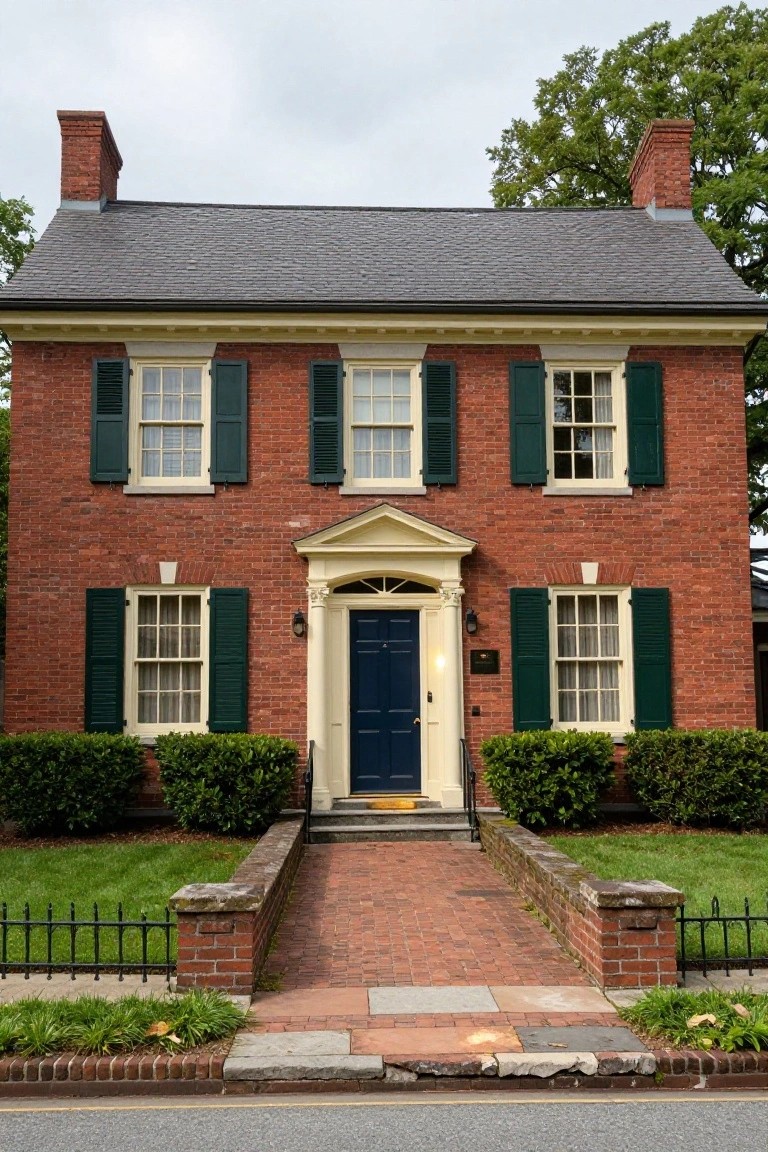
This setup takes a classic red brick colonial and makes it pop without much fuss. The green shutters echo old-school charm, while that navy door pulls everything together against the cream trim. It’s straightforward. Folks keep coming back to it because the colors feel right at home on these older houses. Brick stays warm and solid. Green adds that touch of nature. Navy gives the entry some weight.
You can pull this off on most two-story colonials facing a street. Keep the trim light, like a soft yellow or cream, so the brick doesn’t overwhelm. Boxwoods or simple shrubs along the front help frame it without stealing the show. Skip bold roof colors, though. Stick to slate gray up top. Works best where you want curb appeal that lasts through seasons.
Blue Siding with Red Door
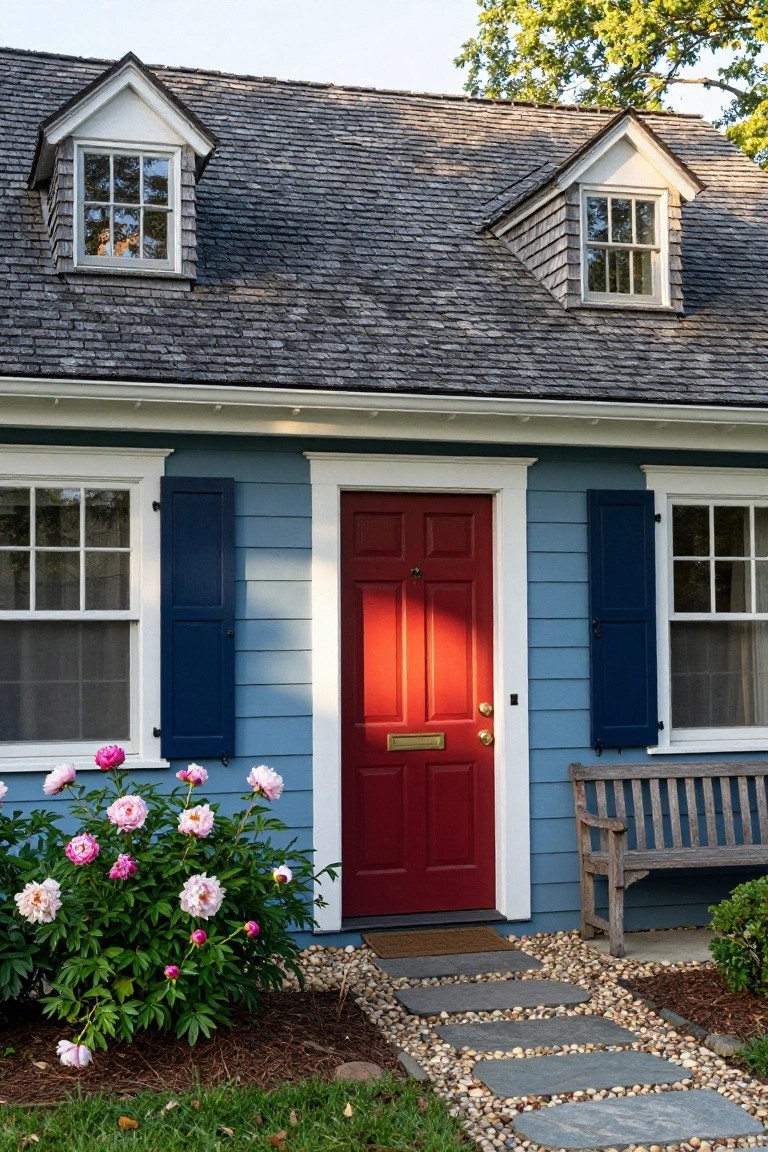
A deep blue siding on this colonial house pairs nicely with a bright red front door. The color contrast pulls focus to the entry without overwhelming the whole facade. Blue shutters on the windows tie it back together, and that classic white trim keeps the look crisp.
This setup suits older homes or ones with gabled roofs and dormers. It adds welcoming curb appeal on a smaller scale. Pick a true navy blue and a traditional red to avoid clashing. Soft landscaping like peonies nearby helps frame it right.
Navy Shutters on Soft Gray Siding
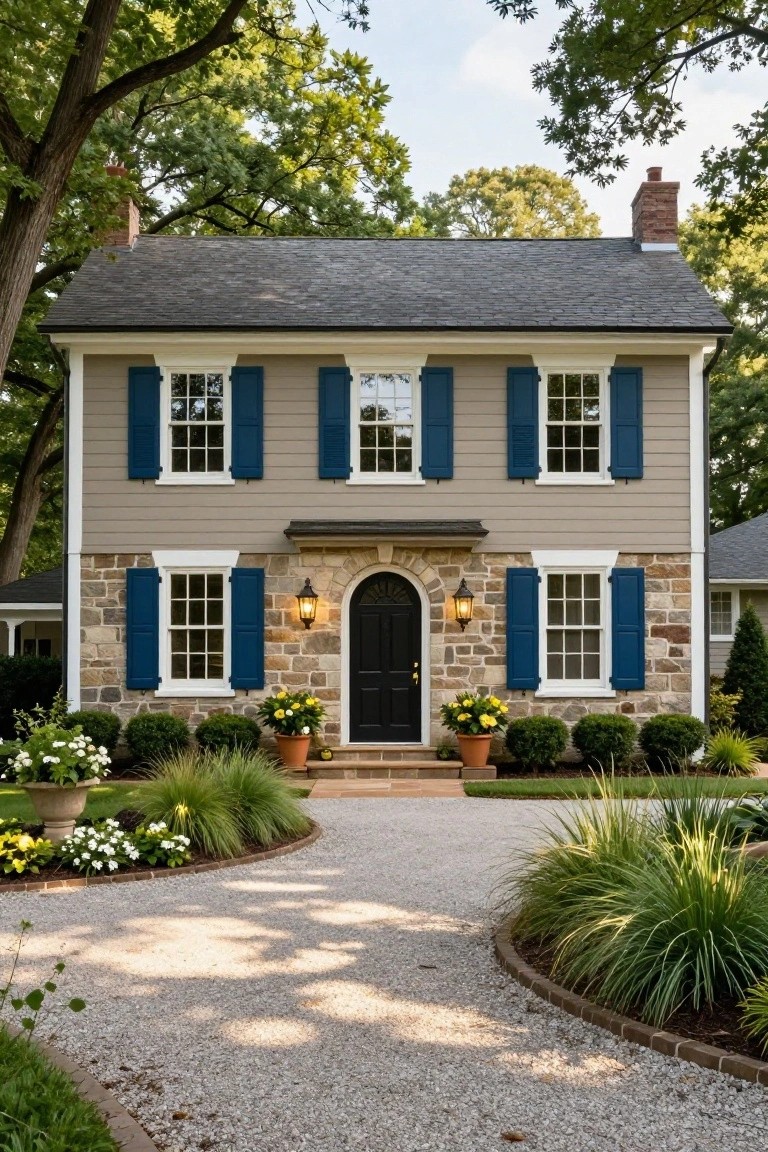
This color scheme takes a soft gray-beige siding and adds navy blue shutters for a clean Colonial look. The neutral siding keeps things calm while the shutters bring some punch without going overboard. Stone at the base ties it to the ground nicely, and it all reads traditional but not stuffy.
Try it on two-story homes with simple window lines like this. It suits neighborhoods with mature trees where you want the house to blend a bit. Stick to black for the door and keep plantings low-key so the colors stay the focus. One thing. Darker grays might feel heavy in shady spots.
Dark Shingles with White Trim
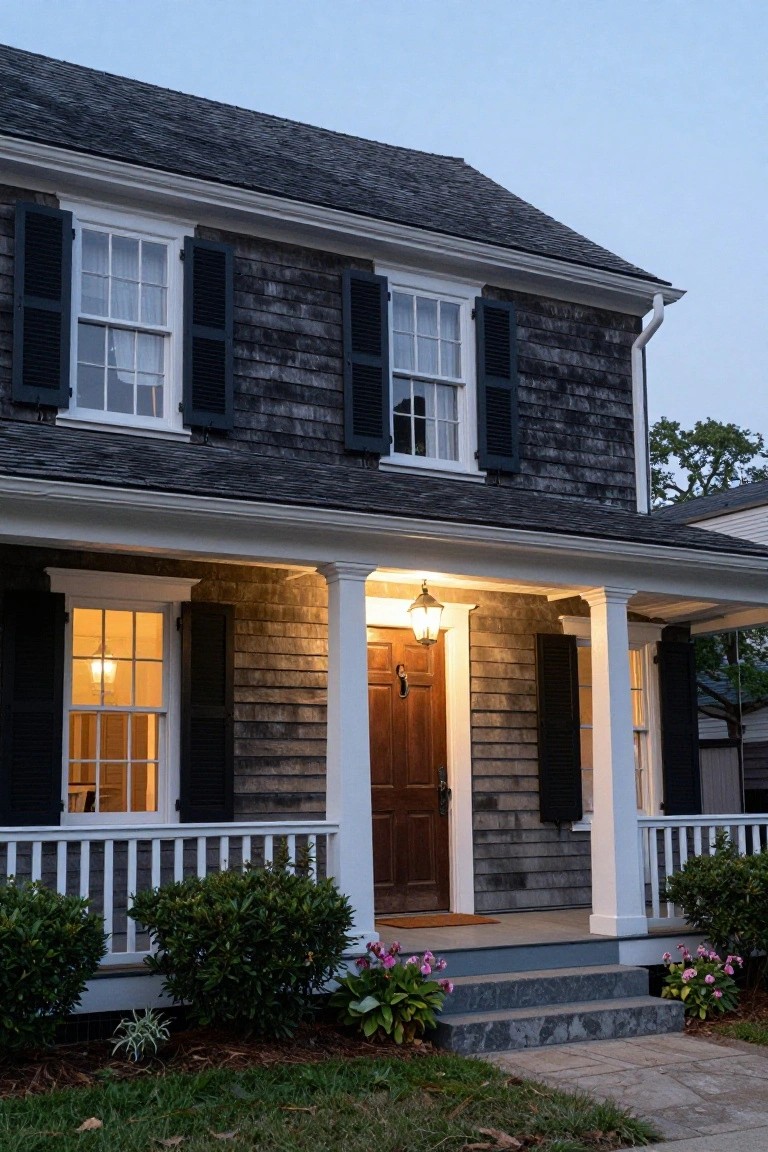
This Colonial exterior goes for dark gray shingles over most of the siding, then switches to clean white trim on the windows, porch columns, and railings. The black shutters tie it together without much fuss. It keeps things simple and lets the house shape stand out, especially with that warm lantern light on the porch at dusk.
Try this on older homes or new builds aiming for a traditional vibe. It suits shady spots or humid climates where the shingles hold up year round. Just make sure the white paint is a true bright shade to pop against the dark. A wood door in a medium stain adds the right touch of color.
Pale Yellow Siding and Blue Door
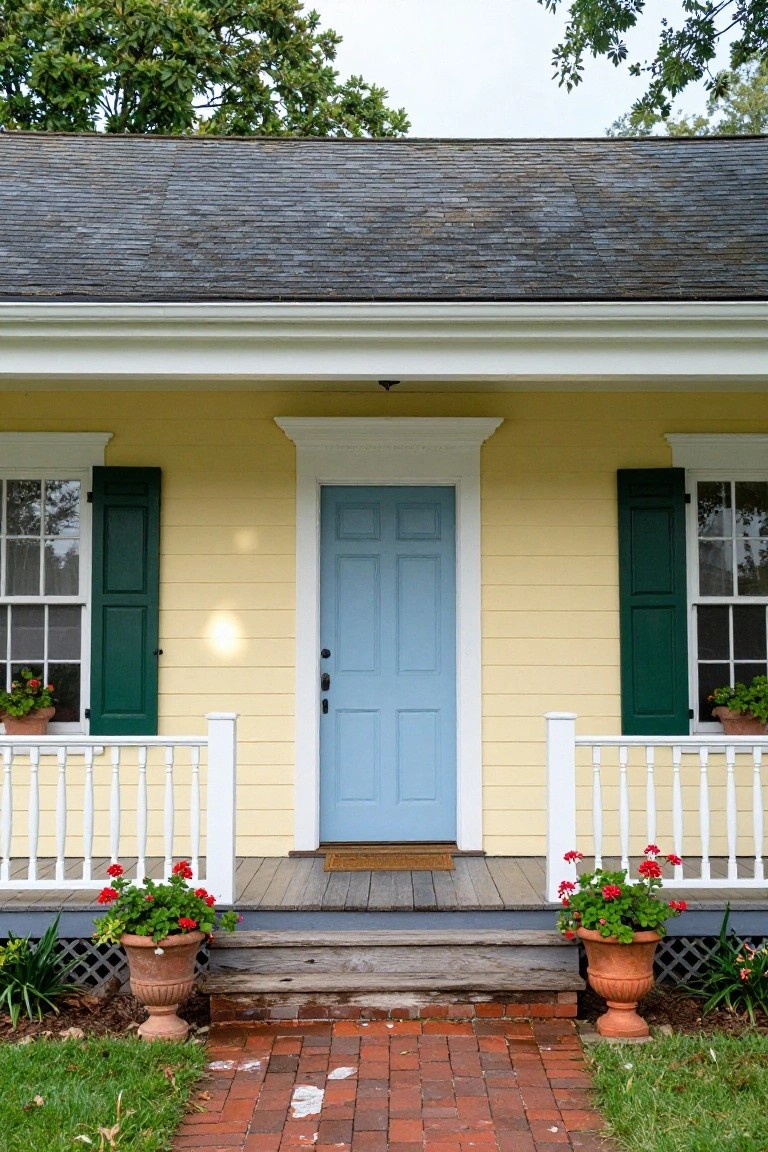
This setup takes a classic Colonial house and gives it a light, happy vibe. The pale yellow siding feels warm on a cloudy day, while the blue door stands out without overpowering things. Green shutters add that traditional touch, tying it all together nicely.
Try this on a modest front-gabled home with simple lines. White trim keeps the yellow from getting muddy, and a few porch plants make the entry more welcoming. It suits older neighborhoods where you want color but nothing too bold.
Soft Green Siding with Coral Shutters
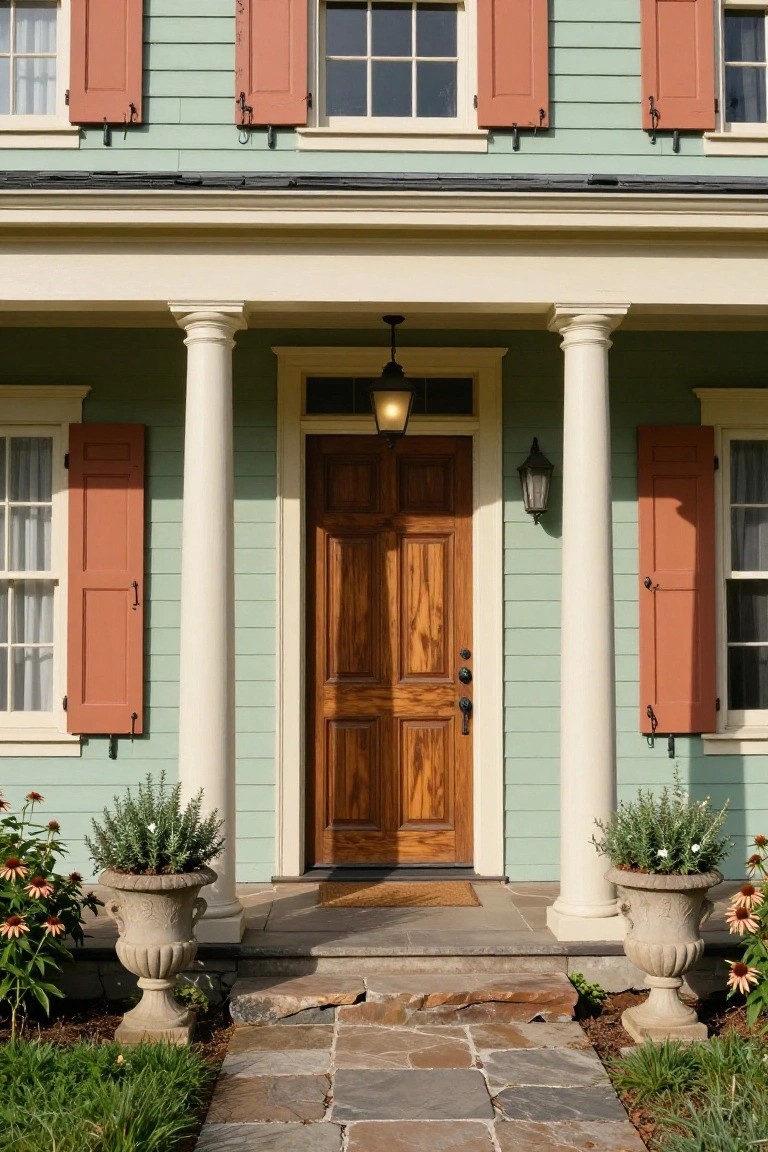
A pale seafoam green on the house body looks clean and calm against those coral red shutters. The wood door in a warm tone pulls it together without overpowering. It’s a nice update on Colonial style. Feels lighter than the usual dark greens but still nods to tradition.
Try this on a home with good southern light. White columns and trim keep things crisp. Skip it if your area gets too much shade… the green might turn dingy. Urns by the steps add a simple welcome without much fuss.
Burgundy Shutters on a Cream Colonial Facade
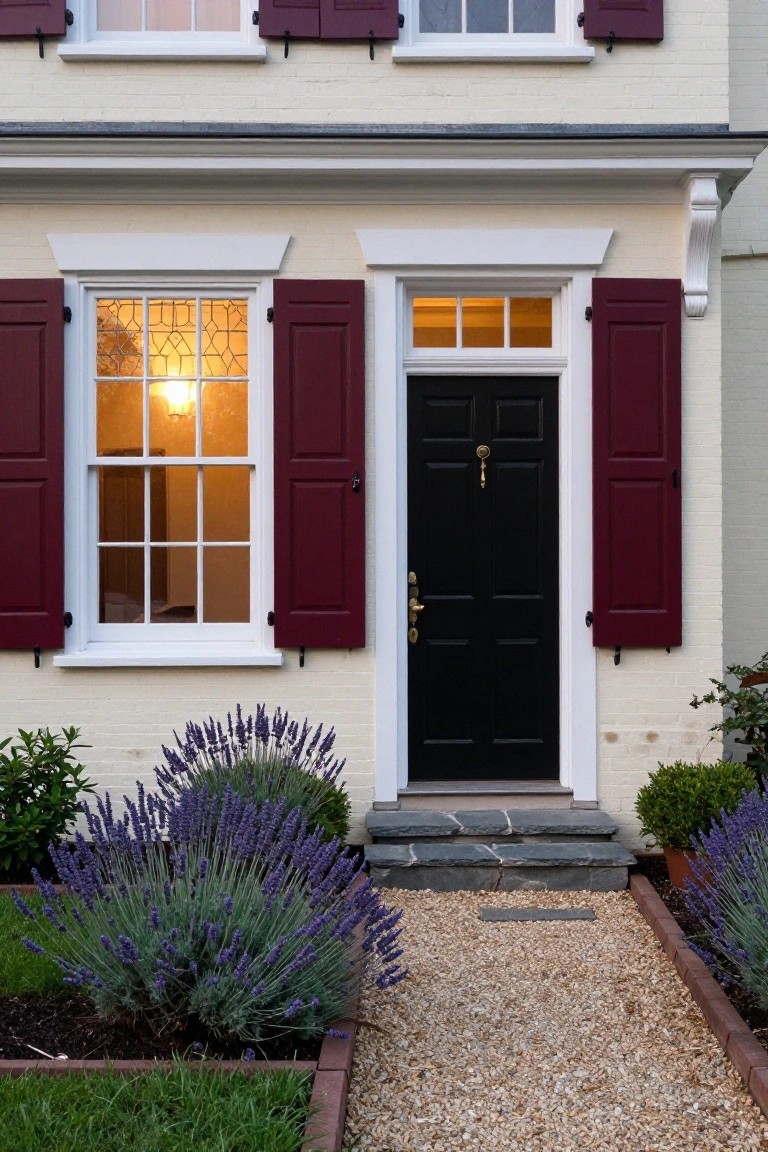
This setup uses soft cream brick walls with deep burgundy shutters and a solid black front door. The colors pull from classic colonial roots but keep things fresh and not too heavy. That black door adds a strong entry point without overwhelming the lighter walls. A touch of lavender along the path ties it all in nicely.
Try this on homes with simple brick or siding in the suburbs or older neighborhoods. It works best where you want some punch up front but still easy on the eyes. Skip it if your house has super modern lines, though. Just paint the shutters first to test the look.
Navy Shutters and Teal Door on Cream Siding
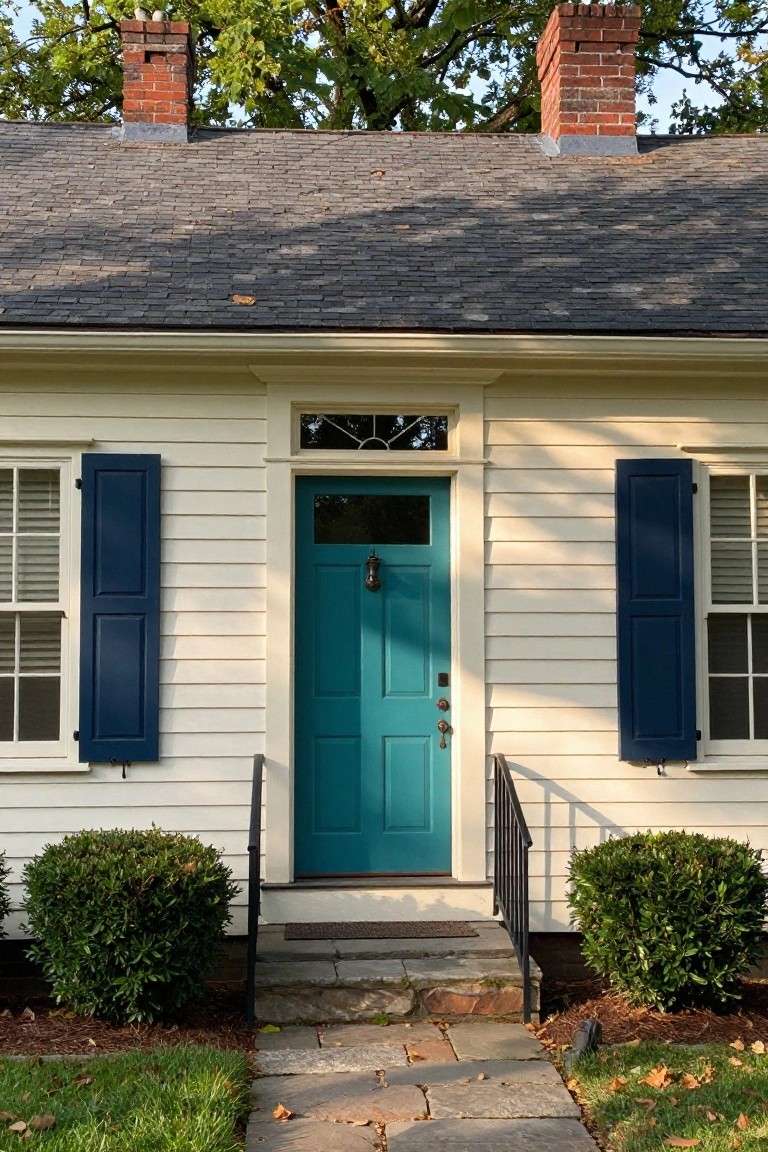
A soft cream siding sets a clean base for this colonial front. Navy shutters frame the windows nicely, and that teal door pulls everything together with a bit of color. It feels classic but not stuffy. The combo works because the neutrals stay quiet, letting the door stand out just enough.
This look suits older homes or ones tucked under trees. Pick a teal that’s not too bright so it won’t clash in changing light. Pair it with simple stone steps and boxwoods out front, and you’ve got easy curb appeal without much fuss.
White Siding with Hunter Green Door
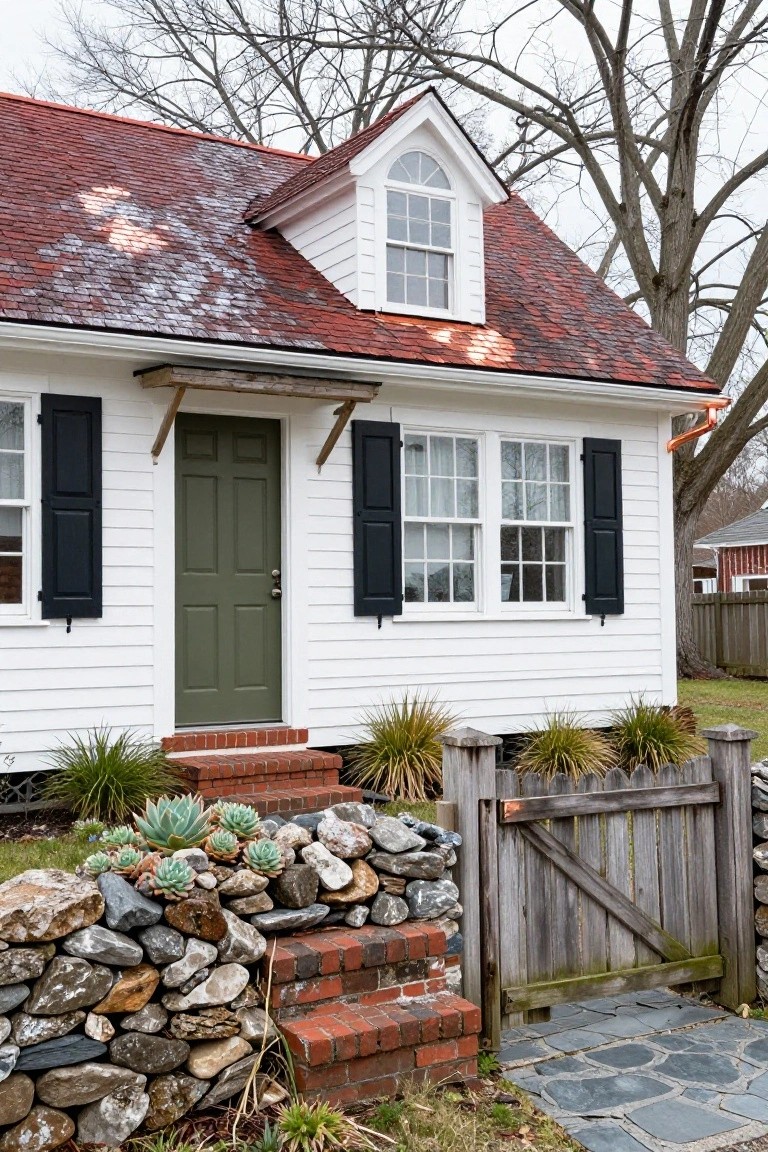
A classic Colonial setup like this uses crisp white clapboard siding as the base. Then a deep hunter green door pulls it together nicely. The red roof tiles up top add some warmth, and black shutters frame the windows without much fuss. It feels clean and settled, like the house has been there forever.
This scheme suits older homes in cooler climates, where the colors hold up through seasons. Go for it on a compact facade facing the street. Just match the door hardware in antique brass, and skip busy trim. Keeps things straightforward.
Gray Siding with Pink Shutters
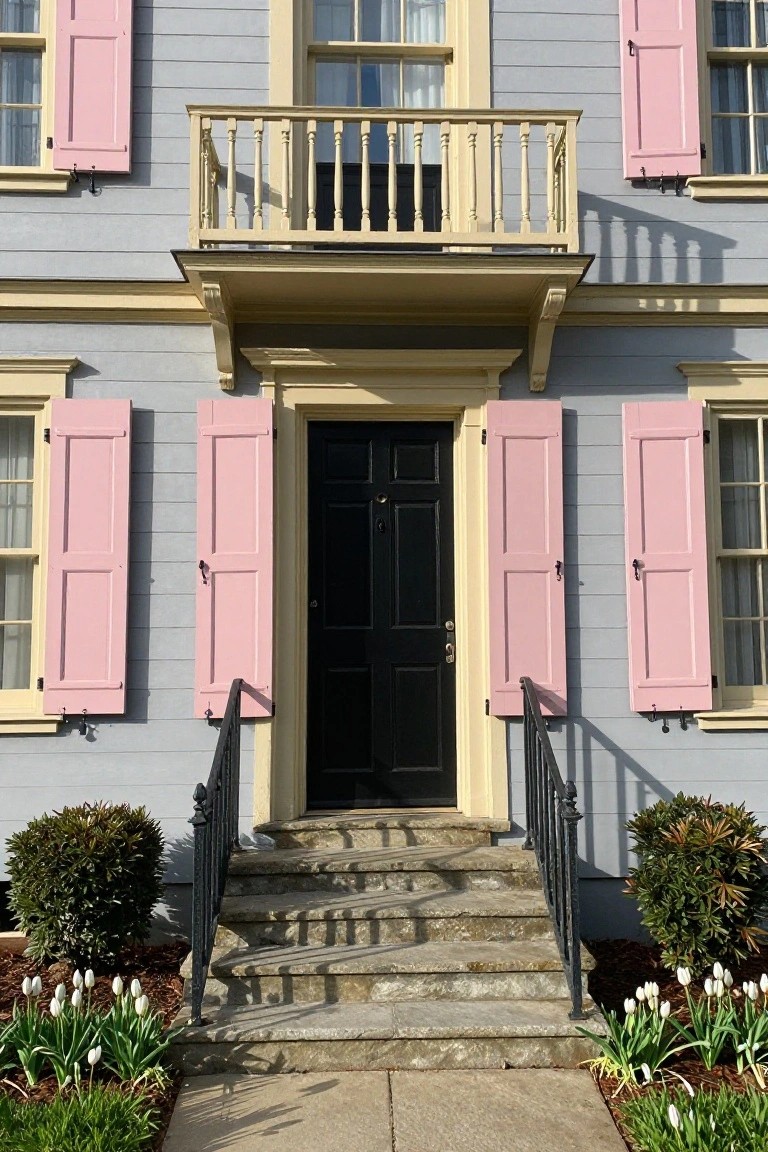
This colonial front pulls off a gentle color scheme that mixes light gray siding with soft pink shutters. The pink adds a bit of playfulness to the classic clapboard style, while the gray keeps everything calm and grounded. A touch of yellow trim up on the balcony ties it together without much fuss, and that black door gives a solid anchor.
Try this on older homes in milder climates where you want curb appeal that doesn’t shout. It suits traditional colonials or federals facing a street or garden path. Just make sure the pink is muted enough to fade into the background over time, and keep plantings simple like those tulips at the base so the house stays the focus.
Beige Stucco with Blue Door Accents
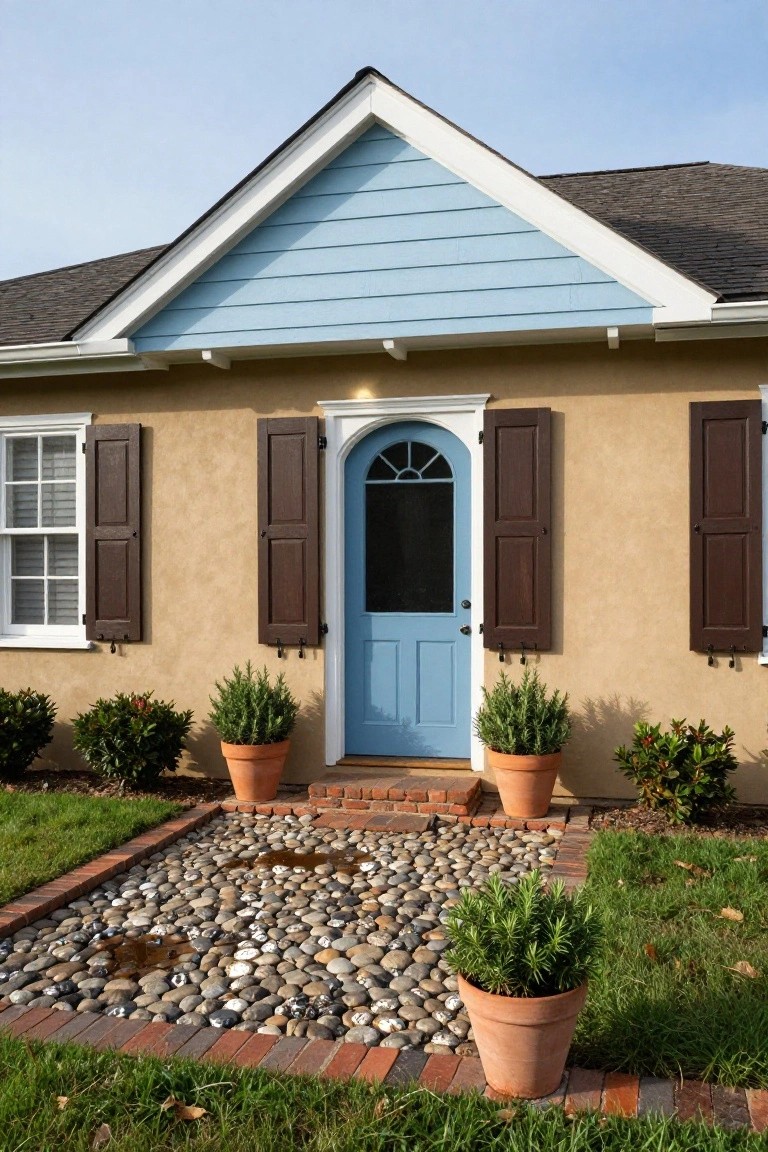
This setup uses a soft beige stucco on the walls, then picks up a light blue for the door and the gable above it. Dark brown shutters on the windows tie it all together without much fuss. The colors feel calm and a little coastal, but they work just as well in other spots. It’s a simple way to give a Colonial house some life up front.
Try this on a smaller home or cottage where you want the entry to stand out a bit. The beige keeps things neutral so the landscaping around the door… those terracotta pots with rosemary… blends right in. Just make sure the blue isn’t too bright or it’ll fight the rest. Works best where you have good southern light to show off the tones.
Teal Siding with a Yellow Front Door
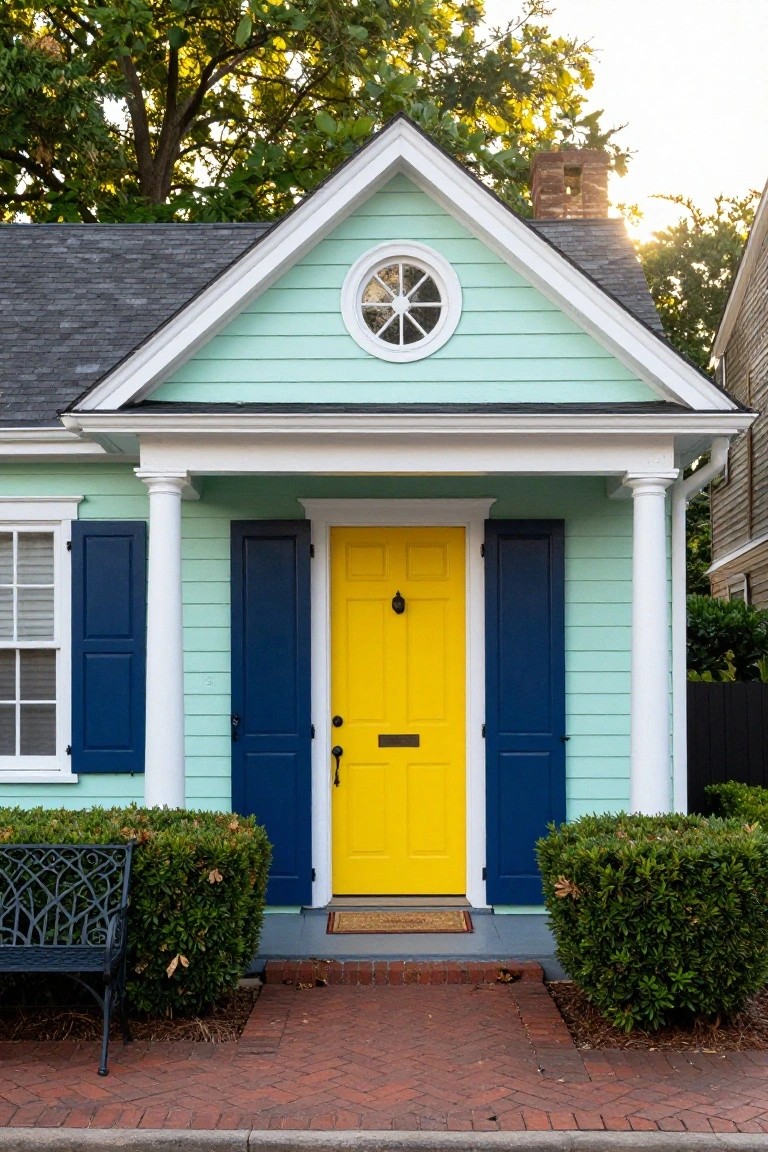
A soft teal siding gives this colonial-style cottage a fresh coastal feel without going overboard. Navy shutters frame the windows nicely, but that sunny yellow door right in the center pulls everything together. It keeps the house looking traditional yet cheerful, especially with the white trim outlining the porch columns.
This setup works great on smaller homes like bungalows or cottages in milder climates. Paint the body a muted teal first, then add navy on shutters for contrast. Go bold with the door color only if your trim stays bright white…it keeps things from getting too busy. Test samples in morning light to see how they hold up.
White Siding with Red Shutters
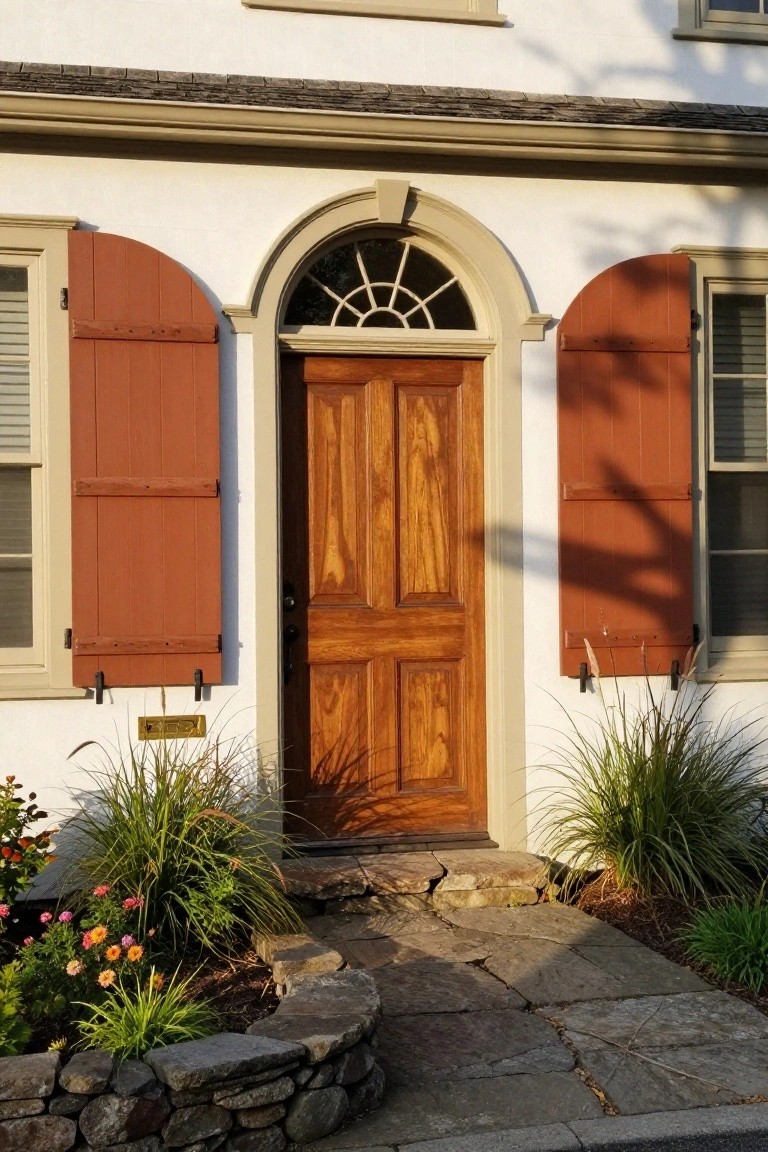
Red shutters on a white house like this one keep things simple and strong. White siding stays crisp and clean, letting light bounce around the facade. Those bold red shutters pull your eye right to the windows and door without much fuss. The wood door adds a warm note that feels right for the style.
This setup suits older Colonial homes best, especially ones with fan windows over the entry. It holds up in any neighborhood, from town to country. Just keep plantings low around the front so the colors stay the main event. Skip busy flower beds here.
Sage Green Siding with White Trim
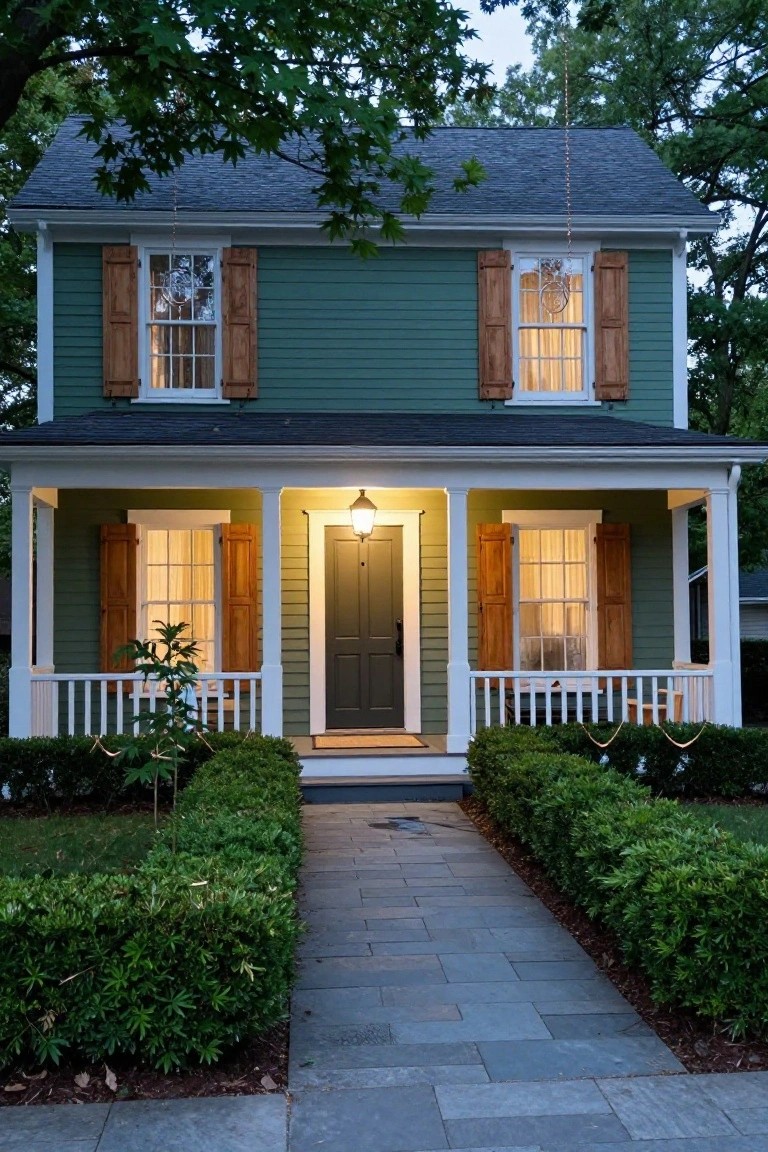
A soft sage green on the siding pairs nicely with crisp white trim on a colonial house like this. The wooden shutters and dark front door keep things grounded and traditional. It freshens up the look without going overboard, especially under tree shade at dusk.
This setup suits older homes or ones with porches in green neighborhoods. Use it where you want subtle curb appeal that blends with nature. Go for low boxwood hedges along the walk, but skip glossy paints that fade fast in the sun.
Frequently Asked Questions
Q: My colonial house has red brick siding. Which schemes from the article pair best?
A: Stick to creamy whites or soft taupes for the trim. They warm up the red without clashing. Pair with black shutters for crisp contrast.
Q: Our yard gets full sun all day. Will these colors fade quickly?
A: Choose deeper hues like navy or charcoal. They stand up to UV rays better than pastels. Refresh with a solid exterior paint rated for direct light.
Q: How do I test these colors before committing to the whole house?
A: Grab large sample boards from the paint store. Hold them against your siding at different times of day. Live with them for a week… you’ll know.
Q: Can I tweak these schemes for a slightly modern vibe?
A: Swap traditional trim for matte black. And add a pop of sage green on the door. It keeps the colonial charm but feels fresh.
