

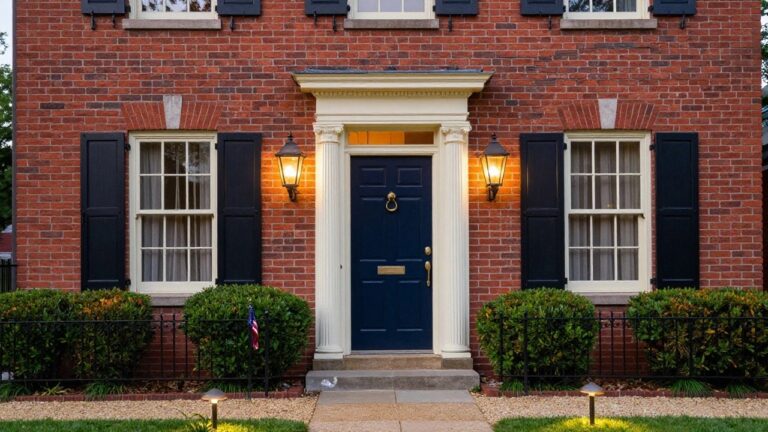
I always appreciate how Colonial homes shine during the day with their crisp symmetry and welcoming front doors. But at night, without thoughtful exterior lighting, those rooflines and facade details fade into shadow, dulling the curb appeal. Smart lights change that. I tried a couple lantern styles on our own entry pillars once, and the way they picked out the siding texture made the whole front feel alive. These setups highlight what works best on real Colonial exteriors, from porch accents to path guides, giving you ideas easy to adapt and test.
Lanterns Flanking the Entry Portico
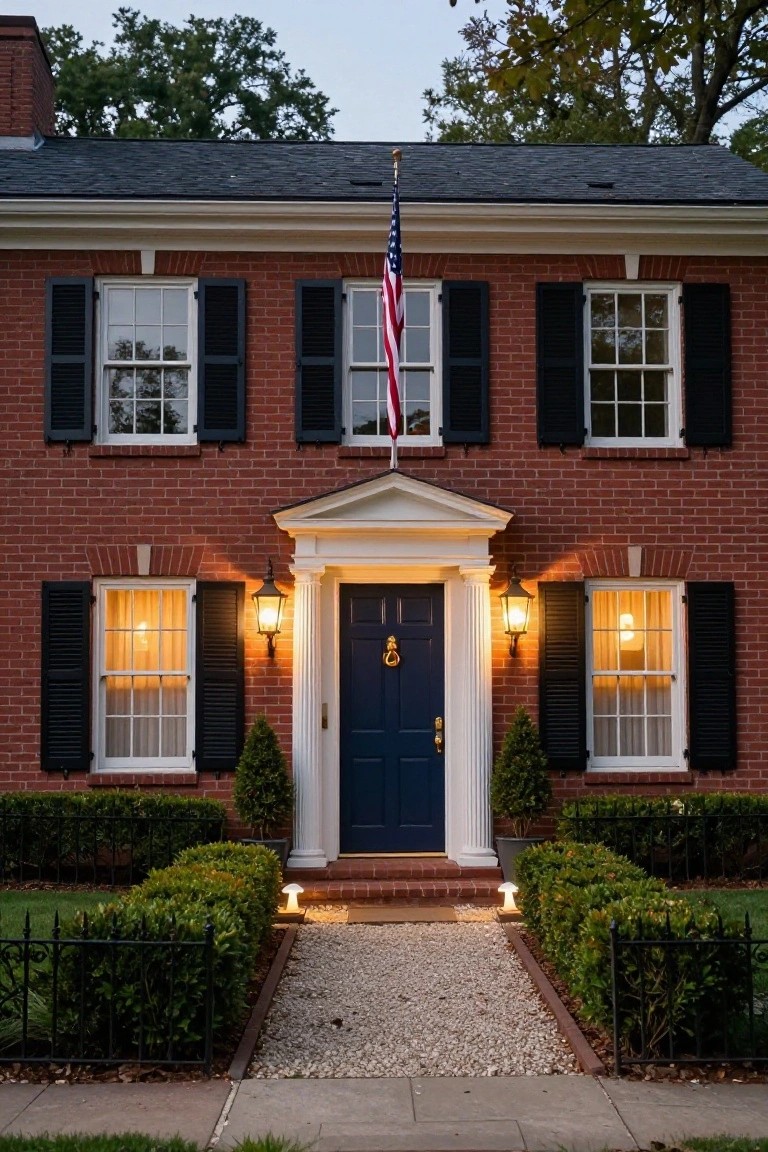
A pair of black lanterns mounted on the white pillars beside the door throws a soft glow right where it counts. On this brick colonial, they pick up the evening light from the windows and path stakes, making the front step feel safe and neighborly after dark. It’s a straightforward way to highlight the architecture without overdoing it.
Put similar lanterns on homes with a covered entry or columns. They suit classic styles best, especially where you want low-key light that doesn’t wash out brick or siding. Go for lanterns about two feet tall, with warm bulbs, and wire them for dusk-to-dawn if you forget to flip the switch.
Recommended Products

Decorative Lantern Set for Every Space: Create a warm and welcoming atmosphere with this set of 2 decorative candle lanterns featuring two complementary sizes (17" and 13"). Their timeless black metal finish blends beautifully with farmhouse decor, modern home decor, rustic decor, front porch decor, patio decor, fireplace mantel displays, dining tables, entryways, weddings, and seasonal decorations, adding elegance to both indoor and outdoor spaces

Decorative Candle Lanterns Set: Lantern decor set of 2, the larger one measures 5.7*17 inch, the smaller one measures 4.5*13 inch, with 2 candles measure 3x6 inch and 3x5 inch. They are great lantern decor for outdoor and indoor to brighten up your home

Sturdy Open-Frame Design: Constructed from black metal with a movable hanging ring; No glass panels allow easy candle placement and optimal flame display; Dimensions: 8.3” x 8.3” x 23.6” (Hanging ring adds 2.3”).
Lantern Sconces Flank the Front Door
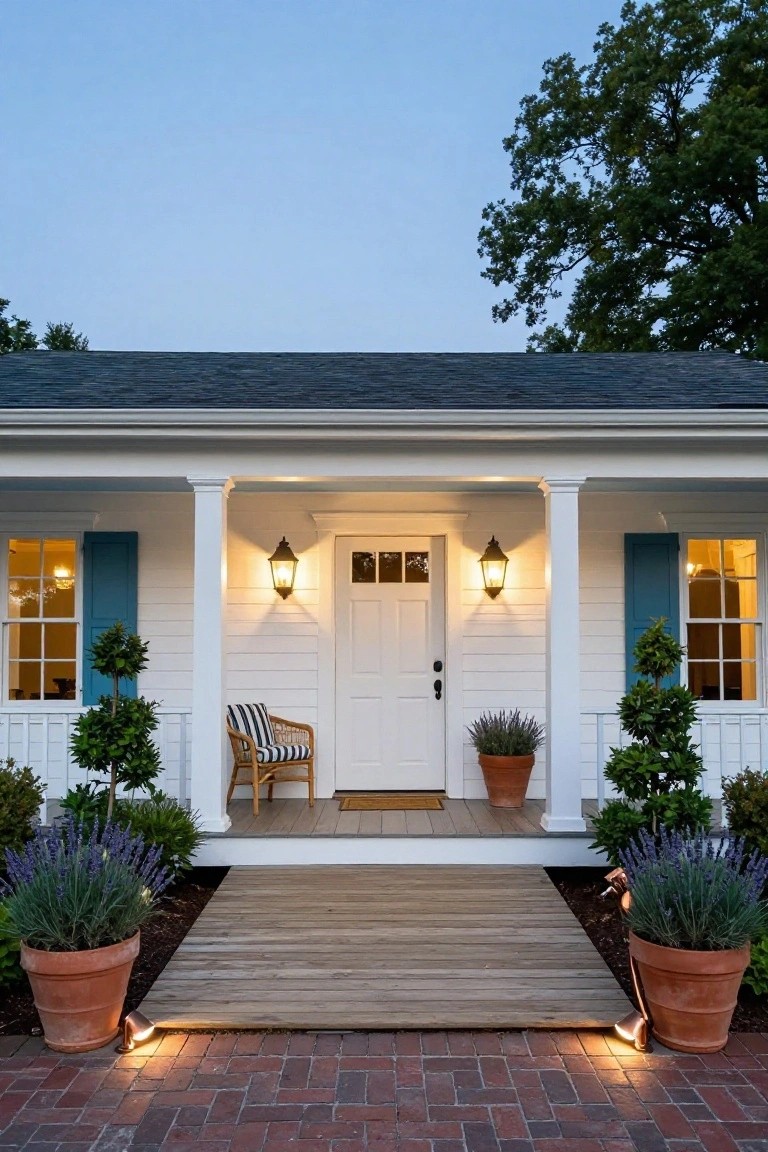
A pair of classic lantern sconces mounted on either side of the entry door does a nice job lighting up this colonial porch at dusk. They cast a warm glow across the white siding and columns without overpowering the simple architecture. It’s a straightforward way to make the house feel more welcoming right when people approach.
You can pull this off on most traditional homes with a covered porch. Go for black or aged metal lanterns to contrast white trim, and keep the bulbs soft so the light pools gently on the steps. It works best where you want evening curb appeal without a lot of wiring hassle… just make sure they’re rated for outdoor use.
Lantern Wall Lights for Colonial Homes
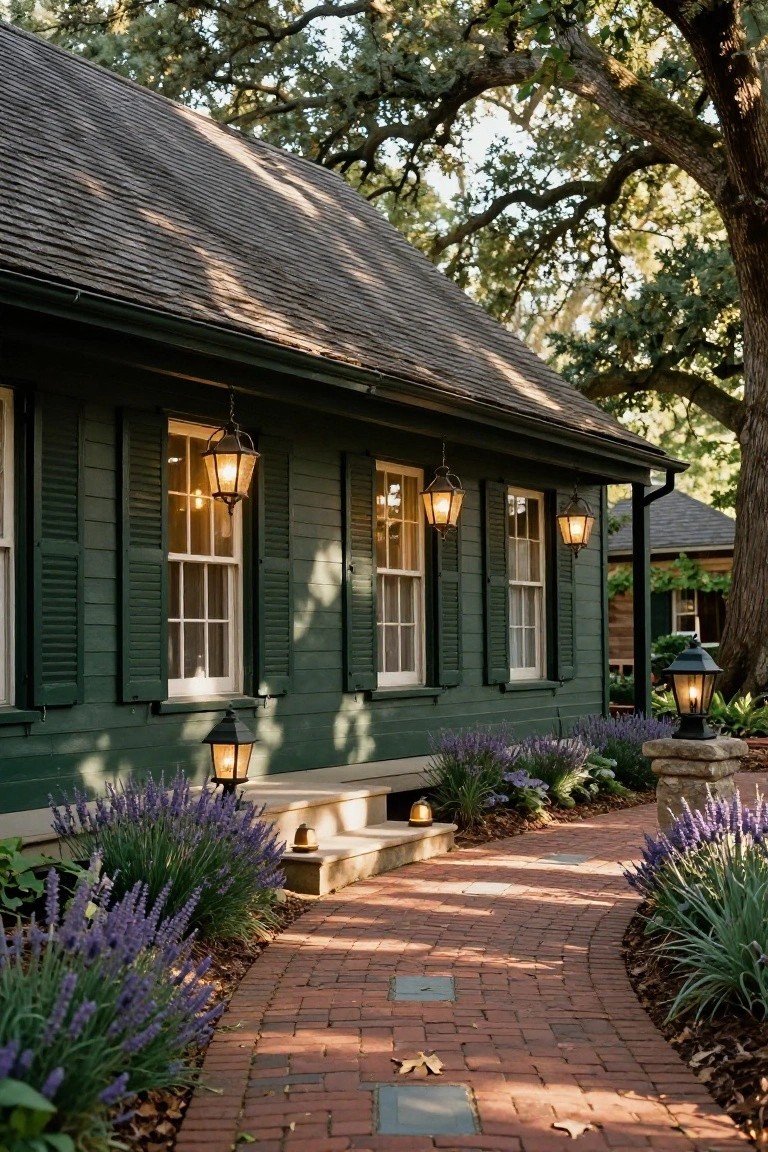
These classic lantern-style lights hung right on the house walls do a nice job lighting up the dark green siding on a colonial place. The warm glow spills out through the windows and onto the path, making the whole side of the house feel welcoming after dark. It’s a simple setup that fits right into the traditional look without overdoing it.
You can pull this off on any colonial or older-style home with clapboard siding. Hang the lanterns at window height, spaced evenly, and go for black metal ones to match the shutters. They work best where you have a walkway leading up, like here with the brick path. Just make sure they’re bright enough for safety but not so strong they wash out the house color at night.
Recommended Products
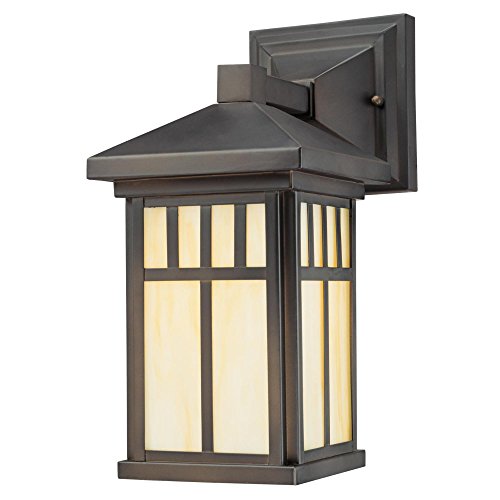
One-light fixture is perfect for use in front or back entryways or on a porch

2" diameter and 6" tall with night light appliance

DIMENSIONS - Overall size: 13.78” L x11.42”W x22.84”H, the mounting plate:11.81” Lx4.53”W. Weight: 9.48 pounds. This large outdoor wall sconce is a little bit bigger than common ones, pls check the dimension before purchasing.
Porch Column Lanterns
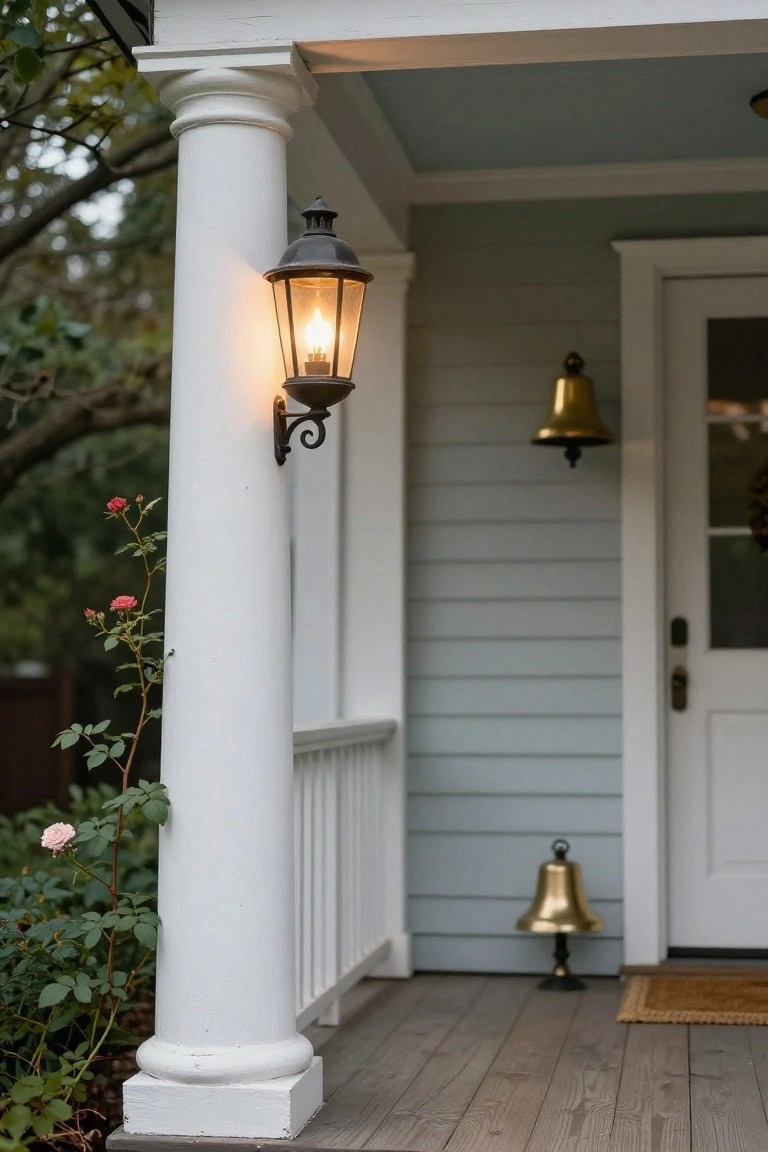
A simple black lantern mounted on a white porch column does a lot for a colonial entry. That warm glow spilling out at night makes the front door feel right there waiting for you. It’s classic without trying too hard, and the climbing roses nearby add just a bit of life.
These work best on covered porches with tall columns like you see on older homes. Hang one at eye level so it lights the steps without glare. Go for lanterns with glass sides to protect the bulb from rain. Skip bright LEDs, though. Stick to soft incandescent for that old-time feel.
Wall Lanterns Beside the Patio Door
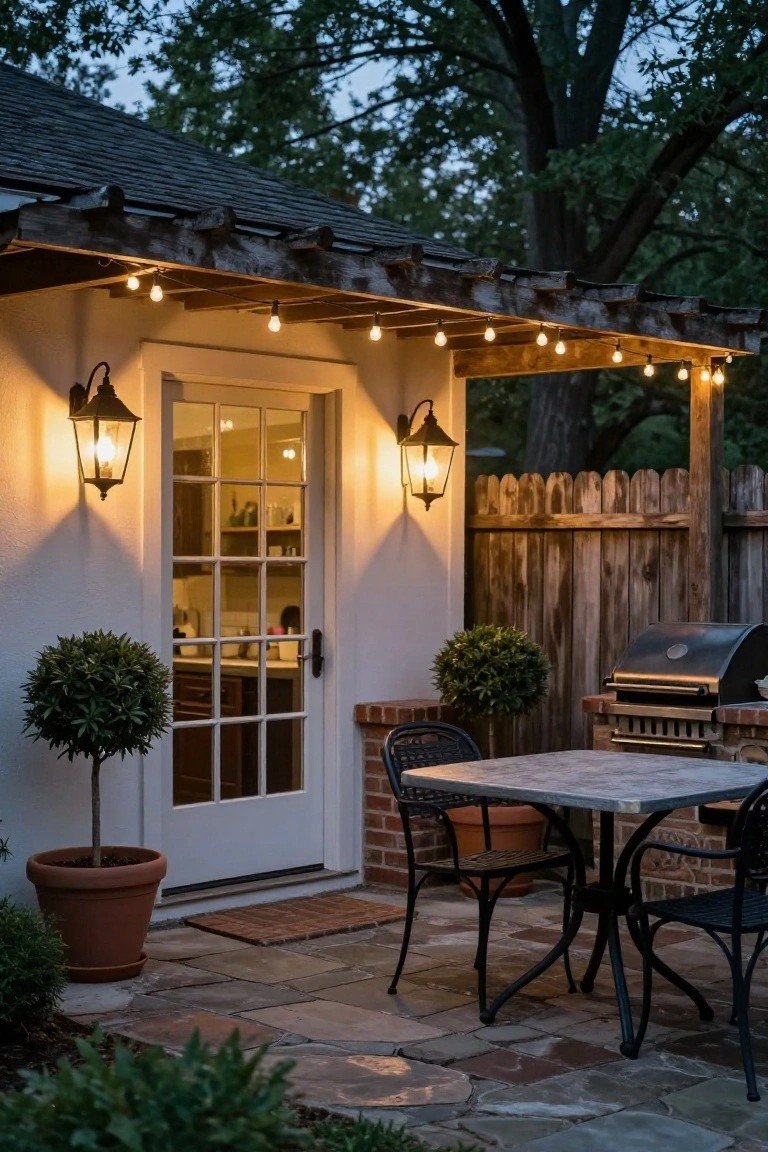
A simple pair of black wall lanterns sits on either side of a French door leading out to the patio. They throw off that steady warm light just as the evening settles in, making the whole spot feel right for dinner outside. It’s a classic move that ties the door right into the outdoor setup without much fuss.
These work best on lighter walls like stucco, where the dark metal stands out nice. Hang them about eye level, maybe six feet up, and they’re good for colonial style homes or any place with a bit of architecture around the door. Add string lights overhead if you want to spread the glow further… just don’t overdo the bulbs or it gets too busy.
Garage Lighting with Copper Lanterns
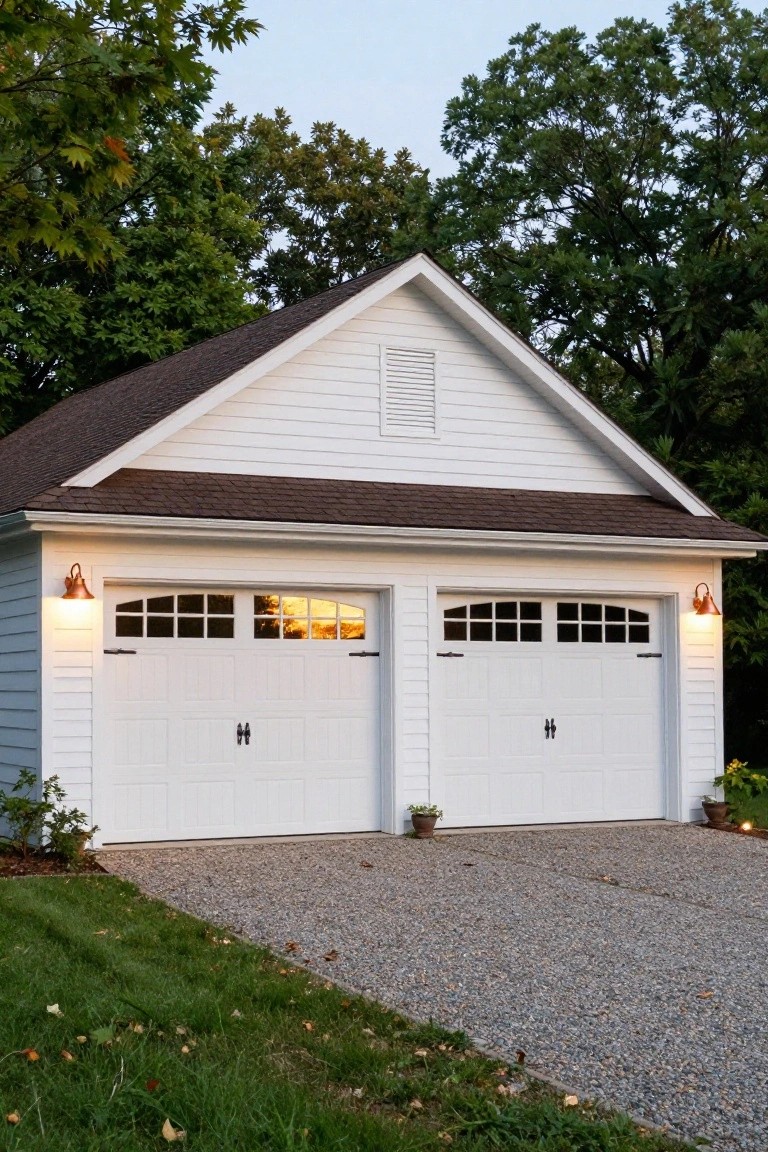
These copper wall lanterns do a nice job lighting up a simple two-car garage. They sit right beside the doors on white siding, giving off a warm glow that picks up the evening light through the arched windows. It’s a classic look for colonial style homes, where the metal patina will age nicely over time and fit right in without much fuss.
You can use this setup on any attached garage facing the street, especially if your house has clean lines and shingle roofing. Hang them at eye level so they frame the doors evenly, and go for lanterns with a seeded glass shade to soften the light. It works best on neutral exteriors like white or light gray, but keep the scale right so they don’t overwhelm smaller garages.
Brick Pillar Light at Garden Gate
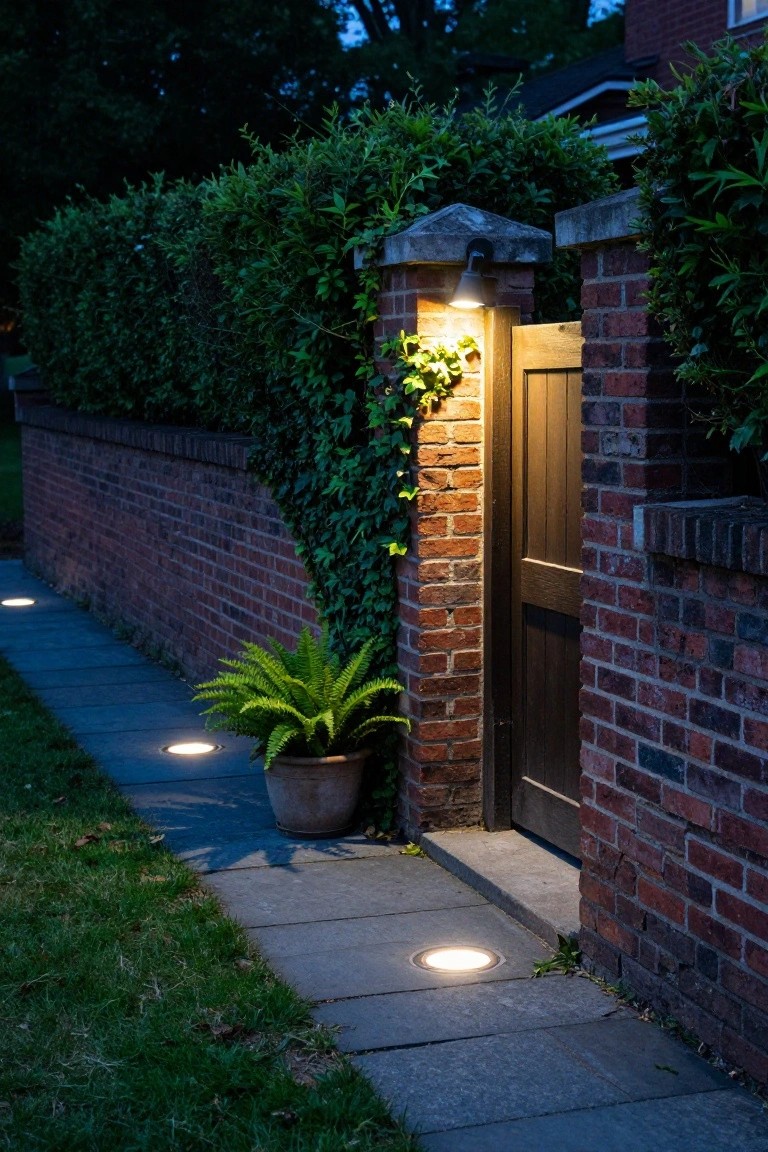
A wall-mounted light on a brick pillar does a nice job lighting up this wooden gate. It throws a soft glow over the entry without being too bright. Paired with those recessed lights in the path, it guides you right in on dark evenings. For colonial homes, this keeps the traditional brick look while making the gate feel safe and approachable.
You can add one of these to any brick wall or pillar near a gate or side door. Use warm bulbs to match the cozy vibe. It suits homes with hedges or ivy for that layered feel. Just make sure the light is high enough not to glare… and aim it down a bit if bugs are an issue.
Porch Lanterns Frame the Entry
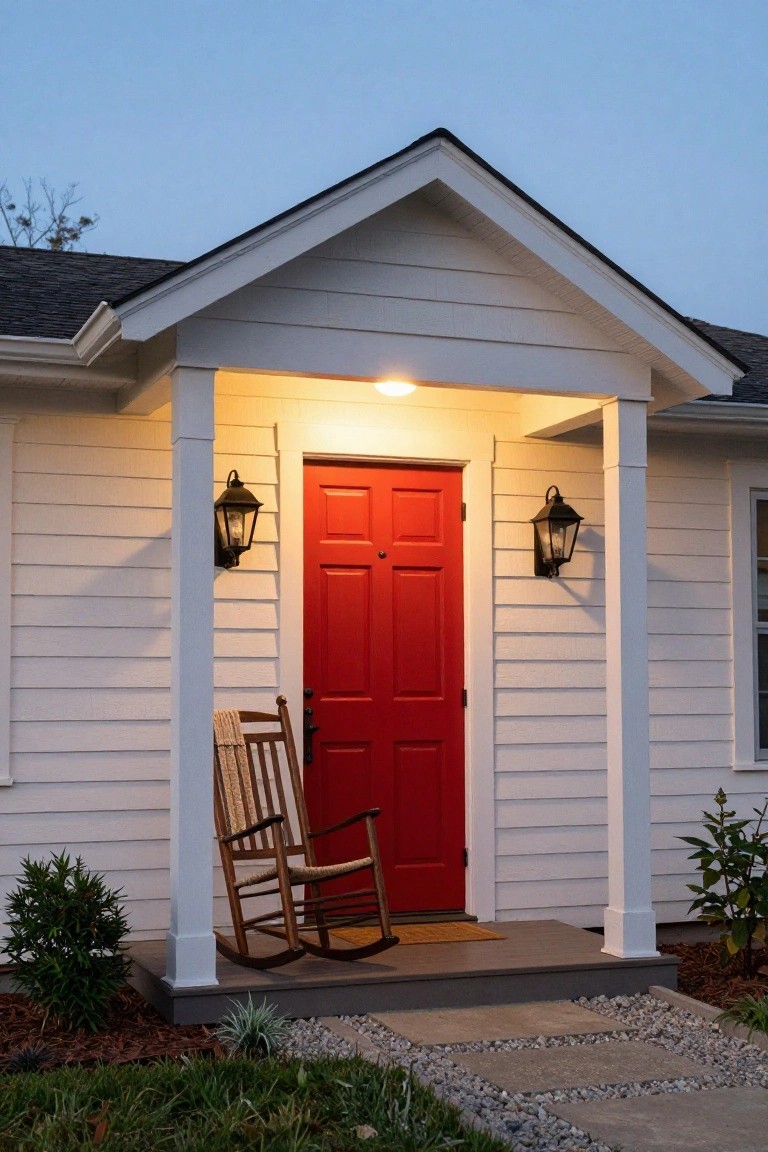
A pair of lanterns mounted on the porch posts does a nice job lighting up the front door. They cast a warm glow that makes the red door pop against the white siding, and it feels right at home on a colonial-style house. That soft light pulls you right up the steps without being too bright.
Put these on houses with covered porches or simple gable roofs. Go for black metal lanterns with clear glass to keep the look classic, and use warm bulbs inside. They work best where you want to highlight the entry at night. Just make sure they’re the right size so they don’t overwhelm the door.
Lantern Sconces on Colonial Windows
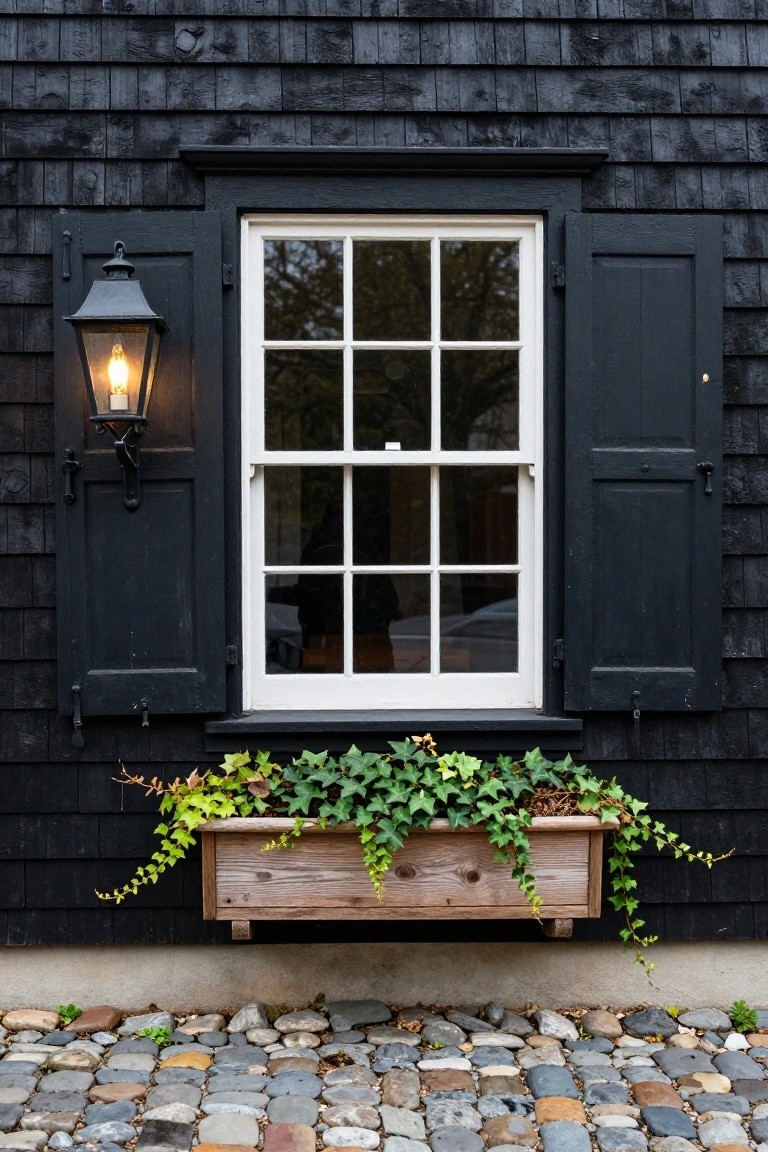
A simple black lantern sconce hung right next to the window does a lot for a colonial house at night. That warm glow from the bulb inside picks up on the dark shingles and shutters. It feels right for older homes, like something from a seaside town.
Put these on either side of key windows or near the front door. They work best on shingle or clapboard siding where the black metal blends in. Keep the lantern about the same height as the window sill… scale matters so it doesn’t look too small.
Subtle Landscape Lights Along Stone Walls
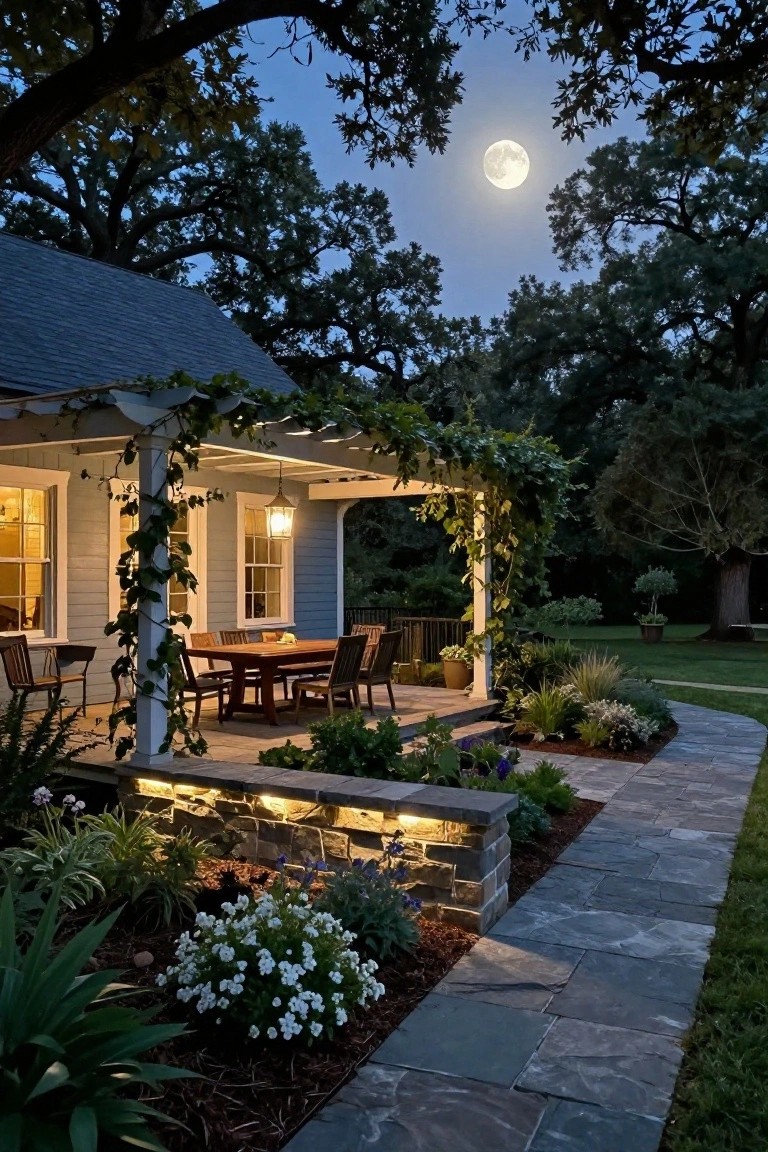
One simple way to light up the area around your colonial home is with low-profile LED strips tucked into stone retaining walls. They cast a soft upward glow on plants and walkways without bright glare, keeping the focus on the house and porch. In this setup, the lights run along the base of a low wall edged with flowers and grasses. It feels natural, like the garden itself is glowing a bit.
These work best on gently sloped yards or patios where you want to guide people to the seating area at night. Pair them with a single hanging lantern over the table for layers. They suit traditional homes since the stone ties into the architecture. Just keep the fixtures flush to avoid snags, and use warm bulbs to match interior lights.
Lantern Lighting Along Exterior Paths
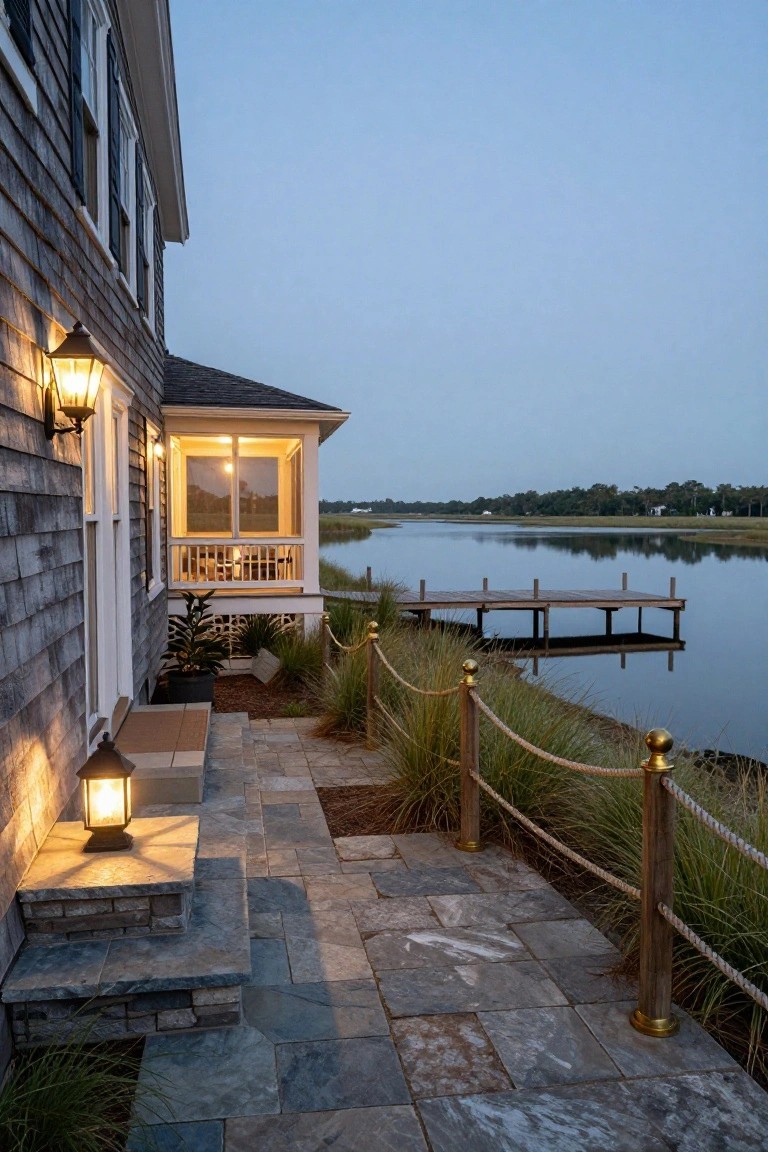
One straightforward way to light up a colonial house exterior is with lanterns placed along steps and walkways. Here you see them on the wall by the door and down on a stone pedestal, casting a soft glow that pulls your eye right to the path. It works well because it keeps things safe and visible without overpowering the architecture, and that warm light pairs nicely with shingle siding at dusk.
Try this on homes with a drop from the house to yard level, like waterfront spots or sloped lots. Stick to lanterns in black metal or lantern glass that nod to traditional styles, spacing them every few steps. Just watch the wiring if it’s damp around water… otherwise, it’s low fuss and adds real evening charm.
Lighting the Entry with Flanking Lanterns
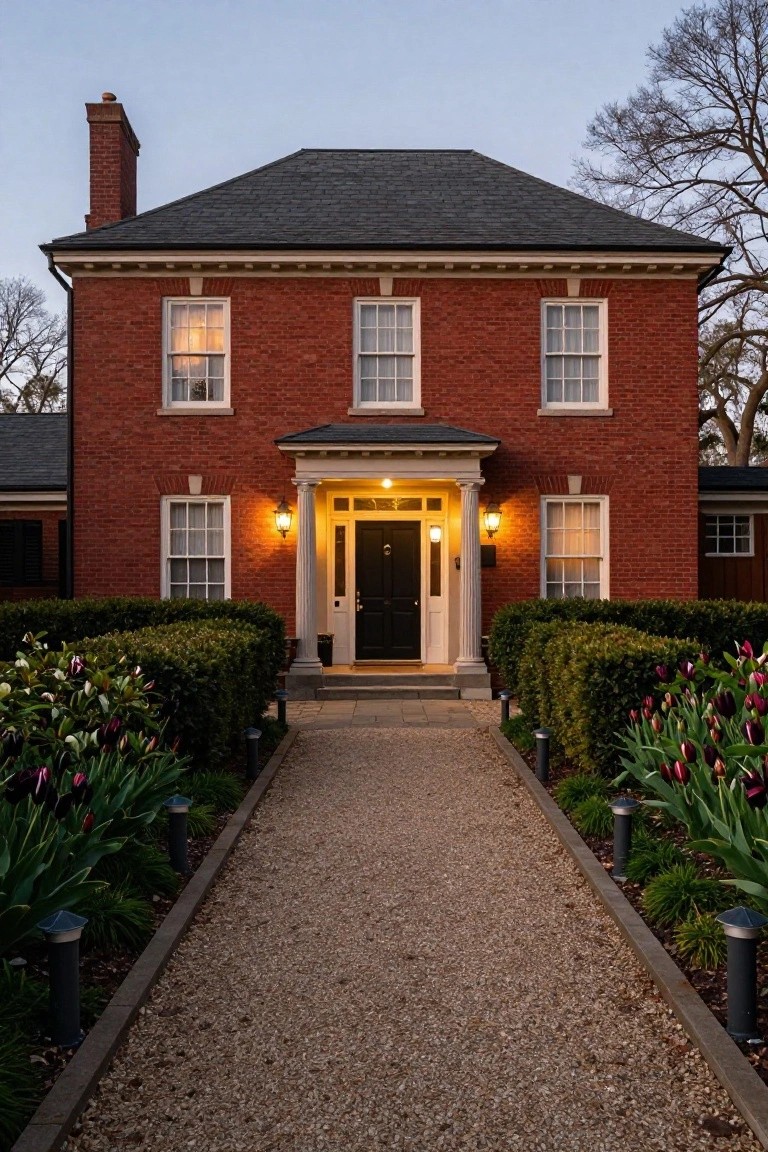
A pair of lanterns mounted on porch columns works well to light up the front door on a colonial house. They cast a soft glow over the steps and door itself, making the whole entry feel safer and more inviting as dusk settles in. On this brick facade, the black lanterns pick up the dark door without overpowering the classic lines.
You can pull this off on most traditional homes with a covered porch or simple columns. Go for lanterns about two-thirds the height of the column so they don’t look stubby. Pair them with low path lights along the walk to guide folks right to the door. It suits brick or stone houses best, especially if you want that old-school welcome without too much fuss.
Overhead Lantern Lights Porch Swing
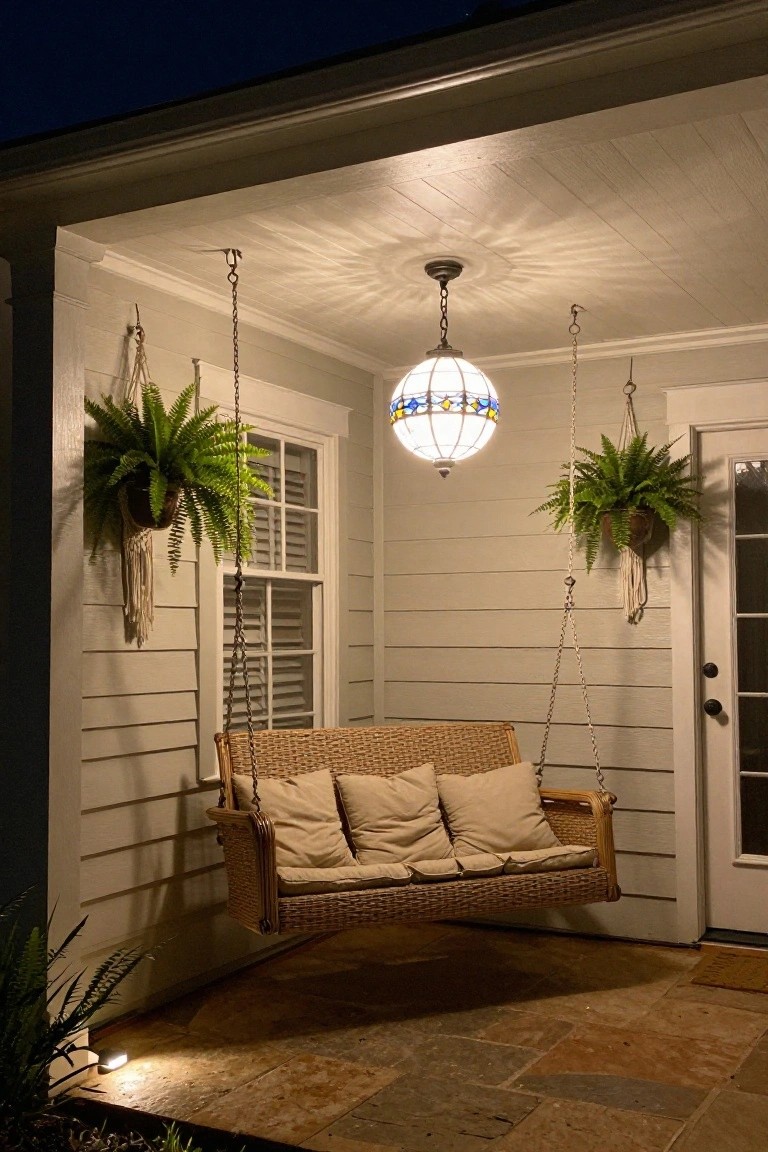
A simple hanging lantern centered over a porch swing brings just the right evening light to this outdoor spot. The lantern’s soft glow spills down onto the cushioned seat, making it easy to settle in after dark without harsh shadows. Paired with a few hanging ferns, it keeps things relaxed and homey on a covered porch like this one.
This works best on porches with a bit of roof overhang, especially Colonial-style homes with light siding and shutters. Center the fixture above your swing chains for even light, and choose one with a bit of color in the glass for interest. Skip super bright bulbs, though. Aim for warm ones that let the space feel calm.
Courtyard Lantern Lighting
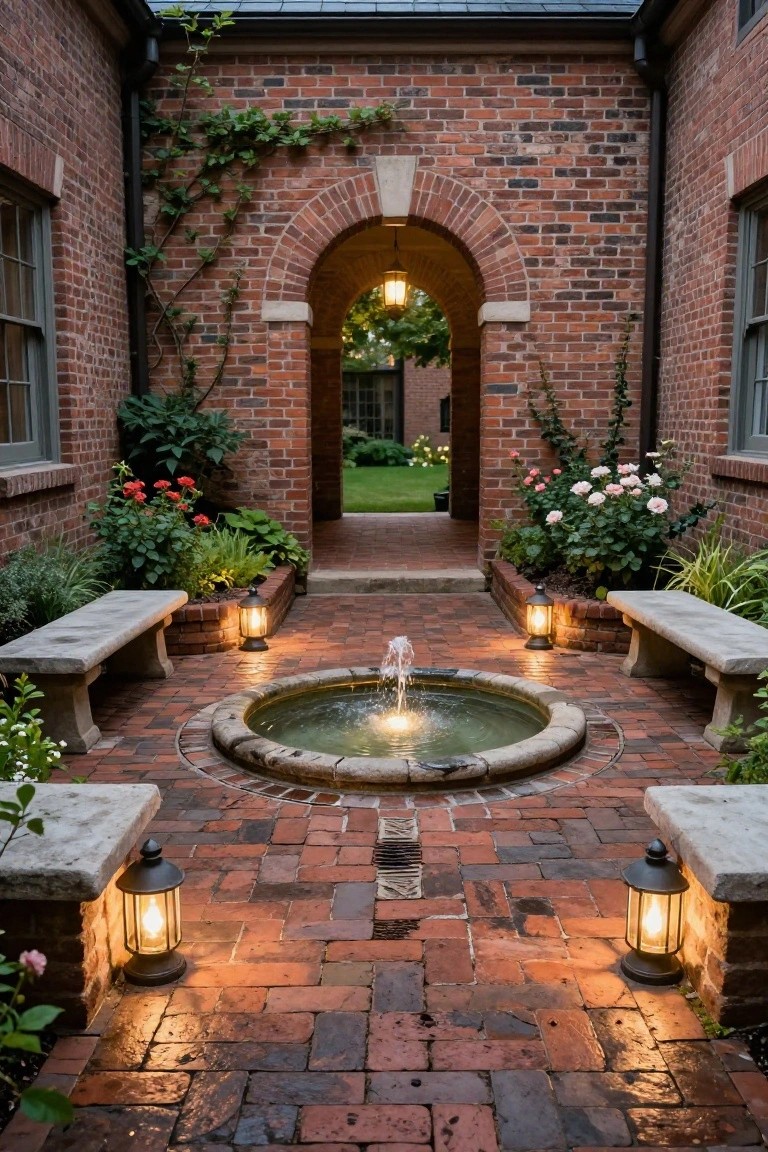
Nothing beats simple lanterns for lighting up a courtyard like this one. Placed around the central fountain and along the benches, they cast a warm glow over the brick pavers at night. The light picks out the plants and archway without overwhelming the space, making it feel cozy and usable after dark.
This setup works best in smaller enclosed patios tucked against a colonial-style house. Go for lanterns on stands or hooked to low walls, using candles or LEDs for easy upkeep. It suits brick or stone hardscapes, and keeps things practical since you can move them around or swap for seasons.
Classic Pillar Lanterns Frame the Driveway
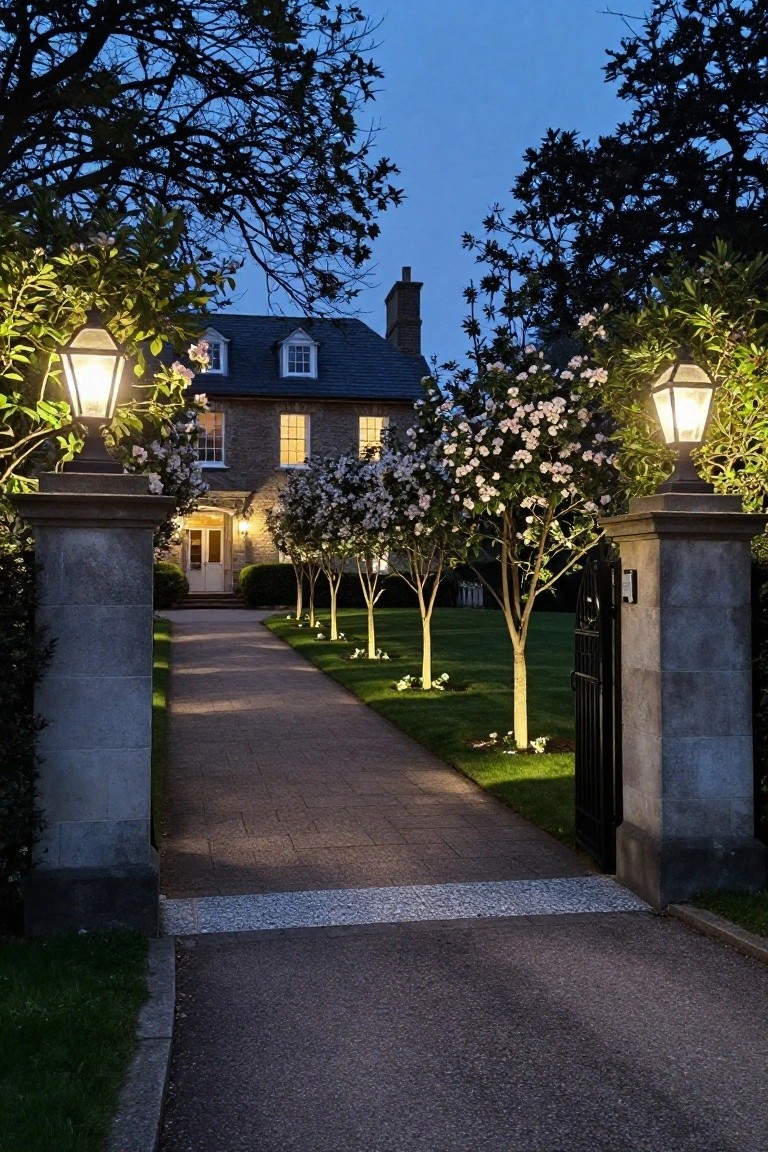
There’s something about a pair of lanterns mounted on stone pillars at the driveway entrance that just feels right for a colonial home. They cast a soft, steady glow down the path, picking out the trees and grass without overwhelming the scene. It’s a simple way to make the front of the house look settled and inviting as soon as dusk falls.
Put these on pillars flanking your gate or driveway start, and they’ll guide guests right to the door. They work best on homes with some stone or brick detailing already, maybe with slim trees along the path for extra uplighting. Keep the lanterns traditional in shape, nothing too modern, and aim for bulbs that give warm light, not stark white.
Wall Lanterns Flank Key Windows
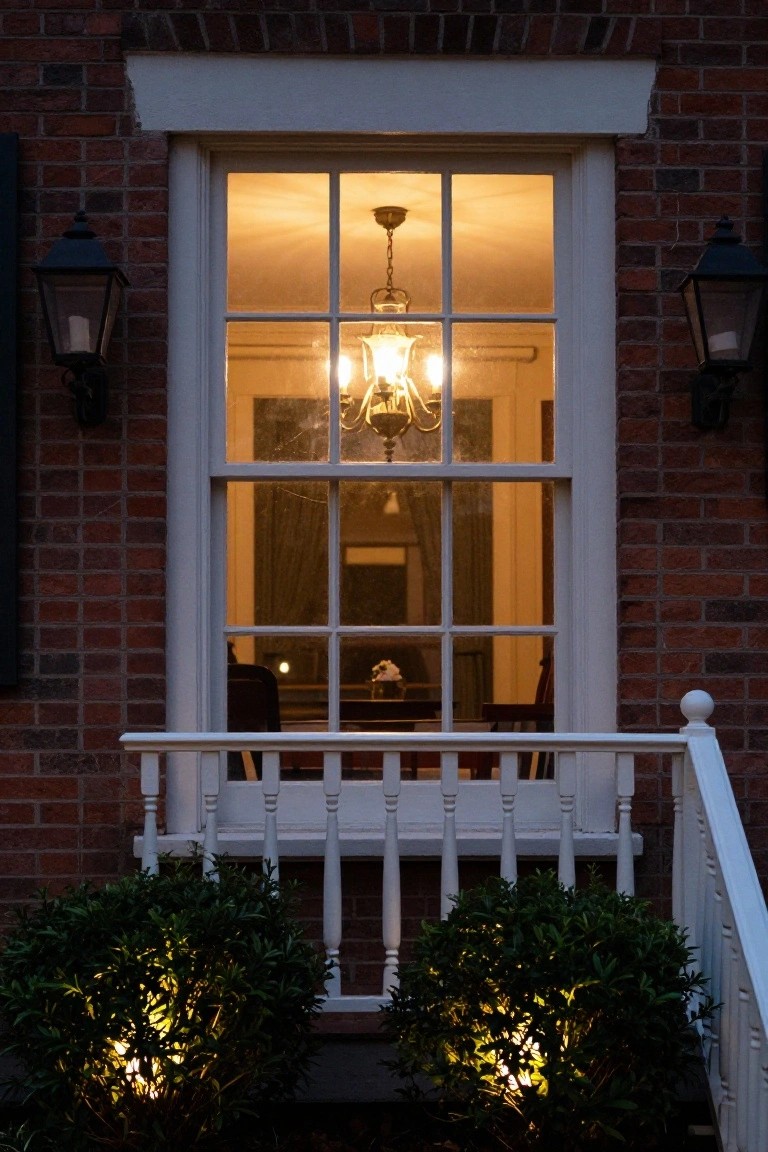
Wall lanterns like these do a nice job lighting up a colonial brick facade at night. Placed right beside a tall window, they frame the glass nicely and let the warm light from inside spill out. The black finish on the lanterns picks up the shutters and blends with the brick without stealing the show.
Put them on either side of your dining room or living room window for that balanced look. They suit older homes with white trim best. Toss in some uplights on the shrubs down below if you want more glow around the base. Just keep the bulbs soft so it stays cozy, not glaring.
Porch Lantern Lighting
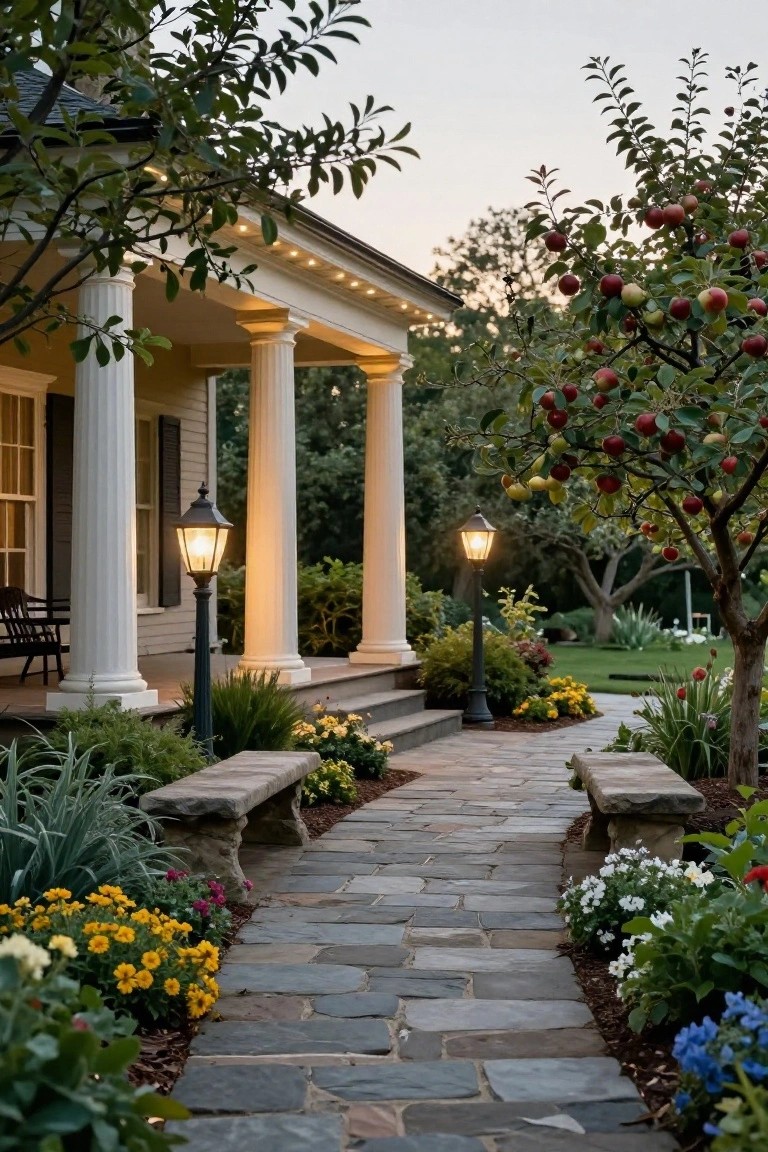
Tall black lanterns on posts stand guard by the porch steps in this colonial setup. They cast a soft golden glow that pulls the eye right to the front door without overpowering the white columns or the house itself. It’s a simple way to make evenings feel safer and more neighborly.
Place a pair flanking the steps, wired for dusk-to-dawn operation. Add string lights tucked under the eaves if you want a bit more sparkle. This works best on traditional homes with covered porches. Skip bright LEDs, though. Stick to incandescent-style bulbs for that old-school warmth.
Pool Deck Lighting for Nighttime Use
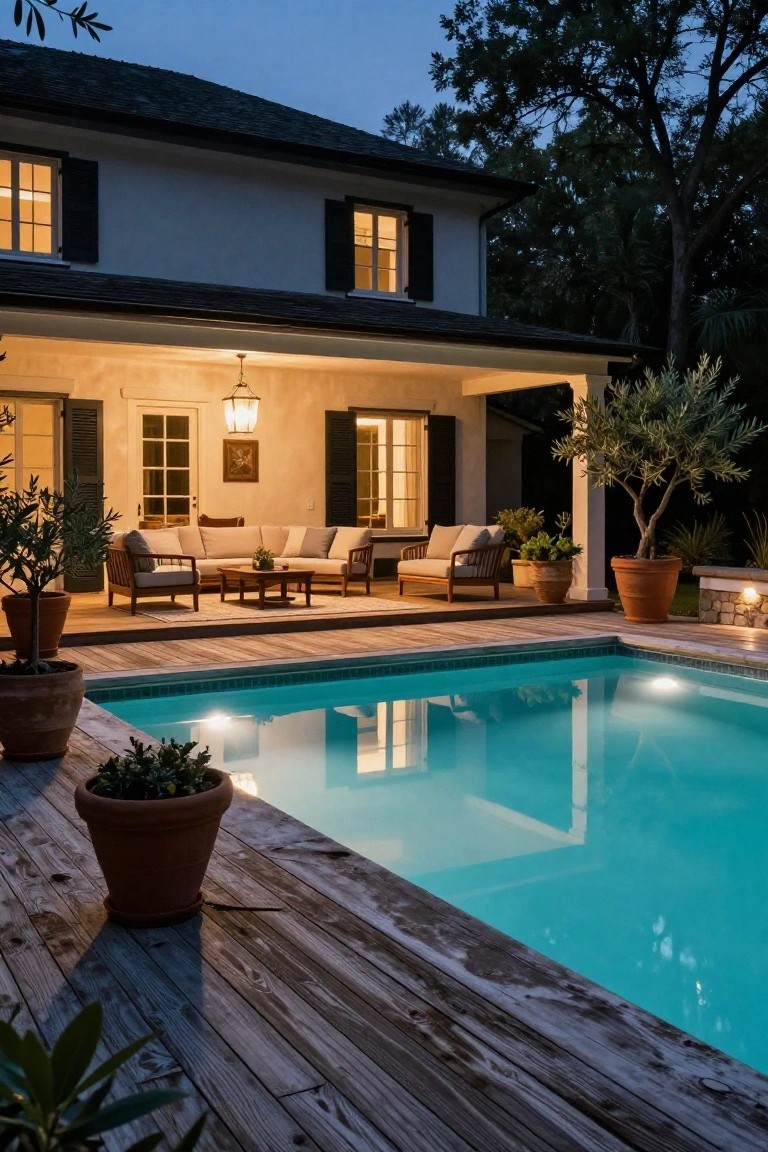
One simple way to light up an outdoor space is with pool lights that spill over onto the deck. In this setup, the blue glow from the water hits the wooden boards just right, making the whole area feel safe and welcoming after dark. Add a hanging lantern over the seating, and you get that extra touch of warmth without overdoing it.
This works best on a deck right next to the house, like a patio extension. It’s great for colonial homes with clean lines. Just keep the deck material light colored so the light bounces well, and space out a few pots to frame things. Avoid bright spots that wash out the pool color.
Lantern Lights Beside the Front Door
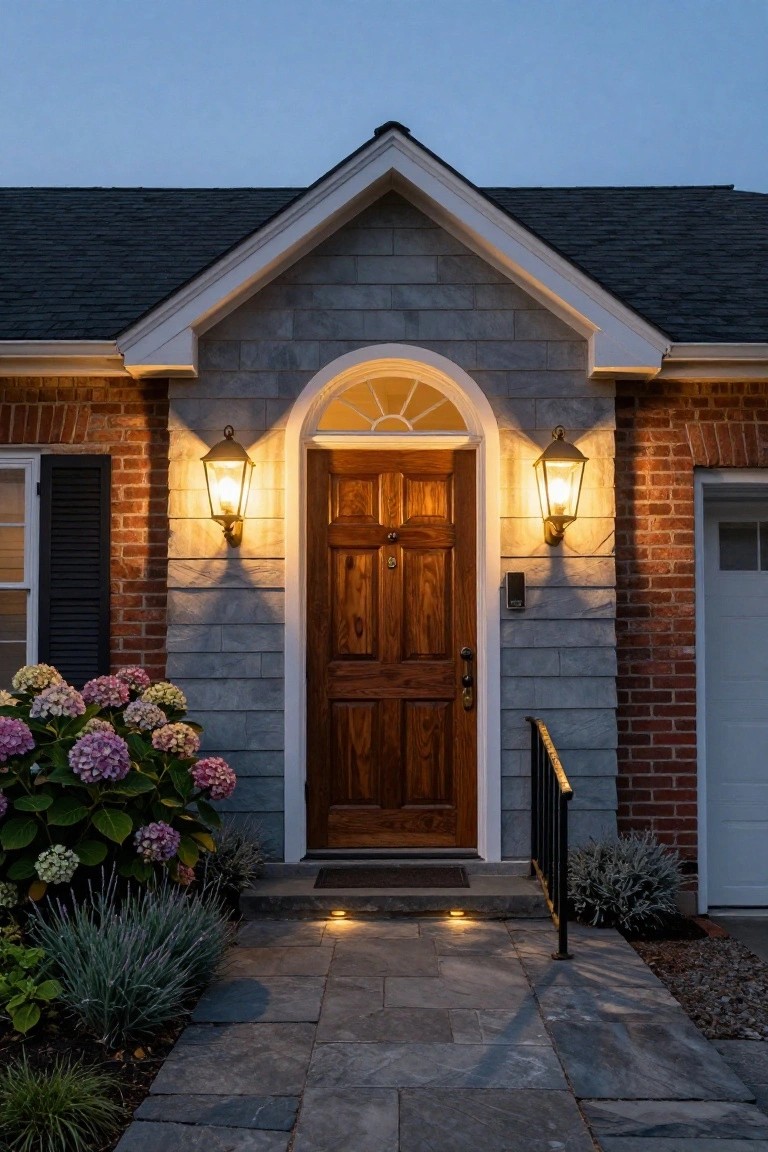
A simple pair of lantern sconces mounted on either side of the door does a lot for a colonial exterior. They throw off that steady warm glow right when dusk hits, pulling focus to the entry without overdoing it. The wood door picks up the light nicely, and it ties into the mix of brick and shingle without any fuss.
This works best on homes with some traditional lines, like yours if it has brick corners or a gabled roof. Hang them about eye level, maybe 66 inches from the ground. Go for clear bulbs inside for that old lantern look… just keep the fixtures black or aged metal so they don’t compete with the house. Avoid spots too exposed to wind if you’re in a stormy area.
Frequently Asked Questions
Q: How do I make sure my new lights match the colonial vibe of my house?
A: Hunt for fixtures with lantern shapes, seeded glass, and aged brass or black finishes. They echo those classic 18th-century designs without a hint of modern fuss. Measure your door and windows first to scale them right.
Q: Can I install these exterior lights myself, or should I call someone?
A: Tackle simple solar or plug-in ones on your own with basic tools. But hire an electrician for hardwired setups around entrances. They dodge code issues and keep your wiring safe.
Q: …and what about lighting the pathway to my colonial front porch?
Solar path lights disguised as mini lanterns work wonders. Just stake them every few feet along the walk. They soak up daylight and light your way softly at night.
Q: How bright should I go for the front of the house?
Go medium brightness, around 300-500 lumens per fixture. It highlights architectural details like columns without blinding guests. Test at dusk and dim if needed.
