

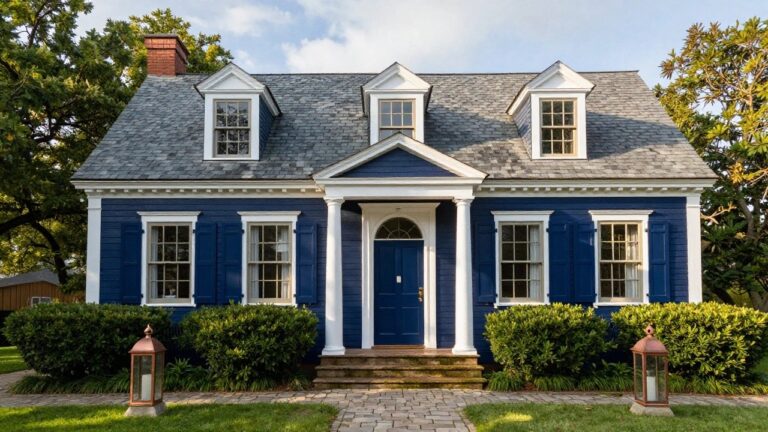
I’ve noticed that Colonial houses really come alive from the street when a navy base color ties the facade together without stealing focus from the symmetrical lines.
That deep shade works best on clapboard siding or brick, where it contrasts sharply with white trim around the entry and multi-light windows.
I tried sketching a few navy schemes on paper once, but they only made sense after factoring in how rooflines and porch columns cast real shadows.
From the curb, folks spot the door hardware and shutter details first, so those accents elevate a good navy palette into something timeless.
A couple of these combinations have me thinking about testing navy on a smaller scale next spring.
Navy Clapboard Siding on a Colonial Front
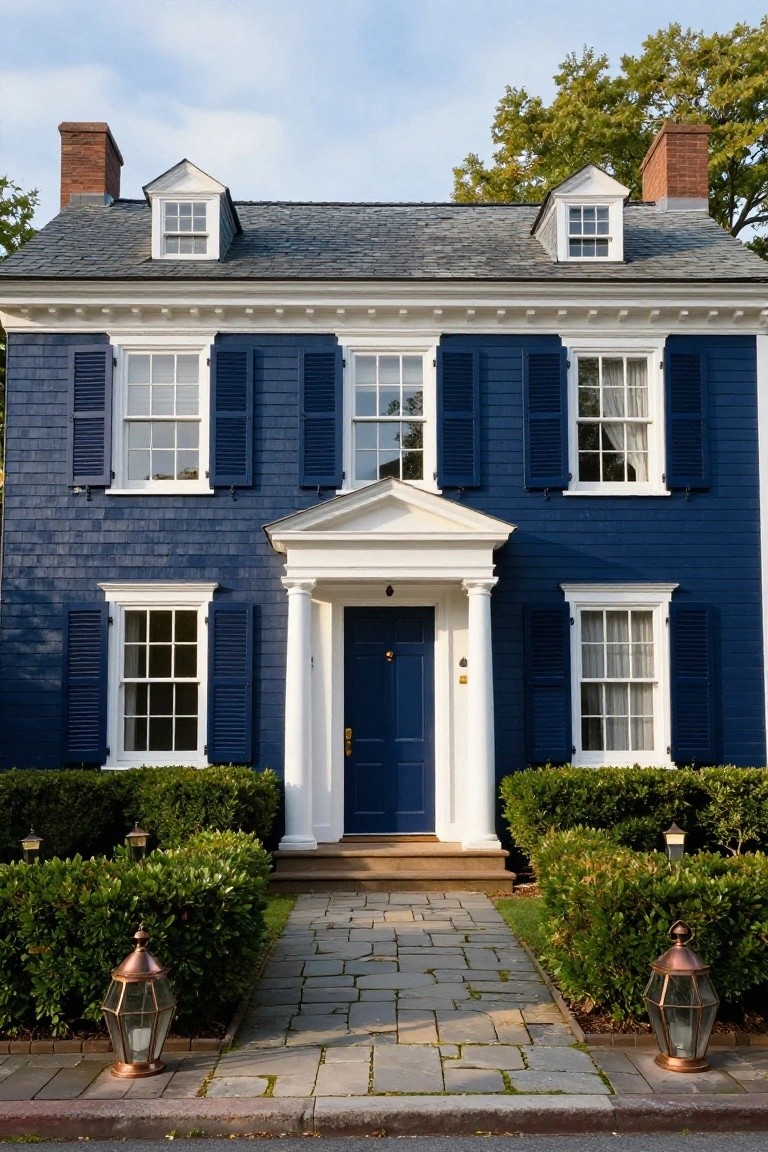
Deep navy clapboard siding turns this classic colonial house into something that catches the eye right away. The color wraps the whole facade nicely, from the dormers down to the base. White trim outlines the windows and frames the columned entry, keeping everything sharp and balanced. It’s a strong look that feels put-together without trying too hard.
You can pull this off on most two-story colonials with good symmetry. Keep the trim bright white to make the navy pop, and add simple boxwoods along the walk for structure. It suits established neighborhoods best. Just make sure your roof shingles are dark enough not to fight the siding.
Navy Front Door on a Colonial Porch
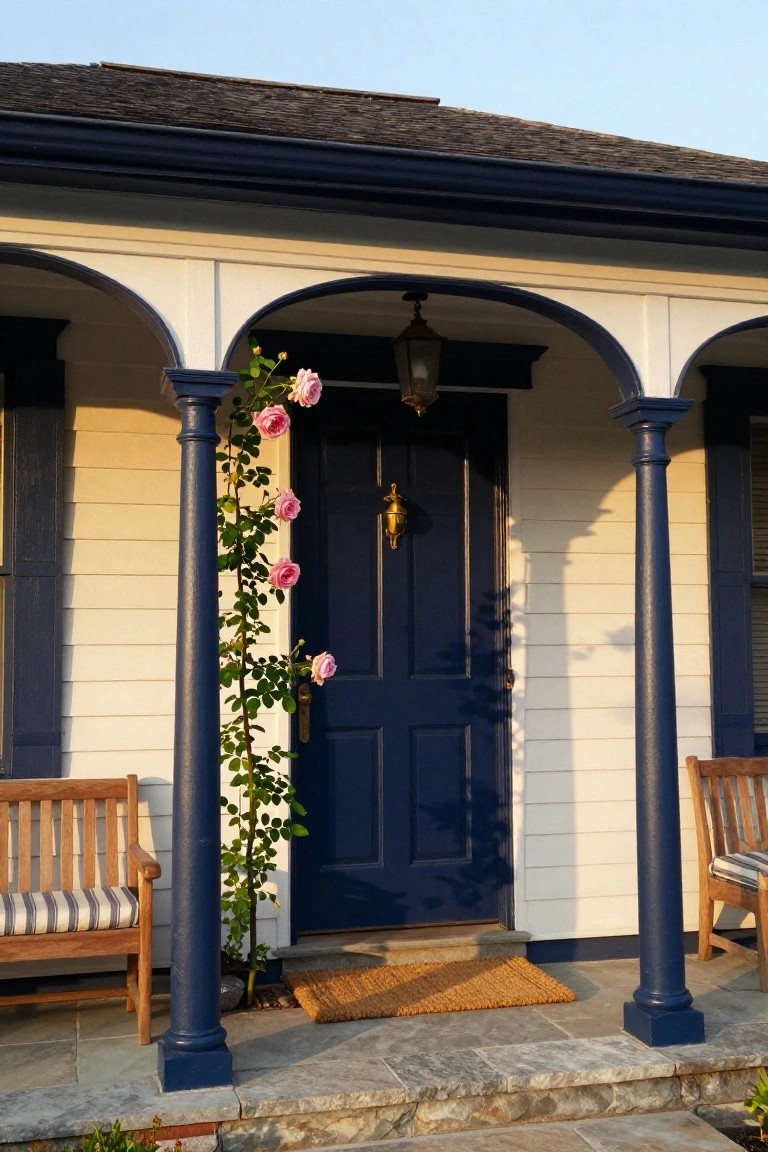
A navy front door like this one pulls the eye right to the entry on a classic colonial house. The dark blue paint on the door and columns sets up a clean contrast against the light siding. It feels bold but still right at home with the arched porch and simple lines. Those pink roses climbing the pillar add just enough life without taking over.
This works best on two-story homes with cream or pale walls where you want some punch up front. Paint the door and pillars navy, then flank it with benches for seating. Skip busy landscaping here. Let the color do the talking. It suits older neighborhoods that lean traditional.
Navy Blue Colonial with White Porch Trim
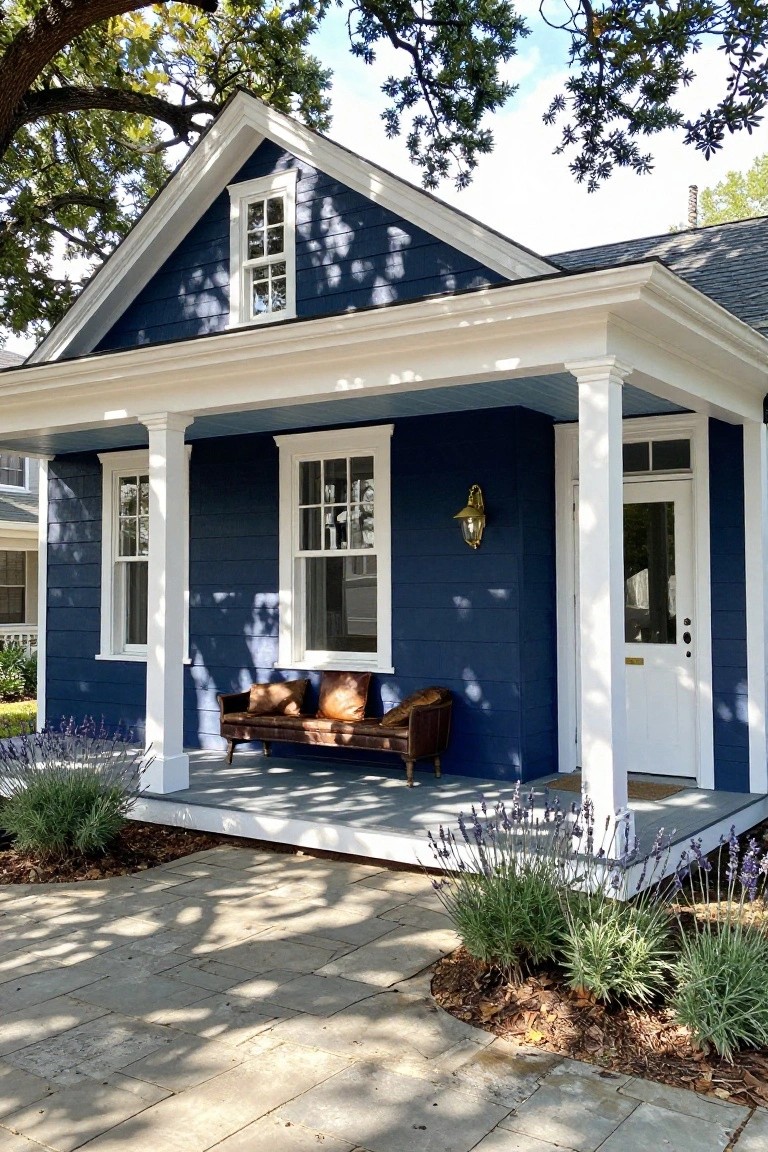
A deep navy blue on the siding makes this colonial house stand out right away. The white trim around the windows, door, and porch columns keeps things crisp and clean. That contrast gives it a bold feel that’s still welcoming, especially with the porch swing adding a homey touch.
This setup works best on smaller homes with classic lines like gables and pillars. It suits neighborhoods with trees for some shade, so the navy doesn’t wash out. Pick a good exterior paint, and pair it with simple plantings at the base to tie it together.
Navy Blue Colonial Facade
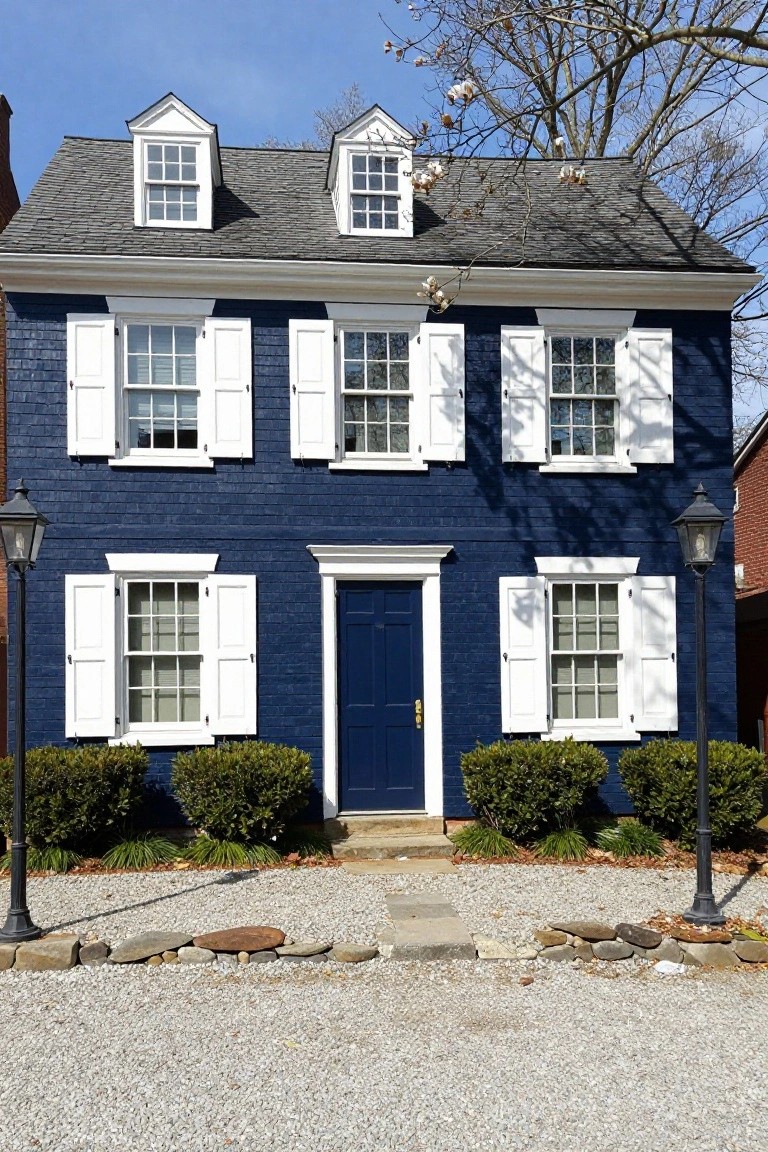
A deep navy blue paint on the house siding gives this colonial a strong, grounded look that feels both bold and timeless. The white trim outlines the windows, dormers, and door so they pop right out, keeping the design clean and balanced without any fuss.
This setup shines on older homes with good proportions and shingle roofs. Stick to low boxwoods along the front and gravel paths to let the color do the talking. Just plan to refresh the paint every few years, since navy shows wear quicker in sunny spots.
Navy Blue Siding on a Colonial Porch
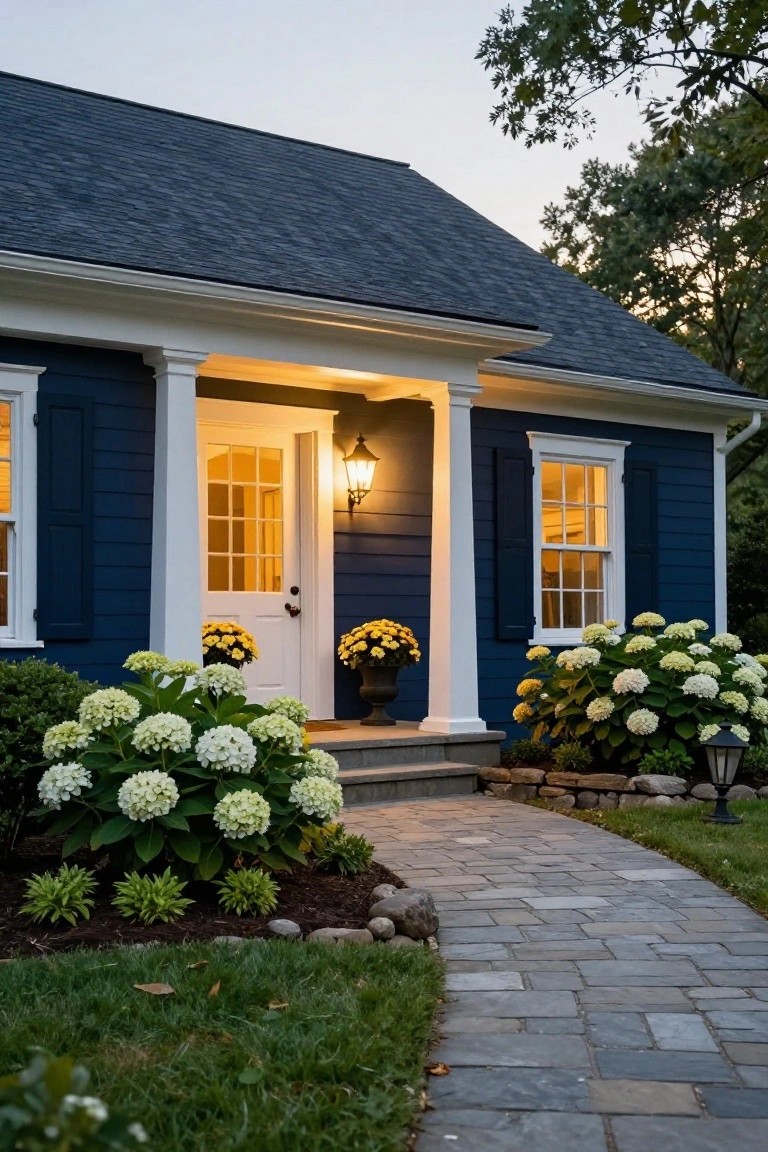
Navy blue siding gives this colonial house a strong, grounded look that feels both classic and fresh. The color wraps the clapboard nicely, setting off the white columns and trim around the front door. At dusk, the lantern light pulls it all together for real curb appeal.
You can pull this off on most colonial styles, especially one-story or cottage versions like this. Stick to crisp white for doors and shutters to keep the contrast clean. Add big white hydrangeas nearby if you want to echo the trim without much fuss. It suits shady spots too, since navy hides dirt better than lighter paints.
Navy Door on Light Gray Siding
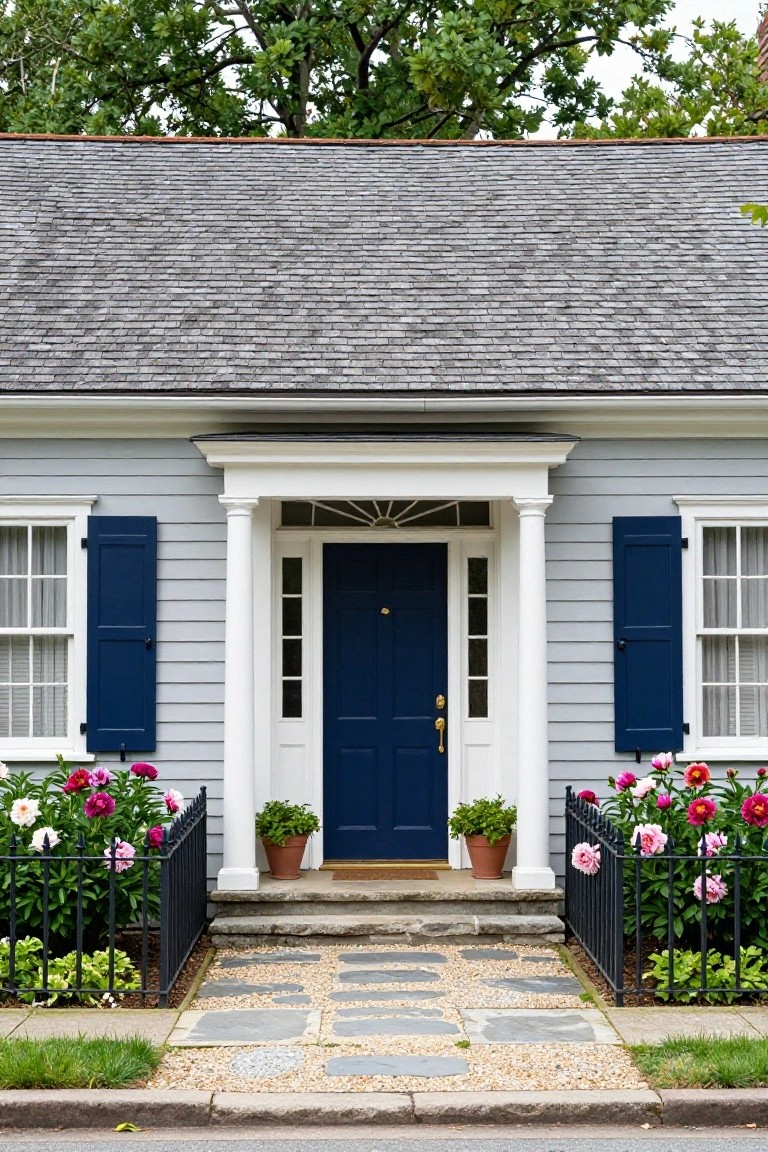
A navy front door paired with matching shutters works well on this pale gray colonial house. The dark color pulls your eye right to the entry without overpowering the simple shape. White trim around the door and columns keeps everything crisp.
This setup suits smaller homes on quiet streets. It adds some boldness to basic siding. Tuck in bright peonies or similar flowers along the front to balance the navy. Skip busier colors elsewhere so the door stays the star.
Navy Clapboard Colonial with White Columns
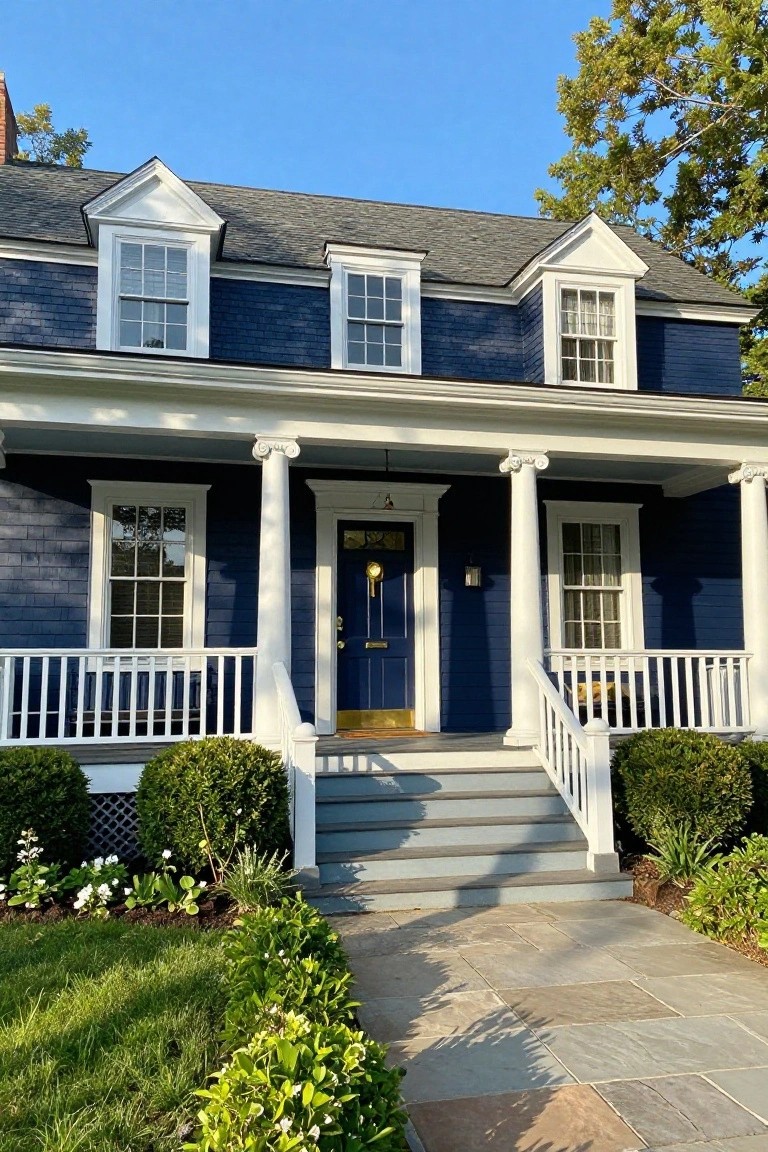
Navy clapboard siding wraps this colonial house in a deep, rich color that feels both bold and settled. White columns on the porch stand out crisp against it, along with the trim around windows and roofline. That simple contrast makes the whole front pull together without much fuss. Gold hardware on the navy door adds just enough shine.
This setup works well on homes with clean lines and some height, like gables or dormers. It suits established neighborhoods where you want curb appeal that nods to history but stays modern enough. Keep landscaping simple, with boxwoods and low flowers along the walk, so the house stays the focus. Avoid too much white elsewhere or it might wash out.
Navy Door on Pale Blue Siding
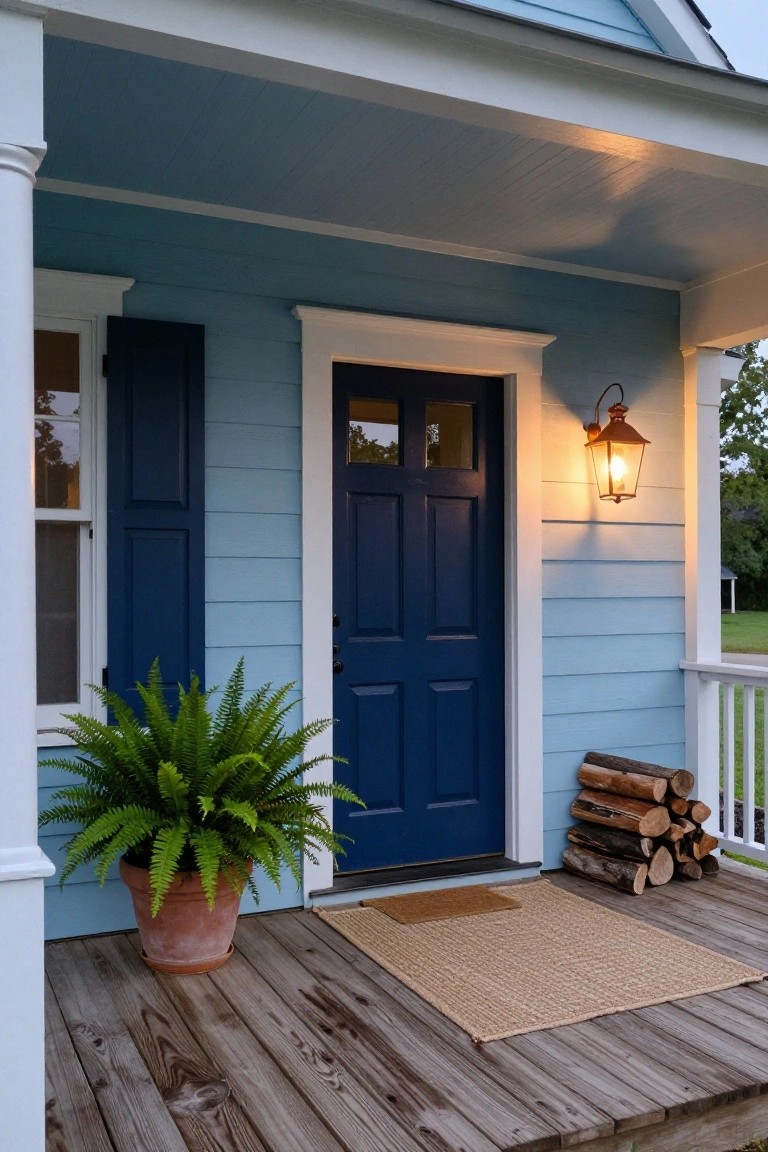
A deep navy front door gives this colonial porch real focus. Set against the house’s soft blue siding and clean white trim, it pulls the eye right to the entry without much fuss. That lantern light beside it warms things up nicely come evening, and simple touches like the potted fern keep it grounded.
This setup works best on homes with lighter body colors, where the navy door acts as the main accent. It suits traditional styles in milder climates, since the bold contrast boosts curb appeal from the street. Just pick a durable paint or stain for the door, so it stays sharp year after year.
Navy Siding with a Rustic Wood Bench
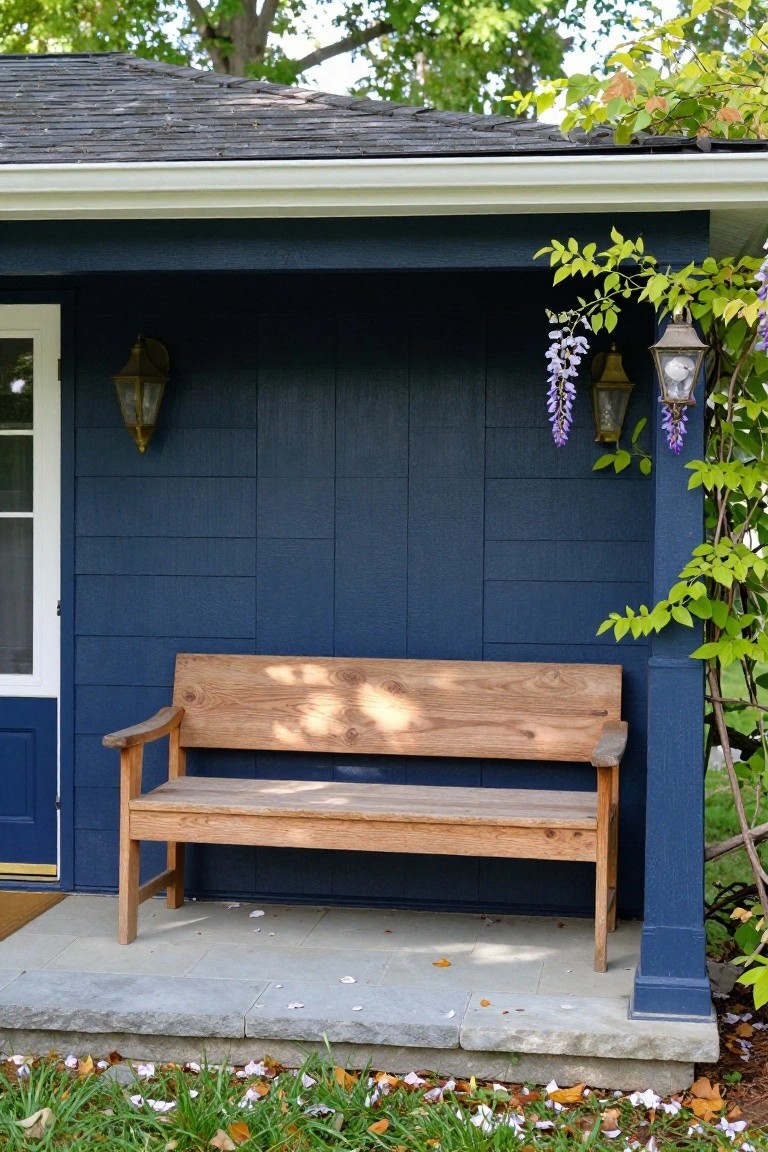
A plain wooden bench set against deep navy siding turns a basic porch stoop into a spot where folks actually want to sit. The warm tones of the unfinished wood play off the bold blue walls nicely. It keeps things simple and grounded. No fussy cushions or paint needed.
This works well on smaller colonial-style structures like sheds or entry porches. Tuck the bench right by the door on a stone or concrete step. Add lanterns for evening light if you like. Skip it on super narrow spots, though. The wood will weather over time, which just fits the look.
Navy Blue Siding with White Trim
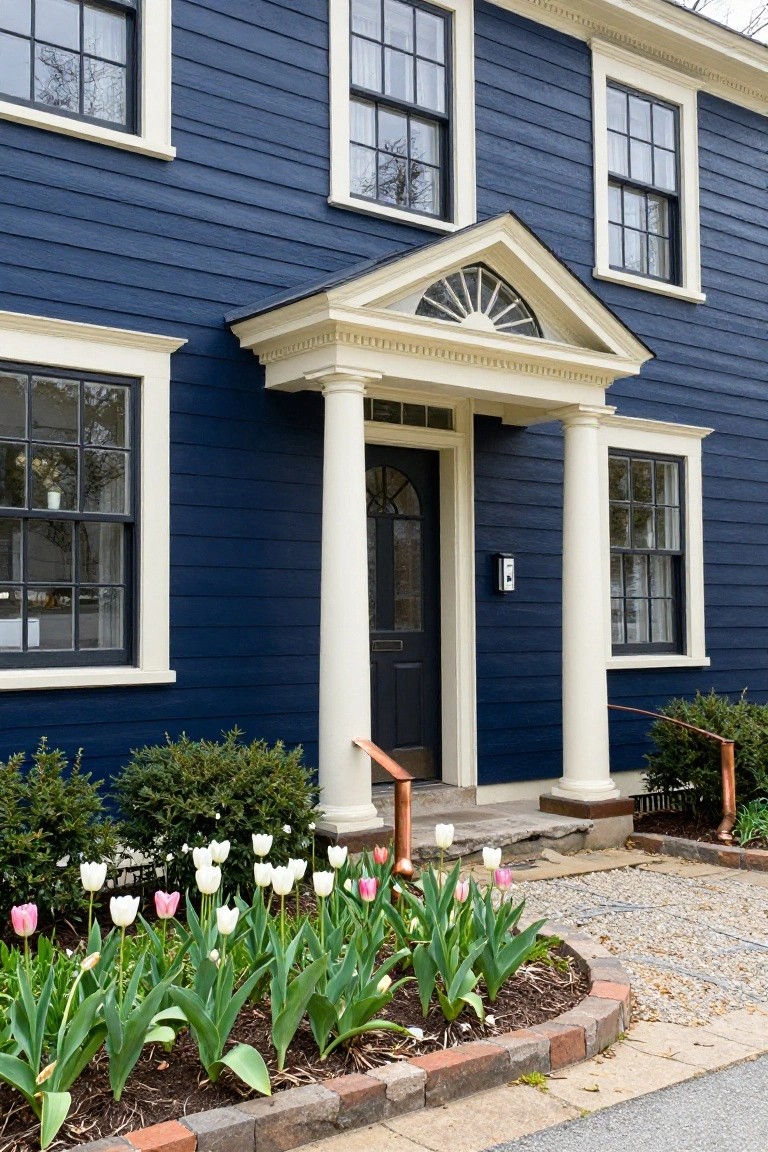
Deep navy paint on the clapboard siding gives this colonial house a strong, grounded look. The white trim around the windows, pediment, and porch columns pops right out against it. That contrast keeps things crisp and classic, without going overboard.
Try this on older homes with good bone structure, like federals or revivals. It holds up in any light, and a black door adds even more punch. Just keep plantings simple so they don’t fight the color.
Navy Siding with Crisp White Trim
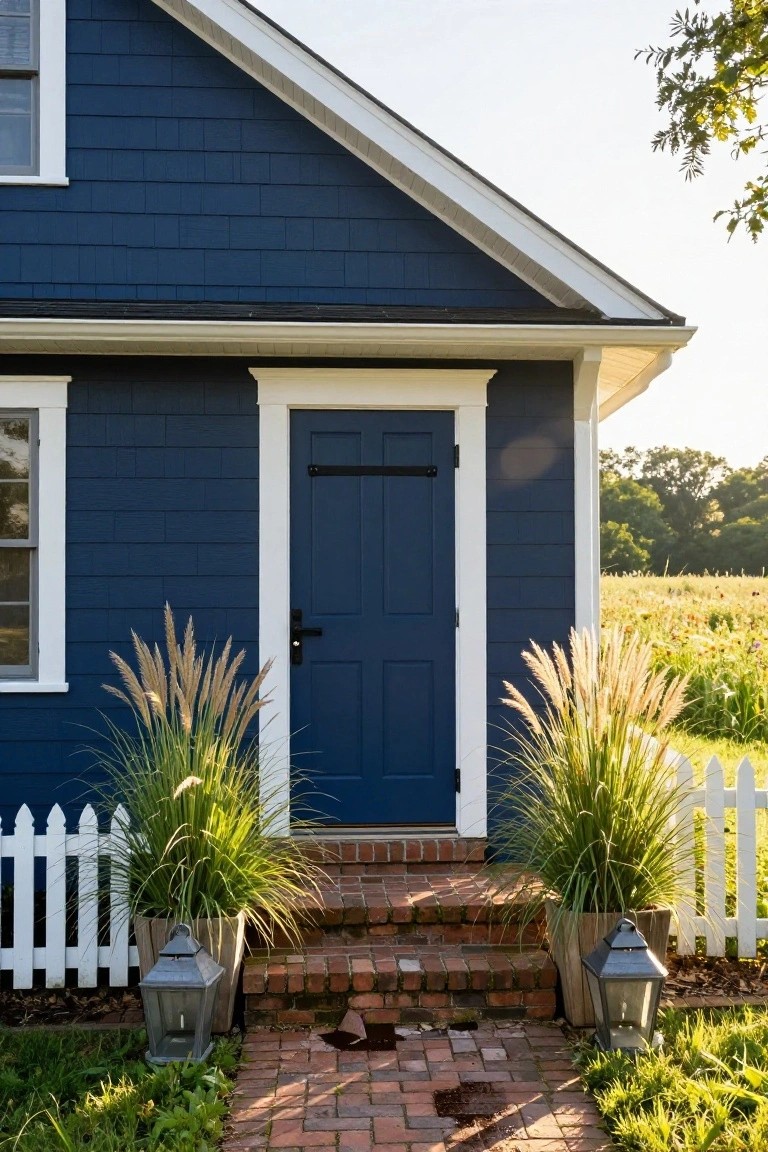
Navy siding like this sets a strong tone for a Colonial house. The white trim around the door and window keeps everything sharp and defined. It pulls the eye right to the entry without overwhelming the bold color. That contrast feels fresh yet traditional.
Put this on gable ends or main facades where you want curb appeal. It suits homes near fields or gardens, and adding potted grasses nearby softens the look. Just make sure the trim is bright white to stand out. Avoid dark hardware if you can, though the black strap hinges here add a nice rustic touch.
Navy Shutters Match House Siding for Bold Unity
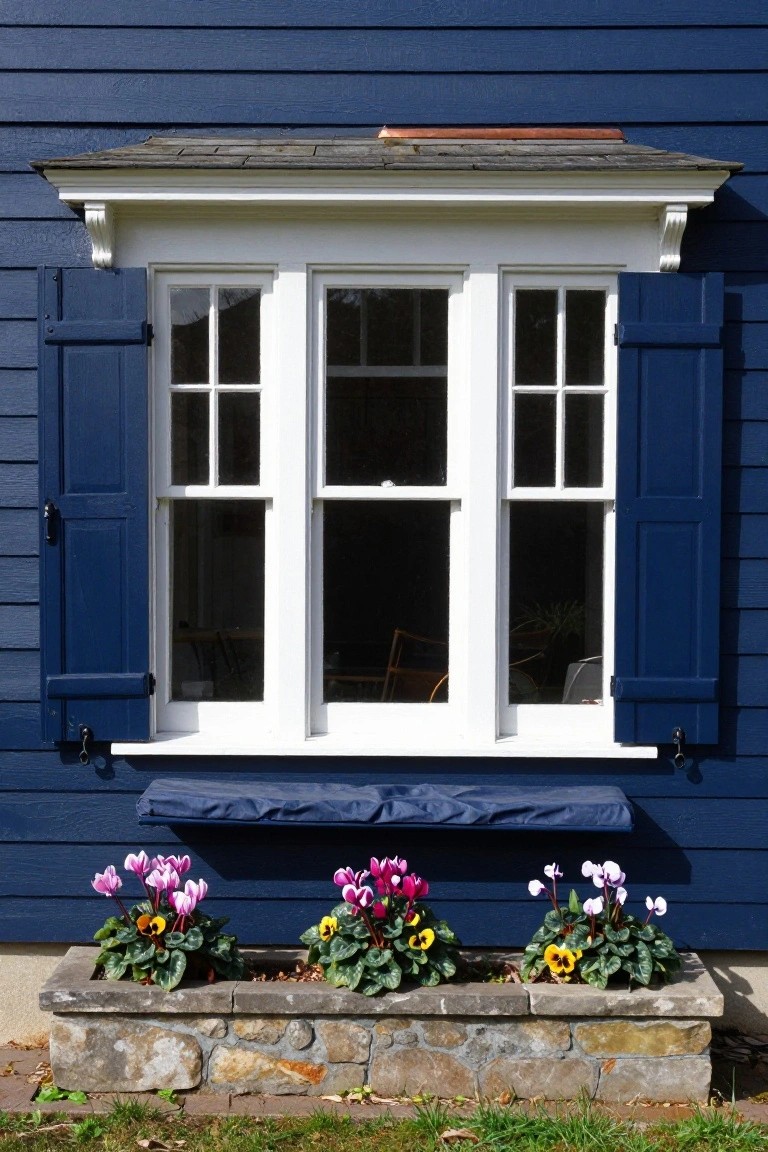
Navy blue siding gets a real boost when you paint the shutters to match. It pulls everything together on this colonial-style house. The white window frames stand out sharp against all that deep blue. No distractions. Just clean lines that say classic without trying too hard. Those flower boxes down below add a spot of color too. But the shutters do the main work here.
Try this on homes with good trim work already. It suits older colonials or revivals best. Pick a quality paint that holds up to weather. And keep the boxes simple. Bright pansies or violas work year-round in mild spots. Skip it if your house has too much going on already. Might feel busy.
Classic Navy and White Colonial Exterior
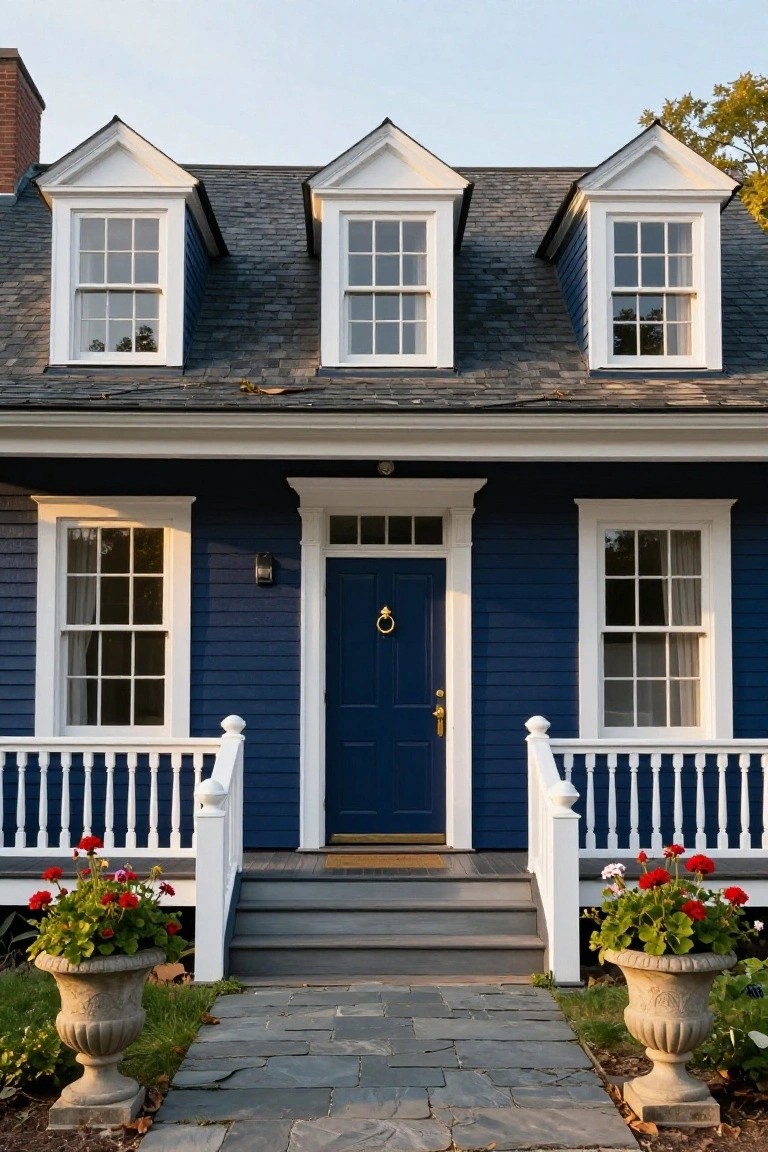
This colonial house pulls off a deep navy blue siding that covers the clapboard nicely, set against crisp white trim on the dormers, windows, and porch. The look feels bold yet settled, like it belongs in a neighborhood of older homes. That navy door with its brass knocker pulls your eye right to the entry without trying too hard.
You can use this on symmetric colonials where the lines are clean already. Add red geraniums in those stone urns for a bit of warmth… it keeps things from feeling cold. Works best on homes with some historic vibe, but watch the sun exposure so the navy doesn’t fade quick.
Navy Blue Siding with White Columns
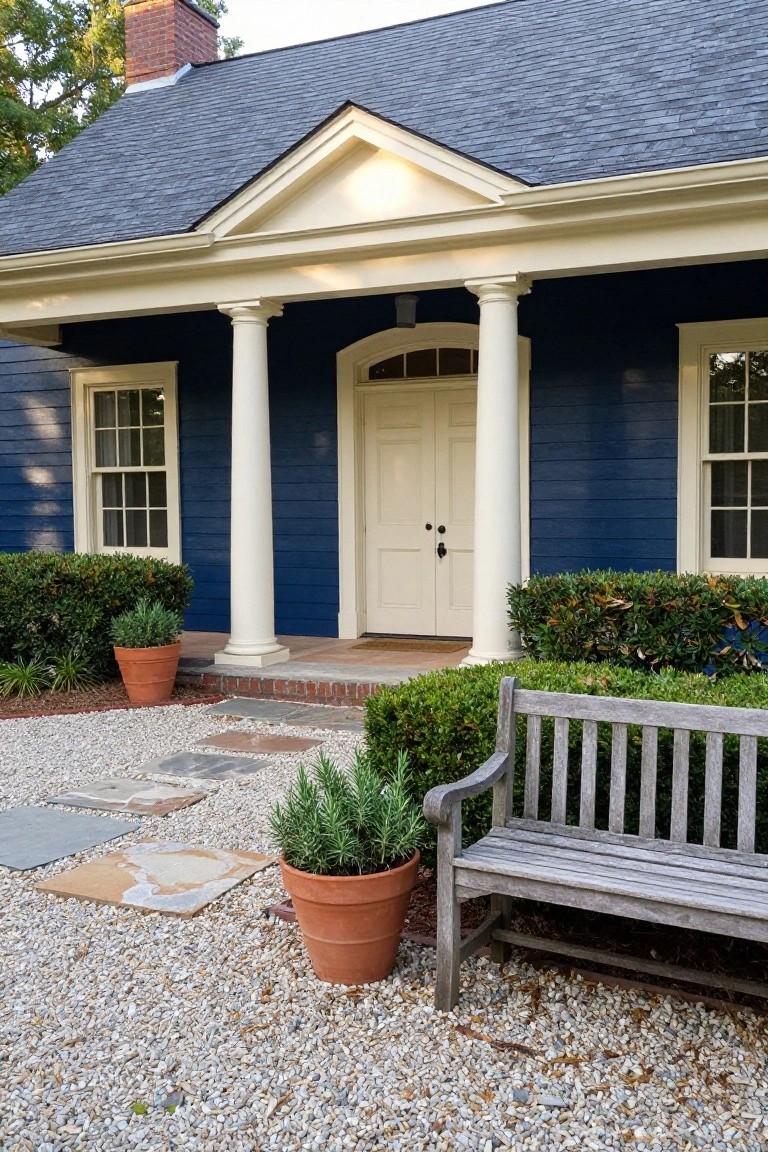
Navy blue siding gives this colonial house a strong, grounded look that feels both classic and fresh. The white columns on the porch stand out clean against it, pulling your eye right to the entry. That simple contrast keeps things elegant without overdoing it. Boxwood shrubs along the sides tie in nicely too, framing the front without stealing the show.
This setup works best on homes with a covered porch or good symmetry. Pick a true navy, not too black or gray, and pair it with bright white trim for max pop. It suits older neighborhoods where you want curb appeal that nods to tradition. Just plan to clean the siding now and then, since dark colors show dirt more. A gravel path like this one keeps the walkway low fuss.
Navy Front Door Adds Bold Contrast
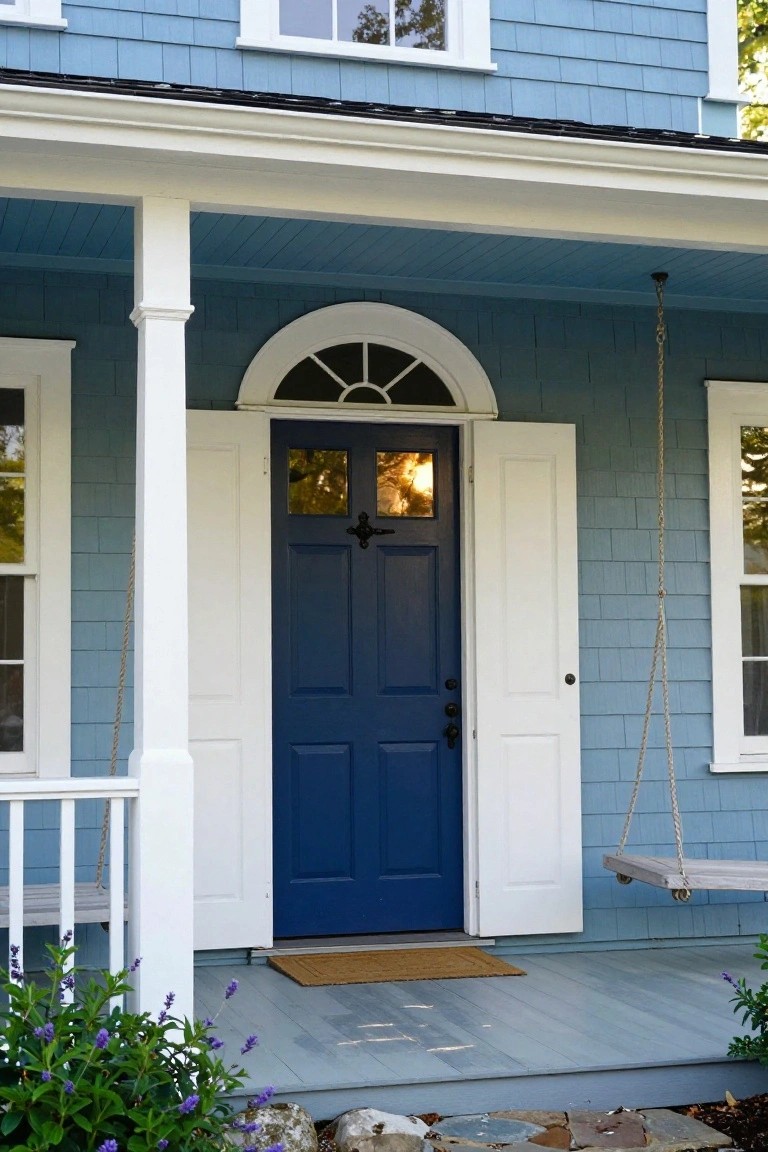
A navy front door stands out nicely on this light blue colonial house. The deep blue pulls your eye right to the entry, especially against the soft siding and crisp white trim. It gives the whole facade a fresh, confident look without overwhelming the classic lines.
This works best on homes with lighter exteriors like pale blues or grays. Go for it if your colonial has a covered porch. Just keep the door glossy for that extra pop, and maybe match with navy shutters down the line.
Navy Siding with White Trim Accents
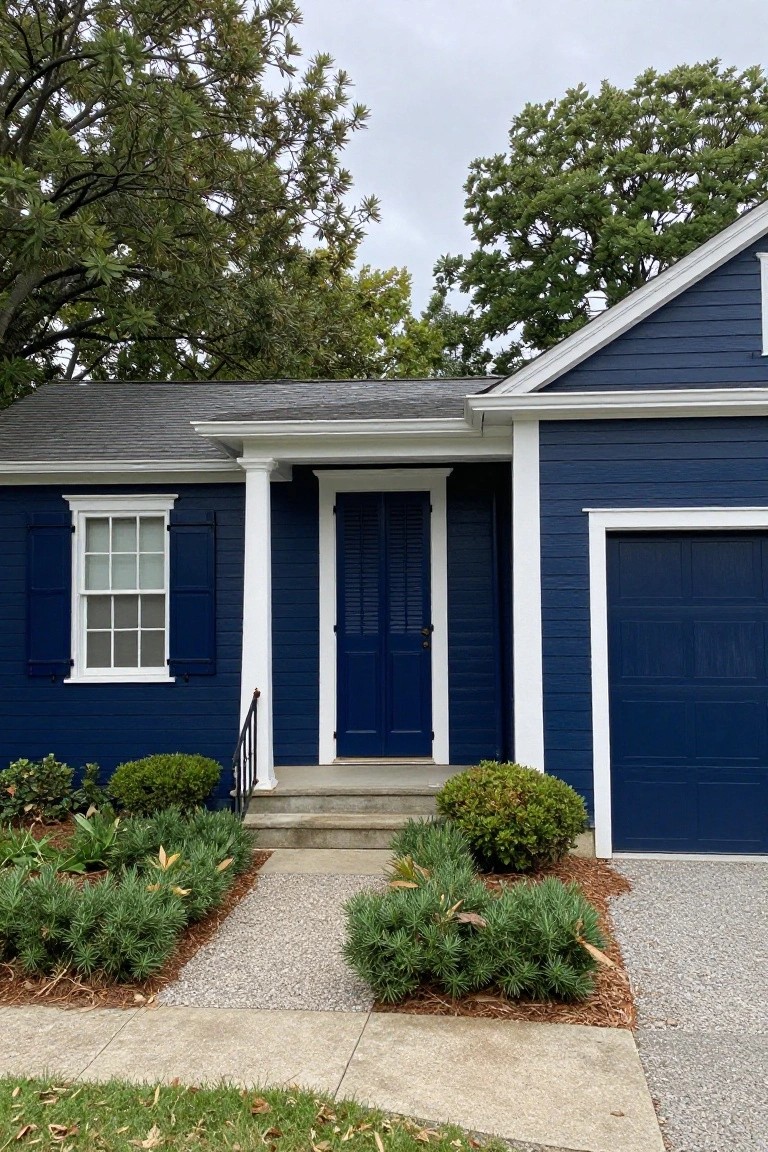
A deep navy clapboard siding like this one turns a simple colonial front into something that really stands out. The white trim on the porch columns, window frames, and double doors keeps it clean and traditional. That contrast makes the house feel fresh without losing its old-school charm.
This setup suits homes in neighborhoods with mature trees or mild weather. Go for it if your place has good bones already, like a covered entry or balanced windows. Just keep plantings simple, like boxwoods along the walk, so the colors stay the star.
Classic Navy Colonial Entry
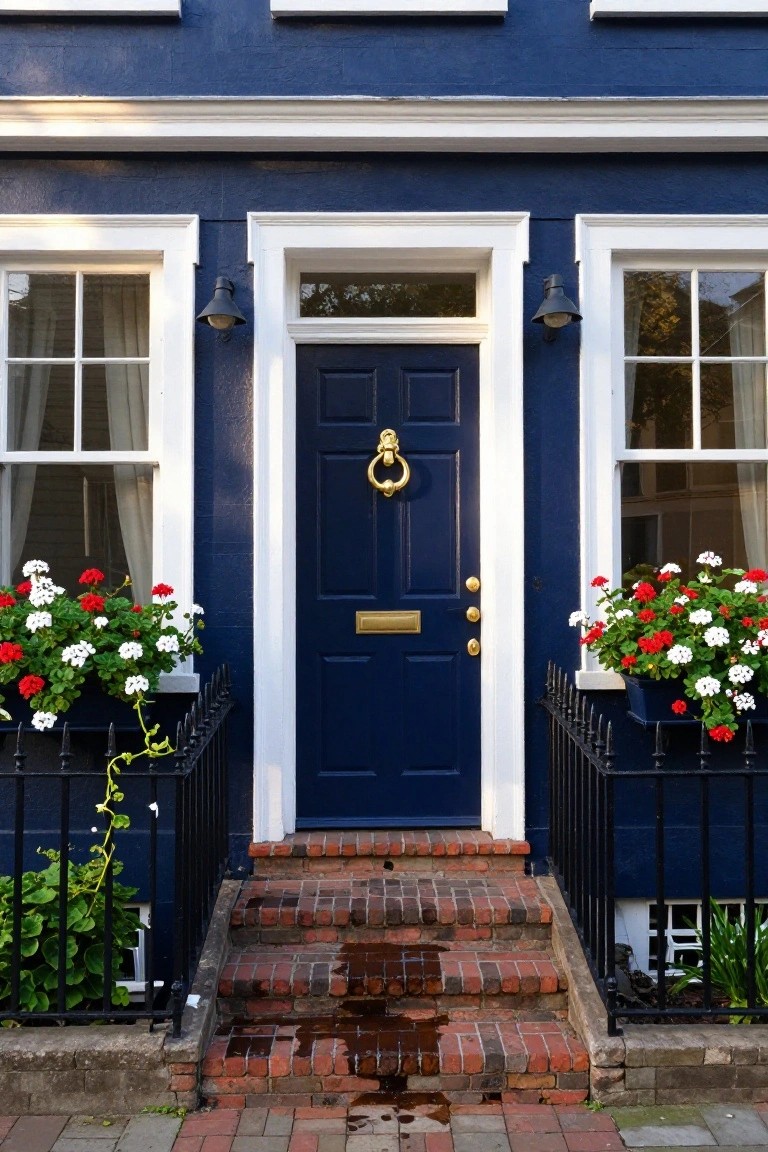
A deep navy front door like this one anchors the whole facade nicely. The gold knocker and matching letterbox add just enough shine against the dark paint, while white trim around the windows and door keeps things crisp and traditional. Those red and white geraniums in the window boxes bring a fresh pop without overdoing it.
This look suits older colonial or row houses in town settings. Paint your body and door in a true navy, not too black or gray. Stick to white trim for contrast, and choose window boxes with trailing plants that spill over the railing. Skip busy patterns. It holds up well in shade and makes the entry feel welcoming right away.
Navy Colonial Entry with White Columns
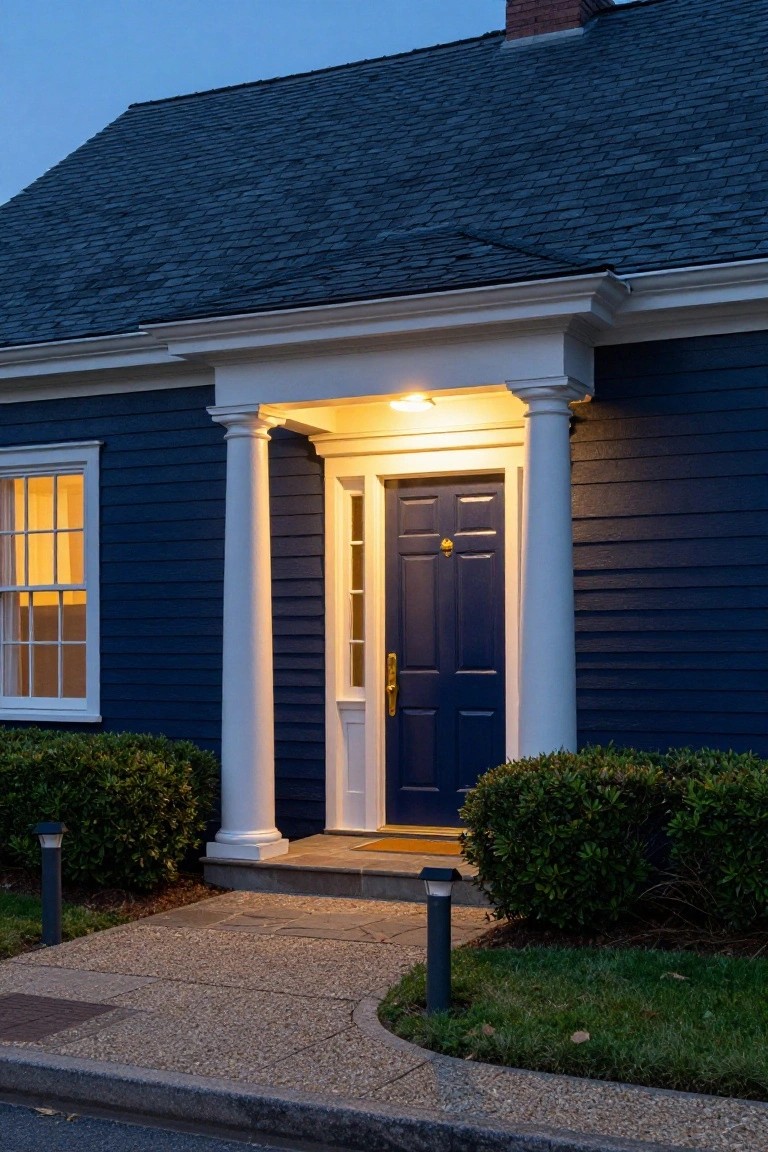
A deep navy clapboard siding wraps this colonial house nicely, setting up a bold base that feels right at home in traditional neighborhoods. White columns frame the front porch, pulling the eye straight to the blue door and making the whole entry pop under that porch light. It’s a straightforward way to add some weight and style without changing the architecture.
This setup shines on homes with steep roofs and symmetrical windows, like many older colonials. Paint the siding in a true navy for depth, then keep trim bright white for contrast. It holds up well in cooler climates too, just refresh the door hardware now and then to match that gold knocker.
Frequently Asked Questions
Q: Will navy make my colonial house look too dark or gloomy?
A: Navy adds bold depth that highlights your symmetrical windows and gables just right. Bright trim keeps it from feeling heavy. Step back after painting samples to love how sunlight plays off it.
Q: How do I pick the perfect navy shade for my siding?
A: Slap large samples on your actual walls and check them morning, noon, and night. Sunlight changes everything on colonial facades. You want a shade that stays rich without washing out.
Q: What roof colors pair with navy exteriors?
A: Dark gray asphalt shakes blend seamlessly and ground the look. Black works too if your navy has cool undertones. Avoid light roofs, they fight the elegance.
Q: Does navy hold up on different siding types?
A: It grips wood siding like a dream for that smooth colonial finish. Vinyl takes it well but prep the surface first. And brick? Accent it sparingly for punch.
