

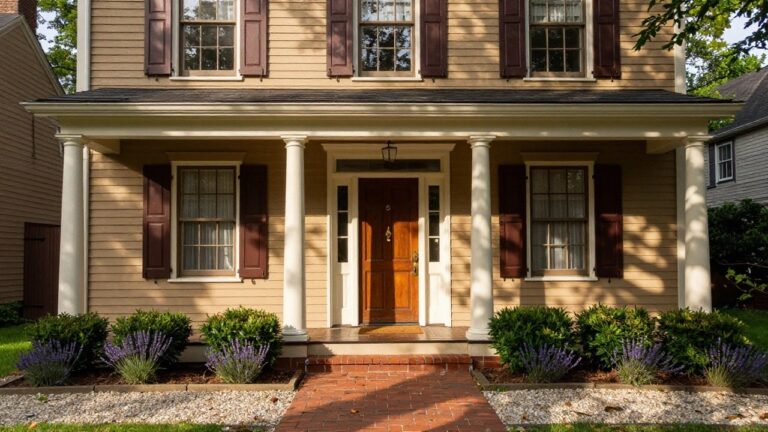
I’ve always admired how a tan exterior on a Colonial house grounds it firmly in its landscape, like it’s been there forever. From the street, you notice the facade first, where the siding blends with brickwork and trim to frame the roofline and entry without stealing the show. Tan palettes pull this off naturally by drawing from nearby stone and soil colors, letting the architecture breathe. I’ve tested a couple on paper against real photos of friends’ homes, and the ones that shift softly with sunlight hold up best over time. Pin a few that echo your own materials, since adapting them slightly can refresh curb appeal for years.
Tan Siding on a Colonial Facade
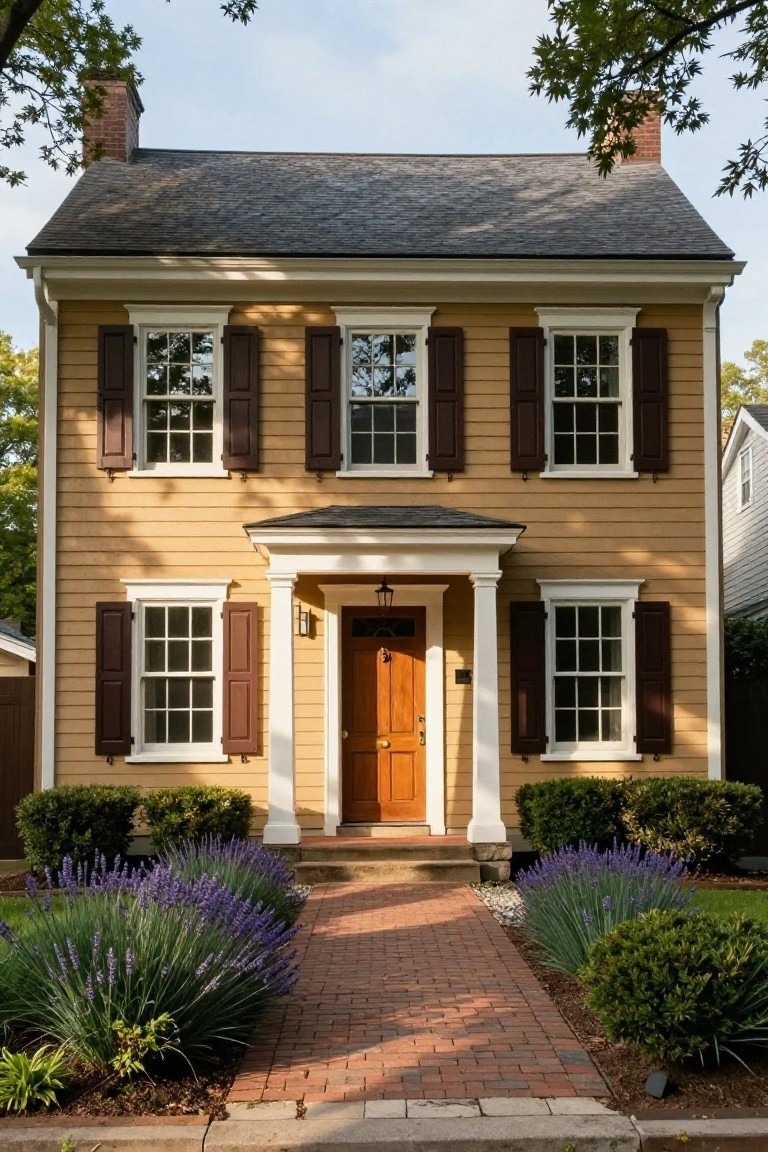
This setup takes a classic colonial house and gives it a soft tan siding that looks settled into its spot. Dark shutters stand out against the beige without fighting it, and white trim pulls the windows and door into focus. A warm wood entry door adds a bit of life right up front.
Homes like this do well in neighborhoods with trees and open yards. Use tan shades that lean yellow for more sun, or cooler beige in shade. Line the walk with tough plants like lavender to frame without crowding. Keeps the front looking tended year-round.
Tan Brick Facade with Green Shutters
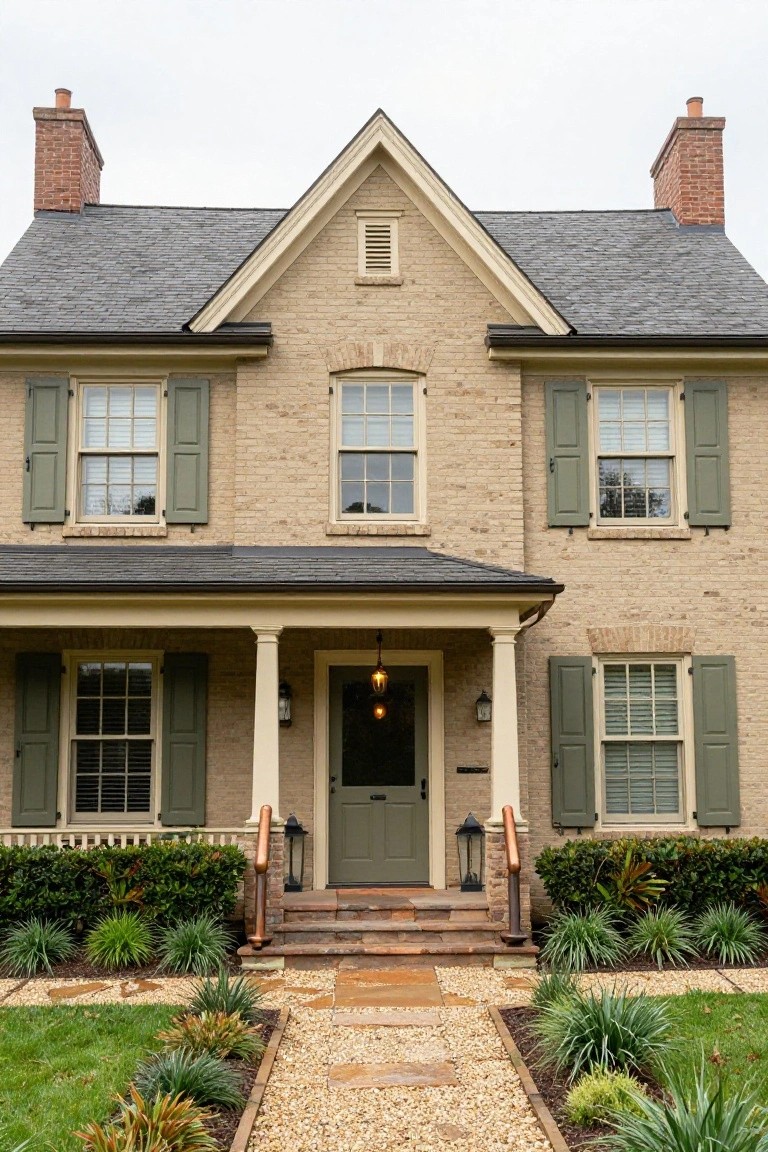
Tan brick like this gives a Colonial house a soft, natural base that doesn’t shout. Pair it with green shutters, and you get that classic look without feeling too matchy. The color pulls from the earth around it. Notice how the shutters frame the windows just right. Keeps the front calm and settled.
Try this on homes in older neighborhoods or suburbs where you want curb appeal that lasts. It works best east of the Mississippi, say, where brick fits the style. Add simple porch lanterns like these for evenings. Skip bold trim colors though. They fight the quiet vibe.
Tan Stucco Facade with Black Door Entry
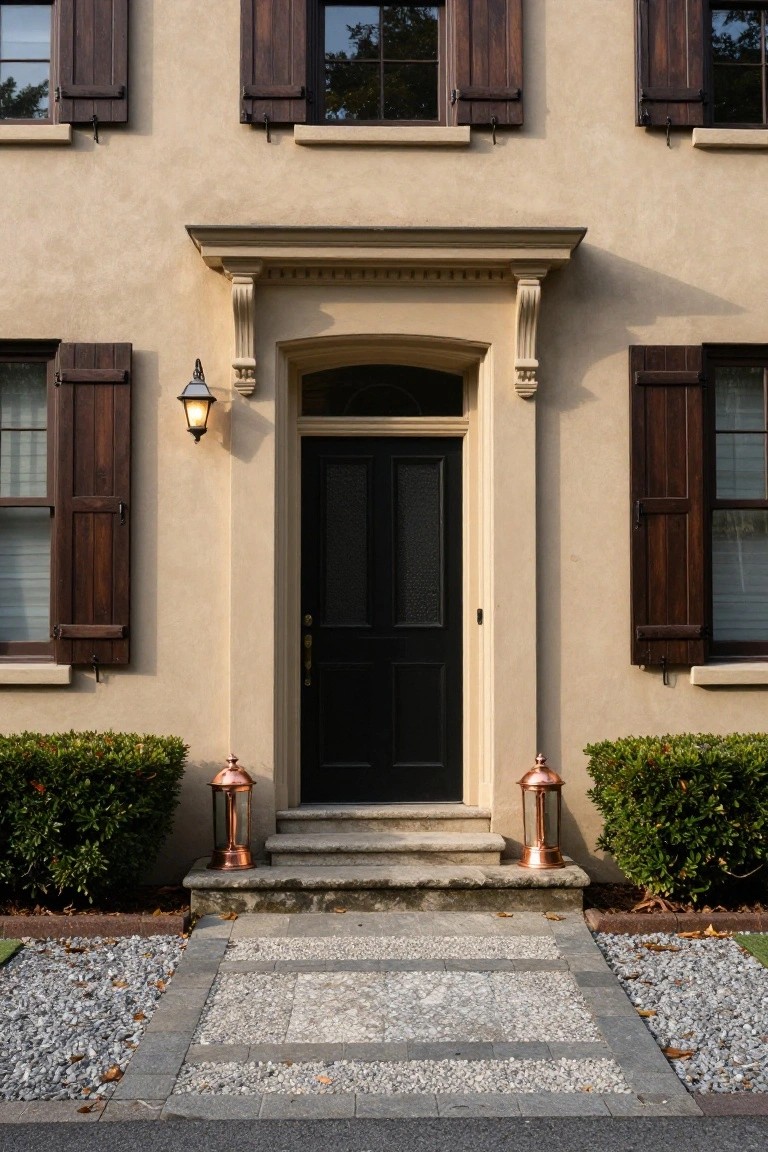
A black front door stands out nicely against the soft tan stucco on this colonial-style house. The dark wooden shutters on either side pick up that contrast, making the entry feel solid and welcoming without much fuss. Copper lanterns add a bit of patina that fits right in with the natural tones around the steps.
This setup works best on homes with simple lines like colonials or craftsman styles. Use it where you want curb appeal that lasts year-round. Keep the plantings low like those boxwoods so they frame the door instead of hiding it. Just make sure the door hardware matches the dark tone to tie it all together.
Turquoise Door on Tan Shingle Siding
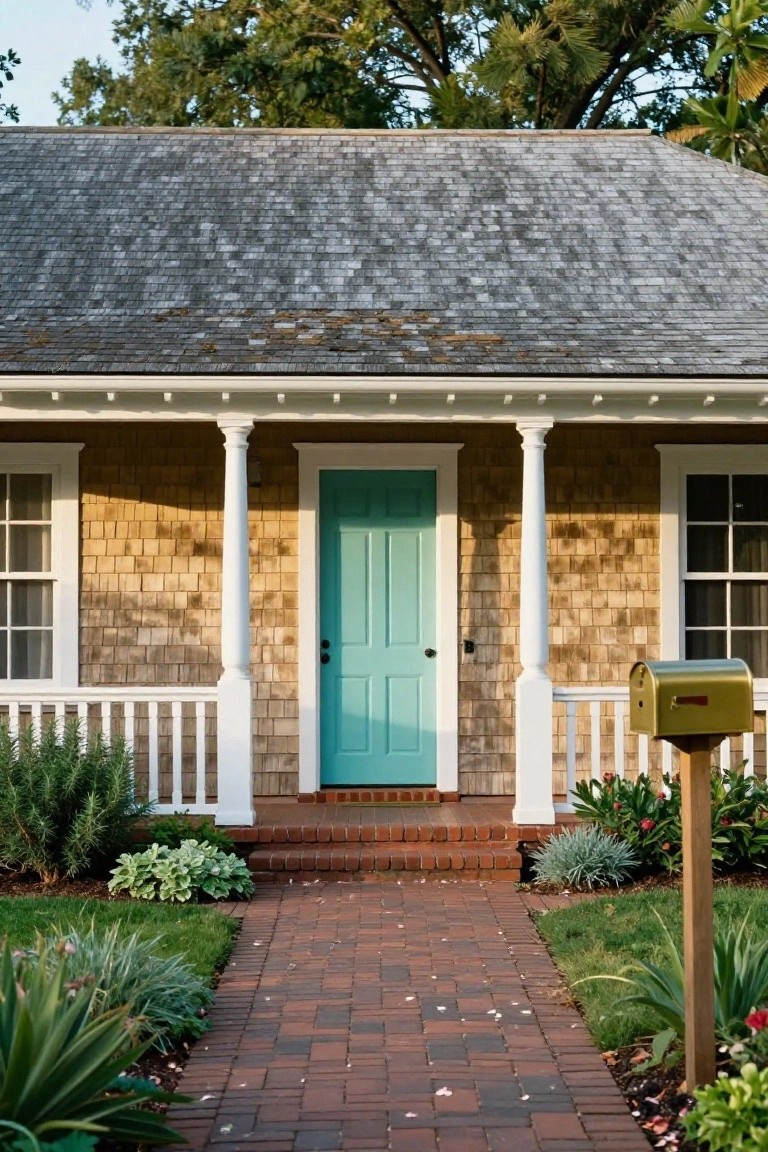
A turquoise front door really stands out against the weathered tan shingles on this colonial house. The color pulls your eye right to the entry without clashing with the natural siding tones. White columns and a simple porch frame it all, keeping the look grounded and traditional.
This setup works well on homes with neutral exteriors that need a bit of life up front. Try it on a south-facing facade where the sun hits the door just right. Stick to low-key plants along the path so the door stays the focus… and avoid busier colors elsewhere.
Colonial Tan Facade with Navy Door
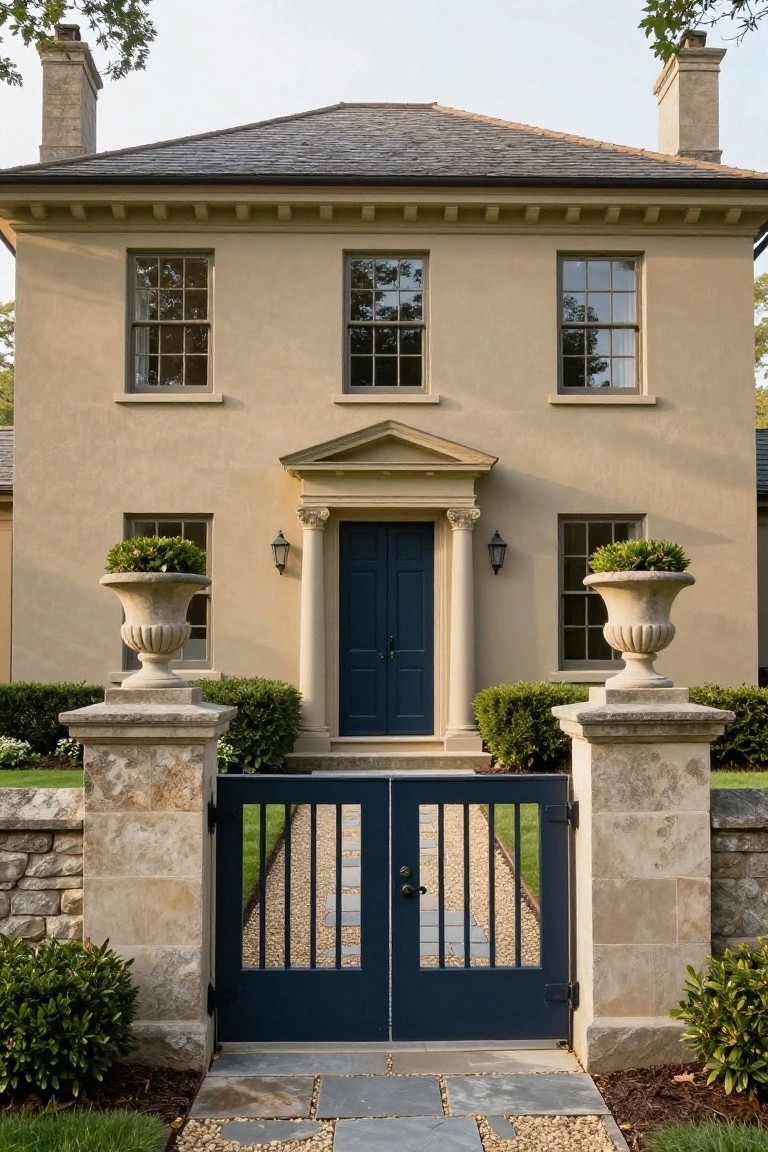
A soft tan stucco covers this classic colonial house, giving it a natural feel that blends right into the landscape. The symmetrical layout with evenly spaced windows and a pedimented entry keeps things balanced and traditional. That navy blue door stands out just enough without overpowering the calm tan walls.
This setup works well for homes in suburban or rural spots where you want curb appeal without flash. Use a similar tan on brick or stone bases, and add navy on doors or gates for contrast. Stone pillars with plants tie it together nicely. Stick to muted tans so it doesn’t look too new.
Tan Shingle Siding for a Natural Colonial Look
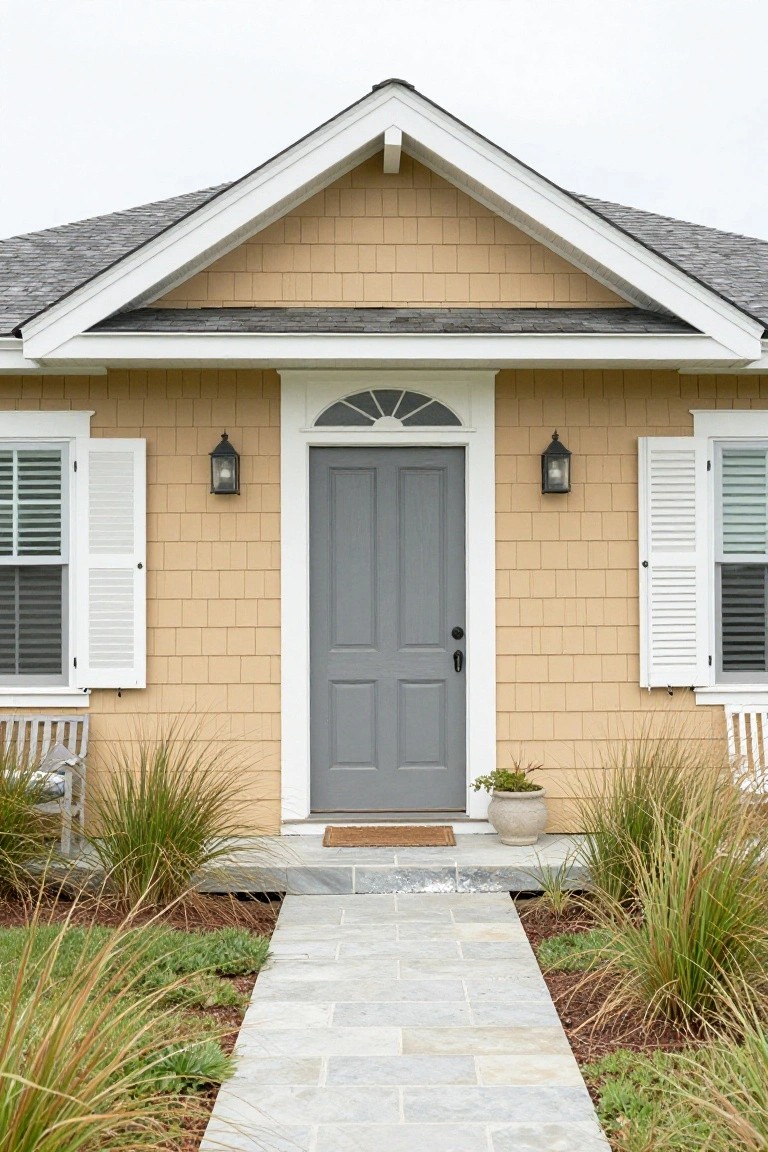
Tan shingles like these give a colonial house a soft, textured front that blends easy with the yard and weather around it. The light beige color picks up on sand and earth tones, while white trim outlines everything clean. A gray door pulls it together without much fuss, and those lanterns add a bit of welcome at night.
This setup suits homes in coastal spots or anywhere you want low-key curb appeal. Line the path with simple grasses, keep plantings loose, and skip heavy flowers. It stays practical year-round, especially if you like that beach house feel on a regular street.
Tan Stucco Paired with Dark Trim
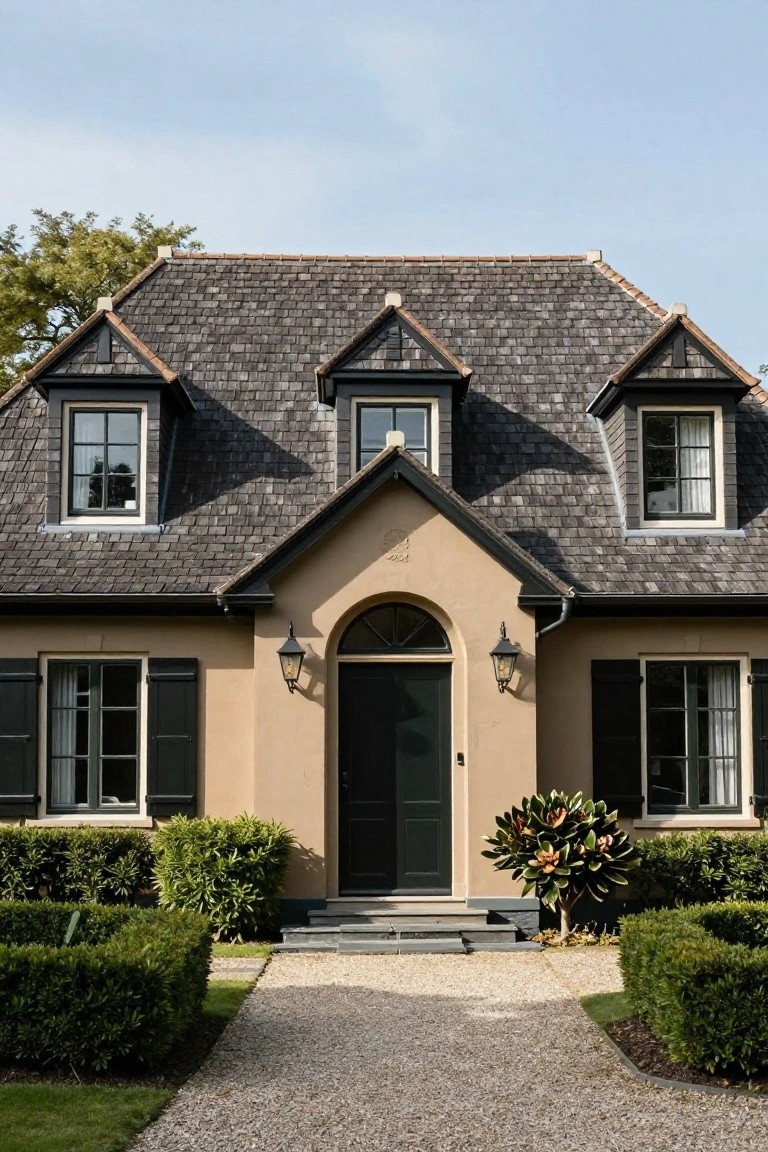
A warm tan stucco covers the walls of this colonial house. Black frames the windows and shutters, while the front door stays solid black too. The slate roof in dark grays pulls it together. This setup keeps the tan feeling natural and easy on the eyes, especially against a simple gravel path and boxwood hedges.
It suits older colonials or ones aiming for that classic vibe. Use a mid-tone tan to avoid anything too pale. Dark trim adds definition without overwhelming the softer walls. Works well in neighborhoods where houses sit close together.
Colonial Tan Stone with Boxwood Framing
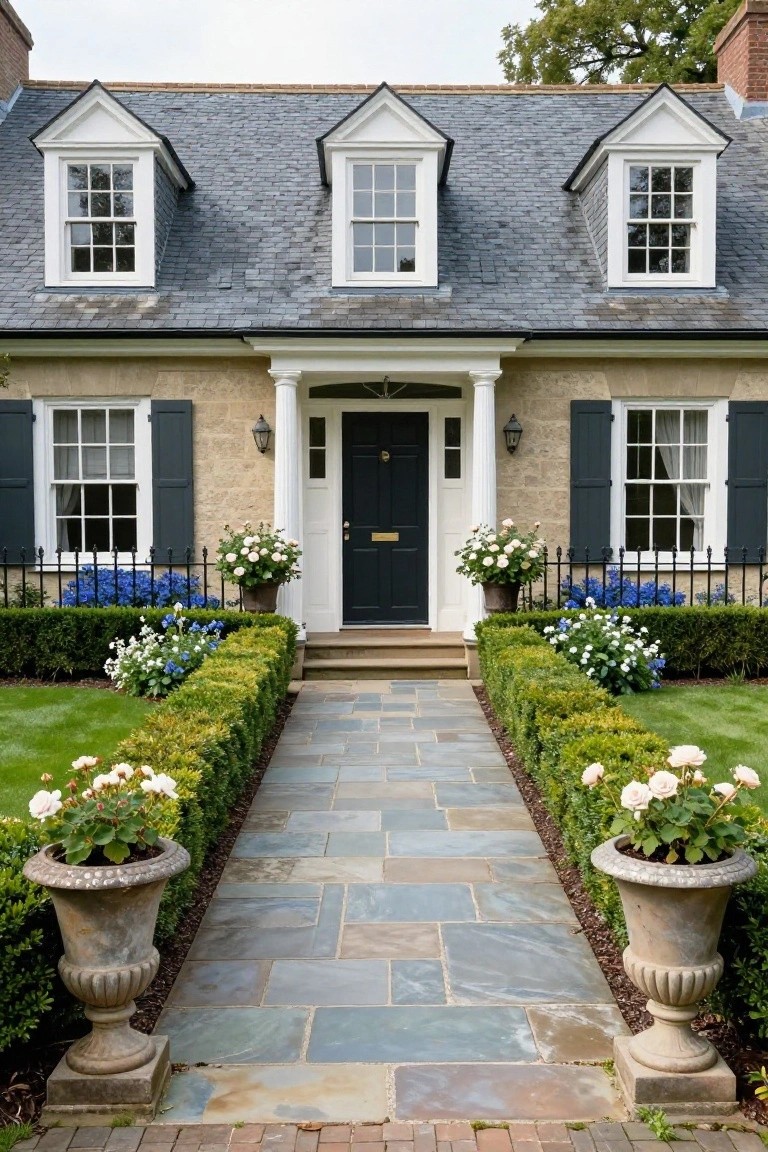
Tan stone like this on a Colonial house gives a solid, natural base that doesn’t shout. It pairs right up with the slate roof and white trim for that classic look, while dark green shutters and door add some needed punch without going overboard. The boxwoods along the path keep everything tidy and lead your eye straight to the entry. Folks like it because it feels timeless, not trendy.
Try this on homes in older neighborhoods or suburbs where you want curb appeal that lasts. Line the walk with low boxwoods and simple urns for flowers, nothing fussy. It works best on two-story Colonials with gabled dormers. Just make sure the stone isn’t too yellow, or it can look dated.
Tan Shingle Siding for Natural Colonial Style
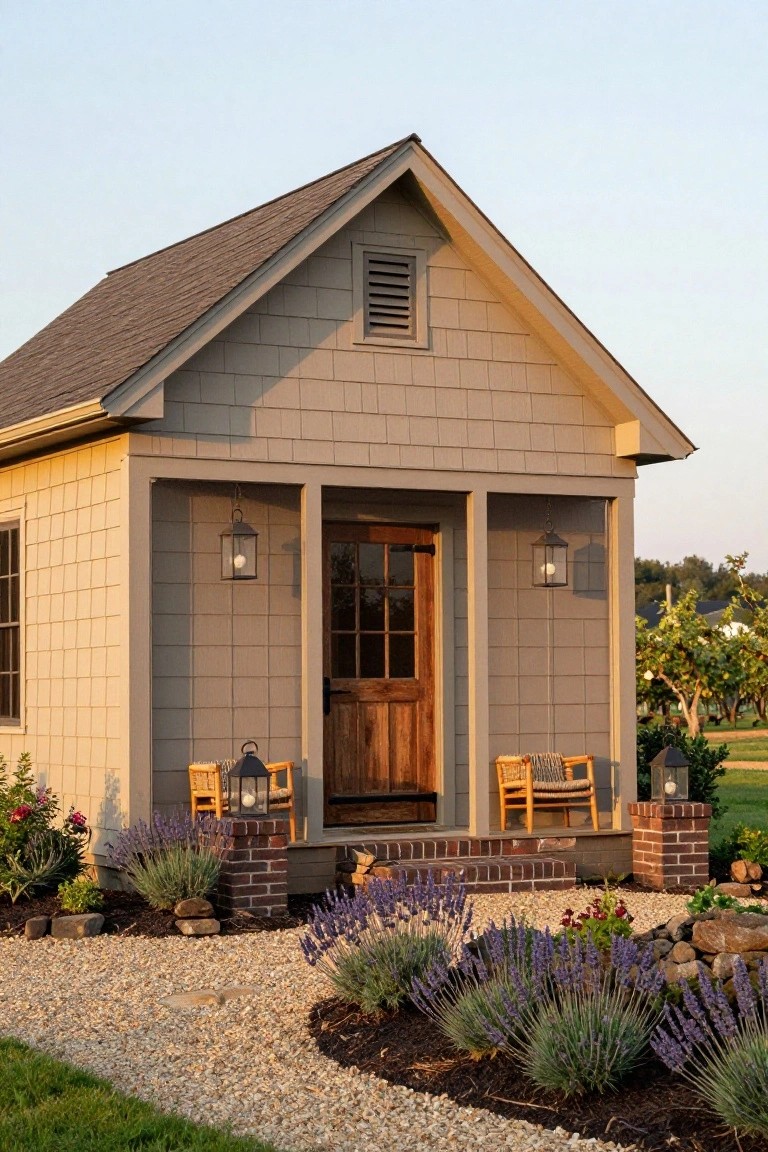
Tan shingle siding like this gives a colonial house that easy, lived-in feel without trying too hard. The soft color sits quietly against the garden backdrop, picking up hints from the wood door and brick steps. It’s especially nice how it lets the porch lanterns and chairs stand out just enough.
This works well on smaller structures like guest cottages or garage additions, where you want the house to blend into the yard. Go for a warm tan shade that matches nearby plants or stone. It suits country or suburban homes best. Skip stark whites or dark trim though, or it loses that natural ease.
Tan Clapboard Siding on Colonial Houses
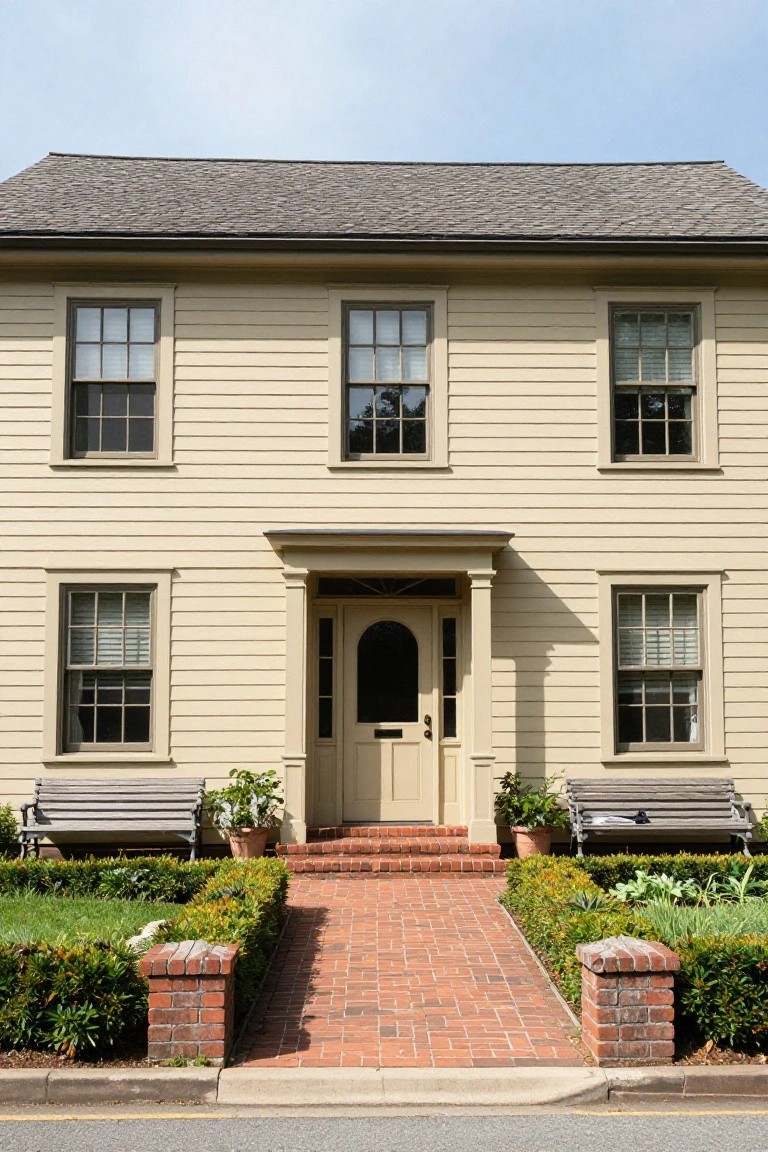
A soft tan clapboard siding like this one fits right into a colonial exterior. It pulls warm earth tones from the brick path and nearby plants, so the house doesn’t stand out too much against the yard. The even windows and simple porch keep everything balanced and easy on the eye.
This look works best on two-story colonials in milder climates, where the color stays fresh year-round. Use it if your home has dark trim already, as the tan softens things up. Just keep plantings low around the base… boxwoods or similar do the trick without overwhelming the facade.
Tan Siding with Wood Garage Door
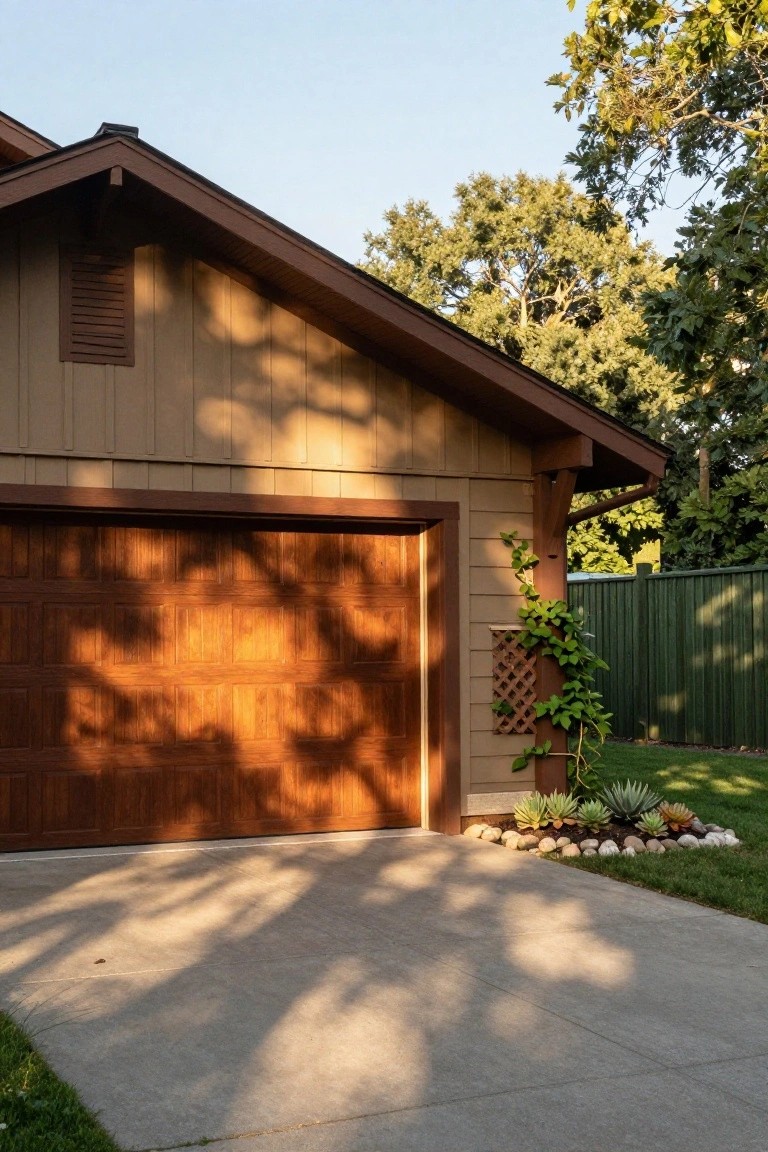
Tan siding like this gives a house a calm, grounded look that fits right into its surroundings. The beige panels pair nicely with the darker wood tones on the garage door, keeping everything feeling natural and not too stark. Add in some vines climbing a lattice and a few succulents along the edge, and it pulls the whole side together without much fuss.
This setup works best on homes in drier spots or where you want low upkeep. Go for it on a garage or side entry that sees some sun. Stick to earthy plants that won’t overwhelm, and watch the scale so the door stays the focus. It suits ranch or craftsman styles that lean casual.
Natural Tan Siding on a Colonial Facade
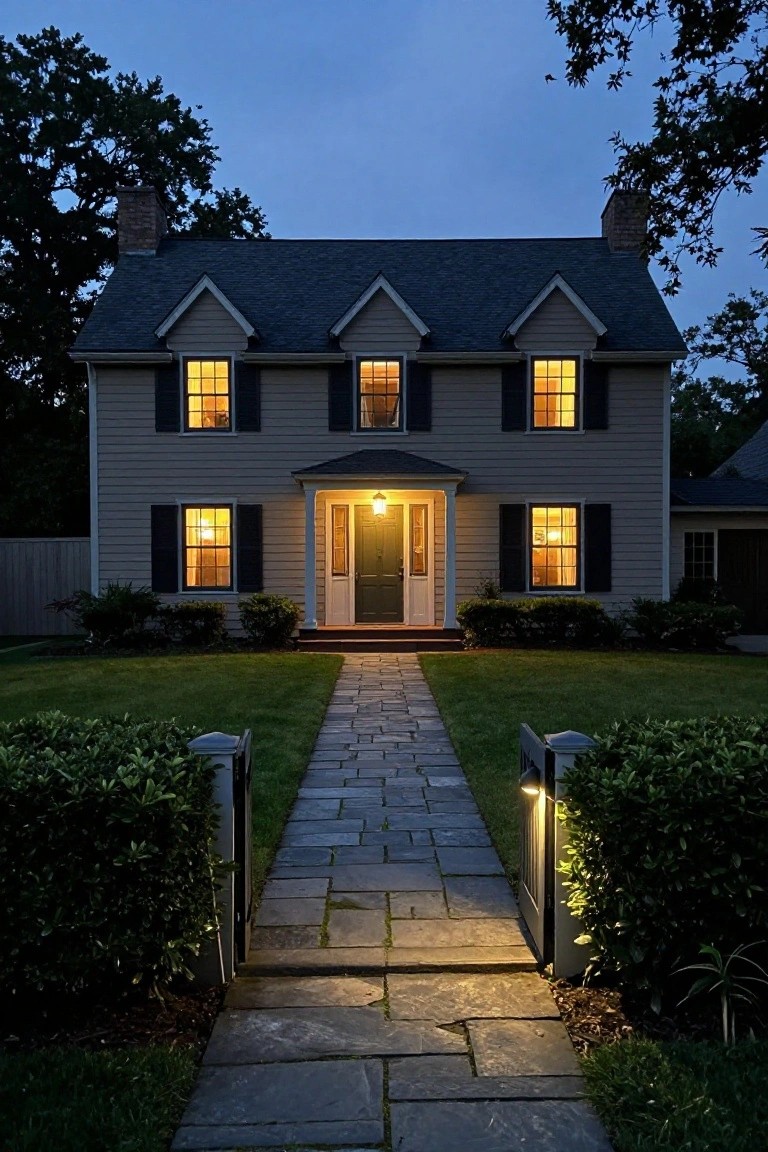
A soft tan siding like this one fits right into a colonial home’s look. It picks up the earthy tones around it, from the trees to the lawn, without standing out too much. Black shutters give some needed contrast, and that green front door pulls it all together. The evening lights just make the whole thing feel lived-in and calm.
This palette works best on homes tucked into neighborhoods with mature trees or green spaces. Go for it if you want curb appeal that doesn’t shout. Keep landscaping simple, like low boxwoods along the path, so the house stays the focus. One thing. Avoid glossy finishes on the siding. They can look off in changing light.
Potted Olive Trees Beside the Colonial Door
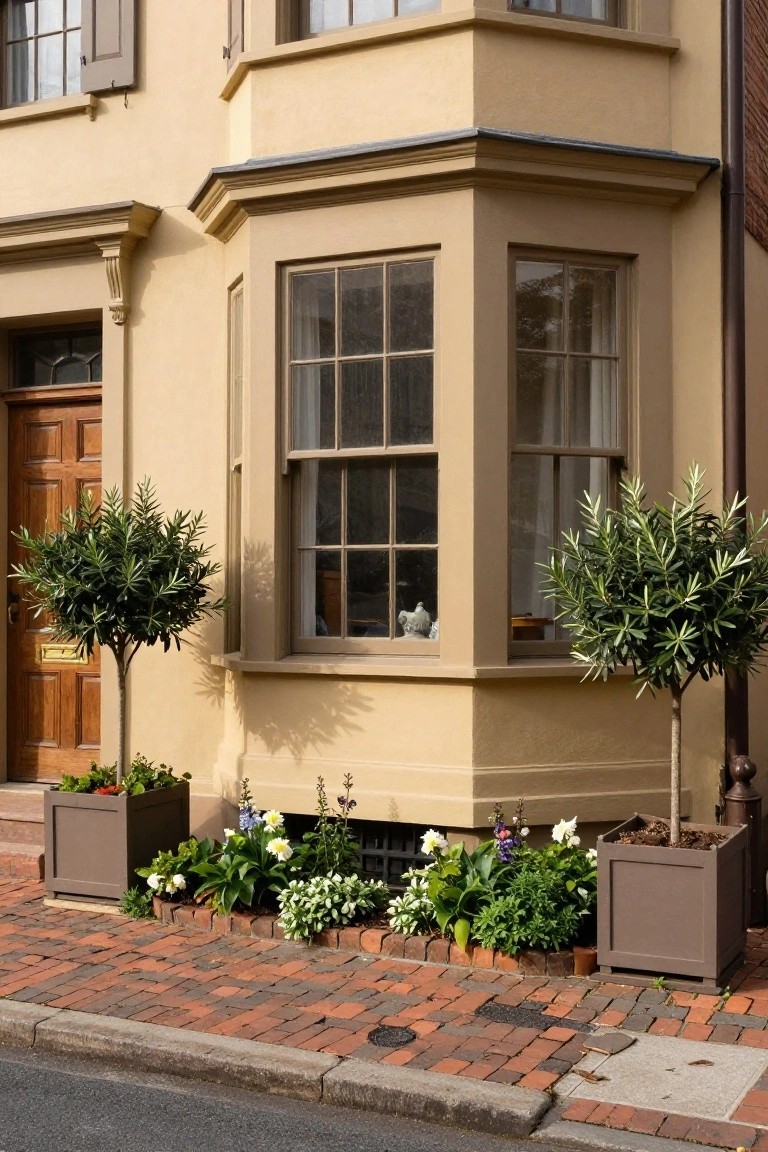
Tall potted olive trees stand on either side of this tan colonial front door. They bring some height and soft green texture to the simple beige walls without needing to dig up the yard. The silvery leaves pick up the warm tones nicely, and a few low flowers tucked in below add spots of color that feel right for the style.
This setup works well on narrow city lots or historic row houses where space is tight. Go for trimmed topiary shapes to match the formal door and bay window. They’re low upkeep too, just water and occasional pruning. Skip it if your spot gets too much winter chill, since olives like milder weather.
Warm Tan Shingles for Colonial Facades
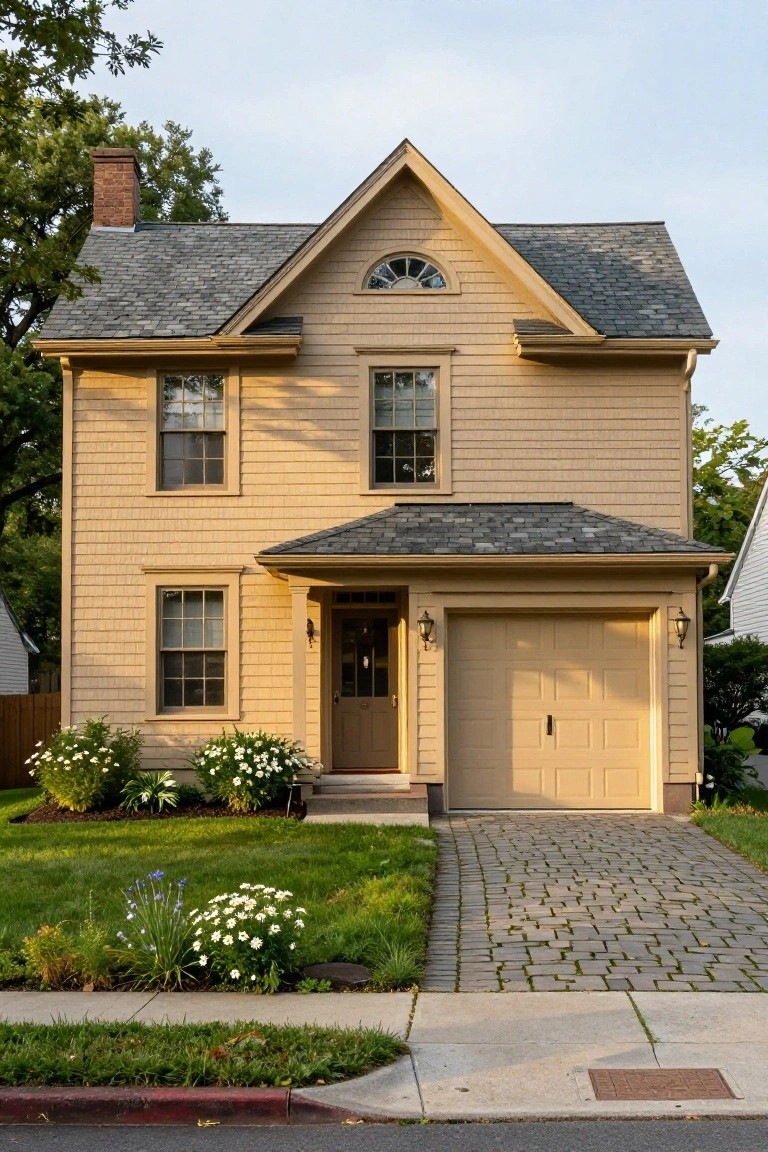
This Colonial house pulls off a warm tan shingle siding that sits easy in its spot. The color has that soft, natural feel, blending with the dark gray roof and simple plantings out front. It keeps the classic lines looking settled, not stark.
Try this palette on two-story Colonials in suburban yards. Match the garage door tone to the siding, add boxwoods or daisies for edging. It suits homes wanting quiet appeal, especially with trees nearby. Just skip bold colors elsewhere.
Tan Facade with Black Door
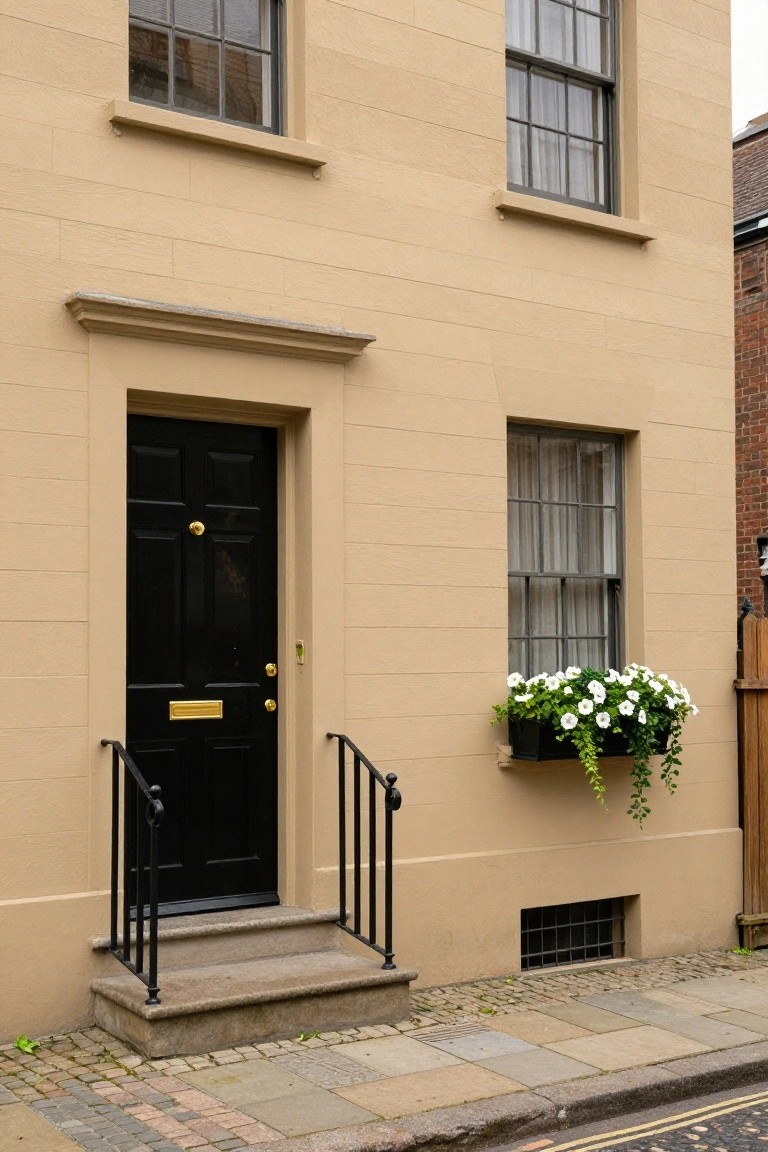
One look at this setup shows how a soft tan on the walls pairs nicely with a solid black front door. The tan keeps things looking natural and settled into the neighborhood, almost like the house has been there forever. That black door stands out just enough to guide folks right to the entry without overpowering the calm vibe. A brass letterbox and knocker add a touch of polish too.
This works great on narrow colonial townhouses or row homes in older areas with cobblestone streets. Go for it if your place has clean lines and sash windows. Keep the tan matte to avoid glare, and make sure the door is high quality since it gets all the attention. Skip busy trim around it. Let the colors do the talking.
Frequently Asked Questions
Q: How do I pick the best tan from these palettes for my colonial house?
A: Head outside at dawn, noon, and dusk to see how sunlight plays on your siding. Match the shade to your local trees and soil for that seamless natural vibe. Your eyes will spot the winner right away.
Q: What trim colors make these tans pop on a colonial exterior?
A: Paint trim bright white to frame the tan siding sharply. Soft grays step in nicely for a subtler blend with nature.
Q: Do natural tans work under big shady trees?
A: They shine there, actually. Tan warms up those cooler spots without turning dingy. Pick a shade with warm undertones to mimic sun-dappled bark.
Q: How do you keep tan exteriors looking fresh over time?
A: Hose off dirt and pollen each spring with mild soap. Spot-touch faded areas yearly before they spread. That natural glow sticks around effortlessly.
