


When you approach a colonial house from the street, that front porch usually decides if the whole facade feels welcoming or just plain.
I remember one where the simple shingled roofline over the porch made the symmetrical windows pop without any fuss.
Curb appeal hinges on those entry details first.
These designs mix clapboard siding and stone bases in ways that weather nicely over time.
A couple stand out as tweaks I’d borrow to soften a boxy colonial outline.
Columned Porch on Brick Colonial
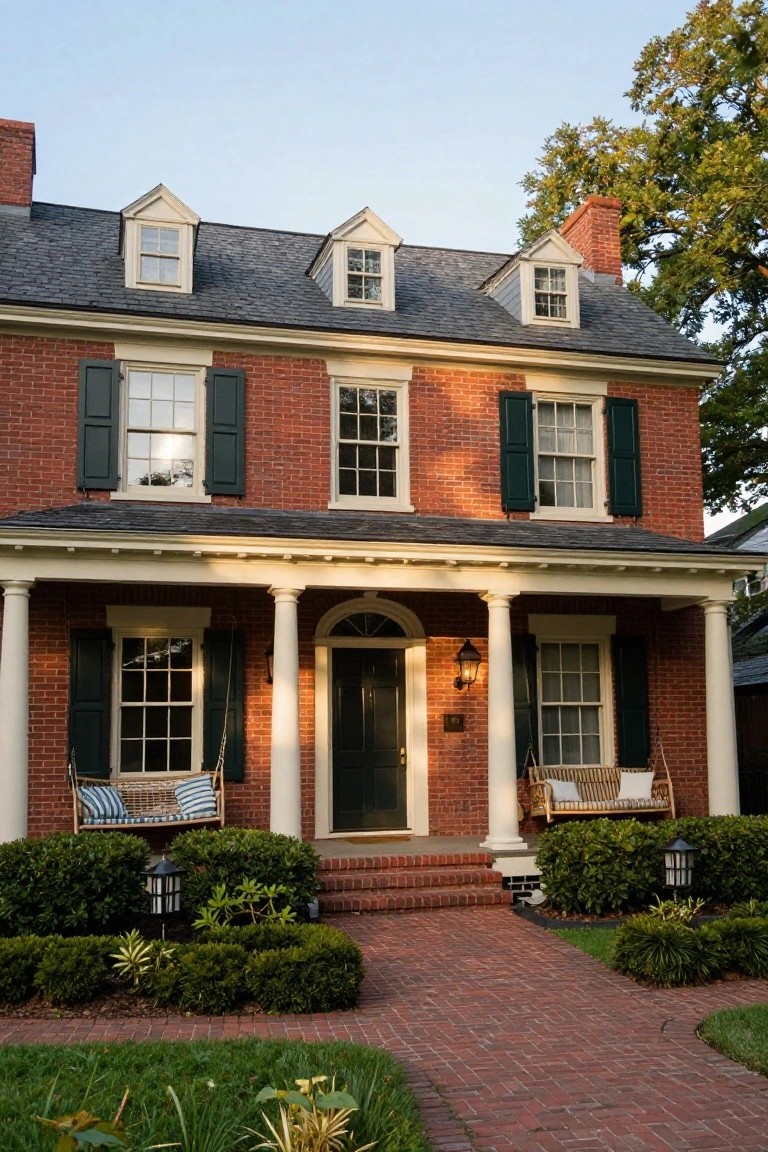
A columned front porch like this one gives a brick colonial house that solid, welcoming look people expect from older homes. The tall white columns pair right up with the red brick walls and green shutters. It pulls the eye straight to the door without much fuss.
This setup works best on two-story houses with some symmetry already in place. Add hanging swings if you want spots to sit out front. Just keep the porch raised a few steps so it feels like part of the house, not tacked on.
Navy Blue Door on Crisp White Siding
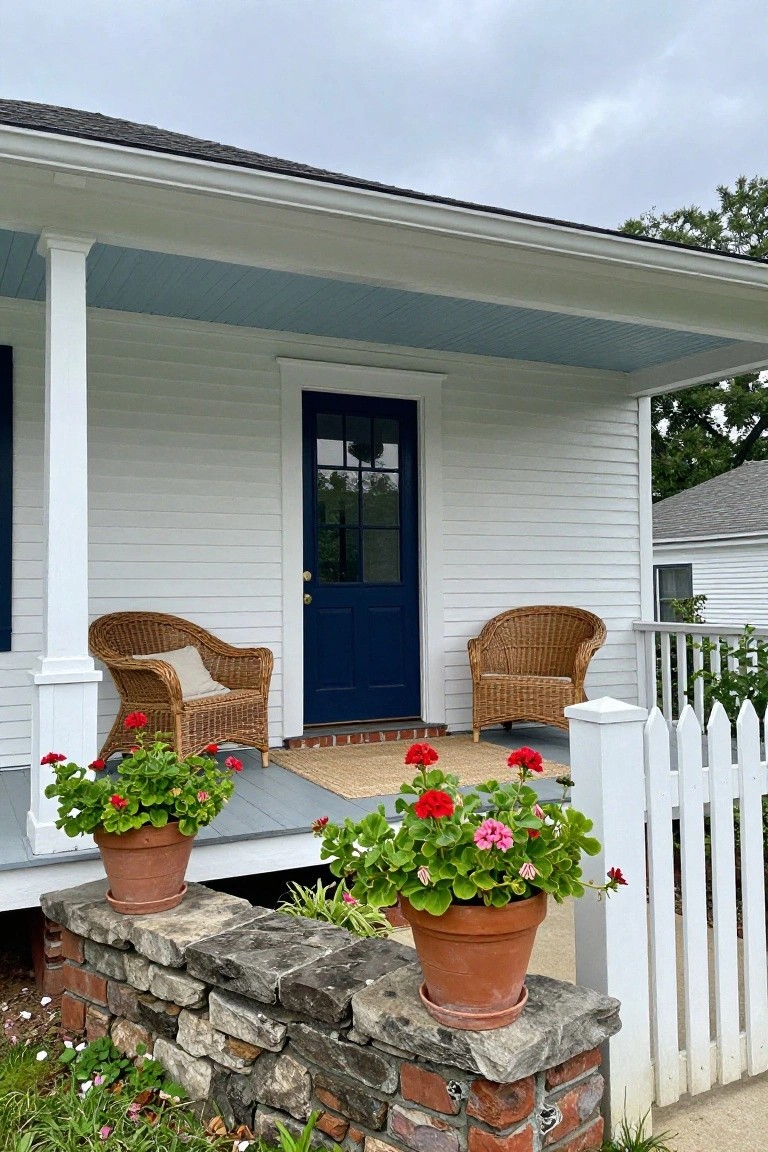
A navy blue front door gives this colonial house real personality right at the entry. Against the clean white clapboard siding, it pulls focus without overwhelming the simple lines. The blue porch ceiling ties it together nicely, hinting at that old Southern tradition.
Try this on homes with straightforward architecture like this one. It works on porches big or small, especially where you want some color up front. Pick a semigloss paint for durability, and pair it with neutral furniture like the wicker chairs here. Just test shades in daylight first.
Weathered Shingle Siding Porch House
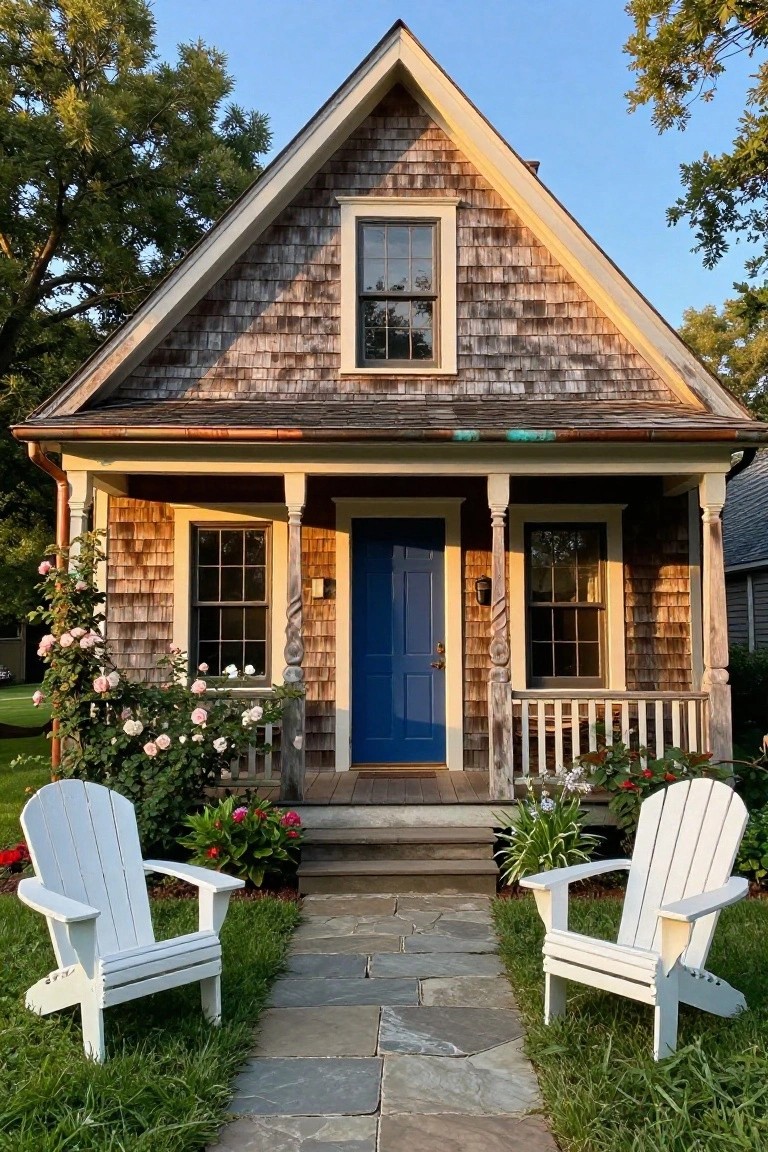
Weathered shingle siding like this gives a house real character without trying too hard. You see it on the sloped roof and walls here, with that soft gray-brown tone from years outside. The deep porch pulls it together, sheltering the blue door and making the entry feel protected and homey.
This look fits older neighborhoods or spots near water where you want something sturdy yet folksy. Go for copper gutters if you can, they age to green patina nicely. Keep plantings simple around the path so the house stays the star. Just check local codes on shingle types for fire safety.
Recommended Products

Authentic Vintage Appearance: Restore the timeless charm of classic homes with our fiber cement siding shingles. Designed to match the look and size of old asbestos siding shingles, these panels offer a beautiful, textured surface that mirrors the traditional style, without the asbestos.

64 Cedar Shingles with Broad Coverage: Includes 64 western red cedar shingles designed to cover about 20-25 sq ft; Actual coverage varies with overlap, spacing, trimming and project layout, helping buyers estimate material needs before installation

Authentic Vintage Appearance: Restore the timeless charm of classic homes with our straight edged fiber cement siding shingles. Designed to match the look and size of old asbestos siding shingles, these panels offer a beautiful, textured surface that mirrors the traditional style, without the asbestos.
Colonial Facade in Soft Yellow
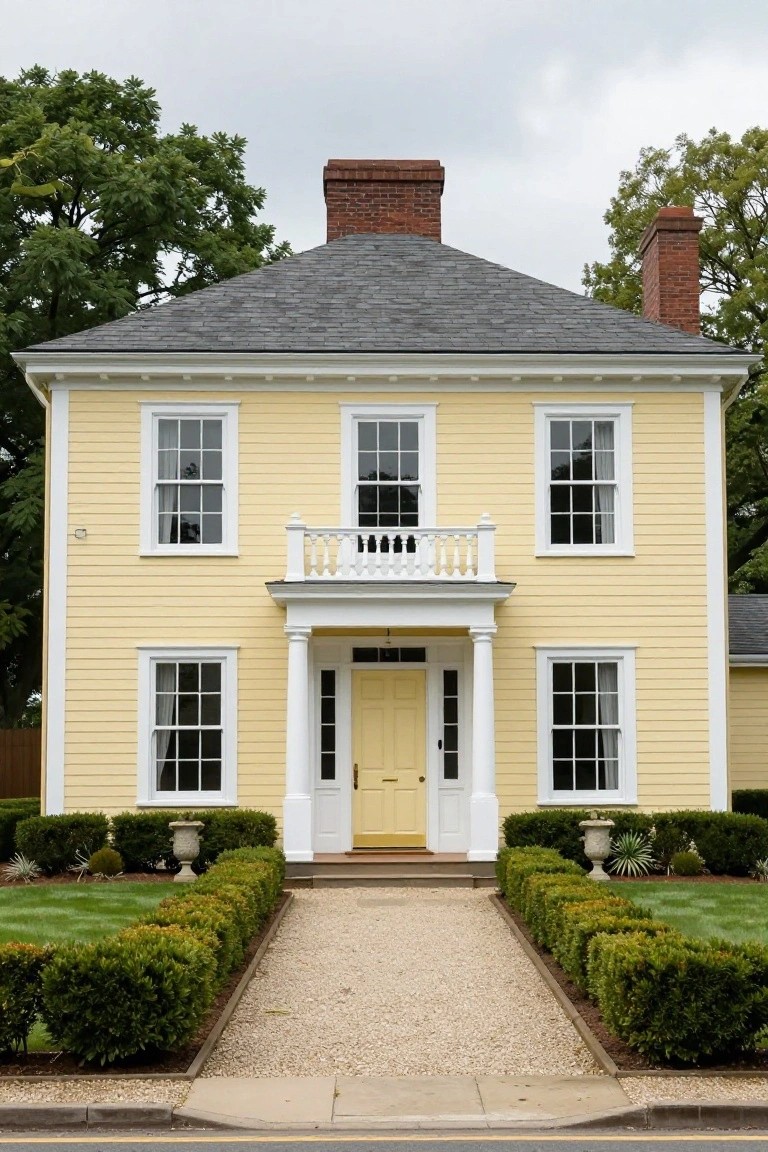
A soft yellow siding like this one freshens up the classic colonial shape without overpowering it. The color picks up light nicely, even on cloudy days, and pairs clean with white trim around the windows and porch. Those columns on the entry porch add that traditional touch that makes the whole front feel balanced and open.
Try this shade on a symmetric two-story colonial if you want curb appeal that lasts year-round. It suits older neighborhoods or tree-lined streets best, where the yellow keeps things cheerful amid greenery. Just keep plantings simple, like low boxwoods along the path, so the house stays the focus.
Classic Rocking Chairs on the Porch
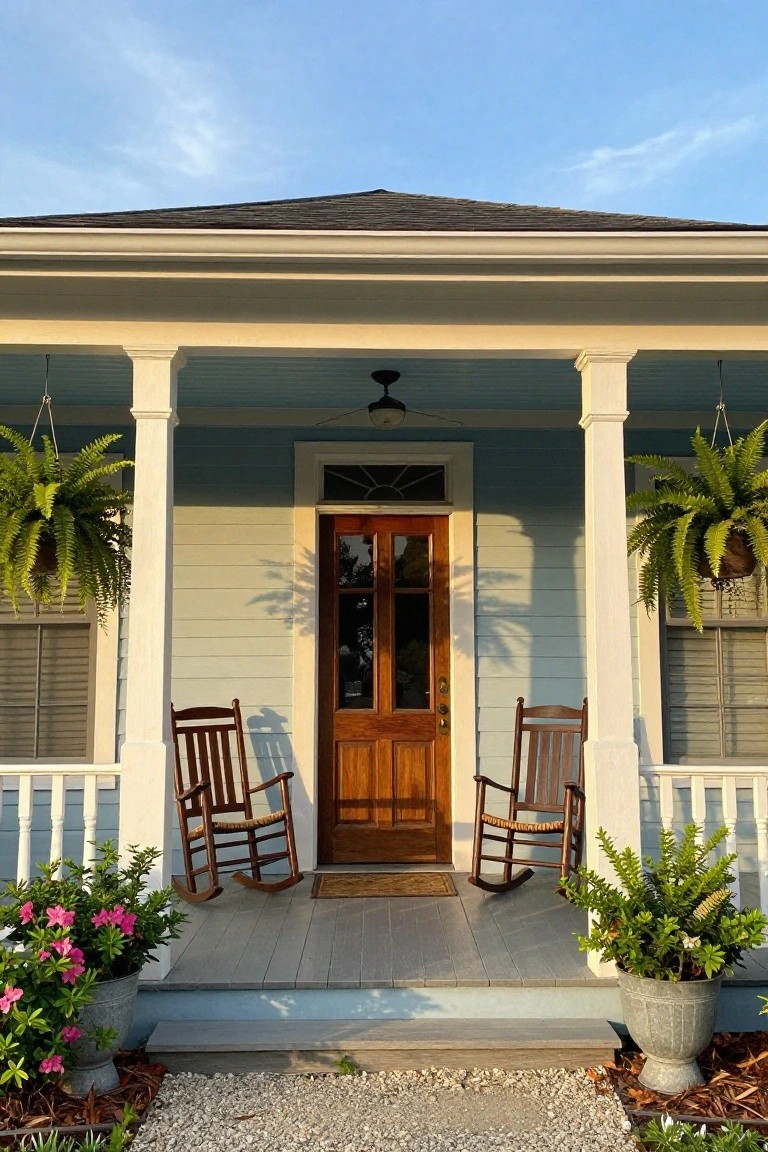
A pair of simple rocking chairs does a lot for a colonial house front. They make the porch look ready for company right away. On this light blue siding with white columns, the wooden rockers pick up the warm door tones and give off that easy, lived-in porch vibe folks remember from old family homes.
Set them out flanking the door so the porch feels balanced and open. They suit traditional houses with decent porch depth, especially down South where evenings stay mild. Go for sturdy ones that match your trim, and leave room around them… no cluttering up the boards.
Classic Pedimented Entry Stoop
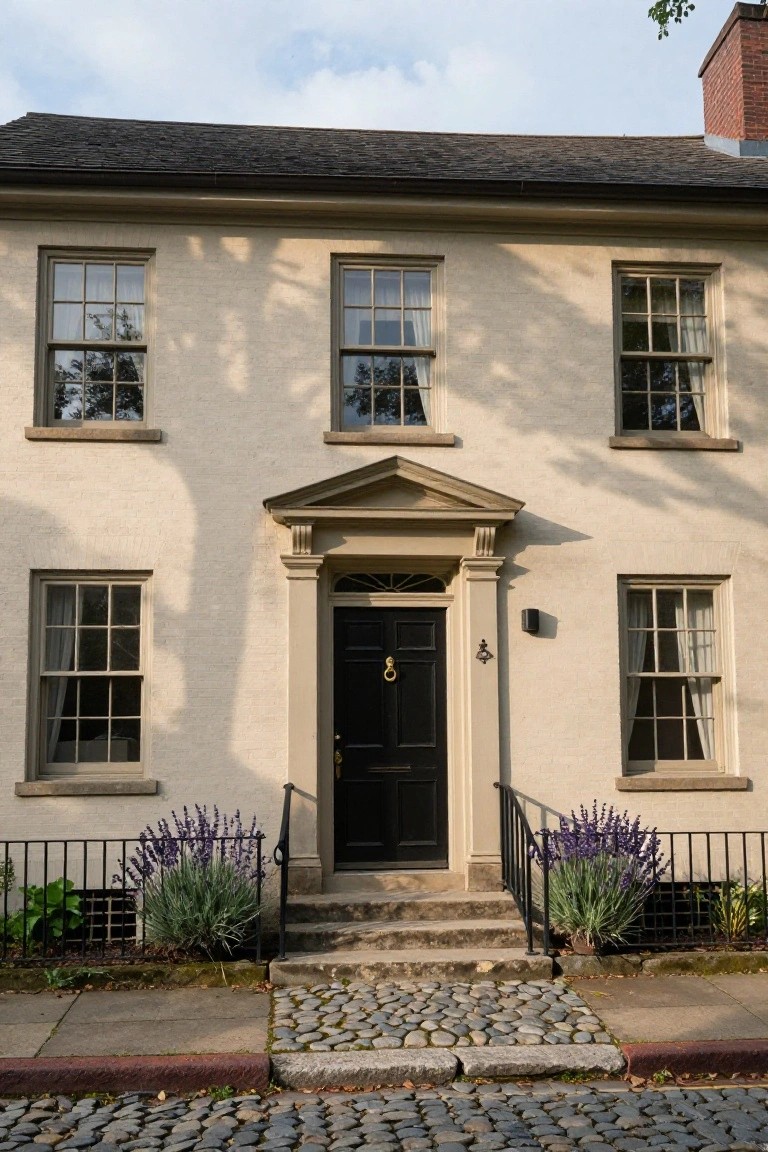
A pedimented entry like this one gives a colonial house real presence right at the front door. The triangular pediment sits over the black door with its brass knocker, flanked by simple pilasters that echo old-school architecture. Paired with the light beige walls and balanced windows, it pulls the whole facade together without much fuss.
This setup works best on narrower city lots or historic neighborhoods where space is tight. Skip a big porch and go for steps with an iron railing instead. Tuck in low plants like lavender along the edges to keep it soft and lived-in. Just make sure the door color pops against the siding.
Front Porch Bench Seating
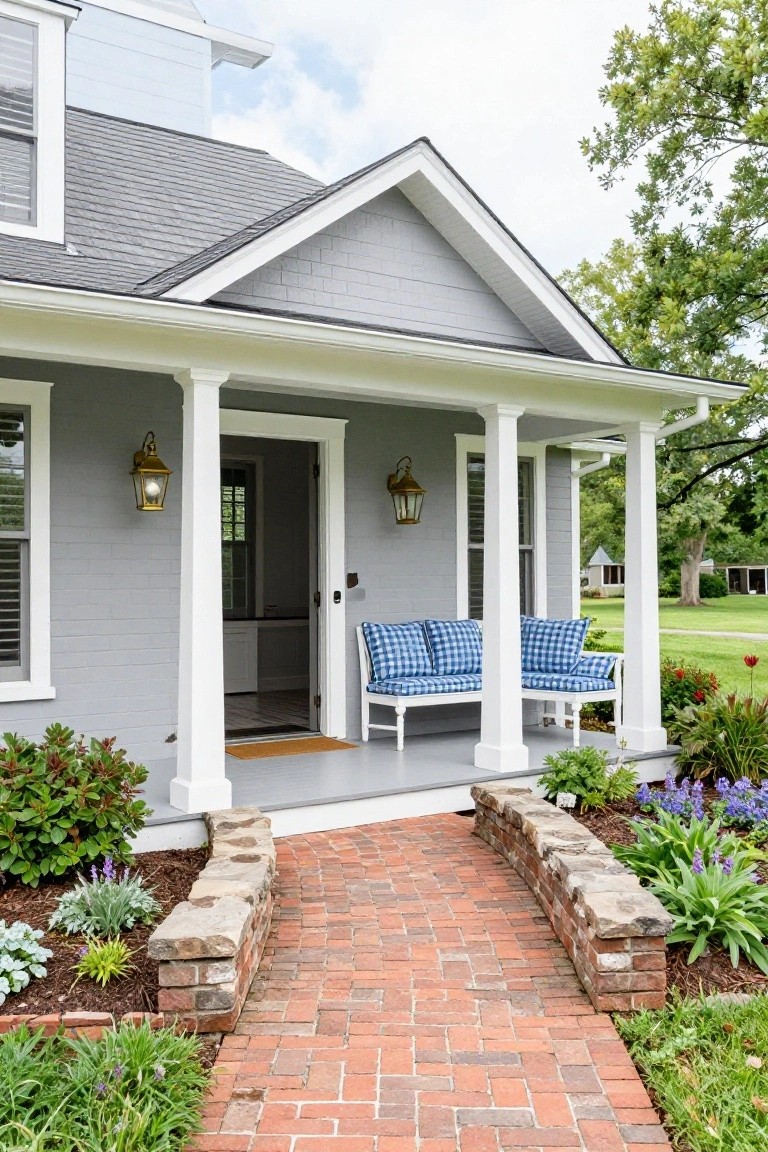
Tucking a bench right between the porch columns gives this Colonial exterior a spot for real use. The white bench with its blue checkered cushions sits there casual and ready, like folks might drop down for a minute to chat or watch the neighborhood. It turns the porch from just a cover over the door into something with a bit of everyday life.
This works well on homes with classic columns or any covered entry that has room along the side. Pick a simple wood or metal bench that matches the trim, then layer on cushions that hold up to weather. It suits smaller porches especially, since it doesn’t take much space but adds that homey touch without fuss.
Simple Porch Bench Seating
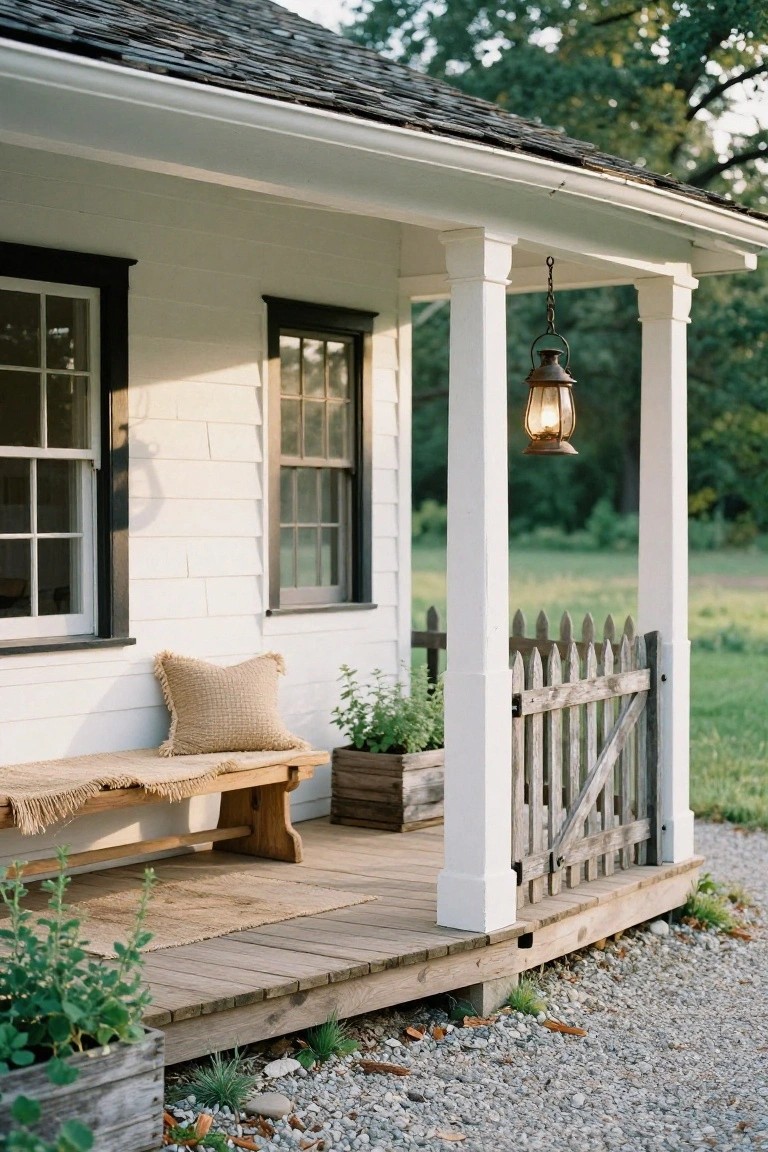
A plain wooden bench tucked against the porch wall turns a basic entry into something folks actually want to linger on. Here, the rough-hewn bench with its fringed tan cushion sits easy next to potted herbs, giving off that relaxed farmstead feel on a crisp white house. It’s the kind of spot that says home without trying too hard.
Put one on your own colonial porch where foot traffic is light, maybe right by the door for grabbing shoes or mail. Pair it with weatherproof pillows and a couple plants in old crates. Skip anything fussy, it suits older homes with gravel drives or grass best, and stays practical year-round.
Red Door on Navy Colonial House
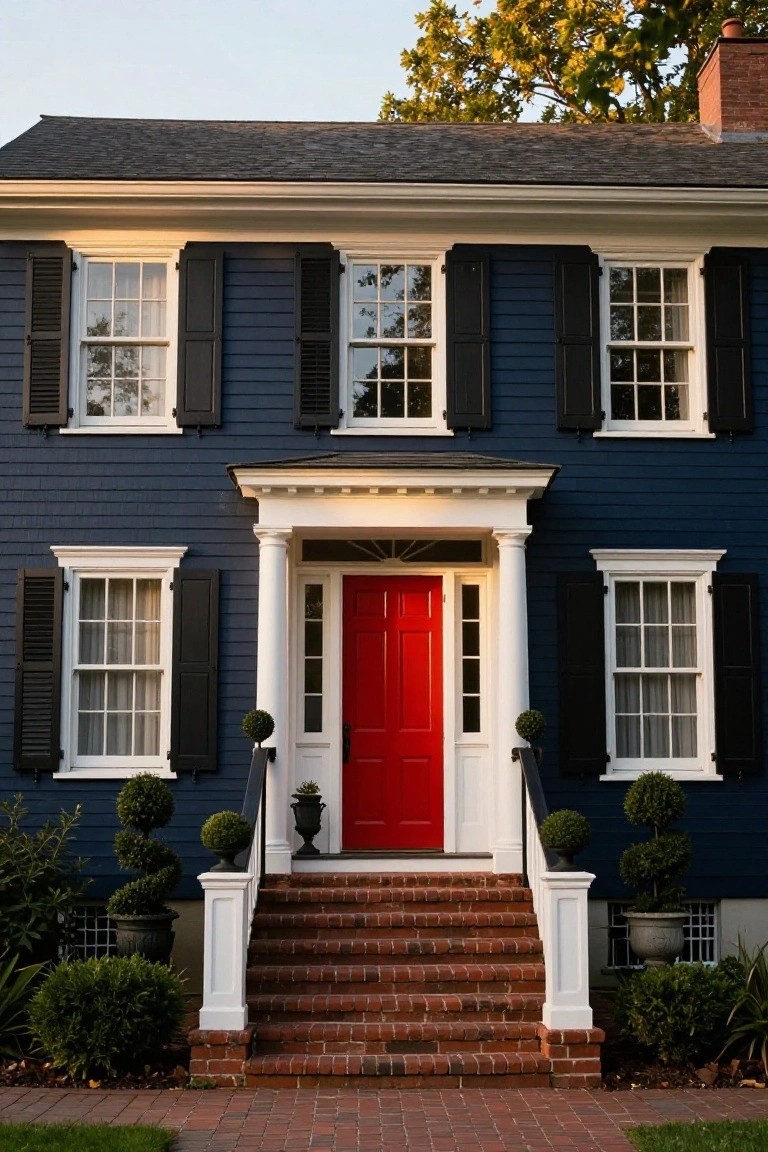
A bright red front door jumps out against the deep navy siding of this colonial home. White trim around the windows and porch columns keeps things crisp. That color contrast pulls your eye straight to the entry. It gives the whole facade more life without changing much else.
This look works best on traditional colonials or similar styles with dark paint. Go for a glossy red to catch the light. Brick steps like these add to the warmth. Just make sure the door fits the scale. It suits homes wanting simple curb appeal.
Porch Rocking Chair Setup
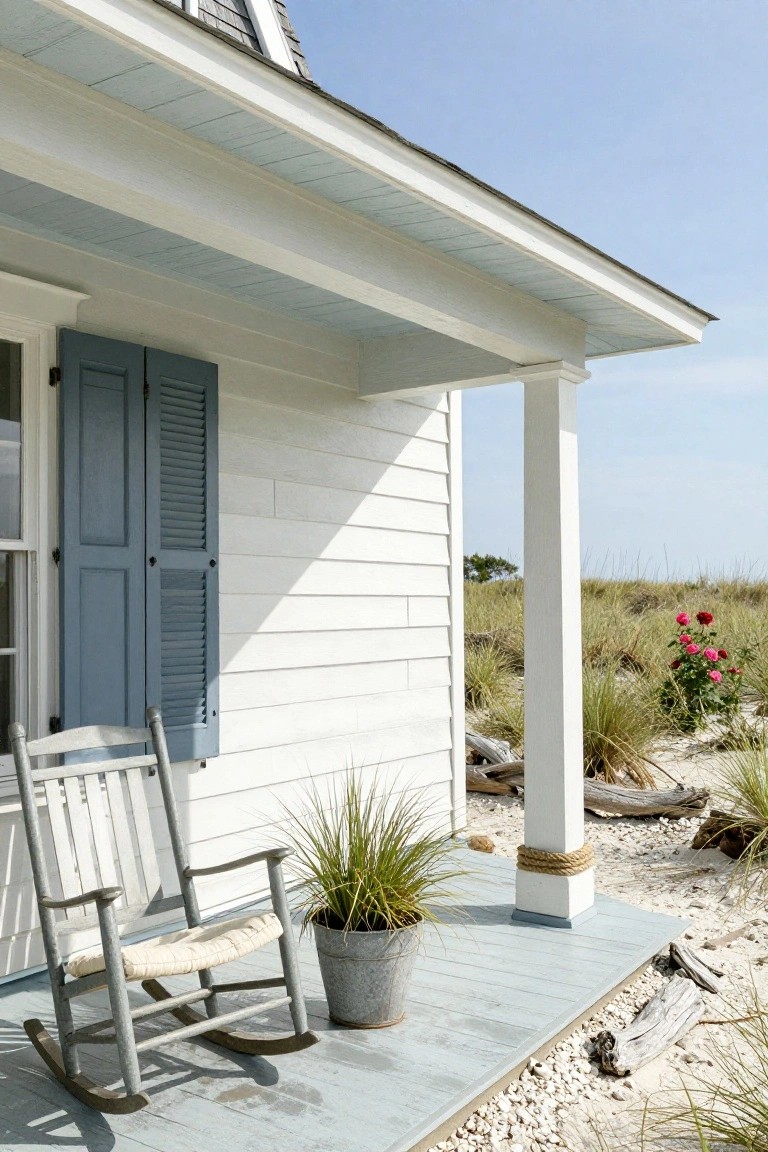
Nothing says relaxed colonial living like a single rocking chair on the porch. Here it’s an aged gray one with a cushioned seat, placed just right next to a tall potted grass. That setup pulls in the beachy surroundings without any fuss. It gives the white clapboard house a touch of everyday character folks actually use.
Try this on smaller porches or coastal spots where space is tight. Pick a weathered rocker in wood or metal to match the siding. Add one sturdy plant nearby, maybe skip the pillows if you want low upkeep. Fits older homes best. Just watch the chair doesn’t tip on uneven decking.
Classic Columned Portico Entry
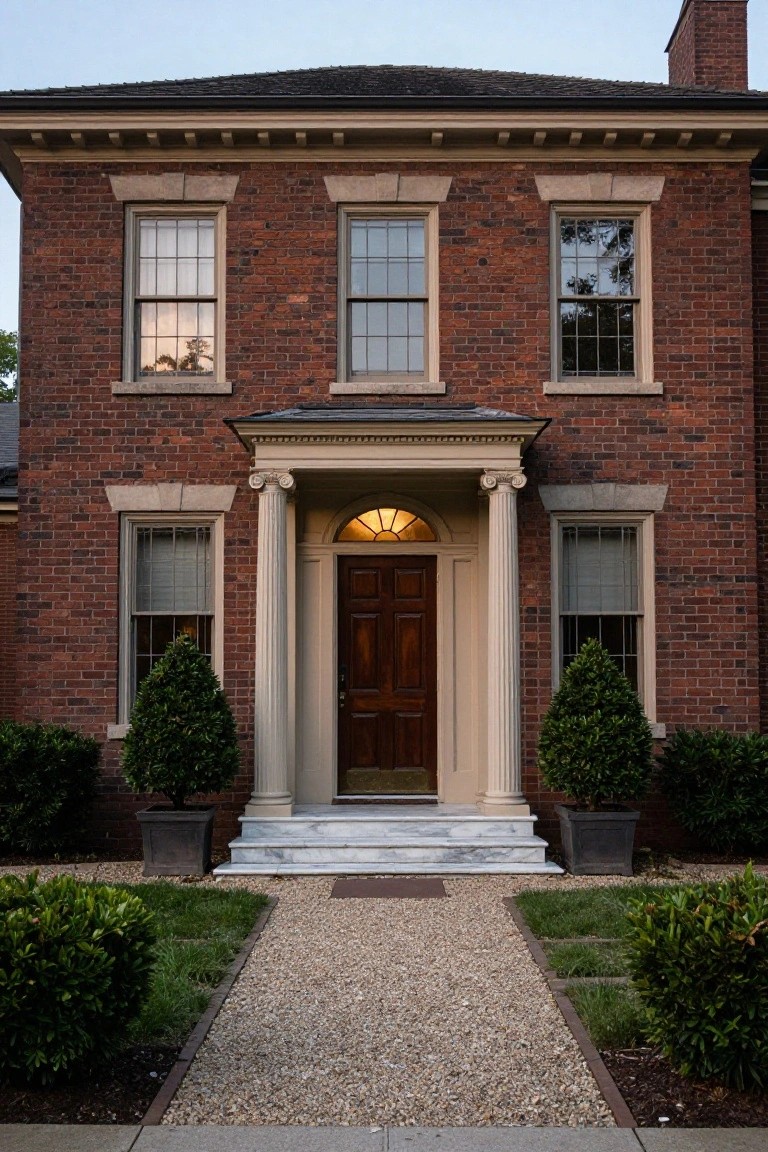
A columned portico like this one turns a plain brick facade into something with real colonial character. The fluted white columns frame the front door nicely, and that curved fanlight window above adds a touch of elegance without overdoing it. It pulls the eye right to the entrance and makes the house feel more established.
You can pull this off on most two-story brick homes, especially in older neighborhoods where it fits the style. Go for marble steps if your budget allows, they hold up well and look sharp. Just keep the flanking shrubs trimmed and simple so they don’t steal the show from the porch itself.
Classic Porch Swing
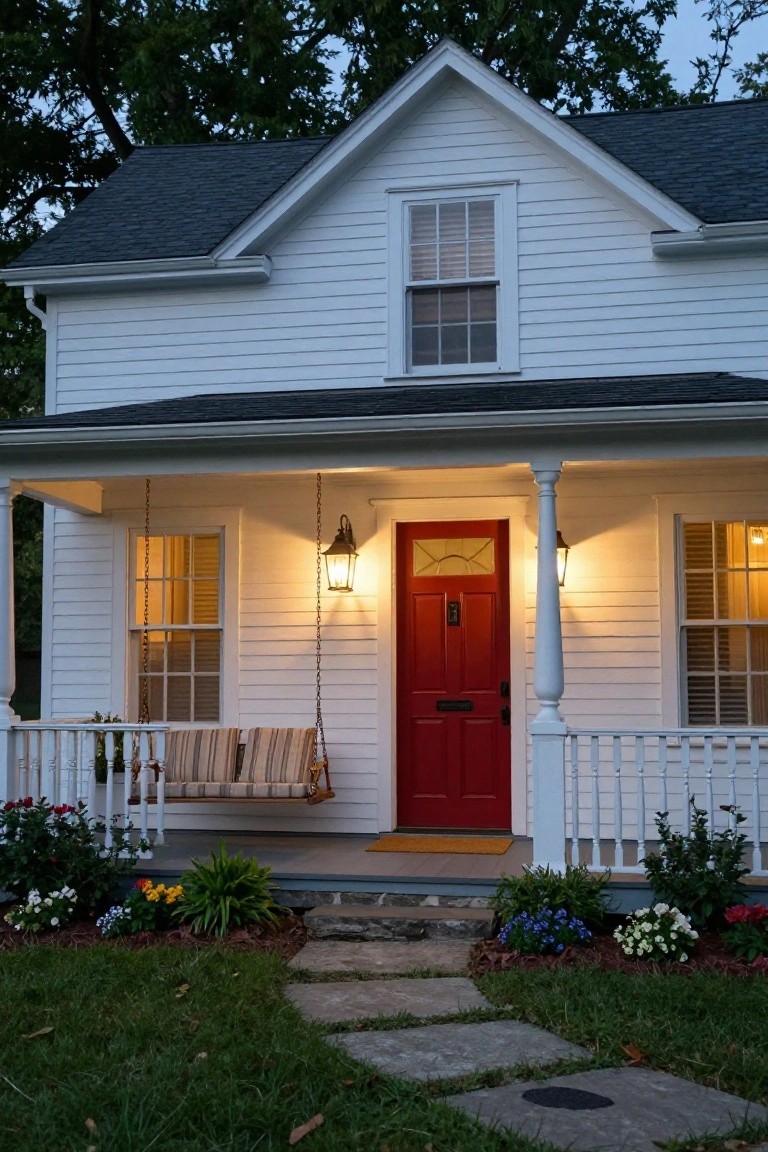
A porch swing hanging from the ceiling like this one brings real character to a colonial house exterior. It turns a simple covered porch into a spot that feels lived-in and friendly right away. That striped cushion and chain setup keeps it straightforward, while the lanterns nearby make it usable even as the light fades.
Put one on your own colonial porch if you have enough depth under the roofline, maybe eight feet or so. It works best on homes with that white siding and column look, pairing well with a bold door color for extra pop. Just make sure the chains are sturdy, and keep the area clear for safe swinging.
Classic Brick Porch Entry
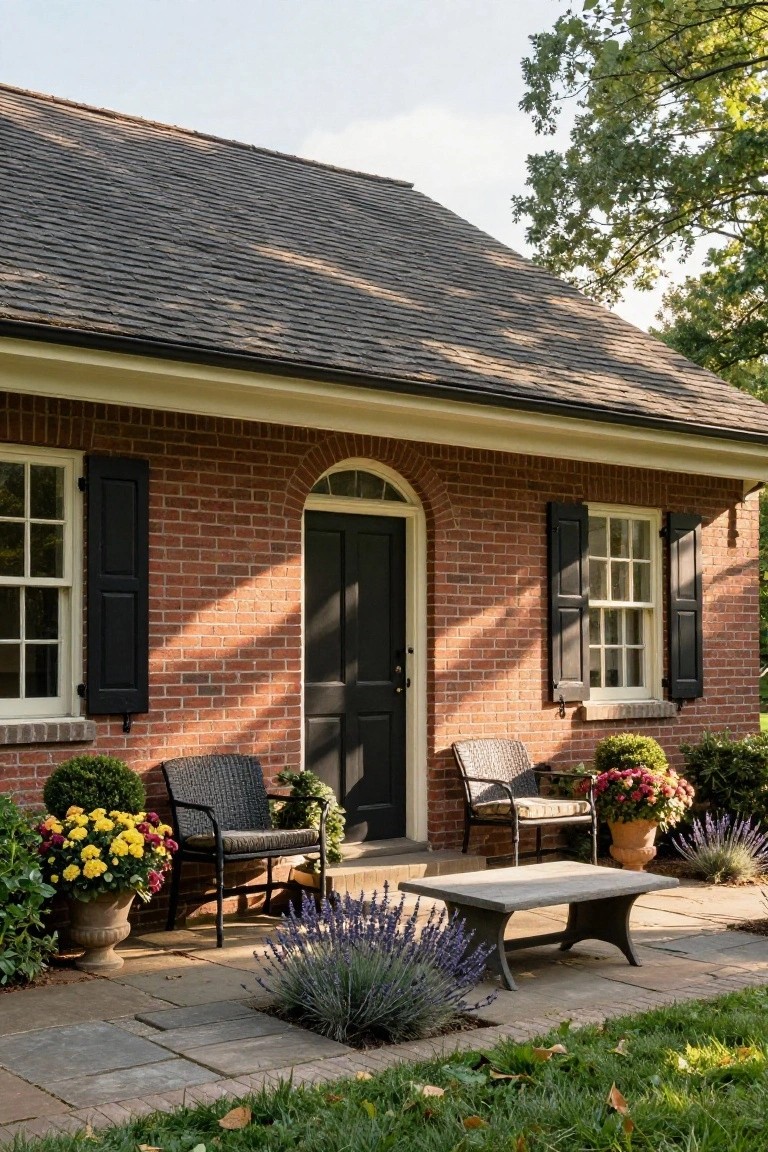
Red brick houses like this one have a lot going for them. The small covered porch pulls everything together. Black shutters and door stand out against the warm brick. It gives the front a solid, traditional feel without trying too hard.
Put this setup on most any colonial or older style home. Keep seating simple, like wicker chairs around a low table. Add a few pots with flowers or boxwoods by the steps. It fits narrow front yards best. Watch the scale though. Too much furniture crowds it quick.
Stone Entry with Lantern Lights
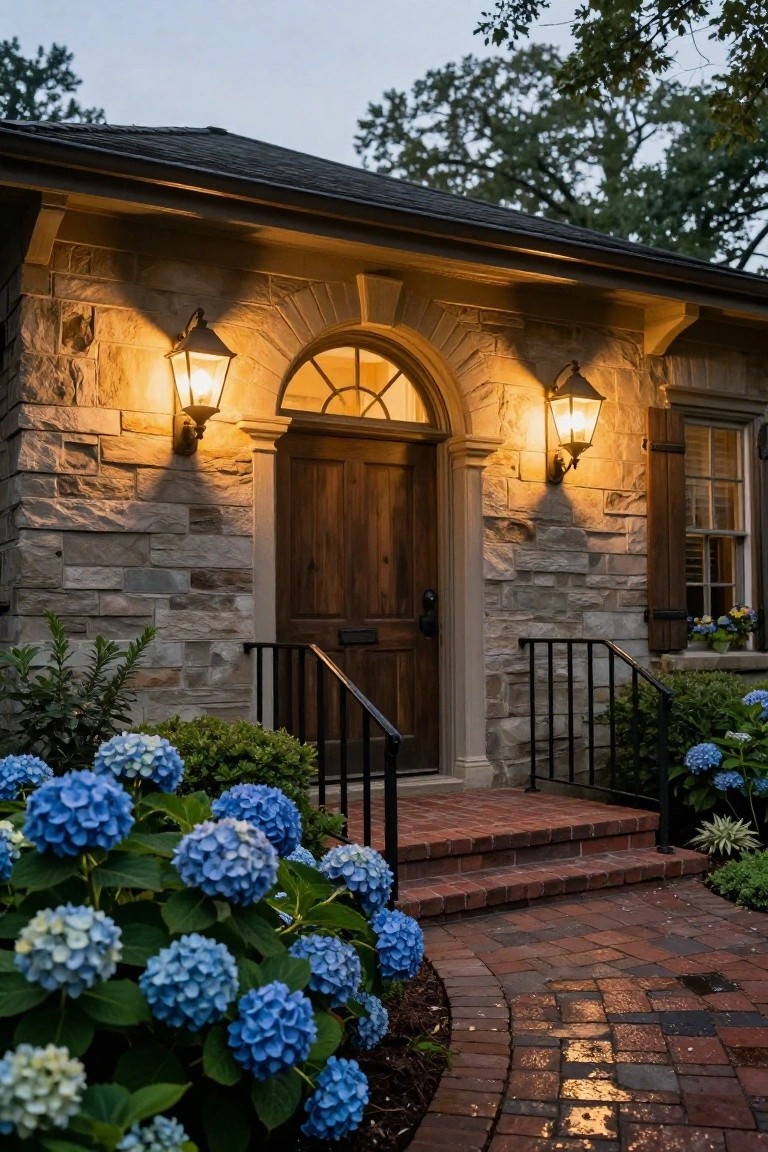
A simple stone entry like this one stands out for its classic lines and warm evening glow. The beige stone walls pair with a solid wood door under a curved window, and those matching lanterns on each side light up the space just right. It’s the kind of setup that gives a colonial home real character without trying too hard.
You can pull this off on most traditional houses, especially where the architecture has some stone or brick already. Hang lanterns at eye level next to the door, and keep plantings like hydrangeas low around the steps. Watch the scale though. Big lanterns work here because the stone is hefty… smaller ones might get lost.
Classic Pedimented Front Entry
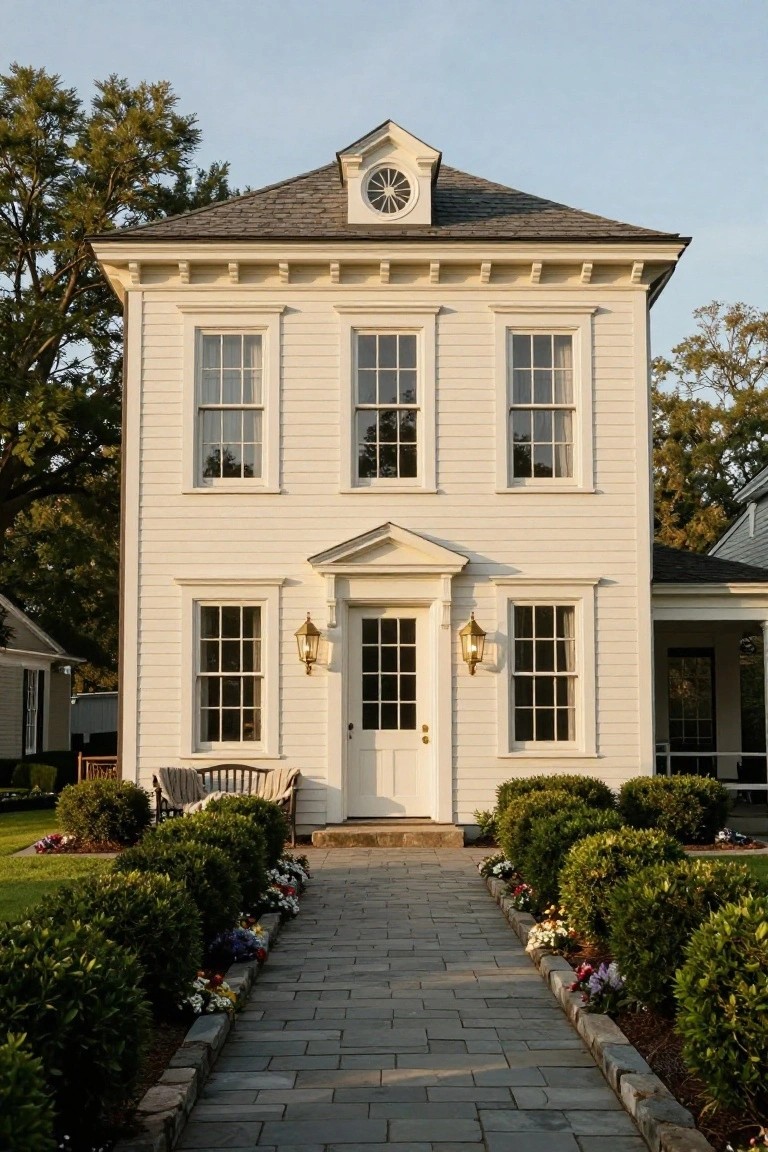
A simple pediment over the front door gives this colonial house its main character. White clapboard siding keeps things clean and bright. Paired with matching lanterns on each side, it pulls the eye right to the entrance. That setup feels balanced and welcoming from the street.
This works well on two-story homes with room for symmetry. Try it if your place has plain siding already. It suits quiet neighborhoods where you want some tradition without extra trim everywhere. Scale it right for your door height, or it might look too heavy.
Classic Stoop Entry Design
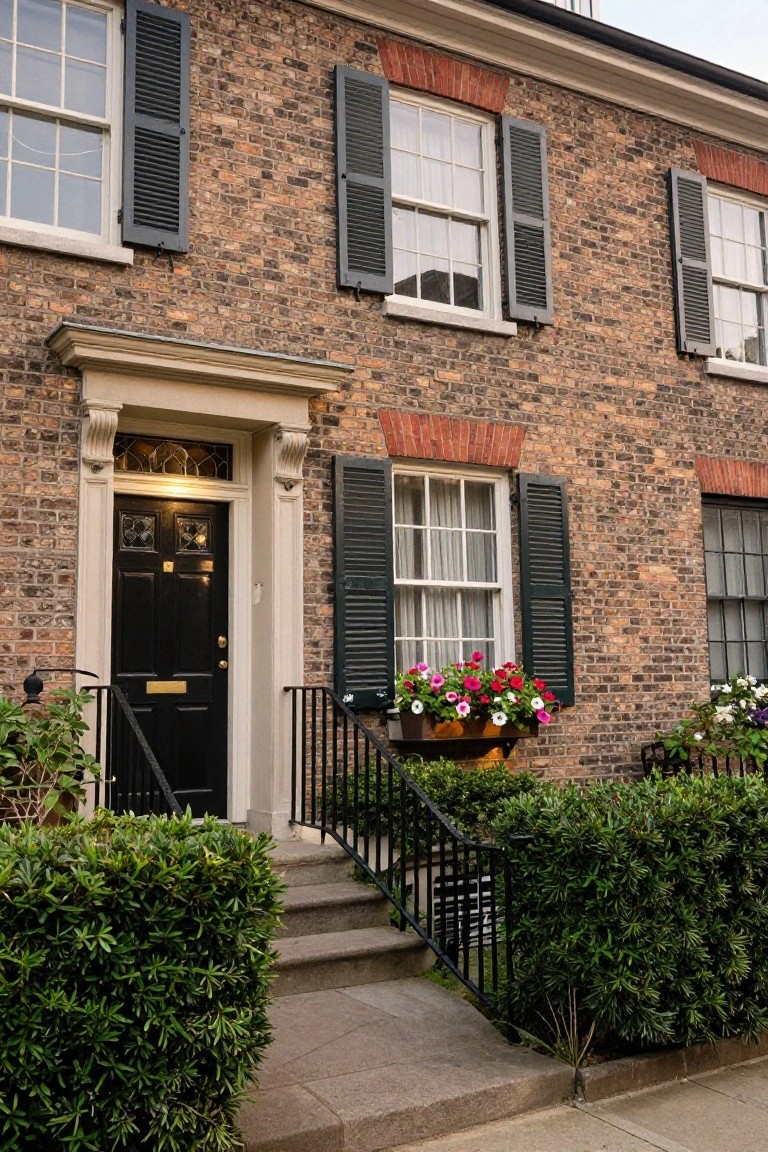
A raised stoop like this one gives a colonial brick house real presence right at street level. The black door in its stone surround pulls focus, while the simple iron railing keeps things sturdy and traditional. Boxwoods along the sides add neat structure without overwhelming the steps.
This setup fits narrow urban rowhouses best, where you want the entry to feel secure yet open. Keep plantings low and contained, like these clipped hedges and window pots. It handles foot traffic well and works in any climate if you pick hardy plants.
Wicker Porch Bench for Easy Comfort
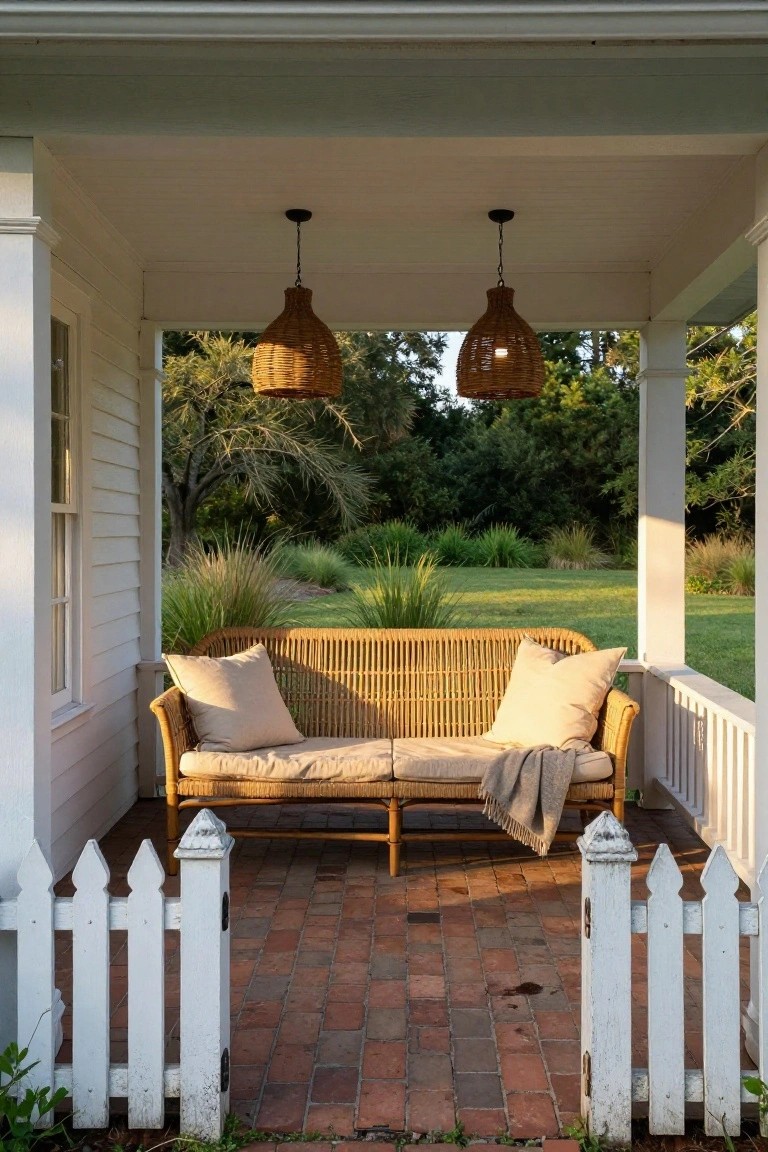
A wicker bench like this one sits right on the porch, loaded with cushions and a soft throw. It pulls the whole spot together without trying too hard. The natural weave matches the hanging lanterns up above, and it keeps things light against the white house siding.
Try this on a covered front porch where you want a place to sit and watch the yard. It works best in milder spots, since wicker holds up to weather if you cover it in winter. Pick cushions in neutral shades so they stay looking fresh year round.
Dark Siding Gives Colonial Houses More Depth
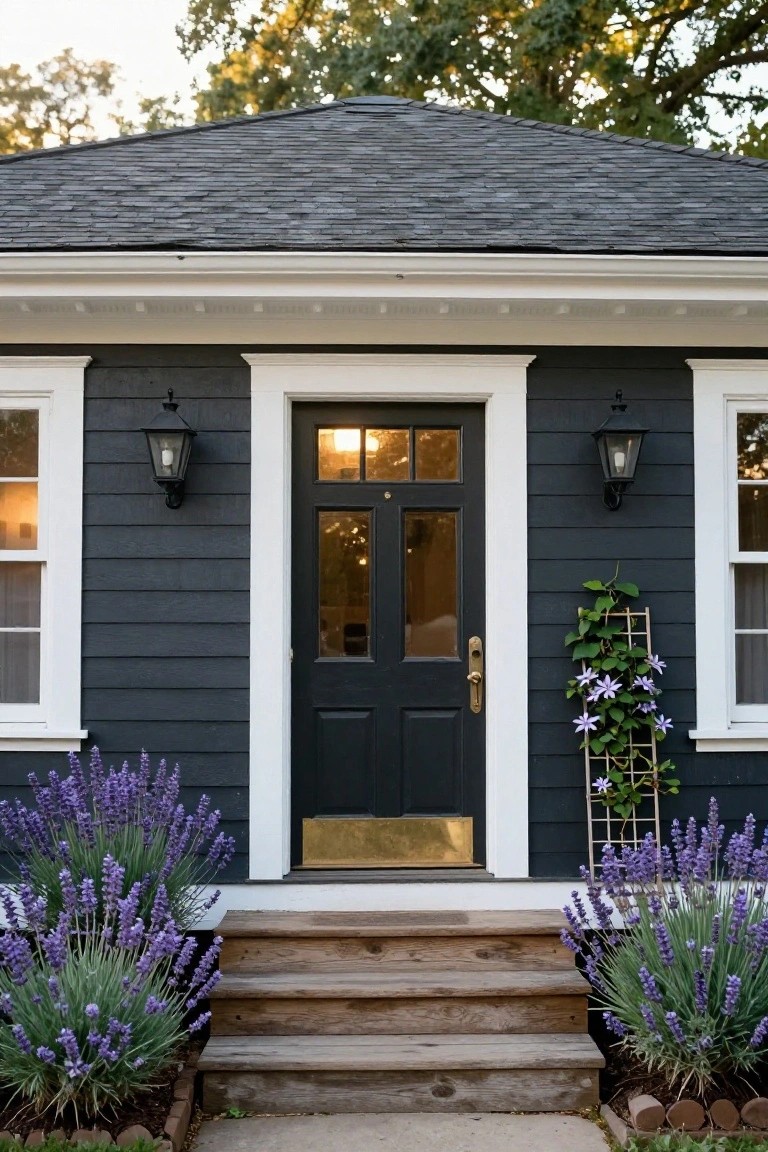
Dark siding like this charcoal shade works nicely on colonial homes. It makes the white trim around the windows and door stand out sharp. That contrast adds some quiet drama to the facade without going overboard. The simple gabled roofline and paired windows look even stronger against it.
You can pull this off on older colonials or new builds with clean lines. Pair it with black lanterns for evenings and low plants along the steps to keep the entry soft. Skip it if your house sits tight to the street. It suits spots with trees overhead that let some light filter through.
Frequently Asked Questions
Q: How do I choose the right porch size for my colonial house?
A: Measure your front facade first. Pick a porch that covers about two-thirds of the width so it feels balanced and welcoming. Skip anything too small, it looks tacked on.
Q: What siding pairs best with these colonial porch designs?
A: Go for clapboard or board-and-batten in smooth textures. They echo that classic crisp look without overwhelming the porch details. Paint them in soft whites or muted grays to let the architectural charm shine.
Q: Can I add modern lights to a colonial porch?
A: Sure, swap in sleek black lanterns or sconces with a vintage bulb inside. They blend right in and light up evening gatherings nicely. Just mount them at eye level for the best glow.
Q: How do I keep the porch wood from weathering fast?
A: Stain it with a solid-color product right after building. Refresh every two years with a good scrub and new coat. That seals out moisture and holds the color tight.
