

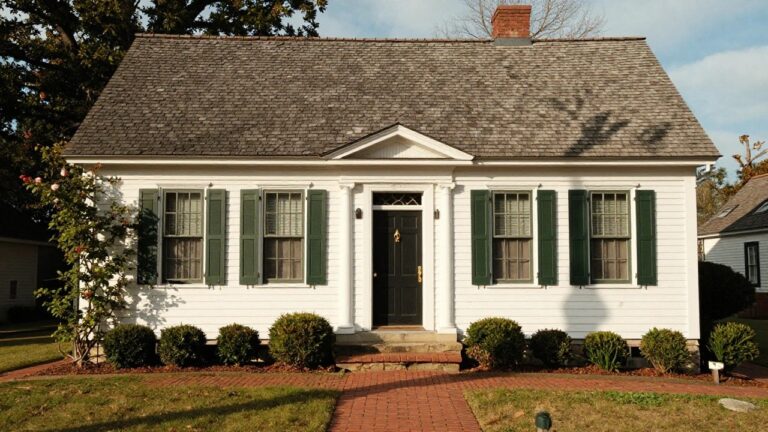
I’ve always paid close attention to gable roofs on colonial houses because they define the facade’s silhouette from down the street. A strong roofline ties together the siding, dormers, and entryway so the whole exterior reads as balanced and rooted in tradition. Proportions decide if it charms or crowds the view. When I walk up to homes like that, the way the gables frame the front door pulls everything together without trying too hard. A couple of these designs caught my eye for how they’d hold up with fresh siding on an older house like ours.
Classic Gable Front with Columned Porch
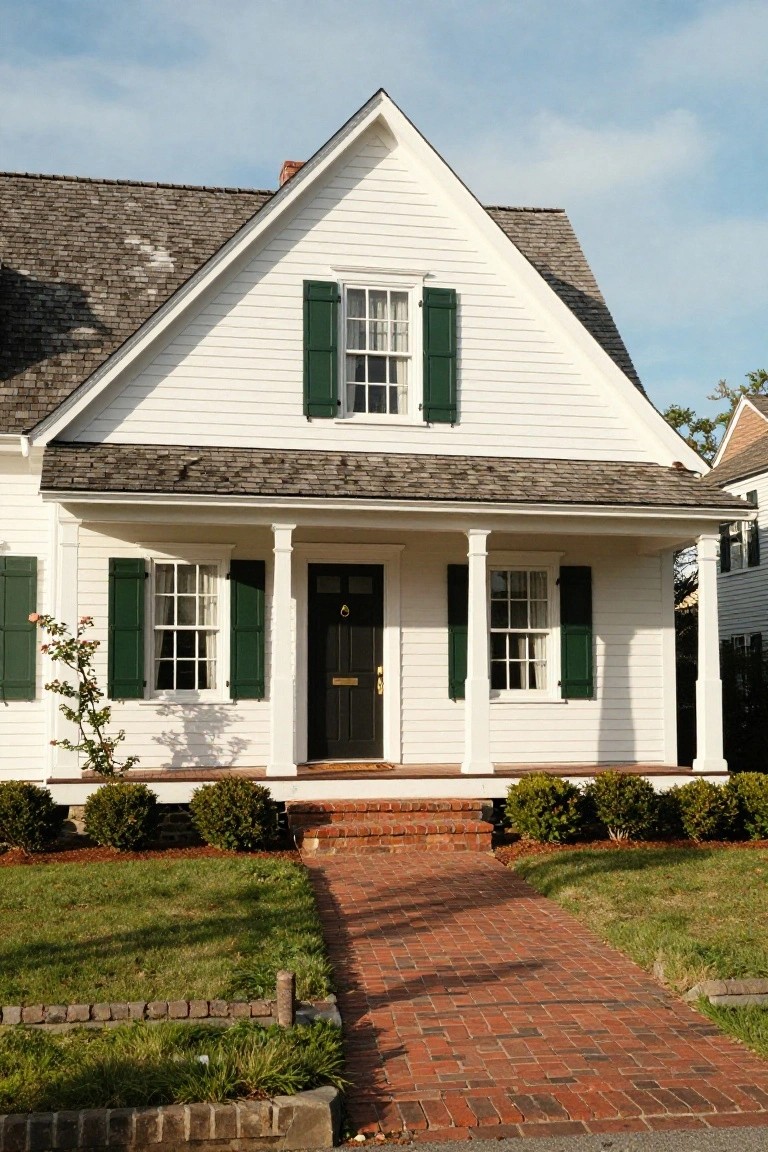
A gable roof rising sharply over the front facade sets a strong Colonial tone here. White clapboard siding keeps things crisp, while green shutters on the flanking windows add just enough color contrast. The porch with its paired columns frames the entry nicely, making the whole house look balanced and approachable from the sidewalk.
This setup works well on smaller lots where you want curb appeal without extra fuss. It suits older homes in established areas, or new builds aiming for tradition. Keep the columns simple and paint everything to match, but scale the porch to your door height so it feels right.
Gable Roof Over Brick Entryway
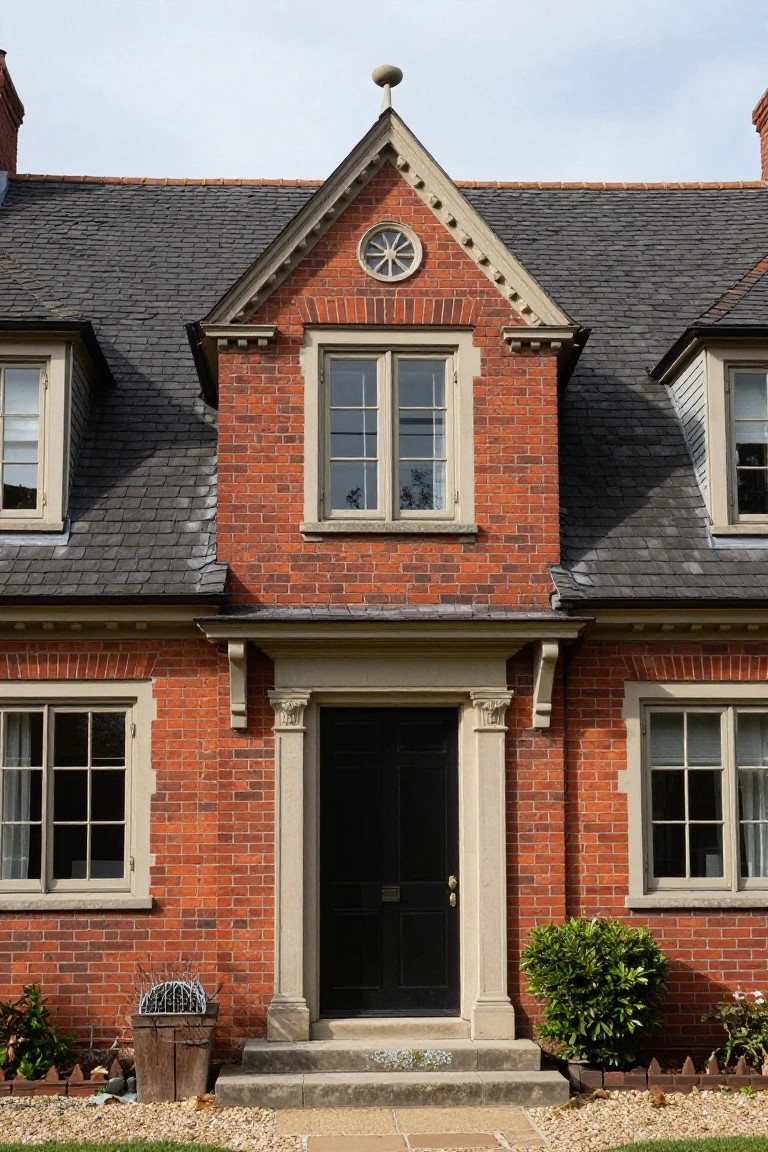
A simple gable roof centered above the front door gives this Colonial-style house a strong, balanced look. The red brick walls pair nicely with the dark slate shingles, and that round window in the gable adds a touch of interest without overdoing it. Stone columns frame the black door, making the entry feel solid and welcoming right from the street.
This setup works best on smaller homes where you want classic curb appeal without much fuss. It suits traditional neighborhoods or older properties getting a refresh. Just keep the landscaping simple, like low shrubs along the path, so the architecture stays the focus. Scale it to your house size, and avoid too many roof pitches that could clutter things up.
Blue Clapboard Gable Colonial
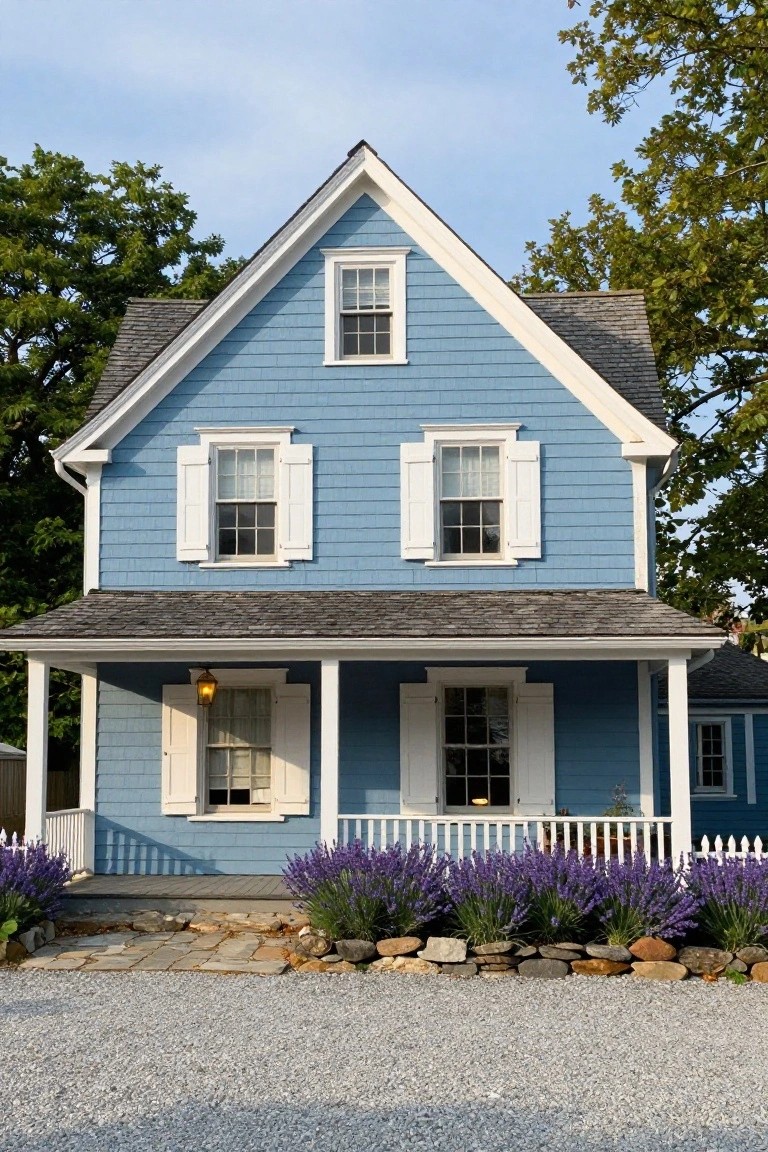
A classic colonial house like this one uses a steep gable roof to give the front facade real presence. The soft blue clapboard siding with crisp white trim and shutters keeps everything looking sharp and timeless. That front porch pulls it together nicely, making the entry feel open without overdoing it.
This setup suits older neighborhoods or spots with some trees around. Go for it on your own gable front if you want steady curb appeal year-round. Pair the paint with low plants along the porch base, and skip anything too busy in the yard.
Classic Gable Roof Colonial Facade
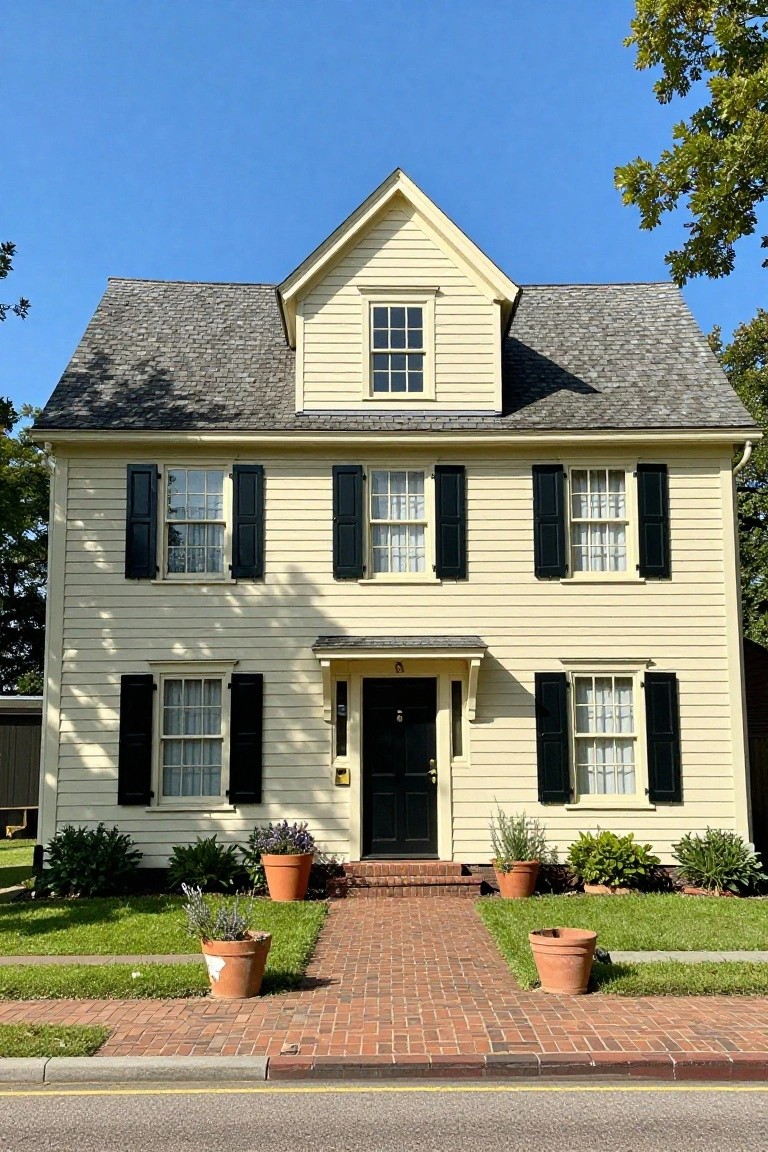
This two-story colonial home shows off a straightforward gable roof that sits right over the front door area. The pale yellow siding keeps things light and cheerful, while those black shutters on every window pull the look together in a balanced way. It’s the kind of setup that feels steady and familiar, like old neighborhood houses that have been there forever.
You can pull this off on most traditional homes with a simple roof update or fresh paint. Stick to light siding colors against dark shutters for that crisp contrast, and add a small entry porch if you don’t have one. It works best on street-facing lots where curb appeal matters. Just keep the windows evenly spaced. No need for extras.
Shingled Gable Cottage Exterior
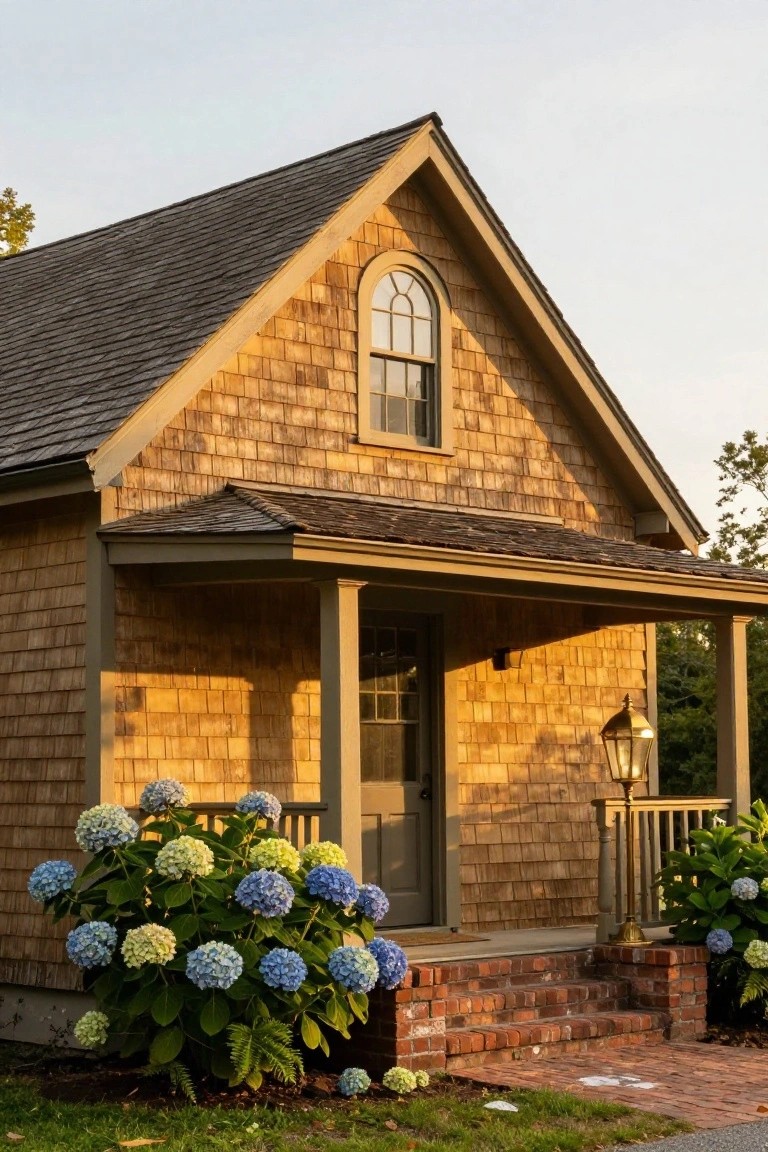
Cedar shingles climbing up a steep gable roof like this make a colonial house feel right at home in any seaside town. The texture of the shingles catches the light just so, and they age into that soft patina over time. It’s a look that’s been around forever because it works, tying the house to its natural spot without trying too hard.
Try this on smaller homes or cottages where you want classic lines without a big footprint. Flank the porch steps with big hydrangea bushes for some easy color that pops against the shingles. It suits older neighborhoods or rural edges best. Just make sure the roof pitch stays sharp to keep the gable looking crisp.
Classic Gable Roof on Brick Colonial
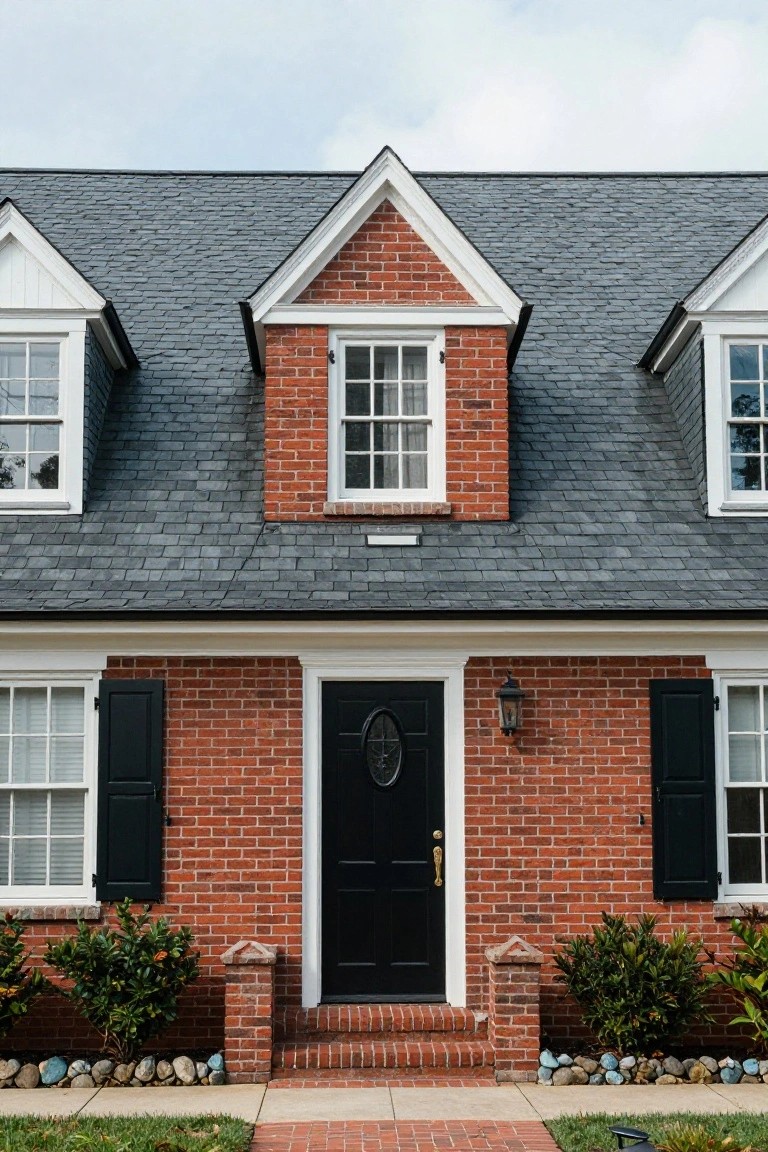
A gable roof like this one sits right at the front of the house, peaking over the brick facade with dark slate shingles that pull the eye upward. The steep pitch and clean lines give the whole exterior a solid, traditional feel without much fuss. Brick walls handle it well, staying warm and grounded under that roof shape.
This setup suits older neighborhoods or revamped Colonials where you want curb appeal that lasts. Go for matching dark accents on doors and shutters to tie it together. Skip heavy porch add-ons. Just add low shrubs at the base, and the roof does the rest.
Navy Blue Siding on Gable Roof Colonials
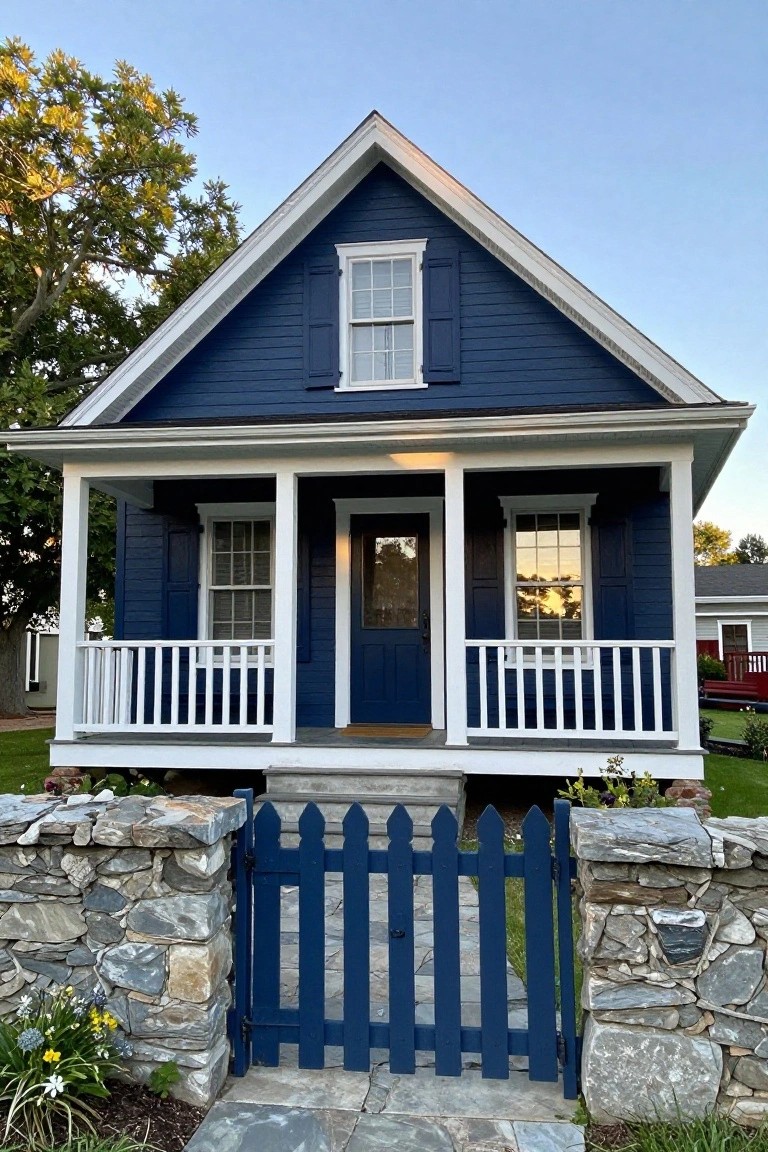
A deep navy blue clapboard siding gives this gable roof colonial a fresh take on the old style. The white trim on the porch posts and windows keeps things sharp and traditional. It stands out against fall trees without feeling too bold.
This look suits compact homes on quiet streets. Use it where you want curb appeal that nods to history but feels current. Stick to glossy white for trim so it pops, and add a simple picket gate at the walk. Check local rules first, though. Navy can shift in sunlight.
Gable Roof Cottage with Metal Roofing
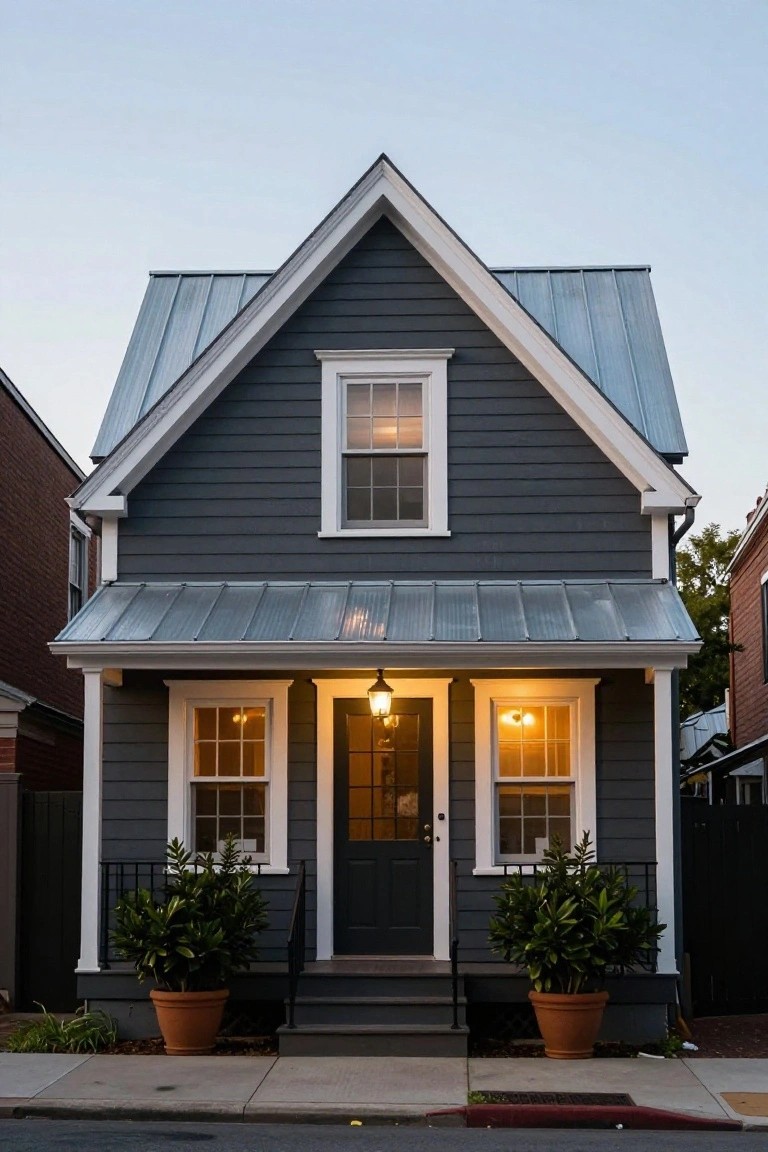
This little colonial house pulls off a steep gable roof topped with standing seam metal panels. The dark gray clapboard siding and crisp white trim keep things traditional. That metal roof catches the light just right. It gives the whole front a fresh edge while nodding to old-school charm.
Try this on compact city lots or row house updates. The porch with its lantern light draws folks right up the steps. Metal holds up to weather better than shingles. Just match the gray tones to your siding for a smooth look.
Copper Porch Roof on Gable Colonial Homes
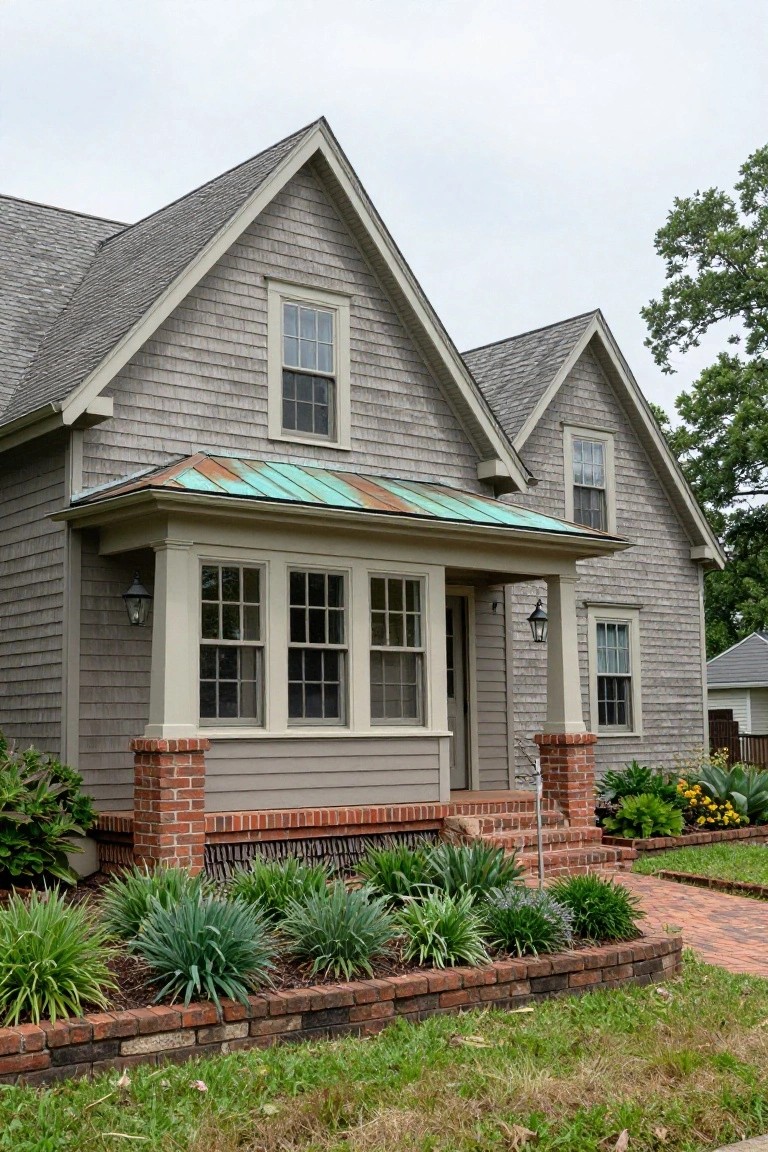
A copper roof over the porch gives this shingle-sided gable house a real classic touch. You see that greenish patina starting to form, which blends right in with the gray siding and makes the whole front feel settled and timeless. It’s not flashy, just right for pulling together the gables and entry without overdoing it.
Try this on a two-story Colonial where you want some subtle shine up front. Brick piers like these hold it up nicely and keep things grounded. It suits older neighborhoods best, but go easy on the scale so it doesn’t overwhelm a smaller house. Copper takes time to patina, so plan for that wait.
Classic Brick Colonial with Gable Roof
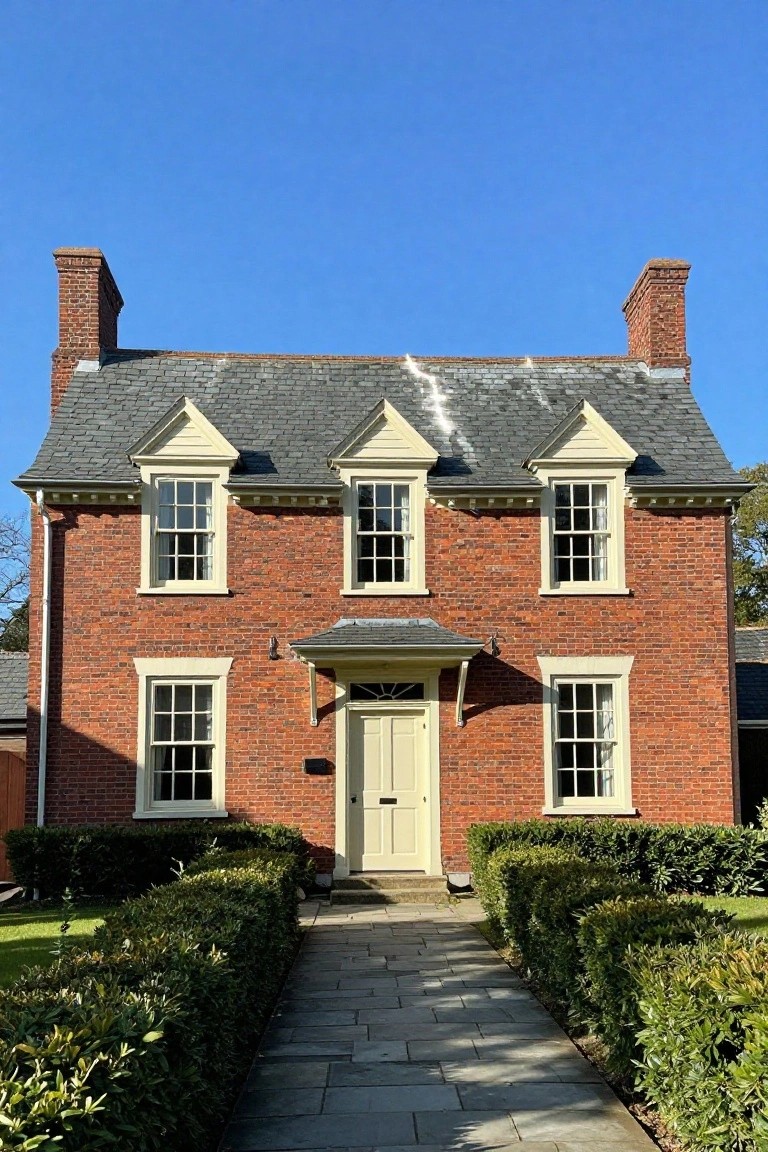
A solid brick house like this one uses a simple gable roof to pull off that familiar Colonial style. The balanced gables over the windows and entry keep everything even and easy on the eye. Brick gives it staying power, while the slate tiles on the roof add just enough shine on sunny days.
This setup fits right in on a regular neighborhood street or a quiet country spot. Line the front path with low boxwood hedges to frame the door without crowding it. It’s practical for everyday homes, especially if you want low upkeep that still looks put-together year round.
Gable Roof with Shingle Siding
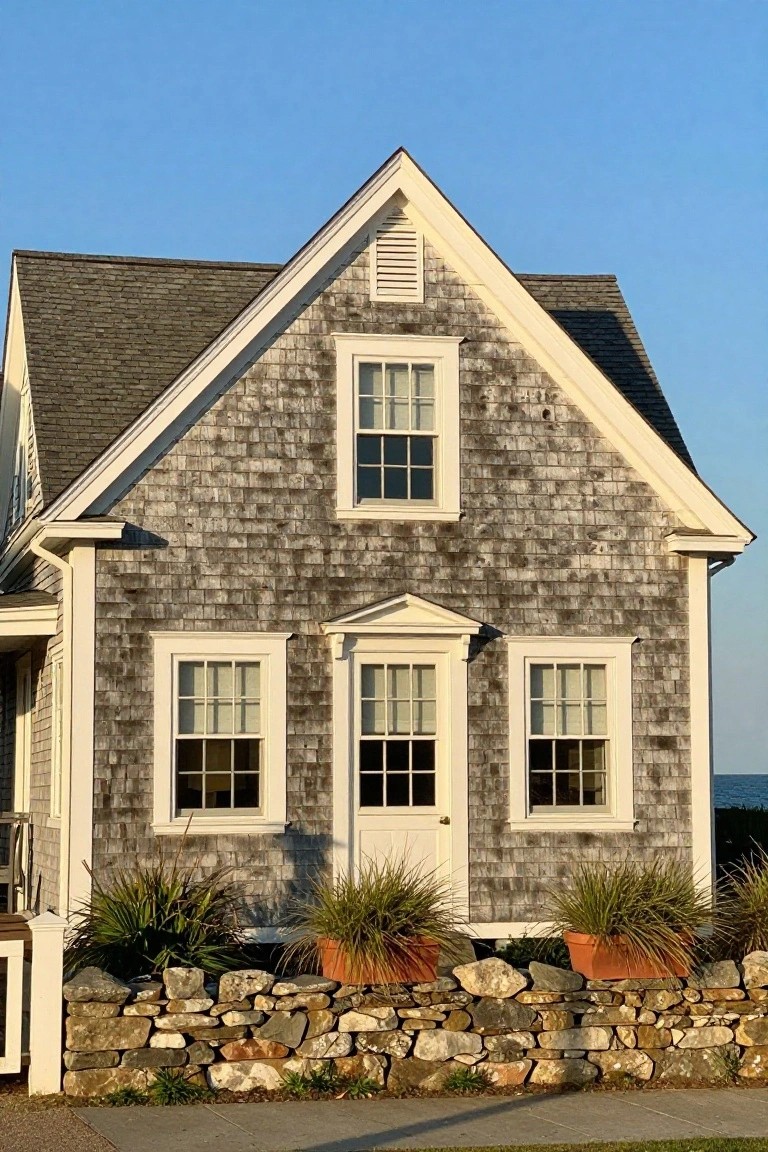
Shingle siding works especially well when it runs up a prominent gable roof like this. The gray cedar shakes give the house a weathered, lived-in feel that fits right into coastal colonial settings. White trim frames the windows and door neatly, keeping things crisp without overdoing it.
You see this a lot on smaller homes near the water, where it holds up to salt air and wind. Try it on a modest two-story facade, maybe with a low stone wall out front to tie it to the ground. Just make sure the shingles are untreated for that natural patina over time.
Symmetrical Gable Roof Facade
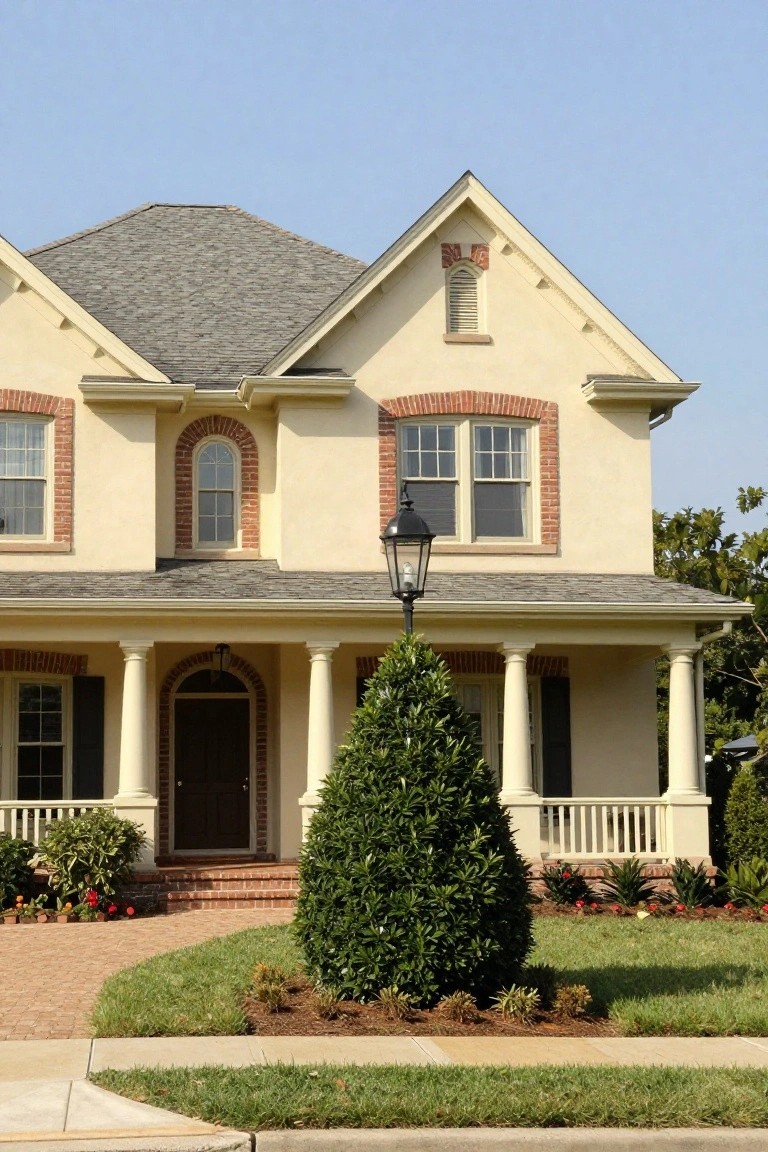
A symmetrical gable roof like this one pulls the whole front of the house together in a classic Colonial way. The central gable sits right over the entry, with side gables keeping things even on both sides. Brick accents around the windows and archways add just enough detail to the light beige siding, making it feel traditional but not fussy.
This setup shines on two-story homes in family neighborhoods. It boosts curb appeal from the street and pairs well with a simple porch. Stick to neutral siding colors so the roofline stays the focus, and watch the scale if your lot is narrow.
Raised Gable Roof Colonial with Garage Below
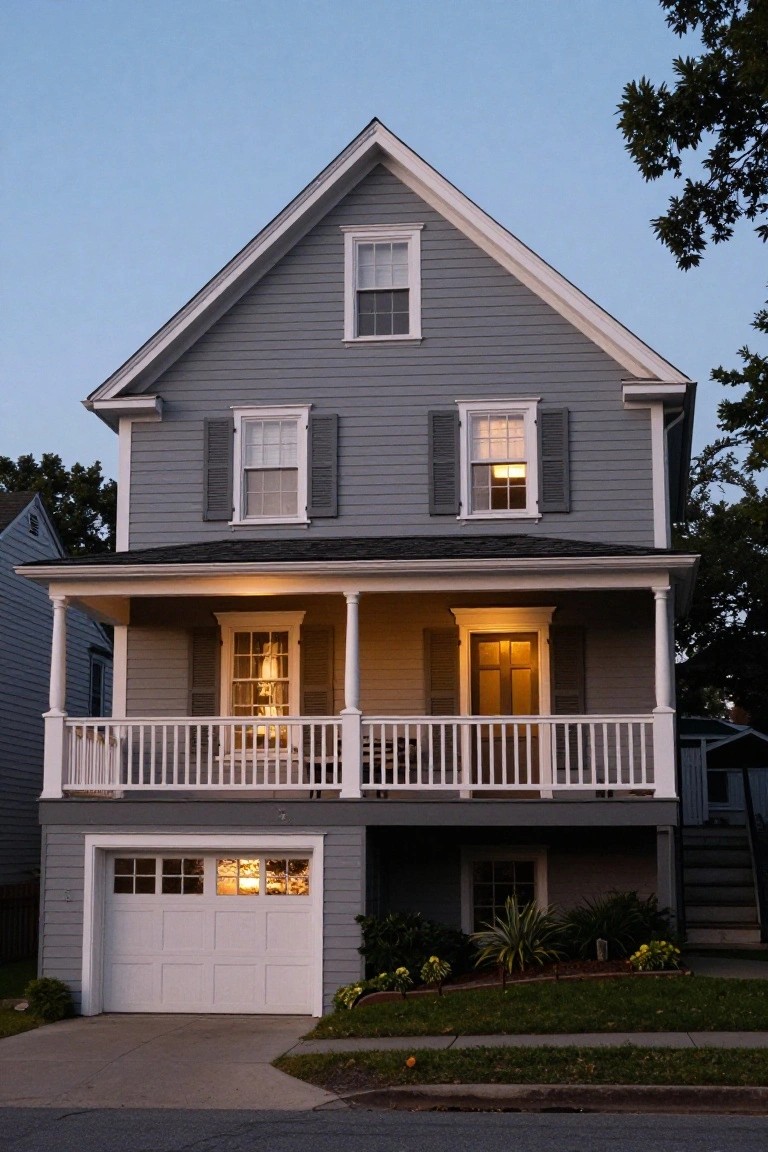
This design lifts the main house up on a raised foundation. That puts the garage right underneath without messing up the clean lines of the gable roof and porch. You get that classic colonial look with the steep gable front, gray siding, and white shutters. The porch wraps around just enough to feel welcoming. Warm lights from the windows and garage at dusk make it stand out on the street.
It works best on sloped lots or where space is tight. Keeps the front focused on the architecture instead of a bulky garage sticking out. Go for clapboard siding in a soft gray like this. White trim pops nicely. Just make sure the stairs to the garage don’t take over the yard. Fits older neighborhoods well.
Classic Gable Entry on a Compact Colonial
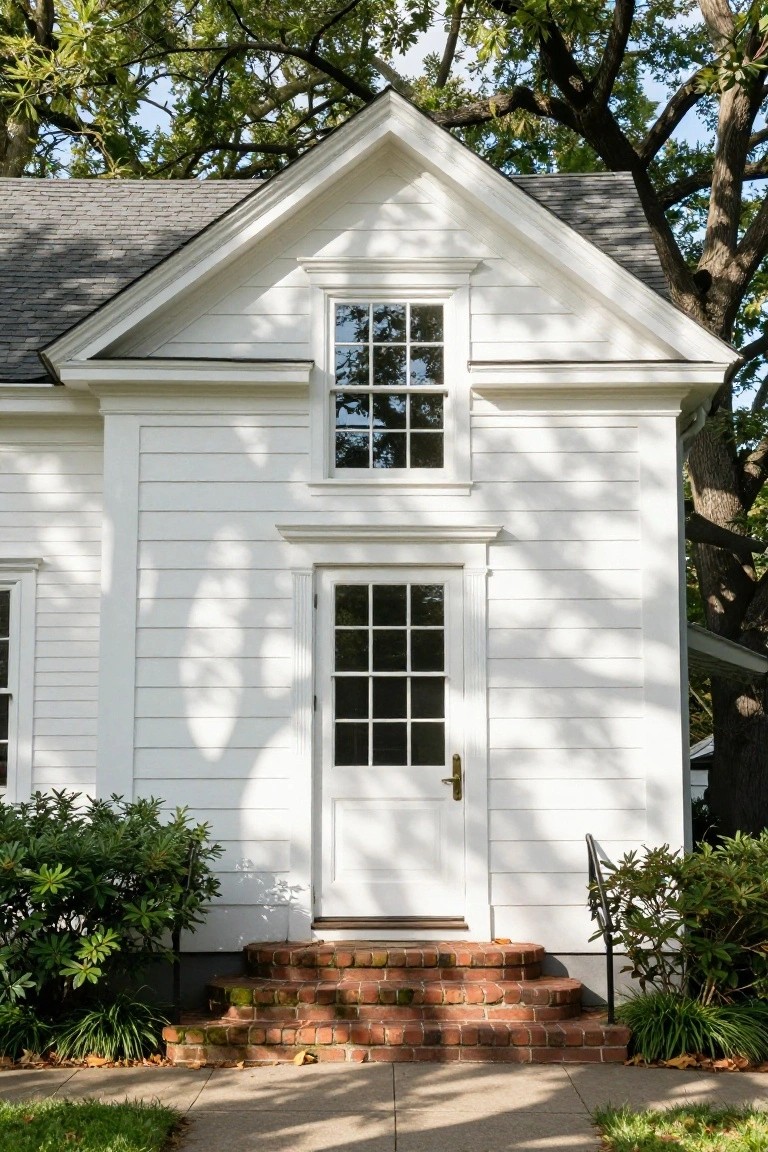
A gable roof right over the front door gives this small white house a clean, traditional lift. Crisp clapboard siding in bright white sets off the gray shingles and lets sunlight flood through the nine-pane windows. Brick steps lead straight up to the glass-paneled door. It’s a straightforward way to make the entry feel like the heart of the house without any fuss.
This design fits best on cozy cottages or starter homes where you want Colonial charm on a modest scale. Keep the gable proportions tight to avoid overpowering the facade. Pair it with simple shrubs on either side for a finished look… and it holds up well in shady spots under big trees.
Green Shutters on White Siding
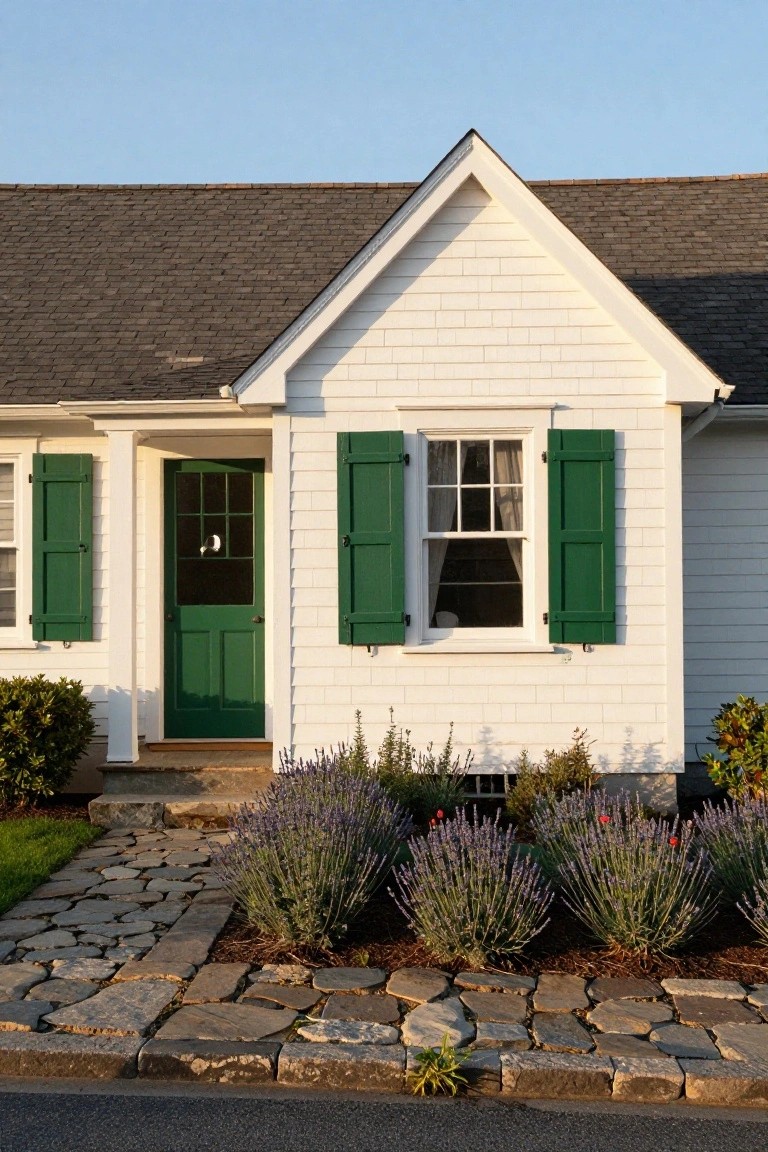
A simple gable roof over white clapboard siding gets a fresh pop from green shutters and a matching front door. That green pulls your eye to the entry without overwhelming the clean lines. It’s a straightforward way to nod to Colonial style that feels right at home in coastal or country settings.
Try this on compact houses where you want curb appeal that lasts. Keep the landscaping basic, like low lavender along a stone path, so the house stays the focus. Just make sure the green shade isn’t too bright, or it can clash in shady spots.
Brick Colonial with Symmetrical Gable Roof
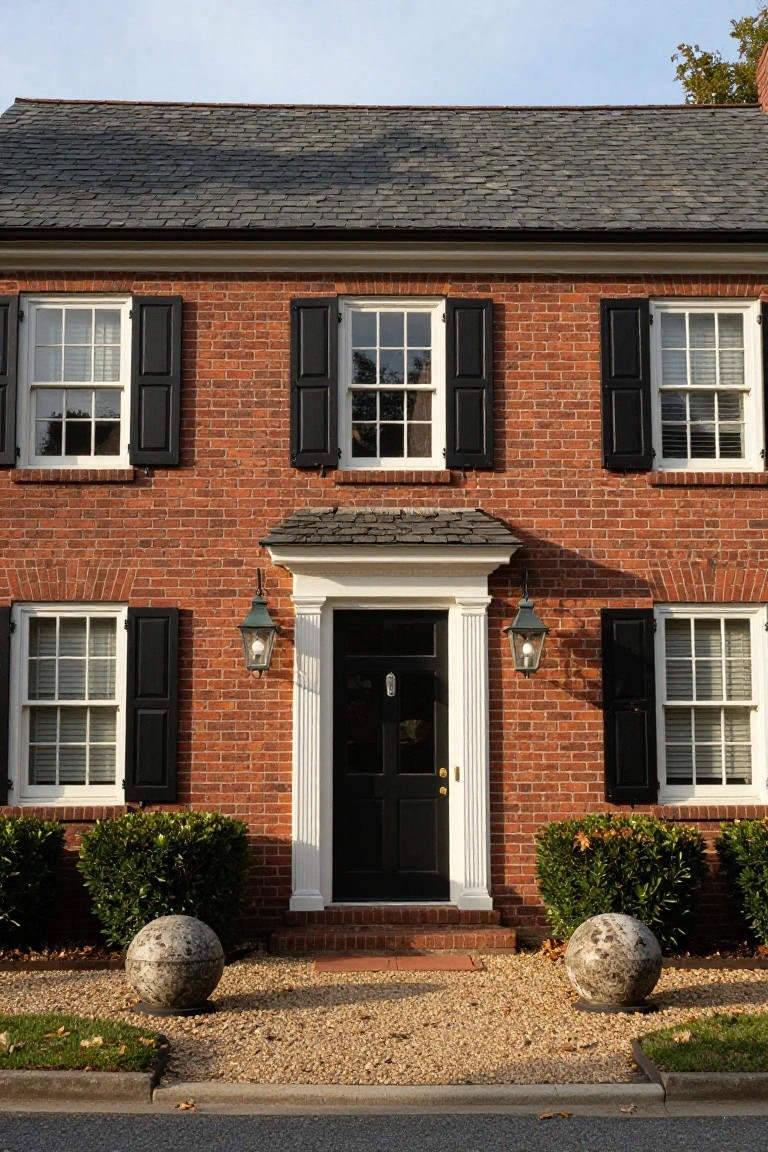
A classic take on Colonial style comes through in this brick house topped with a slate gable roof. The red brick walls pair nicely with black shutters on the double-hung windows, all lined up evenly across the facade. That centered black door under a simple portico pulls it together, making the whole front feel balanced and solid.
This setup suits older neighborhoods or any spot where you want curb appeal without fuss. Go for similar lanterns on either side of the door to light up evenings. Frame the entry with low boxwoods and a couple stone spheres like these… keeps things neat and lets the house architecture do the main work.
Shingled Siding on a Gable Roof Cottage
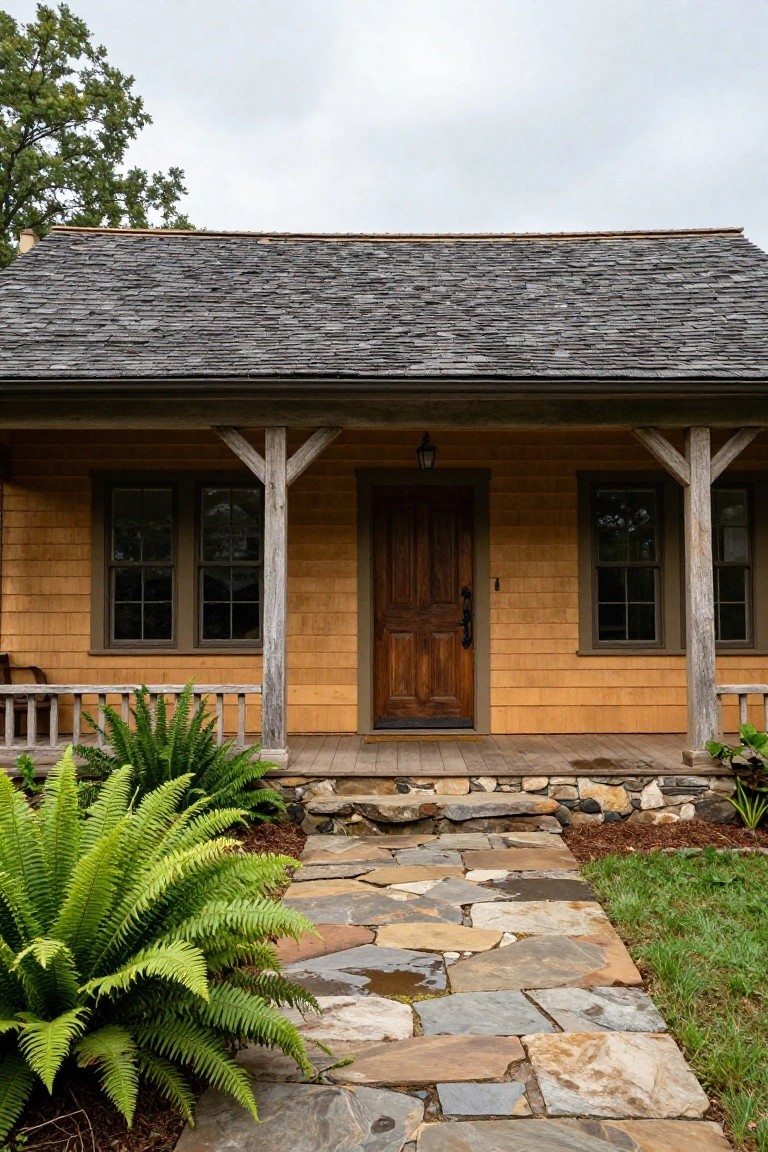
Shingle siding in a warm ochre tone covers this gable roof cottage, paired with a dark slate roof that adds some weight up top. The heavy timber posts on the porch frame the entry without overwhelming the simple lines. It’s a look that feels settled and classic, like an old house that’s been there forever.
This setup suits homes in rural or wooded spots where you want curb appeal without too much fuss. Use wider shingles for texture, and keep the porch open to let light in. Skip it if your lot is tight on space, since the posts need room to breathe.
Classic Gable Roof with Front Porch
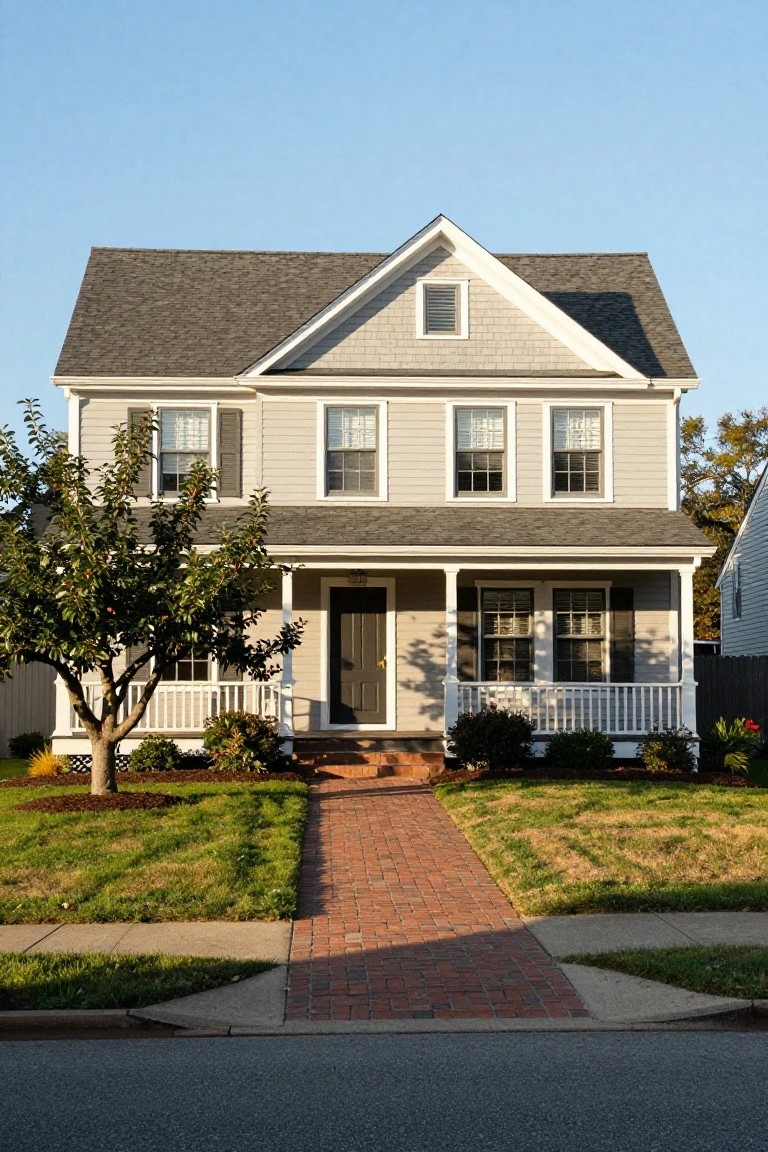
A front porch like the one on this gable roof Colonial pulls the house together in a way that feels right for everyday living. The white railing and columns pop nicely against the light gray siding. It gives the place a steady, welcoming look without trying too hard.
This setup suits most suburban lots where you want shade at the entry. Run a brick path straight from the sidewalk like here. It keeps foot traffic clear and adds some color. Watch the scale though. Too big a porch can overwhelm a smaller gable front.
Gable Roof Over Columned Porch
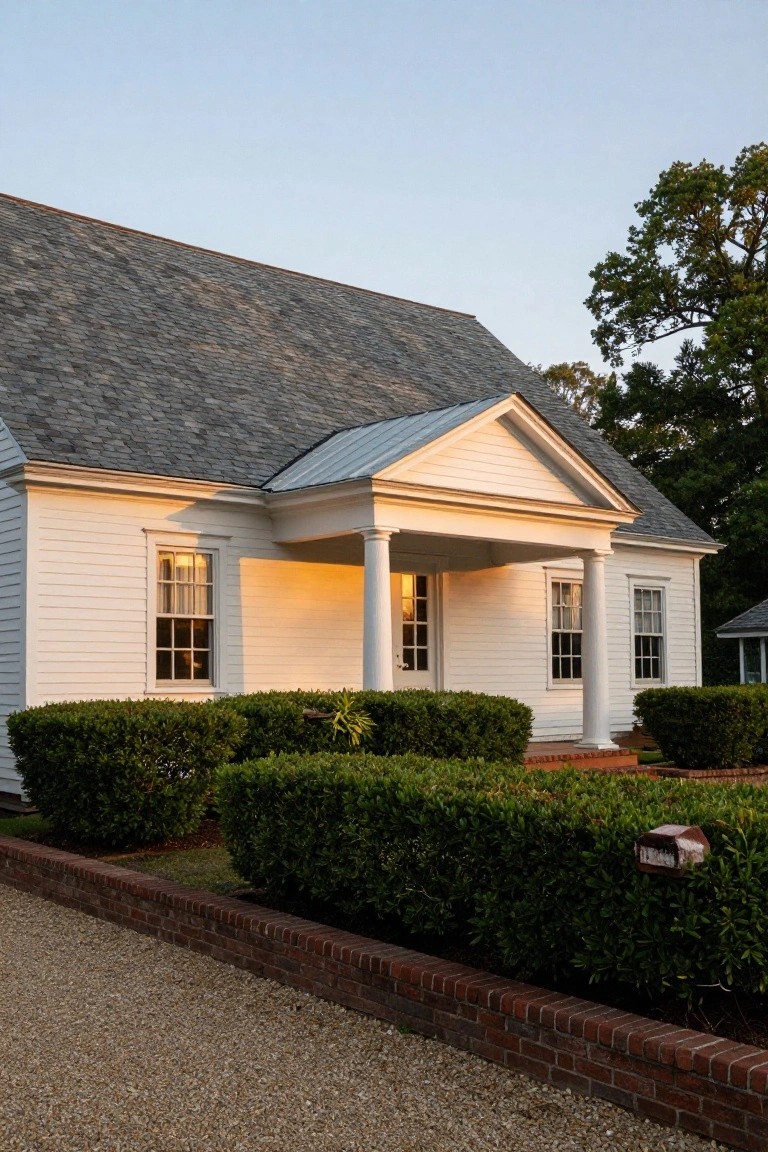
A gable roof pitched just right over a columned porch gives a colonial house that steady, rooted look. Here the gray slate tiles meet a metal pediment at the peak, tying right into the white clapboard siding below. It pulls the eye up without overwhelming the front, and those simple columns keep the entry feeling open and neighborly.
This setup suits older neighborhoods or smaller lots where you want classic lines without too much fuss. Frame it with low boxwoods along a gravel drive, like this one, to ground the base. Skip anything too busy on the porch itself. Keeps maintenance low too… just paint the siding every few years.
Standing Seam Metal Gable Roof
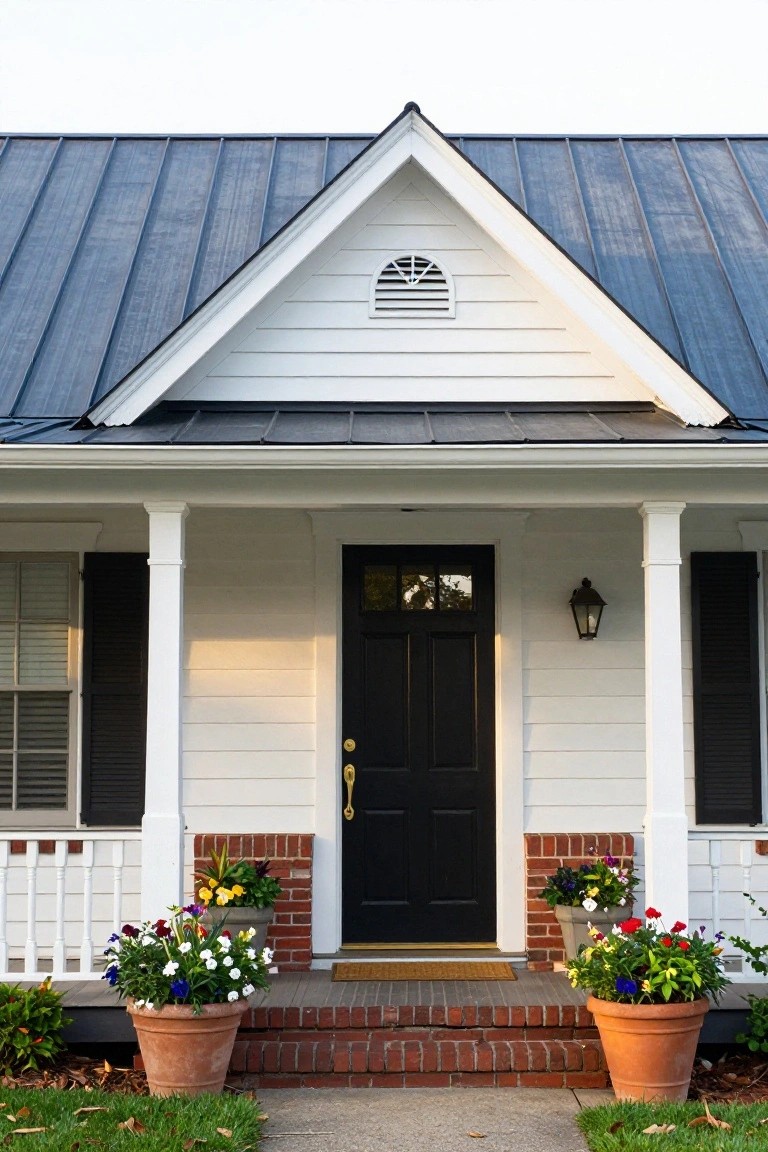
A standing seam metal roof on the gable end brings a clean, modern touch to this Colonial front. The dark blue-gray panels stand out against the white clapboard siding and create a sharp roofline that ties into the simple gable vent. It’s durable too. Metal roofs like this hold up well in rain and handle coastal weather without much upkeep.
This look fits older homes looking for a quiet update without losing that classic shape. Go for it on a house with a porch and dark entry door. The brick steps here add some warmth at the base. Just make sure the seams are vertical for that sleek run up the gable.
Half-Timbered Gable Ends
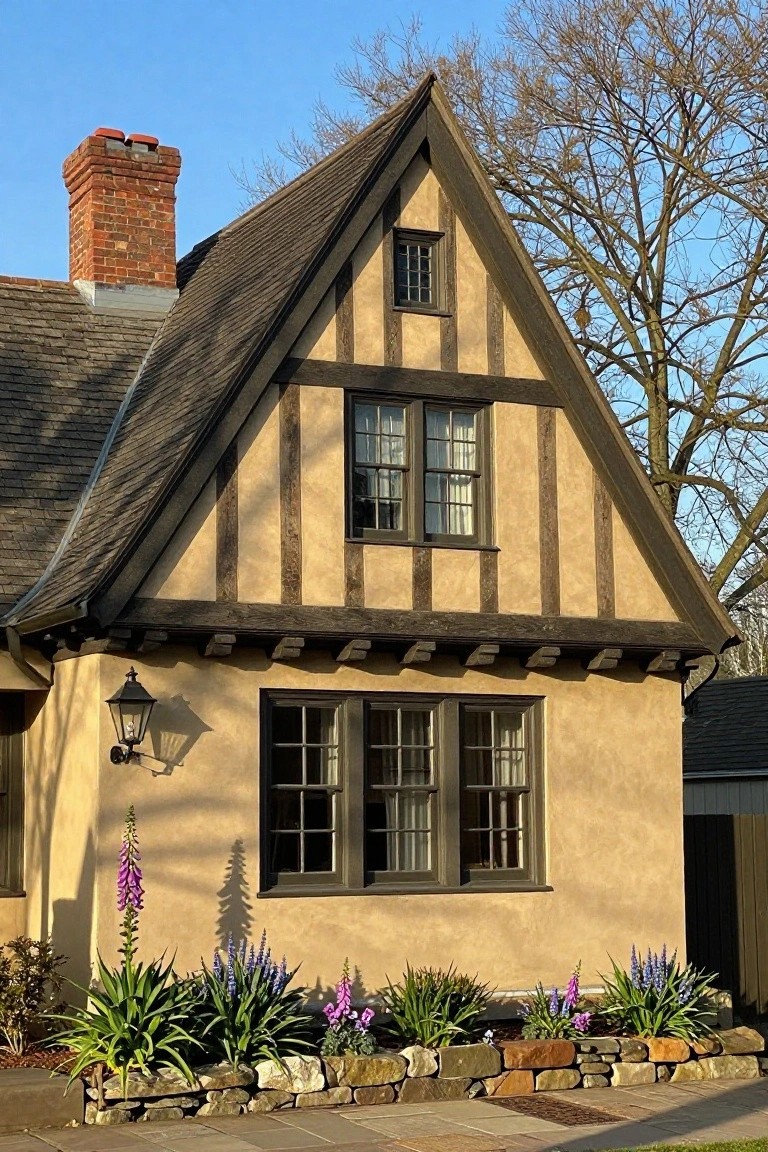
Dark timber beams over stucco walls make this gable end stand out. They create that sturdy, old English look on a simple house shape. The steep roof pitch pulls it all up nicely, and the multi-pane windows fit right in without much extra detail.
This works best on cozy homes in older neighborhoods. Use it for a front-facing gable to boost curb appeal. Keep plantings low like foxgloves along the base so the framing stays the focus. Avoid big modern additions that fight the style.
Frequently Asked Questions
Q: Can I add gable details to a non-Colonial house without it looking off? A: Gable accents fit surprisingly well on ranch or Cape Cod homes. Pick subtle cross gables that echo Colonial lines. They bridge styles nicely.
Q: How do I pick the right gable size for my two-story Colonial? A: Eyeball it against your house’s proportions first. Aim for gables that hit about one-third the roof height to keep balance. Sketch a few options on paper.
Q: What maintenance keeps these gable roofs looking sharp year-round? A: Clear debris from gutters twice a year… …it stops water damage fast. Repaint trim every few years to fend off weathering.
Q: Do gables handle heavy snow okay? A: They shed snow better than flat roofs. Steep pitches push it right off. Just reinforce rafters if your area gets buried.
