

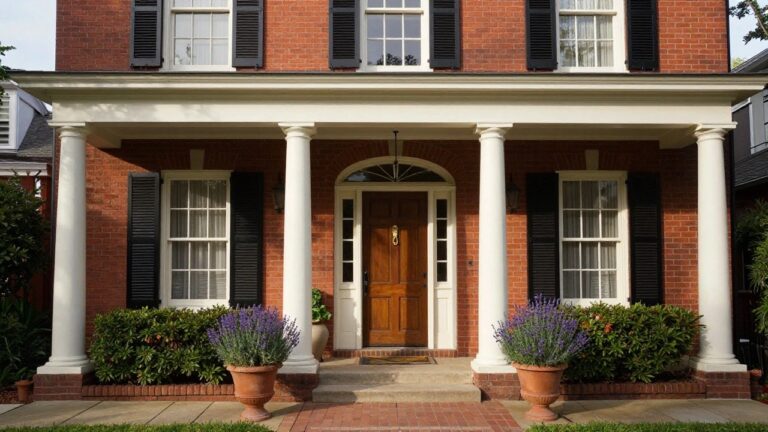
I’ve driven past plenty of colonial homes where the columns at the front door make the whole facade pop from the street.
They frame the entrance so it feels balanced and pulls you in without overwhelming the roofline or siding.
One thing I’ve learned from looking at these up close is that columns work best when their scale matches the house’s proportions and the materials hold up to local weather.
That grand entry vibe comes alive when everything reads cohesive from the curb.
A couple of these examples show tweaks I’d borrow for boosting curb appeal on a real budget.
Columns Frame a Classic Colonial Entrance
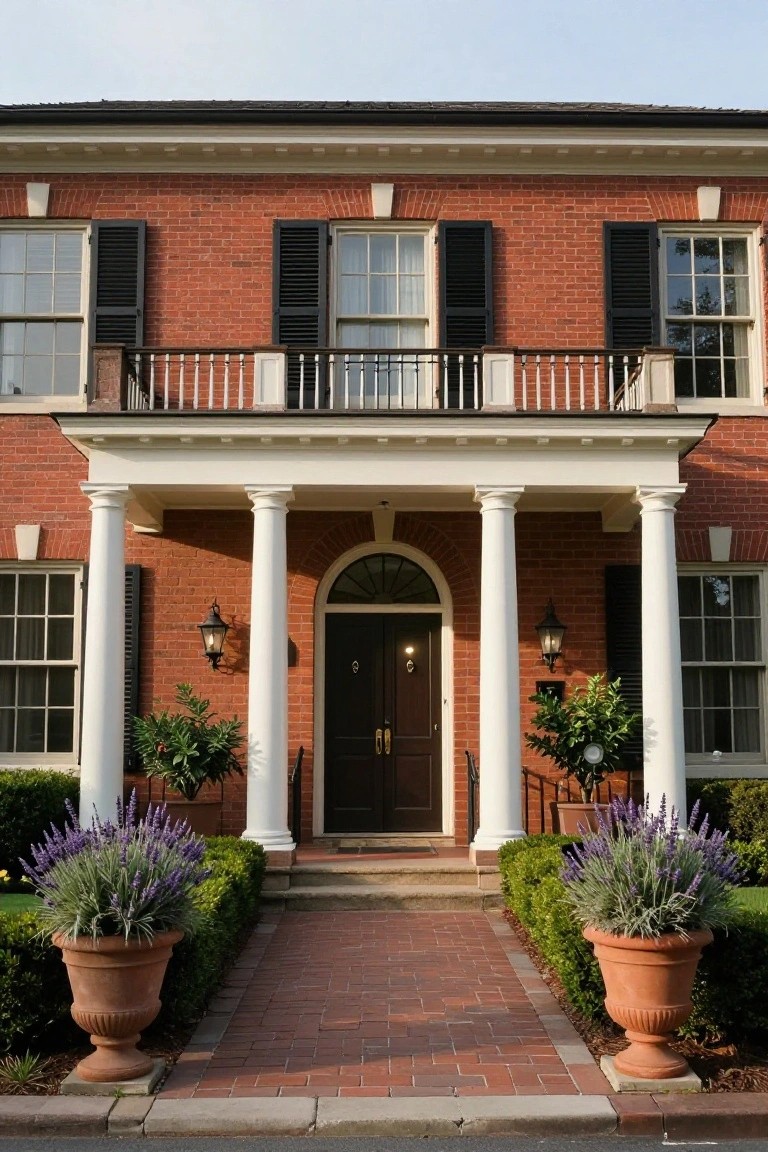
Tall white columns supporting the portico over the front door give this red brick colonial a sense of real arrival. They stand out clean against the brick, drawing your eye right to the dark wood door without much fuss. It’s that straightforward architecture that makes the whole facade feel put-together and inviting.
You see this kind of setup a lot on older homes in the suburbs or historic areas. It works best where you want curb appeal that nods to tradition. Add lanterns on each side and low plants in pots to keep it from feeling stark… scale them right for your house height, though, or it can overwhelm a smaller place.
Recommended Products
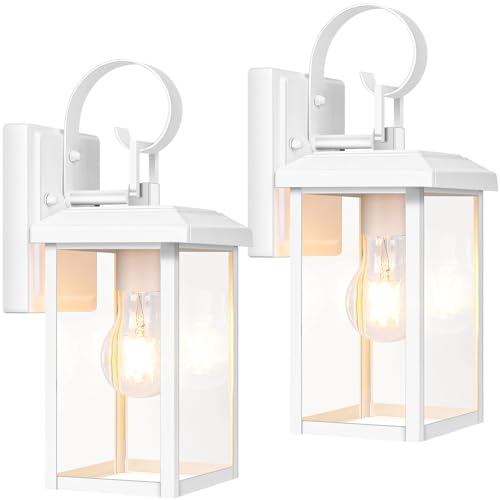
All-Weather Porch Lights: Our outdoor sconce lights are built to last, made with durable metal and tough glass that can withstand any weather condition, from sunny days to snowy nights. Designed with high-quality materials, these outdoor light fixtures ensure long-lasting brightness and resistance to rust and corrosion, maintaining their flawless appearance year after year

Durapoly Post Trim Kits sold separately from posts

◆Specification: Product Size(L*H): 27*88cm/10.63*34.65in; Net Weight: 2.5kg/5.51lbs; Each Bearing Capacity: About 50kg/110.23lb
Porch Columns for a Grand Front Entrance
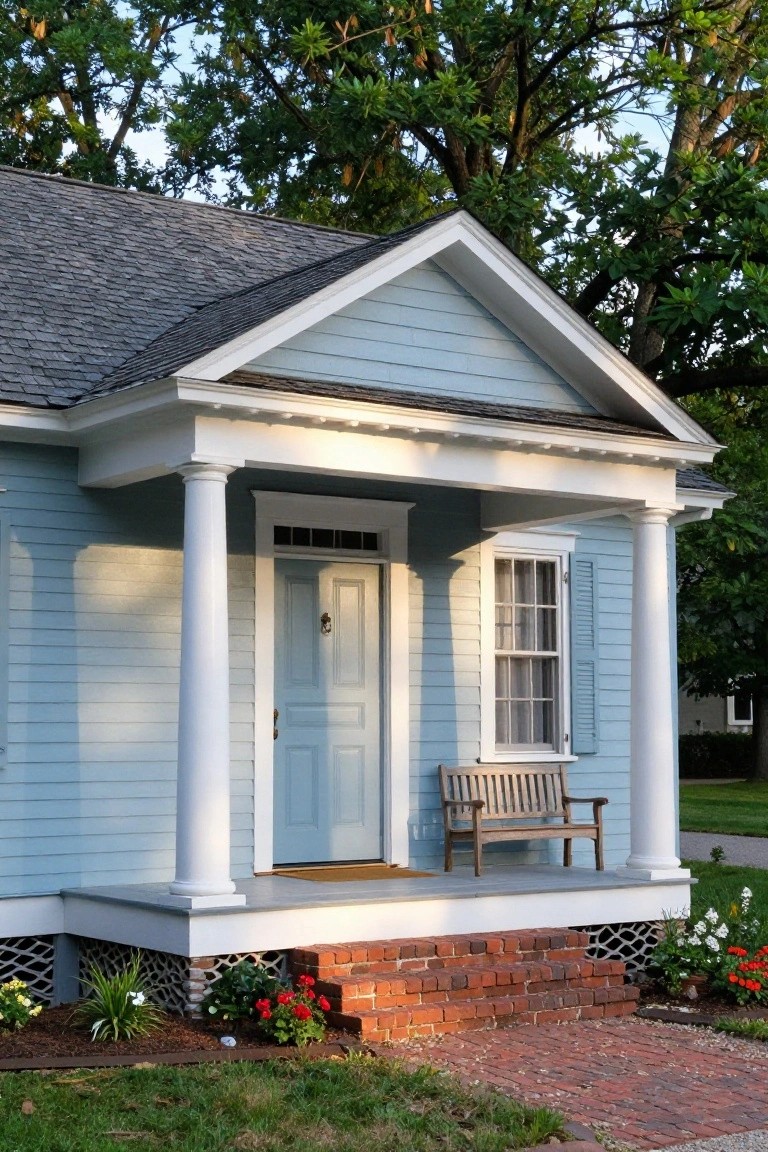
White columns like these turn a simple porch into something with real presence. They frame the door just right and make the whole front of the house feel more balanced and put-together. On this light blue colonial, they stand out clean against the siding, pulling your eye straight to the entry without much fuss.
You can pull this off on most older homes or even new builds aiming for that traditional look. Keep the columns tall and spaced to match your porch width, maybe add brick steps for a grounded feel. It suits spots with a bit of yard space around the front, but watch the scale if your house is really small, columns can overpower quick.
Classic Rounded Portico Entrance
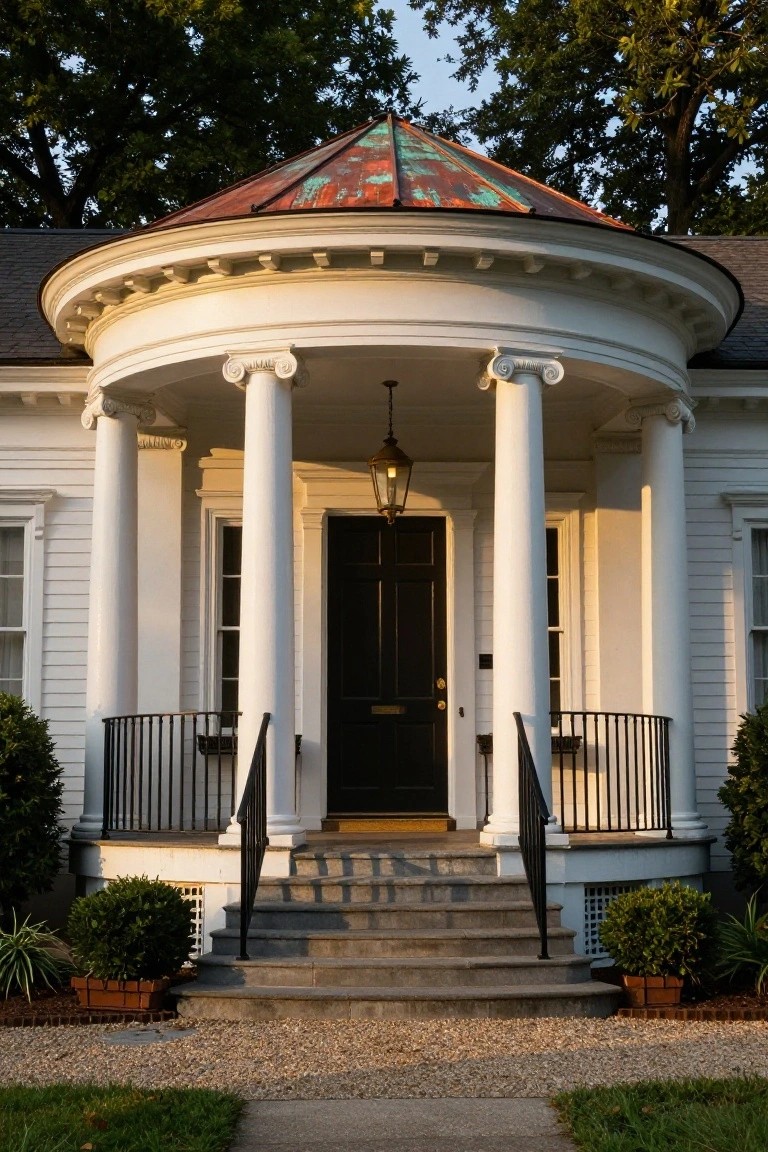
A rounded portico like this one pulls the eye right to the front door. Those tall fluted columns with their scroll capitals hold up a dome roof that’s taken on a nice copper patina, making the whole entry feel solid and timeless. It turns a simple doorway into something that says welcome from the street.
This setup fits older homes or ones aiming for that colonial look, especially where you have room for steps and a path leading up. Paint the columns crisp white against clapboard siding, and let the door stay dark for contrast. Just make sure the roof material can weather well, or it’ll need upkeep down the line.
Porch Columns Frame the Front Door
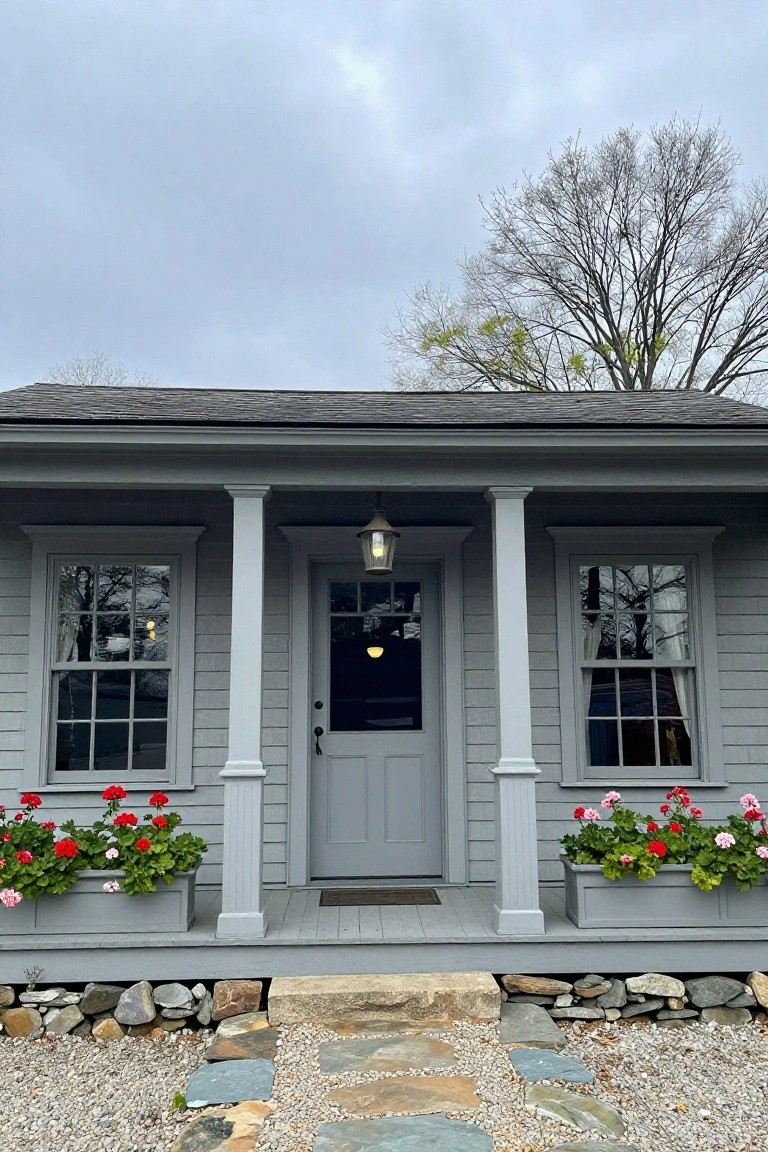
These classic columns on a simple porch give the house a real sense of arrival. They stand tall on either side of the door, making the entrance feel important without overwhelming the small scale of the place. Paired with a hanging lantern and those flower boxes full of red geraniums, it pulls everything together into a welcoming spot that says colonial charm.
You can pull this off on a modest house like this one, especially if you’re going for curb appeal on a budget. Stick to white columns against gray siding for that crisp look, and keep the porch plain. It works best on homes with some overhang for shelter. Just make sure the columns are sturdy, not just decorative.
Columned Portico Entry
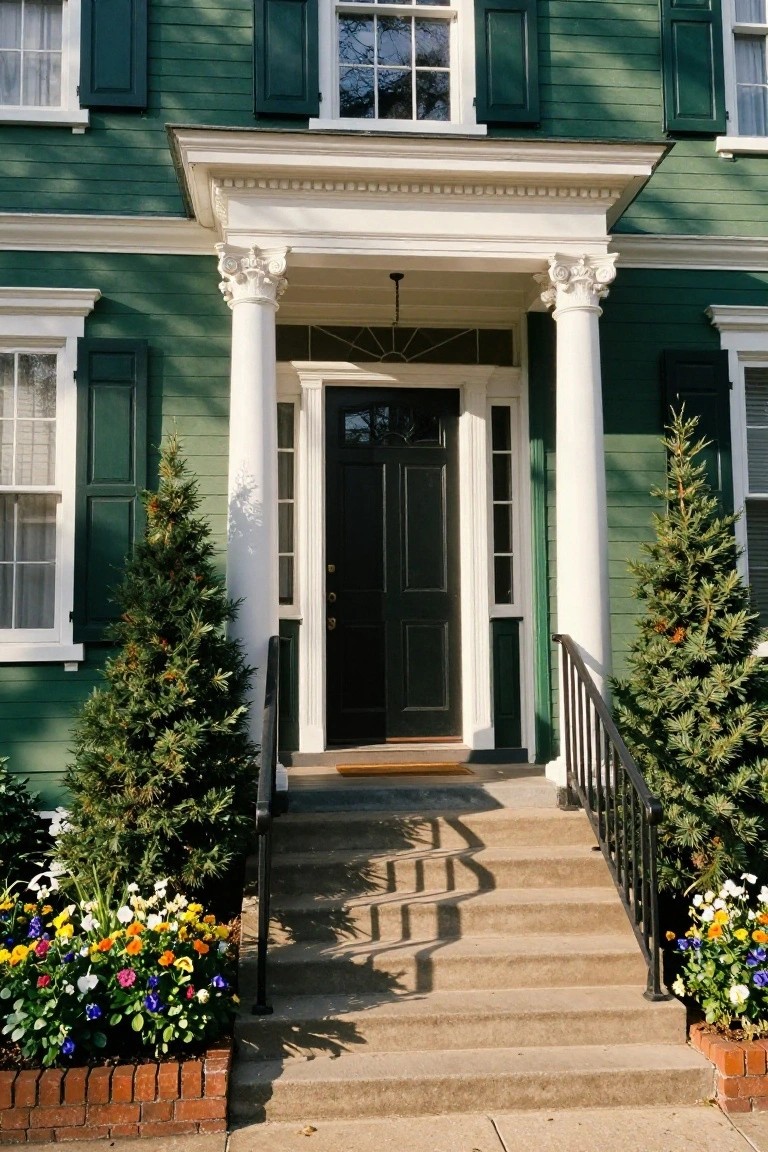
A simple portico held up by a pair of white columns gives this colonial house a real sense of arrival. The fluted columns match the classic style, and they stand out clean against the dark green siding. It pulls everything together at the front door without much fuss.
This setup works well on homes from the 1800s or newer builds aiming for that traditional look. Keep the columns proportional to your house size, and add symmetric plants like those evergreens on the sides for balance. It boosts curb appeal on a street of plain facades.
Columns Frame a Classic Front Entrance
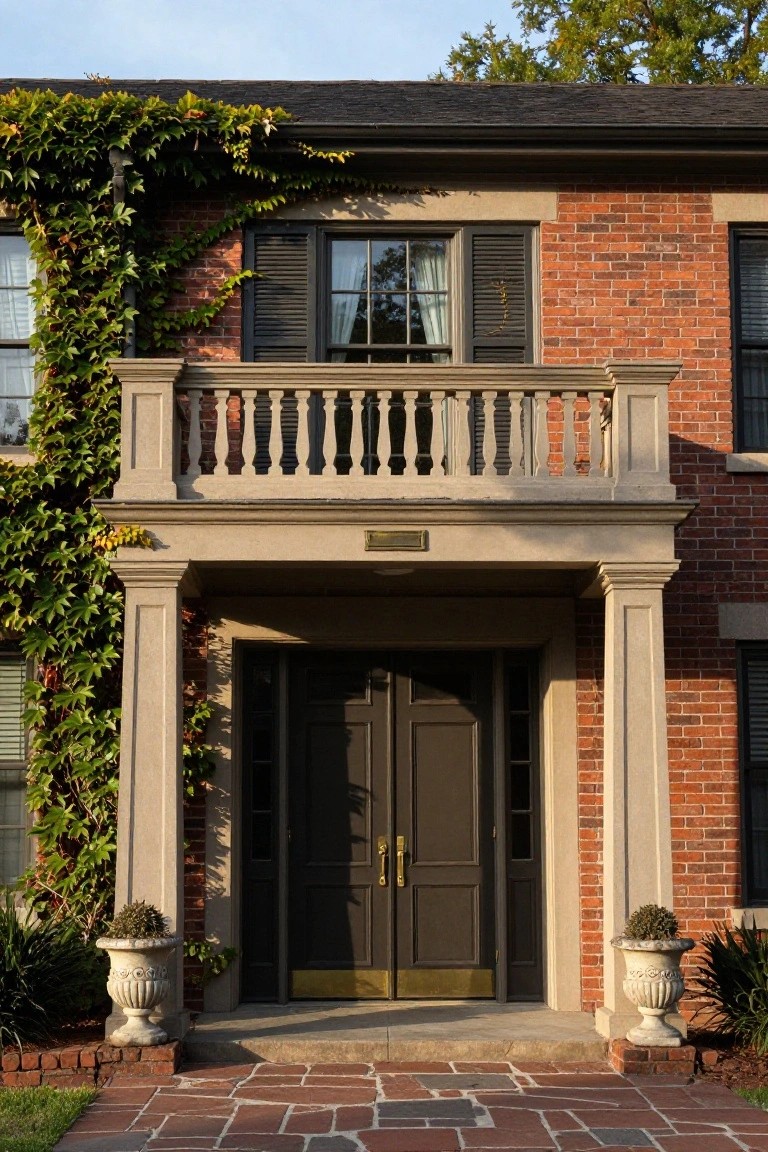
Tall stone columns flanking the double doors give this colonial house a solid, welcoming entry that feels timeless. The light beige stone picks up on the trim while standing out against the brick walls. Ivy nearby softens things up a bit. It’s a simple way to add presence without extra fuss.
This works best on two-story brick homes where you want curb appeal that nods to tradition. Scale the columns to match your door height, and keep plantings low-key like those urns. Skip it if your facade is too modern, though. It suits older neighborhoods fine.
Porch Columns Framing the Front Door
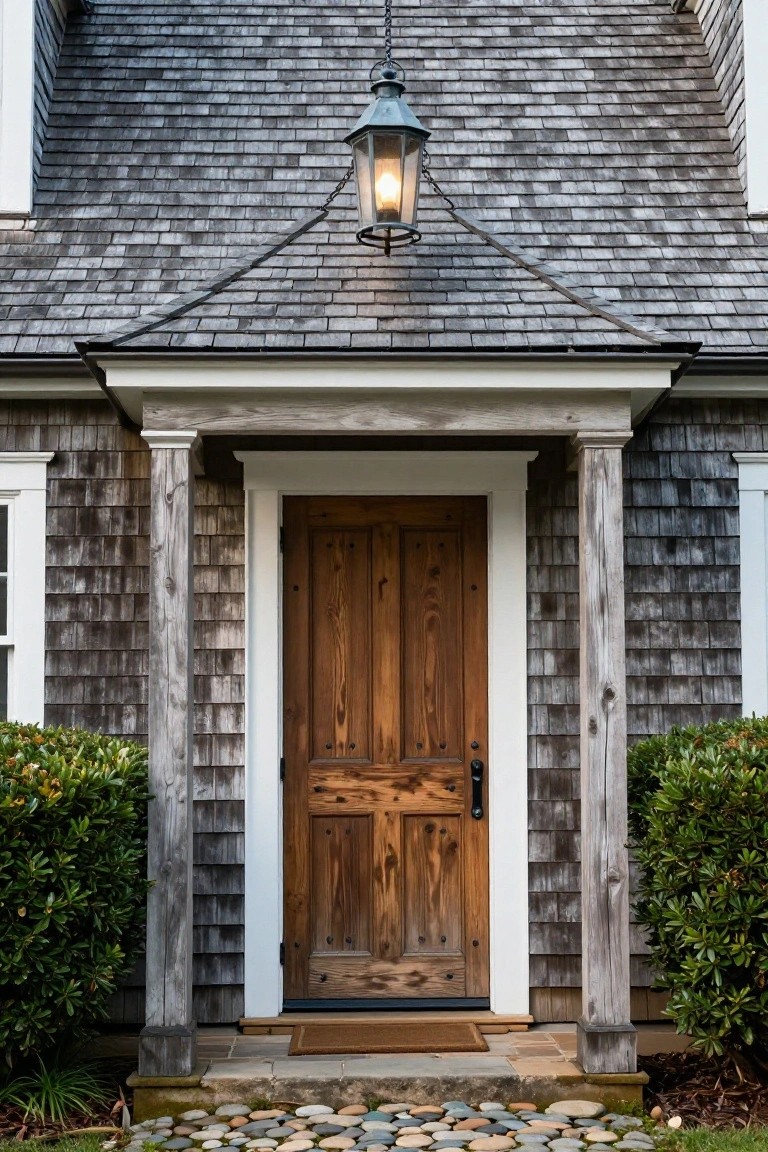
Columns like these give a colonial house that solid, welcoming entry feel. They stand on either side of the wooden door, tying into the shingle siding without overwhelming the simple lines. A hanging lantern above pulls it all together at night, making the porch step up from plain to something you notice right away.
You can pull this off on older homes or new builds aiming for that classic look. They suit coastal spots especially, where the weathered wood ages nicely. Go with paneled doors and keep plantings low around the base. Just don’t overcrowd the porch… space lets the columns do their job.
Porch Columns Frame a Welcoming Entrance
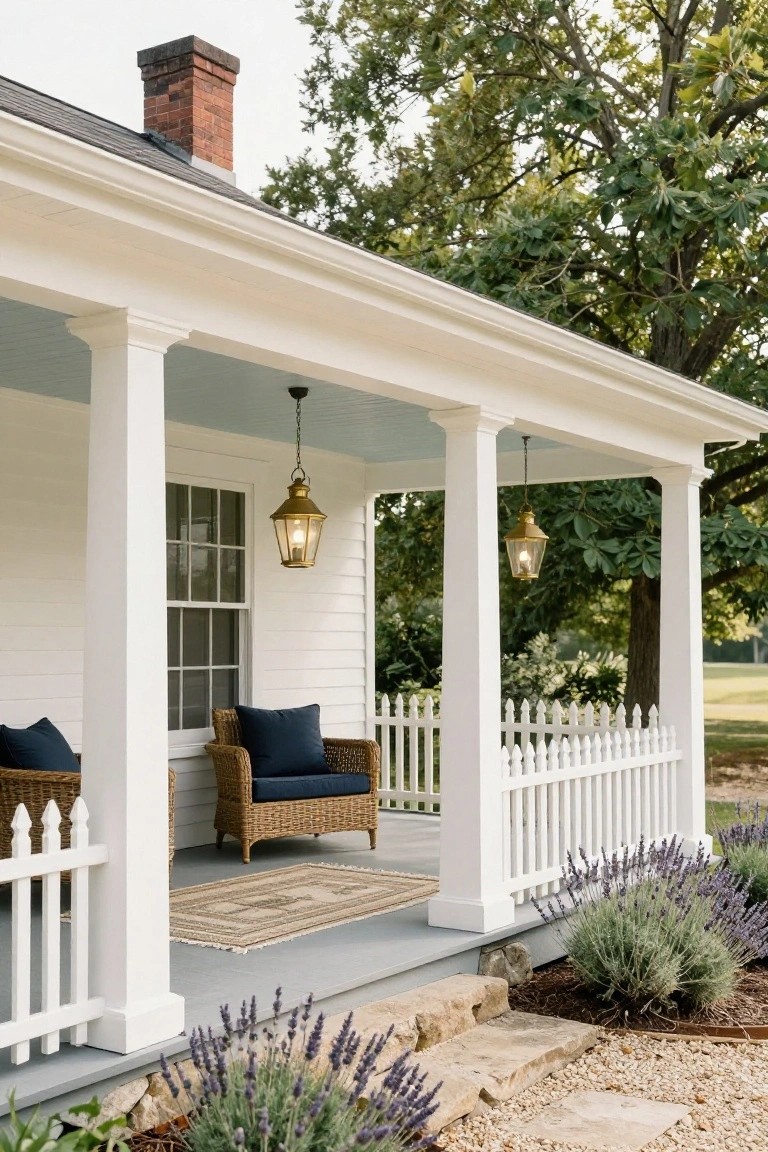
White columns like these give a colonial house that instant sense of place. They hold up the porch roof and pull your eye right to the front door. Paired with simple hanging lanterns, they add just enough detail without overdoing it. It’s a look that feels solid and timeless, especially on a house with clean clapboard siding.
You can pull this off on most front porches over eight feet wide. Keep the columns painted to match the trim, and space them evenly for balance. Add a couple of chairs for everyday use. It works best on homes with some yard space around, so the columns stand out. Skip fancy capitals if your style is more casual.
Grand Columned Entrance on a Colonial Facade
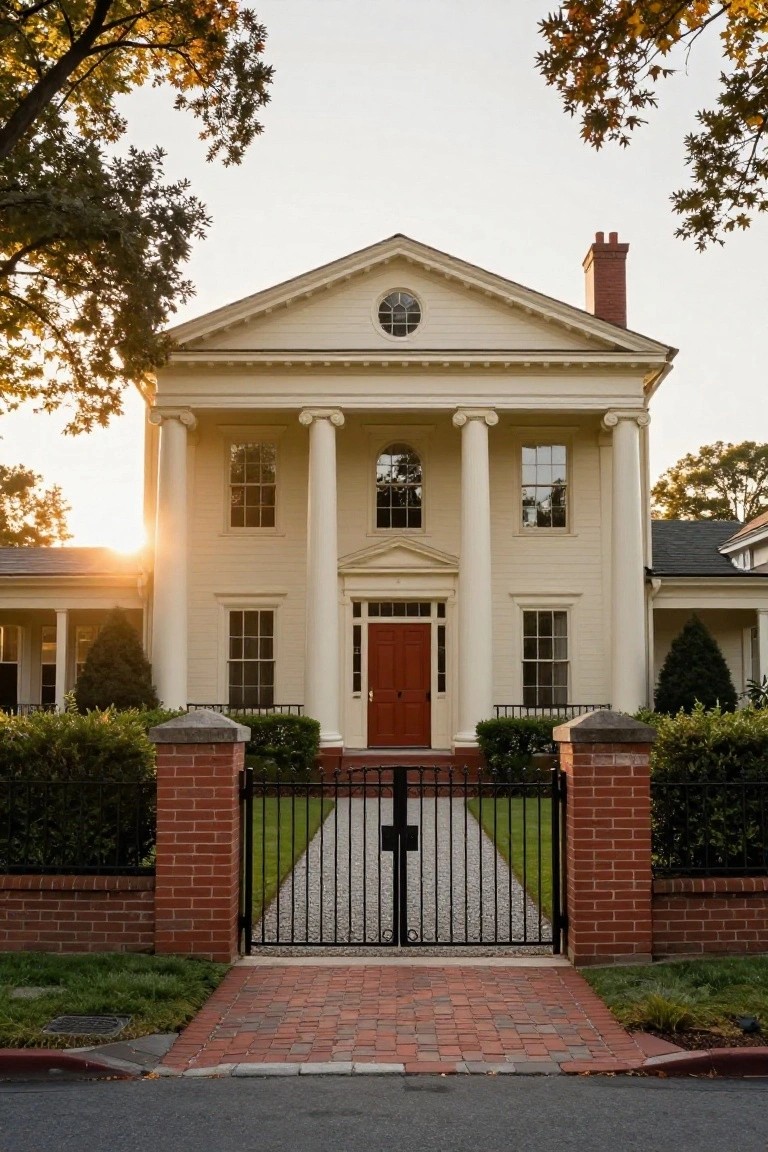
Tall white columns like these give a colonial home that instant sense of arrival. They frame the front door perfectly, making the entry feel important and pulled together. The bold red door adds just enough color to draw the eye without overwhelming the clean lines of the house.
This setup works best on symmetrical homes with light siding, where the columns stand out crisp and bright. Go for fluted details on the columns to keep it traditional, and pair with a contrasting door color for punch. It’s a straightforward way to boost curb appeal, especially if your lot has room for a gated path leading up.
Tall Columns on a Classic Porch
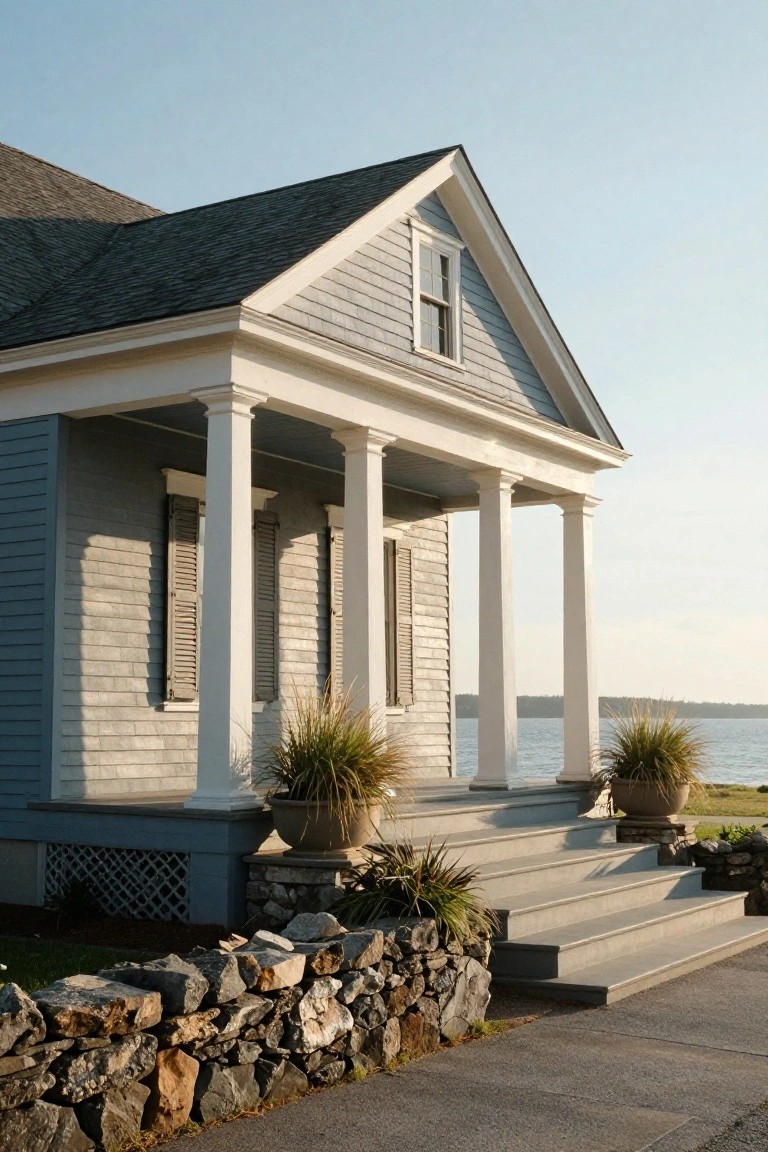
Tall white columns like these give a colonial porch real presence. They stand straight and strong against the soft gray shingles, pulling the eye right to the front door. It’s that simple touch of architecture that makes the whole house feel more established and inviting without much fuss.
You see this work best on homes set back from the road, where the steps can lead you up gradually. Keep the plantings low around the base, like those tall grasses in pots, so nothing blocks the columns. Scale them right for your house size, or they might look too big up close.
Classic Columned Entryway
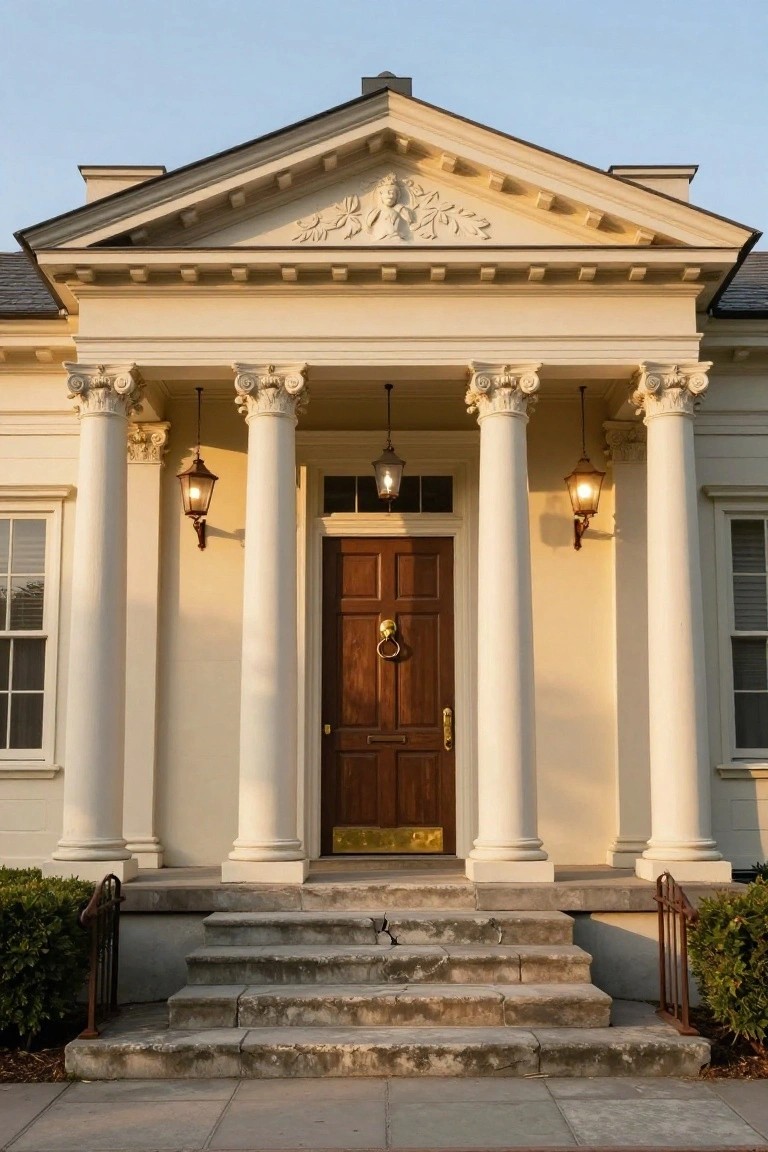
Tall white columns like these give a colonial home instant presence at the front door. They stand symmetrical on either side, with fluted details that catch the eye and pair nicely with lanterns for evening light. It’s a straightforward way to make the entrance feel important without much fuss.
This setup suits older style houses or revivals in town neighborhoods. Go for stone steps leading up to keep things solid underfoot, and pick a rich wood door for contrast against the pale walls. Just make sure the columns are proportional to your home’s scale so they don’t overwhelm.
Columns Frame a Grand Front Entrance
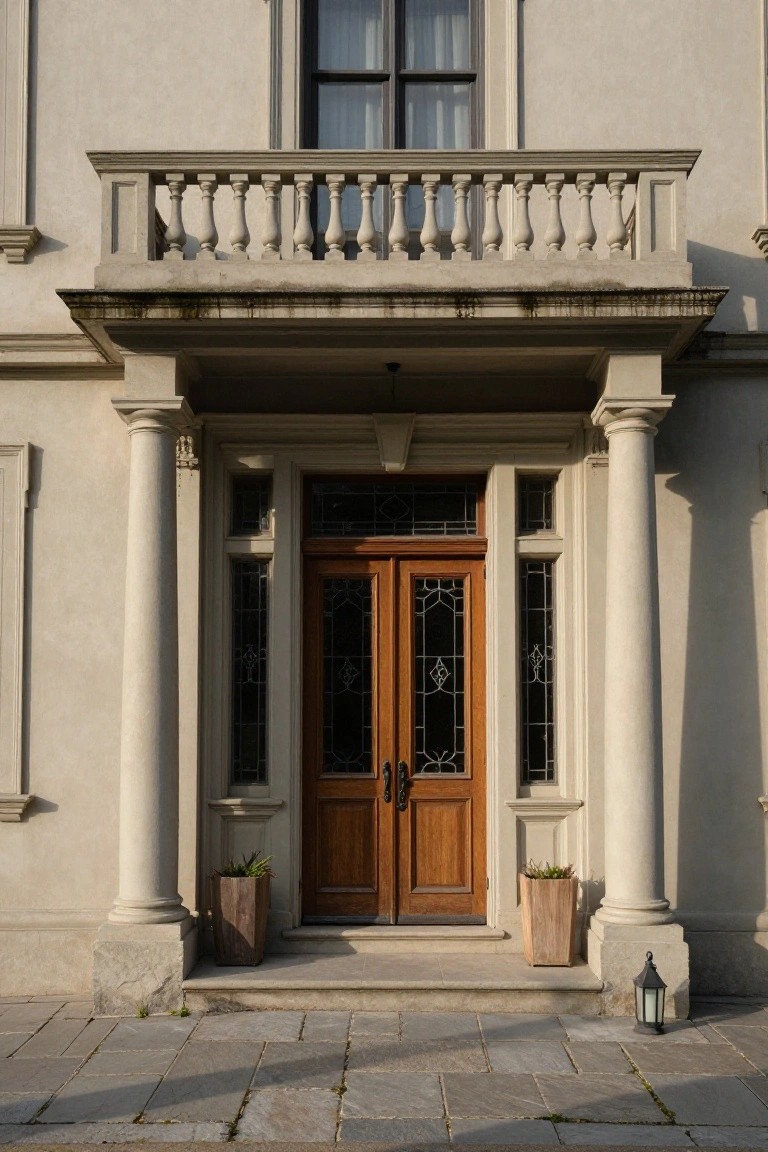
Tall fluted columns like these stand on either side of the entry, holding up a balcony and drawing your eye right to the double wooden doors. The stained glass in the panels adds a touch of detail without overdoing it. It’s a straightforward way to give a house that classic, important feel at the front.
This works well on homes with some height, like two-stories, where the columns can really show off. Keep the plants simple, maybe just a couple pots by the steps, and skip busy landscaping so the architecture stays the focus. On a colonial-style place, it makes arrivals feel special every time.
Classic Columned Portico Entrance
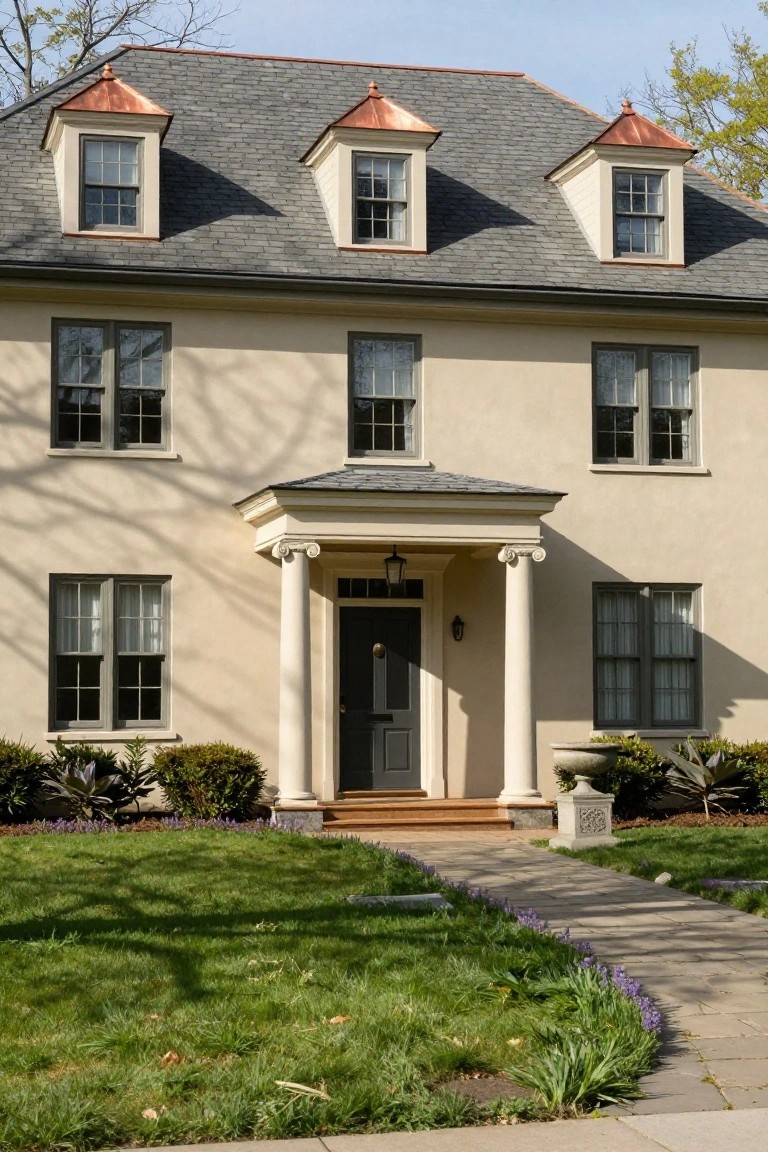
A columned portico like this one takes a simple colonial front door and turns it into something special. The fluted columns support a small roof over the entry, drawing your eye right to the dark door below. It fits the beige siding and slate roof without competing for attention. That setup feels balanced and welcoming from the street.
You see this on older homes or revivals in the suburbs. It works best where you want formal curb appeal but keep things practical. Pair it with a few shrubs along the base, and add wall lanterns for night. Just make sure the columns match your roof pitch so nothing looks off.
Porch Columns Frame the Entry
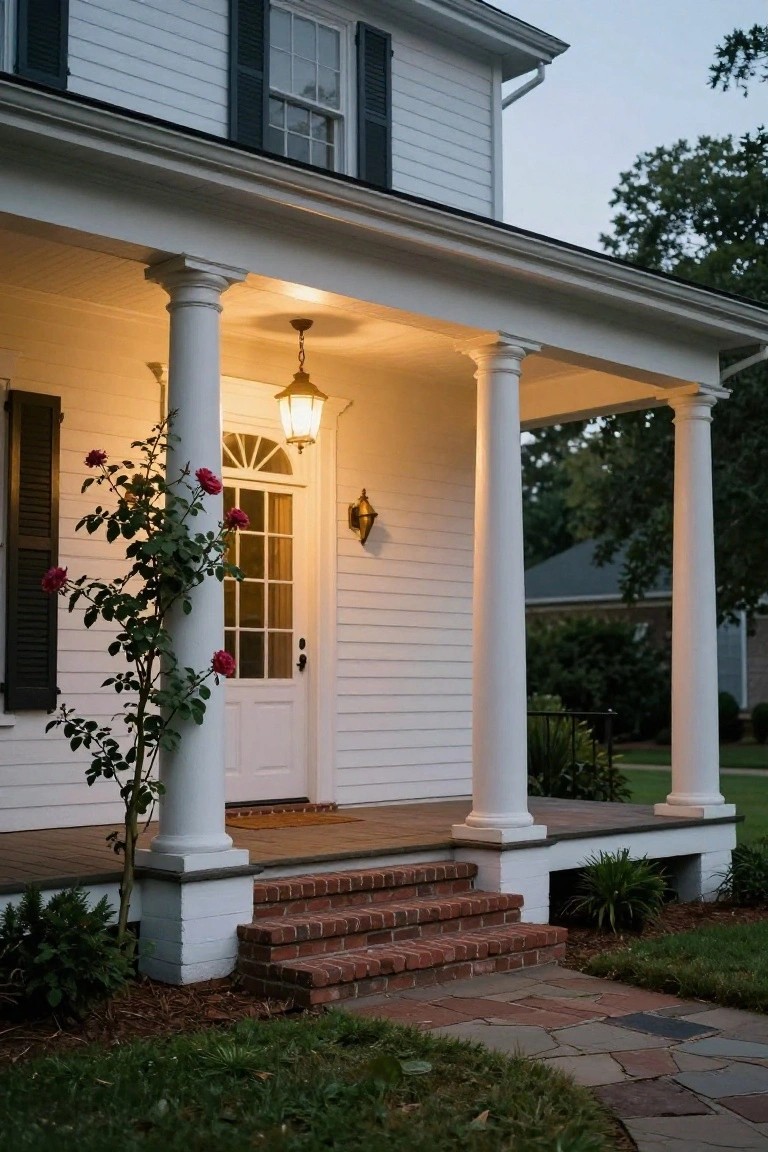
Tall white columns on a front porch like this one give a colonial house instant presence. They support the roofline nicely and pull focus to the door without trying too hard. A pair of lanterns lights up the space just right, and some climbing roses add a soft touch along one side.
This setup suits symmetrical homes with good setback from the street. Go for columns that match the house height, maybe eight to ten feet tall for balance. Keep the paint fresh, white against light siding, and skip too many plants so the architecture stays clear.
Classic Portico Entrance
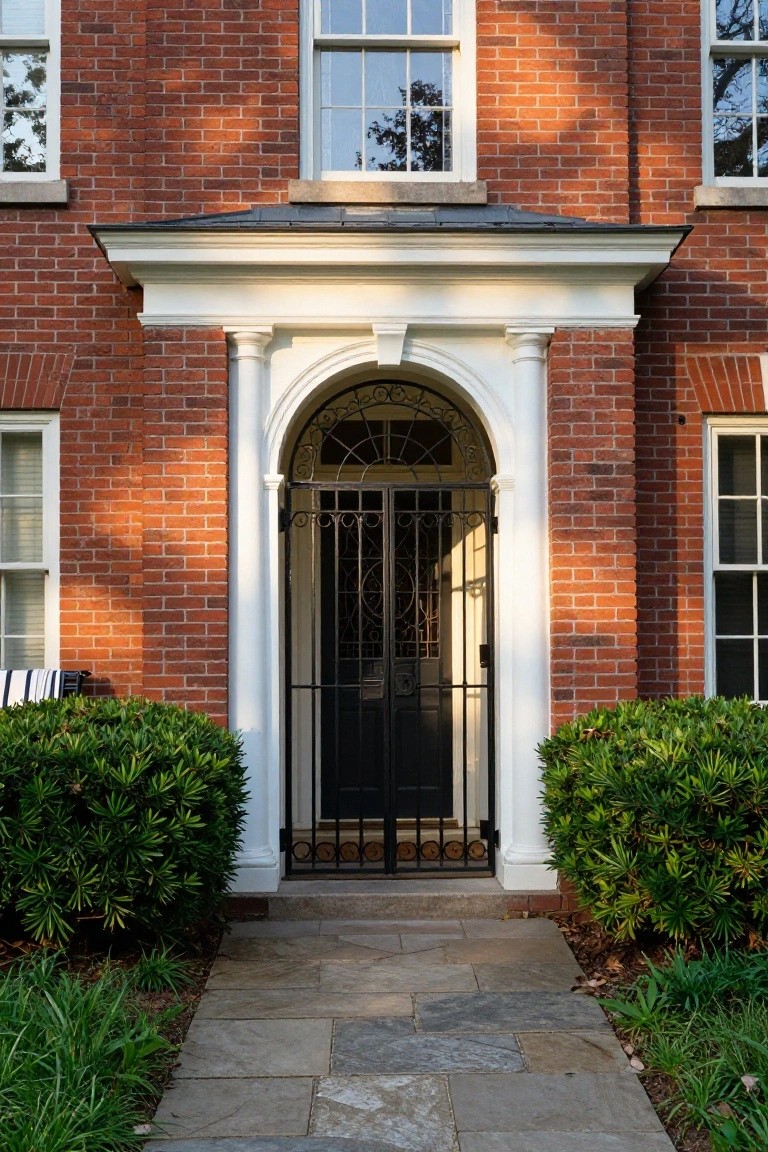
This setup uses a white portico with columns and an arched wrought iron gate to make the front door feel important right away. On a red brick house like this one, it adds that formal touch without overdoing it. The gate lets in light but keeps things secure, and the arch pulls your eye straight to the entry.
You can pull this off on most Colonial or traditional homes, especially where the brick needs a bit of contrast. Keep the gate simple with scrolls, not too busy, and add low boxwoods on the sides for balance. It works best on a walkway like this stone path. Just make sure the columns match the house scale so it doesn’t look tacked on.
Columned Portico for a Welcoming Entry
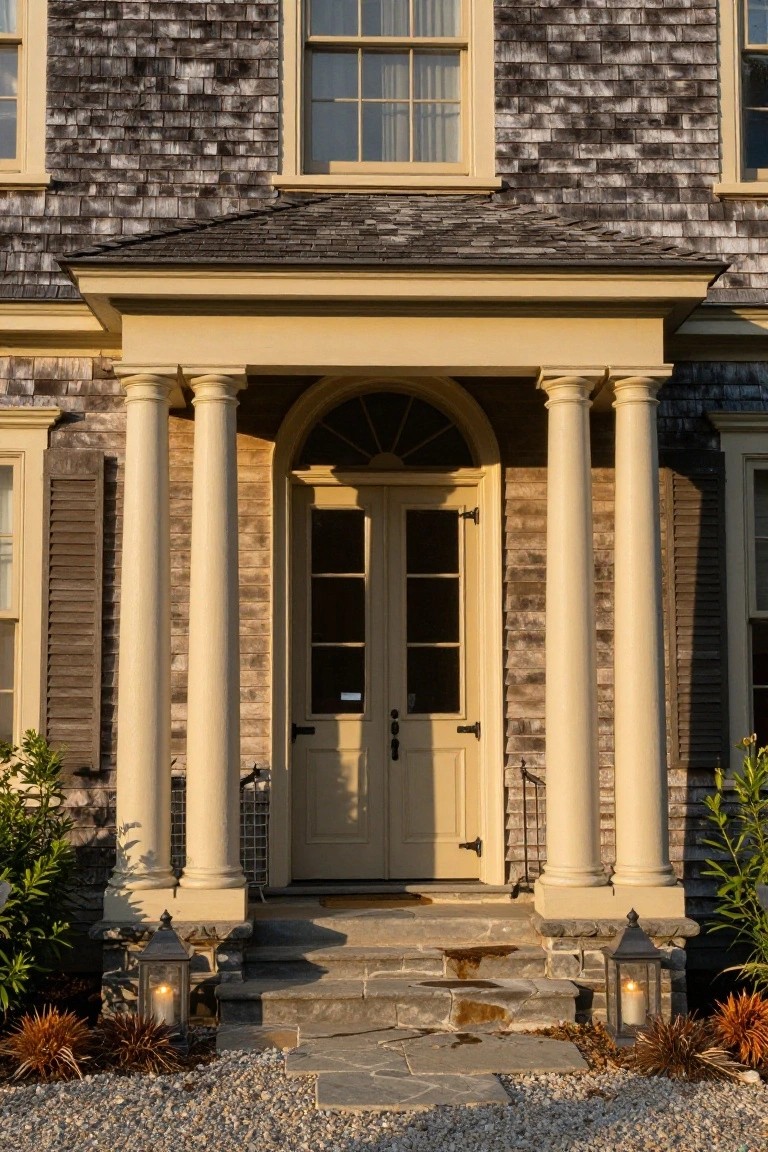
Tall columns like these hold up a simple roof over the front door. They give the whole facade a sense of arrival right away. Paired with double doors and stone steps, it makes even a modest colonial house feel established.
This kind of setup suits older homes with shingle siding or mixed brick bases. Keep the columns painted to match the trim, and add lanterns at the base for light at night. It pulls people toward the door without much extra landscaping needed.
Columns Frame a Welcoming Front Door
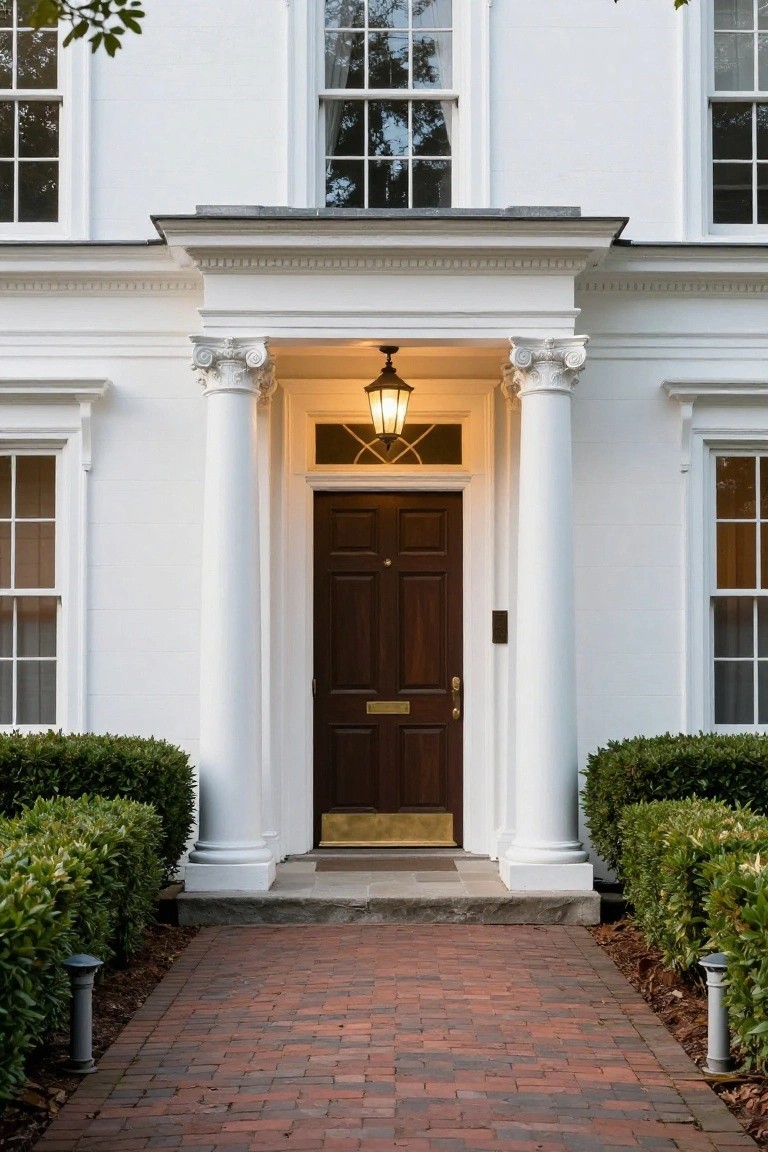
White columns like these give a colonial house that solid, established look right at the entry. They wrap around the door in a simple portico, making the whole front feel balanced and important without much fuss. The dark wood door stands out against the white paint, and that brass lantern adds just enough light to guide folks in at night.
This setup works great on smaller homes too, as long as the columns match the house scale. Pair them with a brick path and some neat boxwoods on the sides to keep the walk up clean and easy. Skip anything too busy around the base… it lets the columns do their job.
Frequently Asked Questions
Q: Can I add columns to my porch without tearing everything apart?
A: Grab bolt-on fiberglass kits that attach right to your existing posts. They swap in the grand colonial vibe fast. Hire a carpenter for a day if you’re not handy.
Q: How do you keep white columns from yellowing over time?
A: Hose them down every couple months and scrub light stains with dish soap. And repaint with exterior latex every three years to lock in that fresh look.
Q: What’s better for columns, wood or something else?
A: Fiberglass wins hands down. It fights rot and bugs without the constant upkeep wood demands.
Q: Will two columns be enough for my front entrance?
A: Yep, flank the door and they frame it perfectly… instant drama. More just crowds smaller porches.
