

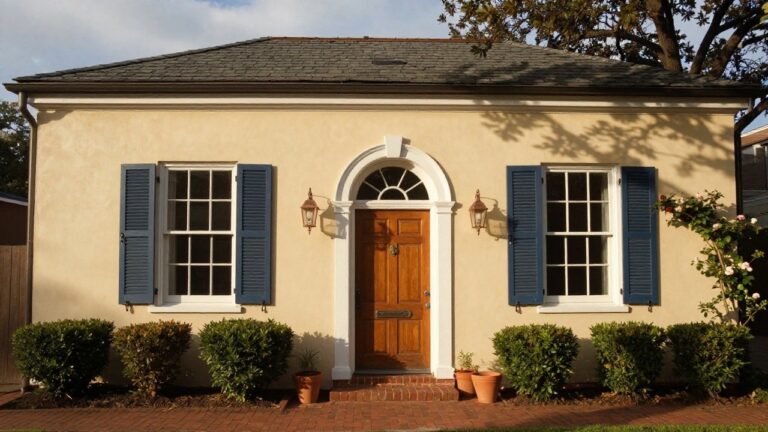
I’ve always paid close attention to Colonial house facades in my neighborhood because the stucco finish often decides if they blend in or stand out from the street. A smooth or lightly textured stucco works best when it softens the sharp rooflines and window surrounds without hiding the home’s classic symmetry. People notice the entryway first, where the right finish catches sunlight and draws the eye up to the dormers. I remember one house nearby that transformed its plain exterior with a subtle pebbled stucco—it aged gracefully and boosted curb appeal without looking fussy. Certain finishes here are practical enough to test on your own siding.
Warm Pale Stucco on Colonial Facades
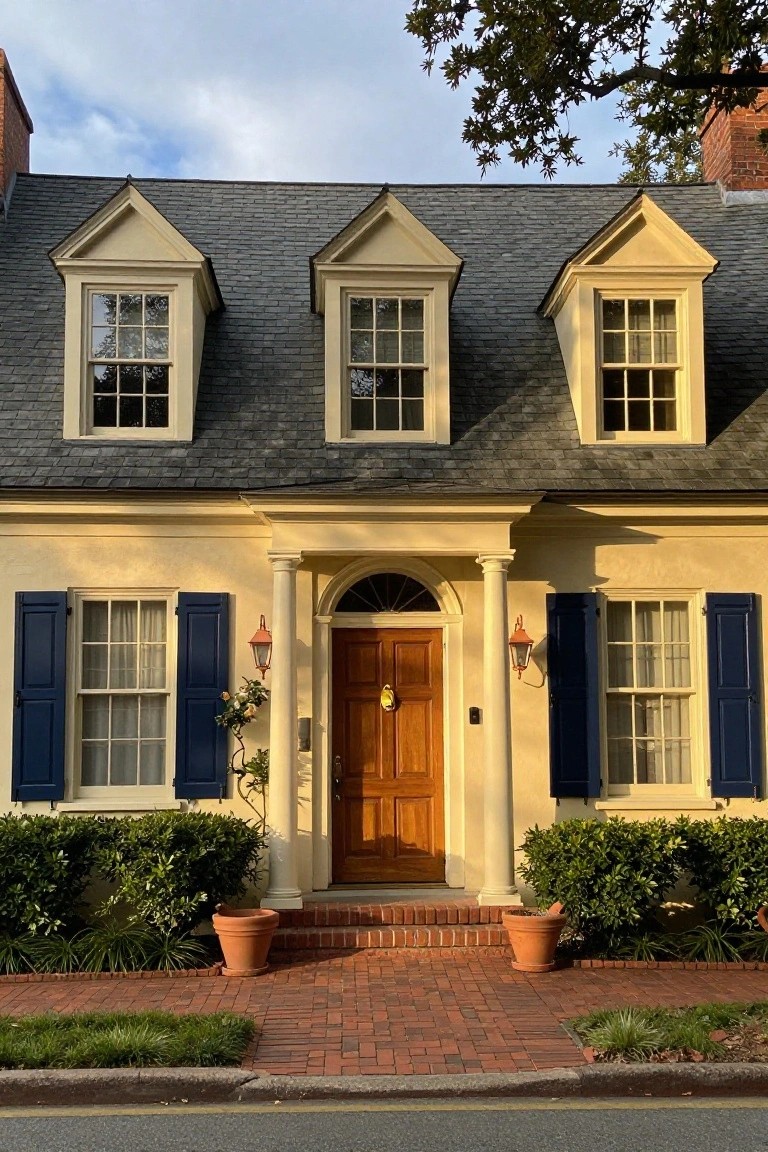
A warm pale stucco finish like this one softens the look of a classic colonial house. It picks up the golden tones from late afternoon light and keeps the facade from feeling too crisp or cold. The subtle color works well against the dark slate roof and navy shutters, making the whole front feel balanced and lived-in.
This finish suits older neighborhoods or homes with traditional lines. Apply it over a solid base coat for even coverage, then add contrasting trim around doors and windows. It holds up in humid spots too, just seal it every few years to keep the color fresh.
Recommended Products

CLASSIC OUTDOOR STYLE: Traditional cottage design pairs a black finish, durable steel frame and clear glass shade for a clean exterior look on front doors, porches, patios, garages, entryways and other outdoor wall lighting applications.

Weather Resistant: Constructed from heavy duty aluminum and plastic that makes this outdoor wall sconce sturdy and long lasting. And the conical lampshade design is not easy to accumulate water, suitable for any weather conditions like cloudy, heavy rain, snow, icing, hot weather, etc

1. VALUE PACK OF TWO SIGNS: Your purchase includes 2 No Soliciting Sign for House, which can be placed on your front door, doorbell, mailbox, gate, yard, walkway, window, and more. You can even share them with family and friends. Considering the price for two thick, durable metal signs, you won't regret your choice.
Black Door on Light Stucco
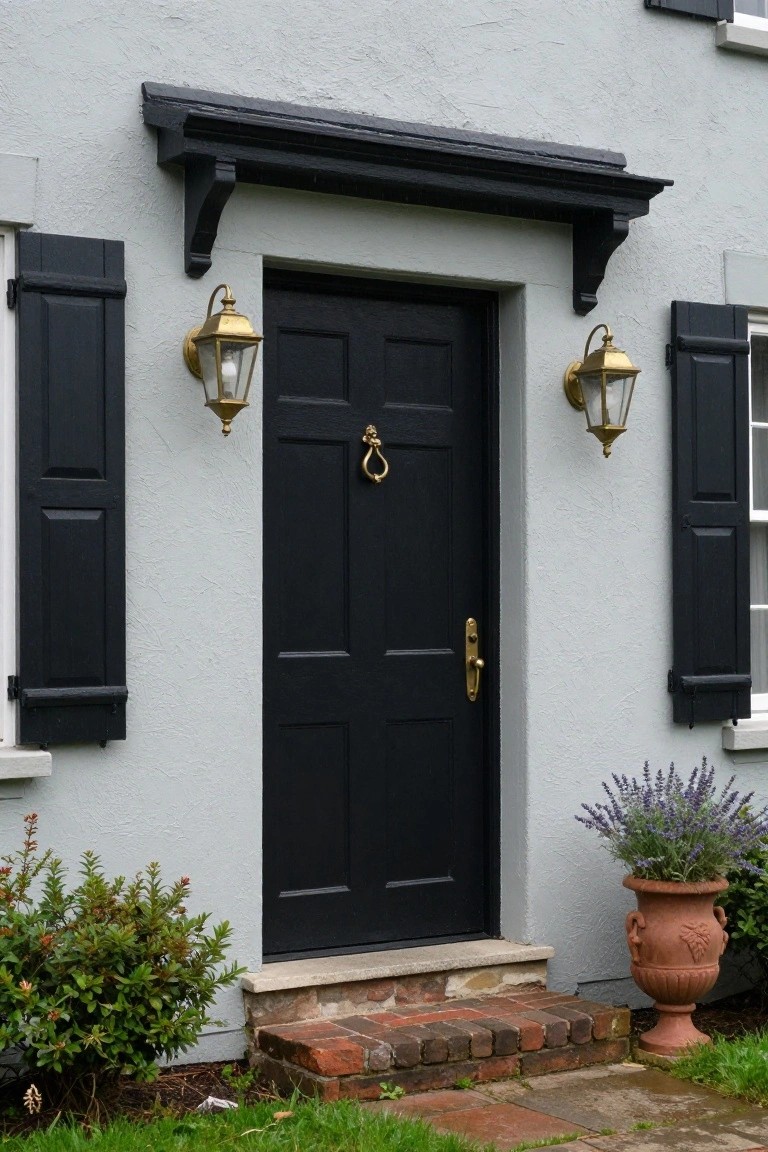
A black front door like this one really pops against light gray stucco walls. It gives the whole entry a clean, classic colonial feel without much fuss. The brass lanterns on each side and the matching knocker tie it together nicely, making the house look put-together from the street.
This look works well on older homes or ones with simple lines. Keep the stucco finish smooth or lightly textured to let the door stand out. Add a pot of lavender or some low shrubs nearby, and you’ve got easy curb appeal. Just make sure the black paint is high-quality so it holds up over time.
Textured Stucco with Stone Quoins
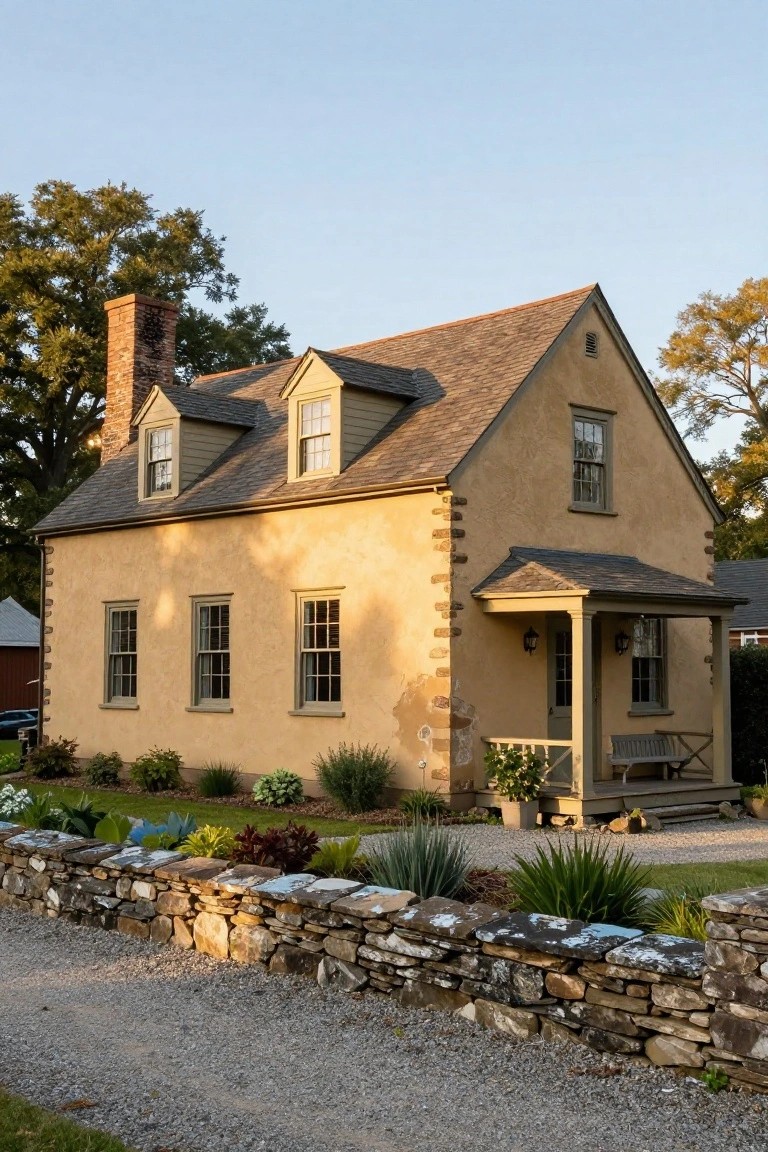
A warm beige stucco covers this colonial house, broken up by rough stone quoins at the corners and edges. That mix gives the facade real texture and depth without much fuss. It nods to old-school building ways but looks clean and settled in place.
Try this on traditional two-story homes, especially in rural spots or older neighborhoods. Match the stucco color to your local soil tones, and source stone from nearby if you can. The porch bench and gravel path here show how it works with simple yard stuff… low upkeep too.
Black Trim on White Stucco Facades
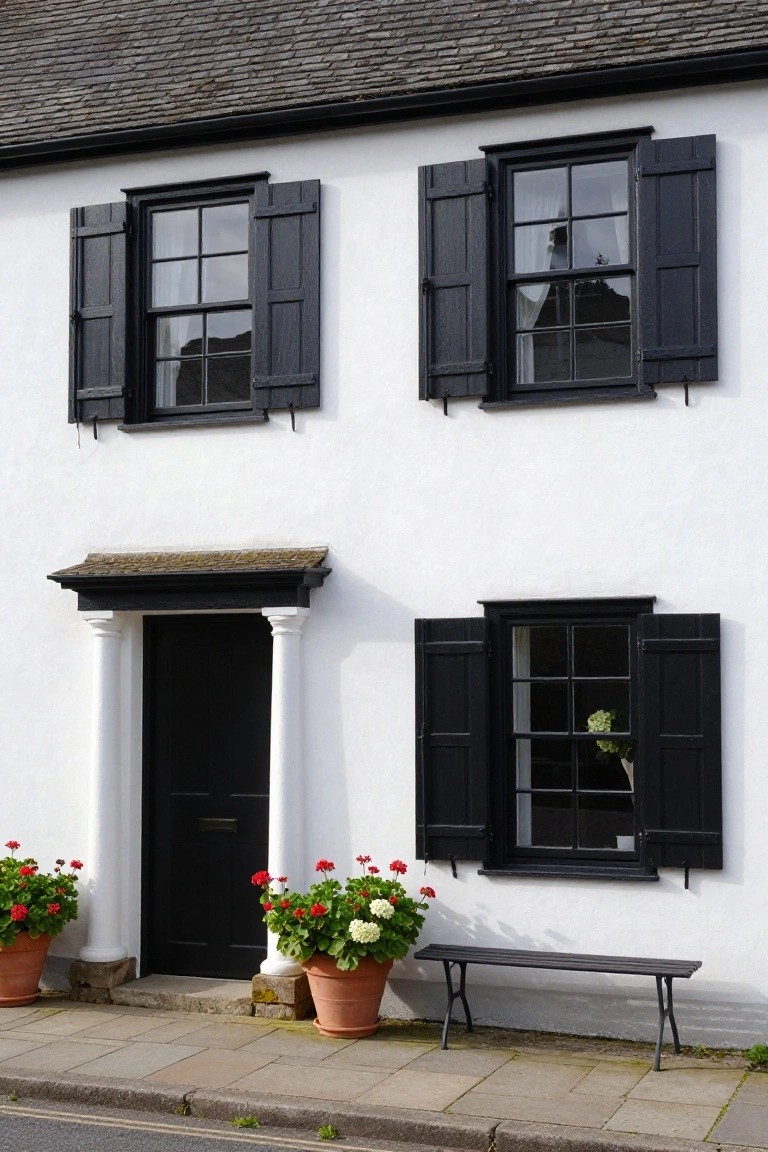
White stucco keeps a colonial house looking fresh and bright. Black trim takes it up a notch. Shutters frame the windows nicely. The dark door stands out against those plain walls. It’s a clean look that feels put-together without much effort.
This setup works on two-story homes with simple lines. Paint your trim flat black to avoid shine. Add a couple pots of red geraniums by the steps if you want some color. Fits older neighborhoods fine. Just keep the stucco smooth so the contrast stays crisp.
Stucco Facade with Green Door Accent
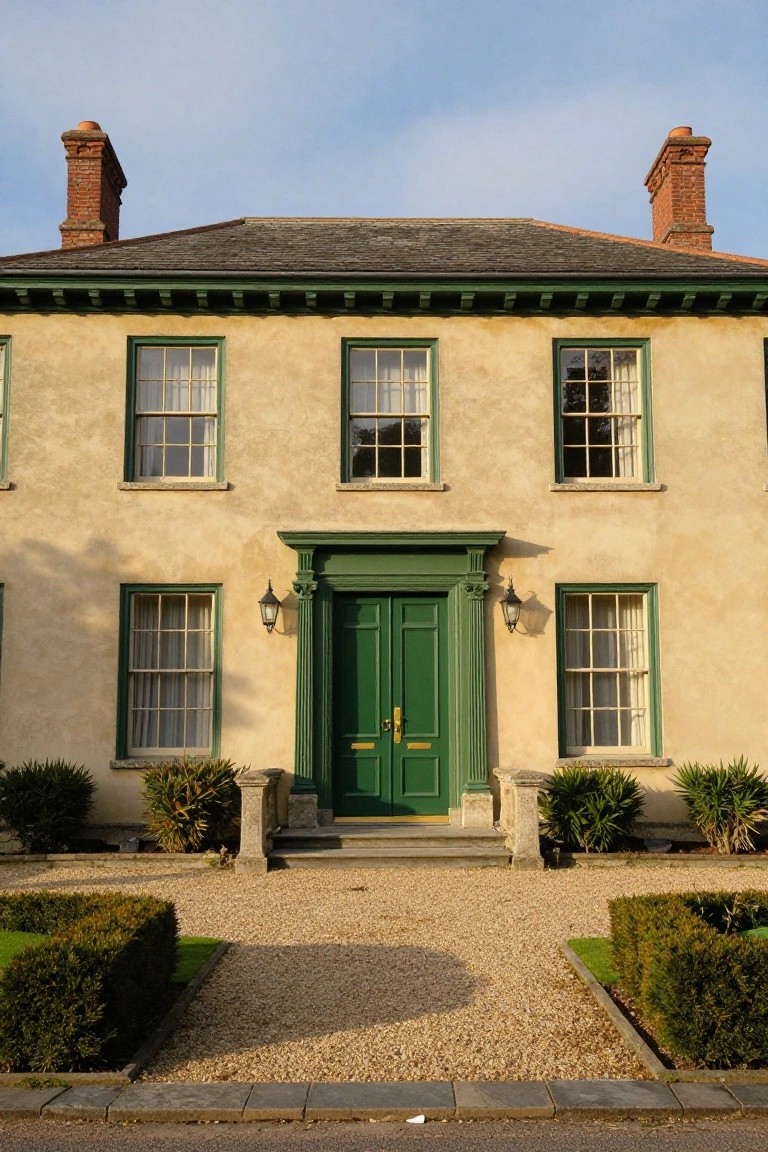
A soft pale stucco covers this colonial house exterior, setting off the deep green double front doors and matching window frames nicely. The contrast keeps things simple yet noticeable from the street. That green pulls your eye right to the entry without overwhelming the light walls.
Try this on traditional two-story homes where you want some color up front. Pick a muted stucco tone and a richer green for trim and doors. It fits gravel driveways and basic hedges well. Just keep the rest neutral so the door stays the focus.
Terracotta Stucco Finish
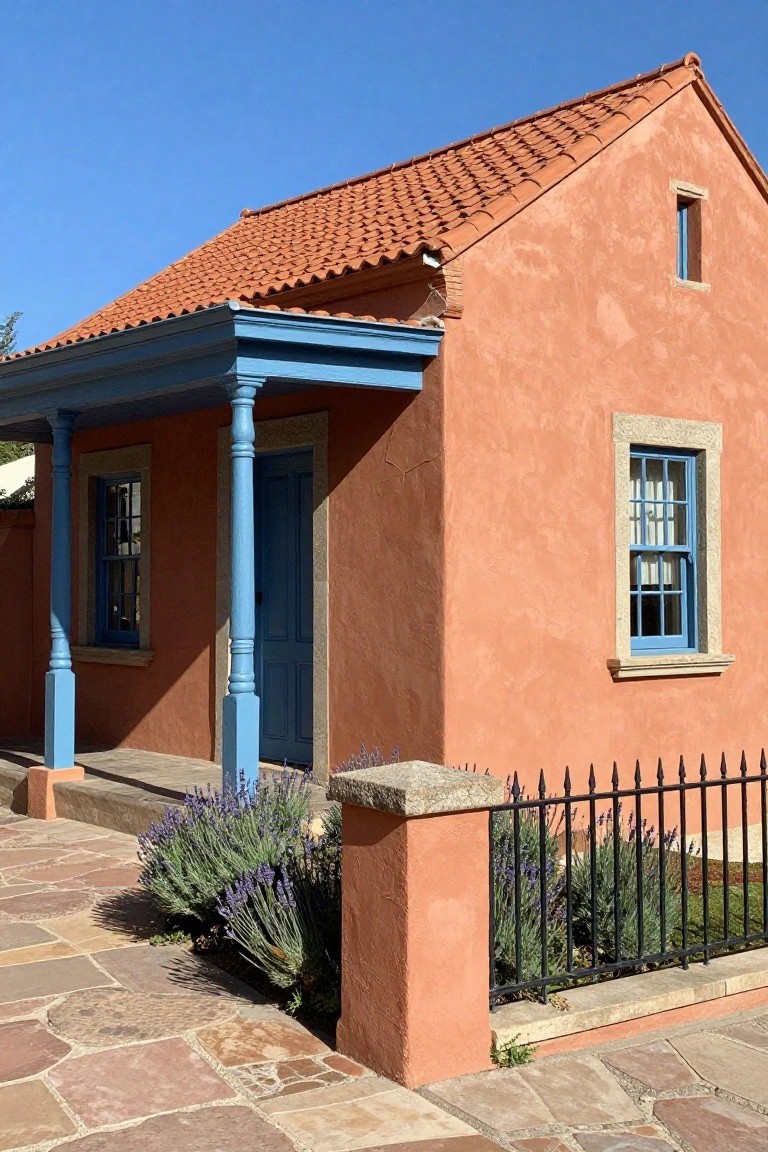
A terracotta stucco finish like this one warms up a colonial house in a way that’s hard to beat. The earthy orange-red color catches the light nicely and feels right at home with a red tile roof. Then the blue trim on the porch columns, door, and windows pulls it all together without overdoing it. Folks notice the welcoming vibe right away.
Try this on compact homes with Spanish colonial touches, especially in sunny spots. It suits places with stone paths and simple plantings like lavender along the edge. Seal the stucco well to handle rain, and keep the blue accents crisp for that clean look. Not too fussy… just right for everyday charm.
Light Beige Stucco on Gable Ends
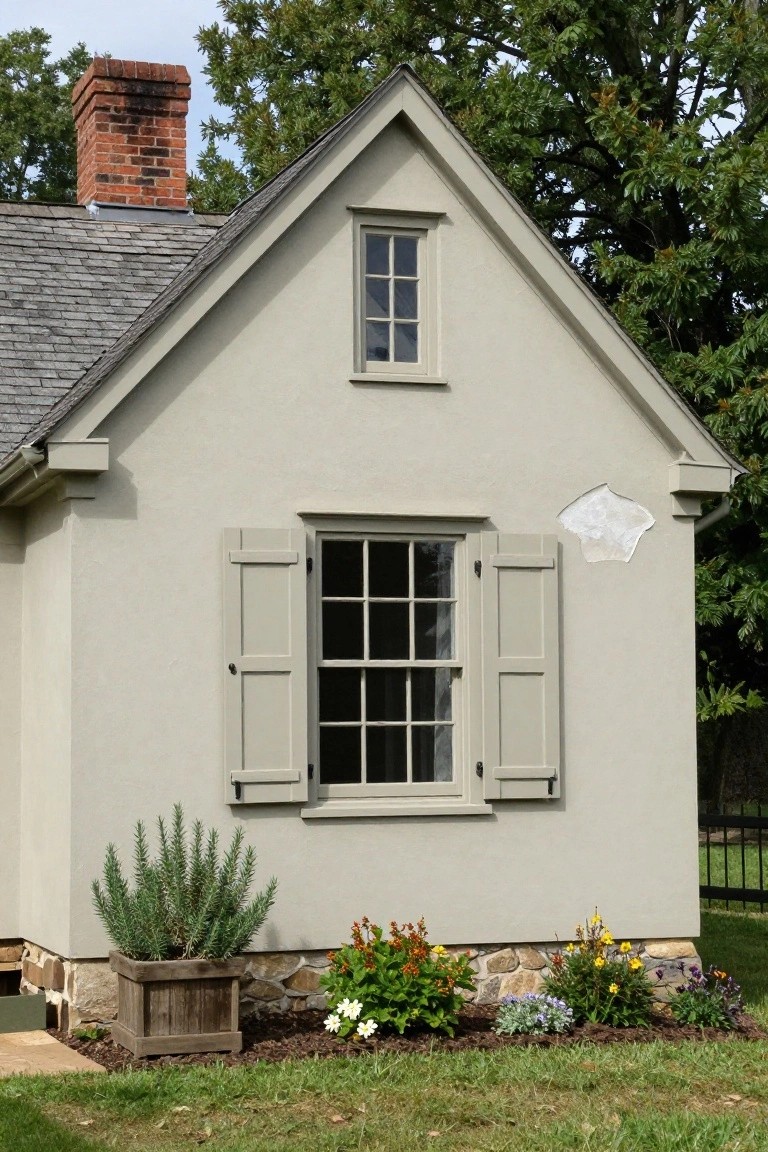
A light beige stucco like this softens the sharp lines of a classic colonial gable house. It picks up the natural tones around it, from the trees to the stone foundation at the base. That quiet color keeps things looking settled in, not too bold, which fits older styles without much upkeep.
You can use this finish on smaller outbuildings or main homes in wooded spots. It goes with dark shutters and simple plantings below the windows. Watch for even application around corners, and it holds paint well if you want a slight tint later.
Warm Textured Stucco Finish
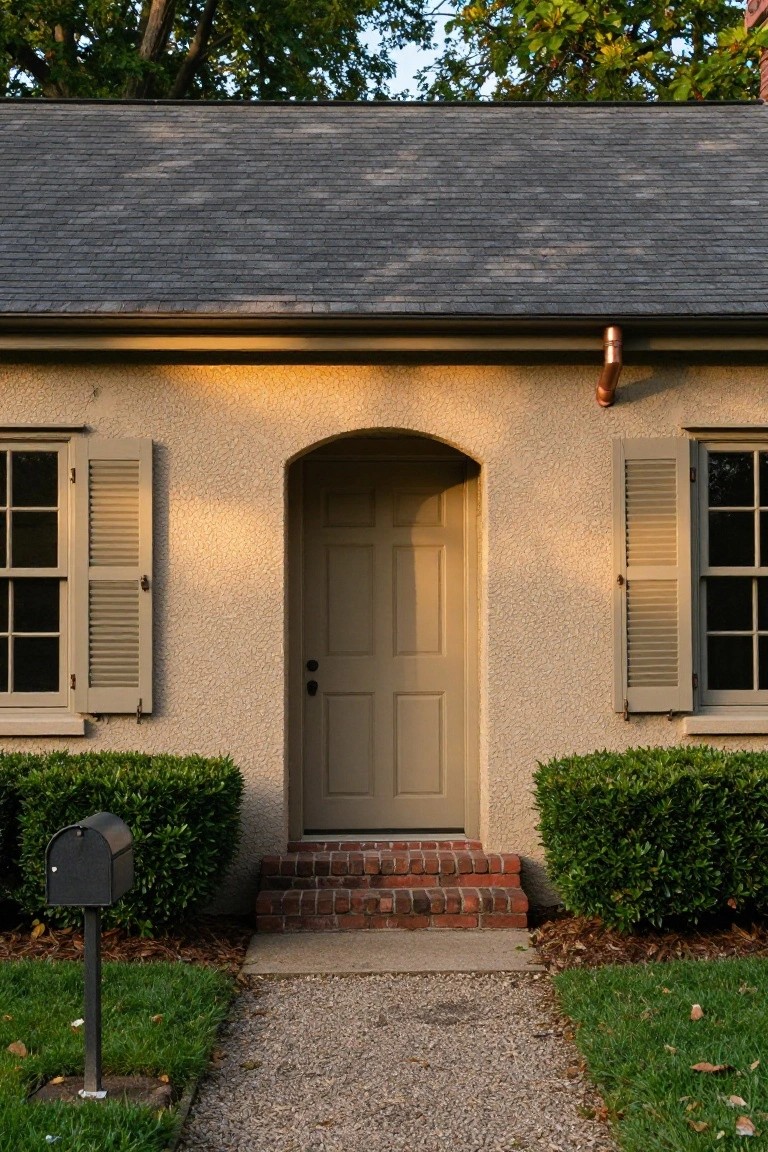
A textured stucco like this gives colonial homes a soft, lived-in feel without going overboard. The pebbly surface on these walls picks up the late afternoon light, making the beige tone look richer. Paired with an arched door and simple shutters, it keeps the front looking balanced and welcoming.
This finish suits older bungalows or cottages in milder climates. Apply it over solid backing for best hold, and stick to earth tones so it blends with brick steps or green shrubs. One thing. It hides small cracks better than smooth stucco, but rinse it yearly to avoid dirt buildup.
White Stucco on a Colonial Facade
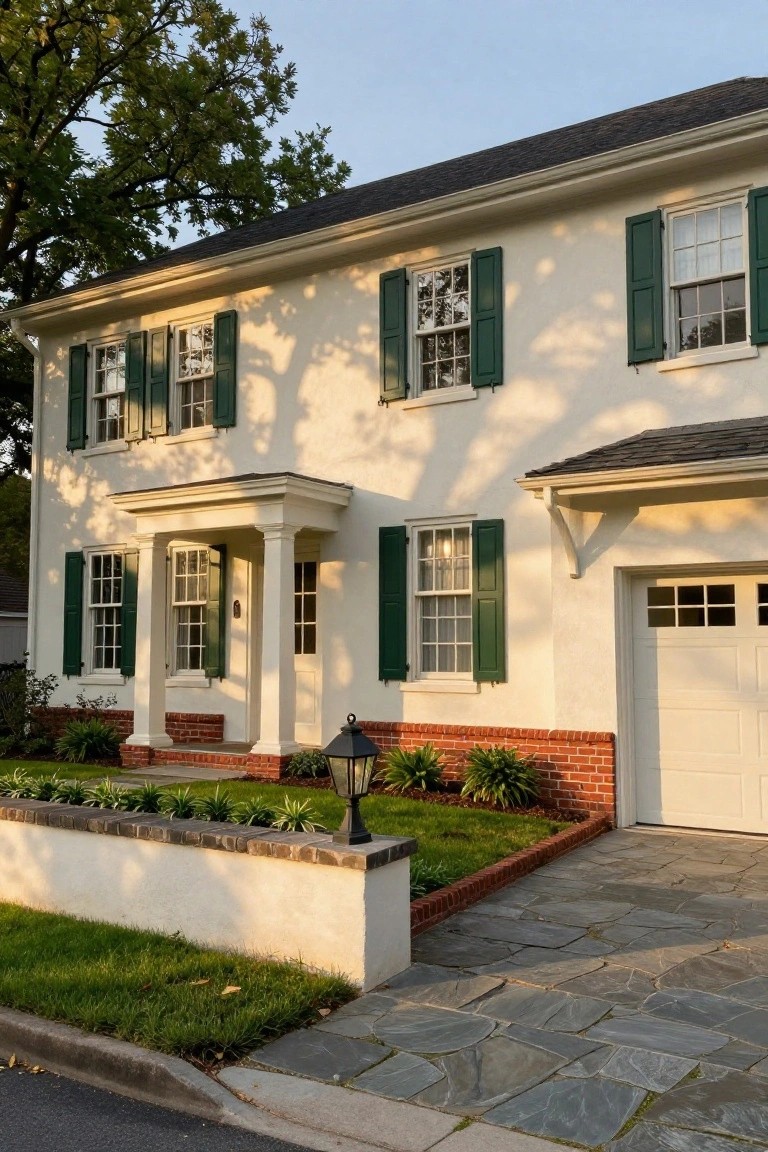
Smooth white stucco gives this colonial house a clean, bright finish that feels fresh but still nods to tradition. The green shutters pop nicely against it, and that short brick base at the bottom ties everything to the ground without much fuss.
This look suits older neighborhoods or suburbs where you want curb appeal that doesn’t scream for attention. Stick to classic details like the porch columns and a simple lantern light, and it works on most sizes of homes. Just keep the stucco well-maintained to avoid cracks over time.
Pale Stucco Paired with Classical Portico
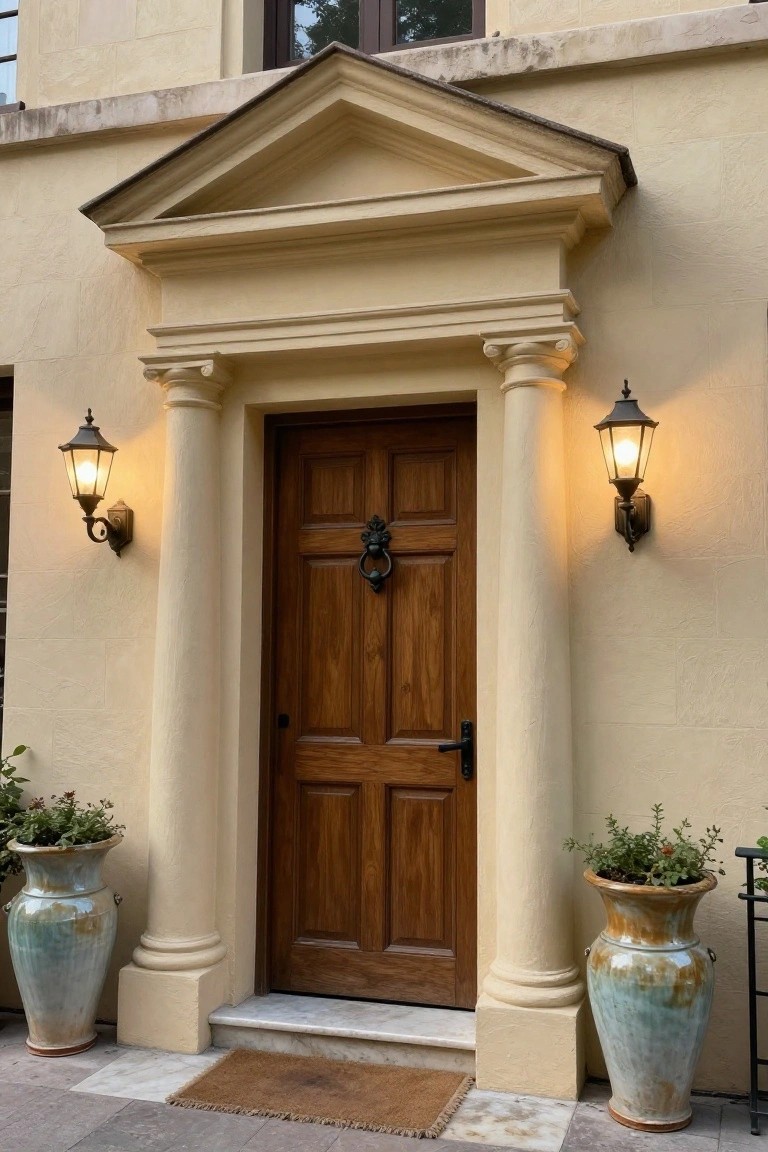
A classical portico like this one frames the front door with fluted columns and a simple pediment right on a smooth pale stucco wall. It pulls off that colonial vibe without much extra detail. The lanterns mounted on the columns catch the eye at night, and the sturdy wooden door fits right in.
This works well on ranch-style or two-story stucco homes wanting more presence at the entry. Match the column height to your door for balance, and keep the stucco in a warm neutral tone. Add matching pots nearby if you like, but skip heavy trim that could clash. It’s straightforward to add during a refresh.
Creamy Beige Stucco Finish
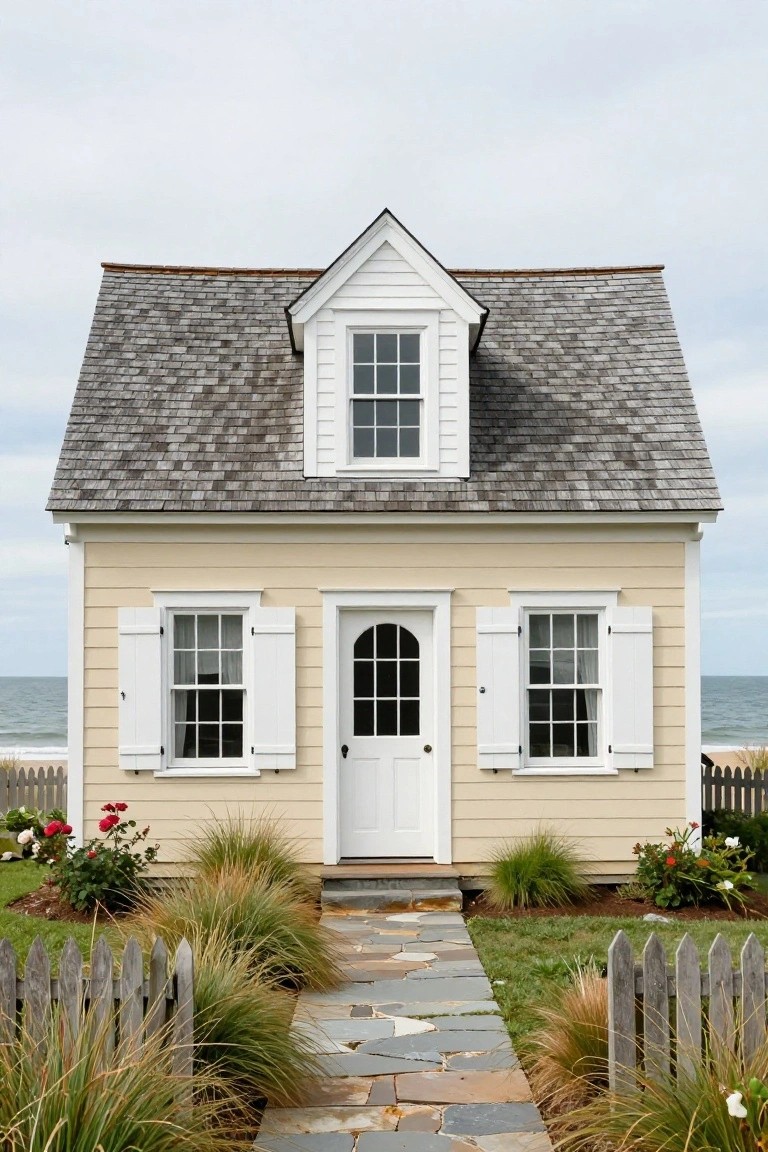
A creamy beige stucco finish like this one takes a classic colonial cottage and makes it feel right at home by the beach. The soft color picks up on sand and sea grass tones without being too stark or bright. Paired with crisp white trim around the windows and door, it keeps things clean and simple. That dormer up top adds a bit of roofline interest too.
This finish works best on smaller homes in casual spots like coastal areas or relaxed suburbs. Go for it if you want low-key curb appeal that doesn’t shout. Just make sure the stucco is prepped right so it holds up to weather. White shutters help tie it together, and a simple stone path out front keeps the entry welcoming.
Soft Stucco Finish on Colonial Houses
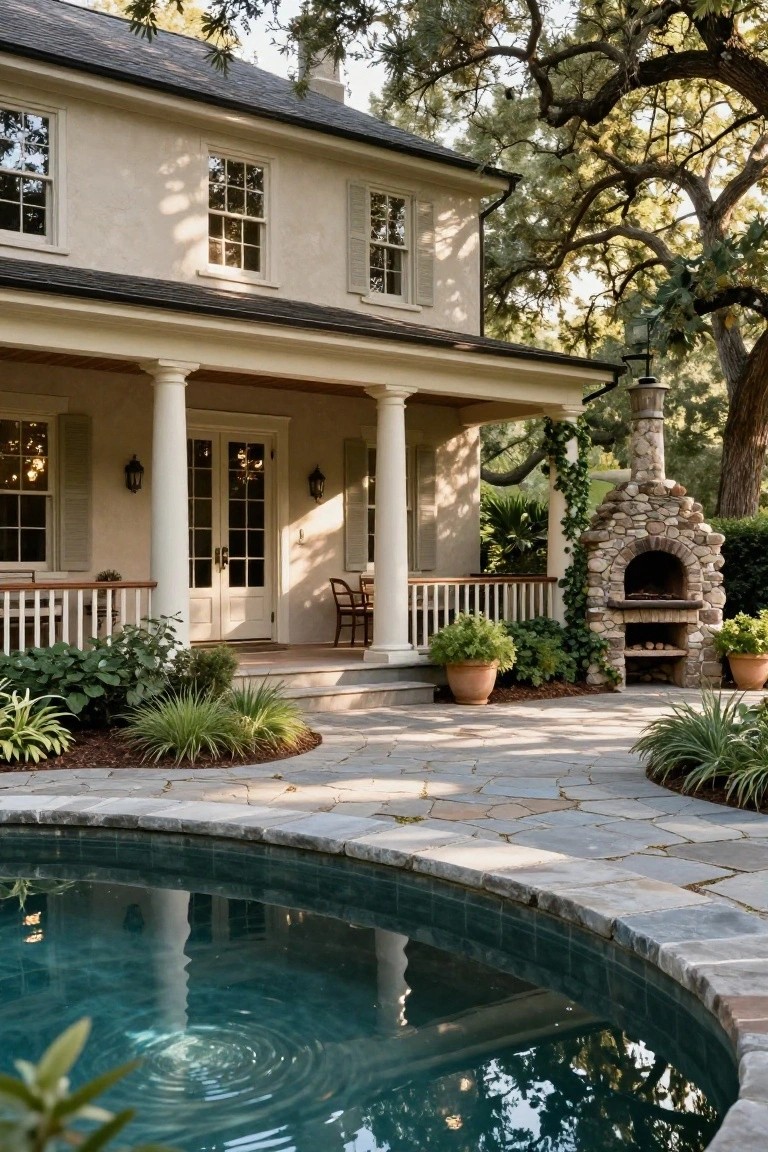
A light creamy stucco like this one gives colonial homes a warmer feel than bright white paint. It picks up the natural tones around the house, blending right in with oak trees and stone paths. The subtle texture softens those tall columns and double doors without losing that classic look.
This finish works best on homes with dark roofs and white trim. It holds up well in humid spots too, since stucco breathes a bit. Just pair it with simple landscaping so the house stays the star. Avoid real dark shades unless you want more drama.
Recommended Products
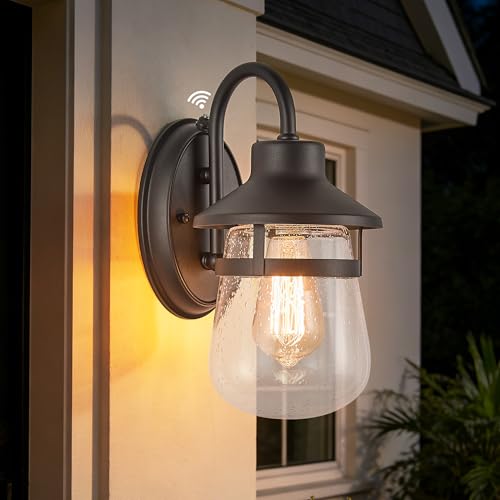
【Dusk to Dawn Farmhouse Wall Lights 】: With a highly sensitive built-in IC light sensor, our dusk-to-dawn wall light automatically turns on at dusk and off at dawn by detecting the brightness of the surroundings. With a textured black finish, clear seeded glass shade, classic curved top cover and U-shaped arm, this outdoor farmhouse wall sconce has a charming and fashionable appearance that will enhance your lifestyle and create a pleasant atmosphere.

[Highly Compatible]: Our lighted door bell push button is suitable for low voltage ringing system as ideal replacement for most doorbell switches at home or garage. The doorbell button can be installed on most surfaces, such as stucco wall wood wall, brick wall, stone wall, etc

Quality Outdoor Wall Sconces :Made of aluminum with seeded glass, these robust outdoor porch lights resist water, rust, and corrosion. These enduring outside wall lantern bear extreme climates condition such as storm, heavy rain and snow.
Warm Ochre Stucco on Colonial Facades
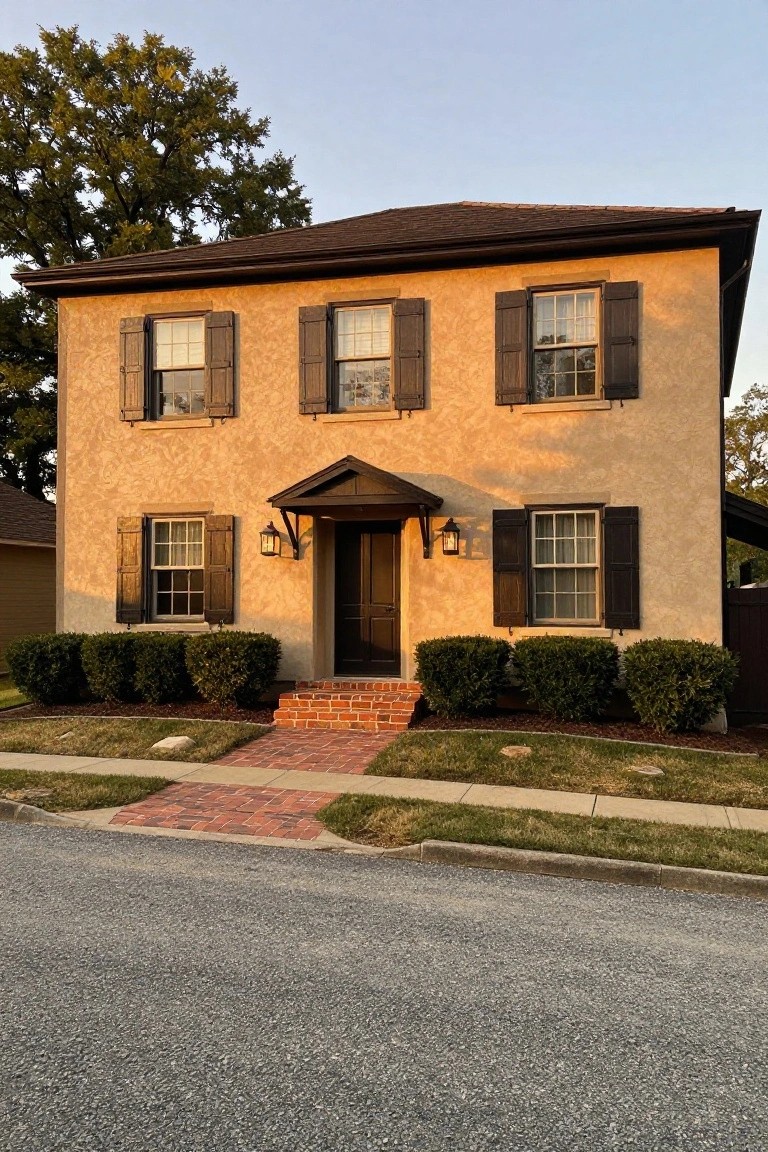
A warm ochre stucco like this brings a gentle earthiness to colonial homes. The subtle texture catches the light just right, making the house feel settled and timeless without any fuss. Dark shutters and trim stand out clean against it, and those brick entry steps tie it down nicely.
This finish suits older neighborhoods or traditional setups where you want low-key appeal. Go for it on two-story houses with balanced windows. Pair with boxwoods or simple plantings along the front. Skip it if your area has too much bold color around, since it shines best keeping things calm.
White Stucco Portico Entry
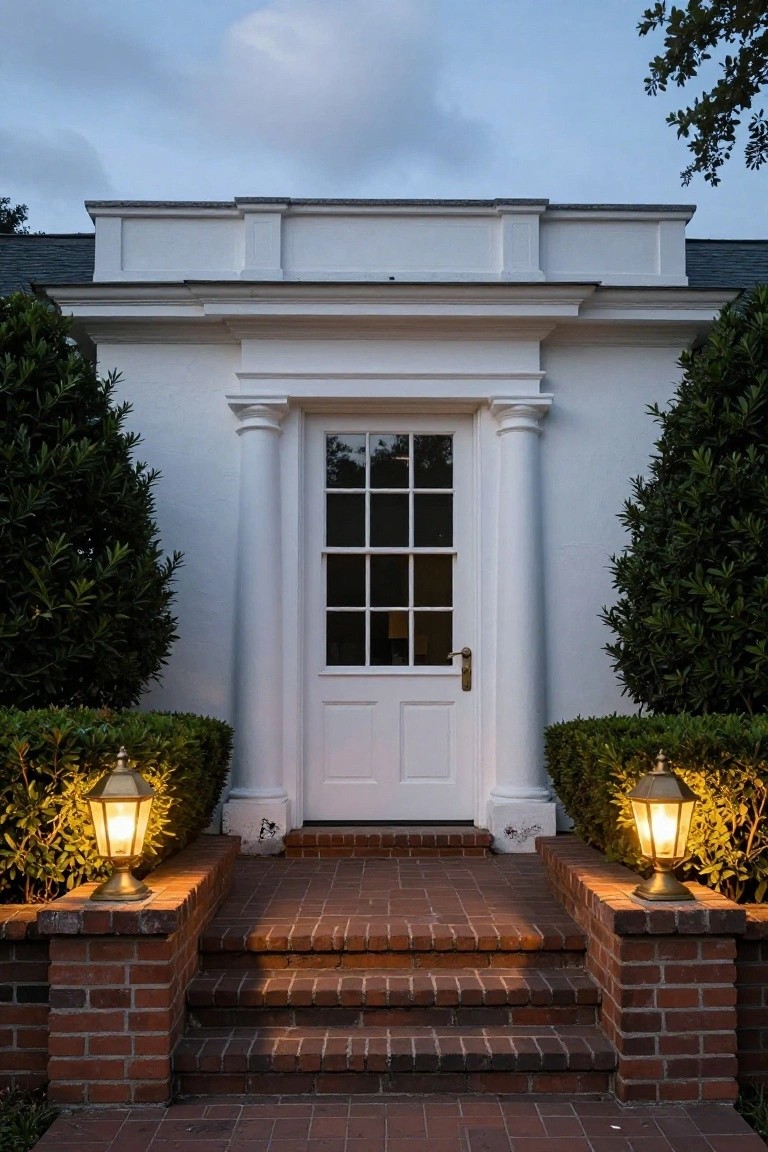
A smooth white stucco finish really shines when you add a simple classical portico like this one. The pediment and single round column frame the door just right, giving a Colonial house that timeless front-and-center look. Brass lanterns on brick pillars light it up nicely too, turning a basic entry into something special at any time of day.
This works best on smaller homes or additions where you want subtle architecture without overwhelming the facade. Stick to clean lines and pair it with brick steps for some texture contrast. It suits traditional neighborhoods, but watch the scale, keep shrubs trimmed back a bit so they frame instead of hide the details.
Smooth Gray Stucco with Black Door Entry
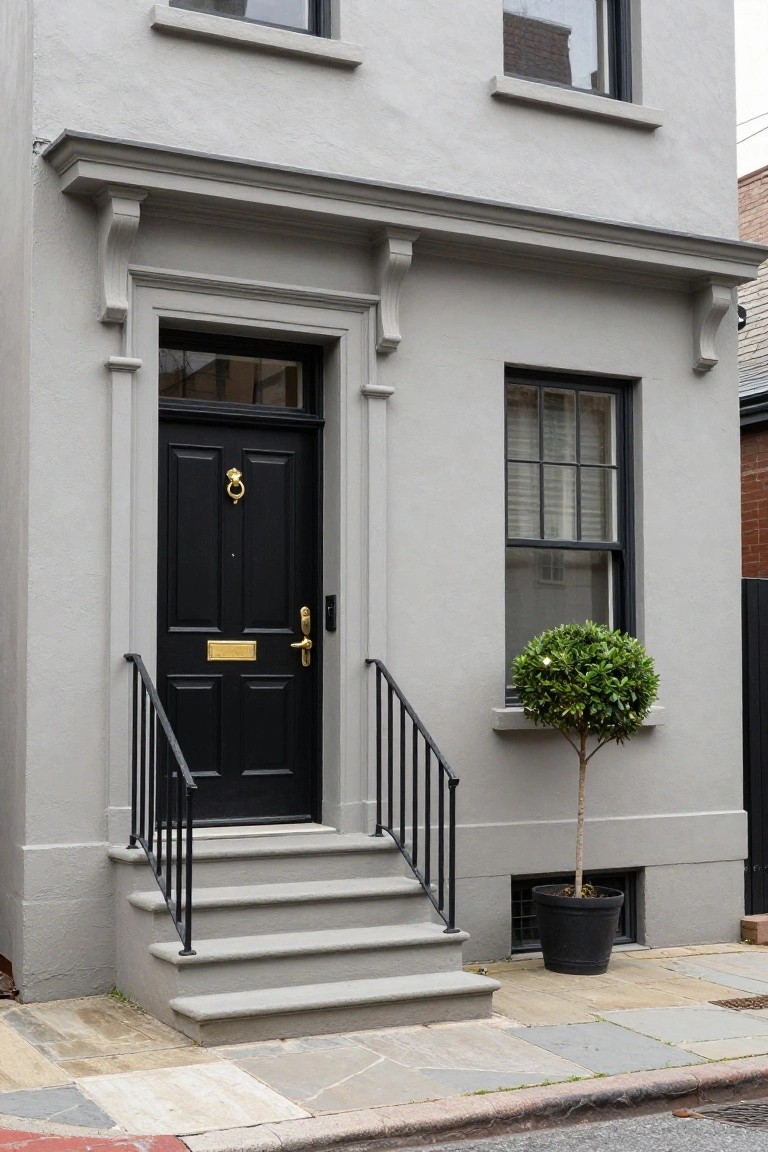
A light gray stucco finish like this one keeps things calm and neutral on a colonial townhouse. But that black front door changes everything. With its gold knocker and letterbox, it pulls your eye right to the entrance. The black railing on those few steps ties it together without much fuss.
This look suits older narrow homes or row houses where you want some punch up front. Paint the door high-gloss black for weather resistance, and keep the stucco matte. Skip busy colors elsewhere. A simple potted tree next to it adds life… just enough.
Stucco Facade with Block-Like Texture
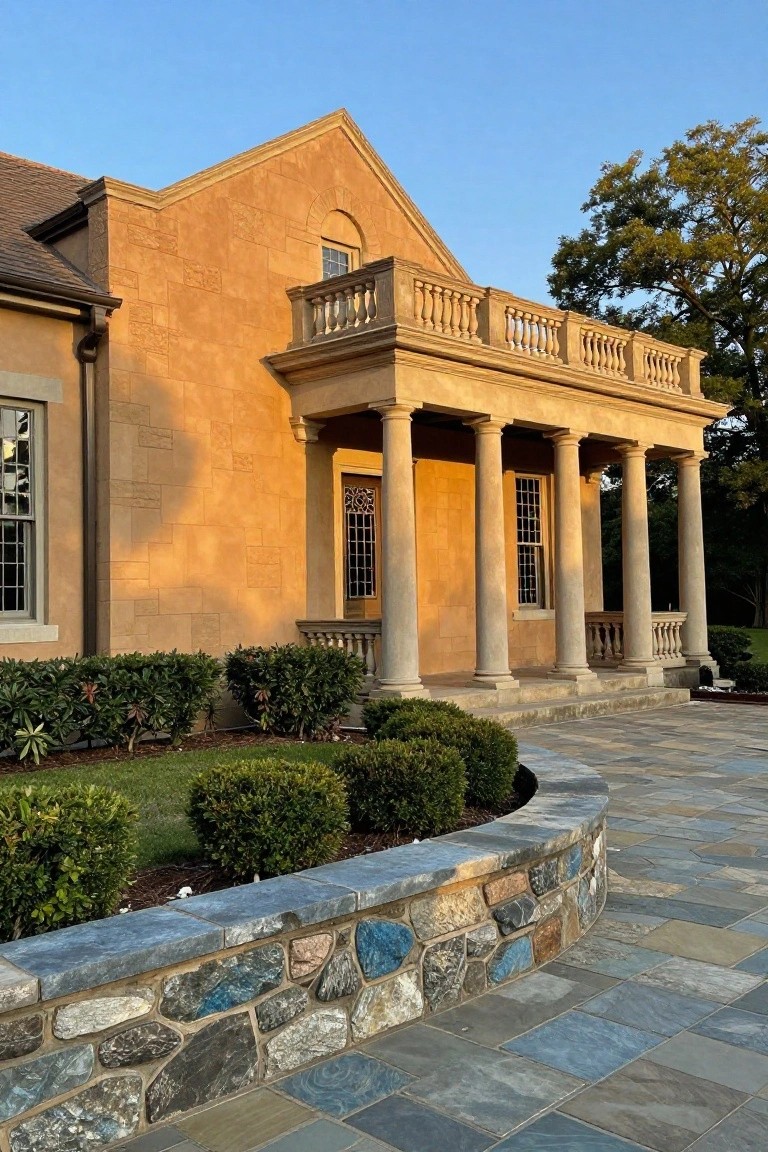
Stucco doesn’t have to be smooth. This blocky texture makes the walls look like they’re built from cut stone, which fits right into colonial style. The warm tan color softens things a bit, and those tall columns in front make the entry feel grand without overdoing it.
You can pull this off on two-story homes with a front portico. It holds up well in mild weather, and keeps maintenance low compared to actual stone. Just match the color to your roof and trim so it all ties together.
Sage Green Door on Pale Yellow Stucco
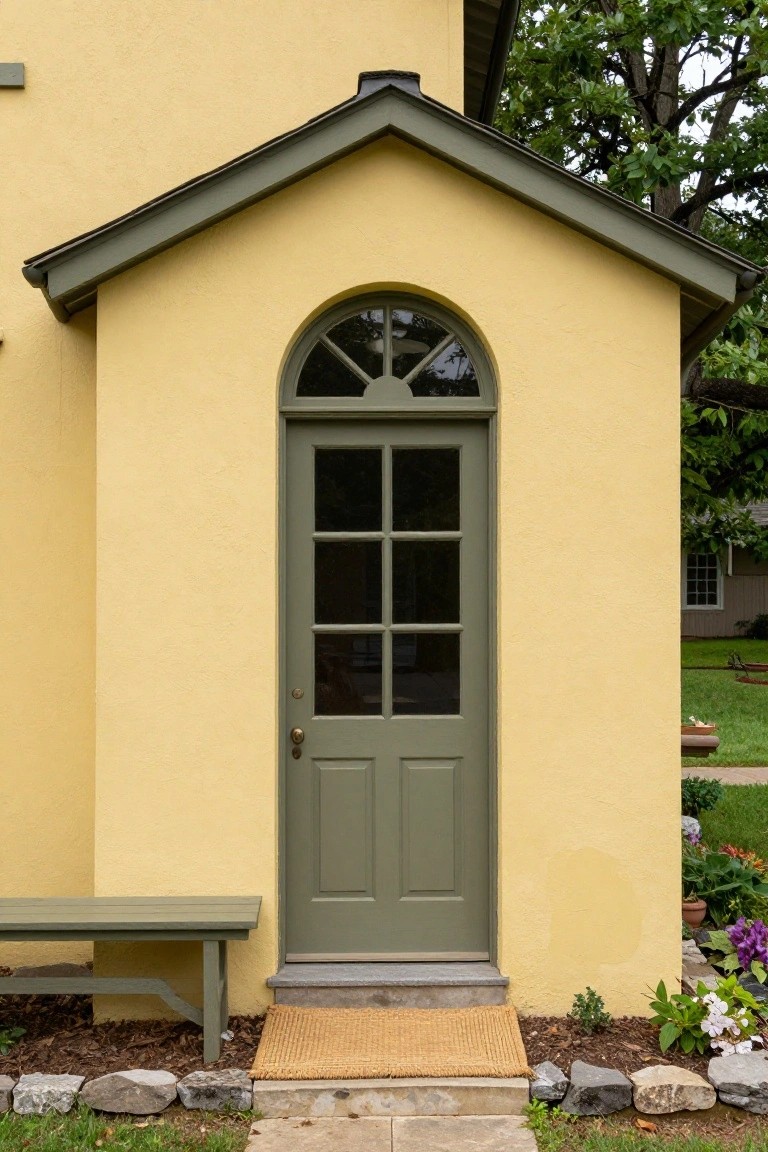
A sage green door like this one stands out just right against pale yellow stucco walls. The color pulls from the trim and roof edge, tying the entry together without overwhelming the soft backdrop. That arched window up top gives it a bit of old-house charm, and the glass panels let light filter in nicely.
This look fits colonial homes in milder climates where you want the house to feel settled in, not flashy. Go for smooth stucco to keep the yellow clean, then add a matching bench and some rocks around the base. Skip anything too busy in the yard so the door stays the focus.
Soft Gray Stucco on Colonial Homes

A soft gray stucco finish like this one takes a classic colonial house and gives it a subtle texture that feels fresh without changing the bones. It works because the light color plays off the black shutters and white trim, making the facade stand out quietly from the street. That brick chimney up top adds just enough warmth too.
This look fits right on two-story colonials in leafy neighborhoods. Use it where you want curb appeal that lasts, maybe with a brick path leading in and low plants along the edges. Keep an eye on sealing the stucco so it holds up to rain.
Beige Stucco Finish on Colonial Homes
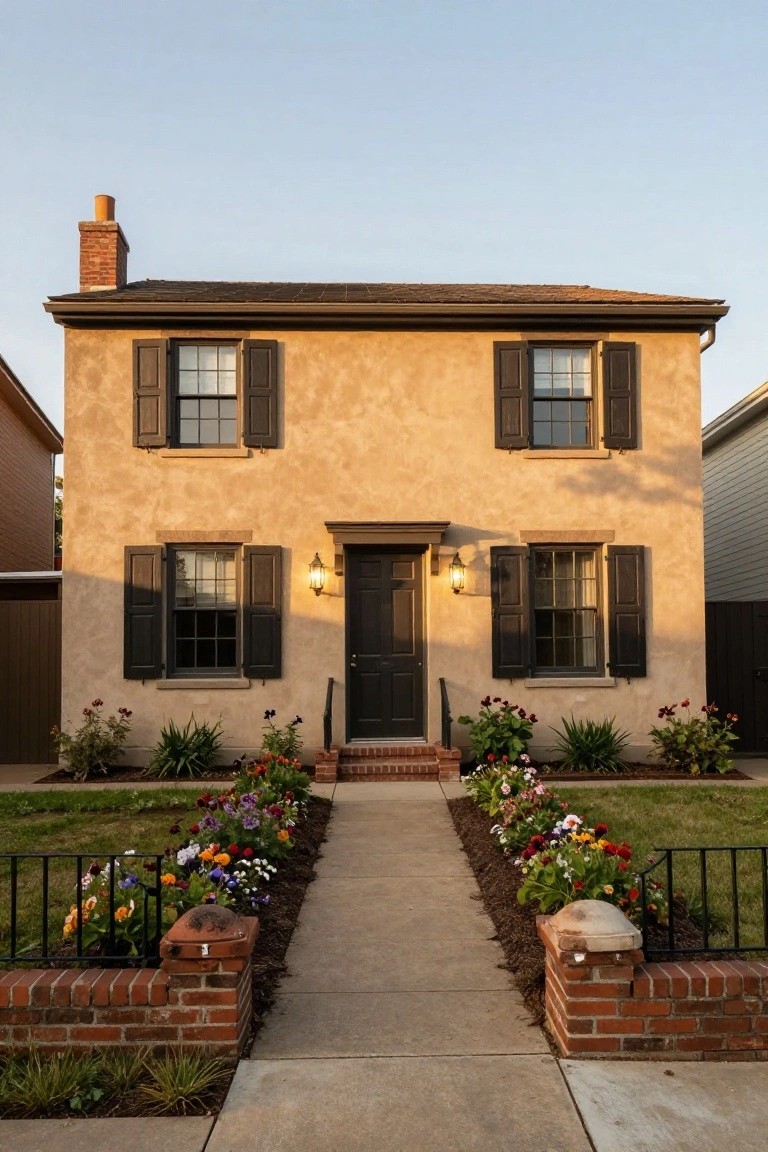
A soft beige stucco finish like this one keeps a colonial house looking calm and settled. The texture picks up light nicely during the day, and those dark wood shutters plus the black front door pull your eye right to the entry. Brick pillars at the path add a bit of structure without fuss.
This approach suits older neighborhoods or suburbs where you want the house to blend in but stand out a little. Go for it on two-story homes with simple rooflines. Just make sure the stucco is applied evenly, or it can look patchy over time. Flower beds nearby help tie it to the yard.
Classic Columned Portico
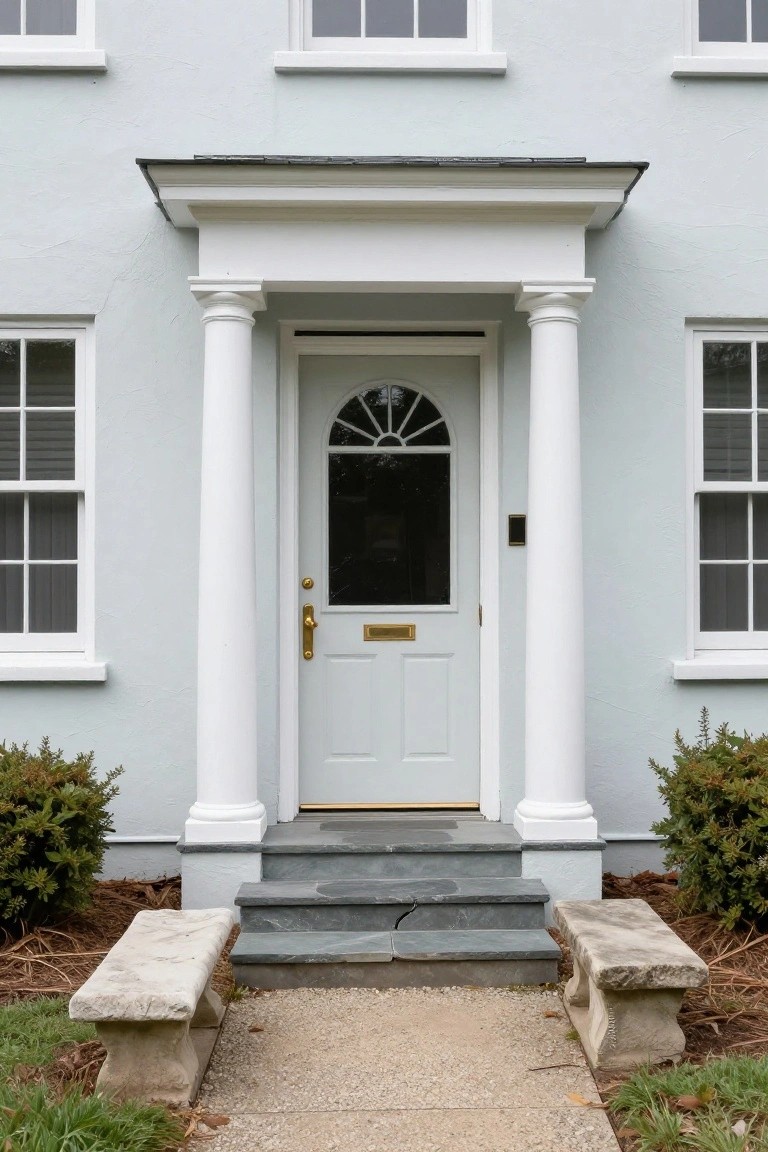
A columned portico like this one takes a simple stucco colonial house and gives it real presence right at the front door. The light blue stucco keeps things soft and approachable, while those clean white columns add a touch of old-school formality without overdoing it. It’s the kind of entry that says welcome from the street, especially with the white paneled door and its fan window pulling focus.
This setup works great on two-story colonials or even ranch styles wanting more charm. Paint the columns bright white to stand out against any pastel stucco shade, from blue to pale green. Keep the steps simple slate or stone, and add boxwoods on the sides for balance. Just make sure the roof over the portico matches your main roof pitch, or it might look tacked on.
White Stucco Colonial Porch
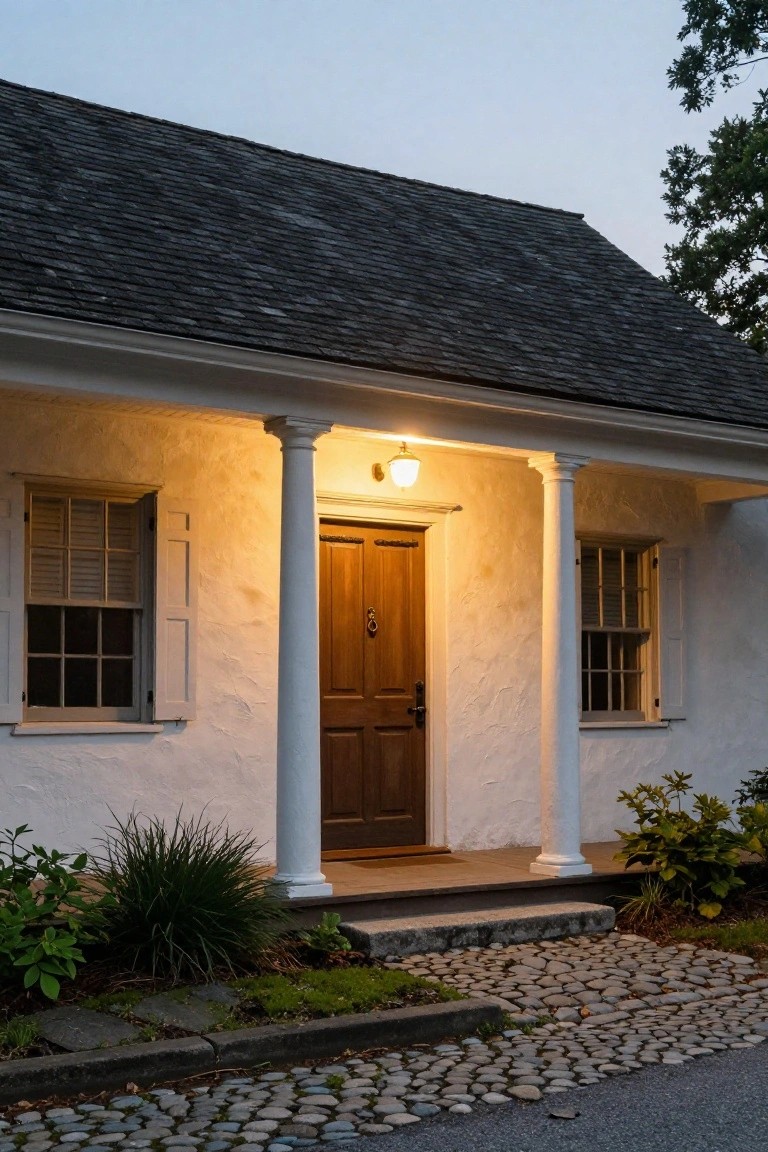
White stucco gives this colonial home a soft, lived-in feel that fits right into historic neighborhoods. The smooth plaster walls pick up the warm glow from the porch lantern at dusk, setting off the dark wood door and tall columns. It keeps things simple while nodding to old Southern styles.
You can pull this off on ranch houses or additions too, as long as the roofline stays straightforward. Stick to neutral plants around the base so the stucco stays the star. Just watch for moisture in wet areas, since stucco needs good drainage.
Frequently Asked Questions
Q: Can I apply one of these stucco finishes myself on my colonial house?
A: You could try a test patch if you’re steady with a trowel. But pros nail the even layers that stop cracks cold. They turn your house into that standout colonial quick.
Q: How do I clean stucco without messing it up?
A: Blast it gentle with a hose every few months. Soft brush away dirt, no chemicals. Rinse top to bottom so suds don’t streak.
Q: Do I need to strip old paint first?
A: Power wash and scrape loose flakes away. Prime smooth for the new finish to grip tight. Skip full stripping unless it’s peeling bad.
Q: Which finish lasts longest in wet weather?
A: Smooth or fine sand finishes shed rain best. They lock out moisture on your colonial siding. …Test one small spot before you commit.
