

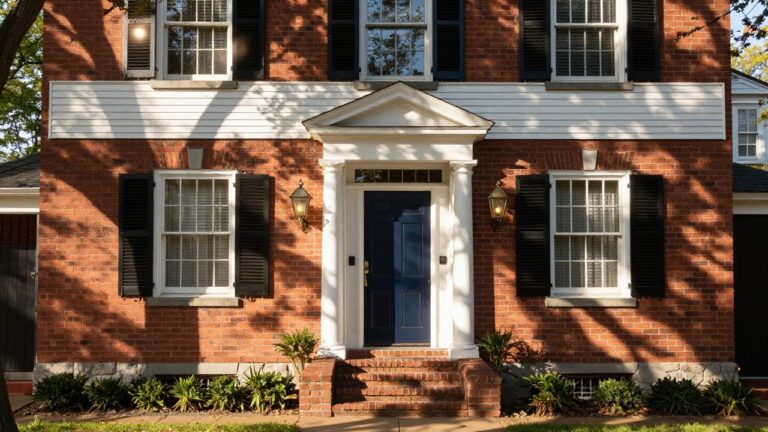
I’ve driven past plenty of Colonial homes over the years, and the ones that pull you in right away balance brick and siding to frame the facade just right. That mix grounds the classic symmetry while playing up details like the entry door and roofline from the street. I used to overlook how siding’s color can soften a bold brick base until I saw it transform a plain front into something neighborly and solid. These combos hold up in real weather and light, making them worth noting for anyone eyeing an exterior refresh. Curb appeal like that sticks.
Classic Red Brick and White Siding
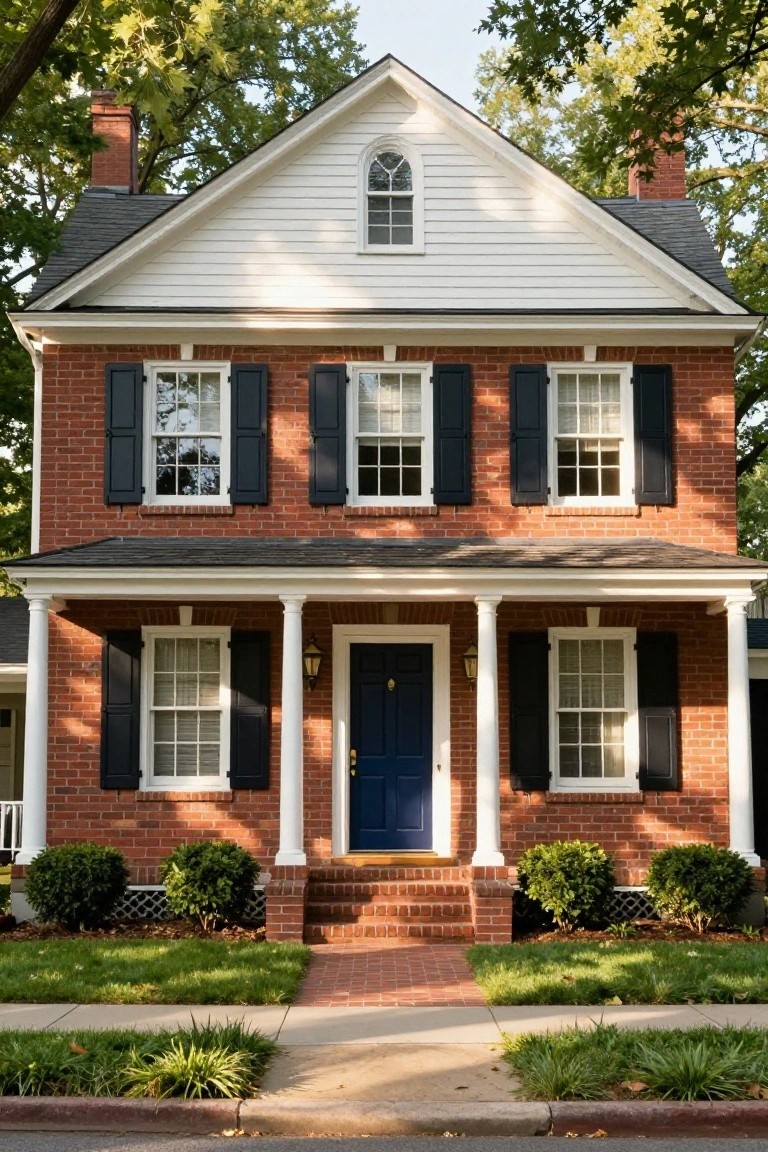
This setup uses red brick for the lower level and white clapboard siding above, a go-to for Colonial homes. It keeps things balanced and traditional. The black shutters frame the windows nicely, and that blue front door adds a simple pop of color without overdoing it.
You’ll see this combo a lot on two-story houses with a front porch. It suits quiet streets or established neighborhoods where you want steady curb appeal. Stick to clean lines on the porch columns, and it holds up year-round. Just make sure the brick mortar matches the siding tone so nothing clashes.
Shingle Siding with Brick Garage Base
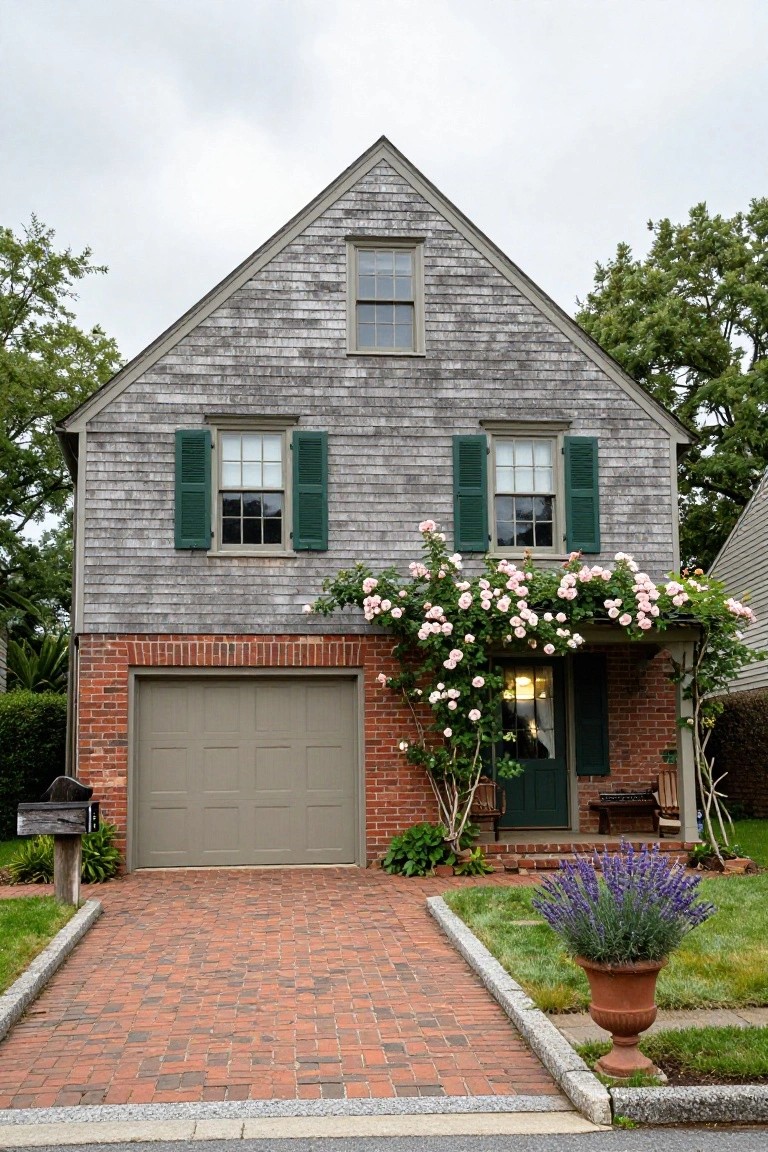
This Colonial house uses gray shingle siding up top paired with a sturdy red brick garage and entry base below. The mix gives it a grounded look that feels right for older styles without being too heavy. Those weathered shingles add texture and blend into the trees around it, while the brick keeps things solid at ground level.
It works best on homes with a gable roof like this one, especially in wooded spots or coastal areas where shingles hold up well. Keep the brick to the lower half so the house doesn’t feel bottom-heavy, and add some climbing roses or low plants near the door for a softer touch.
Red Brick with Navy Blue Shingles
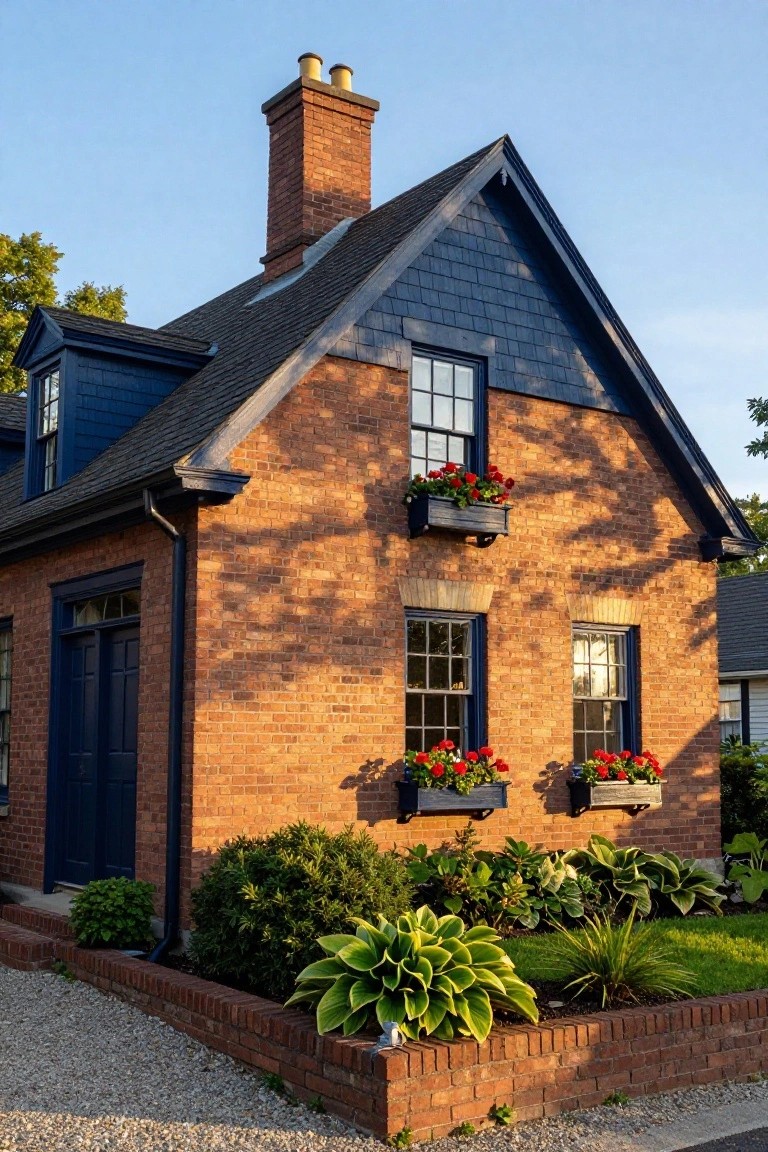
This setup takes a traditional red brick base and tops it with navy blue shingles on the gables and dormers. The warm brick keeps things grounded while the deep blue adds a crisp edge that feels right for colonial style. Flower boxes with red geraniums pick up the brick color nicely too.
It suits smaller homes like this one where you want some height without overwhelming the yard. Pair it with dark blue doors and trim for pull-together looks. Steer clear of super bright roofs here. The combo holds up well in shady spots or with trees nearby.
White Siding with Brick Base
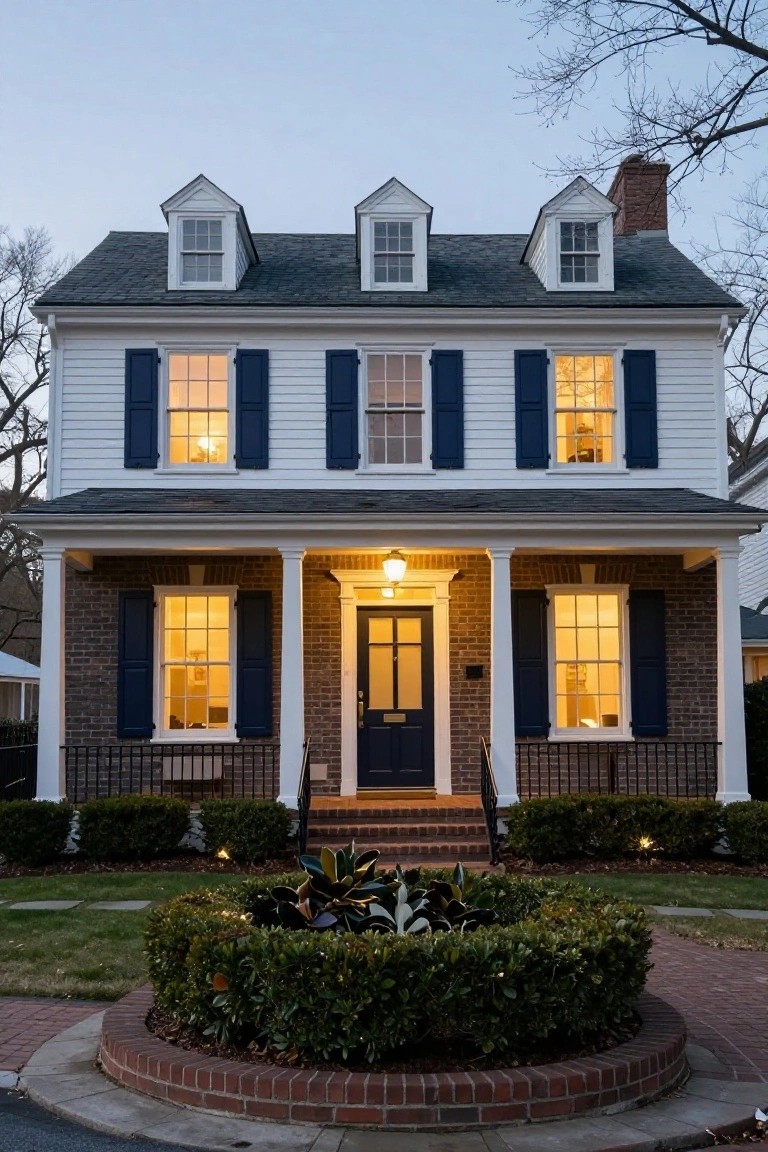
A solid choice for colonial homes is white clapboard siding up top over a brick foundation and porch base. It keeps the look light and classic while the brick down low adds a bit of grounded color and texture. Those navy shutters tie it together without much fuss.
This setup fits right into traditional neighborhoods or older homes needing a refresh. Match the brick tone to your chimney for flow. Scale the brick height to about one-third of the facade so it doesn’t overwhelm. Works year-round too, especially with evening lights showing off the details.
White Siding with Brick Steps
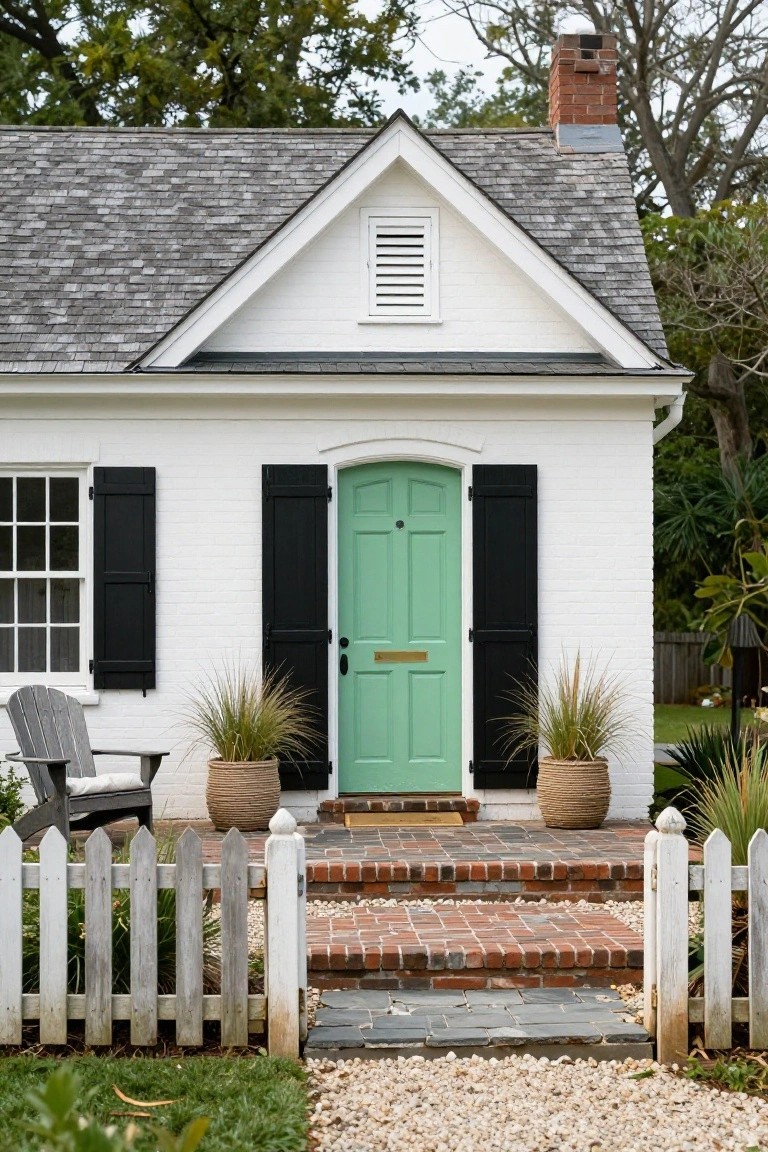
One straightforward way to mix materials on a Colonial house is white siding over brick steps at the entry. The clean white siding keeps the look light and open. Those brick steps add some weight and color down low. It ties right into the chimney too. A green door pulls it all together without overdoing things.
This setup suits smaller homes or cottages in older neighborhoods. Keep the brick a soft red to match traditional Colonials. White siding works on any size house but shows dirt less on bigger ones. Watch the steps for moss in shady spots. Just hose them off now and then.
Colonial Brick with Siding Sidewall
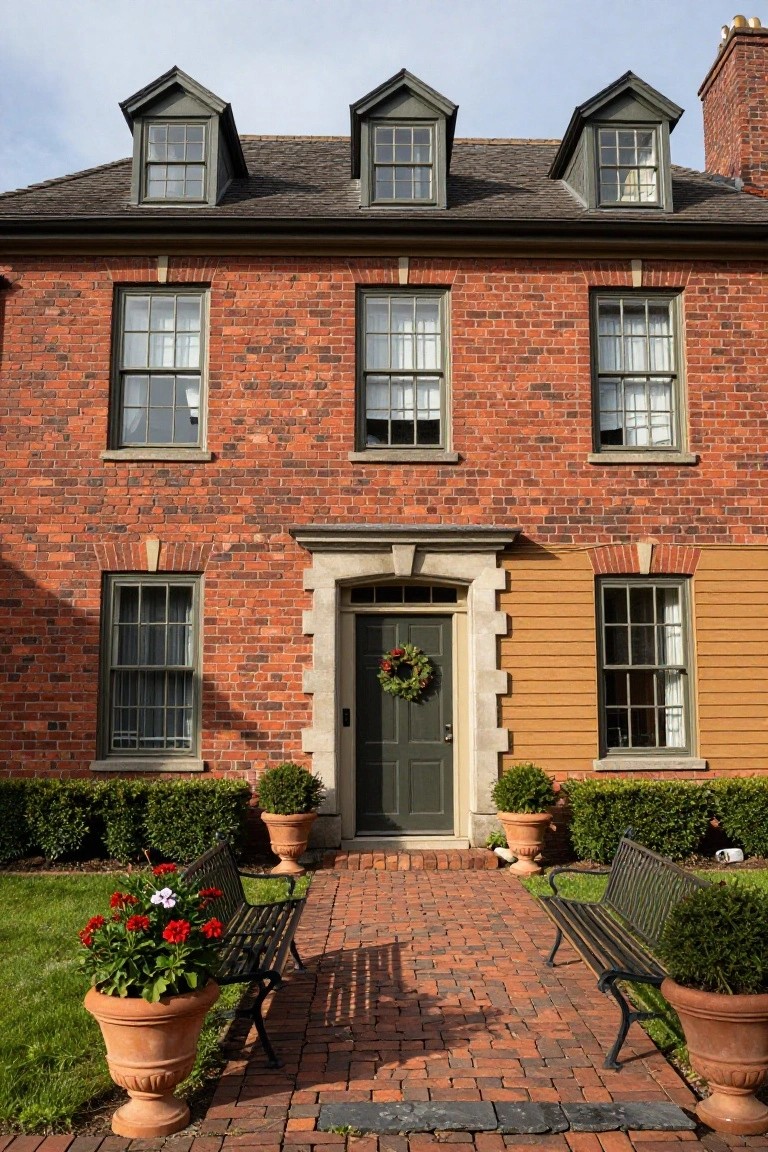
This setup takes a classic red brick colonial and adds tan siding to one side. It keeps the front looking solid and traditional. But that siding breaks things up nicely. Gives the house some breathing room without losing its old-school charm.
Try it on homes where the side wall shows from the street. Like corner lots. Stick to neutral siding colors so it doesn’t fight the brick. Dark green door and simple landscaping pull it together. Watch the proportions though. Siding works best if it’s not too wide a stretch.
Gray Siding and Brick Foundation on Colonial Homes
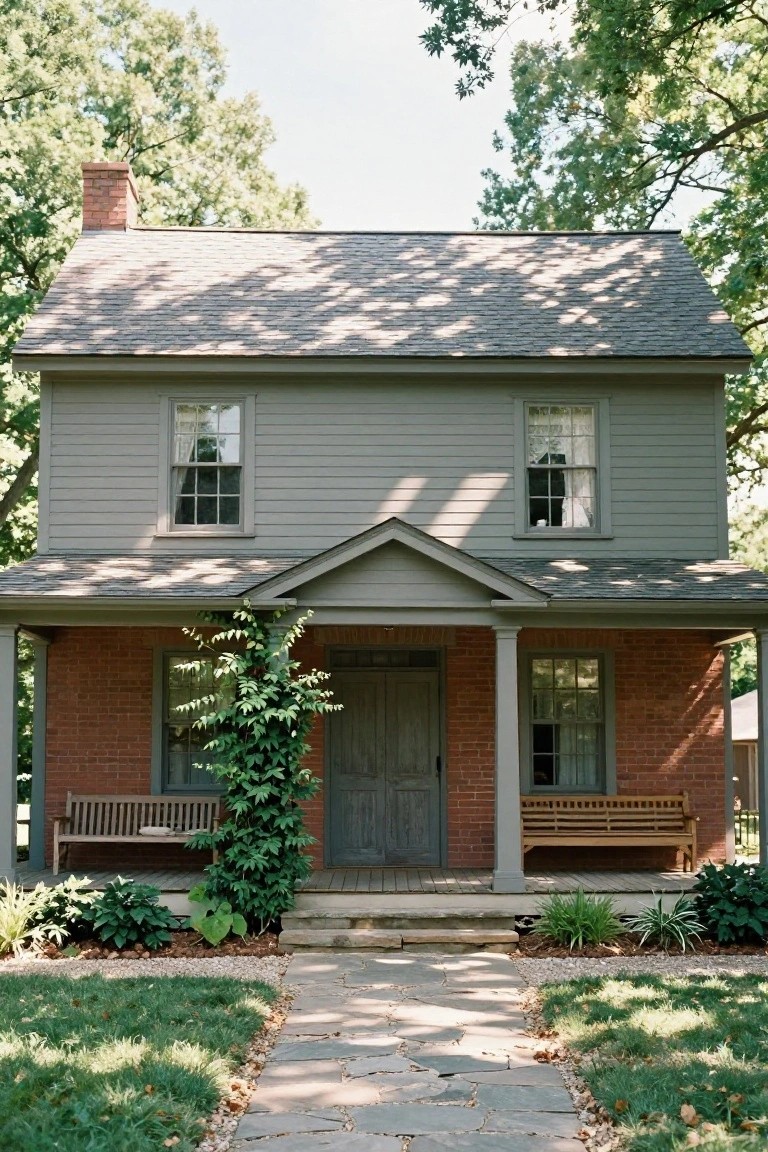
One solid way to handle a colonial exterior is light gray clapboard siding over a red brick base. The brick shows up on the foundation, chimney, and porch pillars here. It keeps things grounded and traditional. That gray siding feels fresh but not too modern. It lets the house read as classic without looking dated.
This setup suits older homes or new builds aiming for that timeless look. Brick stays low on the structure so the siding takes center stage. Works best where there’s some green around to soften the edges. Just match the brick tones carefully or it can feel off.
Classic Red Brick with White Trim
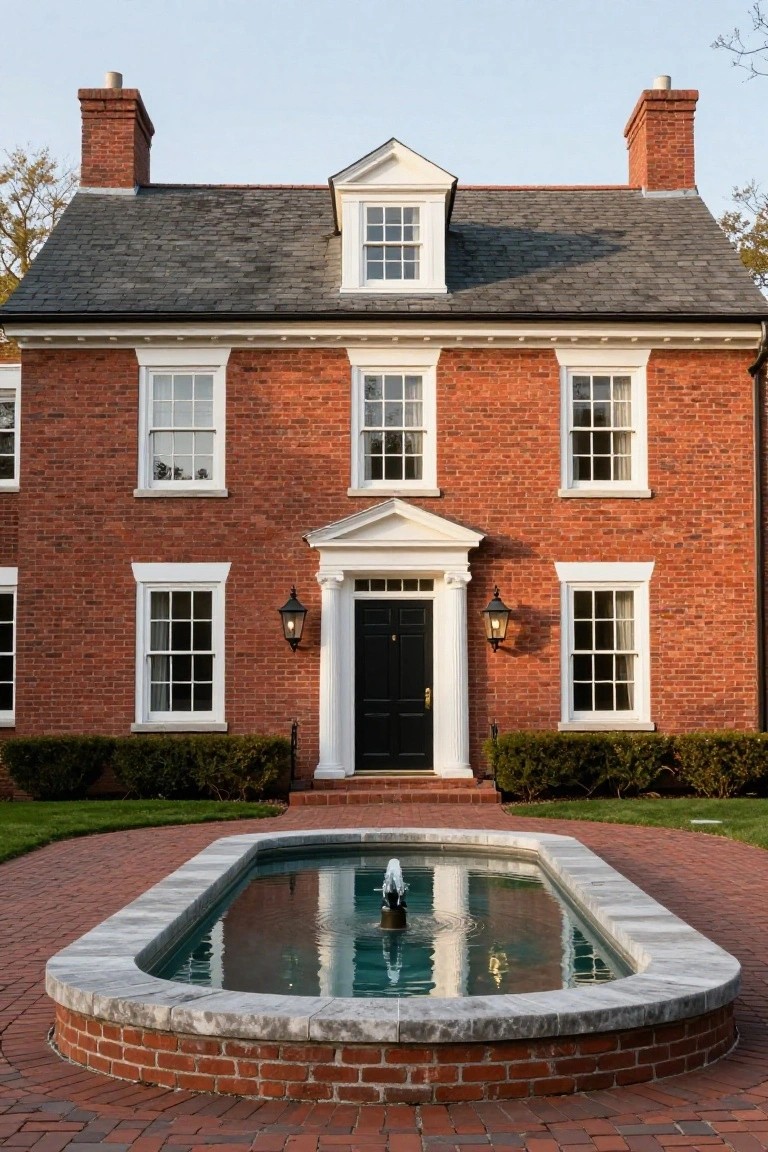
Red brick houses like this one look best when you keep the trim clean and white. The windows, dormer, and entry portico all get that bright white paint, which makes the brick pop without overwhelming it. It’s a combo that’s been around forever because it feels steady and right for colonial style homes.
You can pull this off on any symmetric two-story house facing the street. Stick to glossy black for the door to add some punch, and flank it with lanterns. It suits quiet neighborhoods where you want curb appeal that doesn’t scream. Just make sure the brick is laid straight, or the white will highlight any uneven spots.
Sage Green Siding with Brick Steps
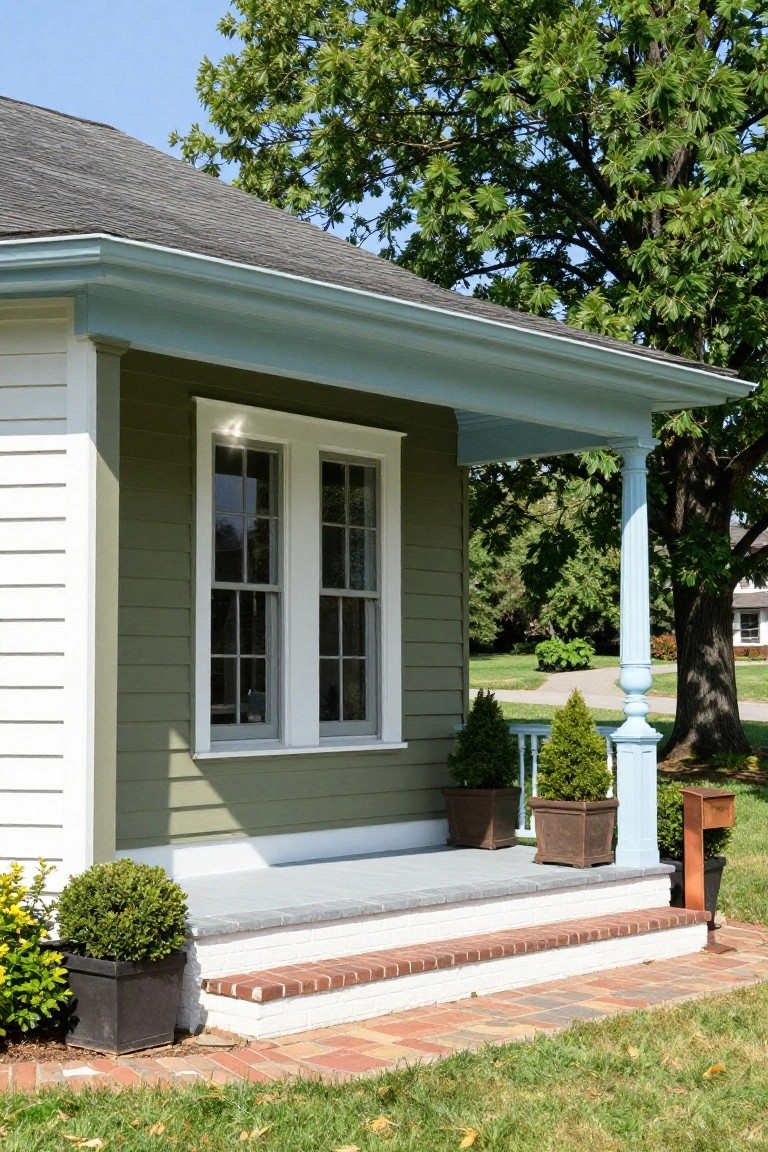
One nice combo pairs soft sage green siding along the side wall with crisp white trim on the front. Brick steps rise to the porch, adding a sturdy base that feels right at home on a Colonial exterior. The green keeps things calm and ties into nearby trees, while the brick brings some traditional weight without overpowering.
This works best on houses with porches in leafy neighborhoods. Go for light-colored brick to match the siding tones. Skip it if your lot is super modern… the rustic steps might feel out of place there.
Brick Exterior with Pale Yellow Siding
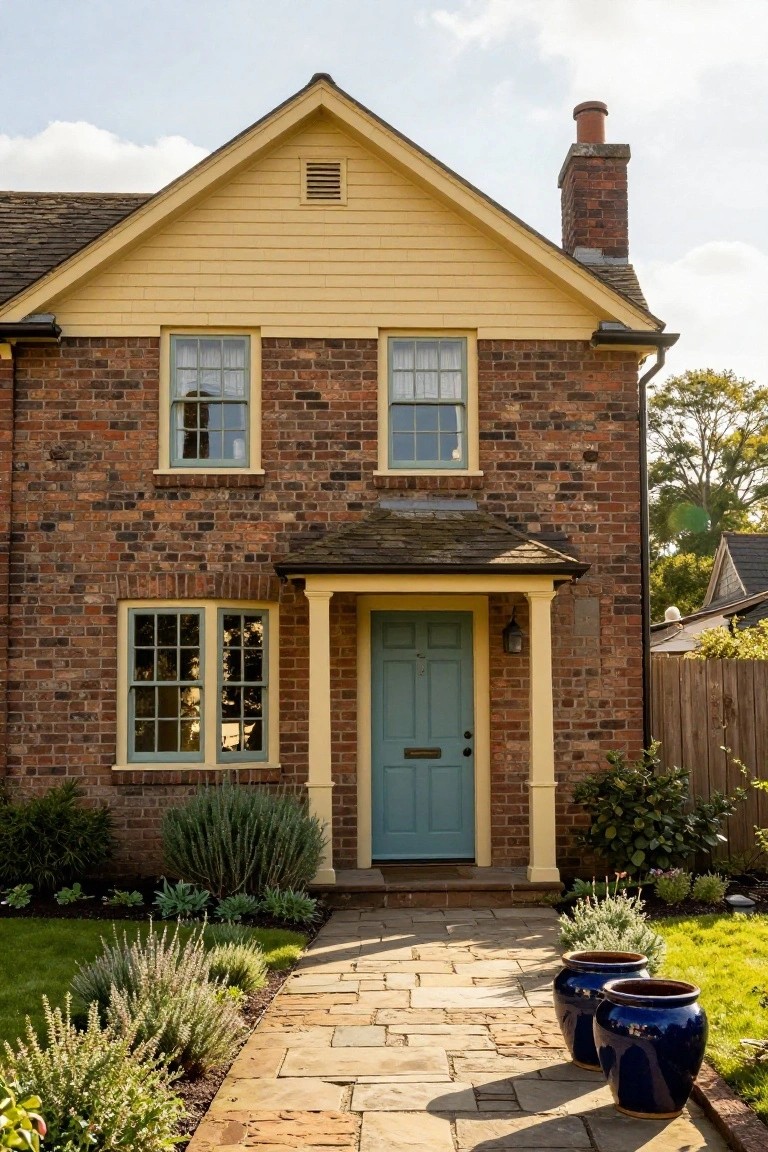
Red brick forms the solid base and sides of this colonial house, while pale yellow siding covers the upper gable and accents. That simple switch-up keeps things traditional but adds a bit of cheer. The yellow feels sunny and light against the brick’s warmth, making the whole front more approachable.
This look suits older brick homes needing a fresh face without big changes. Paint siding in a soft butter yellow, keep trim crisp white or matching yellow. A bold door color pulls it together. Best in mild climates where colors stay true year-round.
Classic Red Brick Colonial Porch
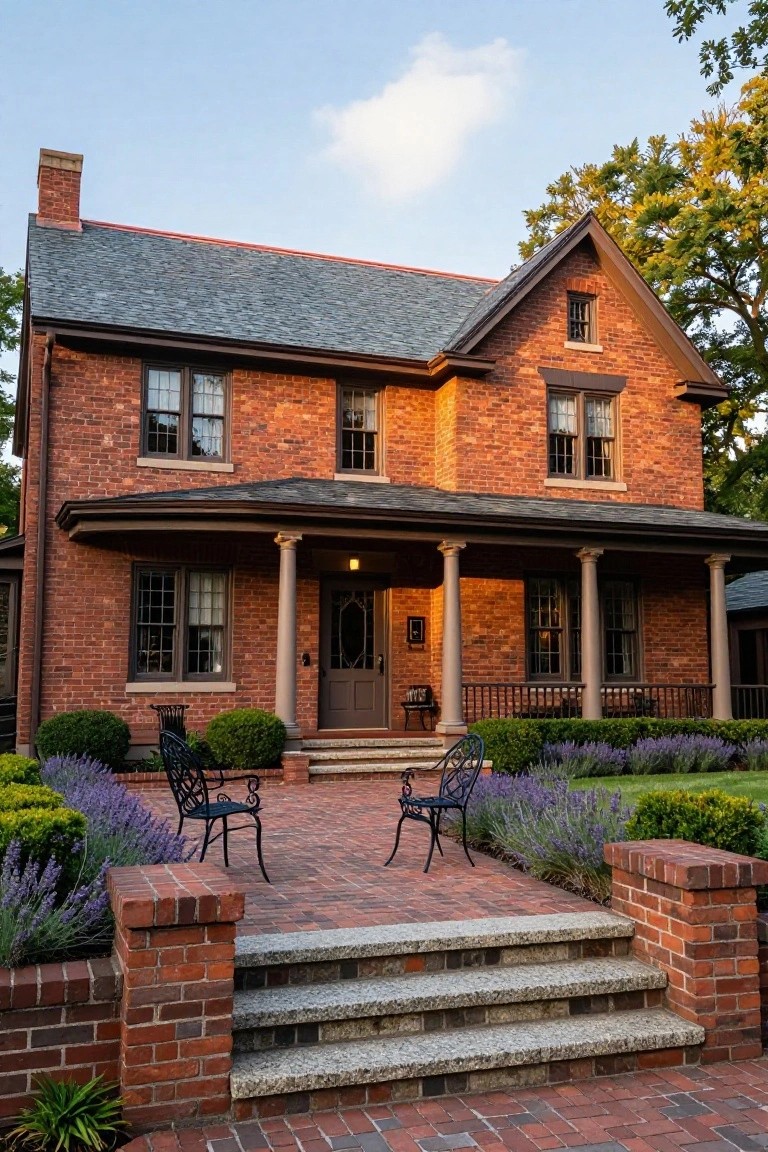
A traditional red brick house like this one really shines with a deep covered porch held up by simple round columns. The brick walls catch the light nicely, giving the whole front a solid, enduring feel that fits right into neighborhood settings. That porch pulls you right up to the door without overwhelming the clean lines of the Colonial shape.
You can pull this off on most any brick home from the early 1900s or a fresh build copying that style. Go for painted or stained wood columns against the brick, maybe with a slate roof overhead for some texture. Just keep plantings low around the steps so the entry stays the focus, nothing too bushy.
Gray Siding with Brick Walkway
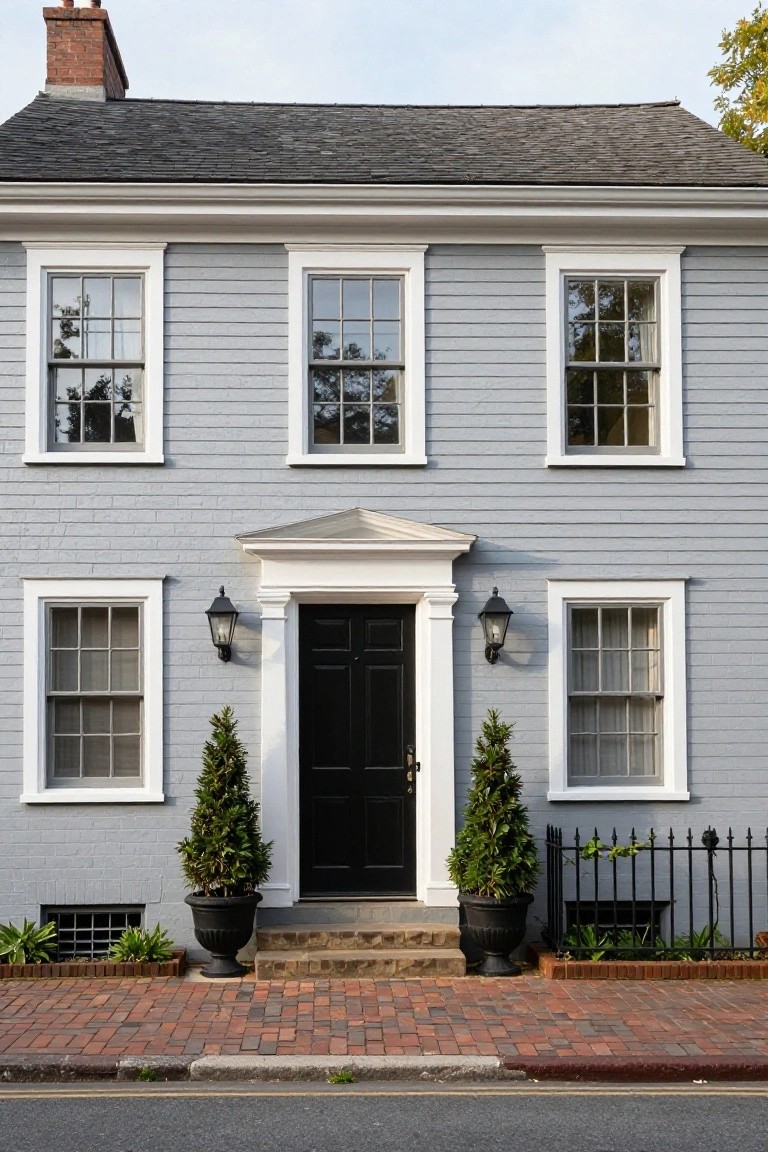
Gray clapboard siding like this keeps a colonial house looking clean and timeless. It softens the whole facade without hiding the classic shape. The red brick walkway pulls everything together. It adds that bit of warmth brick brings to wood siding homes. Notice how the chimney picks up the same brick too.
This combo fits older neighborhoods or any spot where you want subtle tradition. Use it on two-story colonials with simple windows. Go for a black door to make the entry pop. Keep plants in matching pots by the steps. One thing. Make sure the brick matches your chimney if you have one.
Red Brick Colonial with White Porch Trim
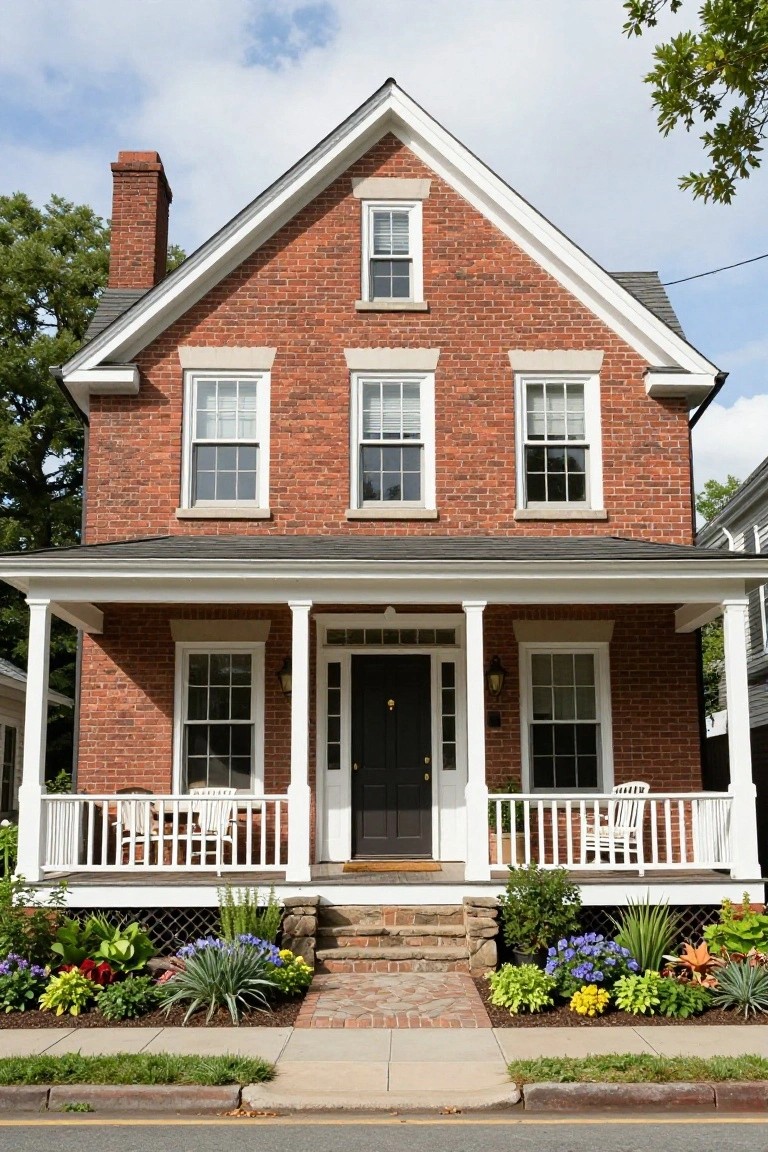
Red brick forms the solid base of this Colonial house, while white trim outlines the windows and wraps the entire front porch. That simple contrast keeps things sharp and traditional. The porch columns and railing pull it all together without overwhelming the brick.
This combo fits right into established neighborhoods where you want a home that looks put-together year round. Pair it with basic front steps and some low plants along the walk, like agave or hostas. Steer clear of bold colors elsewhere. It suits family houses on quiet streets best.
Brick Colonial with Blue Dormers
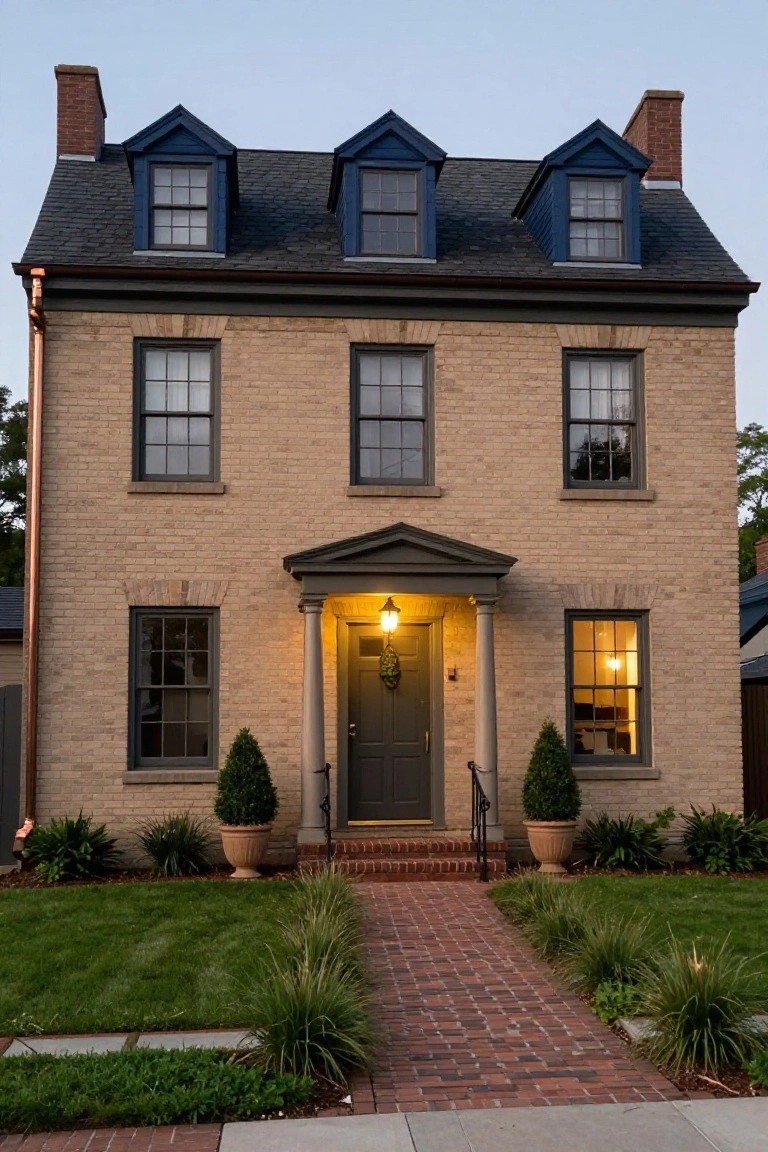
Warm tan brick makes up the main body of this colonial house. Navy blue dormers up top add a nice pop of color against the brick, and dark trim frames the windows and door. It keeps things traditional but fresh, especially with the copper gutters catching the evening light.
You can pull this off on a classic two-story home where you want subtle contrast. Stick to one bold accent like the dormers so it doesn’t get busy. Works best in a neighborhood with some trees and a simple brick path leading up, nothing too fussy.
Brick Colonial with Shingle Siding Mix
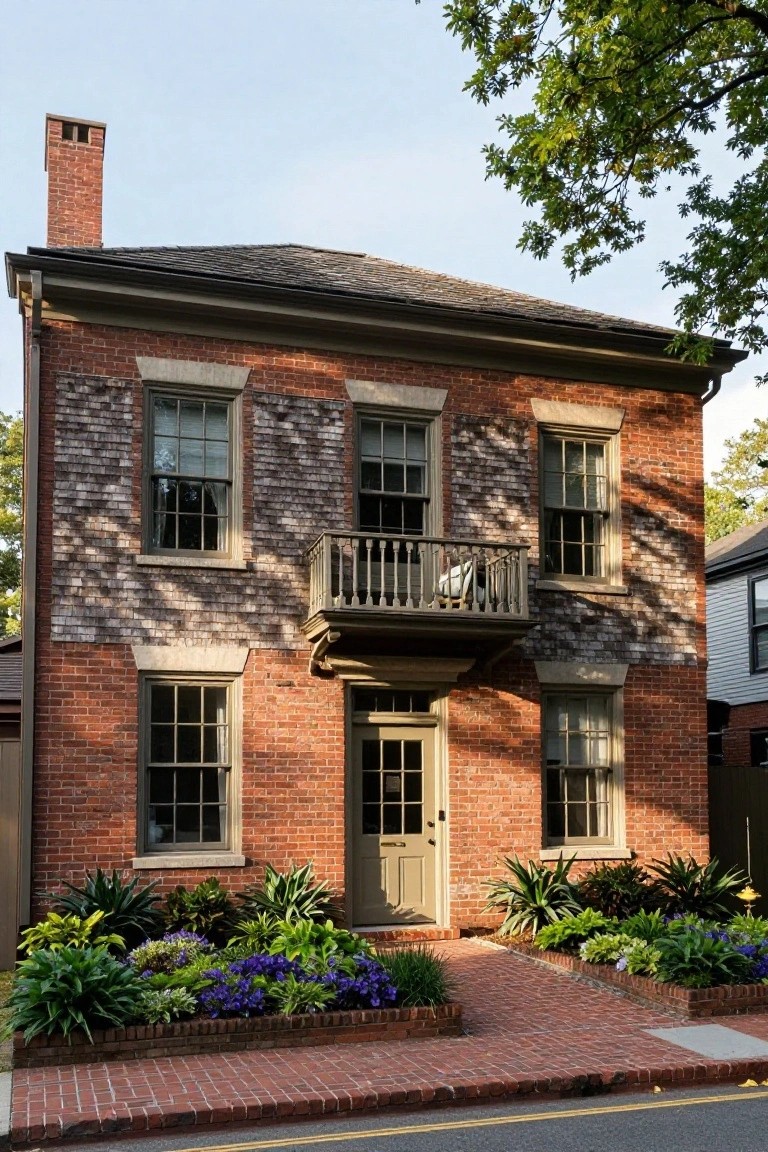
This setup takes a solid brick colonial base and mixes in wood shingle siding on the side and upper sections. The combo adds some texture without overwhelming the classic brick look. That balcony up top pulls it together nicely, giving the house a bit more character than plain brick all around.
You see this work well on homes from the early 1800s style or revivals in town settings. Keep the siding in a muted tone to match the brick, and focus plantings low around the entry so the facade stays the star. It holds up in humid spots too, since both materials weather about the same.
Shingle Siding with Brick Entry Trim
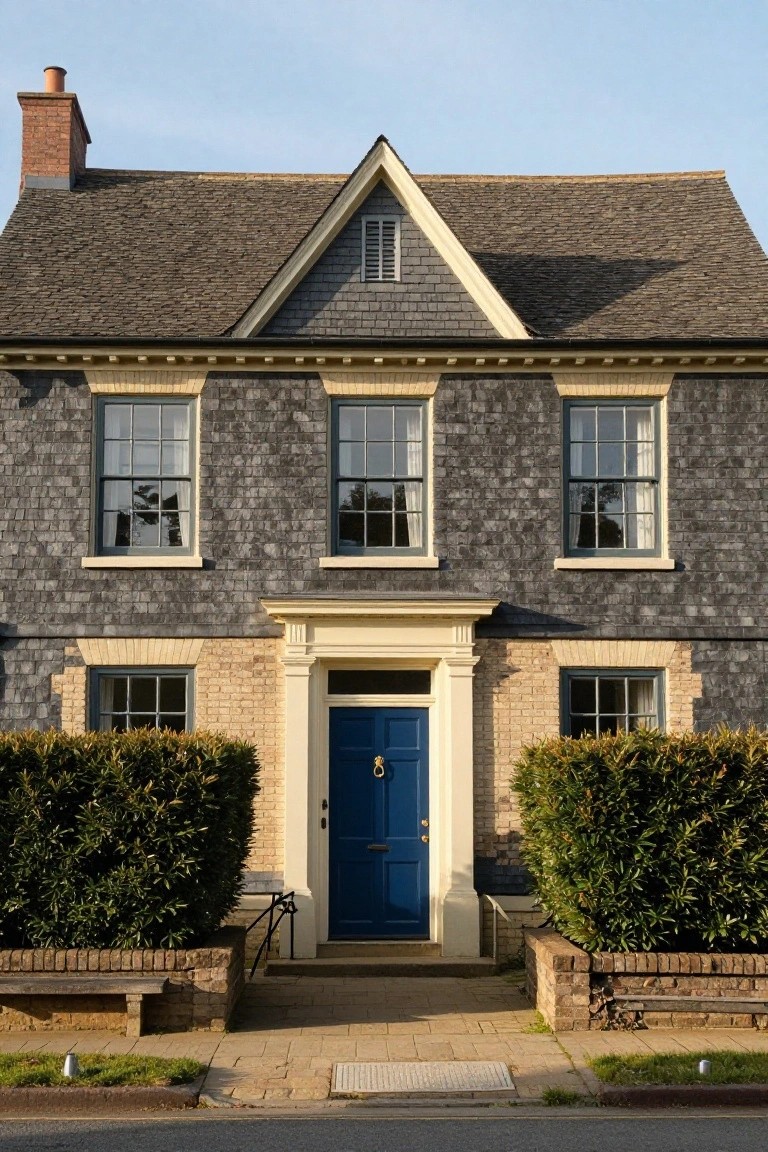
Gray shingle siding covers most of this colonial house, but brick trim outlines the windows and frames the front door. That simple switch adds some weight and warmth to the lighter shingles. The blue door stands out without overpowering things.
This combo fits older style homes in town settings. Stick the brick to entry areas and window surrounds, not the whole facade. It keeps upkeep low since shingles weather well… just paint the door a bold color if you want that extra pop.
Glossy Black Brick Colonial Front
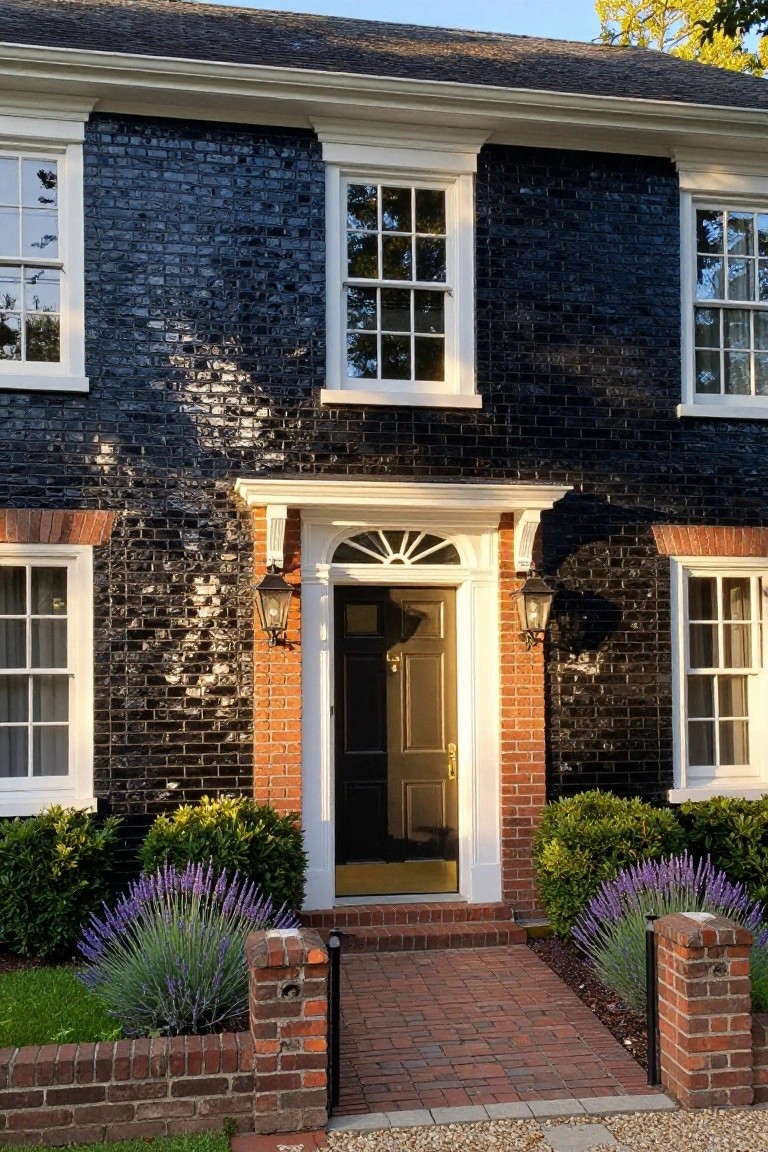
Glossy black brick gives this colonial house a bold, modern edge while keeping the classic shape intact. The deep shine catches the light in a way regular brick doesn’t, making the facade stand out without extra work. White trim around the windows and door keeps things crisp and pulls your eye right to the entry.
This look works best on homes with good symmetry, like two-story colonials facing the street. Pair it with a simple red brick path or some low plants like lavender to frame the door. Skip it if your lot is too shady, since the gloss needs light to pop.
Brick Base with Light Siding on Colonial Houses
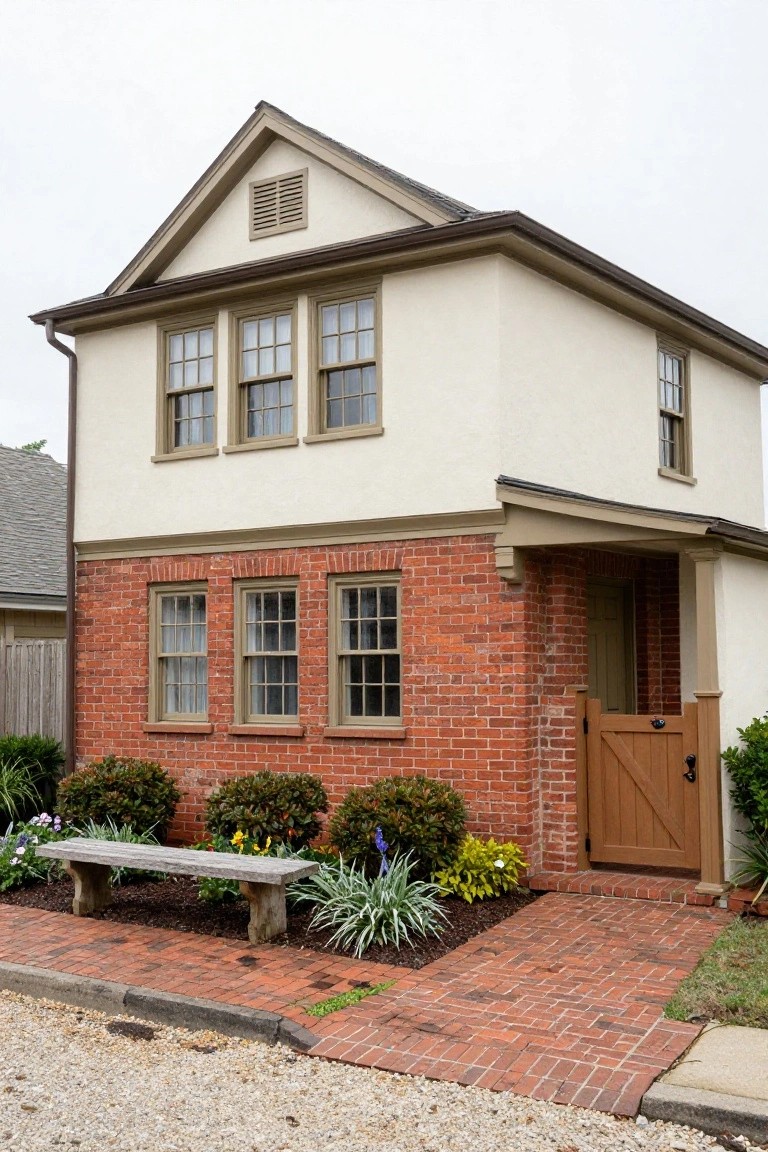
A classic move on colonial homes is red brick wrapping the lower level and entry, topped with light beige siding. The brick adds warmth and weight where it counts, around the door and windows. The siding lightens things up above, so the house doesn’t look squat or overwhelming. It’s a straightforward way to get that traditional feel without going all brick.
This setup fits two-story homes in casual neighborhoods, especially where you want curb appeal that lasts. Use it on houses with simple gables and double-hung windows. Add a wood gate and brick path out front to tie it together. Skip it if your lot is tiny, since the brick can make things feel bulkier up close.
Colonial Brick Base with Blue Siding
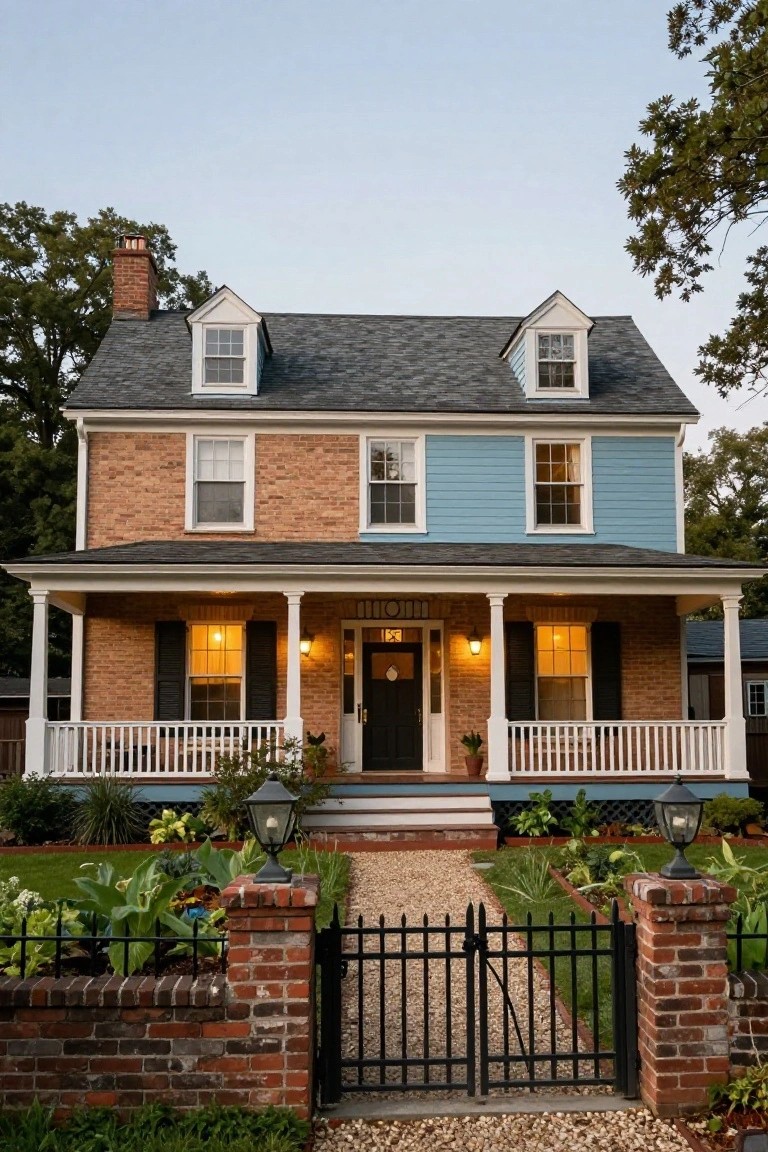
This Colonial house uses red brick on the bottom level and light blue siding above. The brick gives it a solid, traditional base that feels right at home in older neighborhoods. That blue siding lifts the upper story without overpowering things. White trim around the windows and porch ties it all together nicely.
You can pull this off on a two-story home with a gabled roof. It suits places with some mature trees nearby, where the colors play off green leaves. Stick to simple landscaping out front, like low plants along brick edging. Just make sure the brick and siding meet cleanly at the porch line.
Red Brick with Cream Siding on Colonial Homes
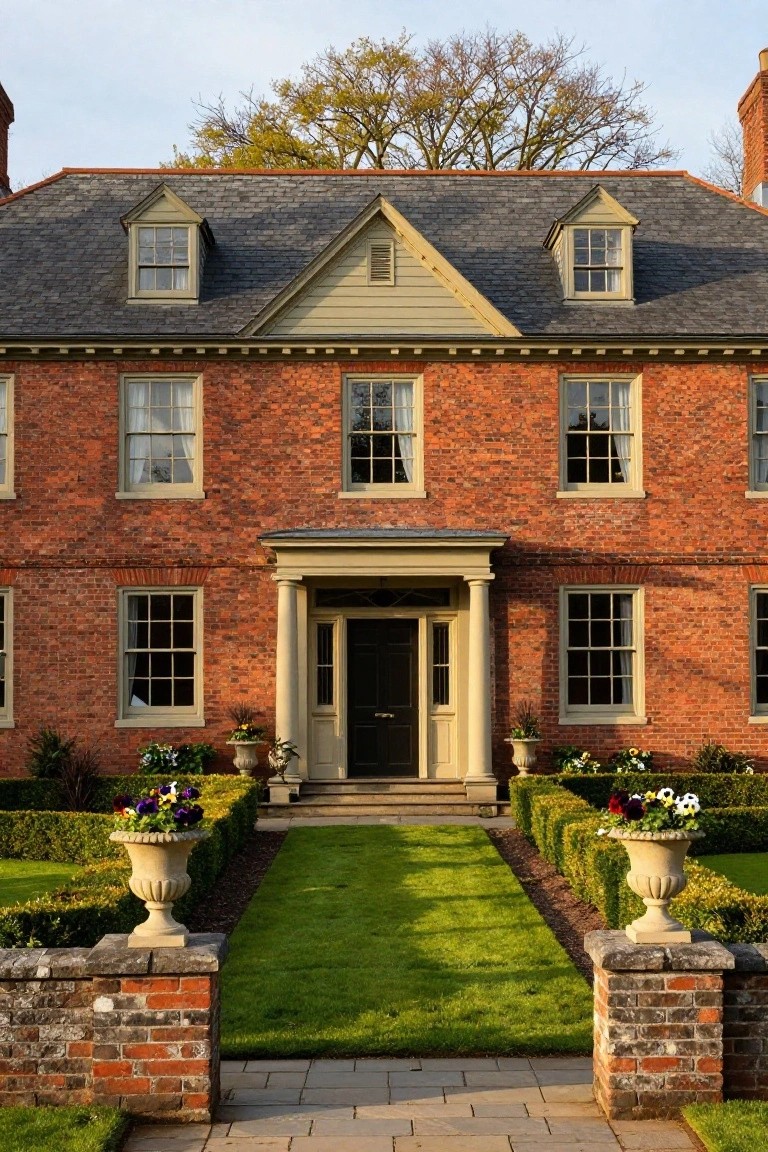
This setup uses warm red brick for the main walls and pairs it with cream siding on the gables and trim. It gives the house a clean, balanced look that feels traditional without being too heavy. The contrast makes the windows and entry stand out just right, especially with that classic slate roof tying it together.
Try this combo on older homes or new builds aiming for colonial style. It works best in milder climates where the brick can breathe. Keep the cream siding to smaller areas like the pediment and dormers so the brick stays the star. Watch for mismatched brick tones though. They can throw off the warmth.
Brick and Board-and-Batten Siding on Colonial Homes
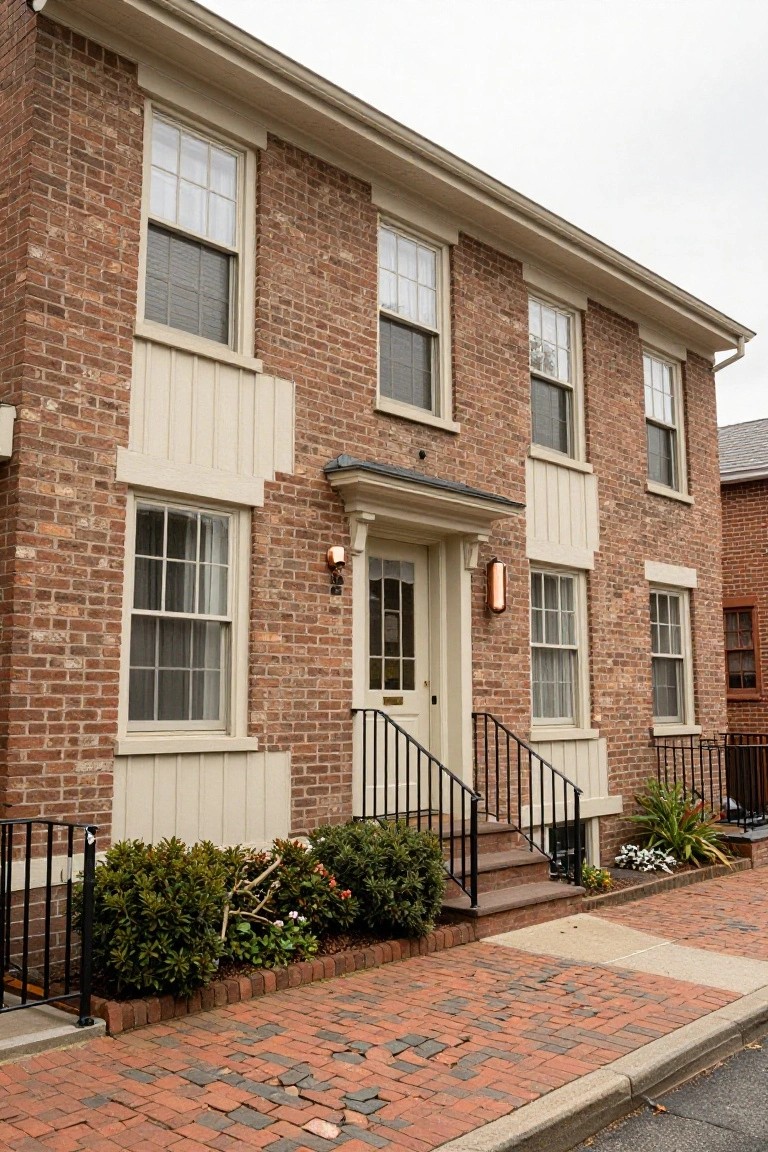
Red brick forms the base of this colonial exterior, but cream board-and-batten siding wraps the corners and gable ends. That simple switch adds shape without much fuss. It keeps the house looking solid yet pulls the eye around the front nicely. Black iron railings on the entry steps tie it together too.
Try this on older brick homes that feel a bit heavy. It suits neighborhoods with traditional houses, especially where you want curb appeal that fits right in. Just match the siding color to your trim so it doesn’t fight the brick. Low steps like these make the door feel welcoming.
Frequently Asked Questions
Q: My Colonial has dark trim already. Can I still pull off these lighter brick and siding combos?
A: Sure, swap in a warm medium brick to bridge the dark trim. Light siding on the upper half keeps it from feeling too heavy.
Q: How do I clean brick and siding combos without damaging them?
A: Grab a garden hose and soft brush each spring. Pressure washers scratch siding quick, so skip them.
Q: Do these combos hide dirt better than all-brick exteriors?
A: They do. Siding wipes clean easier, and brick grounds the look while staying low-maintenance.
Q: And what if my roof is asphalt shingles? Will that clash?
A: Not at all. Match shingle tones to your brick for flow. Dark roofs pair best with any combo here.
