

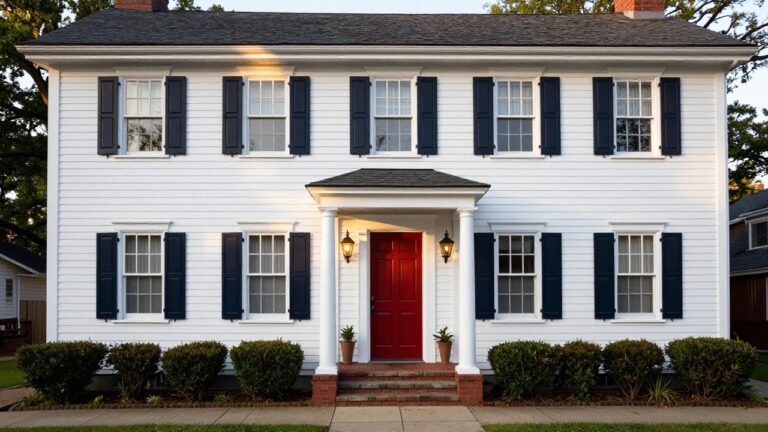
When I walk past colonial homes in my neighborhood, the siding always pulls my attention first because it shapes how the whole facade reads from the street.
I’ve learned that choices like clapboard or board-and-batten hold up best over time, blending smoothly with the gabled rooflines and centered doors that make these houses feel balanced.
People notice right away if the material clashes with the trim or fails to echo the historic proportions.
Stick with options that age gracefully outdoors.
You can adapt a few of these to your own place after checking how they match your entry and windows in person.
Timeless White Clapboard Siding
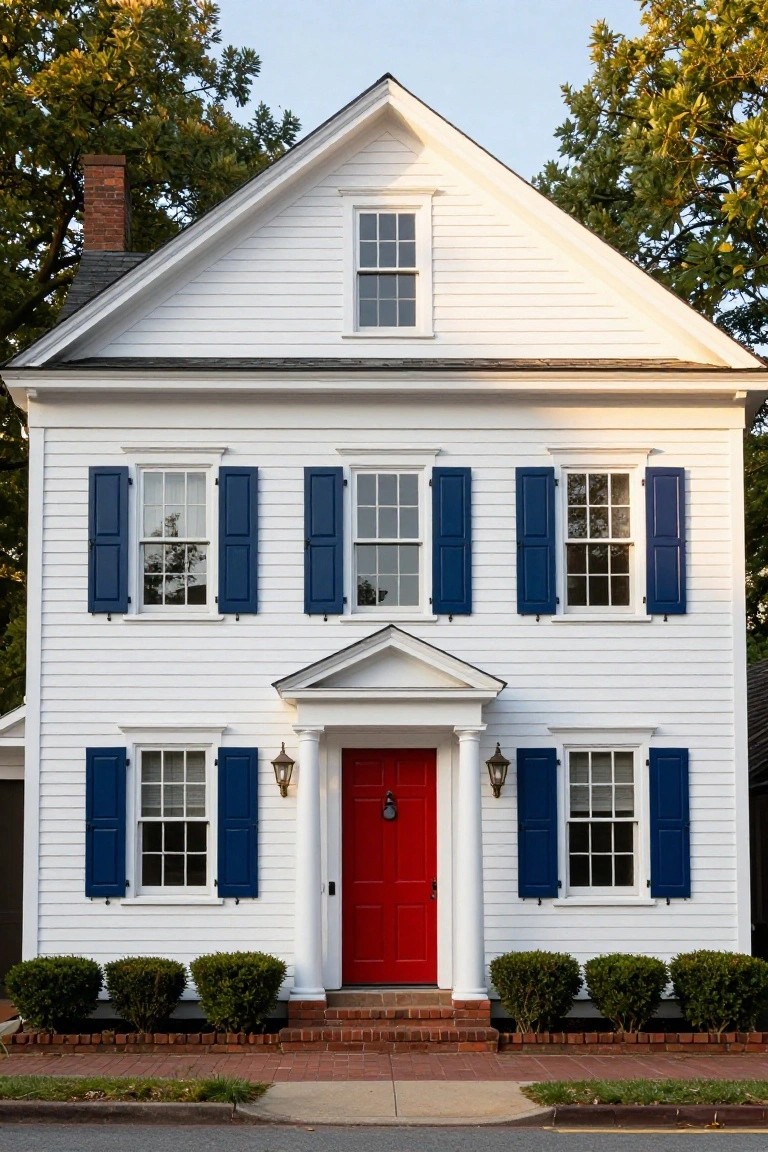
White clapboard siding keeps showing up on Colonial homes for good reason. It delivers that fresh, classic look without much fuss. Navy blue shutters frame the windows nicely, and a red front door pulls the eye right to the entry. The whole setup feels balanced and true to the style.
This siding choice suits most two-story Colonials, especially ones with gabled roofs and evenly spaced windows. Paint it bright white every few years to stay crisp. It pairs well with brick walks or simple shrubs out front. Avoid dark colors here, they can weigh it down.
Weathered Shingle Siding
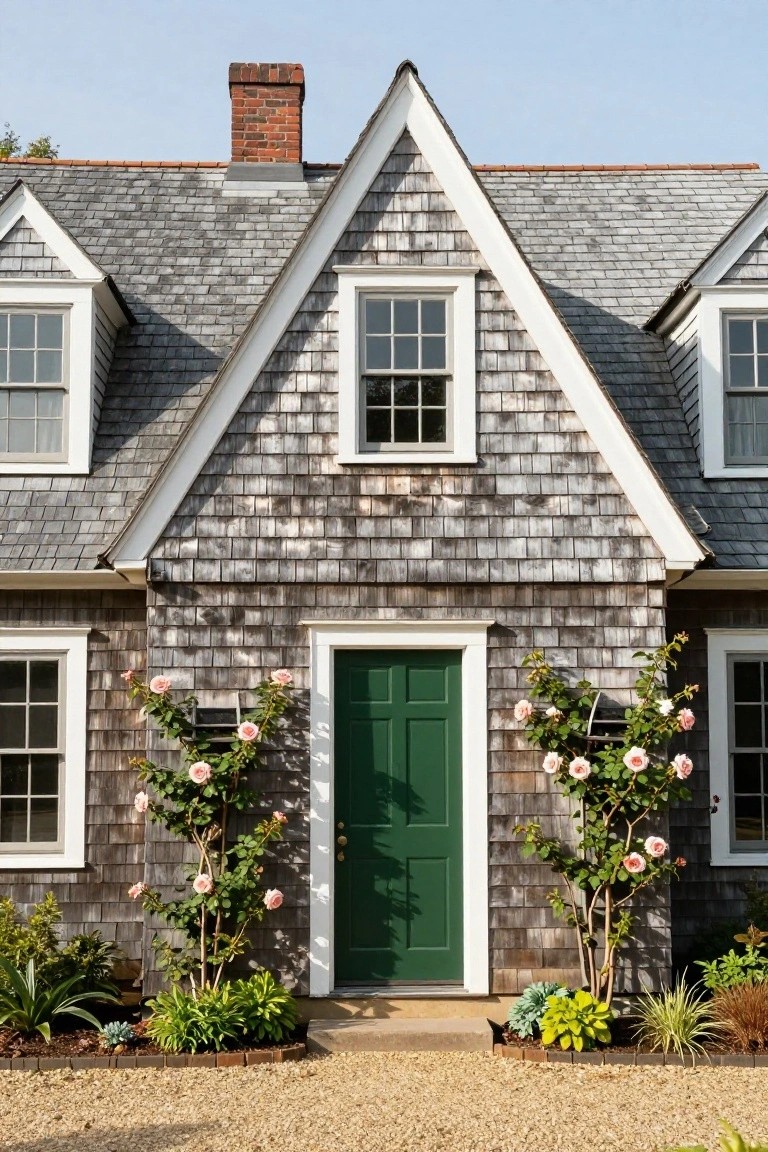
Shingle siding like this brings a rugged, lived-in feel to Colonial homes. The gray cedar shakes cover the facade smoothly, showing off that natural weathering that makes the house look like it’s been there for years. White trim sharpens the edges around windows and the gable, while a green door adds a fresh pop without overdoing it.
This siding suits homes in coastal spots or anywhere with trees and wind, since it handles weather well and ages gracefully. Plant climbing roses along the sides for some color that softens the look, but keep plantings low around the entry so the door stays the focus. It fits traditional Colonials best, especially gabled ones.
Brick Siding with Black Shutters
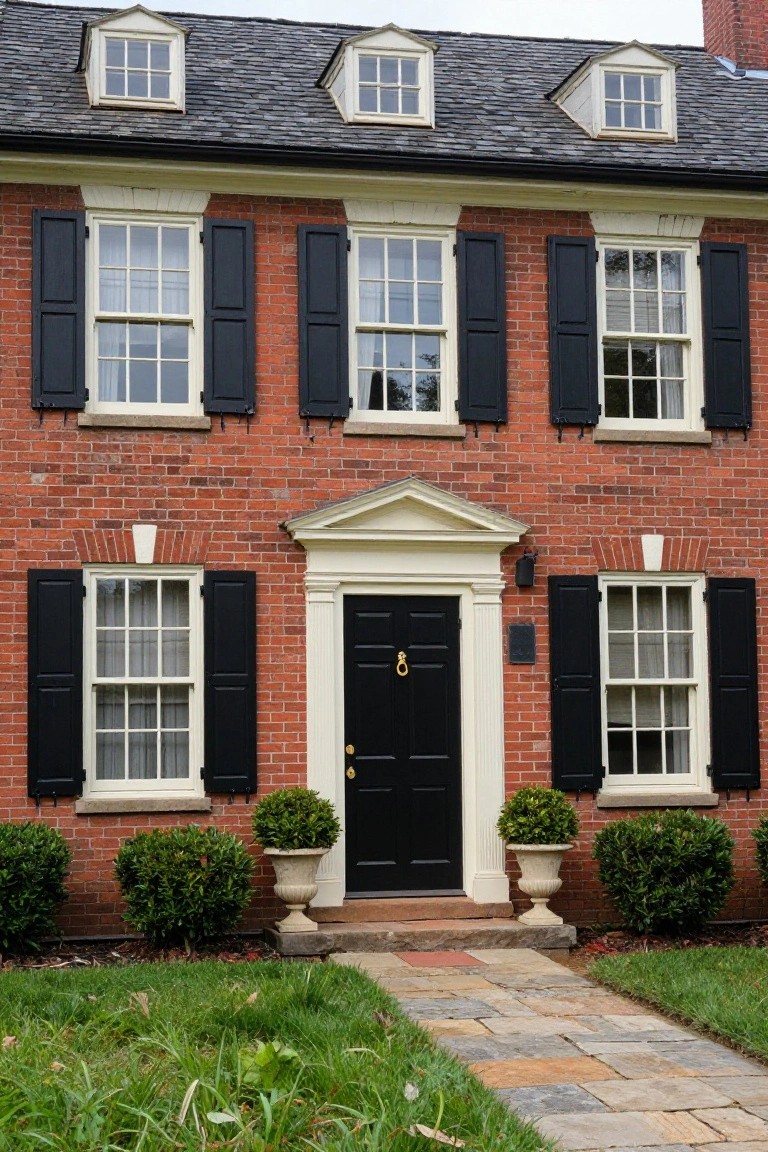
Brick siding stays popular on Colonial homes for good reason. It gives that solid, lasting look folks have trusted for generations. Here, the red brick pairs with black shutters that stand out sharp against it. White trim frames the entry clean and simple. No frills, just reliable charm.
This setup suits older neighborhoods or revivals where you want classic without overdoing it. Use it on two-story facades with balanced windows. Keep plantings low around the base, like those boxwoods by the door. Watch the mortar color though. It needs to match the brick or things look off.
Scalloped Shingle Siding
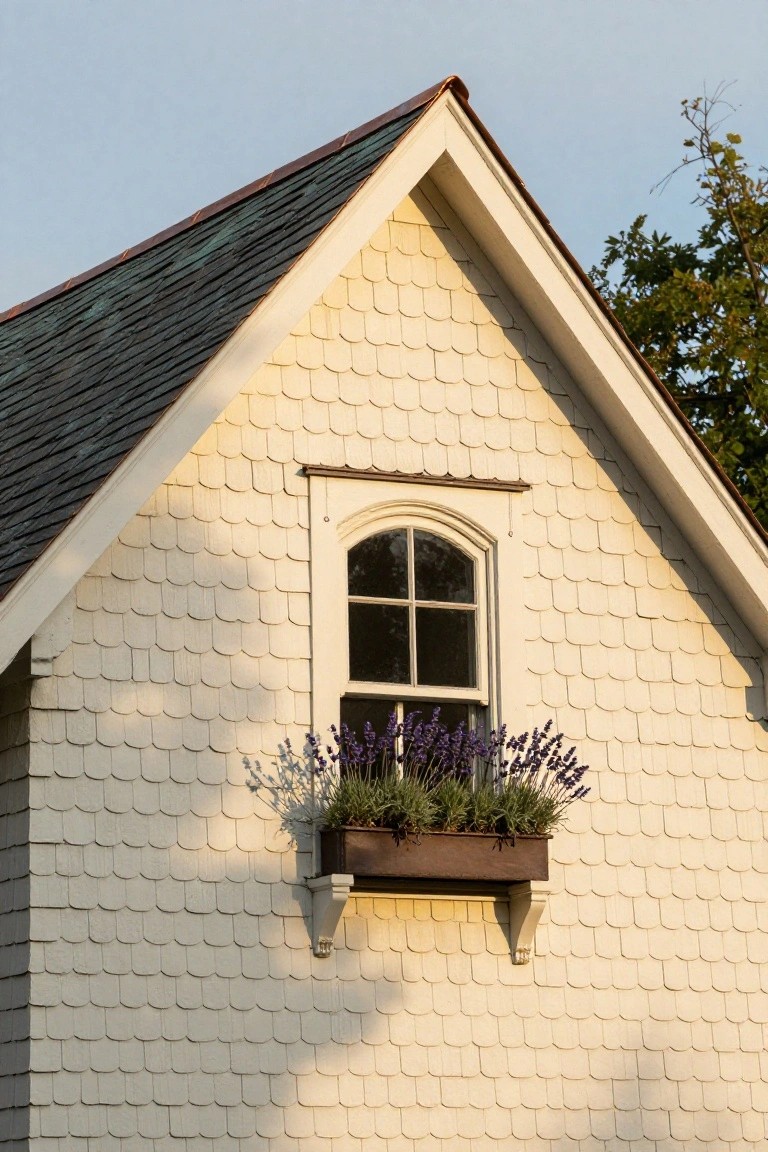
Scalloped shingle siding brings a gentle curve to Colonial exteriors. These overlapping pieces in a soft cream color create subtle shadows and movement on the wall. It’s a classic choice that feels handmade without being fussy. That window box with lavender just fits right in, adding a bit of garden touch.
Use it on gable ends or smaller accents to keep costs down. It suits homes in the Northeast or anywhere with traditional roots. Pair with darker roofs for contrast, but watch the paint, as the texture can hide dirt less than smooth siding. Older houses take to it naturally.
Light Clapboard Siding with Green Trim
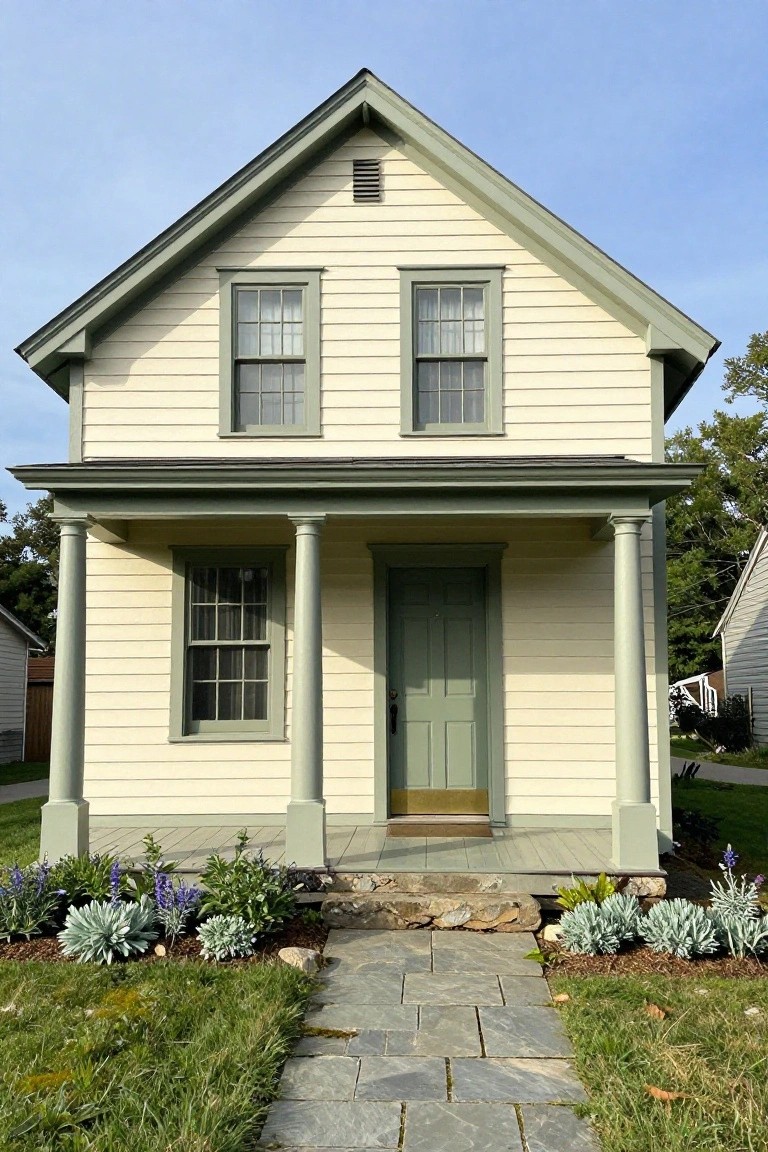
A soft clapboard siding like this one keeps things simple and true to Colonial roots. Painted in a pale cream shade, it lets the house blend right into its surroundings on a sunny day. The sage green trim on the windows, porch columns, and door pulls it together without much fuss. It’s a quiet way to nod to tradition.
This siding setup suits older neighborhoods or modest revivals where you don’t want the house to shout. Go for it on east-facing facades, since the light color stays bright year-round. Just make sure the trim paint matches your door hardware, or it might look off after a few seasons.
Navy Blue Clapboard Siding
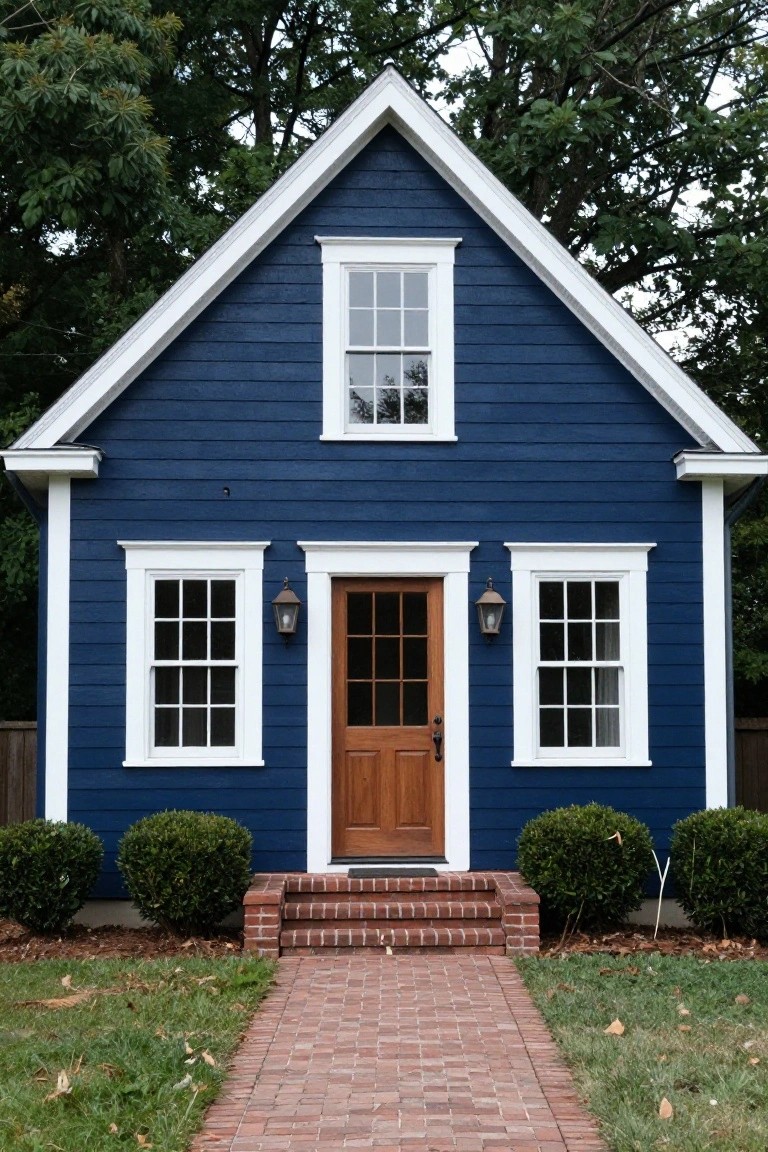
Navy blue clapboard siding gives a Colonial house a fresh, bold twist while sticking to traditional lines. The dark shade sets off white trim around the windows and door nicely. It feels classic but not dated, especially on a gabled front like this.
Try it on compact homes where you want curb appeal without overwhelming the scale. It suits shady spots under trees, too. Go with a sturdy exterior paint, and keep accents simple like a wood door and brick path. One thing. Lighter blues fade faster in full sun.
Gray Shingle Siding
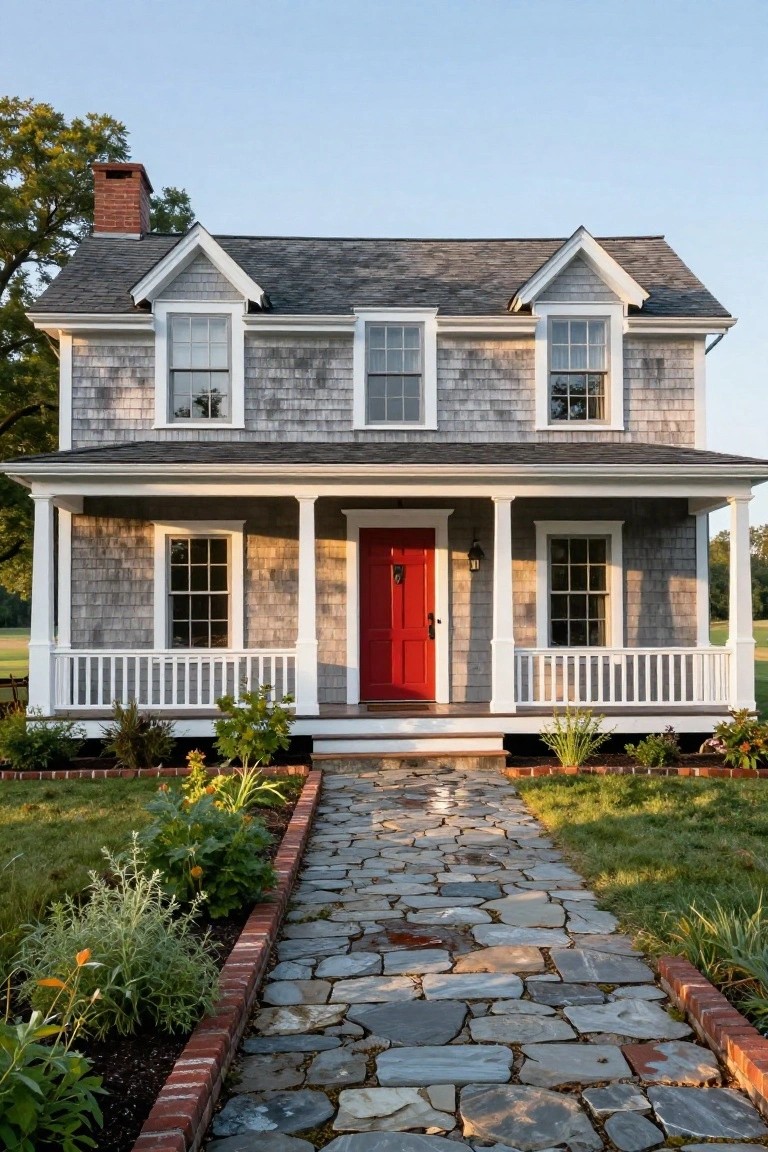
Shingle siding in a soft gray tone brings out the best in Colonial homes. It adds that textured look folks associate with older New England houses, without overwhelming the clean lines of the architecture. The gray picks up on natural surroundings like trees and sky, keeping the whole facade feeling settled and timeless.
You can use this on two-story homes with gables and porches, especially where you want subtle curb appeal. White trim sets it off nicely, and a red door adds just enough punch. Go for cedar shingles treated for weather resistance, since they hold up well in damp climates but need checking every few years.
Pale Yellow Clapboard Siding
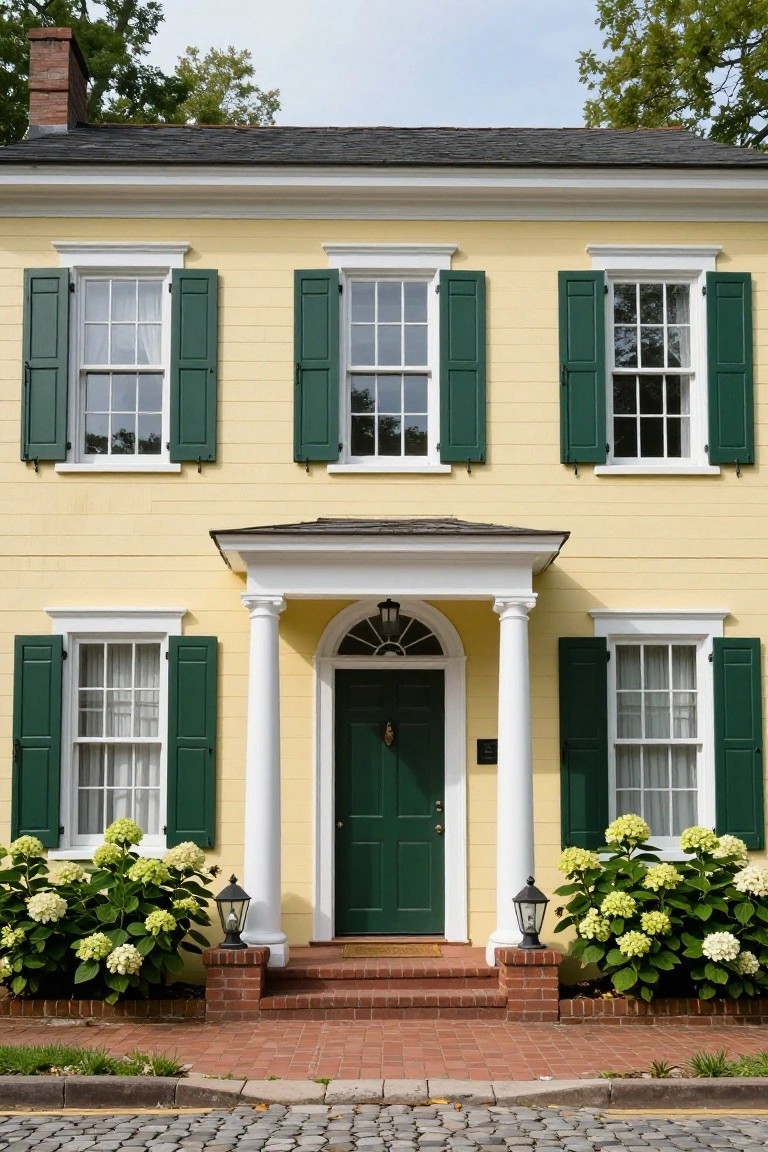
A soft pale yellow on clapboard siding brings out that classic Colonial feel without going too bold. It works well because the light color keeps the house looking fresh and open, especially with dark green shutters framing the windows. White trim around the doors and porch columns sharpens everything up nicely.
This siding choice suits older homes in town settings or anywhere with some historic vibe. Pick a shade like buttery yellow that holds up to weather, and pair it with evergreen shutters for contrast. Just test the color in different lights first, since it can shift a bit.
Classic Red Clapboard Siding
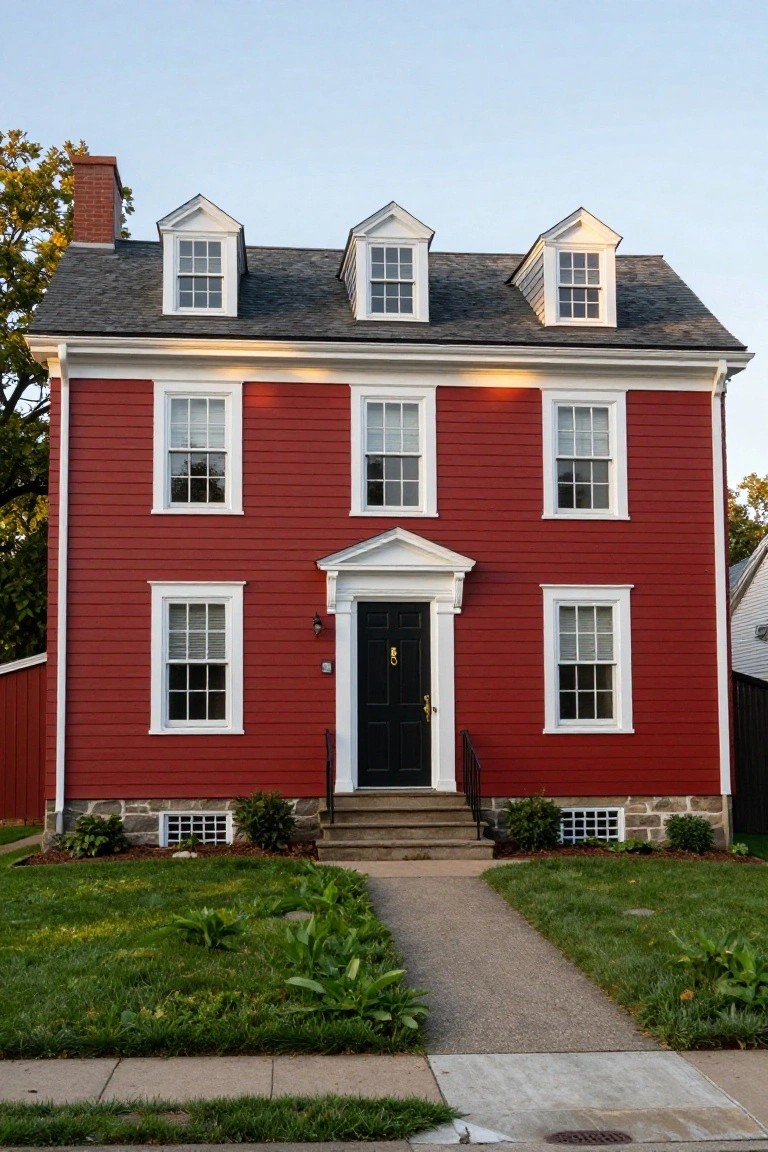
Red clapboard siding like this takes a Colonial house back to its roots. The horizontal wood boards painted in a strong red color stand out nicely next to the white trim on the windows and door. It keeps things traditional and lively at the same time.
This siding fits best on two-story homes with balanced features, like dormers and a simple front entry. Go for it if your house has that boxy shape and good sunlight. Keep up with repainting every few years though. Fade hits red hard.
Warm Wood Siding
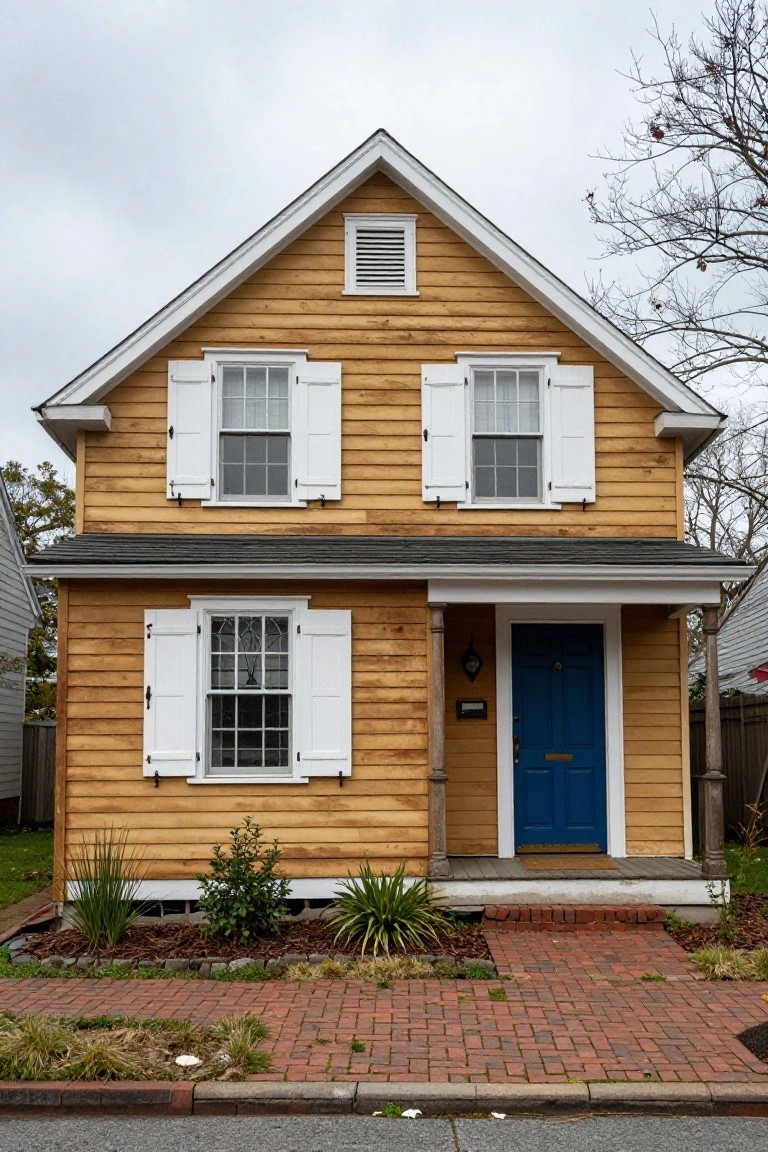
Warm wood siding like this golden clapboard brings a cozy, lived-in feel to Colonial homes. It softens the straight lines of the architecture without losing that traditional shape. White shutters and trim pop against the honeyed tone, and a bold blue door adds just enough color up front.
This siding works best on smaller homes or ones in neighborhoods with a mix of old and new styles. Go for a semi-transparent stain to let the wood grain show through, and pair it with simple porch posts. It holds up well in mild climates but needs regular sealing to avoid weathering.
Recommended Products

Authentic Vintage Appearance: Restore the timeless charm of classic homes with our fiber cement siding shingles. Designed to match the look and size of old asbestos siding shingles, these panels offer a beautiful, textured surface that mirrors the traditional style, without the asbestos.

Authentic Vintage Appearance: Restore the timeless charm of classic homes with our straight edged fiber cement siding shingles. Designed to match the look and size of old asbestos siding shingles, these panels offer a beautiful, textured surface that mirrors the traditional style, without the asbestos.

Resquared & Rebutted (R&R) for precise fit and professional alignment
Gray Clapboard Siding with Brick Base
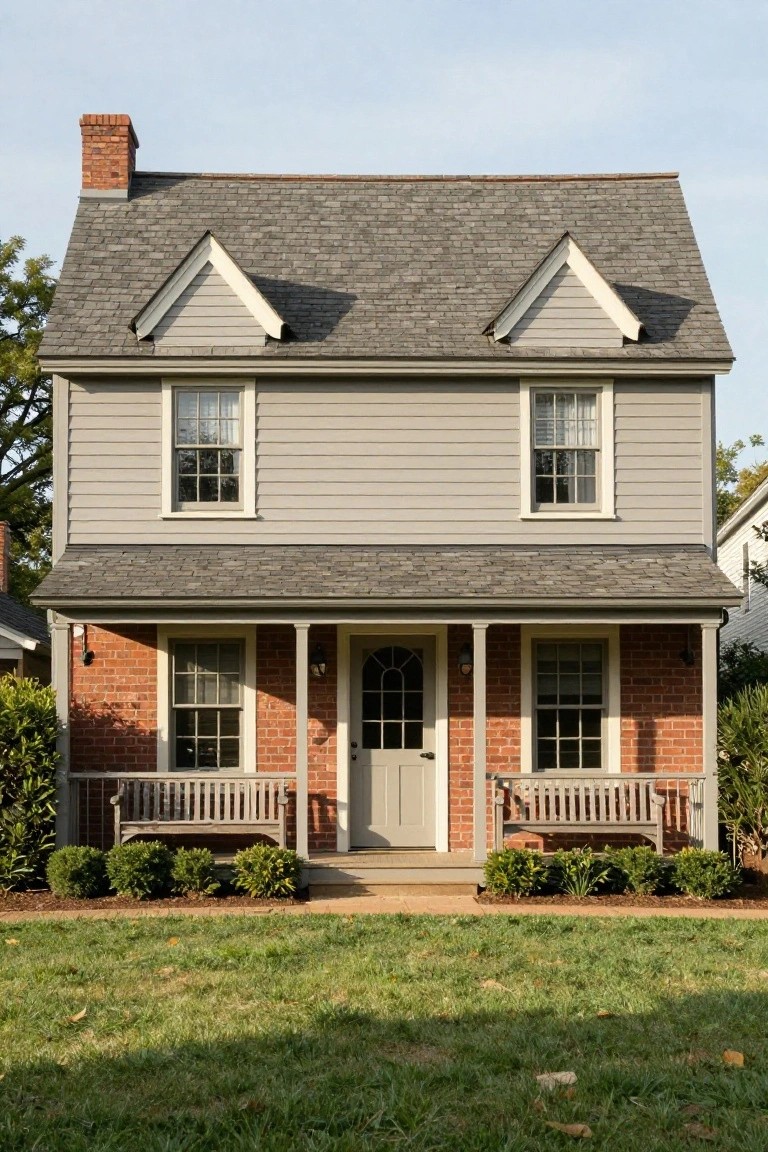
Gray clapboard siding covers most of this Colonial house. It runs horizontal like traditional wood shakes but in a soft painted gray that feels fresh yet rooted in old styles. Red brick takes over at the base and porch supports. That mix keeps the house looking balanced and sturdy. The brick adds some weight down low without overwhelming the lighter siding above.
This setup suits two-story Colonials in milder climates where you want curb appeal that lasts. Use it on homes with slate roofs and simple gables. Stick to muted grays so the brick pops a bit. It holds up well to weather if you seal everything right. Just watch for mismatched brick tones that could jar the look.
Shingle Siding for Colonial Houses
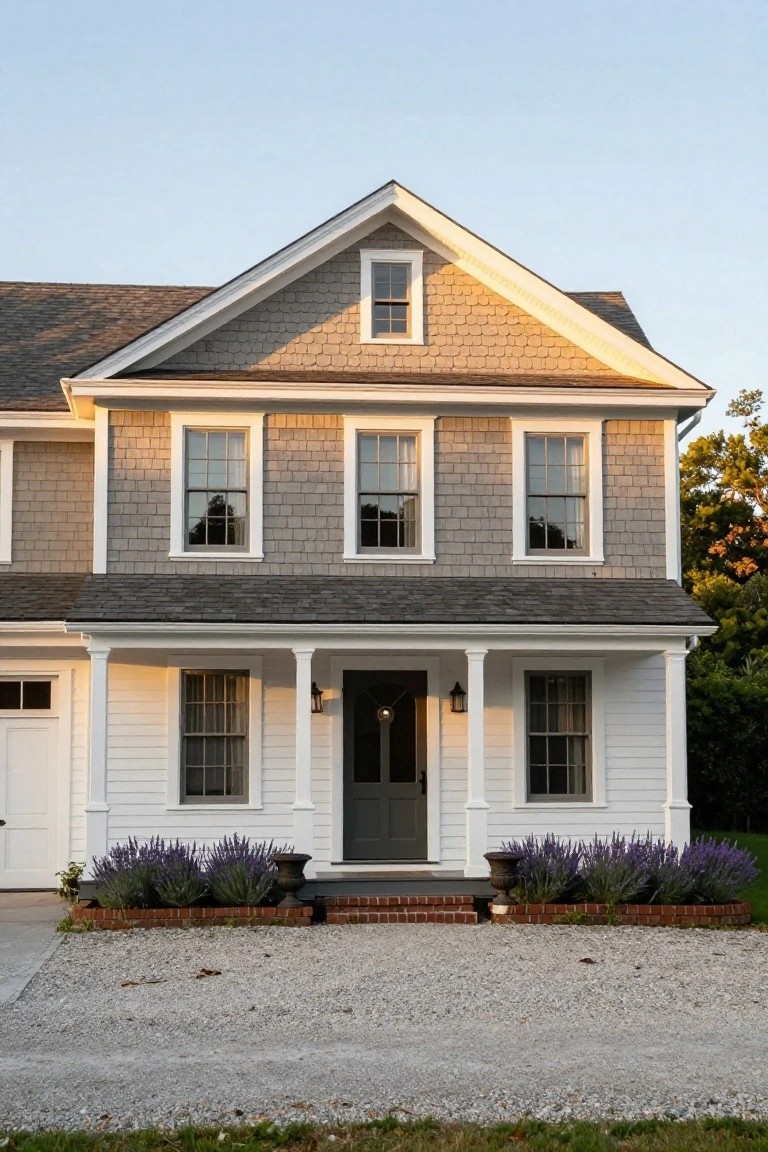
Shingle siding gives a Colonial house that easy, lived-in feel right away. You see it here on the upper part of the facade, in a soft gray that catches the light without being too bold. It adds texture against the smoother white clapboard on the porch and base, keeping things balanced and classic. Folks like it because it nods to older coastal homes without feeling fussy.
This works best on two-story Colonials with gables or dormers. Pair the shingles up top, then switch to clapboard or trim down low for contrast. It suits areas with some weather exposure, since shingles hold up well. Just make sure the color blends with your surroundings, like grays or weathered browns, and keep the porch simple to let the siding stand out.
Gray Clapboard Siding for Colonial Homes
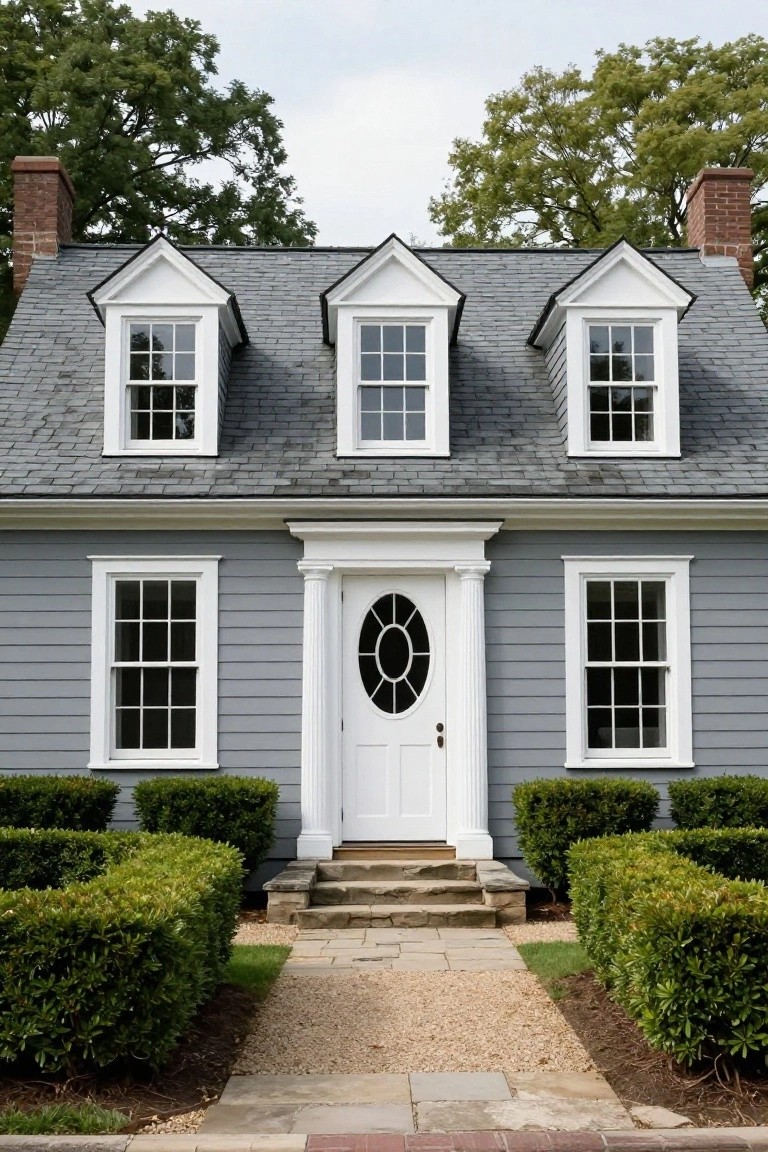
Gray clapboard siding gives a Colonial house that clean, timeless look without feeling too stark. It picks up on the soft tones from the sky and trees around it, making the home blend right into its spot. White trim around the windows and door keeps things crisp, and the horizontal boards add a bit of texture that catches the eye up close.
This siding works best on homes with classic details like dormers and columns. Pair it with boxwood hedges along the front for a neat frame. It suits older neighborhoods or suburbs where you want curb appeal that lasts. Just make sure the gray isn’t too dark, or it can feel heavy on a smaller house.
Classic Light Brick Siding
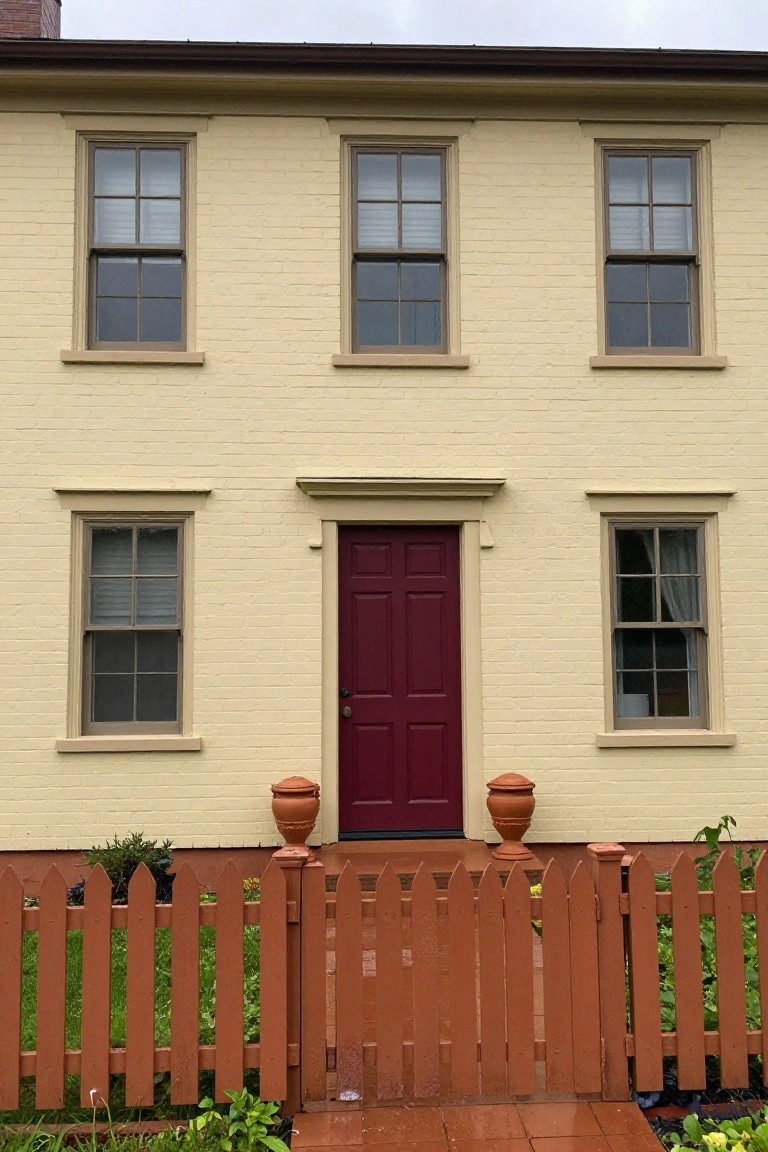
Light brick siding like this soft yellow tone brings out the best in colonial homes. It keeps the look traditional and grounded, with that subtle warmth that fits older neighborhoods. The white trim on the windows and the punchy red door add just enough contrast without overdoing it.
This siding works great on two-story colonials where you want curb appeal that lasts. Pair it with a picket fence out front for extra charm. Watch the mortar lines though. Keep them neat or the whole thing starts looking tired.
Crisp White Clapboard Siding
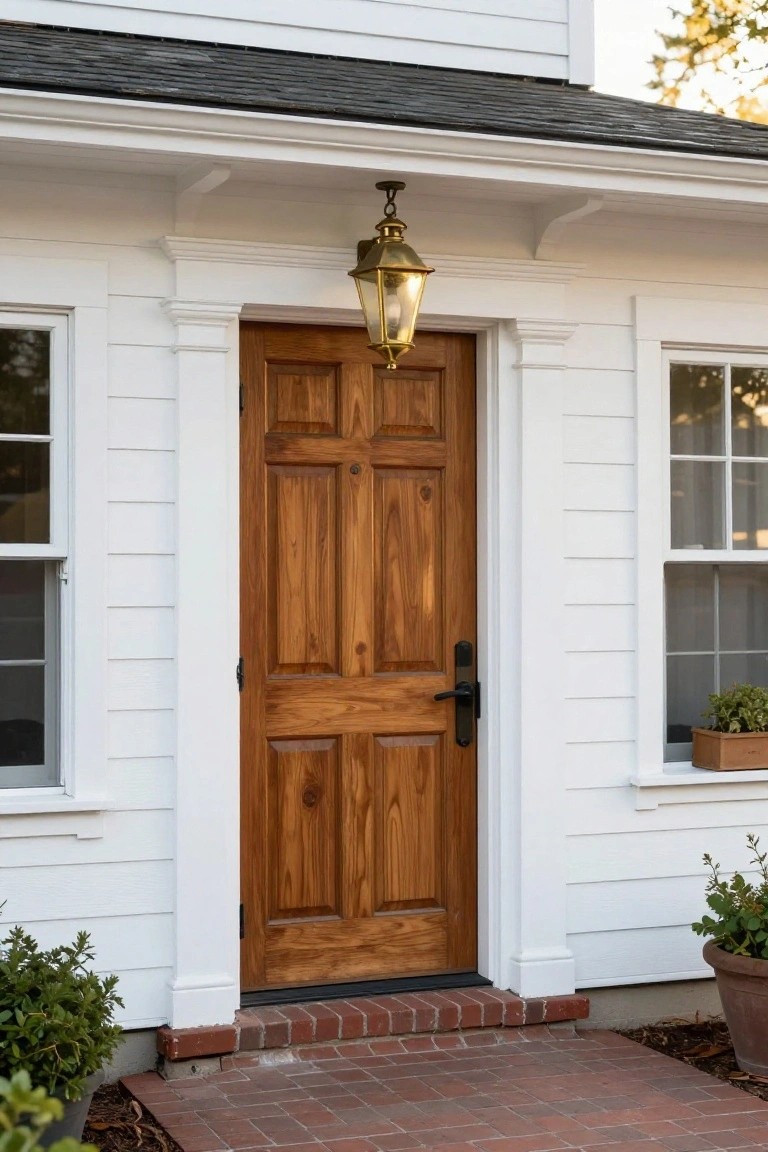
White clapboard siding keeps showing up on Colonial homes because it stays so clean and simple. The horizontal boards painted bright white let other parts of the house stand out, like that warm wood front door and the brass lantern hanging above it. It feels right for the style without trying too hard.
This siding fits older homes or new builds aiming for that traditional look. Use it on two-story houses with gabled roofs or simple porches. Just plan to repaint every five years or so. It holds up well in most weather if you seal the edges right.
Pale Green Clapboard Siding
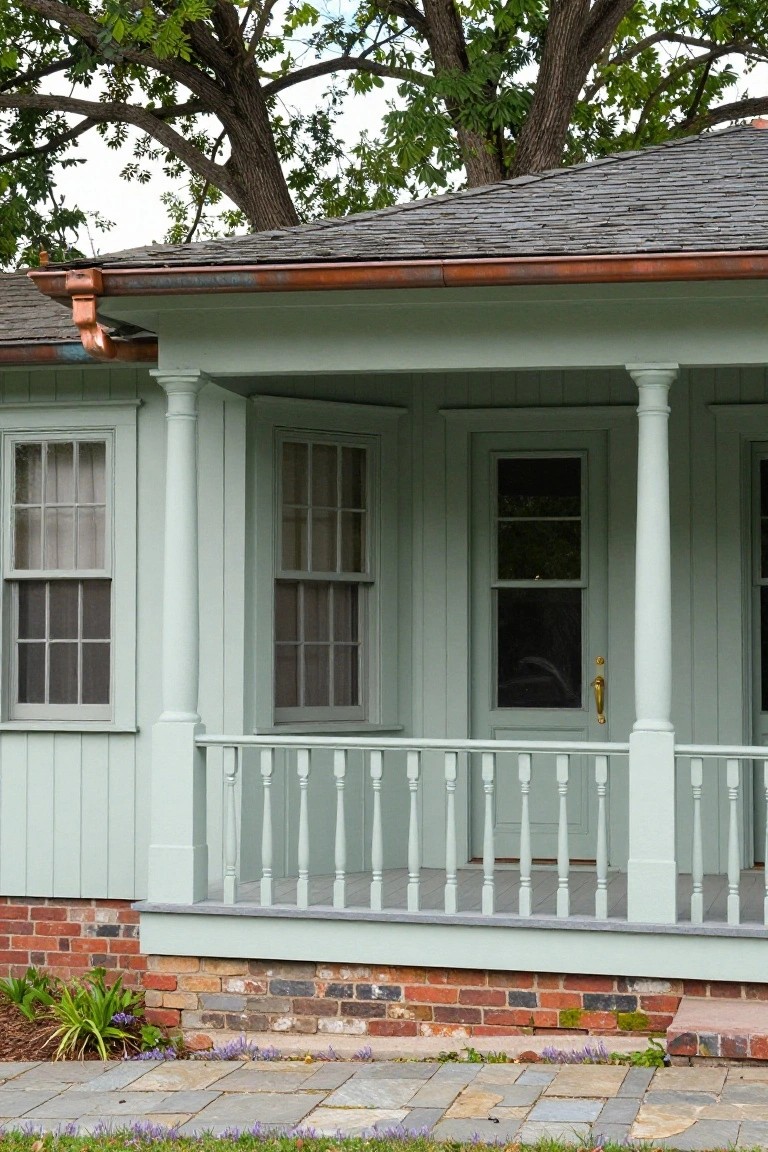
Painted clapboard siding in a pale green shade gives Colonial homes a fresh, understated look. It softens the usual white or beige exteriors without going too bold. Here, the light green boards run horizontally across the porch and main facade, paired with crisp white trim on the columns and railings. That combo keeps things classic while adding a bit of color that blends with nearby trees and plants.
This siding works best on homes with porches or front-facing details like yours. Pick a shade like this muted green for southern or shaded spots where it won’t fade fast. It suits older Colonials needing a gentle update, especially over a brick base. Just make sure the paint is high-quality exterior grade to hold up over years.
Soft Blue Clapboard Siding
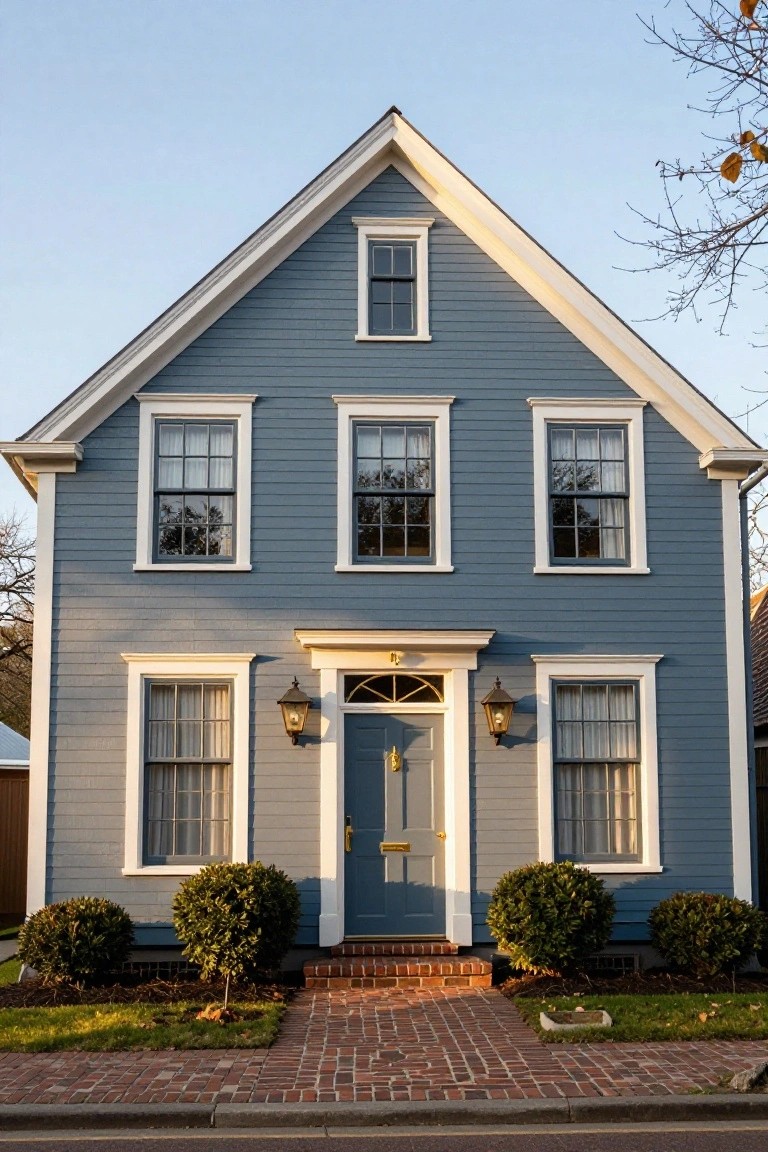
Clapboard siding painted in a soft blue gives colonial homes that classic look with a gentle twist. You see it here on this two-story house, where the horizontal lap siding runs smooth across the facade, and the white trim around the windows and door keeps everything crisp and balanced. It’s a siding choice that feels timeless yet not stuffy.
This works best on traditional colonials in milder climates, where the color picks up the sky and trees without overpowering the architecture. Go for a quality exterior paint, and add simple accents like boxwoods at the entry. Avoid darker shades if your house sits close to the street… they can feel heavy.
Beige Stone Block Siding
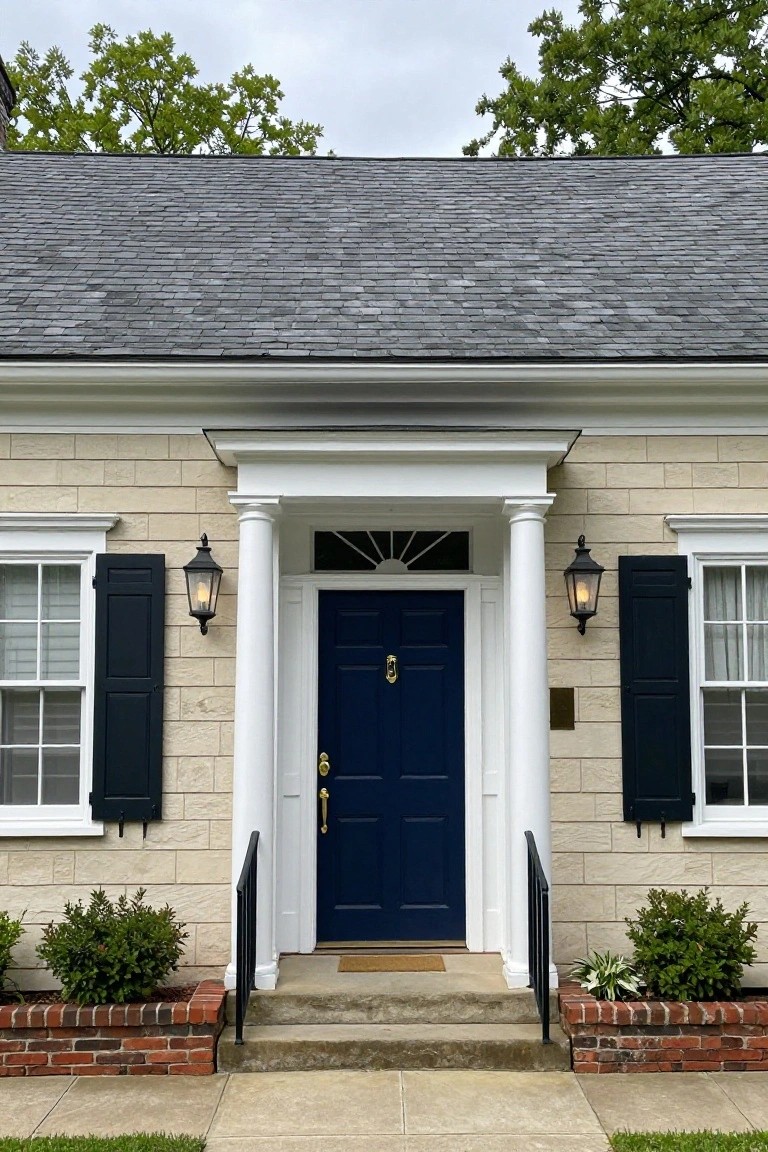
Beige stone block siding brings a solid, classic feel to Colonial homes. The coursed blocks in a soft tan shade mimic old limestone walls without the high cost. It stands out against white trim and lets accents like a navy door pop. Black shutters add some contrast too.
This siding works well on compact facades where you want subtle texture. Pair it with brick bases around plantings for a grounded look. It suits most climates but watch for moss buildup in damp areas. Keeps things looking settled and timeless.
Frequently Asked Questions
Q: How do I pick a siding that matches my specific Colonial style?
A: Look at your house’s roof pitch and window shapes first. Steeper gambrel roofs pair best with clapboard or board-and-batten for that Dutch Colonial vibe. Shiplap works great on simpler Georgian designs.
Q: Can vinyl siding really mimic traditional Colonial materials?
A: Vinyl nails the look of wood clapboard or cedar shakes without the upkeep. Pick profiles with deep shadows and textures to fool the eye from the street. It holds paint well too.
Q: What’s the best way to maintain these sidings year after year?
A: Hose them down twice a year and scrub with mild soap to knock off dirt and pollen. Trim back overhanging branches so moisture doesn’t trap against the walls. Spot-check for loose nails after storms.
Q: Should I mix siding types on different parts of the house?
A: Go for it on additions or garages, but echo the main house texture. Pair smooth clapboard on the front with shingle accents on gables for subtle variety. Keep colors consistent.
