

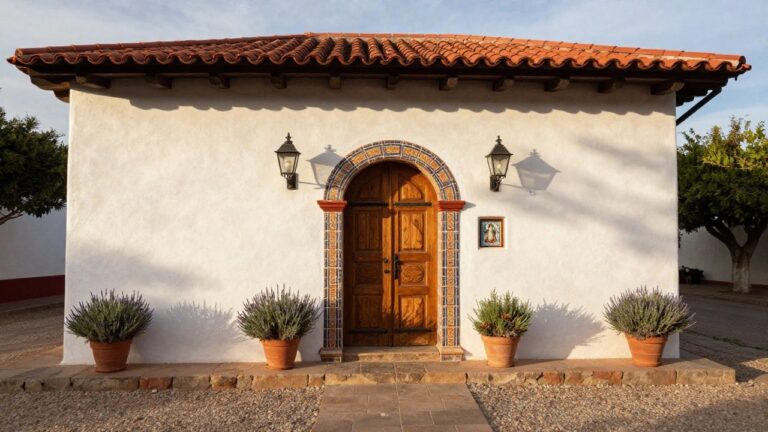
I’ve driven past plenty of Spanish Colonial homes where the stucco facades and red-tiled roofs create that instant pull from the curb, making the whole street feel more alive. What stands out most is how the textures, from rough plaster to carved wooden beams, build a sense of depth that flat modern exteriors often lack. I remember eyeing one with subtle adobe hues that warmed up even on gray days, proving materials matter more than bold colors for everyday appeal. Those details hold up over time. Pulling from these 19 examples, you might spot a roofline tweak or entry arch worth sketching for your own house.
Entry Flanked by Potted Plants
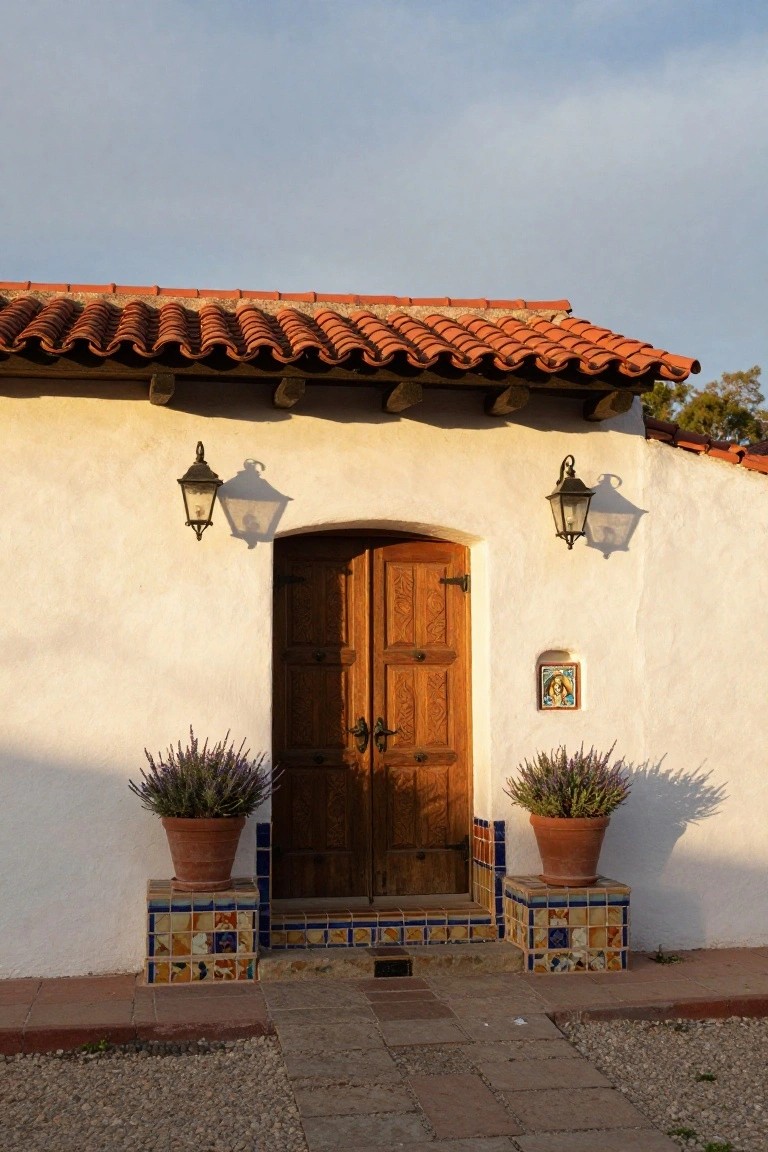
One easy way to warm up a plain adobe entry is flanking the door with matching potted plants. These lavender-filled terracotta pots rest on colorful tiled pedestals that echo Spanish tilework. They pull focus to the arched wooden door without overwhelming the simple white walls. The setup adds a bit of life and symmetry right where people approach.
This works best on homes with clean stucco facades in dry climates. Lavender holds up well and smells nice too. Set the pedestals at knee height so the plants frame the door nicely. Skip it if your front path is narrow… might crowd things.
Courtyard Fountain on Terracotta Patio
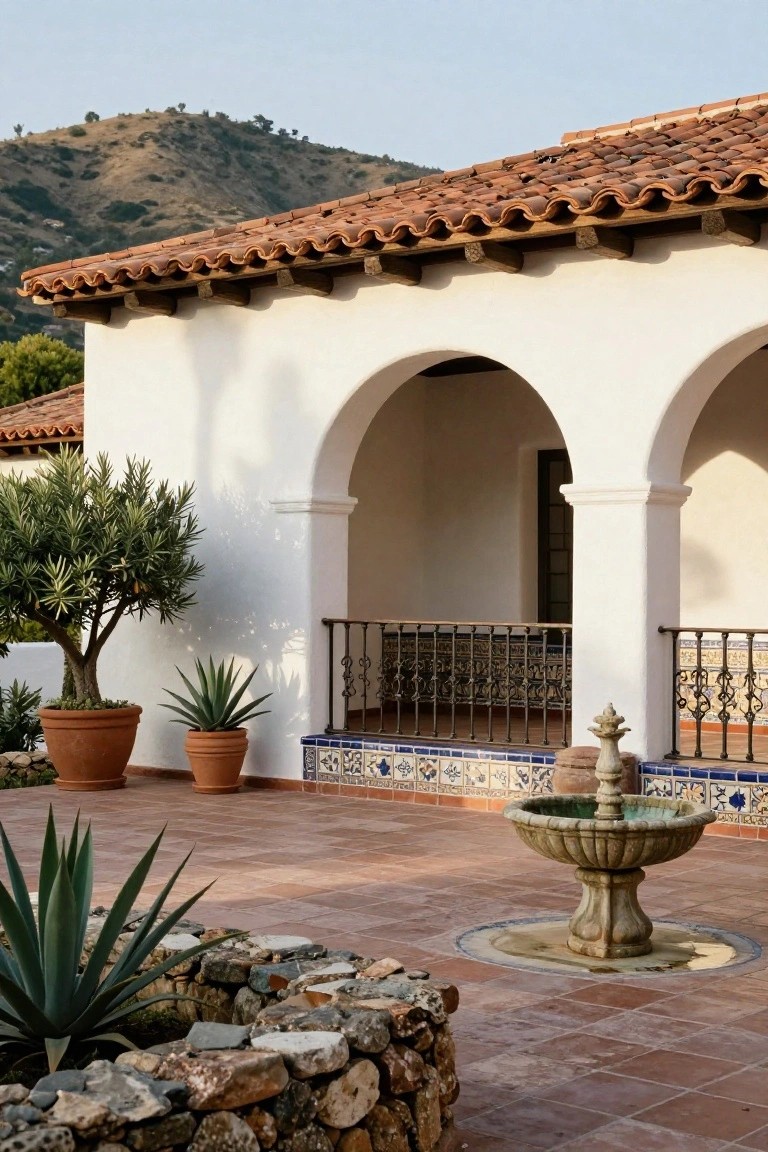
A stone fountain right in the middle of a terracotta-tiled patio gives this Spanish Colonial spot its heart. It pulls everything together under those wide white arches, with the water adding a bit of sound and life. The rough stone basin fits perfect with the warm orange tiles and potted plants around it. That texture mix makes the whole area feel lived-in and sunny.
Put one like this in a smaller courtyard or entry patio where you want a focal point without taking up much room. It works best against white stucco walls, paired with agaves or olive trees for that dry, Mediterranean look. Keep the scale simple so it doesn’t overwhelm, and make sure the plumbing is hidden underneath.
Tile-Framed Blue Entry Door
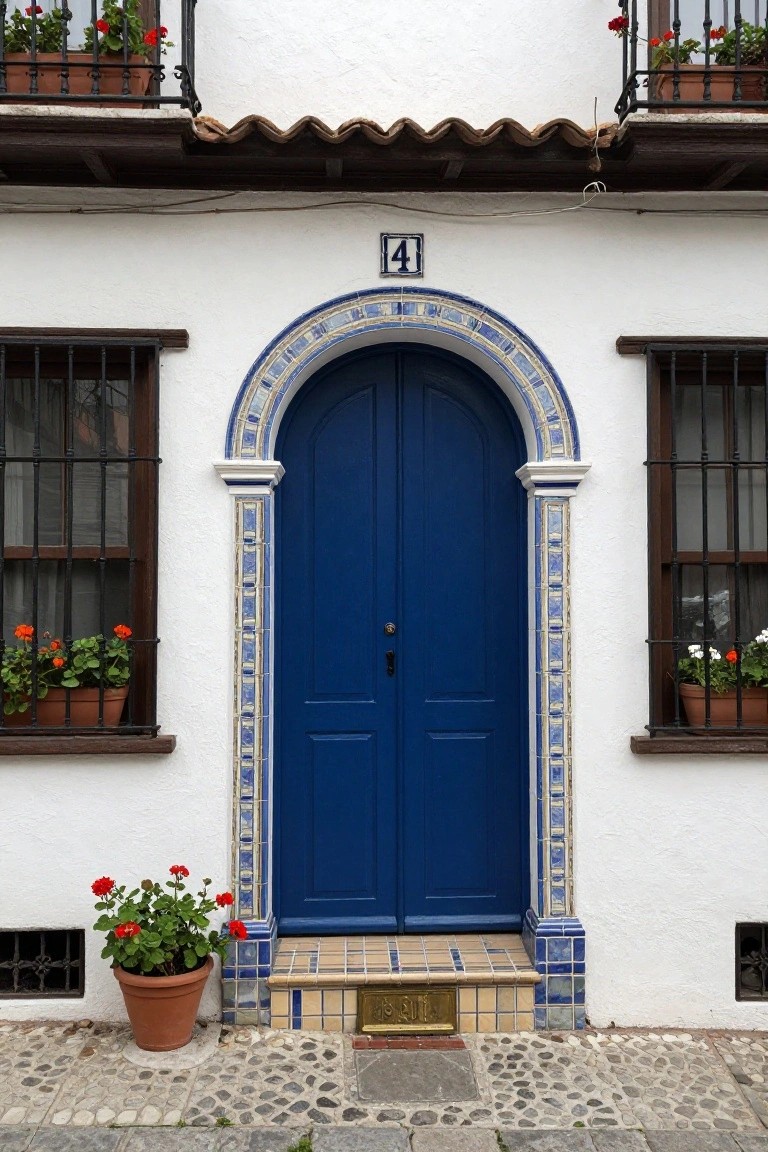
One standout move in Spanish Colonial exteriors is framing a deep blue door with blue-and-white tilework. It pulls the eye right to the entrance on a clean white stucco wall. That arch and those tiles add texture and a bit of history feel, warming up what could be plain.
You’ll see this a lot in older towns where the white walls stay bright year-round. It suits compact homes on stone streets best. Add red geranium pots nearby for extra pop… but keep the tile pattern simple if you’re adding new ones. Works without much upkeep too.
Warm Wood Door in Arched Garage
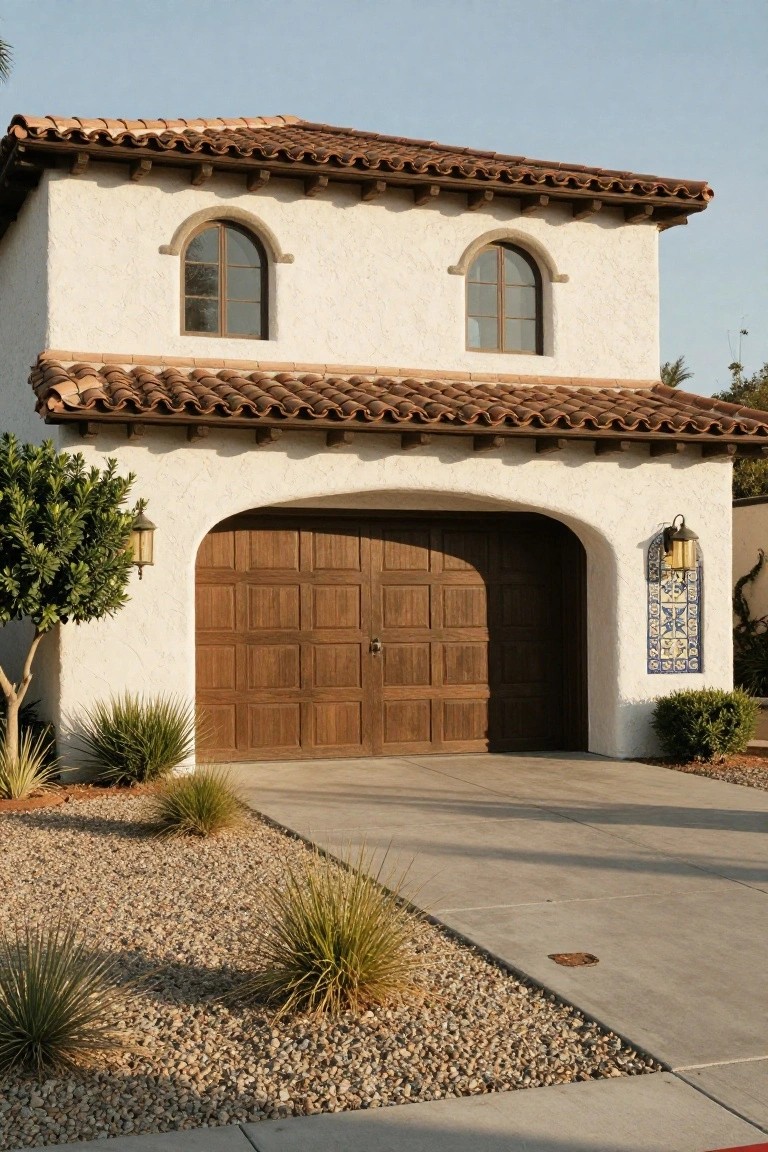
A dark wood garage door tucked under a stucco arch gives this Spanish Colonial front real warmth. The smooth white walls and red tile roof stay crisp, but that wood paneling adds texture where it counts most. It pulls the eye right to the entry without any fuss.
This look fits homes in sunny spots with stucco already in place. Swap in a wood door if your garage opening works with an arch, or add one during a remodel. Keep the wood a shade deeper than the roof for balance… it keeps things grounded. Just check local rules on garage styles first.
Courtyard Fountain as the Heart
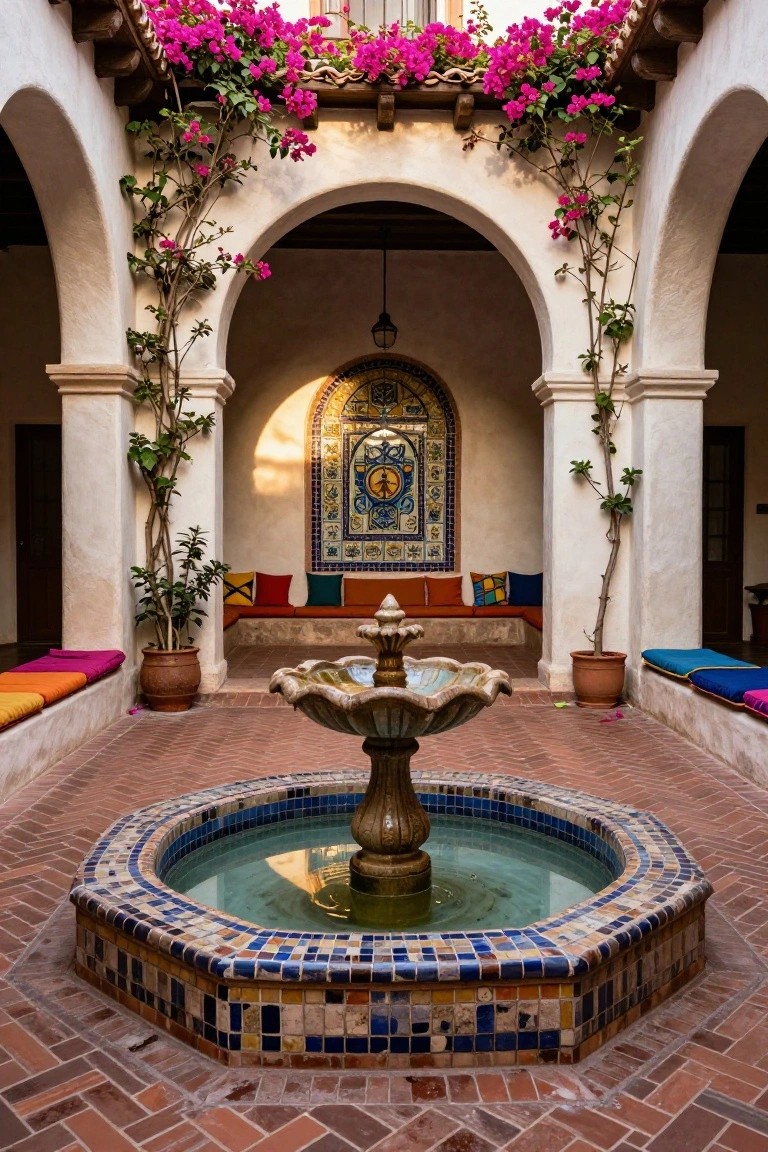
A central fountain like this one turns a simple courtyard into a real gathering spot. The octagonal basin with its blue and multicolored tiles sits smack in the middle of the brick floor, and the gentle water flow adds that soothing sound right away. It stands out without trying too hard, especially with the white stucco arches framing it.
Put one in your own patio or enclosed outdoor area if you want a spot everyone heads to. It works best in homes with that Spanish vibe, maybe in a sunny spot off the main house. Go for durable tiles and keep plantings like bougainvillea climbing nearby… just watch for leaks over time.
Classic Wooden Entry Doors
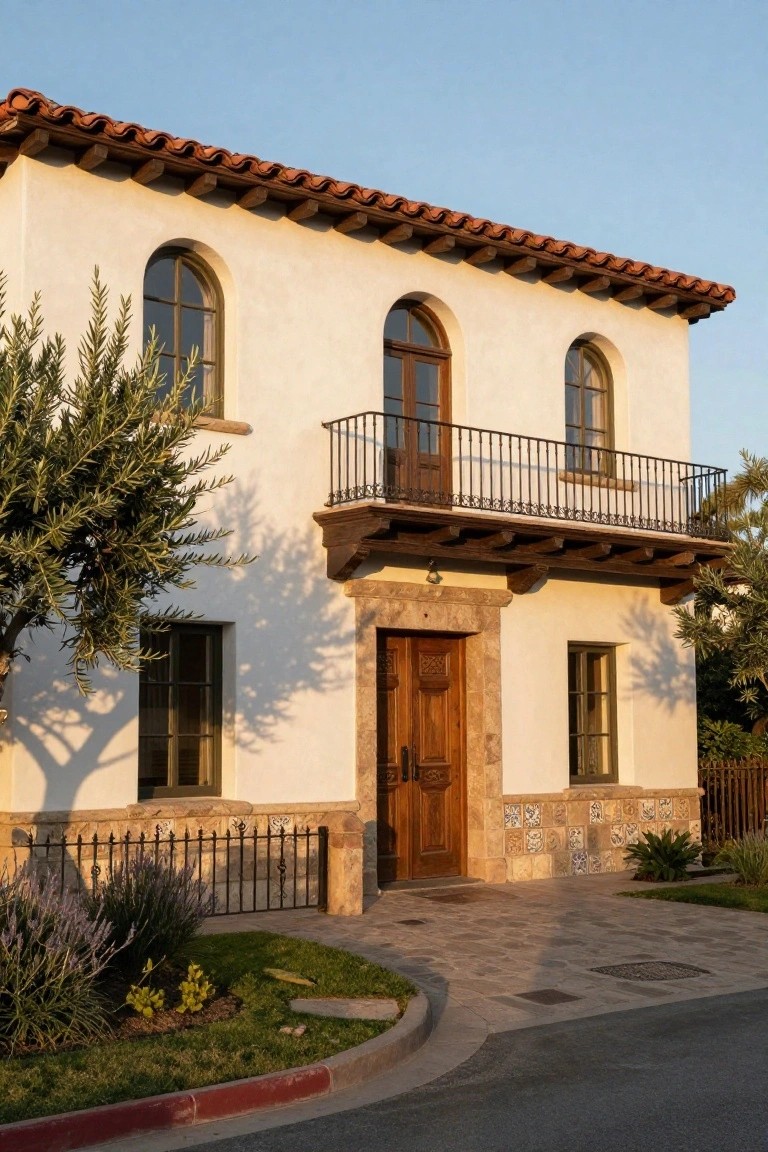
Those heavy wooden double doors right at the front catch your eye first. Carved with simple details and set into a stone frame with tile accents, they bring real texture and a bit of history to the plain stucco walls. It’s a look that feels solid and lived-in, not fussy.
You can pull this off on most any Spanish Colonial revival house, especially where you want curb appeal without a lot of extras. Go for dark-stained wood that weathers well, and keep the surround simple stone or plaster. Just make sure the doors are well-sealed against the weather, since wood takes a beating outdoors.
Outdoor Kitchens with Colorful Spanish Tiles
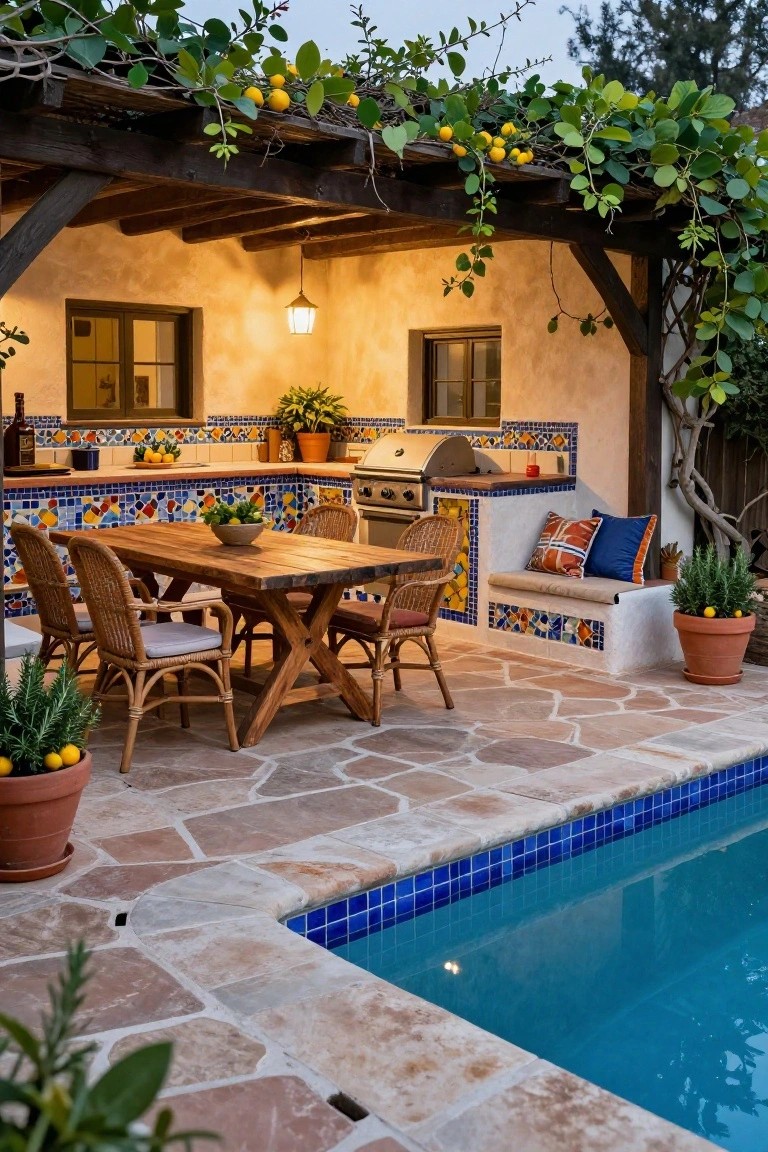
One thing that really brings Spanish Colonial style outdoors is using those bright, hand-painted tiles on the kitchen backsplash and counters. In this setup, the blue, yellow, and multicolored tiles stand out against the smooth stucco walls and wood pergola. They add a pop of color without overwhelming the space, and they tie right into the warm terracotta tones around the pool.
You can pull this off in any backyard patio that gets some sun. Go for tiles like Talavera-style ones, which hold up outdoors if sealed well. They work best on smaller kitchen zones next to dining areas, keeping the look casual and lived-in. Just avoid too many patterns everywhere, or it might feel busy.
Carved Wooden Entry Doors
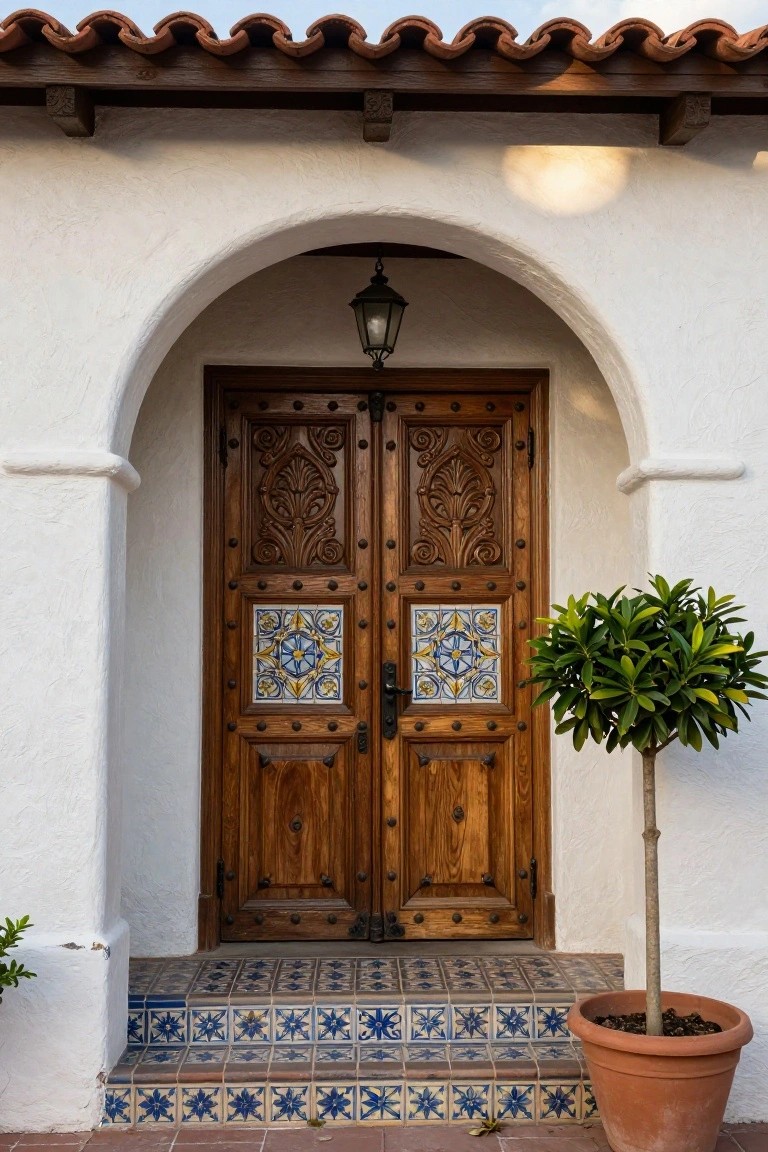
These carved wooden double doors make a strong first impression on a Spanish Colonial home. The deep relief patterns and those blue-and-yellow tile insets give the entry real texture and a bit of color pop against the plain white stucco. It’s a classic move that nods to old hacienda style without going overboard.
You can pull this off on homes with arched doorways and tiled steps like this one. The heavy wood and iron hardware hold up well in sunny spots, but keep an eye on sealing the doors against moisture. Pairs nicely with simple potted plants out front… keeps the focus right on the door.
Lantern-Lit Arched Entryway
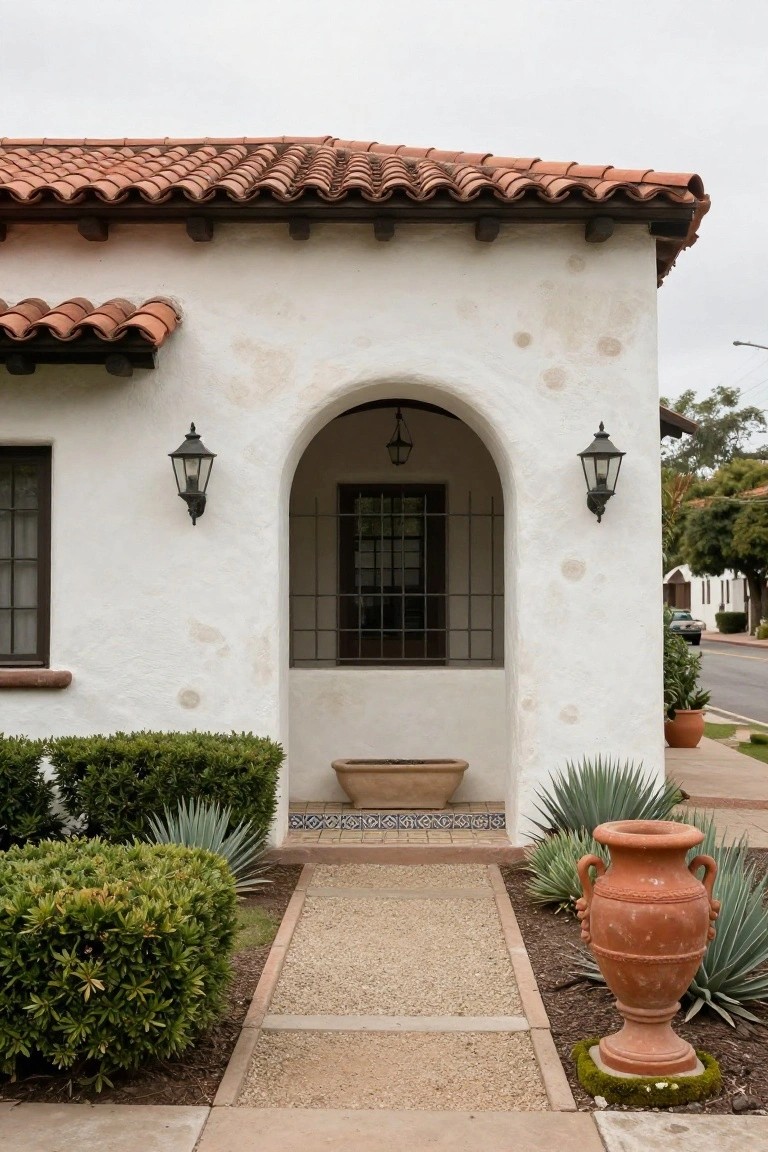
A classic move in Spanish Colonial homes is flanking the arched entry with simple black lanterns. They hang there on either side, casting a soft glow that pulls you right toward the door. The white stucco walls have that natural rough texture too, with little spots of age showing through. It all feels warm and lived-in without trying too hard.
This setup works best on a house facing the street, where you want curb appeal that says welcome. Keep the path gravel or stone, add a couple low plants like agaves or boxwoods nearby. Skip anything fussy. It suits warmer climates… just make sure the lanterns are weatherproof.
Courtyard Fountain Entry
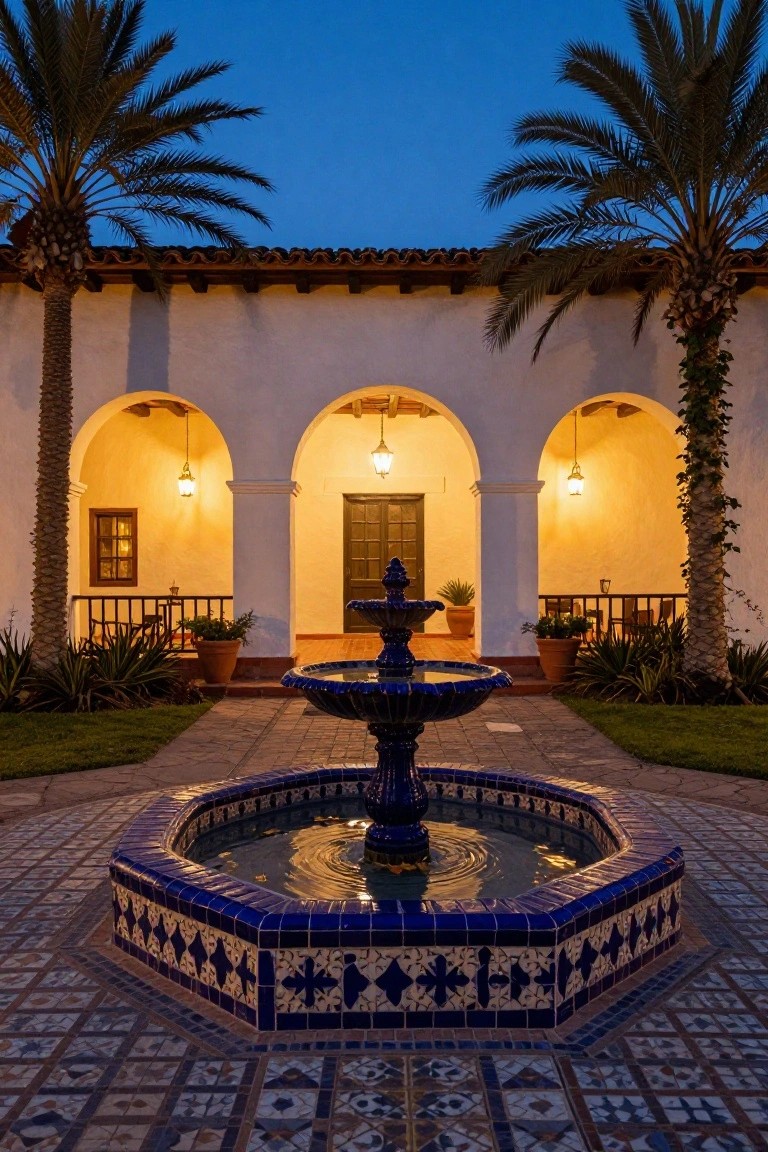
A central fountain like this one sits right in the entry courtyard, drawing your eye straight to the arched doorway beyond. The blue tiles catch the lantern light at dusk, giving the whole front a soft glow that feels settled and homey. It’s a simple way to make the facade more than just a wall.
This kind of setup suits warmer spots where evenings stretch out. Center the fountain on a tiled path leading to the door, add a few low plants around it. Skip anything fussy. It fits Spanish Colonial houses best, turning the approach into its own little space.
Recommended Products
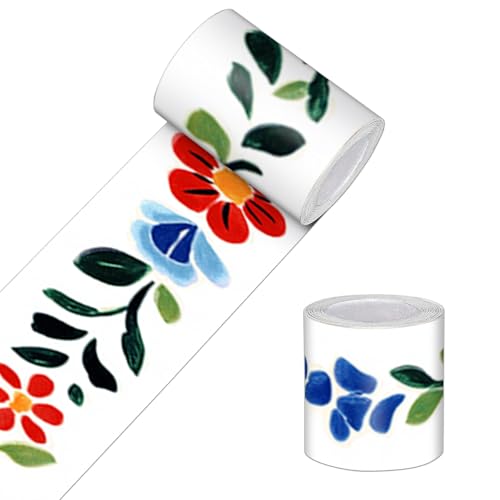
【Folk-Inspired Floral Accent】This wallpaper border features vivid red and blue flowers paired with leafy green stems in a hand-painted style, ideal for adding character to wallpaper borders in farmhouse or eclectic spaces.

Ultra Thin Bath Rug:At just 0.4 inches thick, this bath mat can be placed under your bathroom door to ensure seamless placement without obstruction. Ideal for small bathrooms, showers or vanity areas where bulkier rugs won't work.

Instant room labeling with a decorative look: Large script “Bathroom” lettering is easy to recognize at a glance, helping guests find the right door quickly while adding a finished touch to hallways, powder rooms, guest baths, and shared spaces
Rustic Timber Lintel Entry
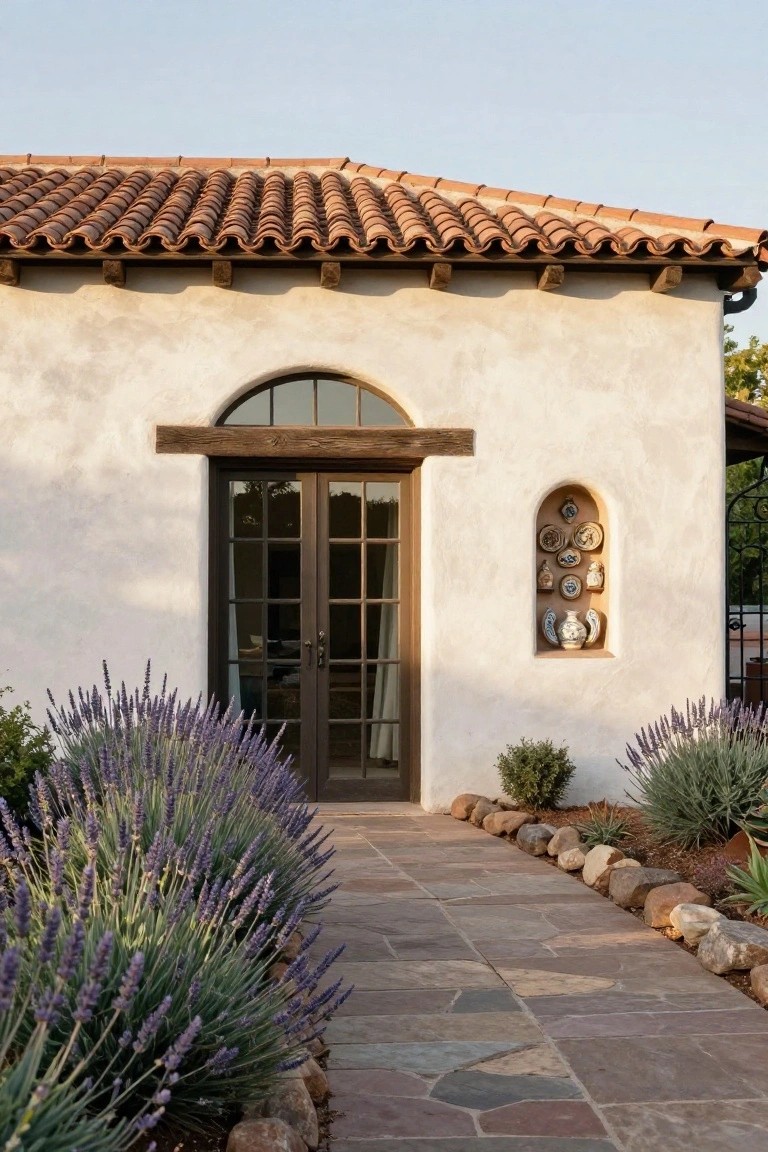
A thick, rough wood beam stretches over the French doors here, pulling the eye right to the entrance. On plain stucco walls, it stands out with its raw texture and dark tone. That simple move brings real warmth to the facade. It feels like an old hacienda door, welcoming without trying too hard.
You can add one like this to most any entry under 10 feet wide. It suits warmer climates where wood holds up outside. Line the path with low plants like lavender to soften the edges. Just make sure the beam is treated for weather, or it won’t last.
Rustic Outdoor Fireplace Centers the Patio
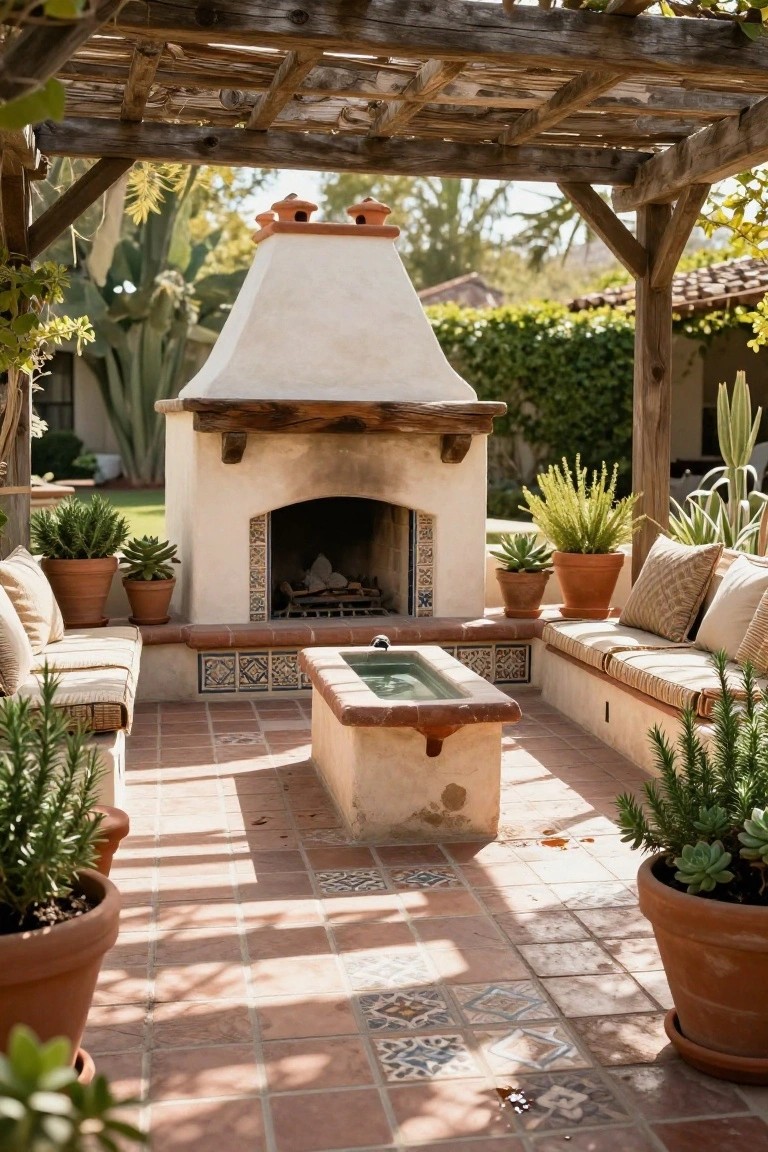
Nothing beats a sturdy stucco fireplace right in the heart of your outdoor space. Here it’s built into the patio wall with rough wood beams overhead and those colorful tile details around the firebox. It pulls the whole area together, making it feel like an extension of the house. Even without a big blaze going, the structure itself gives off that cozy, lived-in vibe perfect for Spanish Colonial style.
Put one like this in a sunny courtyard or backyard corner where you want people to linger. Pair it with simple benches or low couches, toss in some potted agaves or rosemary for green accents. It suits milder climates best… keeps chill evenings comfortable without taking over the yard. Just make sure the gas line or wood setup is safe and up to code.
Bold Red Door Entry
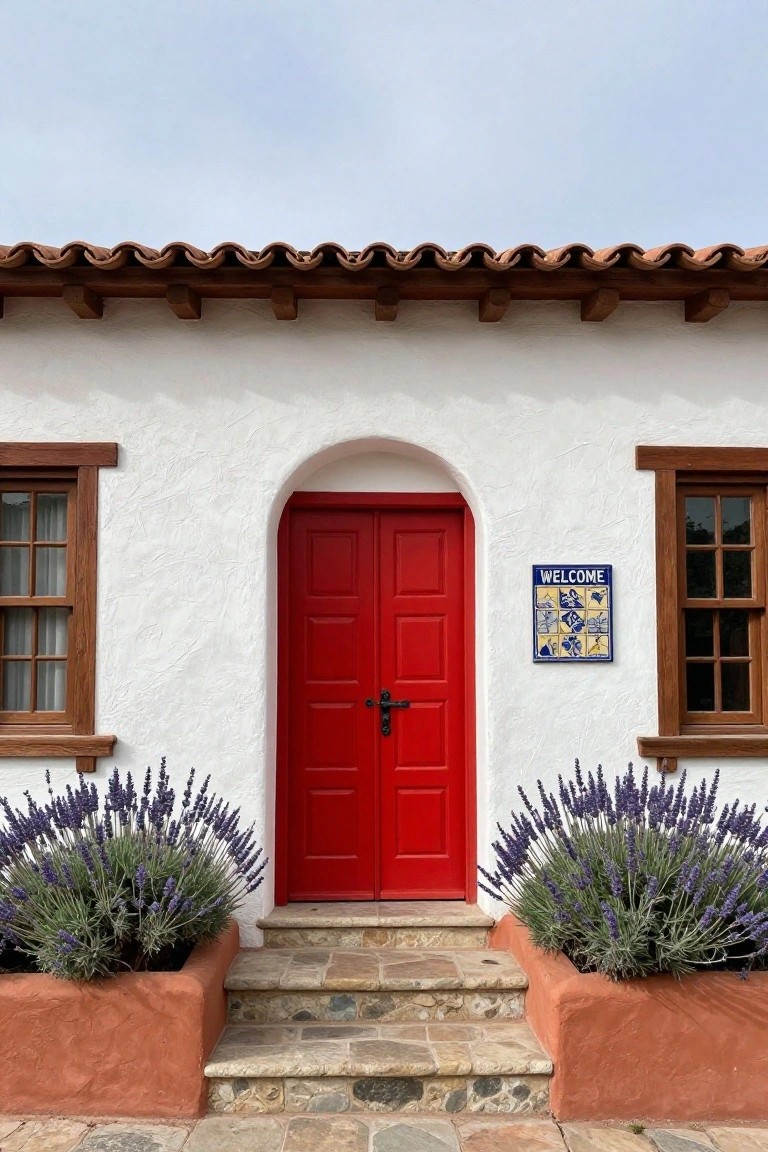
Nothing says welcome quite like a bright red door on a white stucco house. In Spanish Colonial style, that pop of color draws the eye right to the front entry. Here, the double doors sit under a smooth arched opening, with a simple blue and yellow tile sign nearby. It keeps things classic but lively, especially against the soft texture of the walls.
This works best on homes with clean white or light walls where you want some warmth without overdoing it. Paint your door a true red, not too orange, and add matching plants like lavender on either side for balance. Skip it if your house has a lot of color already, or it might feel busy. Easy update for curb appeal that lasts.
Arched Porch Entryway
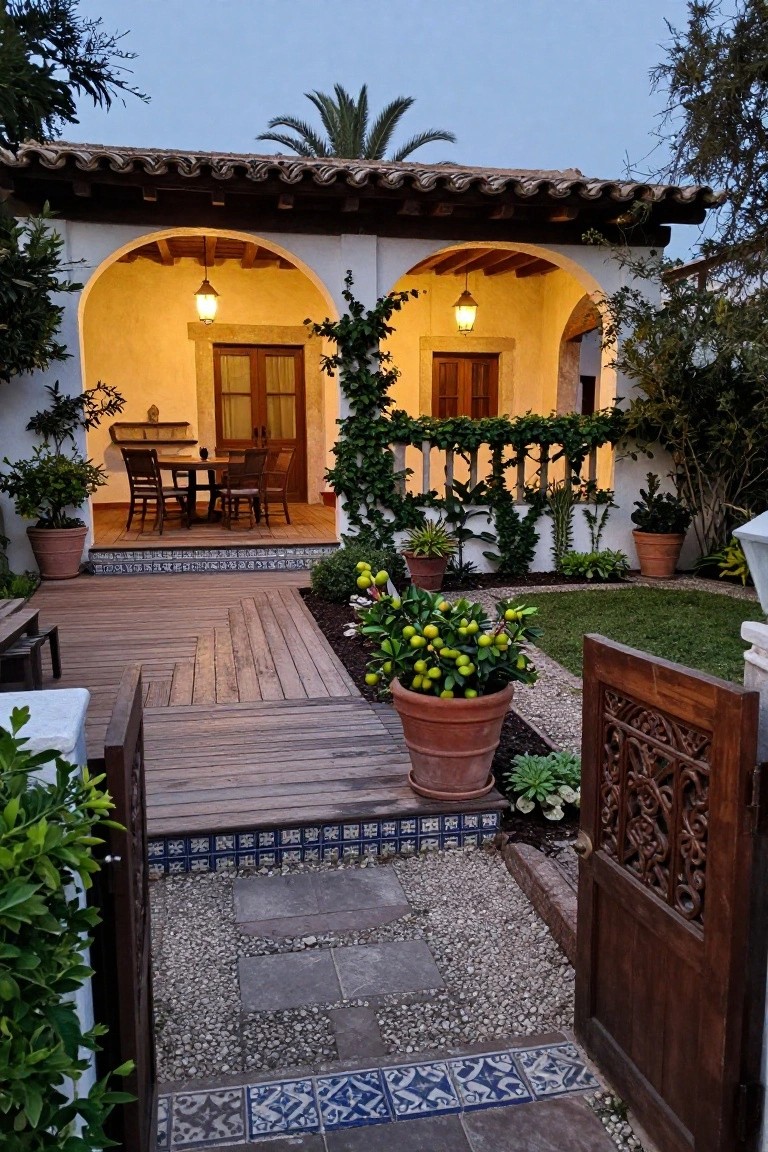
One simple way Spanish Colonial homes pull you right into the living spaces is with an open arched porch like this. The white stucco walls and terracotta roof frame a spot for everyday use, here set up with a dining table and chairs. Those hanging lanterns give off a soft glow at dusk, and the mix of wood deck and potted plants keeps it feeling easy and textured.
You can add this kind of porch to homes in warm climates where porch time matters. Keep the arches wide for airflow, use sturdy wood for the floor to handle weather, and plant climbers along the railing for shade. A carved wooden gate out front adds that private touch… just make sure the steps have good traction.
Rustic Wooden Double Doors
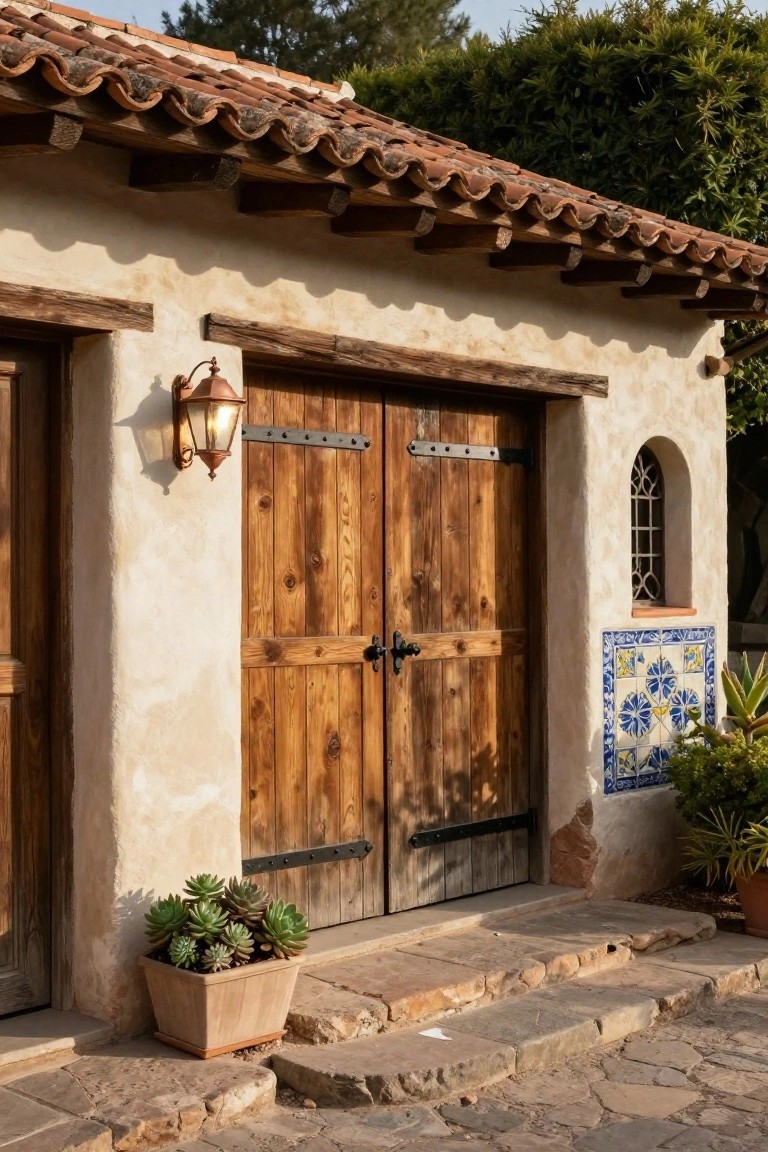
Heavy wooden double doors like these make a simple but strong statement on a Spanish Colonial home. The rough grain of the timber stands out against smooth stucco walls, and those wide iron straps add just enough heft without overdoing it. A wall lantern nearby picks up the warm tones, pulling everything together for real curb appeal.
Put them on a garage facing the street or as your main entryway. They suit low-slung adobe houses best, especially with terracotta roofs and a few potted succulents out front. Seal the wood well… it holds up to sun and rain that way.
Central Fountains in Courtyards
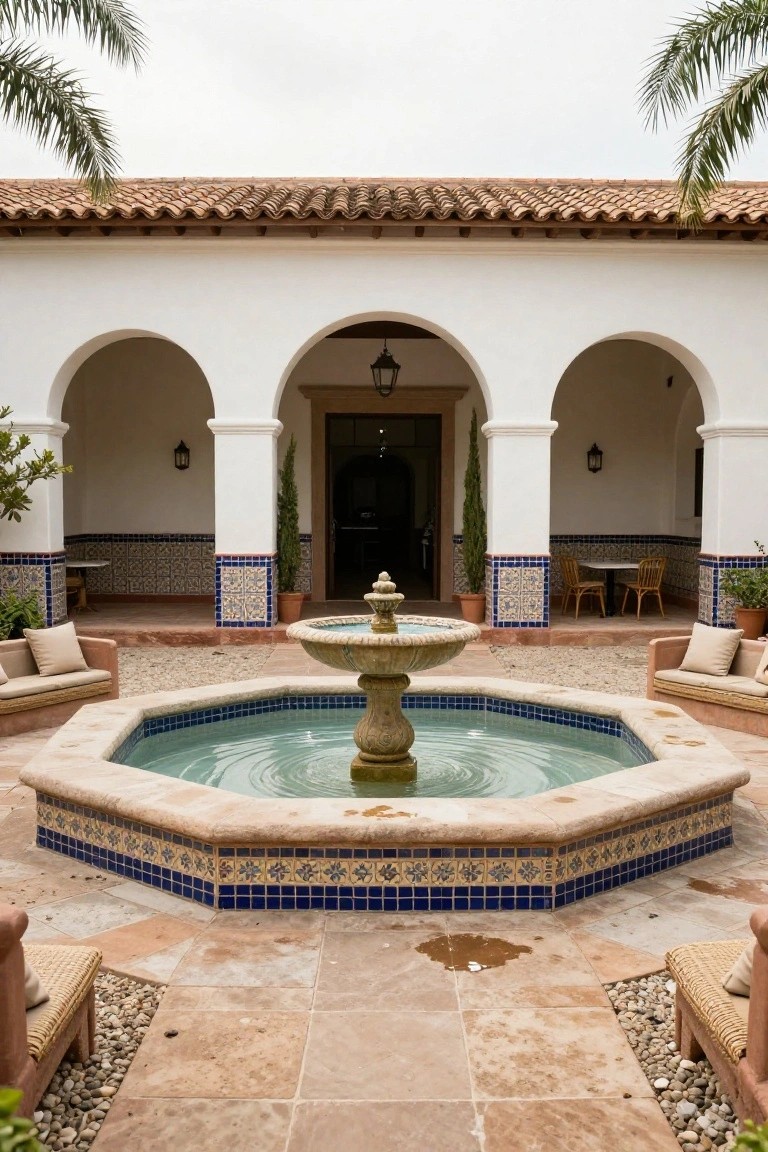
A fountain right in the middle of a courtyard patio turns the whole space into something special. The gentle water flow and that octagonal basin with blue tiles draw your eye and make the area feel alive without trying too hard. It fits the Spanish Colonial style perfectly, echoing old haciendas where these spots were for gathering and relaxing.
Set one up on stone pavers with simple lounge chairs nearby, and you’ve got an outdoor room anyone would use. It suits homes in sunny spots, like the Southwest, where patios see a lot of action. Just keep the scale right so it doesn’t overwhelm smaller yards.
Second-Floor Arched Balconies
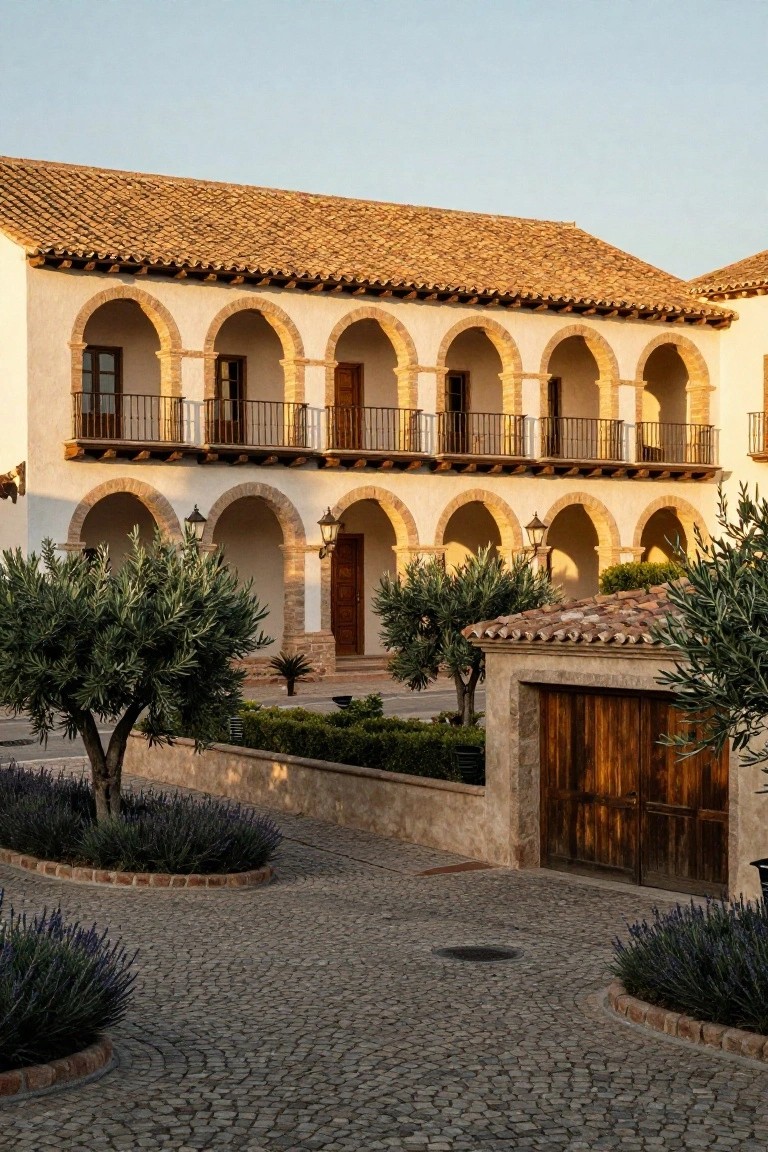
Those second-floor balconies framed by rounded arches give this Spanish Colonial facade a steady rhythm that feels just right. The white stucco keeps things simple below, while the stone-trimmed arches and iron railings up top add enough detail without overdoing it. It’s a classic move that makes the house look taller and more alive from the street.
This setup suits homes in sunny spots, where the arches throw nice shade on the walkway below. Go for it if your place has room for that upper level, and tie in terracotta roof tiles to match. One thing to watch: scale the arches to your door height so the front stays balanced… too small and it looks off.
Rustic Log Porch with Wrought Iron
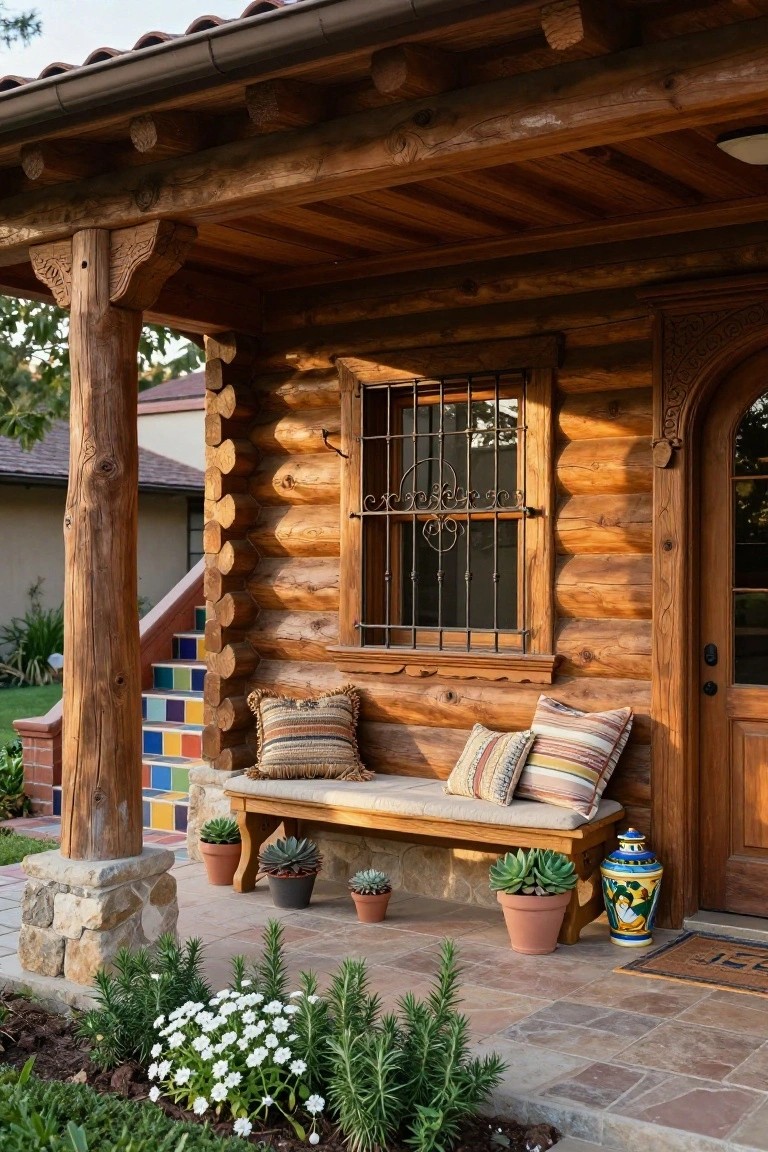
A log home like this one uses thick wood logs for the walls and porch supports to build real texture and warmth into the exterior. The wrought iron grille on the window pulls in Spanish style with its scrolled pattern. It secures the space but looks decorative too, tying everything together nicely.
Put this on a smaller entry porch where shade matters. The logs work in mild climates, and the iron holds up outdoors. Add seat cushions and a few pots for everyday use, but skip busy patterns so the wood stays the focus.
Frequently Asked Questions
Q: How can I add that cozy texture to my boring stucco without tearing everything down?
A: Hunt for textured limewash paints at your local hardware store. Apply it in uneven layers with a brush or trowel to mimic the handcrafted look. It sticks well to existing stucco and revives the warmth right away.
Q: What colors make Spanish Colonial exteriors pop like in these photos?
A: Stick to earthy tones like soft terracotta reds, creamy beiges, and sage greens. Pair a warm base color on the walls with darker accents on trim and doors. Test samples in morning light, they shift beautifully through the day.
Q: Do these designs hold up in rainy climates?
A: Yes, seal the stucco properly every few years. Choose lime-based washes over regular paint, they breathe and shed water better. Add wide roof overhangs if you build new, they shield walls from downpours.
Q: What’s a quick fix for faded roof tiles to match the Spanish vibe?
A: Clean them first with a pressure washer. Brush on a penetrating terracotta sealer. It deepens the color fast and protects against fading.
