

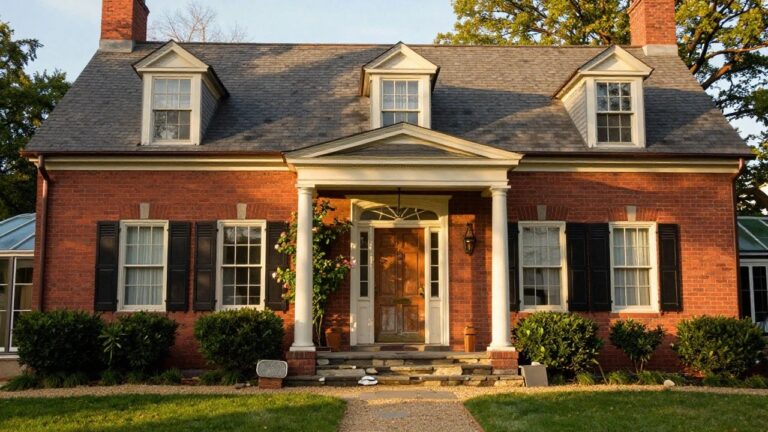
I’ve driven past plenty of colonial homes that look great from afar but feel dated up close, often because the siding or trim hasn’t aged well against modern surroundings.
What draws the eye first is usually the facade’s symmetry, especially how the roofline meets the entryway.
A fresh coat of muted paint changes everything.
These approaches keep that classic proportion while slipping in things like energy-efficient windows or subtle porch updates that actually get used.
I ended up noting a couple for my own block’s older place, the ones tweaking materials to handle weather better without screaming “new.”
Classic Portico Entry
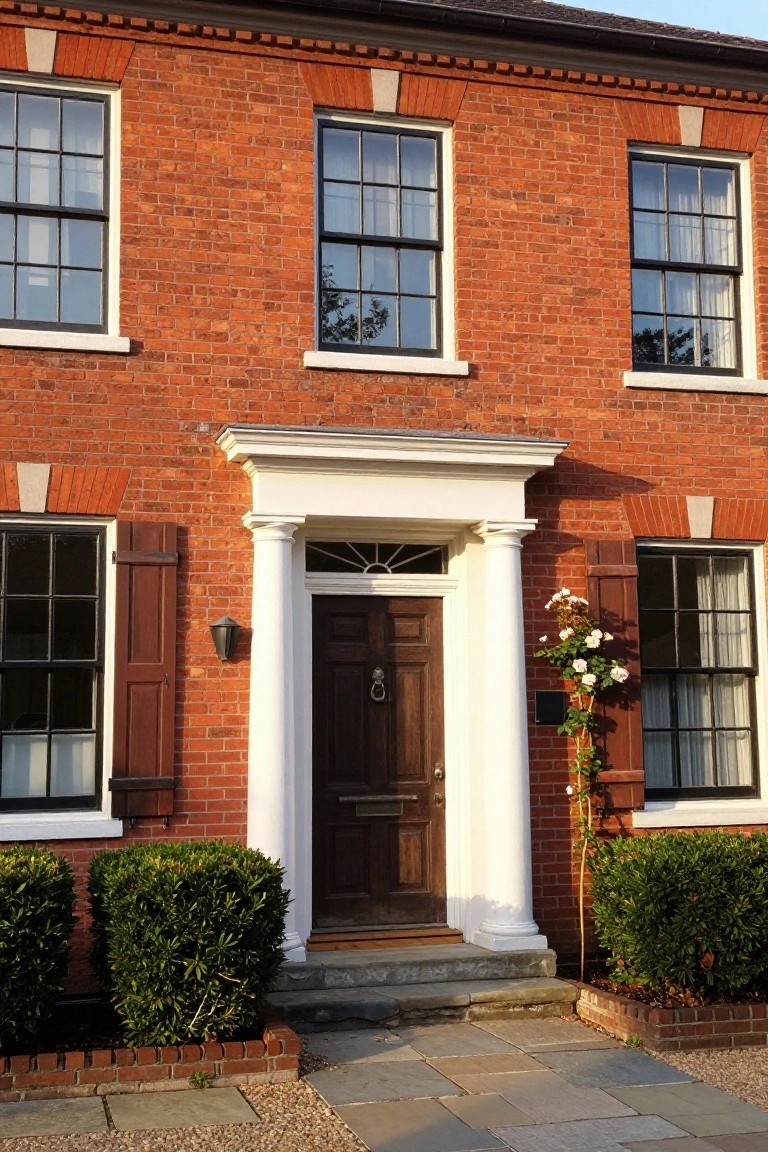
A portico like this one frames the front door with clean columns on a brick facade. It pulls the eye right to the entrance, using white trim against warm red brick for that solid colonial feel. The dark wood door and side lantern keep things straightforward.
This setup suits symmetrical older homes or revivals wanting more curb appeal. Match column style to your architecture, maybe Doric for simplicity. Boxwoods or low shrubs at the base help ground it. Just check proportions so it fits your house scale.
Navy Door on White Colonial Siding
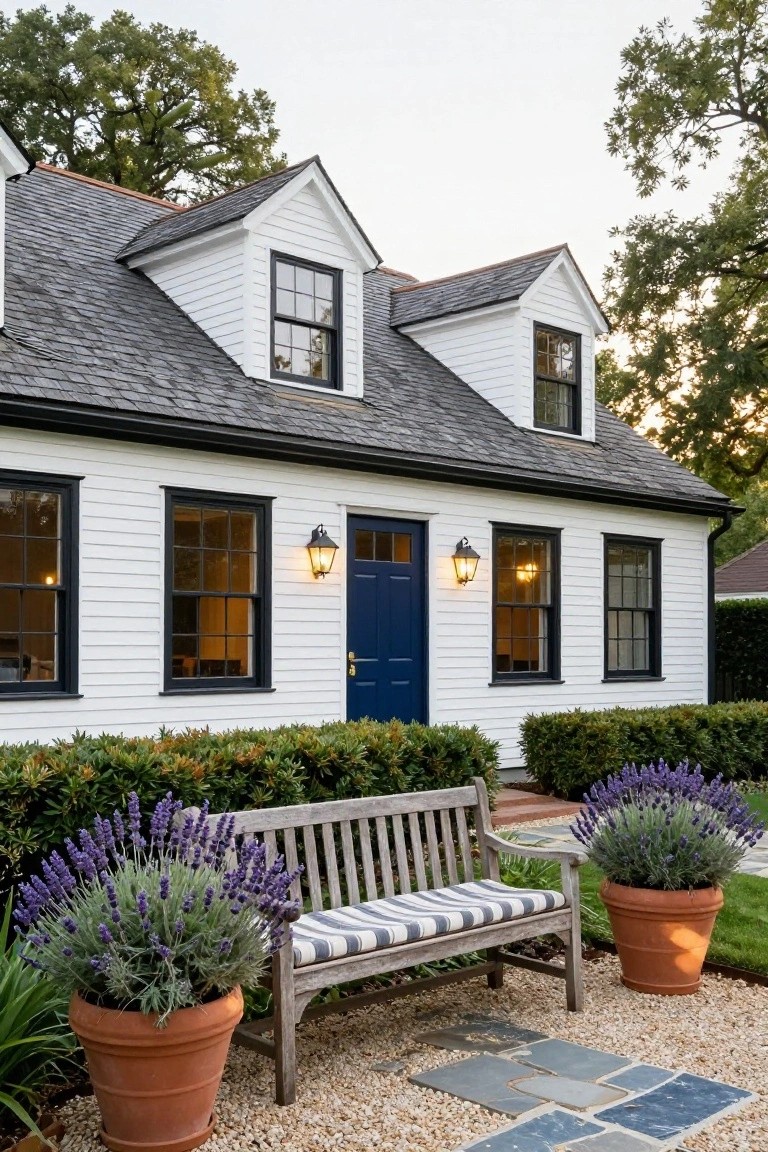
A navy blue front door gives this classic white colonial house a fresh kick without messing with its traditional lines. The black trim on the windows and eaves sharpens everything up, making the entry stand out just enough to feel modern. It’s that one color choice that ties the whole facade together nicely.
This works great on older homes like capes or gambrels where the shape is already solid. Pick a glossy navy paint for the door, then echo it with black accents if your trim needs updating. Flank it with simple lanterns, and it welcomes guests without trying too hard. Skip it if your neighborhood is all pastels, though.
Sunlit Porch Additions
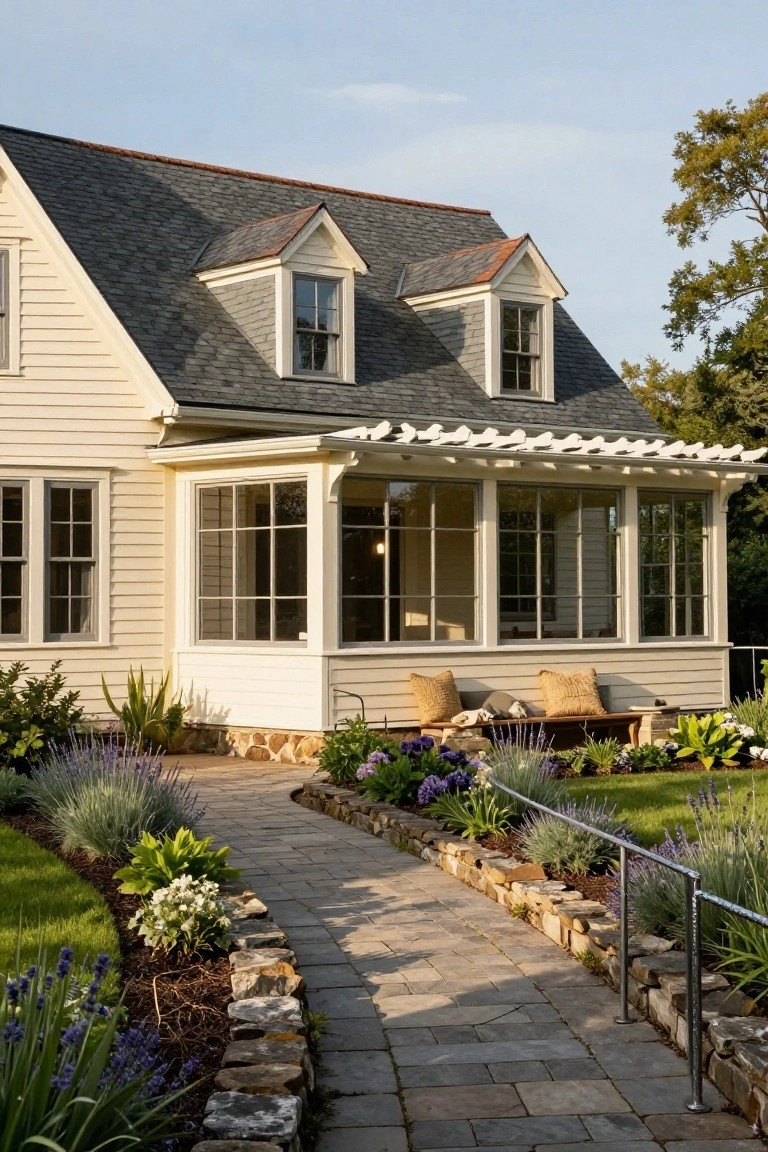
A sunlit porch addition like this one takes a classic colonial house and gives it a fresh spot for morning coffee or reading. The glass walls let light pour in while the pergola roof keeps direct sun at bay. It fits right into the house’s lines without looking tacked on.
These work well on homes with room along the side or front. Pair white frames with your siding color and add simple benches inside. Skip big changes to the roofline. Just right for families wanting indoor-outdoor flow on milder days.
Black Trim on Pale Walls
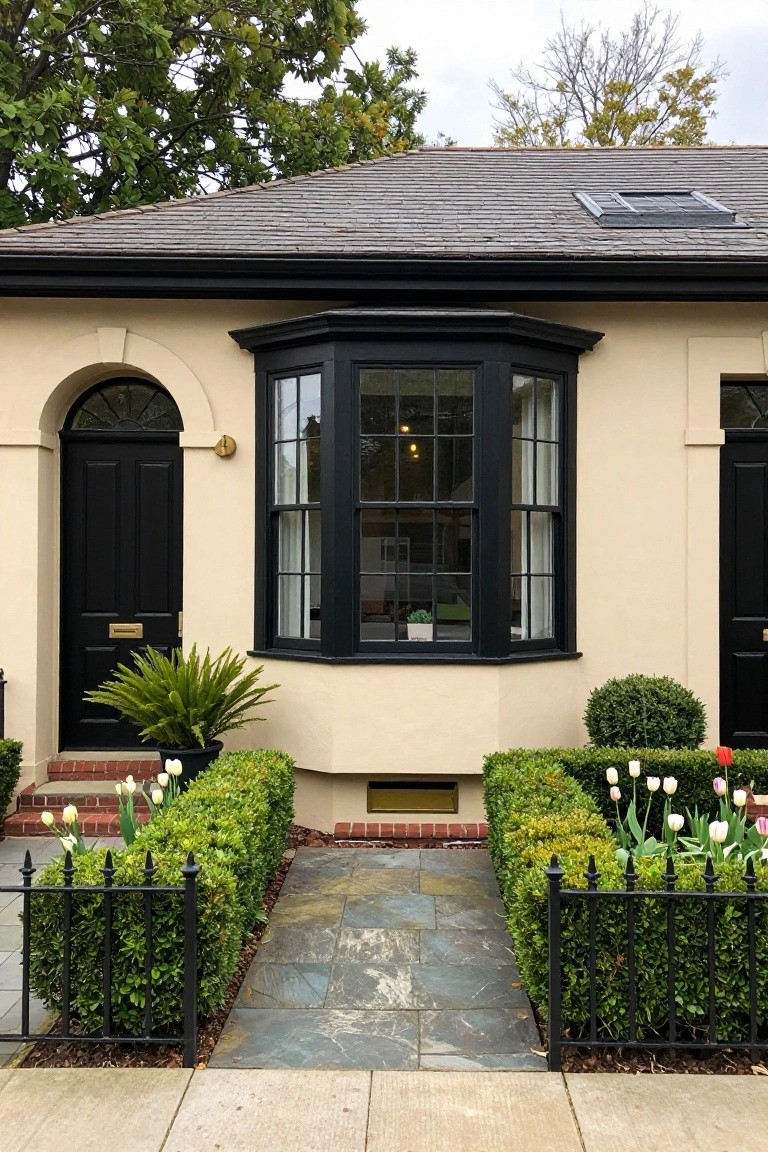
Houses like this one show how black trim around doors and windows can really sharpen up a soft-colored facade. That creamy beige wall lets the black frames on the bay window and entry doors stand out clean and strong. It keeps the colonial style feeling classic but pulls in a bit of modern edge without much fuss.
This works best on stucco or plaster homes in milder climates where the light walls won’t show dirt too quick. Frame the path with low boxwoods like here to lead folks right to the door. Skip it if your walls are too dark… it’ll just blend in.
Shingled Siding in Sage Green
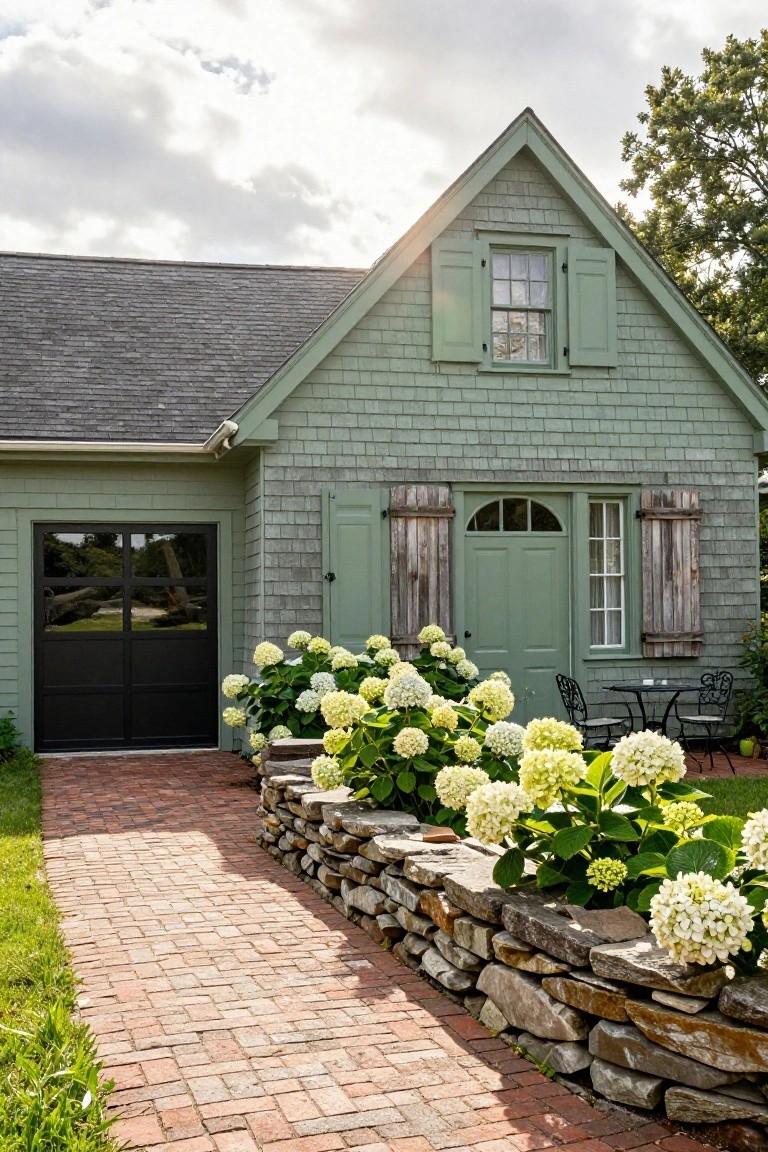
Shingle siding painted in a soft sage green gives a colonial house that easy, lived-in look folks love for older homes. It nods to traditional New England styles but feels fresh without trying too hard. The color picks up on nearby trees and plants, making the whole front blend right into the yard.
This works best on smaller homes or cottages where you want curb appeal without a lot of upkeep. Pair it with a simple brick path and some big hydrangeas by the door, like here, and add a low stone wall to keep things grounded. Skip bold trim colors though. It can look busy fast.
Classic Columned Entry Portico
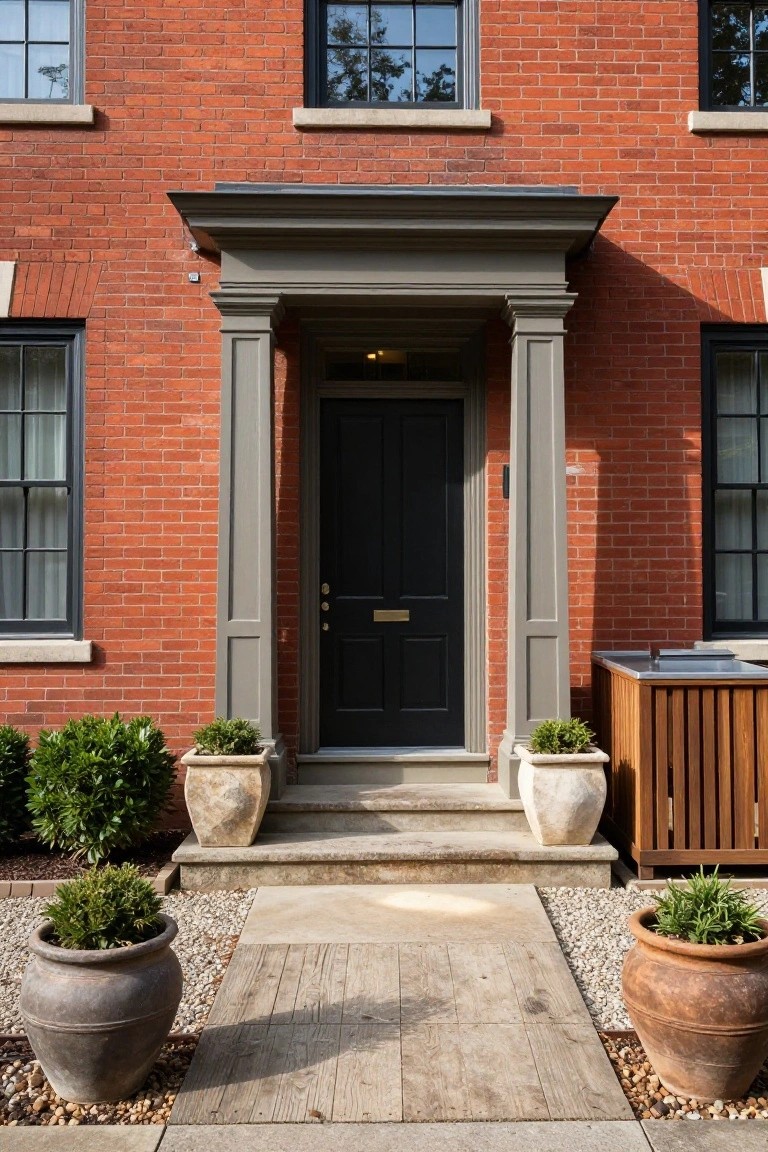
A front entry like this one uses tall columns and a simple roof overhang to frame the door just right. On brick colonial homes, it brings back that old-school formality without feeling stuffy. Pair it with a dark door for contrast, and those big terracotta pots filled with boxwood make the whole approach feel settled and green.
This style suits row houses or attached homes where you want to stand out from the street. Keep the plants low and round to match the architecture, and use stone steps for easy access. It holds up well in city spots, just watch that the columns stay painted to avoid weathering.
Dark Trim on Light Gray Siding
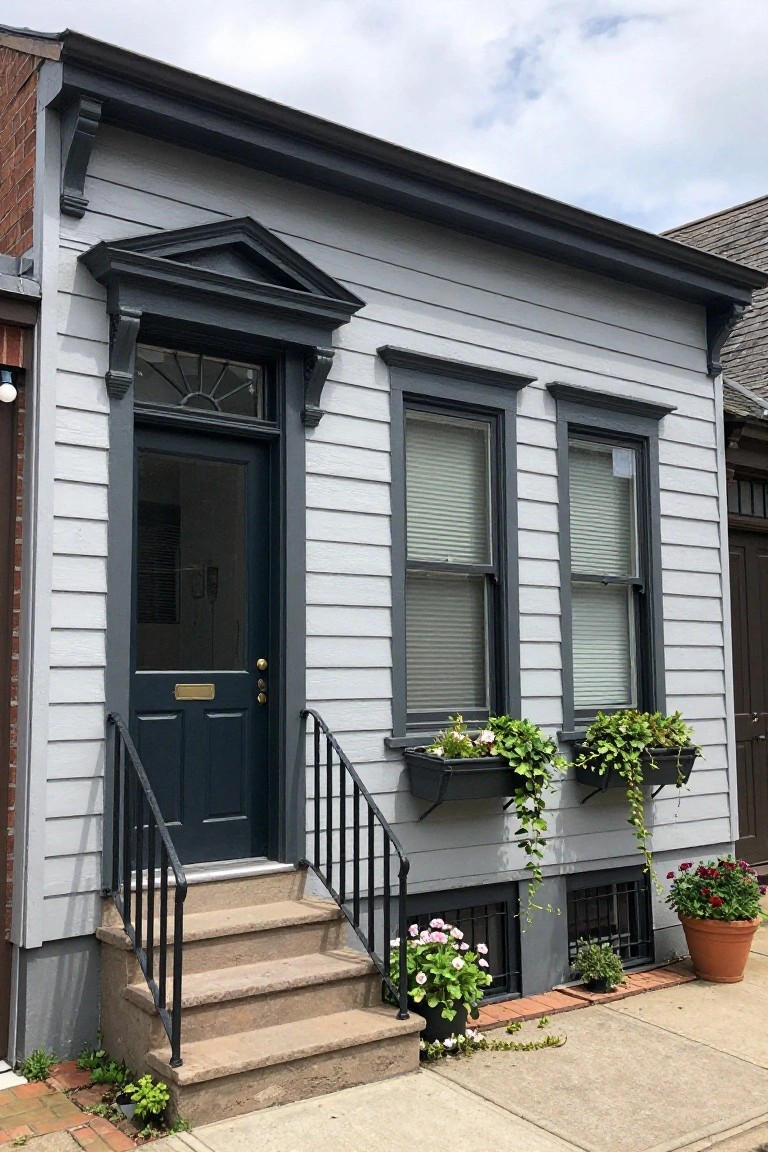
One straightforward way to give a colonial house that crisp, pulled-together look is painting the trim a deep charcoal or black against a soft light gray body. It makes all the architectural details pop. The pediment over the door, the window casings, even the brackets under the eaves stand right out. No need for fancy add-ons. This contrast keeps things feeling classic but not dated.
It’s especially good on narrow rowhouses or townhomes where space is tight. Pair it with simple window boxes overflowing with ivy or seasonal flowers, like you see here with the dark green door and brass knocker. Works in urban spots or older neighborhoods. Just make sure the paint is high quality exterior grade. It holds up better to weather.
Classic Brick Colonial Porch
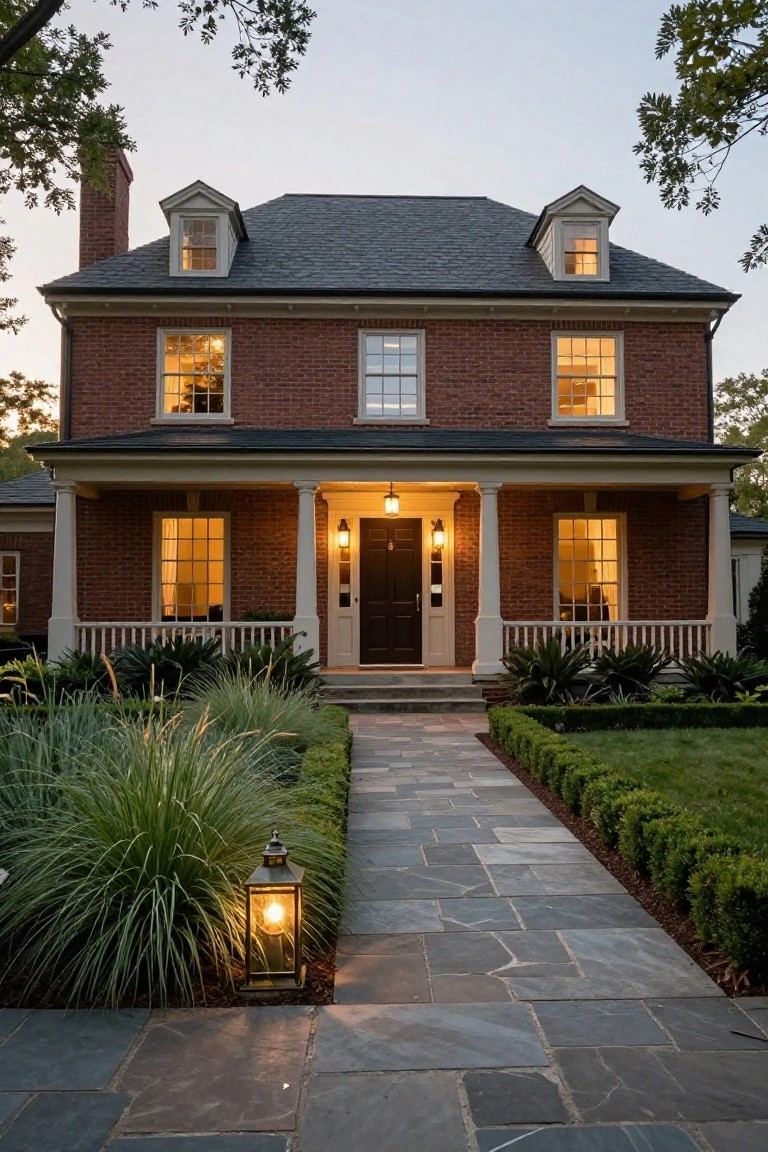
A covered front porch like this one pulls the whole house together in a way that’s hard to beat for colonial style. The white columns frame the dark door nicely, and those lanterns on either side light up the entry just right at dusk. Red brick walls keep things grounded and familiar, while the slate roof adds a touch of refinement without overdoing it.
This setup works best on two-story homes where you want to highlight the front door as the main welcome spot. Pair it with a stone walkway and some low plants along the edges to guide people right in. Skip busy details up top. It fits most suburban lots, especially if you’re aiming for that timeless neighborhood feel.
Black Trim on White Brick Exteriors
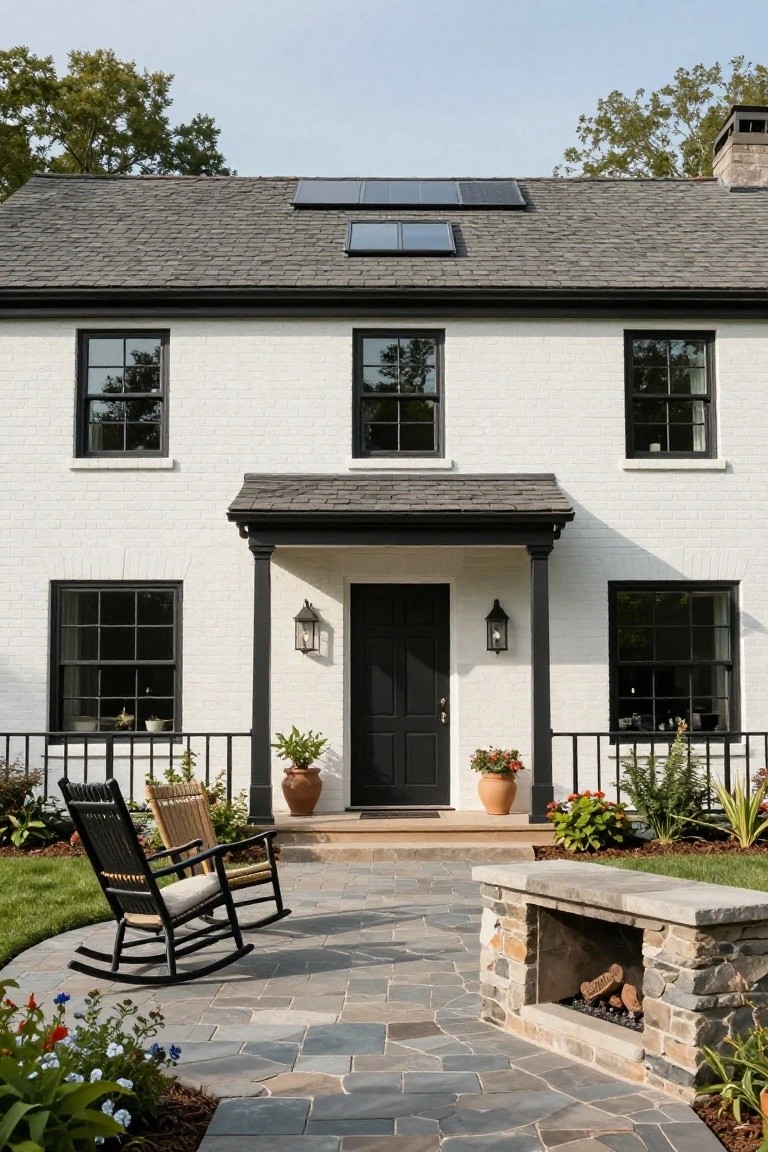
A white brick facade paired with black window frames and trim gives a colonial house that sharp, clean look. The dark accents make the windows and door stand out just right, adding some modern punch to the classic style. You see it here with the black portico and lanterns framing the entry.
This setup works best on straightforward two-story homes like colonials or farmhouses. Paint existing trim black or swap in new frames if needed. It holds up well in most climates and pairs easy with simple plantings or a stone patio out front. Just keep the brick fresh, no busy colors elsewhere.
Brick and Shingle Colonial Facade
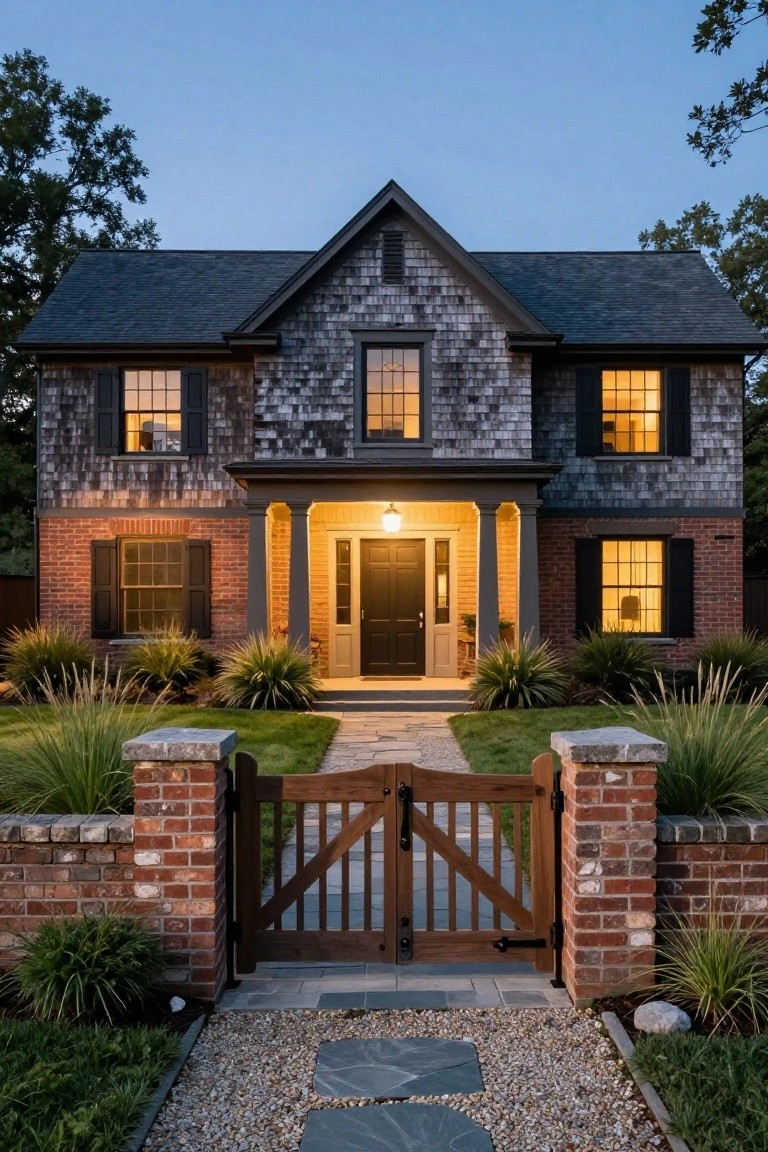
One look at this house and you see how brick at the base pairs up nicely with shingle siding up top. The brick gives a solid, grounded feel right at street level, while the darker shingles add texture and keep things from looking too heavy. Those columns on the front portico tie it all together, making the entry feel protected and classic.
This setup works well on two-story homes where you want some contrast without going overboard. It suits spots with a bit of slope or mature trees around, like suburbs or rural edges. Just make sure the brick color warms up the shingles at night with entry lights, and keep plantings low so they don’t hide the base.
Timber Pergola Over the Front Door
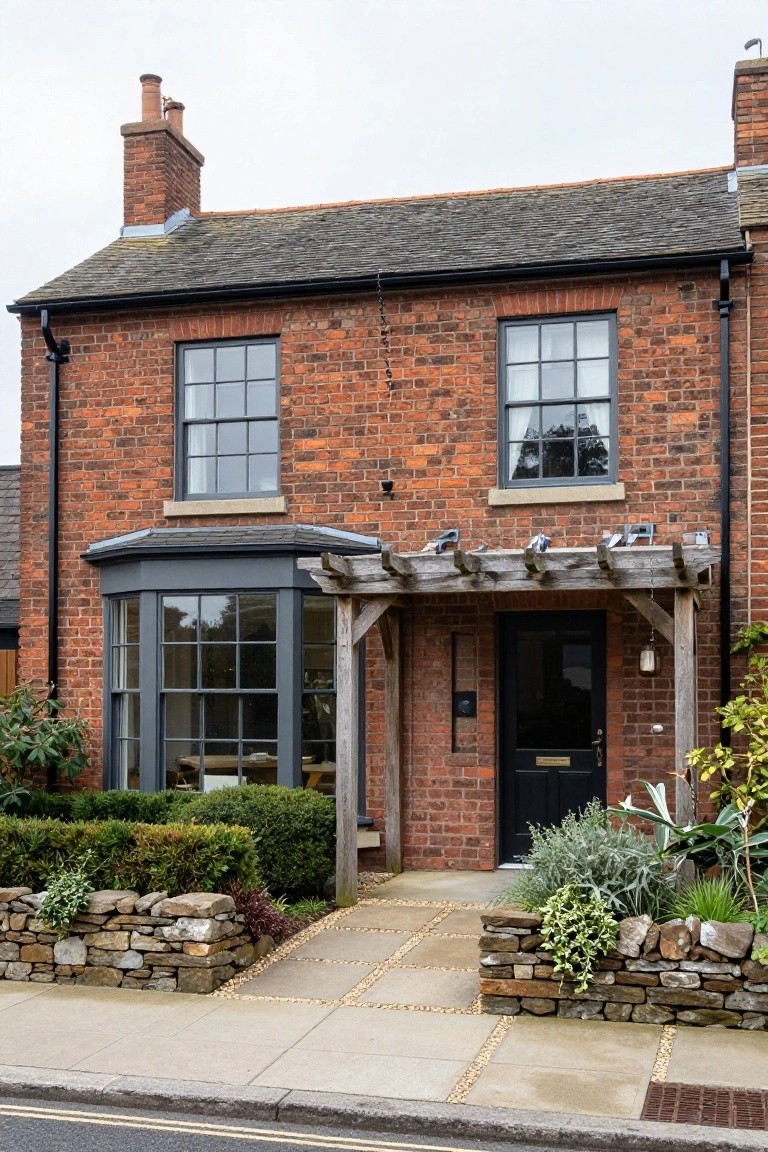
A timber pergola like the one on this brick house sits right above the entry, giving the whole facade a more relaxed feel. The rough wood contrasts nicely with the solid red brick and black door below. It pulls your eye to the entrance without much fuss, and those plants starting to climb up make it look lived-in already.
This setup fits older homes with straight lines, like colonials or semis. Build it from reclaimed beams if you can, keep the posts sturdy on either side of the path. Watch the scale, though. Too big and it overwhelms the door, too small and it disappears.
Colonial White Siding with Copper Gutters
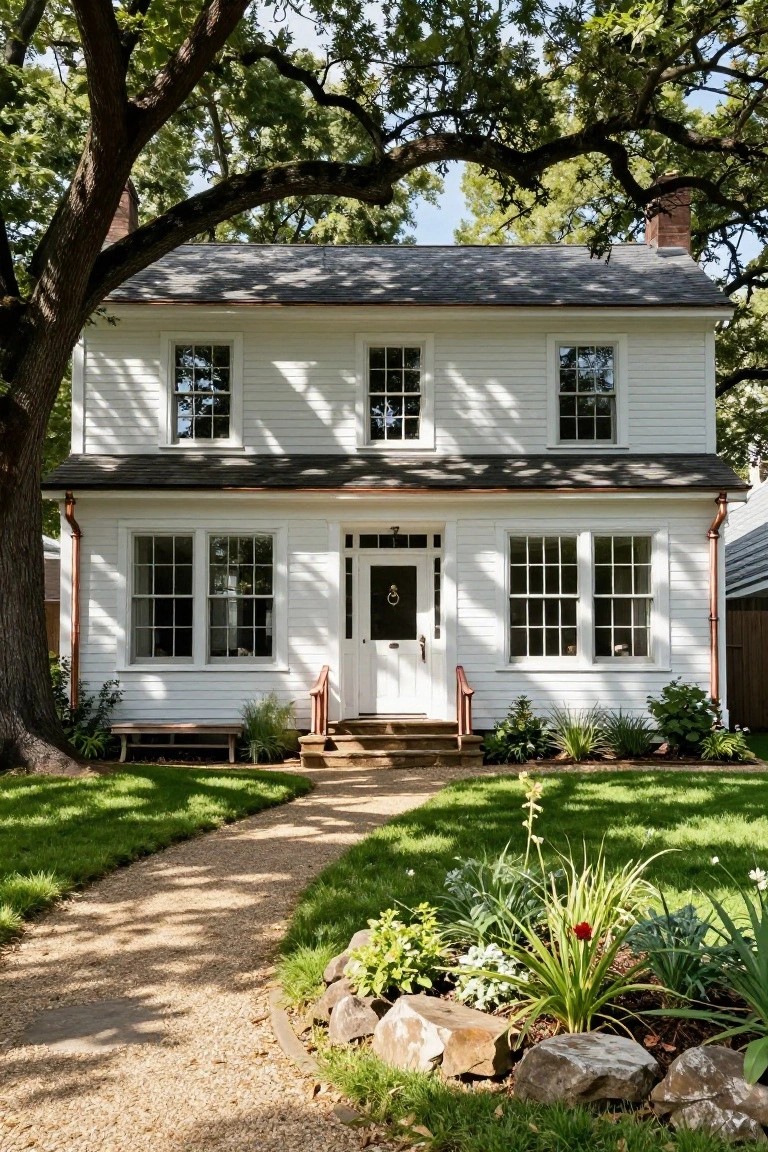
A classic two-story colonial looks sharp in bright white clapboard siding. What stands out here is the copper gutters and roof edges. They add a bit of warmth against the clean white without overpowering the traditional style. Over time the copper patinas to a soft green. That ties right into the yard and trees around it.
This setup works best on symmetrical colonials where you want simple curb appeal. Go for it if your house faces a street or has some landscaping nearby. Real copper holds up well in rainy spots. Skip painted versions though. They don’t age the same way.
Cream Brick with Black Door Contrast
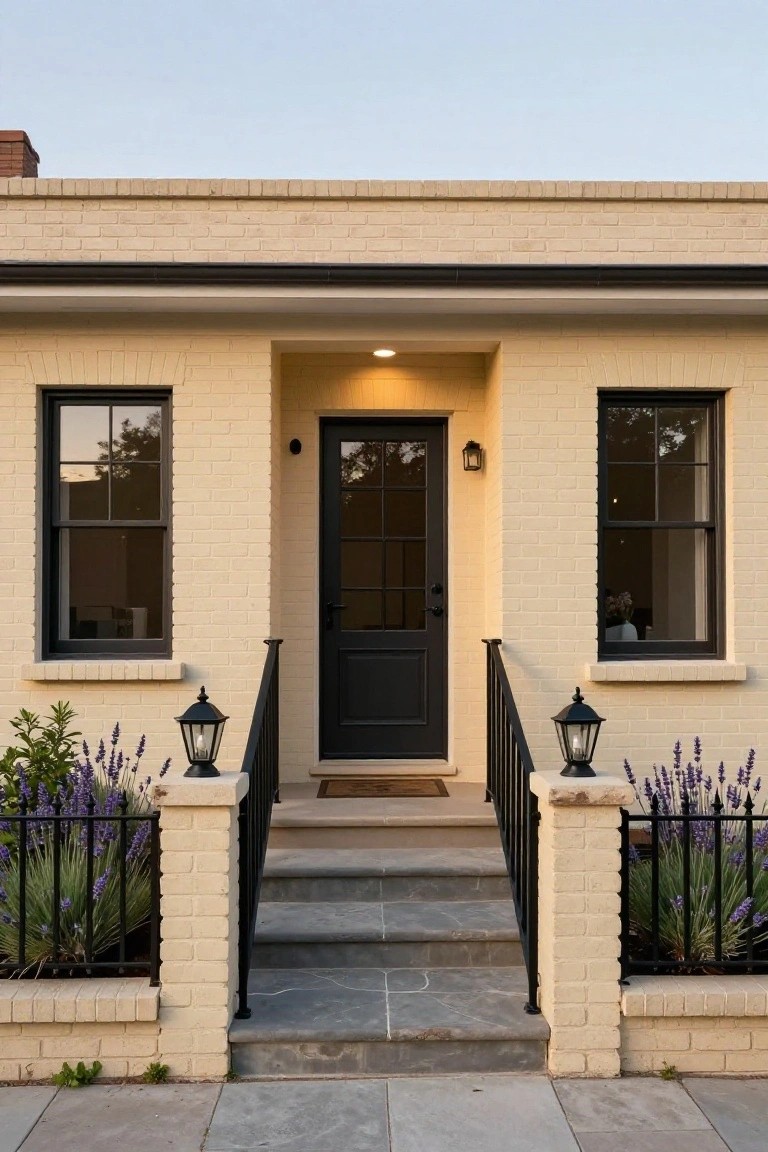
One simple way to update a colonial exterior is going with a pale cream brick paired against a bold black front door. It keeps that classic brick charm but adds a modern edge right at the entry. The black door here, with its glass panels and clean lines, pulls focus without overwhelming the soft brick walls. Flanking lanterns and subtle steps make the whole approach feel polished and welcoming.
This look works best on homes with good symmetry, like twins windows on either side of the door. Try it if your house has a similar straightforward facade, maybe in a neighborhood of older colonials. Just keep landscaping light, like low lavender beds along the steps, so the contrast stays sharp. Avoid darker bricks, though. They can make the black trim blend in too much.
Navy Blue Siding on a Colonial Facade
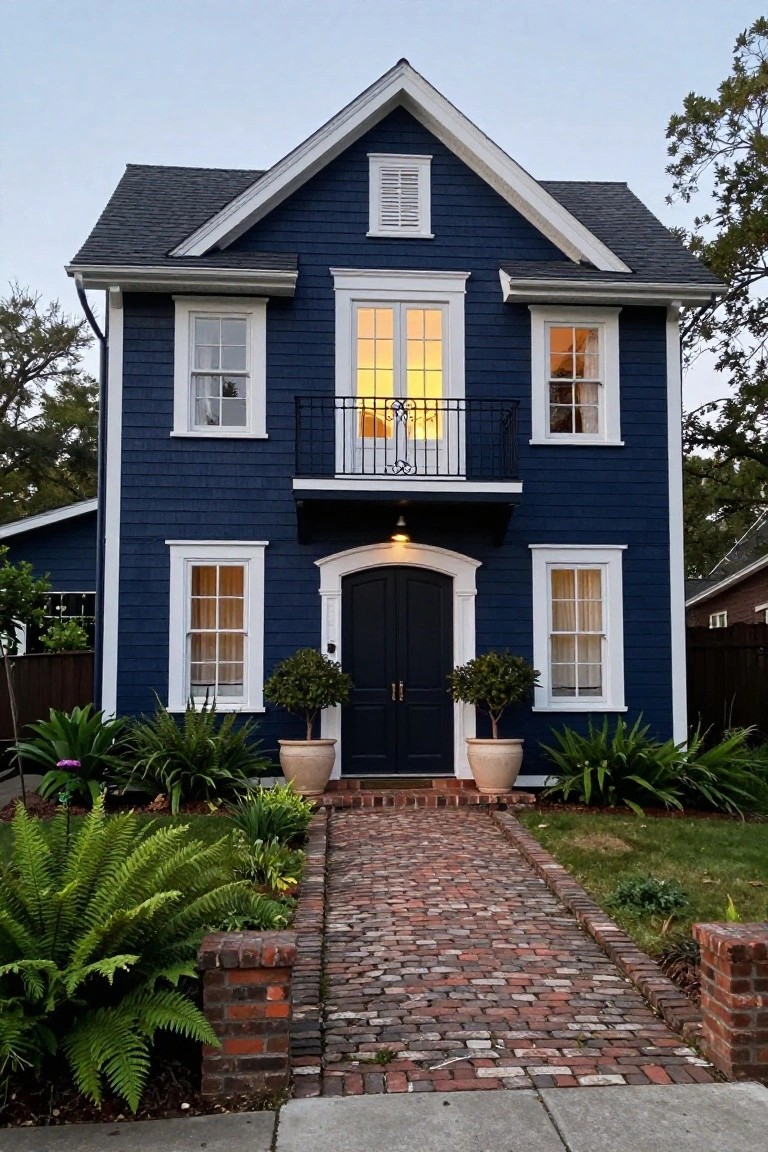
Navy blue siding gives this Colonial house a fresh take on the classic style. The shakes in that deep blue color work well against the white trim around the windows and doors. It keeps things traditional but feels more current than the usual whites or grays. The warm light from inside helps too, making the front porch area welcoming at dusk.
You can pull this off on two-story homes with gables and a balcony like this one. It suits spots with some trees and greenery nearby. Just stick to crisp white trim and a dark door for contrast. Avoid going too light on the blue, or it might wash out.
Classic Porch Bench Seating
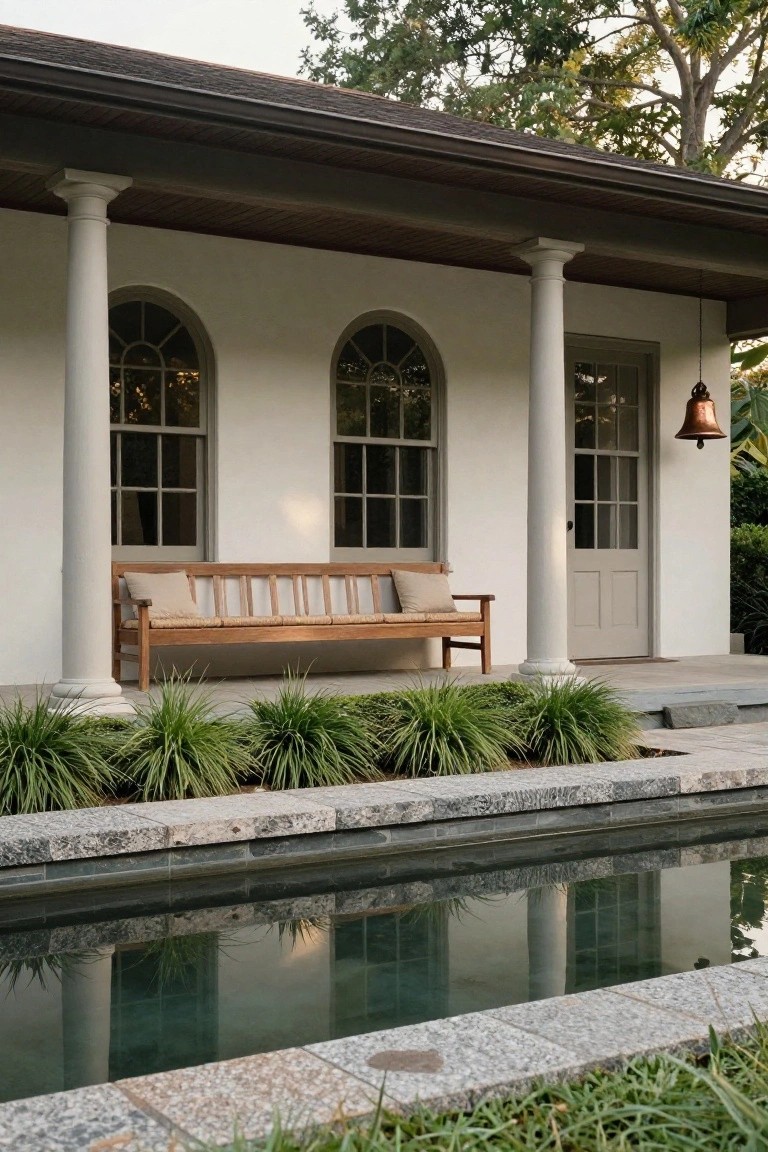
A simple wooden bench on the porch pulls colonial style into everyday use. You see it here with teak slats and neutral cushions tucked under white columns. It keeps that old-house look but makes the spot feel like a place to actually sit, maybe with morning coffee.
This setup fits side porches or covered entries on homes with clean white walls. Pick durable teak or cedar that weathers well, add a couple pillows for comfort. It works best where you want low-key outdoor living without changing the architecture much. Skip anything too modern or bulky.
Wraparound Porch on Coastal Colonial Homes
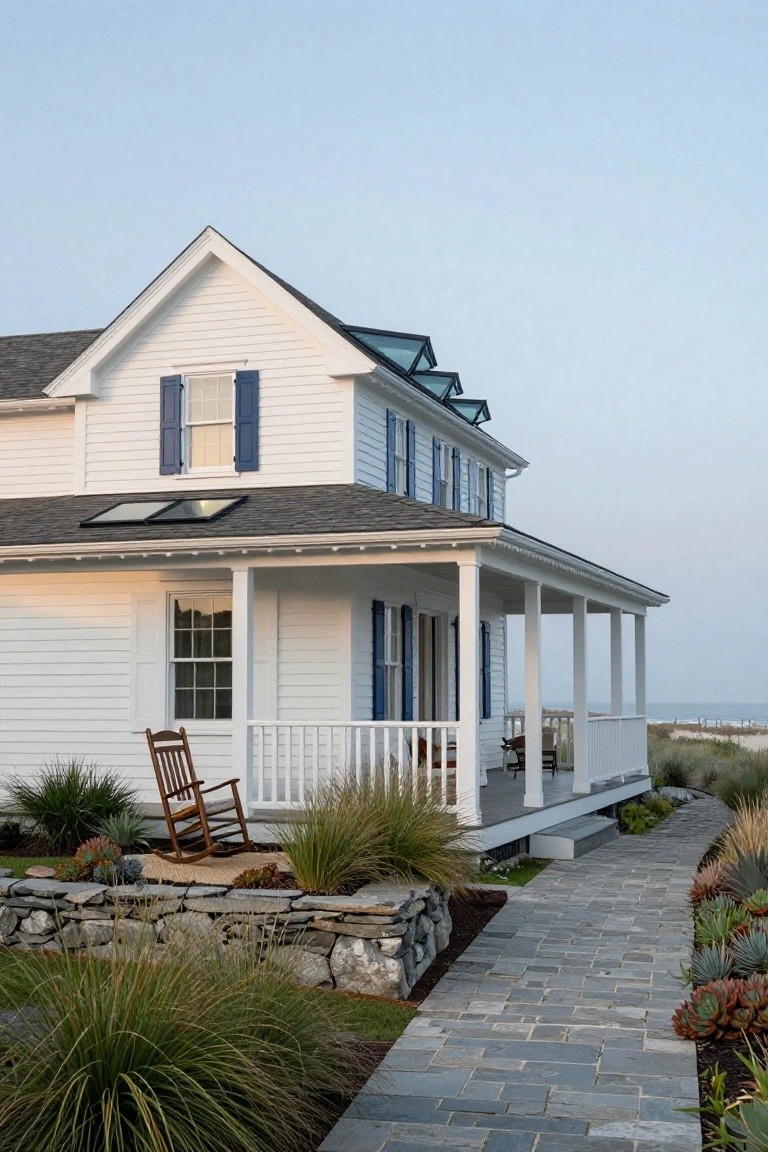
A wraparound porch gives colonial houses that classic front-and-center feel while opening up to the outdoors. Here, the white siding and blue shutters keep things traditional, but the porch stretches along the side toward the beach, making it easy to sit and watch the water. That rocking chair on the deck says relaxed living right away. It pulls the house into the landscape without much fuss.
This setup works best on homes near water or in open yards where you want indoor-outdoor flow. Go for simple wood railings and native grasses nearby to keep maintenance low. Skip heavy furniture. Just a chair or two lets the porch breathe and ties into modern casual style.
Balanced Colonial Facade Design
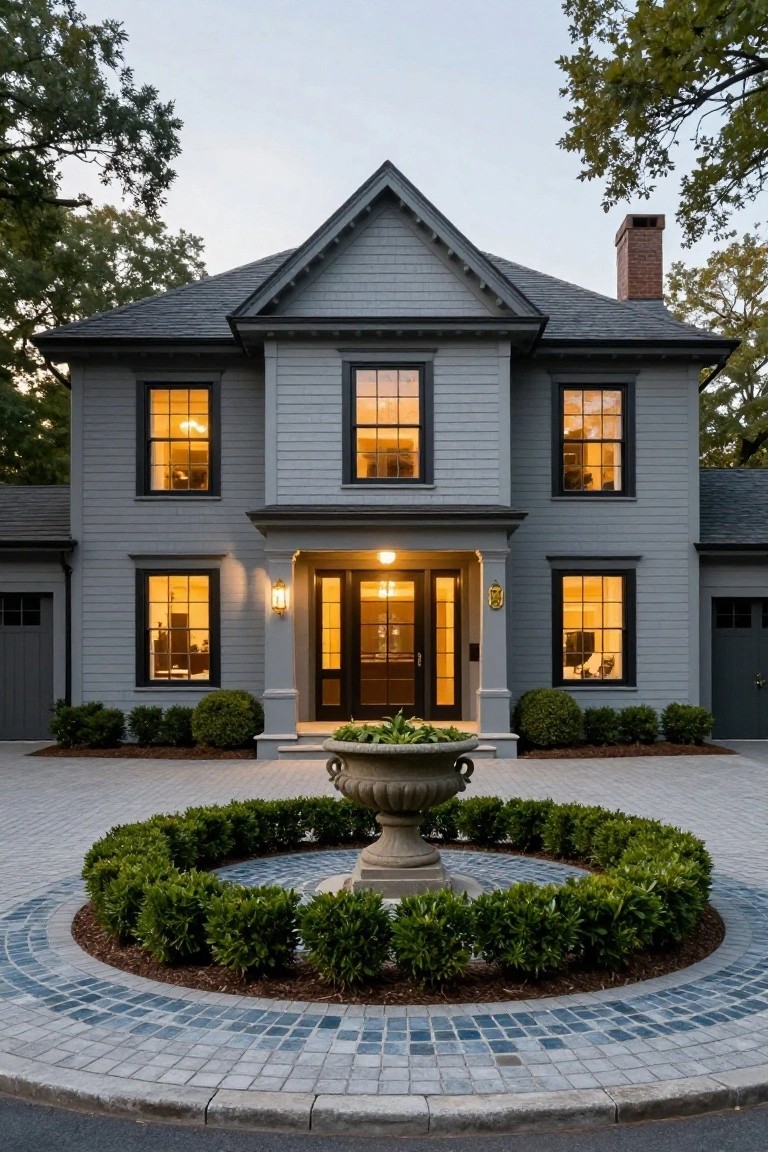
Colonial homes look best when everything lines up just right across the front. Here the central entry sits proud under a simple portico, with matching garage doors tucked to each side. Those tall, evenly spaced windows pull your eye across the whole face of the house, giving it that steady, familiar feel without trying too hard.
This setup works great on a standard suburban lot where you want curb appeal that nods to tradition. Pair it with shingle siding in a soft gray like this, and add black trim for some snap. Just make sure the garages don’t overpower the entry, or it starts feeling more like a car house than a home.
Frequently Asked Questions
Q: How do I pick paint colors that keep my colonial looking classic but feel fresh?
A: Stick to muted earth tones like sage green or warm gray for the body, then white or black for trim.
They echo history without screaming modern. Walk around your house at different times of day to see how the color shifts.
Q: Can I swap out old windows for modern ones on a colonial?
A: Go for double-hung windows with grilles that mimic divided lights. They let in more natural light and boost energy efficiency. Your neighbors won’t even notice the upgrade.
Q: What’s a simple way to update the front porch?
A: Add slim metal railings painted matte black.
They slim down bulky wood ones and add an industrial edge that plays nice with colonial symmetry. Skip ornate details, keep lines clean.
Q: How do shutters work with today’s bigger windows?
A: Hang functional board-and-batten shutters that actually close over the window.
Scale them to fit, maybe two panels per side. This nods to tradition while framing modern oversized glass perfectly.
