

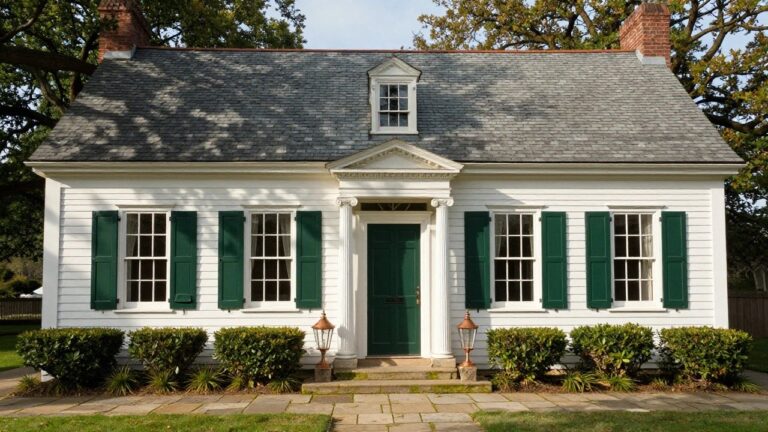
There’s something solid about Colonial houses dressed in stone that makes them read as enduring from the curb, no matter the years or weather. I once stood in front of one where the stone climbed just the lower half of the facade, letting the clapboard siding and shutters keep their crisp lines above. It grounded the entry without swallowing the proportions, something too many stone overlays fail to do. Stone shines when it echoes the roof’s pitch and frames the windows right. A handful of these approaches feel worth sketching out for your own place, the kind that age gracefully alongside the chimney and dormers.
Classic White Brick Colonial Facade
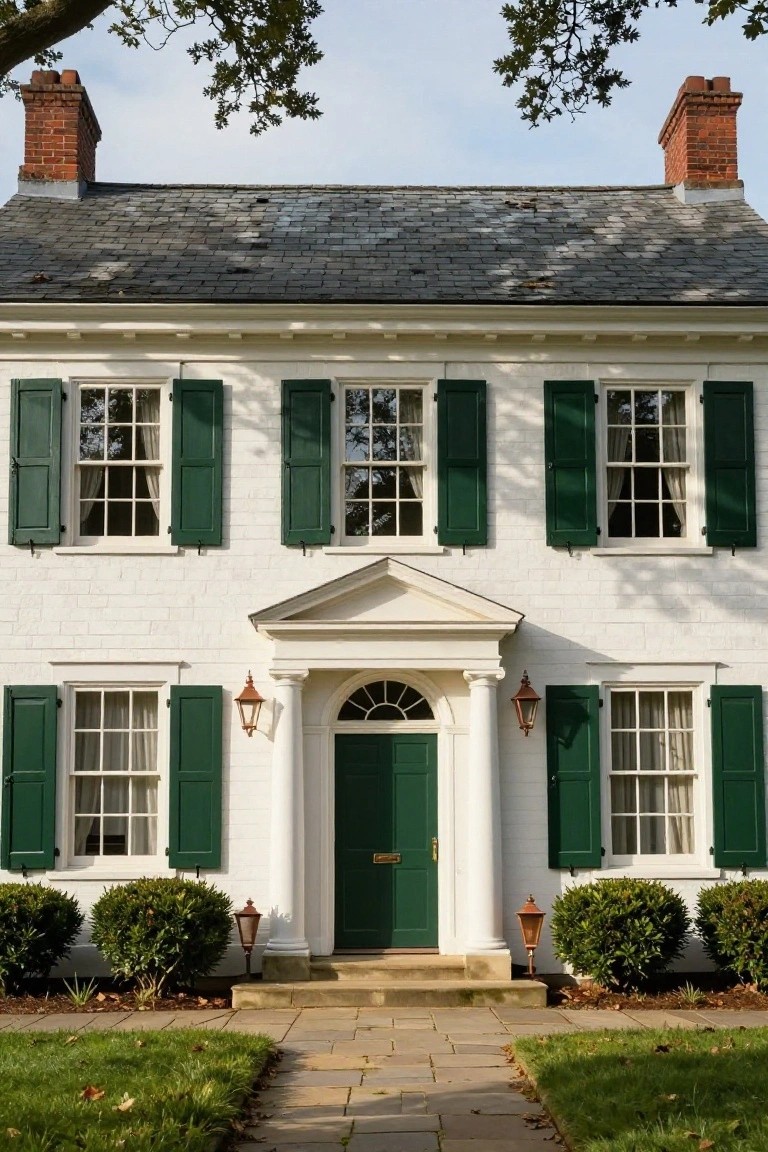
White brick on a colonial house like this one keeps things crisp and timeless. It holds up well over the years, and those green shutters frame the windows nicely without stealing the show. The slate roof up top adds to that solid feel.
This setup suits older neighborhoods or any spot where you want a home that looks put-together but not fussy. Go for it on a two-story front with a centered door, maybe lanterns by the steps. Just keep the brick painted fresh every few years to avoid any dull spots.
Recommended Products

One box contains 100 cost-effective thin brick veneers, covers 14.2 sq. ft. Each piece is 2.36-in width x 8.66-in length x 0.15-in thick. Want to take a closer look at these tiles before placing a full order?Order a sample brick! Samples come full size and they're a great way to get a feel for a tile's size, color and texture. You can even see how it looks on the wall in your chosen space.

【Specifications】Each tile measures 8.54” x 2.2” x 0.1”. With 3/8” gaps, 15PCS cover approx. 2.54 sq.ft. Perfect for small DIY projects or sampling.
Fieldstone Base with Gray Clapboard Siding
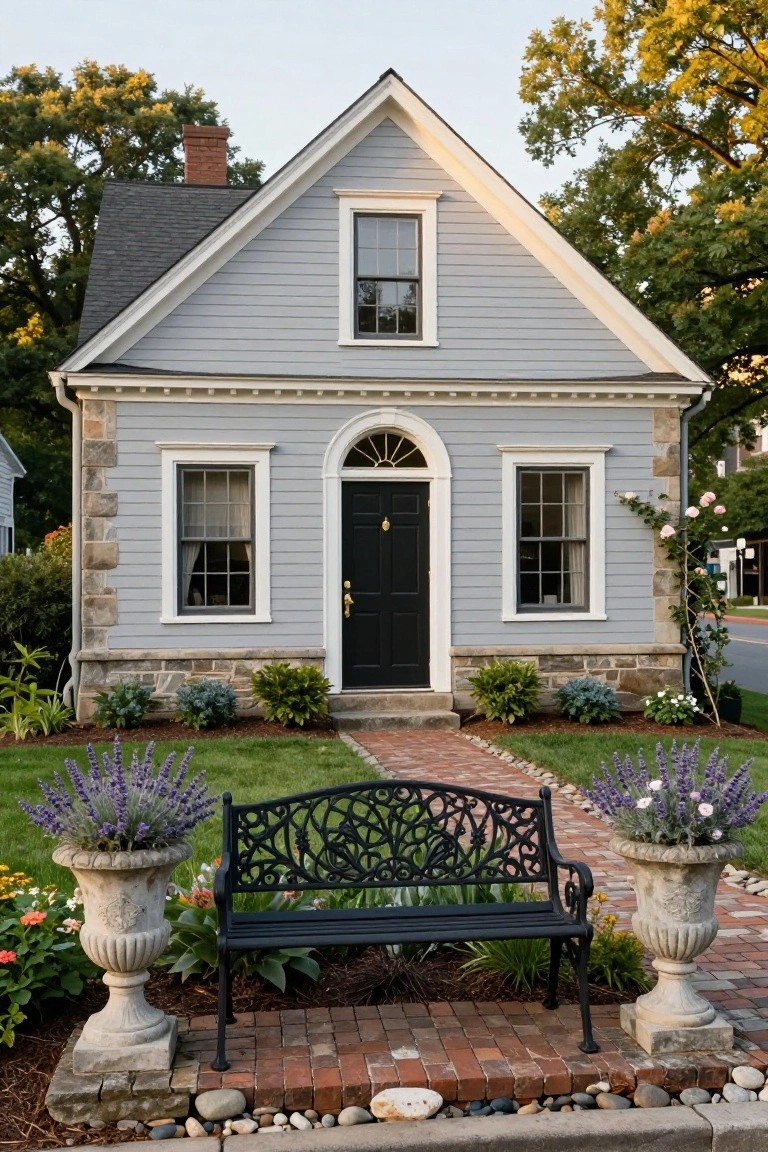
One solid way to give a colonial house that lasting look is pairing a fieldstone foundation with light gray clapboard siding. The rough stone at the bottom feels sturdy and ties right into old-school New England style. It grounds the smoother siding up top without overwhelming the whole facade. That mix keeps things simple yet elegant, especially on smaller homes like this one.
You can pull this off on most colonial revivals or originals in suburban spots. Pick stones in earthy tones that blend with your local landscape, then go for a soft gray paint on the clapboard to let the stone pop. Just make sure the stonework matches the house scale. Avoid super polished stone. It can look too fussy next to the casual siding.
Rustic Stone and Wood Garage Facade
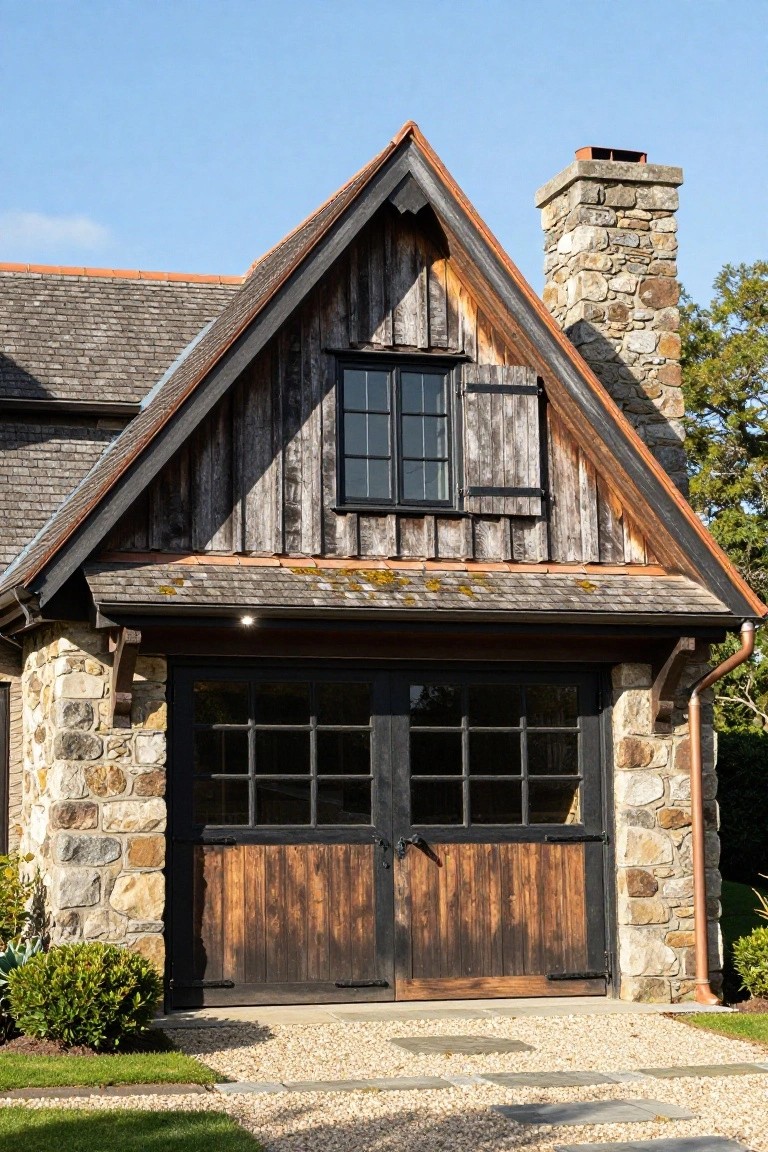
A solid fieldstone base holds up this gabled garage, with big wooden doors and siding that have that weathered barn look. The stone keeps things grounded and tough against weather, while the dark wood frames and shutters add some easy character. It pulls off a colonial vibe without trying too hard.
Try this on homes where the garage sits off to the side or faces the street. It suits sloped lots or countryside spots best, since the stone ties into natural surroundings. Pick reclaimed wood that’s sealed well, and line the front with gravel or simple shrubs to let the materials stand out.
Rustic Mixed-Stone Walls
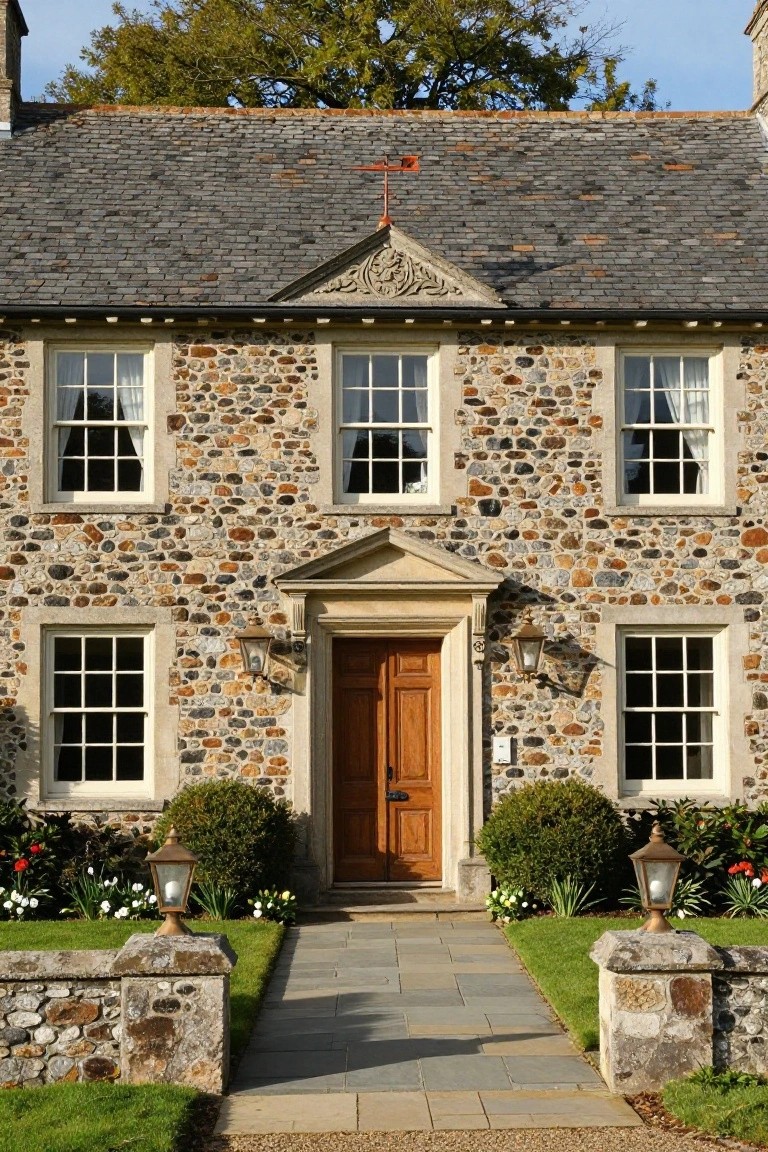
A facade like this uses stones in different sizes, grays, browns, and rust tones for natural texture that feels solid and settled. It stands out because the rough wall surface contrasts nicely with the straight white window frames and the clean pediment over the door. That mix keeps the house from looking plain brick or siding.
Put this on a colonial two-story home where you want curb appeal that lasts without much upkeep. It suits spots with some trees or open yard around it. Just make sure the stones are properly pointed to handle weather, and add lanterns like these for evening light.
Stone Walls Frame the Entry Path
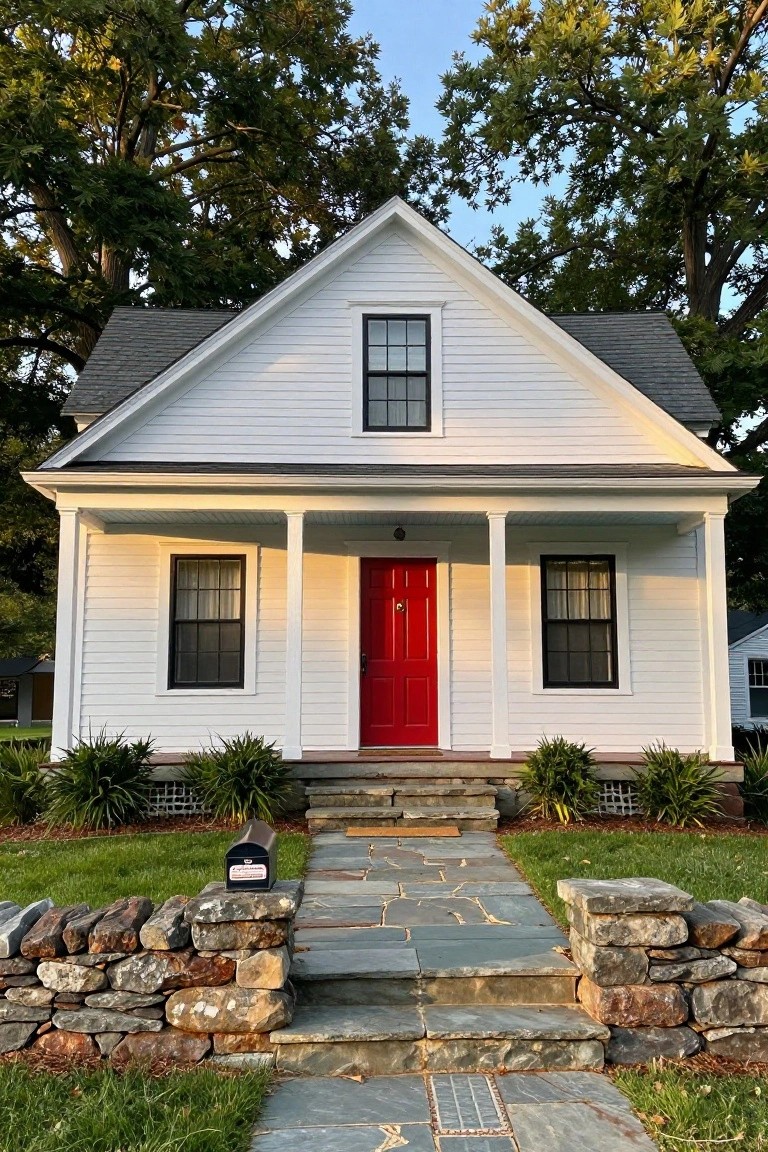
A classic white colonial house gains real presence with these dry-stacked stone walls running along both sides of the slate steps. They hold back the gentle slope, create a defined walkway right to the red front door, and tie into the porch columns nicely. That natural stone texture contrasts the smooth siding just enough to feel grounded and timeless.
Put this setup on homes with any drop from street to entry. It suits sloped yards best, keeps things from washing out in rain, and works year-round. Skip super smooth stone if you want the rustic edge, and plant low evergreens at the base for a finished touch.
Brick and Stone Facade Mix
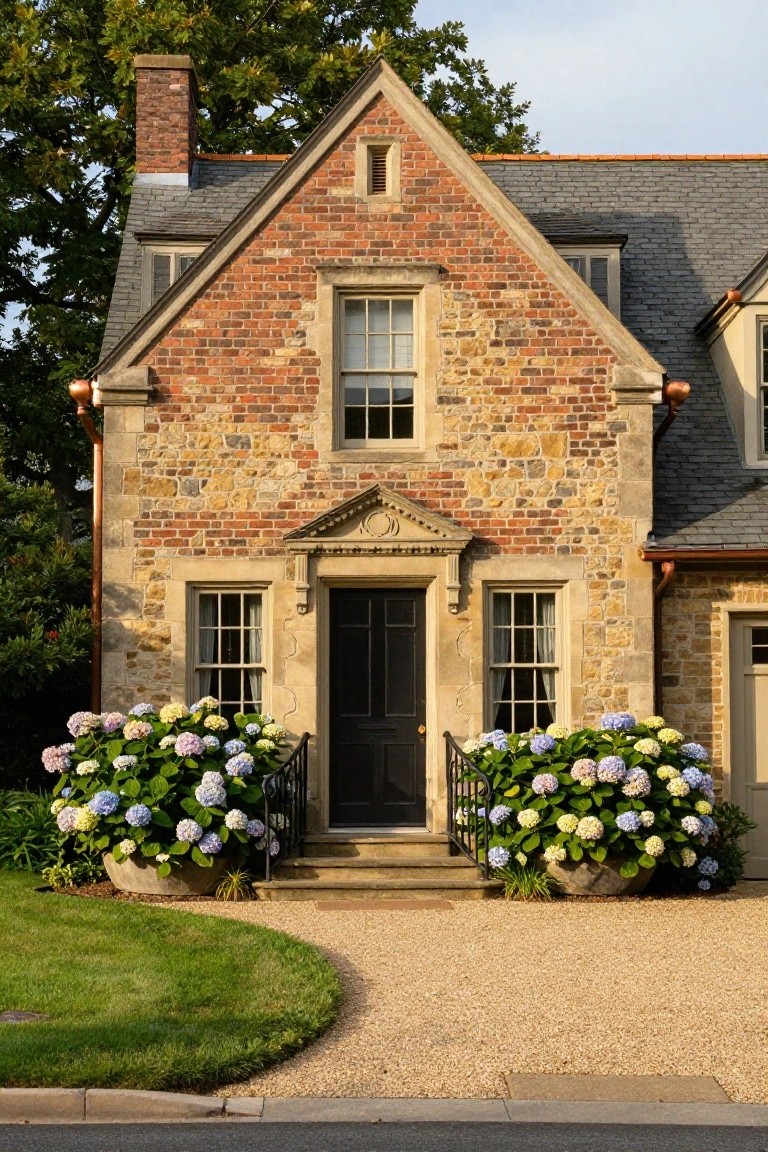
A solid way to build curb appeal on a Colonial house is blending red brick with light stone accents. The brick handles the main walls while stone covers the base, corners, and entry surround. That setup adds texture and makes the whole front feel sturdy and settled in place. It’s a look that holds up over time, especially with a slate roof overhead.
Try this on homes with some historic vibe, whether you’re renovating an old place or starting fresh. Keep the stone to key spots so it doesn’t compete with the brick. Those big hydrangea pots by the door show how plants can ease the stone’s weight a bit. Just right for front-facing spots where you want quiet strength.
Classic Porch Entry with Stone Base
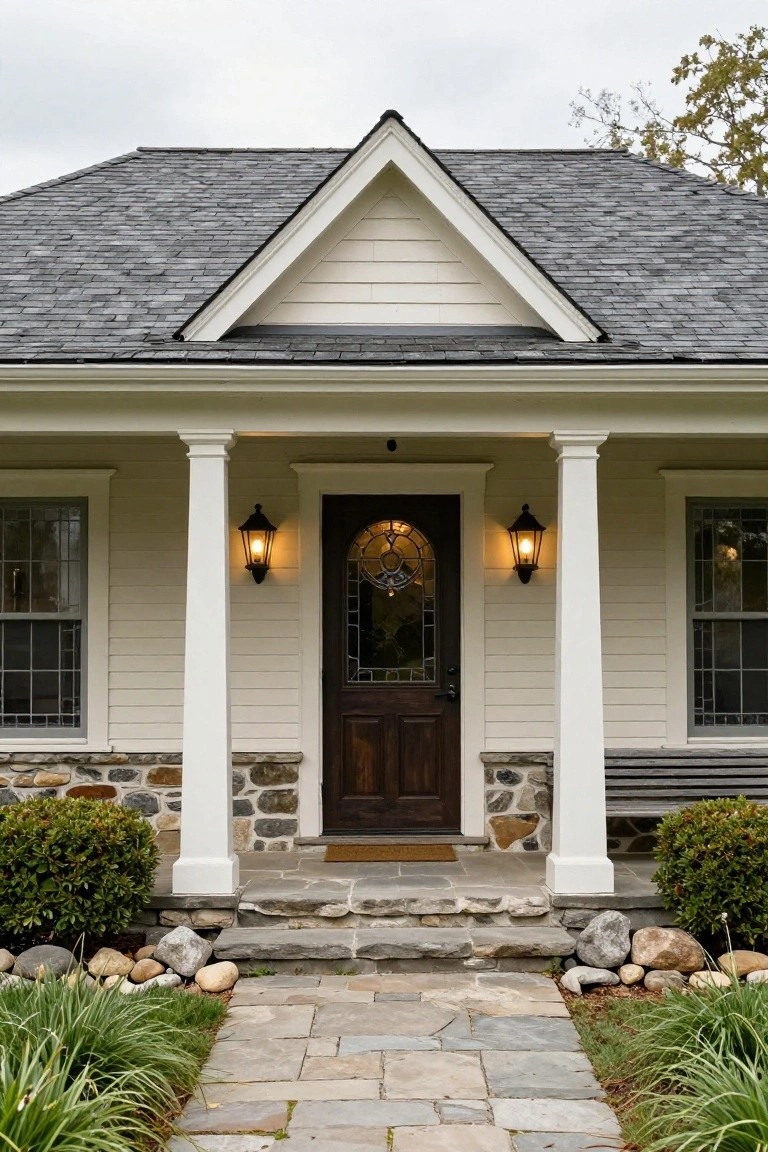
A natural stone base like the fieldstone here gives a Colonial house real staying power. It sits right under the light clapboard siding and porch, adding texture without overwhelming the clean lines. That rough stone pulls your eye down to the ground, making the entry feel more settled and substantial. Folks like it because it nods to older farmhouses but cleans up nice for today.
You can pull this off on most two-story Colonials with a gabled porch. Stack irregular fieldstone or similar around the foundation and steps, keeping the porch columns crisp white. It suits homes in rocky areas best, and pairs easy with a flagstone path. Skip it if your lot’s too flat… might look forced.
Classic Stone Portico Entry
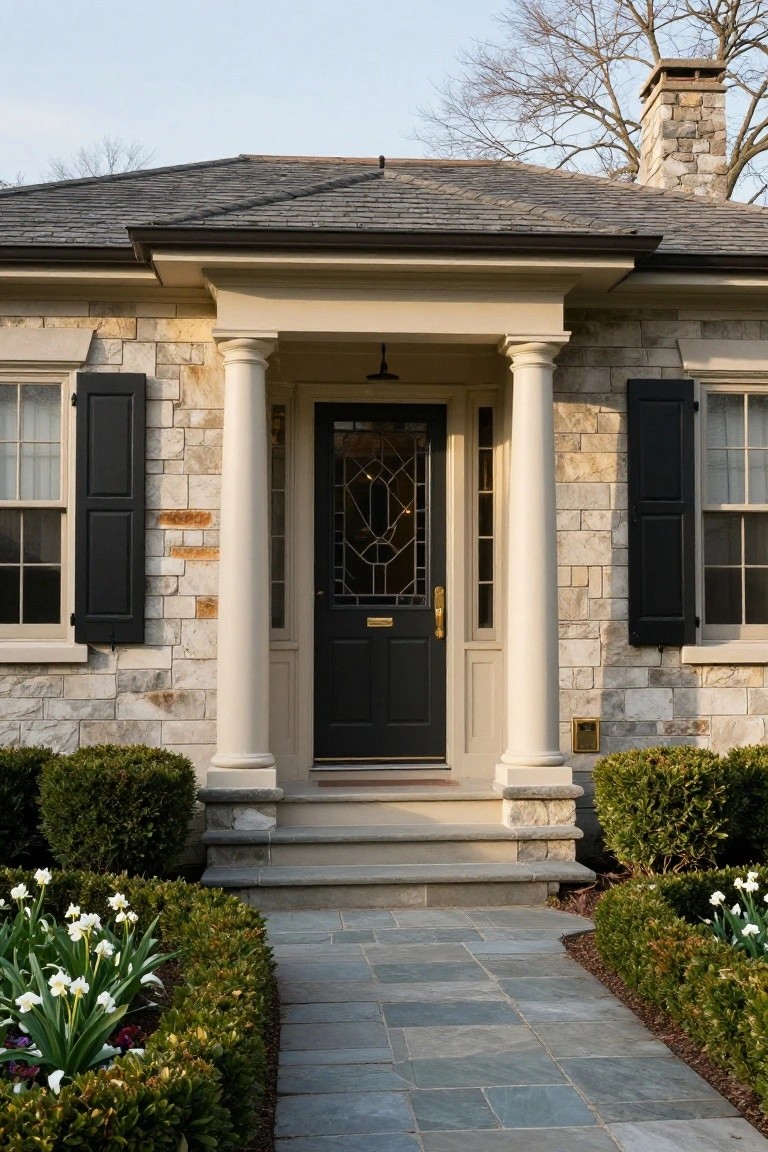
A simple portico like this one frames the front door with stone walls and paired columns. The black door with its glass insert pulls focus without trying too hard. Paired with black shutters on the flanking windows, it keeps things balanced and easy on the eyes for that straight-up Colonial look.
This works best on homes with a compact footprint, where the entry needs to stand out from the street. Add boxwood hedges along the path to tie it in, but keep plantings low so they don’t crowd the architecture. Skip fussy details. It holds up year-round.
Rustic Pebble Stone Facade
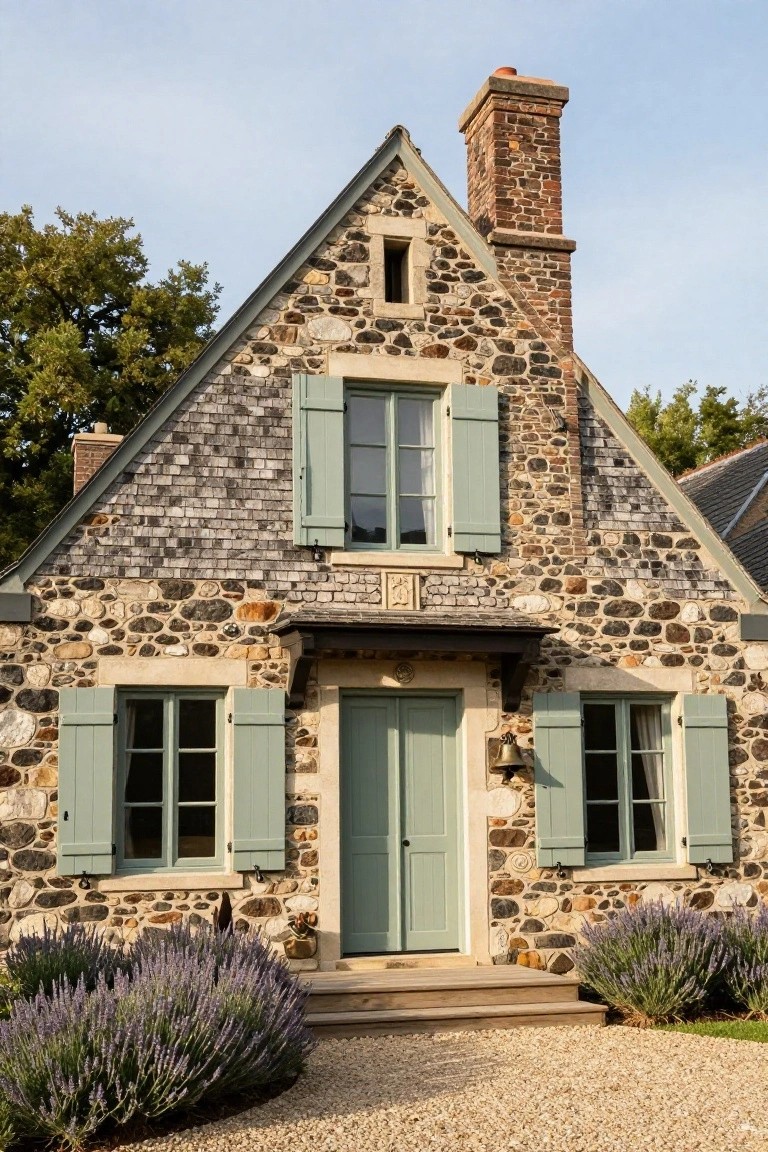
A facade like this relies on irregular pebbles and fieldstones stacked without much fuss. It builds up texture right away, making the house look settled and sturdy from the street. That slate roof over the steep pitch adds to the old colonial vibe without trying too hard.
This works best on smaller homes or cottages where you want low upkeep and natural charm. Stick to muted greens on doors and shutters to let the stone stand out, and keep plantings simple like lavender along the front. Avoid smoother stones, they lose that rugged edge.
Classic Portico Entry on Stone Facade
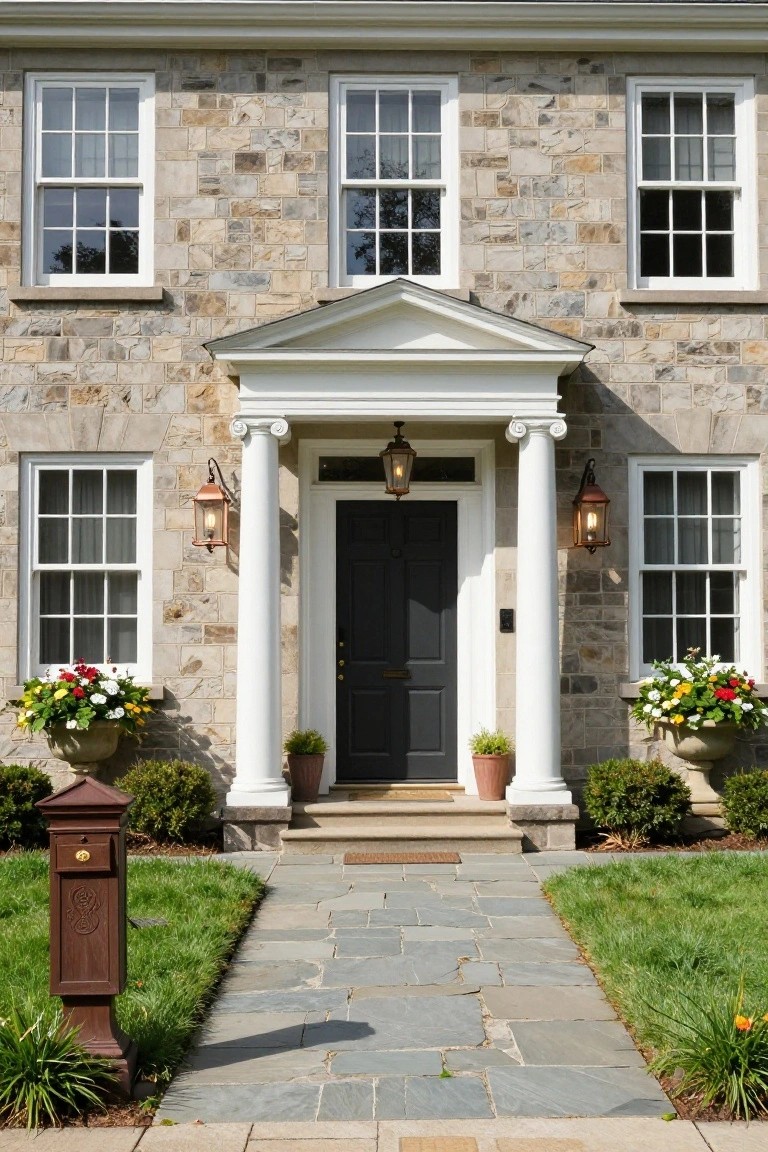
A simple portico like this one takes a stone colonial house up a notch. The white columns and pediment sit right on the rough stone walls, creating that clean contrast folks have loved for generations. Black door in the center keeps it straightforward, and the lanterns add just enough light without overdoing it.
Put this on a two-story home where the entry needs to stand out. It suits quieter streets or older neighborhoods best, pulling the eye to the front door. Skip it if your lot feels too tight, though. A few pots with flowers help tie it to the yard.
Fieldstone Cottage Exterior
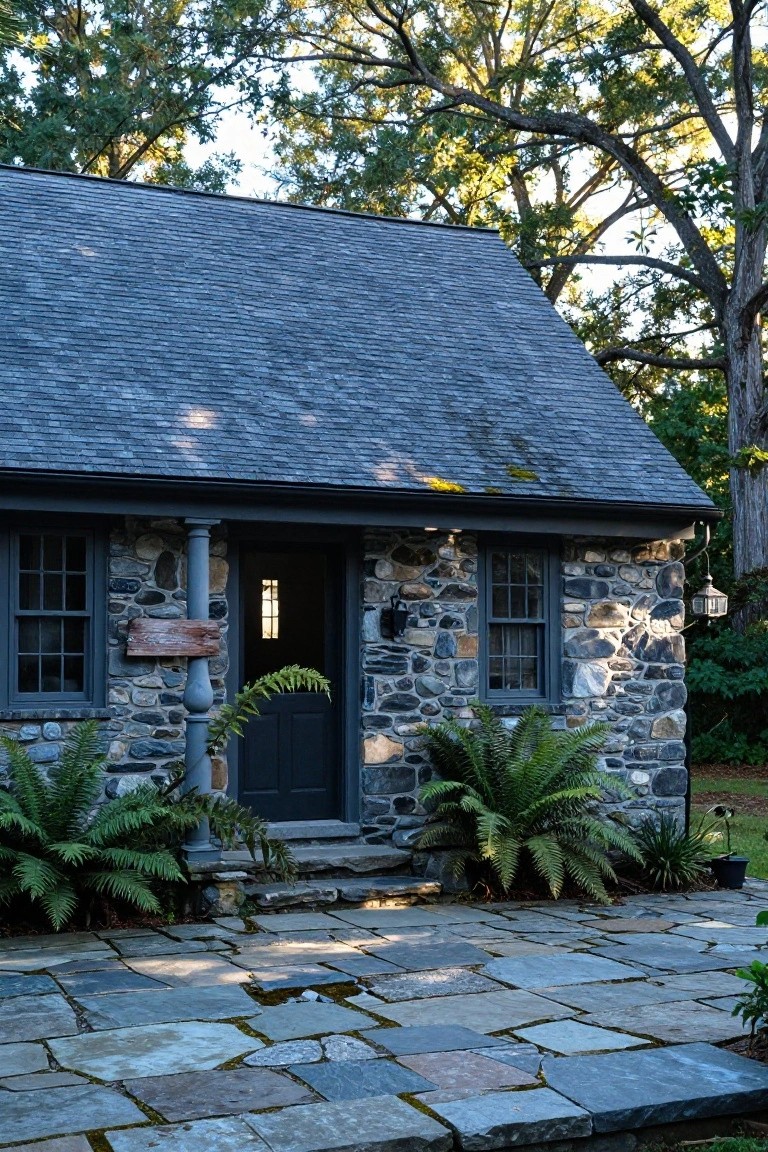
Fieldstone walls like these bring a genuine rustic touch to colonial-style homes. The mix of irregular gray stones with a dark slate roof creates that timeless, settled-in look without trying too hard. Notice how the moss on the stones and simple ferns add to the natural vibe around the entry.
This works best on smaller houses tucked into wooded lots or rural spots. Use local fieldstone if you can for authenticity and cost savings. Keep the entry straightforward with a dark wood door and maybe a hanging lantern. Avoid overplanting so the stone stays the focus.
Recommended Products
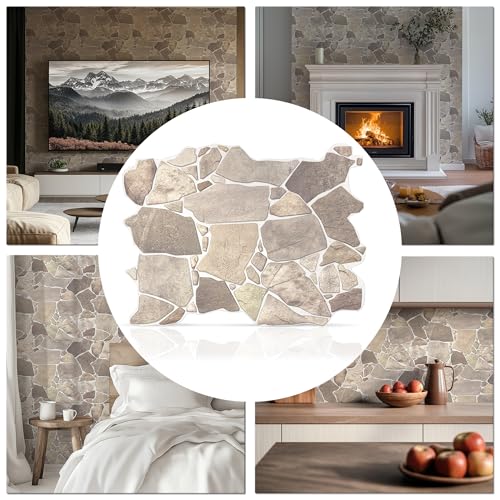
Transform Your Space: Add charm to your home with 3D wall panels featuring a textured, natural-looking faux stone design that is ideal for accent walls and TV walls

【Premium Quality Material】: Our 3D Wall Panels are made from high-quality polyurethane (PU), they are free from harmful substances like formaldehyde and volatile organic compounds (VOCs).

100% authentic Tando corners composite
Stone Walls Line the Entry Path
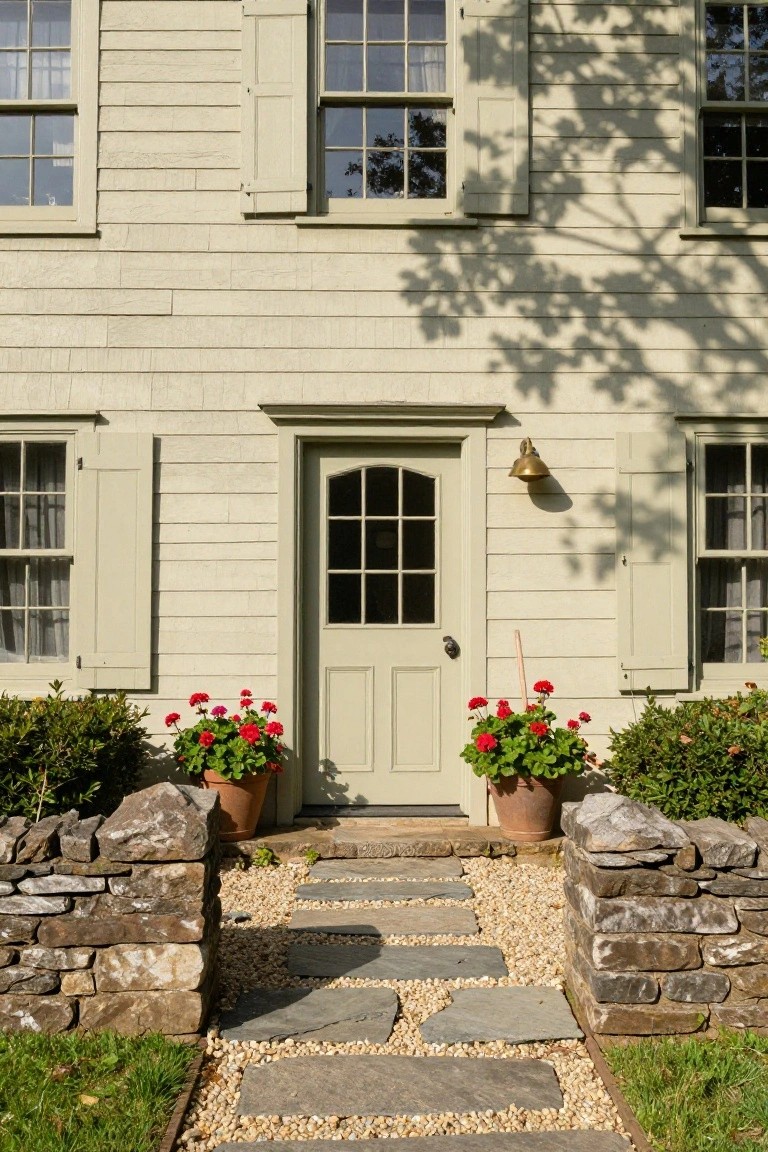
One straightforward way to add stone to a colonial exterior is lining the path to your front door with dry-stacked walls. They create clear borders that guide visitors right up to the entry, like in this setup with slate steps and big terracotta pots of geraniums perched on top. The pale house siding pairs nicely with the rugged stone, keeping things balanced and not too busy.
This works best on smaller front yards where you want definition without a full fence. Pick stones from nearby quarries to blend in, and keep the height low around knee level. It suits traditional homes aiming for quiet elegance… just make sure the path stays level so no one trips.
Symmetrical Stone Entryway
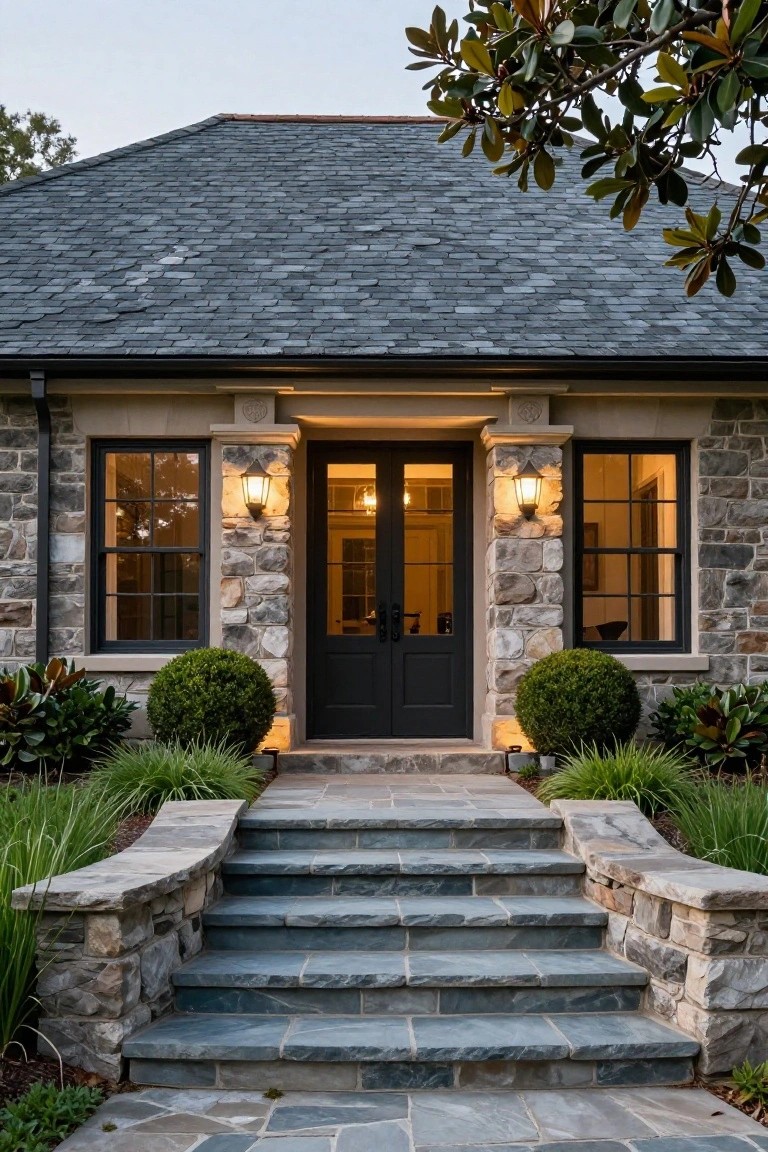
A symmetrical stone entryway like this one frames the front doors with sturdy pilasters and matching surrounds. It gives the house a solid, classic feel right at the approach. The black double doors stand out against the rugged stone walls, and the lanterns on either side light up the space nicely without overpowering things.
This setup works best on colonial-style homes where you want the entry to feel formal but not fussy. Pair it with simple boxwood shrubs at the base for some green balance. Keep the steps wide and even, using slate or similar stone to tie into the facade. It suits sloped lots too, since those steps draw the eye upward.
Classic Stone Arch Entry
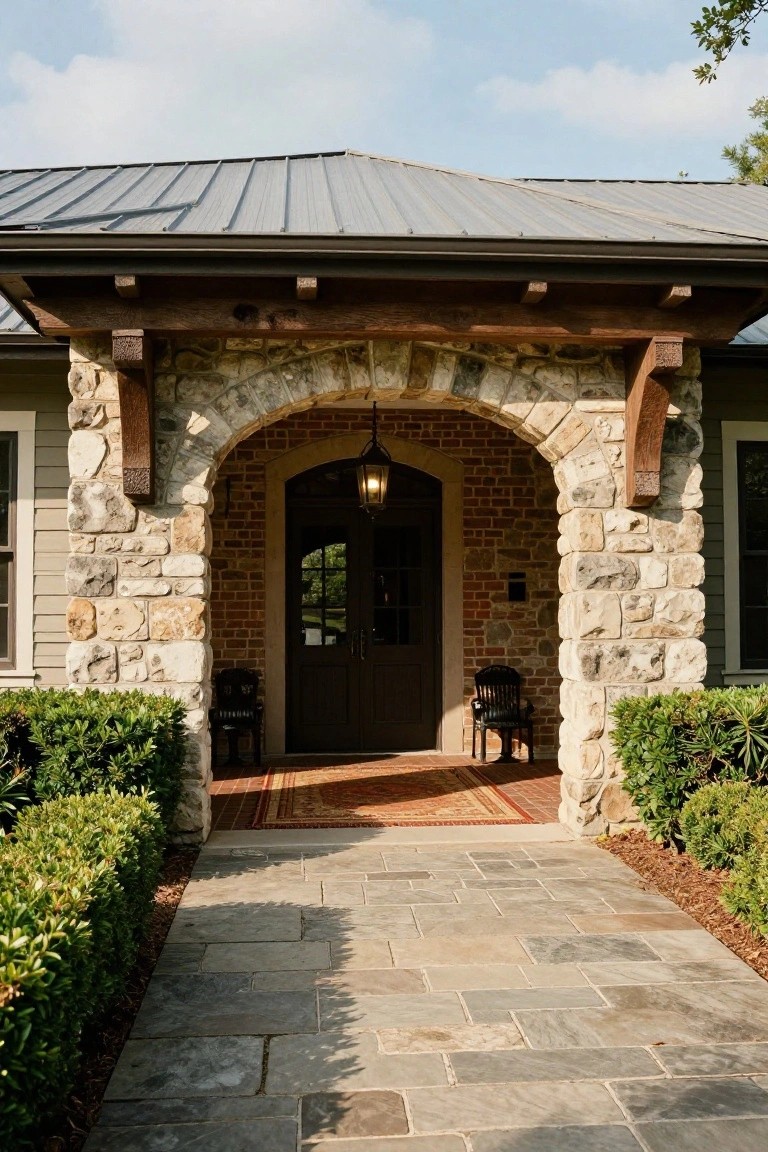
A stone arch around the front door like this one mixes rugged limestone blocks with brick infill for a timeless look. It frames the entry just right, making the house feel established and inviting without trying too hard. Those wooden chairs tucked to the side add a spot to sit and wait, keeping things practical.
This works best on single-story homes or ranch styles aiming for colonial charm. Use it where you want curb appeal that lasts, maybe with a lantern for evening light. Skip fancy trim. Let the arch do the talking, and boxwoods along the path will tie it together nicely.
Stone Steps Build Colonial Curb Appeal
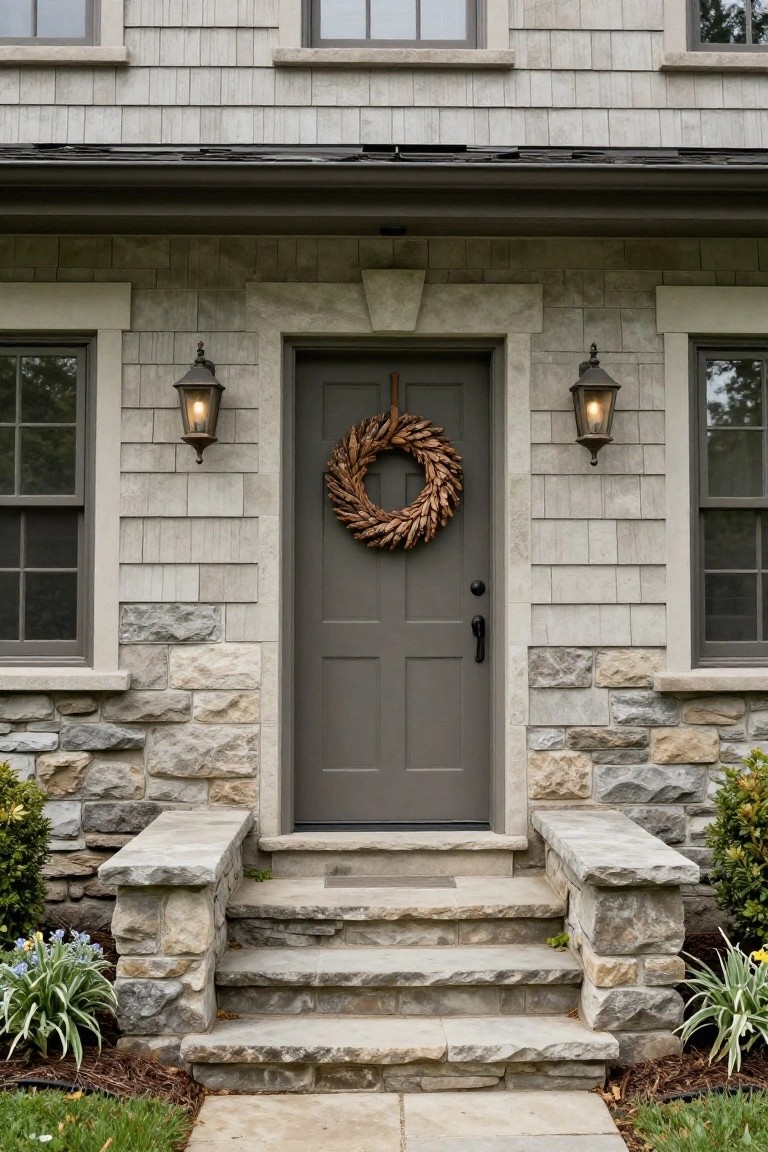
Rugged stone steps like these give a Colonial front entry real staying power. They anchor the house to the ground while the light shingle siding keeps the upper part airy. Paired with a simple gray door and lanterns, it makes the whole facade feel settled and welcoming, without any fuss.
This works best on homes in wooded or rural spots where natural stone blends right in. Use it to replace plain concrete steps for that instant upgrade. Keep the stone colors muted so it doesn’t overpower the siding, and add low plants at the base for a finished touch.
Mixed Stone Facade on a Colonial Home
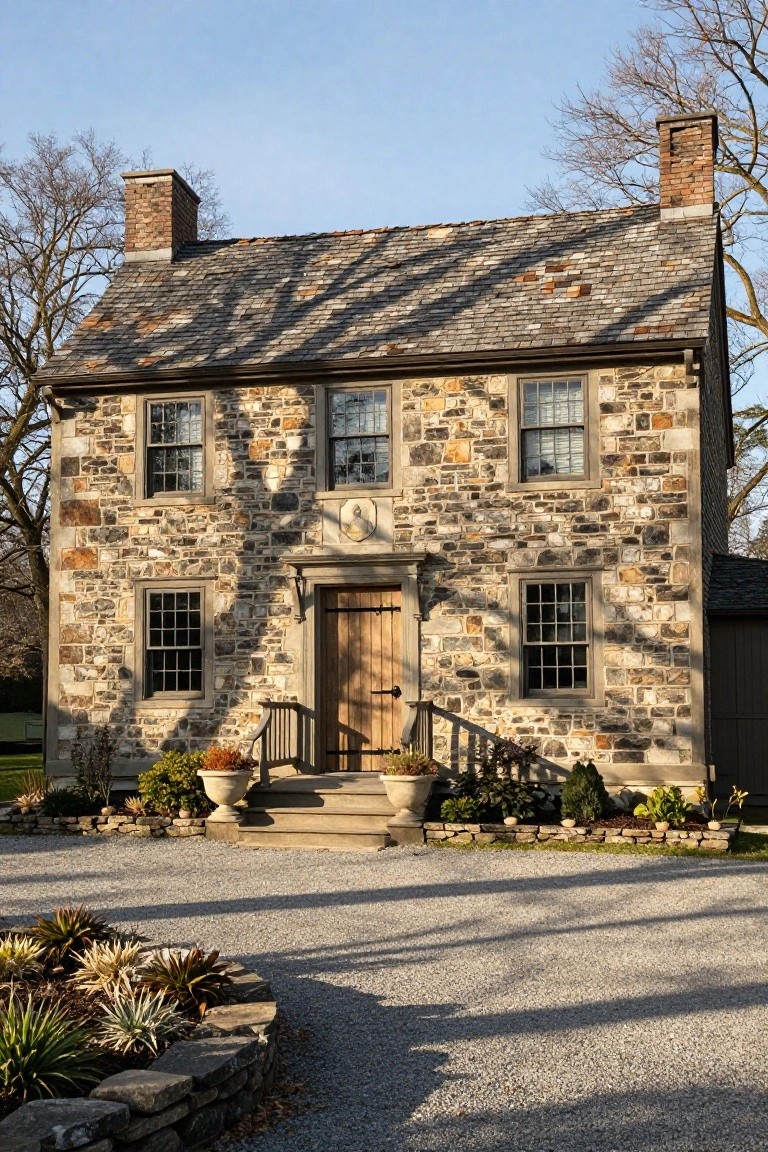
A colonial house like this one gets its character from walls built with fieldstones of all sizes and shades. The uneven stones mix grays, browns, and buffs into a natural pattern that looks hand-laid, just like older farmhouses. It stands up to weather over time and gives the place a solid, lived-in feel without much upkeep.
This approach fits best on two-story colonials in countryside or village settings. Source stones locally if you can, to keep costs down and the look true. Use it mainly on the front facade, then add a plain wood door and slate roof to let the stone do the talking. One thing. Steer clear of sealing it too much, or it loses that subtle glow.
Arched Stone Entryway
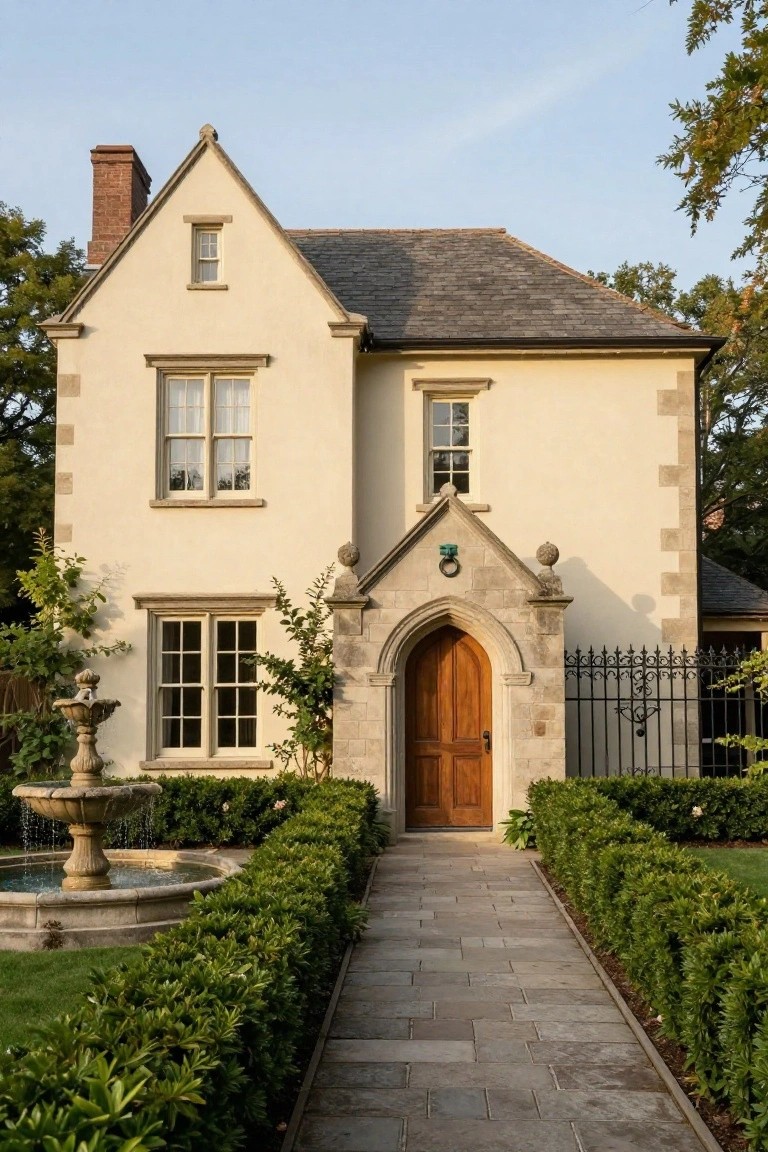
One simple way to give a Colonial house real presence is with an arched stone entry like this. The pale stucco walls stay smooth and light. But that short stone porch with its pointed arch pulls your eye right to the door. It adds just enough weight and detail without overwhelming the whole front. The wooden door fits perfectly. And the low hedges along the path keep things tidy leading up to it.
This works best on homes with clean lines already. Think two-story Colonials in suburbs or older neighborhoods. Use local stone if you can. It blends better and lasts. Pair it with a slate roof for that classic look. Skip it if your facade is all brick. The contrast won’t pop the same way.
Classic Stone Portico Entry
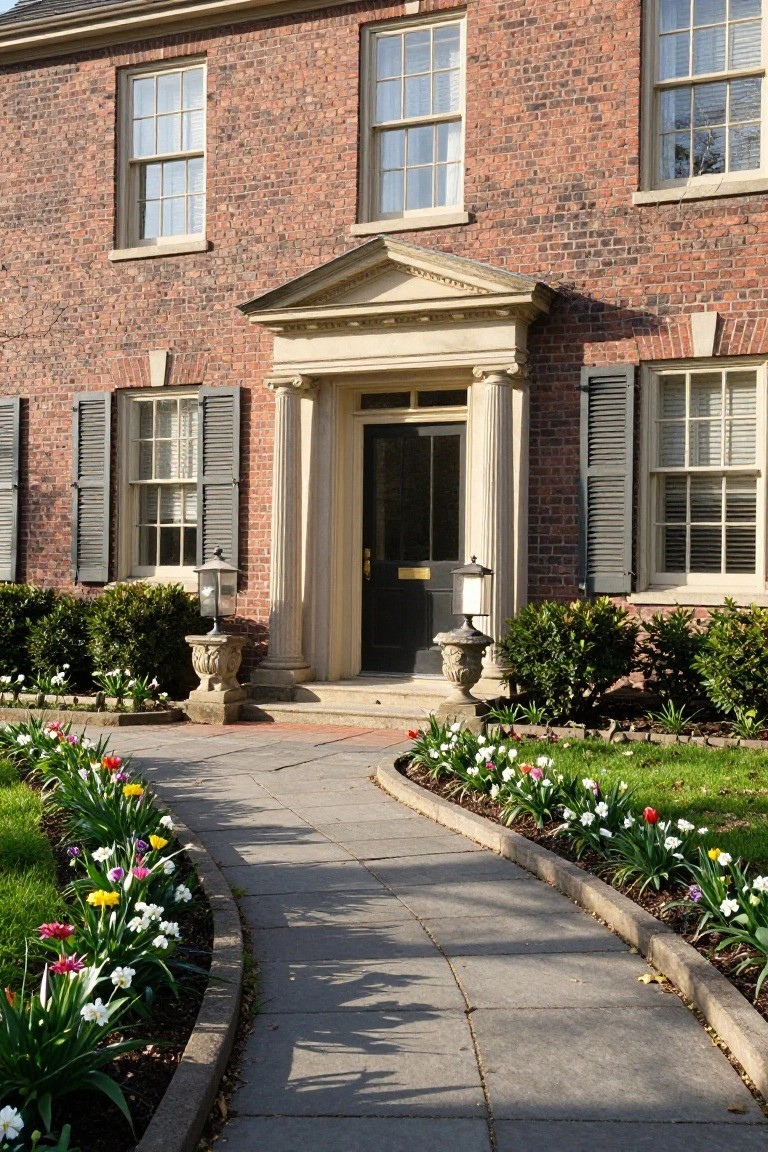
A stone portico like this one adds real class to a brick colonial house. The light stone pediment and columns stand out nicely against the red brick walls. It gives the front a formal look without feeling too stiff. Those lanterns on stone pedestals help too. They light up the entry at dusk and make the whole approach feel welcoming.
This setup works best on homes with straight brick facades that need a focal point. Use it for the main door to draw eyes right there. Pair it with a simple path edged in flowers for extra curb appeal. Skip it if your house has a lot of busy trim already. It shines on larger lots where you want that lasting traditional feel.
Fieldstone Pillars Frame the Entry
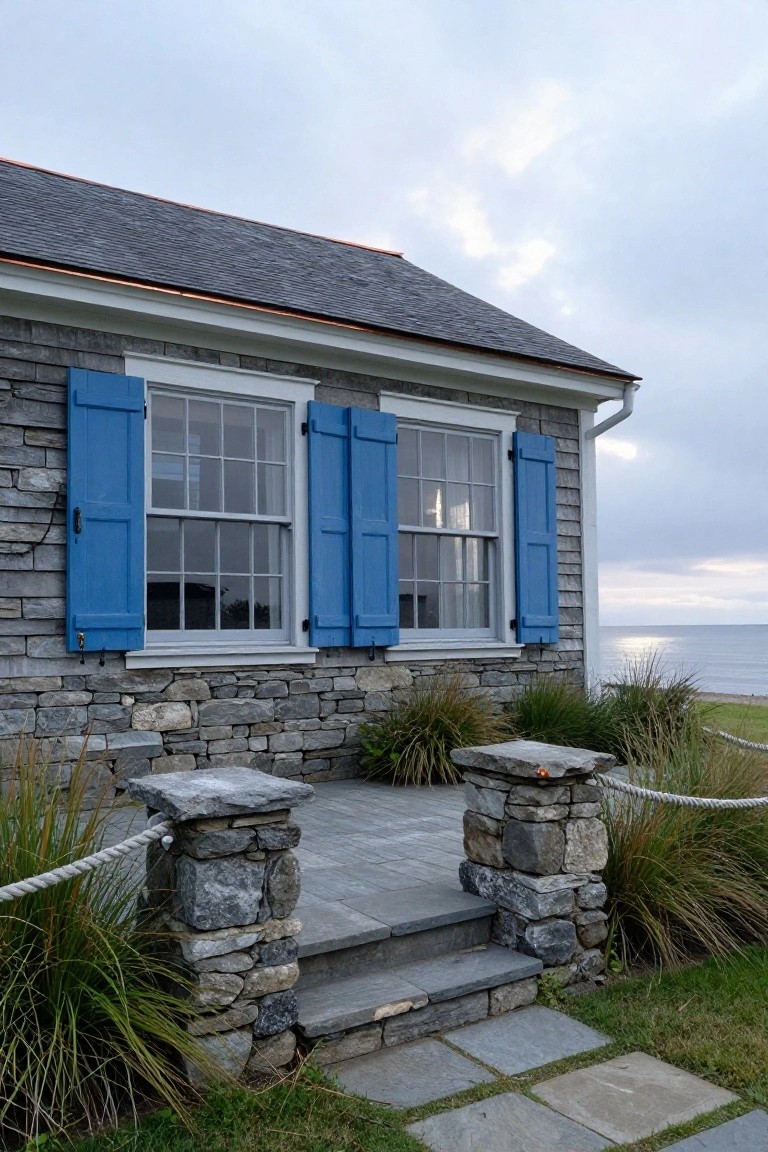
Fieldstone pillars like these give a colonial shingle house a sturdy base right at the front steps. Built from rough local stone, they stack up naturally and hold simple rope accents that nod to seaside living. The texture stands out against smooth slate treads and gray shingles, making the whole entry feel rooted and timeless.
This works best on homes near water or in rocky areas where you can source stone nearby. Keep the pillars low key, about waist high, and match the steps to gray slate for easy flow. It suits classic revivals or cottages, but watch the scale, they shouldn’t overwhelm a small porch.
Classic Stone Facade on a Colonial Home
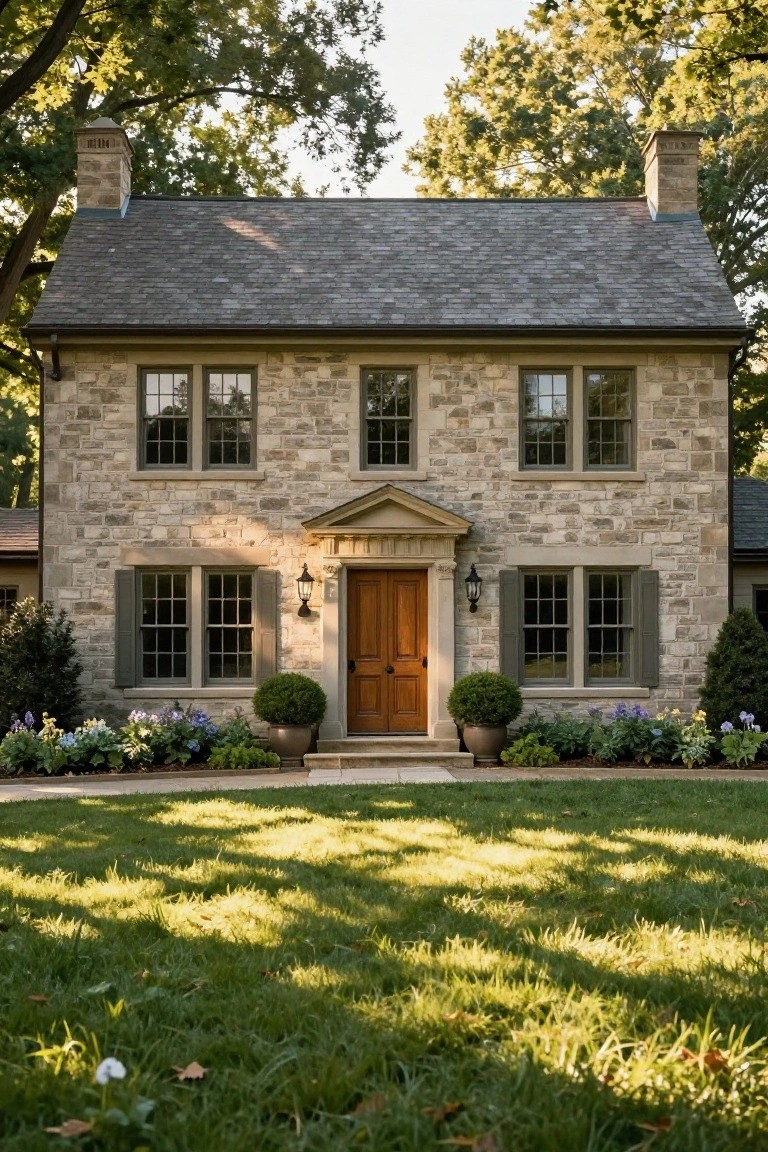
Stone like this gives a colonial house real staying power. The rough beige fieldstone covers the whole front, making it feel solid and settled into the landscape. Paired with those tall symmetrical windows and a simple pediment over the door, it keeps things straightforward and elegant without any fuss.
This look fits older homes in wooded areas or suburbs where you want curb appeal that lasts. Use it on two-story designs with gabled roofs. Just keep the entry clear with low plantings on either side, nothing too busy. Watch the stone color against your roof so it doesn’t wash out.
Frequently Asked Questions
Q: How do I pick stone that matches my Colonial house’s brick?
A: Look for stones in soft grays, beiges, or warm taupes. They echo the muted tones of traditional brick without clashing. Hold samples up to your house in different lights to see what warms up the facade best.
Q: Is stone veneer a good shortcut for that authentic Colonial look?
A: Yeah, veneer gives you the stone vibe without the heavy lifting of full stone. Pick thin, natural-looking pieces cut from real quarry stone. Pros install it fast, and it holds up just fine over years.
Q: How often do I need to clean the stone to keep it elegant?
A: Hose it down twice a year with gentle pressure. Skip harsh chemicals, they eat away at the mortar. A soft brush knocks off dirt between rinses.
Q: What if my house has vinyl siding, can stone still work?
And mix it up with stone accents around the entry or base. That pulls the look together without a full redo. Stone grounds the vinyl and adds that timeless punch.
