

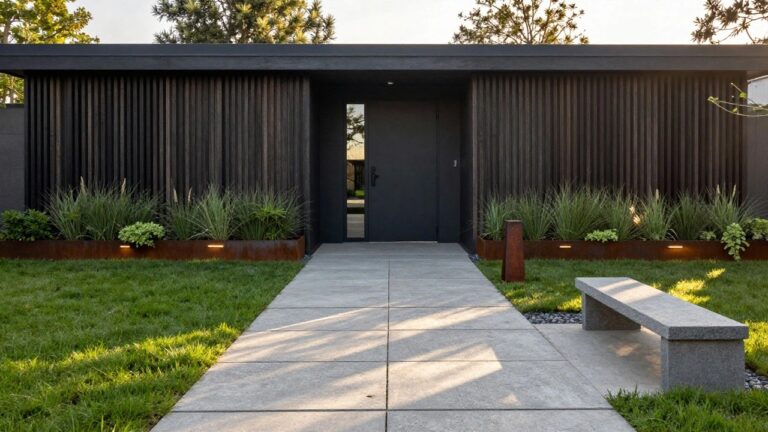
As you drive up to a house, the walkway pulls your eyes right to the front door and hints at the care put into the whole facade.
That first path shapes curb appeal in ways siding or rooflines alone never could.
I updated mine last year with pavers that echoed our stone accents, and suddenly the entry read as polished from down the street.
Modern ones work best when they stay sleek, using textures like brushed concrete or wood tones that flow into the porch without clashing.
A handful here could easily adapt to boost how your exterior welcomes everyday visitors.
Stepping Stone Path Through Grass
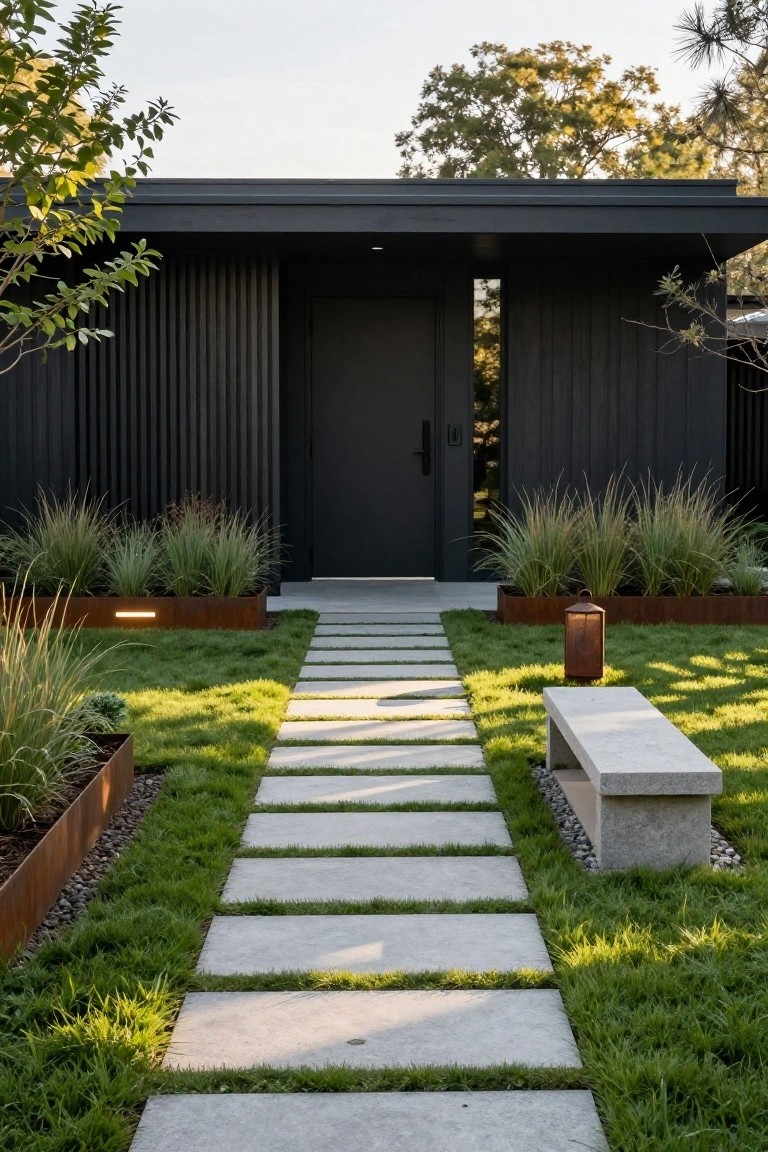
A straightforward walkway like this uses big square concrete slabs spaced out in a thick green lawn. It pulls your eye straight to the front door without crowding the space. The gaps let grass fill in, so it feels natural and easygoing, especially against a sleek modern house.
This setup works best on level front yards where you want a clean guide to the entry. Use it with homes that have dark siding or simple lines, and add tall grasses in rusted metal planters along the sides for some height. Skip it on slopes, though. Keeps things low fuss once planted.
Recommended Products

✅ 100% QUALITY🌲 1 pcs DIY Plastic Molds Betonex Plastic Molds Concrete Set in one for the manufacture of concrete tiles that mimic Lviv sidewalk.

[DIY BOARD] This concrete board is design for DIY lovers, who want to decorate their garden road as they like, to give their pavement and yards some artistic sense.
Lavender-Lined Curved Pathway
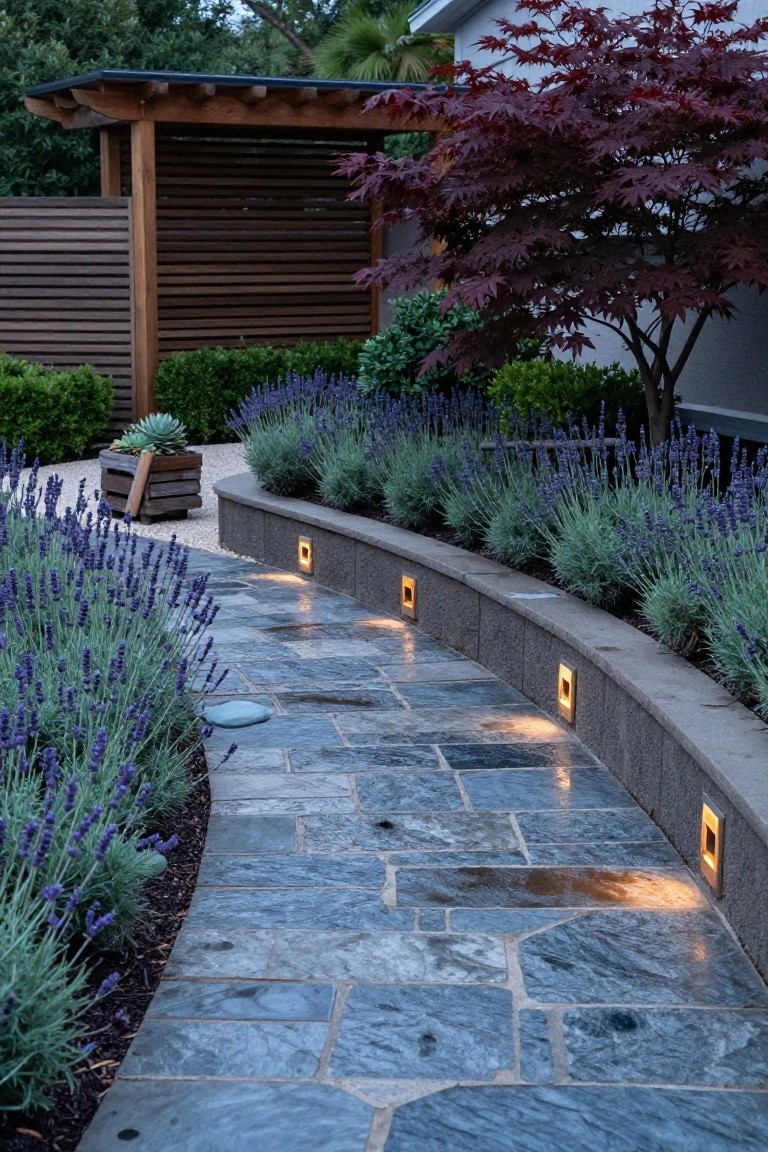
A simple curved path like this one makes a garden feel more welcoming right away. The blue-gray stone slabs wind gently along low concrete walls, edged with soft lavender bushes that release a nice scent when you brush past. Those recessed lights in the walls kick on at dusk and light the way without overpowering the plants. It’s a practical setup that turns a basic walkway into something you actually enjoy using.
This works best in side yards or entry approaches where you want low upkeep and a bit of color through the seasons. Plant lavender along milder climates, like coastal spots, and space the bushes so they don’t crowd the path. Add the wall lights for safety and evening strolls. Just keep the stone clean to avoid slips when it’s damp.
Square Pavers Set in Gravel
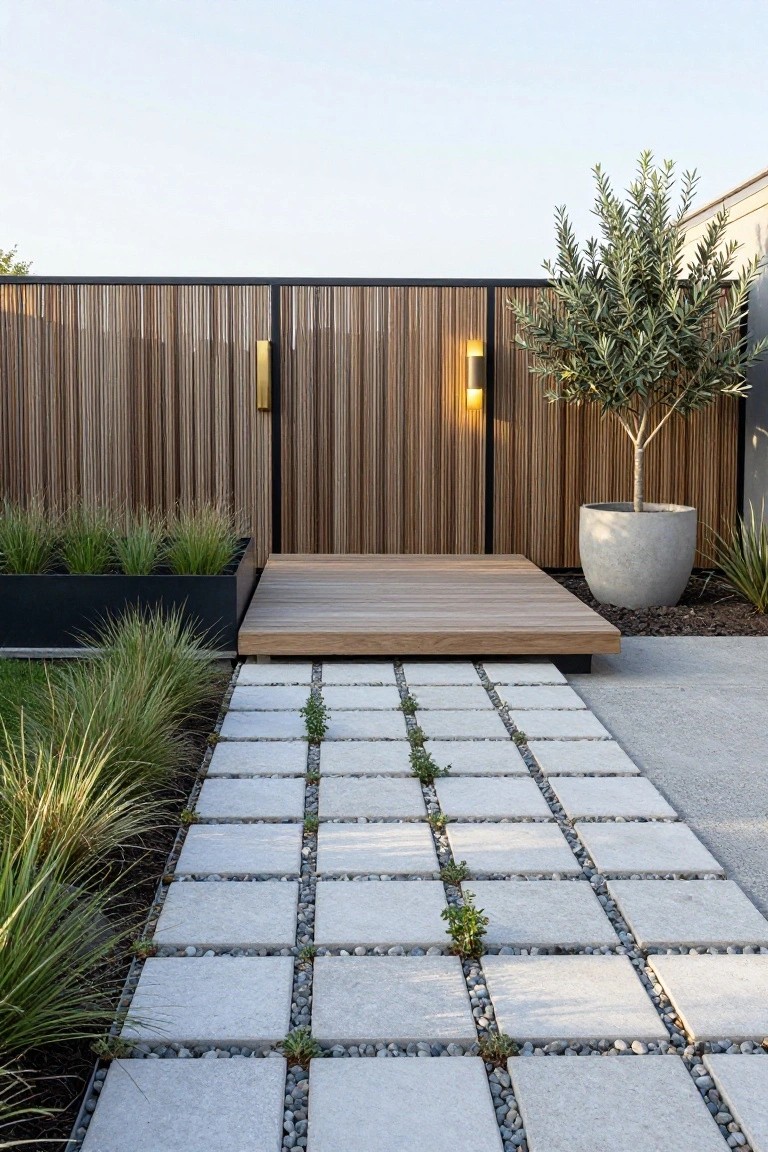
This walkway sets big square pavers into gravel beds, leaving gaps just wide enough for small plants to pop up between them. It keeps things simple and modern, blending the hard path right into the garden beds alongside. No fussy edging needed. The gravel drains well, and those incidental greens add life without much work.
Try it leading to a deck or side door in a midcentury or newer yard. Pick light concrete pavers on a solid base, then fill with pea gravel and tuck in tough starters like sedum or creeping thyme. Suits sloped spots or anywhere you want low upkeep. Just weed the joints now and then.
Recommended Products

Aesthetic Appeal: This wooden garden pathway measures 96 inches long and 17 inches wide, enhancing the visual attractiveness of any outdoor space while keeping your shoes clean and dust-free.
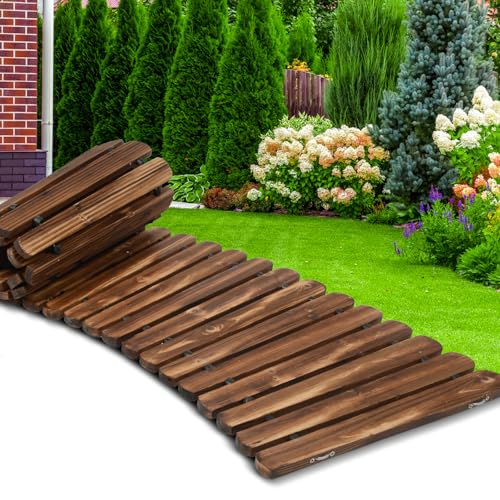
Artistic Curved Design - Adds natural winding aesthetics to gardens, yards, or flowerbed borders. Smooth curved plank ends prevent tripping hazards while enhancing visual appeal.

Surface Texture: Natural fir wood is selected with exquisite processing technology, coated with waterproof coating, and has anti slip patterns on the surface, greatly improving the safety and stability during walking, and isolating water stains and sediment. Exquisite workmanship, suitable for various weather conditions and scenes, not easy to fade, and more crack resistant
Seashell Inlaid Wooden Walkway
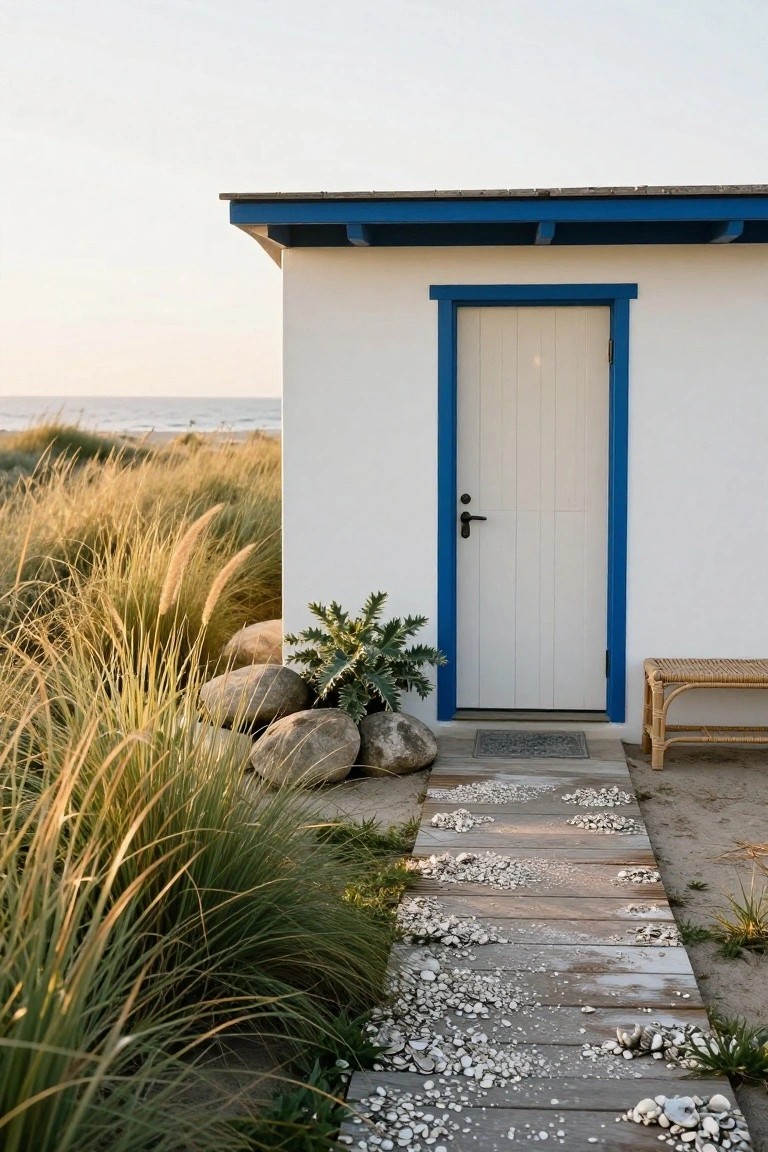
One easy way to give your beach house entry some real character is a wooden walkway scattered with seashells. You see it here leading right up to a plain white door with blue trim. The shells pressed into the wood catch the light and tie straight into the sandy shore feel without much effort. It keeps things natural and low-key, especially around dune grass and a few rocks.
This works best for coastal spots or any yard that wants that relaxed ocean vibe. Use weathered wood planks and local shells to avoid looking forced. Lay it flat for easy walking, and keep the path straight to the door so it pulls people in. Skip it if your area’s too shaded, since the shells show up better in sun.
Lantern-Lit Stepping Stone Walkway
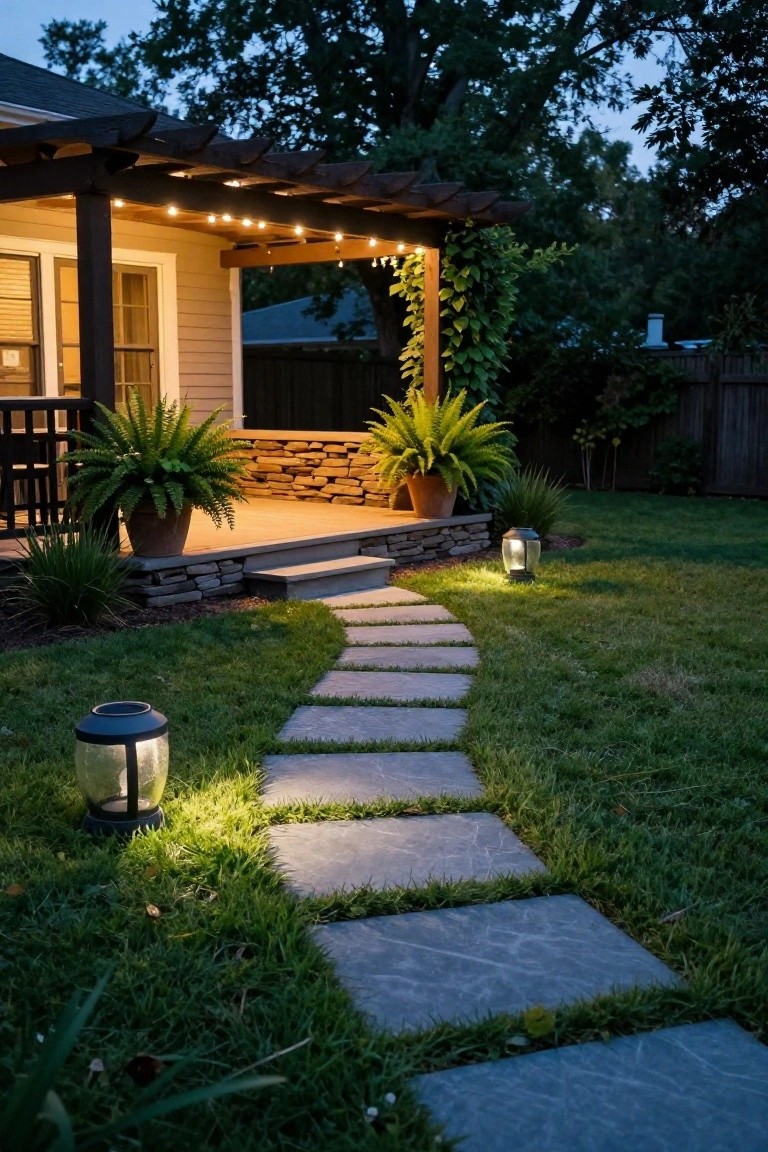
A simple stepping stone path like this cuts right through the grass, using big gray slabs set just far enough apart to feel natural. Pair them with solar lanterns that glow softly at night, and you get a low-key guide to your porch or door. It keeps things open instead of a full concrete slab, and that evening light adds a bit of charm without much work.
This setup fits most front yards or back entries, especially where you want to save on hardscaping costs. Lay the stones in a gentle curve toward the house, stake the lanterns nearby, and let the grass fill in around them. It suits ranch or craftsman styles best… just make sure the stones are thick enough not to shift over time.
Stone Walkway Set in Gravel
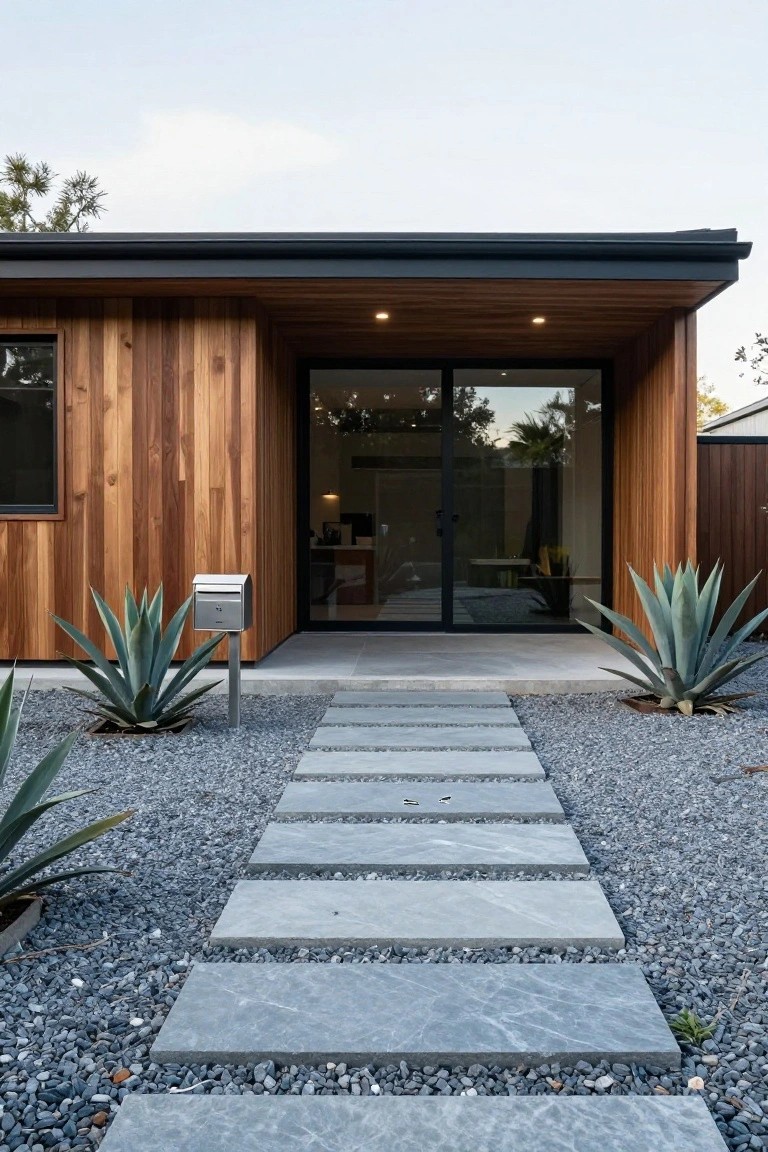
Large grey stone slabs laid out in a straight line through a gravel yard make a simple path to the front door. The gaps between stones let the gravel peek through. It keeps things low fuss while guiding you right where you need to go. With the wood siding on the house nearby, it adds a nice material mix without trying too hard.
This setup works best on flat front yards around modern homes. Go for it in dry areas since gravel drains fast and weeds stay under control. Add a couple tough plants like agave on the sides for punch… but skip grass entirely. Watch the stone edges so they don’t shift over time.
Boulder-Edged Flagstone Walkway
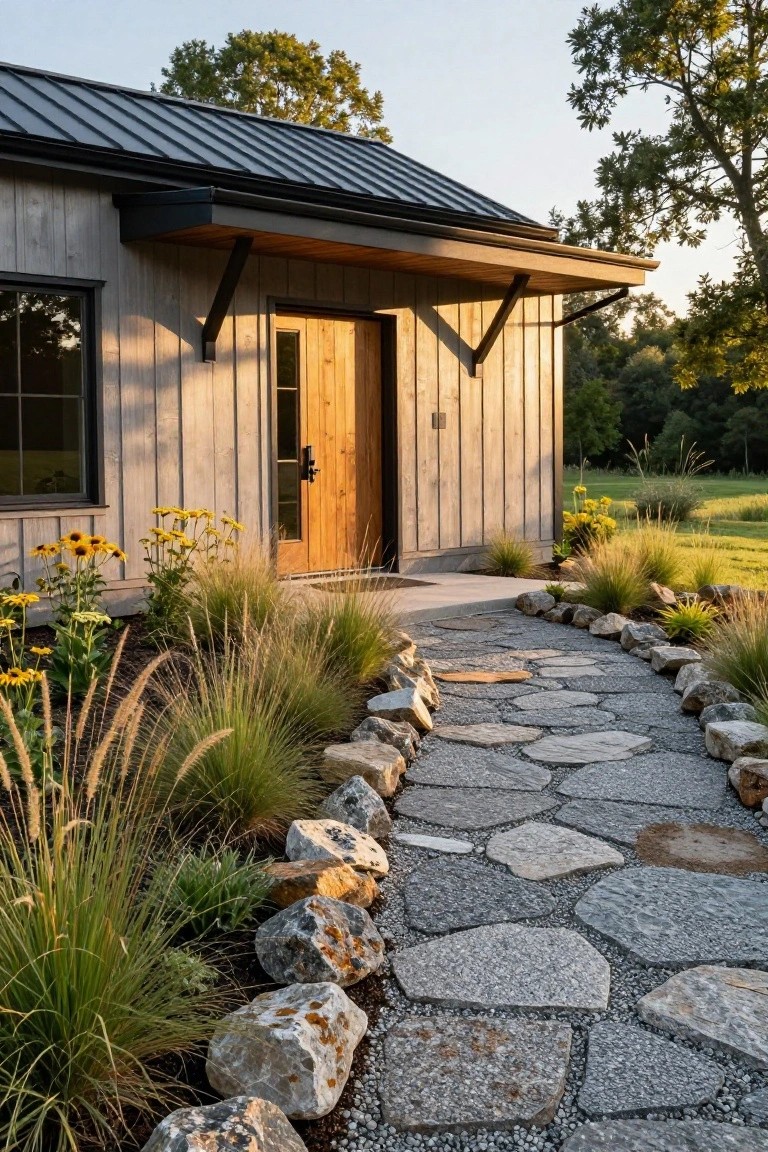
A flagstone walkway like this one uses rough-cut stones laid in a loose gravel bed, with big boulders along the edges holding back tall grasses. It gives a natural guide to the front door that fits right into the landscape, especially around a simple cabin-style house with wood siding. The curve keeps it from looking stiff, and the plants add some movement without much fuss.
This setup works best on properties with open yards or fields, where you want the path to blend in rather than stand out. Source stones from nearby quarries to match the local feel, and pick tough grasses that handle dry spells. Just keep the gravel topped up now and then to avoid weeds.
Deck Walkways with Built-In Benches
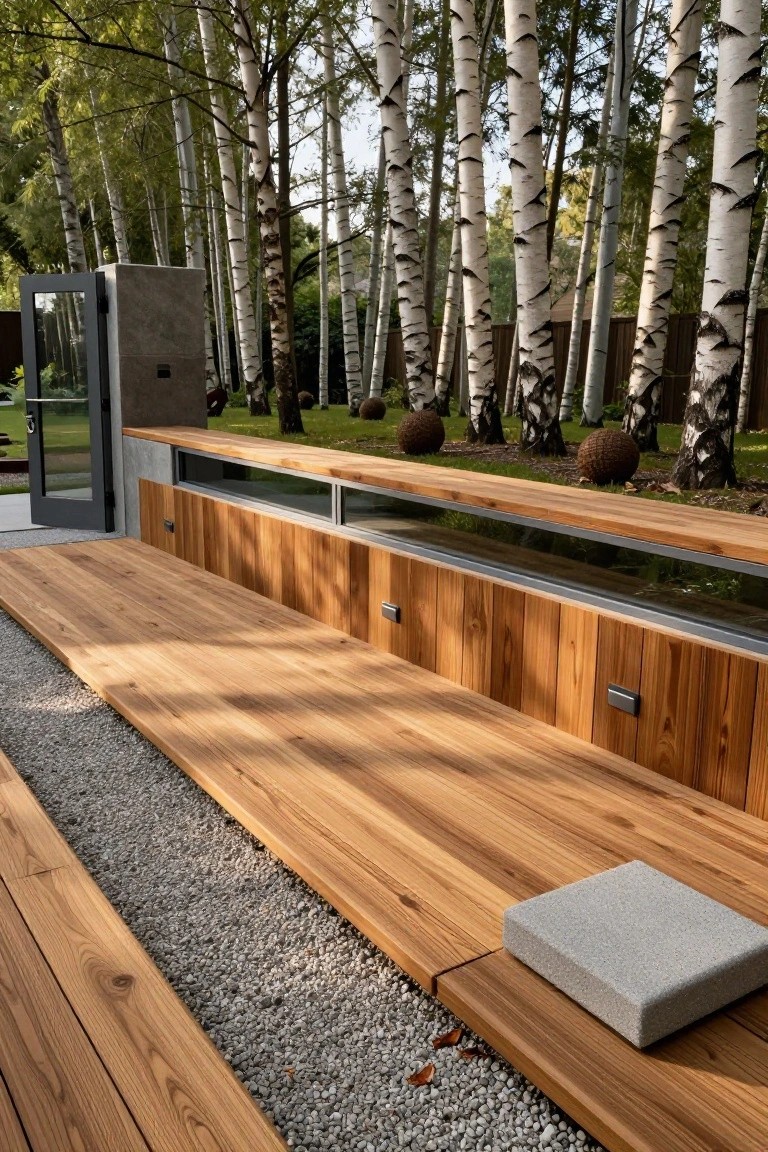
A simple way to make an outdoor walkway more useful is to build the bench seating right into the deck edge. Here the long wooden bench runs alongside the path, with a smooth top you could rest a drink on and slatted sides that match the deck boards. It turns a plain walkway into spots to pause and enjoy the yard without adding extra furniture.
This works best on wider decks leading to a patio or garden area. Choose durable wood like cedar that handles weather well, and toss on cushions for longer sits. Keep the bench low profile so it guides foot traffic smoothly… just watch the height if kids are around.
Modern Concrete Entry Walkway
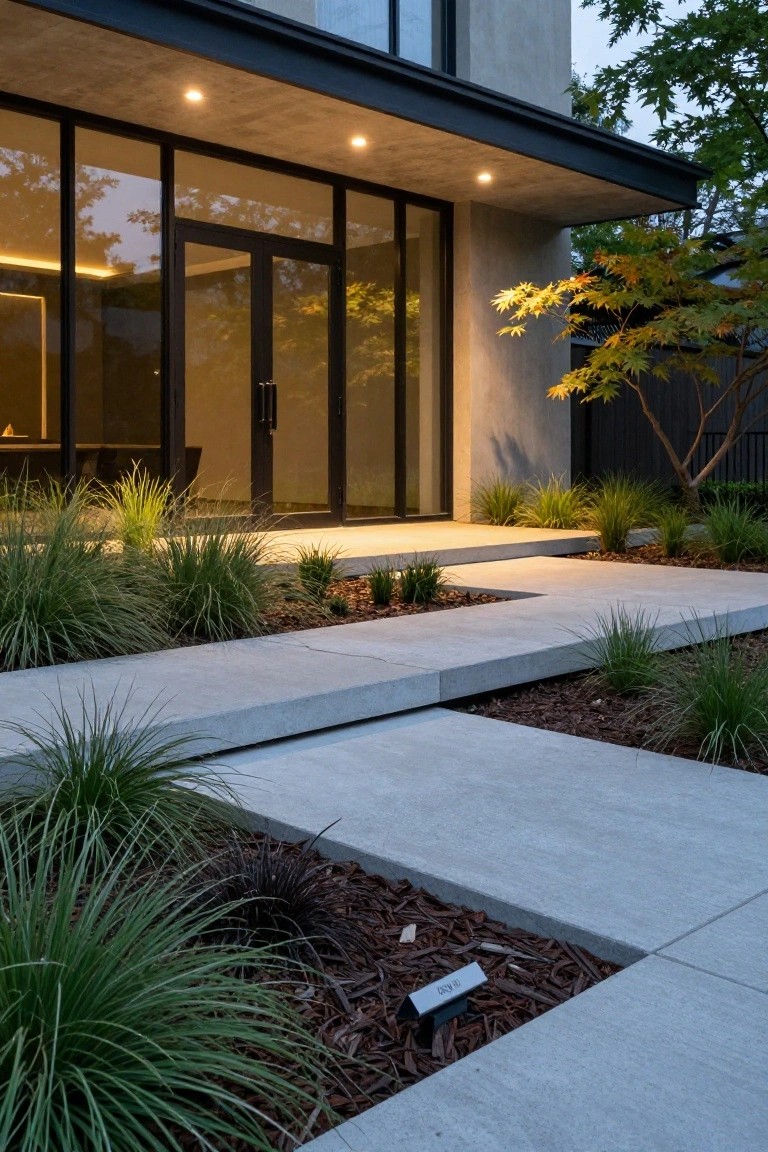
Wide concrete slabs form the main path here, stepping up to the door with clean lines that match the house’s sleek look. Grasses and mulch beds line both sides, filling in without crowding the way. It’s a straightforward setup that feels open and easy to follow at night, thanks to the subtle lighting.
This works best on flat or gently sloped front yards near a modern or minimalist home. Pour the concrete in large sections for strength, then add grasses like these that don’t need much trimming. Skip it if your lot floods often, since mulch holds water. Keeps mud off shoes too.
Stone Walkway Beside a Water Channel
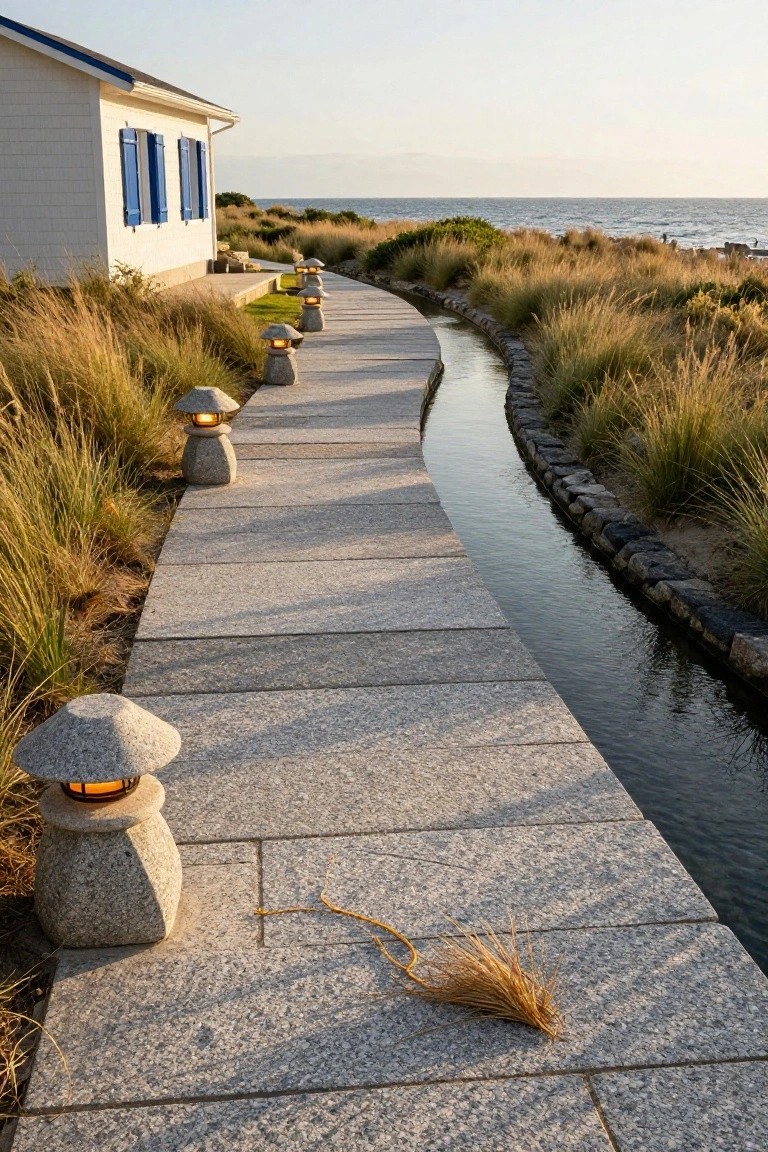
A simple stone walkway like this one runs right next to a narrow water channel. The gray granite pavers give it a clean, modern feel, and the gentle flow of water adds a quiet sound that makes the path more relaxing to follow. Those stone lanterns along the edge light it up nicely at dusk, turning a basic walkway into something special without much fuss.
This setup works great for coastal homes or any yard with a slope toward water or a view. Line the channel with rocks to keep it low-maintenance, plant tall grasses on the outer side for privacy, and space lanterns every few feet. It guides people smoothly from the house to the beach… or wherever. Just make sure the water stays shallow so it’s safe for kids.
Recommended Products

DURABLE AND ECO-FRIENDLY: Crafted from 100% recycled PPE plastic, our gravel paver system delivers exceptional strength and longevity; This set includes 22 units with a 1-inch depth, covering an area of 65 square feet

HEAVY-DUTY INTERLOCKING PAVER SYSTEM: Strol's reinforced honeycomb cell structure locks gravel securely, supporting up to 600,000kg/m (122,889.6 lbs/f) for driveways, walkways, patios, and erosion-prone areas

EASY TO USE: Our lightweight permeable pavers are easy for any level of DIYer to install; Feel proud of your own outdoor home improvements!
Herringbone Tile Walkways
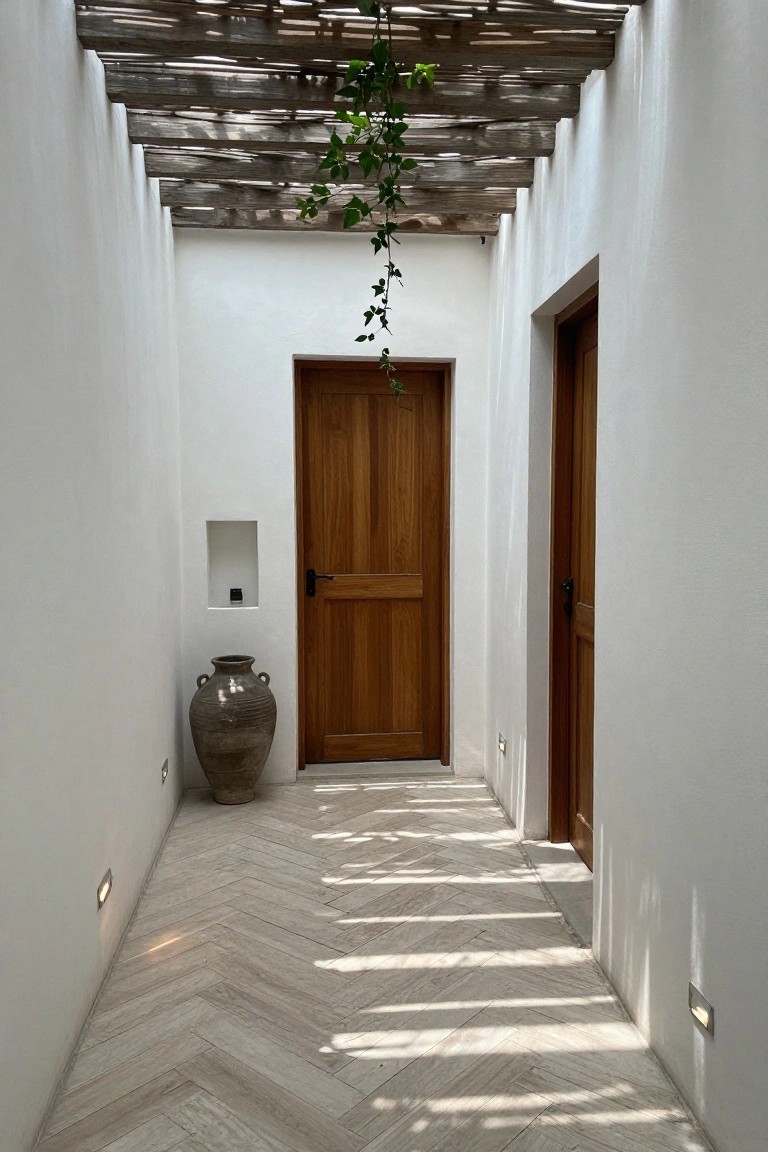
A herringbone pattern on walkway floors takes a simple path and turns it into something with real direction. Those light tiles laid in a zigzag catch the light just right, and when sun filters through an overhead structure, the shadows play along the lines. It keeps things feeling open even in a tight space between walls.
This works best in covered outdoor corridors or breezeways on warmer-climate homes, like ones with stucco walls and wood doors. Go for pale tones to brighten things up. Skip it on super-slippery surfaces though… watch for wet days.
Walkway Lined with Boxwoods and Lanterns
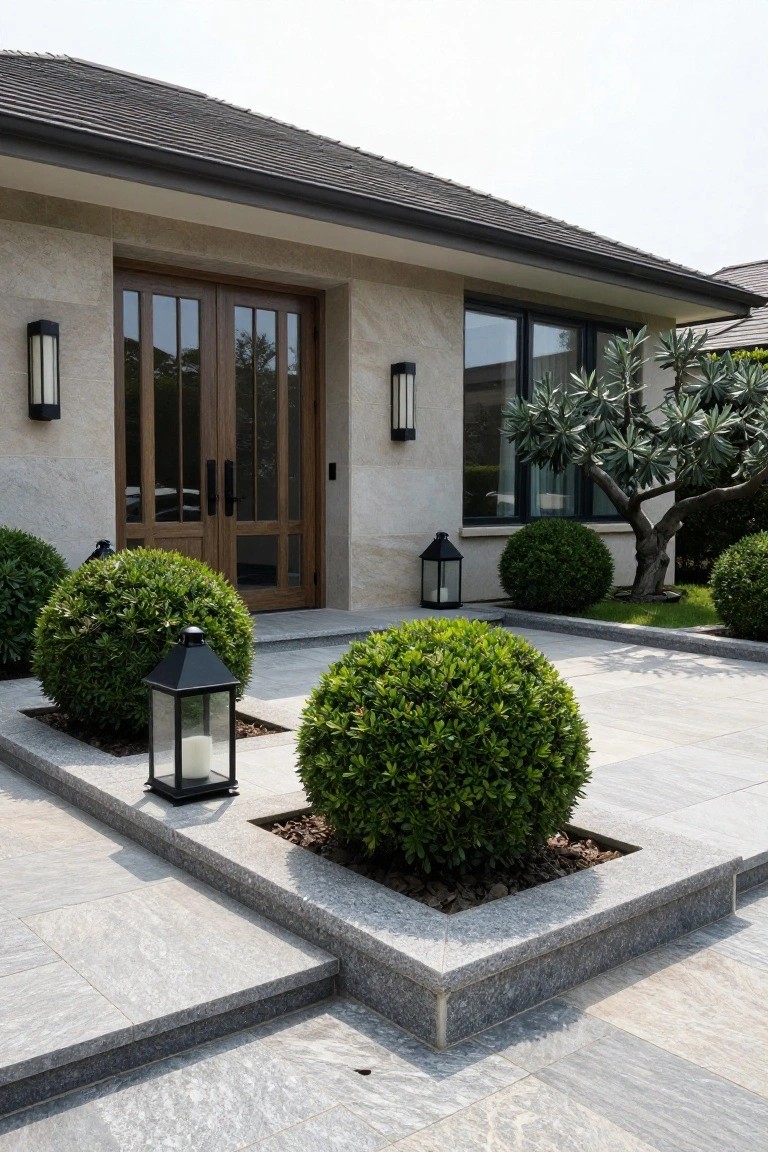
A simple stone walkway like this one pulls your eye right to the front door. The grey pavers keep things smooth and modern. Round boxwood shrubs sit in raised beds along the sides. Black lanterns add a touch of evening glow without overdoing it. Together they make the path feel intentional and easy to follow.
This setup works best on a flat approach to the house. It suits homes with clean lines like stucco or stone facades. Plant the boxwoods low maintenance varieties so they stay neat. Space the lanterns evenly for balance. Skip it if your walkway is steep. Those beds would be tough to build there.
Round Stepping Stones in a Grass Garden
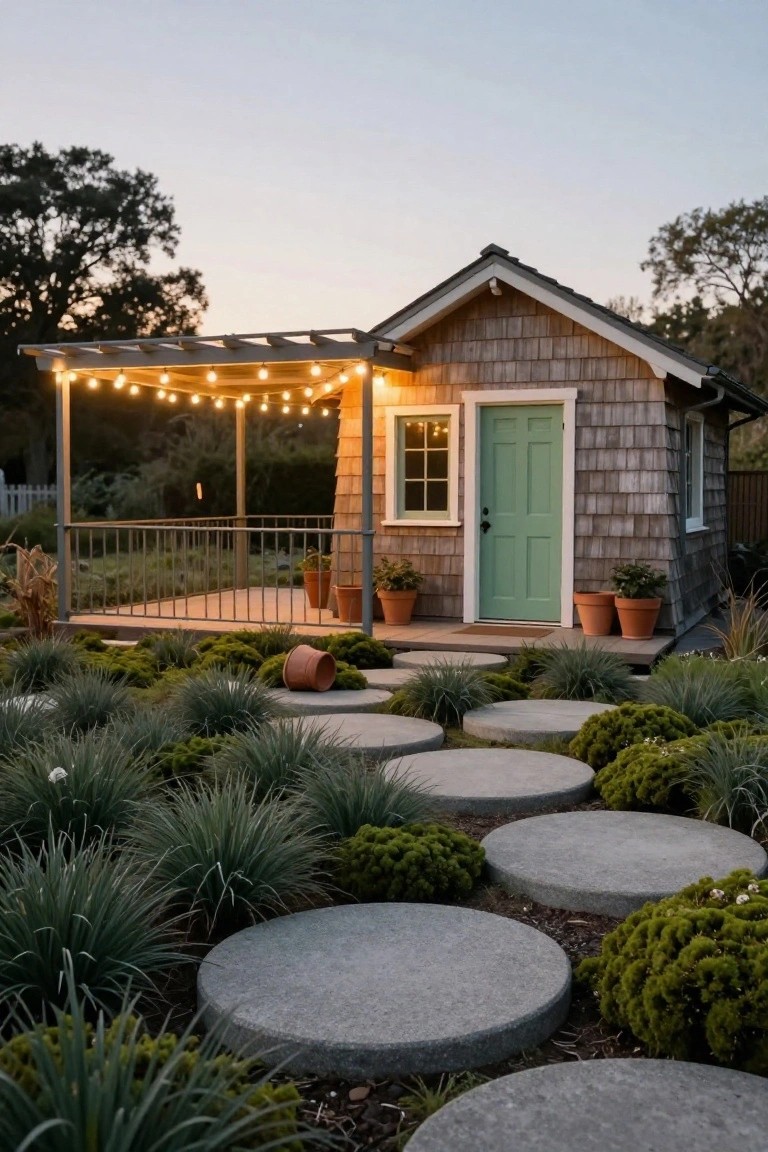
Large round concrete stepping stones make a simple path through tough grasses and low plants. They fit right into the yard without much upkeep. The uneven spacing slows you down a bit as you walk up to the house. It’s a quiet way to connect the front yard to the porch.
This works best around casual homes or cottages where you want a natural look. Plant drought-friendly stuff like agave or ground covers between the stones. Keep the pavers big, around three feet across, so they feel solid underfoot. Skip straight lines if your space has some slope.
Linear Walkway Bordered by Tall Grasses
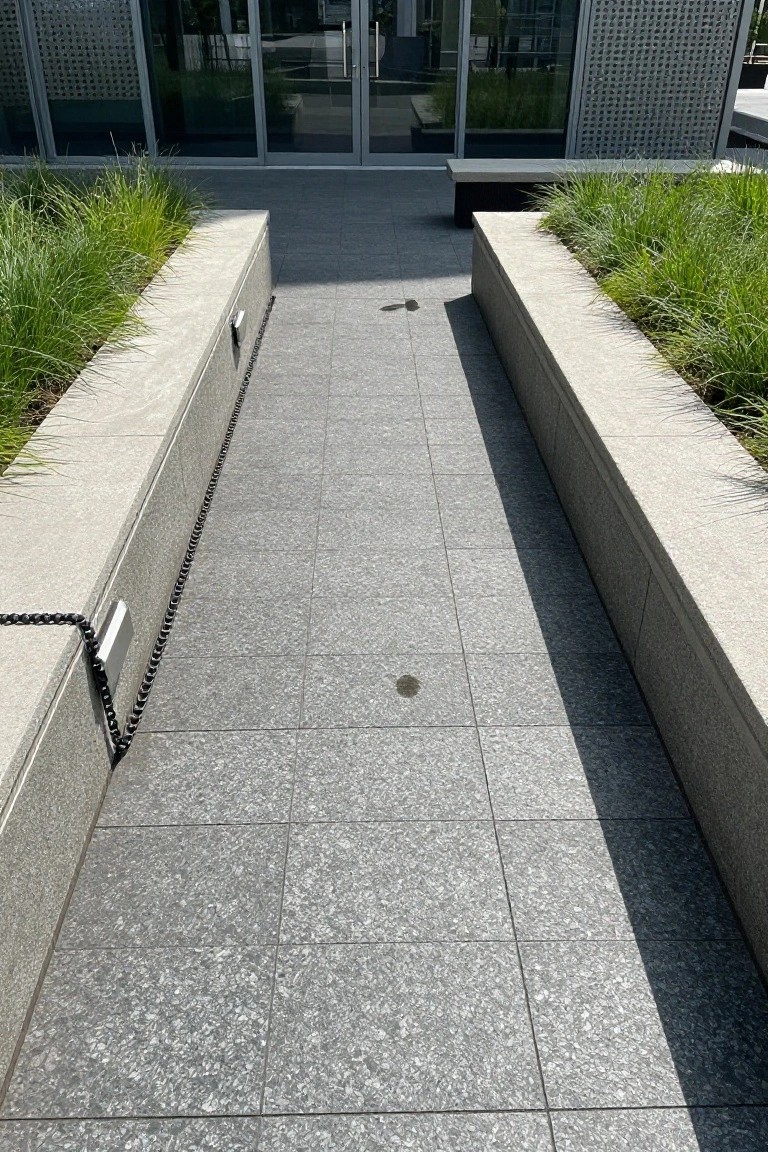
A straight walkway like this one uses simple gray granite tiles for the path. Low concrete walls on each side hold tall, wispy grasses that frame the route to the entry doors. It keeps things open and direct. The grasses add some movement without crowding the space.
This works well on modern entry paths or rooftop approaches where you want clean lines. Pick grasses that sway in the wind but stay tidy, like fountain grass. The short chain along one side keeps people on track without blocking the view. Fits urban spots best.
Rustic Boardwalk Path with Stone Borders
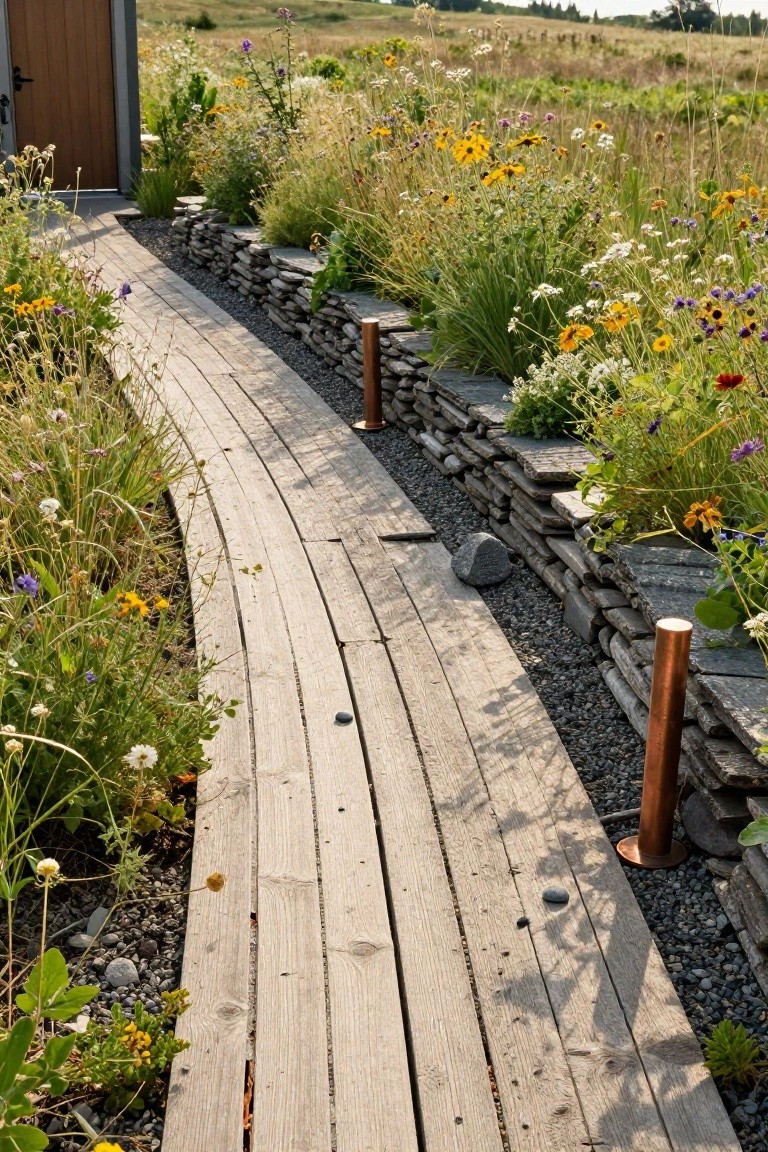
A wooden boardwalk like this one curves smoothly alongside a home entry, edged by low dry-stacked stone walls filled with gravel and overflowing with wildflowers and tall grasses. It pulls the wild landscape right up to the door without any fuss, making the walk to your house feel like part of the yard. The weathered planks add that nice lived-in look that fits right in with nature.
This setup works best on sloped or uneven ground where you want a sturdy path that doesn’t fight the terrain. Go for reclaimed cedar or similar for the wood to get that patina over time, and plant natives along the edges to keep maintenance low. It suits cabins or modern farmhouses in rural spots… just make sure the stones are set firm so they don’t shift.
Stepping Stones in Black Gravel
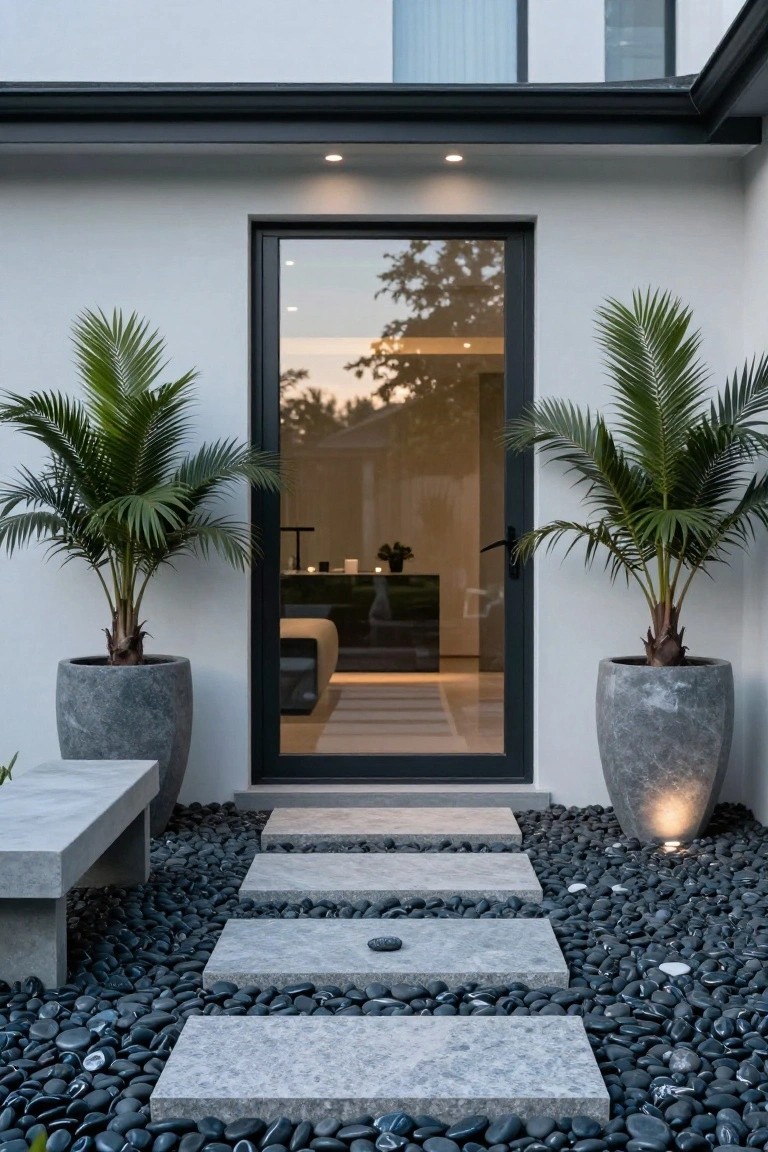
One clean way to guide people to your front door is with flat stone steps set right into black gravel. You see it here leading up to a sleek glass entry, where the dark pebbles fill the gaps and make each step pop against the smooth white exterior. It’s simple but feels intentional, and that contrast keeps things from looking too busy.
This setup works best on smaller entry paths or where you want low upkeep, since gravel drains well and weeds stay easy to manage. Pair it with a couple big potted plants nearby for some height… suits modern or minimalist houses without much lawn. Just make sure the stones are set firm so no tripping.
Wisteria Pergola Over Entry Steps
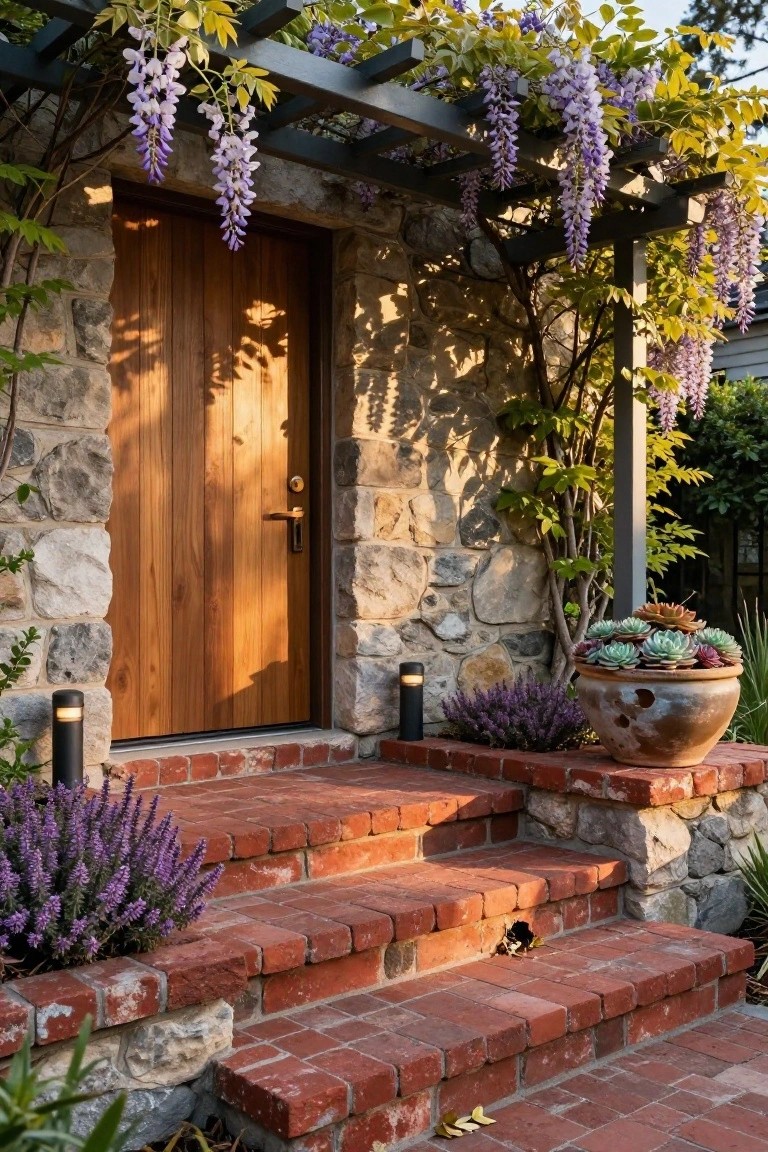
A black metal pergola covered in cascading purple wisteria makes a plain walkway to the front door feel like a garden gateway. The vines hang heavy with blooms right over the brick steps, drawing your eye up to the warm wooden door set in rugged stone walls. It’s a simple way to add height and color that softens a sturdy house facade.
This works best on homes with some natural stone or textured siding, especially in spots with sun for the vines to climb. Train wisteria along the beams early so it doesn’t overwhelm the path. Keep the steps clear and add low plants like lavender or succulents at the base… keeps things tidy year-round.
Frequently Asked Questions
Q: Can I handle a modern walkway project on my own?
A: Start by marking the path with stakes and string, then dig a shallow trench and level the base with gravel. Lay your pavers or stones tight together for that clean look. Skip big curves if you’re new to this, they trip up beginners.
Q: How do I light a walkway so it feels safe but stylish?
A: Tuck low-voltage LED strips or bollards along the edges. They cast a soft glow without overpowering the design. Wire them to a timer, and your path welcomes guests every evening.
Q: What’s a smart pick for low-maintenance walkways?
A: Choose smooth concrete slabs or precast pavers, they shrug off dirt and weather. Sweep off leaves weekly, and hose them down now and then. And edge with steel to keep everything crisp.
Q: How do I stop weeds from ruining my new path?
A: Lay landscape fabric under gravel or loose materials before filling in. It blocks seeds without killing the modern flow. Spot-treat any strays with vinegar spray.
