

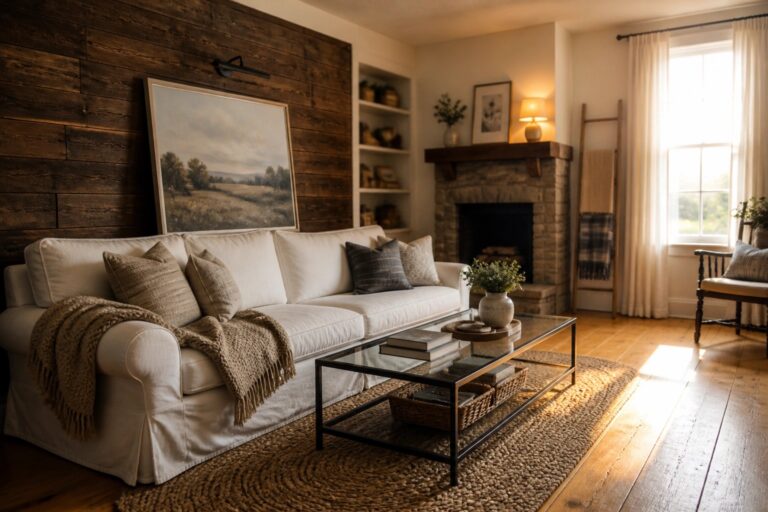
When I step into a room the walls are often the first thing that shapes how the whole space feels once the furniture and lighting are in place.
Farmhouse rooms tend to settle into a calmer rhythm when an accent wall picks up on the grain of wood beams or the texture of older plaster without competing with them.
I usually test a couple of samples on the actual surface because morning light can shift a color in ways that never show up on a paint chip.
Warm neutrals and muted greens have a way of making the room feel more connected to the rest of the house rather than like a separate feature.
Samples on the wall help more than any chart.
Dark Wood Accent Walls
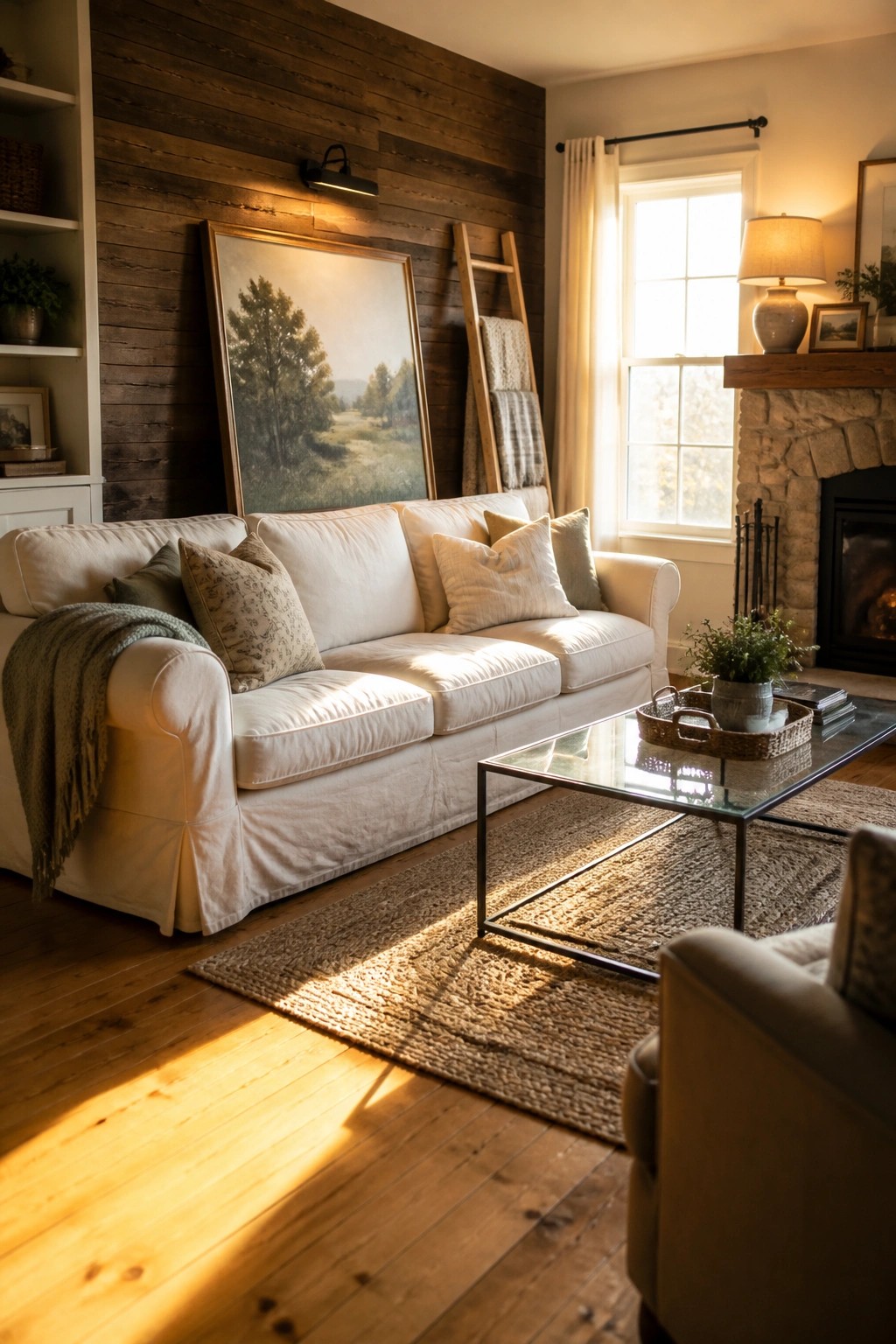
A dark wood accent wall gives a living room instant rustic character. It works especially well when the rest of the room stays light and simple.
This approach suits farmhouse homes that want warmth without feeling too heavy. Keep the wood tone deep but not too shiny, and balance it with soft textiles and pale seating.
Deep Green Paneling for Farmhouse Walls
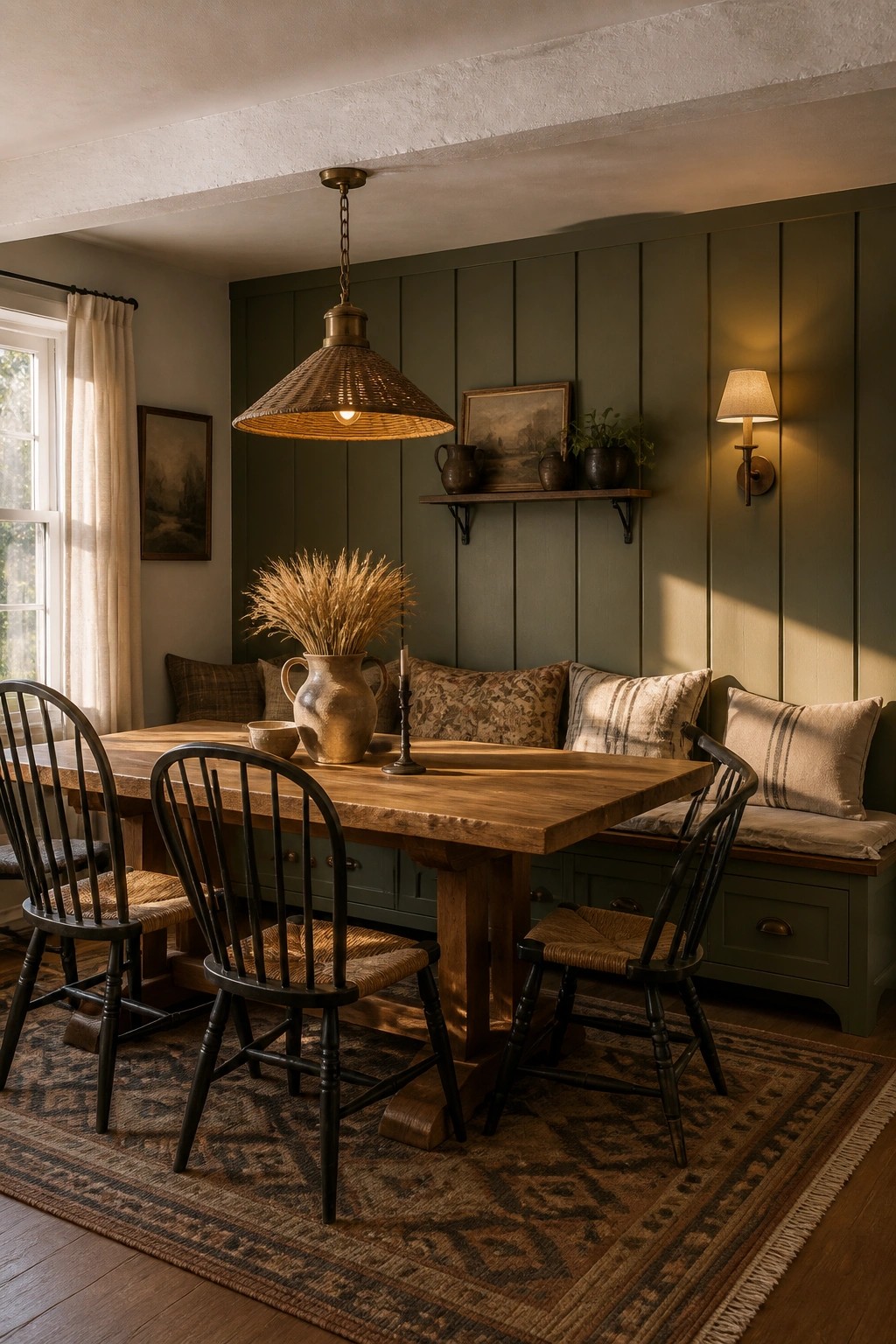
A deep green on vertical paneling gives a dining space that settled, lived-in look many farmhouse homes aim for. The color grounds the room and pairs naturally with wood furniture and woven textures.
It works best in spaces that already have some natural light and warm wood tones. Keep the trim simple and let the wall color carry the character rather than adding too many layers on top.
Navy Accent Walls in Farmhouse Kitchens
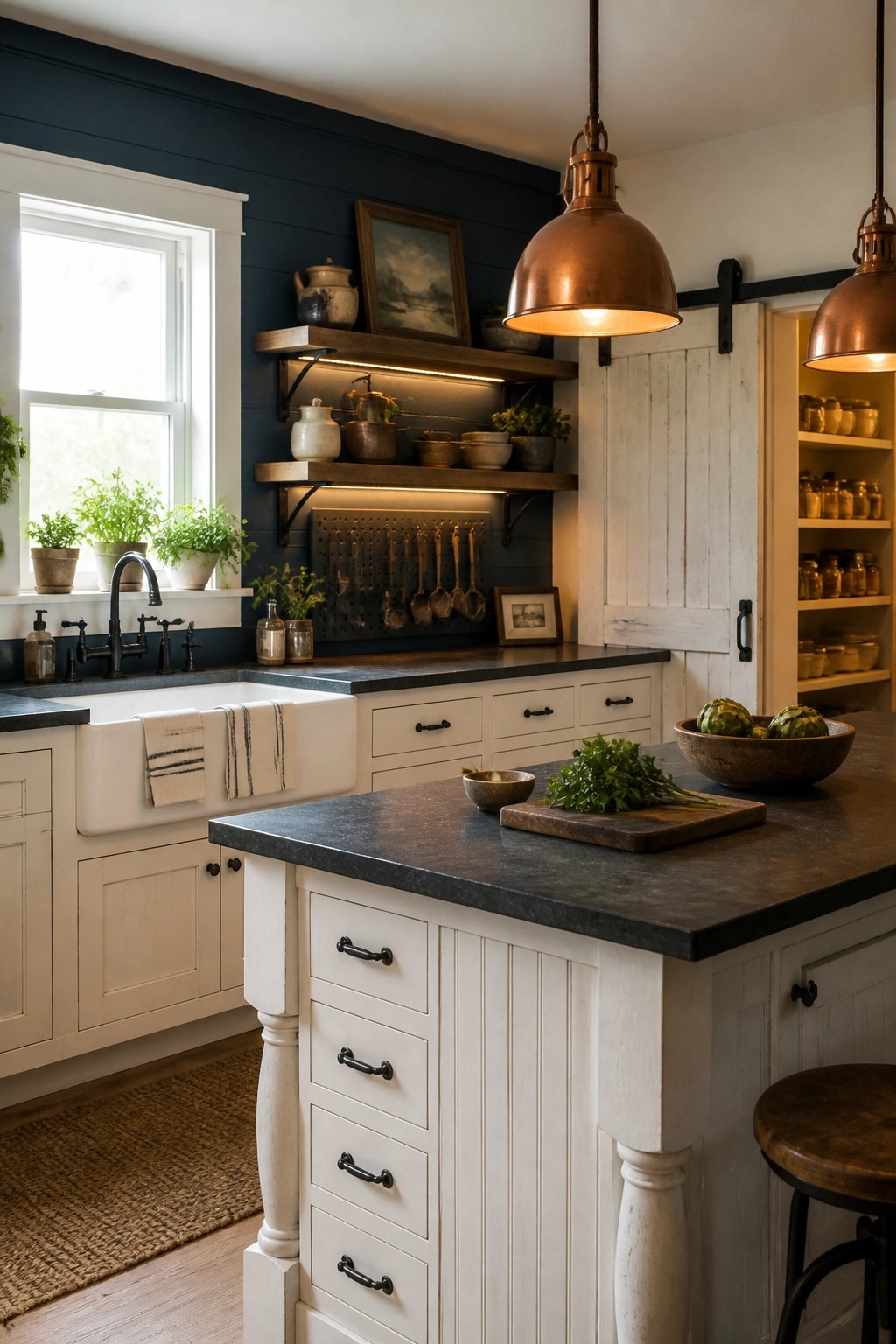
A deep navy wall adds quiet weight to a farmhouse kitchen and helps the space feel more settled. It works especially well when the rest of the room stays light, letting the color stand out without closing the room in.
This approach suits homes that already have white or cream cabinetry and wood tones. Keep the wall behind open shelves or the main work area so the color frames everyday items rather than covering every surface.
Dark Shiplap Accent Walls
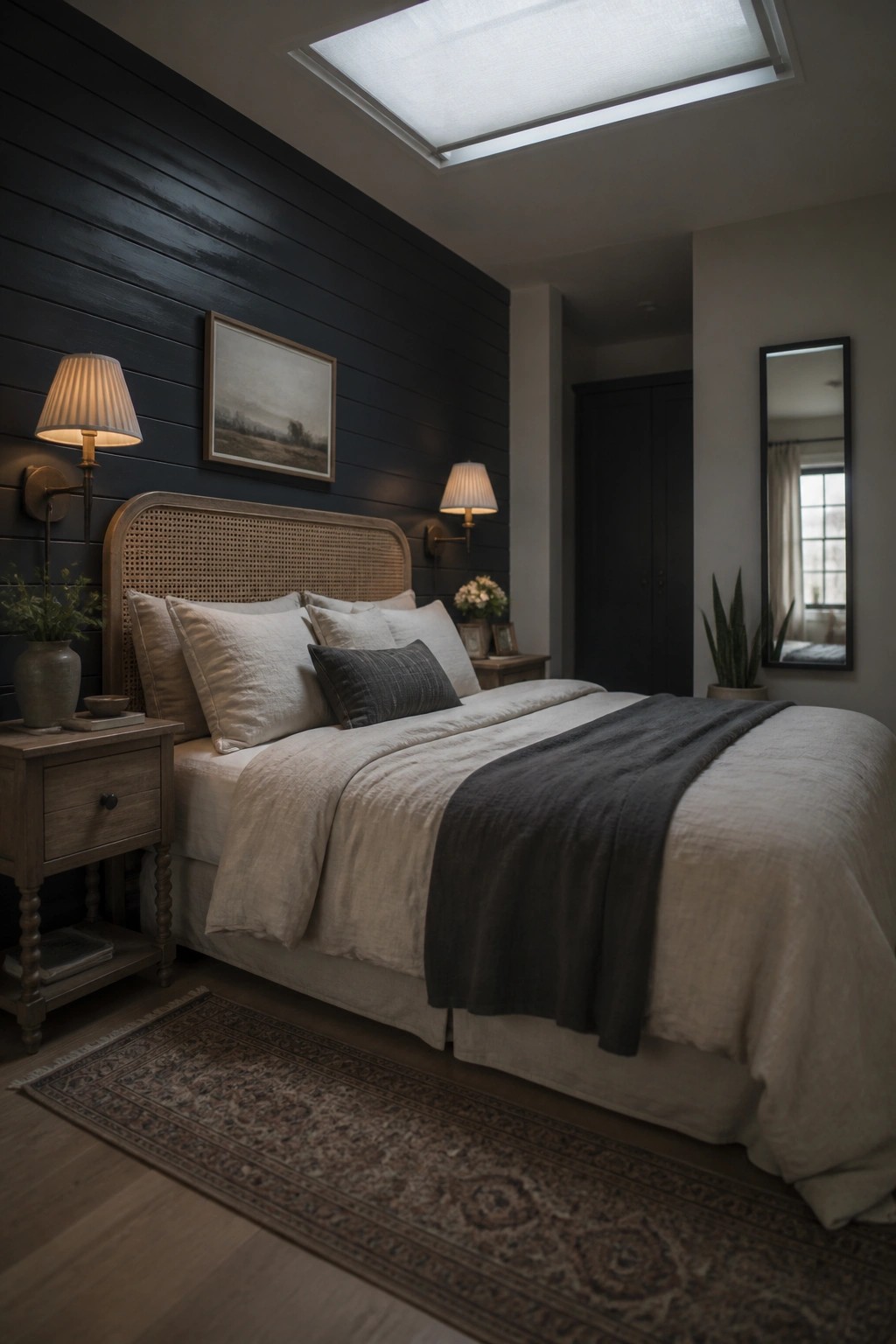
A deep black or charcoal on shiplap gives a bedroom that grounded farmhouse look many people want. The dark tone adds weight and character behind the bed without needing a lot of extra decoration.
This approach works best in rooms that get decent natural light and when the rest of the space stays light and simple. Keep the bedding and furniture in softer tones so the wall can do its job without overpowering everything else.
Deep Red Accent Walls in Entryways
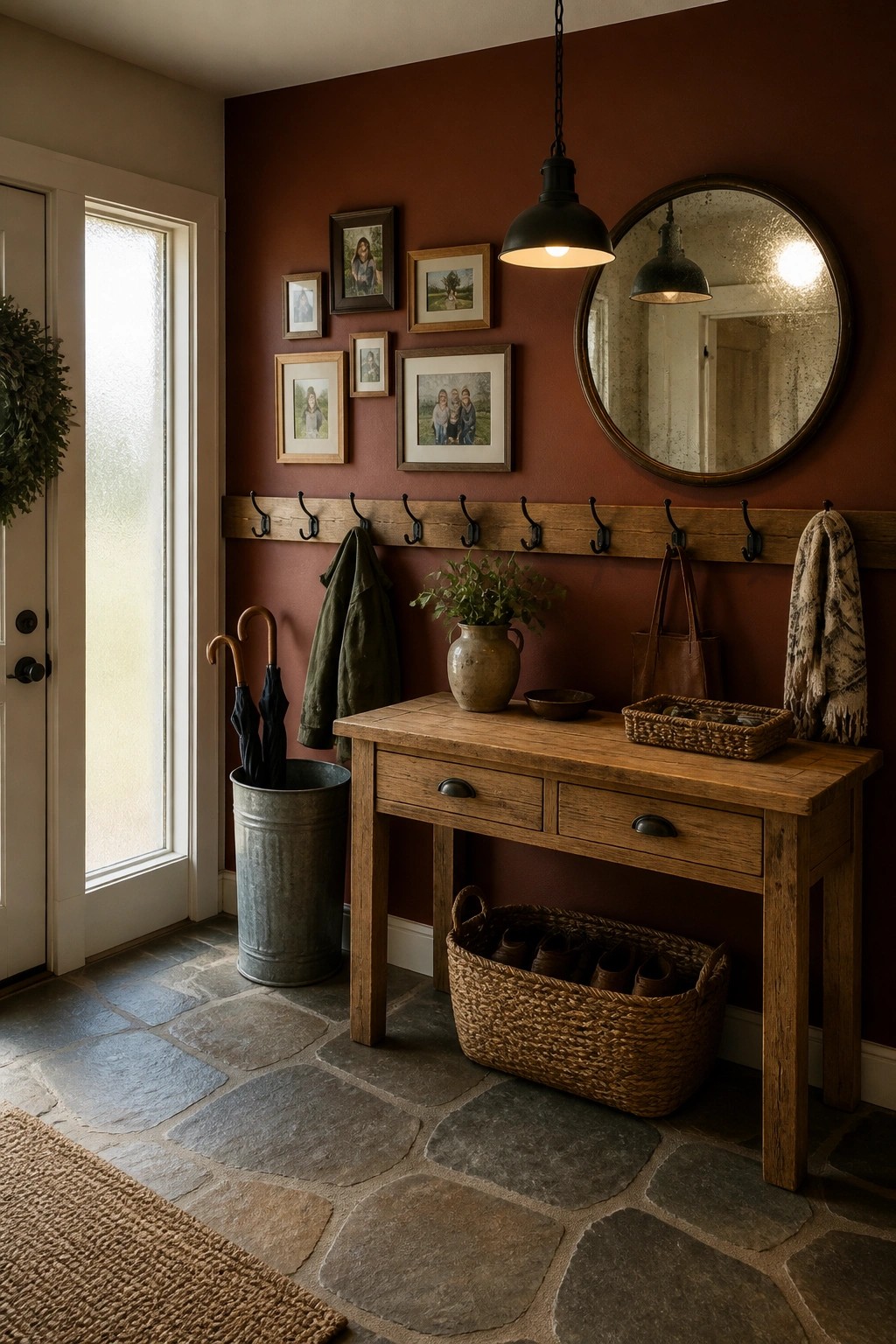
A deep red accent wall brings real warmth to an entry without making the space feel closed in. It stands out nicely against wood tones and gives the whole area a grounded, lived-in look that fits the rest of a farmhouse.
This color works well in mudrooms or side entries that already have wood hooks, benches, or trim. It suits homes with stone or wood floors, though it helps to test the paint in different lights first since reds can shift more than expected.
Deep Green Walls for Farmhouse Rooms
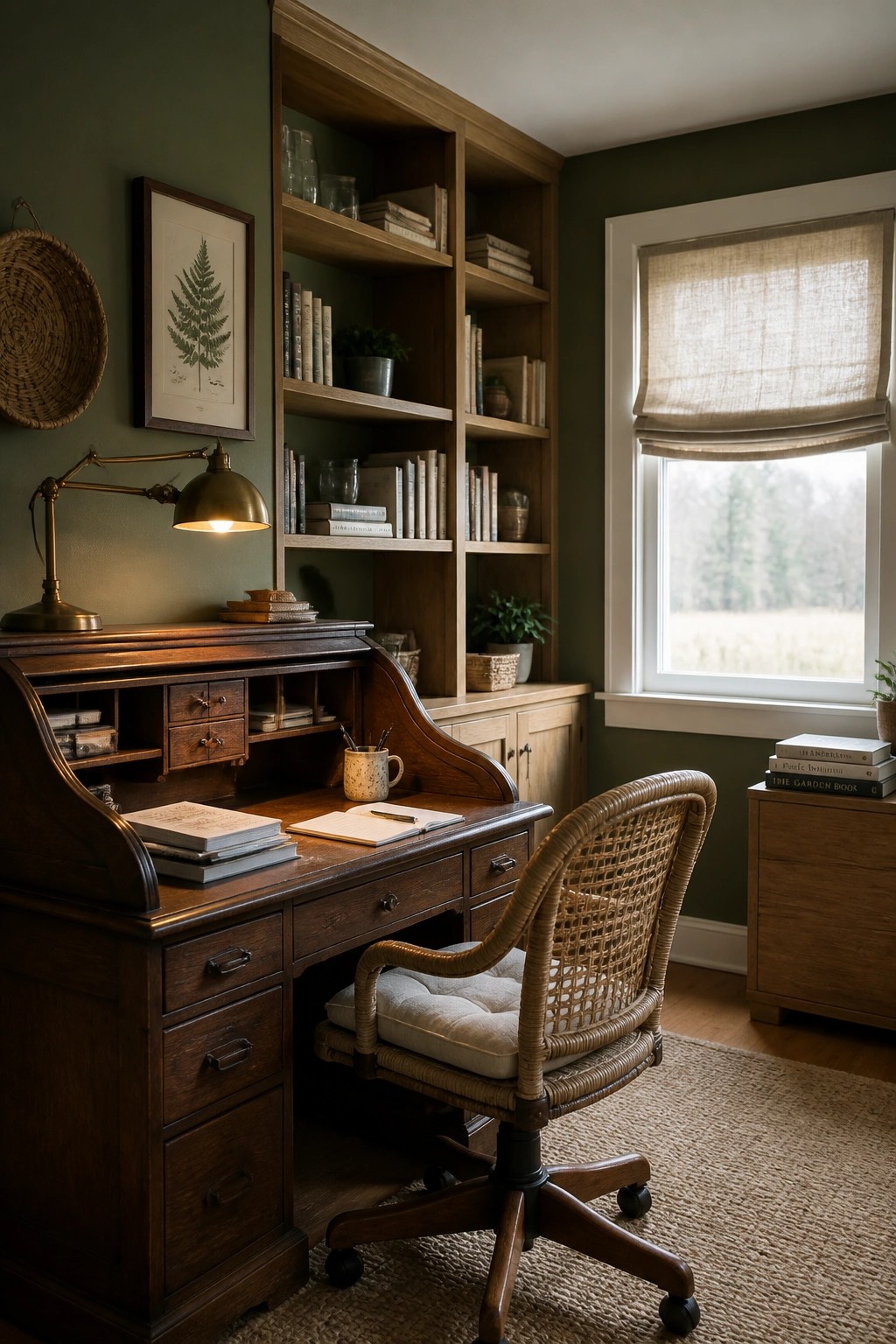
Deep green walls give a room a grounded, natural feel that fits right into farmhouse style. The color works especially well when it covers an entire wall behind built-ins, since the wood tones and books keep the space from feeling too heavy.
This shade suits studies or living rooms that already have wood furniture and trim. It pairs best with lighter floors and natural textiles so the room stays balanced rather than dark.
Light Blue Walls With Gentle Patterns
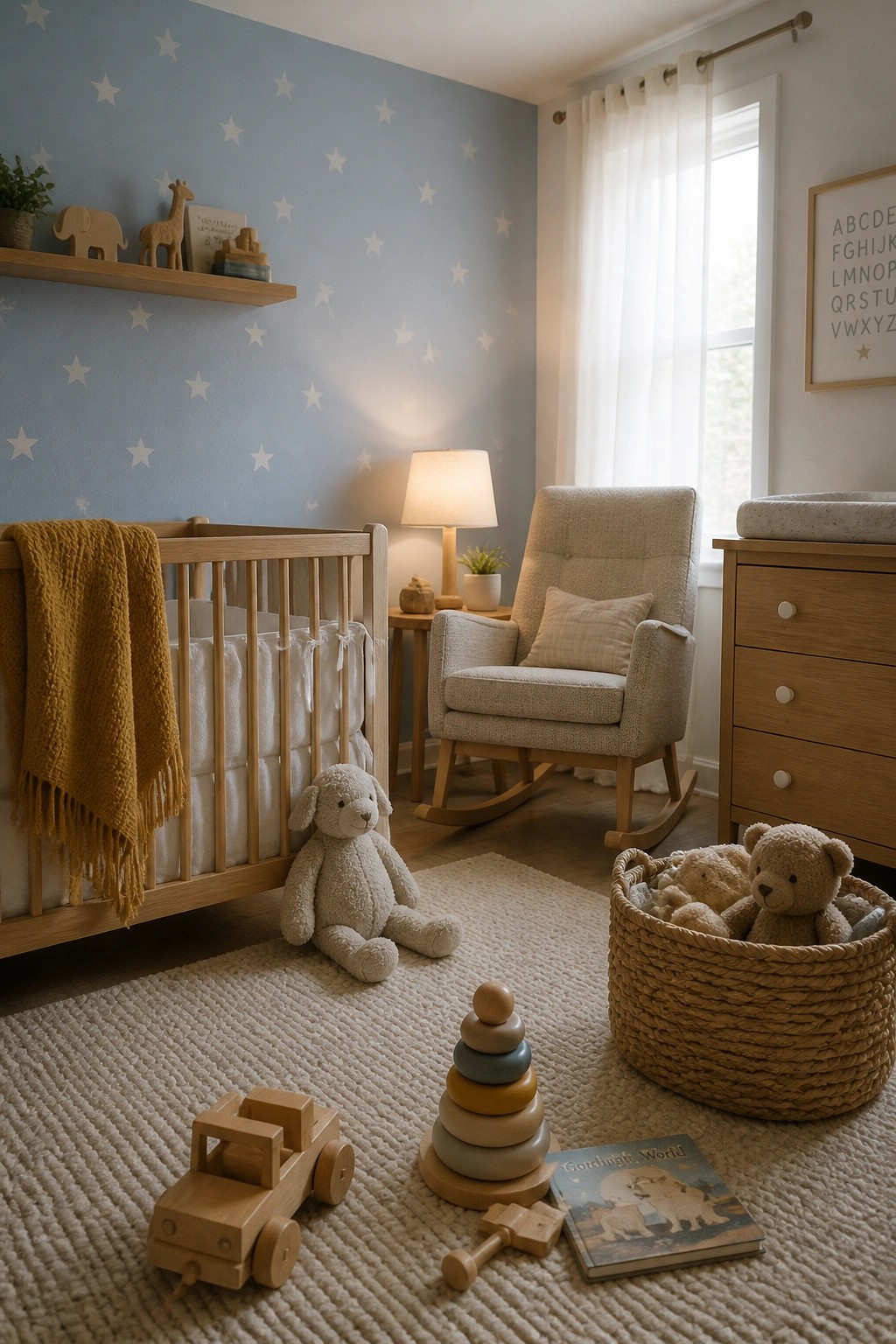
A soft blue accent wall adds a calm, lived-in quality that fits right into farmhouse style. The muted tone keeps the room feeling airy while the subtle pattern brings just enough interest without overpowering the wood furniture and simple textiles.
This works best in bedrooms or nurseries where you want a gentle backdrop. Stick with a pale shade and keep any motifs small so the wall feels cozy rather than busy.
Dark Accent Walls In The Bathroom
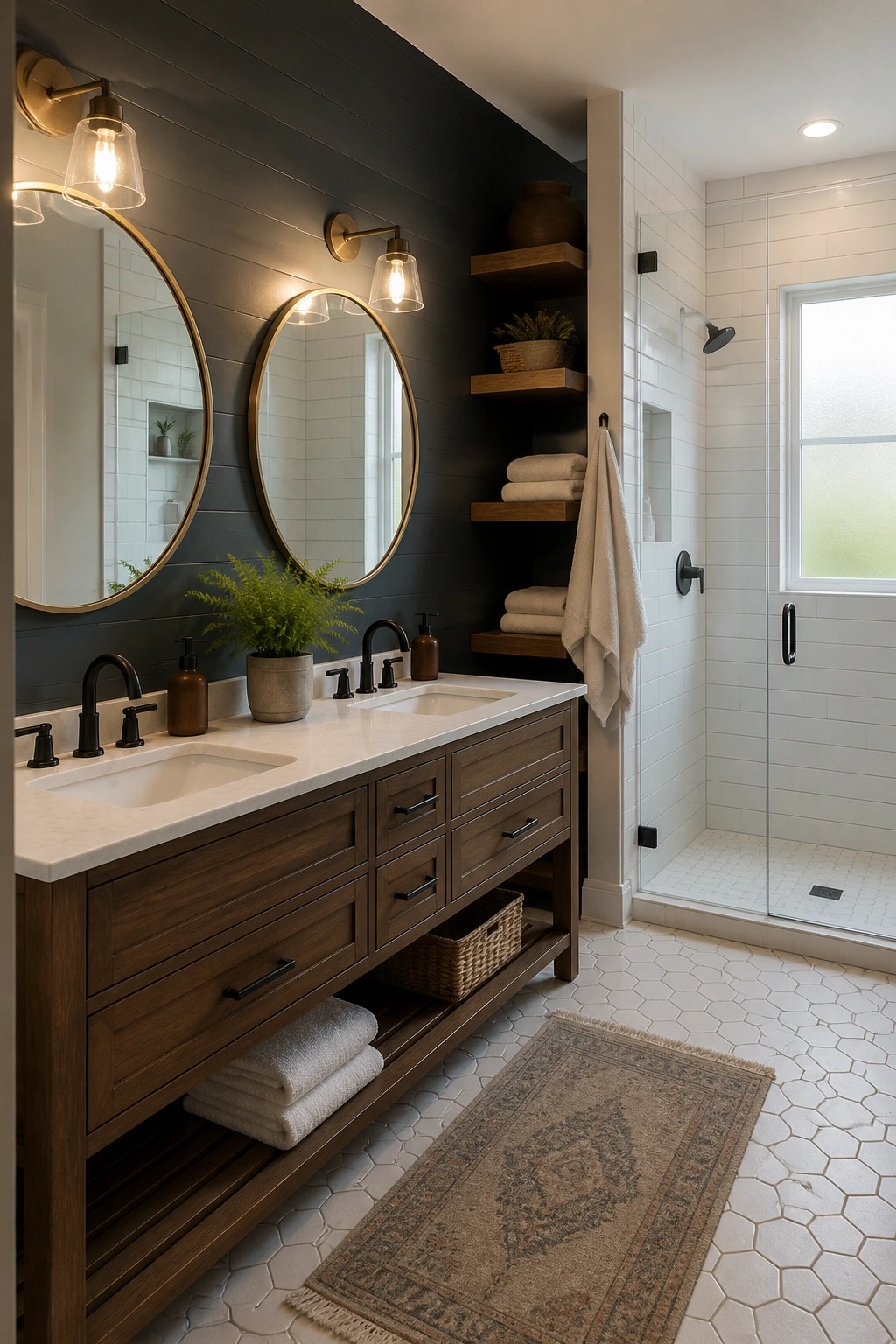
A dark painted wall behind the vanity adds instant rustic character to a bathroom. It creates contrast against white tile and lighter fixtures, which keeps the space from feeling flat or overly bright.
This approach works well in smaller bathrooms where you want a bit of depth. Stick with wood vanities and simple hardware so the dark color stays grounded rather than overpowering the room.
Terracotta Accent Walls For Rustic Warmth
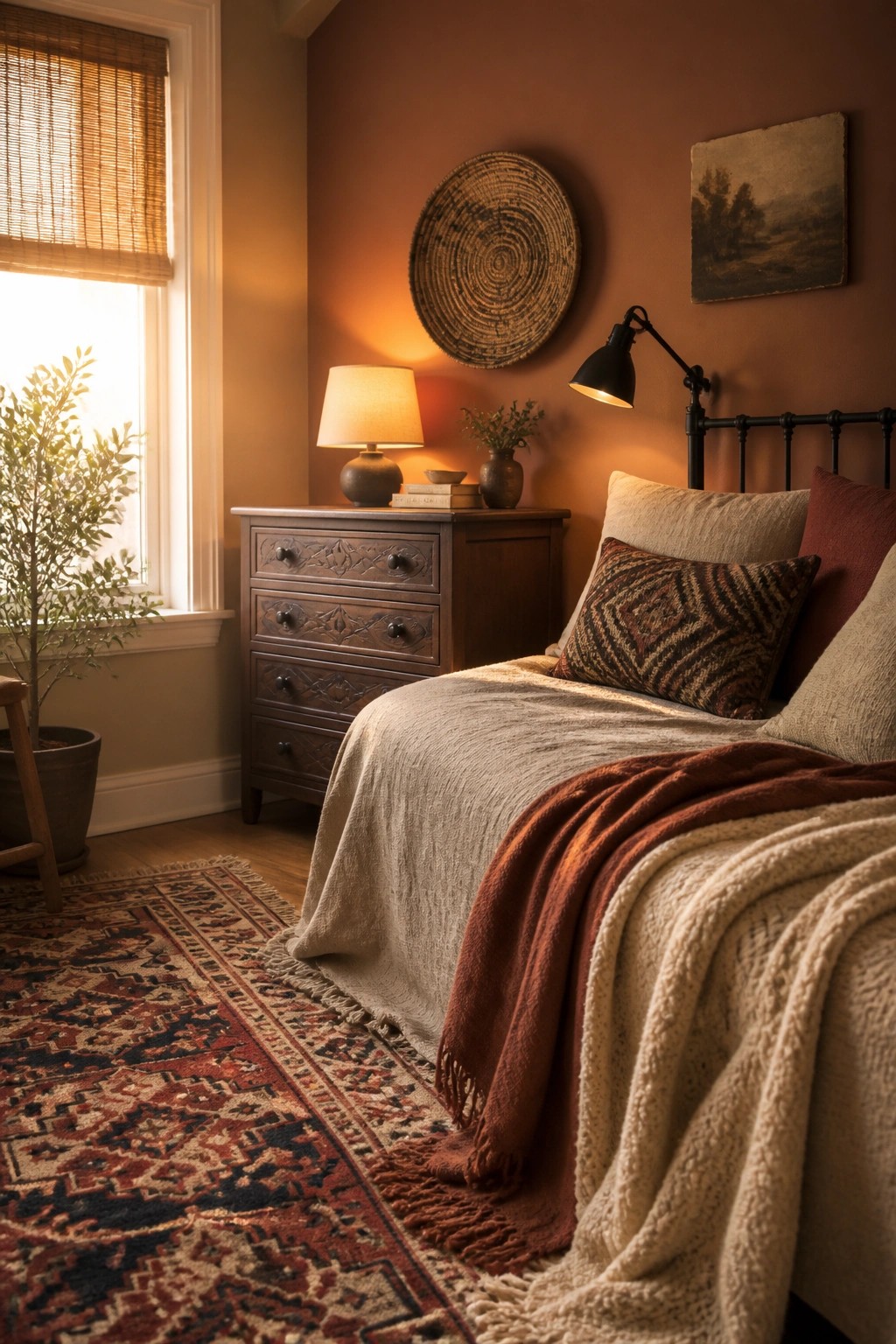
A terracotta accent wall adds the kind of simple warmth that fits right into farmhouse style. The deep earthy tone stands out against wood furniture and soft neutral bedding without needing extra layers or patterns.
This color works best in bedrooms or small sitting areas where you want a cozy feel. Keep the other walls lighter and stick to natural textures so the room stays balanced instead of heavy.
Golden Yellow Walls For Rustic Warmth
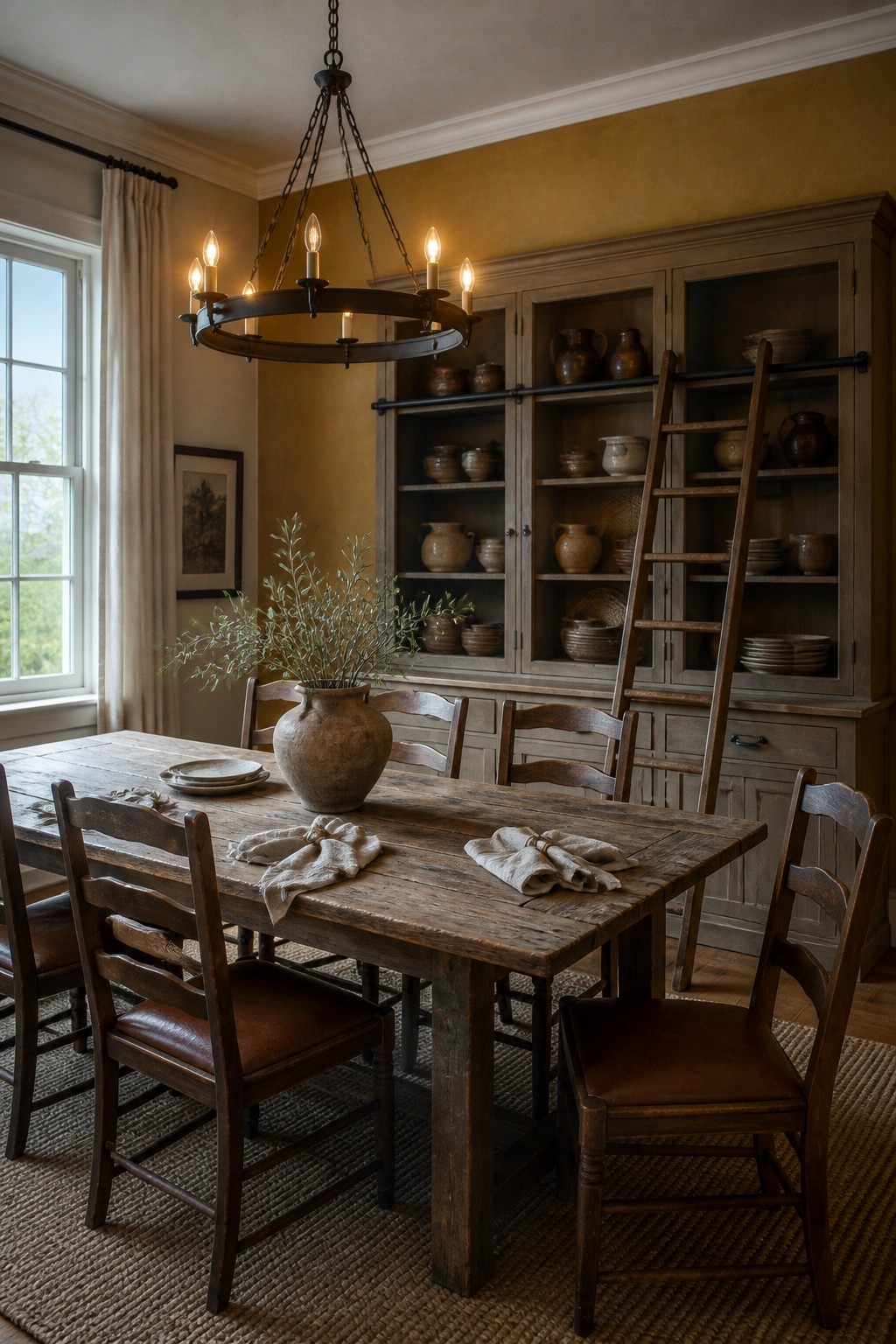
A soft golden yellow on the walls can make a dining room feel instantly warmer and more grounded. This muted tone works especially well with wood tones and simple furniture, giving the space that easy farmhouse character without needing lots of extra decoration.
It suits rooms that get good natural light and pairs best with aged wood and neutral textiles. Avoid using it in very small spaces where the color might start to feel heavy.
Deep Green Walls For Farmhouse Entries
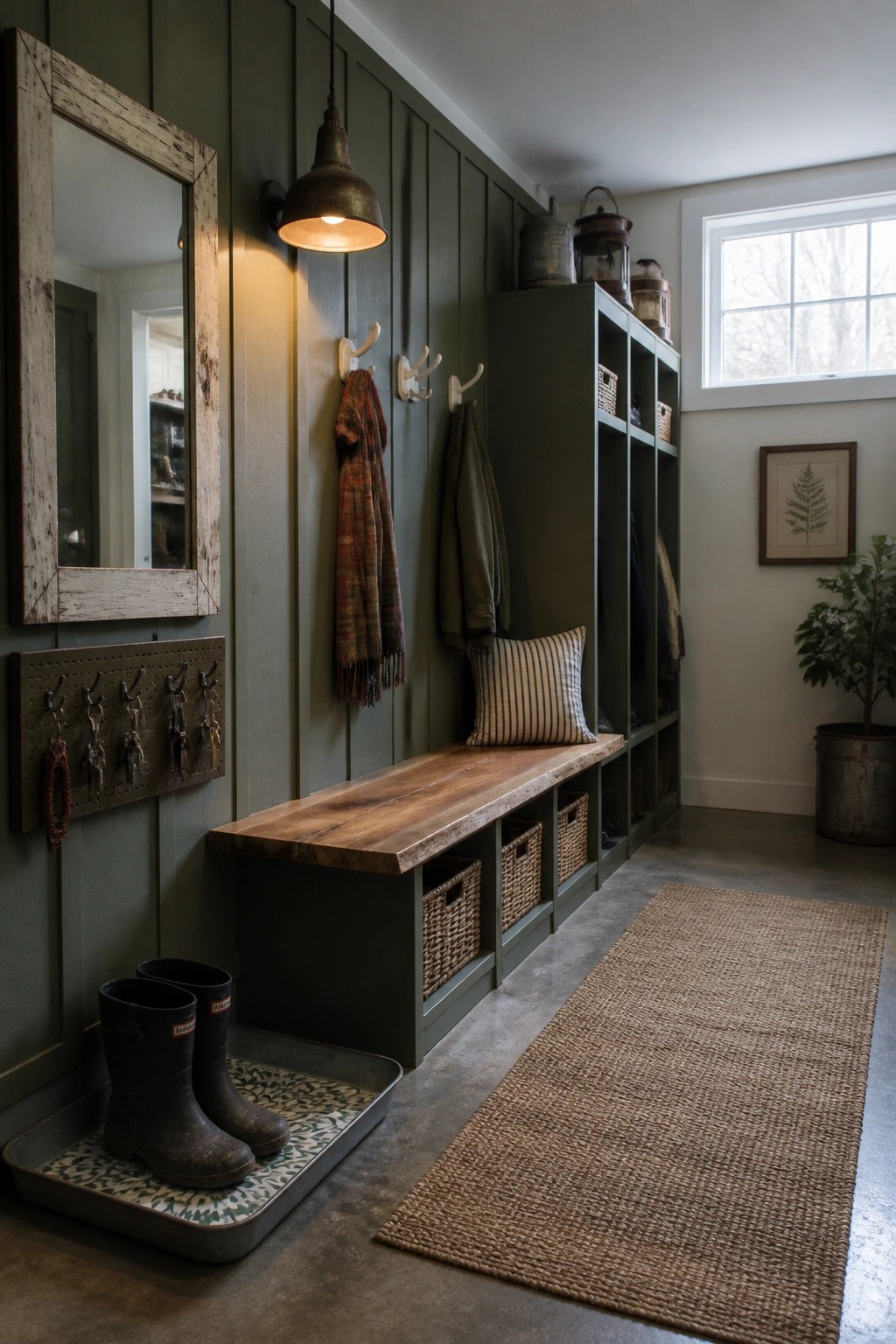
A deep green wall color gives an entry or mudroom a grounded, rustic feel that holds up to daily use. It works especially well with wood tones and simple hooks because the darker shade keeps scuffs and wear from standing out.
This choice suits homes that need practical storage without losing warmth. Keep the rest of the space light with neutral floors and natural textures so the green stays the main feature rather than overpowering the room.
Soft Sage Green Cabinetry For Laundry Rooms
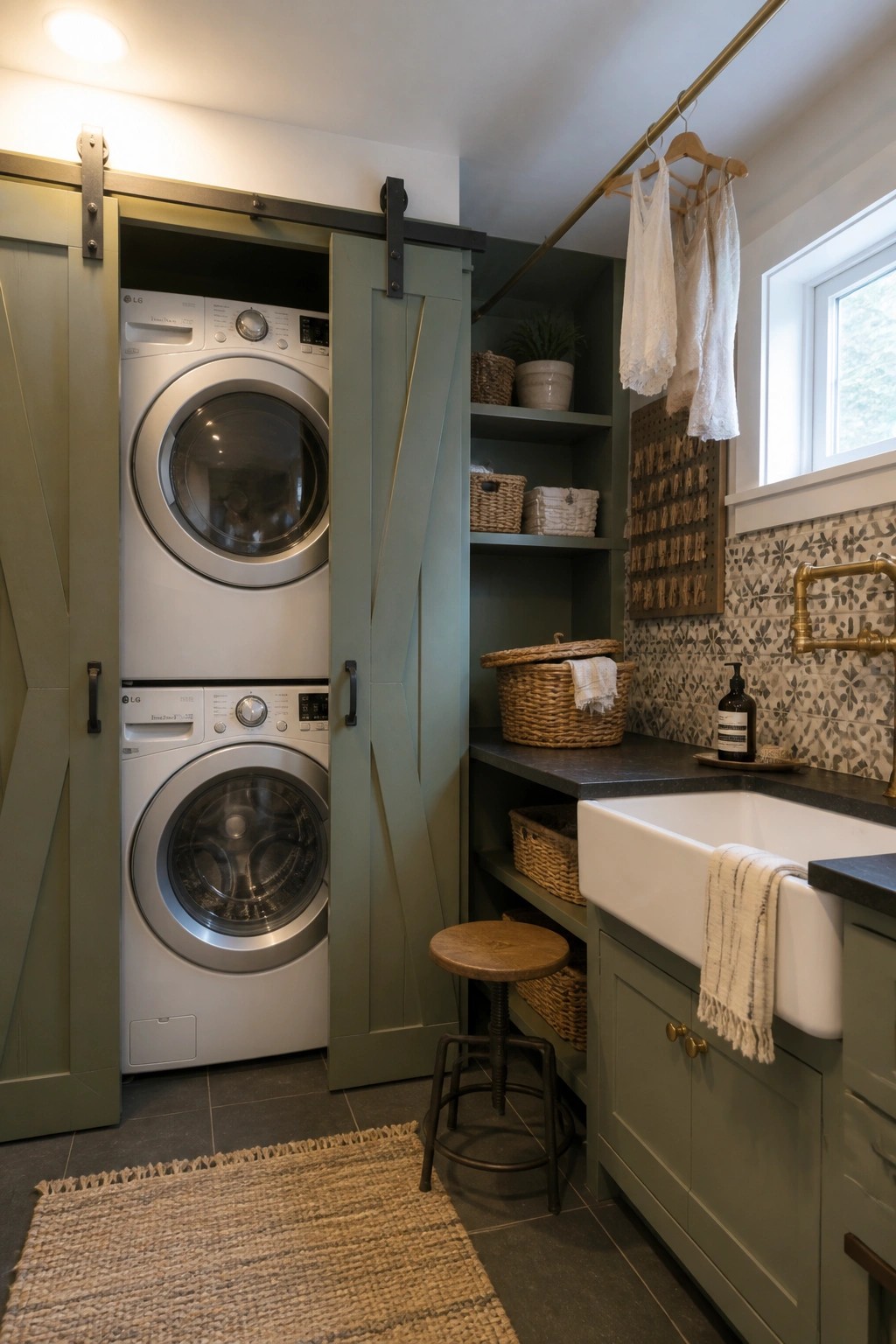
A soft sage green on cabinetry brings just enough color into a laundry room without making it feel busy. It gives the space a calm, lived-in look that fits the practical side of the room while still adding that farmhouse touch people often want in utility areas.
This color works best in rooms that already have some natural light and simple materials like wood or stone. Keep the rest of the palette fairly neutral so the green stays the main accent, and test the shade on a sample board first since it can shift depending on the lighting.
Warm Taupe Above White Wainscoting
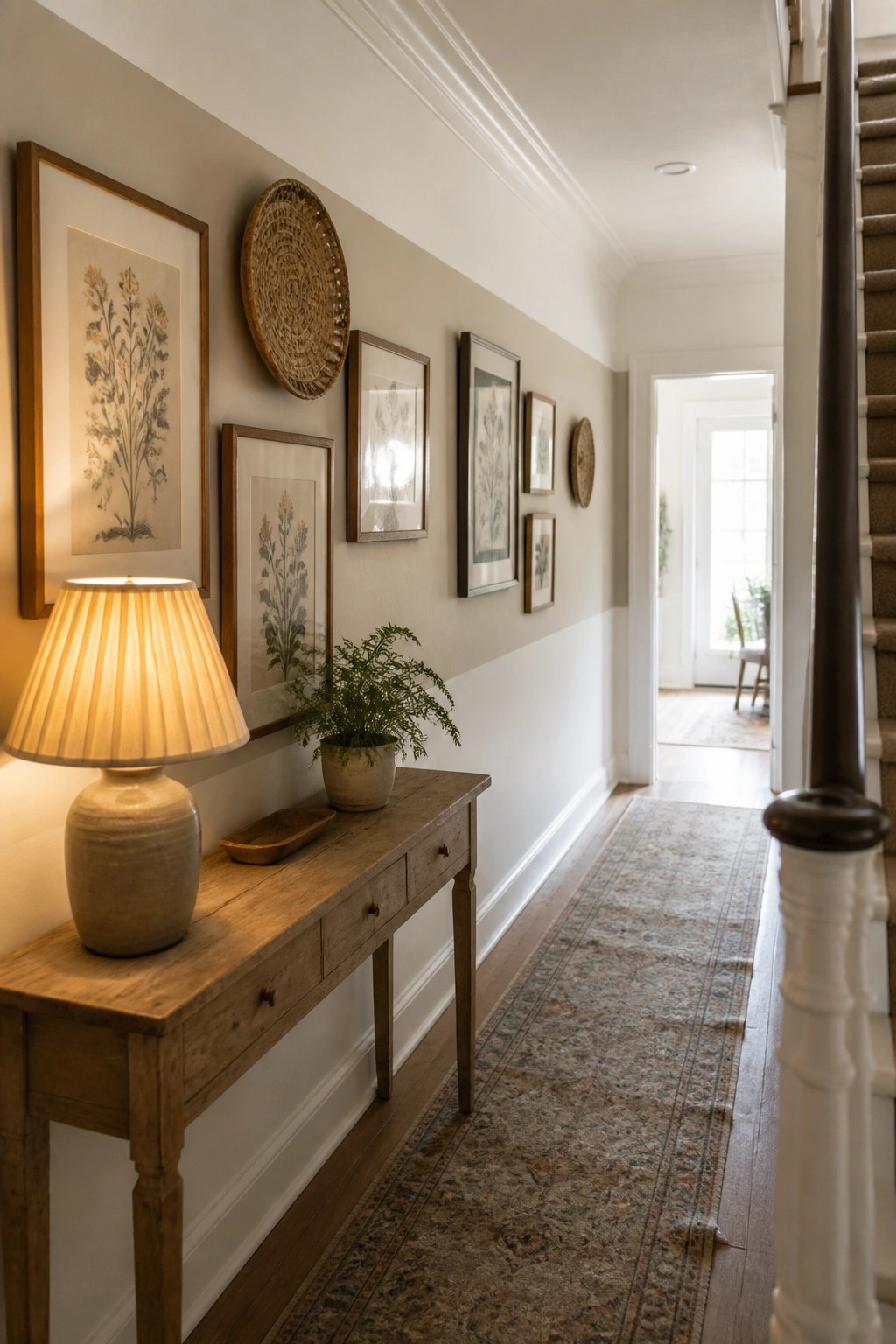
A soft taupe on the upper half of the wall gives a hallway or entry some quiet farmhouse character. The color feels warm without turning heavy, and the white wainscoting below keeps the space from feeling closed in.
This treatment works best in narrow or long passages where you want a bit of color but still need light to bounce around. Keep the trim simple and add just a few wooden pieces or framed prints so the wall stays the main focus.
Deep Teal Walls Add Rustic Character
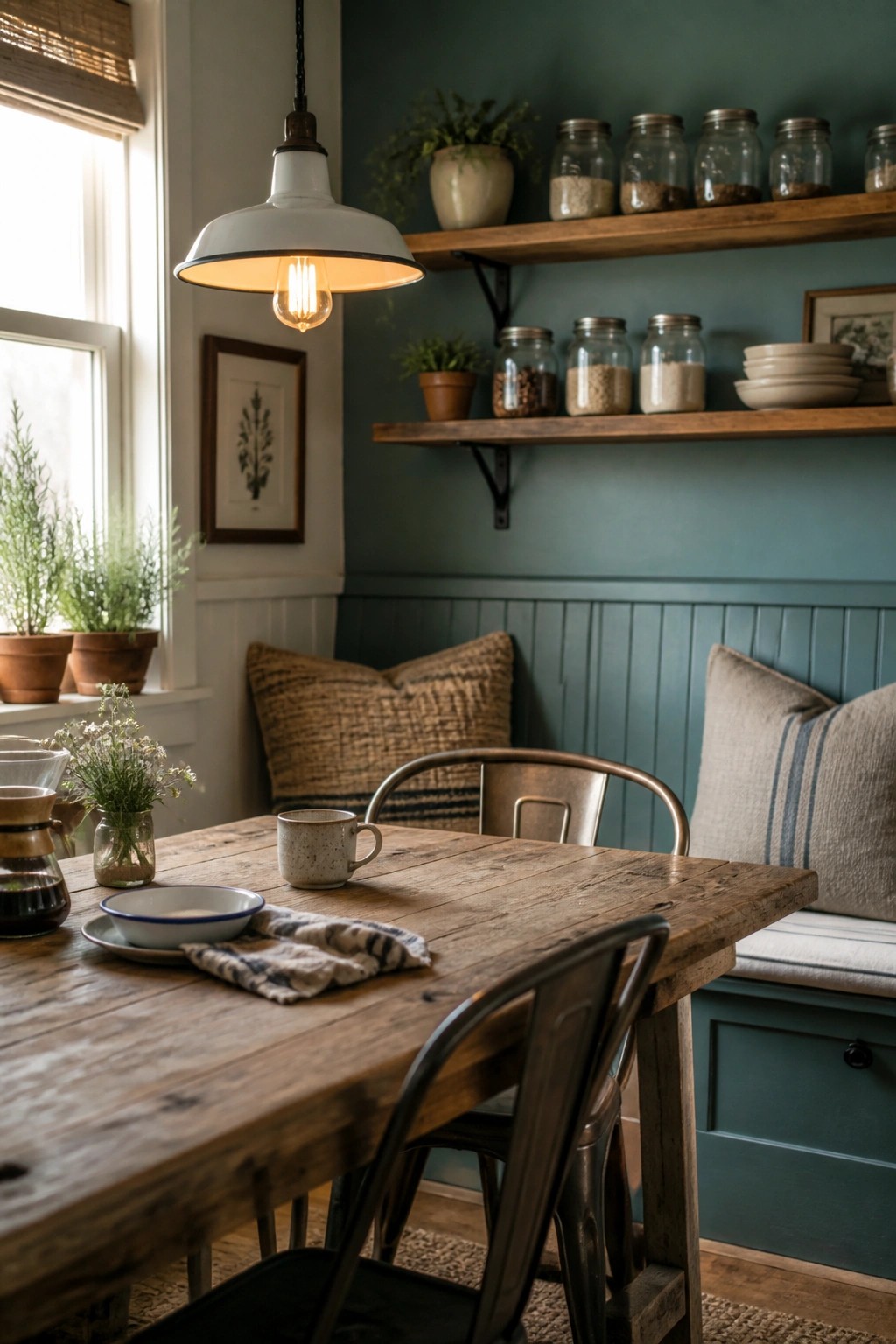
A deep teal shade on the walls gives a farmhouse room real presence. It feels grounded and a little bold at the same time, which works especially well when the rest of the space stays simple and natural.
This color pairs nicely with beadboard and open wood shelves. It suits older homes or any kitchen or dining area where you want warmth without adding too much pattern or clutter.
Blue Gray On The Fireplace Wall
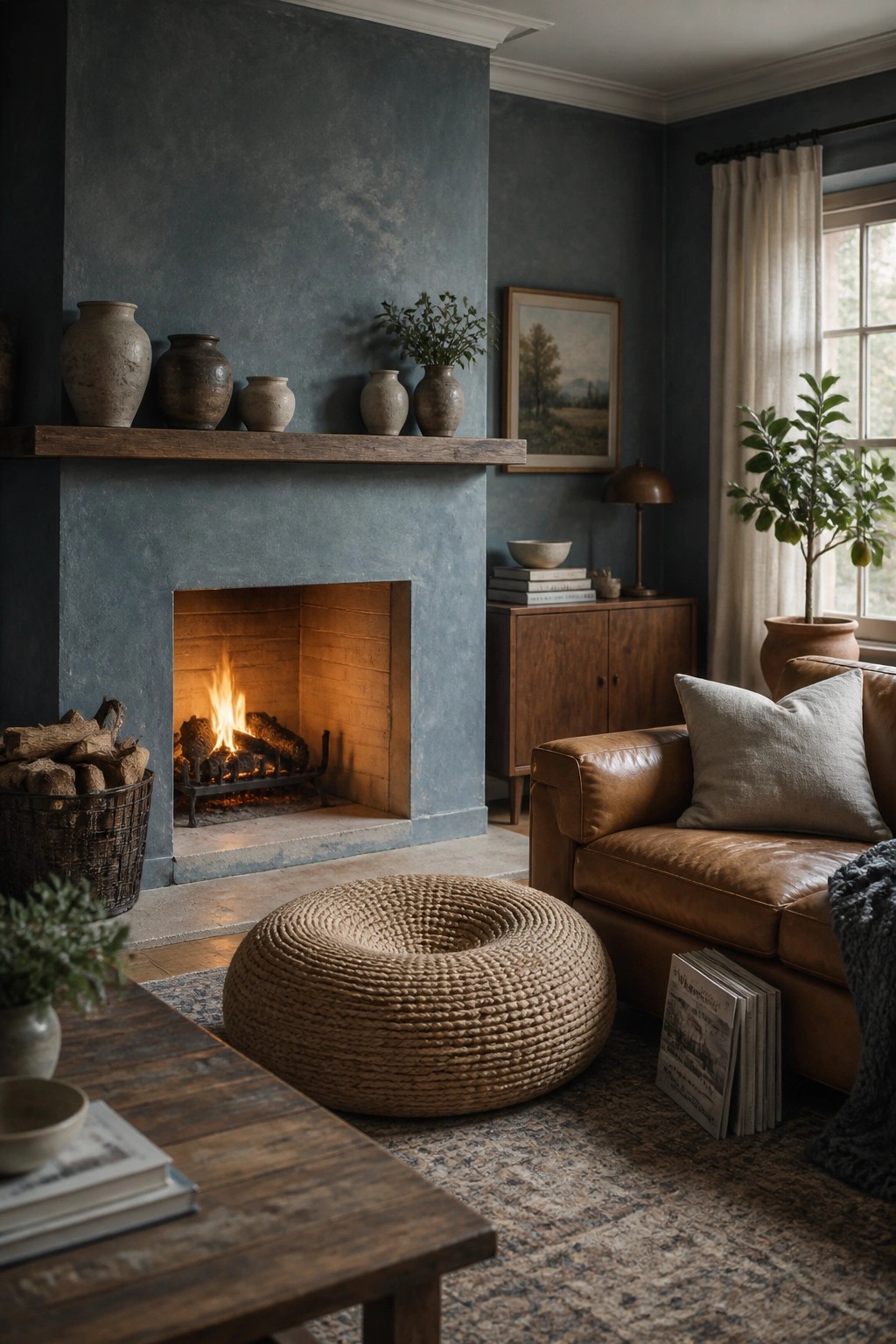
A blue gray like this one keeps the wall color interesting without pulling too much attention away from the rest of the room. It feels steady next to the wood mantel and the glow from the fire, and it gives the space a little more weight than plain white would.
This shade works well in rooms that already have wood tones and natural textures. Try it on a main wall in a living room or den, and keep the trim and ceiling light so the color stays grounded rather than heavy.
Sage Green Walls For Farmhouse Character
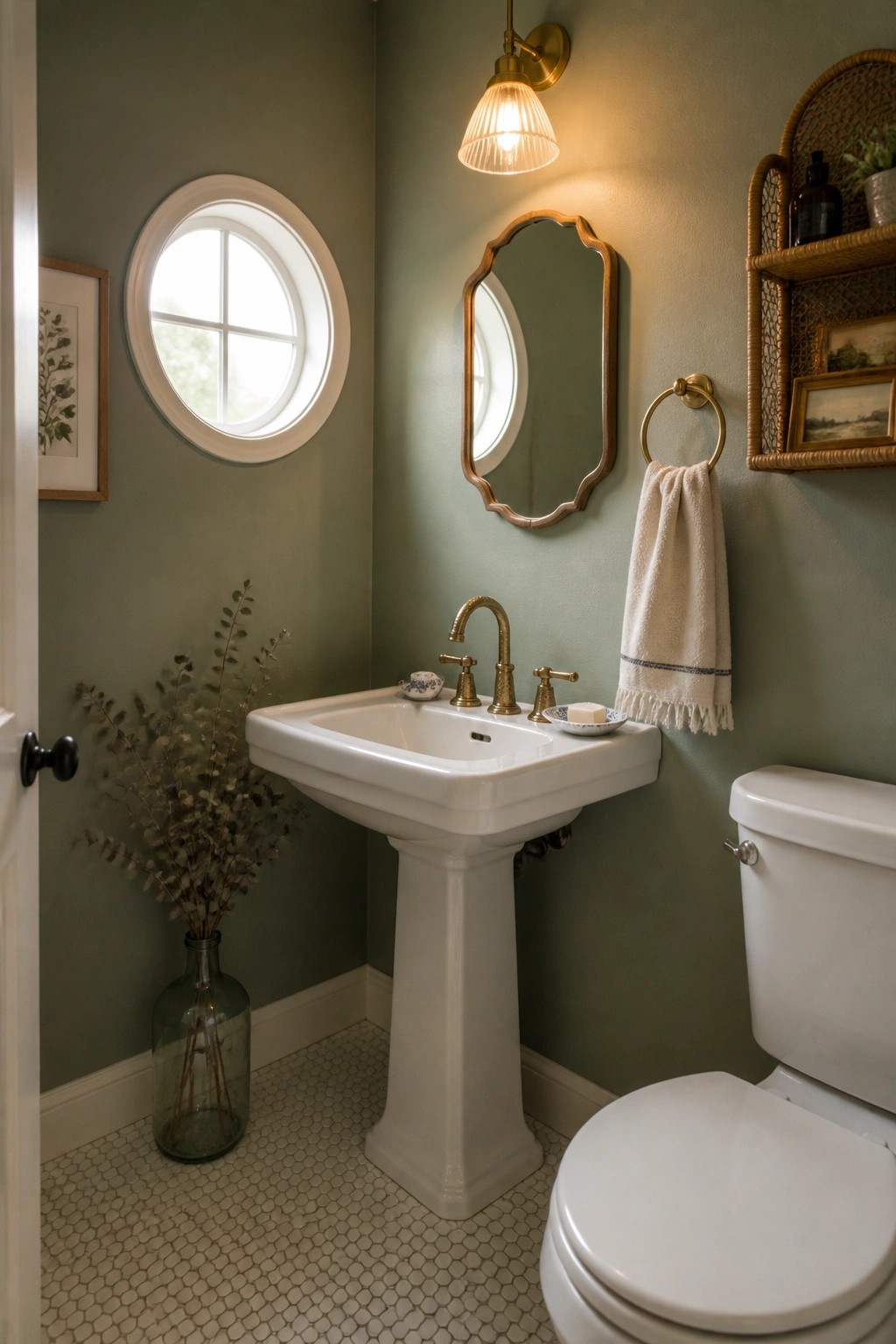
Sage green brings a soft, lived-in feel to a room without making it feel dark or heavy. Many people like this shade because it adds just enough color to give walls some presence while still working with the simple, practical look that defines farmhouse style.
It suits smaller spaces like bathrooms especially well, since the muted tone keeps things calm and pairs easily with white fixtures and wood accents. Try it on one or two walls first if you want to test how the color shifts with your lighting.
Terracotta Accent Walls For Rustic Warmth
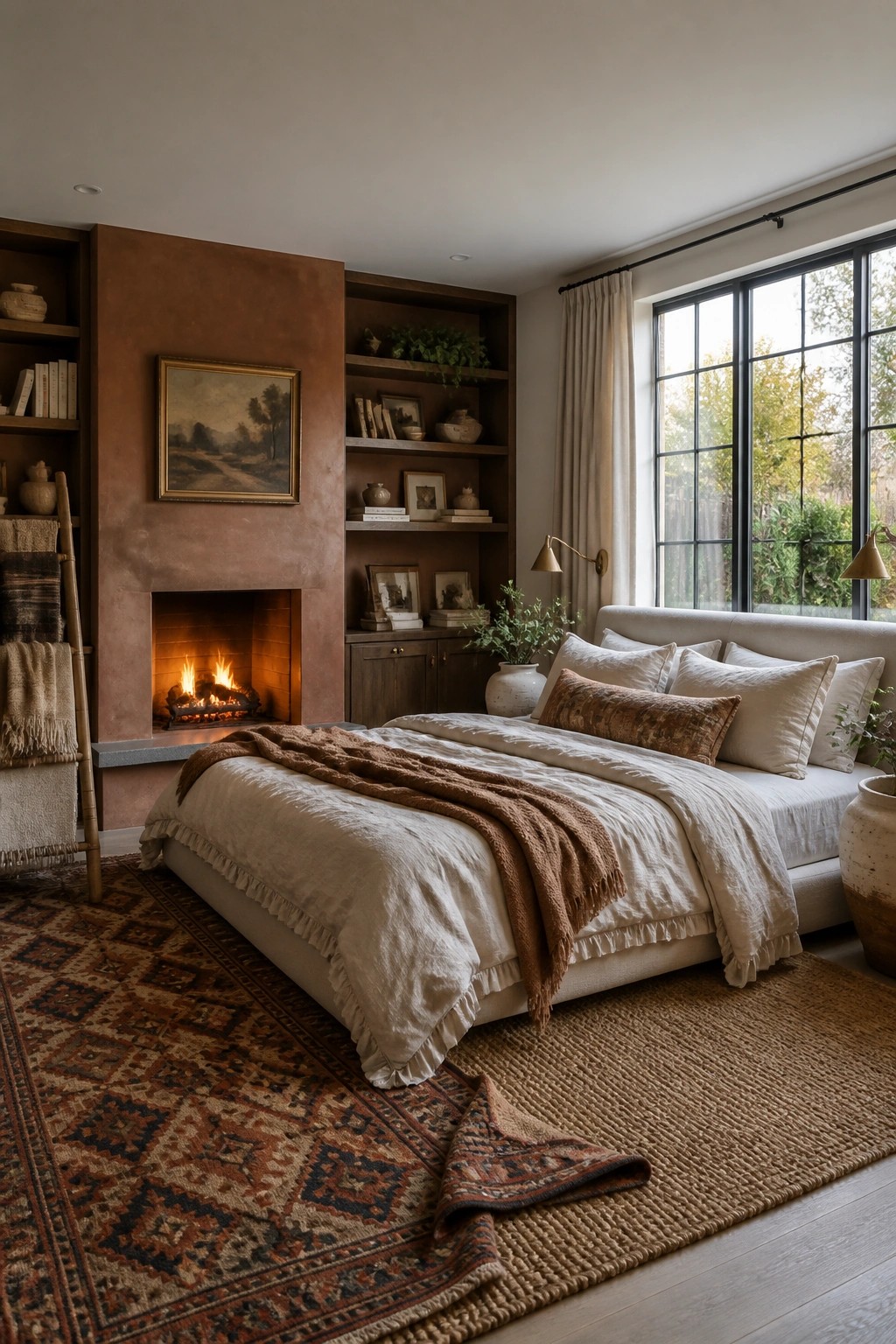
A terracotta accent wall adds real depth to a farmhouse bedroom without much effort. The warm clay color feels natural next to brick and wood, and it gives the space that settled, lived-in look people often want in this style of home.
This color works especially well when the room already has soft layers like linen bedding or textured rugs. It suits both older homes and newer builds that need a bit more character, though it can feel heavy if the rest of the space is already dark.
Deep Navy Accent Walls
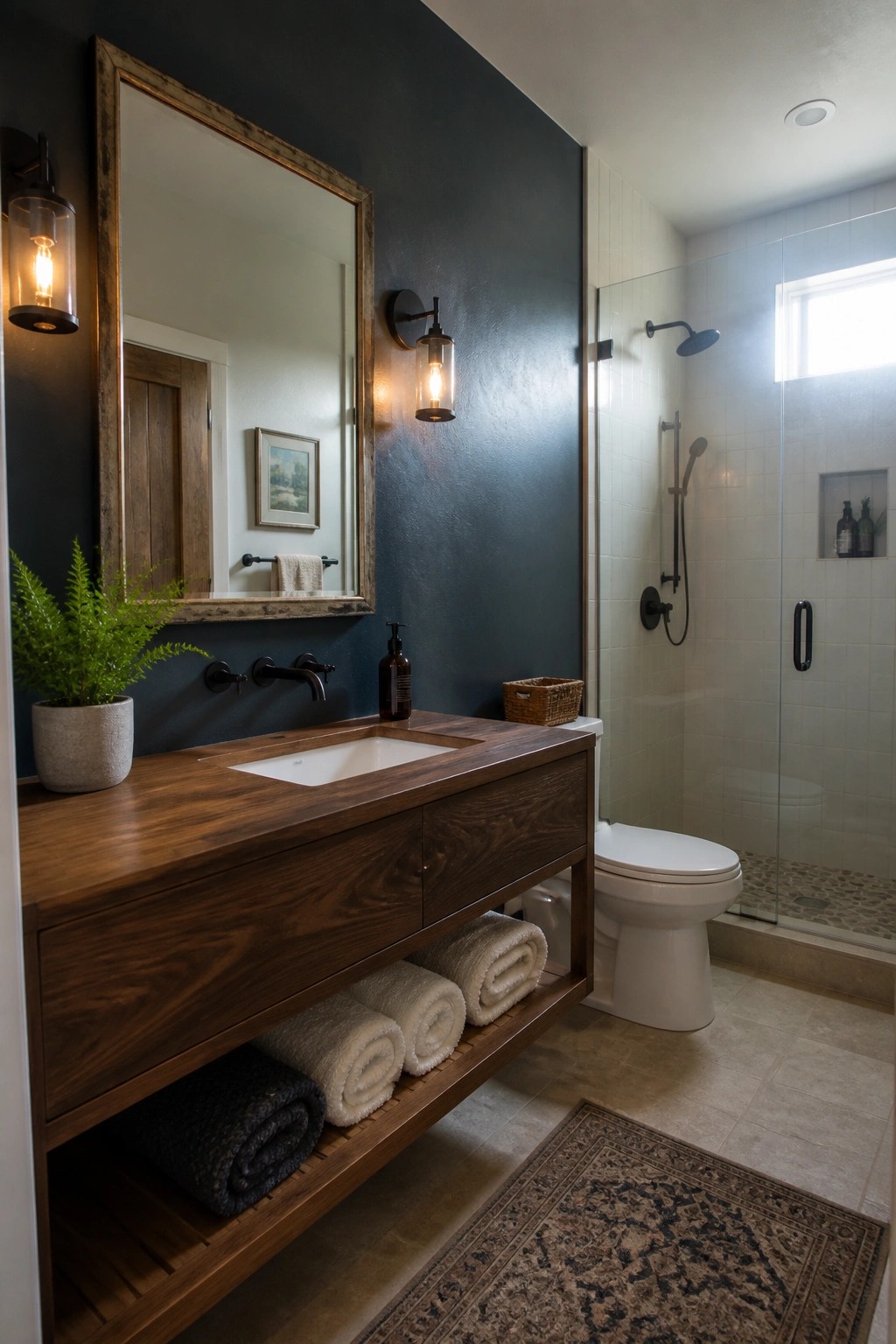
A deep navy accent wall adds real weight to a farmhouse bathroom. The color sits behind the vanity and gives the space a grounded feel that pairs naturally with wood tones and simple fixtures.
This works especially well in smaller bathrooms where you want some depth without darkening the whole room. Keep surrounding walls light and use natural materials so the navy reads as intentional rather than heavy.
Striped Walls For A Farmhouse Touch
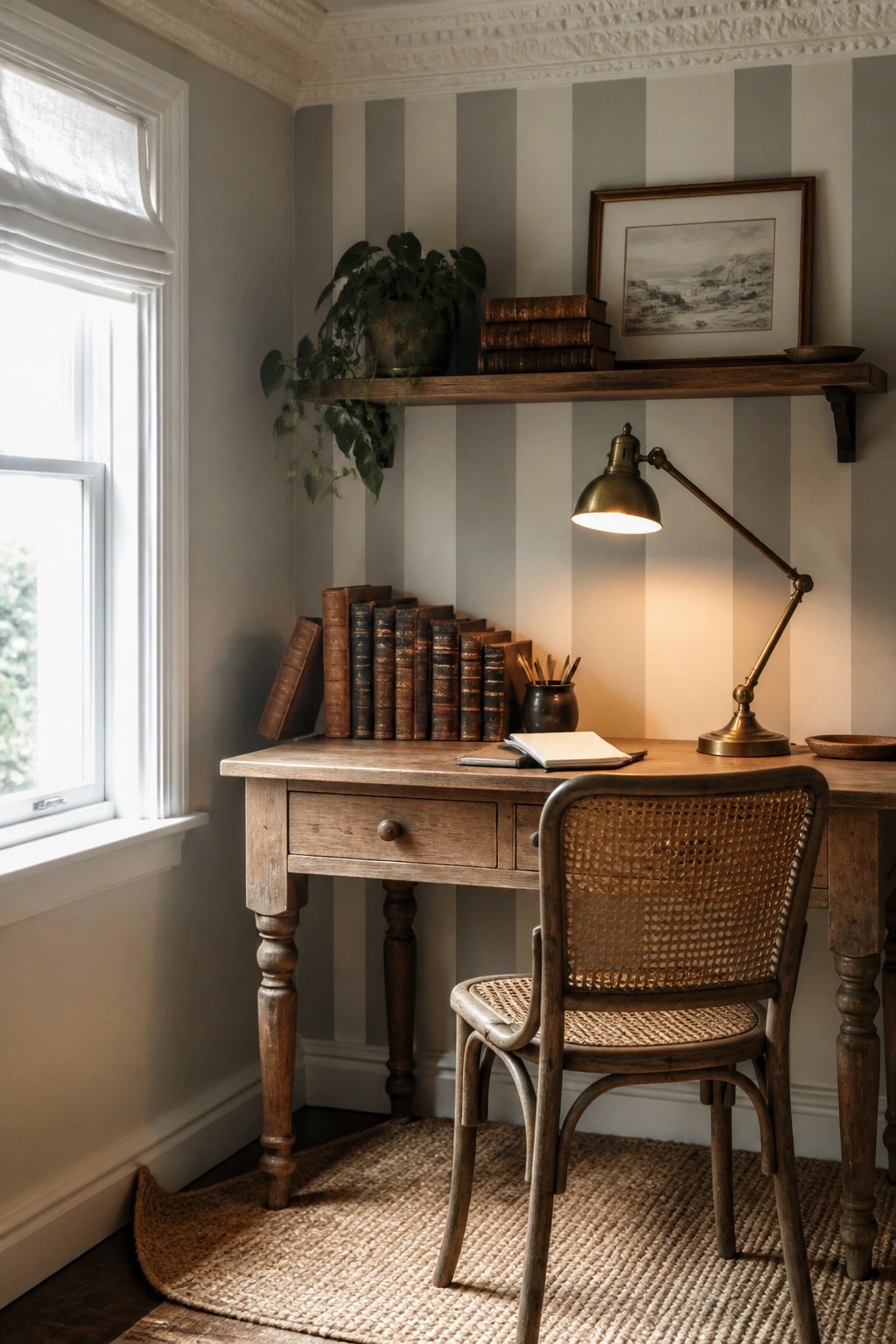
A striped accent wall gives a room quiet pattern without much effort. The soft gray stripes here keep the space feeling calm and a little old-fashioned, which fits right into a farmhouse style. It works especially well in smaller areas like a desk nook where you want some interest but nothing too busy.
This approach suits older homes or any space that already has wood furniture and simple finishes. Keep the stripes fairly wide and choose colors that stay close in tone so the look stays relaxed. Avoid going too bold with the contrast or the stripes can start to feel more modern than rustic.
Warm Yellow Walls For Rustic Character
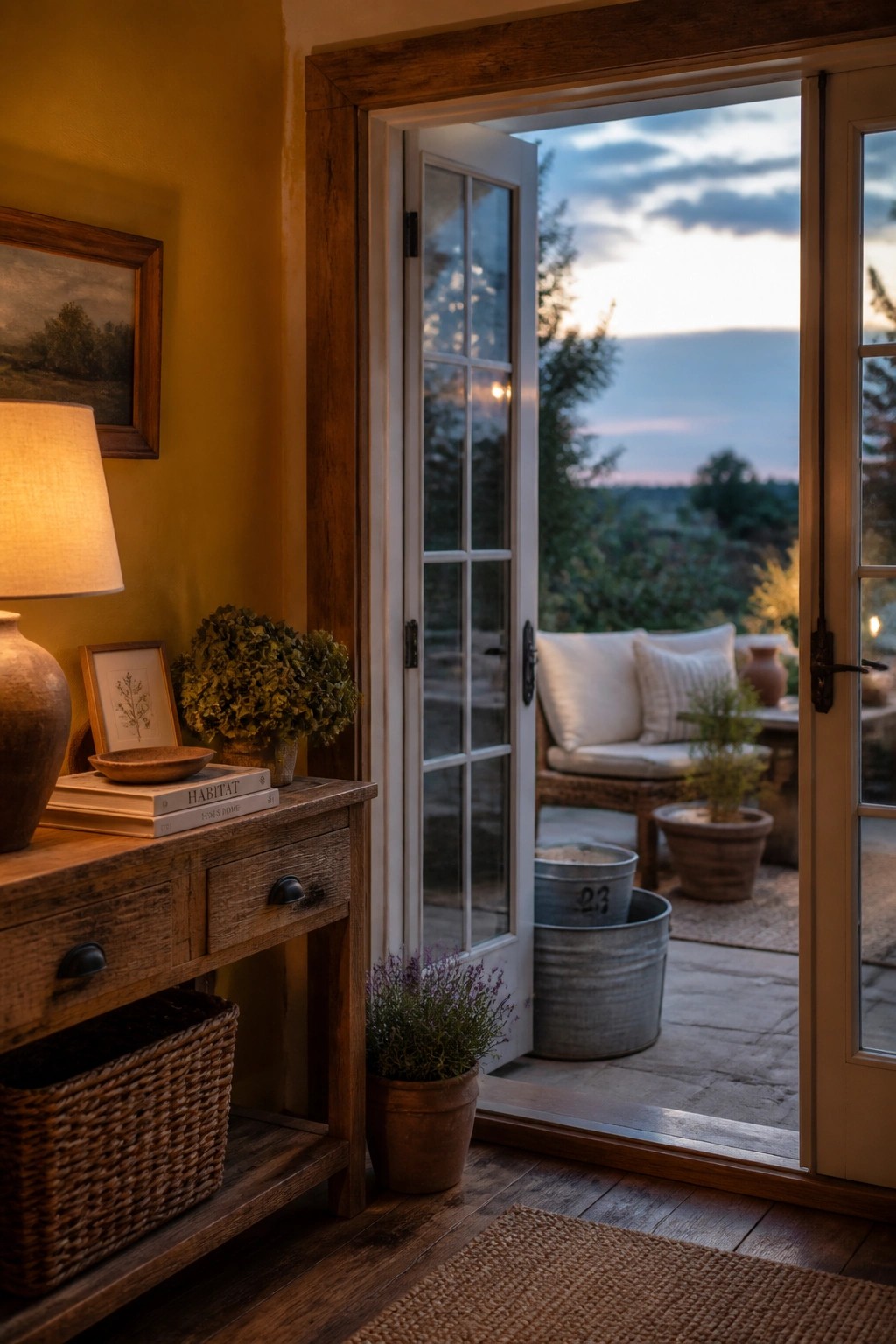
A warm yellow wall gives a farmhouse room an easy, lived-in feel. It brings soft color without overpowering the space and pairs naturally with wood tones and simple furnishings.
This shade works best in rooms with decent natural light. Keep other surfaces fairly neutral so the yellow stays the main accent rather than competing with too many patterns or dark finishes.
Frequently Asked Questions
Q: What if my kitchen gets tons of morning sun? A: Light shifts how these colors land on the wall. Pick a sample and watch it through the day before you roll it on. A softer shade often keeps the rustic warmth without turning harsh.
Q: Can I paint right over old paneling? A: Clean the surface well and add a quick primer coat first. That stops any bleed-through and helps the new color grip. Skip the primer only if the wood feels sealed already.
Q: Do these tones still work with my gray floors? A: They do when you lean toward warmer versions of the palette. The contrast adds depth without fighting the rest of the room. Stick to one wall so the floors stay the main anchor.
Q: How soon can I hang pictures after painting? A: Give the wall a full day to dry. Then the hooks hold without pulling fresh paint.
