

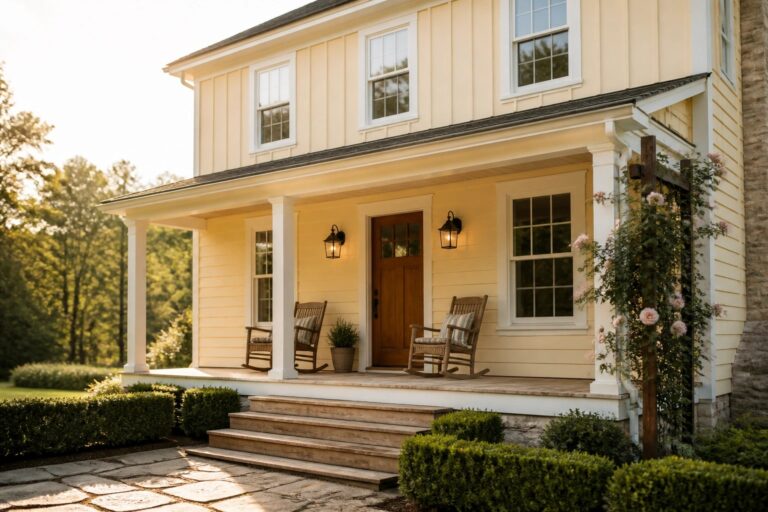
I have always noticed that the first thing people see when they drive up is how the paint color works with the roofline and siding.
Choosing the right shade can shift the whole feel of the facade, especially when it needs to hold up against weather and changing light.
Some colors that seem safe on paper end up looking flat or too stark once they cover the full exterior.
Paint matters more than people think.
I like to try samples on a small patch first so I can see how the tone settles with the trim and any stone or wood details already in place.
Soft Yellow Siding for Farmhouse Exteriors
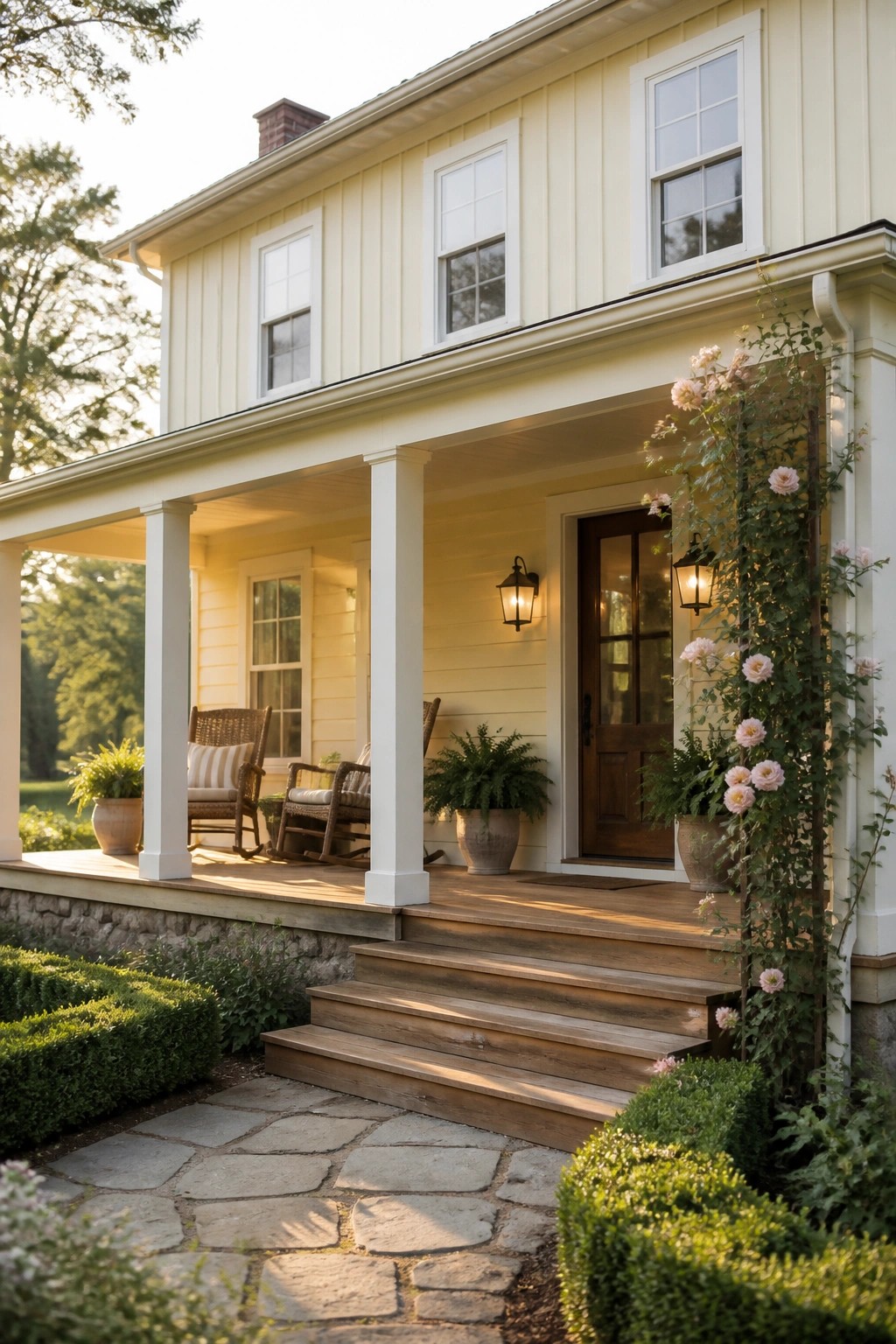
A soft yellow paint color gives a farmhouse exterior a gentle warmth that feels welcoming without trying too hard. It works especially well against white trim and natural wood details, letting the house sit comfortably in a rural or suburban setting while still catching the eye from the road.
This shade suits homes with straightforward shapes and older architectural lines. It holds up nicely over time, though it is smart to test a large patch first since yellow can look different depending on the light and surrounding landscape.
Muted Green Siding for a Natural Farmhouse Feel
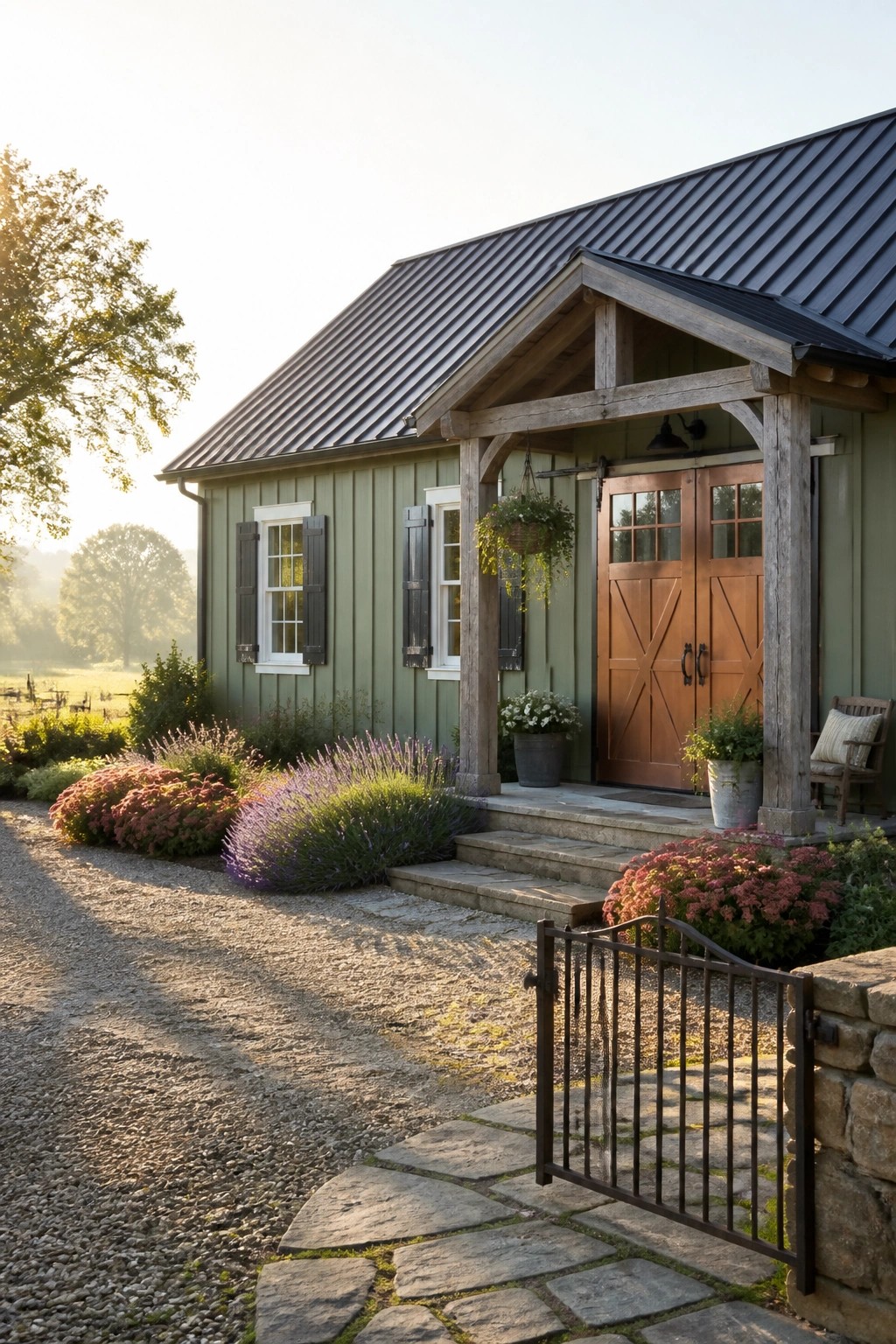
A soft green paint color gives a farmhouse exterior a calm presence that blends with fields and trees. It avoids the stark look of white or the heaviness of darker tones while still feeling grounded.
This shade works best on homes with wood trim and simple rooflines. Pair it with natural materials like stone or weathered wood so the color stays subtle rather than competing with the landscape.
Deep Red Siding for Farmhouse Exteriors
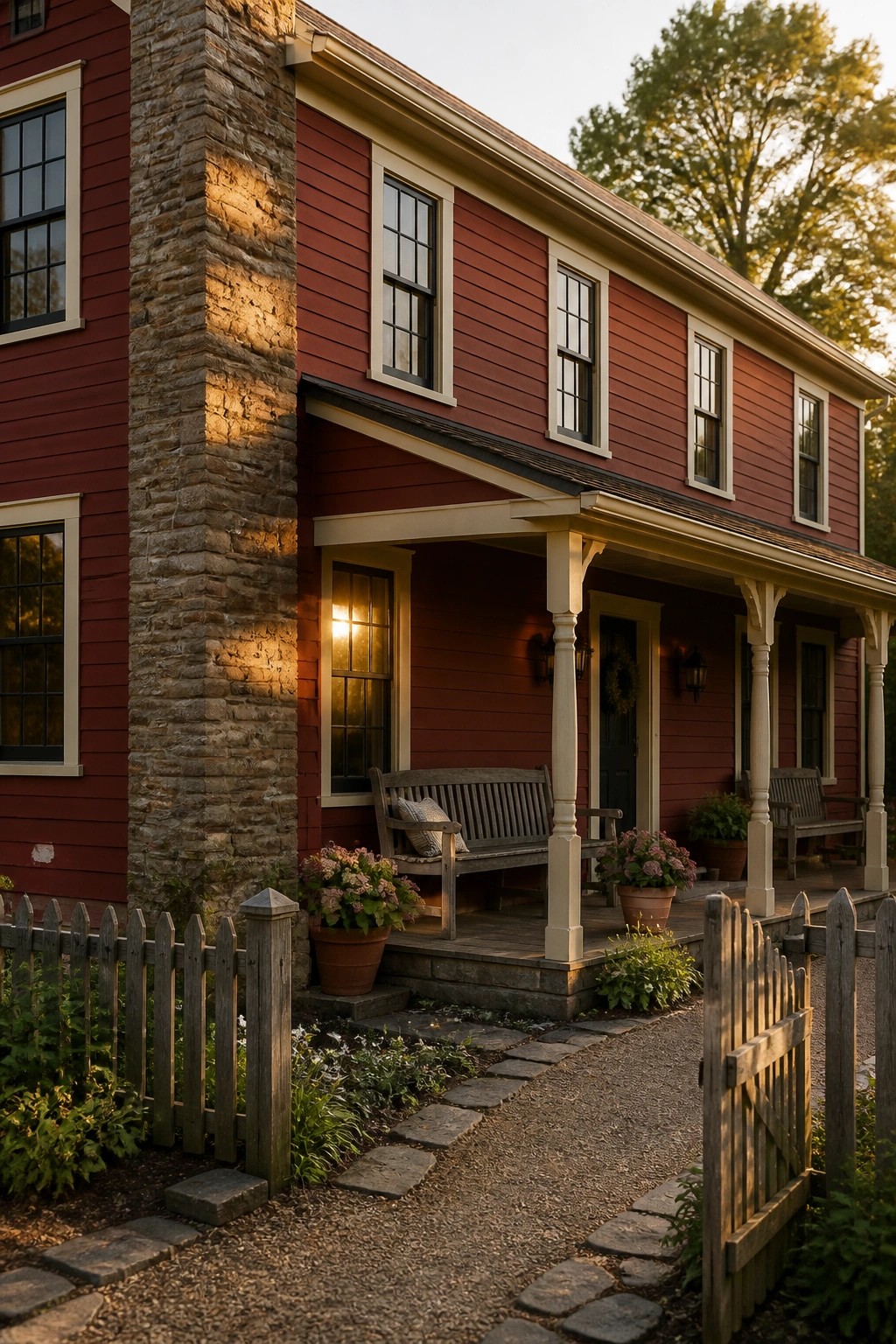
A deep red paint color gives a farmhouse a solid, grounded look that many people like. It stands out against green surroundings and pairs well with stone details and white trim without feeling too bold.
This choice works best on homes that already have a simple shape and good natural light. It holds up over time and suits older houses or new builds meant to feel traditional.
A Cheerful Door Color On Neutral Siding
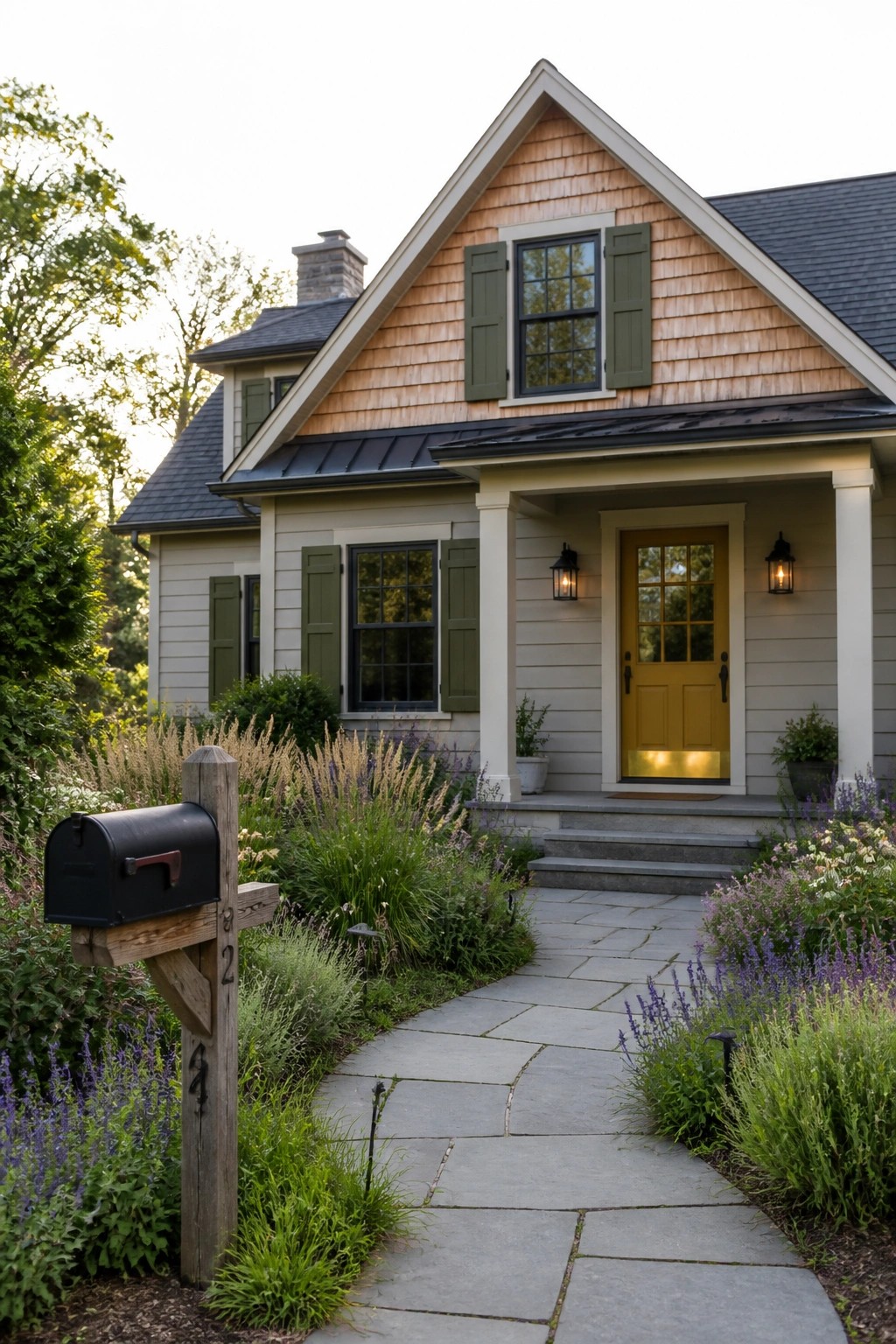
A bright door can lift the whole look of a house without much extra work. Here the yellow door sits against soft gray siding and green shutters, and it draws the eye right to the entry. That simple contrast feels welcoming and keeps the house from blending into the background.
This approach works well on farmhouses or cottages where the siding stays light and calm. Try a saturated yellow or similar warm tone on the door, then keep the trim and shutters in deeper greens or soft grays. Just make sure the door color has enough depth so it still reads clearly from the street.
White Siding With Black Trim
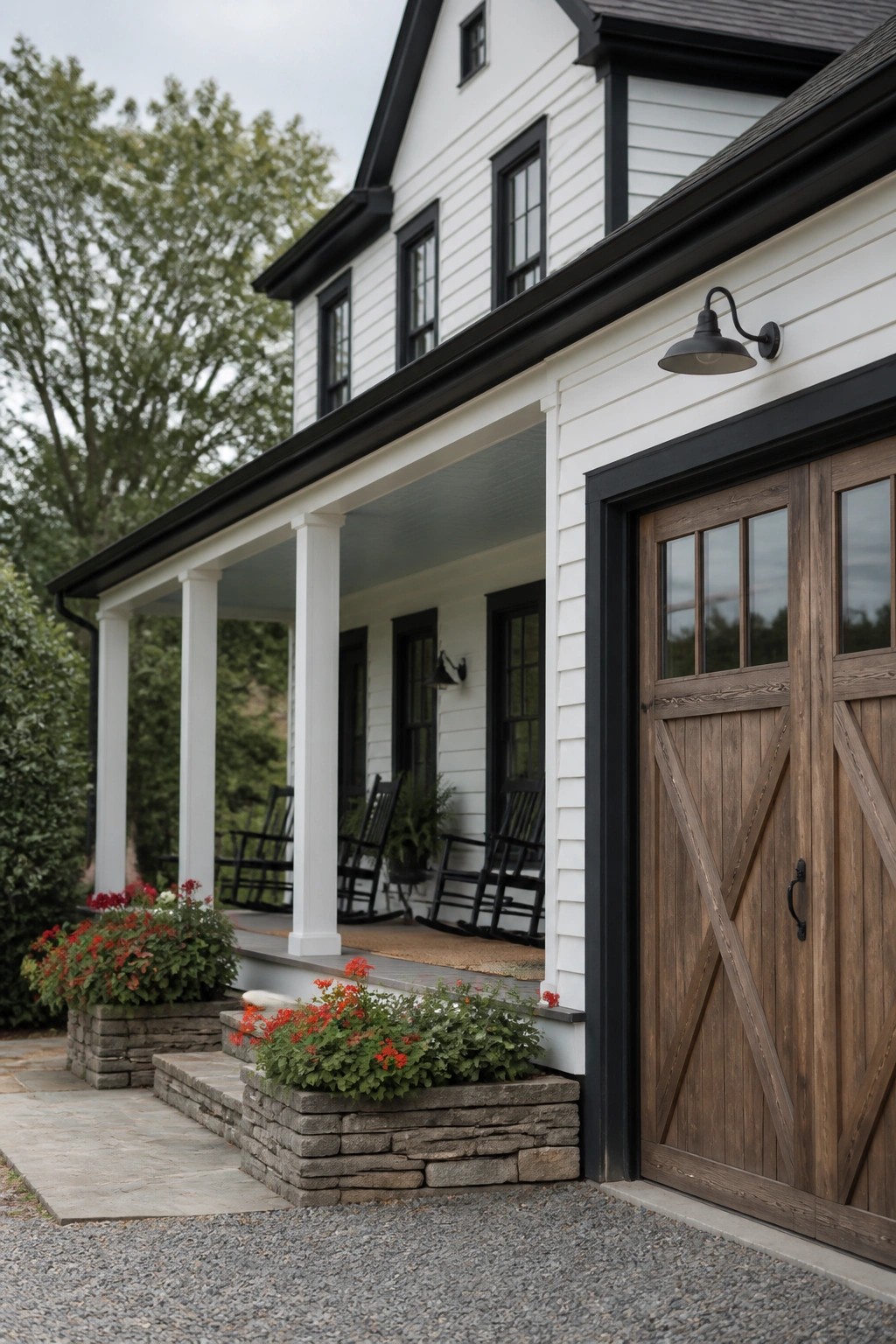
White paint with black trim gives a farmhouse a clean and simple look that holds up over time. The dark accents make windows and corners stand out without extra decoration.
This approach works best on homes with straightforward shapes and gabled roofs. Stick to the same black on all trim and doors so the color scheme stays consistent from the front to the sides.
Dark Siding Colors on Farmhouse Exteriors
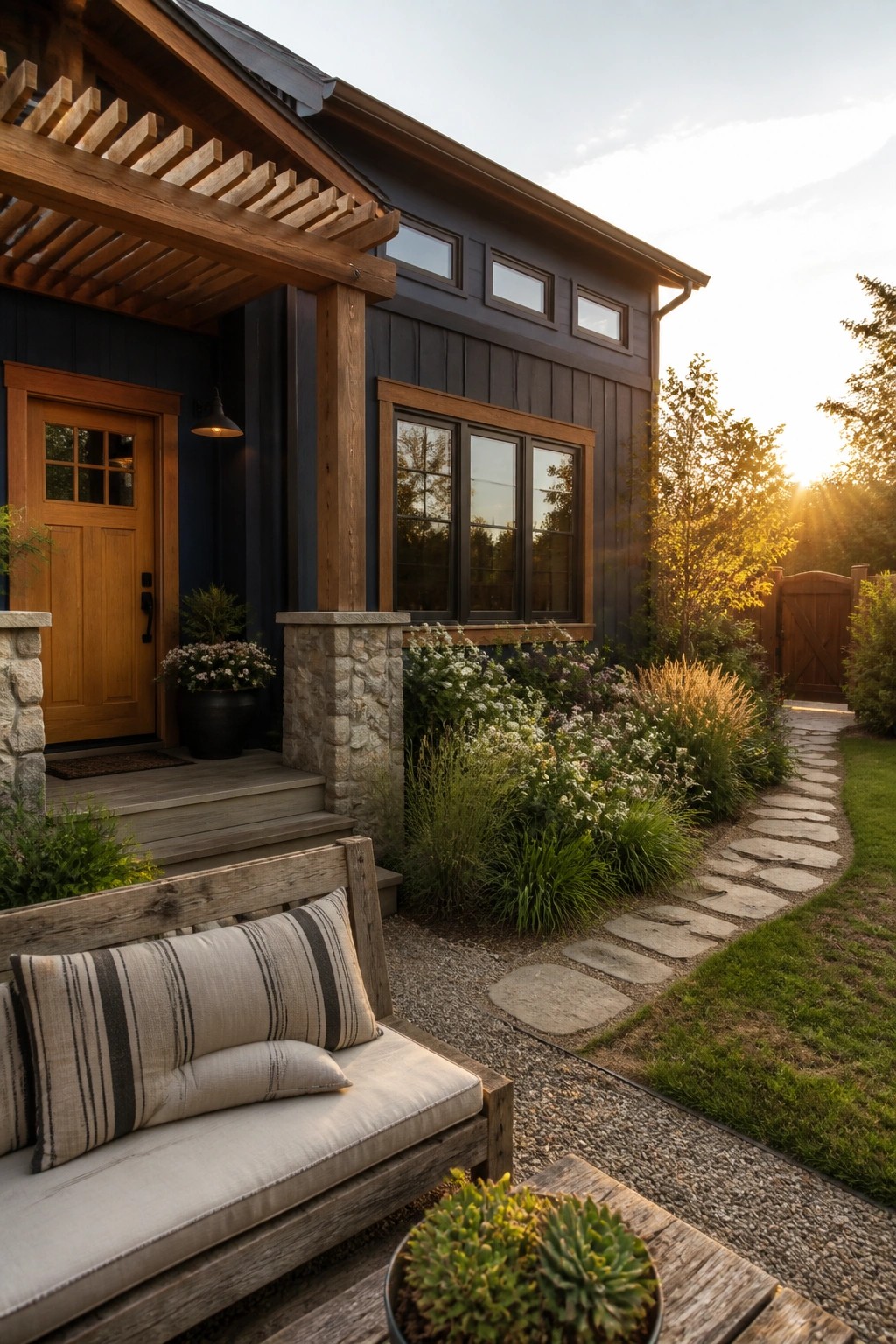
Deep navy siding has become a favorite choice for many farmhouse exteriors because it gives the house a solid, grounded presence without feeling too heavy. The color holds up well against changing light and works nicely with wood trim and doors that bring in warmth.
This approach suits homes with simple lines and natural materials nearby. It helps the structure stand out while still blending into a rural or suburban setting, though lighter trim is usually needed to keep the overall look balanced.
Soft Blue Siding for Farmhouse Exteriors
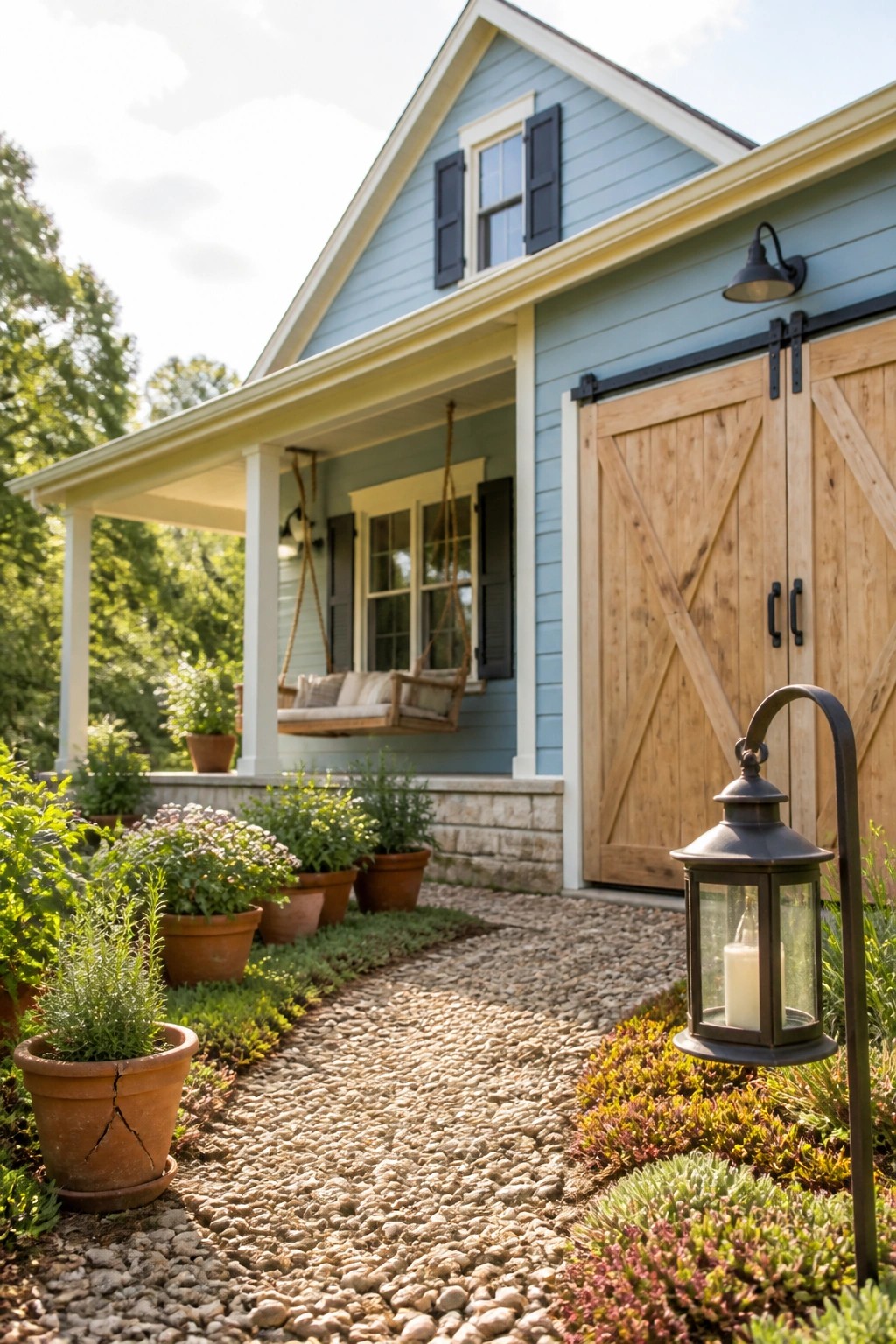
A soft blue paint color gives a farmhouse exterior a calm and welcoming feel without trying too hard. It pairs well with white trim and darker shutters, and the shade stays gentle even in bright light.
This color works best on homes that already have simple lines and some natural wood nearby. Keep the rest of the palette quiet so the blue can carry the look without extra contrast.
Warm Yellow Siding for Rustic Farmhouses
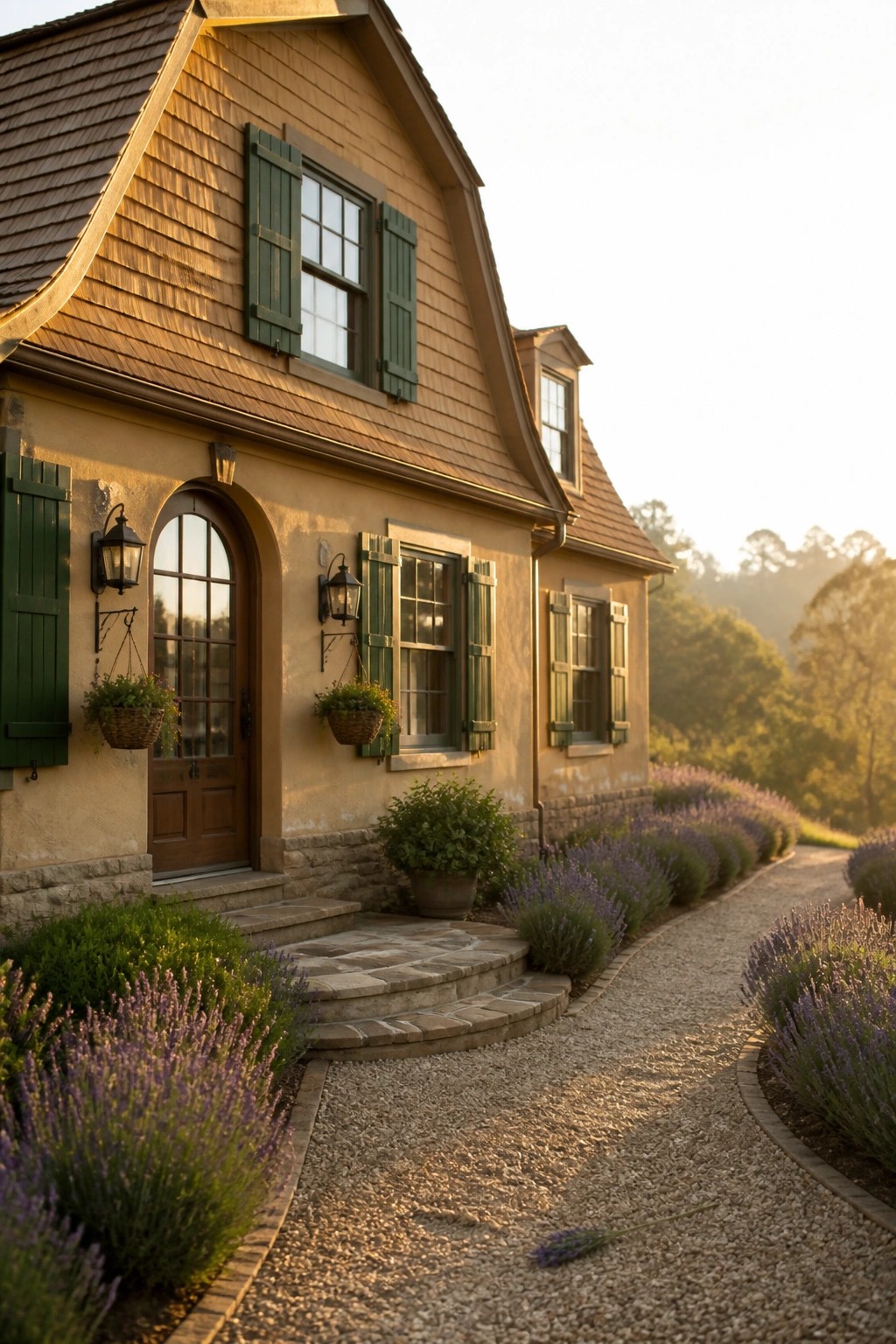
A soft yellow paint color like the one on this house gives the exterior a friendly, settled look that fits right into a farmhouse setting. It feels natural against the stone base and pairs easily with the dark green shutters for a bit of contrast that still reads calm.
This shade works best on homes with some age or texture to the siding, especially when the yard has informal planting along the path. Keep the tone on the muted side so it holds up in bright light and does not feel too bold next to greenery.
Deep Gray Paint for Farmhouse Exteriors
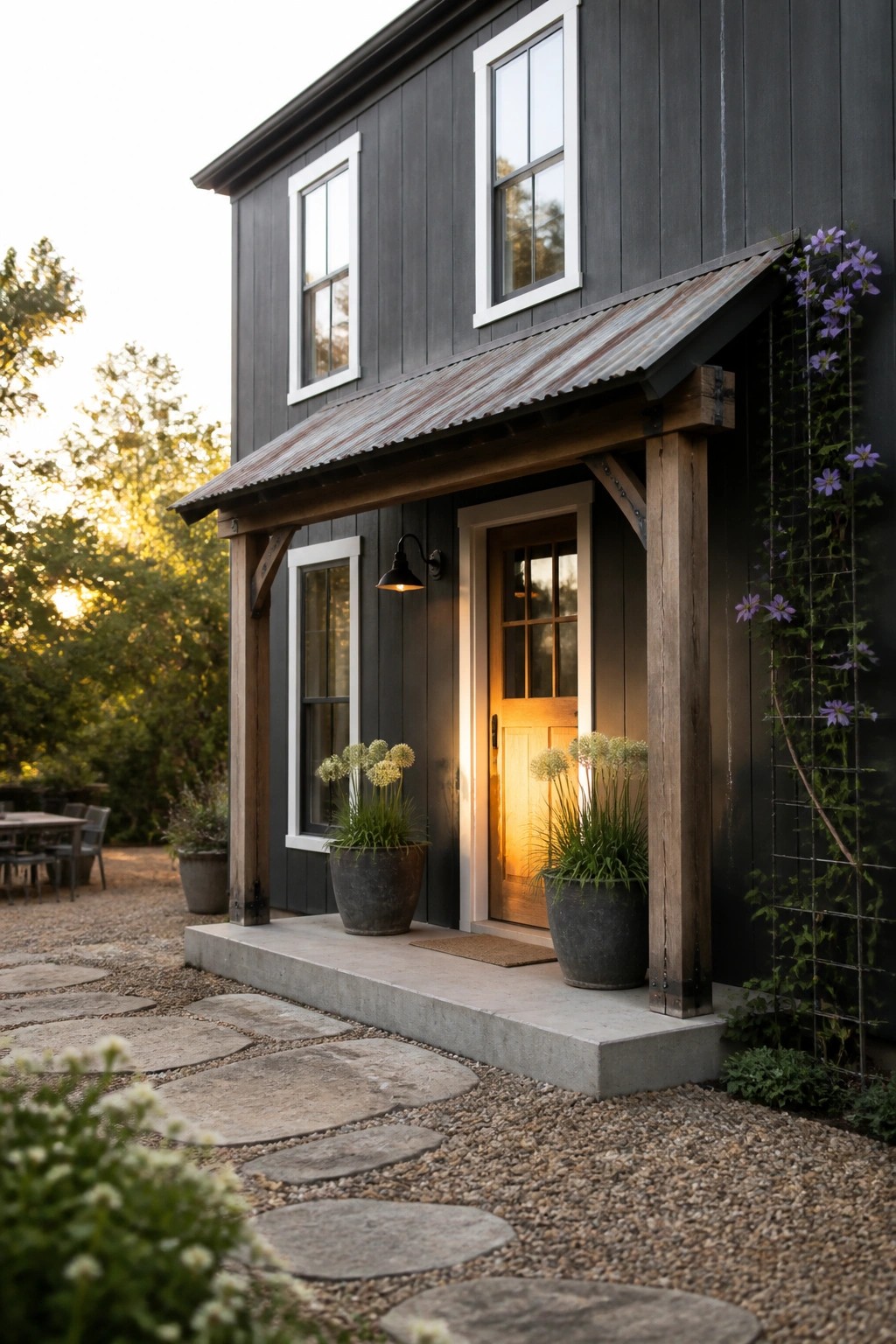
A deep gray paint color gives a farmhouse exterior a solid, grounded feel without making it look heavy. The dark siding lets the white trim and natural wood elements stand out clearly.
This choice works well on homes with straightforward shapes and a mix of wood and metal details. It holds up in changing light and pairs with simple landscaping so the house stays the main focus.
Dark Door Color on Light Siding
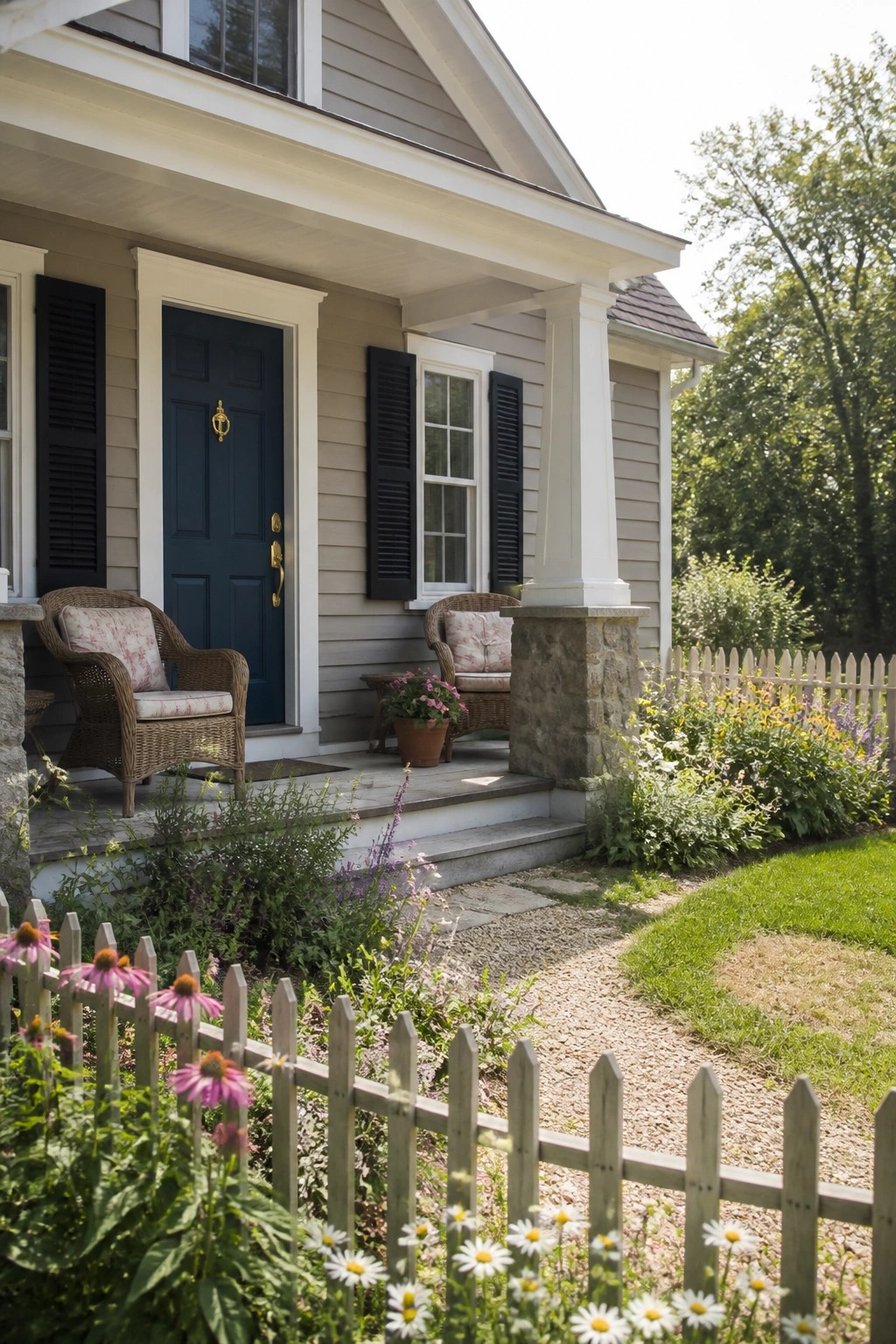
A dark front door against lighter siding gives a farmhouse a clear focal point right at the entry. The contrast keeps the whole front from feeling flat while still reading as simple and classic.
This approach works best on homes with straightforward trim and a modest porch. Match the door to black shutters if you have them, and keep the siding in a soft neutral so the color does not compete with too many other details.
Soft Teal Siding for a Classic Farmhouse Look
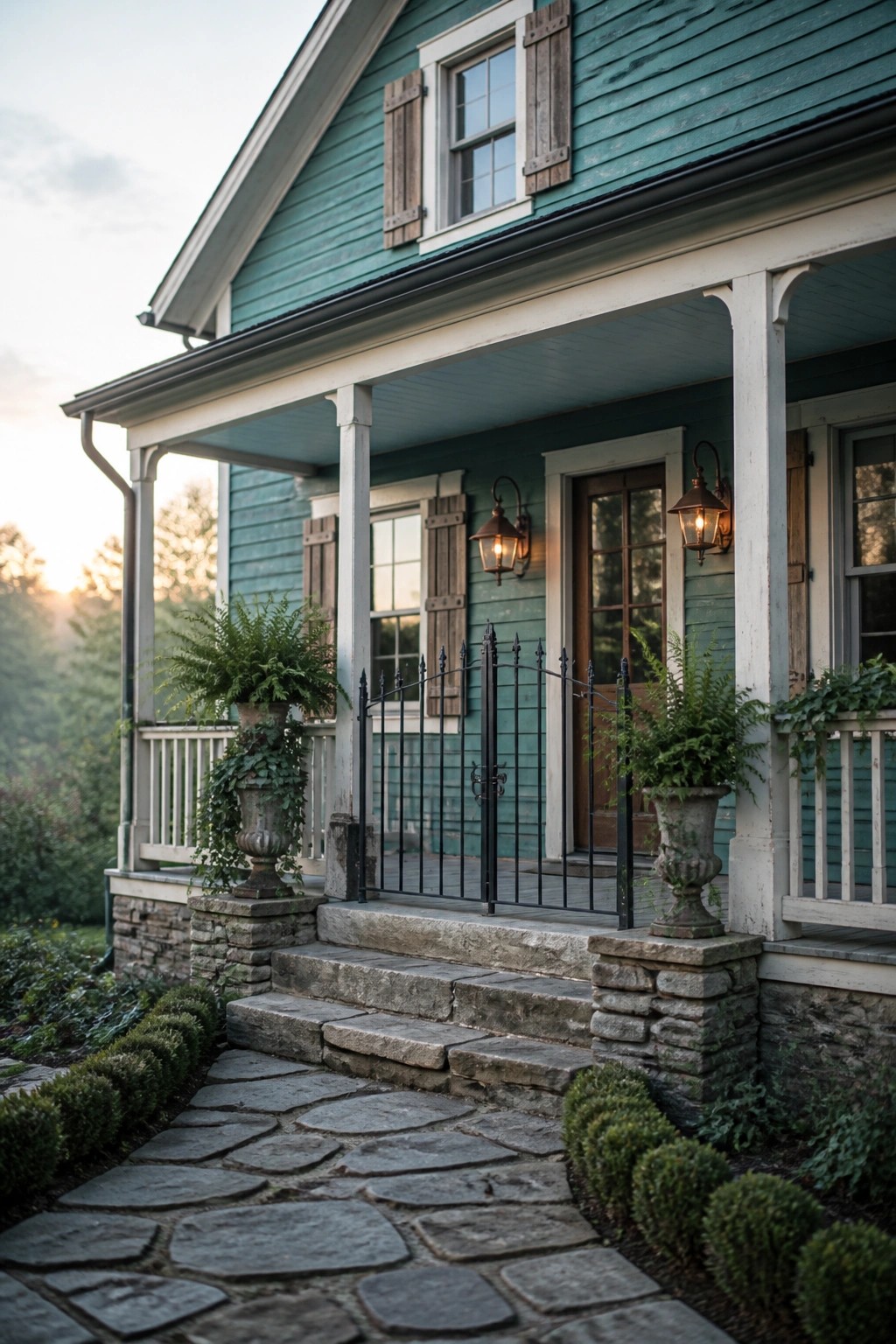
A soft teal paint color gives farmhouse exteriors a fresh look that still feels grounded. It stands out against white trim and natural stone without overpowering the simple lines of the house.
This shade works best on homes with good natural light and some architectural detail around the windows or porch. Keep the trim and accents light so the color reads clean rather than heavy.
Dark Accents Against Light Siding
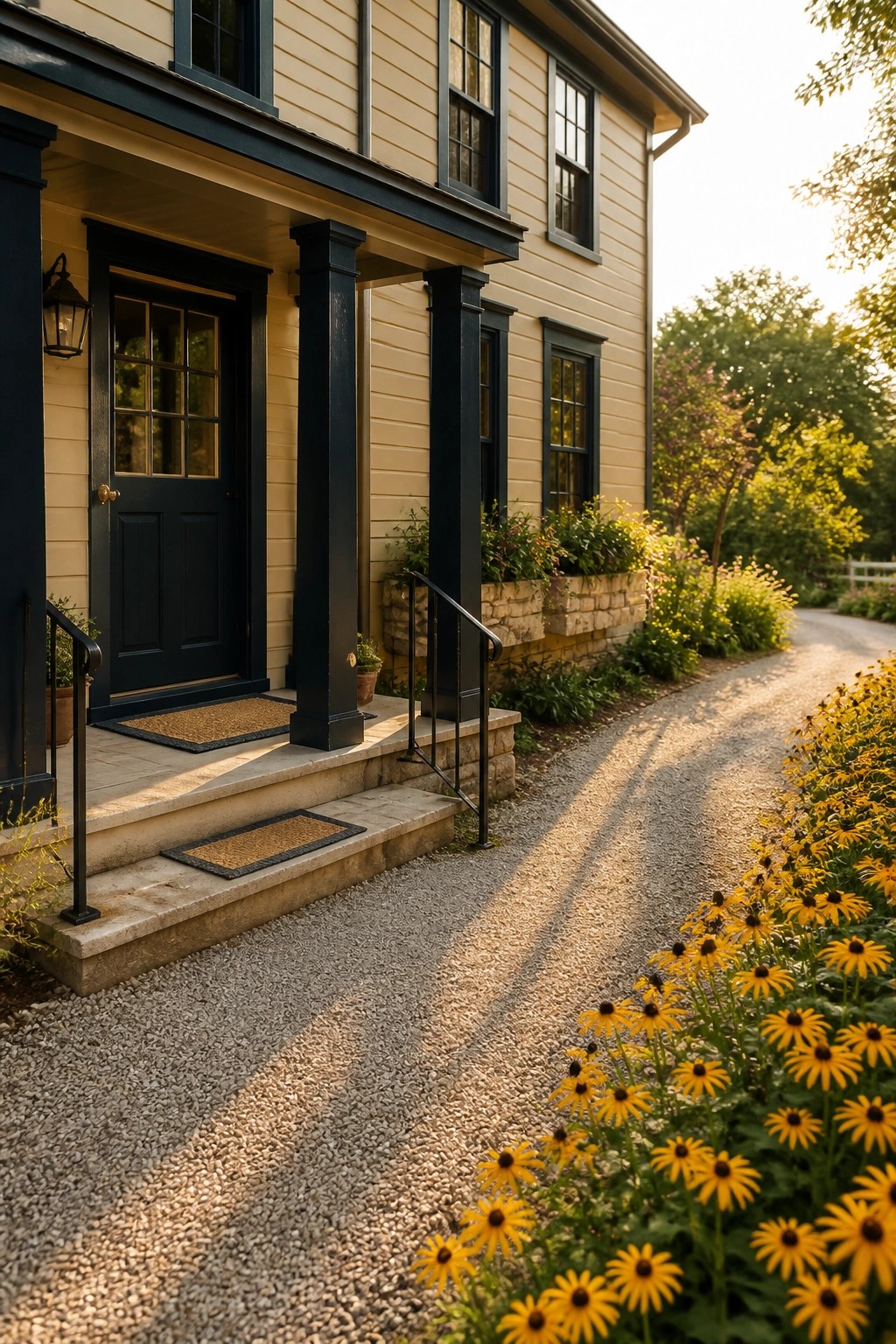
Many farmhouse homes look sharper when the main siding stays light and the door plus trim get painted a deep color. The contrast makes the entry stand out right away and gives the whole front a settled, finished feel without extra decoration.
This approach suits homes with simple shapes and works best when the dark shade is kept to the door, columns, and window frames. Too much dark paint on larger surfaces can make the house feel smaller, so stick with it on the smaller architectural details instead.
Two Tone Siding Colors
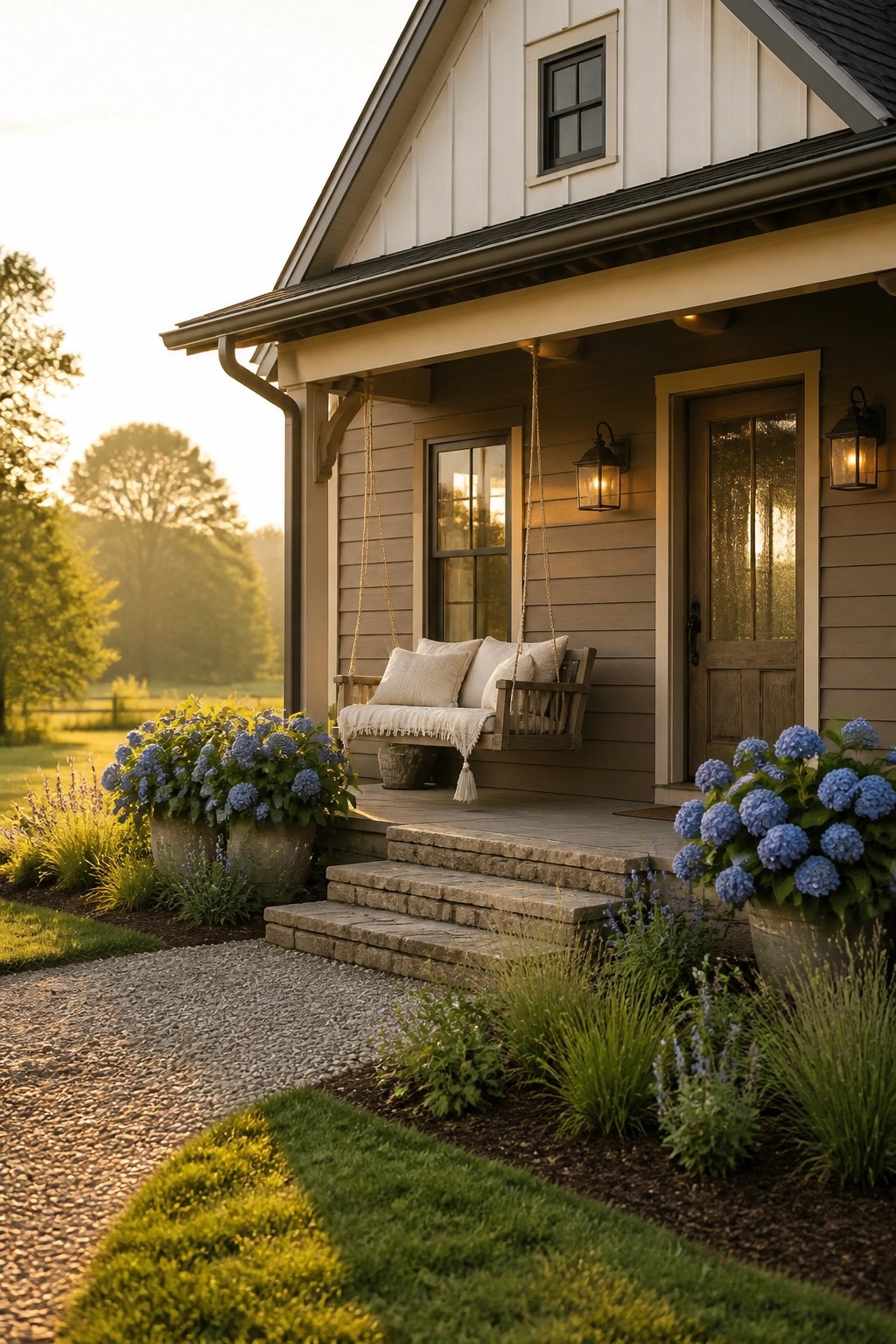
Two tone siding gives a farmhouse that layered look without much extra work. The lighter shade on top keeps the house feeling bright while the darker tone below adds weight and makes the whole front feel more grounded.
This approach works best on homes with simple trim and a clear break between levels. Stick with colors that stay within the same family so the shift feels natural rather than busy. Watch the porch and door colors too since they need to sit comfortably against both shades.
Neutral Siding Colors That Work With Brick
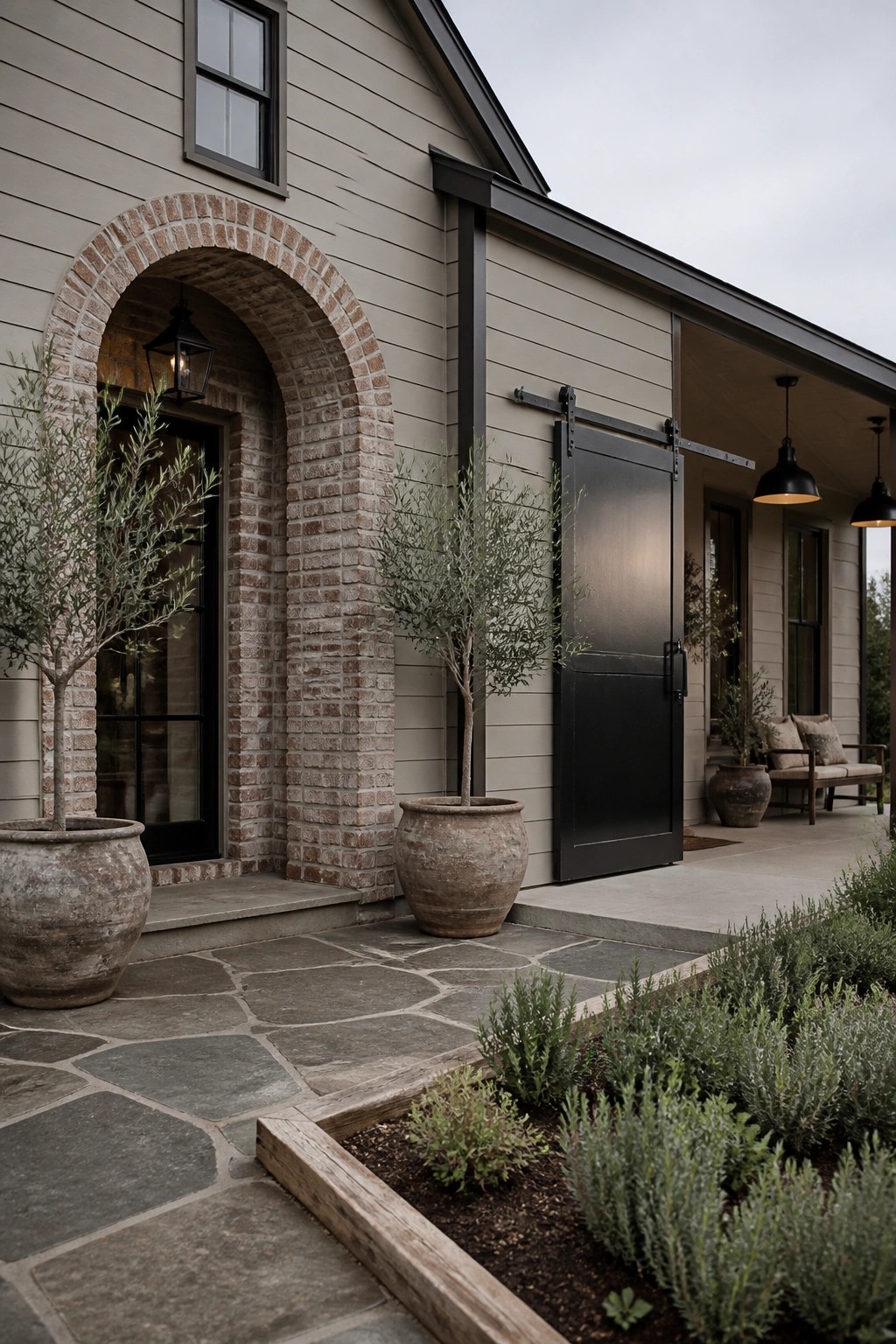
A soft, muted paint color on the siding keeps the whole exterior feeling balanced. It lets the brick arch and dark trim stand out without fighting for attention. Many older farmhouses use this approach because the neutral tone feels calm and settled rather than stark.
This color works best on homes that already have texture from brick or stone. It suits places where you want the house to look welcoming but not overly bright. Just test the paint on a large board first, since these shades can shift quite a bit in different light.
Soft Purple Siding With Natural Wood
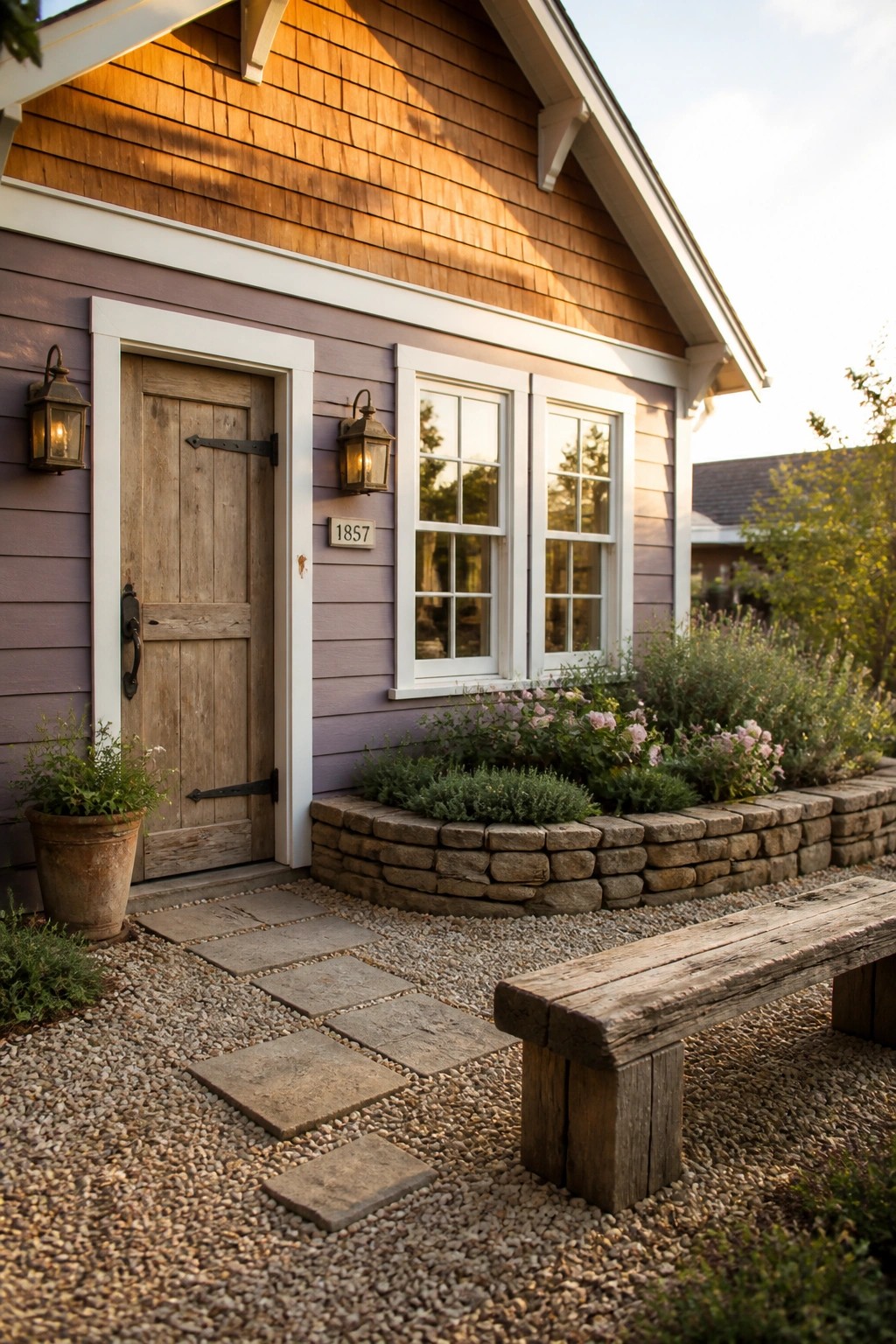
A soft purple paint gives a farmhouse exterior some quiet personality without feeling loud. The color pairs well with natural wood elements and helps the house stand out from the usual white or gray options that dominate most streets.
This approach works best on homes that already have wood doors, shingles, or trim to balance the purple. Keep the trim light and let the siding carry the color. It suits older or simple structures that need a bit of warmth while staying true to a rustic style.
Terracotta Paint for Farmhouse Walls
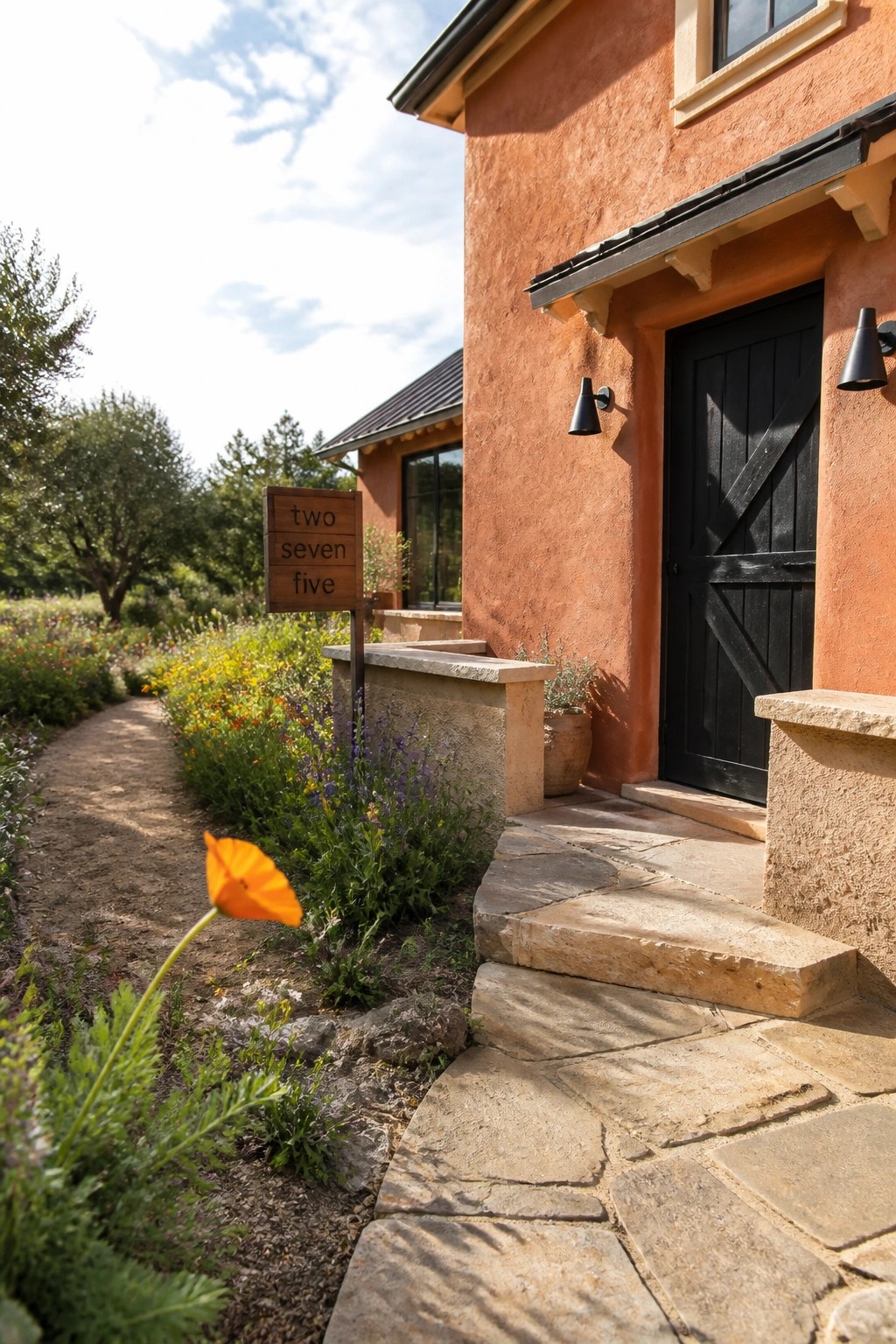
Terracotta paint works well on farmhouse exteriors because it gives the house a solid, earthy presence without looking too bold. The warm tone feels natural next to stone and wood, and it holds up nicely in different kinds of light.
This color suits homes with simple shapes and dark trim. Use it on the main walls and keep doors or accents in black to create clean contrast that still reads as rustic.
Blue Gray Siding With Wood Trim
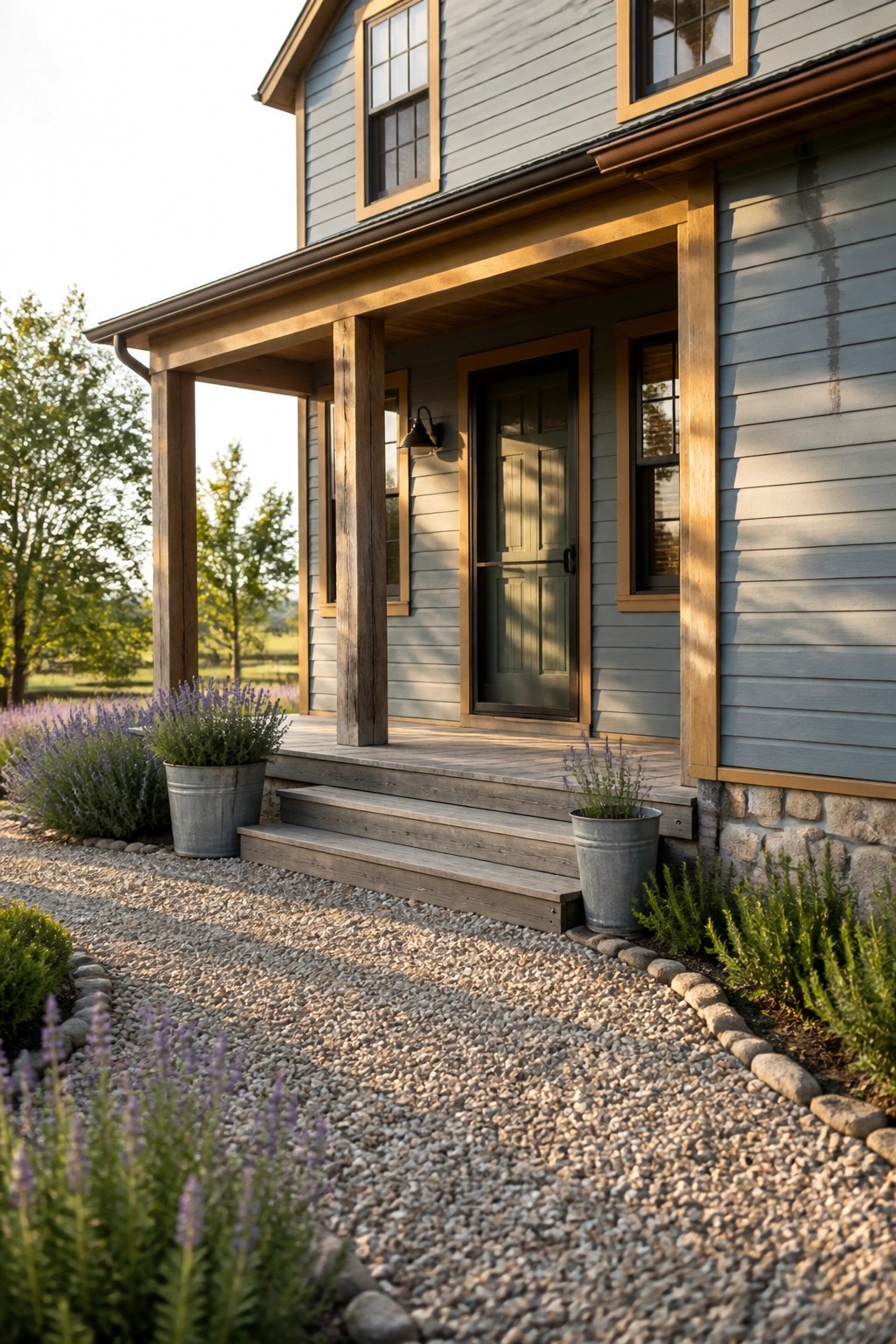
A soft blue gray on the main siding gives a farmhouse a calm look that still feels grounded. The color holds up well against changing light and pairs naturally with unpainted wood on the porch posts and trim.
This approach works best on homes with simple lines and some wood detail already in place. Stick to one or two accent colors for the door and windows so the siding stays the main focus.
Soft Gray Blue With Cream Trim
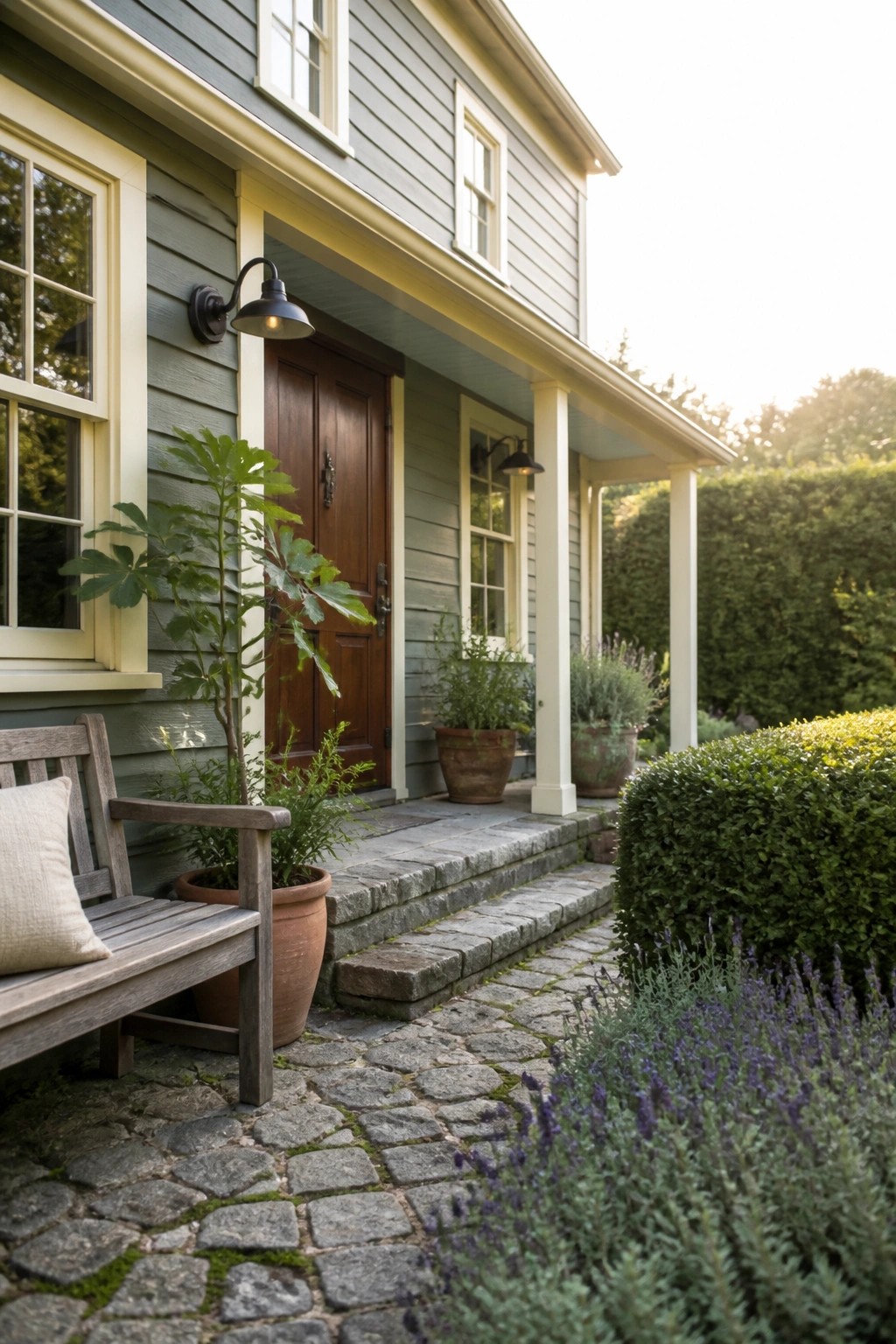
This muted gray blue on the siding creates a calm backdrop that still feels grounded and farmhouse appropriate. The cream trim keeps the whole look light without going too stark or too dark.
It suits homes with straightforward lines and older architecture that benefit from a bit of contrast. Use it when you want color that holds up over time and works with natural materials like wood and stone.
Two Tone Exteriors With A Bold Accent
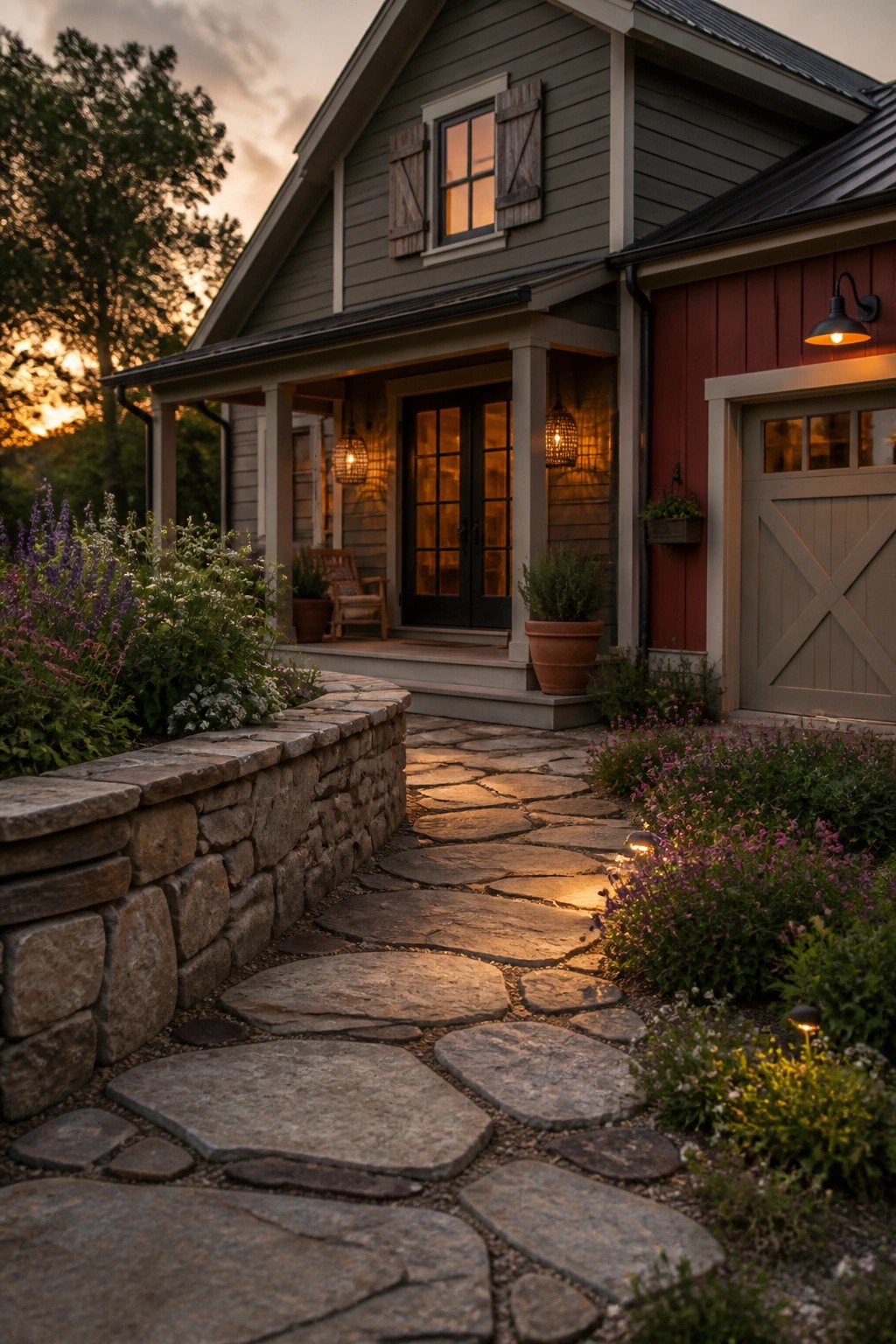
Many older farmhouses look better when the main body stays quiet and the garage or secondary section gets a stronger color. Gray siding keeps the overall feel calm and timeless while the red gives the eye something to land on.
This approach suits homes with clear sections like a main house and attached garage. Keep the trim light and let the two colors do the work without adding too many extra shades.
Light Siding Colors That Brighten a Farmhouse Exterior
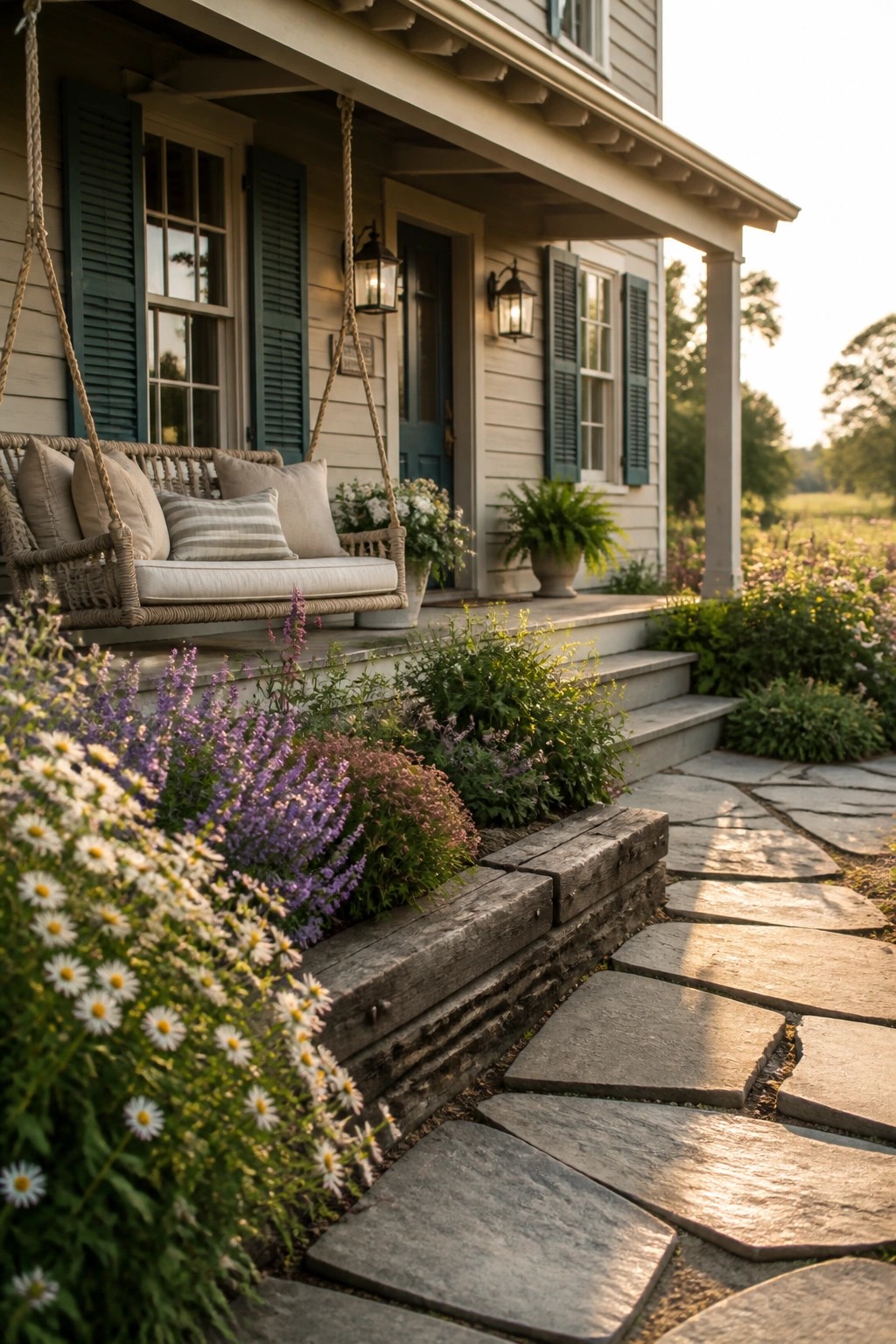
A soft neutral shade on the siding keeps the whole front feeling open and simple. It works because it does not compete with the garden or the path that leads up to the door.
This approach suits older homes with traditional trim and shutters. Keep the color light enough that flowers and greenery stay the main focus once you add them along the walkway.
Light Gray Paint on Farmhouse Siding
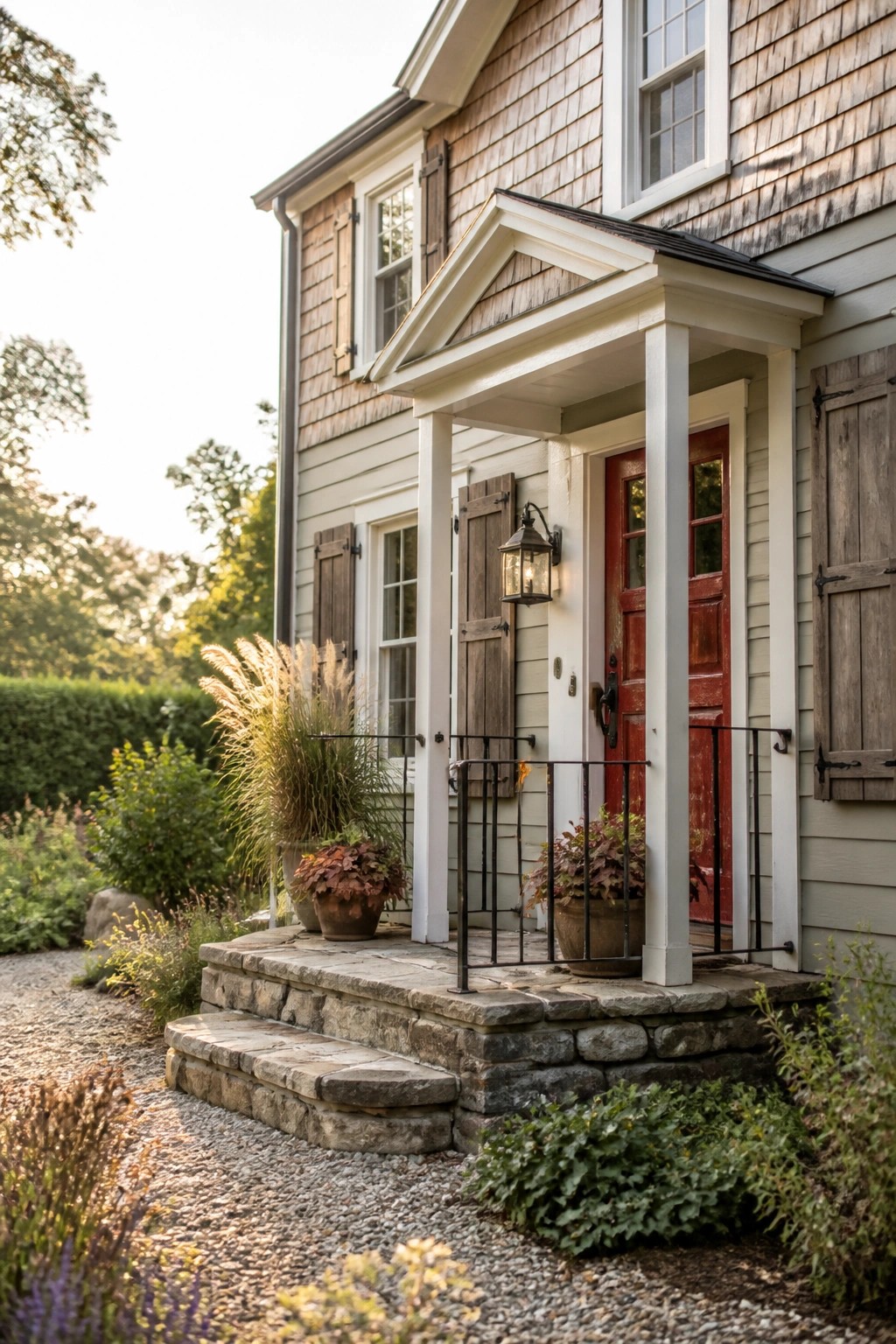
A light gray paint color works well on farmhouse siding because it keeps the look simple and lets the rest of the house stand out. It pairs easily with white trim and gives the whole front a clean but relaxed feel.
This shade suits older homes that already have wood siding and a strong door color. Test a few samples on the wall first, since gray can shift a lot depending on the light and the roof color nearby.
Soft Yellow Siding With Green Trim
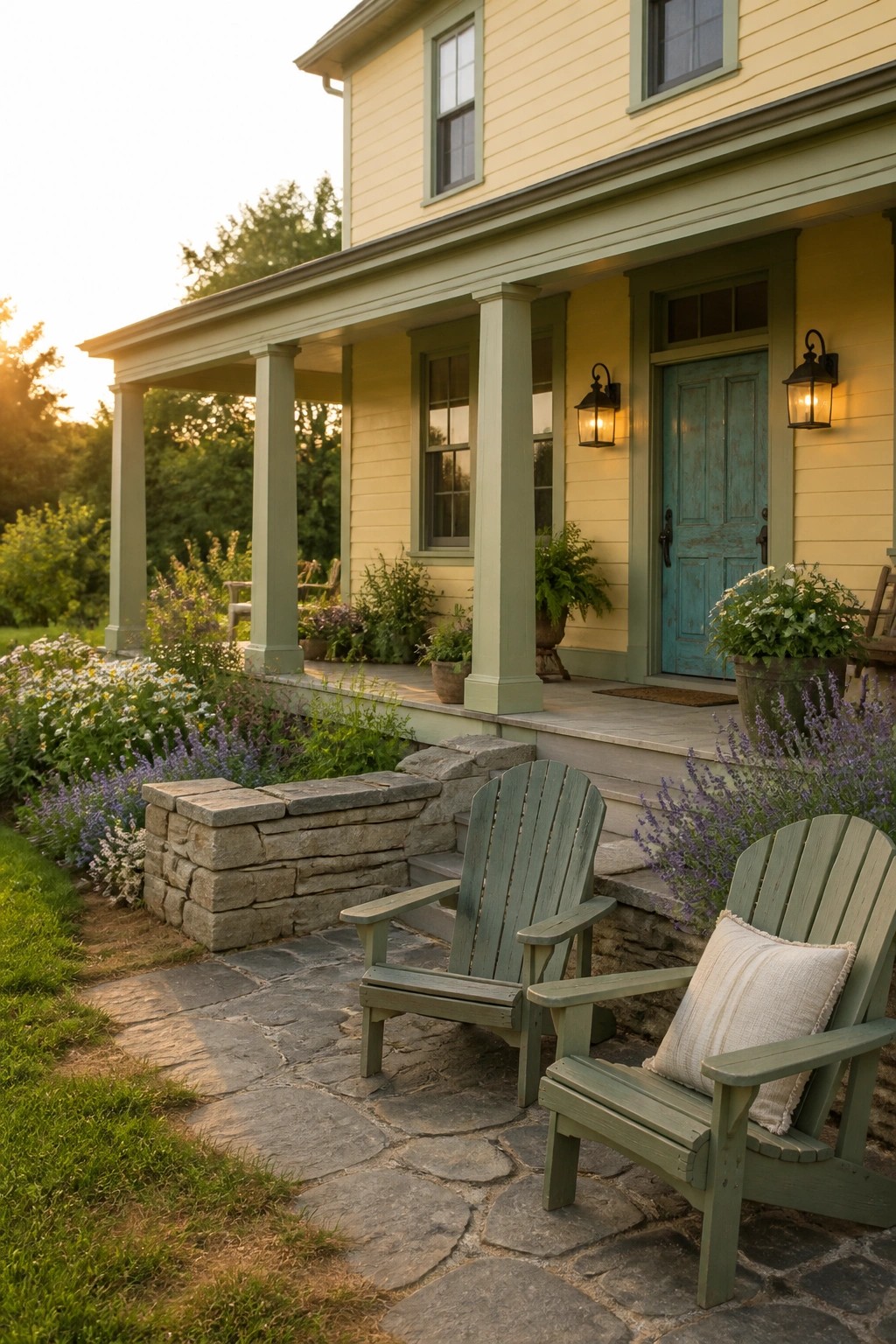
A pale yellow on the main walls gives a farmhouse that easy, sunlit look many people like. It feels friendly from the road and pairs naturally with green on the trim and porch posts.
This color choice works best on older homes with simple lines. Keep the door in a deeper shade to add contrast, and make sure the green you pick stays muted so the whole front stays balanced instead of competing.
Frequently Asked Questions
Q: How do I know if a light gray will look good on my siding?
A: Stand back and look at your house from the street during different times of day. The light changes how the color reads on the wood. Pick a shade with a bit of warmth to keep that rustic feel.
Q: Do I have to repaint every few years with these farmhouse colors?
A: Most exterior paints last five to seven years if you prep the surface right. Focus on cleaning and priming before you start. That step makes the biggest difference in how long it holds.
Q: What if my roof is a deep brown?
A: Match the undertones in your paint to the roof so nothing clashes. A warm beige or soft taupe often works well with brown shingles. Test a small patch first to see how they play together.
Q: Should I paint my front door a bold color?
A: Yes but keep it to one accent. The door pops against the rest.
