

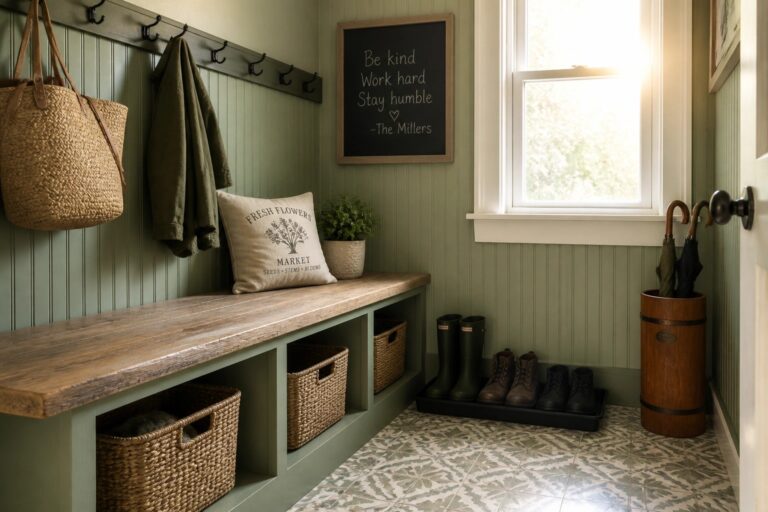
When mud comes through the door every afternoon the paint on those lower walls needs to hide more than it shows off.
I have watched soft creams turn patchy after just a few weeks of wet jackets and soccer cleats.
Light grays hold up better than I expected.
I usually tape a sample right at the height where boots land so I can watch how the color shifts once the afternoon sun hits it.
That small test tells me whether the shade will still feel calm when the room is full of dropped bags and running kids.
Green Paint For Busy Mudrooms
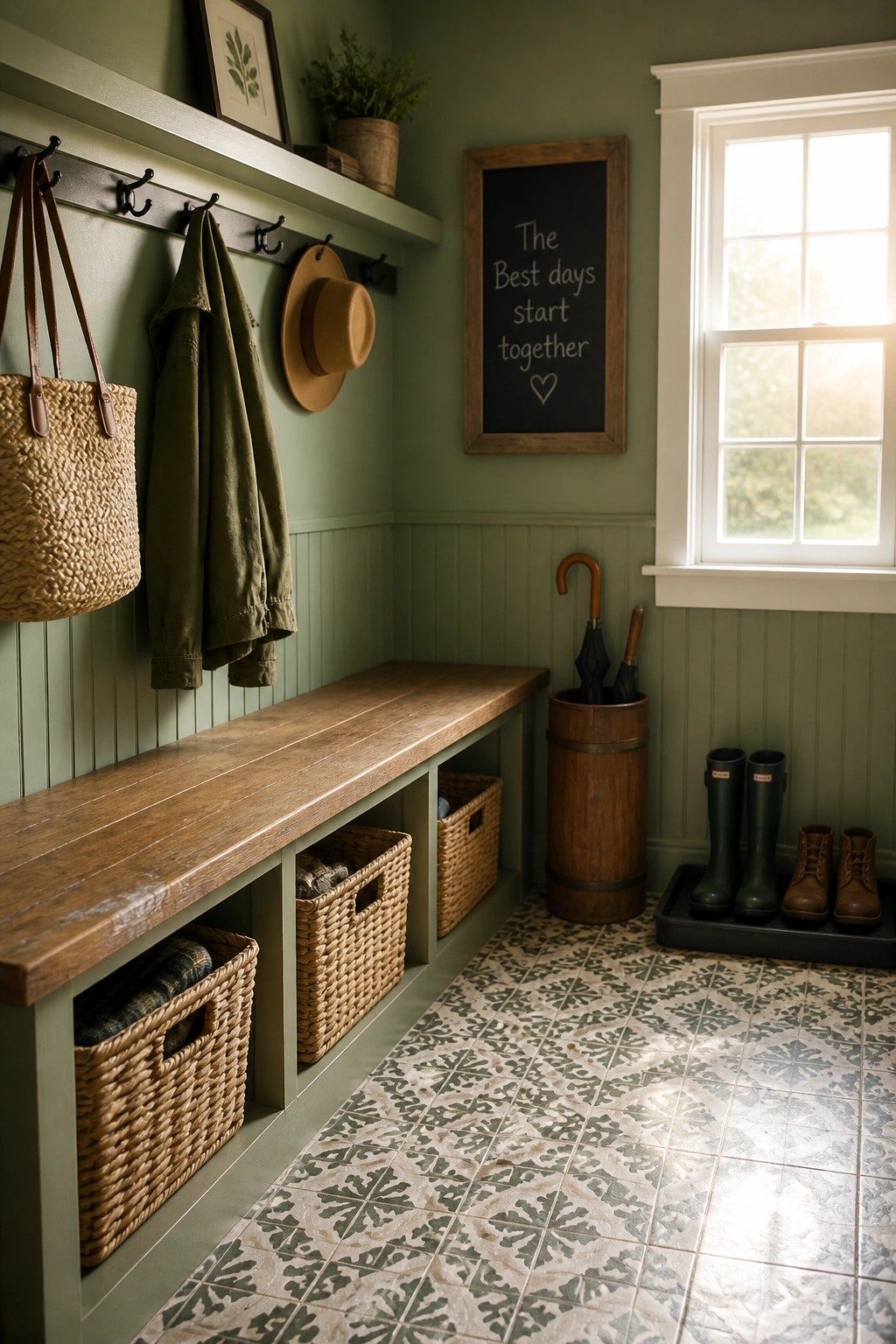
A soft green like the one on these walls gives a mudroom a calm feeling without looking too precious. It works well in spaces that see constant use because it hides scuffs better than white or light gray while still feeling fresh and simple.
This color pairs easily with wood tones and natural baskets, which helps the room stay organized without extra effort. It suits homes with kids or pets since the muted tone keeps things looking neat even on hectic days. Stick to a matte or eggshell finish so touch-ups blend in over time.
Soft Neutral Paint For Mudroom Built-Ins
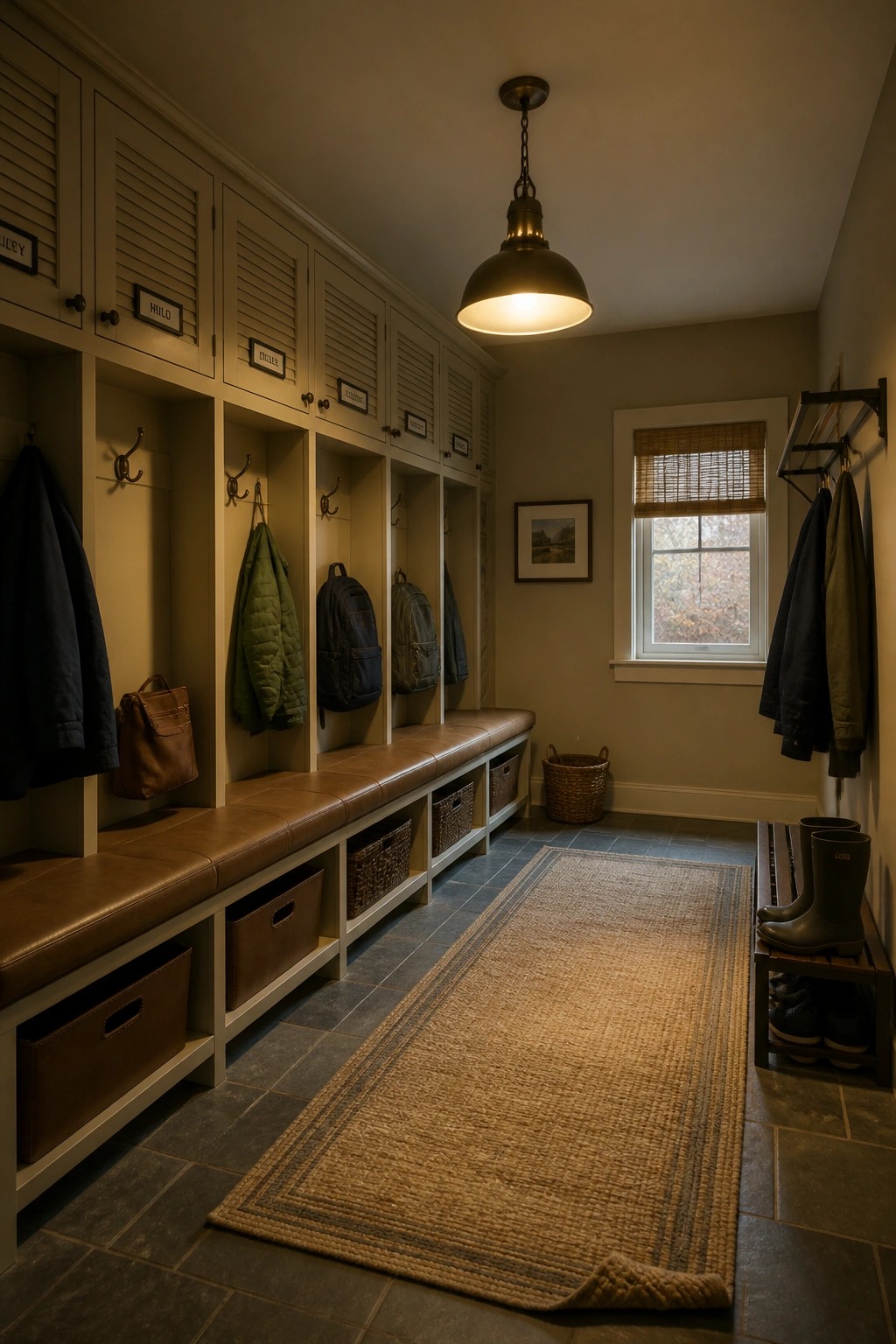
A soft neutral on the built-ins can help a mudroom feel calmer even when it sees heavy daily use. One color across the cabinets, bench, and cubbies keeps everything looking connected instead of busy, which matters when bags, coats, and shoes pile up.
This works best in family homes that need the room to stay practical without turning stark. Pick a warm shade that sits nicely with the floor and trim so the whole space reads as one tidy unit rather than a mix of pieces.
Dark Navy For Mudroom Walls
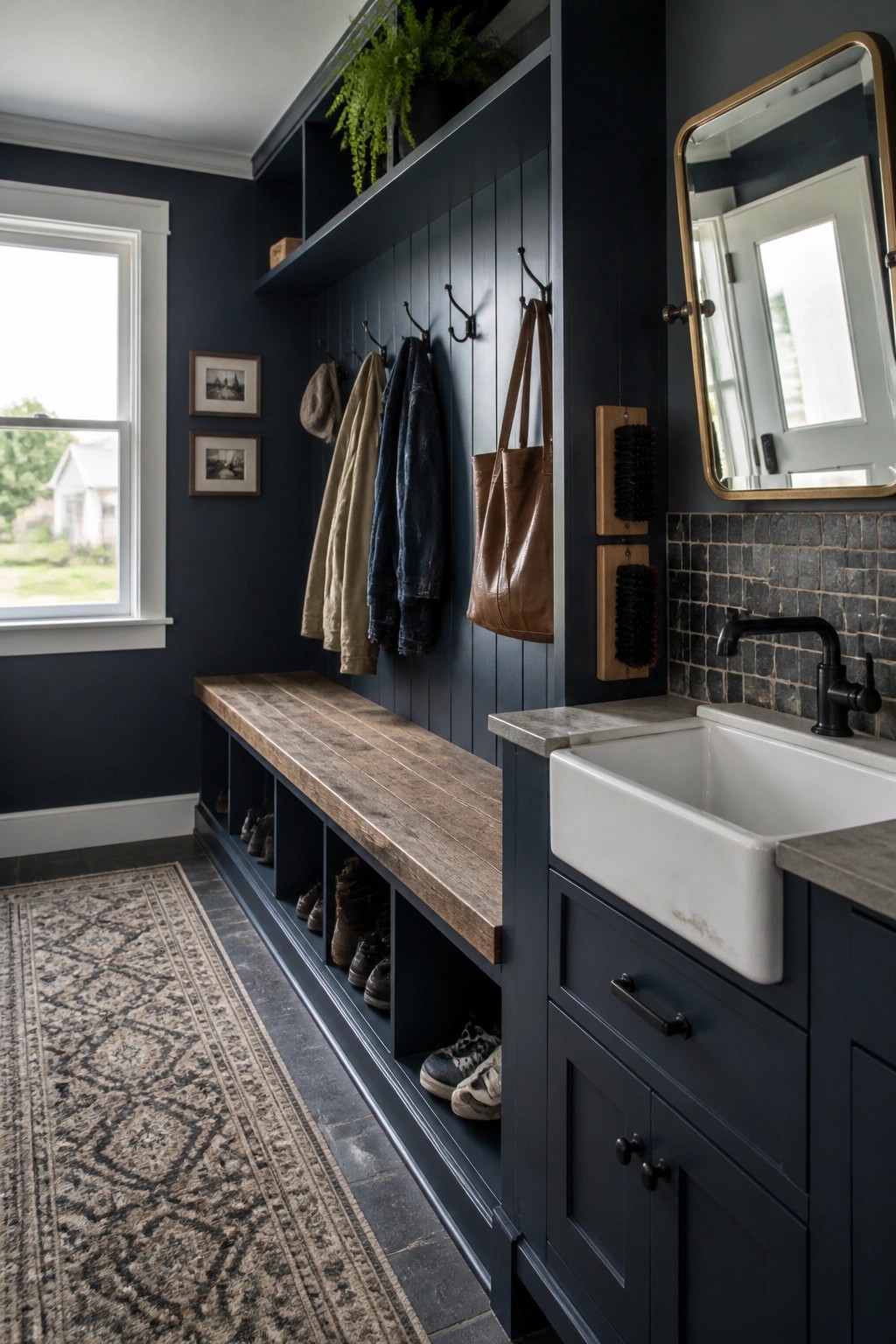
Dark navy paint works well in mudrooms because it hides the everyday dirt and scuffs that come with busy family life. The color gives the space a grounded, finished look without showing every mark the way lighter shades often do.
It pairs best with wood tones and simple hardware, and it suits homes that need storage and durability more than brightness. Keep the trim crisp and add a few lighter accents on counters or rugs so the room does not feel closed in.
Soft Yellow Paint In Family Mudrooms
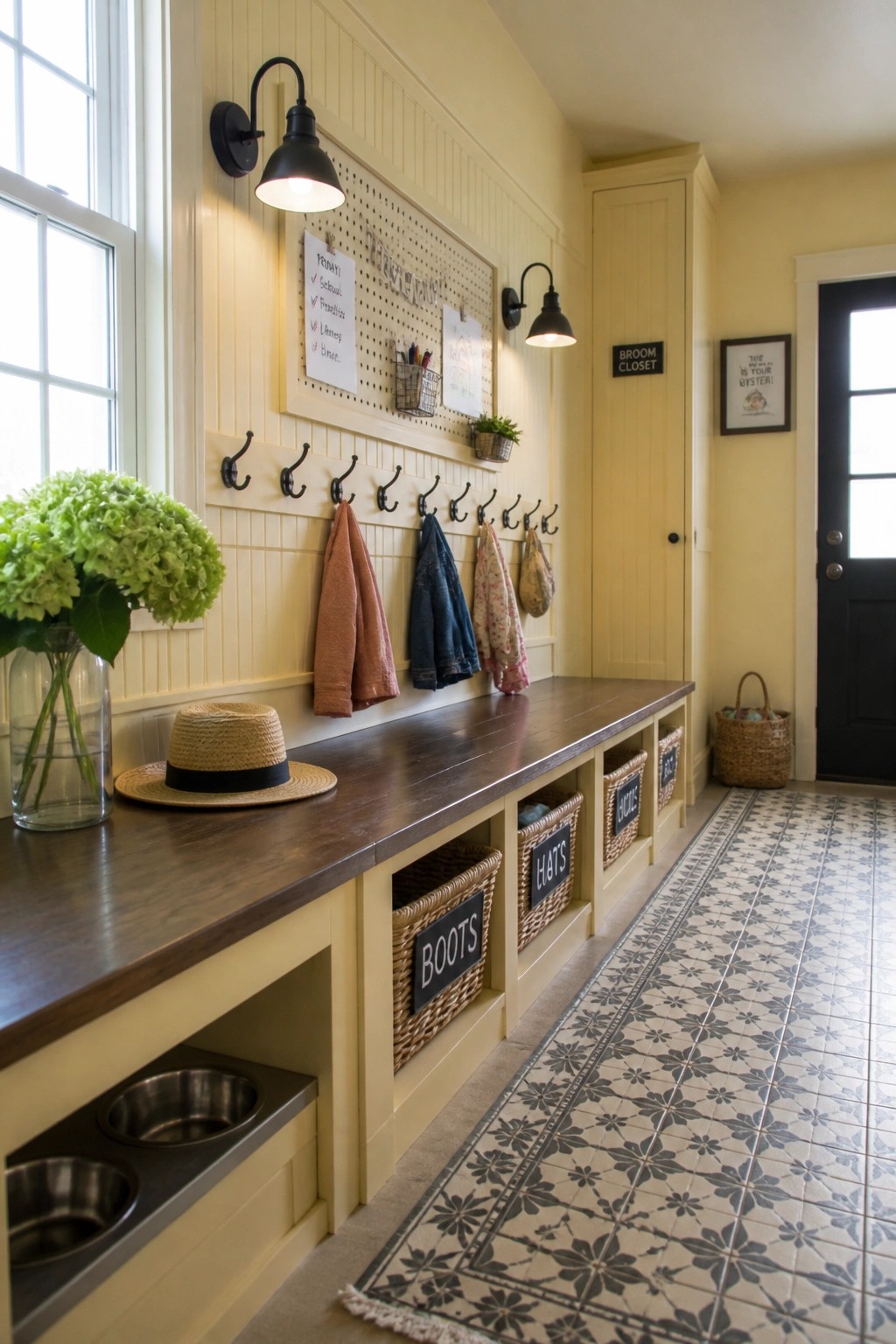
A soft yellow paint color gives a mudroom a warm and cheerful feel without making it feel too formal. It brightens up the space and helps it feel more welcoming after a long day, especially in homes where the mudroom gets heavy use.
This shade works well with wood tones and simple built-in storage. It keeps the room looking clean and light even when baskets and coats are out in the open.
Soft Gray Green For Mudroom Walls
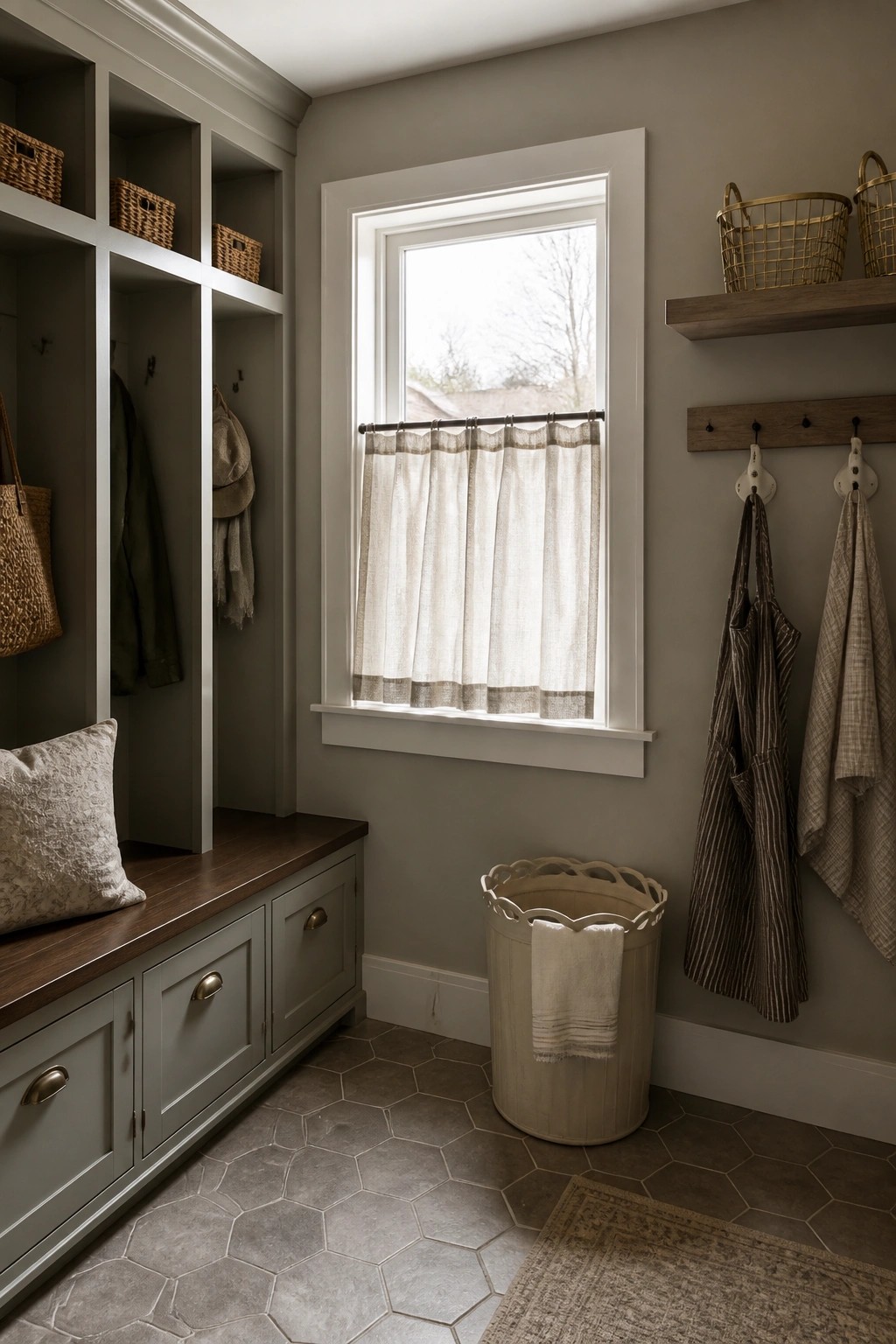
A soft gray green works well in a mudroom because it keeps the space feeling calm even when coats, bags, and shoes pile up. The color sits between gray and green, so it stays neutral while still adding a little warmth that pure grays often lack.
This shade looks best when used on both the walls and the built-in cabinetry. It creates a quiet background that lets hooks, baskets, and everyday items stand out without making the room feel busy. It suits homes that need a color that hides light scuffs and still looks pulled together.
Deep Blue Gray For Family Mudrooms
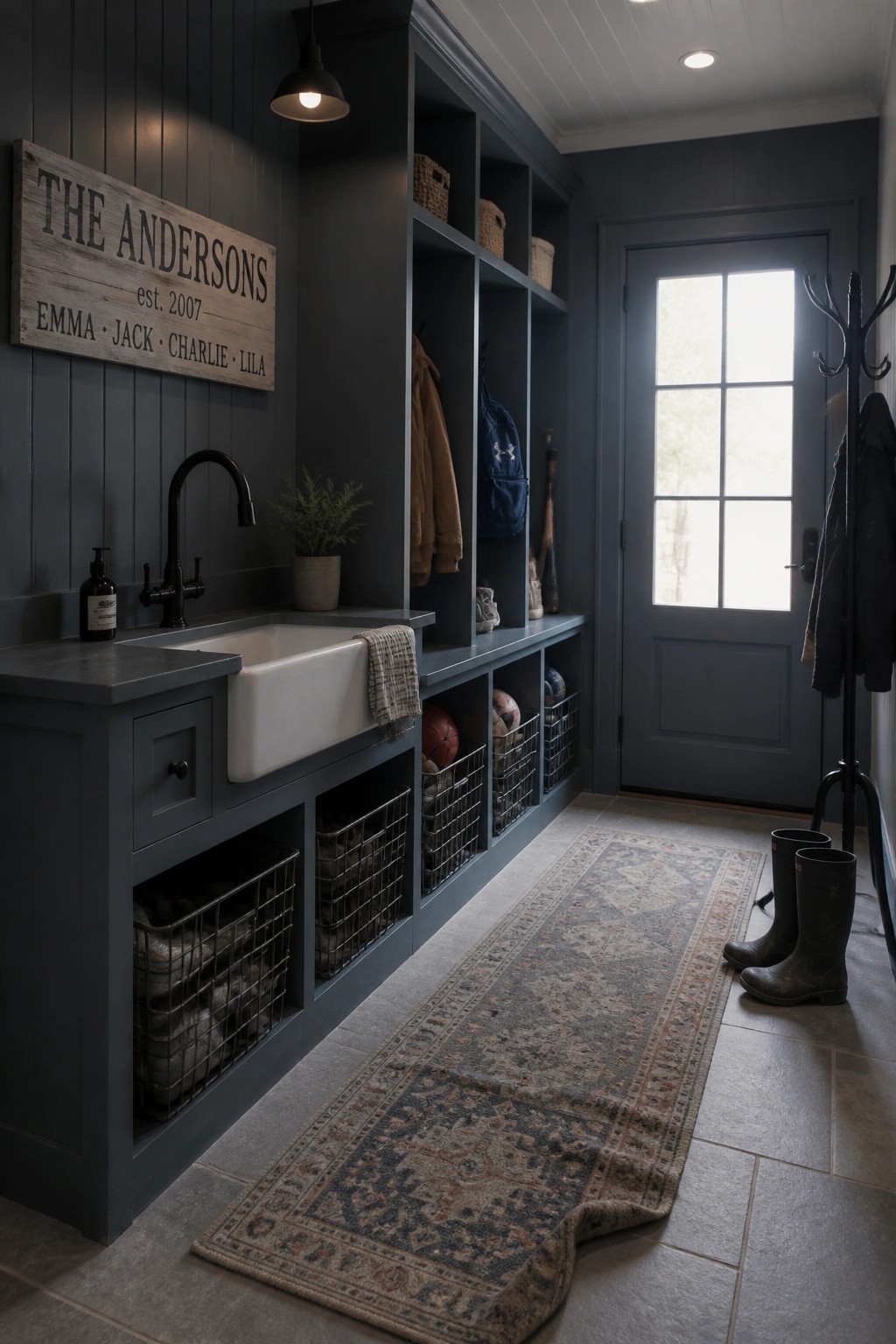
A deep blue gray paint color keeps a mudroom looking calm even on the busiest days. It covers both the walls and the built-in storage so the space feels like one solid unit instead of a collection of separate pieces.
This shade works well in homes with kids because it hides everyday scuffs and dirt. Use it on the cabinetry too if you want the whole room to feel pulled together without extra effort.
Navy Blue Wainscoting For Mudroom Durability
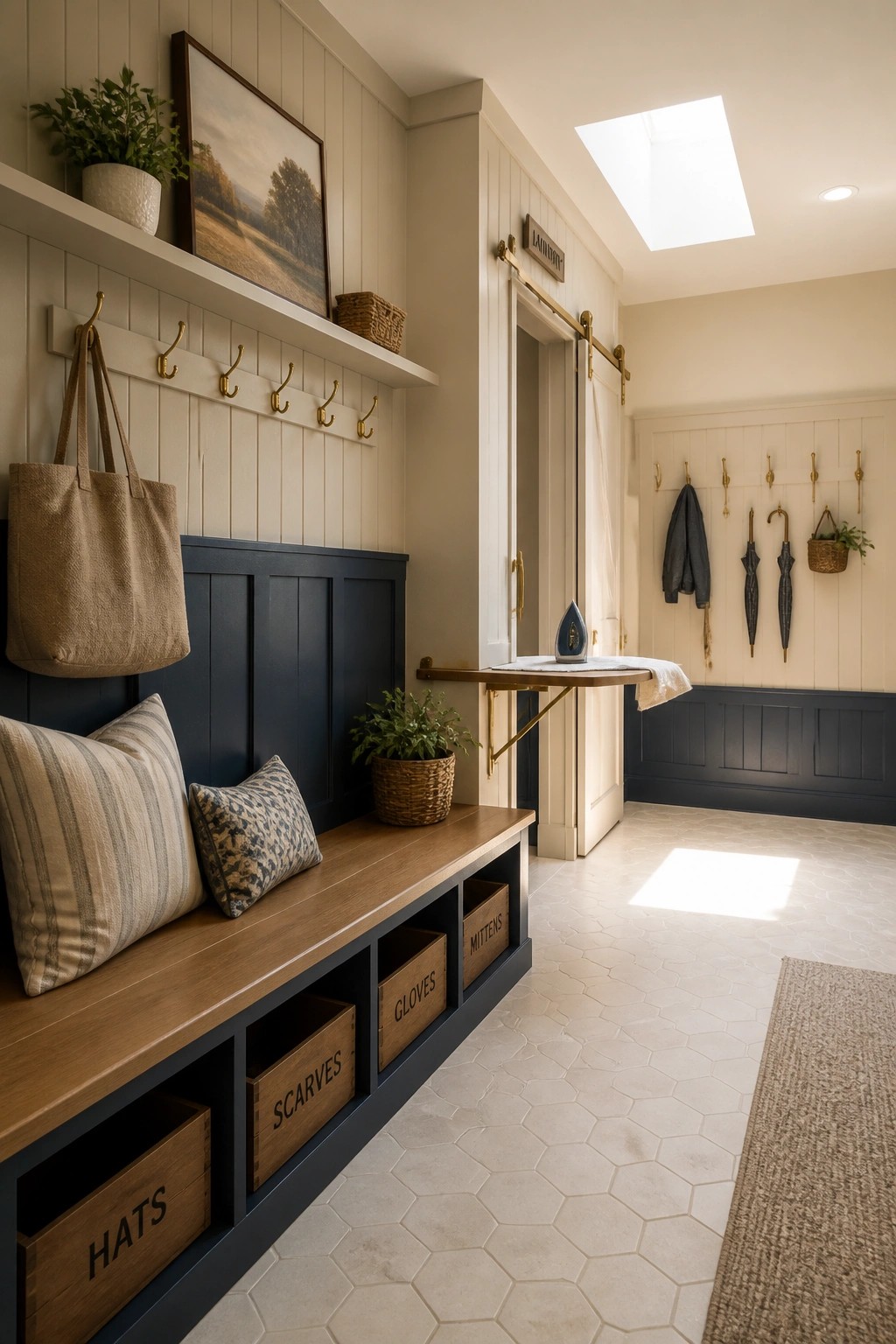
A deep navy on the lower walls and built-ins gives a mudroom the kind of toughness busy families need. It hides scuffs from boots and bags while still looking clean next to lighter upper walls and natural wood. The color also helps define the storage areas so everything feels organized even on rushed mornings.
This approach works best in homes that see constant foot traffic through the back door. Keep the navy on the bottom third of the walls and on any benches or cubbies, then use a lighter shade or white above to keep the space from feeling closed in. It pairs well with simple hooks and labeled bins so kids know where things go.
Warm Terracotta For A Farmhouse Mudroom
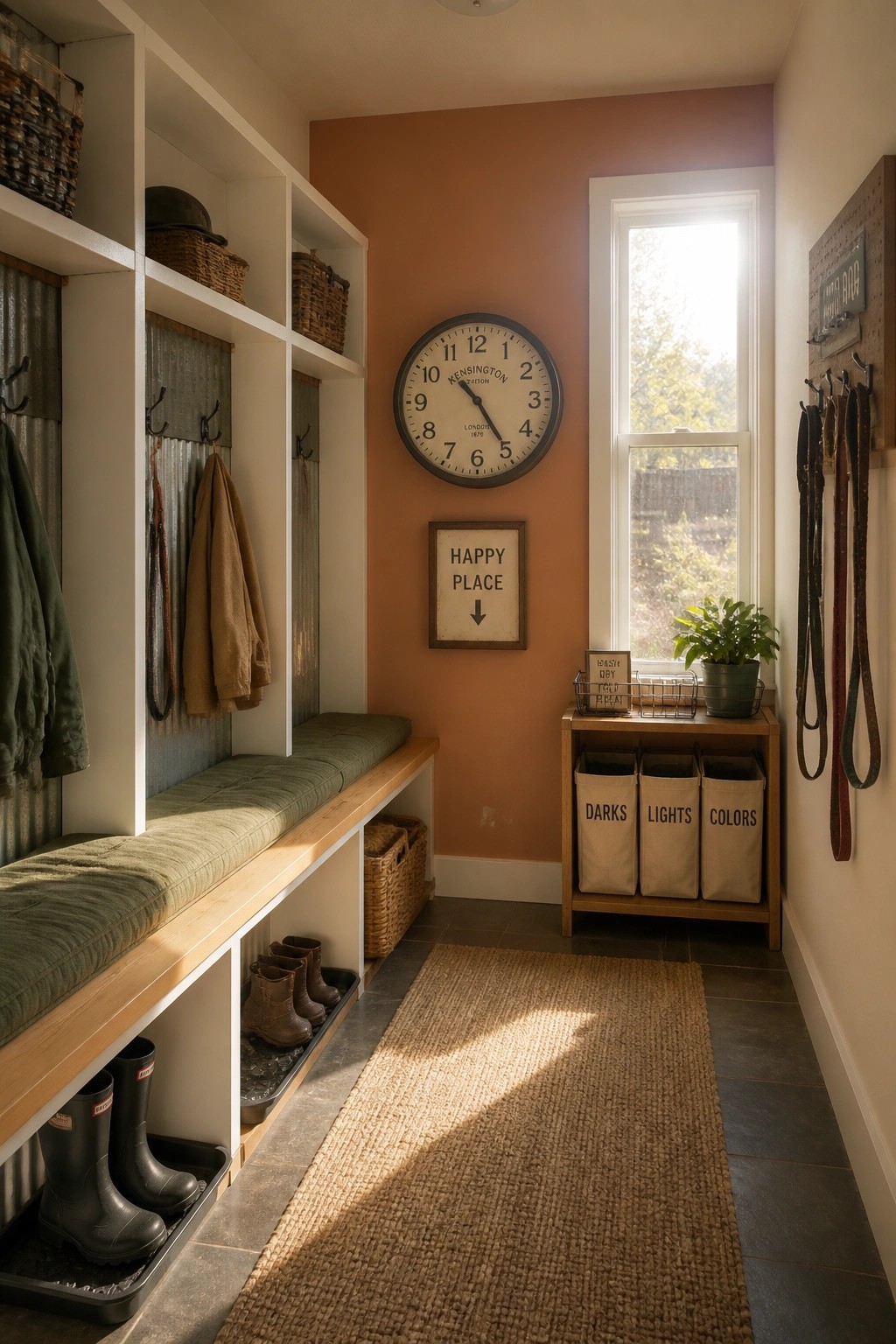
A warm terracotta paint color gives a mudroom a grounded, welcoming feel that works well for busy households. It keeps the space from feeling stark while still hiding everyday wear from coats, boots, and bags.
This shade suits rooms with wood built-ins and good natural light. It pairs nicely with simple storage and neutral flooring, and it holds up better than cooler tones in high-traffic areas.
Muted Green Built-Ins for Family Mudrooms
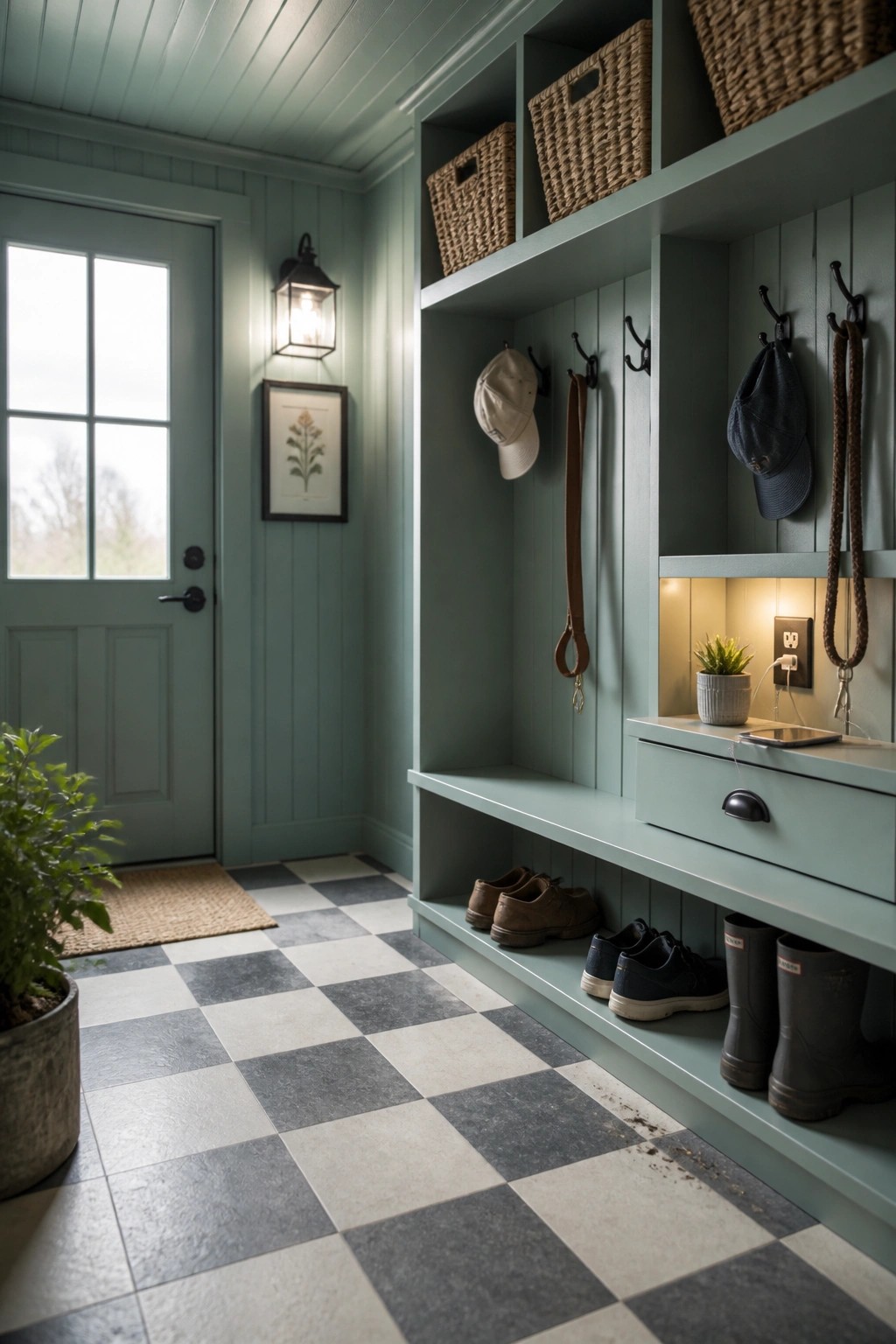
A soft green on the walls and storage areas gives a mudroom a calm background that still feels useful. When the built-ins are painted to match, the whole space looks pulled together without needing constant touch-ups.
This color works well in homes with kids because it hides everyday scuffs better than white but stays lighter than deeper tones. It pairs nicely with simple flooring and open cubbies so the room stays functional rather than fussy.
Deep Navy Paint For Mudroom Walls
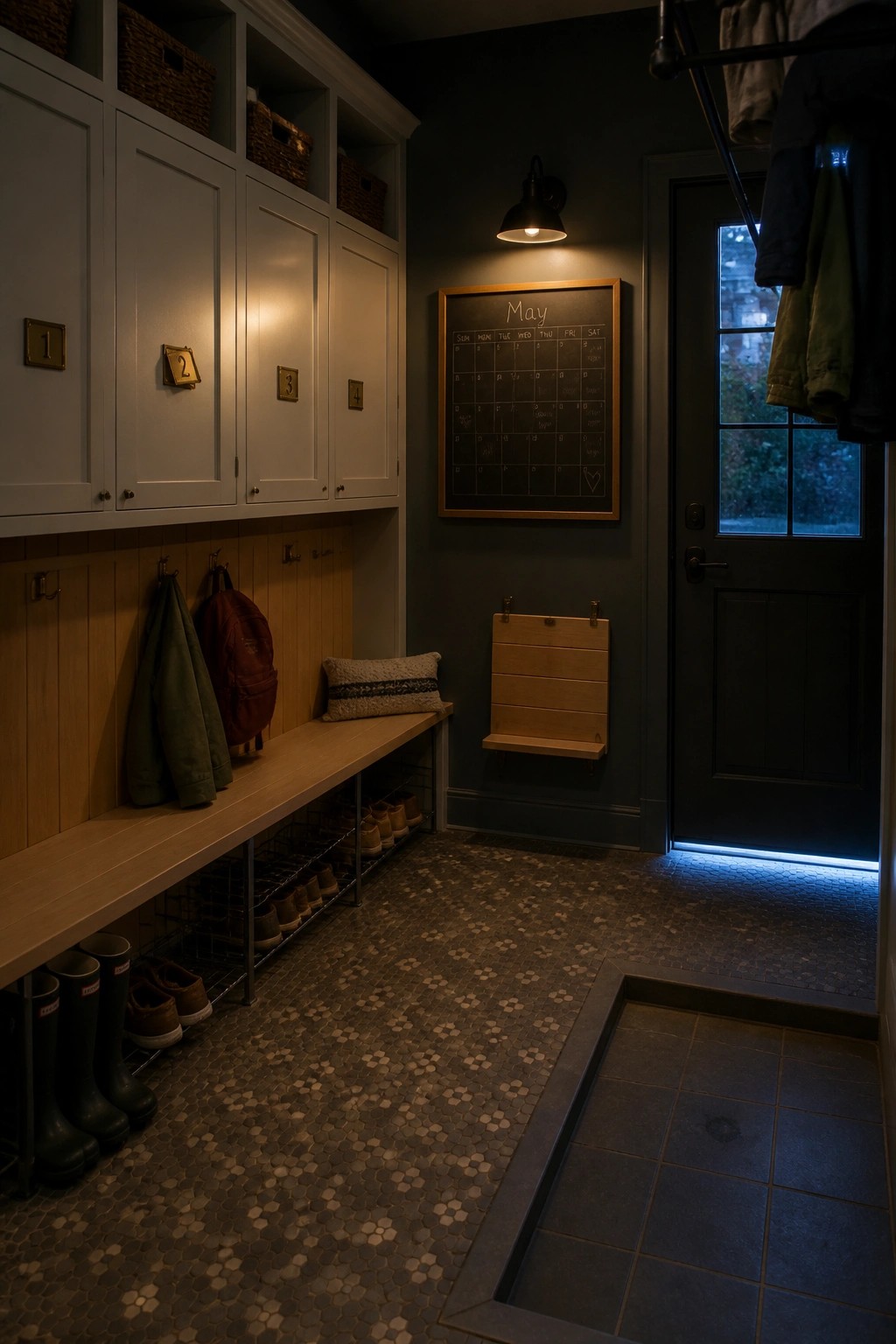
A deep navy wall color holds up well in a mudroom that gets heavy daily use. It hides scuffs, dirt, and handprints better than lighter shades, which helps the space stay looking decent even when boots and backpacks pile up.
This approach works best when paired with white cabinetry and wood tones to keep the room from feeling too dark. It suits homes with kids or pets that need surfaces that can take some wear without constant touch ups.
Soft Green Walls For Family Mudrooms
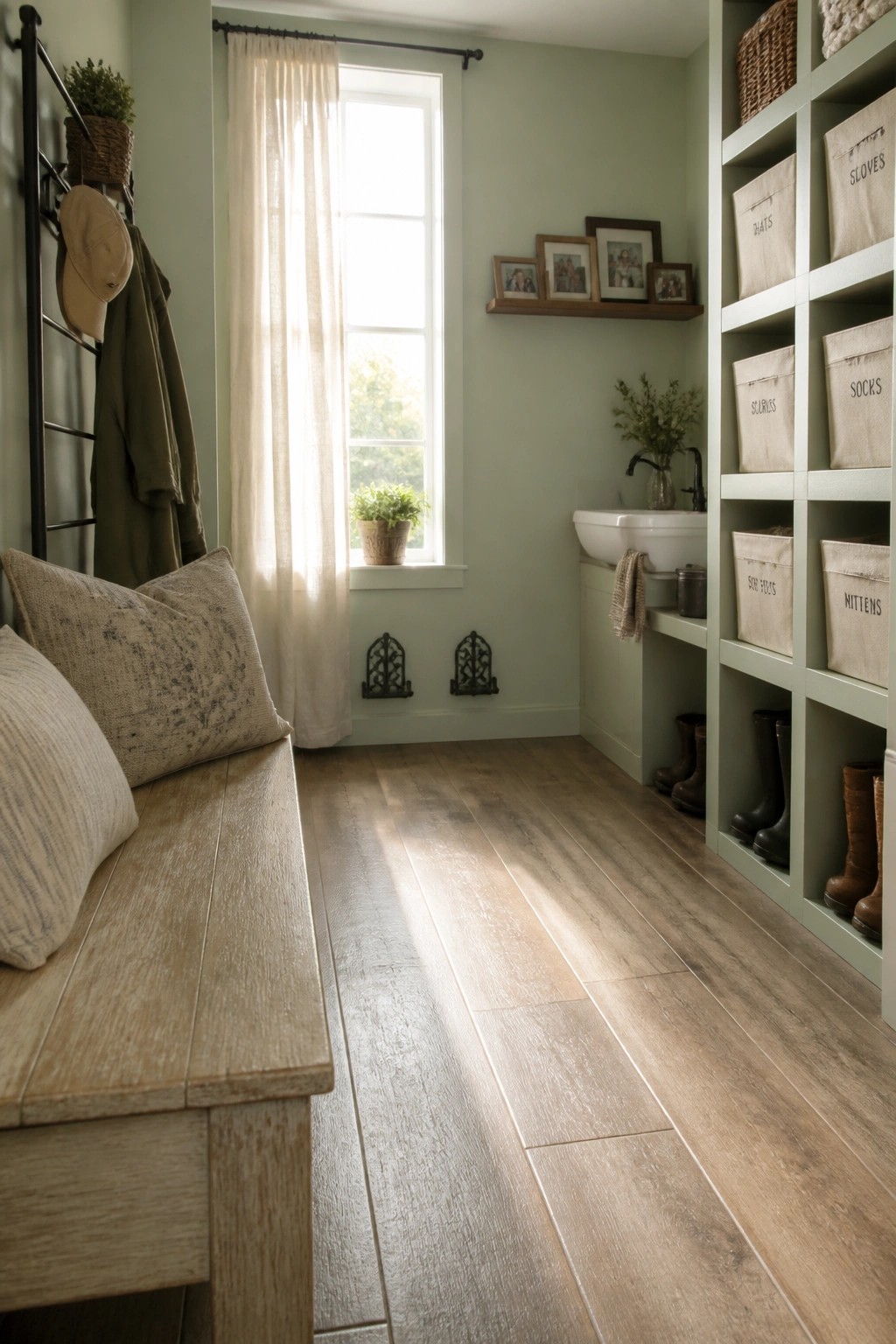
A soft green paint color gives a mudroom a calm feel while still looking practical. It works well with wood tones and keeps the space from looking too stark when shoes and coats pile up.
This shade suits homes with kids or pets because it hides everyday marks better than crisp white. Use it on all the walls if the room gets decent light, and keep trim and built-ins in a light neutral to let the color read clean.
Muted Green Paint For Family Mudrooms
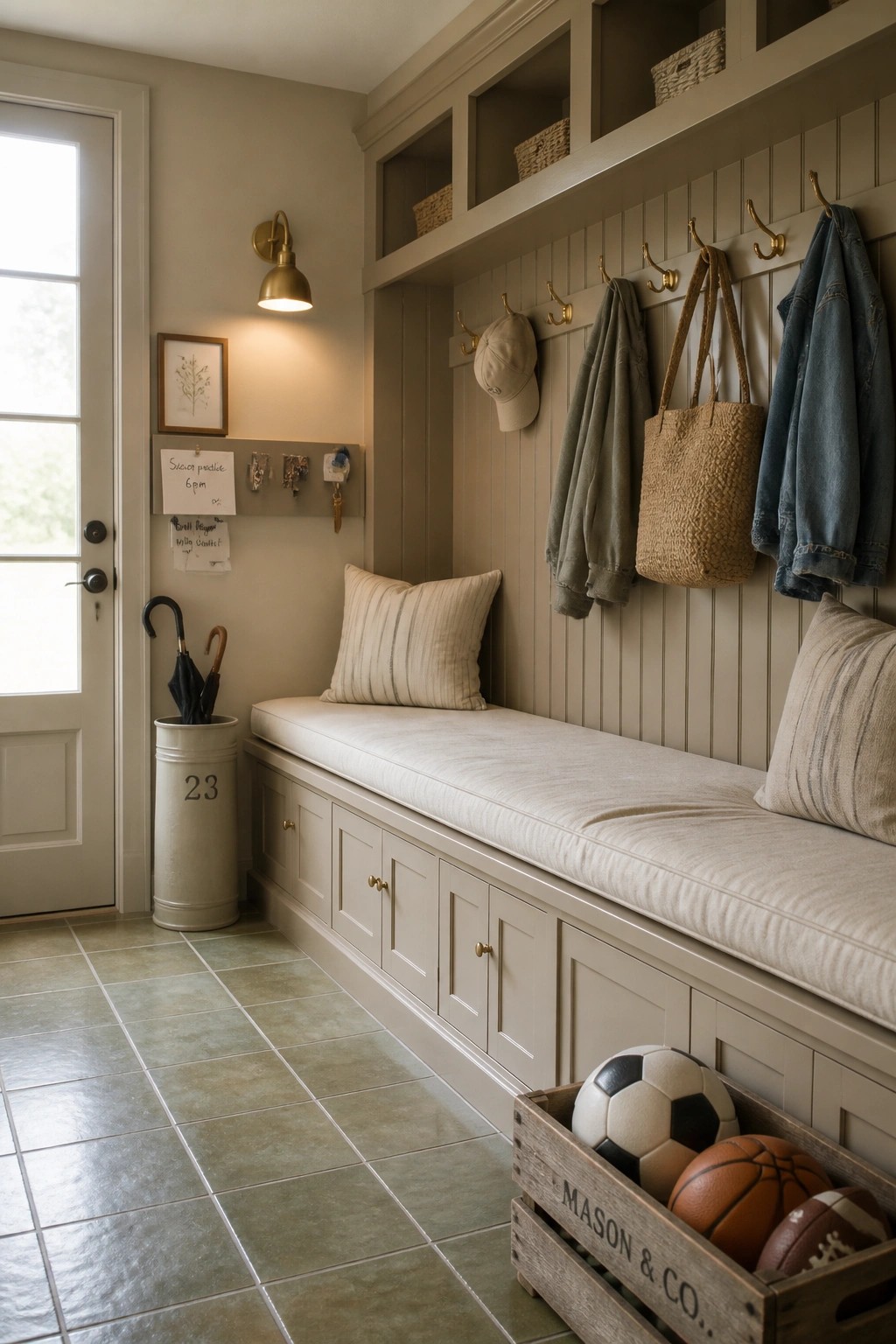
A single soft muted green works well in a mudroom because it keeps the space calm while still hiding everyday wear. The color blends the walls and built ins together so hooks, cubbies, and benches do not feel scattered.
This shade suits homes with kids and pets that need the room to stay practical. Use it on every painted surface in the mudroom rather than adding extra trim colors that can make the space feel busy.
Blue Gray Paint for Mudroom Walls
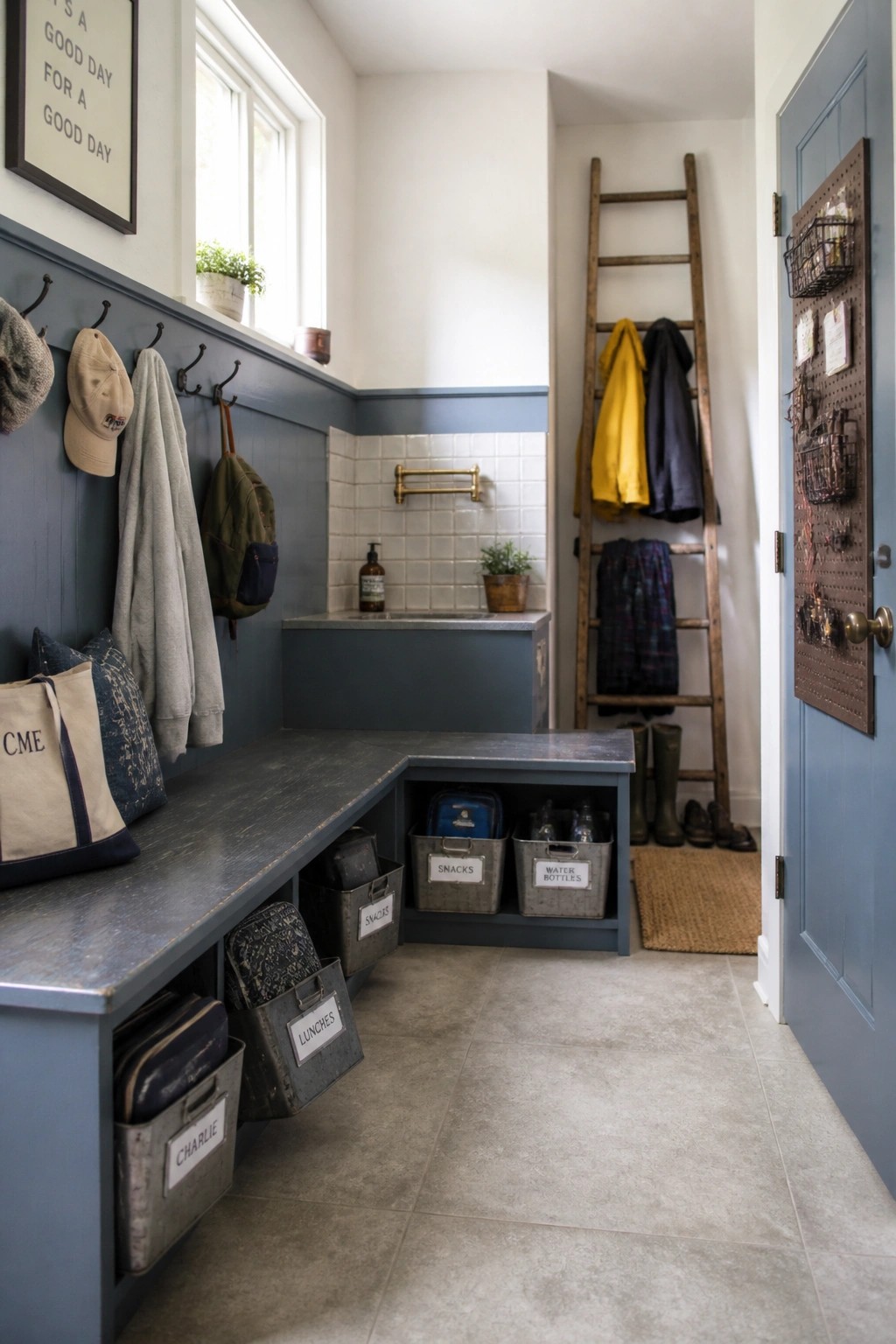
Blue gray paint gives mudrooms a calm base that still feels sturdy enough for daily use. It hides scuffs from boots and bags better than lighter shades while keeping the space from feeling too dark or heavy.
This color works best on the lower half of the walls and on built-in benches or cubbies where wear shows first. It pairs easily with white upper walls and simple hooks or bins so the room stays functional without extra upkeep.
Built In Bench Storage For Mudroom Use
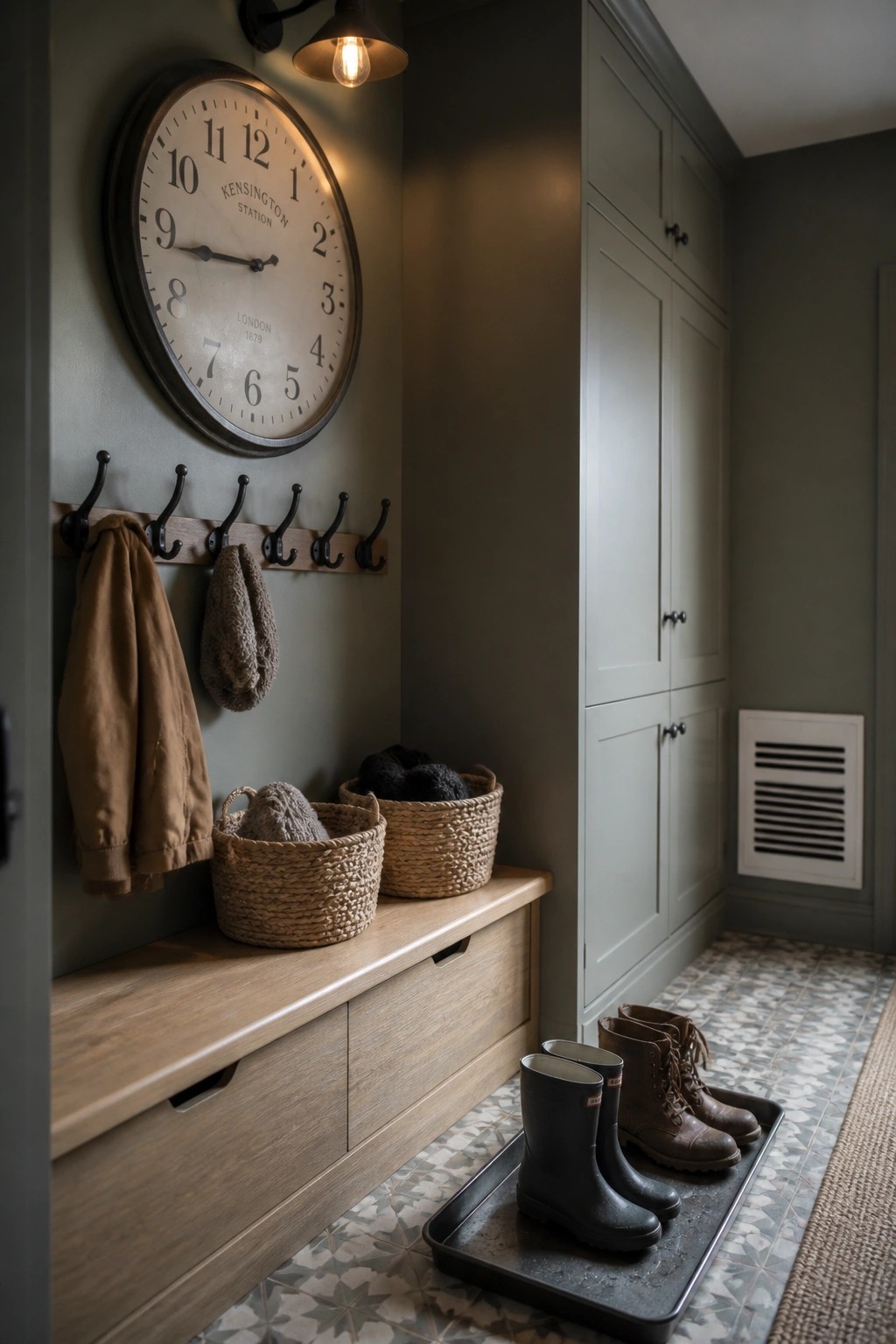
A long bench with drawers underneath paired with tall cabinets above gives a mudroom real everyday function. It creates a spot to sit while removing shoes and keeps coats, bags, and gear from piling up on the floor.
This kind of storage works best in homes where several people come and go at once. Keep the bench low and the cabinets simple so the space stays open and easy to clean.
Deep Green For Mudroom Built-Ins
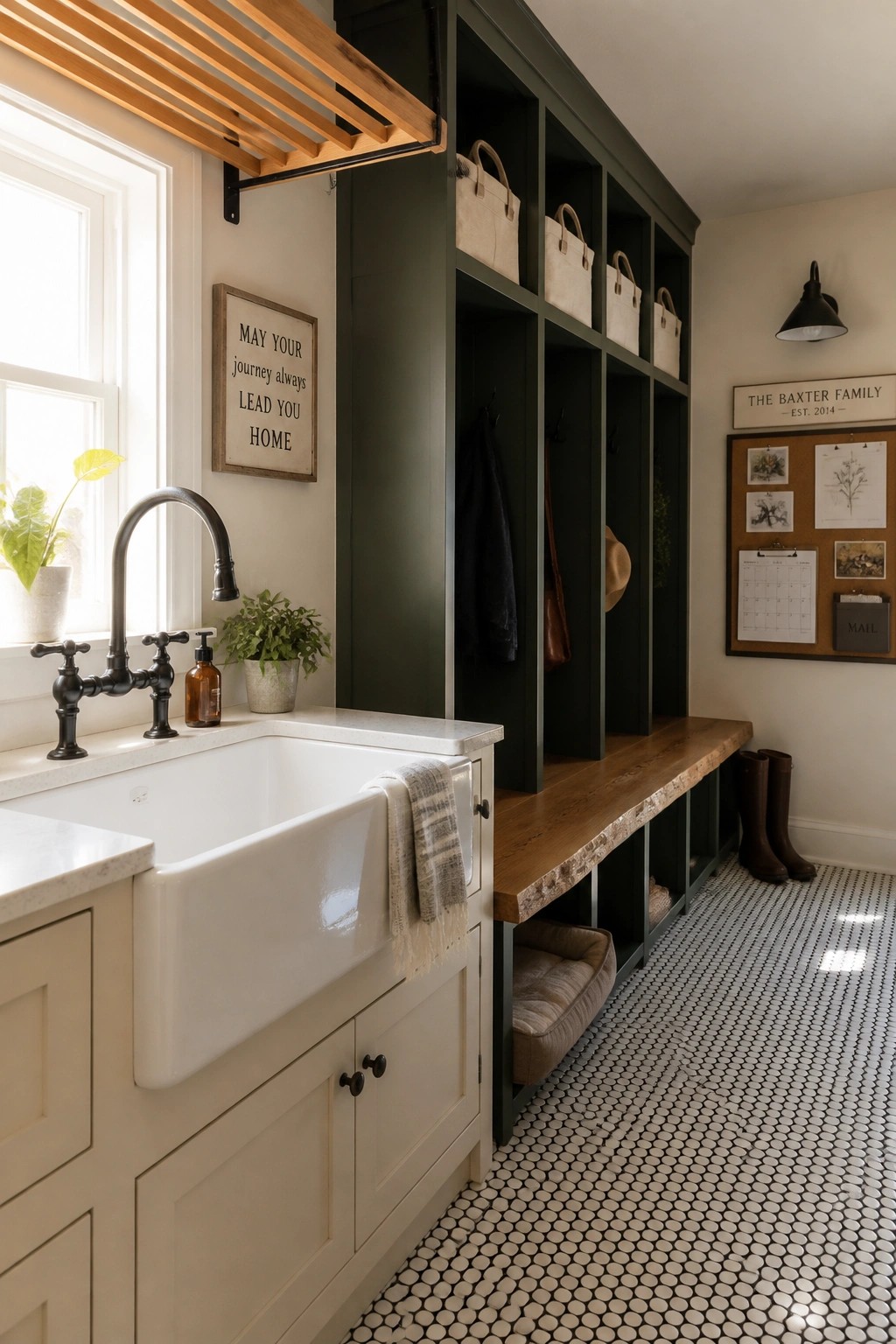
A deep green on the upper lockers and cabinets gives a mudroom a solid, practical base. It stands up to daily wear without showing every mark, which matters in homes where boots, bags, and coats pile up fast.
This color works well when the lower cabinets stay lighter and the bench top stays natural wood. It keeps the room from feeling too dark while still giving the storage a finished look that lasts.
Soft Gray Blue For Mudroom Built Ins
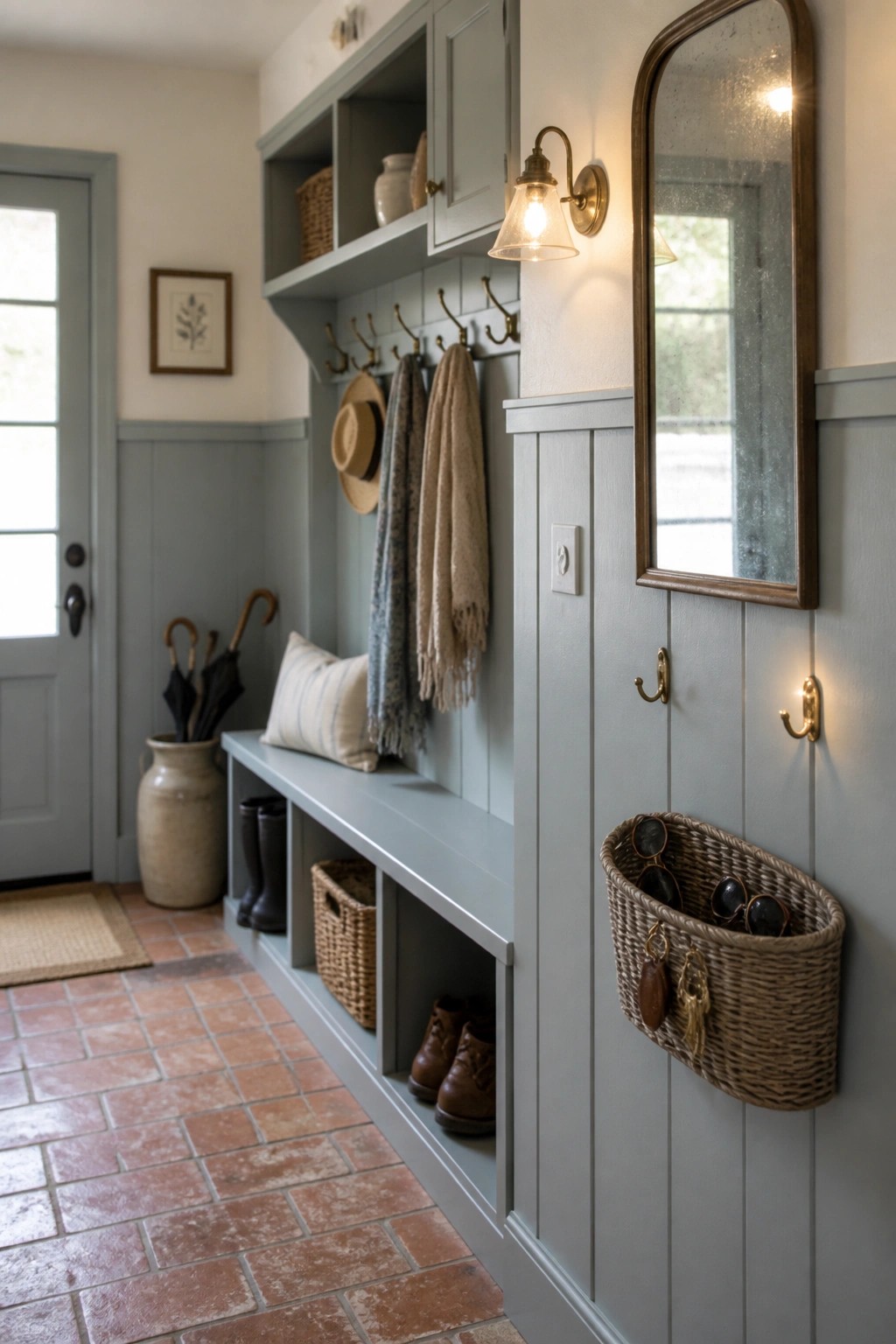
A soft gray blue paint color keeps a mudroom looking calm even when boots, coats, and bags pile up every day. It covers the built in bench, cubbies, and hooks in one steady tone that feels farmhouse without being stark or hard to keep clean.
This shade works best in family homes where the space gets heavy use. It hides light scuffs better than white and still reflects enough light to keep the room from feeling dark. Paint the storage pieces first and test the color on a small board before committing to the whole room.
Mustard Yellow Walls In A Farmhouse Mudroom
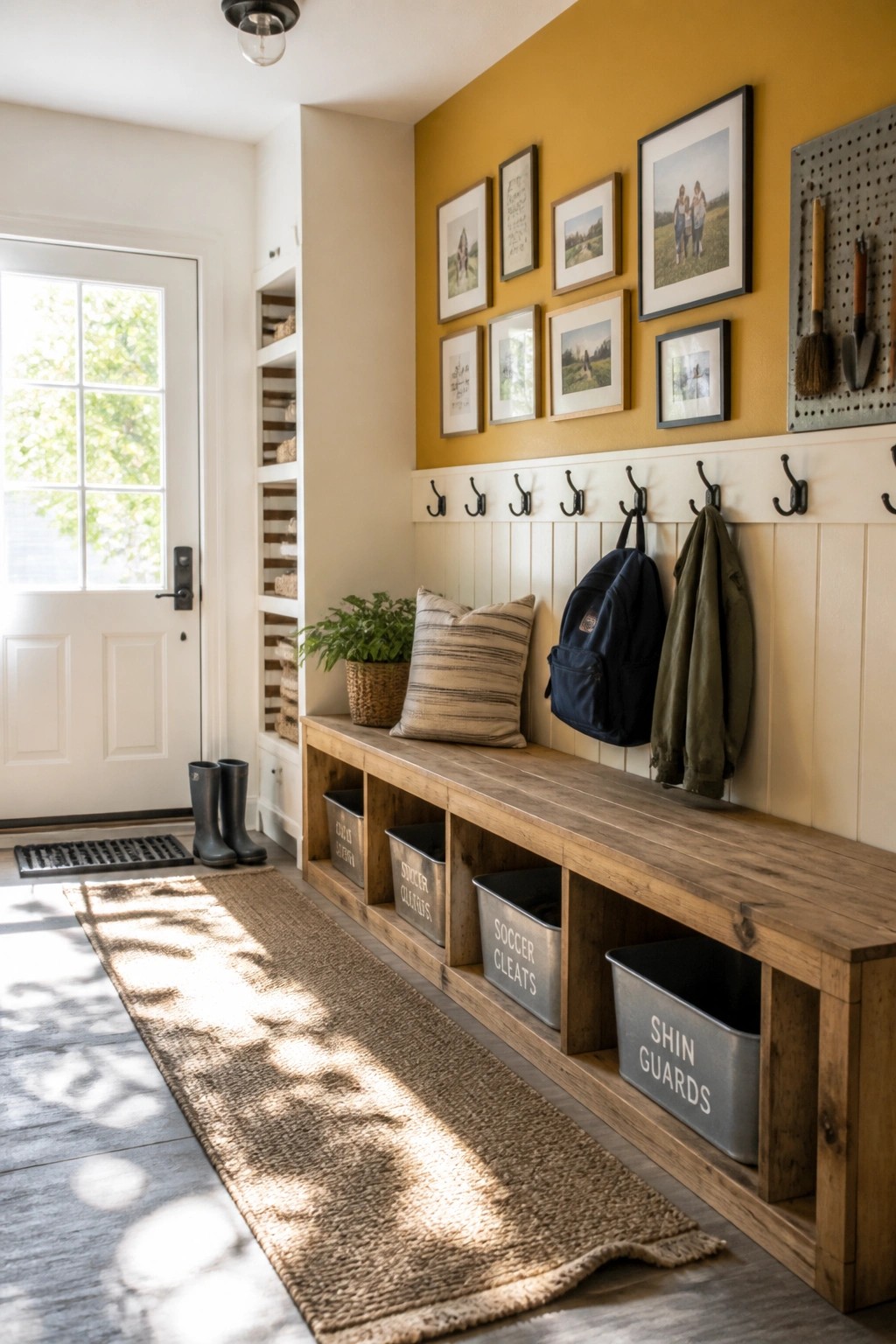
A warm mustard yellow gives a mudroom character while still feeling practical for daily use. The color adds light and energy to a space that often gets heavy traffic without making it feel fussy.
This shade works best in family homes where the entry needs to stay welcoming but not show every mark. Pair it with simple white trim and wood tones so the yellow stays the main focus without overwhelming the room.
Built-Ins That Handle Daily Family Traffic
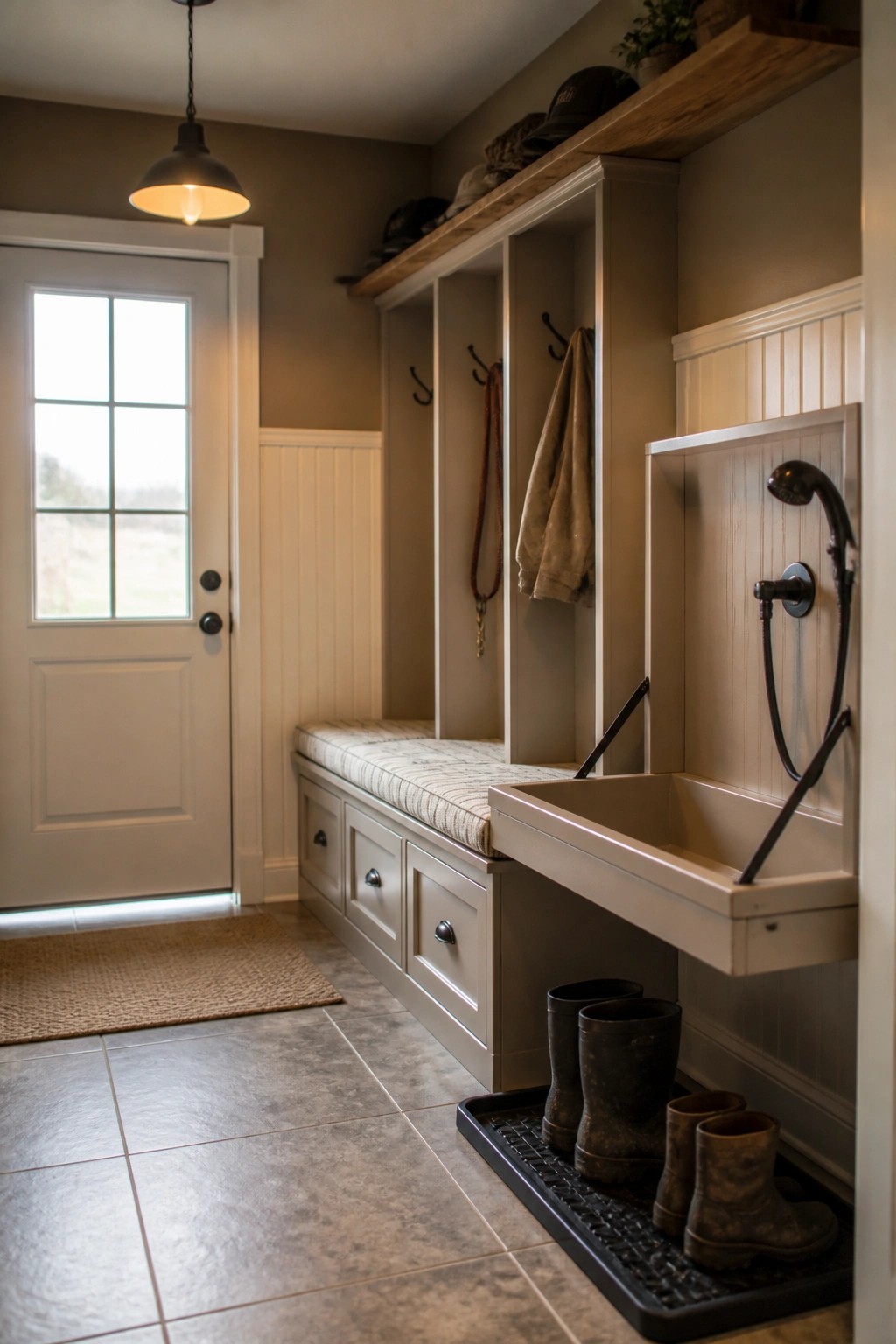
Built-in cabinetry and a long bench turn a mudroom into a working drop zone. Families can sit to pull off boots, hang coats on the hooks, and tuck everything behind closed doors so the floor stays clear.
This layout suits homes with kids or pets that come in wet or muddy. Keep the bench cushion simple and washable, and make sure the lower cabinets are deep enough for bins or baskets.
Terracotta Wainscoting For Busy Mudrooms
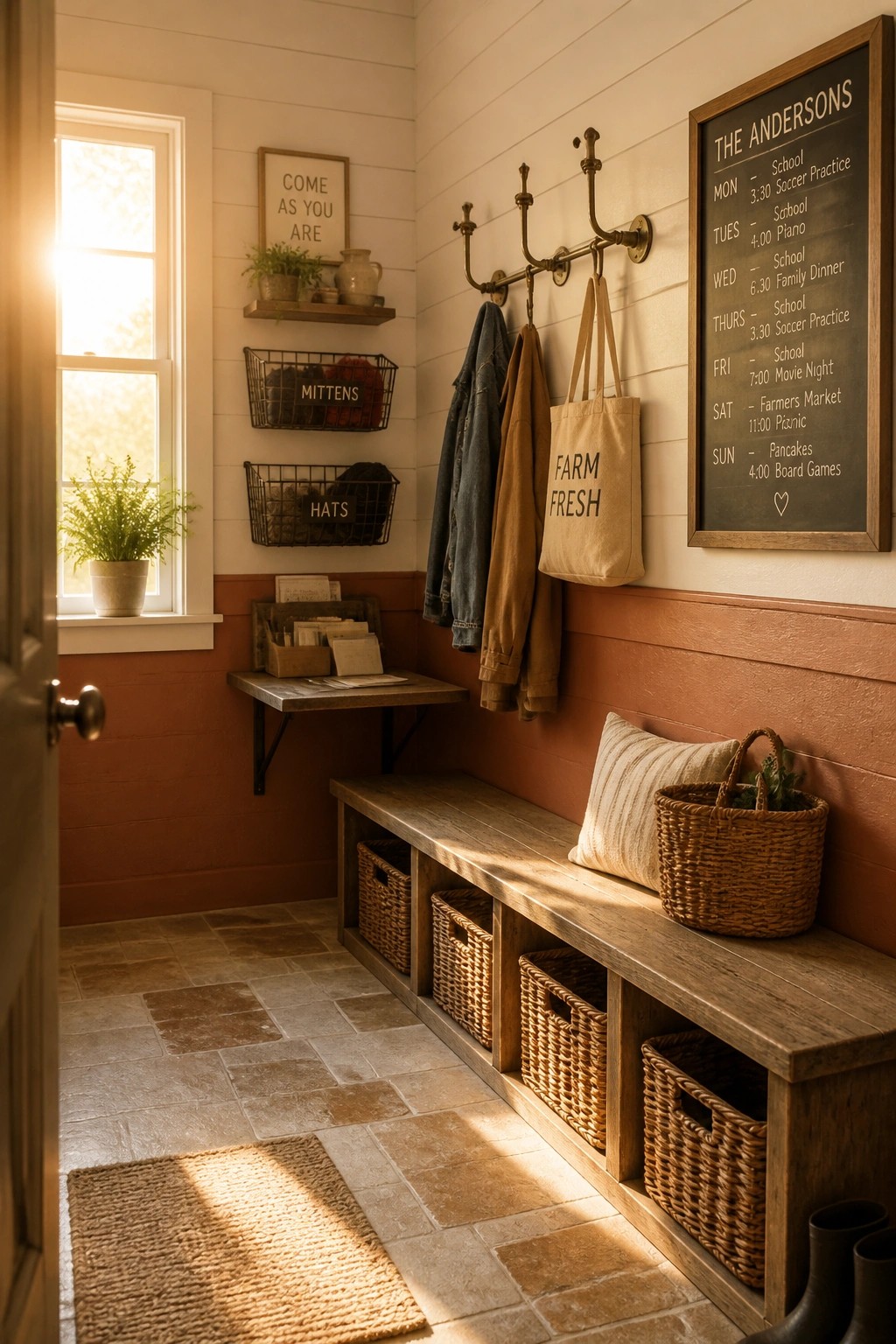
A warm terracotta color on the lower half of the walls gives a mudroom some practical staying power. It hides scuffs from boots and bags while still feeling tied to classic farmhouse style. The white shiplap above keeps the space from feeling too heavy.
This approach works best in homes with kids or pets that come in and out all day. Keep the lower color in a durable finish and let the upper walls stay bright and easy to wipe down. A bench with open storage underneath pairs naturally with the darker base color.
Dark Paint Colors For Mudroom Built-Ins
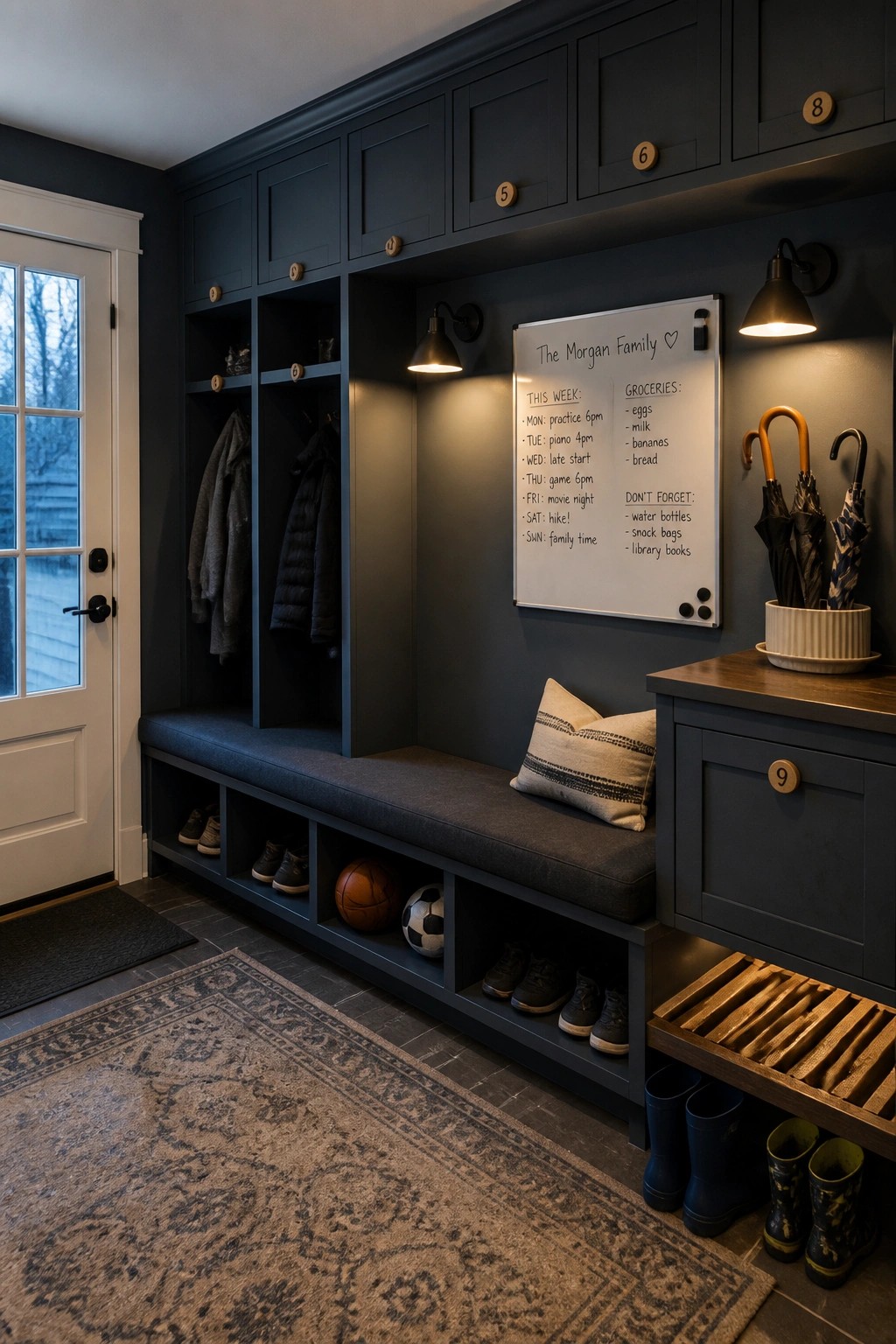
A deep paint color on the cabinetry and walls can make a mudroom feel more grounded while hiding the wear that comes with daily family use. Scuffs from shoes, backpacks, and wet coats show up less against a darker tone, which is why many people lean toward navy or charcoal in these spaces.
This works best in rooms with built-in storage like cubbies and benches where traffic is constant. It suits homes with kids or pets and pairs well with lighter floors or rugs to keep the area from feeling closed in.
Frequently Asked Questions
Q: What color from the list hides scuffs and dirt the longest in a busy mudroom? A: Go with a warm greige or soft gray. These shades mask everyday marks without looking dingy after a few weeks of use.
Q: How do I test a paint color before committing to the whole room? A: Paint a couple of large sample boards and lean them against the wall. Check them at different times of day to see how the light hits.
Q: Does a darker color make sense if the mudroom has small windows? A: Skip the dark shades and stick with lighter farmhouse tones instead. They bounce what little light you have and keep the space from feeling closed in.
Q: Can I use the same paint on the trim and walls for a simpler look? A: Yes, but choose a satin finish for the trim so it wipes clean easier than the flat walls.
