

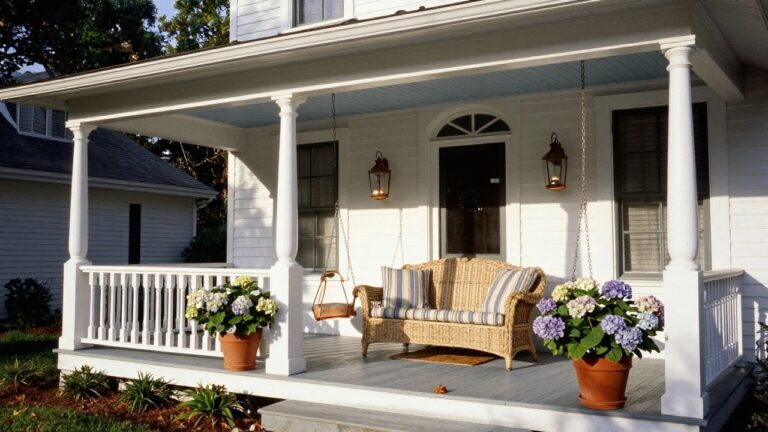
I’ve noticed how a wraparound porch often turns a Colonial house’s straightforward facade into something that draws people closer from the curb.
Those classic symmetrical lines work best when the porch wraps just far enough to soften the roofline without overwhelming the entry door.
You spot the porch details first, like column proportions or railing styles, and they set whether the house feels approachable or standoffish.
The ones that mix painted wood with subtle stone bases read as timeless from the street and hold up well over seasons.
I might adapt the side extension from number seven if I ever tackle an older exterior like this.
Climbing Roses on Porch Columns
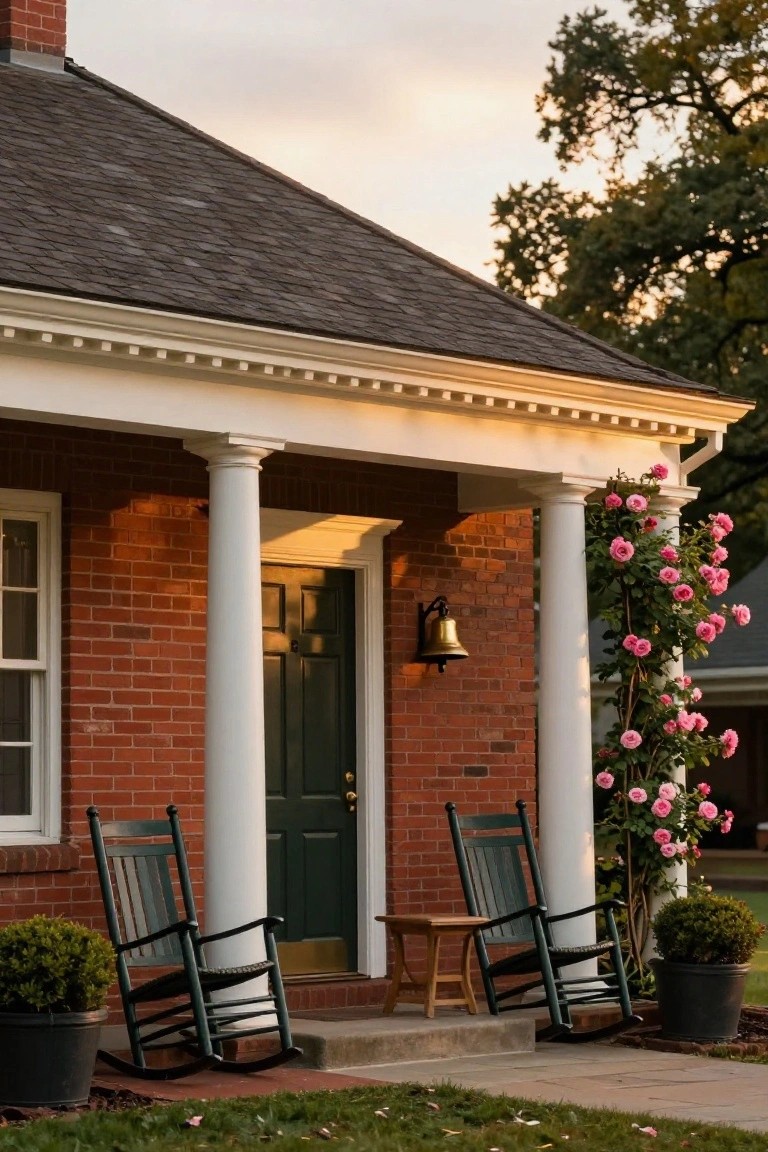
Nothing beats climbing roses wrapping around porch columns for a touch of old-school charm on a colonial exterior. Here, pink blooms trail up the white columns next to a classic brick house, softening the straight lines and adding color without much fuss. It pulls the eye right to the entry and hints at a home where folks sit out front in the evenings.
This works best on traditional homes with sturdy columns that can handle the weight. Pick tough varieties like New Dawn or Cecile Brunner that bloom steady, and train them loosely with ties so they don’t scratch the paint. Skip it on super-modern places or if your climate gets harsh winters, since roses need some care to look this good year-round.
Red Door on White Porch Exterior
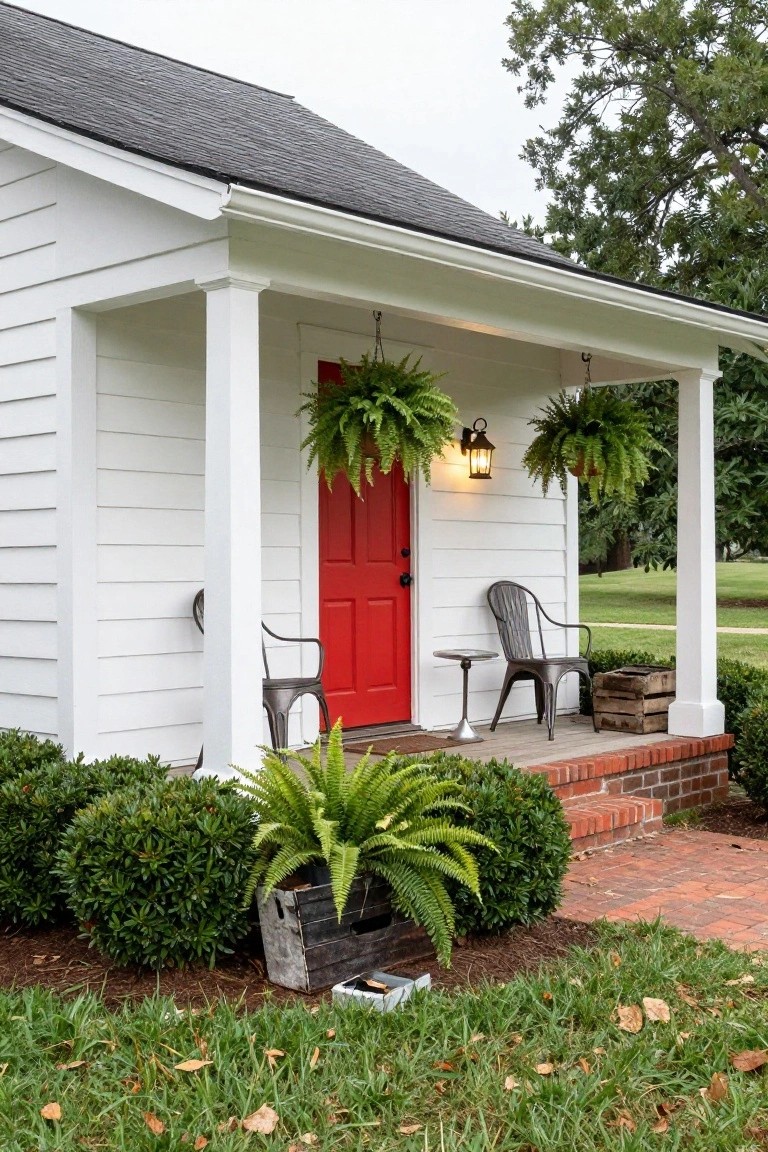
A red door like this one grabs your eye right away on a plain white house. It turns a simple porch into something folks want to walk up to. The white siding stays crisp and classic. That door just says welcome without much else needed.
Try this on a smaller colonial home where you want easy curb appeal. Pick a true red paint that holds up outside. Keep porch seating basic, like those metal chairs. Plants in hanging pots add life but don’t overdo it. Works best where the house sits close to the street.
Wicker Rocking Chairs on the Porch
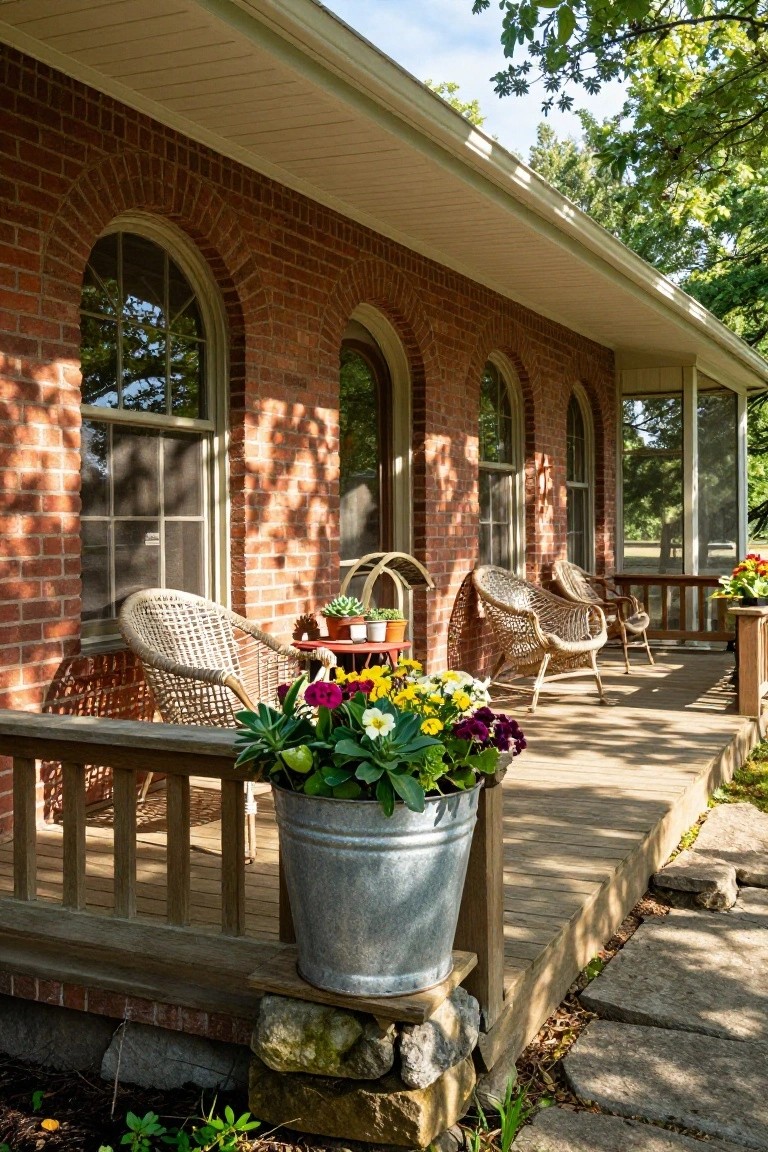
A pair of rattan rocking chairs tucked against the brick wall makes this wraparound porch feel like a natural spot to sit and stay awhile. The light weave of the chairs picks up on the wood deck and tree shade, keeping things relaxed and easy to live with day to day.
These work best on colonial homes where the porch runs along the side. Set them near a small table for drinks or books, and drop in a big galvanized bucket of flowers right on the railing edge. Skip anything too matchy. The casual look holds up in shade or sun.
Rocking Chairs by the Porch Door
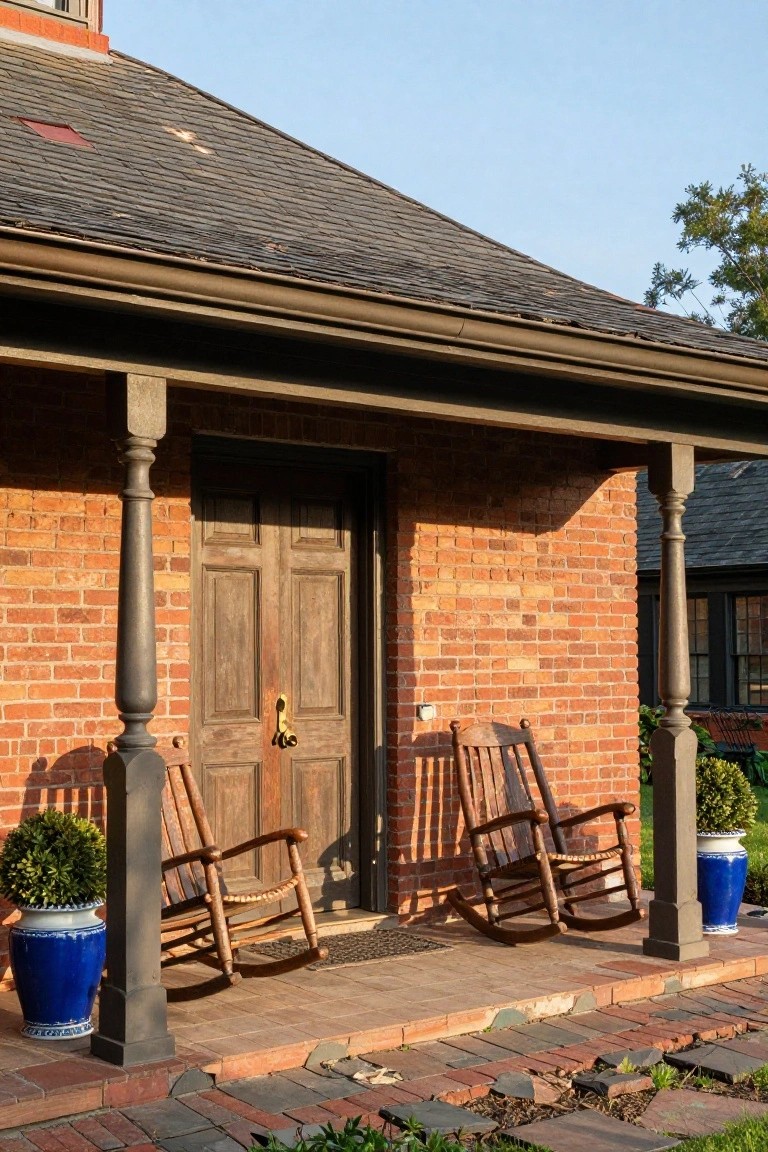
A pair of wooden rocking chairs right next to the front door turns a porch into a spot people want to linger. They fit the colonial style perfectly, especially against brick walls and solid columns. Add matching blue pots with clipped greens on the sides, and you get that easy symmetry without trying too hard.
This setup shines on wraparound porches where folks pass by often. It suits older brick homes or ones aiming for that feel. Just pick sturdy wood chairs that weather well, and space them so the door stays clear.
Casual Porch Seating Setup
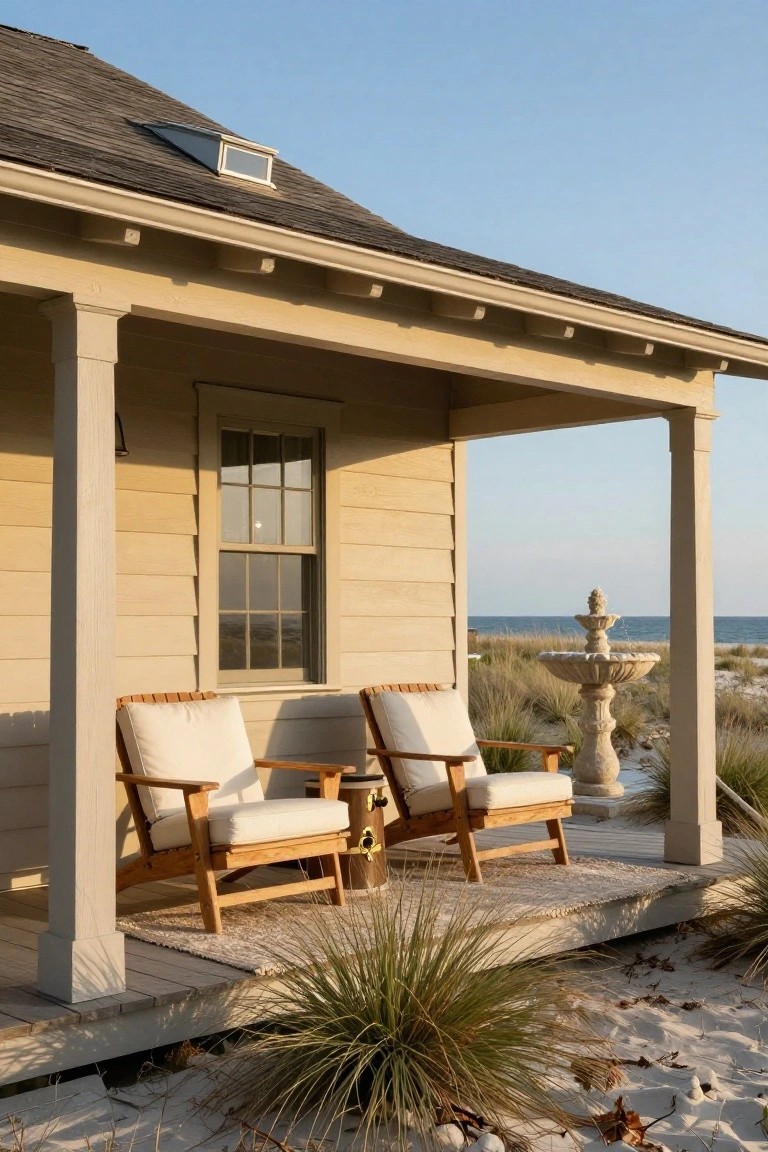
A pair of simple armchairs with white cushions sits on this wraparound porch, a small round table tucked between them. It’s an easy way to turn the deck into a spot where you actually want to sit down, facing right out to the beach and waves. The fountain nearby adds gentle water sound without crowding things.
This works best on porches with open views like ocean or yard scenery. Go for wood frames that handle weather, like teak, and keep cushions light colored to stay cool. Skip big groupings. Two chairs suit smaller porches or quiet spots… perfect for morning coffee
Porch Chairs for a Friendly Entry
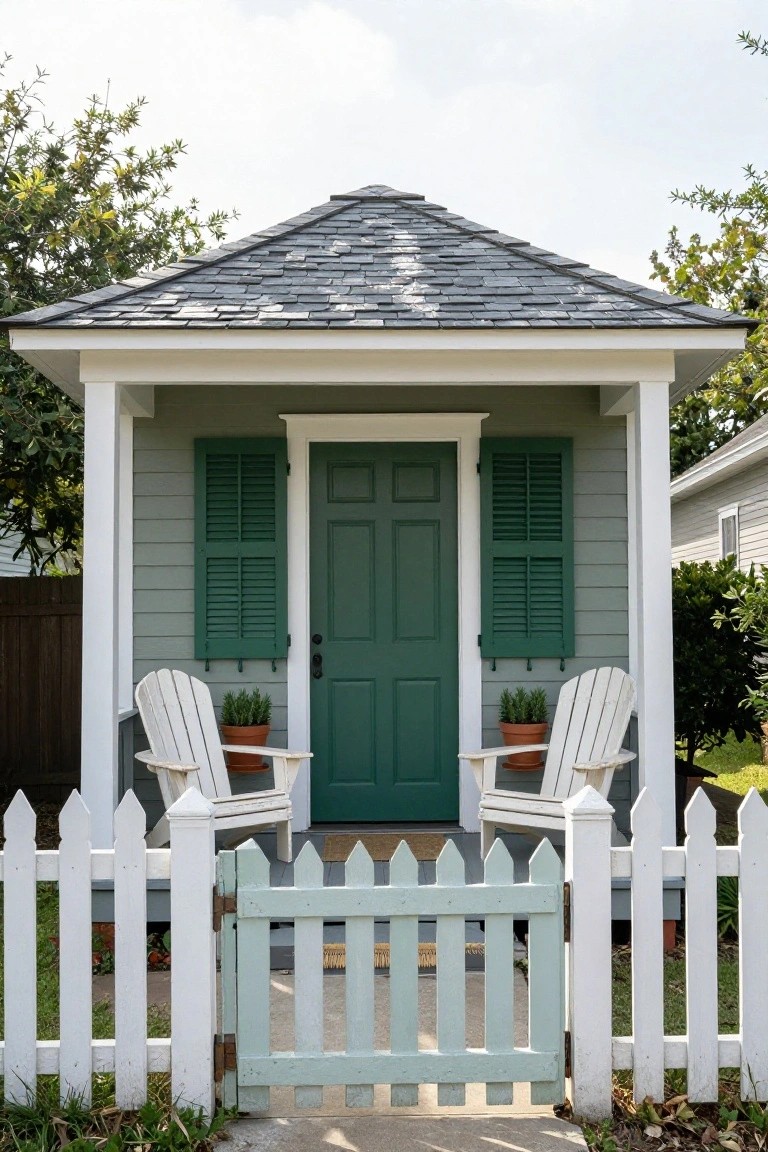
A pair of plain white Adirondack chairs sits right on this small front porch, one on each side of the green door. Small potted plants rest on the wide arms, giving the spot a lived-in feel without much effort. It’s the kind of setup that says home right away, especially on a cottage-style house like this.
Try this on compact porches where space is tight. It suits colonial or older homes in milder climates, where you might actually use the chairs year-round. Keep the pots low-maintenance herbs or evergreens, and skip cushions to make cleaning easy.
Recommended Products

BUILT TO LAST: Enjoy an heirloom-quality rocking chair constructed to be around for years to come. This classic hand-crafted piece is the perfect addition to any living room, nursery, or bedroom. Add a touch of old world class to your furniture.

Classic Design and Appearance: This kids wooden rocking chair features a classic design with a simple yet elegant look. The ergonomic armrests provide comfort for toddlers and young children, making it an ideal piece of furniture for porches, balconies, or indoor use.
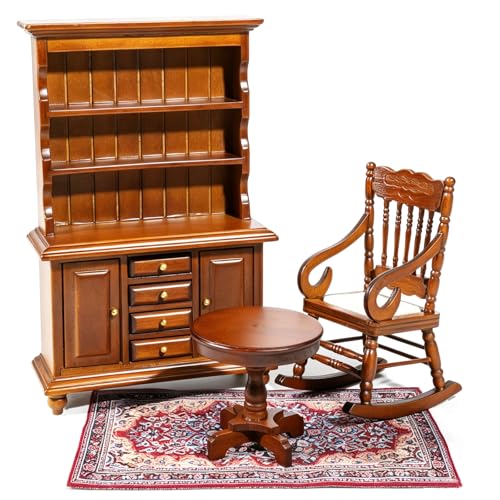
Made of high-quality solid wood with a rich walnut finish, this miniature furniture set features hand-polished smooth surfaces and visible wood grain. The golden hardware on the cabinet drawers and doors adds a vintage touch enough for mini house decoration
Garden Shed Bar Window
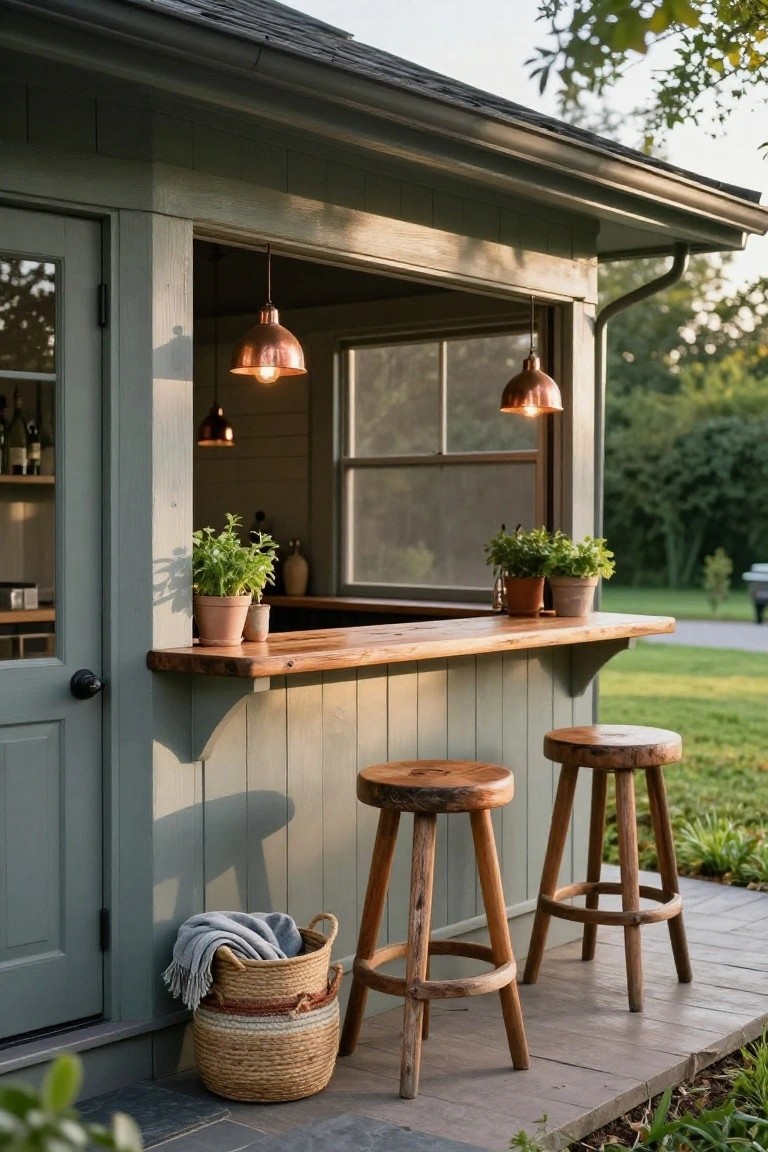
One easy way to make your porch more fun is opening up a shed window as a pass-through bar. You slide drinks and plates right out to people sitting nearby, no running back and forth. Here, rough wood stools sit under a sturdy counter, with a few potted herbs keeping it fresh and simple.
This works best on casual back porches or patios where folks gather in the yard. Pick a shed close to your seating area, add hanging lights inside for evenings, and use weatherproof wood. It suits older homes with some garden space… keeps things practical without big changes.
Porch Swing with Potted Hydrangeas
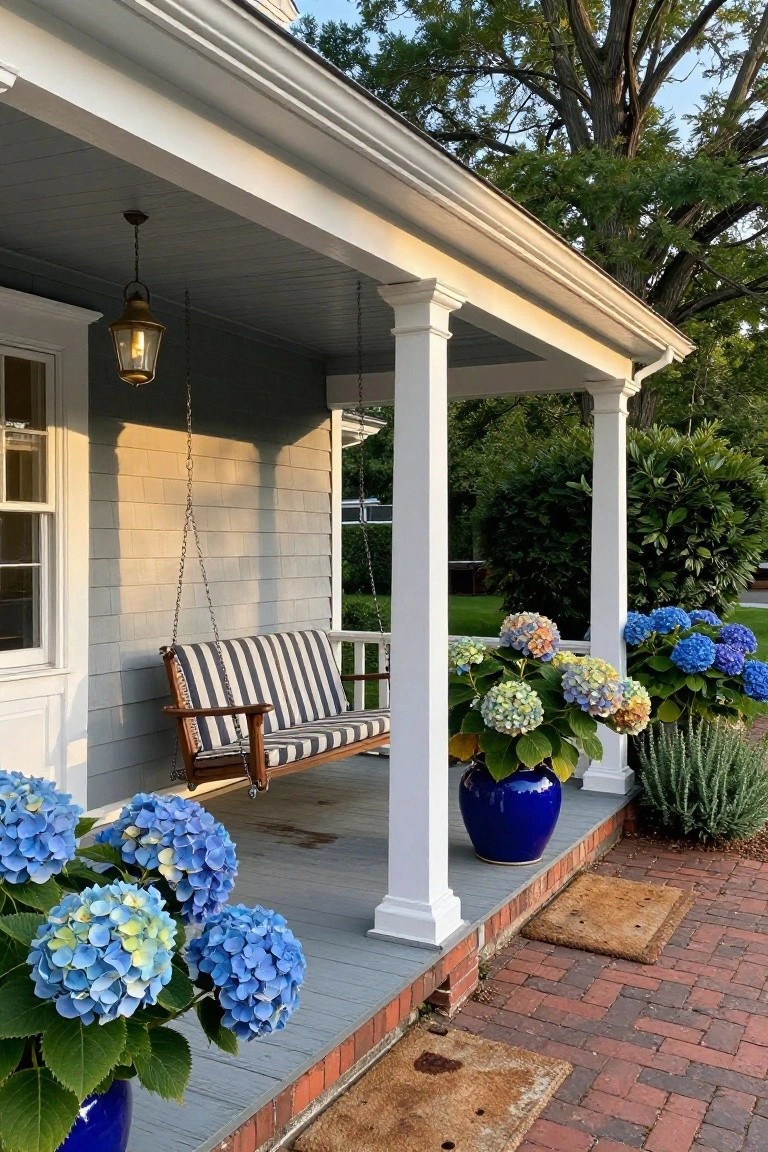
One simple way to make a colonial porch feel more lived-in is hanging a wooden swing right there in plain view. Add big pots of hydrangeas on both sides like this, and you get instant color without much planting work. The blue flowers pick up on the porch’s gray tones, and the swing’s striped cushions keep things casual. It’s that easy spot to sit and watch the day go by.
This setup works best on side porches or entry areas where you want a welcoming touch. Go for oversized pots so the plants look full even from the street, and pick hydrangeas that match your house color a bit. On smaller porches, just one pot might do, but watch that the swing chains don’t tangle with them.
Brick Planters Matching the House
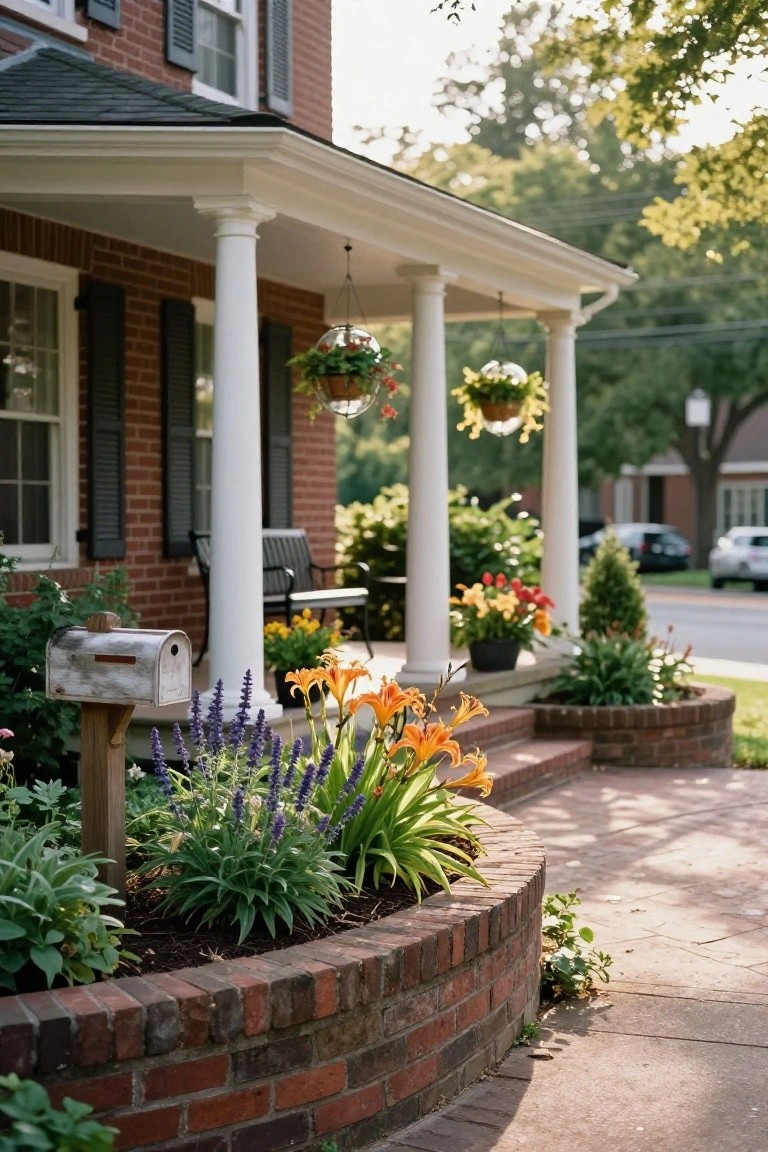
One straightforward way to make a colonial porch feel more settled is building the flower beds from the same brick as the house. Here, curved raised beds wrap the porch base, filled with lilies, lavender, and hostas. That repeat in materials pulls the yard right up to the architecture. No jarring edges. Just a smooth tie-in that looks like it was always there.
Try this on any brick home with a porch or steps. Stick to perennials for easy care, and keep the beds under two feet high so they frame without hiding the house. It suits front yards where you want color but not fussy upkeep. Watch the scale though. Too big, and it overpowers the entry.
Rustic Ladder Beside the Porch Door
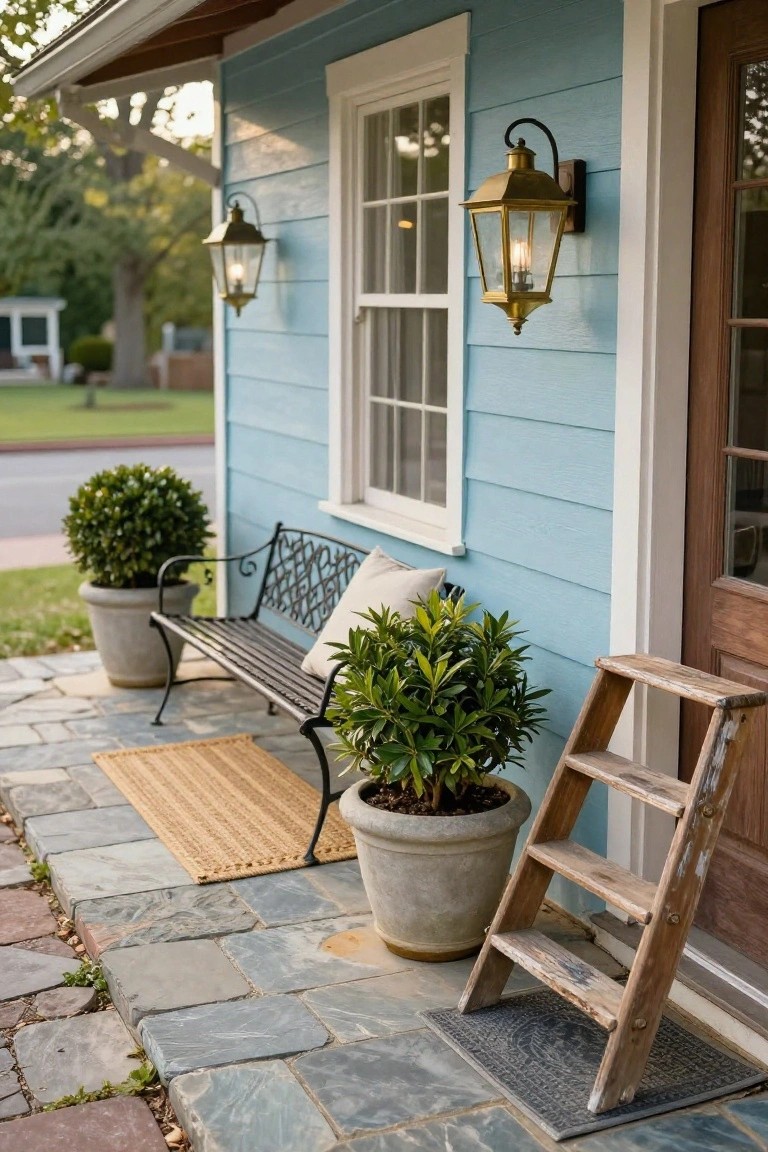
Sometimes the simplest touches make a porch feel more like home. Leaning an old wooden ladder against the siding right by the door does that here. It adds a bit of weathered texture that fits right in with colonial style without trying too hard. The ladder picks up on the house’s casual charm, especially next to the blue paint and brass lanterns.
You can try this on a wraparound porch or side entry where you want a farmhouse nod. Look for a stepladder that’s beat up but sturdy enough not to tip. It works best on homes with some age or painted siding. Just keep it away from paths so no one trips, and maybe secure the top lightly if kids are around.
Frequently Asked Questions
Q: Can I add a wraparound porch to my older colonial house without it looking out of place?
A: Match the new porch’s columns and railing details to your house’s original trim. Paint everything the same soft white or muted sage to blend right in. Contractors who know colonial styles spot these tricks every time.
Q: What plants make a wraparound porch feel more welcoming?
A: Tuck in boxwood shrubs along the edges for that classic colonial touch. Hang ferns or lanterns with trailing ivy from the ceiling. They sway gently and draw folks right up the steps.
Q: How do I light up the porch so it stays inviting after dark?
A: String vintage-style lanterns along the railing. Add a couple wall sconces by the door that mimic candle glow. Keep bulbs warm, around 2700K, and flip them on with a timer.
Q: What’s quick to fix a sagging porch floor?
A: Sister new joists next to the old ones with bolts. Level everything out, then top with fresh decking boards. Your porch bounces back sturdy in a weekend.
