

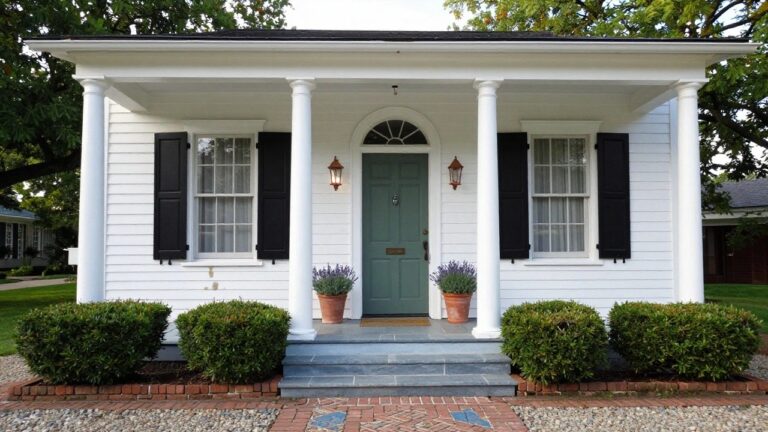
I’ve noticed white Colonial exteriors pull you in from the curb like few other styles can, especially when the facade stays crisp against changing light.
The symmetry draws your eye right away, from the balanced windows to the pitched roofline sweeping down to a welcoming entry.
In my own neighborhood, the ones that hold up best use siding with just enough texture to hide everyday weathering without losing that clean look.
Shutters and trim details make the biggest difference in how fresh it all reads up close.
Some of these tweaks are simple enough to adapt to an existing house.
Green Front Door on White Colonial Exterior
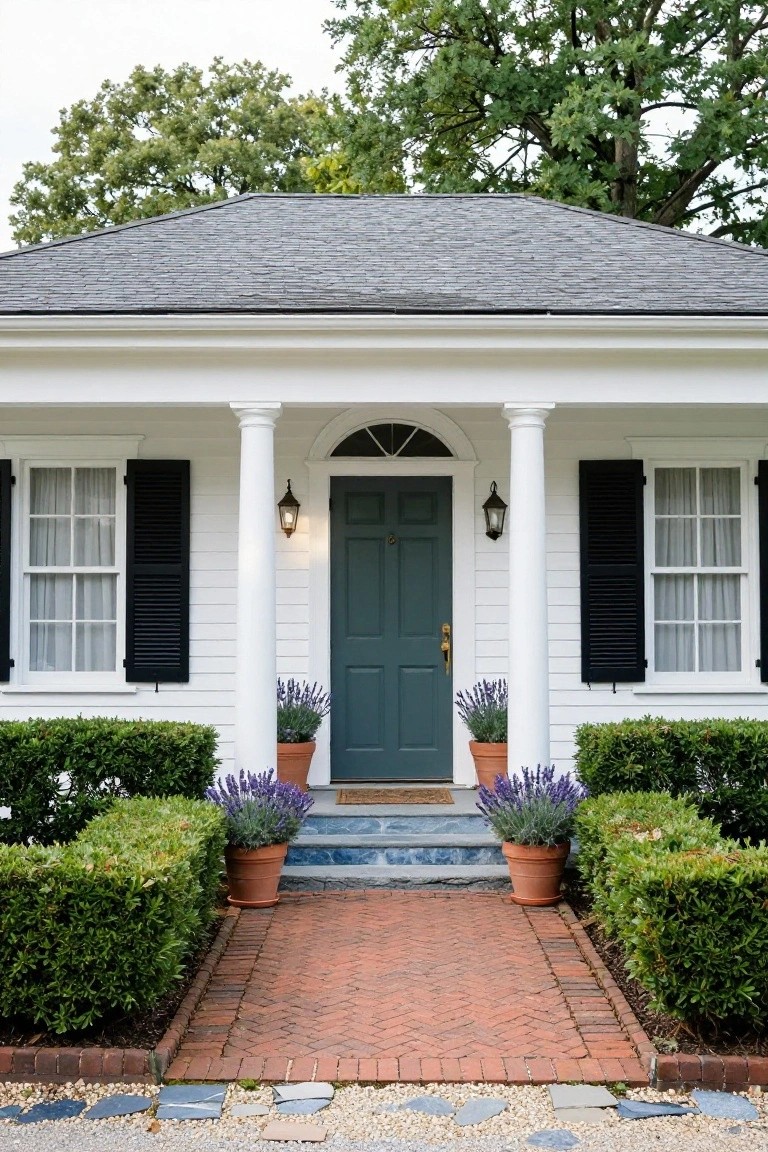
A deep green front door gives a white colonial house that fresh lift without much change. The color picks up nicely against all the white siding and trim. It makes the entry feel more personal right away.
Try this on smaller homes with a porch and columns. Black shutters help the green door stand out even more. Add a couple pots of lavender by the steps… keeps things simple and ties in that soft purple note. Works in any neighborhood where you want classic but not plain.
Recommended Products

Ready to use, pre-mixed door and trim paint offers a fresh new look on interior or exterior metal, wood and fiberglass

Use for a variety of indoor and outdoor project surfaces including wood, metal, plaster, masonry or unglazed ceramic
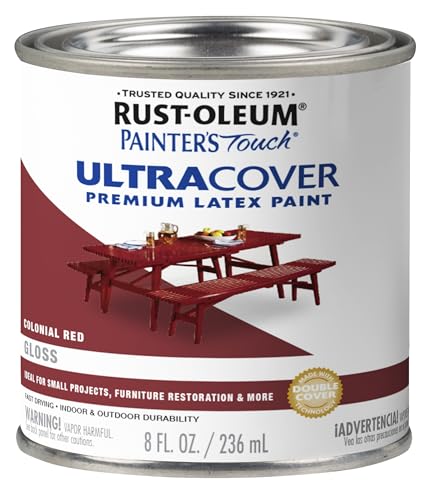
Use for a variety of indoor and outdoor project surfaces including wood, metal, plaster, masonry or unglazed ceramic
Navy Blue Door on White Brick
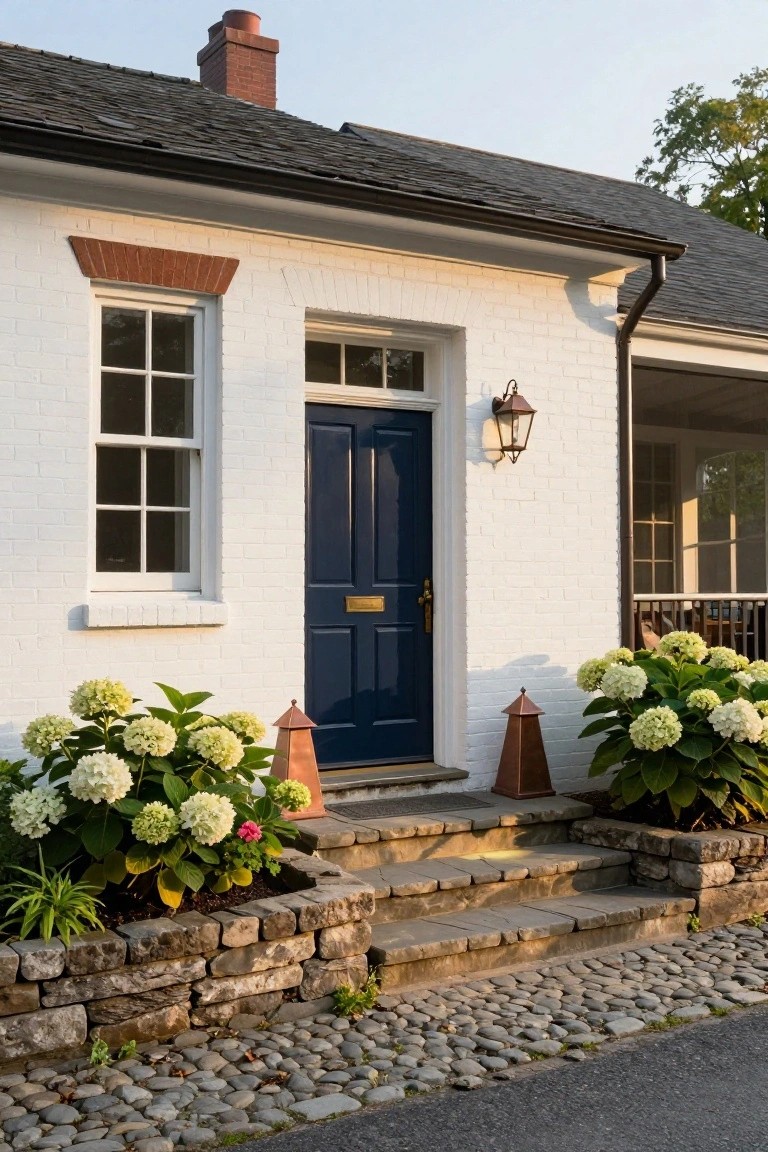
A navy blue front door gives this white colonial house real focus right at the entry. The deep color stands out clean against the white brick walls and keeps things simple. No need for extra trim or fuss. It pulls your eye up the steps without trying too hard.
This works best on straightforward facades like colonials or farmhouses. Keep plantings low-key, like those big hydrangeas in stone beds on either side. Skip busy colors elsewhere so the door does the main job. Fits older homes or new builds aiming for that fresh classic feel.
Green Door on White Colonial
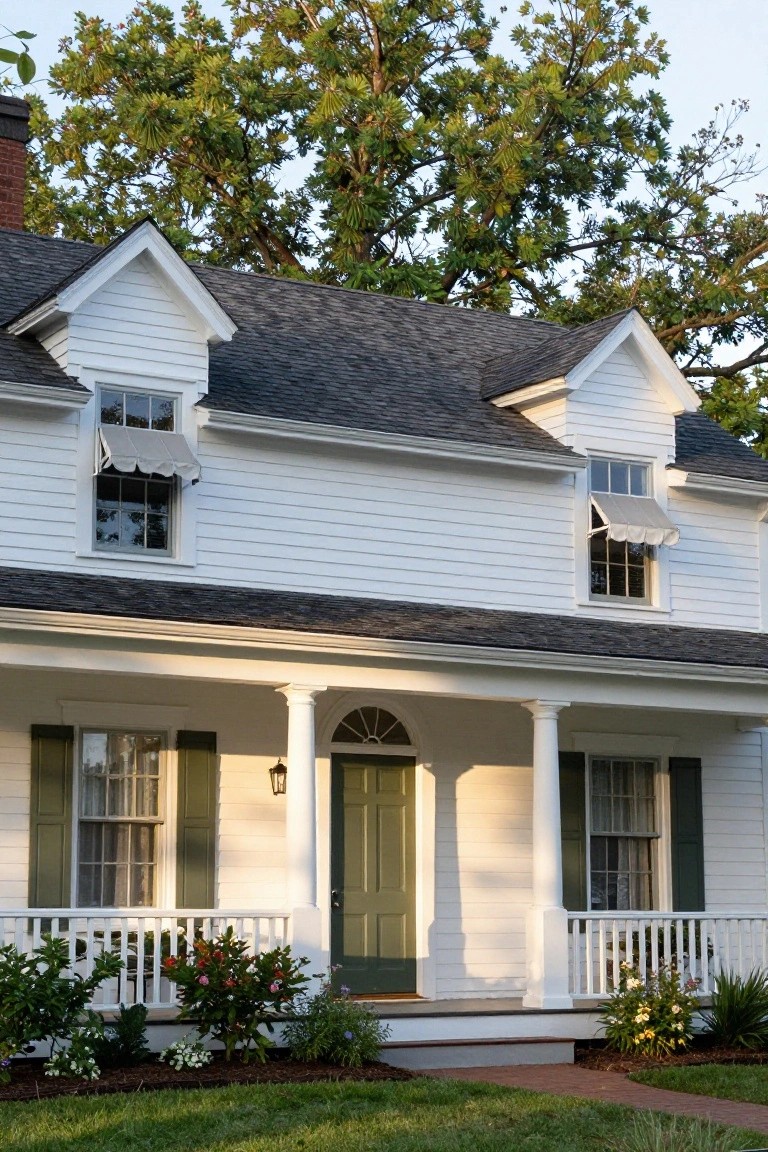
A deep green front door gives this white colonial real pop. Against the clean white clapboard siding and simple porch columns, it pulls your eye straight to the entry. That contrast keeps things fresh and welcoming. No need for big changes. Just that one color switch does the trick.
Try it on homes with covered porches or symmetric facades. It suits classic neighborhoods where you want subtle personality. Keep shutters or plants simple so the door stays the star… and maybe add a lantern for evenings. Works best if the green leans dark, not too bright.
Cozy Porch Bench Setup
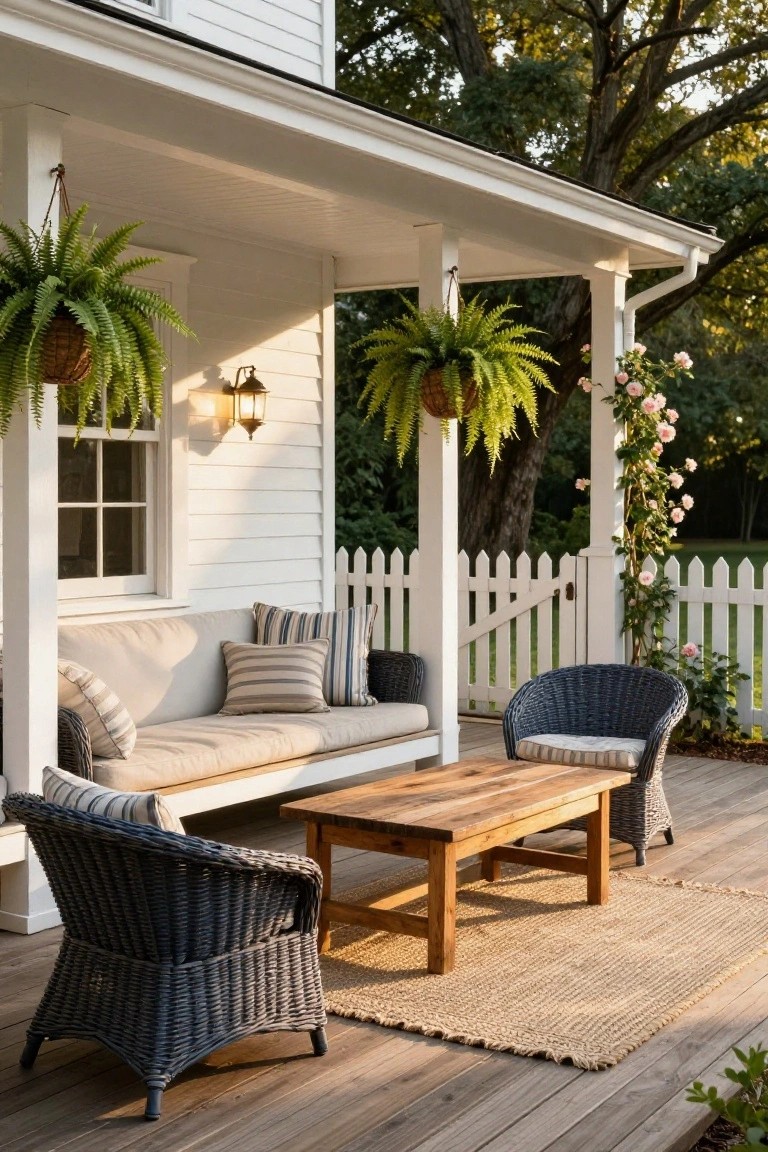
One easy way to make a colonial porch feel like an extra room is with a built-in bench along the wall. Add some cushions and striped pillows, then pull up a couple wicker chairs around a simple wood table. Hanging ferns and a lantern light keep it all soft and shaded without much fuss.
This works great on wider porches where you want a spot to sit and chat. It suits white houses with that classic look, letting the architecture shine while the natural wood and rug add a lived-in touch. Just keep the furniture to scale so it doesn’t crowd the space.
Stone Bases Around Colonial Garages
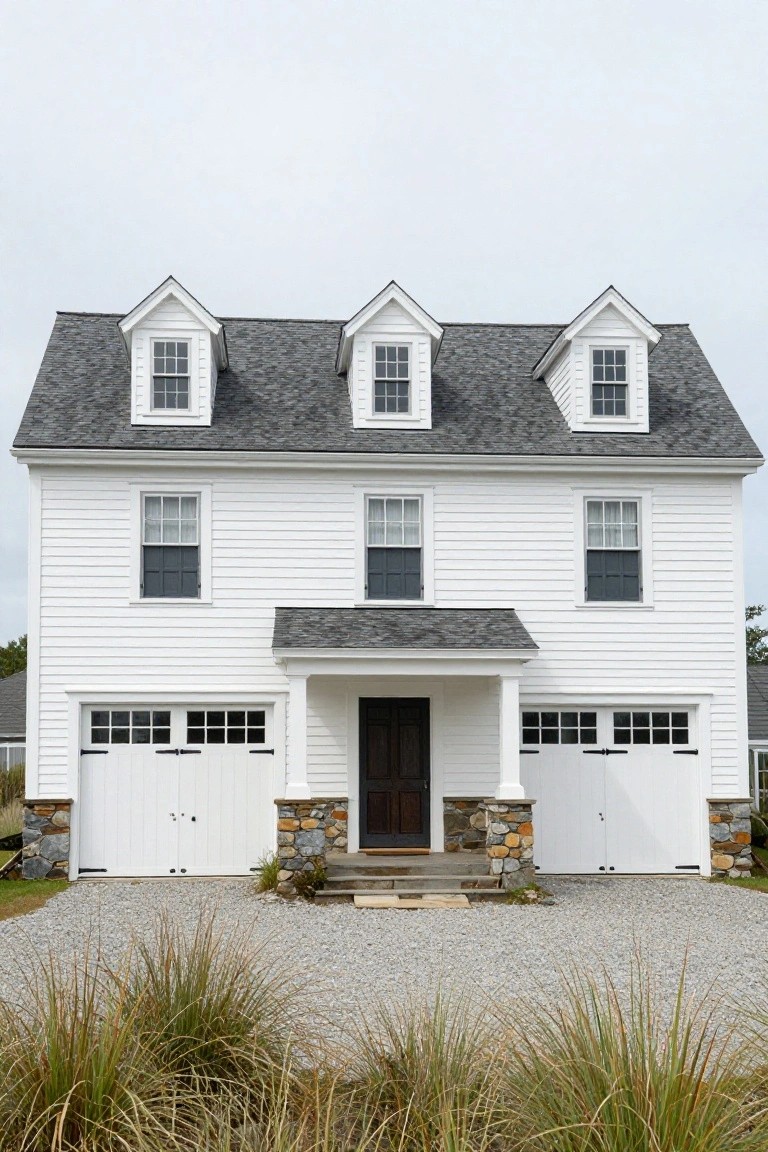
White colonial homes often go all-in on clapboard siding. But adding fieldstone bases around the garage doors and pillars brings in some natural texture. It keeps the look crisp up top while grounding things down low. In this setup, the white paneled garage doors match the house siding perfectly, and the stones tie into the entry steps too.
This works best on homes near the coast or in casual settings where you want a nod to old New England style without going overboard. Use rounded beach stones or local fieldstone for an easy fit. Skip it if your lot is super formal, though. A gravel driveway like this one lets the stones stand out without competing.
Red Door on White Colonial Facade
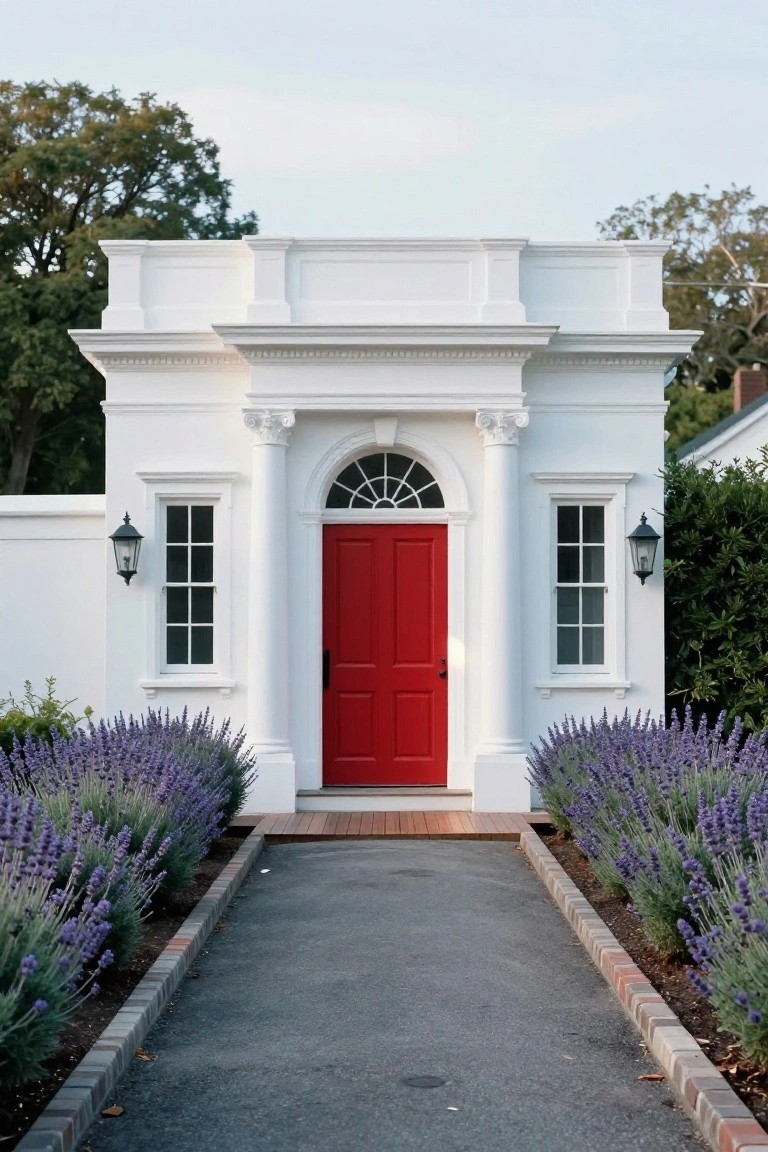
A bright red door like this one turns a plain white colonial exterior into something memorable. The crisp white columns and pediment set it off nicely, making the entrance the clear focal point without much effort. It’s a classic move that adds personality to formal architecture.
This works best on smaller structures like garden pavilions or gatehouses, or even a main house entry in a traditional neighborhood. Pick a deep red shade to match historic vibes, and keep the surrounding white paint fresh. Pair it with simple planting beds along the path… keeps things tidy.
White Colonial Porch with Stone Entry Steps
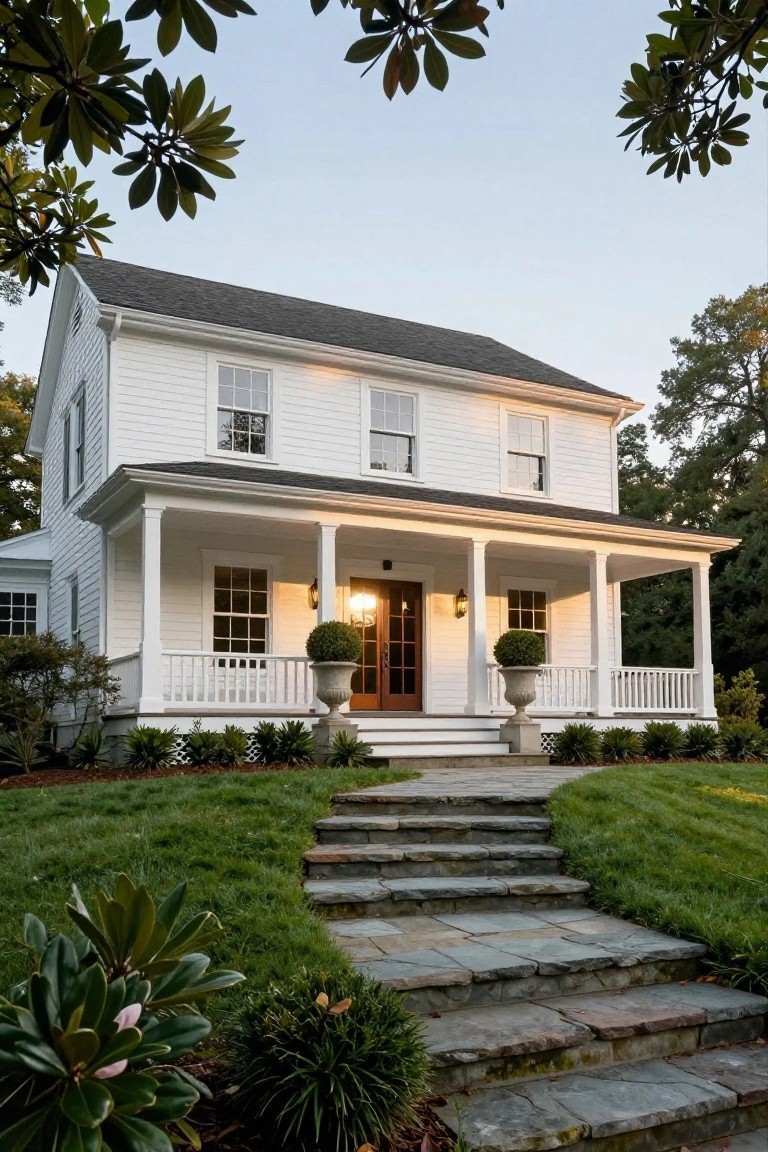
A wide front porch like this one on a white colonial house pulls the whole facade together. Those clean white columns and the centered door make it feel solid and traditional, while the curving stone steps from the lawn add a natural path that draws folks right up to the door.
This setup works best on homes with a little rise from the street. Use flagstone or similar for the steps to blend with yard plantings, and keep urns or low shrubs nearby to frame things without crowding. It keeps the white siding crisp year-round.
Black Door on White Colonial Facade
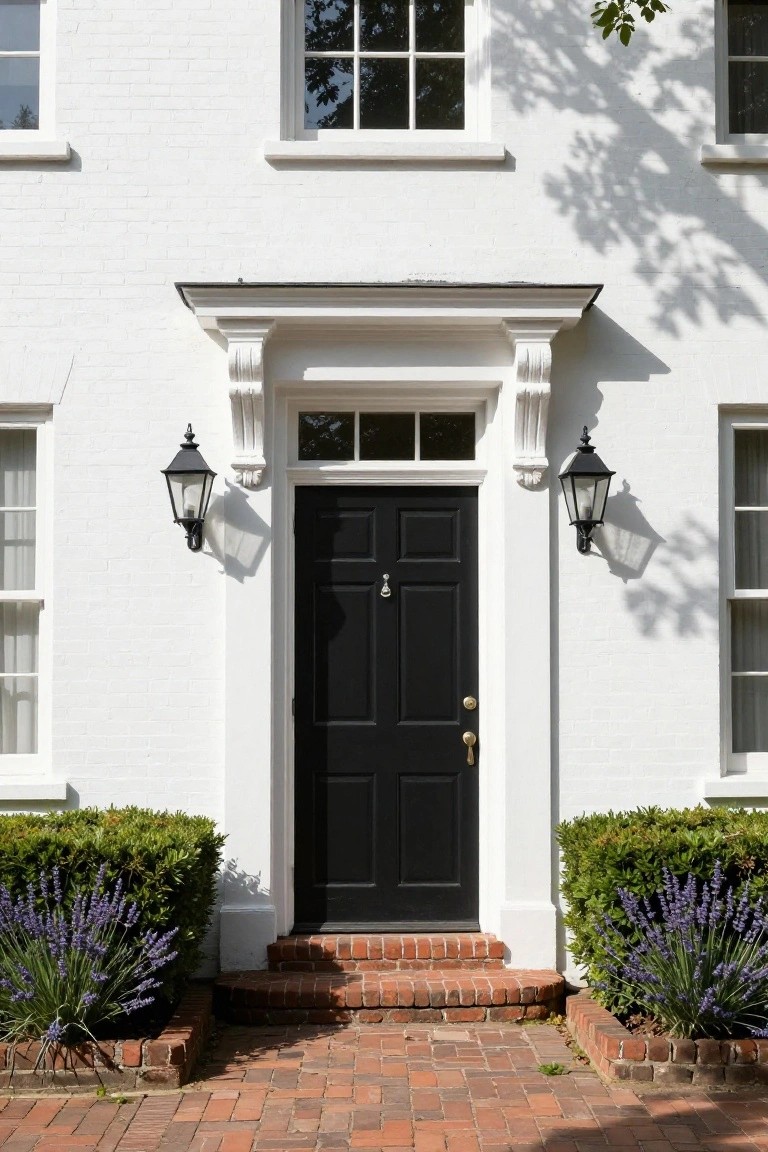
A black front door stands out sharp against this white brick colonial exterior. It pulls your eye right to the entry, making the whole house feel more put-together. Simple lanterns on each side frame it nicely, and that brass knocker adds just enough detail.
This look fits older homes or new builds aiming for classic style. Paint or replace the door if yours is faded. It works on brick, siding, or stucco. Keep plantings low around the steps, like boxwoods here… nothing too bushy to block the door.
Blue Front Door on White Colonial
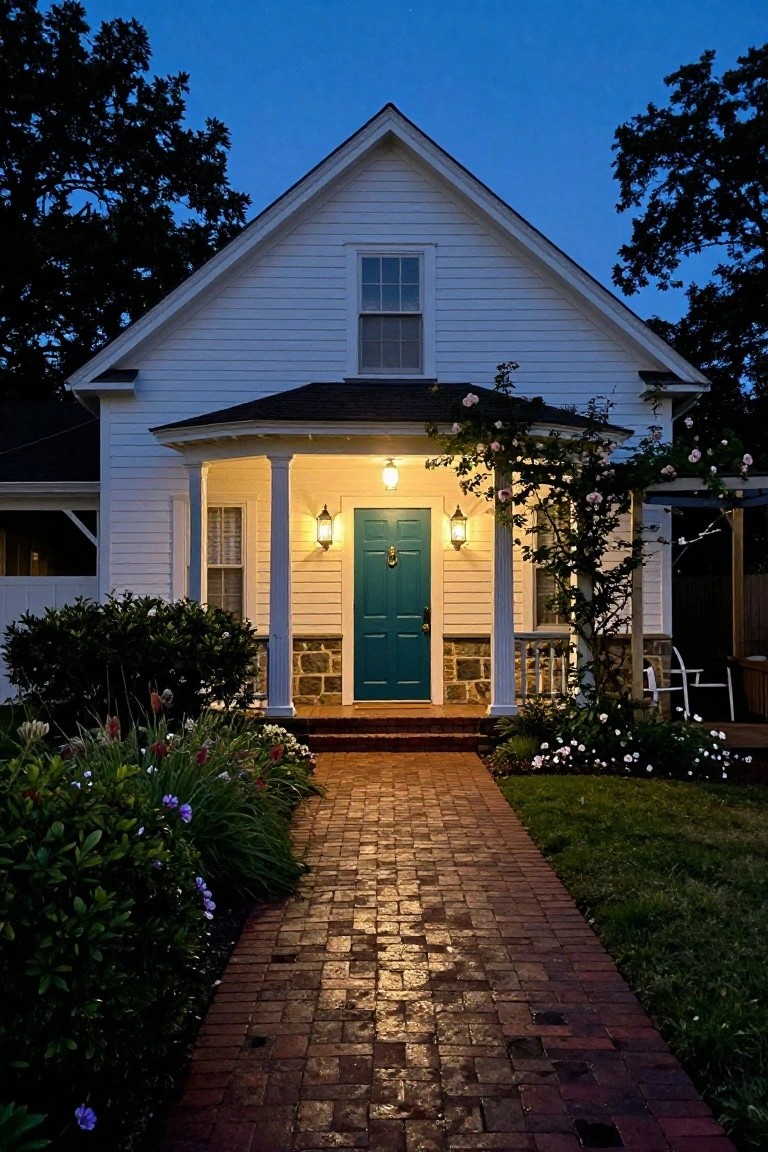
A bright blue front door brings life to this classic white colonial house. Against the clean white siding and stone accents at the base, it pulls your eye straight to the porch without overwhelming the look.
This works great on traditional homes in neighborhoods with lots of whites and neutrals. Add matching lanterns for night time glow and keep landscaping simple along a brick path. Steer clear of bold trim colors though. That keeps things fresh.
Glass-Roofed Entry Porch
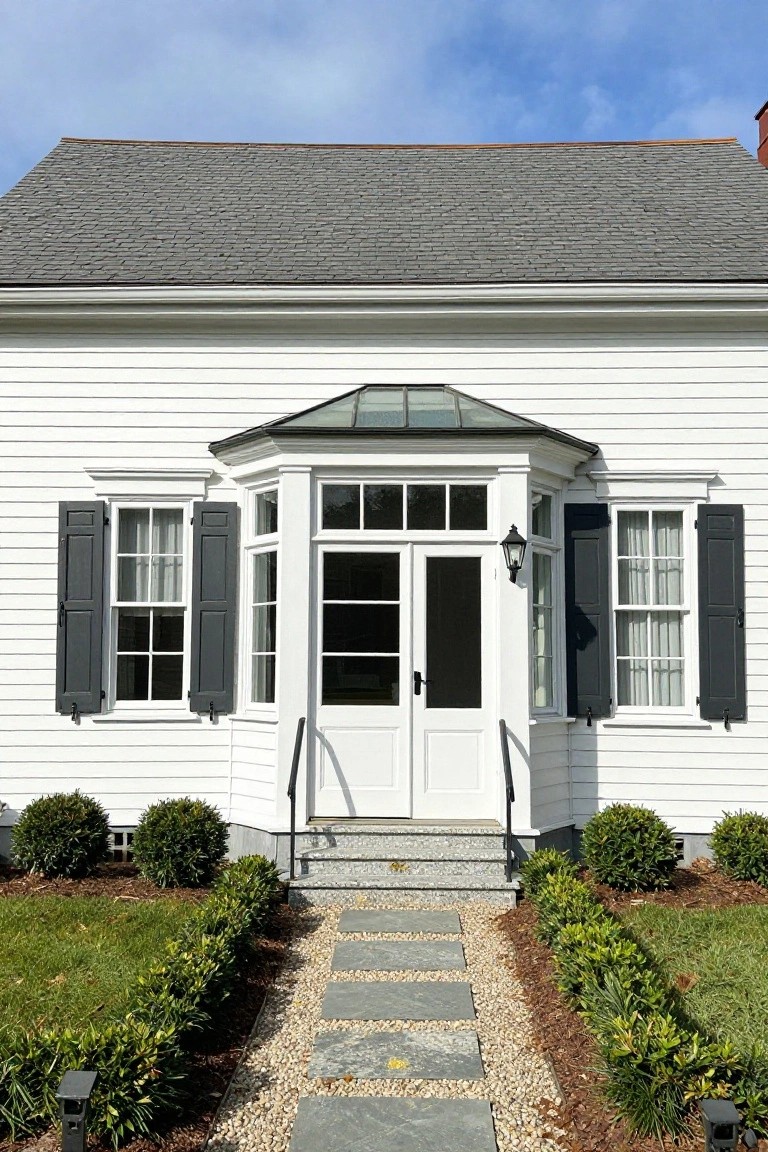
A glass roof over the entry porch brings natural light right to your front door on this white colonial. It keeps the simple clapboard siding and black shutters looking sharp while making the space feel bigger and more welcoming. Folks notice how it softens the usual boxy colonial front.
Try this on a house with some tree shade or in cooler areas where you want that extra glow inside. Line the path with low boxwoods to guide people up, and keep the doors white for clean lines. It works best on smaller homes that need a little architectural pop.
Brass Double Doors on White Colonial Porches
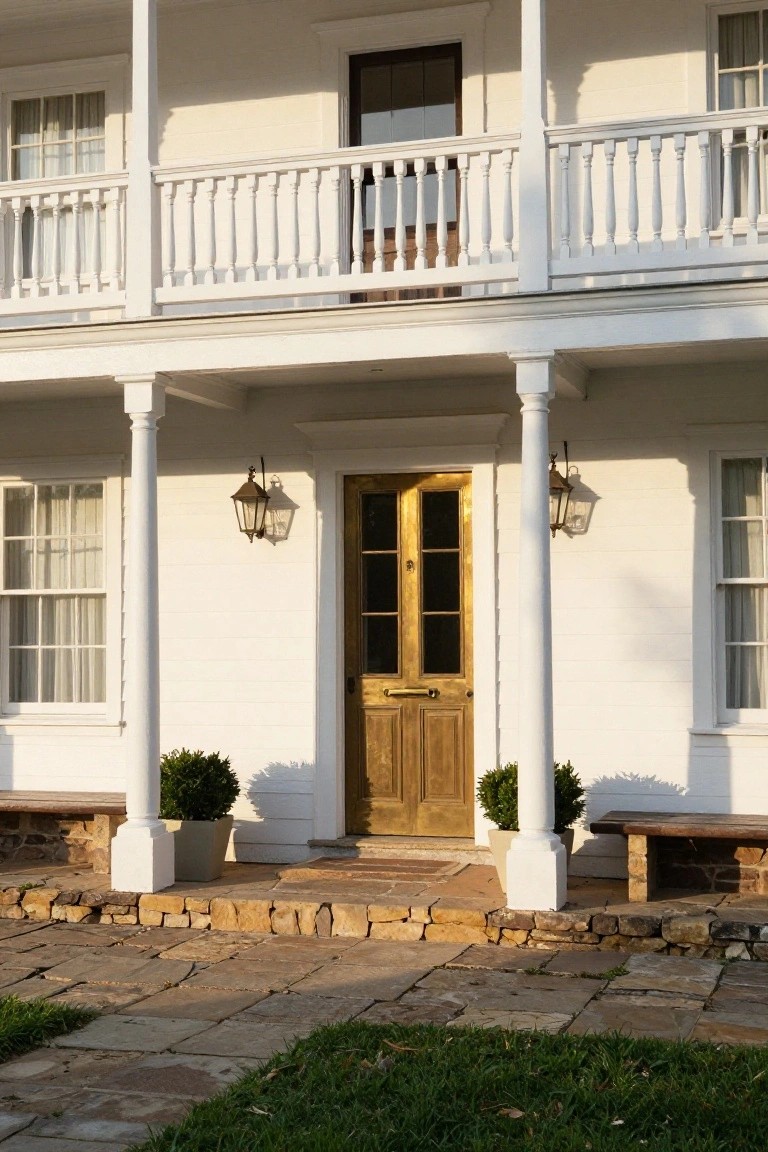
A pair of brass double doors makes the entry pop on this white colonial house. The warm gold tone stands out against the crisp siding and porch columns. It gives the whole front a touch of old-world feel without much effort. Those lanterns on either side help frame it nicely too.
This works best on homes with clean lines and light paint. Go for it if your porch has good symmetry. The brass picks up light during the day and looks solid at night. Keep plantings simple like boxwoods so the door stays the focus. Avoid busy colors nearby or it might clash.
Stone Lions Frame the Entry Path
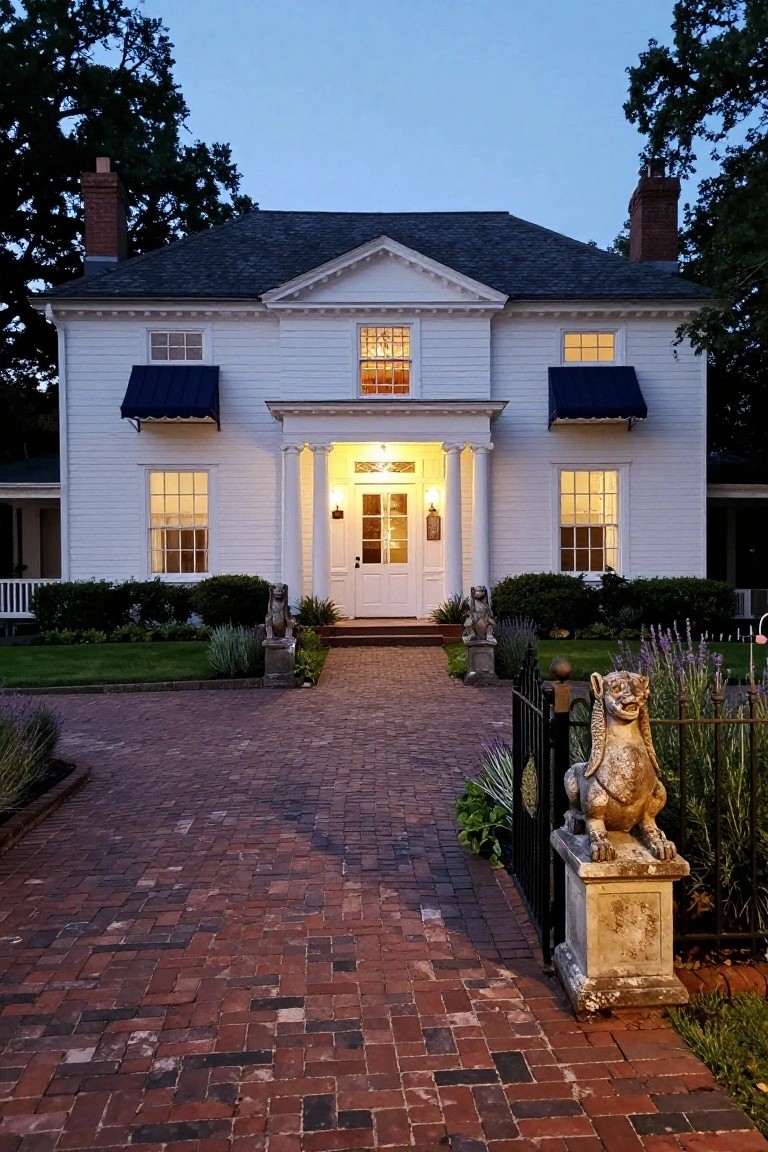
A pair of stone lion statues sits on pedestals right along the brick walkway of this white colonial home. They match up perfectly with the house’s classic lines and columned porch. At dusk with the entry lights on, they add a formal touch that makes the whole front yard feel put together and a bit grand without trying too hard.
Put these guardians at your own gate entrance and path corners for that same welcoming setup. They suit older style homes like colonials or federals best, especially where you want some height without tall plantings. Pick weathered stone to blend in over time, and keep them the same size on both sides for balance.
Entry Flanked by Tall Potted Trees
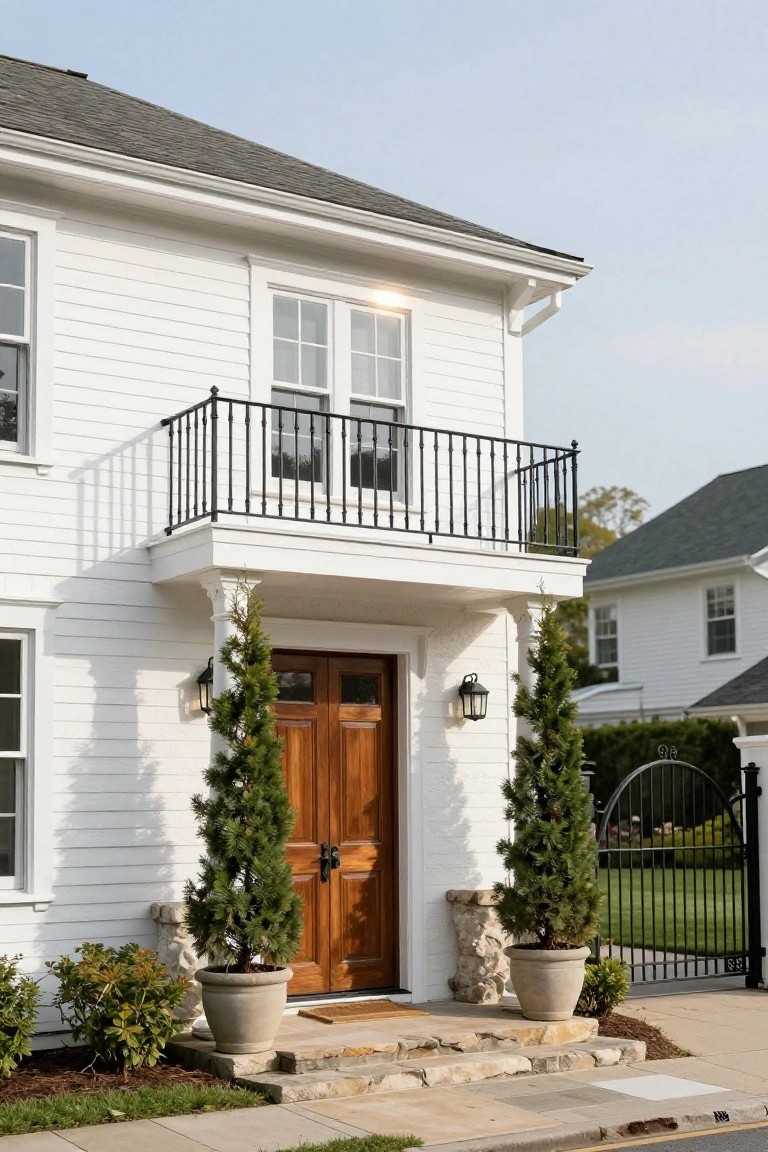
One easy move for white colonial homes is putting tall evergreens in pots right beside the front door. These narrow trees in matching stone pots add some green height without taking up yard space. They pull focus to the warm wood double doors and make the whole entry feel put together.
This setup suits raised porches like this one with stone steps. Go for upright varieties that won’t spread wide. Keep the pots simple and the same size on both sides. It works in small front areas or where you want low upkeep planting that ties into the house architecture.
White Colonial with Steep Gables
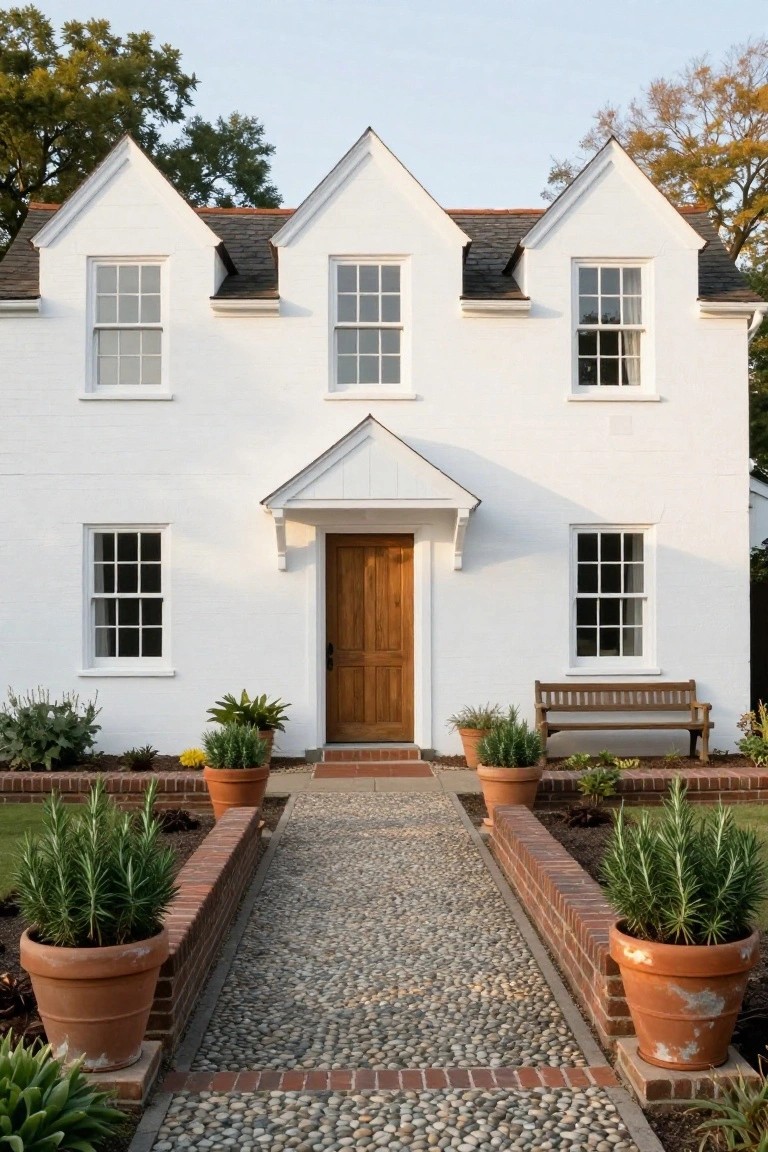
A white colonial house really shines when you add multiple steep gables across the front. They break up the flat roofline and give the place some height and rhythm. In this setup, the white siding stays crisp and clean, while the dark slate roof ties it together. The wooden door in the center pulls everything in without much fuss.
This look works best on a two-story home where you want classic lines but a bit more personality. Line up the windows symmetrically under each gable, and keep plantings simple along the path. It suits suburban spots or older neighborhoods. Just make sure the gables aren’t too busy, or it can start to feel cluttered.
Classic Colonial Porch Design
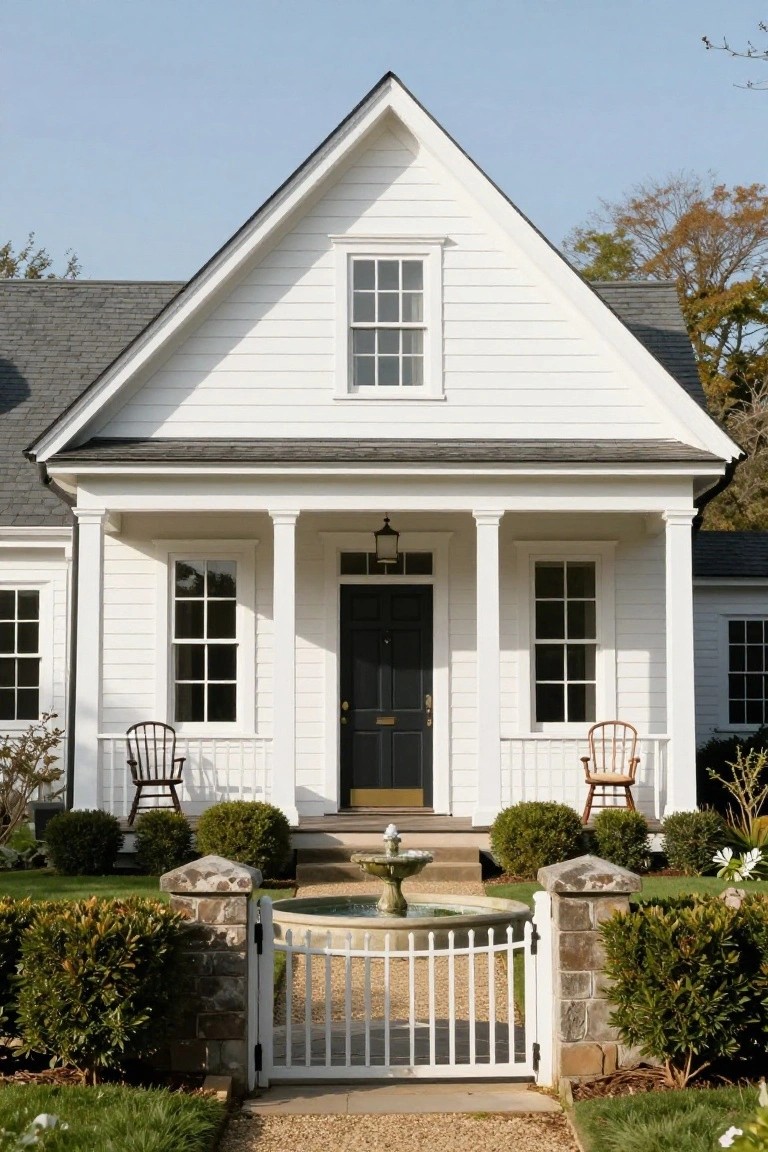
A covered front porch like this one takes a white colonial house up a notch. Tall white columns frame the black door just right, giving the whole facade that balanced, welcoming look folks have loved for years. Pair it with a couple of chairs, and you’ve got a spot to sit without even stepping inside.
This setup shines on smaller lots where you want porch life without losing grass. It fits right into older neighborhoods or suburbs aiming for that timeless feel. Keep the roof simple and siding fresh, and skip fancy extras to let the structure do the talking.
Dark Wood Garage Door
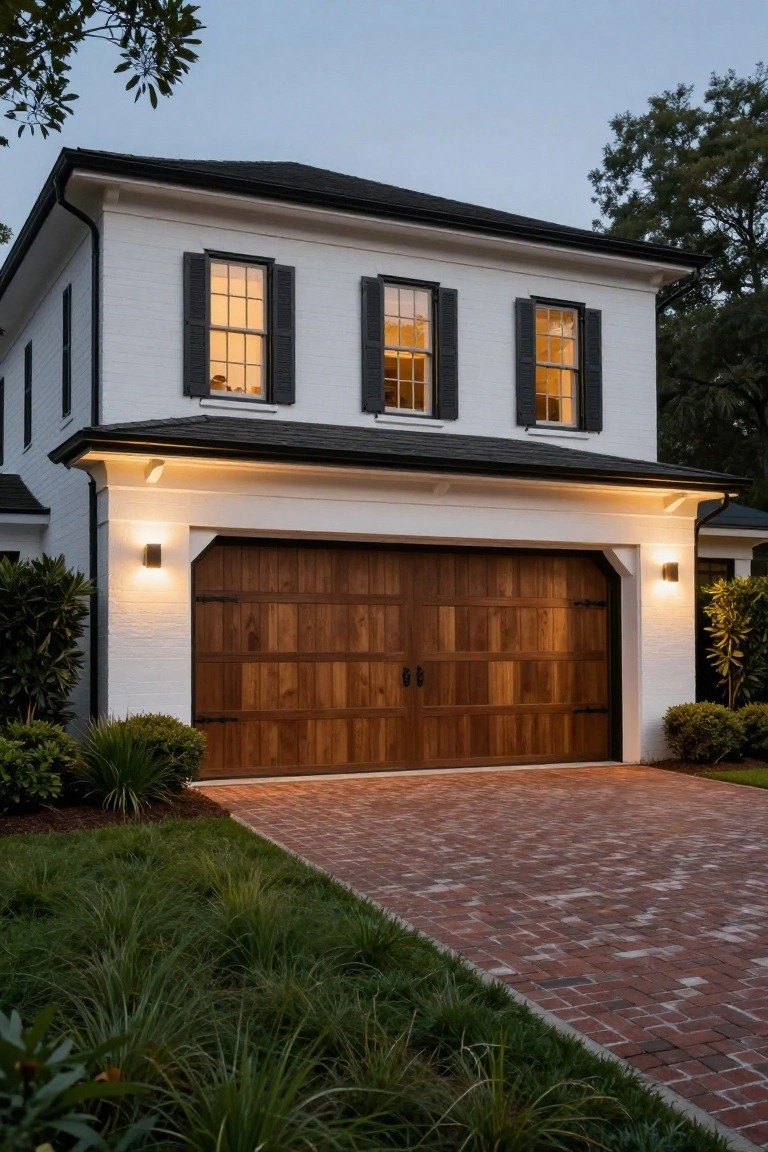
A white colonial house looks sharp with a dark wood garage door like this one. The rich grain stands out against the clean siding and black shutters. It keeps the front classic but adds real texture right where eyes land first.
Try this on any traditional style home facing the street. Stain the wood deep for contrast, or go lighter if your trim is softer. Brick pavers underfoot help tie it down… just make sure the door’s hardware matches the house scale.
Red Front Door on White Colonial Exterior
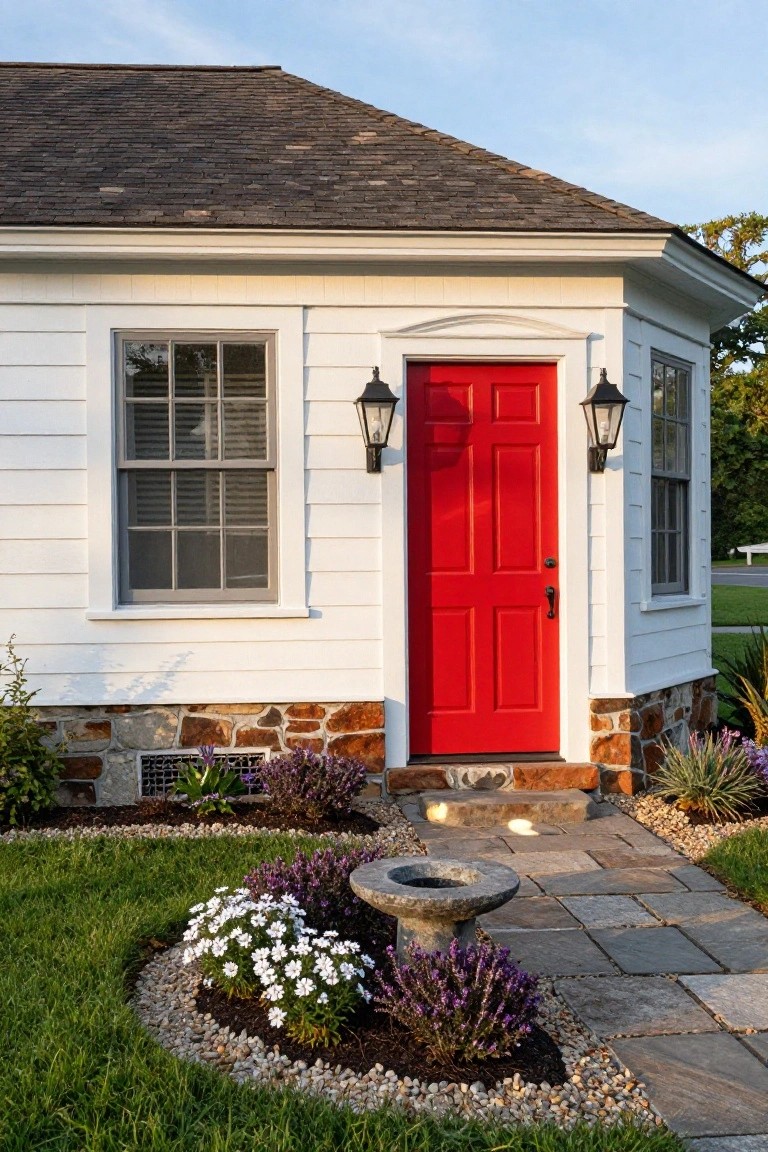
A red front door gives a white colonial house that instant pop people notice from the street. It takes the crisp white siding and turns the entry into the main event without much fuss. Those black lanterns next to it just make the color stand out even more.
This idea fits older homes or new builds aiming for that classic look. Go bold with the red but keep everything else simple, like plain windows and a stone base. Skip busy landscaping around the door, or it might steal the show… and watch the scale on bigger houses.
Green Doors on White Colonial Exteriors
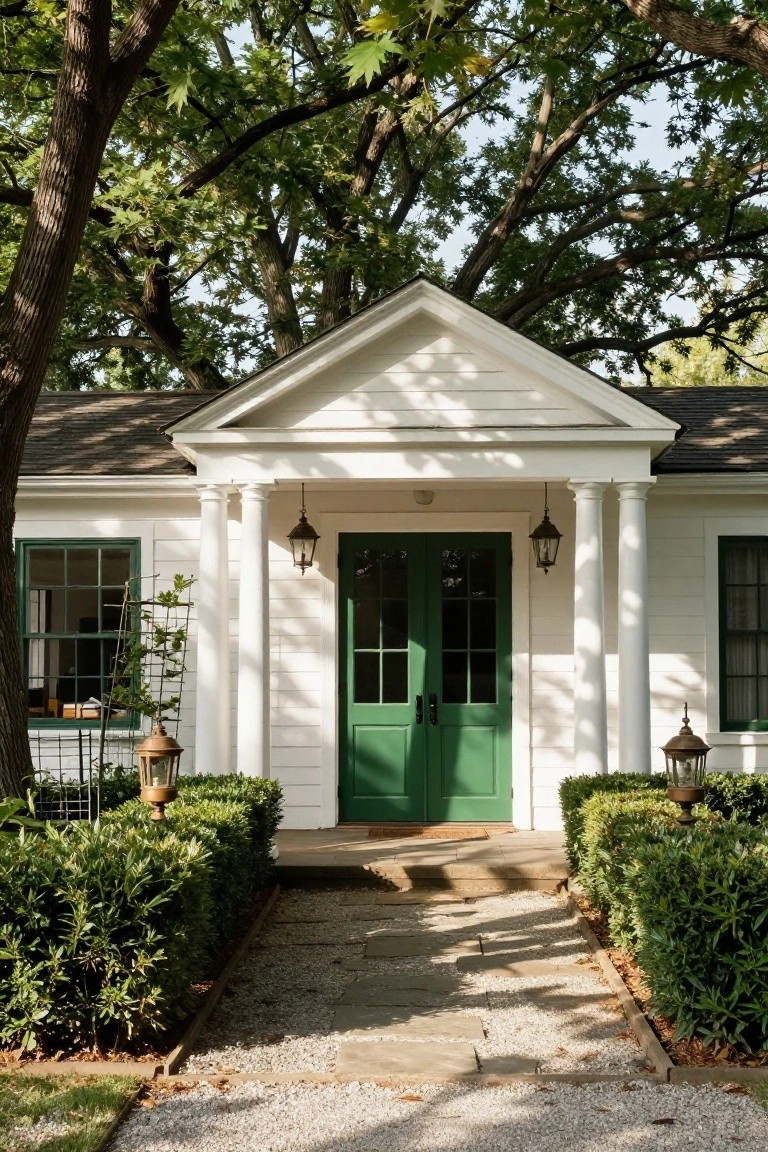
A fresh take on the classic white colonial shows up with these green front doors. They stand out against the crisp white siding and columns, pulling your eye right to the entry. Simple lanterns hang on either side, and boxwood hedges keep things neat without stealing the show. It’s a straightforward way to add some life to a traditional look.
This works best on smaller homes or cottages with a covered porch setup. Paint the doors a strong green like this if your house faces south for good light. Skip it on larger facades where the color might get lost. Just make sure the trim stays white to let the doors do their thing.
Frequently Asked Questions
Q: My white siding looks dingy after a few years. What’s the easiest refresh?
A: Power wash it gently with low pressure and a wide nozzle tip. Follow up with a bleach-free mildew cleaner you mix yourself. That brightens everything up quick without stripping the paint.
Q: Black trim or go lighter? Which stays freshest on a colonial?
A: Black trim holds its crisp edge longest against white siding. Wipe it down yearly to fend off dust. It grounds the whole look beautifully.
Q: How do I handle mildew spots on white clapboard?
A: Spray undiluted white vinegar right on the spots, let it sit ten minutes, then hose off. Trim bushes back for better airflow too.
Q: Can I add a front door color without ruining the colonial vibe?
A: Pick a deep navy—it echoes historic charm and pulls eyes to the entry. One coat of high-gloss paint seals the deal. Freshens the facade instantly.
