

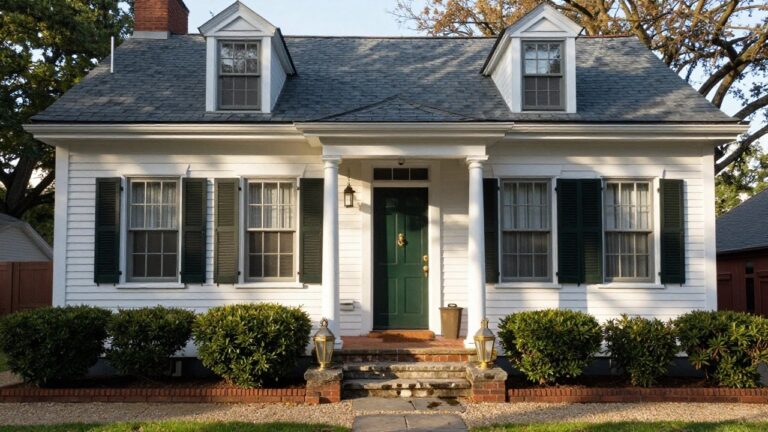
I’ve always appreciated how a Colonial Revival exterior grabs you from the curb with its clean symmetry and balanced roofline. Those first impressions stick because the facade choices, from clapboard siding to centered doorways, make the house read as solid and timeless from the street. I once drove past a row of them where mismatched proportions threw everything off, but the ones that worked used simple materials to echo real history without forcing it. Entry details often decide if it feels welcoming or just copied from a book. A handful of these ideas feel worth sketching out or adapting to bring that lived-in historical vibe to a modern home.
Classic Columned Porticos
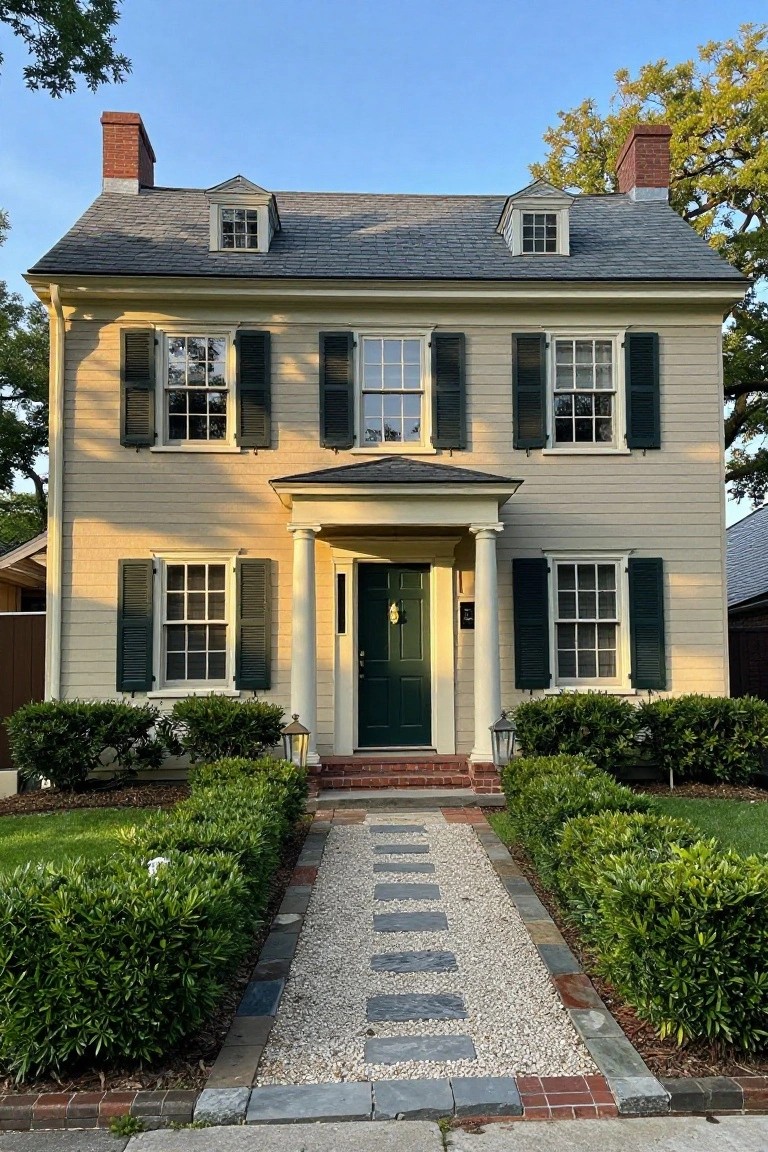
A columned portico like this one pulls the eye right to the front door. It gives the house that solid Colonial Revival look without overdoing it. The pale siding keeps things light while the columns add structure and a bit of formality. That green door pops just enough to make the entry feel open and used.
These work best on homes with balanced windows and a straightforward roofline. Keep the columns in proportion to the door height so they don’t overwhelm. Boxwoods along the path help frame it all. Skip this if your facade is too busy. It suits older neighborhoods where history matters.
Lavender Pots Beside the Entry Door
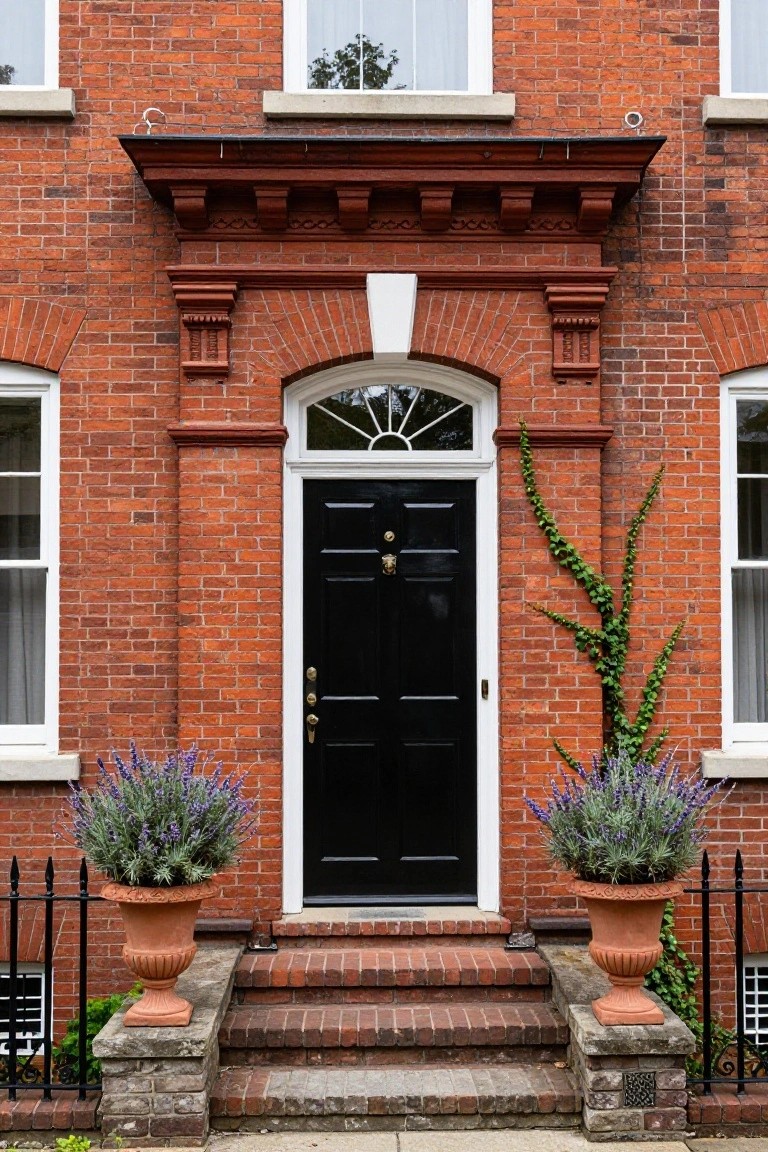
A simple way to boost curb appeal on a brick house like this is to place matching terra cotta pots of lavender right next to the front door. The purple blooms pick up nicely against the warm red brick and that crisp black door, giving the whole entry a neat, put-together look without much fuss. It adds a soft touch to the solid architecture, making the house feel more lived-in and welcoming from the street.
These pots work best on steps or a small landing where they won’t crowd the path. Go for larger ones in clay or stone to match the house style, and choose tough plants like lavender that handle some neglect. They’re great for Colonial Revival homes or any traditional facade, but keep them trimmed so they stay balanced on both sides.
Classic Columned Porch Entry
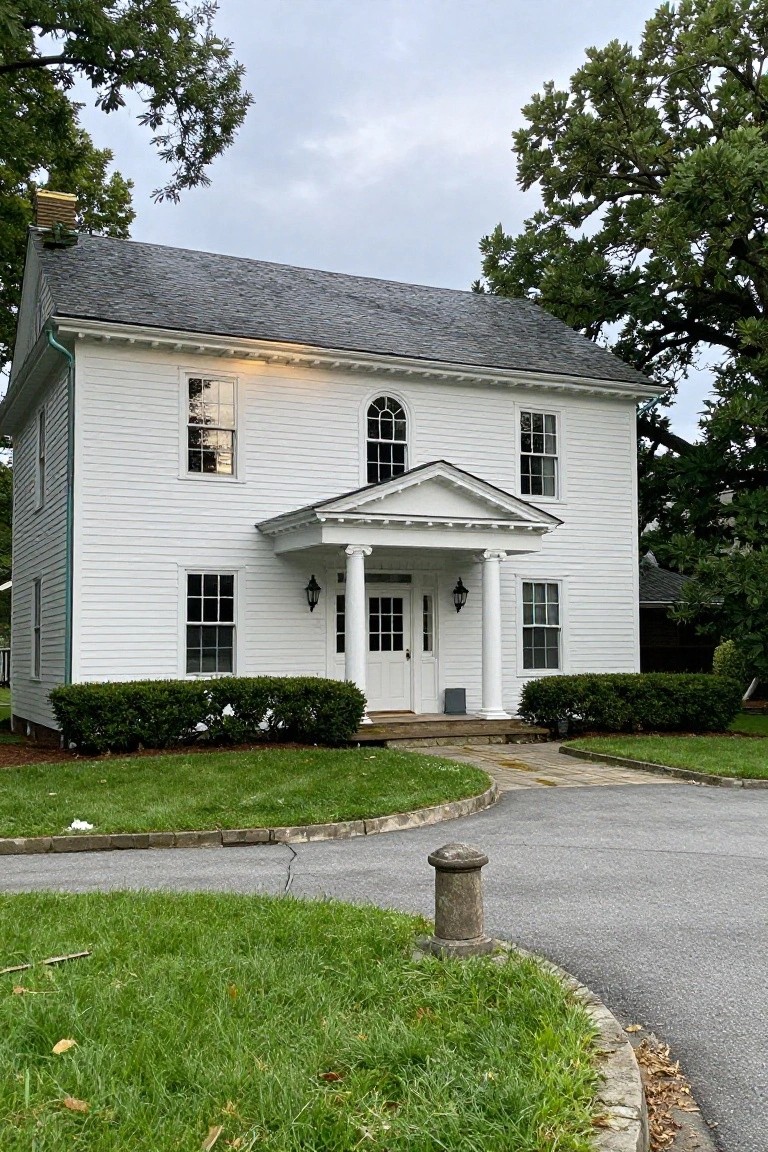
A columned porch like this one sits right at the front of a Colonial Revival house. It uses tall white columns to frame the door, giving the whole facade that balanced, welcoming look from the street. The simple pediment above pulls it all together without extra fuss, and a pair of boxwood shrubs on each side keeps things neat and tied to the architecture.
This setup works best on homes with some yard space, where the porch can stand out against grass or a driveway curve. Paint the columns crisp white to match siding, and keep plantings low so they don’t block the view. It suits older neighborhoods or revivals aiming for history feel, but skip it if your lot is too tight… the columns need room to breathe.
Recommended Products

【Realistic Artificial Plants】This set includes 2 packs of 23.7 inch artificial topiary ball trees decorated with white lotus and equipped with ground spikes.The lush foliage and realistic texture make it the perfect alternative to real flowers, bringing lasting beauty to any space.

【UV-Resistant Artificial Boxwood Panels】Engineered with sun-proof materials to prevent fading and cracking,ideal for year-round outdoor exposure in harsh climates. Solves the problem of replacing weather-damaged decor every season.
Shingle Siding Gives Historic Character
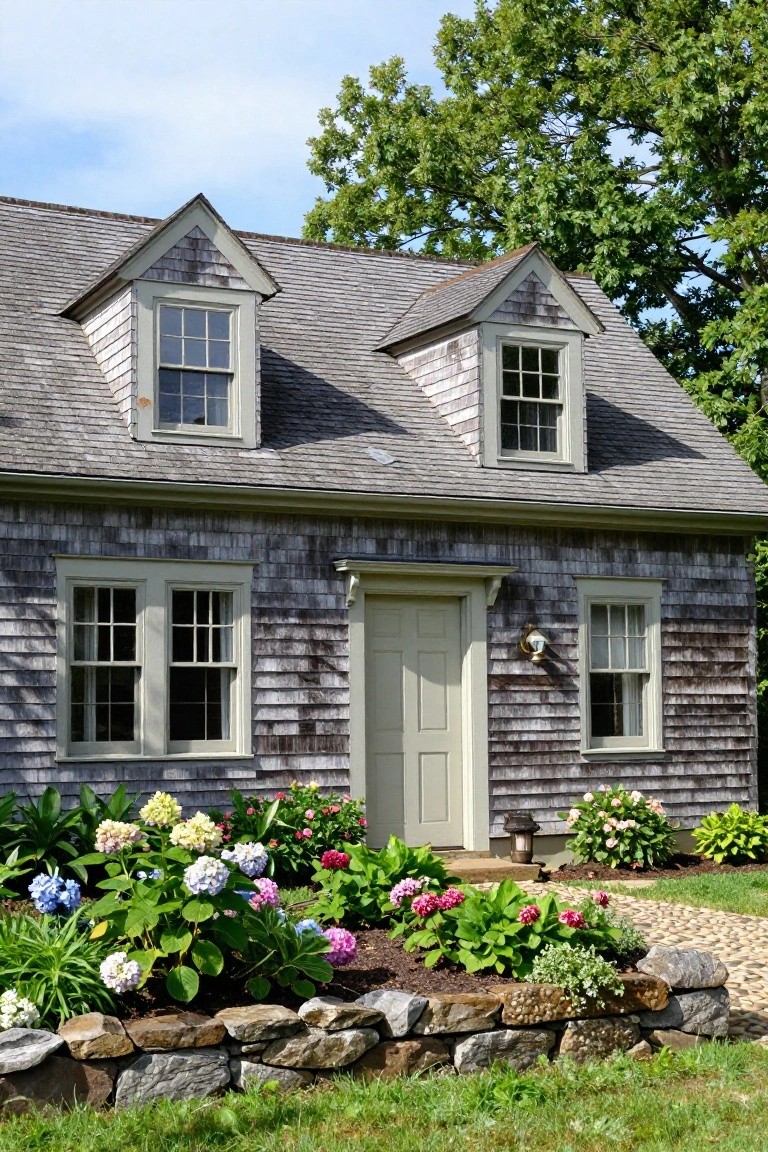
Shingle siding like this catches the eye right away on a Colonial Revival home. The gray cedar shakes have that weathered look that feels straight out of old New England villages. Paired with white trim around the dormers and double-hung windows it keeps things simple and true to the style. Folks like it because it ages well over time without much fuss.
You can pull this off on smaller homes with a gabled roofline or even add it to just the upper story for contrast. It works best in coastal or wooded spots where the natural patina blends in. Just make sure to use untreated cedar so it grays nicely and check local codes for the right exposure size.
Classic Porch Lanterns
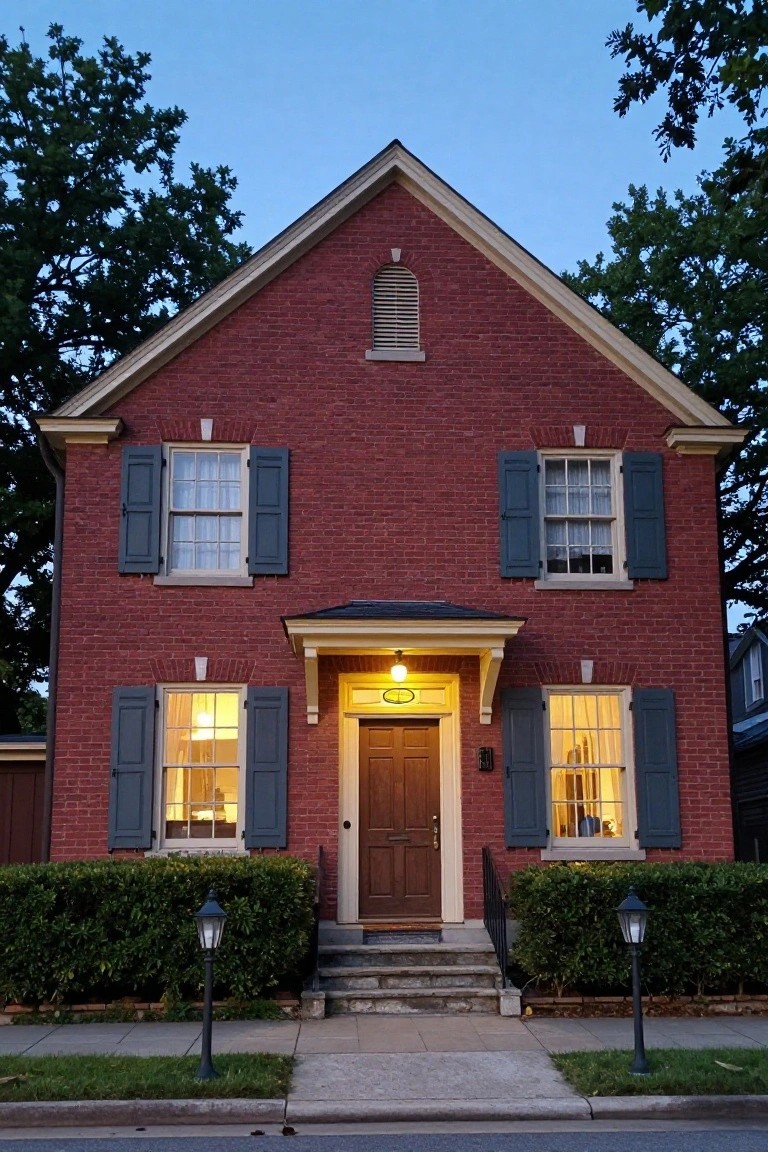
A pair of lanterns like these on the front porch posts really make the entry pop at dusk. They cast a soft glow over the door and steps without being too bright. On a brick house with this kind of symmetry, they pull everything together in a way that feels right for Colonial Revival style. No fancy fixtures needed. Just something simple that matches the shutters.
These work best on homes with a covered entry and some height to the porch. Hang them at eye level so they light the path up. Skip big modern bulbs. Go for a warm filament style to keep that old-time feel. They suit most neighborhoods too. Not too showy.
Classic Colonial Front Porch
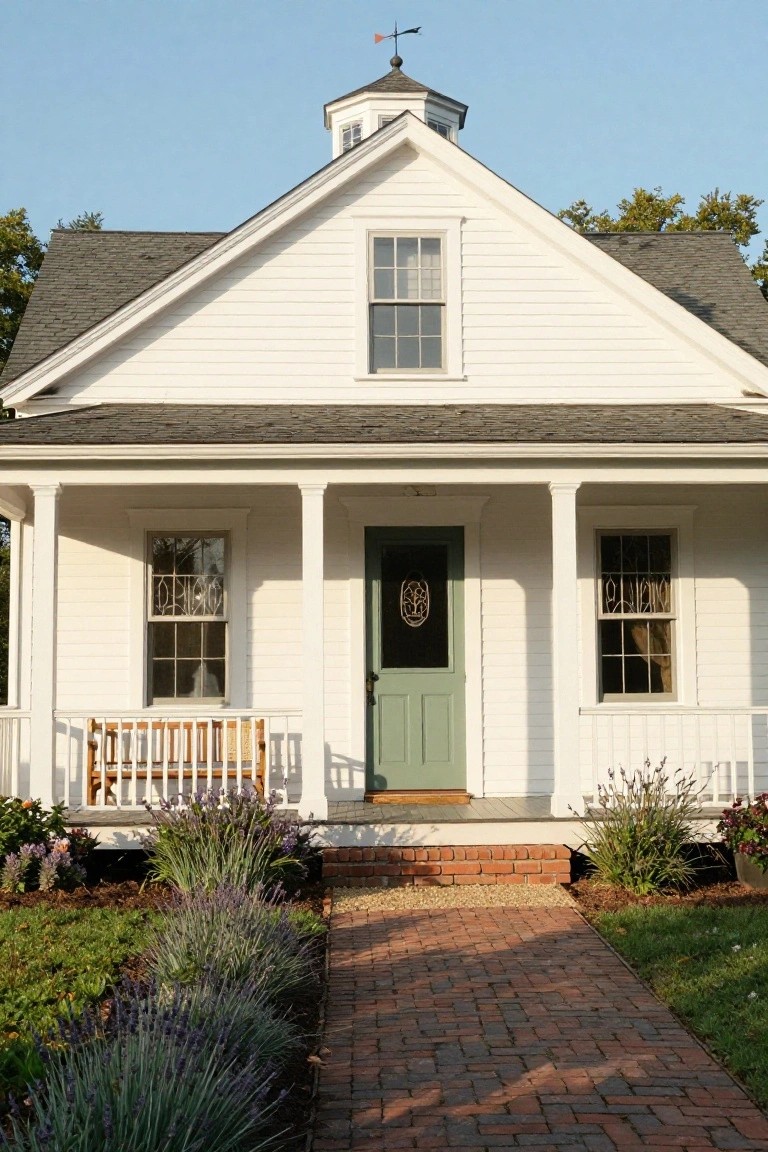
A full-width front porch like this one gives a Colonial Revival house that instant sense of home. White clapboard siding and sturdy columns keep things simple and traditional, while the porch pulls the entry forward and makes the whole facade feel balanced. That bench tucked to the side? It invites folks to sit a minute before knocking.
These porches work best on single-story homes or cottages where you want to soften a boxy shape. Stick to painted columns and a railing that matches the house trim. On a smaller lot, keep plantings low along the path so the porch stays the star. Just make sure the roof pitch ties into the main gable or it can look off.
Classic Arched Entry Door
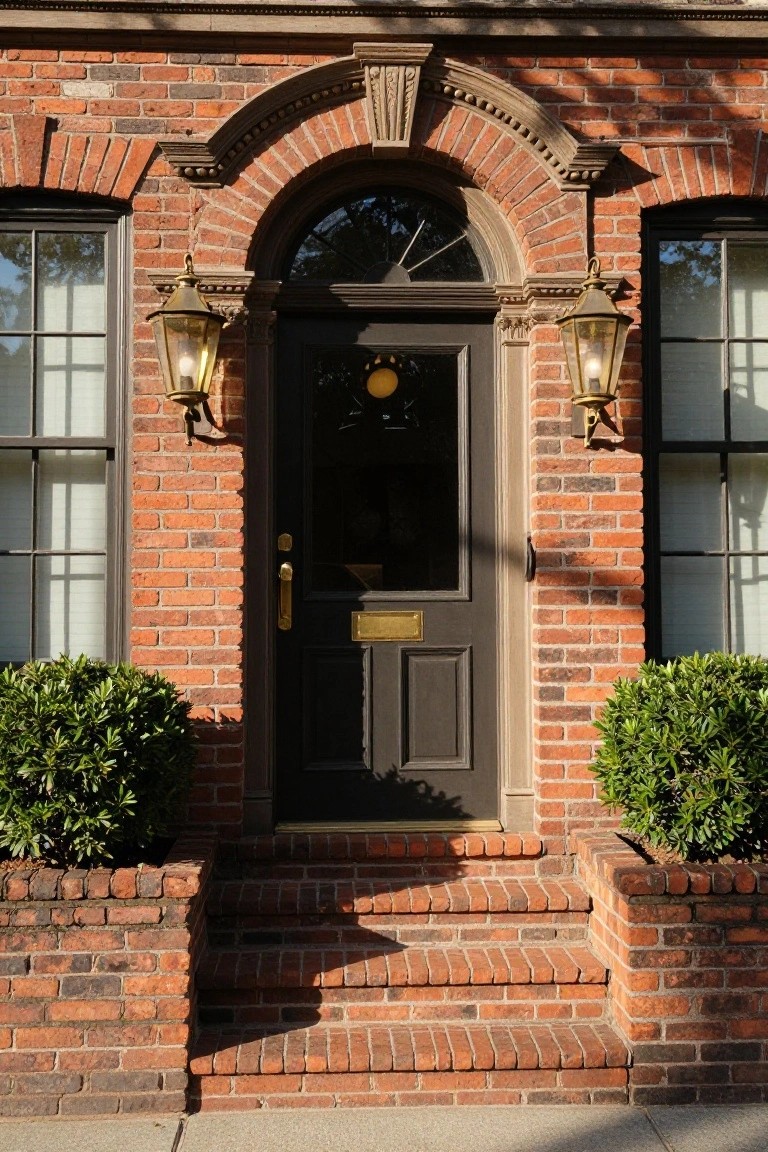
A centered arched door like this pulls the whole front of the house together. The brick arch overhead frames it nicely, and those brass lanterns on either side light it up just right for evenings. It’s a simple way to give a colonial feel without much fuss, especially when the door sits dark against the warm brick.
This works best on narrower townhouses or row homes where you want the entry to be the main event. Keep the steps short and add low boxwoods at the bottom for balance. Skip fancy trim if the brick already has good texture. It suits city blocks fine, as long as the lanterns match the scale.
Classic Brick and Shingle Facade
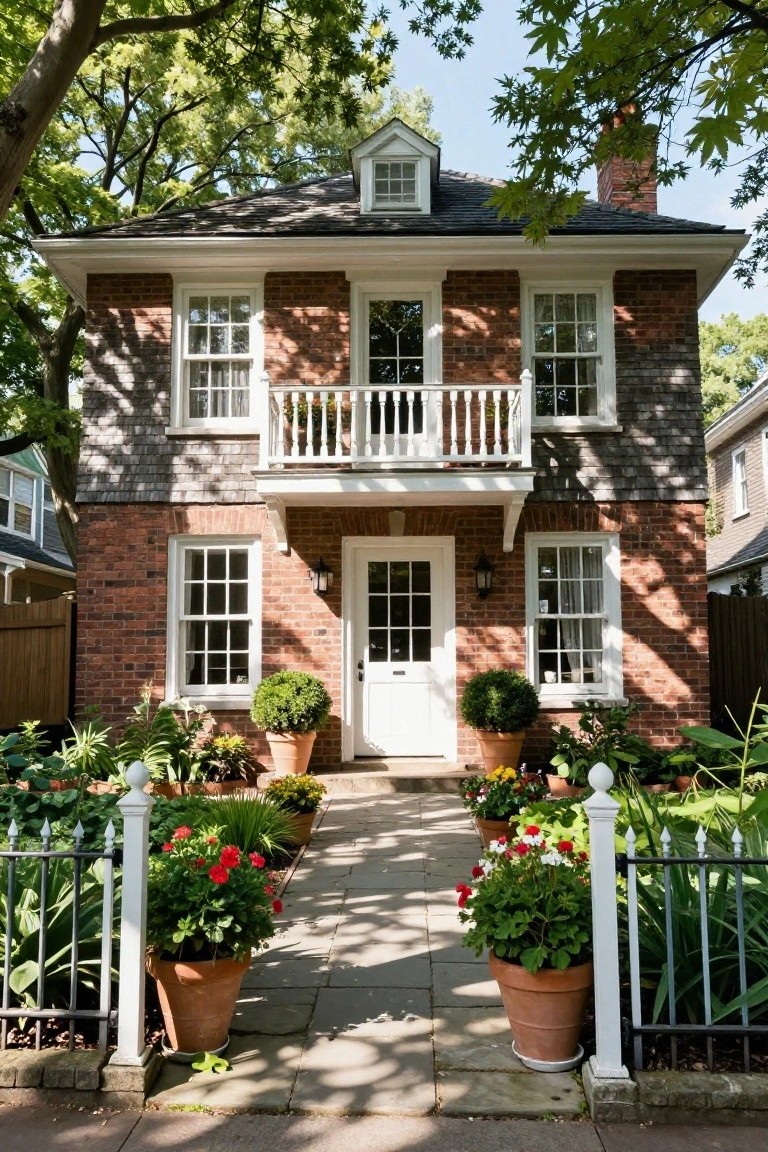
One reliable way to get that Colonial Revival feel is pairing brick on the lower story with shingles up top. The brick gives a solid, grounded base that looks right at home in older neighborhoods. Then the shingles lighten things up on the gables and roofline, adding some texture without overdoing it. White trim around the windows and door pulls it all together for clean lines. A small balcony like this one adds just enough detail to make the front stand out.
This setup works best on two-story homes where you want history without fuss. Use red or warm-toned brick for the bottom, gray shingles above, and keep the trim bright white. It suits suburban streets or town lots. Watch the scale though. Too much shingle can make it busy, so stick to gables and dormers. Plant boxwoods by the door to tie it to the yard.
Classic Front Porch Entry
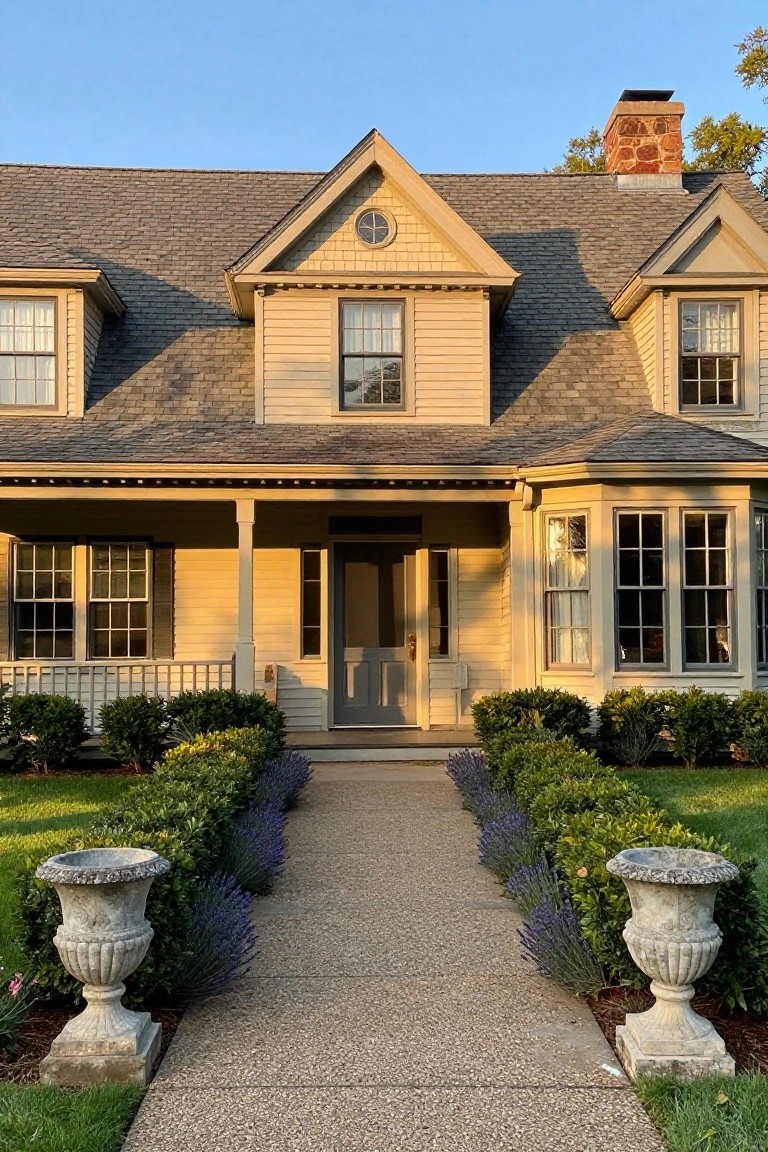
A front porch like this one really sets the tone for a Colonial Revival house. With its simple columns and railing, it pulls the eye right to the centered door. The soft yellow siding and shingle roof keep things traditional without feeling stuffy. Folks like how it makes the house look lived-in and ready for company.
Put this style on homes with good setback from the street. It works best where you want that everyday charm, maybe with boxwood hedges along the walk to tie it all together. Skip fancy add-ons. Just keep the porch plain and let the path lead people up naturally.
Recommended Products

Premium Quality: These terra cotta pots are constructed of high-quality clay, which allows more water and air to circulate freely within the pots while yet maintaining their structural integrity. It's an excellent choice for cactus, succulents, and other plants that thrive in dry soil, and it's also appropriate for areas with lower temperatures. The high air permeability of the pot walls helps the soil to dry out more quickly

Premium Quality: These terra cotta pots are constructed of high-quality clay, which allows more water and air to circulate freely within the pots while yet maintaining their structural integrity. It’s an excellent choice for cactus, succulents, and other plants that thrive in dry soil, and it’s also appropriate for areas with lower temperatures. The high air permeability of the pot walls helps the soil to dry out more quickly

RECYCLED MATERIALS: Made with a blend of recycled plastic, stone powder and wood dust
Brick Portico Entry Design
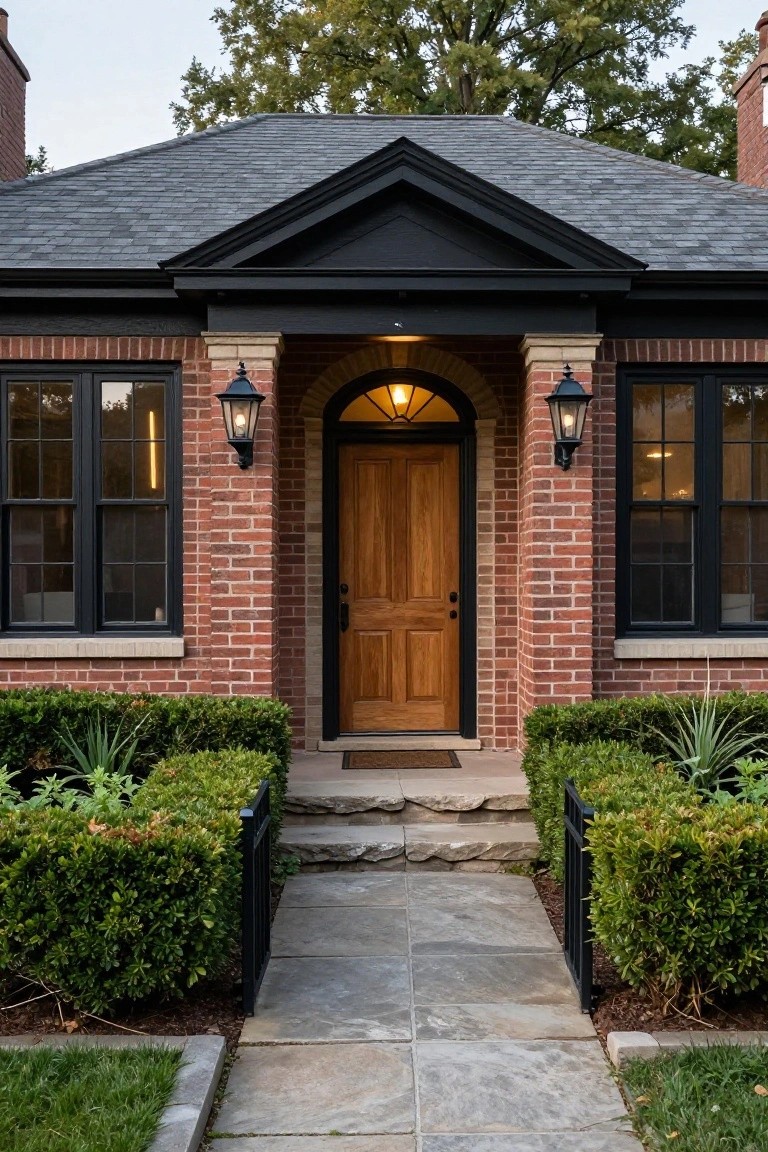
A simple portico like this one over the front door pulls together the whole facade on a brick house. The red brick base stays true to Colonial roots, but black trim on the pediment and windows sharpens it up nicely. That warm oak double door in the center makes the entry feel solid and inviting right away. Boxwoods frame the steps without overdoing it.
Try this on a one or two-story home where you want the door to be the main focal point. Keep the lanterns classic to match the arch above the door. It suits city lots or suburbs fine, as long as the path leads straight in. Just avoid too much landscaping that hides the brick.
Shingle Siding on a Beach House
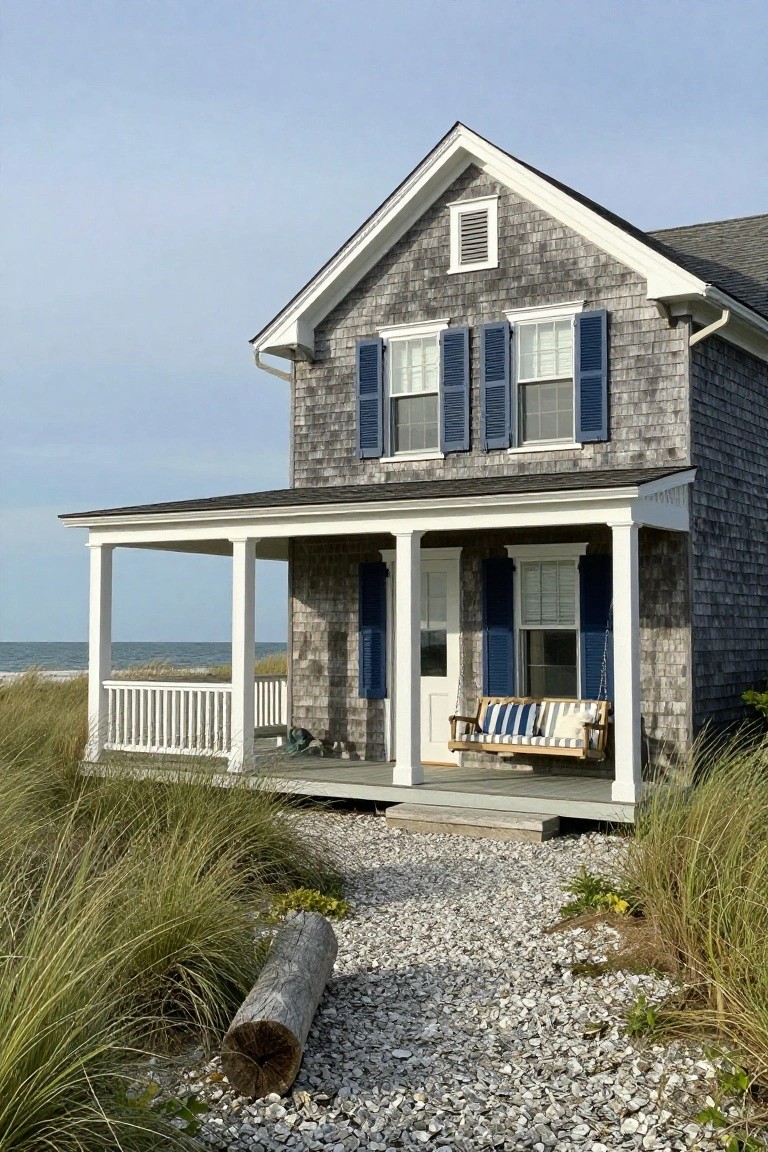
Shingle siding gives this house that classic coastal look that feels pulled from an old New England postcard. The gray shingles blend right into the dunes, while white trim around the windows and porch keeps everything crisp and clean. Blue shutters add a pop of color without overdoing it. It’s a simple way to nod to history while fitting a beach setting.
You can pull this off on smaller homes near water or even inland spots with some trees. Go for cedar or asphalt shingles in a weathered gray tone, pair them with white columns on the porch, and add a swing for that lived-in feel. Just make sure the roof matches in dark tones so it all ties together. Works best where you want low upkeep and a timeless vibe.
Symmetrical Brick Porch Entry
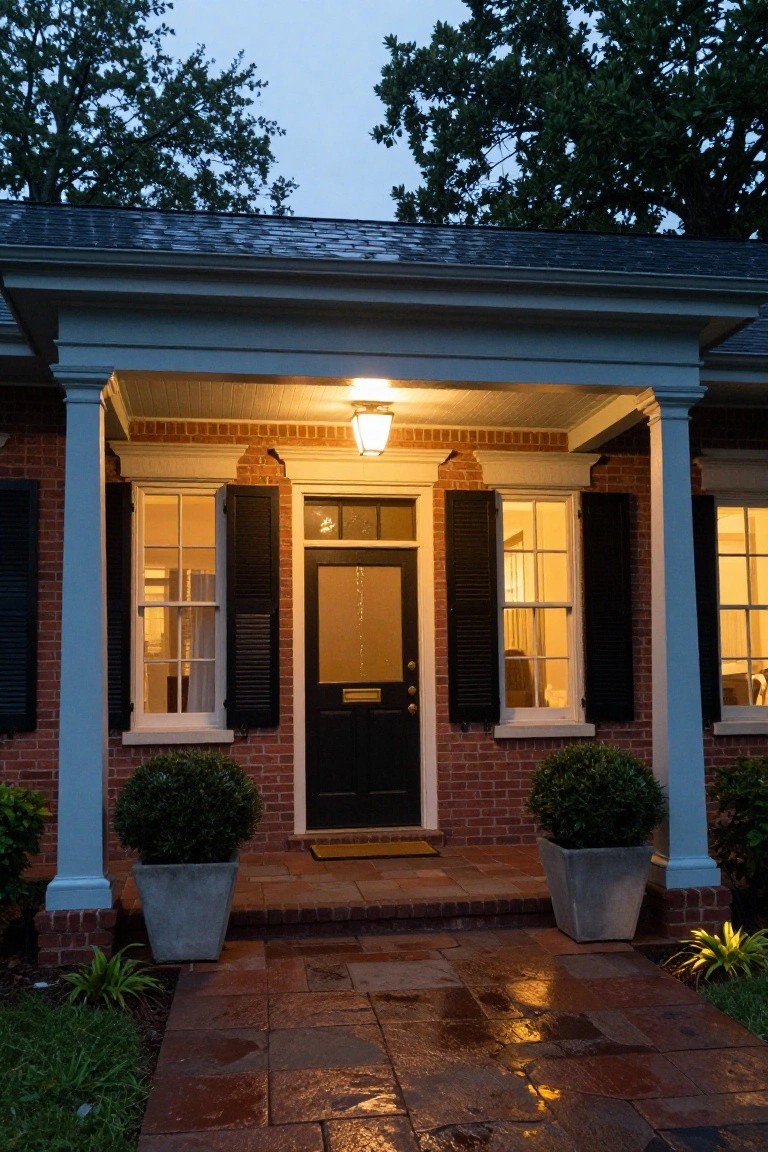
A classic move in Colonial Revival homes is building out a raised porch with matching columns on each side of the door. Here, the red brick walls tie right into the base, and those tall white columns give it that balanced, historical look without overdoing it. The dark front door with its mail slot pulls everything together neatly.
This setup works best on homes with a straight facade and some front yard room. It boosts curb appeal right away, especially with simple plants in pots nearby. Just keep the porch lighting soft, like that single lantern overhead, so it stays welcoming at night. Fits older neighborhoods perfectly.
Classic Front Porch with Columns
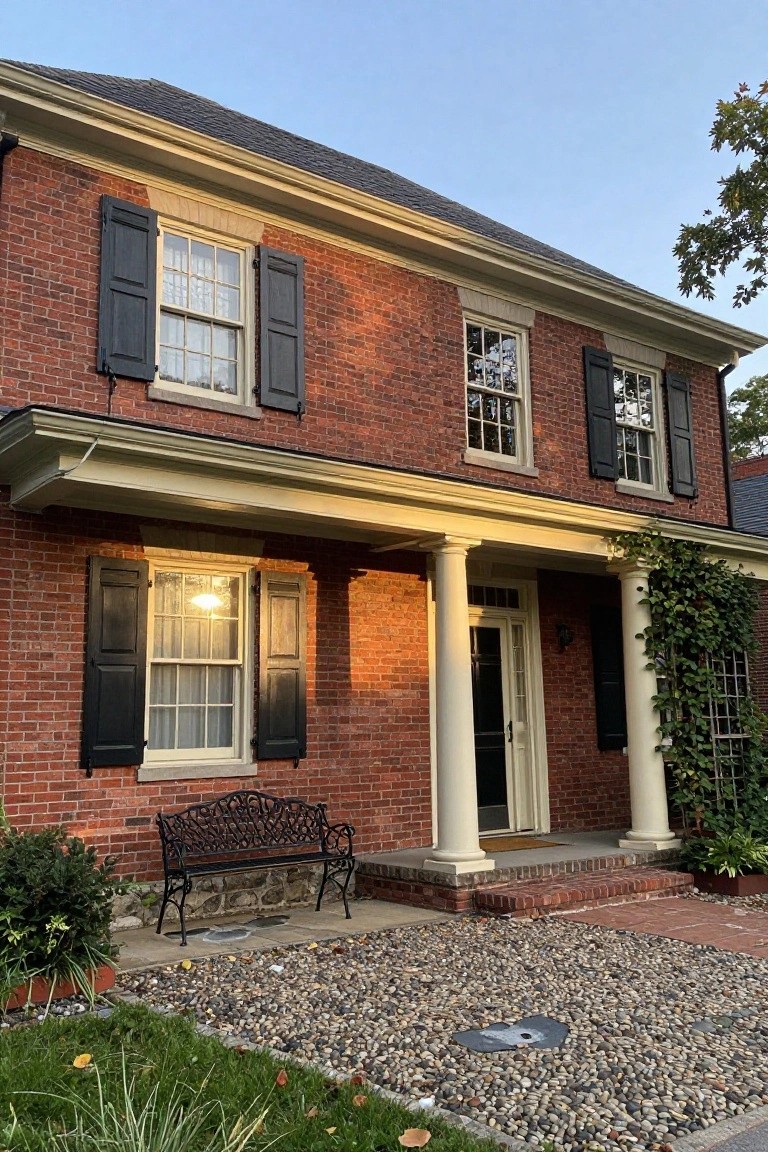
A covered front porch like this one really brings out the Colonial Revival style. Tall white columns support the roof over the entry, framing the door just right. Paired with black shutters on the brick facade, it keeps things balanced and period-appropriate. That simple black bench off to the side adds a spot to sit without crowding the walk.
Put this setup on a two-story house facing the street. It works best where you want curb appeal that feels steady and lived-in. Skip heavy planters near the steps. Keep gravel or brick paths clear to let the porch stand out.
Raised Porch on Brick Piers
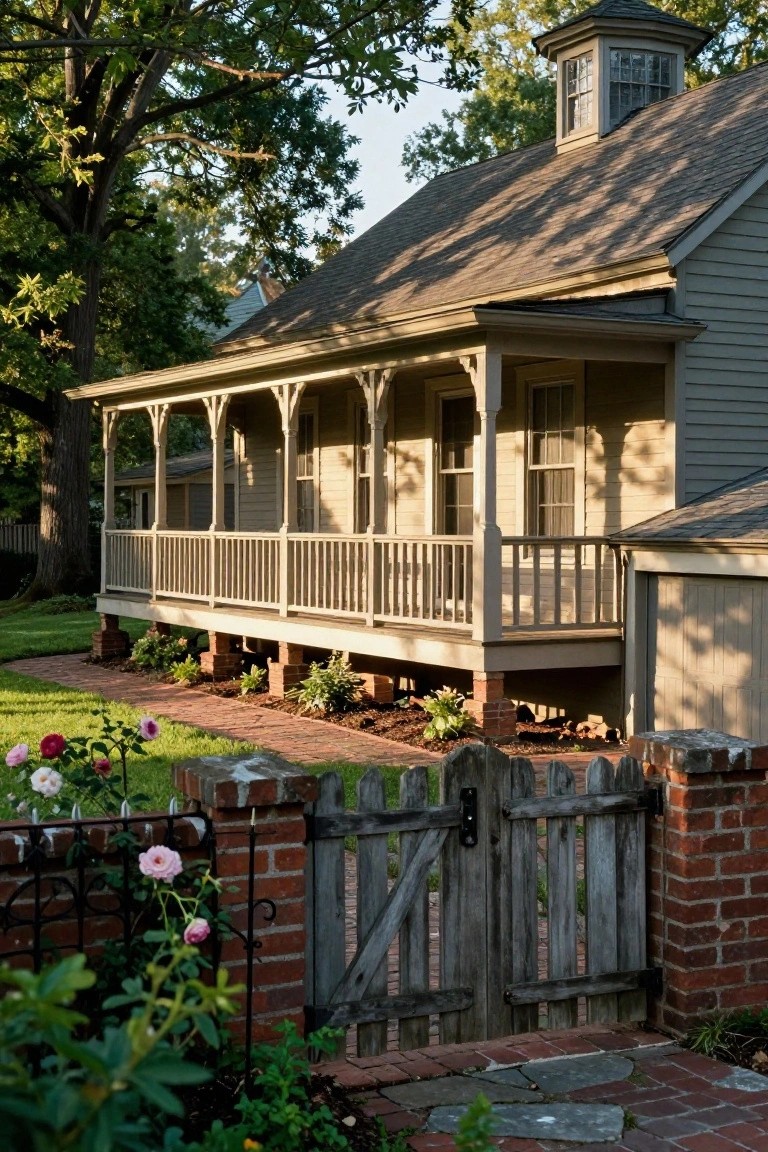
A raised porch like this one gives a Colonial Revival house that classic lifted look. Built on brick piers, it keeps the structure off the damp ground while creating space underneath for airflow. The wide wooden deck with its simple balustrade wraps along the side, making the whole facade feel open and welcoming without overwhelming the modest clapboard siding.
This setup suits older homes in the South or any spot with wet soil. It boosts curb appeal right away and offers a shady spot to sit. Go for sturdy piers and match the railing style to your trim, but skip it if your lot slopes too much… could get tricky.
Classic Columned Porch Entry
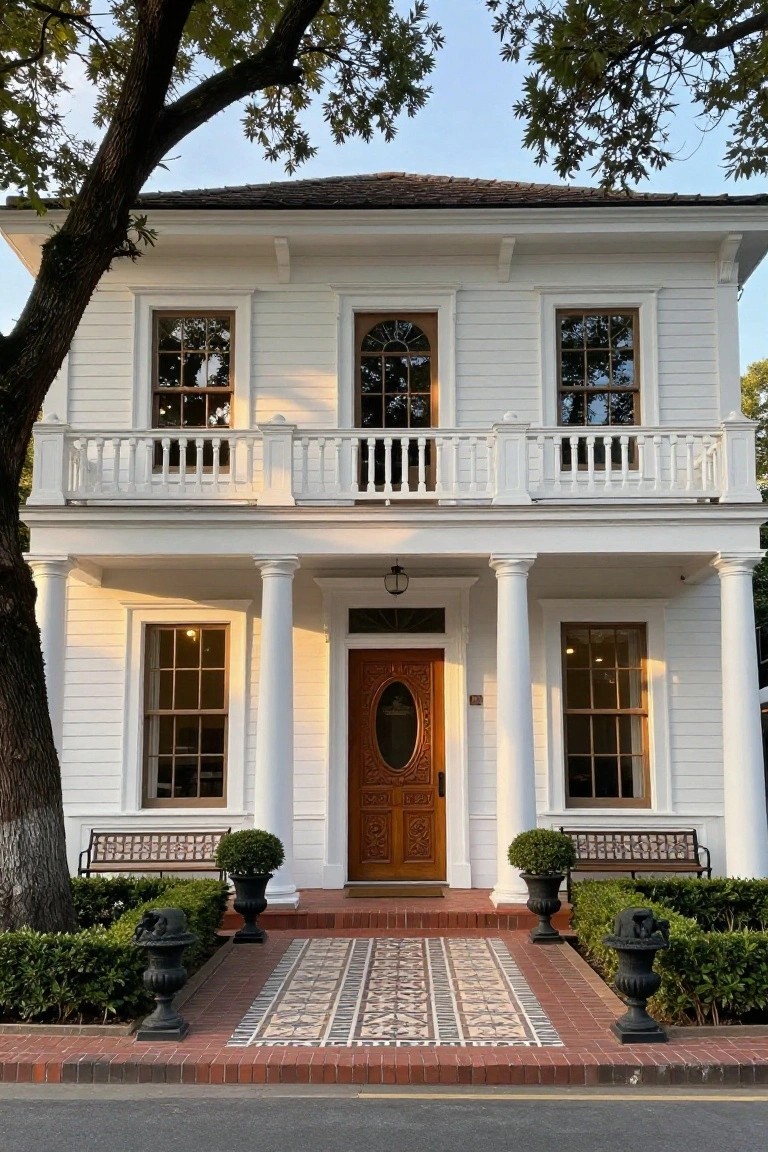
A columned porch like this one takes a Colonial Revival house right back to its roots. Those tall white fluted columns support the roof and frame the front door perfectly. They give the whole facade that balanced, welcoming look without trying too hard. The carved wood door with its oval window adds just enough detail to make you pause at the curb.
This setup works best on homes with some front yard space. It suits traditional neighborhoods where you want history to shine through. Keep the columns painted crisp white against clapboard siding, and add simple benches or urns nearby for everyday appeal. Skip heavy landscaping around the base so the architecture stays the star.
Mixing Brick and Wood for Colonial Charm
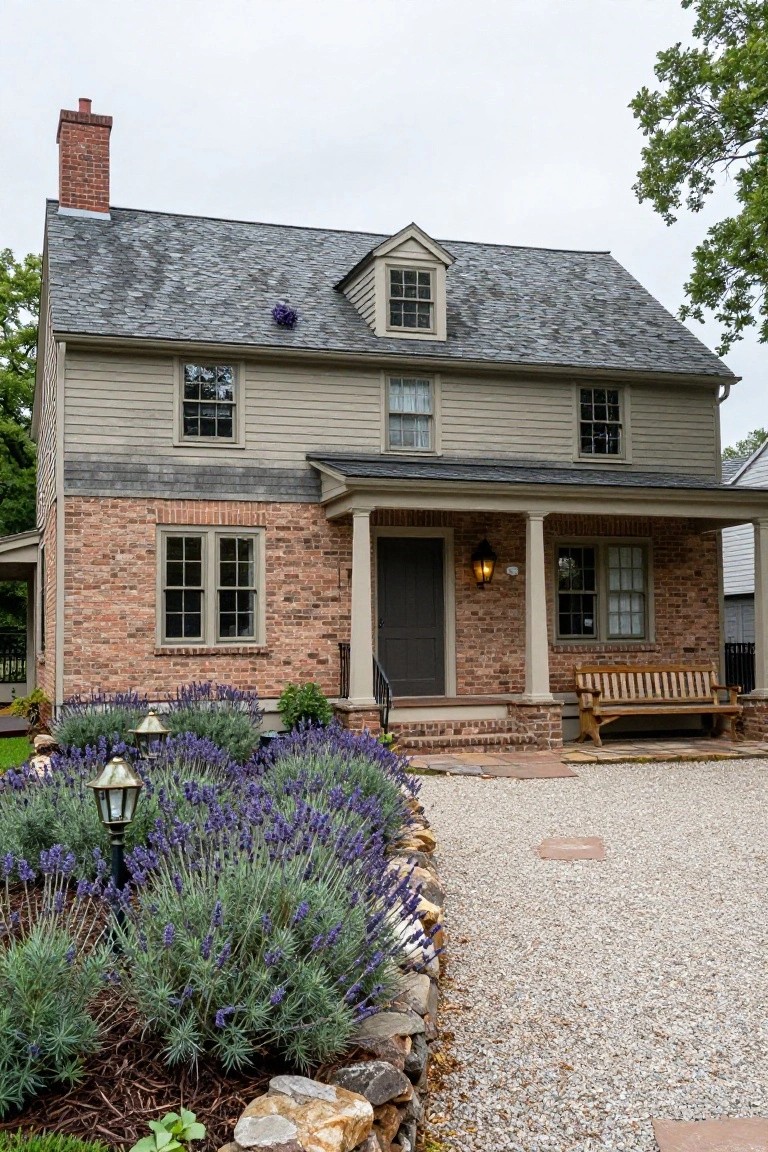
One thing that gives this Colonial Revival house its solid, lived-in feel is the mix of brick on the lower section with clapboard siding up top. The brick anchors the left side and ties into the chimney, while the light gray siding keeps the upper stories airy. It’s a straightforward way to nod to older farmhouses without going all brick.
This works best on homes with some slope or uneven ground, where the brick base feels natural. Pair it with a simple porch like this one, maybe add a bench for sitting. Skip it if your lot is super flat. Keeps maintenance down too, since brick holds up well.
Frequently Asked Questions
Q: Can I add Colonial Revival touches to a house built after 1950?
A: Check your home’s symmetry first. Colonial style thrives on balanced windows and a centered door, so tweak what you have with evenly spaced shutters or a simple portico.
Q: What’s the quickest update for a dated front porch? A: Swap in a fanlight over the door or add fluted columns. These nod to the era without tearing everything apart. Pick white paint to make it pop right away.
Q: How do I pick colors that feel authentic but not boring? A: Go for soft whites or muted sages on the body, then deeper trim like black or navy. Test samples in morning light. They ground the look in history while keeping it fresh.
Q: Do I have to replace all my siding at once? A: No. Start with one visible side and match new clapboard to the old. It blends over time and lets you spread out the work.
