

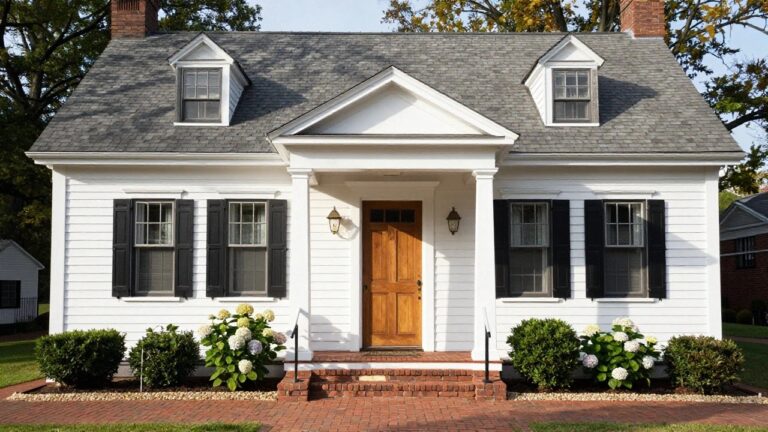
When you drive up to a Colonial house, the entry and symmetrical facade hit you first, especially if the colors draw out those crisp rooflines and window details.
I once watched a neighbor switch to a muted sage green body paint, and it made their white trim and brick foundation read so much cleaner from the curb.
The right exterior palette works with the materials you have, whether clapboard siding or stone accents, without overwhelming the classic proportions.
Shutters and doors often get overlooked, but pairing them thoughtfully pulls the whole street view together.
A few of these shades have stuck with me for homes that still look sharp years later.
White Siding with Black Shutters
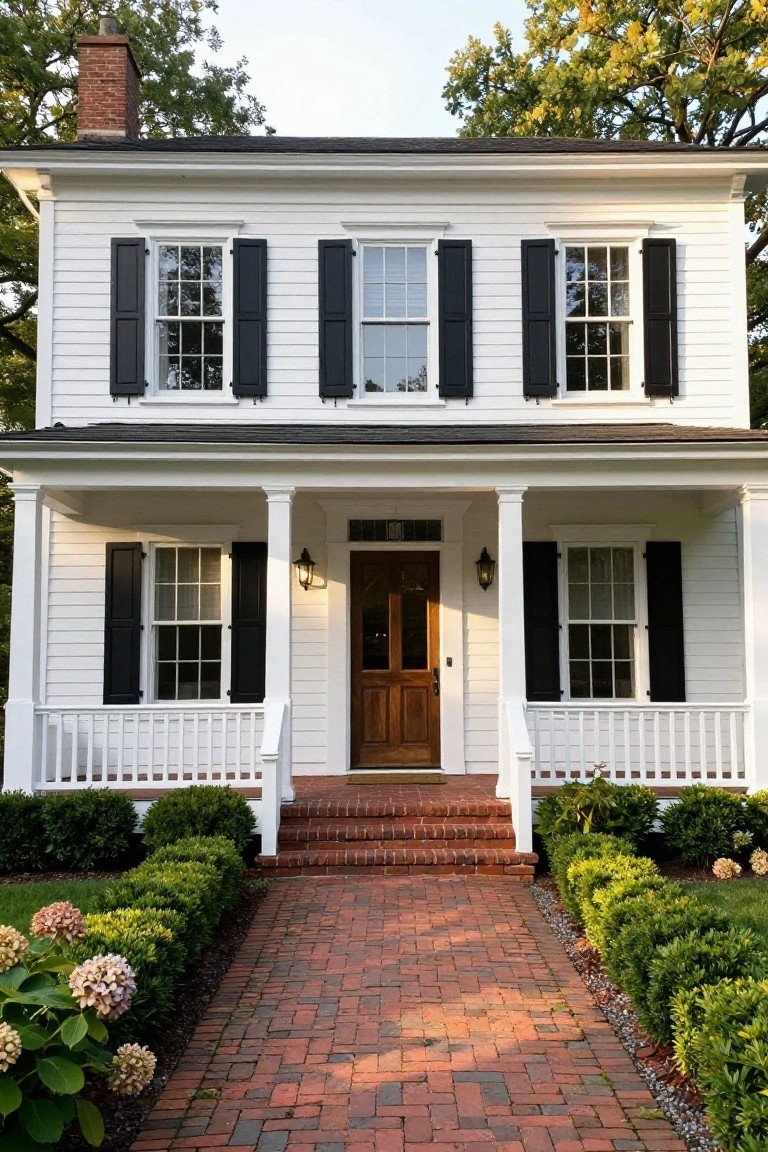
White siding keeps things clean and classic on a colonial house like this. It lets the black shutters pop against the clapboard, drawing attention to the tall windows and porch columns without any fuss. That simple contrast feels right at home in older styles.
Try it on homes with good bone structure, especially where you want low-key curb appeal. It suits shady spots too, since the white brightens things up. Just plan to touch up the paint now and then… white can show wear faster.
Recommended Products

Complete Mounting Hardware Included: Comes with mounting hardware (shutter loks and Zinc Coated Screws) for easy installation
Complete Mounting Hardware Included: Comes with mounting hardware (shutter loks and Zinc Coated Screws) for easy installation
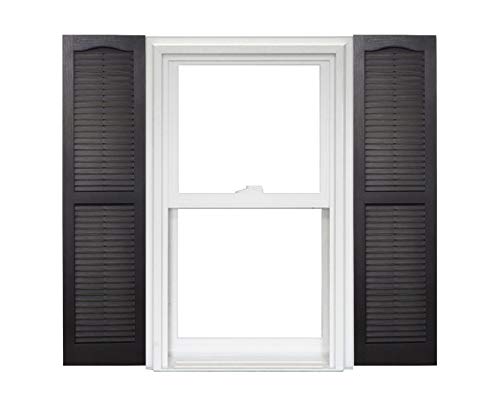
Open Louver Shutters are decorative which fits window heights of 46in - 48in (window is not included with shutters)
Navy Blue Shutters on Pale Gray-Blue Siding
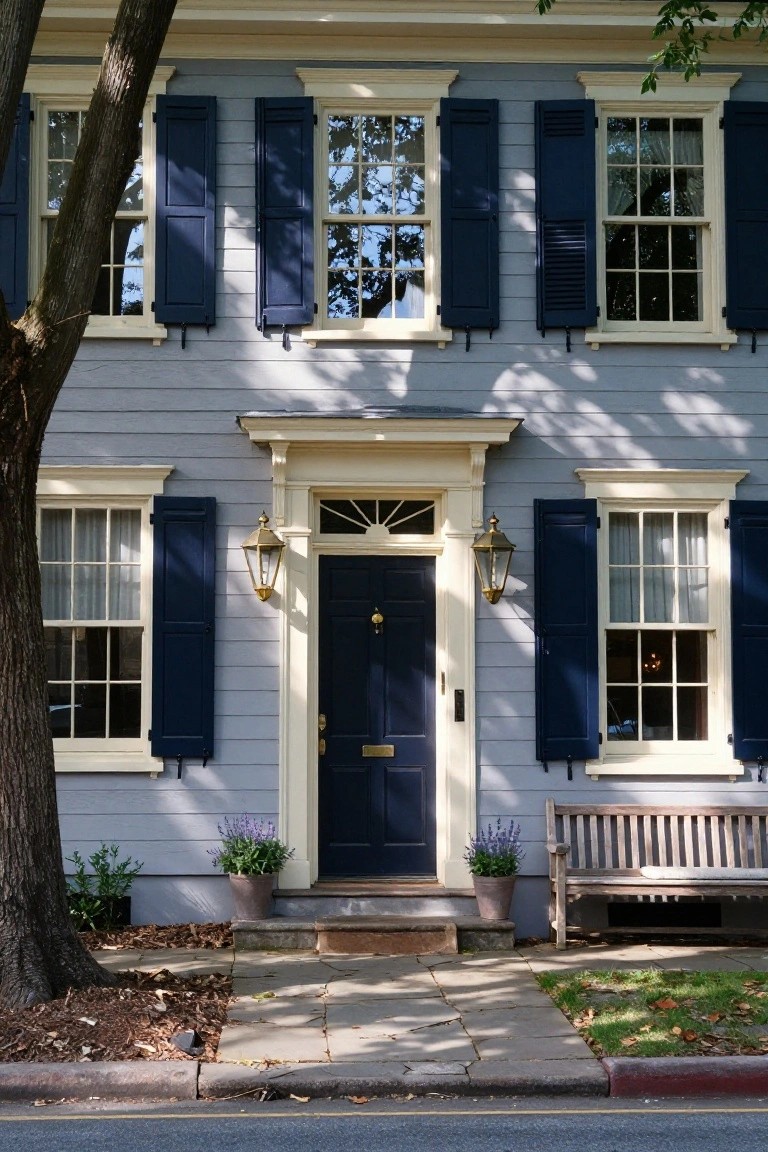
Navy blue shutters and a front door stand out strong against this pale gray-blue siding. The cream trim around the windows and entry gets a clean lift from that contrast. It’s one of those color choices that keeps a colonial house feeling true to its roots without going too bold.
You can pull this off on older homes with clapboard siding or similar textures. Pair it with simple lanterns and potted plants near the steps for extra welcome. Just make sure the navy isn’t too black, or it might feel heavy in full sun.
Navy Blue Siding on Colonial Houses
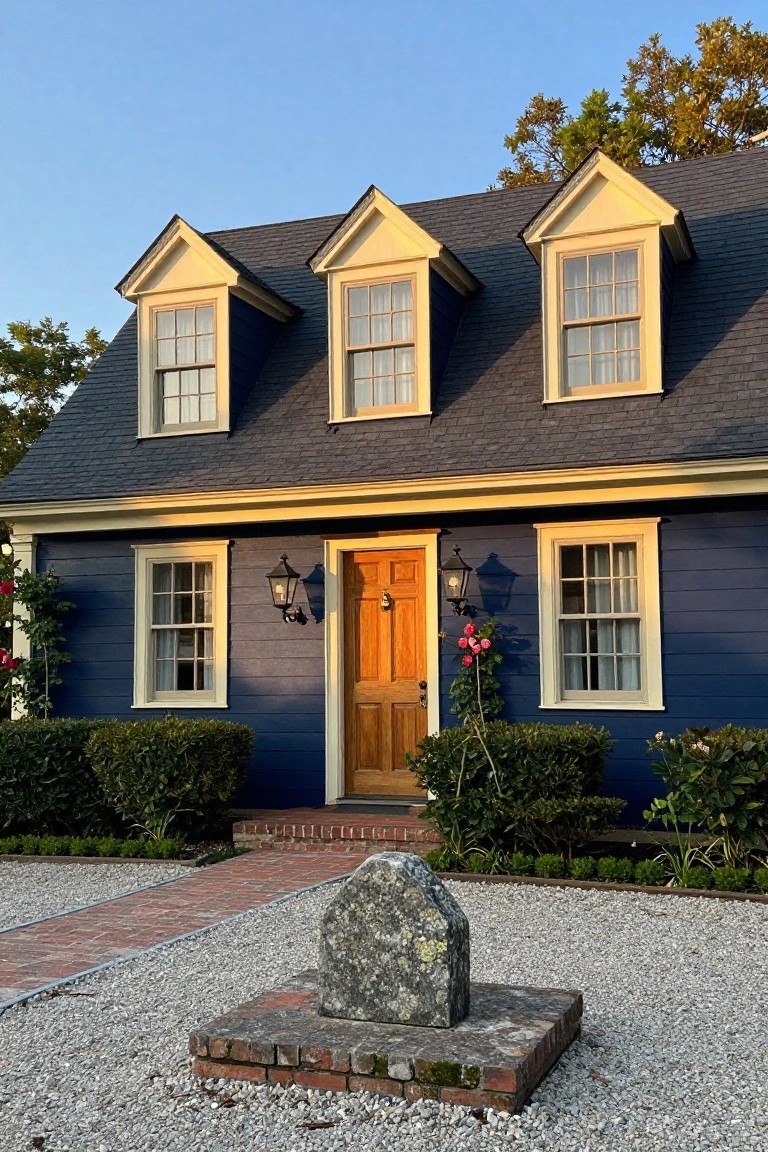
Navy blue siding gives a colonial house that deep, steady color without going too dark. It pulls out the yellow trim around the windows and roof peaks, making those classic lines sharp and easy to see. The front door in warm wood adds just enough contrast to welcome folks right up the path.
This look fits older homes in leafy spots, where the blue ties into shady trees or fall colors. Stick to light trim so details don’t get lost, and keep landscaping simple with boxwoods or climbing roses. Skip busier patterns. It holds up well in humid areas too.
Dark Green Siding on Colonial Homes
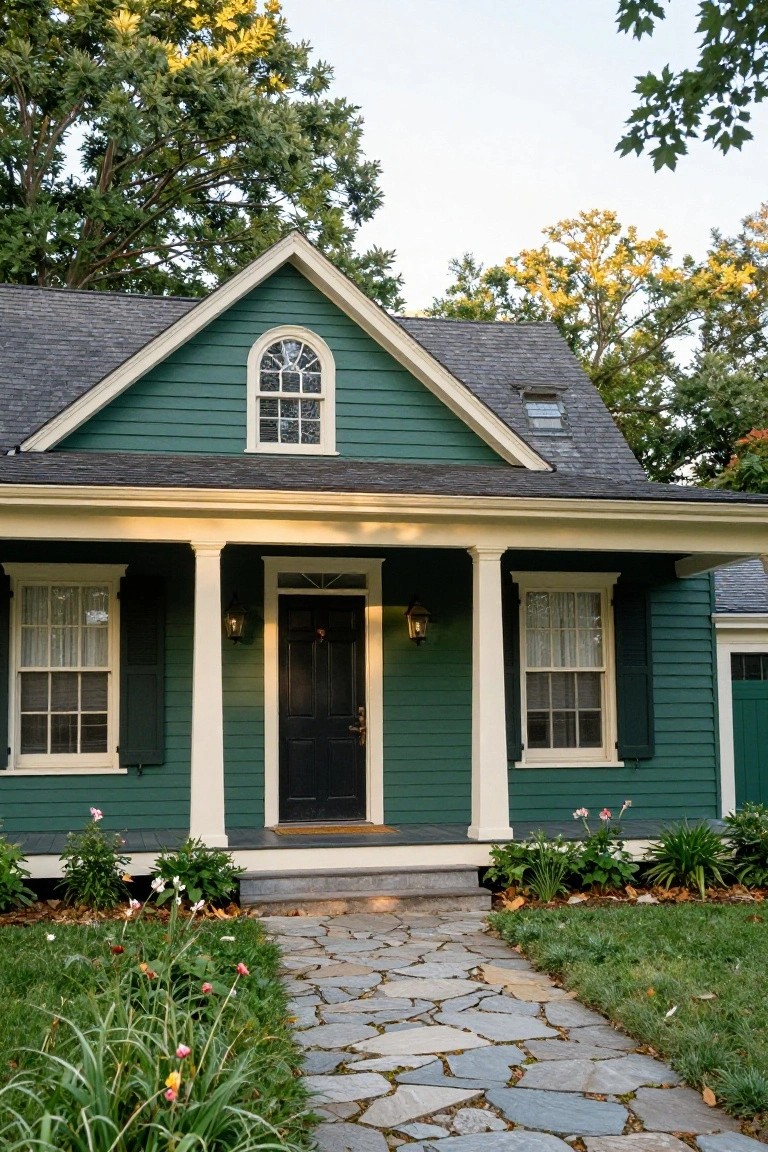
Dark green siding gives a colonial house that steady, classic look without trying too hard. It lets the white trim on the porch columns, gable window, and shutters stand right out. That black front door adds a bit more punch too. Folks like it because the color feels rooted, like it’s been there a while.
This setup suits older homes with simple lines and some porch presence. Paint south-facing sides first to catch the light right. Skip it if your place is in heavy shade, or it might turn moody. Just clean the trim yearly to keep the contrast fresh.
Red Brick with Black Shutters
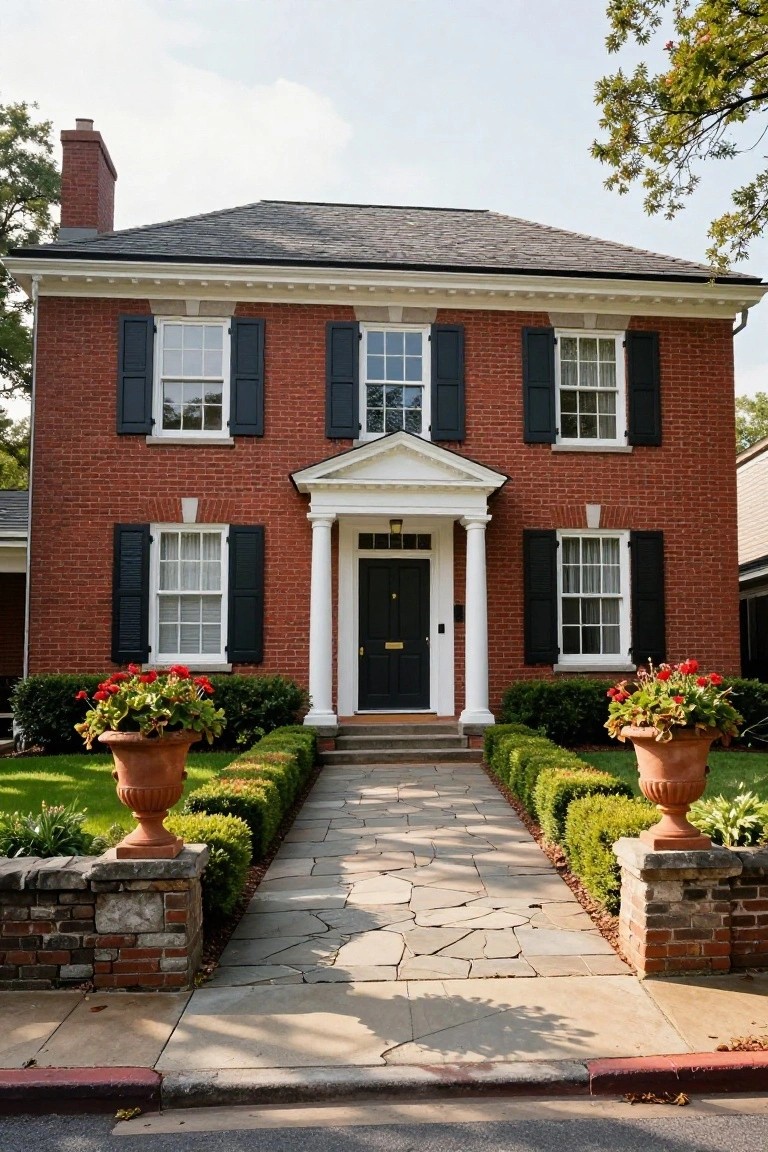
Red brick gives a colonial house that solid, timeless base. Pair it with black shutters, and the windows stand right out. Those dark frames pull your eye to the symmetry and tall proportions. White trim around the door and columns keeps things crisp without overdoing it. It’s a simple combo that feels right on older homes.
This works best on houses with good brickwork already. Go for glossy black shutters if you want more pop, or matte for a softer look. Add some red flowers in pots by the walk to tie back to the brick. Skip it on super modern builds, though. It suits traditional neighborhoods where you want curb appeal that lasts.
Soft Blue Paint on Colonial Facades
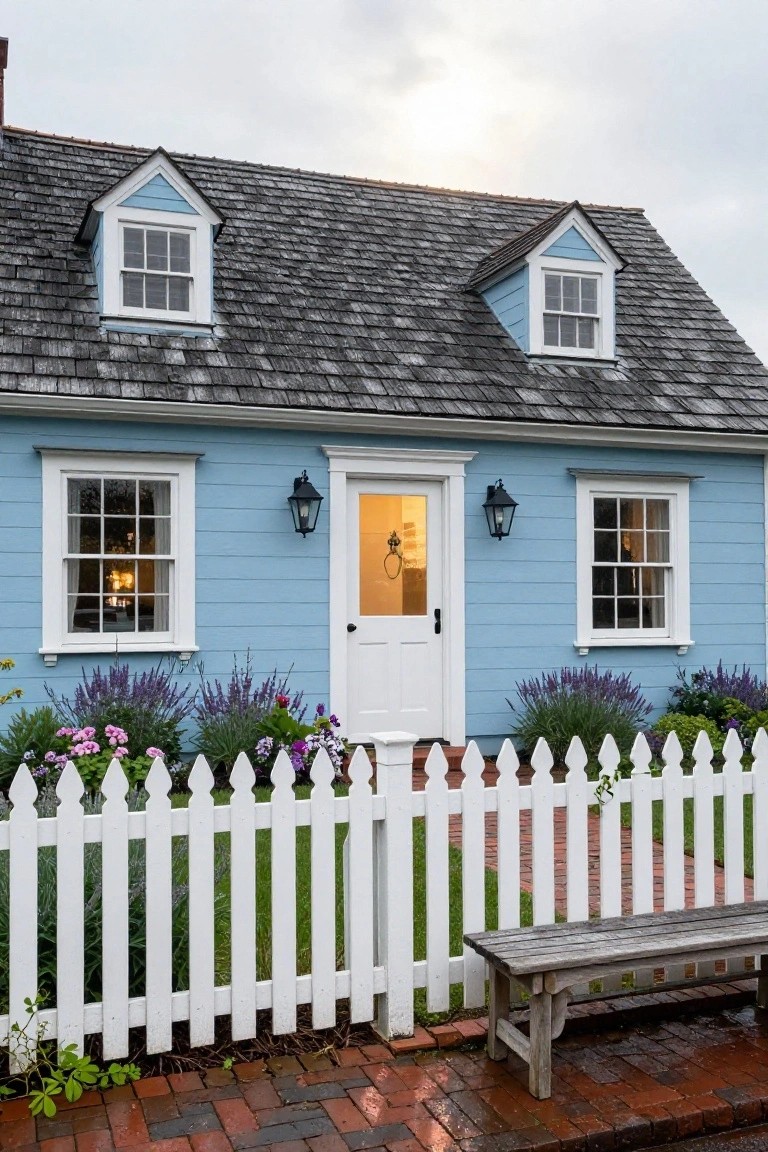
A soft blue like this brings out the best in a colonial house. It keeps things calm and classic without overpowering the architecture. White trim around the windows and door pops right against it. And that shingled roof adds a nice textured contrast up top.
This color suits older homes along the coast or in cooler climates where skies stay gray a lot. Paint the siding this shade, then stick to crisp white for doors, fences, and shutters. Tuck in low plants like lavender along the base. Just avoid darker shades nearby, or it might feel too moody.
Red Door on White Colonial Siding
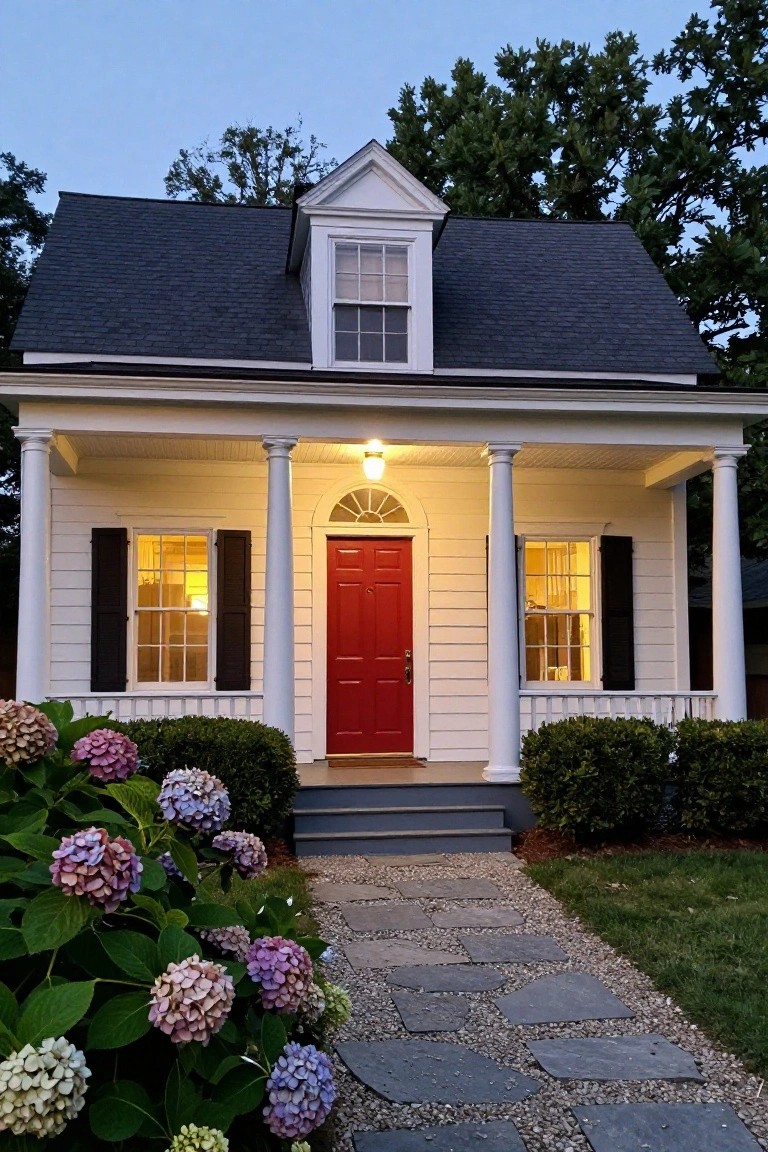
A red front door gives this white Colonial house a simple pop without overdoing it. The crisp white siding and dark roof stay true to the style, while the columns and black shutters frame that door just right. It’s a classic move that makes the entry feel welcoming at dusk.
This color combo suits older neighborhoods or smaller homes like this one. Go for a muted red to keep it from looking too new. Add boxwoods or hydrangeas along the path, and it ties the whole front together without much fuss.
Butter Yellow Siding with a Blue Door
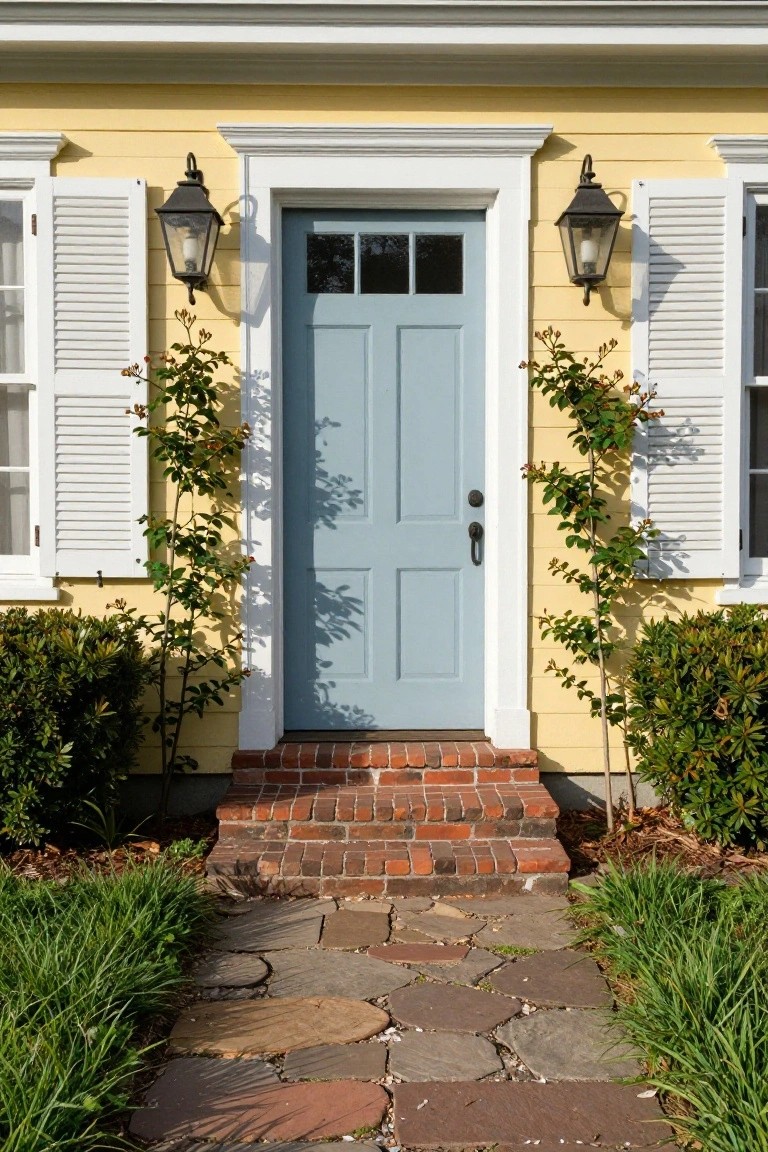
A soft butter yellow on the siding gives this colonial house a gentle warmth that feels right at home in older neighborhoods. The blue front door stands out just enough to guide folks to the entry without stealing the show. White trim around the windows and door keeps everything crisp, letting those classic details shine through nice and clear.
This color setup suits straightforward colonial facades, especially ones with shutters and lanterns already in place. It holds up well in bright light where the yellow stays cheerful year-round. Pick shades that lean a bit toward green in the blue to avoid clashing, and test samples on different sides of the house first.
Soft Blue Shingles on Colonial Facades
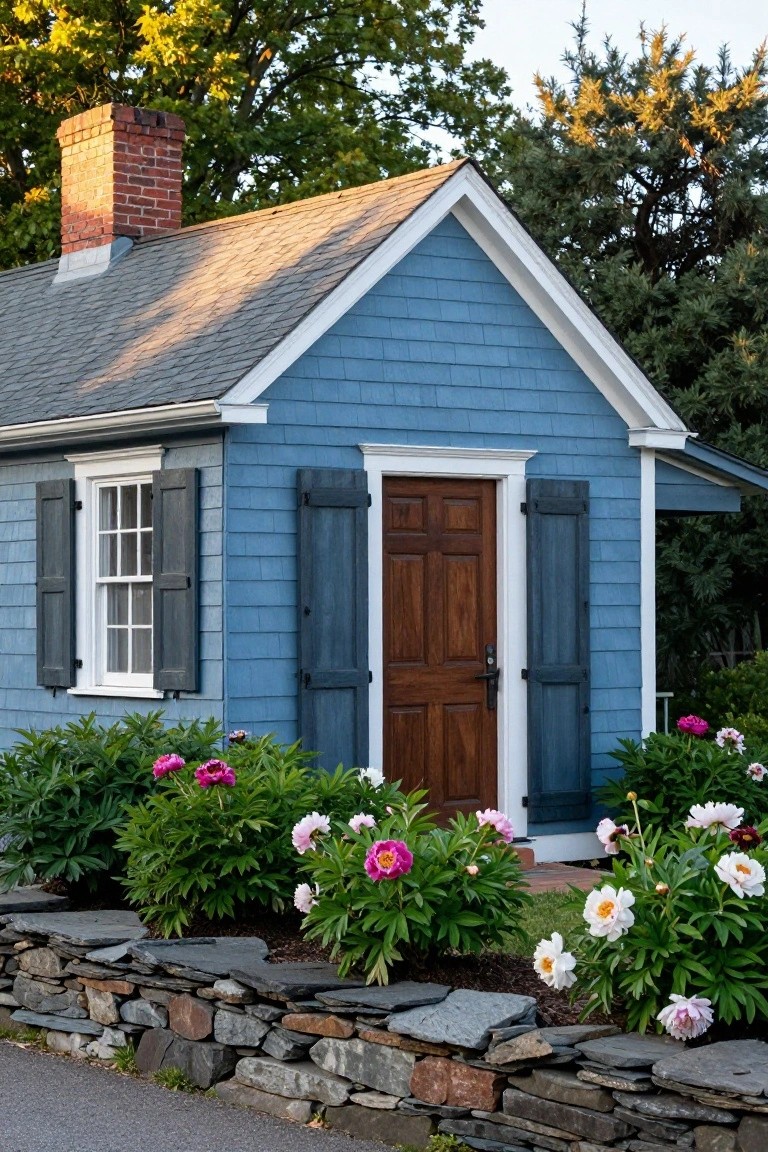
A soft blue shingle siding like this one keeps things classic without feeling too bold. It lets the white trim around the windows and roofline stand out nice and clean. Dark shutters and a solid wood door pull in some warmth, and those pink peonies out front tie it all together without stealing the show.
This look fits right on smaller outbuildings or even a full-sized Colonial home up north, where trees and stone walls already set the scene. Go for it if your place has simple rooflines and you want low-key curb appeal. Just keep the blue muted so it doesn’t fight the landscaping.
Light Siding with Warm Wood Door
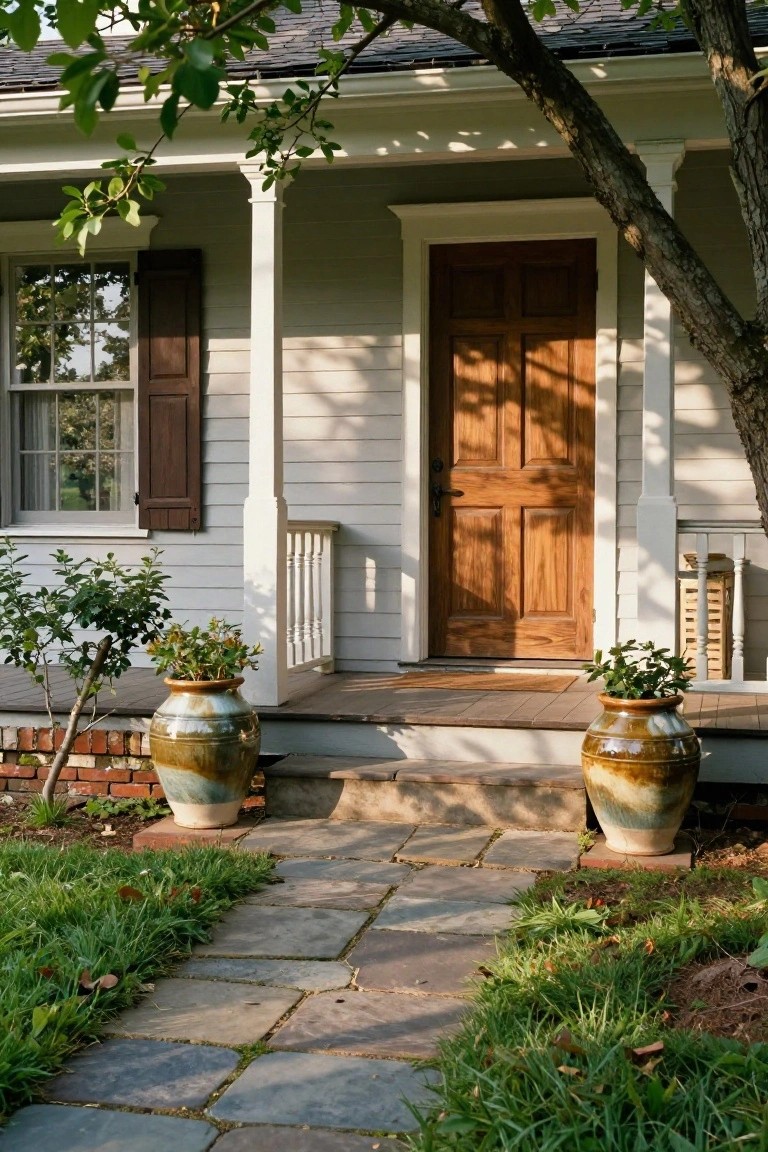
A soft light siding like this pale gray sets off the rich tones of a wood front door nicely. The classic six-panel door in deep brown pulls your eye right to the entry, and it works the same way with the matching shutters. Those details give a colonial house that settled-in feel without much fuss.
This combo suits older homes or revivals with porches and columns. Keep the door freshly stained to hold the color, and add big pots on either side for balance. It keeps things simple and lets the architecture do the talking, especially in shady spots where the wood warms up the look.
White Siding with Red Shutters
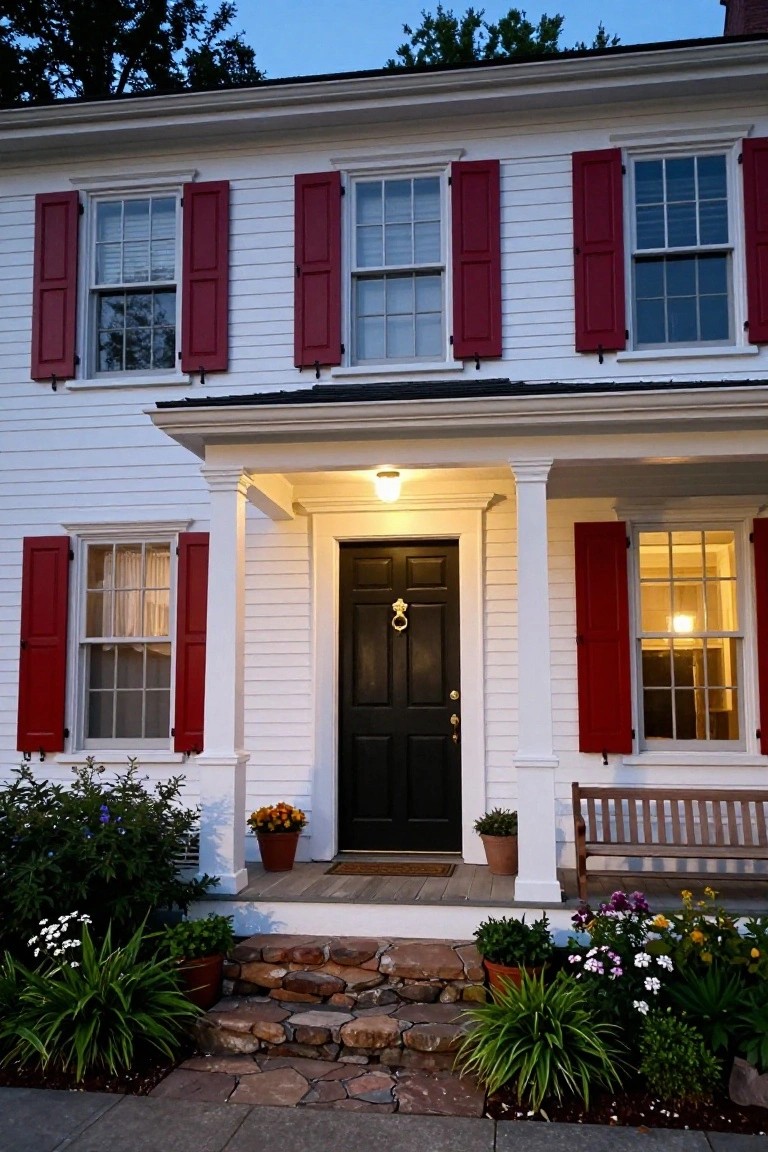
One look that never gets old on colonial homes is crisp white siding topped with bold red shutters. The red pulls your eye to the windows right away and makes those classic details stand out without much fuss. Add a black front door like this one and you get even more punch. It’s a simple way to keep things traditional but fresh.
This setup works best on homes with good symmetry, like two-story colonials with evenly spaced windows. Go for glossy red paint on the shutters to hold up in weather, and pair it with neutral landscaping so the colors stay the focus. Skip it if your house has too much trim already. It can feel busy then.
Recommended Products
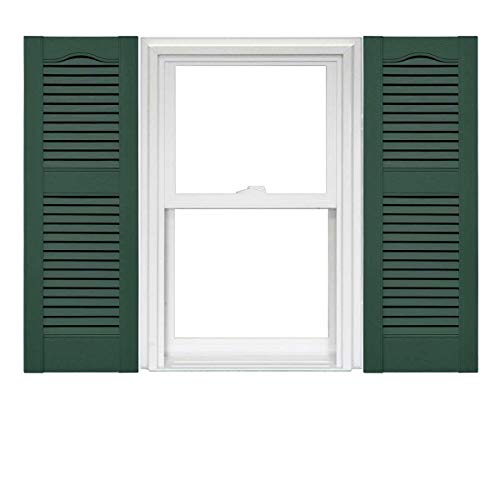
Complete Mounting Hardware Included: Comes with mounting hardware (shutter loks and Zinc Coated Screws) for easy installation

Designed Exclusively for Mayne Window Boxes – Specially made to fit only the Mayne Fairfield and Cape Cod window box models; not compatible with other brands or styles.

Designed Exclusively for Mayne Window Boxes – Specially made to fit only the Mayne Fairfield and Cape Cod window box models; not compatible with other brands or styles.
White Siding with Green Shutters and Teal Door
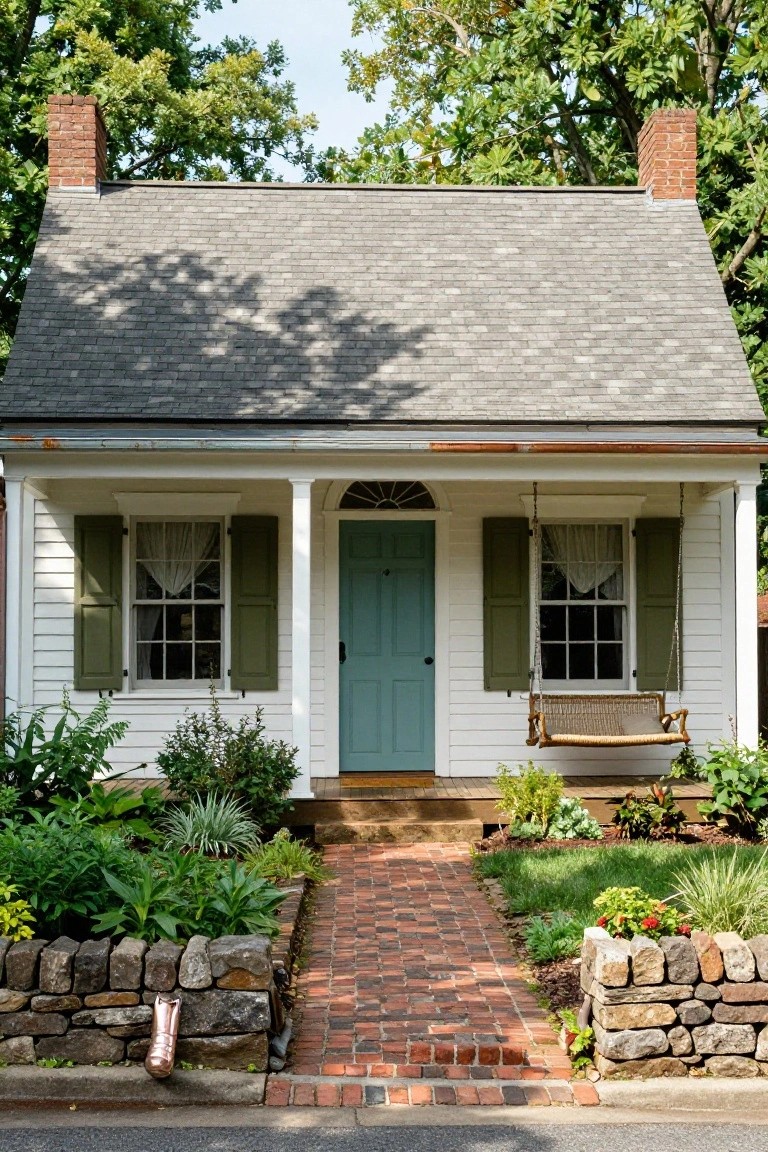
A simple color setup like this works well on Colonial homes. White clapboard siding stays crisp and clean. Dark green shutters frame the windows without overpowering things. Then that teal door pulls focus to the front porch. It highlights the classic shape of the house but keeps it from feeling too plain.
Use this where you want easy curb appeal on a smaller home. It suits neighborhoods with trees and gardens. Match the green to nearby plants if you can. Just keep the white fresh, maybe every few years. Avoid darker doors unless the siding can handle the contrast.
Navy Blue Door on White Siding
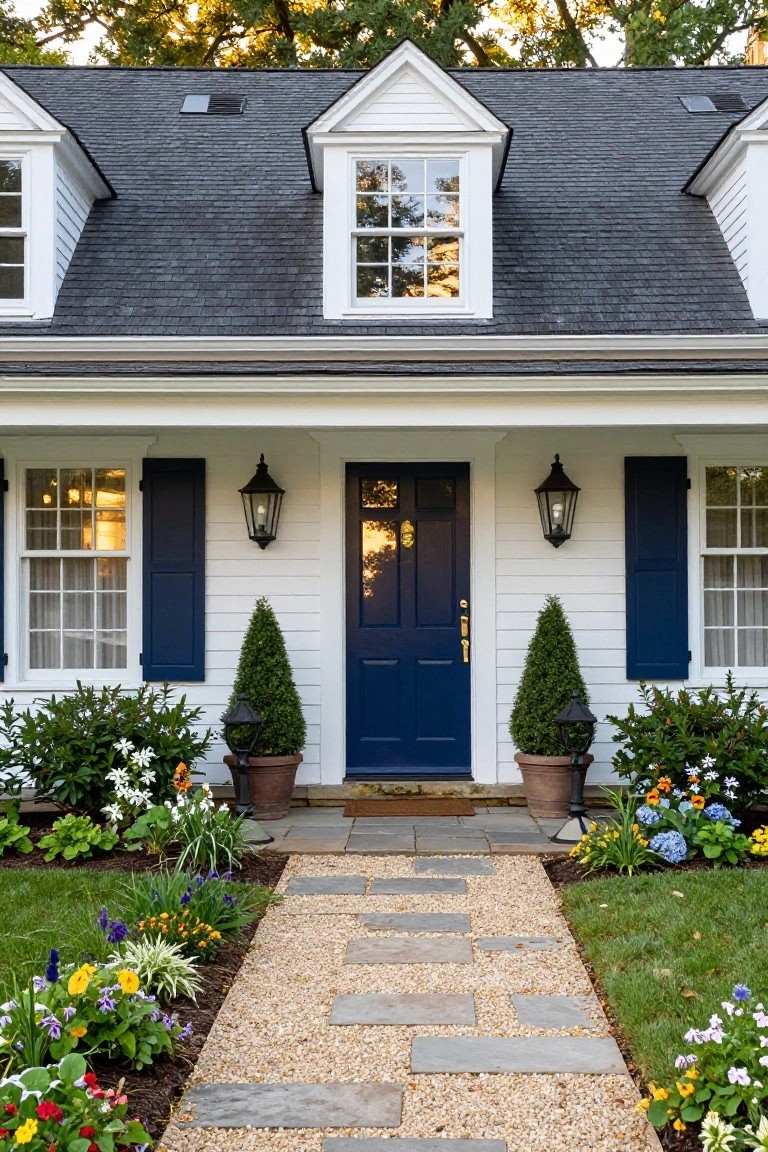
A navy blue front door gives this white colonial house a strong focal point. The deep color pulls your eye up the walkway to the entry without overpowering the clean lines of the siding and dormers. It highlights the classic shape of the door itself, with its panels and transom, and pairs nicely with black shutters for extra definition.
This look suits older homes or new builds aiming for traditional curb appeal. Use it on houses with simple white or light gray exteriors, especially where you want the door hardware in gold or brass to shine. Keep plantings low around the porch so the color stays the star… avoid darker trim that muddies the contrast.
Red Door on Mint Green Colonial
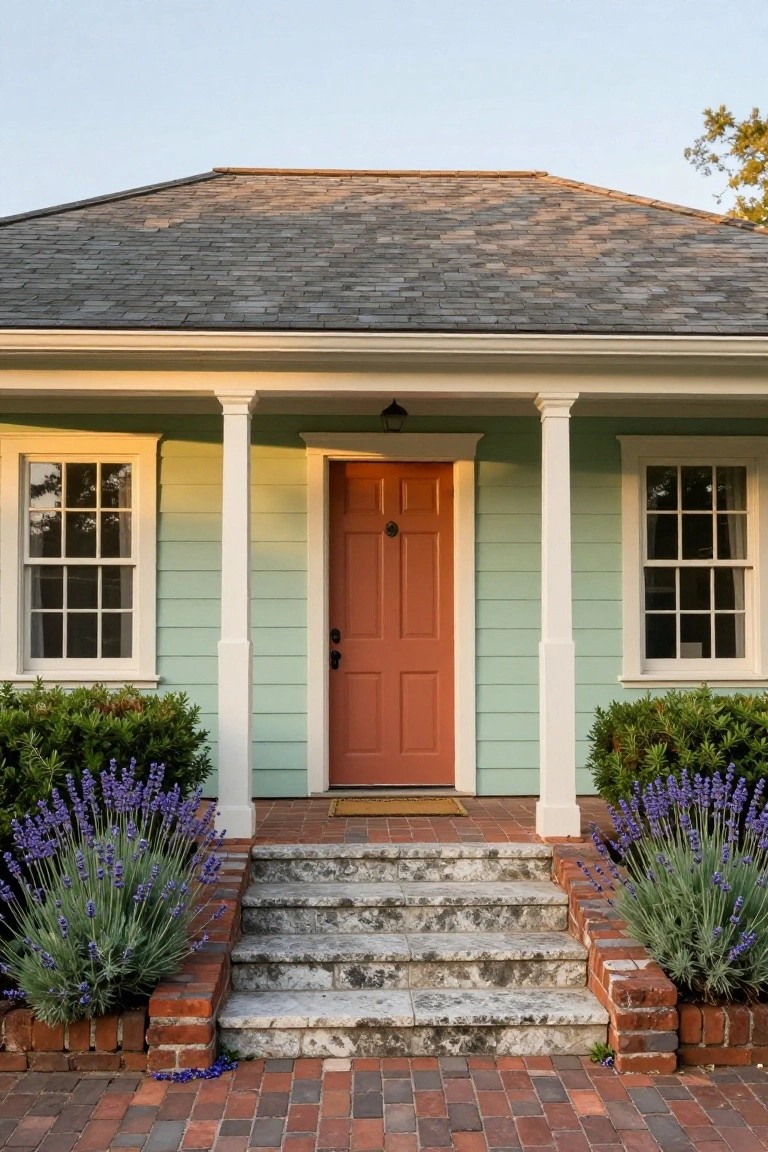
A red door stands out strong against mint green siding on this classic Colonial house. The soft green keeps things calm and traditional while the door pulls your eye right to the entry. White columns and trim add clean lines that make the colors pop without overwhelming the look. It’s a simple way to highlight the house’s details.
This color combo works best on smaller homes or cottages where you want curb appeal without going bold all over. Pair it with brick steps or lavender plantings nearby to tie it in. Stick to a true red-orange door so it warms up the cool green, and it suits older neighborhoods just fine.
Deep Blue Door and Green Shutters
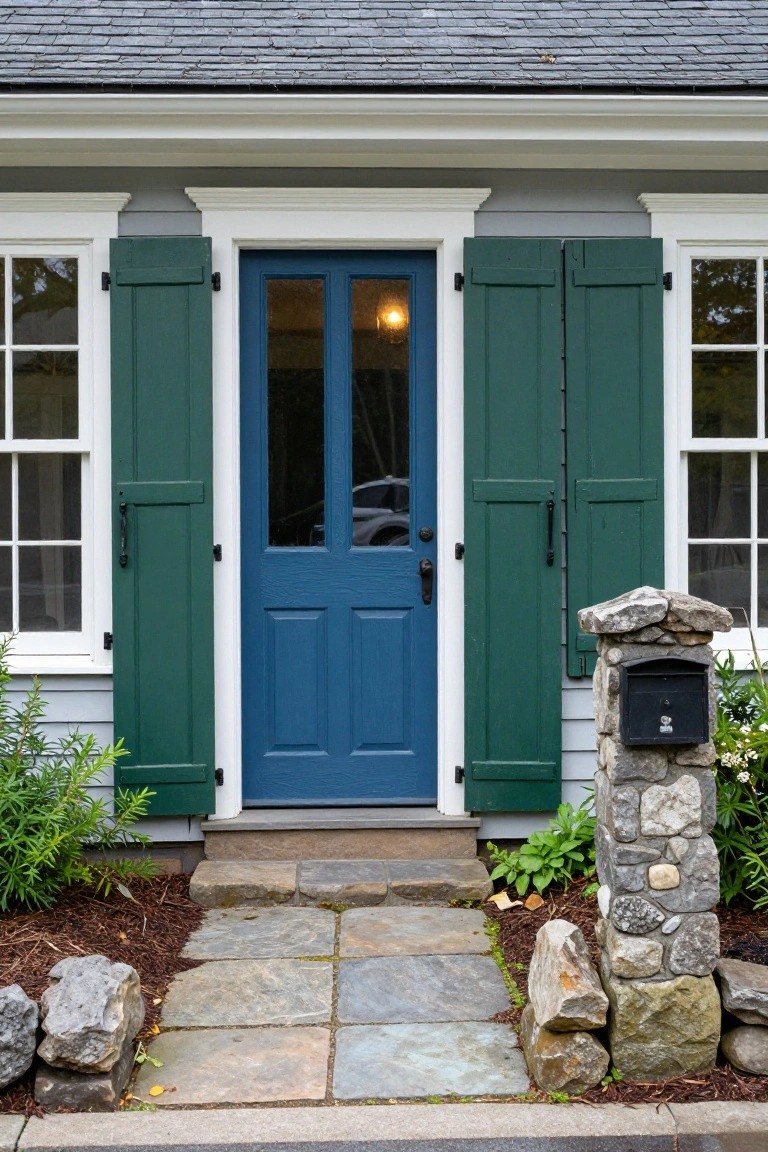
A deep navy blue front door paired with hunter green shutters gives this Colonial entry real punch. The colors pop against the light gray siding and white trim, making the multipaned glass door and bold pediment stand right out. It’s a straightforward way to spotlight those traditional details without overdoing it.
This combo works best on homes with clean lines and some stone or brick accents nearby, like the pillar mailbox here. Go for it if your house faces north or has shady spots, since the dark tones hold up well. Just keep the rest neutral so the door and shutters do the talking.
Brick Red Siding with Sage Green Door
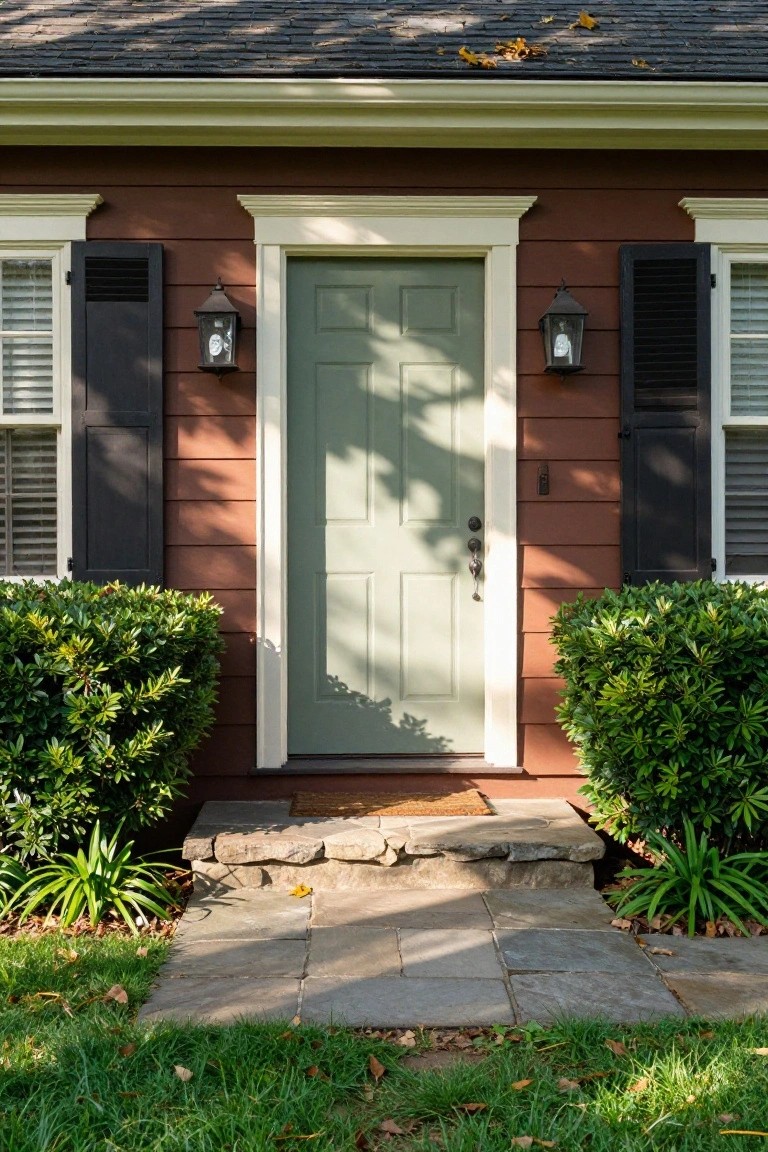
A deep brick red on the siding brings warmth to this Colonial front, while the sage green door stands out without overpowering the look. White trim outlines the windows and entry clean and sharp. Black shutters add some contrast that pulls the eye to the classic details around the door.
This color setup suits older homes with traditional lines. It boosts curb appeal on a simple entry like this one, with stone steps and lanterns. Boxwoods on either side keep the planting low-key. Works best where you want cozy vibes that last through seasons.
Red Brick Facade with White Trim
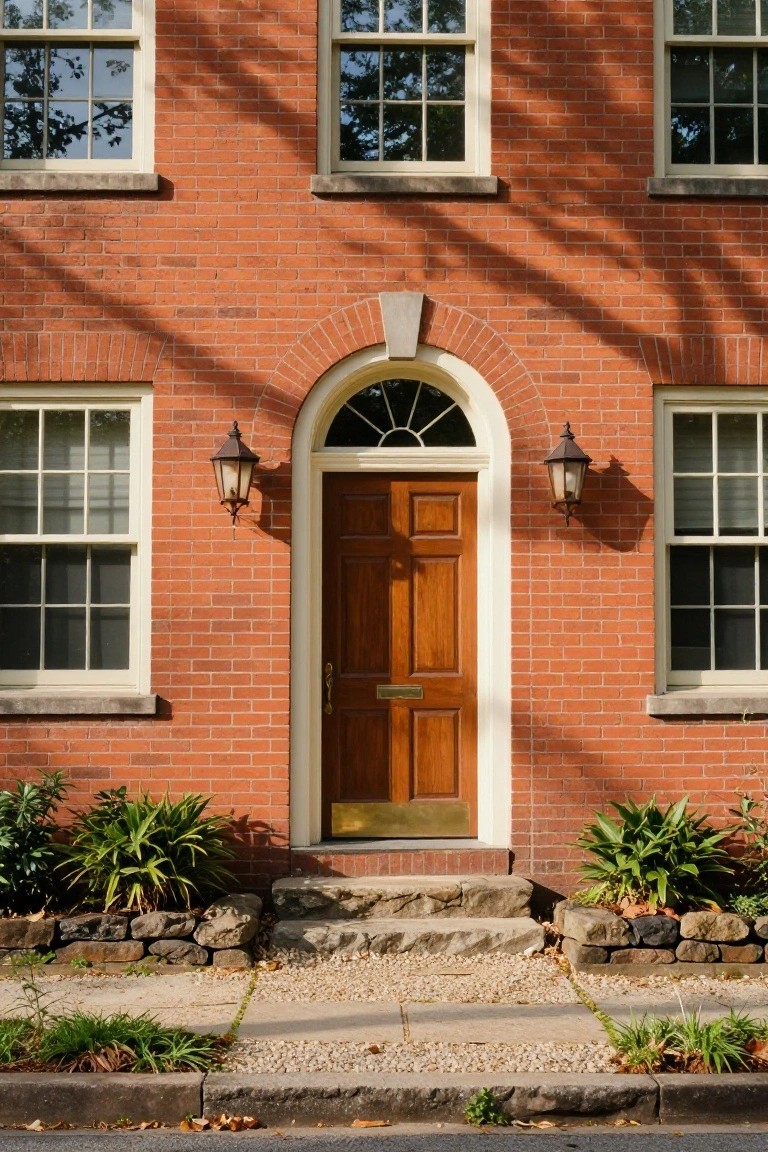
Red brick like this gives a colonial house that steady, rooted feel. The warm tone pulls your eye right to the white window frames and that graceful arched entry. Paired with a dark wood door, it keeps things simple yet sharp. No need for extras. The brick color does the work.
This setup shines on narrow townhouses or older city homes where space is tight. Use it on east-facing spots too, since the warmth holds up in changing light. Just keep the trim paint fresh every few years, or the contrast fades. Add matching lanterns, and the front door welcomes folks in.
Black Door on Light Gray Siding
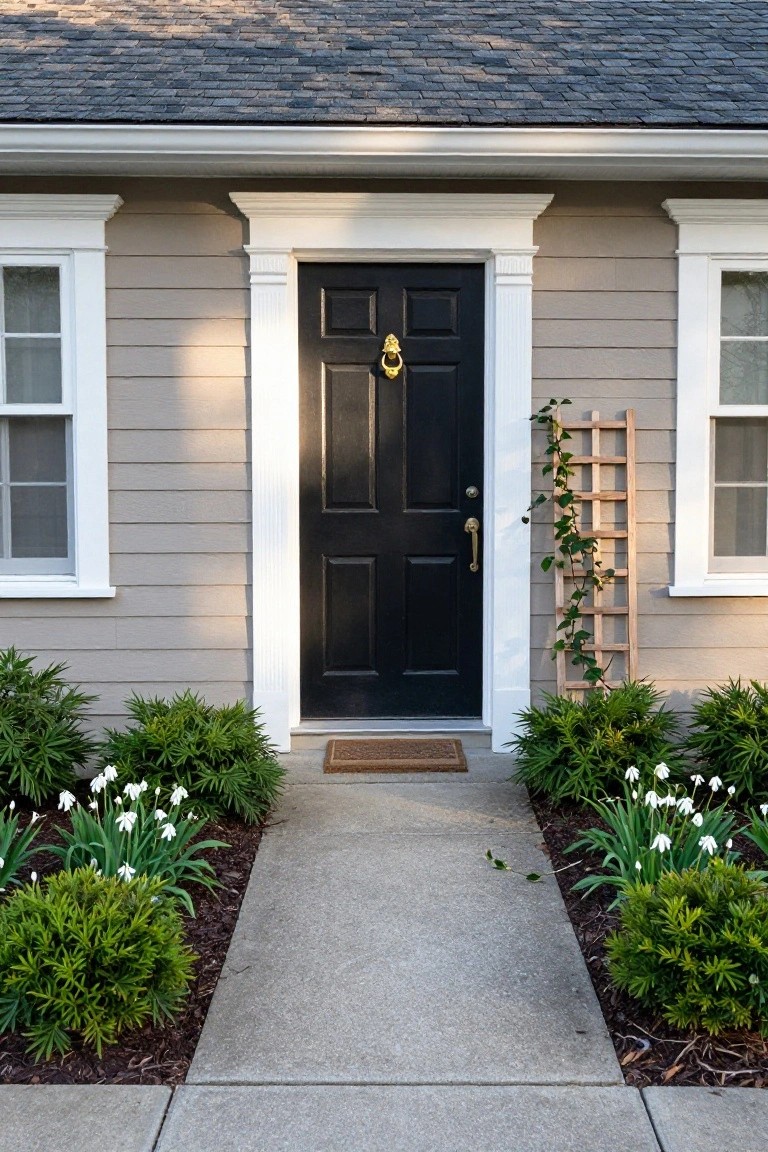
A black front door gives a colonial house that sharp, welcoming punch against light gray siding. The dark color pulls attention to the entry without overwhelming the softer house tones. Brass hardware on the door picks up the sunlight nicely, and white trim around it keeps things crisp.
This setup suits simpler colonial facades in suburban spots. Go for it if your siding is pale gray or tan. Just make sure the door is solid quality. It holds up year round and makes the whole front feel put together.
Teal Green Siding with Yellow Trim
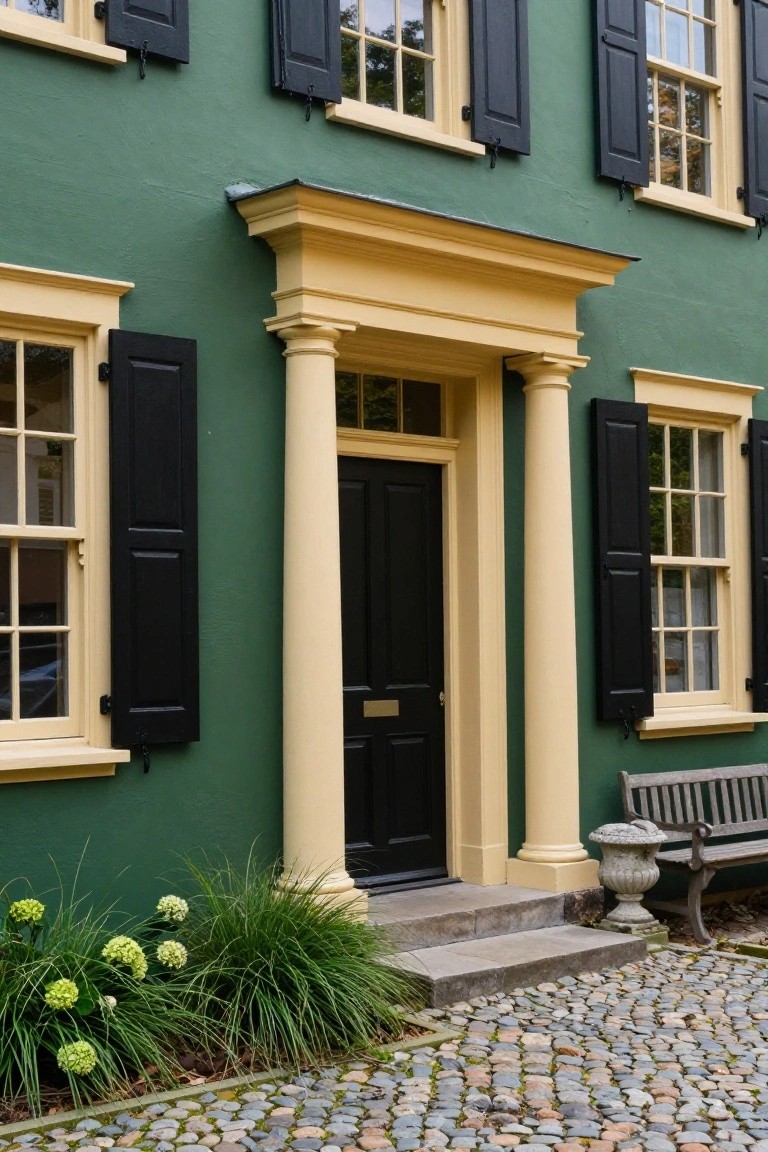
A teal green like this on a colonial house brings out the architecture without overwhelming it. The yellow trim on the entry columns and roofline gives those details a clean lift, while black shutters and door keep things crisp. It’s a color combo that feels fresh but still nods to older styles.
Try this on two-story homes with good window placement, especially if you’re in a neighborhood with some historic vibe. Just make sure the green isn’t too bright, or it can clash with trees in fall. Simple plants at the base help tie it to the yard.
Frequently Asked Questions
Q: How do I test these colors on my actual house?
A: Grab quart-size samples and paint large swatches on poster board or scrap siding. Prop them up in different spots and check them morning, noon, and evening. Light shifts make a huge difference.
Q: My trim is bright white now. Can I still use bolder house colors?
A: White trim grounds everything, so bolder bodies like navy or hunter green pop the details beautifully. Just clean the trim first for crisp edges that last.
Q: What if my house faces north and stays shady?
A: Pick warm taupes or soft golds to lift the look without washing out. They bounce available light and keep the Colonial charm alive.
Q: And how do roof shingles play into color choices?
A: Dark roofs pair best with mid-tone bodies so the house doesn’t blend in. Lighter shakes open up brighter options. Test the combo from across the street.
