

I always check the porch columns first when eyeing a colonial house from the street. They frame the entryway and balance the facade against the pitched roof and clapboard siding in a way that pulls the whole front together. On one property I toured, mismatched columns made the door look swallowed up, no matter how charming the rest was. Proportion decides it all. Solid examples with subtle fluting or tapered shafts tend to weather best and reward a closer look year after year.
Fluted Columns Boost Colonial Curb Appeal
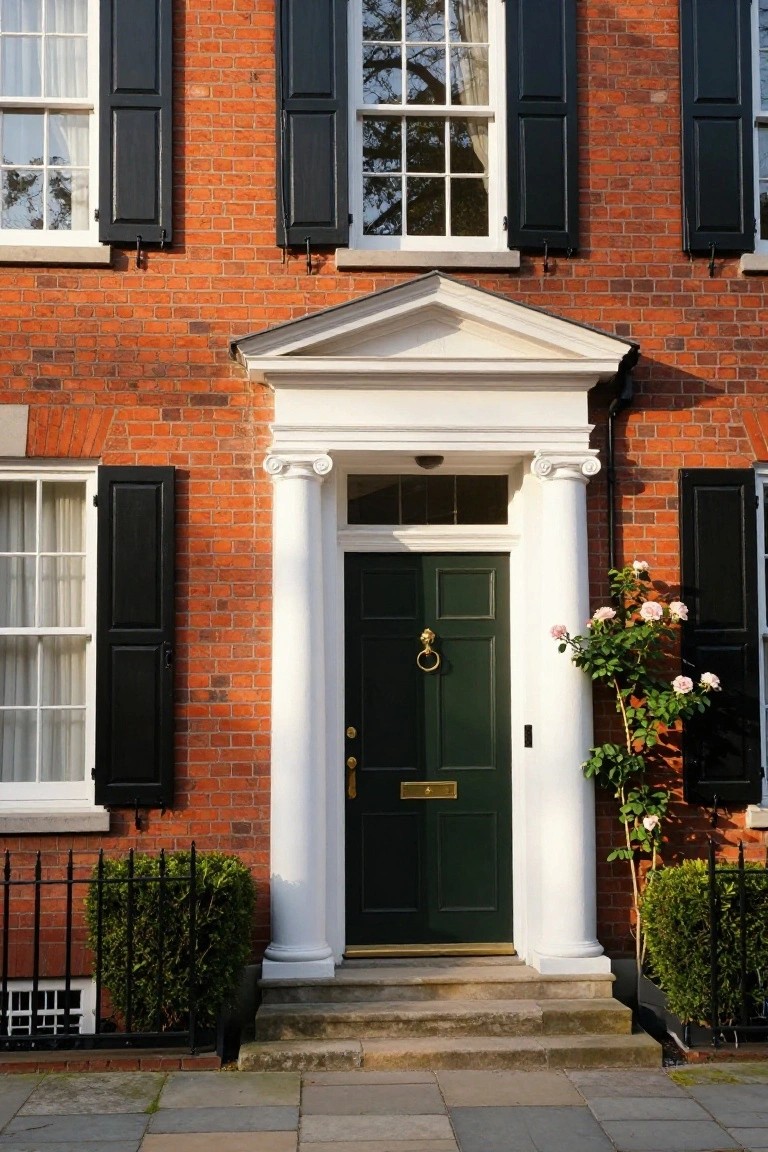
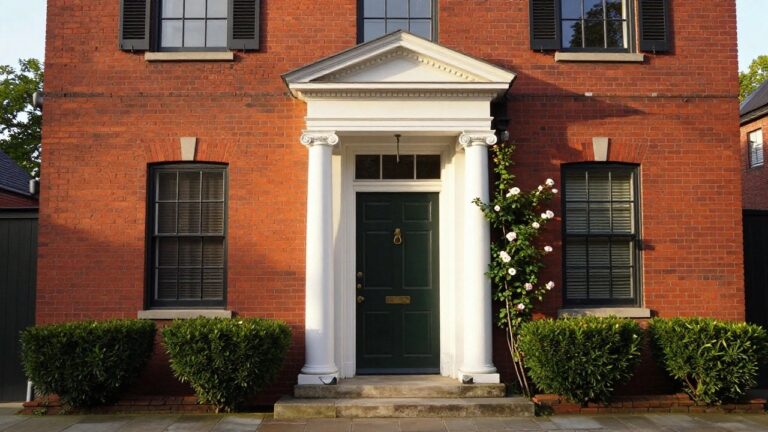
White fluted columns like these catch your eye right away on a red brick house. They add that solid, historical feel without overdoing it. The simple curves and clean lines echo old-school architecture, and they make the entry look important. Here, they pair nicely with the dark green door for some quiet contrast.
Put fluted columns on homes with classic brick or stone facades. They suit two-story houses best, framing the door under a small pediment. Paint them bright white to stand out. Watch the scale, though… too skinny and they look off. A few climbing roses nearby soften things up a bit.
Recommended Products

PREMIUM VINYL WRAP WITH ELEGANT DESIGN: Weatherables PVC Vinyl Post Wraps are the simple solution to outdoor deck post upgrades and refurbishments, offering a lasting yet low-maintenance fix for any standard deck or patio post.

PREMIUM VINYL WRAP WITH ELEGANT DESIGN: Weatherables PVC Vinyl Post Wraps are the simple solution to outdoor deck post upgrades and refurbishments, offering a lasting yet low-maintenance fix for any standard deck or patio post.
Classic Fluted Columns at the Entrance
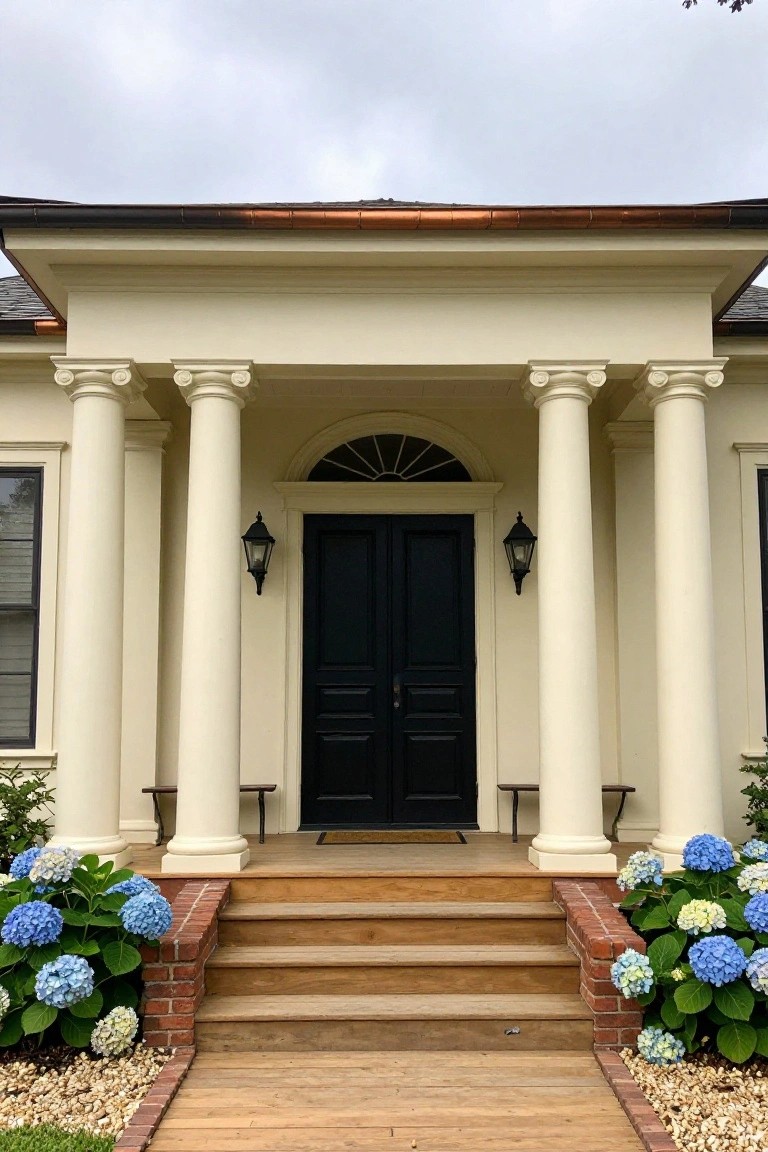
Tall fluted columns like these give a colonial home that solid, timeless front porch feel. They hold up the small pedimented roof over the door, with clean lines that echo old southern houses. The cream walls and dark door keep things simple, letting the columns do the main work.
You can pull this off on any symmetrical facade, especially two-story colonials or craftsman updates. Go for smooth plaster or stone bases to match. Scale them right to your door height, or they’ll look skinny… works great where you want curb appeal without too much fuss.
Classic White Porch Columns
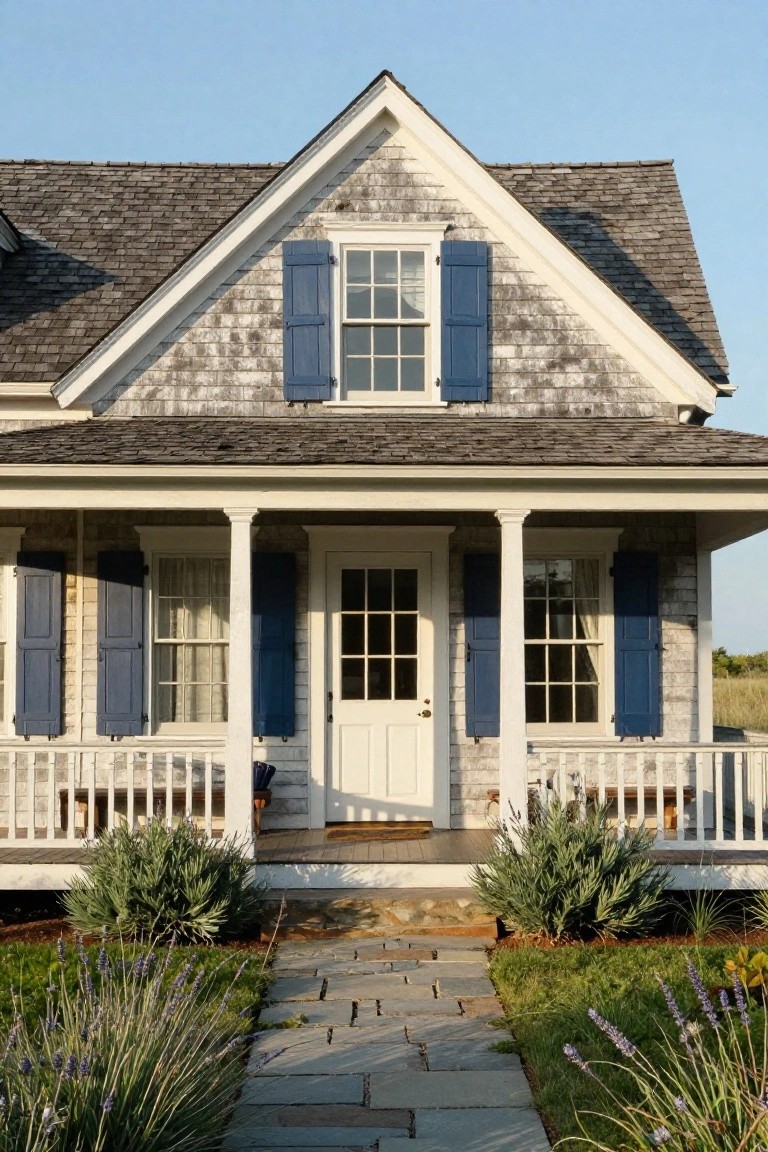
White columns like these on a shingled colonial home porch keep things straightforward and timeless. They stand out against the gray shingles and blue shutters without overpowering the entry. It’s a look that feels solid and welcoming right from the street, pulling the whole facade together in a simple way.
These columns work best on homes with clean lines and neutral siding. Paint them crisp white to match trim, and space them evenly across the porch front. They suit coastal or countryside spots where you want classic charm that holds up over time. Just keep the bases sturdy so they don’t look skimpy.
Recommended Products

Heavy Duty Flag Pole Holder Bracket : HOOPLE Flag Pole Holder. Being the sturdy mount of the greatest Flag. Our flag pole holder is made of premium aluminum alloy and rustproof coated, which can make the flag pole base heavy duty and long lasting

WHITE HOUSE ARCHITECTURAL DETAILS – Recreate the Washington, D.C. landmark with a symmetrical facade, front portico, classic columns, rooftop flag, detailed windows and landscaped grounds.

Red Brick Home with White Columns
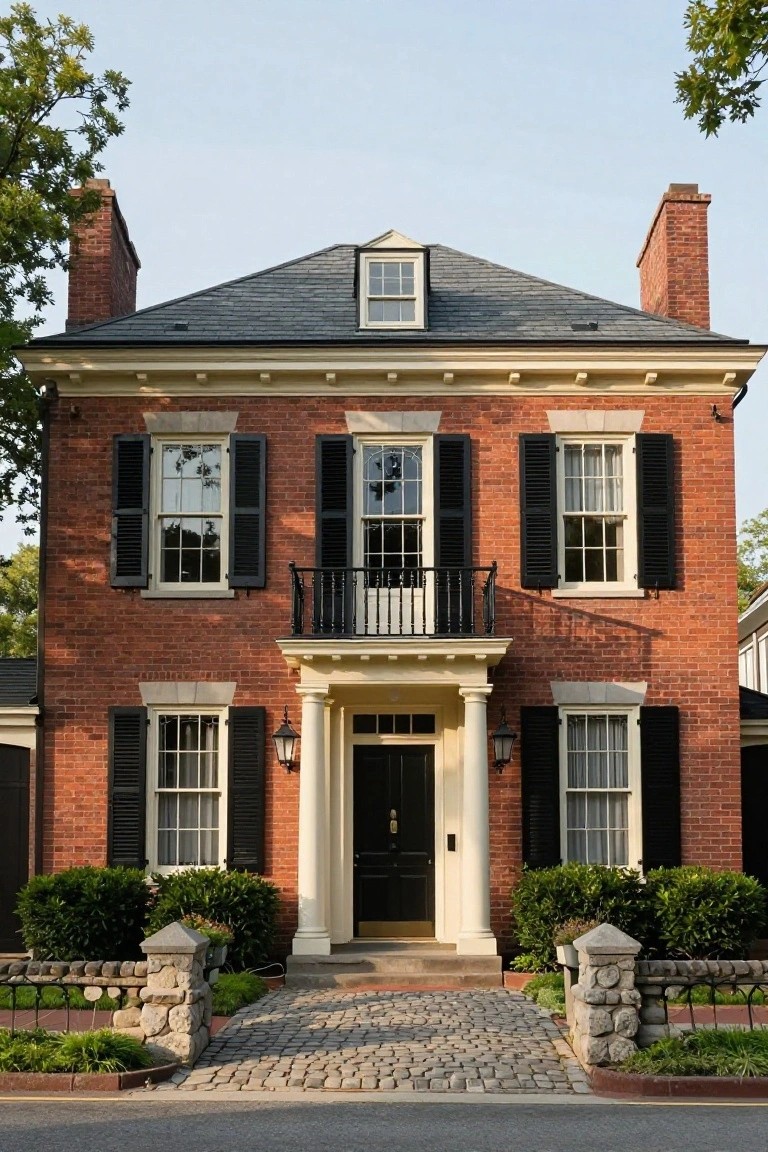
White columns like these give a colonial house that instant classic feel. They stand tall against the warm red brick, framing the front door just right. Notice how they support a simple pediment up top. That touch makes the whole facade look balanced and welcoming without trying too hard.
These columns work best on two-story brick homes in older neighborhoods. Pair them with black shutters and lanterns for more punch. Keep the porch steps plain so the columns stay the star. They’re low fuss once built, and they boost curb appeal right away.
Classic White Porch Columns
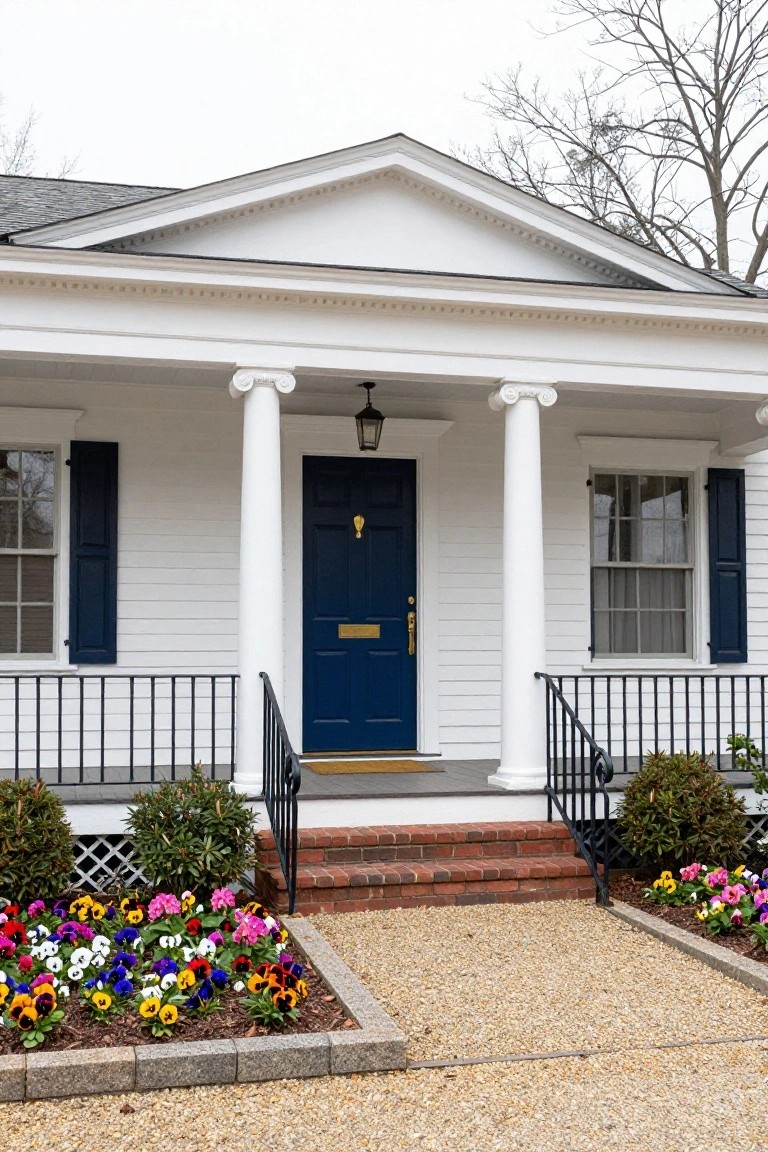
White columns like these give a colonial house its strongest character. Fluted along the shaft with clean capitals at the top, they hold up the porch roof and pull the eye right to the center door. Paired with navy siding accents, they keep things crisp and balanced without any extra trim.
This setup works best on front-facing porches of two-story homes. Go for paint-grade wood or fiberglass to match white clapboard siding. A darker door adds punch… just make sure the steps and railing stay simple so the columns stay the focus.
Classic Porch Columns
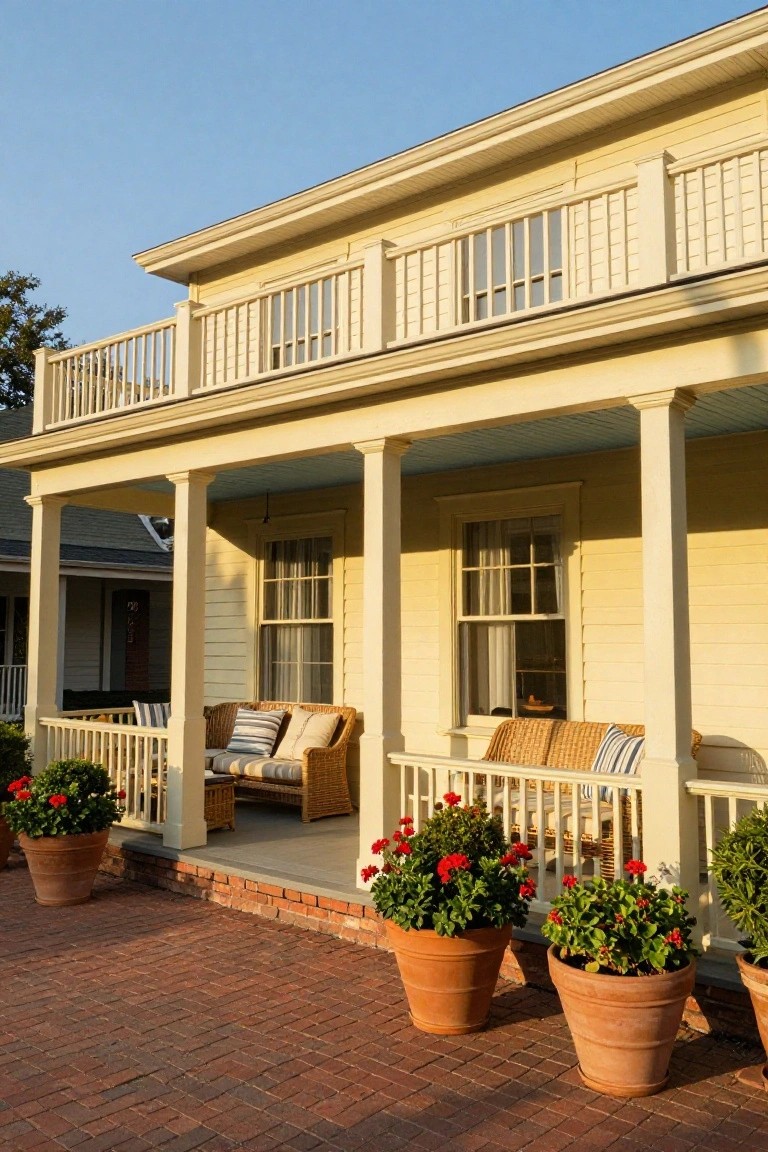
These square white columns are what make colonial houses feel so solid and timeless. They hold up the wide porch roof nicely, framing the front door and windows just right. On a soft yellow house like this one, they stand out clean and crisp, especially with that blue porch ceiling overhead.
You can pull this off on most older homes with a decent-sized front porch. Go for tapered square ones in white or off-white to keep it simple. They suit wraparound porches best and let you add wicker chairs or potted flowers without crowding things. Just make sure they’re beefy enough to match the house scale.
Colonial Columns Framing the Entry
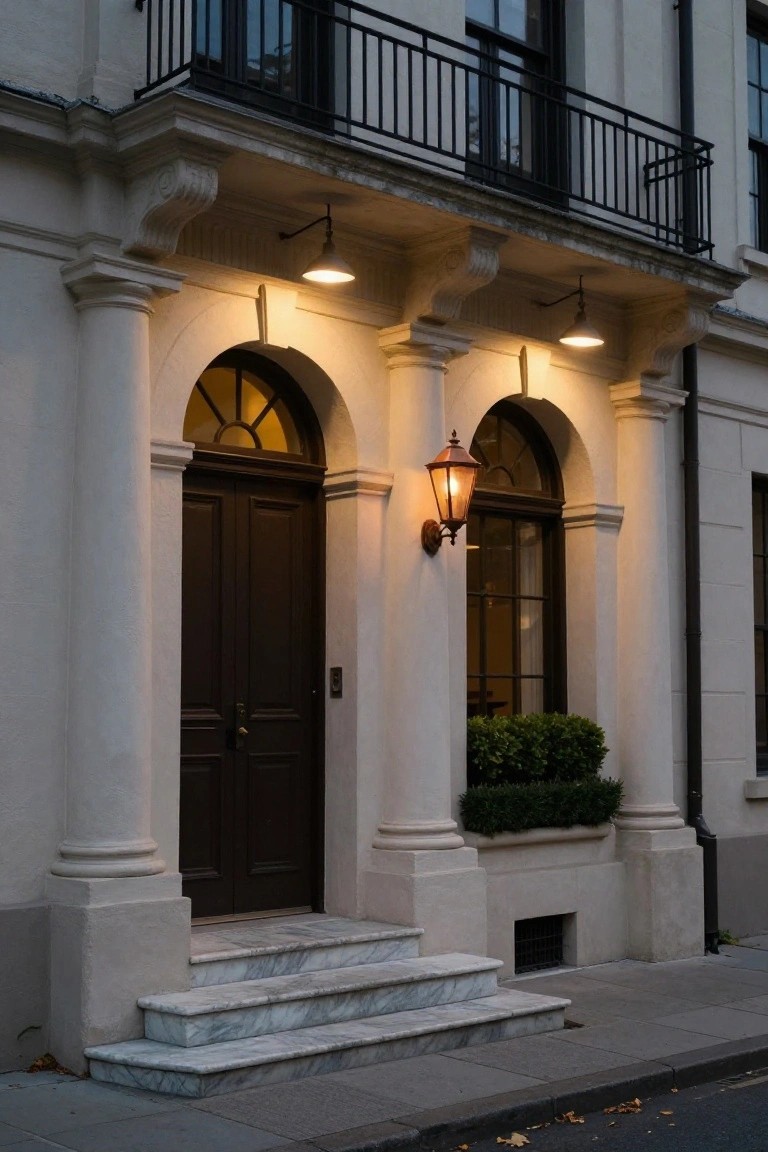
Tall fluted columns like these bookend the double doors and create a strong sense of arrival. They support the simple entablature overhead and tie right into the arched door surrounds. Paired with lanterns that glow softly at dusk, the setup feels balanced and rooted in tradition. It’s a look that says classic without trying too hard.
You see this kind of column work on homes with stucco or painted brick siding. They suit urban rowhouses or suburban colonials best. Keep the scale right, not too beefy for a smaller facade. Add boxwoods in planters nearby for a touch of green that doesn’t compete.
Classic Columns on a Colonial Porch
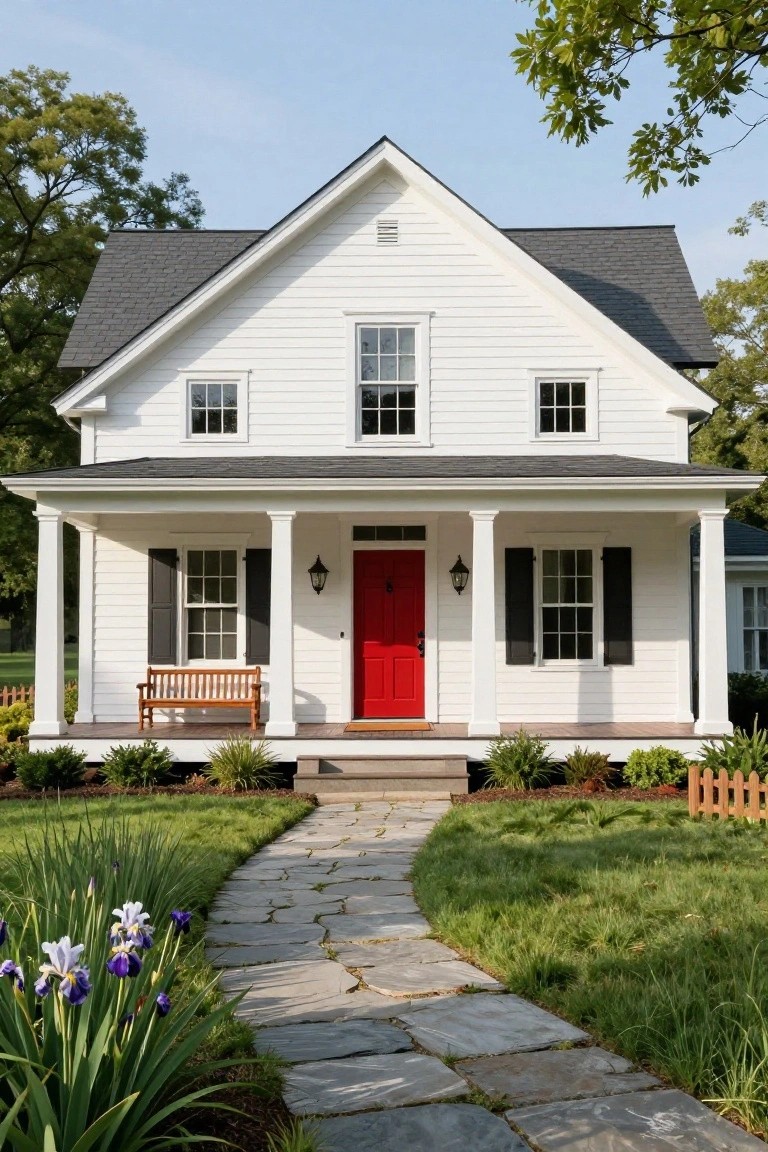
White columns like these give a colonial house that solid, traditional look right at the front. They hold up the porch roof nicely and frame the entry without overpowering the simple clapboard siding. Paired with a pop of red on the door, they make the whole facade feel put-together and welcoming from the street.
You can add columns like this to most front porches on older homes or new builds aiming for colonial style. They suit white or light-painted houses best, especially with black shutters for contrast. Just keep them proportionate to your porch size… too big and they overwhelm, too slim and they look off. A wooden bench nearby adds a spot to sit and enjoy the curb appeal.
Ornate Columns Framing Porch and Balcony
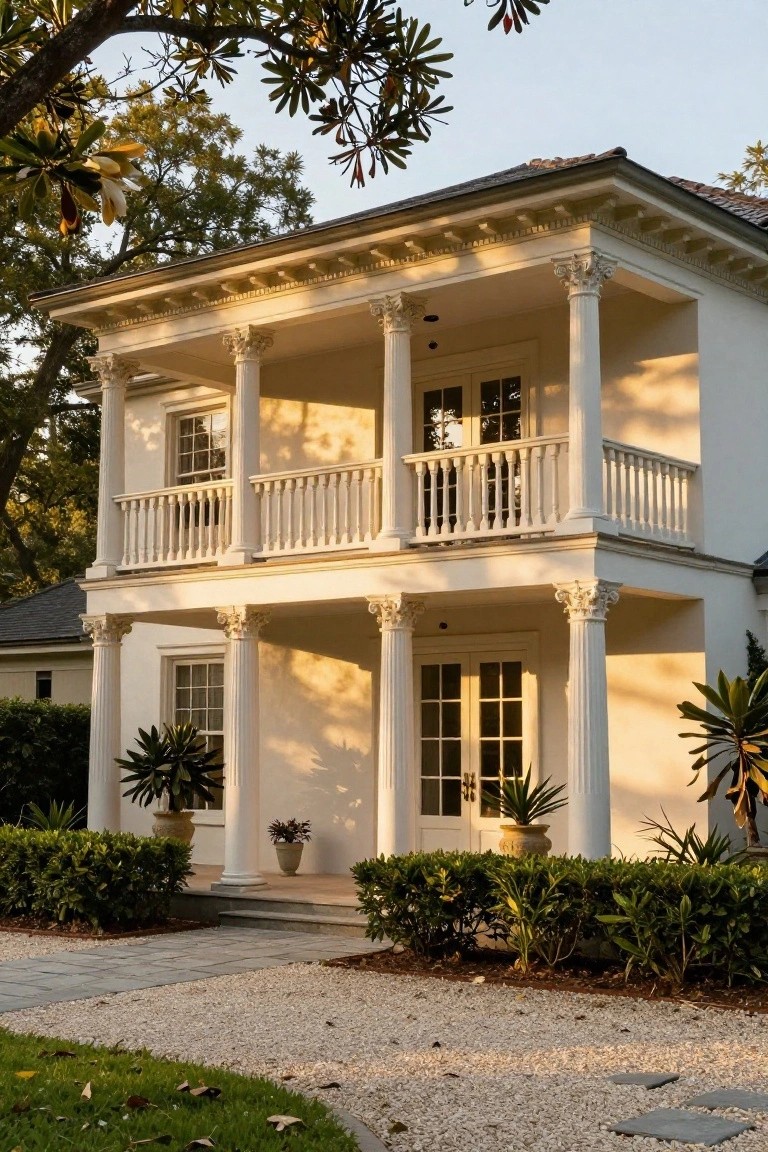
These columns really set the tone for a colonial front. Tall and fluted with carved capitals at the top, they support both the main porch and the balcony above. On a plain white house like this, they add just enough detail without overwhelming things. It’s a look that feels solid and welcoming from the street.
You can pull this off on most two-story homes with a covered entry. Match the column height to your porch roofline, and stick to white or light paint for that crisp effect. Works best where you have some trees or plants nearby… keeps it from feeling too stark. Just don’t skimp on the base details.
White Columns Frame Classic Beach Porch
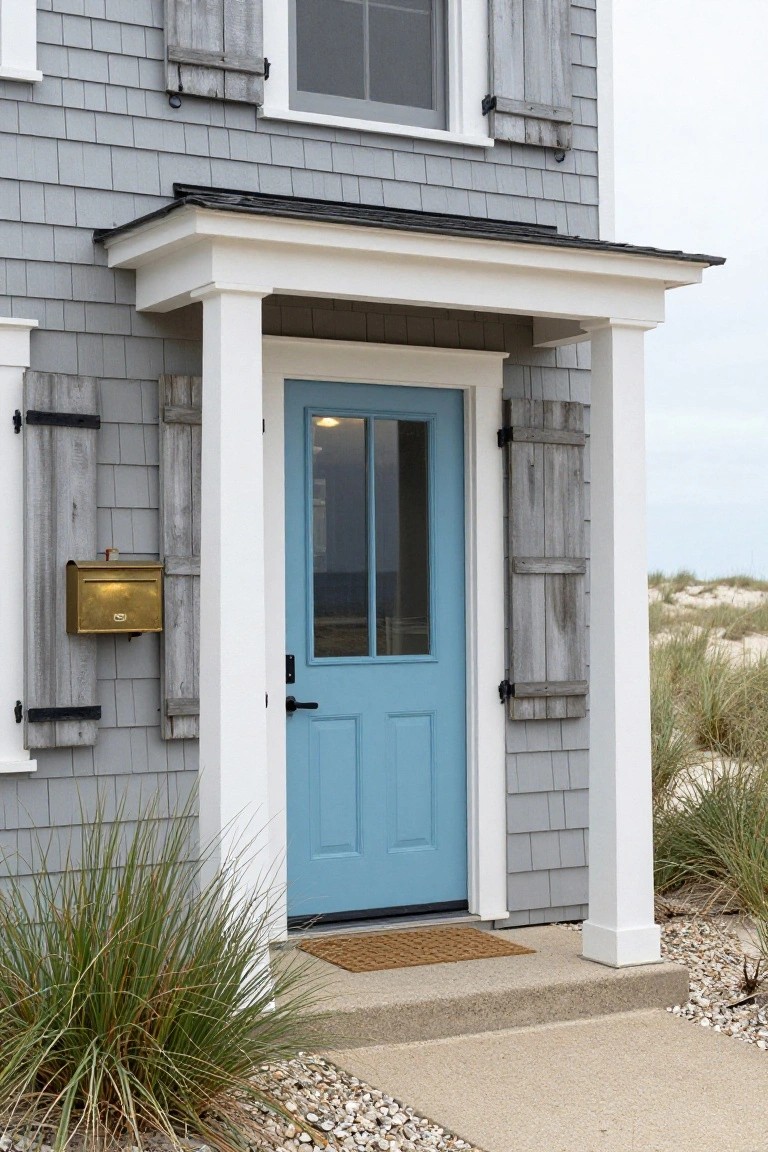
White columns like these give a colonial house that solid, timeless front porch feel. They hold up the overhang nicely over the blue entry door, tying into the gray shingle siding without stealing the show. By the beach, they add structure amid the dunes and grasses. Clean and straightforward.
Try them on coastal colonials or any spot needing curb appeal. Space them evenly to match your door width, paint crisp white for contrast. Suits relaxed homes best, not super formal ones. Keep the base simple on concrete pads.
Fluted Columns Shape the Entry
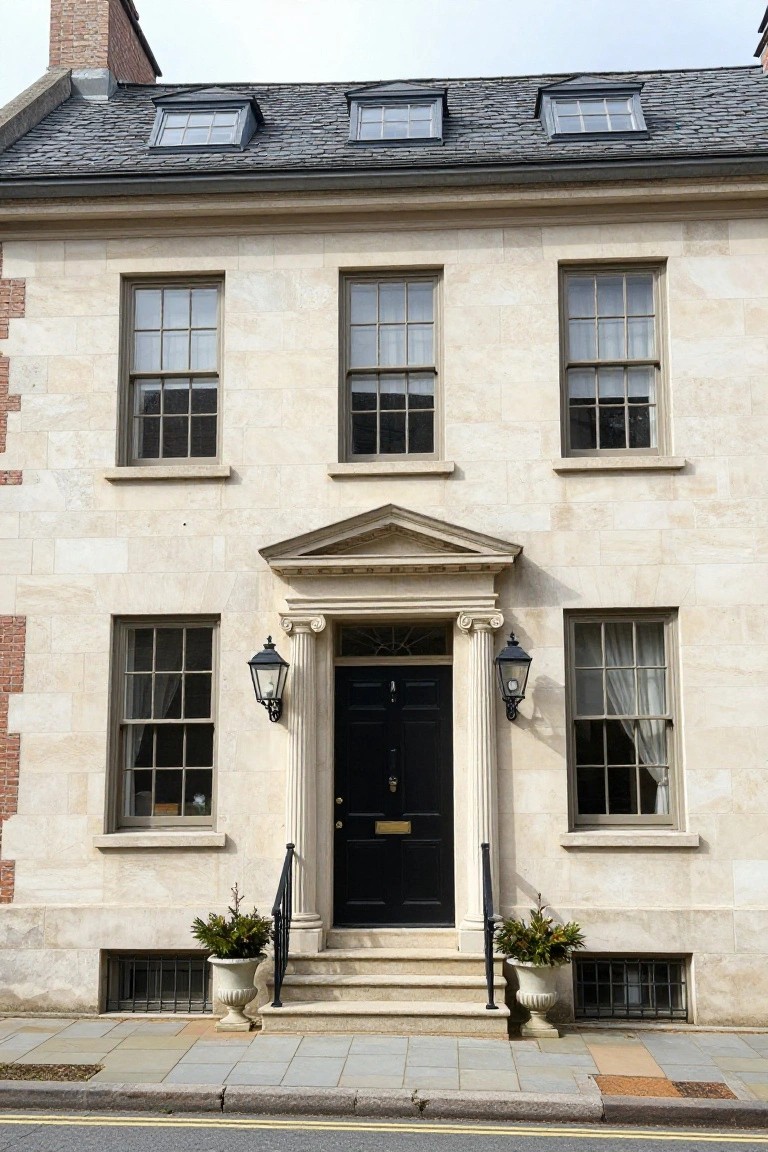
A good set of fluted columns like these can turn a simple front door into the focal point of a colonial house. They’re slim and tapered just right, sitting on either side of the black door under that clean pediment. Against the pale stone walls, they pull everything together with their repeating lines and subtle curves. It’s a look that feels balanced and straight from history books.
You see this kind of detail on older townhouses, especially in places with Georgian roots. It suits narrow urban lots where you want curb appeal without taking up space. Go for stone or painted versions to match your facade, and add lanterns at the base for light. Just keep the stoop clear… no extra furniture crowding things. Works best on two or three story homes.
White Columns Define a Classic Porch Entry
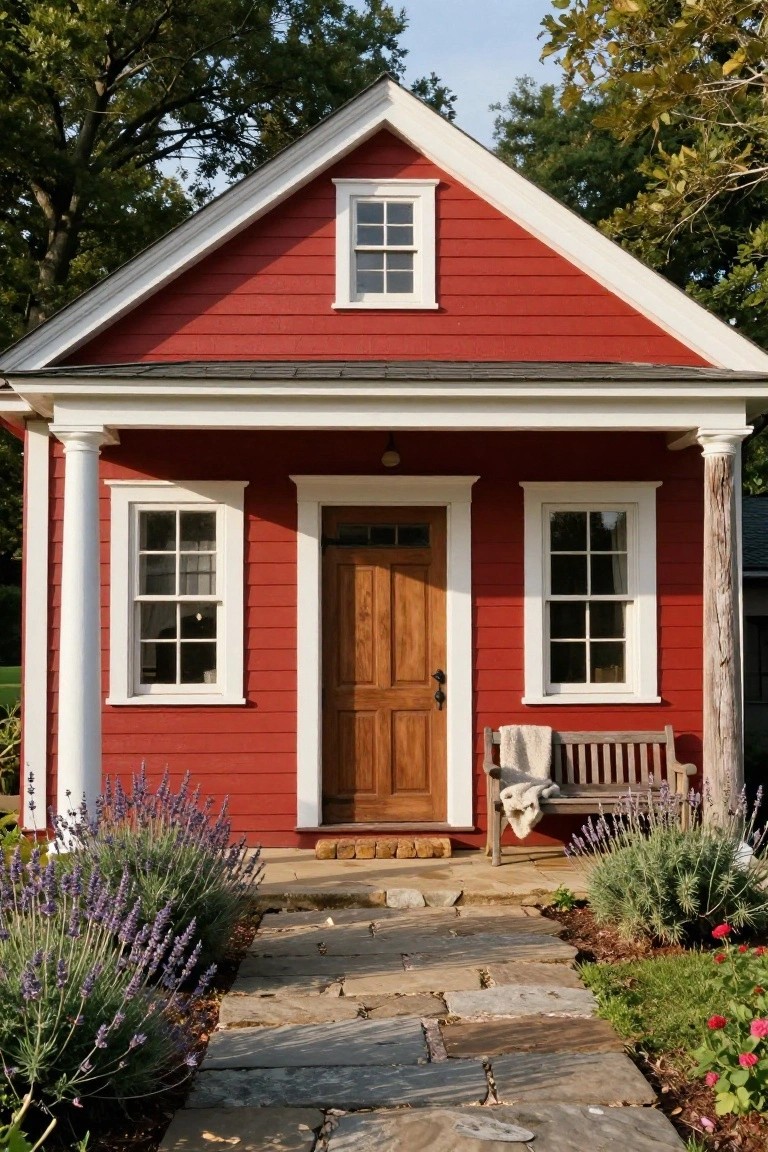
White columns like these stand out on a small colonial-style house. They support the porch roof and frame the front door nicely. The fluted design and crisp white paint against red siding give a traditional feel that pulls the whole facade together. It’s a simple way to add structure without making things busy.
These columns work best on compact homes or cottages where you want some historic charm up front. They suit entry porches with enough room for a bench or plants nearby. Go for painted wood or fiberglass to keep costs down, and match the white trim for clean lines. Just make sure the base sits firm on stone or concrete for stability.
Grand Columns Frame a Classic Entry
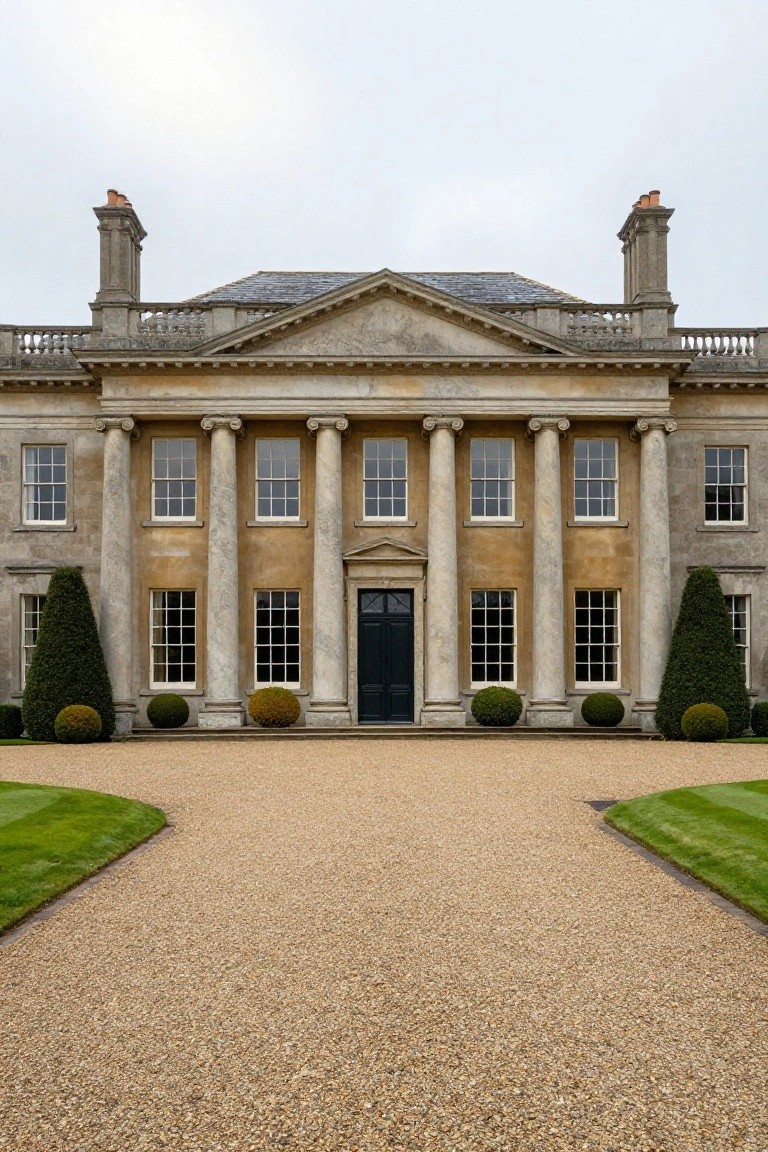
Tall fluted columns like these carry the portico over the front door, pulling the whole facade together in true colonial style. They add height and rhythm without overwhelming the house, especially against the soft stone walls and those evenly spaced windows. It’s a look that says tradition but feels solid and lived-in.
You can pull this off on period homes or new builds aiming for that English country house vibe. Keep the columns proportionate to your entry, maybe four across for balance, and contrast them with a dark door. Works best where there’s room for a driveway approach, so the grandeur hits you right away. Just scale it down if your lot is smaller.
Classic Colonial Yellow Door Entry
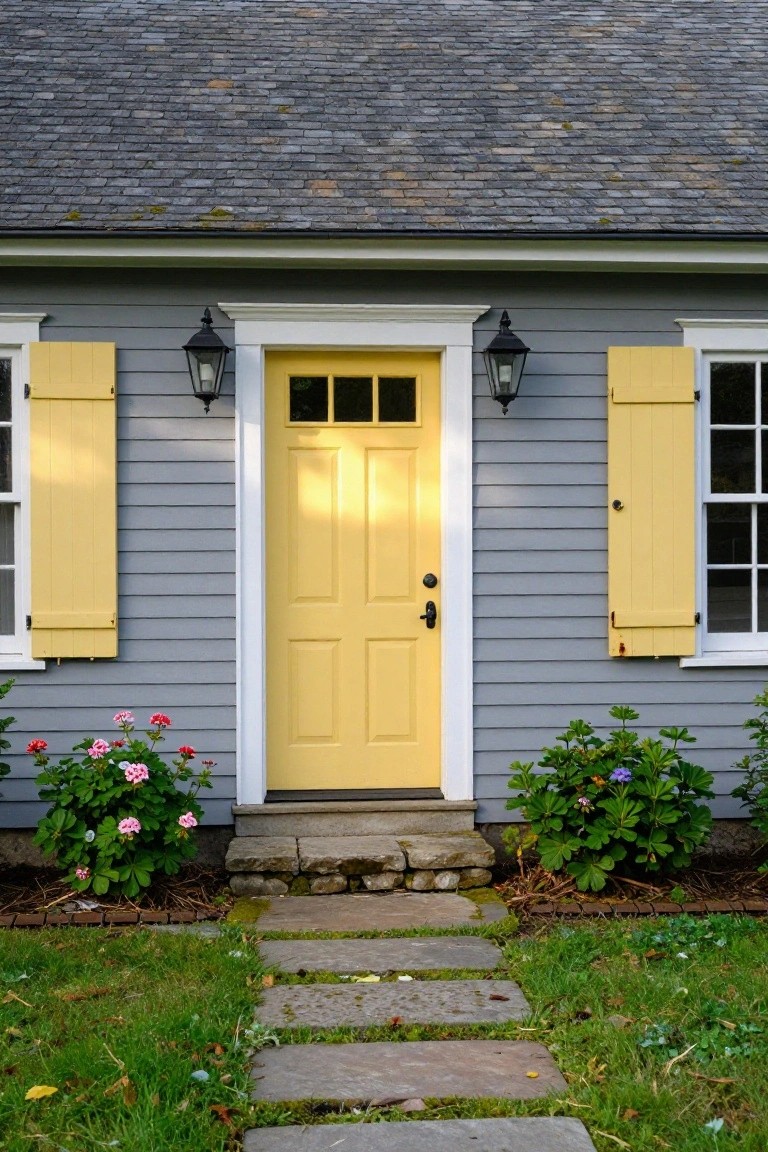
A simple yellow door like this one turns a plain gray colonial front into something welcoming. The bright color pulls your eye straight to the entrance, while the matching yellow shutters keep everything tied together. Black lanterns on each side add just enough detail without overdoing it.
This look fits older homes or cottages with neutral siding. Paint the door a shade that pops but pairs with your trim, and flank it with matching accents. Stone steps help lead the way up. Skip it if your house already has lots of color elsewhere.
Classic Columns Frame the Front Door
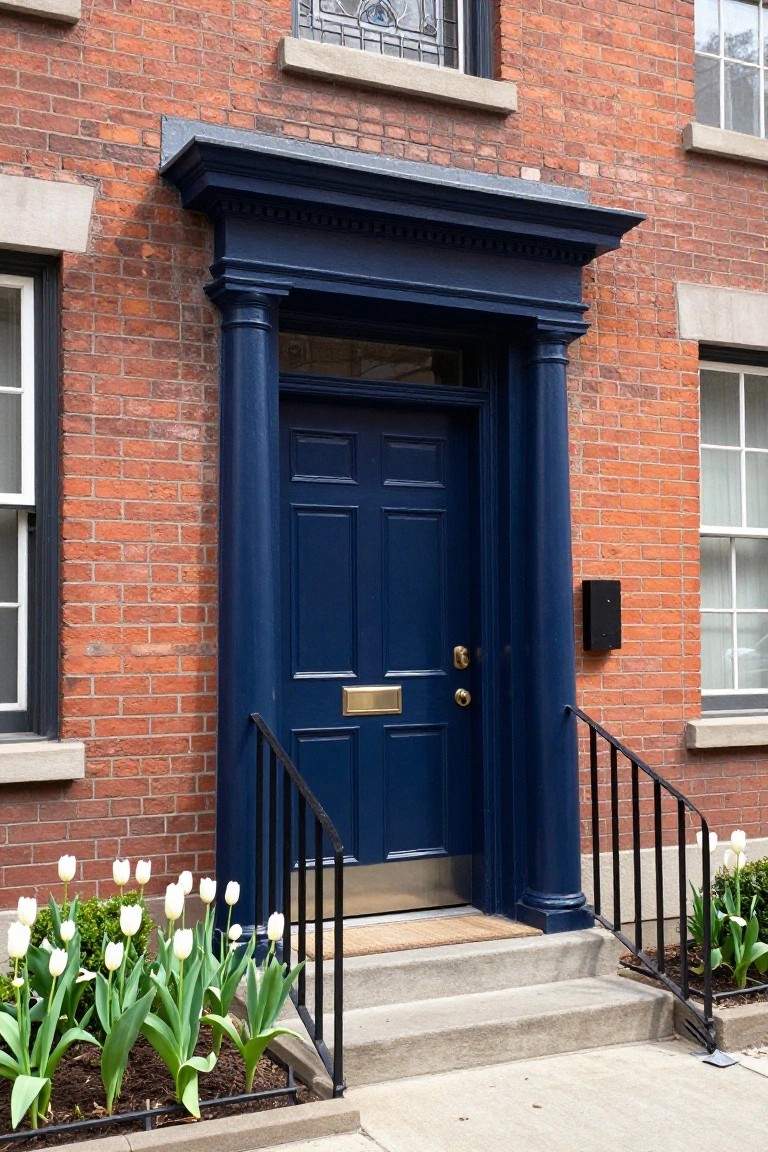
These fluted columns wrap around the entry on this brick house and give it that solid colonial feel. They stand tall with the dark blue door right in the middle, keeping things simple yet striking. The white paint on the columns pops against the red brick without much fuss.
You can pull this off on older homes or townhouses where you want the door to be the focus. Pick columns that match the house height, maybe three feet wide at the base. A bold door color like navy works best here. Just make sure the steps and railings stay straightforward so the columns do their job.
Classic Tapered Columns on a Colonial Porch
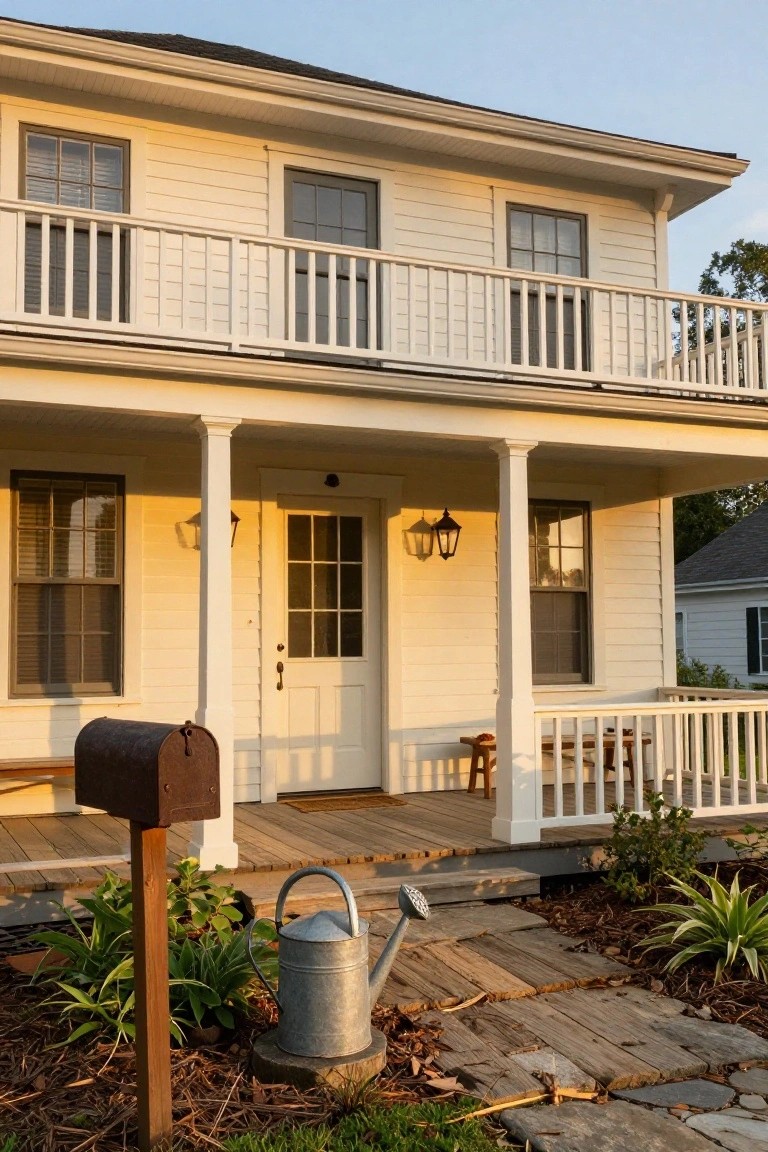
These tapered white columns hold up the porch roof and frame the front door just right. They add that solid, symmetrical look colonial homes are known for. The round shape keeps things simple and sturdy, tying into the clapboard siding without stealing the show.
You can pull this off on most two-story colonials with a raised porch. Stick to white paint for a clean match, and space them evenly across the front. They suit quieter neighborhoods where you want curb appeal that lasts. Just make sure the base sits firm on the foundation.
White Columns Frame a Classic Entry
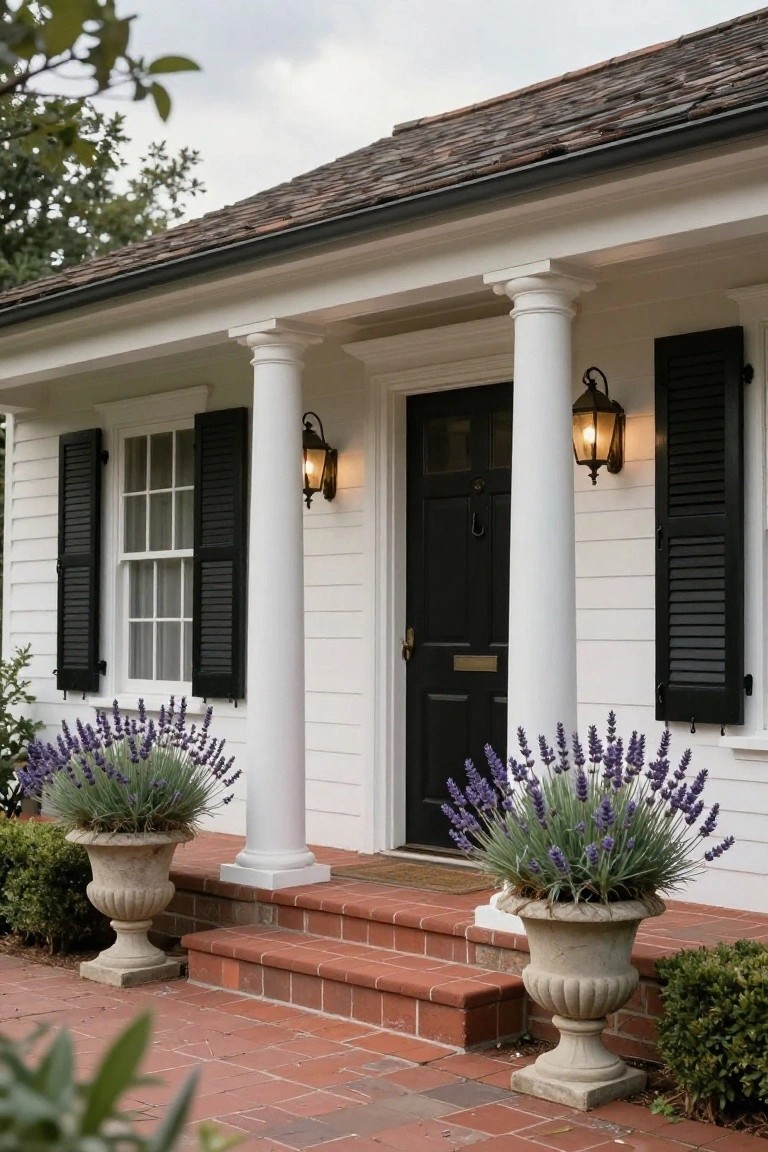
White columns like these give a Colonial house that instant look of tradition and welcome. They stand straight and symmetrical on either side of the dark front door, making the porch feel like a proper focal point. The lanterns hanging from them add a soft glow, and those big lavender pots at the base tie it all together without much fuss.
You can pull this off on most any front-facing porch setup, especially if your house has clapboard siding. Keep the columns plain and painted crisp white to stand out against the walls. They suit smaller homes just fine, as long as the steps lead right up to them… watch the scale so they don’t overwhelm a narrow entry.
Columns Framing a Classic Brick Entry
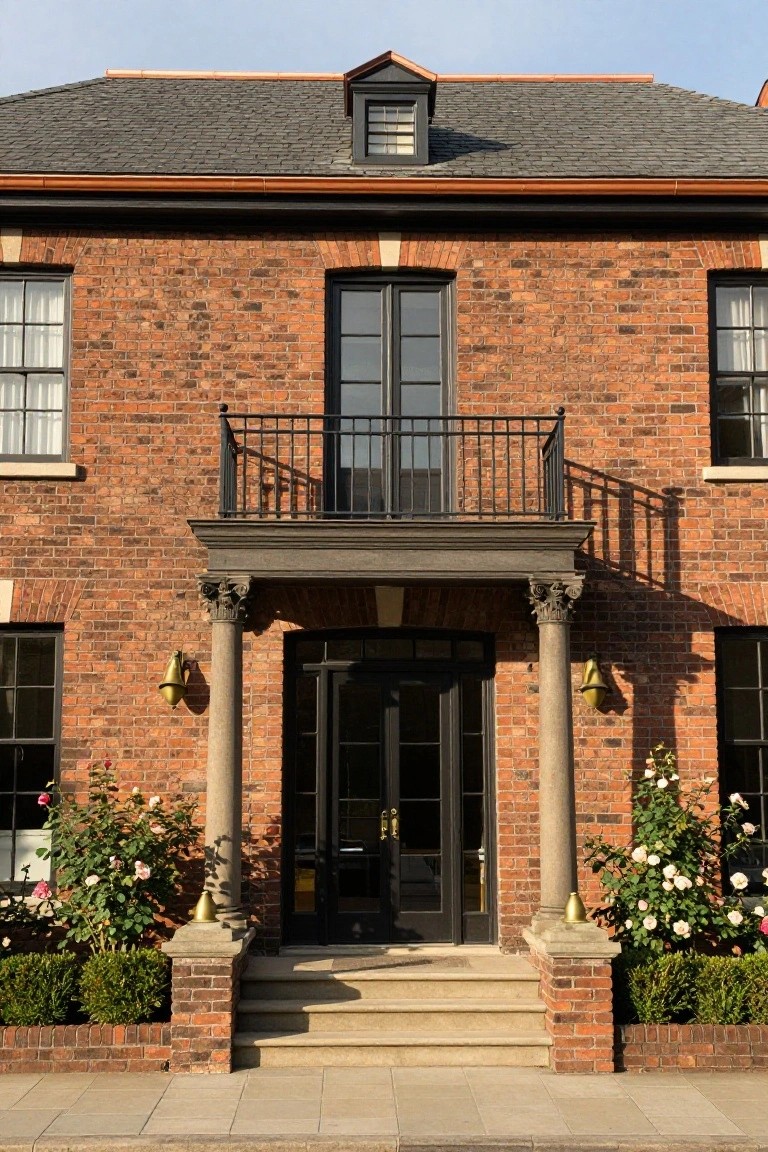
These paired columns catch your eye right away on this brick house. With their fluted design and carved tops, they hold up a neat little porch roof over the front door. It’s a straightforward way to add that colonial touch, making the entry feel important and balanced against the solid red brick.
You can pull this off on most traditional homes, especially two-stories with clean lines. Go for stone or plaster columns to match brick, and keep the door dark for punch. They suit city streets or quiet neighborhoods… just make sure the proportions fit your porch height so nothing looks off.
Classic White Fluted Columns on the Porch
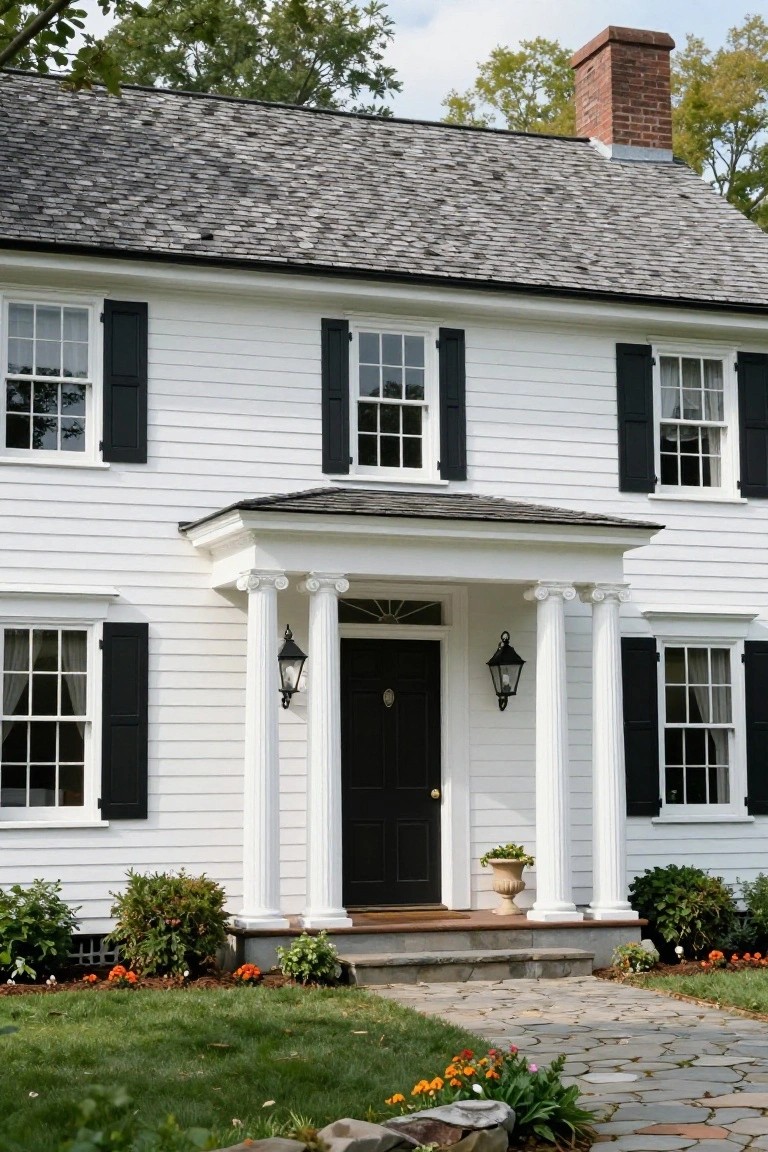
White fluted columns like these give a colonial house instant authority at the front door. They rise tall and smooth against the clapboard siding, supporting the porch roof with perfect symmetry. That subtle texture in the fluting catches the light just right, making the entry feel solid and welcoming without any fuss.
You see this look on older homes in the Northeast a lot, and it suits clapboard or shingle-style houses best. Go for them if your porch needs definition, especially with a dark door for contrast. Just keep the scale right, nothing too skinny or they’d look off.
Frequently Asked Questions
Q: Can I add Colonial columns to my not-so-Colonial house?
A: Sure, they work on ranch or craftsman homes too. Pick slim Doric styles to ease into the look. Match the spacing to your door width for instant balance.
Q: Fiberglass or wood—which lasts longer outside?
A: Fiberglass beats wood hands down for weather resistance. Rain and sun wreck wood over time, but fiberglass shrugs it off. Just seal the paint well at install.
Q: How do I pick columns that fit my porch size?
And start here: And measure your porch height first. Make columns about a third of that to avoid a top-heavy feel. Sketch a quick side view to test proportions.
Q: What’s the best way to clean them yearly?
A: Grab a soft brush and mild soap solution. Rinse right away to dodge streaks… Dry with a towel if needed.
