


I’ve noticed that a thoughtful beige on colonial exteriors pulls the eye from the street, softening those classic symmetrical lines into something genuinely approachable. The warmth comes through in how it plays with clapboard siding and brick bases, avoiding the chill that stark paints often bring to these facades. Curb appeal builds fast. Years back, I walked up to one where subtle shade shifts on the entry made the whole front feel steadier in changing light. A handful of these ideas mix materials in ways that hold their charm over time, ones you’d sketch out before committing paint.
Warm Beige Siding with Black Shutters
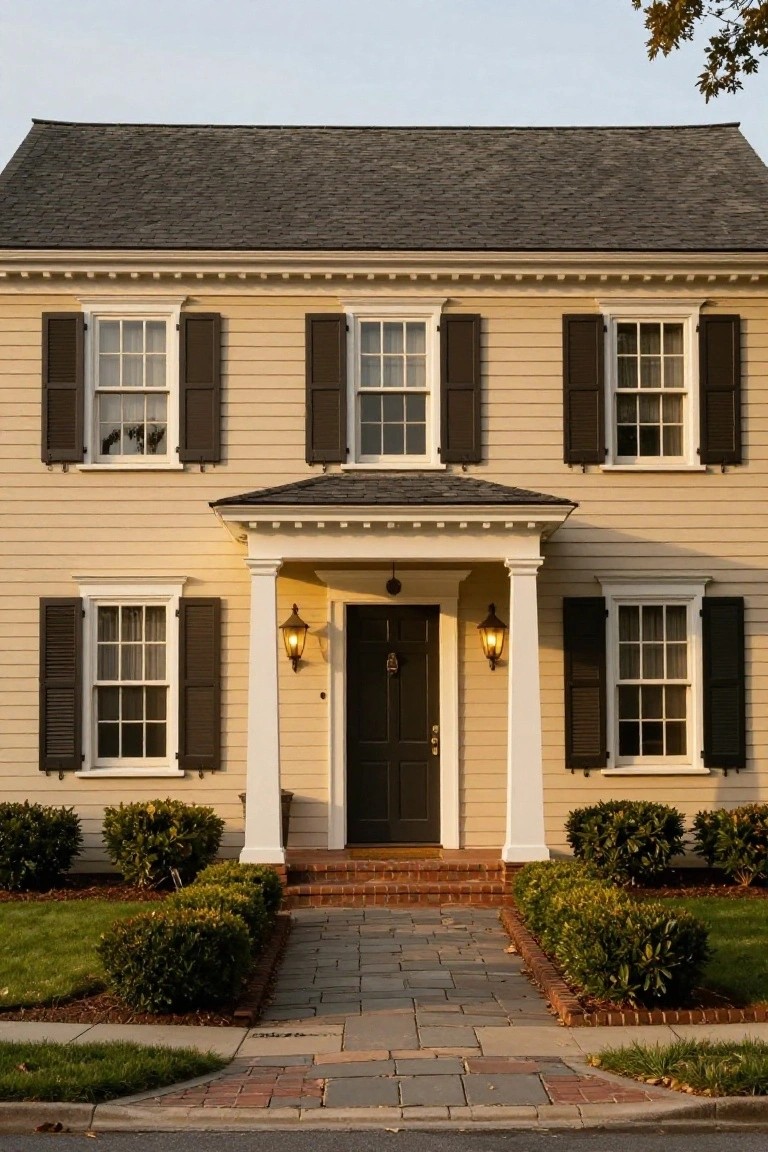
A soft beige clapboard siding like this one gives a colonial house that gentle, lived-in feel without going too light or stark. The black shutters pull everything together by framing the windows nicely, and they add just enough contrast to make the facade stand out from the street. It’s a look that feels steady and right for the style.
You can pull this off on most two-story colonials, especially where you want curb appeal that doesn’t shout. Stick with white trim on the entry for balance, and keep the landscaping simple with boxwoods at the base. Watch the shutter size though, they need to match your window scale or it looks off.
Recommended Products

One Piece Injection Molded Polypropylene Construction

One Piece Injection Molded Polypropylene Construction

One Piece Injection Molded Polypropylene Construction
Black Front Door on Beige Brick
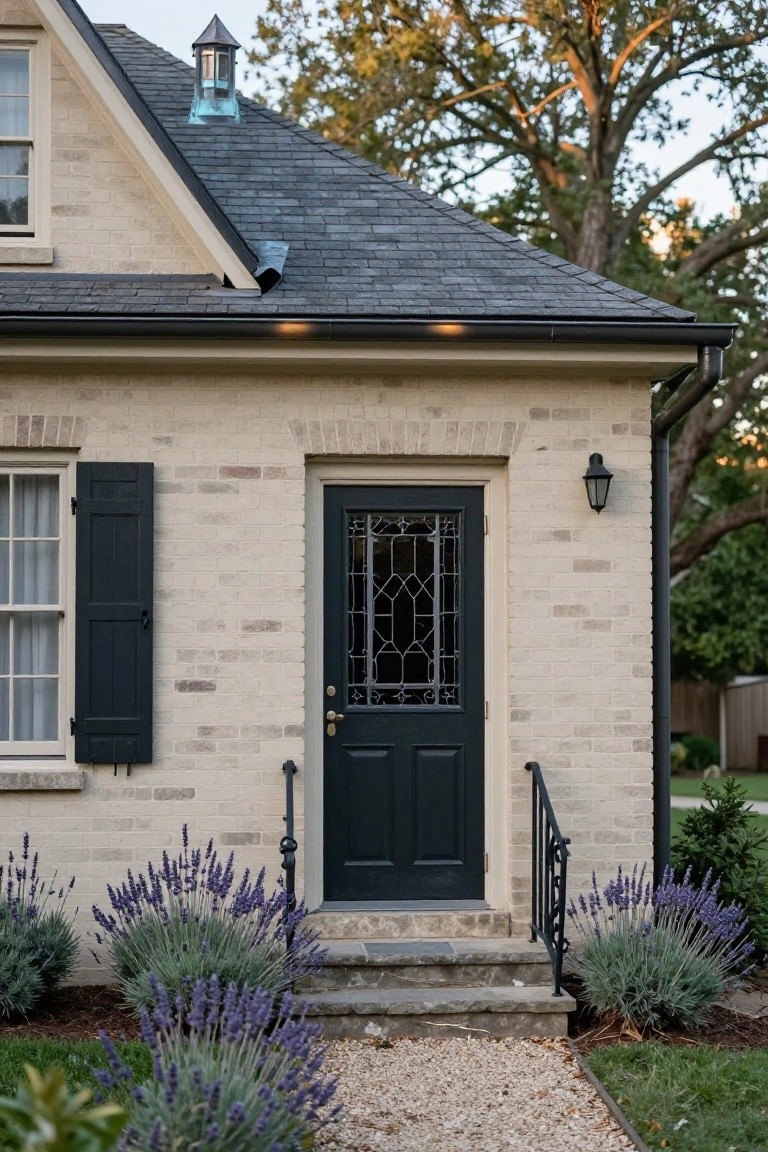
A deep black front door stands out nicely against the soft beige brick of this Colonial-style home. The leaded glass panel adds a touch of old-world detail, while black shutters nearby tie it together. Simple lavender plantings along the steps keep things fresh without fuss, drawing the eye right to the entry.
This setup works well on homes with neutral facades that need a focal point. Use it where you want classic curb appeal that feels warm, not stark. Black iron railings help match the door, and it suits most front porches or stoops. Just make sure the door hardware shines a bit for that polished look.
Cozy Porch on Beige Colonial House
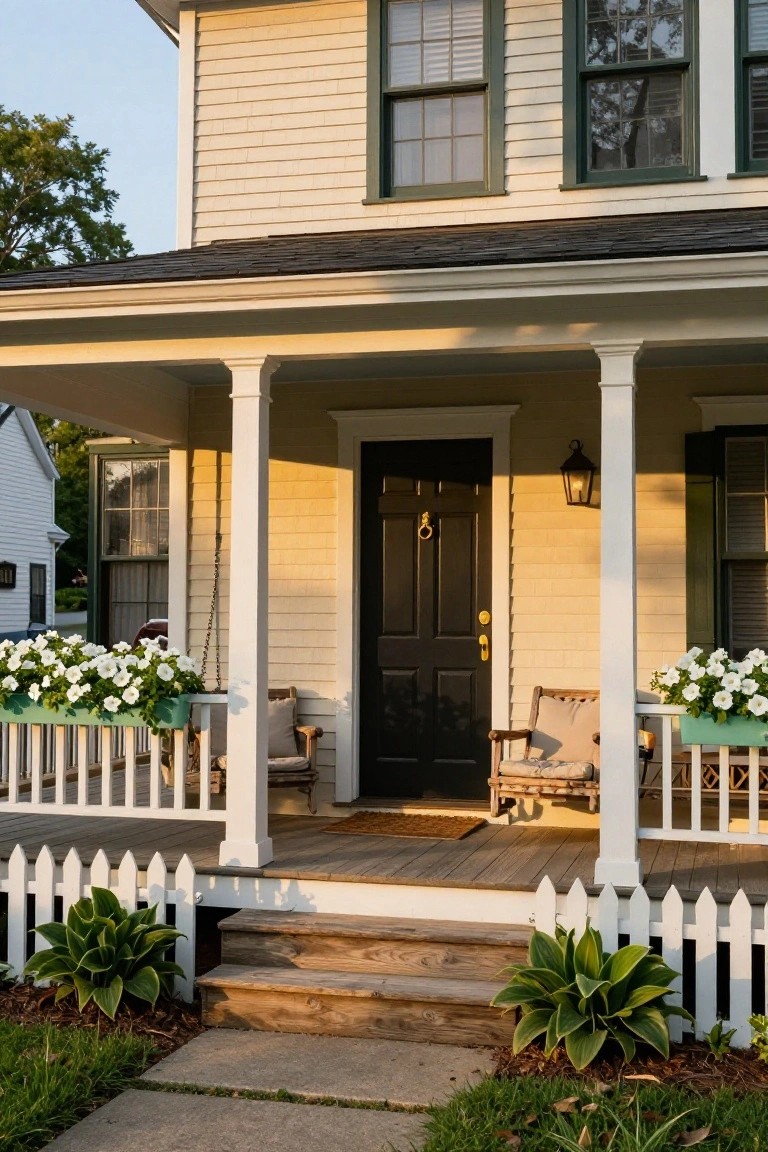
A front porch like this one turns a plain beige colonial into something folks actually want to walk up to. White columns hold up the roof, railings keep it open, and a couple old chairs sit ready for company. Flower boxes overflow with white blooms, and that dark door pulls it all together without stealing the show. The soft beige siding stays in the background. Lets the porch do the welcoming.
Put a setup like this on any two-story colonial with room along the front. It fits older neighborhoods best, where you want low-key charm that lasts. Skip fancy furniture. Basic wood chairs and easy plants work fine. Watch the scale though. Too much porch can overwhelm a smaller house.
Black Trim on Beige Colonial Facade
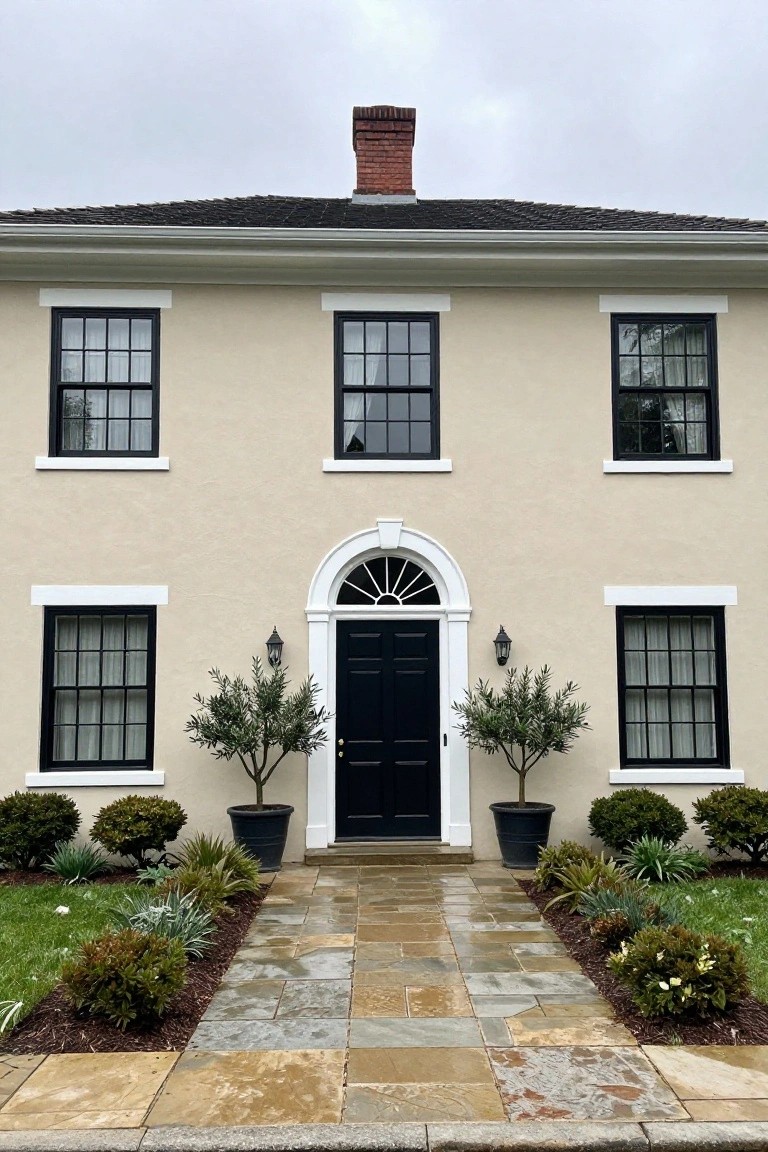
Black window frames and doors stand out sharp against a soft beige exterior like this. It gives the house that clean, classic colonial look without feeling too busy. The multi-pane windows get extra definition, and the whole front pulls together nicely.
This works best on two or three story homes with simple lines. Pair it with a stone path and a couple potted trees by the entry to keep things welcoming. Just make sure the black paint is high quality, or it might chip over time.
Beige Colonial Facade with Wood Entry Door
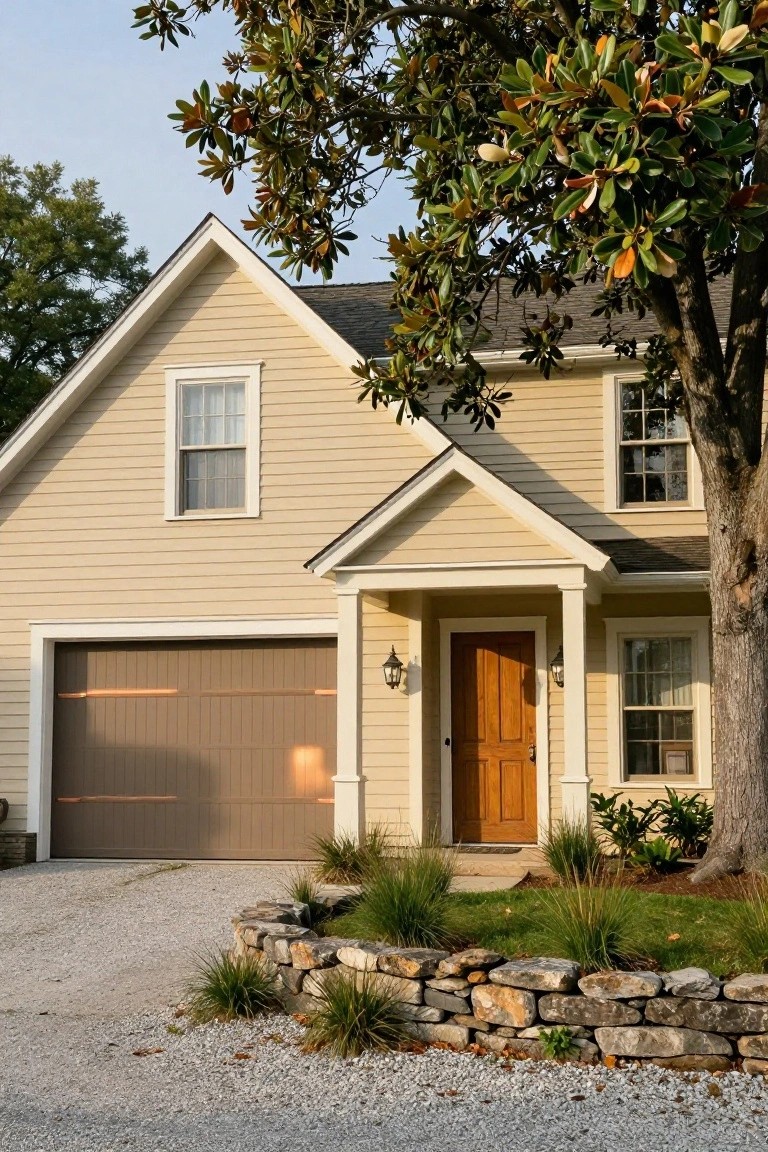
A soft beige siding like this gives a colonial house that easy warm feel without going too yellow or gray. The gabled roofline and simple windows keep it classic. What stands out is the rich wood front door under that small porch. It pulls the eye right to the entry and adds a bit of natural contrast to all the neutral tones.
Try this on a two-story colonial or craftsman style home facing the street. Pair the beige with a darker wood door, maybe add copper accents on the garage like you see here. It works best where you want curb appeal that looks settled in, not brand new. Skip it if your lot is super tight, since the porch needs a little breathing room.
Beige Colonial with Navy Blue Door
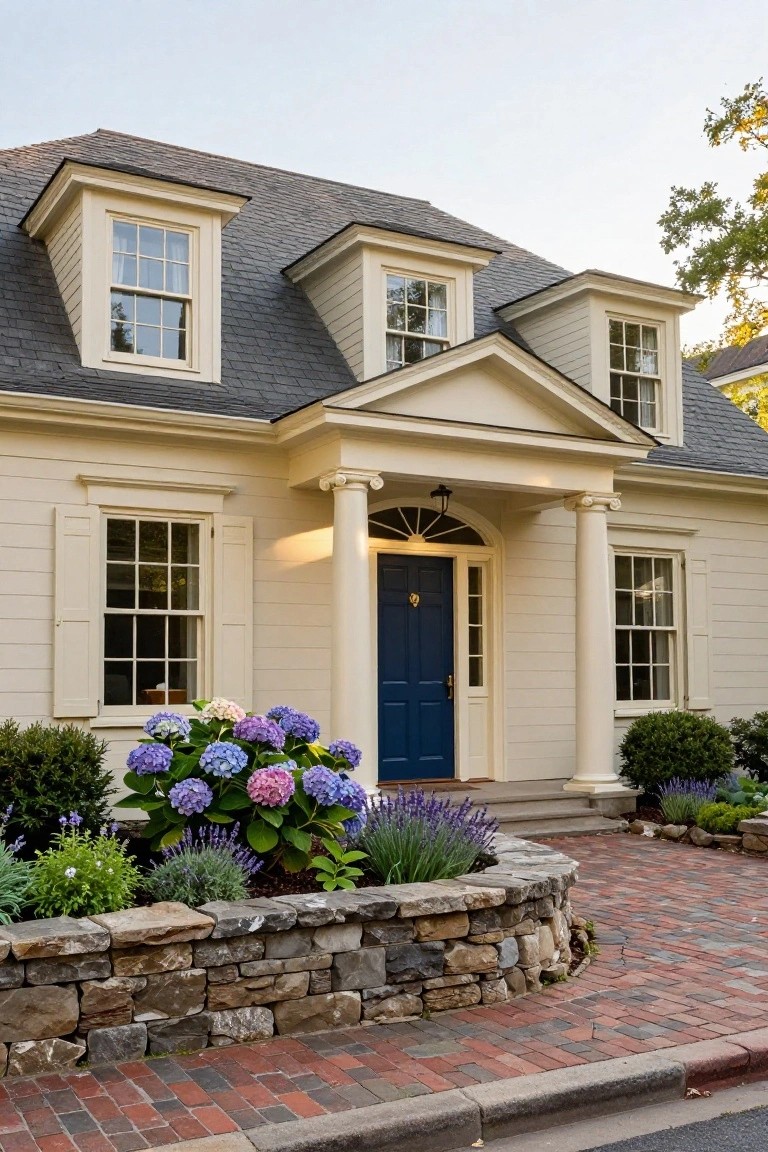
A soft beige siding on this colonial house keeps the look warm and classic. That deep navy blue front door stands out just enough to guide you right to the entry without stealing the show. It’s a simple way to add some color interest to a neutral exterior.
This setup works great on two-story colonials in older neighborhoods. Go for a glossy blue door with brass hardware, and frame it with white columns like here. Keep plantings low-key around the steps, maybe hydrangeas, so the door stays the focus… easy curb appeal boost.
Black Door on Beige Brick
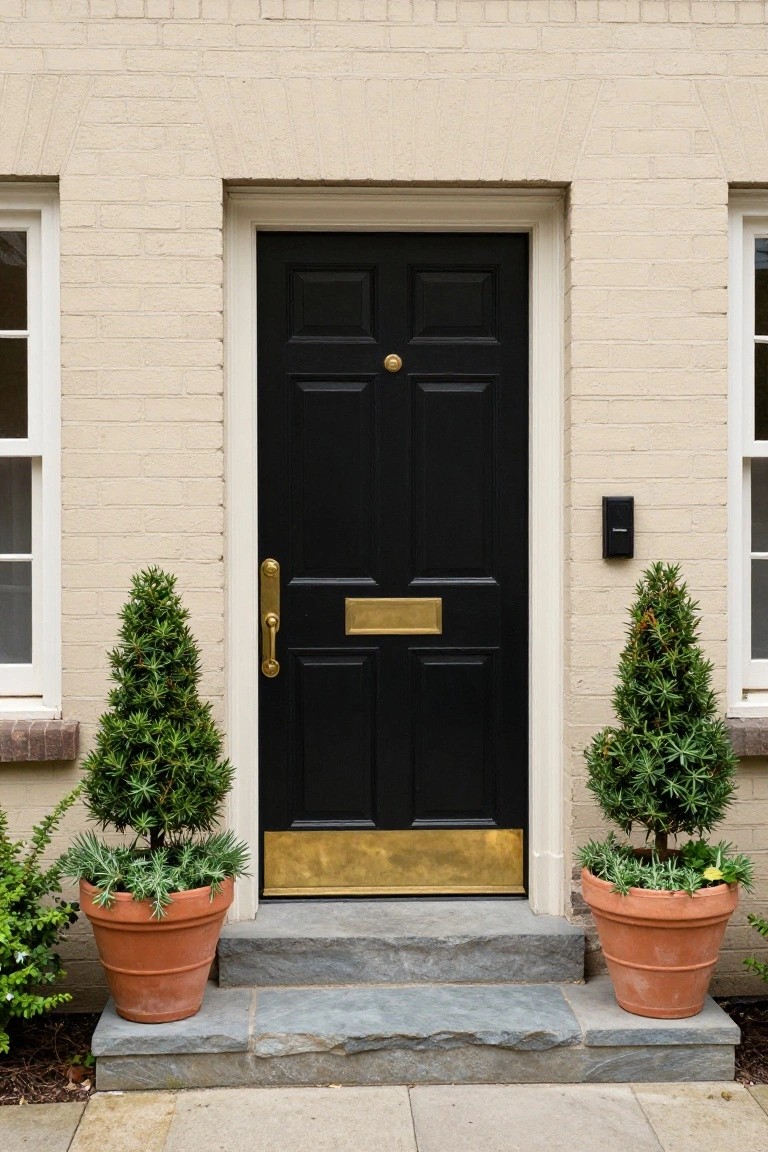
A black front door stands out sharp against beige brick siding. That contrast pulls your eye right to the entry without messing up the warm neutral feel. Gold hardware on the knocker and letterbox adds a touch of class, keeping things traditional.
This look fits colonial homes in older neighborhoods best. Flank the door with matching potted topiaries in terracotta for balance. Skip busy colors elsewhere so the door does the work.
Beige Colonial Facade with Balcony Accent
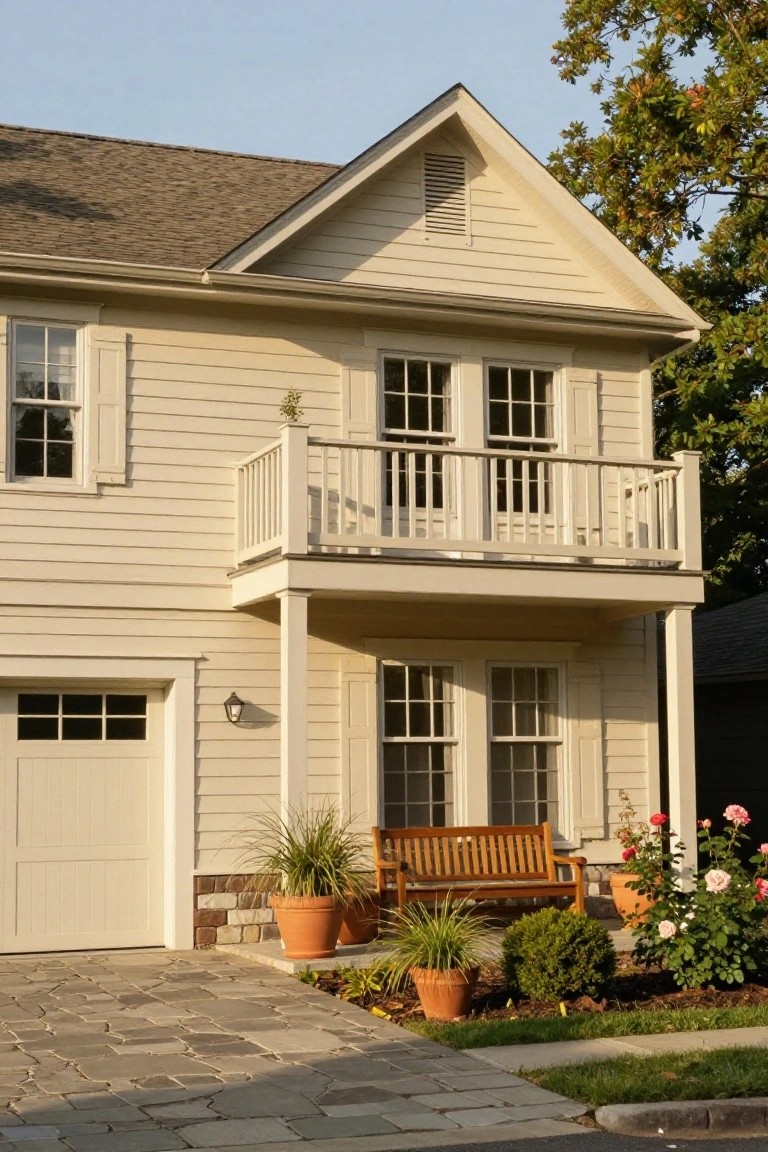
A soft beige clapboard siding gives this colonial house a gentle, timeless look that feels right at home in any neighborhood. The second-floor balcony adds just enough height and interest without overwhelming the simple lines. Paired with the covered porch below, it creates a welcoming entry that draws folks in on a quiet afternoon.
This setup works best on two-story homes where you want subtle elevation. Use light beige paint or siding with white trim around windows and railings to keep things crisp. Add a bench and a few pots on the porch for everyday charm, but skip heavy landscaping so the architecture stays front and center. It suits suburban lots nicely.
Black Door on Warm Beige Siding
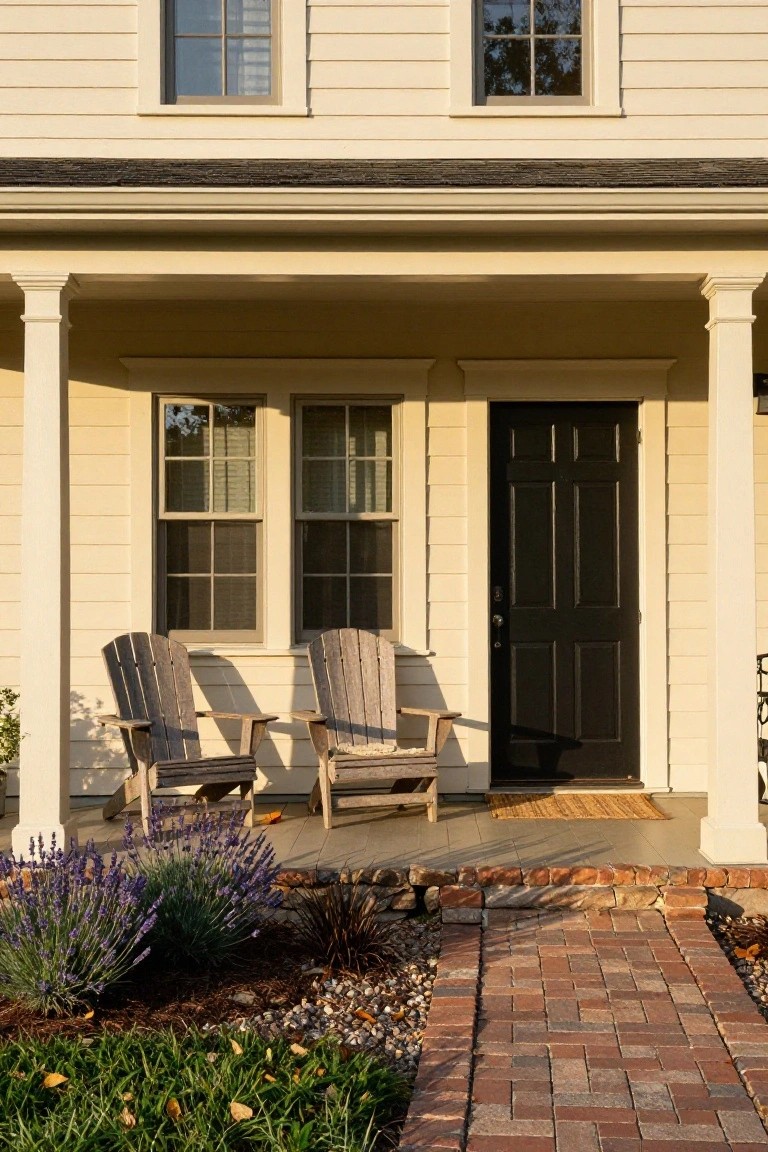
A black front door stands out clean and strong against warm beige siding on this colonial house. That contrast pulls your eye right to the entry without much else needed. The porch columns and simple chairs keep it straightforward and homey.
This works great on street-facing colonials where you want some punch up front. Go for it on two-story homes like this, but stick to matte black to avoid glare. Add a couple chairs if space allows… makes folks feel welcome to linger.
Classic Pedimented Portico Entry
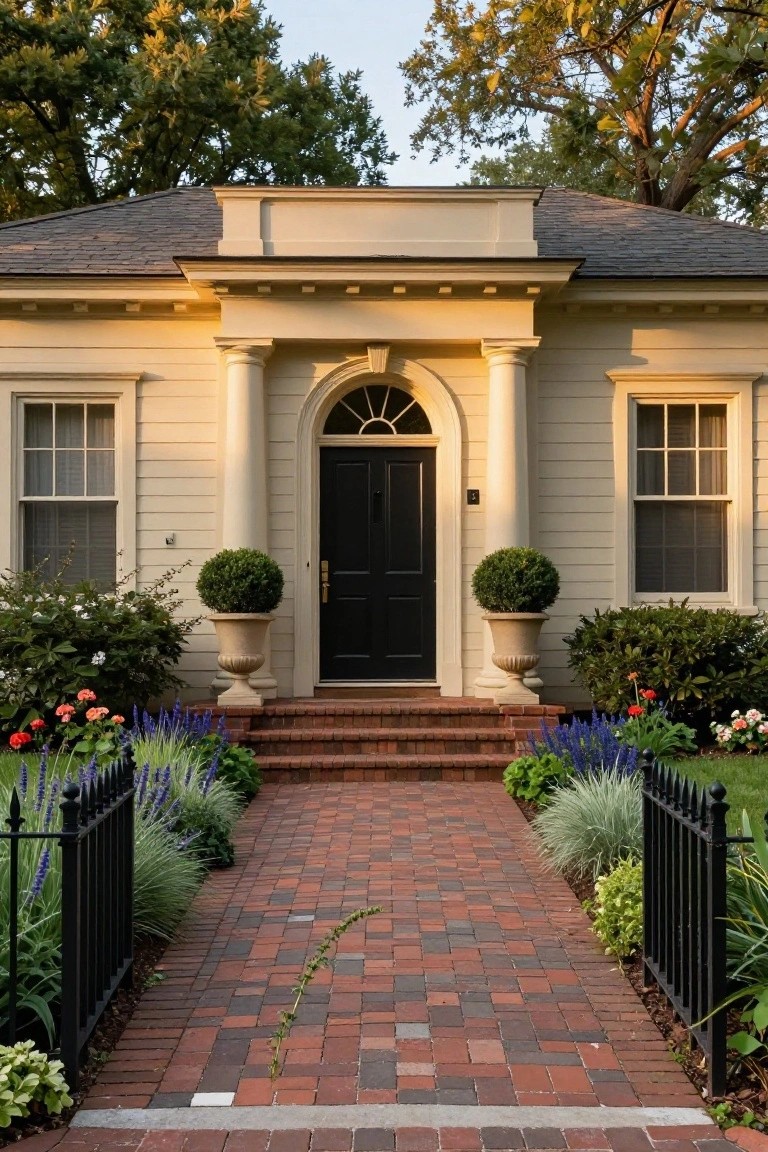
This beige colonial house uses a simple pedimented portico with fluted columns to make the front door the clear focal point. The white columns stand out clean against the warm siding, giving the whole facade a touch of old-world formality. It keeps things balanced and welcoming, especially with the dark door pulling everything together.
You can pull this off on most traditional homes by adding columns around an existing stoop or building a small overhang. It fits smaller lots best, where you want curb appeal without extra square footage. Just match the scale to your house height, and flank the steps with matching urns for that finished look.
Black Shutters on Beige Siding
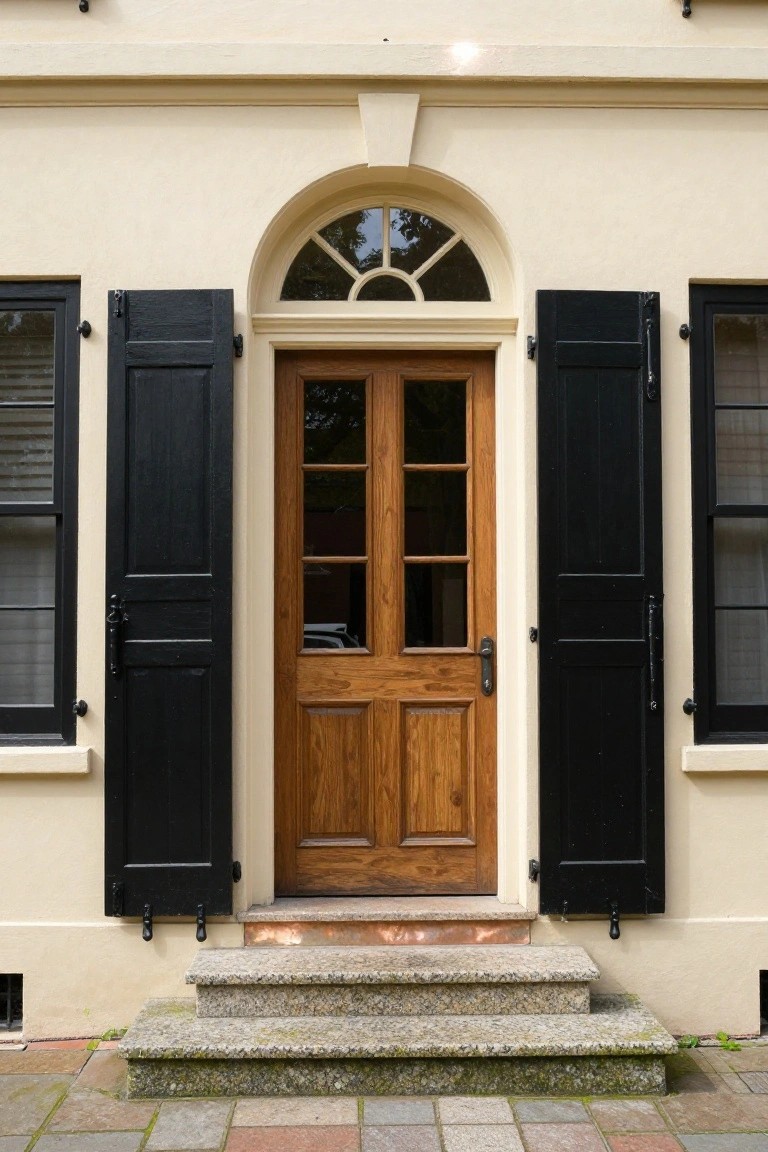
Black shutters give beige siding a clean punch on Colonial houses. They pull focus to the entry without much fuss. That warm wood door sits right in the middle and keeps things from feeling too stark.
This works great on older homes or new builds aiming for classic style. Go for simple louvered shutters in matte black. Stone steps up front help too… just keep the path clear and even.
Beige Colonial with Black Shutters
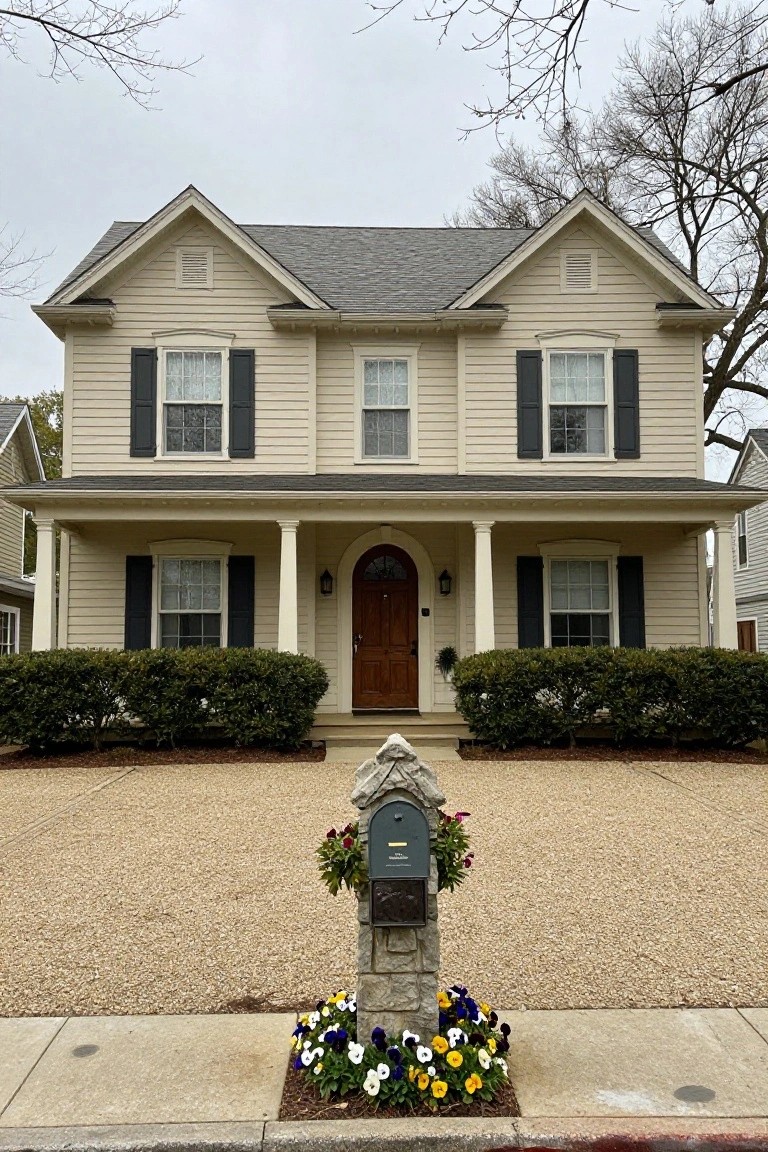
A classic look for colonial homes comes from painting the siding in a warm beige tone and adding black shutters to the windows. It keeps things neutral but gives enough contrast to make the house stand out from the street. The shutters frame the windows nicely, and that soft color feels right at home in older neighborhoods.
Try this on a two-story colonial with a front porch. The beige works best with white trim around the doors and roofline, plus a wood front door in a medium stain. Boxwoods along the front edge it all together without much fuss. Just avoid going too pale on the beige, or it can look washed out on cloudy days.
Columned Entry Porch
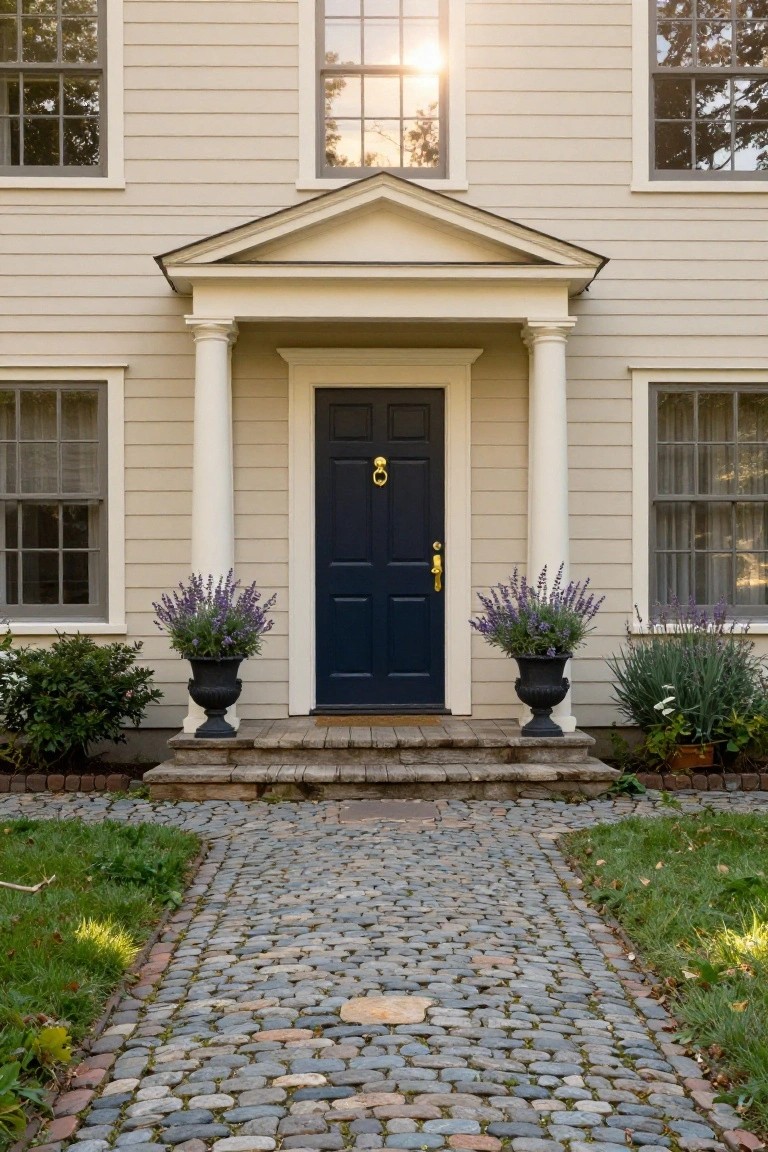
That white columned porch setup makes a simple beige colonial house look established and friendly right from the street. The columns frame the dark navy door just right, and those big lavender pots on either side add a soft touch without much effort. It’s the kind of front entry folks notice and like.
Put columns like these on a two-story house with neutral siding if you want more presence at the door. They suit older neighborhoods or suburbs where classic lines fit in. Skip fancy trim though. Plain pots with low plants keep the look clean year round.
Hydrangea Planters at Base of Front Steps
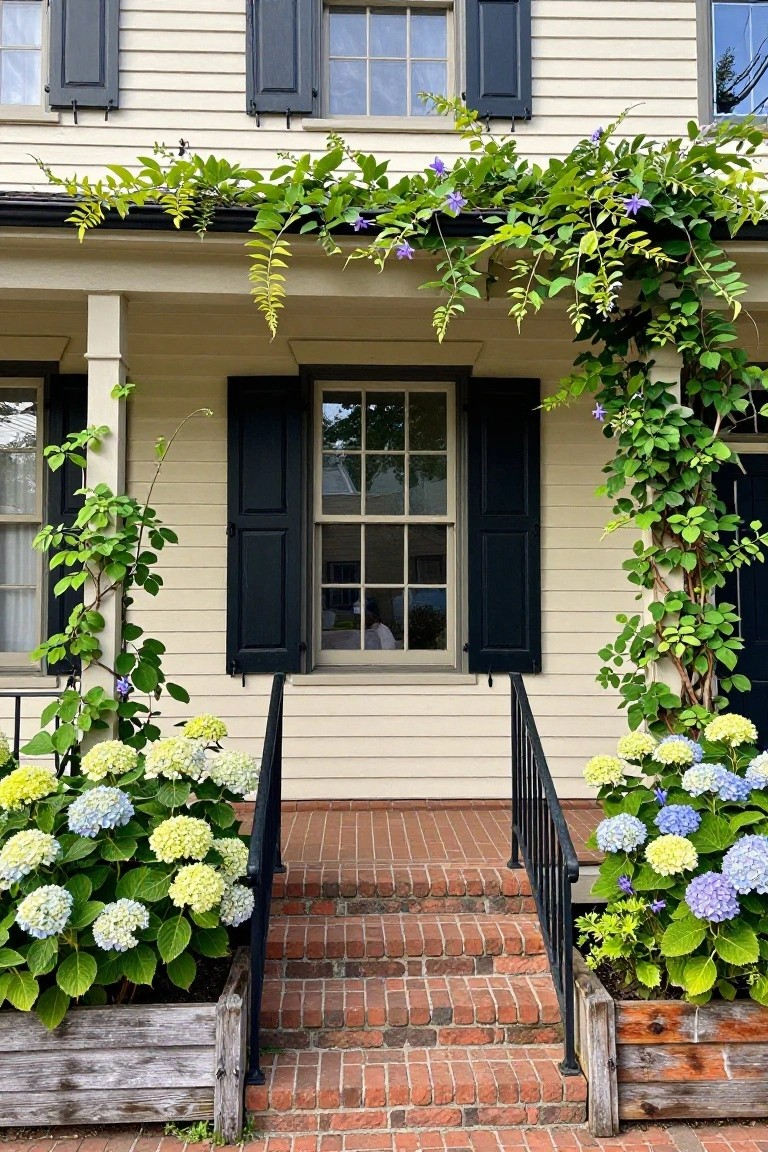
Big wooden planters packed with hydrangeas make a simple statement right where it counts, flanking the brick steps up to the porch. On a beige colonial house like this one, the fluffy white and blue blooms bring some gentle color and texture that feels right at home with the black shutters and climbing vines overhead. It keeps things looking full and lived-in without much fuss.
Set them in sturdy, weathered boxes that match your steps or siding. This setup suits classic homes on the East Coast or anywhere with a front stoop. Go for mophead hydrangeas if you want that rounded look, and position them so they don’t block the path. They’ll need regular water in hot weather, but the payoff is steady curb appeal season after season.
Beige Colonial with Green Shutters
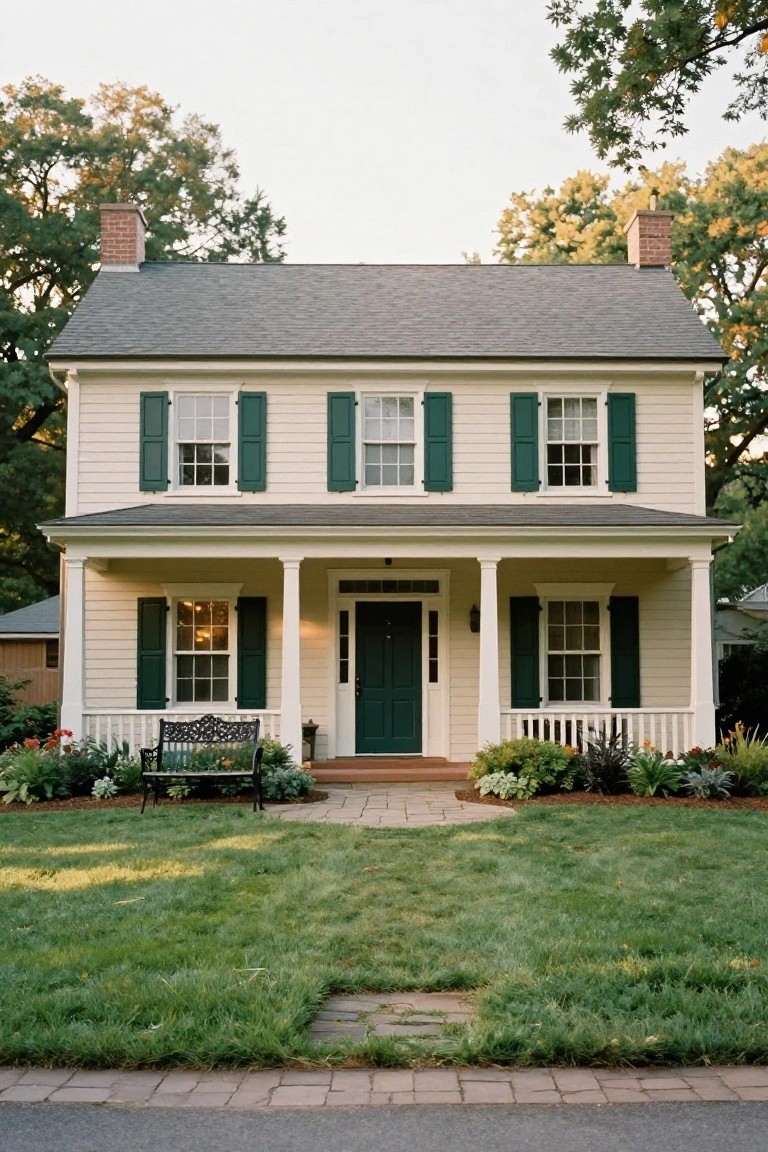
A soft beige siding like this brings out the best in a classic colonial house. It keeps things neutral and warm, especially with those green shutters adding a crisp contrast. The dark green door pulls it all together without overwhelming the look.
This setup suits older neighborhoods or homes with lots of trees around. Go for a beige with warm undertones so it doesn’t wash out in shade. Add a simple bench on the porch, and you’ve got easy curb appeal that lasts year-round.
Warm Brick Base on Beige Colonial Facade
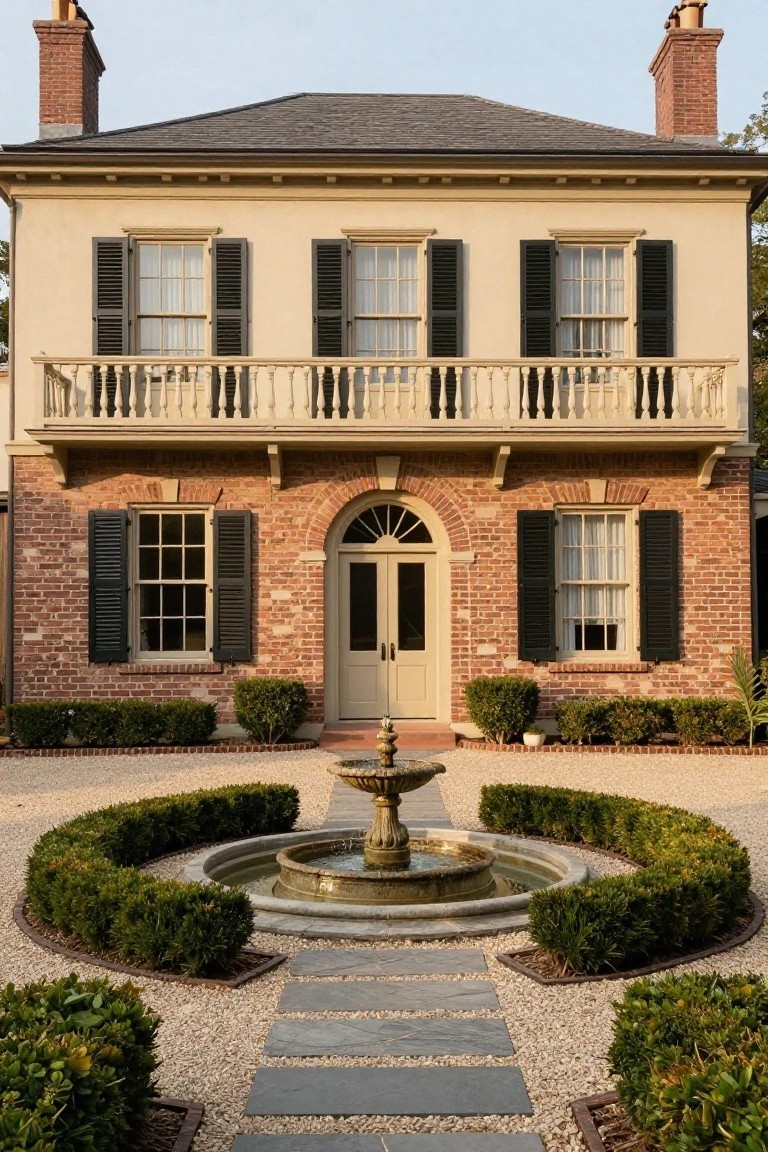
A classic move for colonial homes is using brick at the base under a beige upper level. It gives the house a solid, grounded feel right away. The red brick ties into the earth tones around it, like the gravel paths and boxwoods, while the soft beige keeps things light and not too heavy. That contrast makes the whole front look balanced and welcoming without much fuss.
This works best on homes with some height, like two stories, where the brick anchors the bottom and lets the beige fade up nicely. Try it if your colonial has an arched entry door like this one. It suits warmer climates or spots with gravel yards. Just make sure the brick color isn’t too bright, or it might overpower the neutral vibe.
Beige Colonial with Tall Fluted Columns
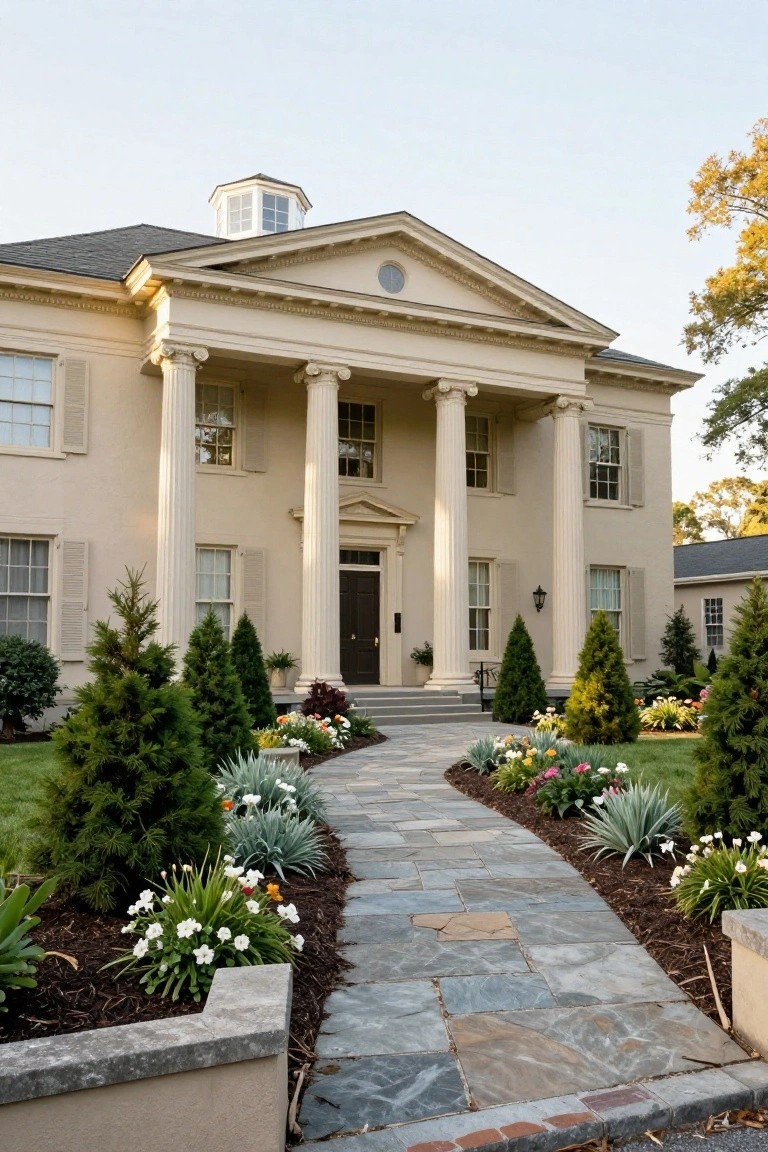
Tall fluted columns like these on a beige colonial front give the house real presence right from the street. The soft beige siding wraps everything in a warm neutral tone that feels steady and inviting, while the columns rise up strong under the pediment. It pulls off that classic look without going overboard.
This setup works best on bigger homes with a good front yard setback. Line the entry path with stone pavers and simple plantings, like evergreens and low flowers, to lead the eye right to the door. Skip fussy details. Keeps maintenance low too.
Black Door on Beige Colonial Exterior
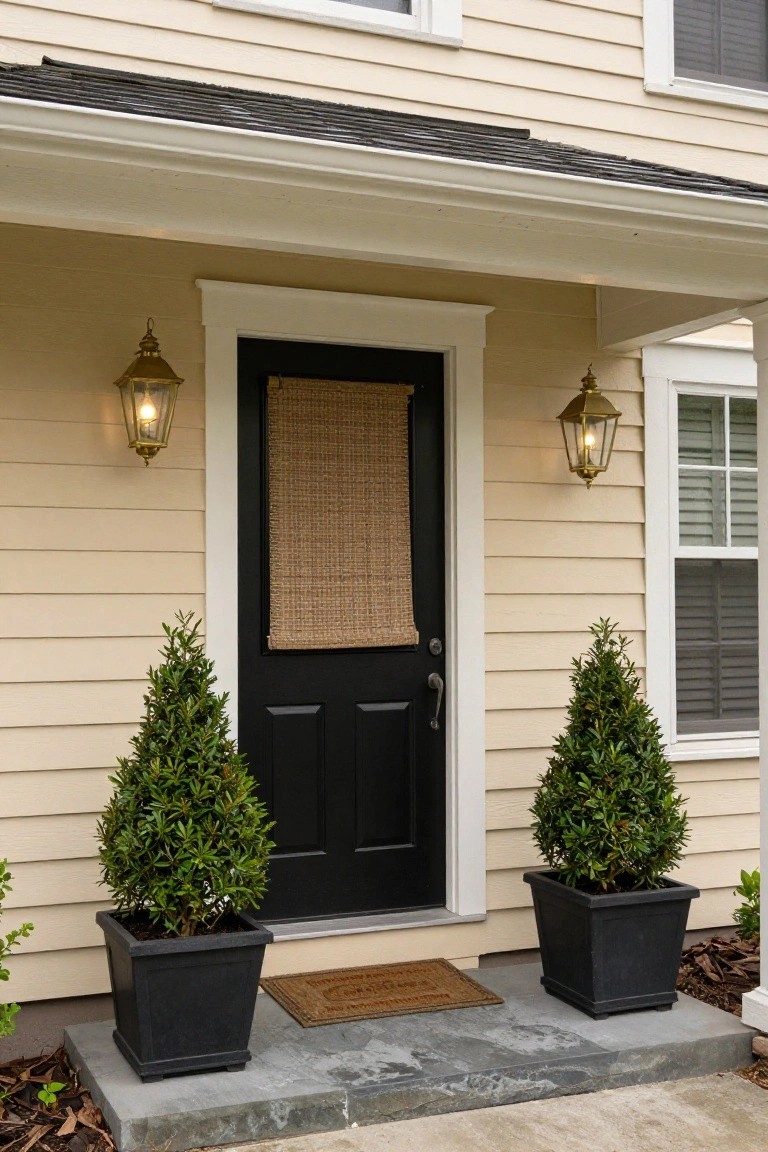
A black front door gives this beige Colonial house a sharp, classic entry point. The dark color stands out against the light siding and makes the whole facade feel more put together. Paired with simple lantern lights and those boxwood shrubs in black pots, it keeps things balanced and easy on the eye.
This works best on homes with covered porches where you want some contrast without going overboard. Pick a solid black door with clean panels, match the pots to it, and keep plants trimmed neat. Skip it if your siding is too pale, or it might feel too stark up close.
Green Door on Beige Colonial House
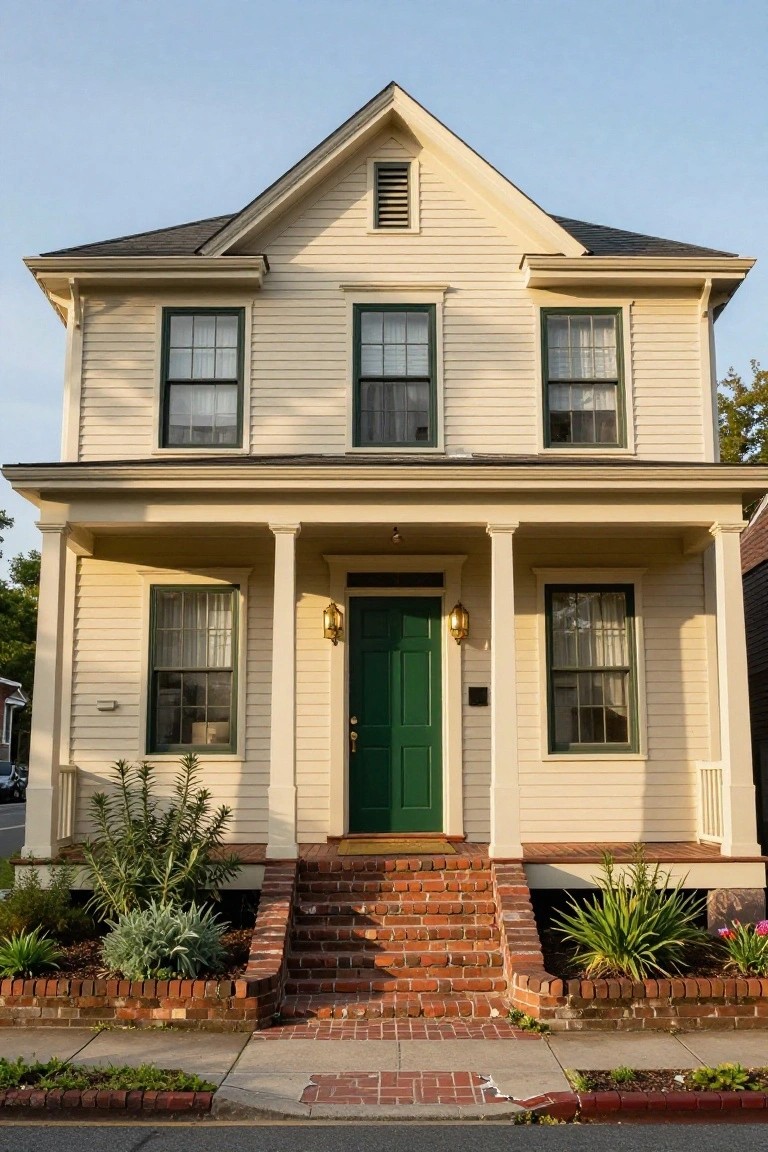
A soft beige siding like this gives a Colonial house that warm, neutral base everyone seems to like. Then the green front door steps in with just enough color to make the entry feel welcoming. It’s simple but pulls your eye right to the porch without going overboard.
This look fits right into traditional neighborhoods or older homes with some character. Use green trim on the nearby windows and matching lanterns to tie it together. Brick steps up to the porch help ground things. Keep the plants low around the base so they don’t hide the facade.
Soft Beige Colonial with Gray Roof
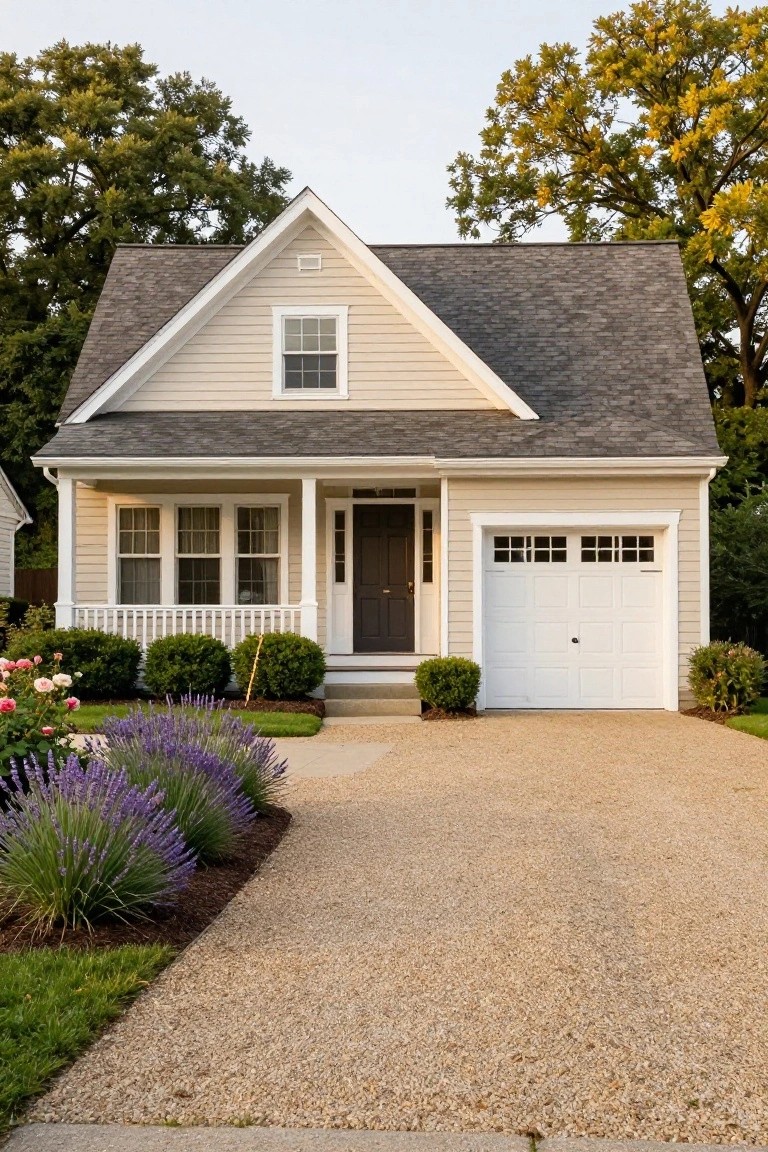
A soft beige siding like this on a colonial house keeps things neutral and easy on the eyes. Paired with a darker gray roof and white trim around the windows, porch, and garage door, it gives the whole front a balanced look that feels steady and classic. No loud colors, just warm tones that settle right in.
This setup suits smaller colonials on regular lots, especially with an attached garage that blends into the siding. It boosts curb appeal without much work. Pick a siding that’s not too yellow, and keep the trim bright white so the house reads clean from the street. Works best where you want simple upkeep.
Frequently Asked Questions
Q: How do I pick a beige that stays warm and hides dirt on my Colonial siding?
A: Grab paint samples and slap them up outside at different times of day. Warm beiges with a hint of yellow or peach fool the eye from grime buildup way better than stark ones.
Q: What trim color pops best against light beige without clashing?
A: White trim keeps that crisp Colonial edge you love. Paint it a true bright white, and it frames everything perfectly.
Q: Do I need pros to paint my house beige, or can I DIY?
A: Rent a sprayer if you’re handy—it goes on smooth and even. Just prime first to lock in the old color.
Q: How do I clean beige siding so it looks fresh year-round?
A: Hose it off in spring with gentle soap and a soft brush. Skip the harsh chemicals; they strip the charm quick.
