

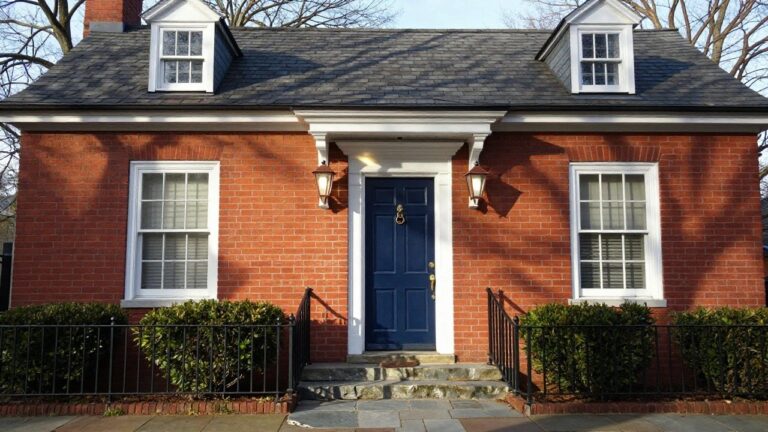
I still remember driving past a row of Colonial houses where one stood out because its fresh siding and shutters made the whole facade feel balanced and alive from the street. Curb appeal hits you first with those details like the entry door’s scale against the roofline or how window trim frames the symmetry without overwhelming it. I’ve noticed over the years that homes read better outside when materials like clapboard or brick echo the original style but add subtle texture that lasts through seasons. Too often, makeovers fail by chasing trends that clash with the boxy shape or steep gables these houses have. One tweak to the front path alone can shift everything.
Classic Columned Portico Entry
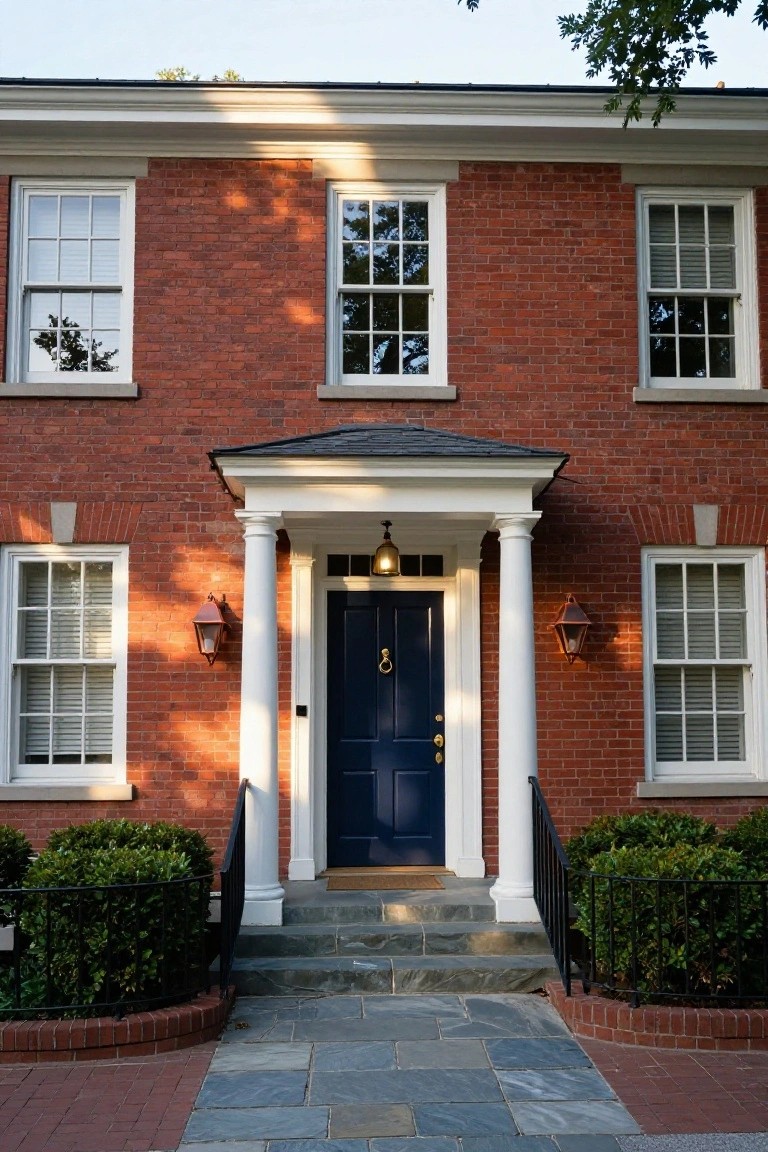
A columned portico like this one turns a simple front door into the star of the house. White columns frame a deep navy door on red brick, with lanterns adding just enough light. The setup feels balanced and pulls the eye right to the entrance, giving that old-school colonial welcome without much fuss.
This works best on brick or stone homes from the 18th or 19th century. Keep the columns simple and paint the door something bold but not too bright. Add matching lanterns and low shrubs on the sides. Skip it if your facade is super modern… it might fight the lines.
Dark Green Shutters on Cream Siding
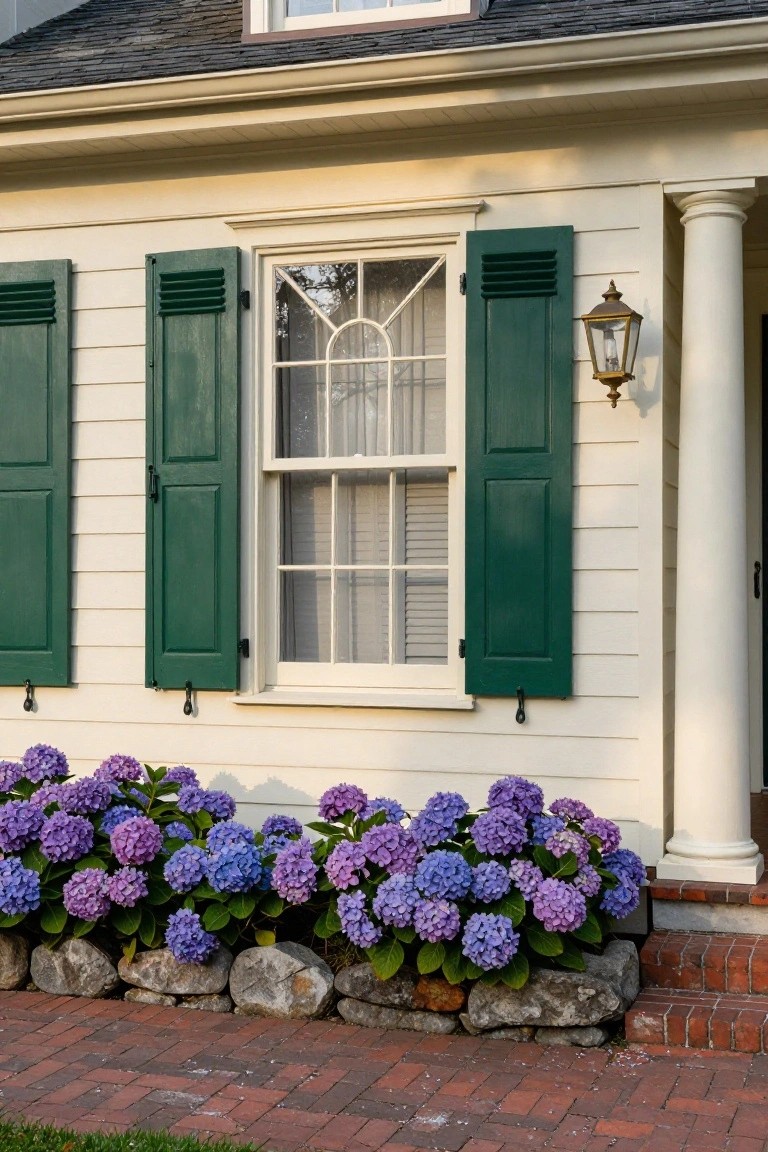
Dark green shutters on a cream-colored clapboard house give that instant colonial feel without much effort. They frame the windows nicely, like on this double-hung one with its arched top, and pull the eye right to the architecture. The green pops against the soft siding, making the whole facade look put-together and timeless.
This setup works great on older homes or simple colonials where you want subtle contrast. Go for glossy paint on the shutters to catch the light, and keep the siding matte for balance. Pair it with white trim around doors and columns, and maybe some low plants at the base to tie it in. Just avoid going too dark on the house itself, or it starts feeling heavy.
Black Door and Trim on White Siding
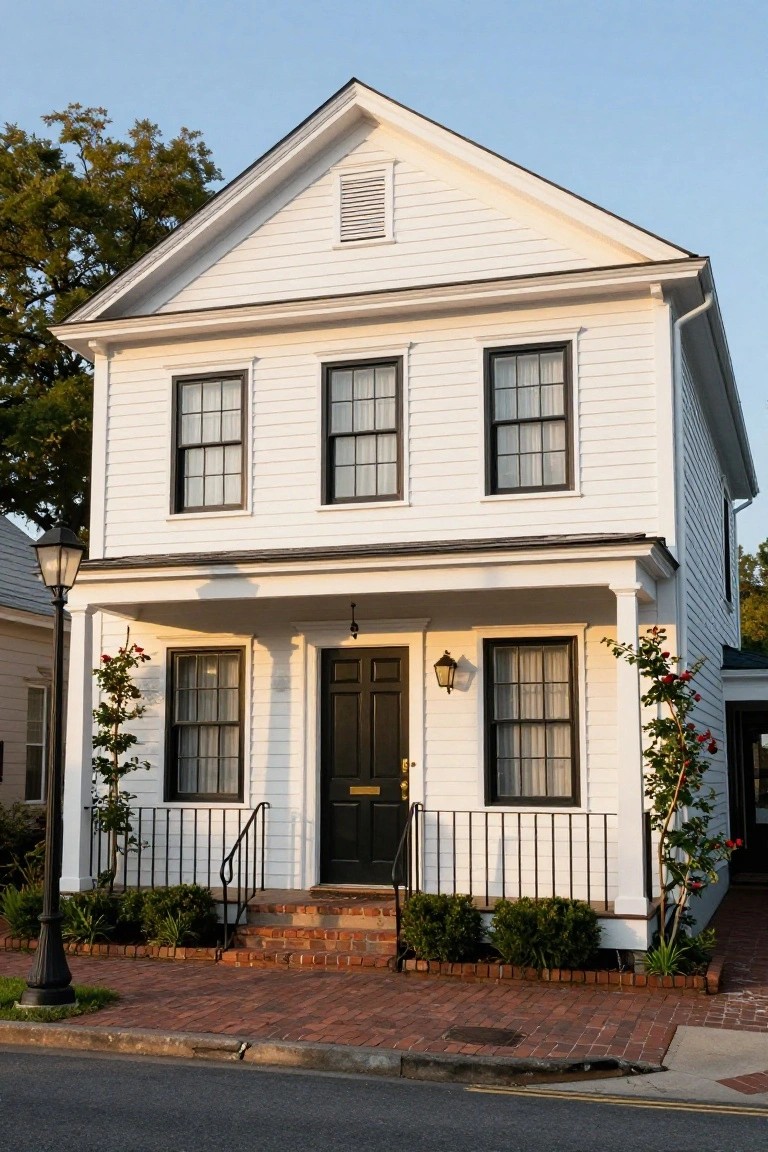
A white colonial house like this one gets a lot of its charm from the black front door and dark window frames. That sharp contrast pulls your eye right to the entry and makes the whole front feel put together. No need for fancy add-ons. It just works.
Try this on older homes with plain white clapboard siding. Paint the door a glossy black and match the window casings. Add simple lanterns by the door if you want. It suits narrow lots or streets with other white houses. Fresh paint on the siding helps it last.
Classic Columned Porch Entry
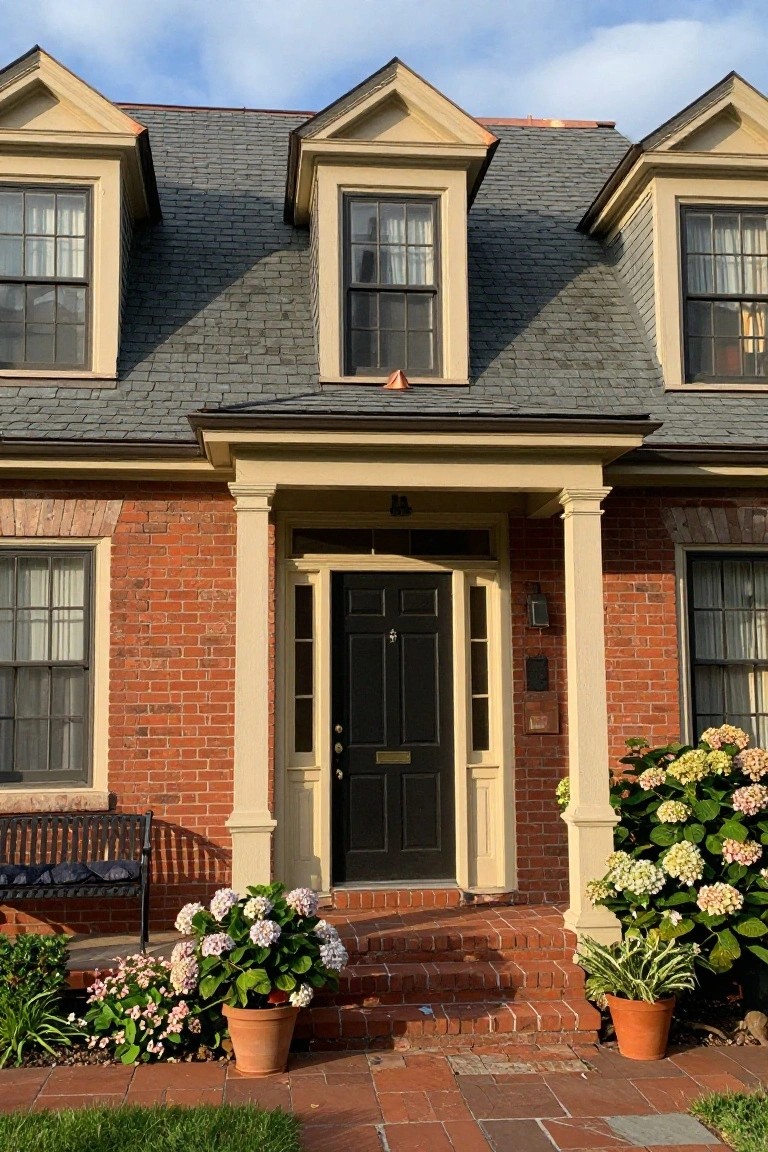
A columned porch like this one frames the front door in a way that feels straight out of an old neighborhood. The beige columns against the brick walls and that solid black door make the whole entrance pop without much fuss. It’s a simple move that turns a basic facade into something with real presence.
Try this on homes with good brickwork or stone already in place. Keep the columns painted to match the trim and pick a door color that contrasts, like black on lighter brick. Flank the steps with big potted plants for extra welcome, but don’t overplant or it gets busy. Works best on two-story Colonials where the porch sits right at eye level.
Add a Portico to Frame the Entry
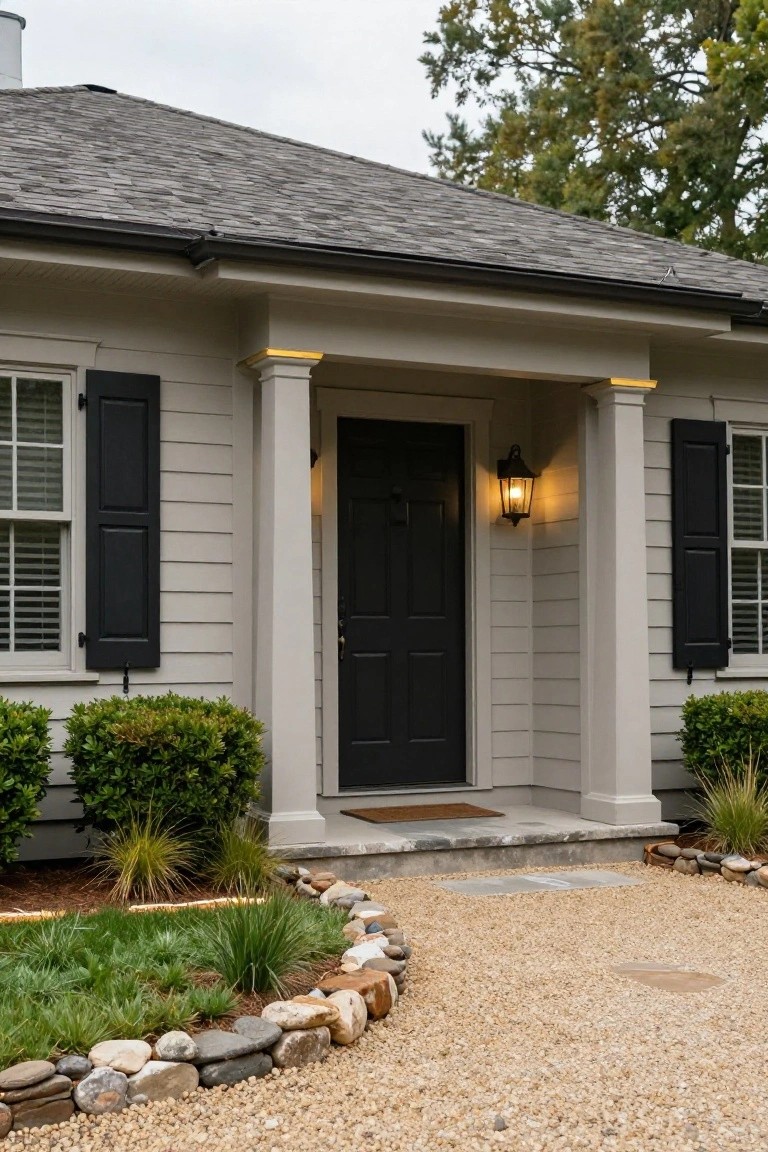
A small portico like this one sits right over the front door, held up by a pair of slim columns. It pulls the eye straight to the entrance on this light gray house, and the black door plus matching shutters make everything feel pulled together. That gold trim on the columns adds just a touch of detail without going overboard.
This works well on simpler homes, like ranches or cottages, to give them some colonial presence. Keep the columns fluted but not too thick, and pair with boxwood shrubs at the base. Skip big porches if your lot is tight… it still draws folks right up to the door.
Classic Columned Portico
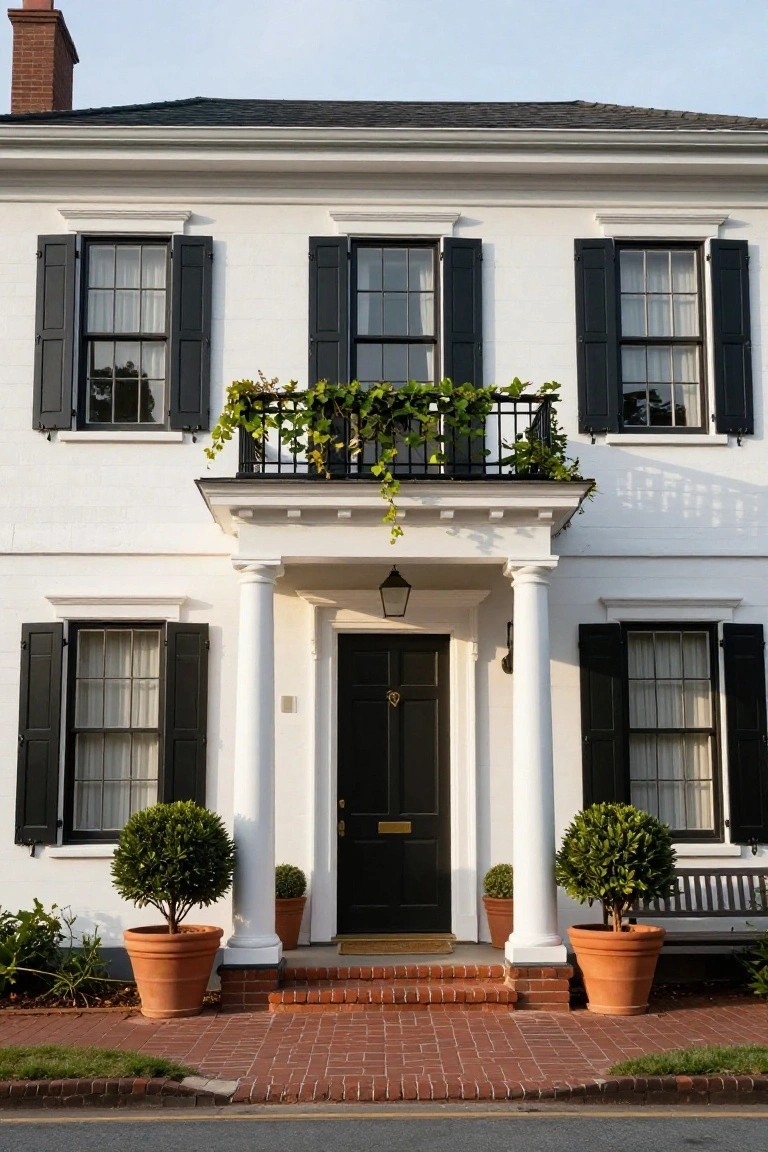
A columned portico like this one takes a simple colonial front right into timeless territory. Those white Doric columns support a neat pediment over the door, giving the entry real presence without overwhelming the house. It pulls the eye straight to the entrance and nods to old-school architecture that never goes out of style.
You can add this kind of setup to most two-story colonials, especially if your facade already has symmetry in the windows. Paint the columns crisp white to match the siding, keep the door black for contrast, and flank it with a couple boxwood topiaries in terracotta pots. Just make sure the proportions fit your roofline… too tall and it looks off.
Red Front Door on Blue Siding
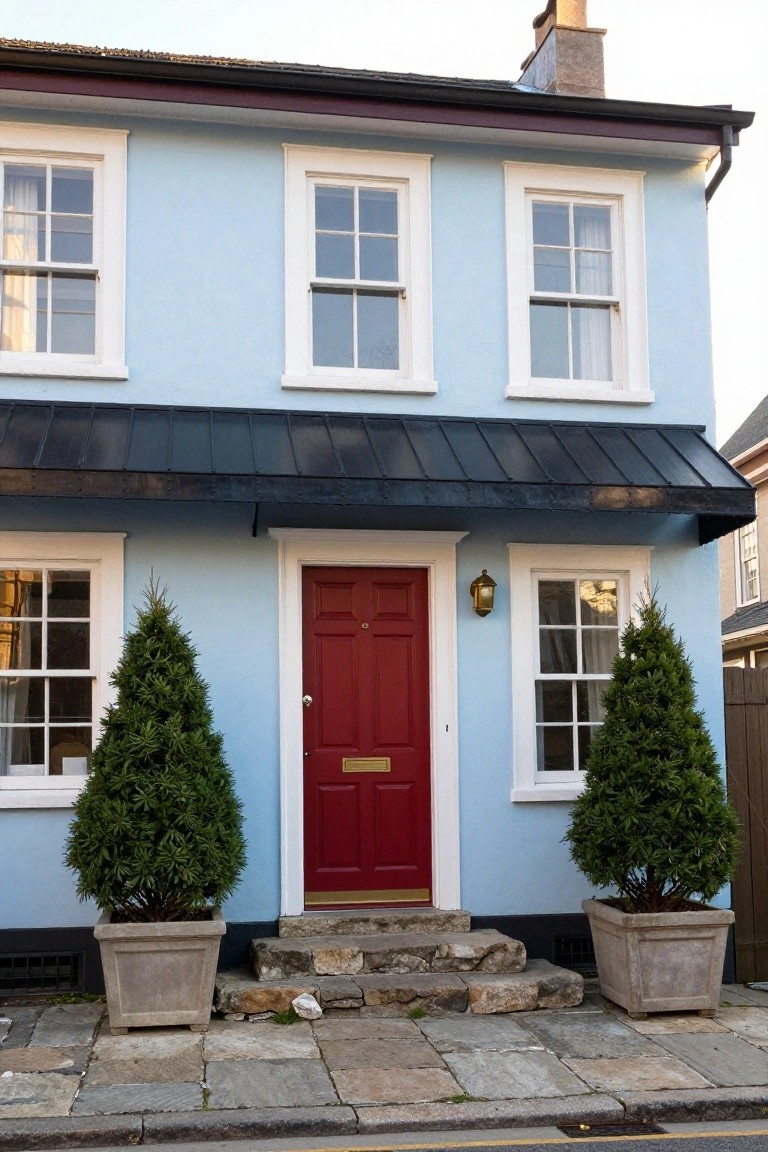
A bright red front door stands out right away against soft blue siding like this. It turns a simple colonial facade into something that feels more alive and welcoming. Folks notice the entry first, and that pop of color gives the house real personality without any major work.
This idea fits older homes with light paint colors best. Paint your door red, flank it with a couple sturdy pots of evergreens, and keep the steps simple. It works on narrow street-facing spots too. Just pick a true red that won’t fade fast in the sun.
Porch Columns for Classic Support
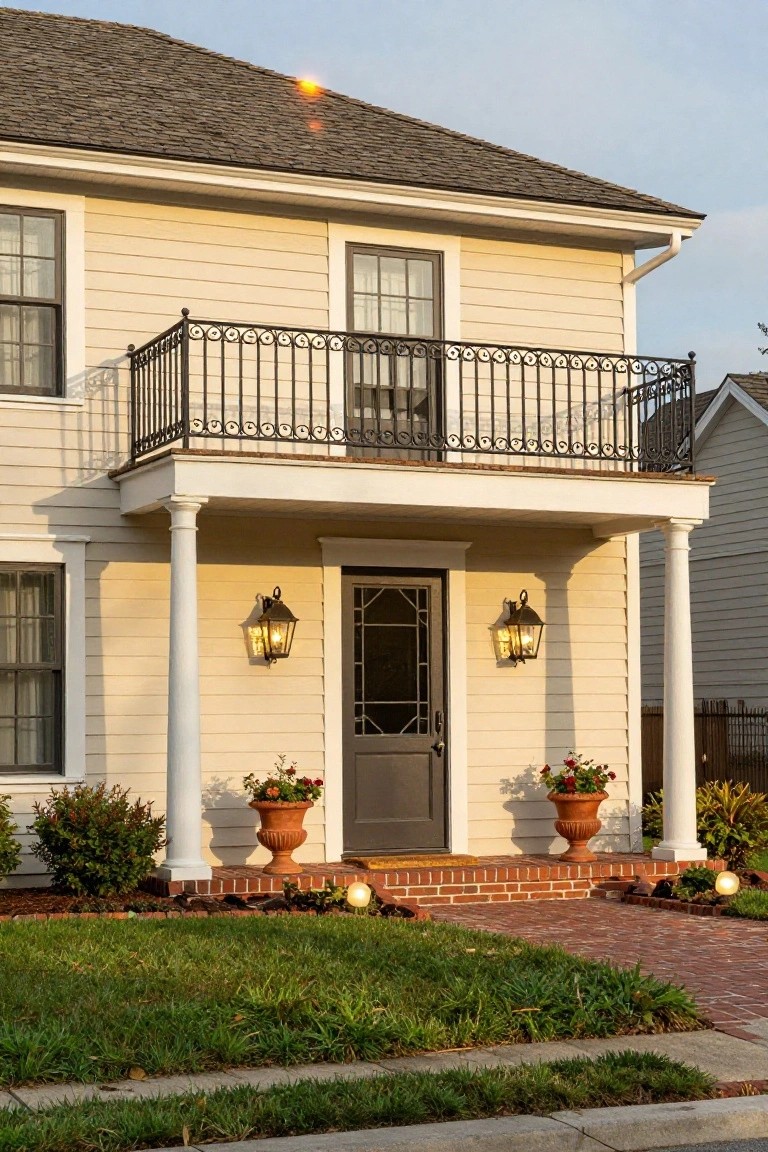
Tall porch columns like these bring a solid colonial feel to the front of the house. They hold up the roof while framing the entry door in a balanced way. White ones stand out against lighter siding, and they make the whole facade look put-together without trying too hard.
Put them on homes where the porch roof needs support or just more presence. Round tapered columns fit most traditional setups… paint them crisp white. Add matching lanterns at eye level for night time. They suit two-story houses best, especially with some steps leading up.
Arched Brick Entryway
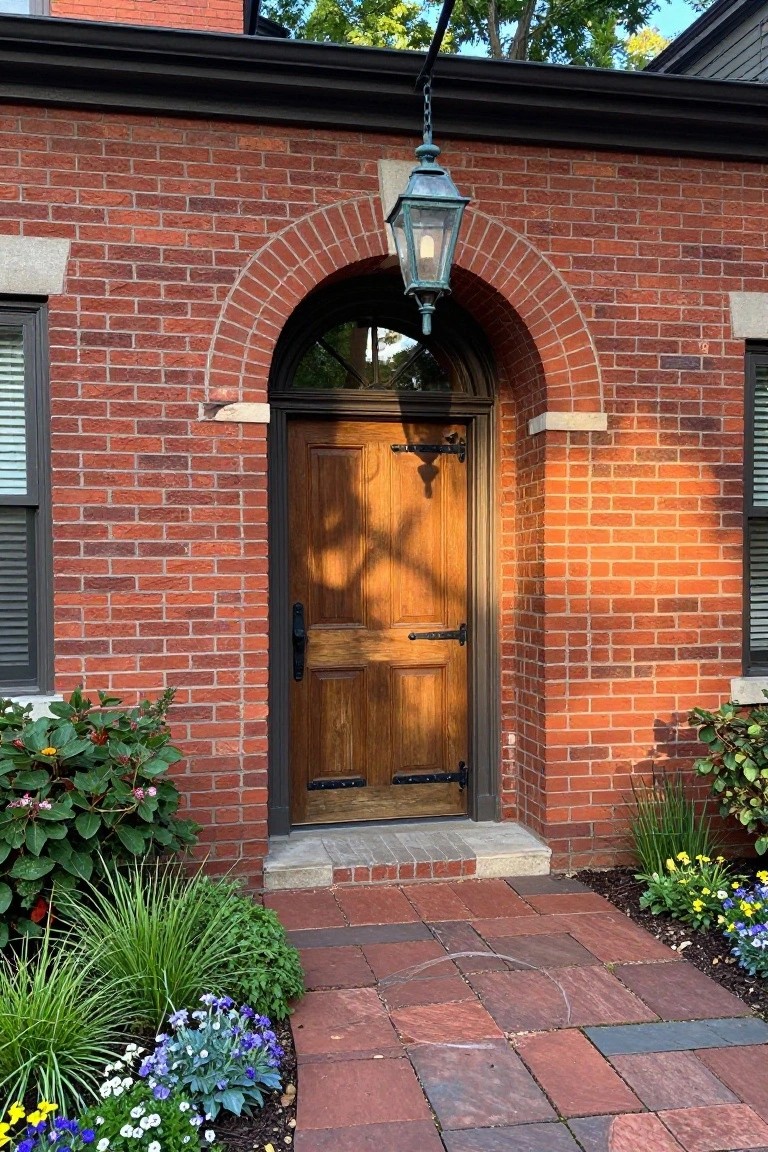
A simple brick arch over the front door like this one turns a plain entrance into something special. It pulls your eye right to the welcoming wooden door with its dark hardware, and that hanging lantern gives it a bit of old charm without trying too hard. On a colonial-style house, it fits right in and makes the whole facade feel more put-together.
You can add this kind of arch if your entry is flat and basic. It works best on brick or stone homes where you want subtle height and curve. Keep the landscaping low around it, like those grasses and flowers here, so the arch stays the star. Just make sure the proportions match your door height.
Red Door on a Colonial Facade
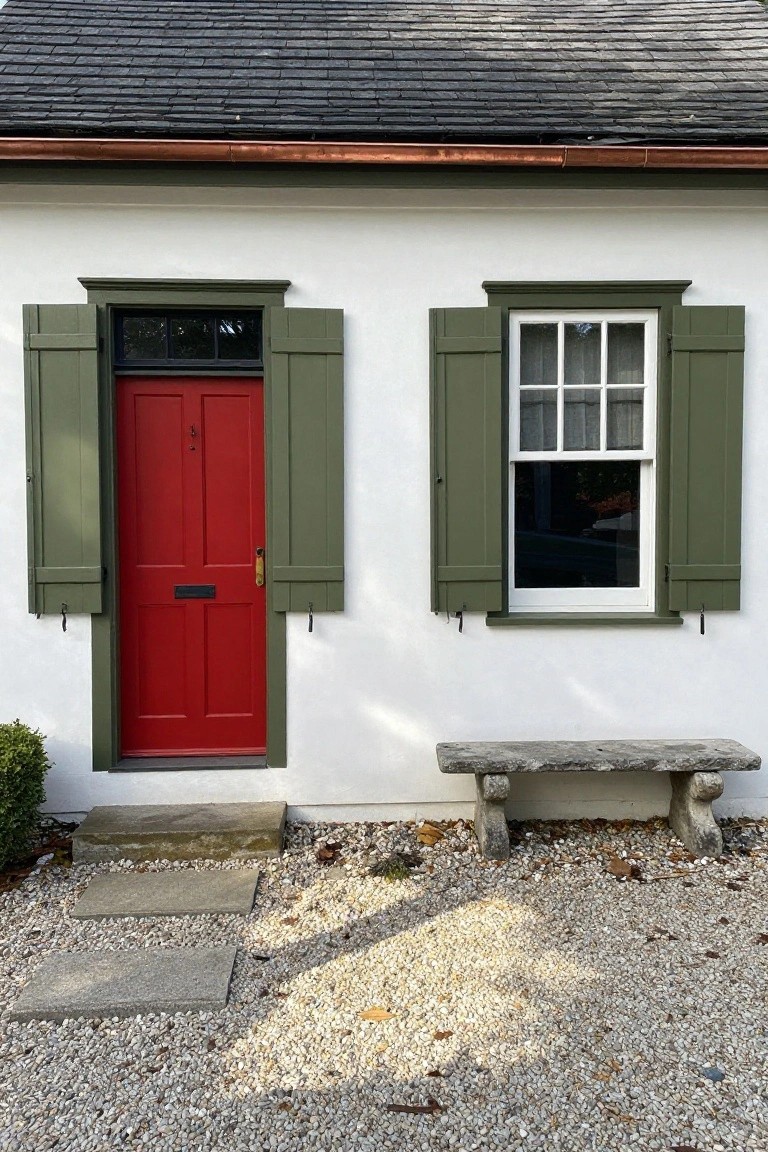
Nothing beats a fresh red front door for giving a colonial house that extra bit of charm right up front. Here, it sits bold against the white siding, with green shutters framing it just right. That color choice pulls your eye straight to the entry and makes the whole place feel more alive.
Try this on homes with simple white or light walls, especially if they’re older styles like Georgian or Federal. Pick a deep red paint that won’t fade fast, and keep the shutters a matching green for balance. It works best where the door faces the street… easy curb appeal without much fuss.
Classic Pediment Entry for Front Doors
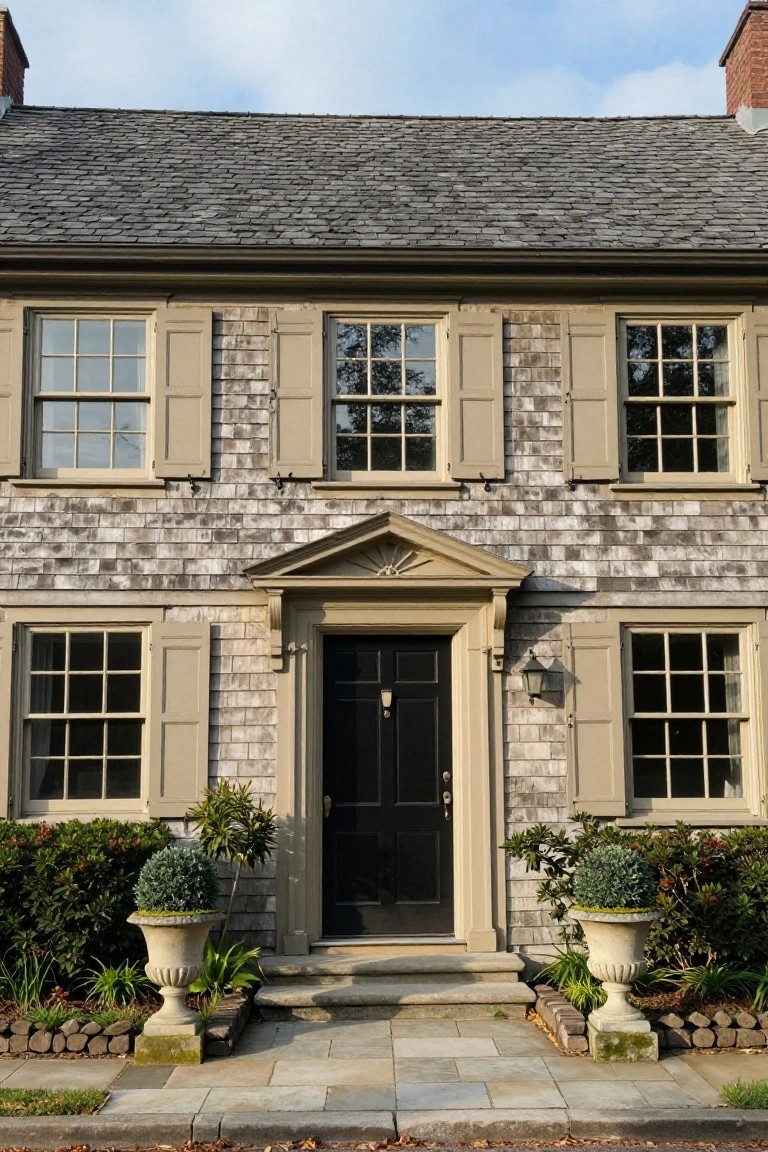
A simple pediment over the front door gives a colonial house that finished, pulled-together look right away. It draws the eye up without much fuss and ties into the symmetrical windows on either side. Here the black door pops against the light shingle siding and beige shutters. Those details make the whole facade feel balanced and welcoming.
You can add a pediment like this to most any colonial-style entry. It works best on homes with clean lines already. Pair it with matching urn planters on the steps for extra curb appeal. Just keep the scale right… too big and it overwhelms.
Cheerful Yellow Front Door
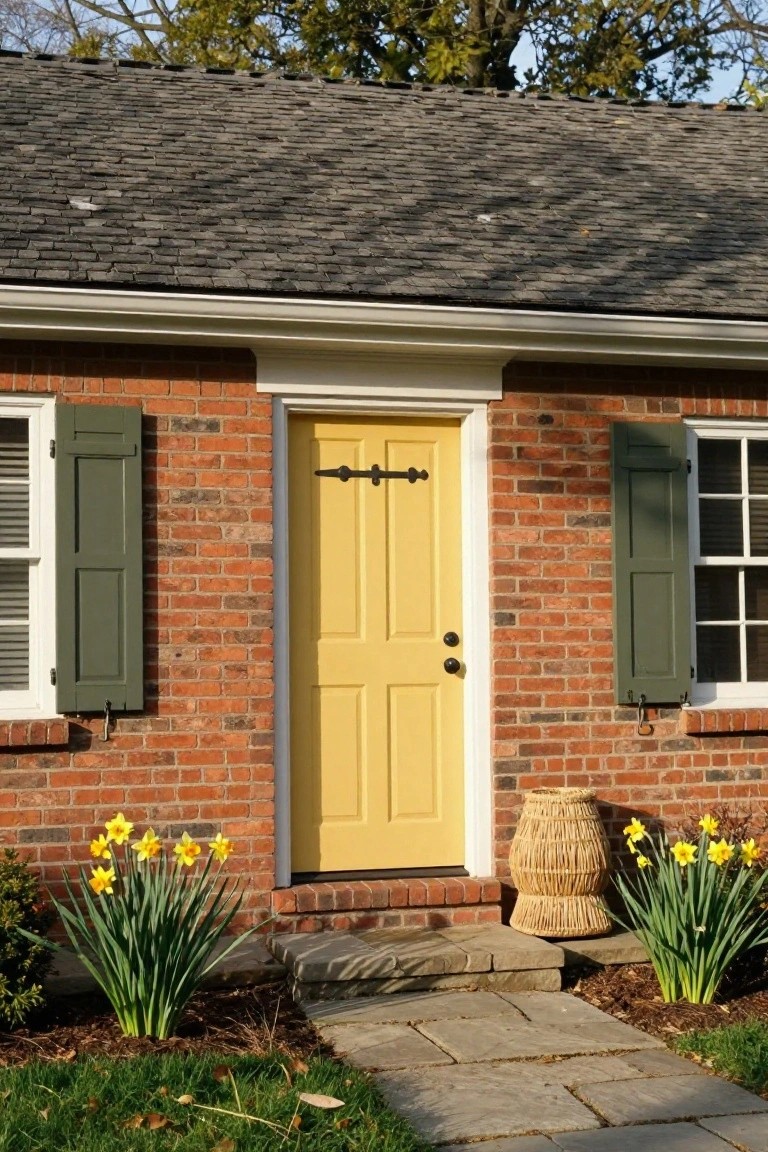
A bright yellow door like this one brings a happy pop to a classic brick colonial house. It stands out against the warm red bricks and green shutters without feeling out of place. Those daffodils nearby just add to the welcoming feel on a simple stone path.
This works great on older homes with solid brick facades. Pick a sunny yellow shade that picks up the brick’s warmth. Keep the rest neutral so the door does the charm work. Avoid it on super modern houses though. It shines best where tradition needs a little lift.
Wood Front Door for Classic Curb Appeal
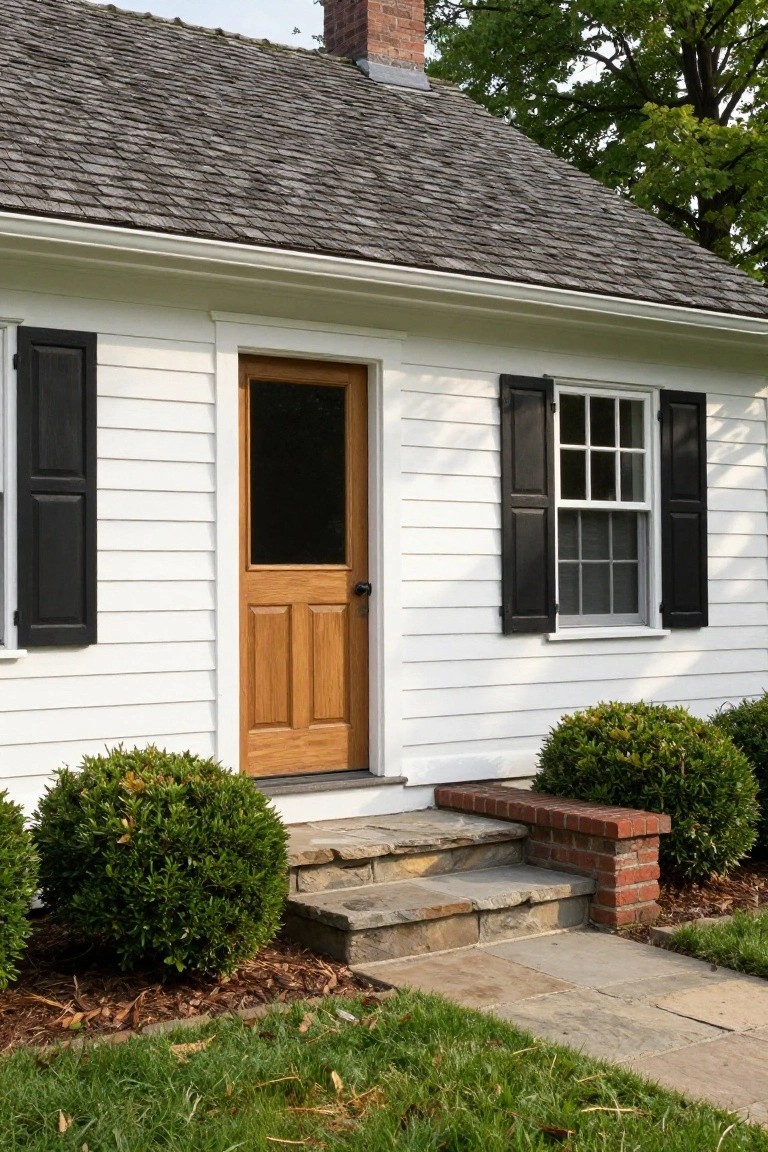
A solid wood front door like this one brings a touch of natural warmth to a crisp white colonial exterior. The paneled oak design with its glass upper section lets light in while keeping things traditional. Paired with black shutters, it gives the entry a balanced, welcoming feel that homeowners love for its straightforward charm.
This works best on older homes or those aiming for that timeless colonial look. Go for a similar door on a house with clapboard siding, and add stone steps for a sturdy approach. Keep plantings like boxwoods low and neat around the base to frame it without overwhelming. Just make sure the wood is sealed well against weather.
Lanterns Light the Way to Your Door
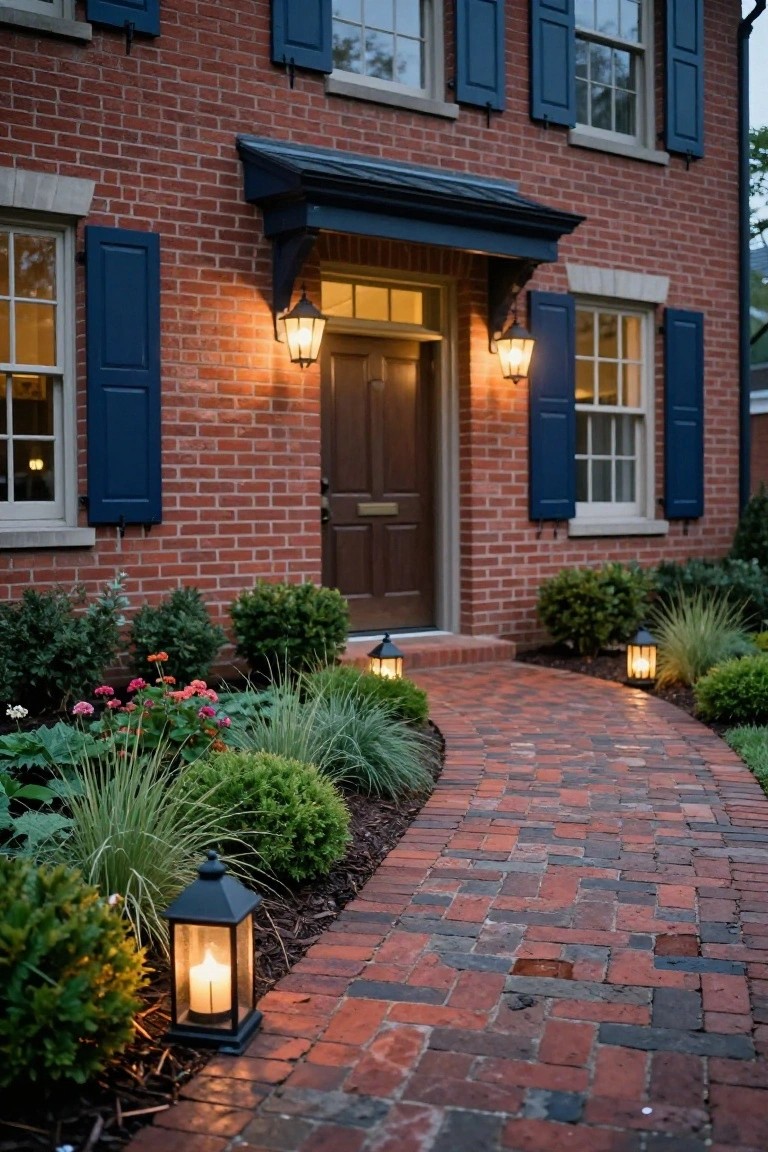
A row of black lanterns lines this brick path, leading right up to the front door. They glow softly at dusk against the colonial brick facade with its blue shutters. That warm light pulls everything together and makes the entry feel safe and inviting without much fuss.
Put lanterns like these along any walkway to your house. Space them every few feet and flank the door too. They suit older homes best, especially brick ones, and you can swap candles for LEDs to keep it easy. Skip bright floods. They overpower the charm.
Columned Porch with Window Boxes
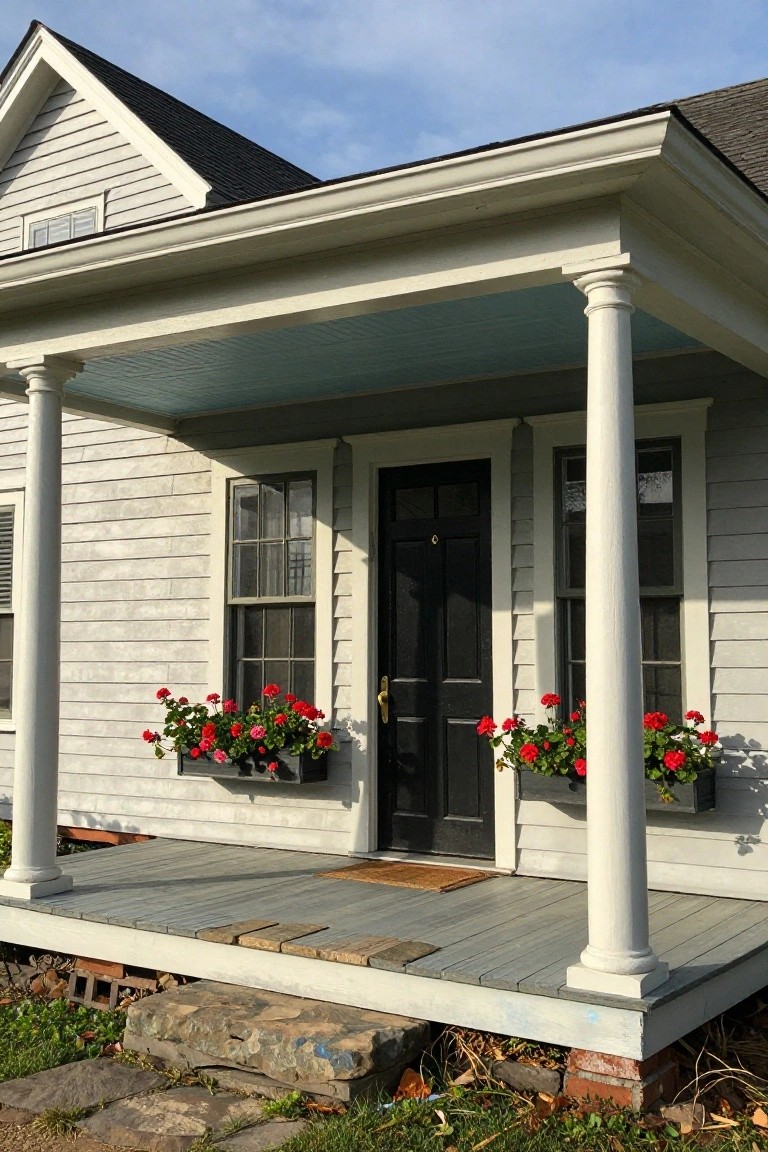
Nothing says colonial charm like a front porch held up by classic white columns. Here the fluted columns frame a black door nicely, and red geraniums spilling from the window boxes add that lively touch without much effort. It’s a straightforward way to make the entry feel more welcoming right away.
This setup suits older homes or ones with simple clapboard siding. Go for columns that match your house scale, and pick tough plants like geraniums that handle some shade. Keep the porch floor plain so the columns and flowers stay the focus.
Frame the Front Door with Columns
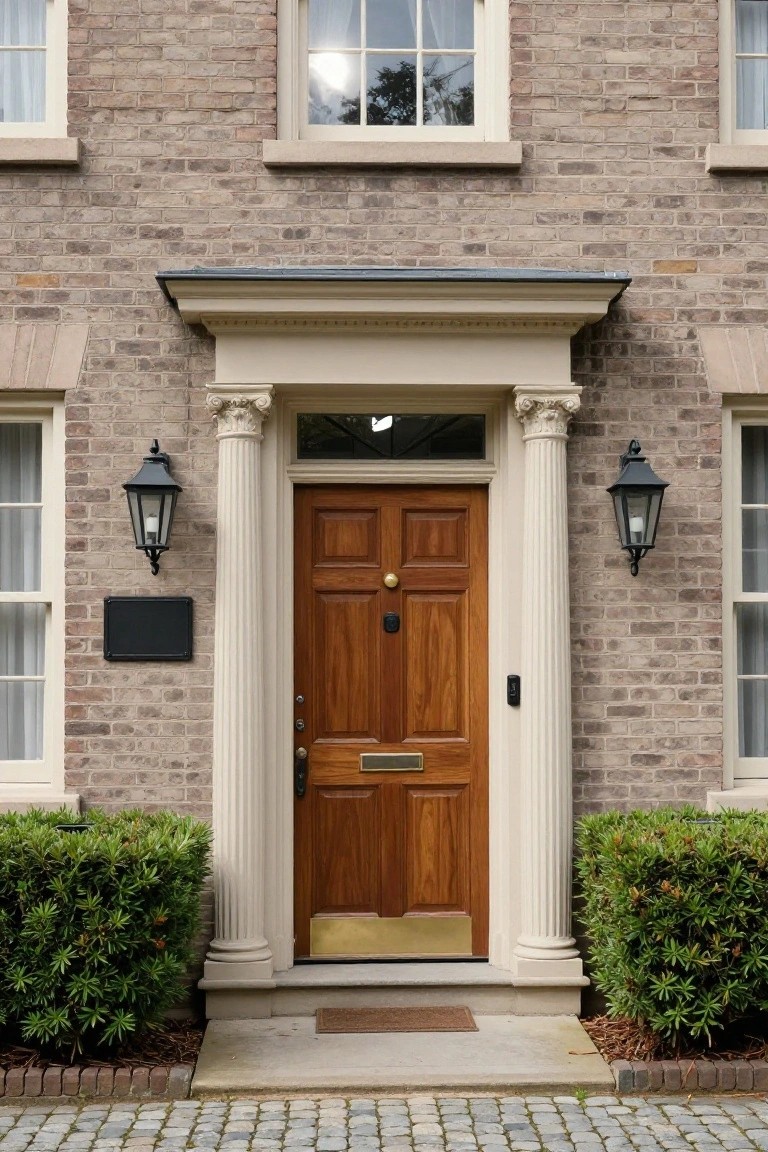
Tall fluted columns on each side of the entry do a lot for a colonial look. They stand out against the brick facade here, holding up a clean pediment that protects the door. Black lanterns add just enough light without overdoing it. This setup pulls the eye right to the entrance. Makes the house feel solid and welcoming from the street.
Try this on traditional brick or stone homes where you want more presence up front. Use white or pale columns to keep it crisp. A dark wood door fits best. Skip it on super sleek modern places… it might clash. Just measure your porch space first to make sure the columns don’t crowd things.
Black Trim on Light Stucco
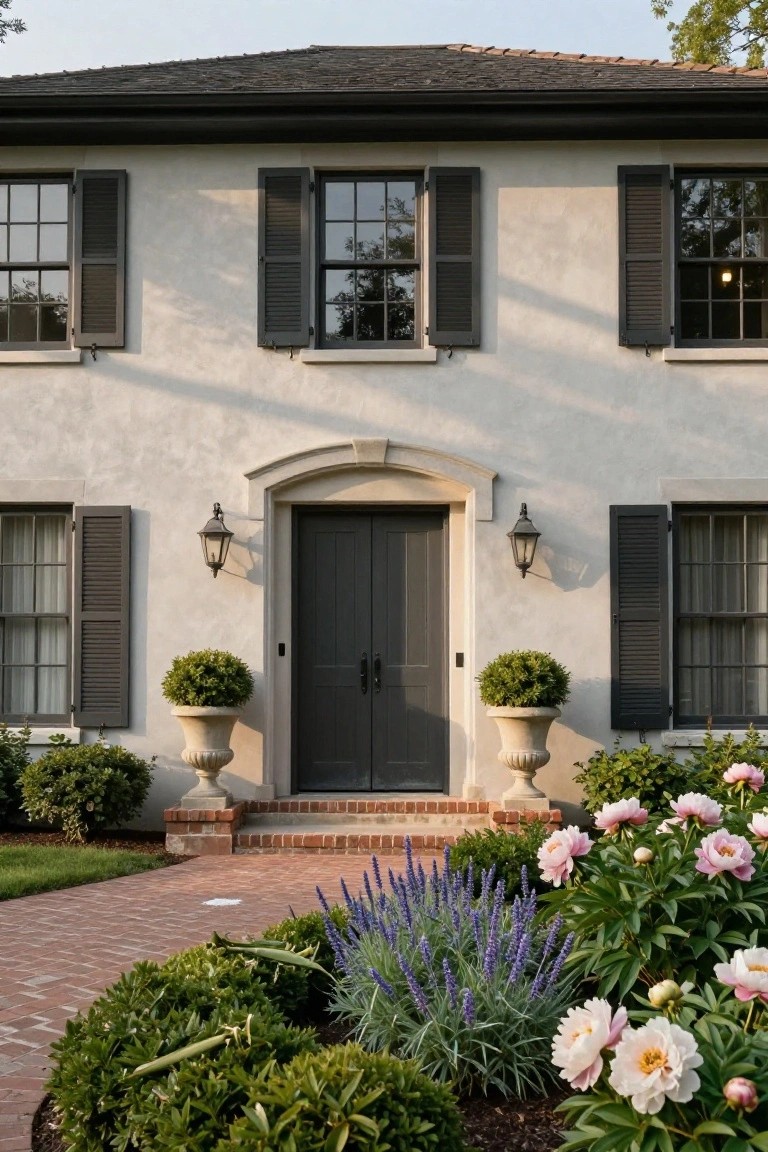
Black shutters, door frames, and front doors stand out sharp against pale stucco walls. That contrast gives a colonial house real pop from the street. It keeps things clean and timeless, pulling your eye right to the entry without any fuss.
Try this on older homes with simple lines. Paint all the trim black, matte finish works best. It holds up in sunny yards, and those shadows add interest all day. Just keep the stucco soft, not bright white.
Teal Front Door Pop
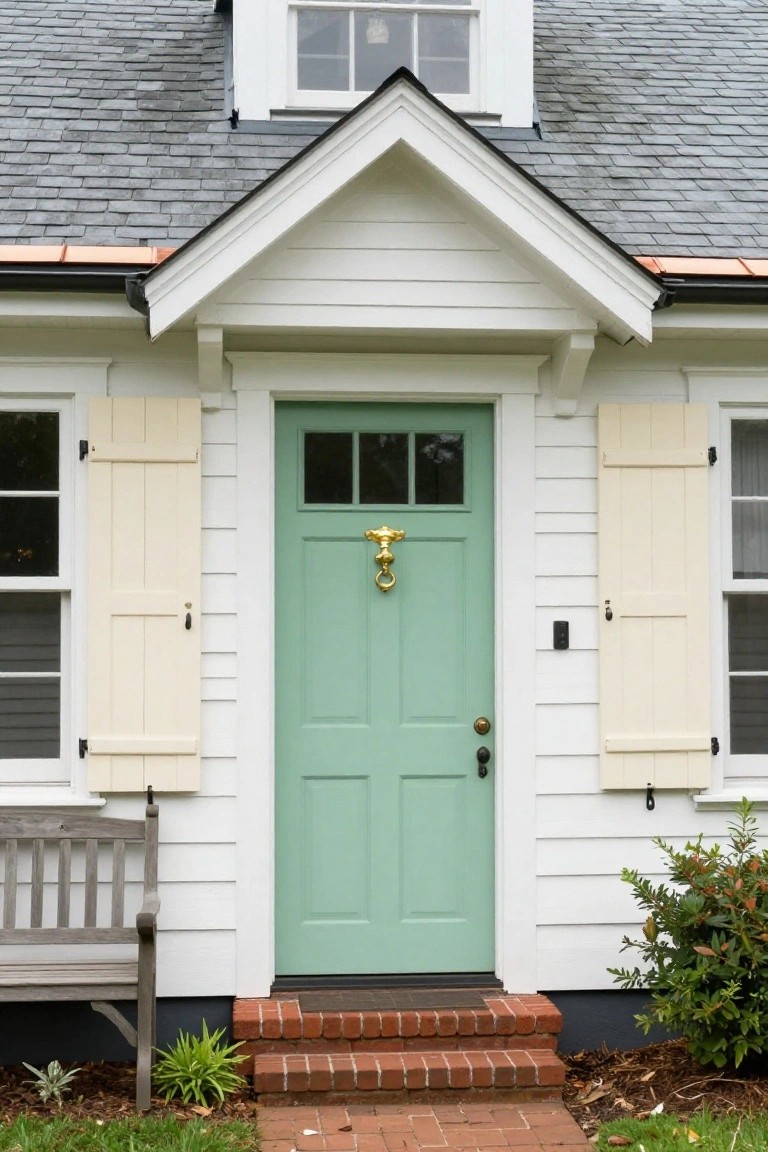
A teal front door like this one gives a classic white colonial house that welcoming touch right away. It stands out against the clean clapboard siding and beige shutters without going overboard. The gold lion knocker adds a bit of shine that pulls your eye straight to the entry, making the whole facade feel more alive and friendly.
This works best on traditional homes in neighborhoods where you want subtle charm, not a total overhaul. Pair it with brass hardware and a simple bench out front for extra coziness. Just make sure the color is a soft teal, not too bright, so it fits year-round… and test a sample first to see how the light hits it.
Classic Columns Flanking the Entry
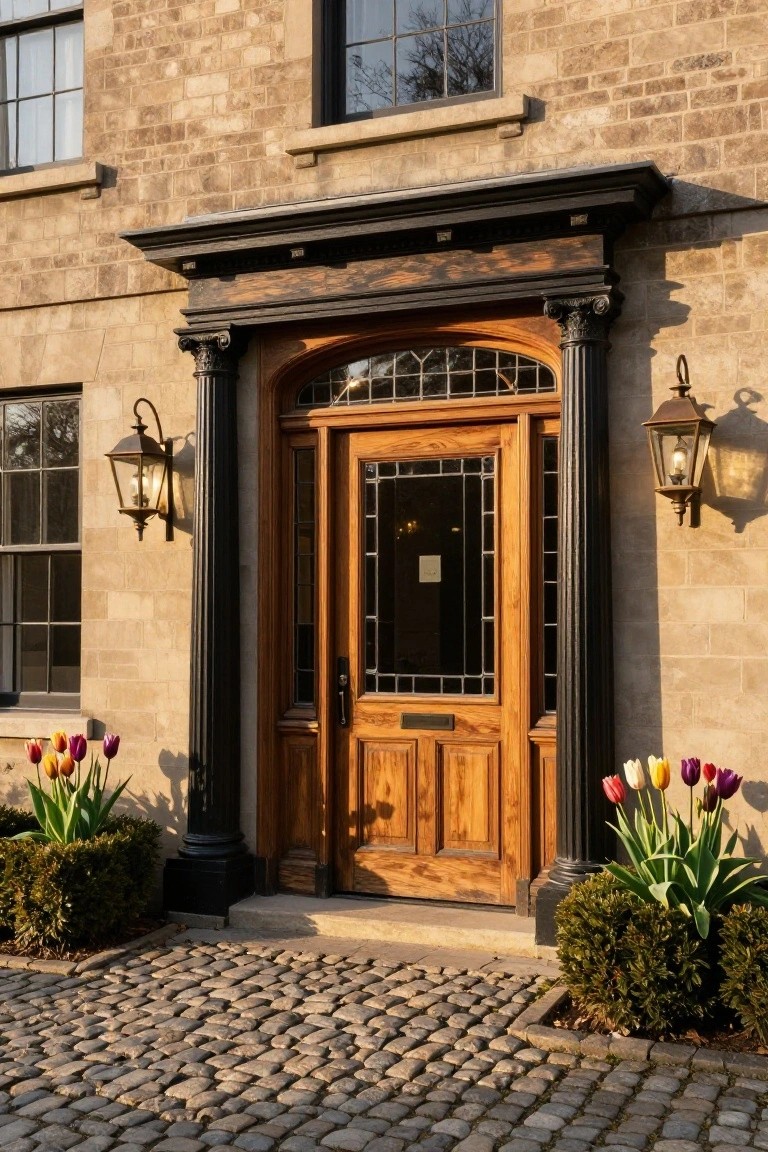
Tall fluted columns like these add real stature to a colonial front door. Painted black against the warm brick, they frame the oak door and its glass panels just right. Wall lanterns on either side pick up the light at dusk, while simple tulip pots keep things fresh without overdoing it.
You’ll see this move a lot on older homes with good bones. It suits brick or stone facades that need more definition around the entry. Go for columns that match your door height, add lanterns wired for all-weather bulbs, and flank with seasonal plants. Keeps the look formal yet approachable.
Frequently Asked Questions
Q: What’s the easiest makeover to start with on my colonial house?
A: Go for swapping out those dated house numbers or adding window boxes stuffed with flowers. You knock it out in an afternoon with basic tools. Neighbors notice right away.
Q: How do I pick paint colors that scream colonial charm?
A: Hunt for creamy whites, soft sages, or deep navy accents straight from old New England vibes. Dab samples across different sides of the house to catch the light changes. It pulls the whole look together fast.
Q: Do I need pros for most of these ideas?
A: Handle planters, lighting swaps, and trim tweaks yourself if you’re handy. Call in painters or roofers for the heavy lifts like full siding refresh. And test your skills on a small spot first.
Q: How do I make these changes last without constant upkeep?
A: Seal wood elements with marine-grade finish to fight weather. Rinse siding yearly with a gentle hose blast. Trim plants back so they don’t scratch paint.
