

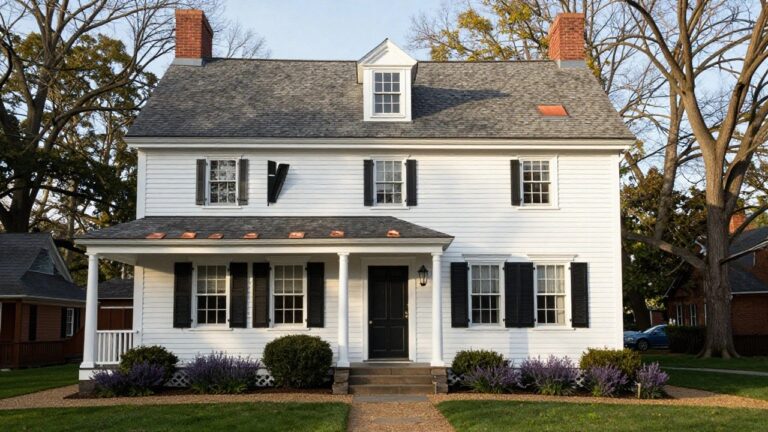
Colonial houses pull off that timeless look mainly through their balanced rooflines, and dormers offer a smart way to enhance it while pulling in light from above. I’ve walked plenty of neighborhoods where mismatched dormers throw off the whole facade, making the house feel top-heavy from the street. Well-chosen ones hug the roof pitch just right. They boost curb appeal by echoing the entry details and siding texture, so the exterior reads cohesive even in changing light. A couple of these ideas caught my eye for how they’d scale to a standard two-story colonial, worth measuring against your own setup.
Black-Shuttered Dormers Balance the Facade
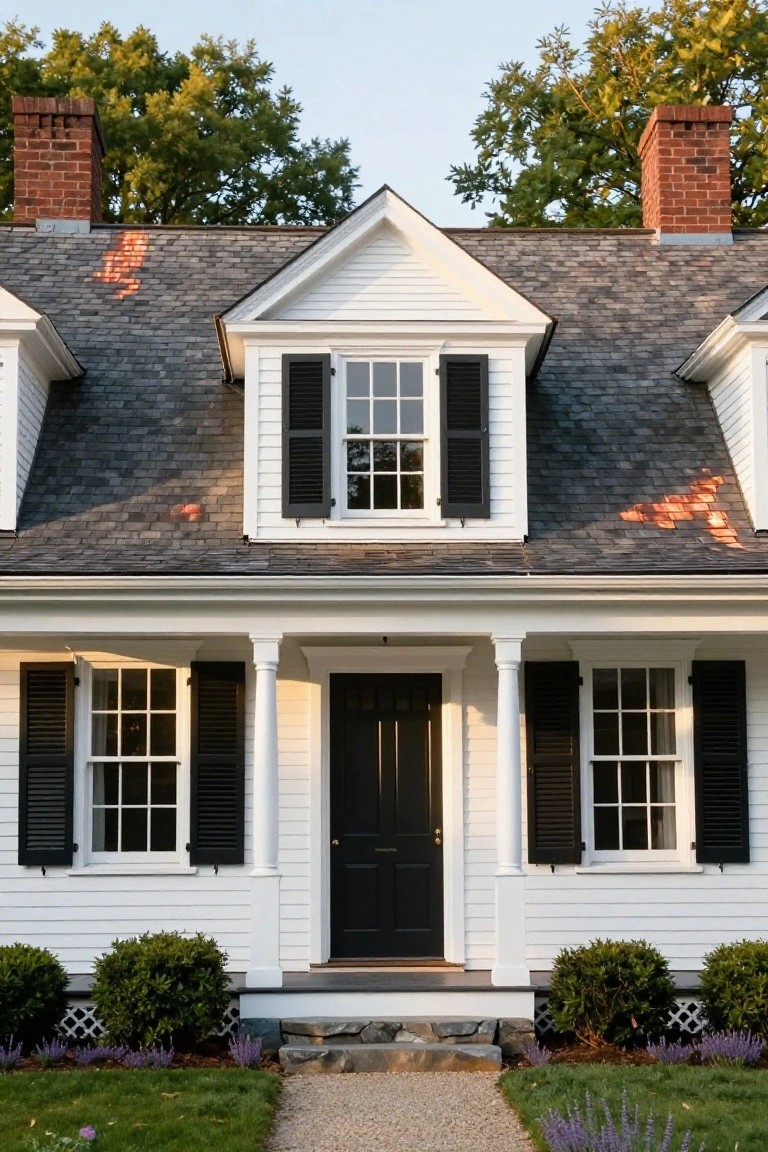
Dormers like these with black shutters give a colonial front real symmetry. They line up with the shutters on the lower windows, so the whole house reads clean and even from the street. That matching dark trim pulls everything together without much fuss, and it lets light into the upper rooms nicely.
This setup fits older colonials or revivals with steep roofs. Echo the shutters top to bottom, add a dark door below, and you’re set. It shines in neighborhoods where you want traditional curb appeal that feels put-together but not fussy. Skip it if your roofline is too low.
Gable Dormers with Shingle Siding
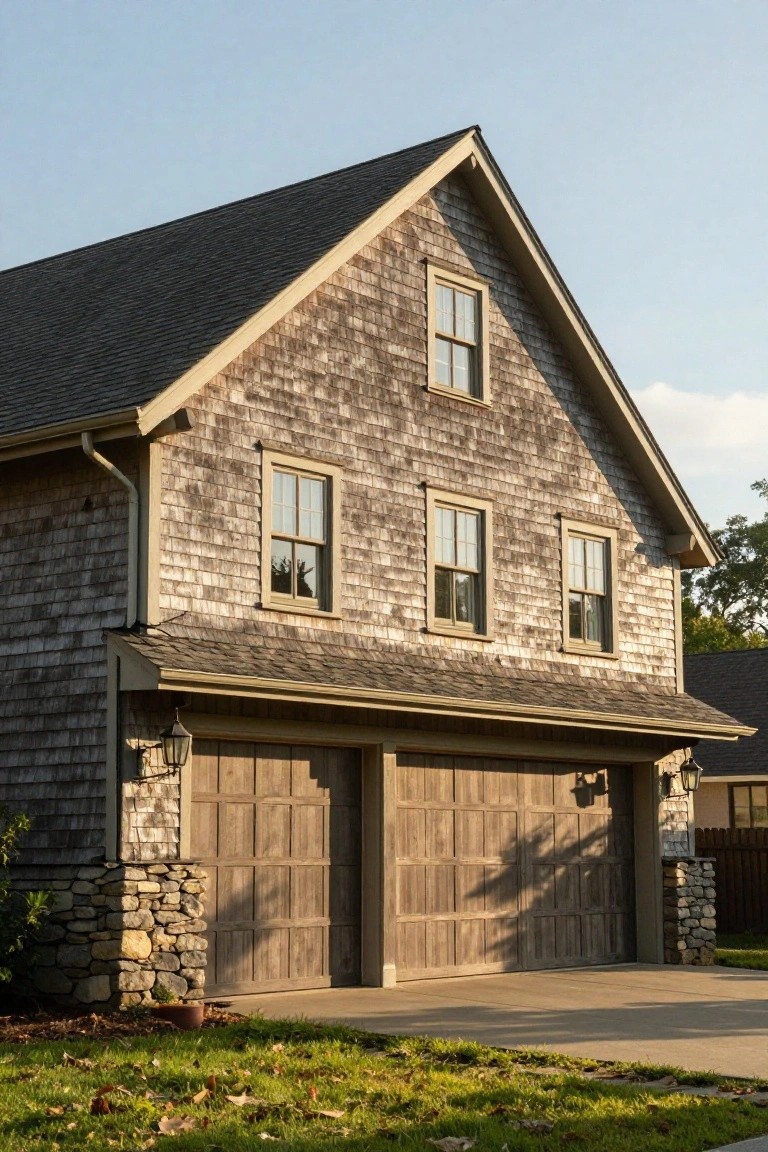
Shingle siding on a Colonial house gives that weathered, lived-in look folks love, especially when it climbs up into gable dormers like this. Those dormers add windows high up without messing with the roofline much. They let in light to the upper spaces and keep the front balanced, not too boxy.
You see this work well on garages or side additions where you want some height but not a full second story. Pair the shingles with stone at the base for grounding, and keep the garage doors simple wood. It fits older neighborhoods or rural spots best. Just make sure the shingles are treated to hold color over time.
Dormer on Narrow Brick Colonial
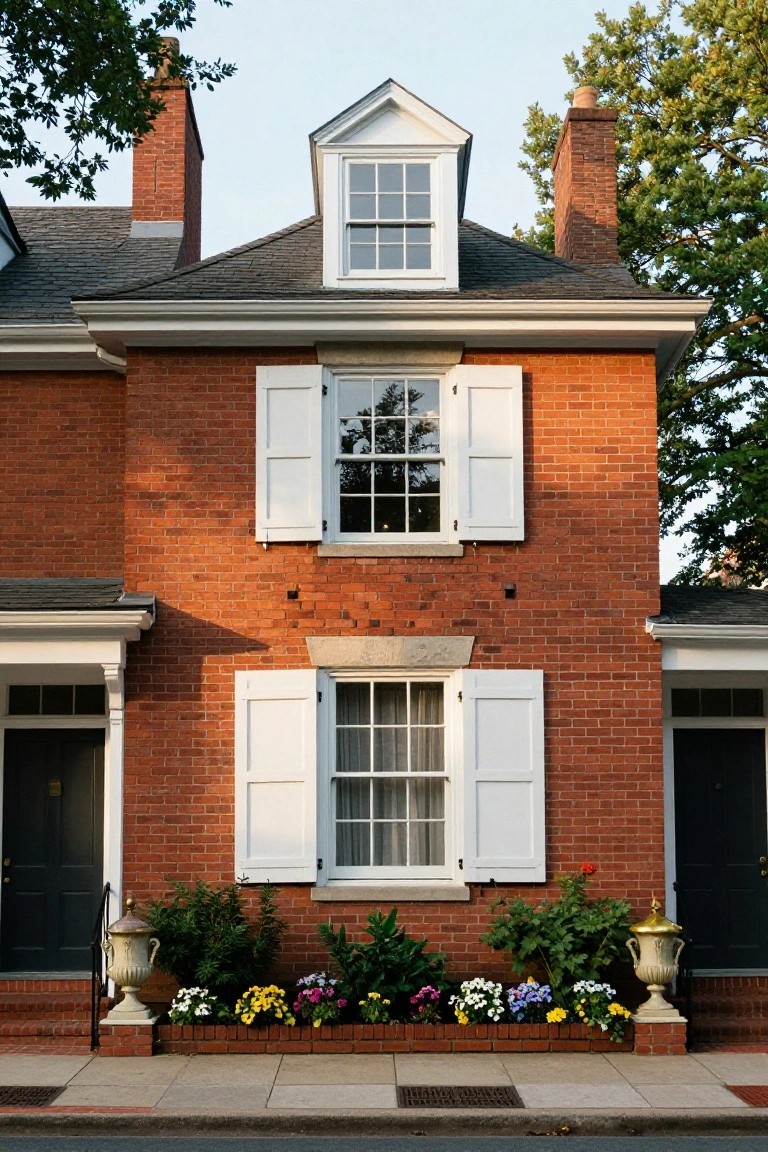
A dormer like this one sits right at the peak of a classic brick colonial roof. It pulls in light for the upper rooms and gives the narrow front some needed height and balance. White shutters frame the window nicely against the red brick, keeping things simple and traditional.
This setup works best on attached homes or townhouses where the facade feels a bit squat. It adds upstairs space without messing up the roofline from the street. Stick to matching materials and keep plantings low in front so the dormer stays the focus.
Arched Dormers Balance Colonial Rooflines
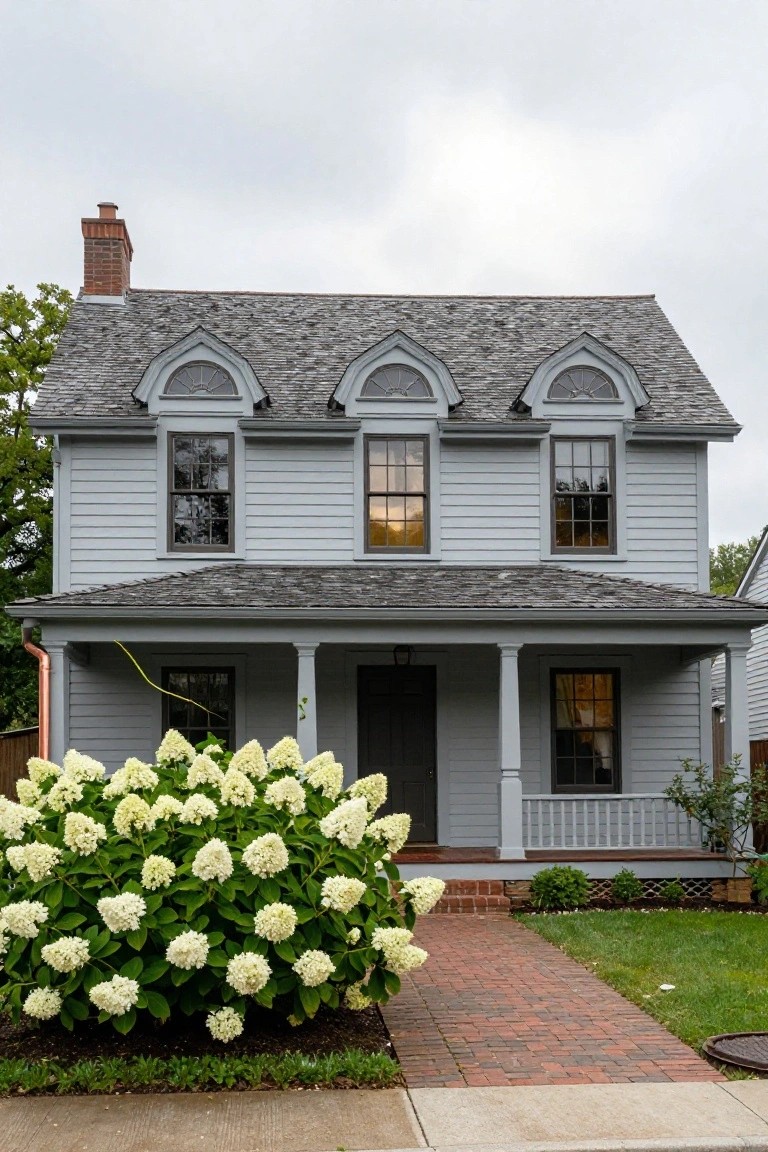
Paired arched dormers like these sit neatly on the roof of a classic colonial house. They pull the eye up without overwhelming the facade and let light into the upper rooms through those curved windows. The soft arch shape echoes the porch details below for a steady, even look that feels right at home.
You can add these to most two-story colonials, especially ones with simple siding like clapboard. Place them symmetrically over the entry or flanking windows to keep things balanced. They work best where you want more upstairs light but not a busy roof. Just match the arch curve to other rounded elements on the house.
Dormers Topped with Flower Pots
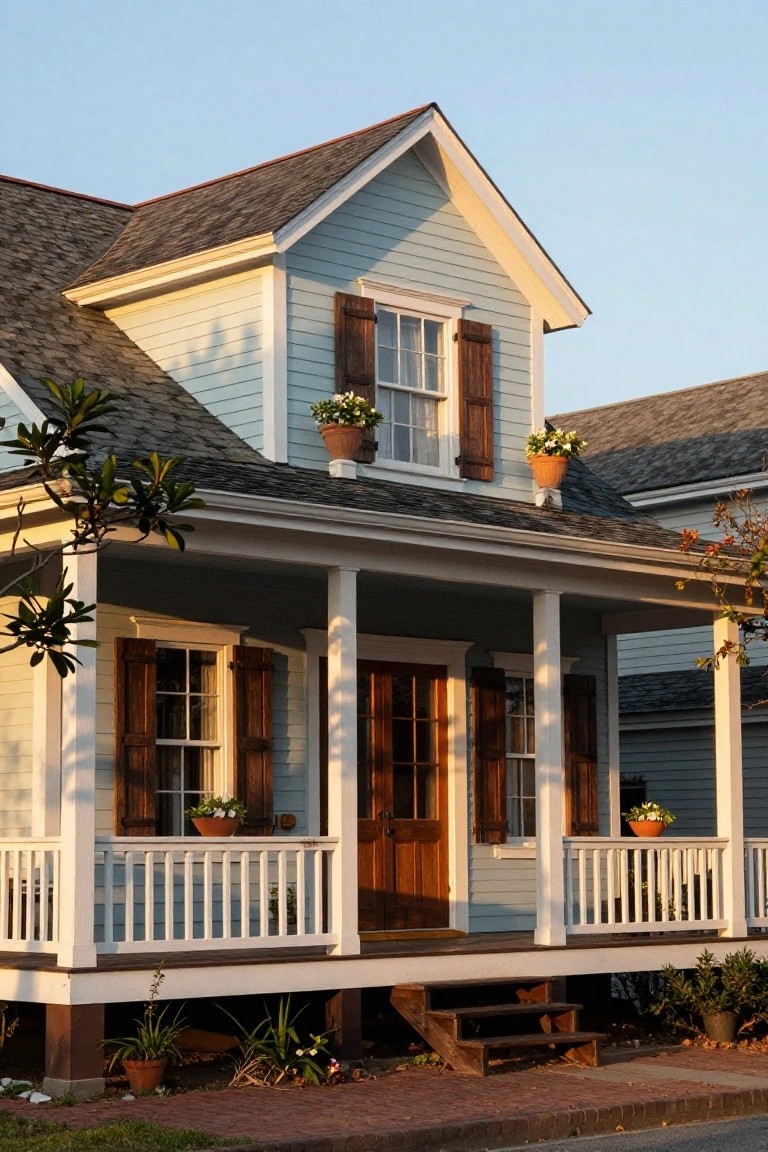
Those small flower pots sitting right on the dormer roof peaks catch your eye first. They frame the upper windows nicely, letting light filter into the attic space while keeping the whole front of the house feeling even and settled. With the pale blue siding and dark wood shutters below, the pots pull in a soft repeat of color that ties everything together without much fuss.
This works great on classic colonial homes or anything with a front porch like this one. Pick low-growing white flowers in terra cotta pots to match the style, and place them where the dormer pitch is gentle enough to hold them steady. Skip it on steeper roofs or modern facades, since it shines best in spots calling for that old southern charm. Just refresh the plants seasonally to keep the look fresh.
Paired Dormers Flanking a Central Oval Window
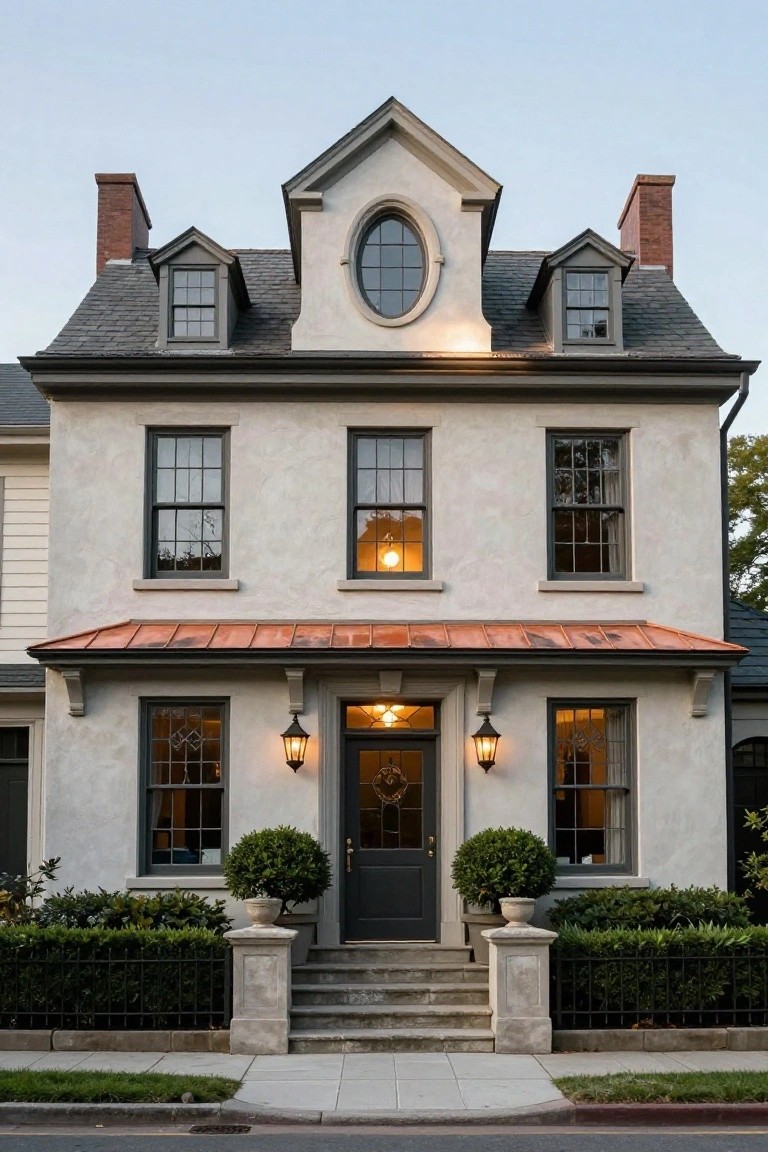
Colonial homes often use dormers to break up a steep roofline and bring in more upstairs light. Here, two simple gabled dormers sit evenly on each side of a centered oval window with an arched top. That setup gives the upper facade real balance. The dormers peek out just enough to add height and interest without overwhelming the clean lines below.
This works best on two-story houses with a formal feel, like in historic neighborhoods. Keep the dormers modest in size and match them to the roof material, say slate or cedar shakes. Dark frames on the windows help them stand out against light stucco siding. Scale it right, and it makes the house look taller and more welcoming from the street.
Window Flower Boxes Boost Colonial Curb Appeal
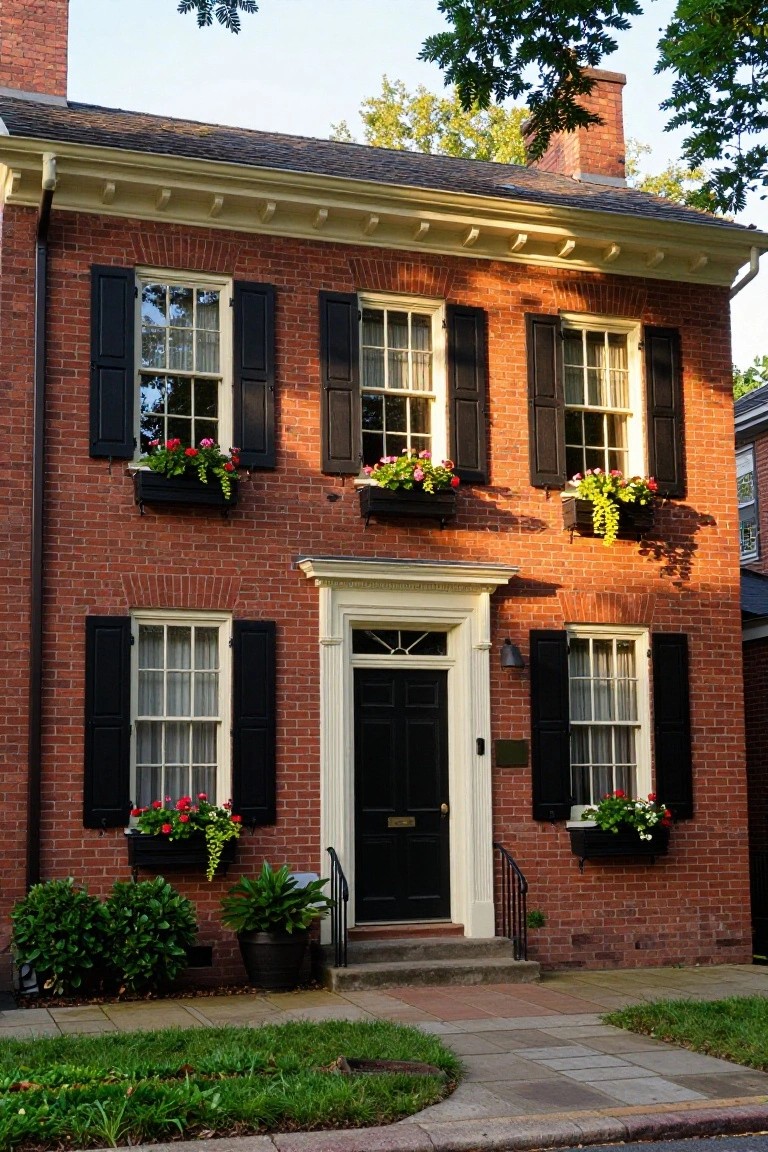
Flower boxes tucked under the windows work great on colonial homes like this brick one. They pull in color from the bright blooms against the red brick and dark shutters. It’s a simple way to make the facade feel alive without changing the architecture. The boxes line up neatly across the front, tying the whole look together.
Try this on any two-story colonial with good window spacing. Pick trailing plants like petunias or ivy to spill over the edges. They suit sunny spots best and need regular watering. Skip it if your house has narrow sills or heavy shade.
Classic Colonial Porch Design
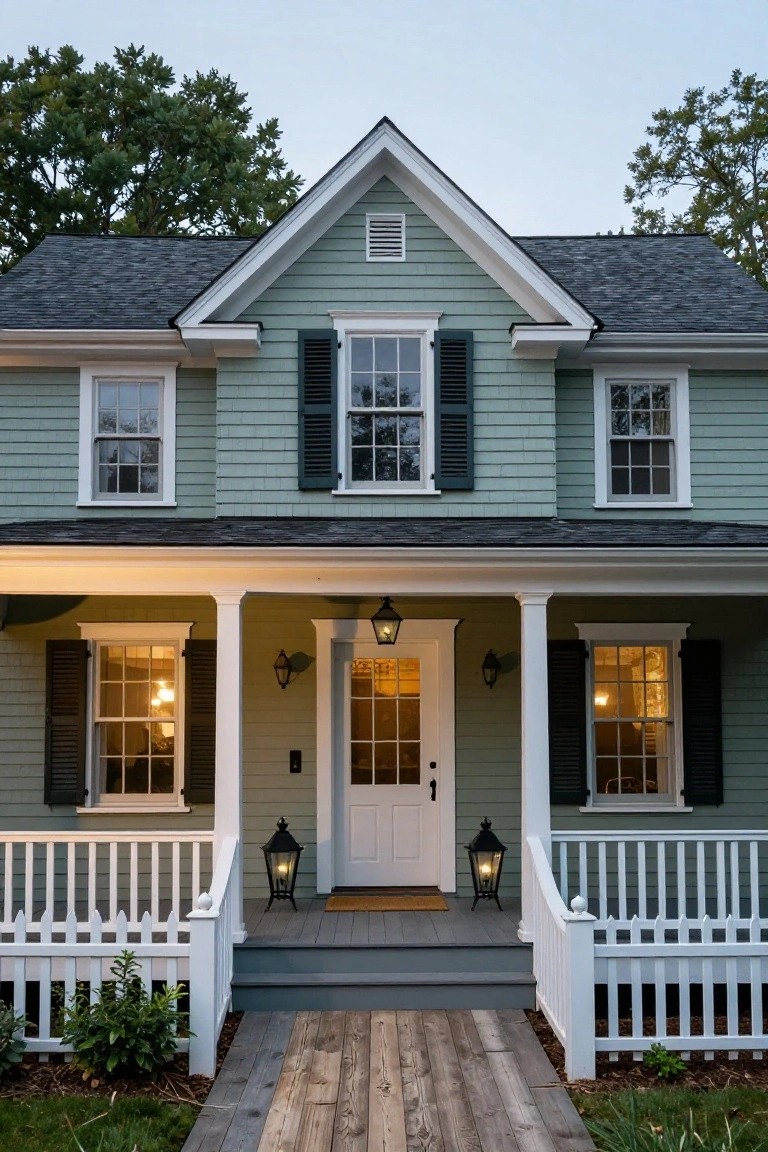
A simple covered porch like this one pulls together the whole front of a Colonial house. With its white columns and wide steps, it sits right in the center and frames the door perfectly. The lanterns on either side add just enough light to make the entry feel open at dusk, without overpowering the soft green siding.
This setup works best on homes with symmetrical windows already in place. It suits quieter neighborhoods where you want curb appeal that looks right at home. Keep the porch plain, maybe add a wood walkway like here, and skip heavy furniture to let the architecture do the talking. On taller houses, it helps balance the roofline too.
Gabled Dormer with Balcony Rail
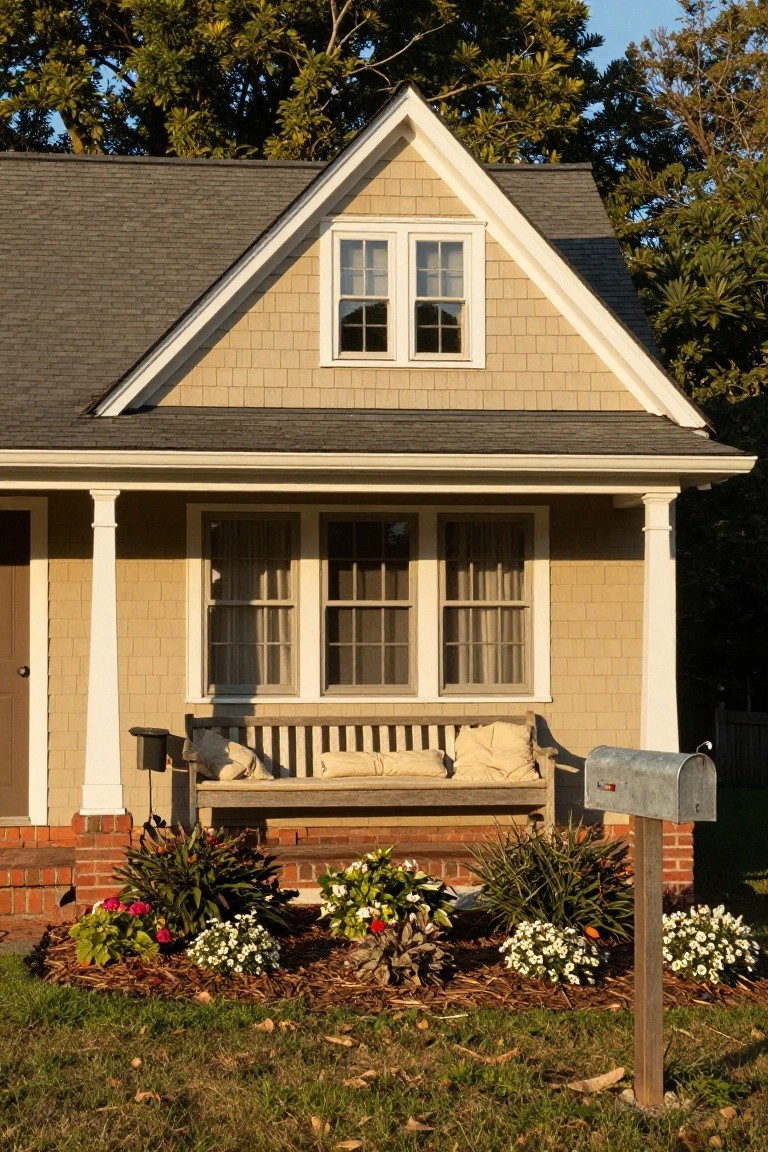
A dormer tucked into the gable roof like this one pulls in plenty of natural light for upstairs rooms. The small balcony with black wrought iron rail keeps it simple and adds just enough detail to break up the roofline. On a pale yellow colonial, it feels balanced, not fussy.
This works best on two-story homes where you want upper floor light without big roof changes. Stick to a dark roof and light siding for contrast, and keep the balcony narrow. It suits classic neighborhoods, especially with a front porch below.
Cupola Adds Balance to Colonial Roofline
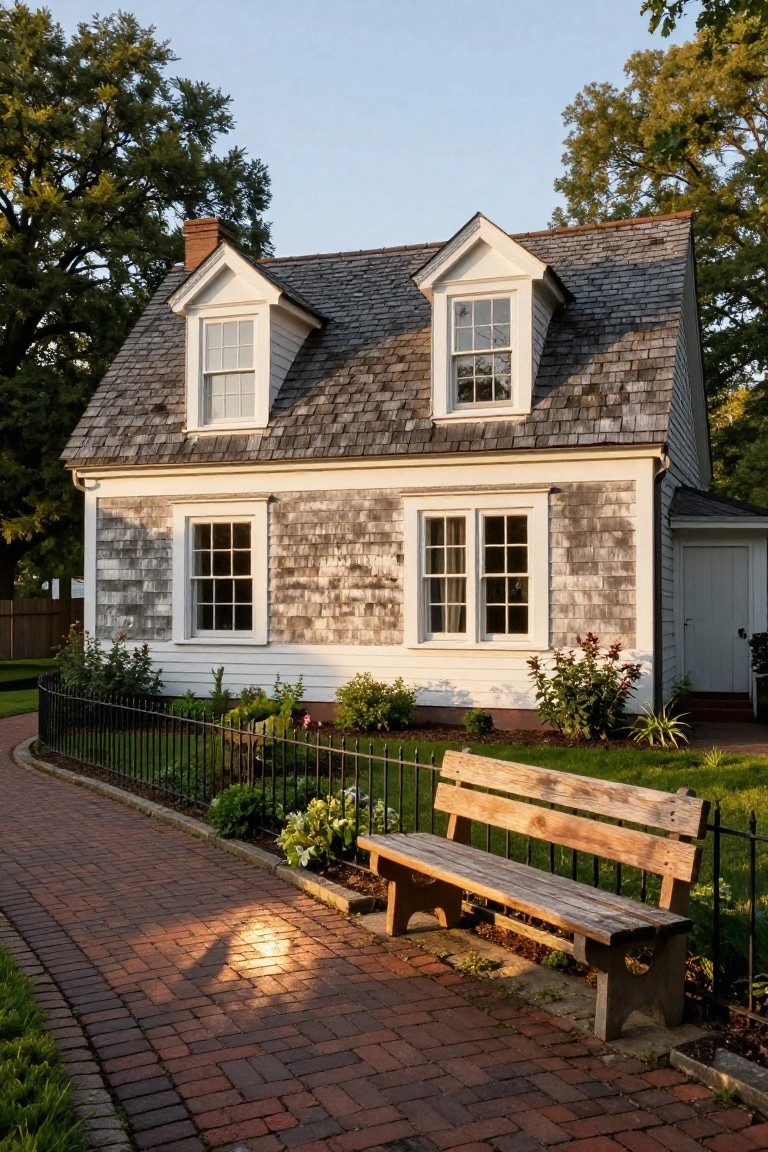
A simple cupola like this one sits right on top of the roof peak. It pulls the whole facade together by centering the eye and breaking up the long roofline. On a classic Colonial, it lets light into the attic space too. White siding keeps things crisp, and the dome shape feels right at home.
These work best on two-story homes with gabled roofs in older neighborhoods. Place it dead center for that balanced look. Skip it if your roof pitch is too steep, or it might look off. Dark shutters below help tie the height back down to earth.
Gable Dormer with Navy Window Trim
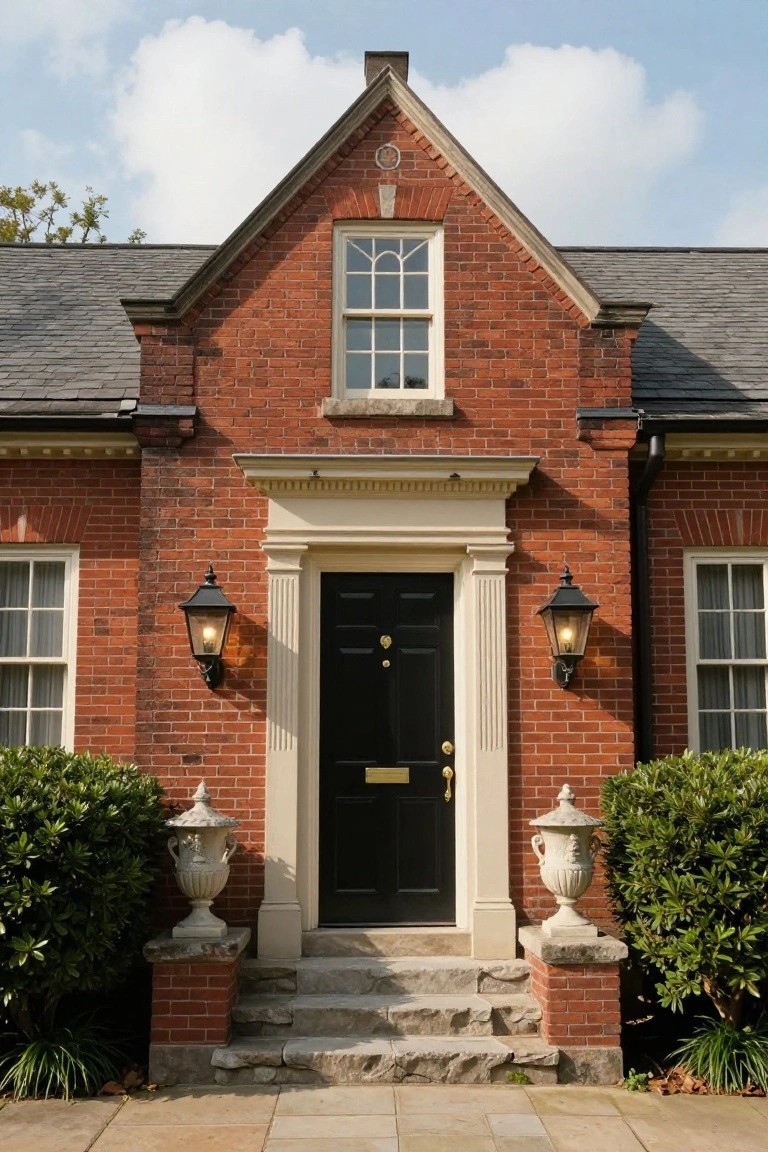
A gable dormer like this one sits right at the peak of the roof. It lets in plenty of light for upstairs rooms while keeping the front facade balanced and symmetric. The navy blue trim around the window pops nicely against the cream siding. That contrast guides your eye upward without much fuss.
This idea fits well on compact Colonial homes where you want more light but not a bigger roofline. Match the trim color to shutters and the front door, like here, for a pulled-together look. It keeps things classic and approachable. Just make sure the dormer size matches your house scale so it doesn’t overpower the porch below.
Gabled Dormer on Metal Roof
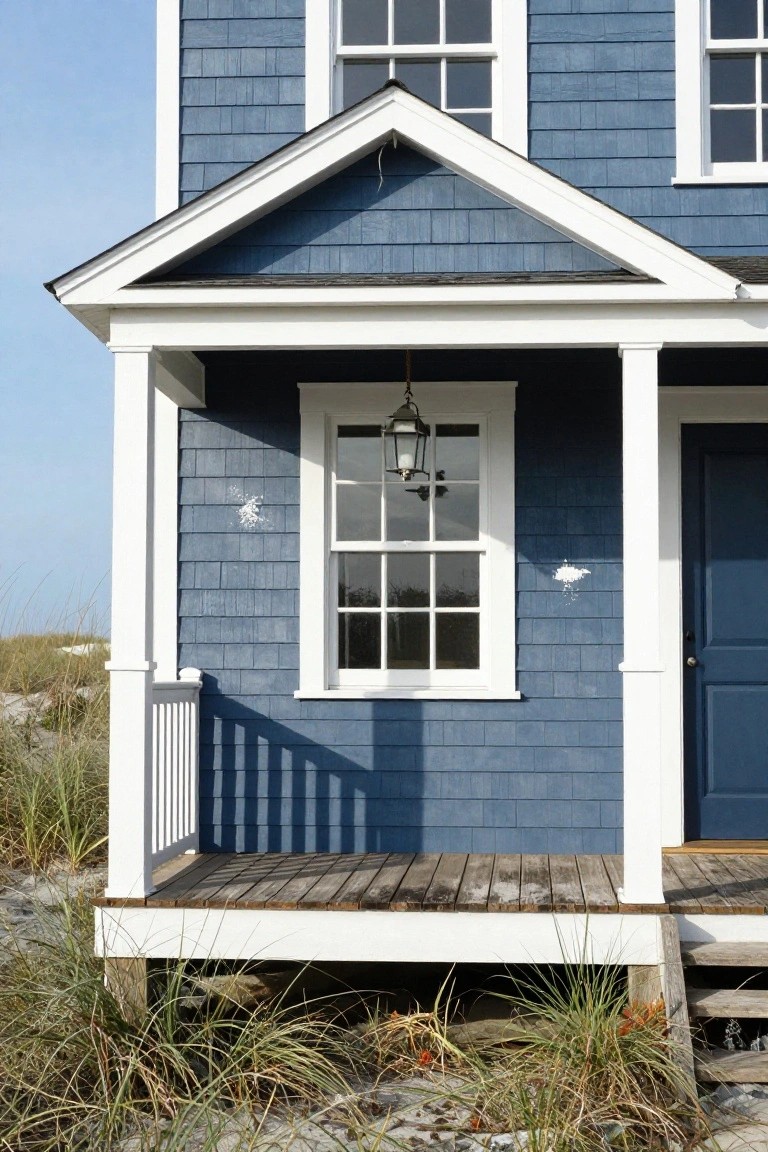
A gabled dormer sits right at the peak of this colonial cottage’s standing-seam metal roof. With its arched window echoing the fanlight over the door, it pulls the whole front together. That roof material gives a clean, durable look against the soft yellow brick, and the dormer adds upstairs light without making things feel crowded.
This works well on smaller homes where you want classic roofline interest but something low-maintenance. Scale the dormer to match your house width, maybe two-thirds across. It suits traditional setups in wooded spots, just keep plantings low around the base so the architecture stays clear.
Classic Dormer Balcony Over the Entry
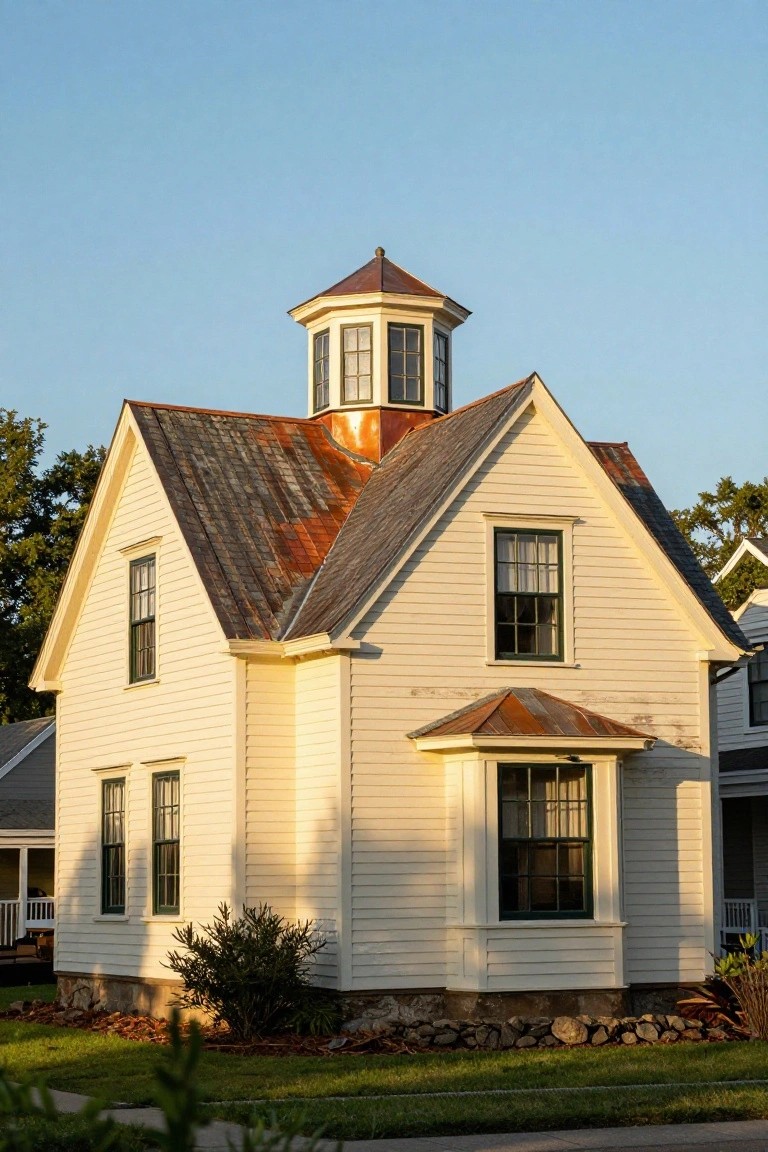
A central dormer balcony like this one sits right above the front door on a Colonial house. It pulls the whole facade together with its symmetrical shape. The balcony adds height and lets in more light through those upper windows. Paired with matching side windows, it gives the house a balanced look that feels welcoming from the street.
This setup works best on two-story homes where you want to highlight the entry without overwhelming it. Use pale stucco or siding to keep things soft, and add lanterns on either side of the door for evening curb appeal. It suits traditional neighborhoods. Just make sure the balcony railing stays simple so it doesn’t steal focus from the door below.
Gabled Dormer Bringing Light to Colonial Fronts
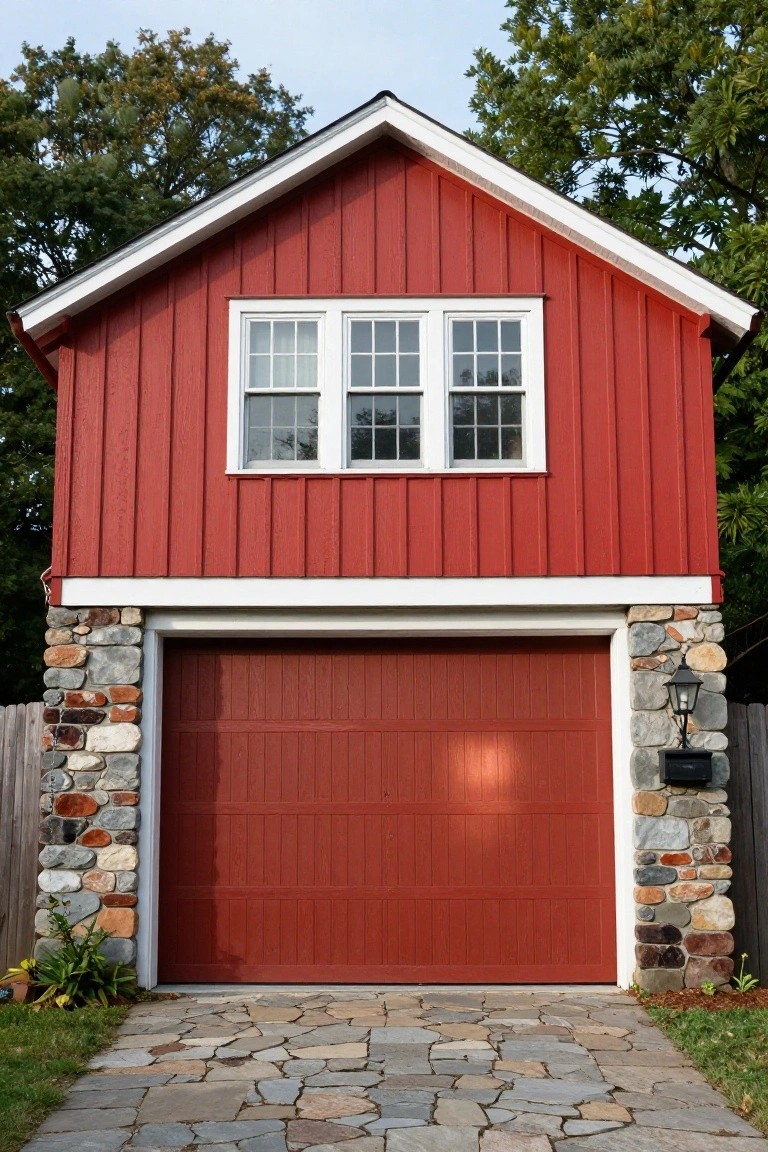
A gabled dormer like this one sits right in the peak of the roof on a gray shingled Colonial house. With its three evenly spaced windows, it pulls in plenty of natural light to the upper rooms and gives the whole facade a sense of balance. White trim around the windows keeps things crisp against the shingles, making the front look taller and more open without any fuss.
This setup works best on traditional homes where you want to brighten attic spaces or bedrooms. It suits shingle or clapboard siding, especially in cooler climates. Just make sure the dormer scale matches your roof pitch… too big and it overpowers the entry. Add simple pots by the door to tie it to the ground.
Gabled Dormers on Colonial Sides
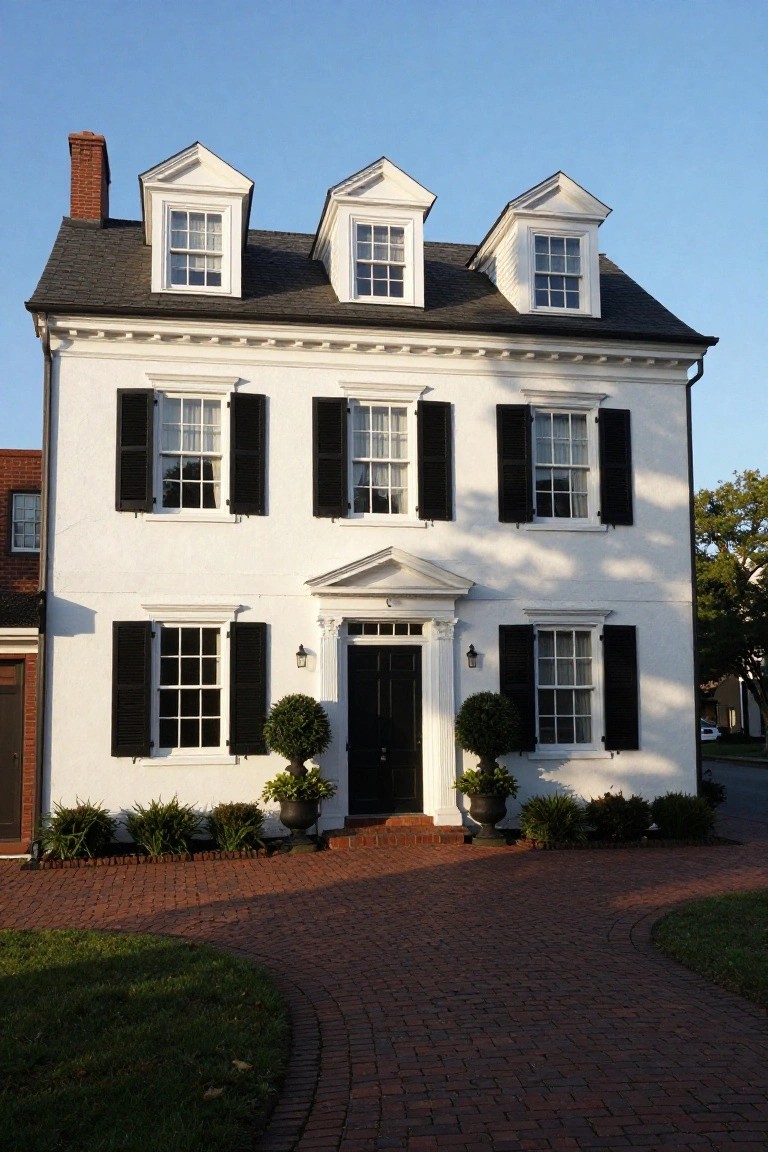
White clapboard siding gives this Colonial house a clean base. The gabled dormers poke out from the main roofline, one on each side of the central gable. They pull in extra light without messing up the simple shape. Paired like this, they keep everything balanced and make the front feel taller.
These dormers work best on two-story homes where you want more upstairs light. Stick to the same pitch as your main roof so they blend right in. Pair them with plain windows and keep landscaping low around the base, like boxwoods and lanterns here. It suits quieter neighborhoods… just check your local rules on roof changes first.
Compact Gable Dormer Centered Over Entry
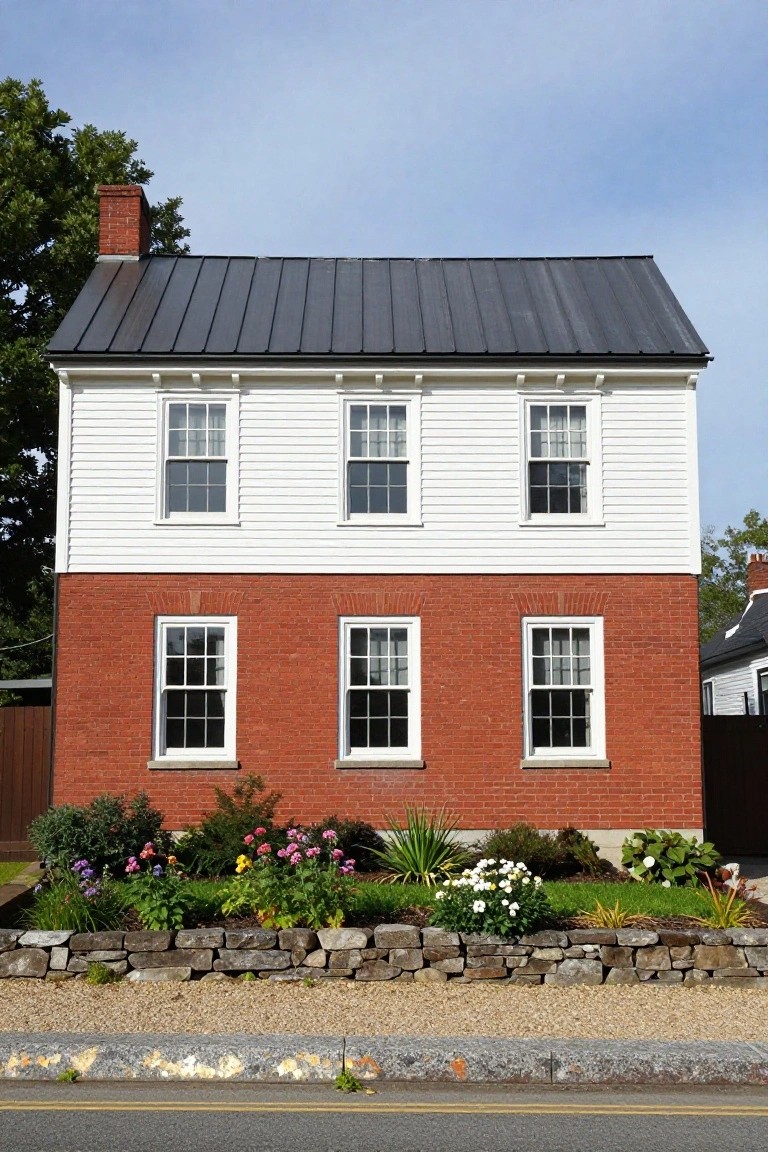
A small gable dormer tucked right into the peak of the front roof pulls the eye up and lets in light high on the facade. It keeps things balanced with the arched doorway below, without overwhelming the stone walls or steep roofline. That warm glow from the window inside shows how it works even at dusk.
This kind of dormer fits colonial style homes with pitched roofs, especially where you want attic light but not a big addition. Pair it with simple boxwoods at the door for curb appeal. Skip it on flatter roofs, though. It needs that height to feel right.
Gabled Dormer on a Colonial Facade
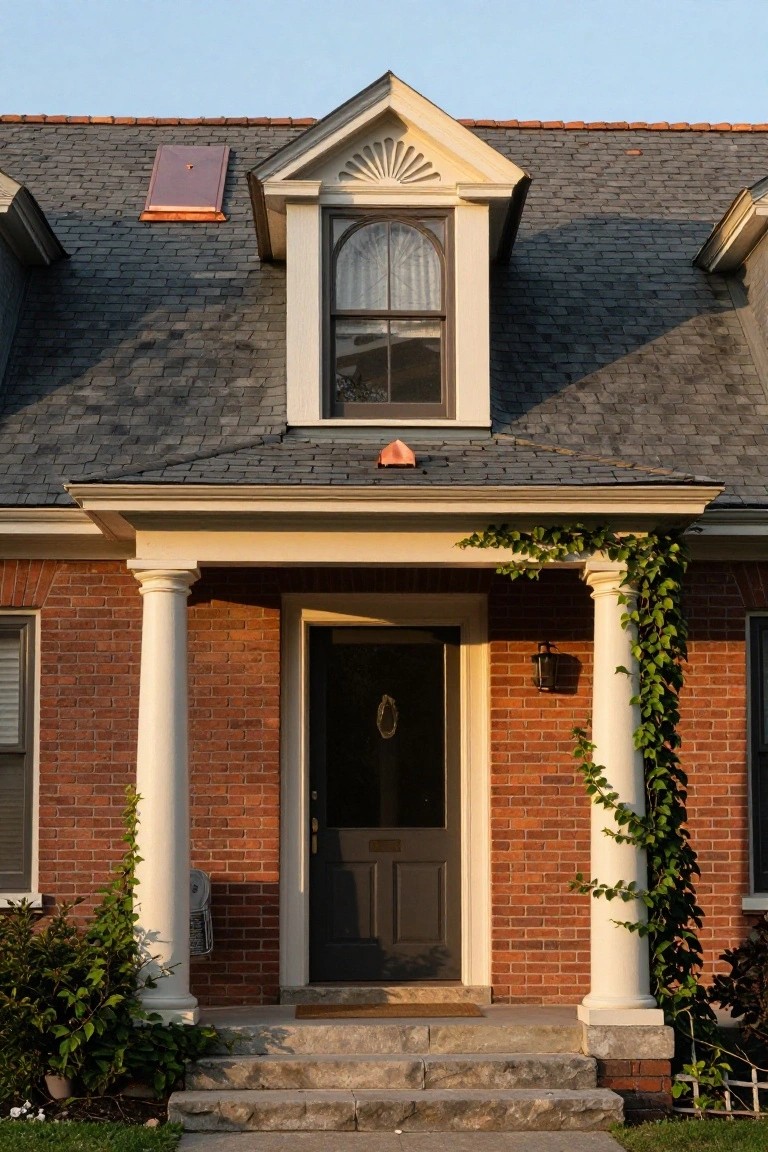
A gabled dormer like this one sits right at the peak of the roof on a classic colonial house. It pulls in light for the upper rooms without messing up the simple roofline. Paired with those three big windows below, it gives the front a steady, balanced rhythm that feels right at home in older styles.
You can add one like this to a two-story colonial if attic space needs more headroom or daylight. It suits white clapboard siding best, keeping things crisp. Watch the scale though. Too big and it overpowers the house. Stick to divided-light glass in the dormer to match the rest.
Louvered Gable Vents for Attic Light
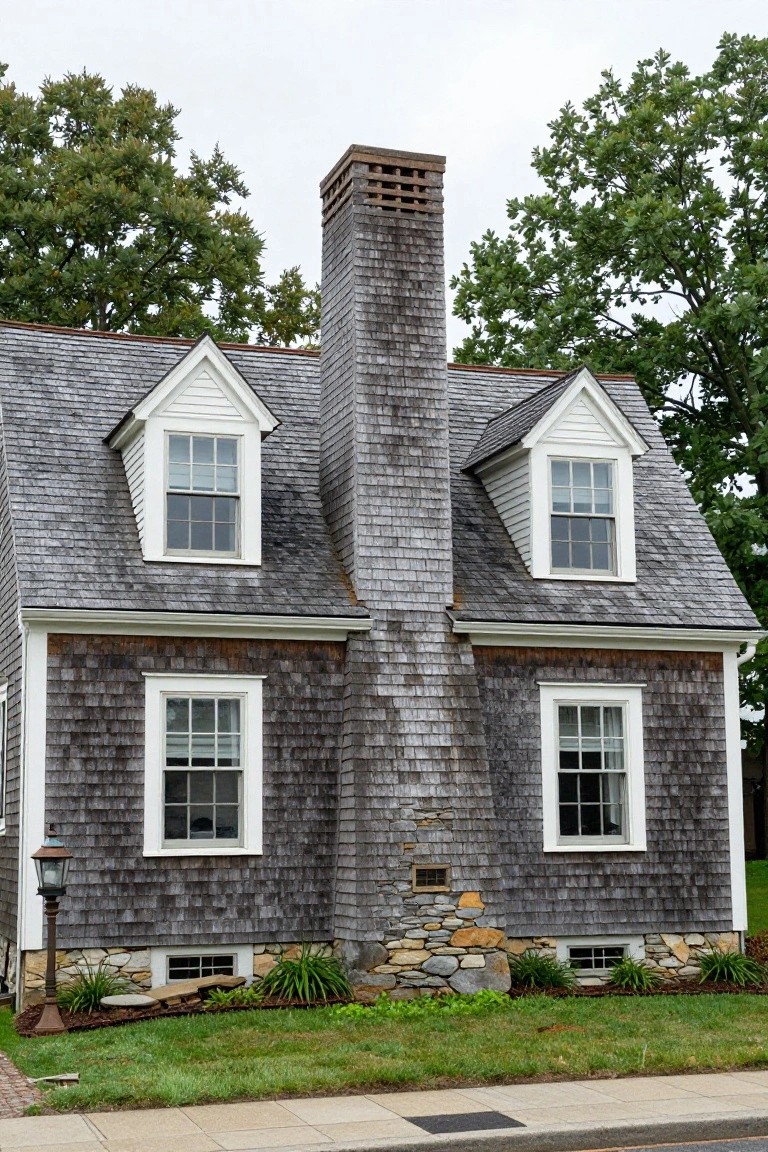
A louvered vent tucked into the gable end works nicely on this brick Colonial. It pulls in light for the attic without sticking out like a full dormer window. Paired with the double-hung windows below, it keeps the upper facade balanced and gives the whole house a steady, classic look.
These vents suit steeper roofs on older style homes, especially brick ones. They handle ventilation quietly and match the scale of nearby windows. Size it to fit your roof pitch, and it adds that finishing touch without much fuss.
Gabled Dormer Over the Entry
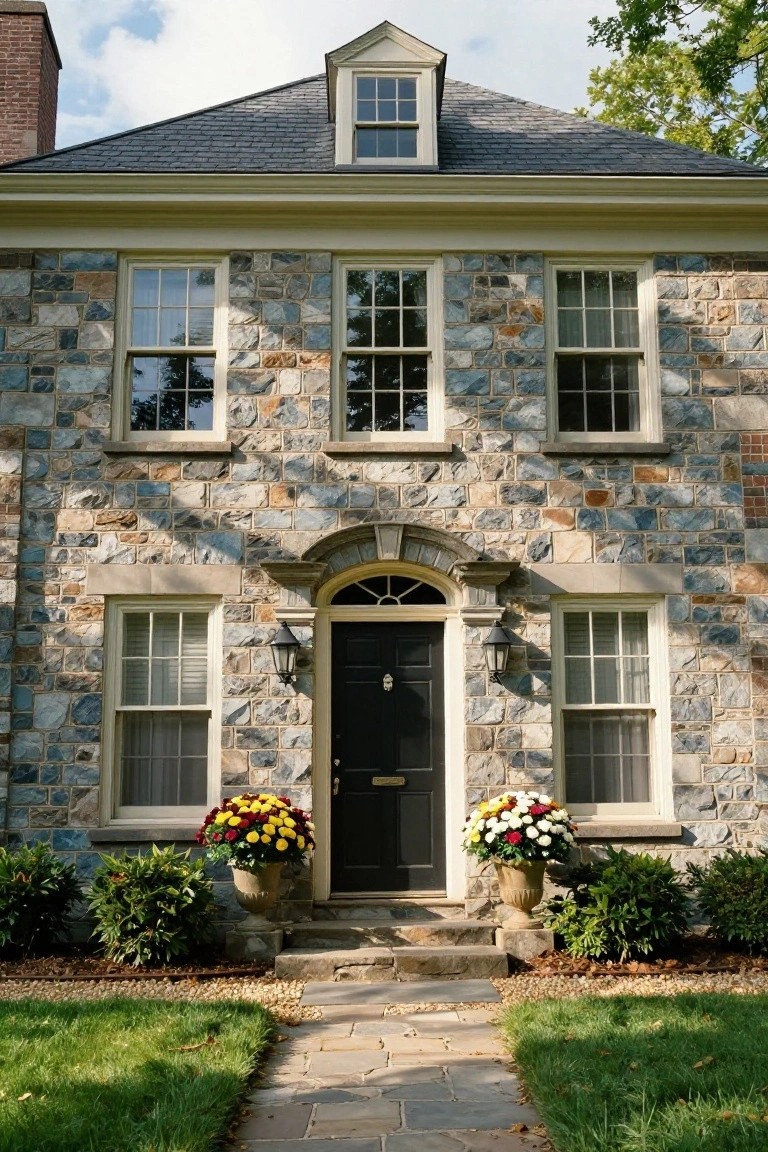
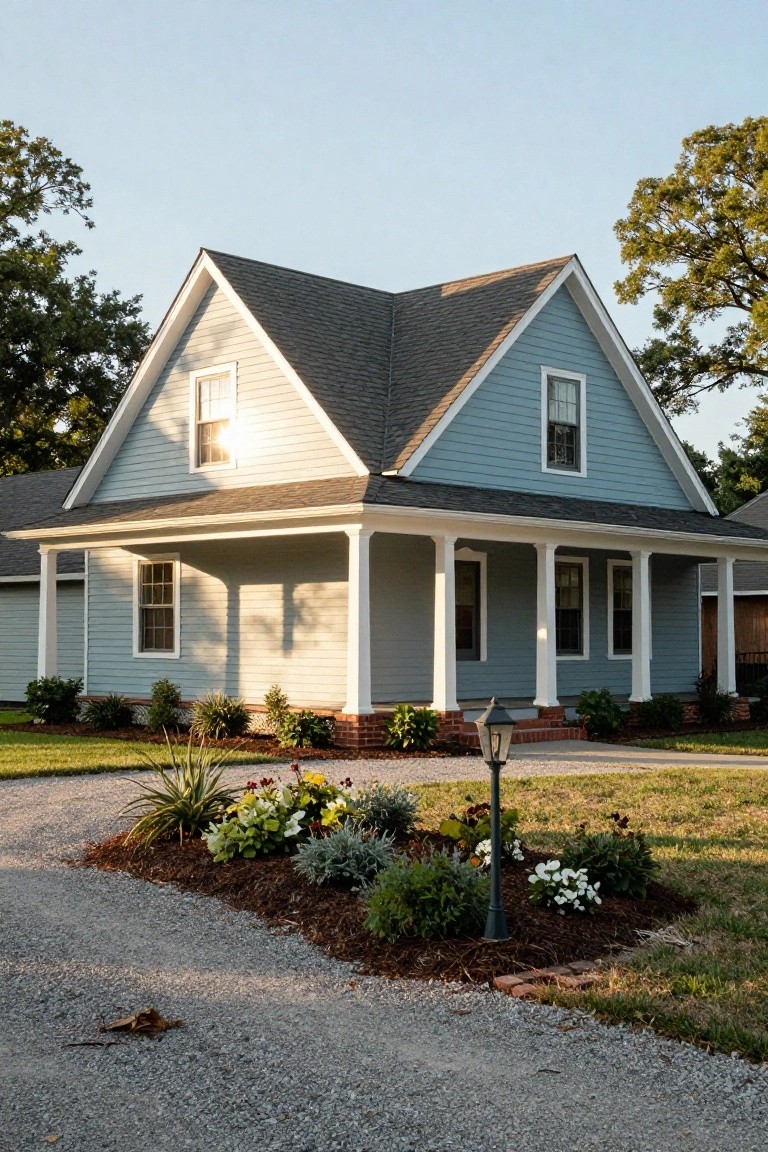
A gabled dormer sits right above the front porch on this Colonial house. It pulls in light to the upper floor and gives the facade better balance. The white frame pops against the navy siding, and that lit window shows how it works at night too.
This setup fits narrow lots or two-story homes that need more upstairs presence. Center it over the door for symmetry. Stick to simple trim and dark roof shingles so the dormer does the main work. It adds light without changing the classic shape.
Symmetrical Round Windows on Shingle Facades
Round windows like these three aligned ones work well on a shingle-style house. They sit evenly spaced across the front, pulling the eye right to the center without overpowering the simple white siding and peaked roof. That setup lets in plenty of natural light while keeping the look balanced and a bit nautical, especially near the coast.
You can add them to a colonial exterior facing water or dunes, where they echo the curved lines of waves or boats. Pair with a gable dormer up top for more height. Just space them to match your siding width, and avoid too many or they start to compete with the main entry.
Frequently Asked Questions
Q: How much does it usually cost to add dormers to a Colonial house?
A: Expect to pay around $10,000 to $20,000 per dormer, depending on size and materials. You save money by sticking to simple gable styles that match your roof pitch. Get quotes from local roofers who know Colonial details.
Q: Do I need a permit for new dormers?
A: Check your local building codes first, since most places require one for roof changes. Dormers count as structural work, so skip this step at your own risk. Your contractor handles the paperwork usually.
Q: How do I pick dormers that fit my Colonial siding?
A: Match the dormer siding to your house exactly, like clapboard or shingles. Paint it the same trim color too. That pulls everything together without extra fuss.
Q: Will dormers really brighten my upstairs rooms?
A: They flood attics with natural light right away. Position them on the side facing morning sun for the best glow. Open up those dark corners fast.
