

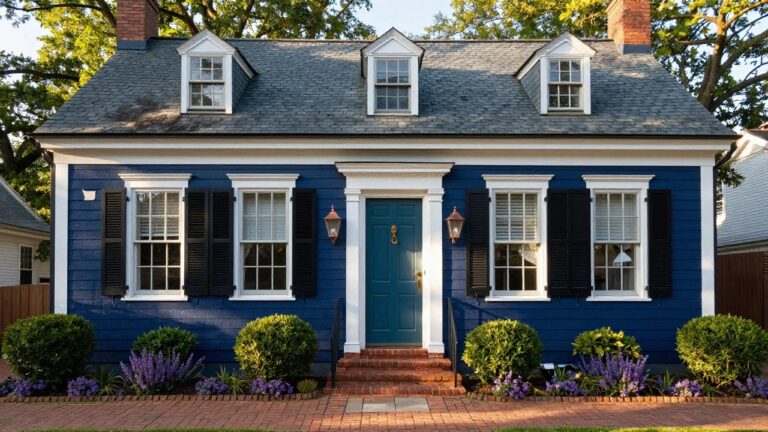
I’ve noticed how a well-chosen blue on a Colonial house exterior softens the boxy symmetry that can sometimes feel stark from the street. That cool hue plays nicely with classic rooflines and front porches, pulling the eye toward the entry without overpowering the facade. One house nearby convinced me that crisp white trim around the windows makes all the difference in real light, turning a solid color into something welcoming. These designs lean on durable materials like cedar shakes or brick accents that hold the color over years and add grounded texture. A couple here are practical enough to tweak for your own curb appeal.
Classic Navy Blue Colonial Facade
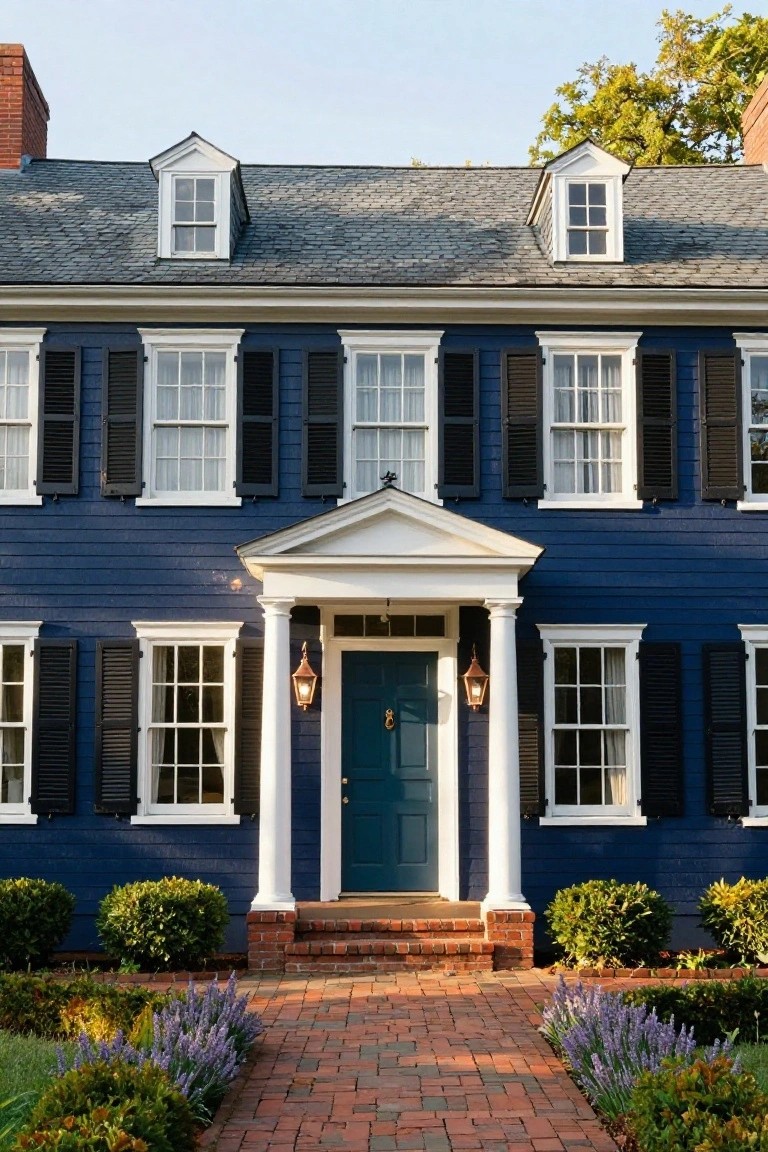
A deep navy blue paint on clapboard siding gives this colonial house a cool, steady look that feels right at home in any neighborhood. The white trim around the windows and the simple portico with columns keeps things crisp and balanced. It’s not flashy. Just solid curb appeal that draws folks in without trying too hard.
This color works great on two-story colonials with good rooflines and dormers. Paint the siding navy, leave trim white, and add black shutters if you want more contrast. It suits shady spots or tree-lined streets best… steers clear of glare on sunny days. Brick steps or a path out front tie it together nicely.
Recommended Products


Flat Trim is pre-taped and pre-scored for an easy install
Hanging Porch Swing
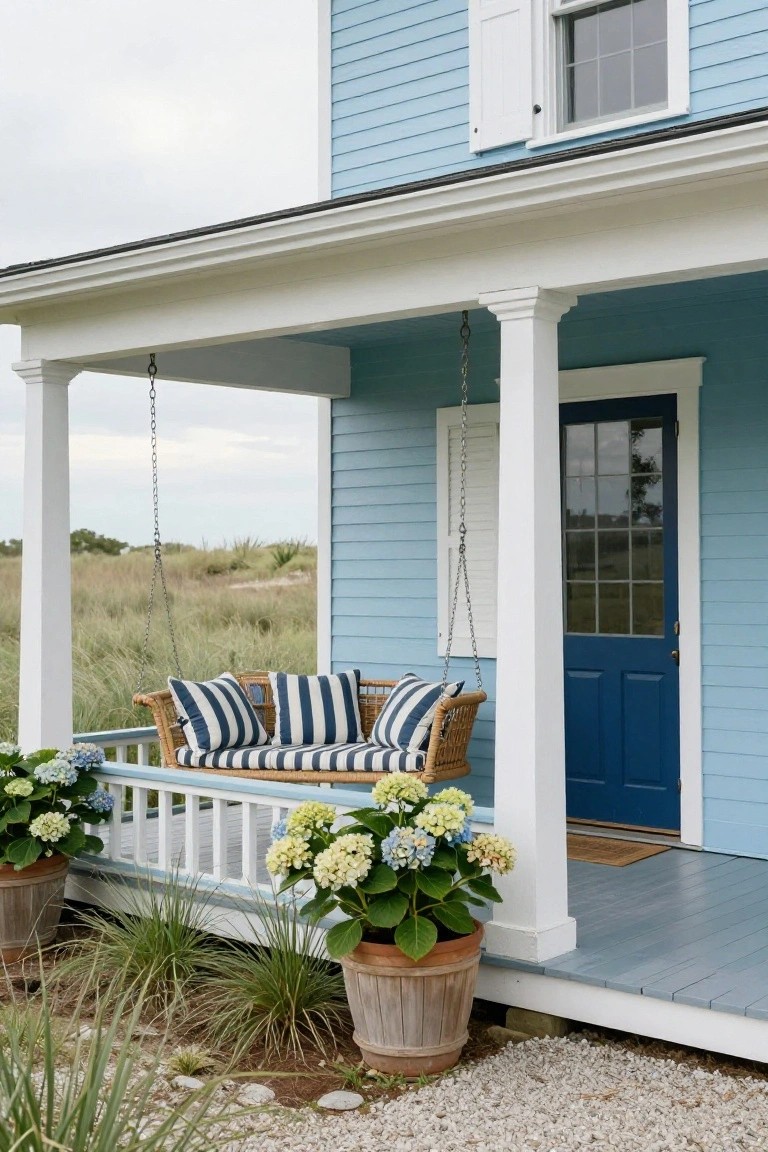
A hanging porch swing turns a front porch into a spot where folks actually want to linger. On this light blue colonial house, the wicker swing dangles from chains between tall white columns, loaded with navy and white striped cushions. It’s casual. Perfect for swaying in the breeze while watching the world go by.
Try it on any covered porch with enough depth, especially coastal colonials or farmhouses. Hang it off-center if needed to fit the railing, and pick weather-resistant cushions in colors that echo your siding or door. Potted hydrangeas on either side add a nice planted frame without much work. Keeps things low-key and ready for company.
Stone Steps to the Front Door
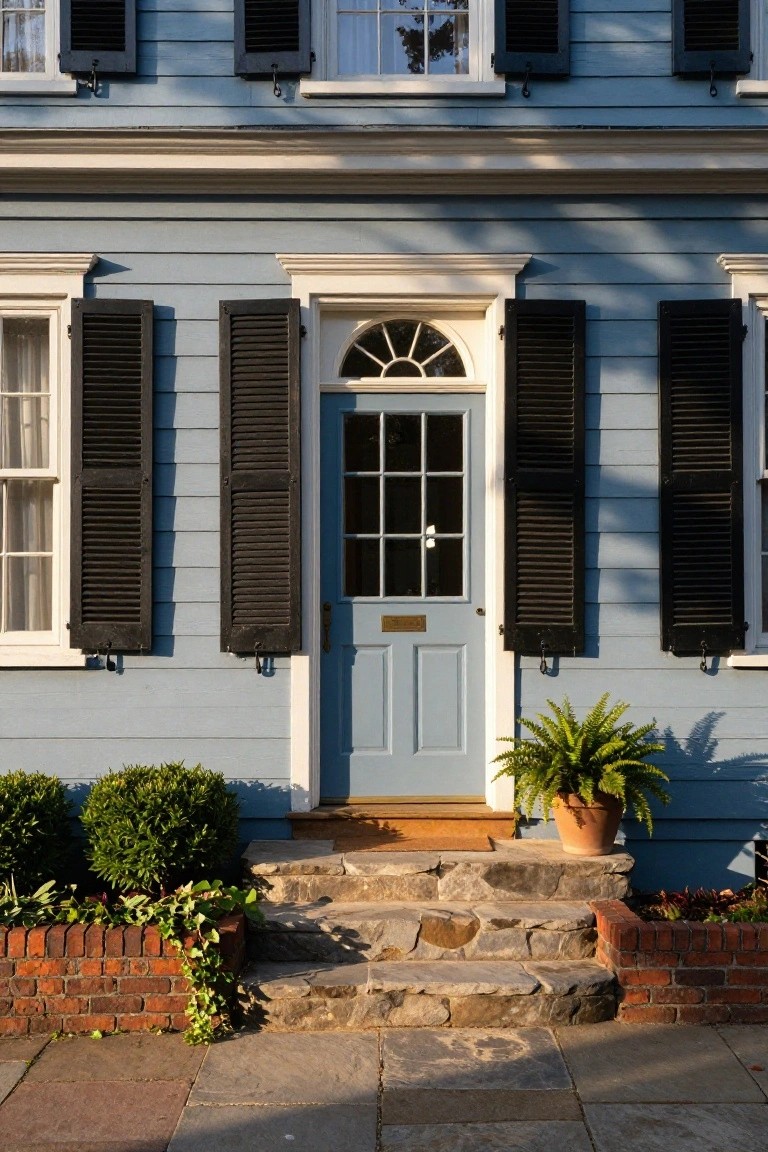
Stone steps like these make a colonial entry feel solid and easy to approach. They climb right up from the sidewalk to that blue door, with just enough rise to suit the house’s height. A pot of ferns sits nearby, keeping things simple and green without much fuss.
These steps suit sloped lots or traditional neighborhoods where you want low upkeep. Use rough flagstone for grip and character, then edge with brick beds for boxwoods. It draws folks in naturally, especially on a blue house where the stone adds some warmth.
Blue Shingle Colonial Cottage
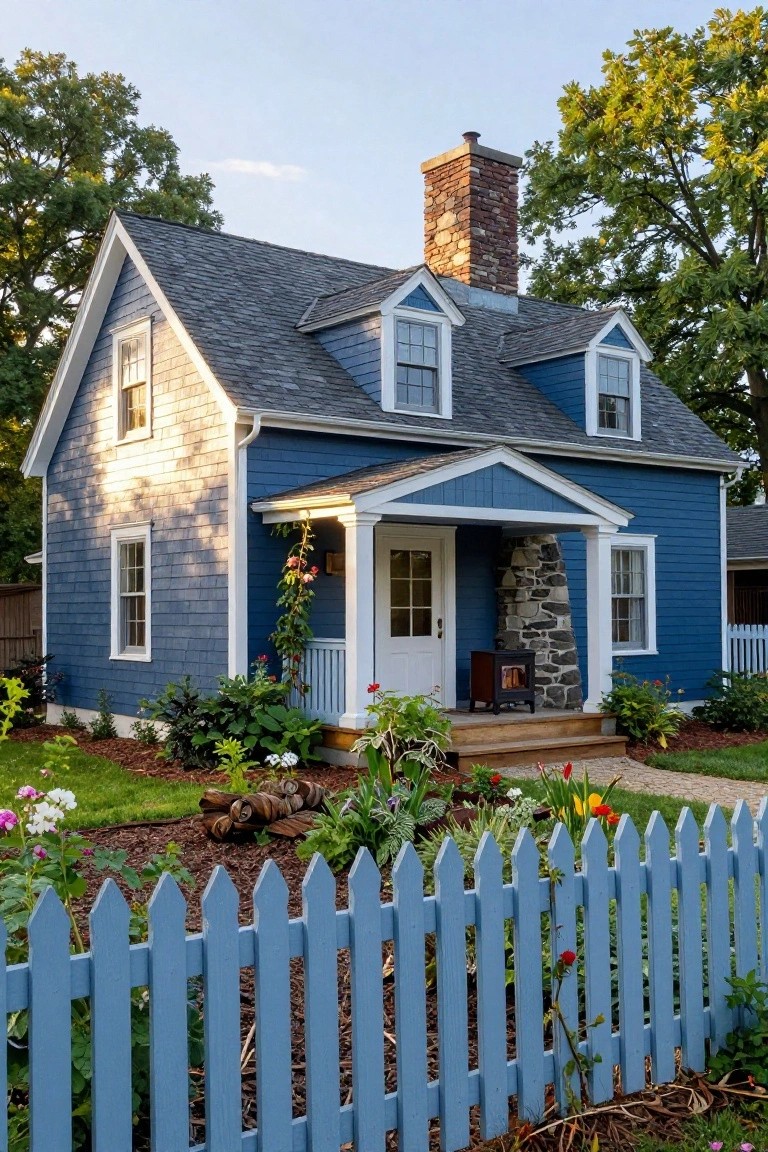
Blue shingle siding in a soft shade like this turns a simple colonial house into something that feels fresh and easygoing. The color picks up on coastal vibes without going overboard, and pairing it with white trim around the windows and porch door keeps the classic lines sharp. That stone pillar by the entry adds a bit of texture too.
This setup suits cozy older homes or starter houses in suburban spots with trees nearby. Go for durable fiber cement shingles if you want low upkeep, and keep landscaping simple with flower beds along the fence. It pulls off that cool look best where summers get warm, but watch the shade so it doesn’t fade too fast in full sun.
Soft Blue Clapboard Colonial Front
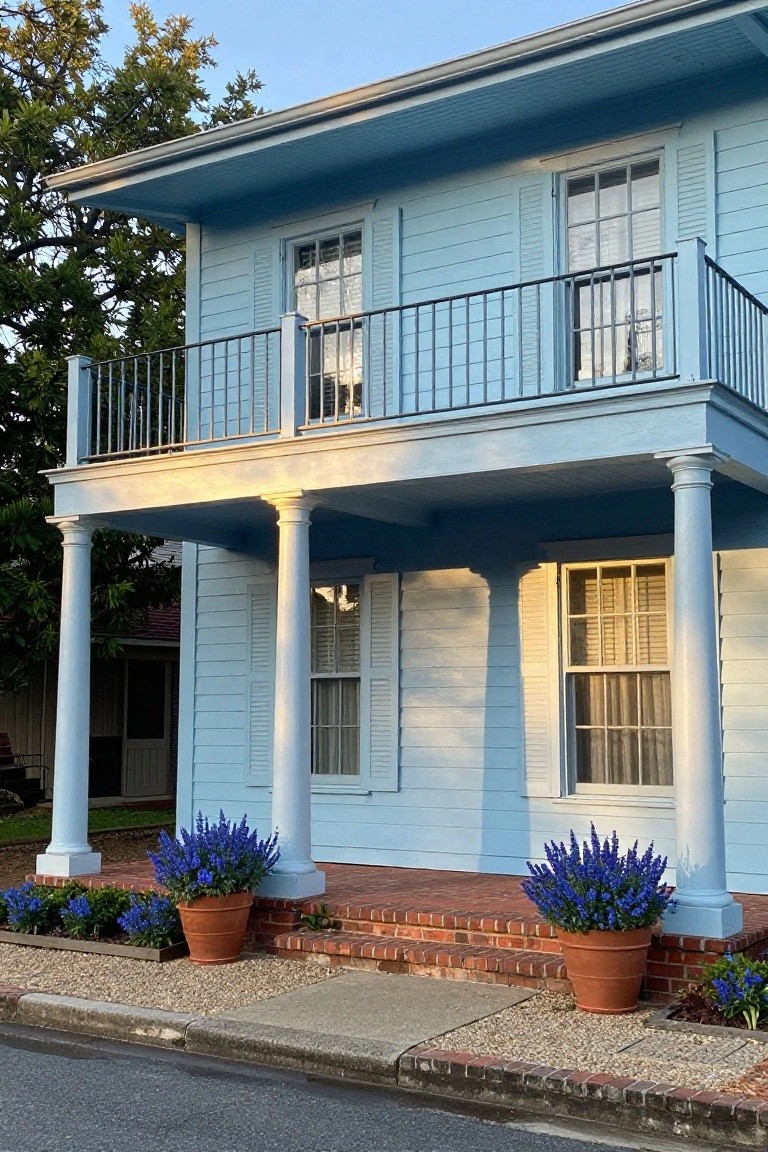
A soft blue paint job on clapboard siding turns a standard colonial into something cooler and more welcoming. Here the pale blue covers the whole facade, from the raised porch with its white columns up to the balcony railing. It keeps the traditional lines but adds a breezy feel that fits warm weather spots.
This look suits older neighborhoods or southern-style homes where you want curb appeal without much fuss. Stick to crisp white trim around windows and doors, then add simple pots of blue flowers like lavender at the base of the steps. Avoid darker shades that might fade fast in the sun.
Navy Door on Blue Shingle Siding
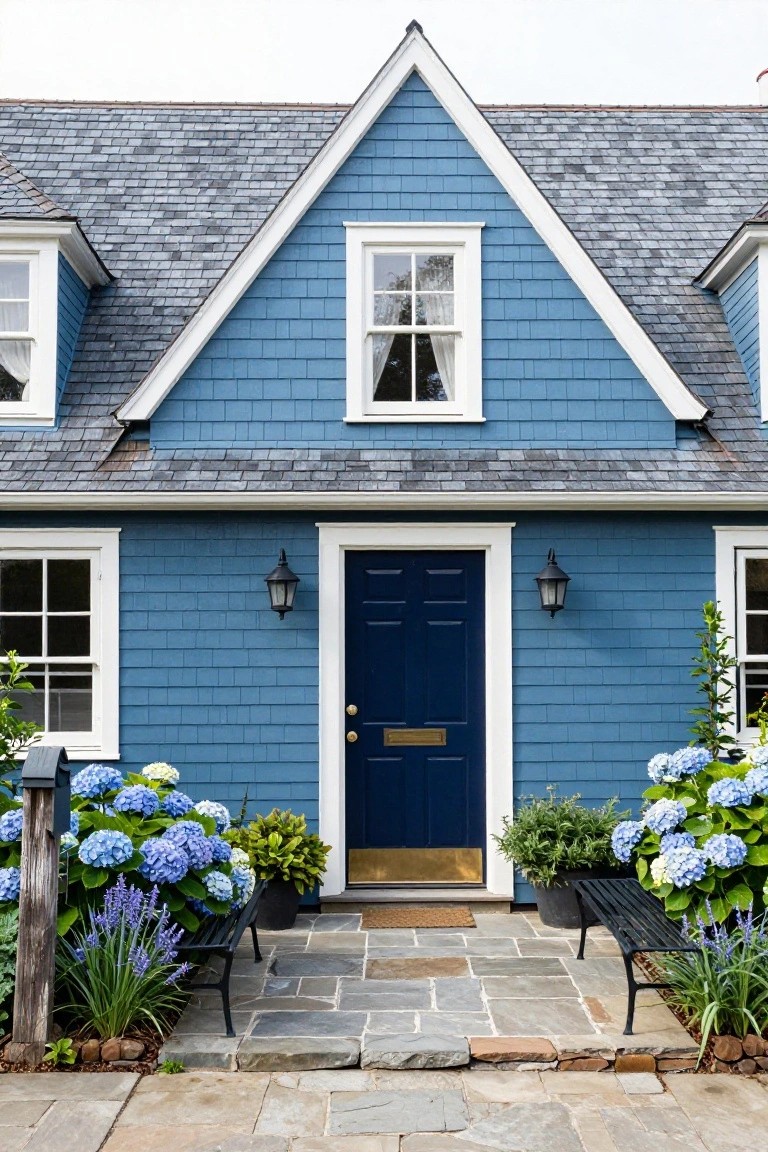
A navy front door stands out nicely against lighter blue shingle siding like this. The white trim around the windows and door pulls it all together without much fuss. It gives the house a cool colonial feel that’s easy on the eyes, especially with those big blue hydrangeas framing the entry.
This setup works best on smaller homes or cottages where you want the door to be the main focal point. Go for it if your house already has blue siding. Just keep the landscaping simple around the door so it doesn’t compete. Navy holds up well in shady spots too.
Navy Blue Siding with White Columned Porch
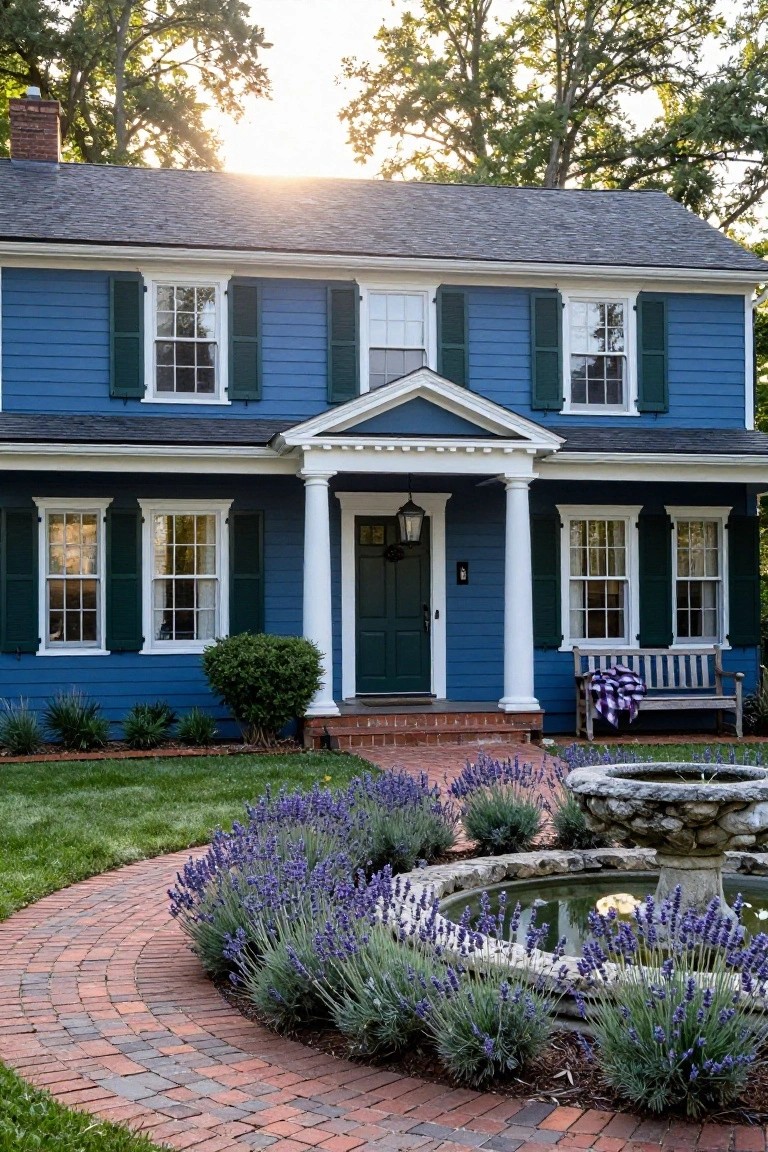
A deep navy blue siding gives this colonial house a cool, steady look that doesn’t fade into the background. The white columned porch pulls everything together right at the front door, adding that clean contrast folks notice first. Green shutters and door keep it from feeling too stark, while the simple bench out front makes it seem lived-in already.
This setup works best on homes with good rooflines and symmetric windows, like most colonials. Stick to white trim for punch, and add a brick path if you have room. Skip busy colors elsewhere. It suits older suburbs fine, even with some landscaping around the base.
Blue Porch Swing for Easy Charm
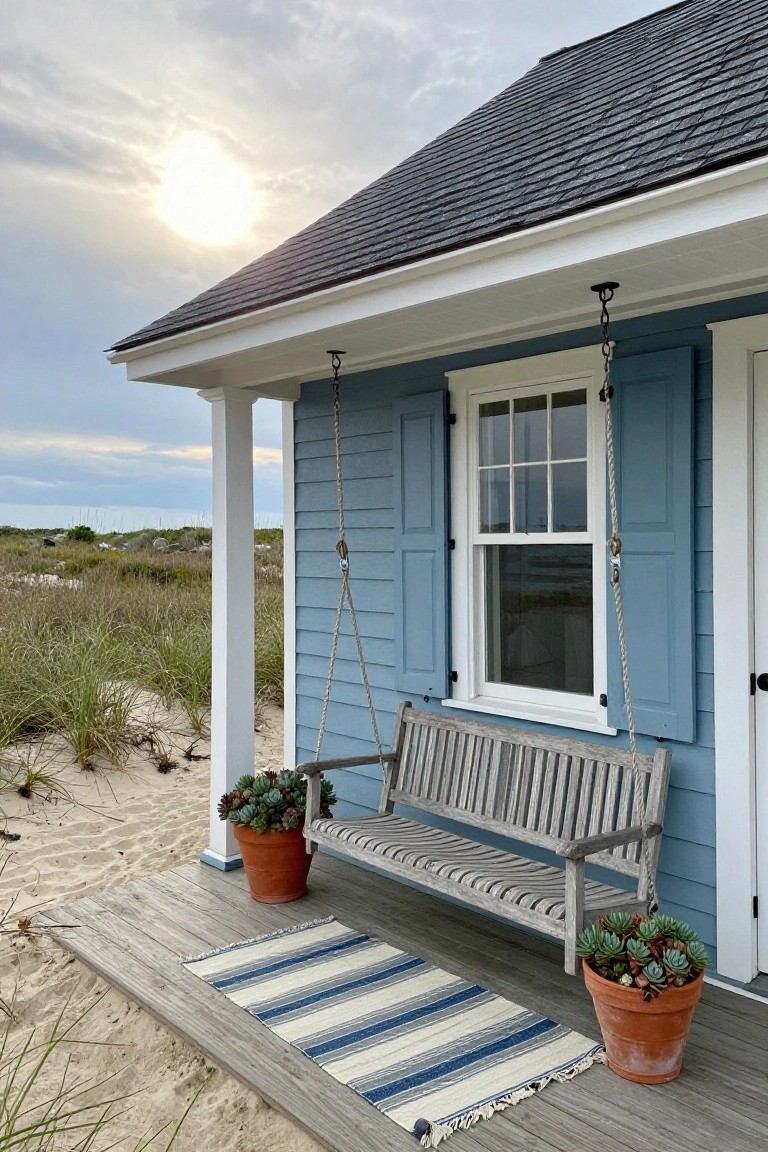
A hanging porch swing like this one takes a blue colonial exterior and turns the front porch into a real spot to relax. The grayed wood bench swings gently from thick ropes under the covered roof, right next to the soft blue siding and those crisp white columns. It pulls the beachy dunes into view without trying too hard, keeping things cool and open.
Put one on any porch with solid overhead beams, especially if your house has that classic blue clapboard look. It suits coastal spots or older homes near water best, where you want guests to feel welcome right away. Skip it if your porch is too narrow, though. The potted succulents nearby add a nice low-key touch.
Black Shutters on Pastel Pink Brick
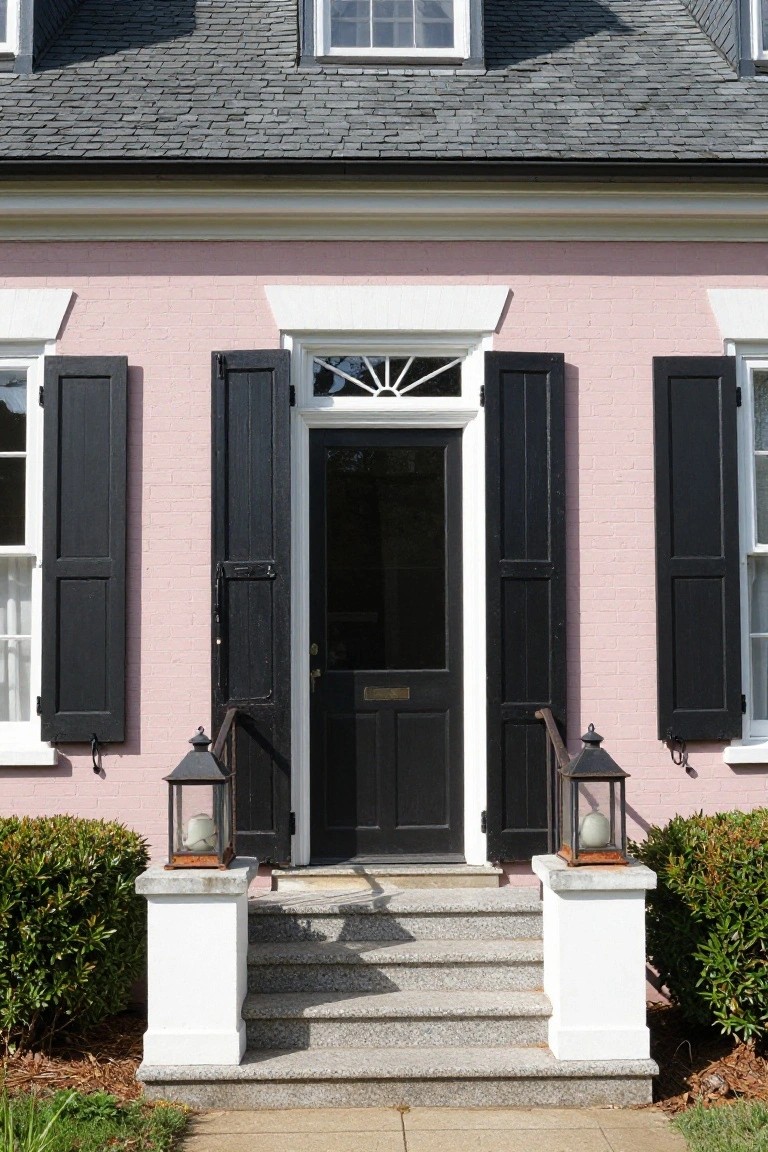
This colonial front pulls off a strong look with soft pink brick walls set against deep black shutters and a matching black door. The high contrast makes the entry pop right away. Flanking lanterns on white pedestals tie it together nicely, giving a welcoming feel without much fuss.
Try this on older homes or revivals where you want the facade to stand out from the street. It suits milder areas, since pastels can fade in harsh sun. Keep trim white to sharpen the edges, and skip busy landscaping so the colors lead.
Porch Columns in Crisp White
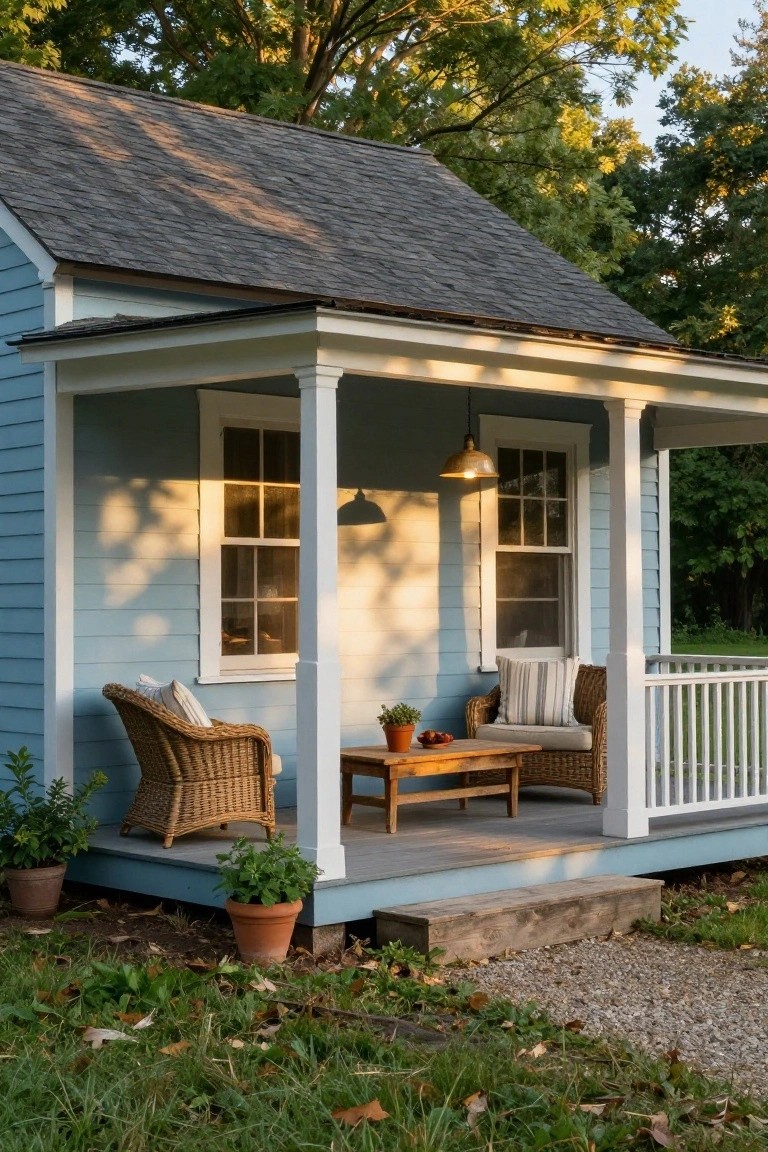
A simple covered porch with tall white columns gives this pale blue colonial its most welcoming touch. The columns stand out clean against the soft siding color, framing the space without taking over. Add a couple wicker chairs and potted herbs, and it turns into a spot you want to linger on right away.
This setup works great on smaller homes or cottages where you want curb appeal that feels easygoing. Keep the columns bright white for contrast, and stick to natural wood furniture so it doesn’t compete with the house. Skip heavy decorations. It suits shady yards with trees nearby, keeping things cool even on warmer days.
Light Blue Siding on a Colonial House
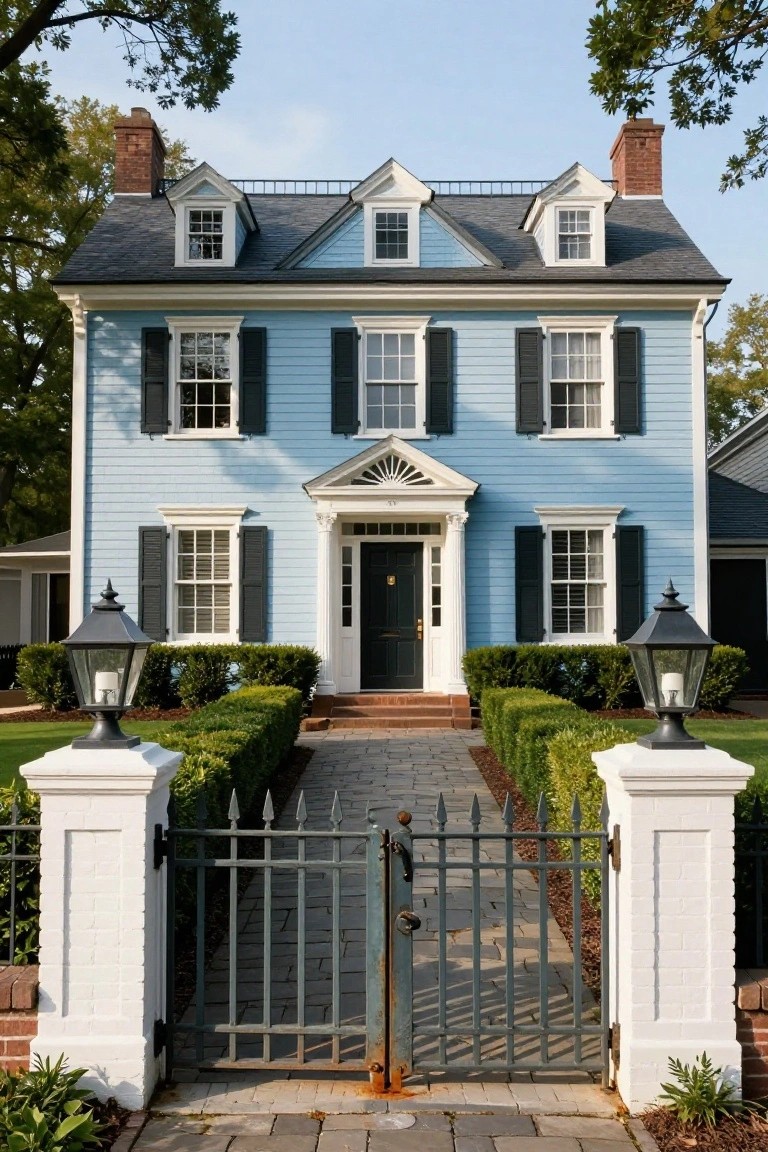
A soft light blue siding like this one gives a colonial home a fresh, cool look that still feels right at home in traditional neighborhoods. The color picks up on the sky and trees around it, making the house blend in nicely while the white trim and black shutters keep everything sharp and balanced. Those dormer windows up top add a bit of charm without overdoing it.
You can pull this off on any two-story colonial with good window symmetry. Stick to matte paint to avoid glare, and use black shutters on taller windows for punch. It suits shady lots or places with lots of green, where the blue stays calm and welcoming. Just keep the entry clean, maybe with simple lanterns like these.
Blue Colonial with a Rocking Chair Porch
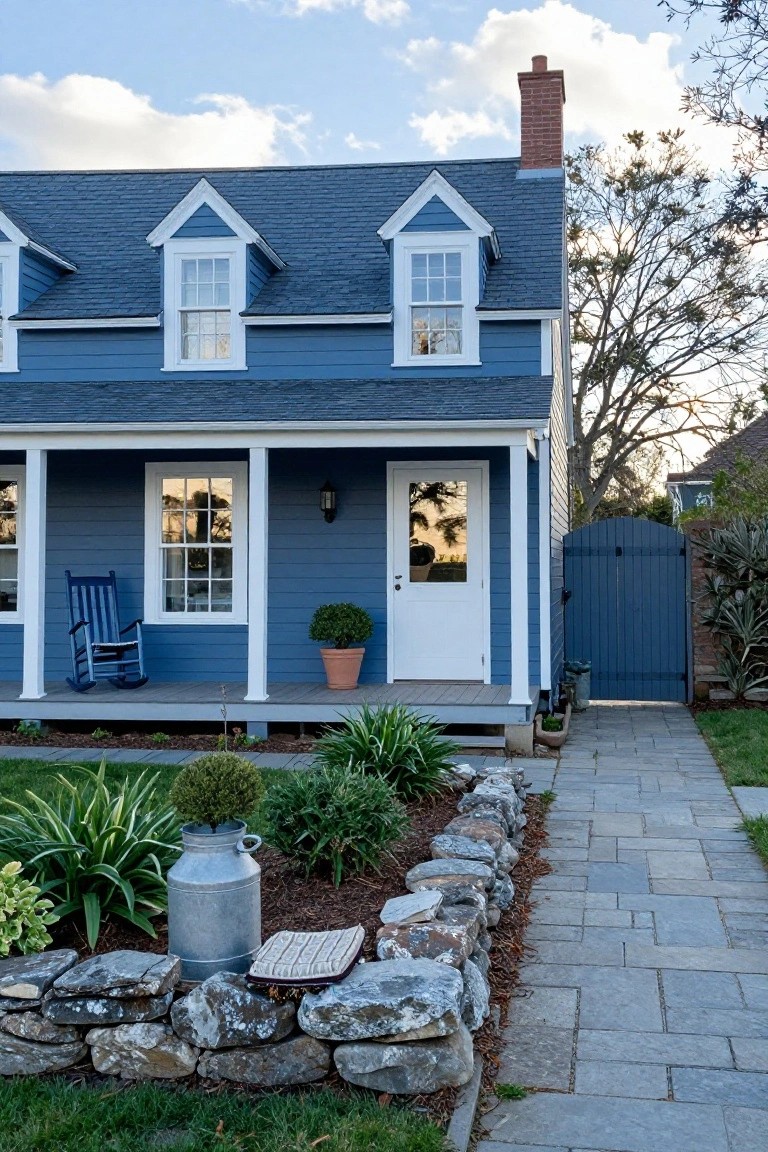
A blue colonial house like this one gets a lot of its charm from the simple front porch. The navy siding pairs nicely with white trim around the windows and door. Add a single rocking chair out there and it feels lived-in right away. That porch pulls the whole facade together without much fuss.
This setup works best on smaller homes where you want easy curb appeal. Tuck some potted plants by the steps and keep the landscaping low around the base. It suits older neighborhoods or coastal spots. Just make sure the porch roofline matches the house gables so it doesn’t look added on.
Blue Colonial Porch with Columns
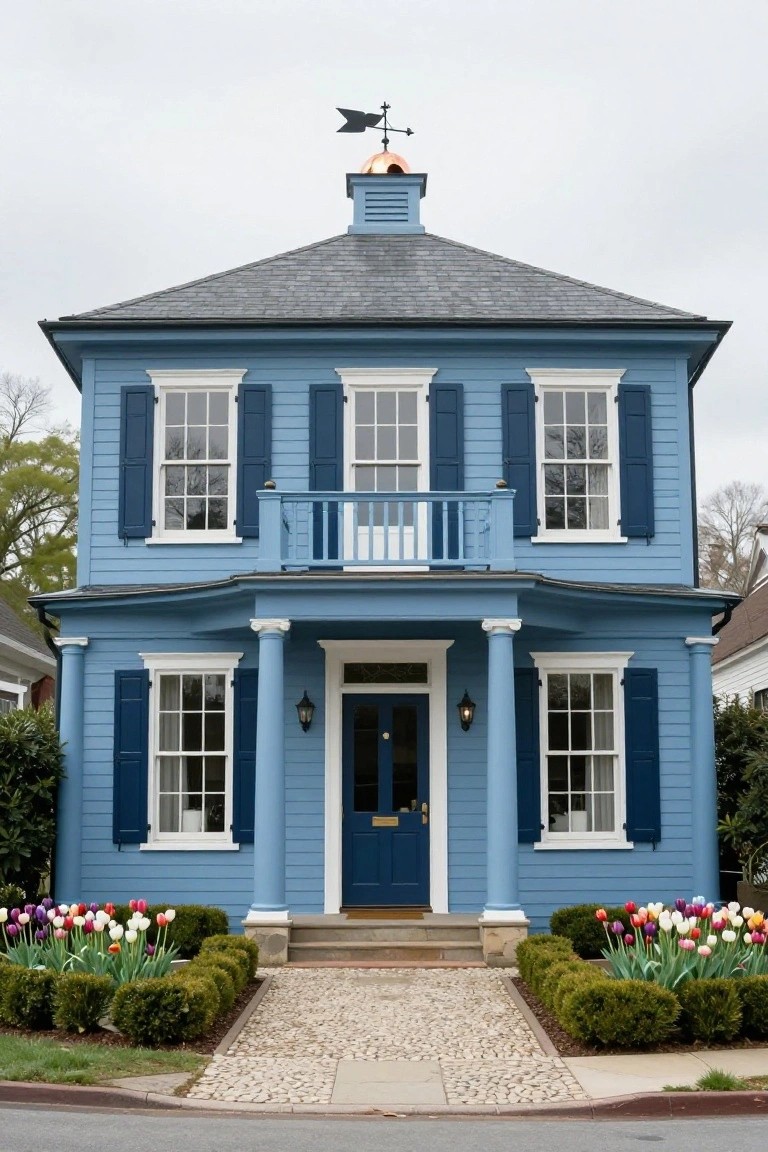
A soft blue clapboard siding gives this Colonial house a cool, relaxed feel without losing its classic shape. White columns on the front porch frame the entry just right, and navy shutters add some contrast that pulls the look together. That little balcony up top and the cupola with weather vane give it extra character too.
This setup suits older neighborhoods or town lots where you want curb appeal that doesn’t shout. Frame your door with similar columns, keep trim crisp white, and add boxwoods along the walk. Spring tulips in the beds bring color without much work, but swap for perennials if you want year-round interest.
Classic Blue Colonial Porch
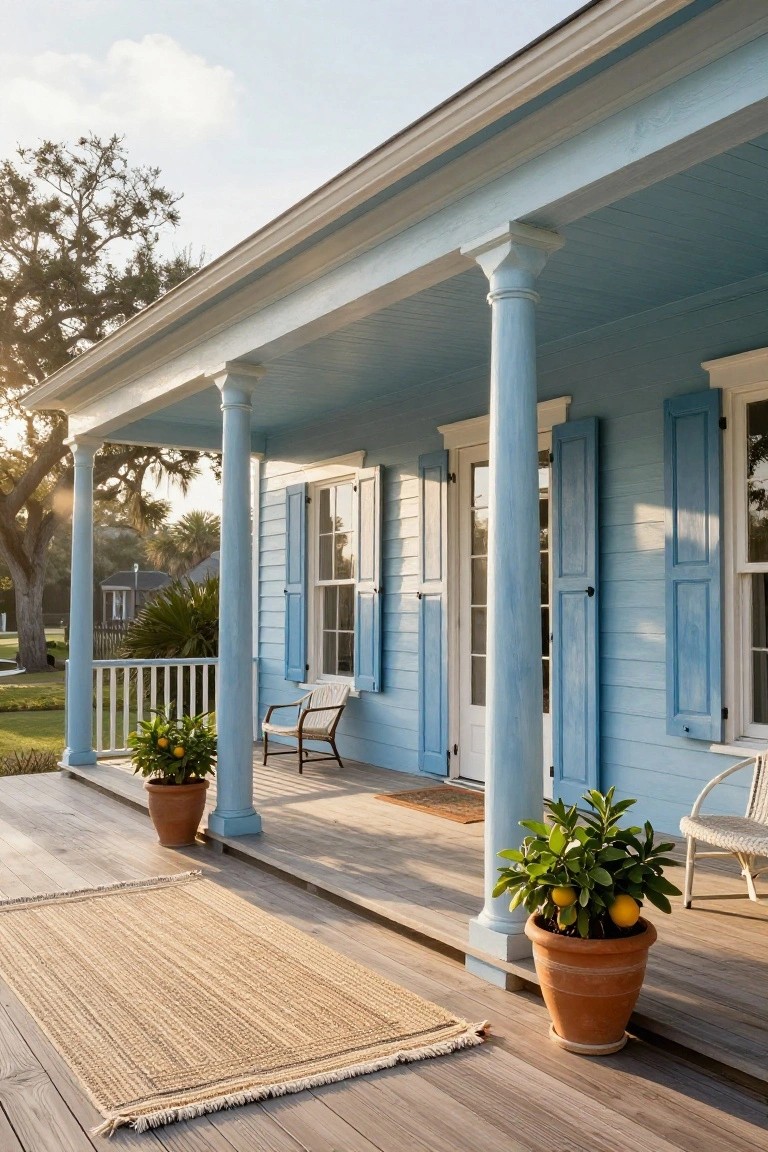
A classic colonial porch like this one gets a fresh lift from soft blue paint across the siding, columns, and ceiling. It keeps the tall columns and raised deck that make these houses so recognizable, but the pale blue tone cools everything down and pulls in the sky on clear days. Add a couple of simple touches like potted citrus plants, and it feels lived-in right away.
This works best on older homes with some elevation, especially down south where humidity calls for breezy colors. Stick to white trim for contrast, and keep furniture light like wicker chairs. Skip bold colors elsewhere, or it might clash.
Soft Blue Shingle Siding for Outbuildings
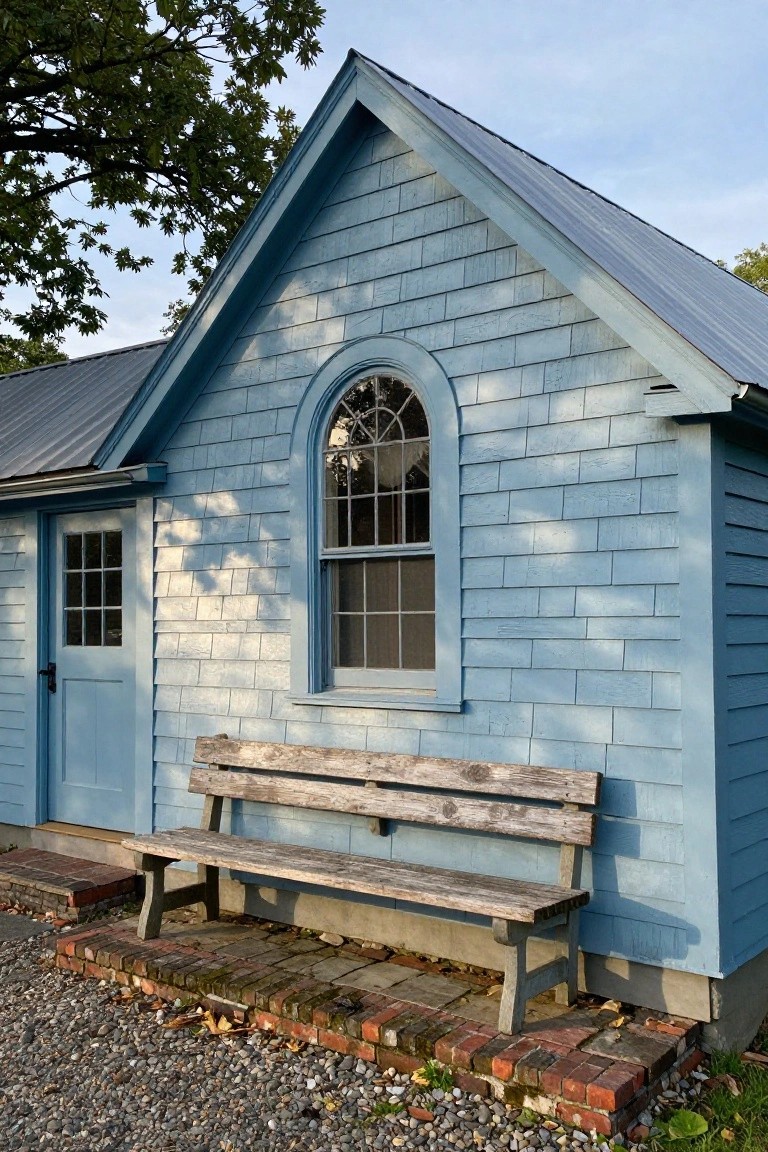
Blue shingle siding like this gives a small building that easy New England colonial feel. It’s pale enough to stay cool in the sun, and the overlapping shingles catch light in a way that looks lived-in without trying too hard. That arched window up top adds just a touch of old-school detail, keeping things simple yet pretty.
You can pull this off on a garage or garden shed next to your main house. It works best where you want low-key curb appeal, like in a yard with trees and gravel paths. Pick cedar shingles if you can, since they weather nicely over time… just plan to stain them every few years to hold the color.
Porch Lanterns Light the Way
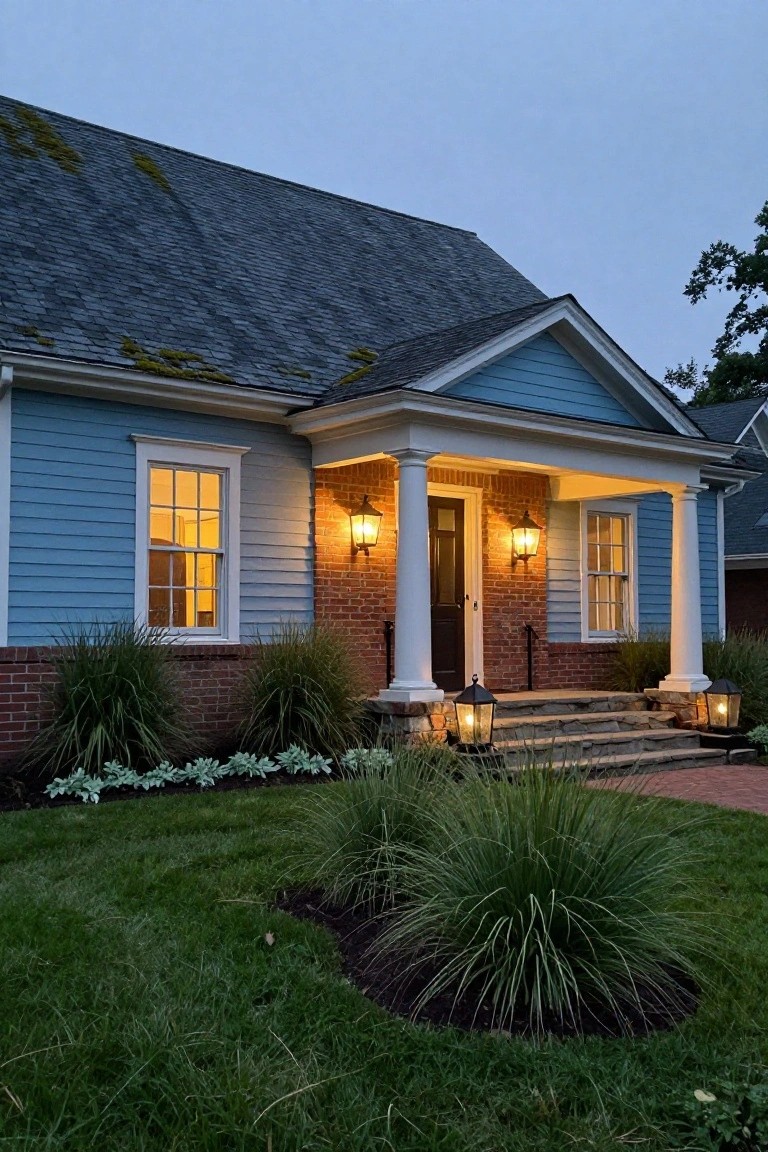
This blue colonial pulls off a cozy entry with lanterns hung on the porch columns and flanking the steps. That soft glow stands out against the clapboard siding and brick base. It turns a simple front porch into something that feels right at home in the evening.
Hang lanterns like these on any porch posts you have. They suit older style houses best, especially with columns or a traditional door. Go for the kind with seeded glass for a bit of diffusion. Skip bright LEDs, though. Stick to warm bulbs so it stays friendly, not glaring.
Traditional Front Porch on Blue Colonial
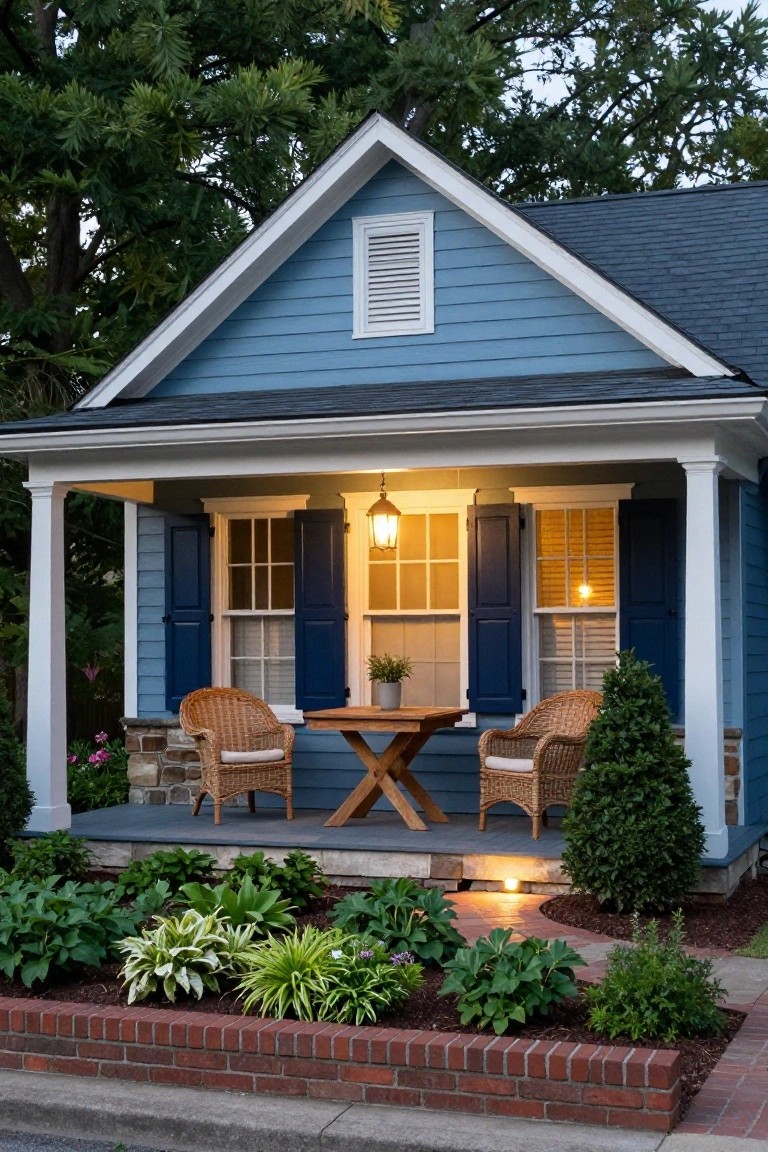
A covered front porch like this one fits right into the charm of a blue colonial house. Those white columns stand tall and give some shelter at the door, while the wicker chairs and little table make it feel like a spot to sit and stay awhile. The hanging lantern adds just enough light to pull you in come evening.
Put this setup on homes with good roof overhangs, especially if you like that old-school look without too much fuss. It works best on streets where folks walk by and notice. Keep the furniture simple and weather-tough… wicker holds up nice. One thing, make sure the porch floor slopes a bit for rain runoff.
Soft Blue Clapboard on a Colonial Facade
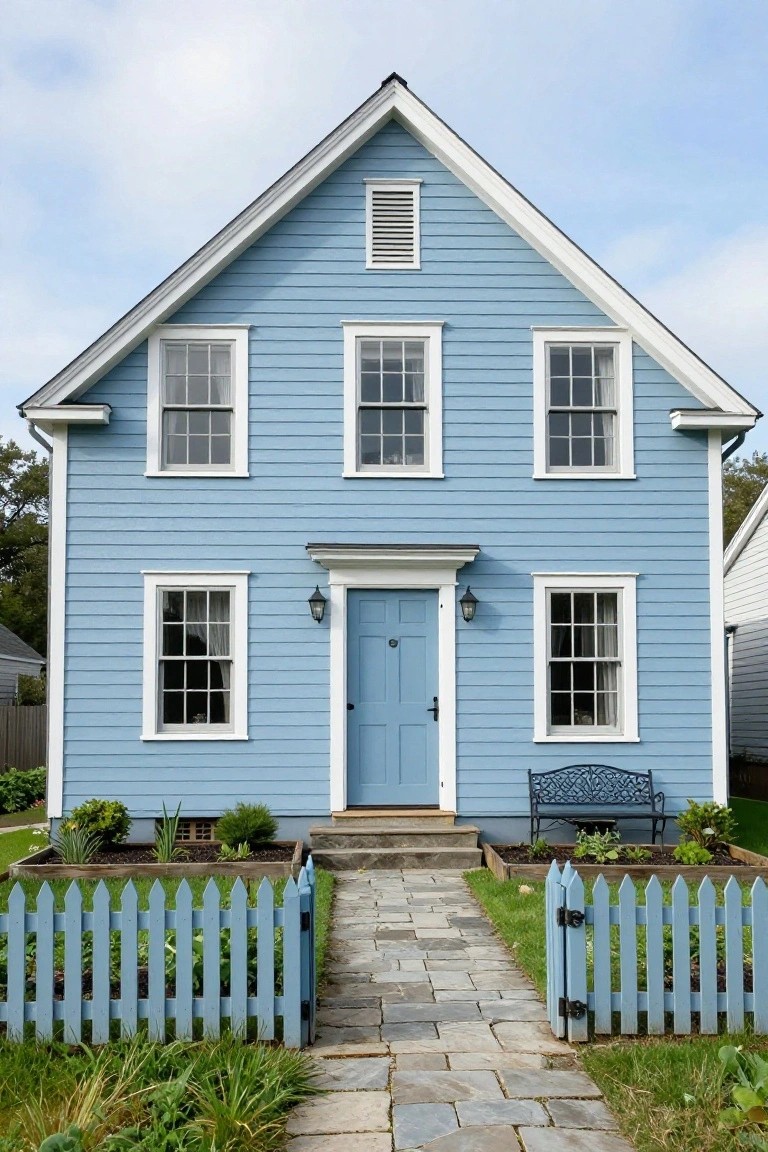
A soft blue clapboard siding like this one keeps a colonial house looking traditional but adds a cool, breezy feel. The white trim around the windows and door sharpens everything up without overpowering the color. It’s the kind of exterior that stands out on a quiet street.
This works best on symmetric colonials with lots of windows to show off the trim contrast. Pick a shade that’s not too bright, maybe something like a faded sky blue, and pair it with a matching door. Avoid darker blues here. They can make the house feel heavier.
Frequently Asked Questions
Q: How do I choose a blue shade that stays cool-looking year-round?
A: Pick lighter blues like soft sky or powder tones for sunny spots. They reflect heat and avoid that heavy feel in summer. Slap a few samples on your wall and check them morning and night.
Q: What trim color pairs best with blue siding on a colonial?
A: White trim gives that fresh, classic pop most folks love. It highlights the architectural details without stealing the show.
Q: Does blue exterior paint hide dirt and wear well?
A: Blues mask dust and pollen better than lighter colors. Just hose it down yearly and touch up scuffs quick to keep the inviting vibe.
Q: How do I warm up a cool blue facade?
A: Plant some flowering shrubs by the porch. And swap in a wood front door for that cozy contrast.
