

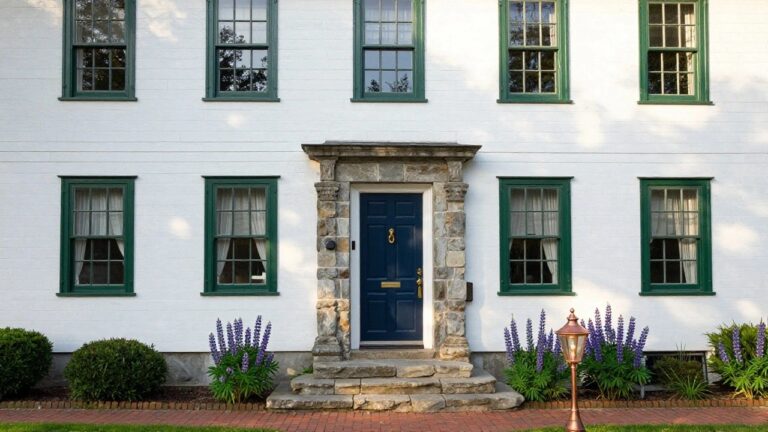
When I walk up to a colonial house, the facade’s first impression often comes down to how well the materials play off each other from the street. Stone accents catch my eye because they ground the crisp lines of siding and trim without stealing the show. A few years back, I tested subtle stone quoins on a friend’s colonial revival, and it made the whole front feel more solid and lived-in. These touches work best when they echo the roofline or frame the entry, adding layers that reward a closer look. Stone like that lasts.
Stone Steps Boost Colonial Curb Appeal
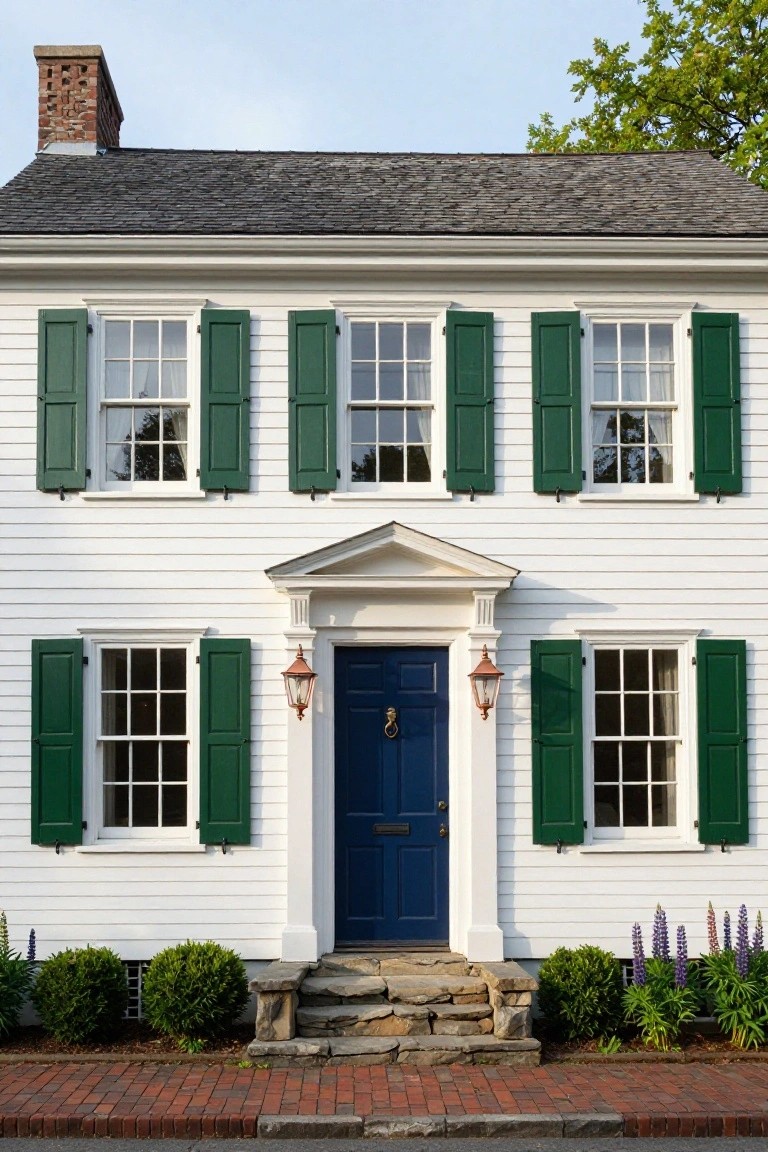
Rugged stone steps like these give a colonial front entry some real texture. They sit right under that crisp white clapboard and green shutters, pulling the eye up from the brick path without stealing the show. It’s a simple way to make the house feel more grounded and lived-in, especially against all that clean symmetry.
These steps suit older homes or revivals with a bit of height at the door. Lay them in uneven slabs for a natural look, maybe with low plants on each side. They hold up well in shady spots too, but pick sturdy stone so they don’t shift over time.
Brick Colonial Entry with Stone Columns
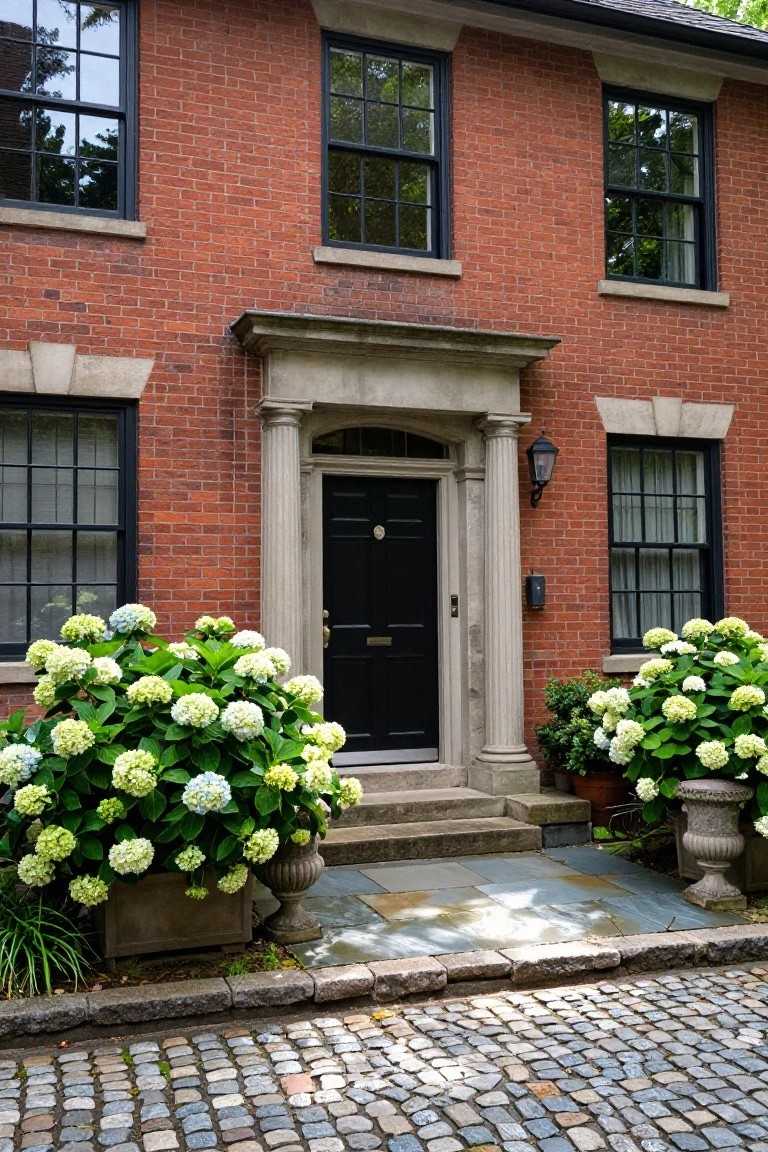
A classic move on brick colonials is adding stone columns and a pediment around the front door. Here, the light stone contrasts nicely with the red brick walls, giving the entry a formal yet approachable look. It pulls the eye right to the door and makes the whole facade feel more put-together.
This works best on narrower townhouses or row homes where you want to highlight the entrance without big changes. Keep the door dark, maybe black, and add low plantings on the sides for balance. Skip it if your brick is super bold. Suits traditional neighborhoods with cobblestone or slate walks.
Stone Arch Entry Design
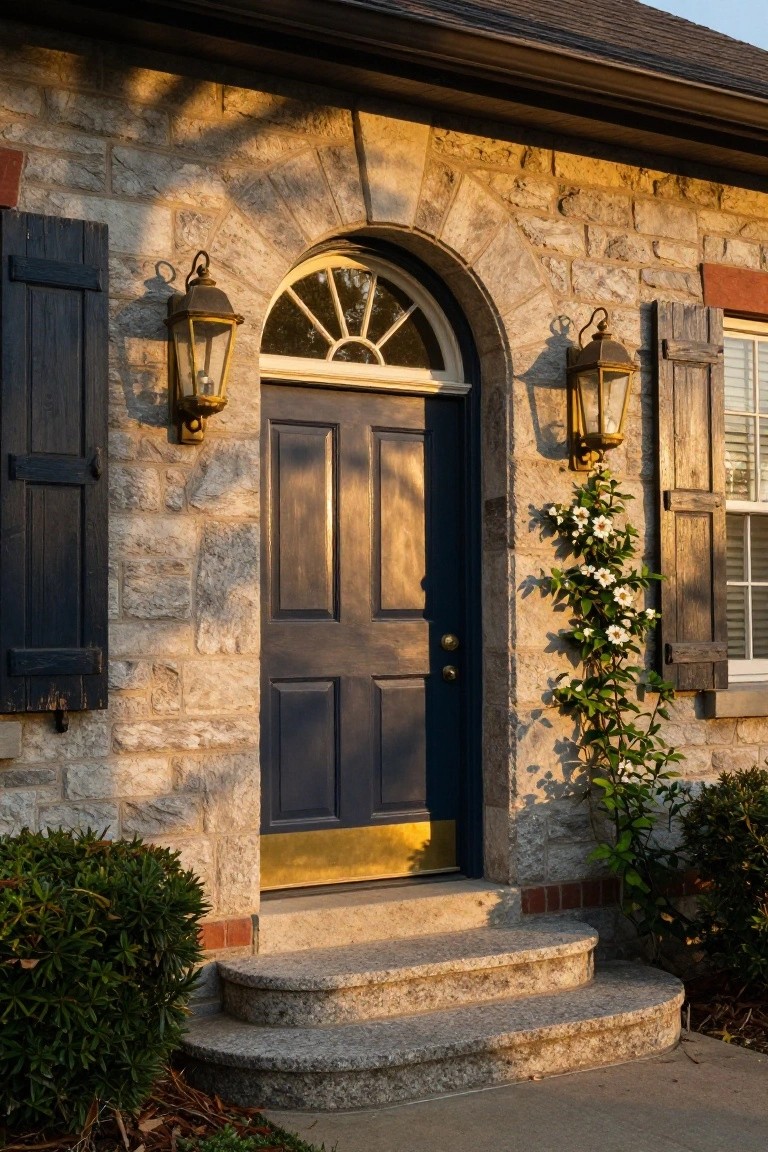
A stone arch around the front door gives a colonial house that extra bit of character. It pulls the eye up to the entry and makes the whole facade feel more put-together. Here, the light limestone arch sets off a deep navy door nicely, with just enough texture to stand out against the smoother walls.
This kind of detail suits older-style homes or ones aiming for that timeless look. Pair it with matching lanterns on either side, like these black iron ones, and keep the steps simple granite. It works best where you want subtle depth without going overboard… just make sure the arch stone blends with the rest of the exterior.
Stone Base Accents on Colonial Homes
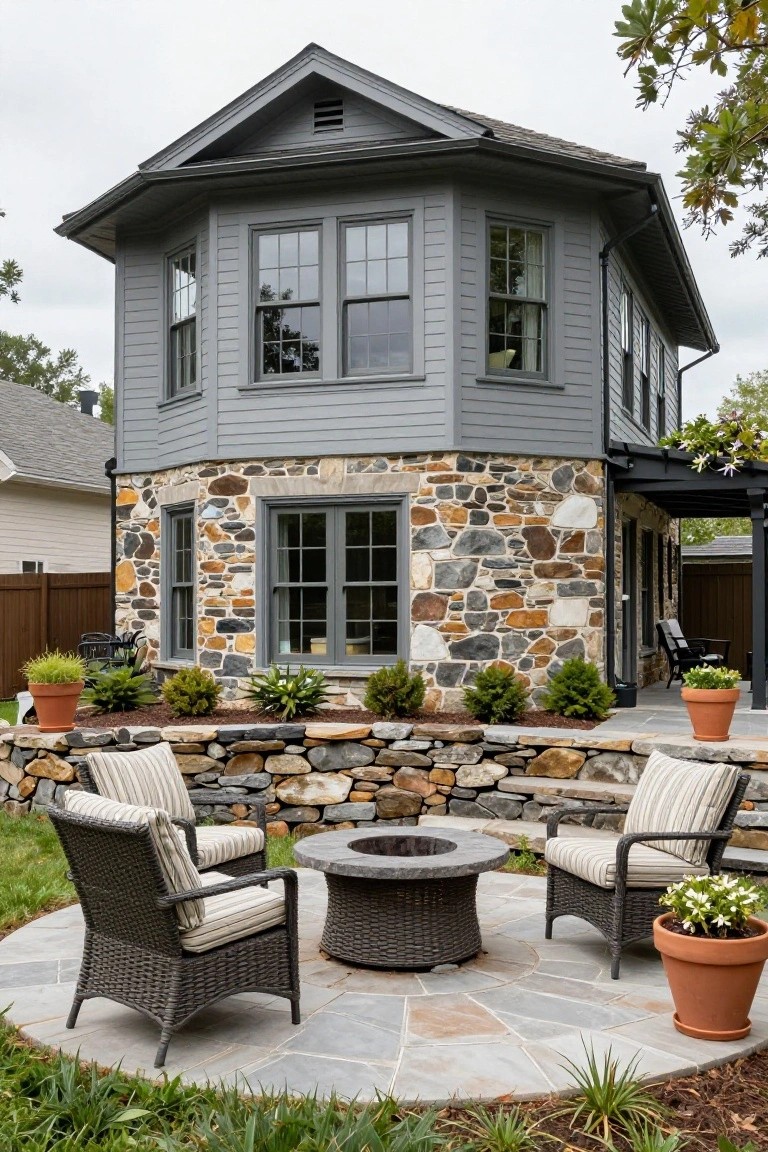
A solid stone base like this one takes a straightforward Colonial house and gives it more presence. The mix of gray, brown, and rust-toned stones wraps the lower level, contrasting nicely with the smooth gray clapboard siding up top. It adds that bit of rugged texture folks notice right away, making the whole facade feel deeper and more rooted.
You can pull this off on most any Colonial or even a ranch style, especially if your lot has some slope. Just match the stone colors to your area’s natural rock or soil tones so it blends in. Keep the stone to the first story or foundation area, then let the siding handle the rest. A nearby patio with stone walls ties it all together nicely.
Rustic Stone Base Grounds Colonial Style
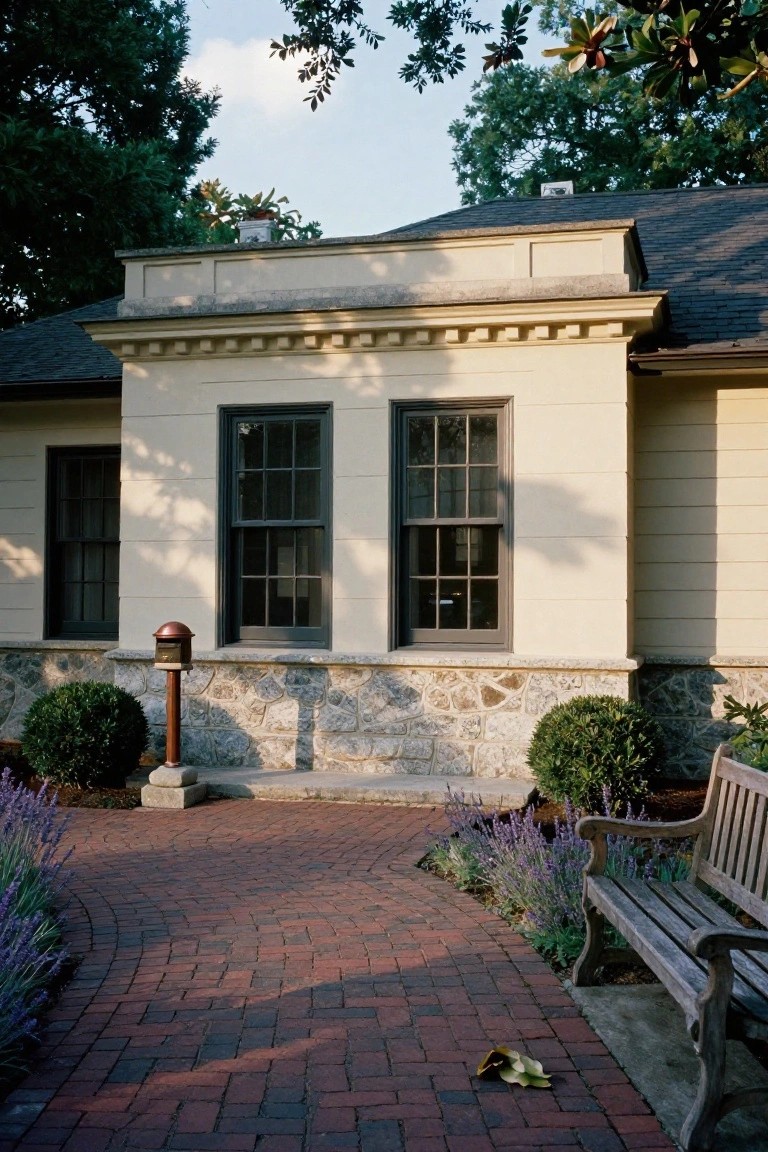
A simple way to give a colonial house more character is with a rustic stone base at the foundation. Here, rough fieldstone pieces stack up neatly under smooth beige clapboard siding. That mix of textures right away makes the whole facade feel more solid and interesting, without overdoing it. It’s a classic move that ties back to old farmhouses but works on newer builds too.
You can pull this off on homes with a straightforward boxy shape, especially where the yard slopes a bit. Keep the stone low, just a couple feet high, and match it to local rocks for a natural look. Pair it with a brick path like this one leads right to the door. Watch the scale though. Too much stone can overwhelm a small house.
Stone Chimneys on a White Colonial Facade
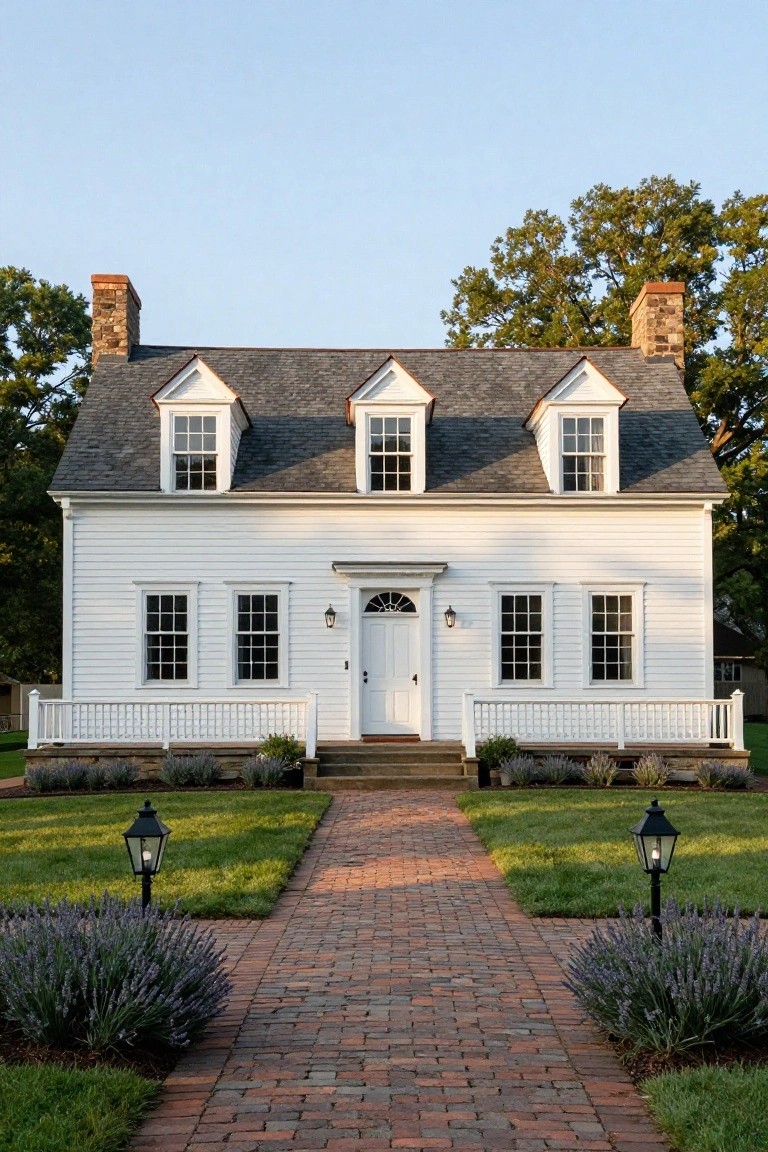
Rugged stone chimneys like these give a classic white colonial house some real texture. They rise up from the slate roof on either side, contrasting nicely with the smooth clapboard siding below. That simple touch makes the whole front feel more solid and rooted, like the place has been there for generations.
You see this work best on homes with balanced rooflines and plenty of yard around. Keep the rest plain, maybe a brick walk and low plants along the edges. It suits older neighborhoods or rural spots where you want subtle interest up high without changing the overall look. Just make sure the stone matches the local style so it blends right in.
Stone Accents Around the Garage
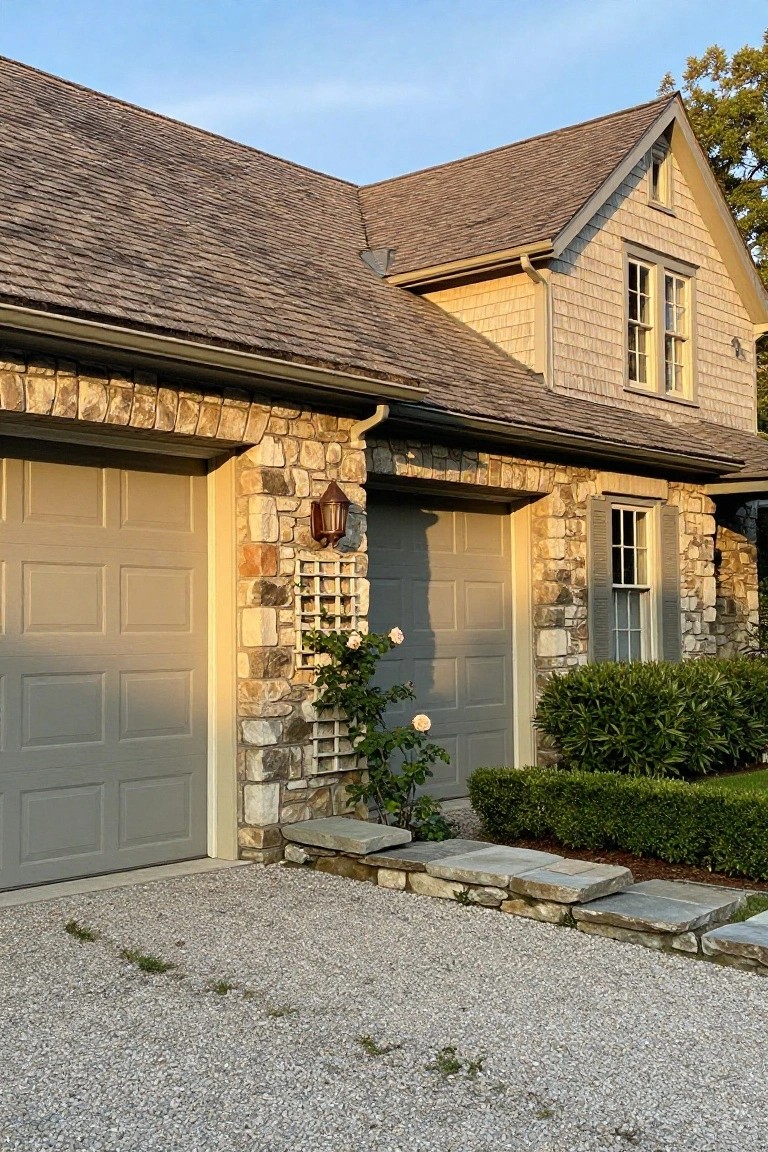
Stone walls wrapping the garage like this give the whole facade more weight and interest. The rough texture stands out against the smoother shingles overhead, making a colonial house feel sturdier without overdoing it. That contrast pulls the eye right to the entry area.
This works best on homes with shingle or clapboard siding, especially where the garage is prominent. Pair neutral garage doors with the stone, and add a climbing rose on a trellis for a touch of green. Gravel driveways fit right in too. Just keep the stone colors earthy to match the house.
Colonial Porch with Stone Foundation
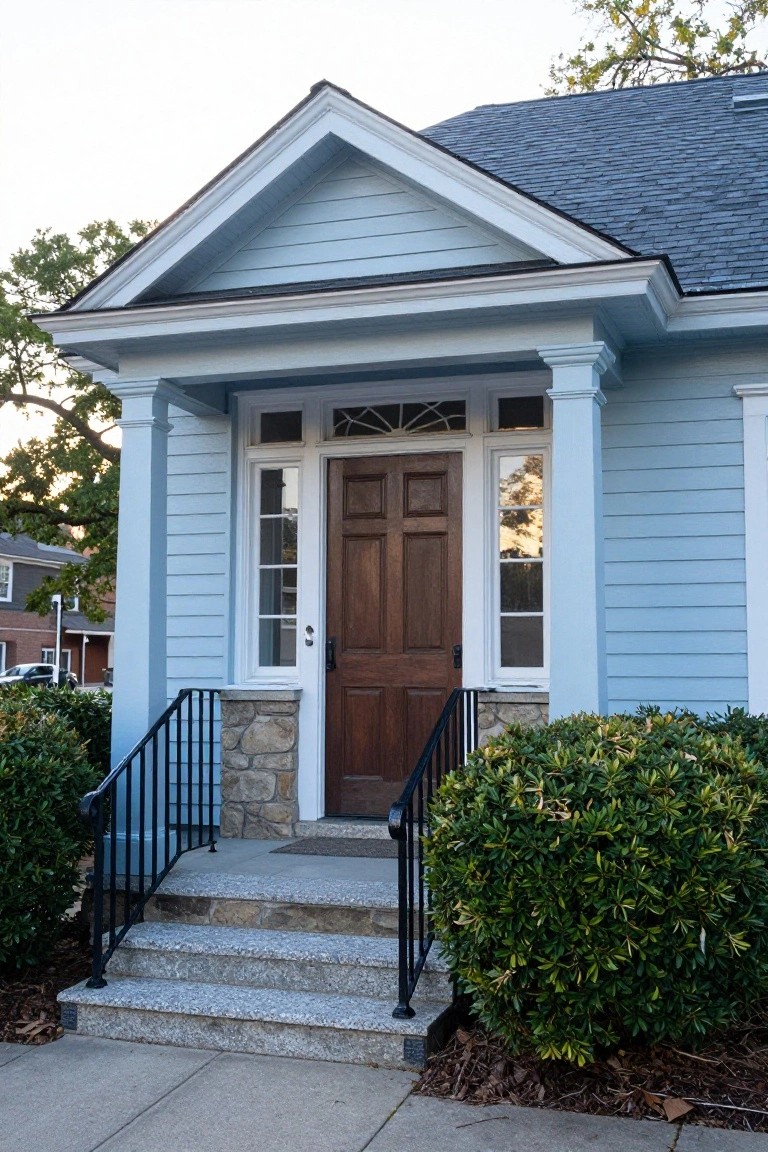
A simple stone foundation like this one under light blue clapboard siding gives a colonial entry real weight. The rough texture at the base contrasts the smooth painted walls and tall white columns. It makes the house look settled and sturdy, without much fuss.
This works best on two-story homes where the entry needs grounding. Use local fieldstone or similar for a natural tie-in. Keep plantings low around it, like those boxwoods here. Skip it on super-modern revivals, though. Stone suits traditional spots.
Brick Colonial with Stone Pediment Entry
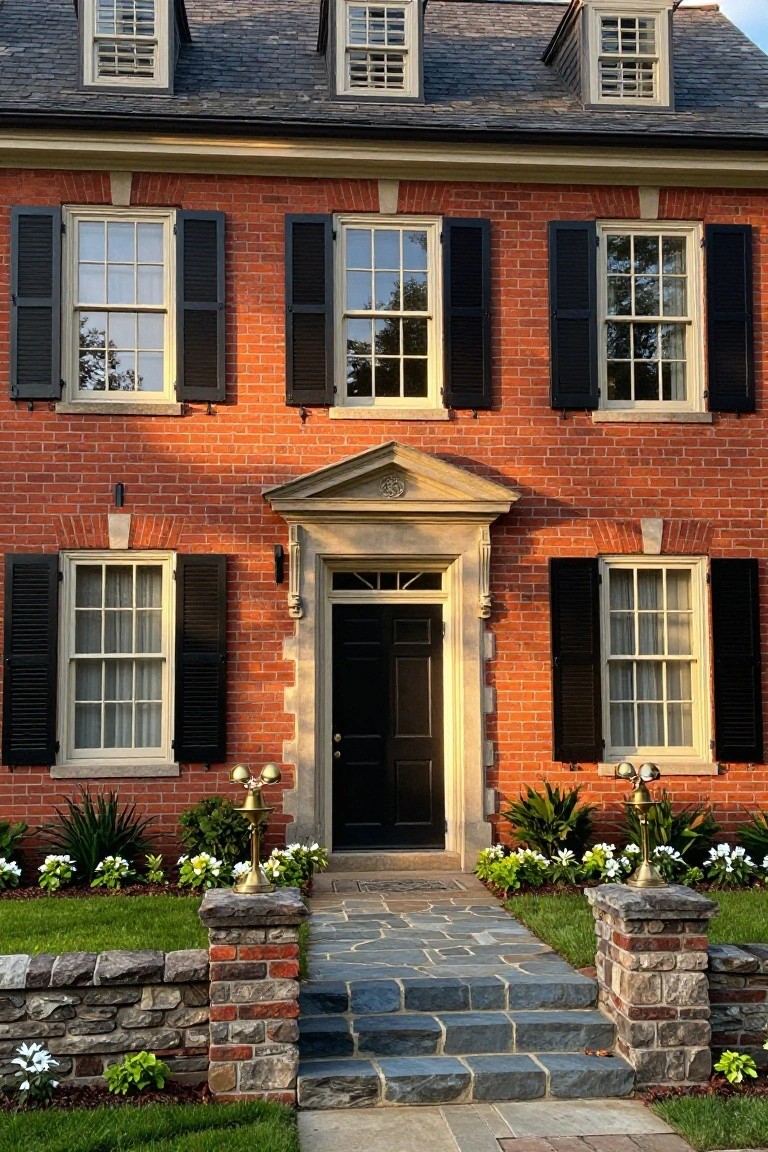
A classic red brick colonial like this one gets a lot from its stone pediment over the front door. That light limestone detail sits right above the dark wood entry, pulling your eye up and giving the whole facade some structure. Black shutters on the multi-pane windows keep things balanced, and the stone repeats at the base walls for a grounded look.
Try this on traditional brick homes in town or suburbs where you want subtle curb appeal without big changes. It suits two- or three-story houses best. Go for pale stone against warmer brick, add lanterns on posts, and use slate steps leading in. Just match the scale to your door so it doesn’t look fussy.
Stone Surround Highlights the Colonial Entry
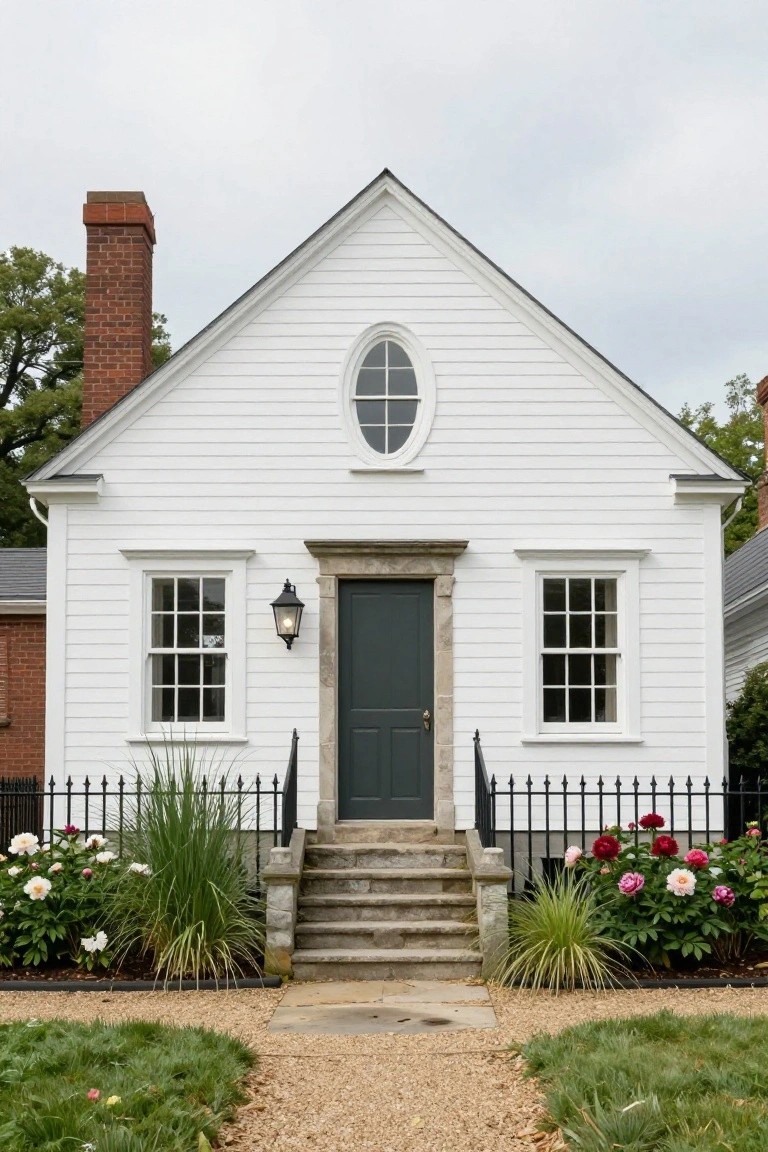
A simple white clapboard colonial gets a real lift from a stone surround around the front door. Here, the light stone casing and steps stand out against the clean siding and dark green door. It pulls the eye right to the entrance and gives the whole facade more presence, like an old house detail brought back to life.
This approach suits compact colonials especially well, where you need that one strong feature up front. Use it on homes with brick chimneys to tie things together. Keep the stone subtle, not too bold, and add a lantern for evenings… it keeps the look balanced and welcoming.
Stone Walls Frame the Porch Entry
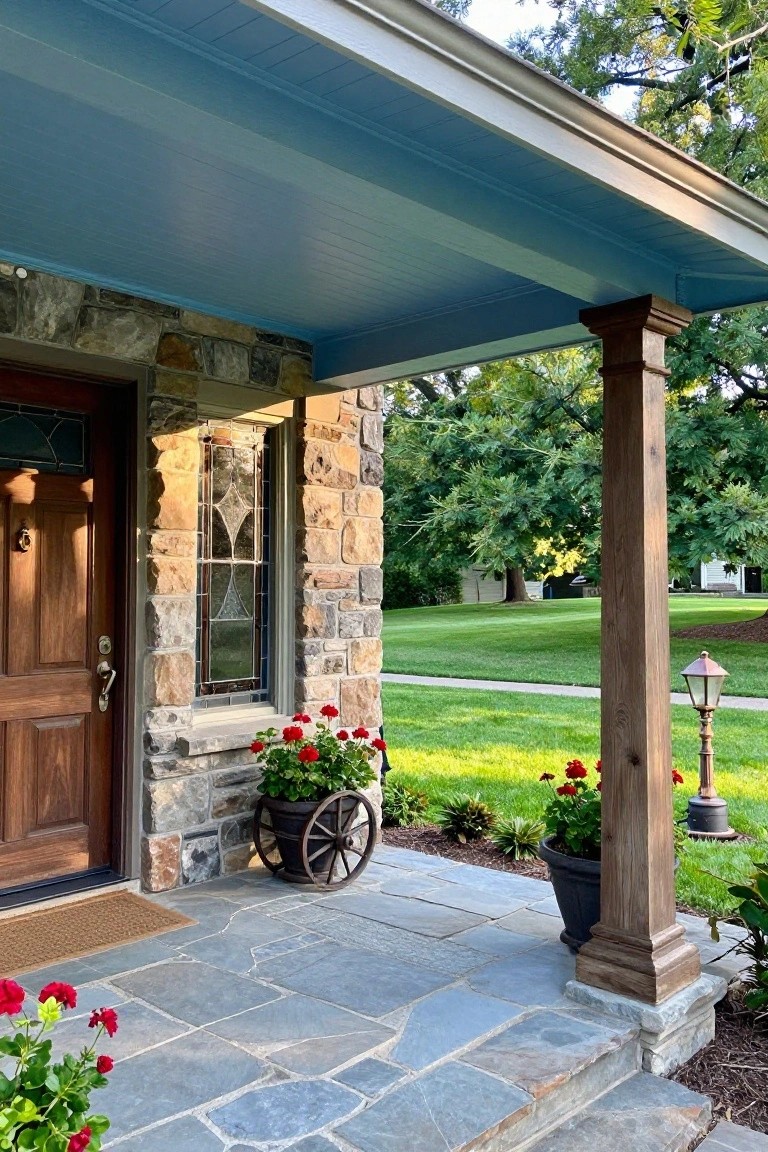
A good way to add character to a colonial front porch is with rough stone walls like these. They wrap right around the door and window, giving the entry a solid, built-to-last look. The textured stones stand out against the wood door and that pop of blue on the ceiling. It makes the whole spot feel more grounded and a bit rustic.
Try this on homes with clean lines already. Stone works best around just the entry to avoid overwhelming the facade. Stick to local fieldstone if you can, and balance it with wood posts or trim. Keeps things practical without going overboard.
Colonial Exteriors with Low Stone Walls
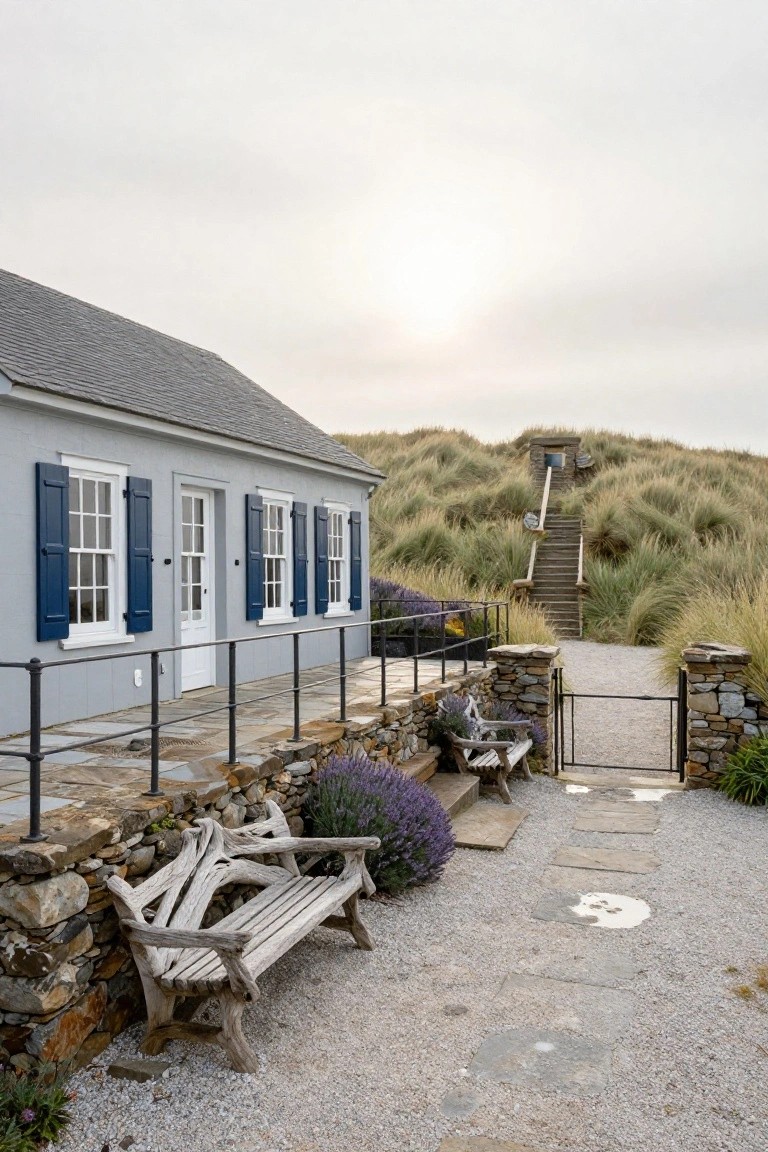
A simple gray clapboard house like this one gains a lot from those rough stone retaining walls at the base. They hold back the dune and add a sturdy, natural feel that fits right into a coastal setting. The irregular stones contrast the smooth siding without stealing the show, and they make the whole front look more settled and real.
These walls work best on sloped yards or spots with earth to manage. Pick stones from nearby if you can, to keep it looking local and easy to source. They’re practical for smaller homes like cottages, and they set up a clean entry path too. Just make sure the wall height matches your lot so it doesn’t feel too heavy.
Stone Arch Entryway
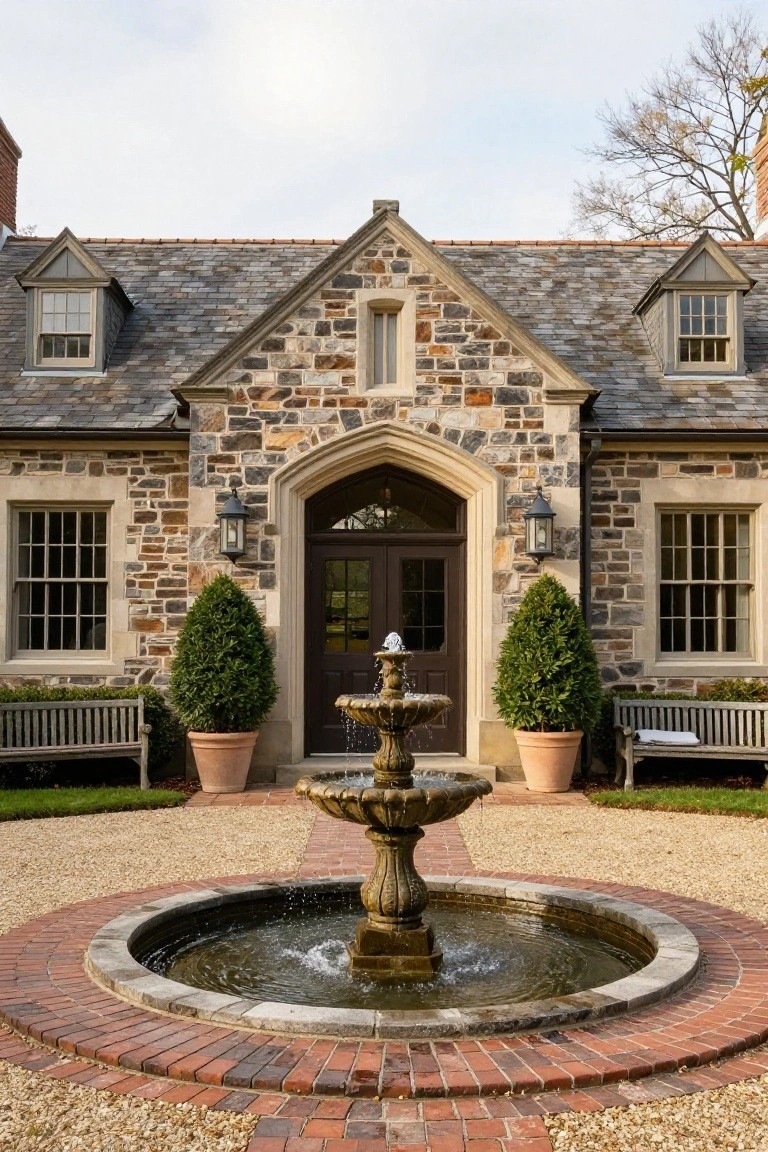
A classic move for Colonial homes is framing the front door with a tall pointed stone arch like this one. The irregular fieldstone pieces in shades of gray and tan build up texture around the double doors, making the entry pop against the slate roof and simpler walls. It pulls the eye right to the door and gives the whole facade more historic depth.
This works best on larger homes where you want a formal welcome without going overboard. Line the path with brick pavers and add matching lanterns for light. Keep plants simple, like the tall boxwoods here, to frame it neatly. Skip it on super modern lots, though. It shines on established properties.
Stone Accents Frame the Entry Door
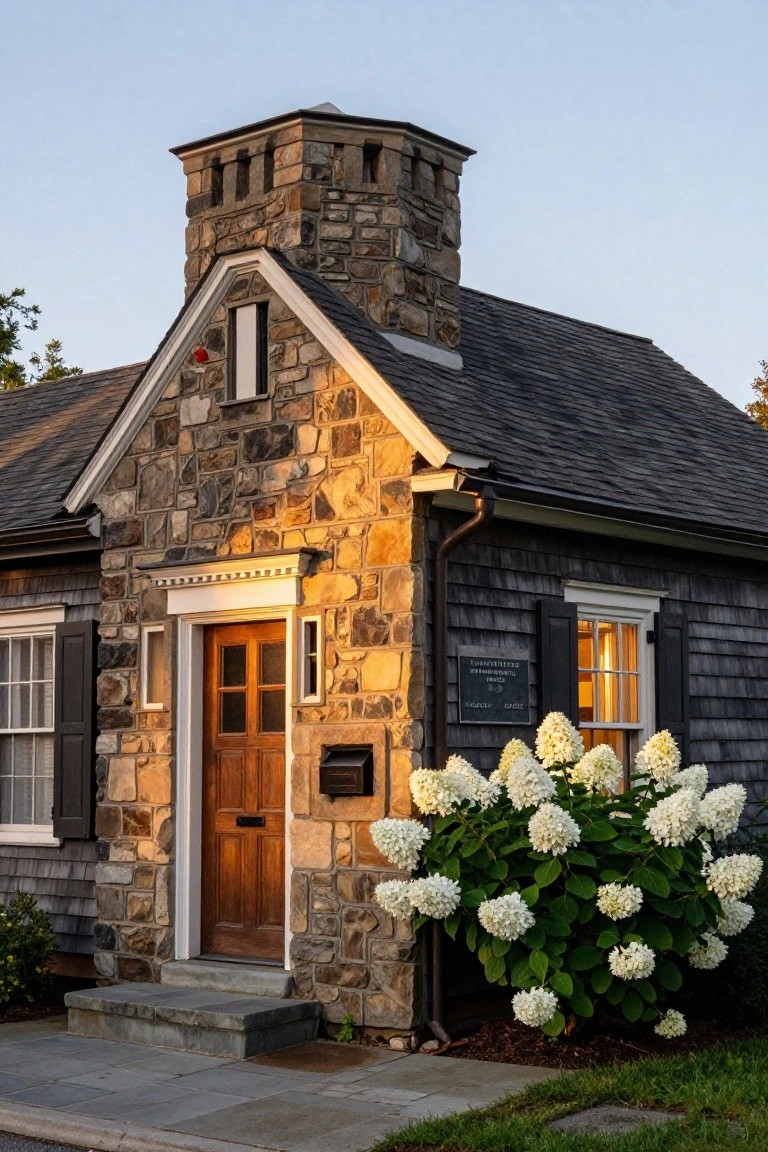
Rugged fieldstone walls wrap right around this wooden front door, blending with the dark shingle siding above. That mix adds real texture to the facade. It keeps things sturdy looking but not heavy, especially with the small stone tower up top drawing the eye upward.
You see this a lot on colonial cottages or older style homes near the coast or in the woods. Use it where you want the entry to feel solid and welcoming. Go for local stone if you can, and keep plantings simple nearby, like those big white hydrangeas. Just avoid overdoing the stone, or it starts to compete with the house shape.
Stone Retaining Wall with Built-In Bench
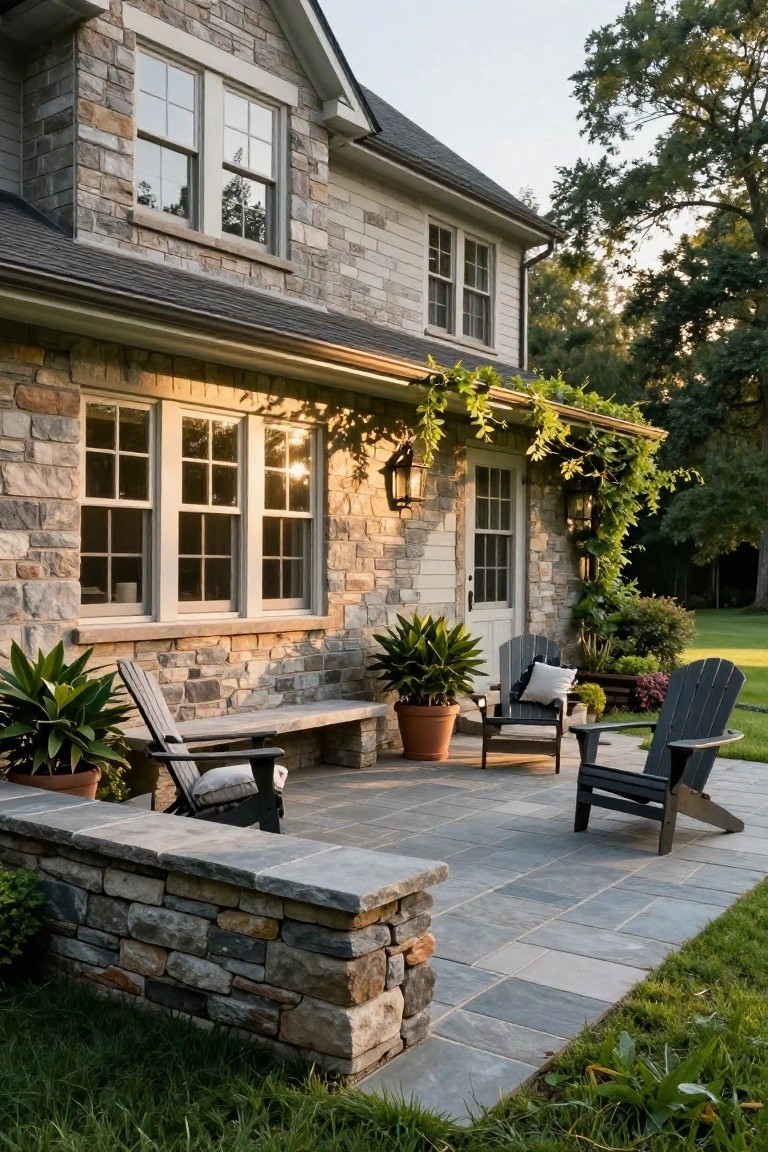
One nice touch here is the low stone retaining wall that holds back the lawn from the patio. They topped it with a simple bench seat right along the edge. It picks up the same irregular stone from the house wall nearby. That makes the whole setup feel connected and sturdy without much fuss.
This works well in side yards or narrow spots next to a house. Build it low enough to sit on comfortably, maybe 18 inches high. Pair it with a couple of chairs on bluestone pavers like this, and you’ve got casual seating for coffee or reading. It suits homes with existing stone details. Just make sure the wall drains well to avoid settling issues over time.
Stone Bases for Porch Columns
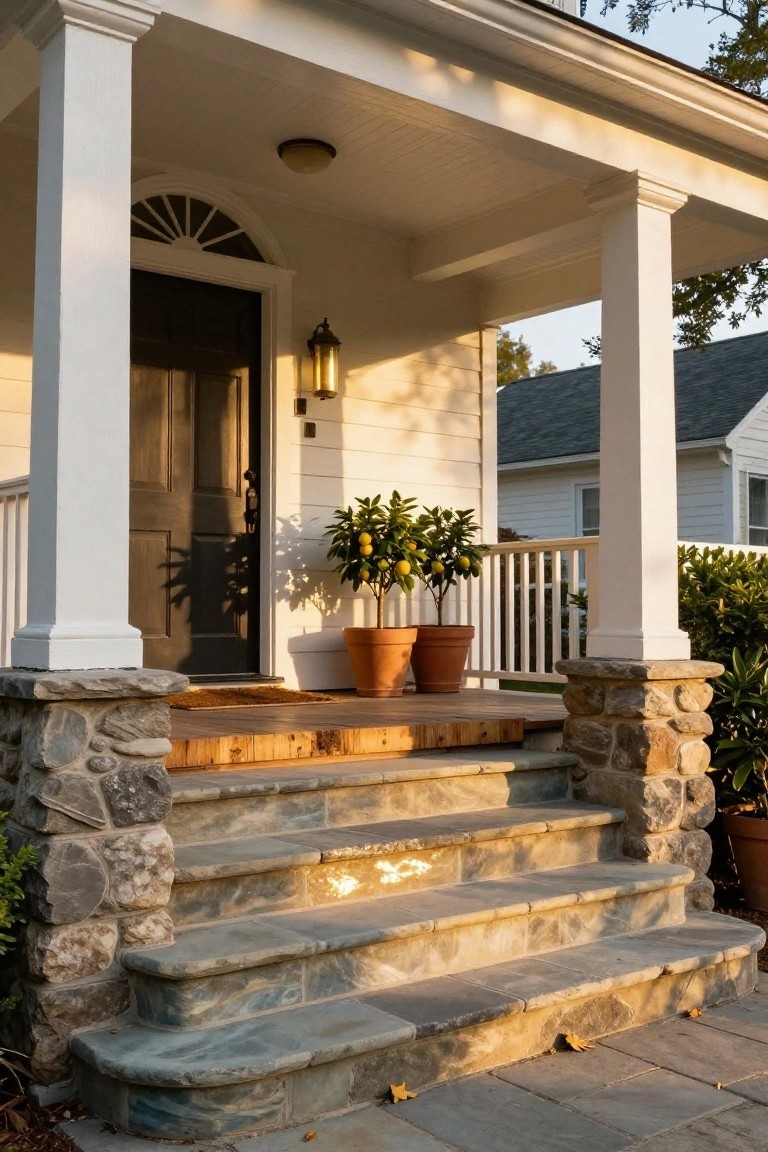
One simple way to add interest to a colonial front porch is stone at the base of those tall white columns. It brings in texture and a bit of heft that contrasts nicely with the light siding. You see it here holding up the porch without stealing the show from the clean lines and dark door.
This works best on classic clapboard houses, especially where the porch sits prominent at the entry. Use local fieldstone or something rugged to keep it natural. Skip it if your steps are super steep, since the weight might feel off. Just a few stones like this can make the whole facade look more settled.
Brick Colonial with Stone Accents
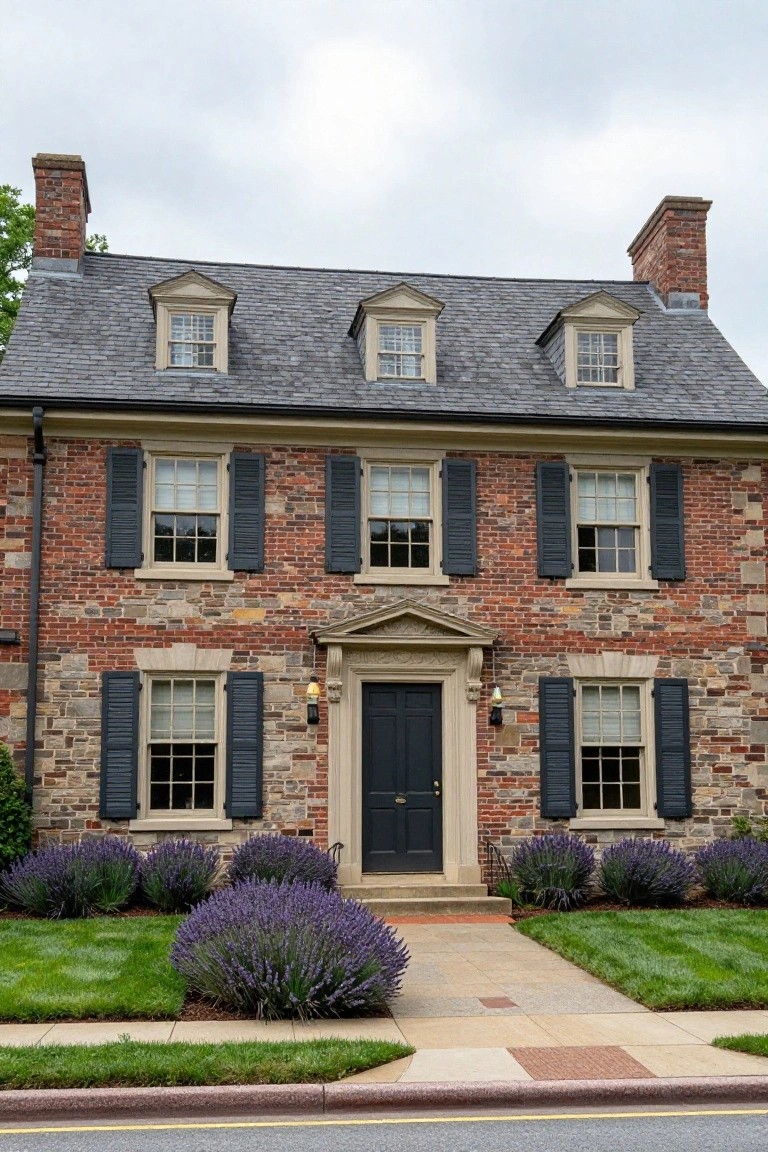
A classic brick colonial like this one gets a lot from those stone touches mixed in. The brick walls form the main structure, but stone fills in around the base, entry arch, and some window edges. It breaks up the red tones and adds real texture without overdoing it. Folks notice how it makes the house look more settled and layered right away.
You can pull this off on older brick homes or new builds aiming for that timeless feel. Stick stone mainly near the ground or front door to draw eyes there. It suits suburban lots with some grass and low plants out front… just don’t go too heavy or it might clash. Keeps things balanced and easy to maintain.
Stone Archway Entry Accent
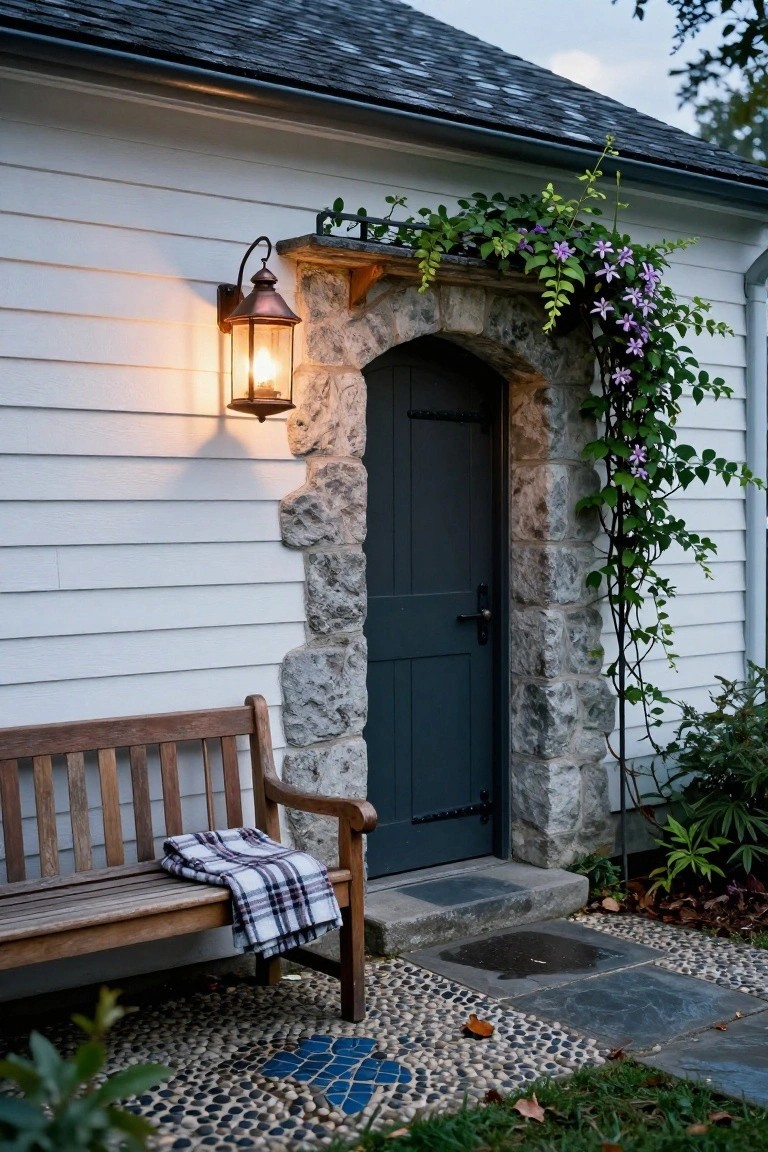
A simple stone archway like this frames the door nicely against smooth white siding. The rough texture of the stones gives the entry some character and makes it feel more established, like it’s been there a while. It’s a good way to highlight a side door without changing the whole facade.
This works best on colonial-style homes where you want subtle depth around quieter entries. Add climbing vines for softness and a lantern for evening light. Keep the door dark to let the stone pop, and maybe a bench nearby if there’s room. Just make sure the stones match your region’s style so it doesn’t look out of place.
Stone Retaining Walls Build Backyard Levels
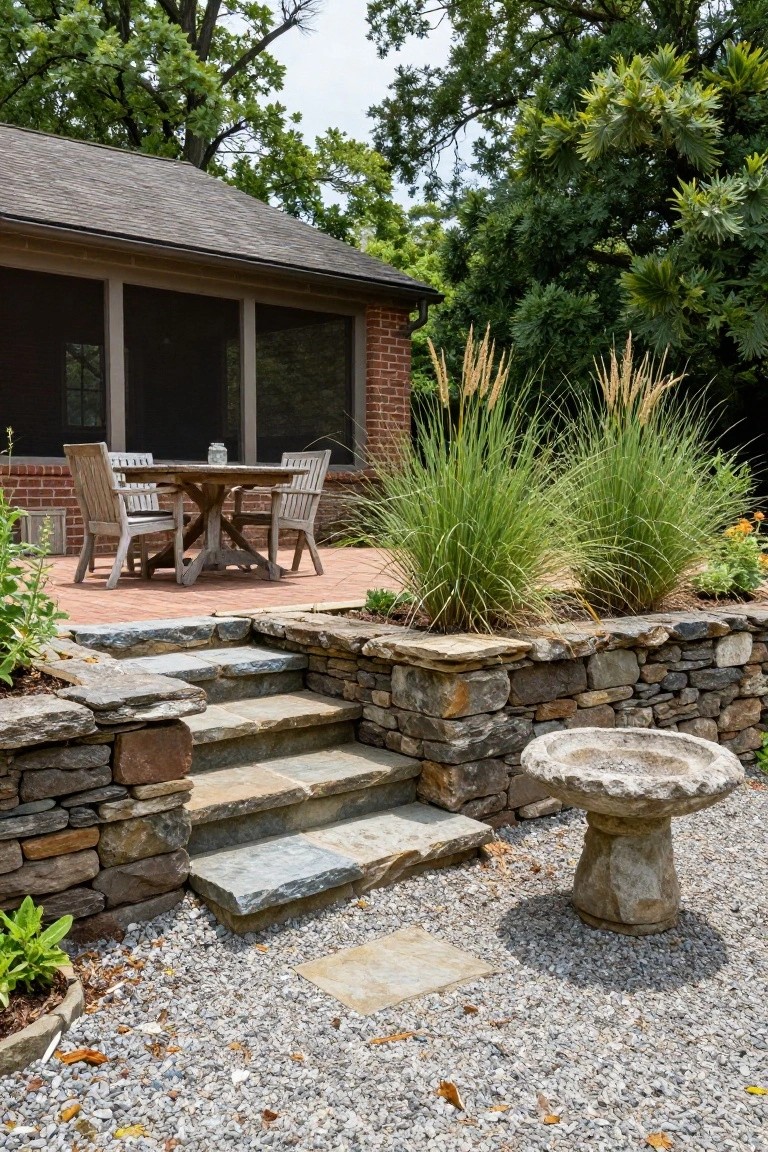
One simple way to add real shape to a backyard patio is with natural stone retaining walls. They hold back slopes and create flat spots for seating right off the house. In this setup, the walls frame a brick paver deck with a table and chairs under a screened porch. The rough fieldstone texture fits right with a brick colonial house. It makes the space feel bigger and more put together without much flat yard needed.
Put these walls where your lot drops off the house foundation. Pair short steps in bluestone treads to connect levels easily. They work best on side or back yards, not front entries. Keep plantings soft around the base, like grasses, so the stone stays the focus. Watch the height though. Taller than three feet starts needing engineering.
Stone Bases Ground Colonial Homes
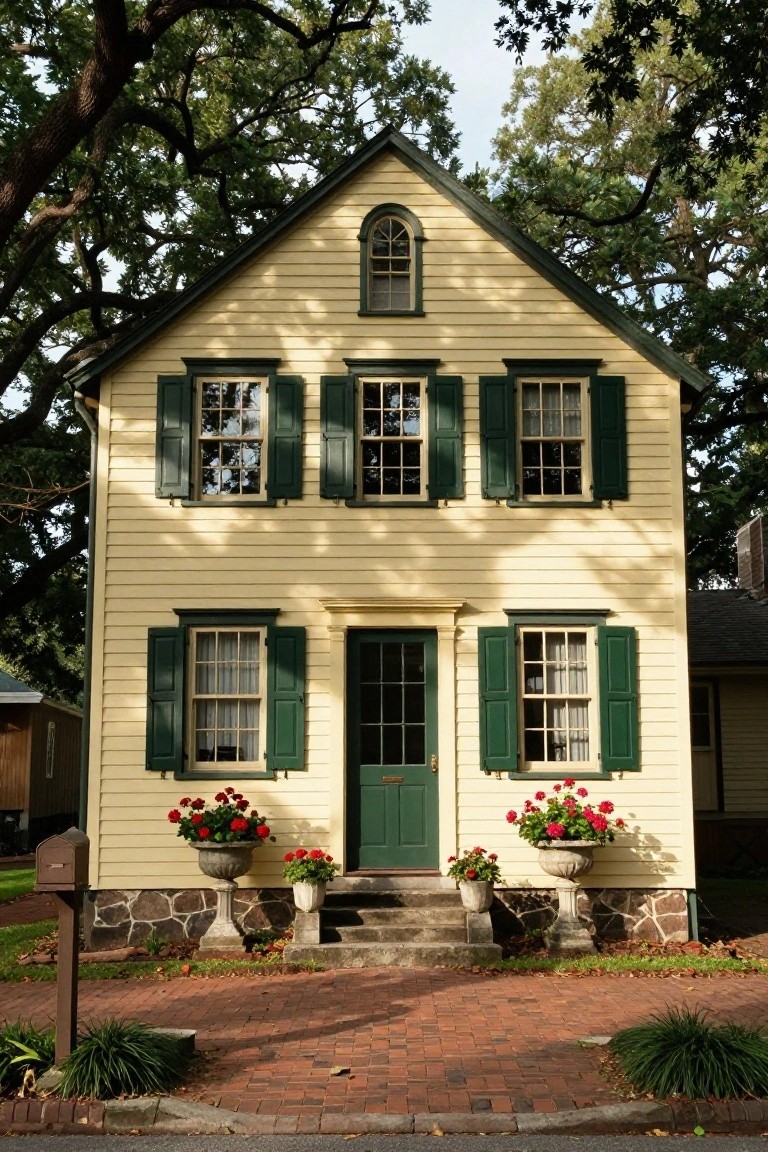
A classic colonial like this one gets a lot from its stone base. Those rugged rocks at the bottom add real weight and texture, making the light yellow clapboard siding feel more rooted and less like it might float away. It pulls your eye down first, then up to the balanced windows and green shutters.
This works best on homes with a raised foundation or uneven ground, where stone hides concrete blocks and ties into natural surroundings. Place urns with geraniums right on the stones for instant color, and keep the path brick to match. Suits traditional neighborhoods… just make sure the stones blend with local rock types so it doesn’t look added on later.
Stone Accents on a Colonial Porch Entry
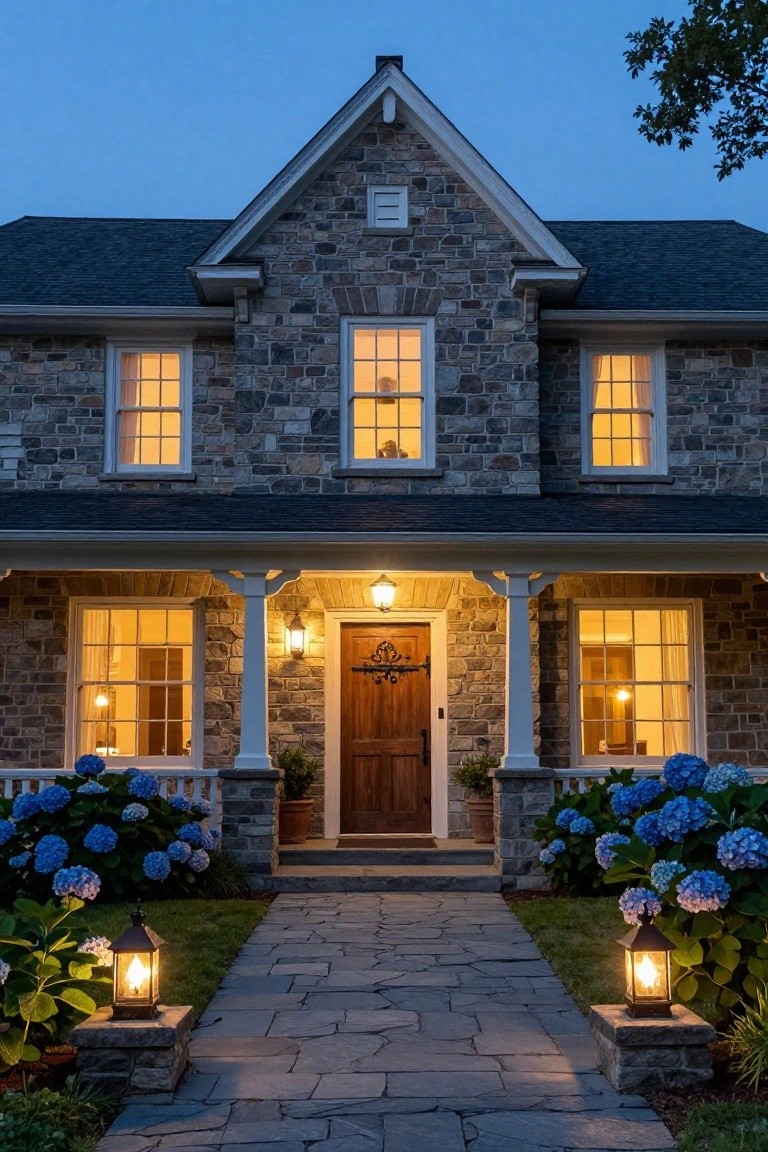
Stone gives this colonial house a solid, timeless look right at the front porch. The rough texture of the fieldstone walls contrasts nicely with the smooth wood door and white trim. Paired with those simple lanterns on the path, it makes the entry feel warm even as the light fades.
You can pull this off on most traditional homes by keeping the stone focused around the porch and door area. It suits places with some slope or trees nearby, where the stone holds up well year round. Just avoid overdoing the stone everywhere, or it might start to feel heavy.
Frequently Asked Questions
Q: Can I add stone accents to my older Colonial house without tearing everything up? A: Start with surface-mount veneer over existing siding or foundation. It sticks on with mortar and adds that rugged texture fast. Pros handle it in a weekend for minimal disruption.
Q: What stones pair best with white clapboard siding on a Colonial? A: Go for soft gray or warm beige fieldstone. They echo the subtle hues in traditional Colonial palettes. Lay them irregularly around doors and corners for natural flow.
Q: How do I keep stone accents looking sharp year after year? A: Rinse with a garden hose once a season to wash off dirt. Brush moss spots gently with a soft tool. And seal every couple years if rain hits hard.
Q: Is manufactured stone a solid choice for tight budgets? A: Absolutely, it weighs less and cuts install time. Mimics real limestone perfectly up close. Slap it on key spots like the porch base…done.
