

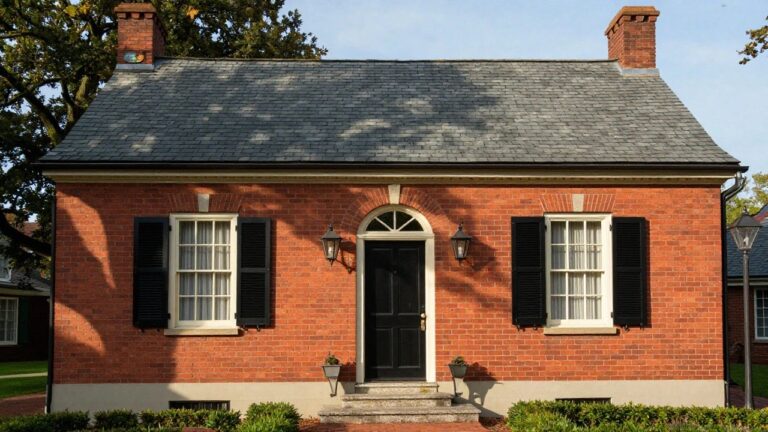
When you approach a colonial house from the street, the chimney usually stands out first against the roofline, grounding the facade in a way that feels rooted and real.
These exterior elements shape curb appeal through choices like brick texture, height, and slight offsets that echo handmade traditions without dominating the entry or siding.
I’ve walked past enough older homes to see how a chimney that’s too stubby or mismatched throws off the whole front view, while the right one pulls everything into balance.
The designs in this collection play with those details to boost that authentic presence, from multi-flue stacks to gently curving tops.
A strong chimney like that lingers in your mind.
Brick Chimneys Match the House Facade
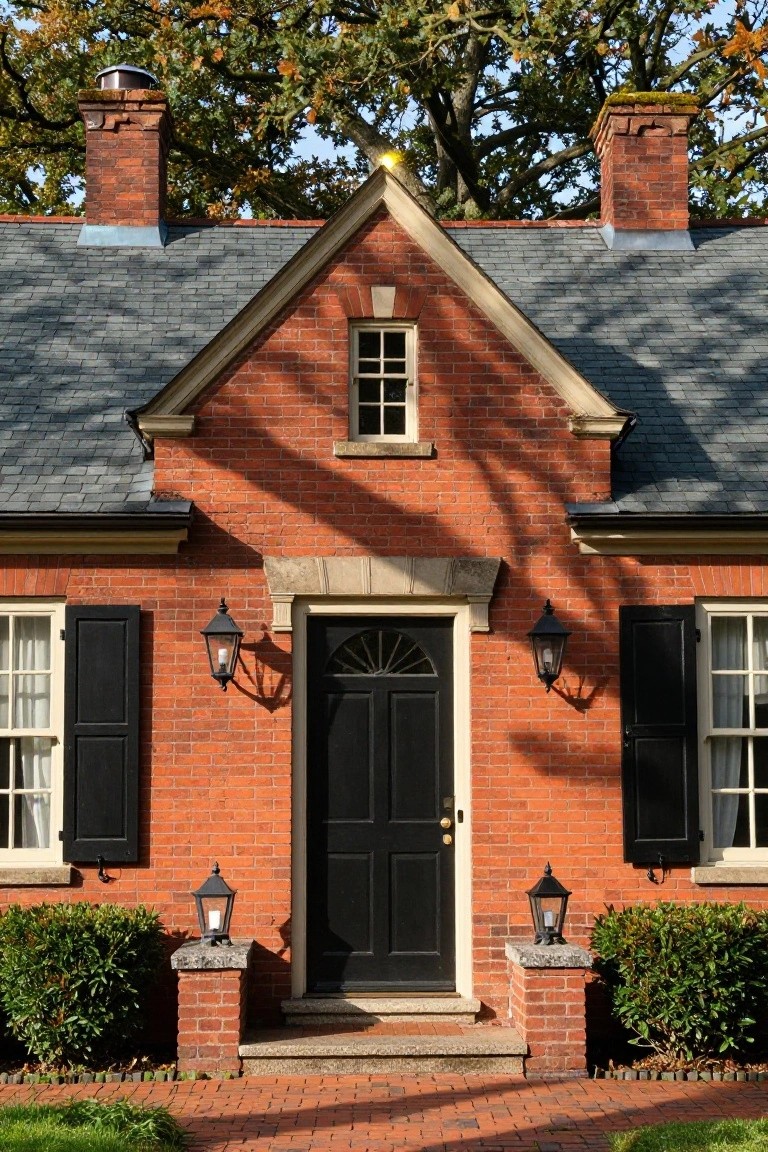
Brick chimneys like these sit right on the roof peaks of a classic colonial home. They use the same red brick as the walls, which ties everything together nicely. That match makes the house look settled and real, like it’s been there for generations. A bit of moss on one chimney adds to the lived-in feel without any upkeep.
You see this on homes with gable roofs and solid brick exteriors. It works in older neighborhoods or anywhere you want curb appeal that nods to tradition. Stick to plain brick, no extras, and place them symmetrically for the best effect. Avoid on super modern builds, though, unless you’re mixing old and new on purpose.
Classic Brick Chimney on Colonial Exterior
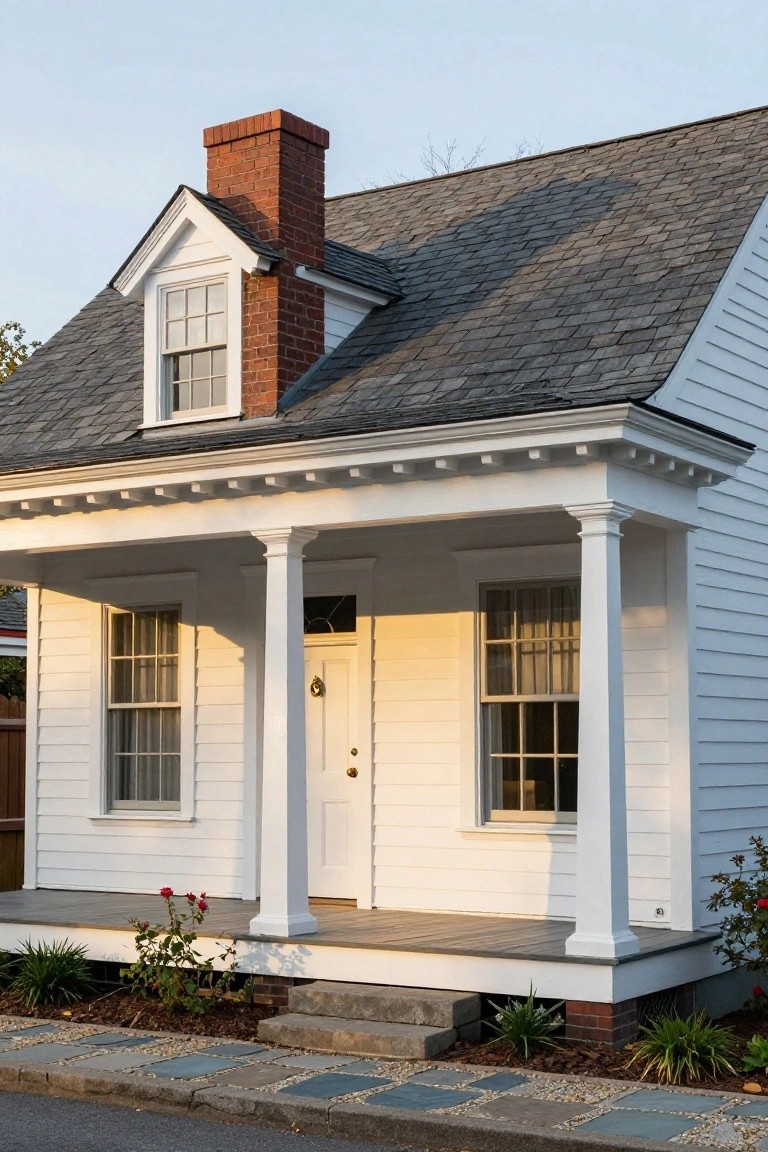
A red brick chimney like this one rises straight from the roof peak on a white clapboard house. It stands out against the clean siding and gray shingles. That simple contrast pulls together the whole front facade. Gives the place a solid traditional feel right away.
This setup fits older style homes in town or suburbs. Keep the chimney tall and narrow for balance. Works with a porch out front and a few plants nearby. Avoid making it too wide or it can overpower a small house.
Prominent Central Stone Chimney
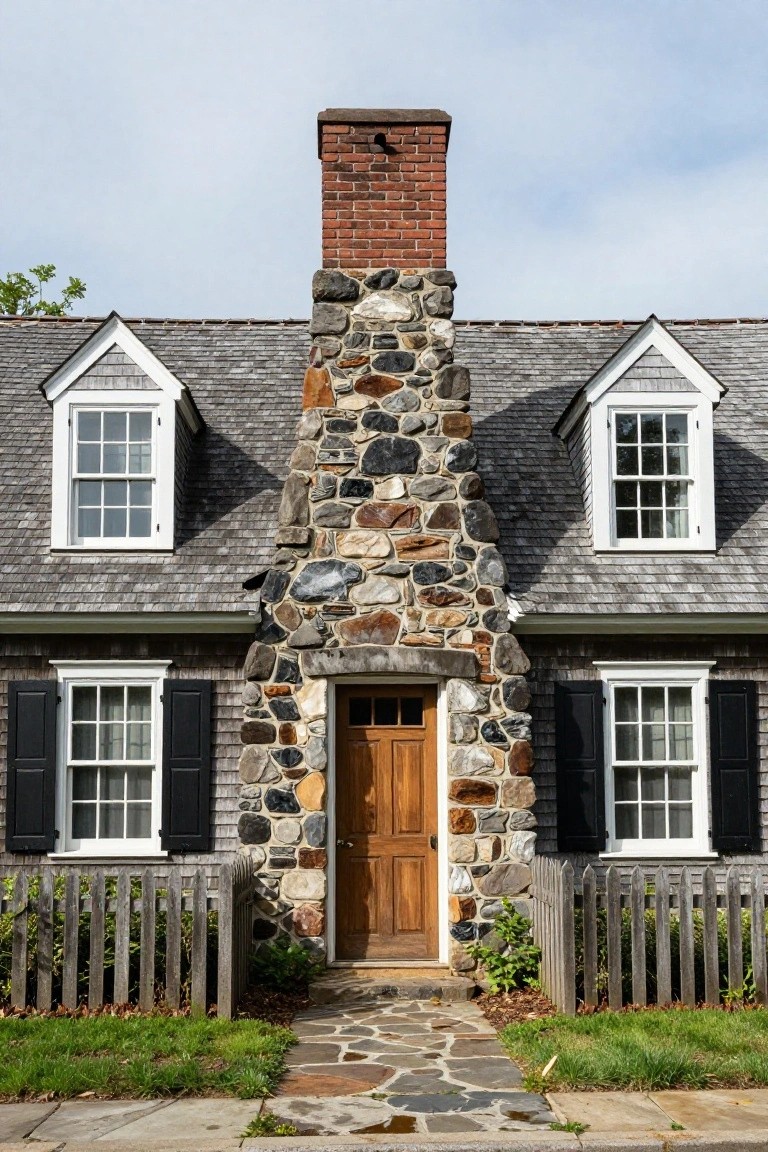
A tall chimney like this one takes center stage on the house front. Built from mixed fieldstones that stack up rough and rugged against smooth shingle siding, it pulls the whole facade together. That central spot makes the place feel rooted and traditional, like something from early colonial days.
This works best on two-story homes with simple lines, especially in coastal or New England spots. Go for varied local stones to keep the texture real, and let it rise high above the roofline. Skip smooth finishes here…roughness is what sells the tradition.
Prominent Brick Chimney on Colonial Facade
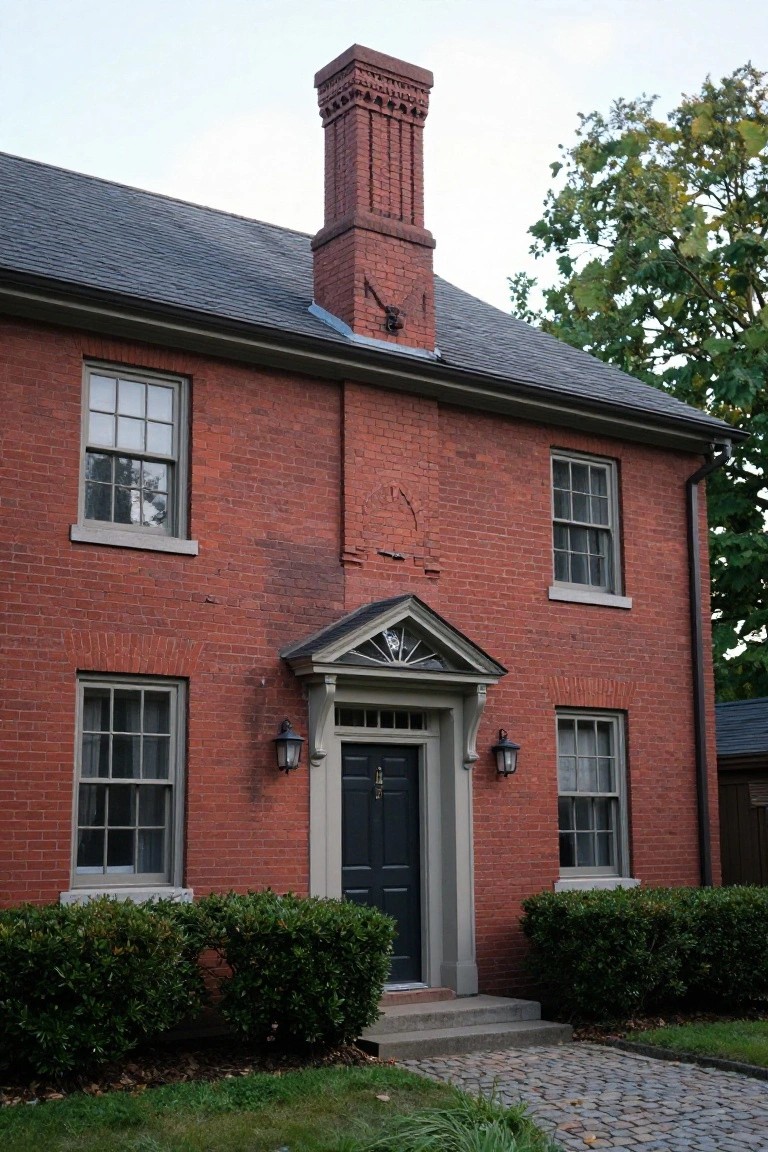
A tall brick chimney like this one sits right in the center of the roofline on a classic red brick colonial house. It has that simple brick pattern up top with a bit of decoration, which pulls the whole front together. These chimneys give the house a real sense of history without trying too hard.
They fit best on older-style brick homes or ones you’re updating to look traditional. Keep the brick color close to the house walls, and position it where it can be seen from the street. Not every modern build needs one… but on a colonial, it just feels right.
Traditional Brick Chimney
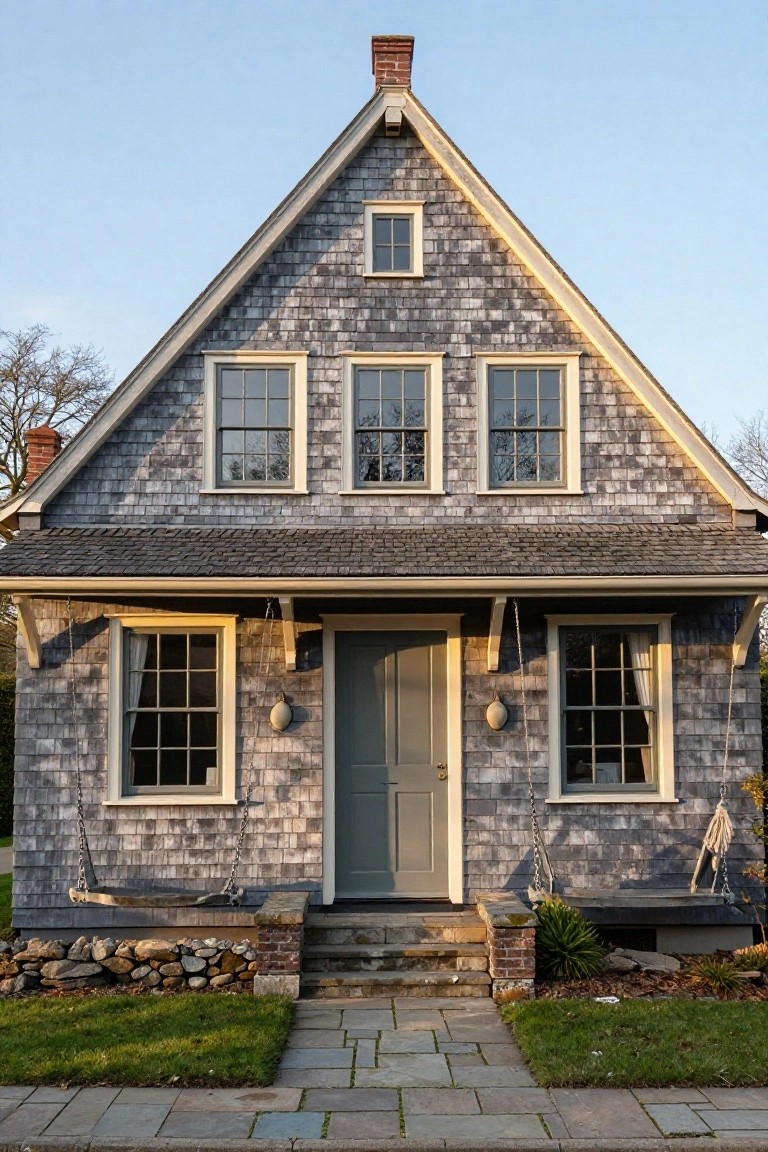
A brick chimney like this one sits quietly on the side of the house. It stands out against the gray shingles without stealing the show. That’s the point in colonial homes. The brick gives a nod to old-school building ways. It feels sturdy and right for the style.
You see this a lot on East Coast houses. It works best where you want tradition but not fuss. Keep the siding simple and the chimney brick clean. Avoid painting it. Let the natural color blend with stone paths or low walls nearby. Fits older neighborhoods just fine.
Brick Chimneys on a Colonial Facade
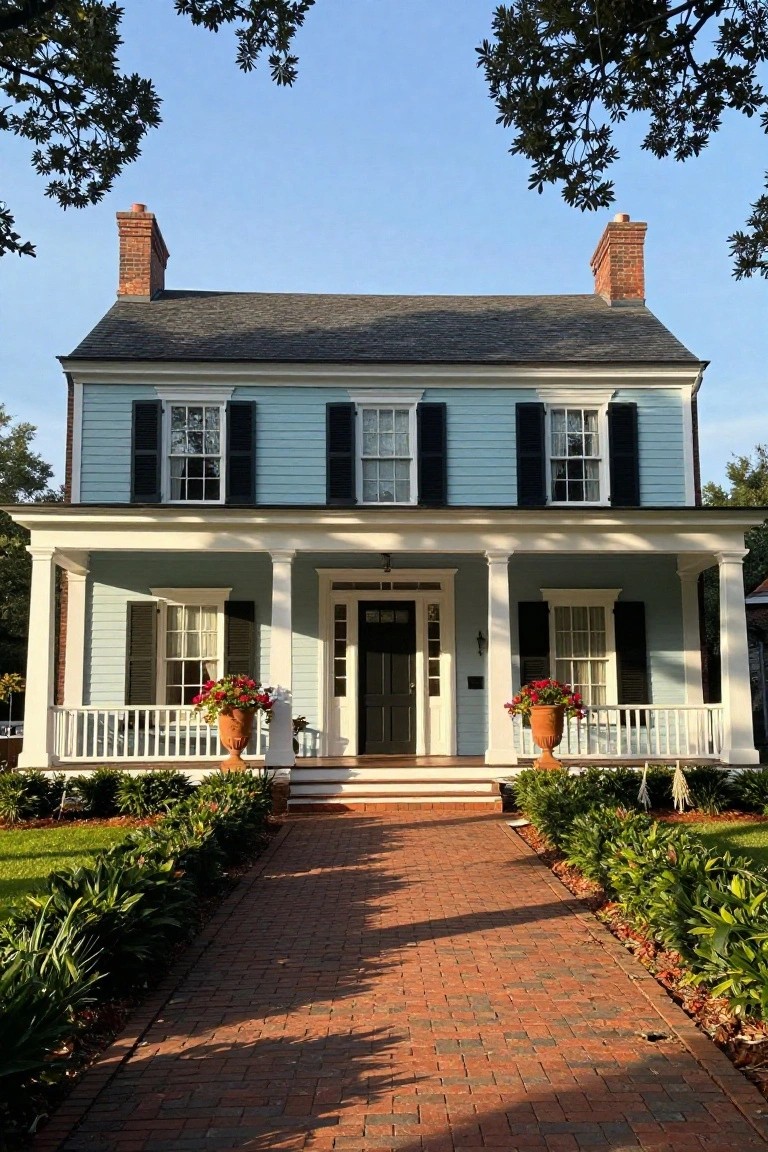
A pair of brick chimneys like these really set the tone for a colonial house. They sit symmetrically at each end of the roof, adding just enough height and texture to the light blue siding without stealing the show. That traditional brick against the soft paint color pulls the whole front together. It’s a look that feels solid and familiar.
You see this on older homes in the South a lot, where the climate suits brick that lasts. If you’re updating a colonial exterior, keep the chimneys straightforward like this, maybe with a dark mortar to match black shutters. They suit frame houses with porches best. Just make sure they’re functional if you want real fires.
Terracotta Pots on Brick Chimneys
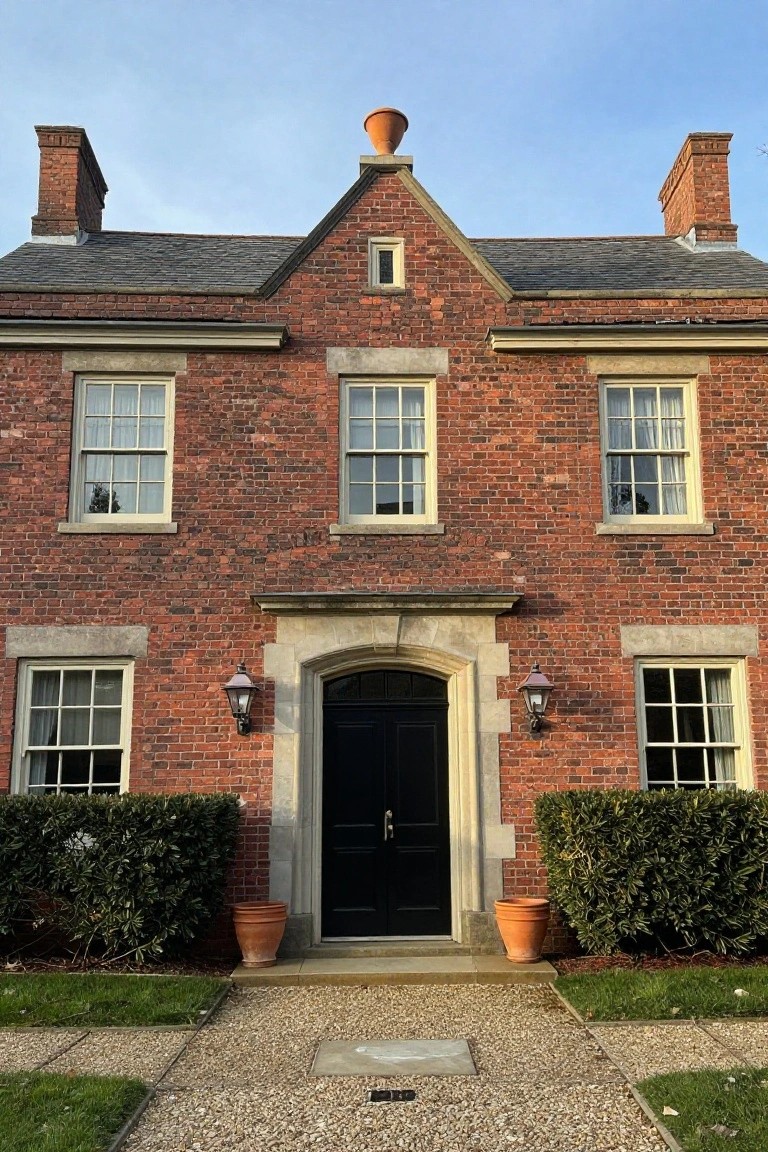
Nothing says old-school colonial quite like brick chimneys finished with simple terracotta pots. You see them here rising tall on both ends of the house, that warm orange color popping against the red brick. They pull the eye up to the roofline and tie right into the slate roof and stone details. It’s a small touch that nods to houses built two hundred years ago.
These pots work best on symmetric brick homes like Georgians or Federals. If you’re restoring or building new, source plain unglazed ones to keep it authentic. They hold up in bad weather too. Just make sure they’re secured well so they don’t shift.
Brick Chimney on White Clapboard Siding
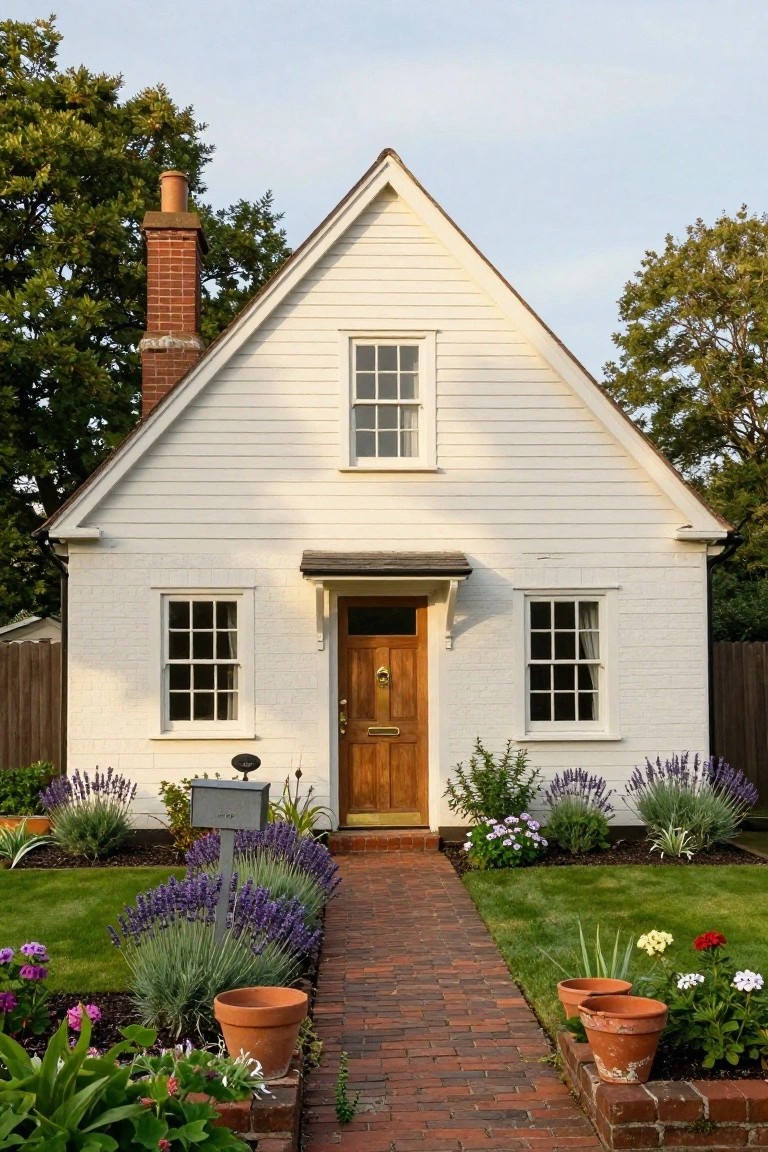
A simple brick chimney like this one sits right on the side of a white colonial house. The warm red brick pops against the clean clapboard siding and gabled roof. It brings back that traditional look homes used to have. Folks notice it right away from the street.
This setup fits older style homes in quiet neighborhoods. Keep the rest of the facade plain so the chimney stands out. Add a brick path to the door if you want. Just make sure the brick matches your area’s older houses… or it might feel off.
Traditional Brick Chimney on Colonial Homes
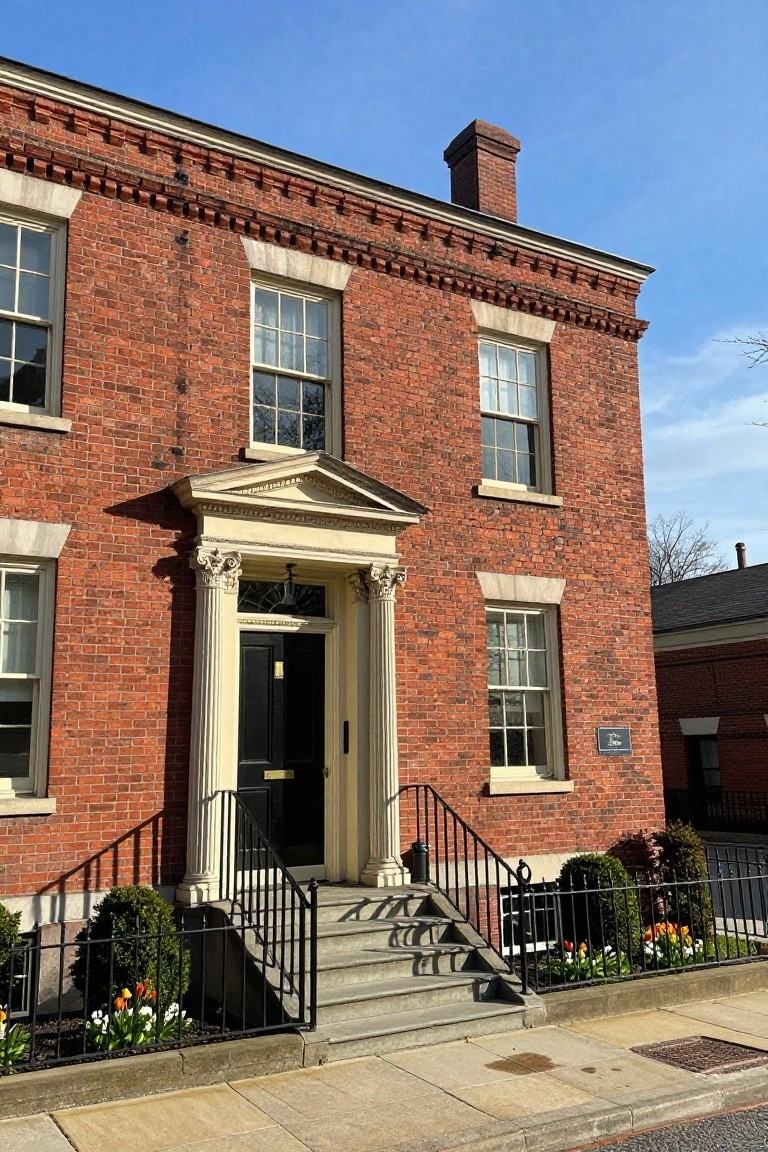
A good brick chimney like this one sits right up against the house on the side. It matches the red brick walls perfectly and gives the whole place that solid Colonial feel. These chimneys aren’t hidden away. They stand out as part of the build, reminding you of older homes where fireplaces were central.
You see this style on Federal or Georgian houses mostly. It works best where the brick is laid in a classic running bond pattern. If you’re restoring or building new, keep the chimney simple and tall. Match the mortar color to the brick so it blends right in. Skip fancy caps unless they fit the period.
Brick Chimney on Shingle.
Fieldstone Chimney on Clapboard Siding
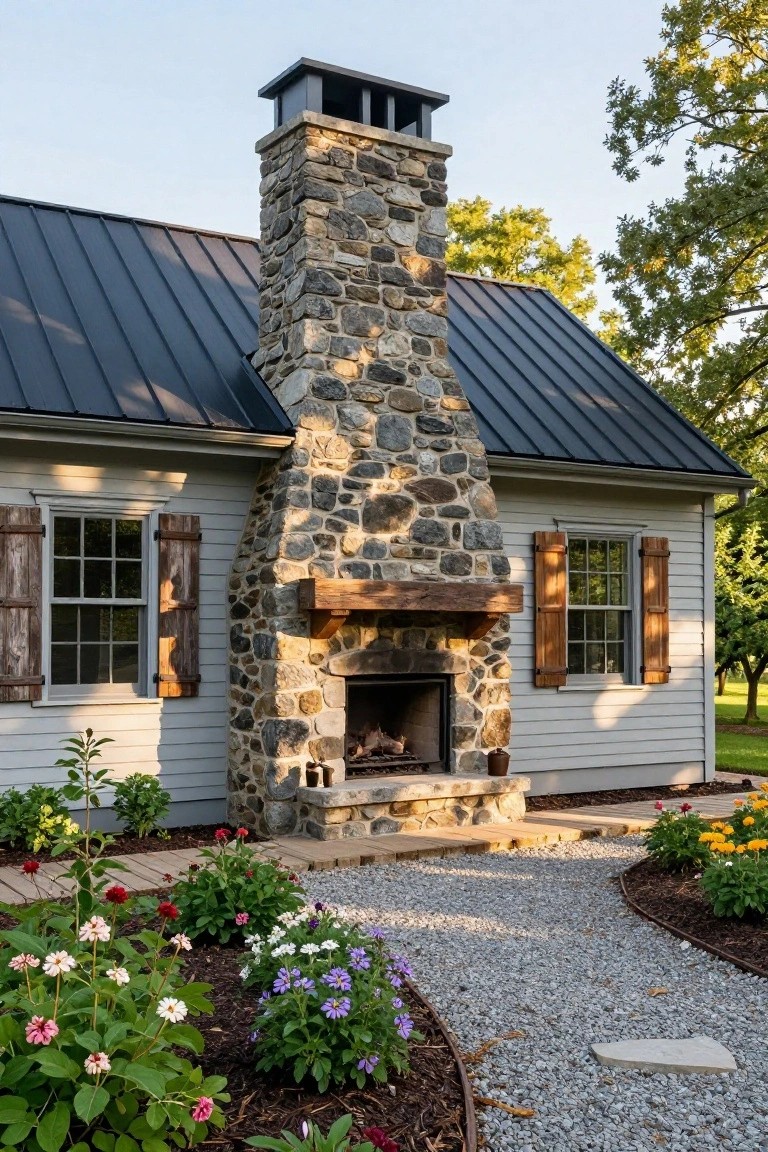
A fieldstone chimney like this one runs tall up the side of a simple clapboard house. The rough, varied stones catch the eye right away and nod to old colonial farmhouses without overdoing it. That wood beam mantel over the outdoor-facing fireplace adds a sturdy, handcrafted touch that feels honest and lived-in.
This look fits best on cozy cottages or one-story homes where the chimney can stand out as the main feature. Use local fieldstones if you can to keep costs down and tie it to the area. It pairs well with metal roofs that shed water fast, and just a gravel path and low flowers at the base keep things from getting busy.
Stone and Brick Chimney Blend
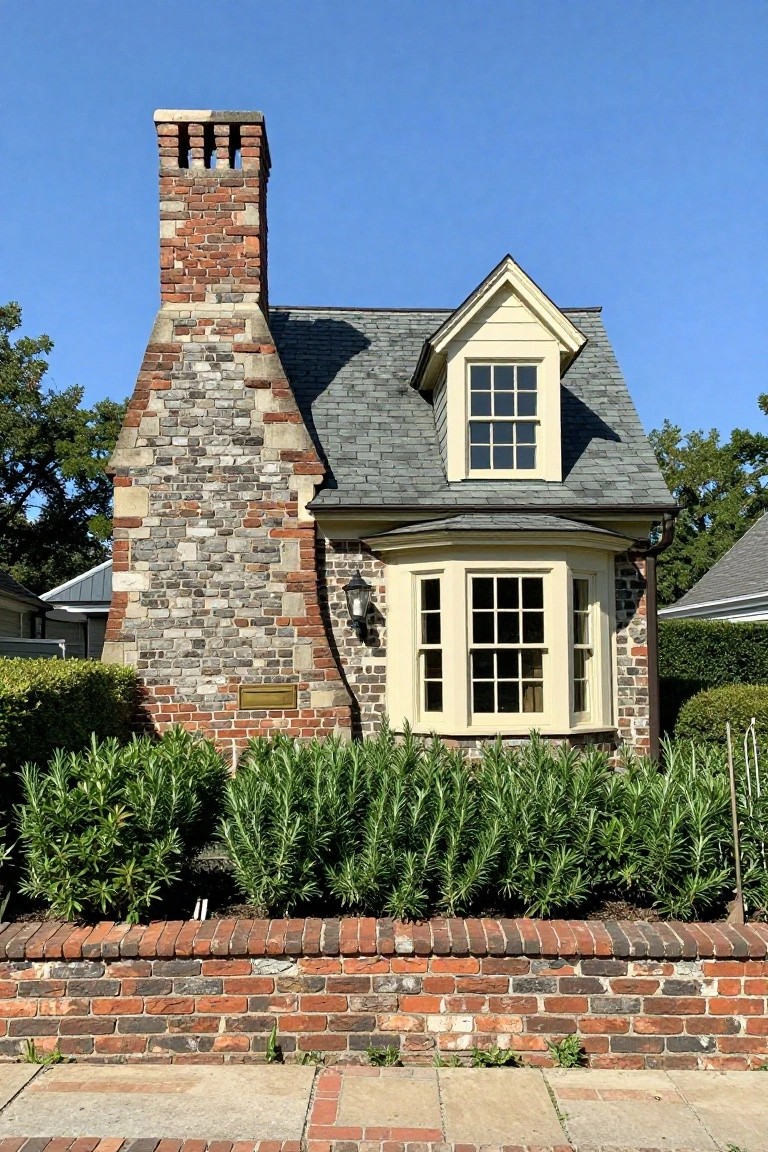
A tall chimney like this one mixes rough stone at the base with red brick above. That shift in materials catches the eye right away and nods to old colonial builds where masons layered local stone under fired bricks for strength and style. Paired with the house’s slate roof and bay window, it keeps things traditional but not fussy.
This setup suits smaller homes or cottages aiming for historic curb appeal. Use it on a side-facing facade where the chimney can rise prominently against trees or sky. Stick to muted brick tones and irregular stone to avoid a fake antique look, and it fits right into neighborhoods with similar older houses.
Symmetrical Brick Chimneys
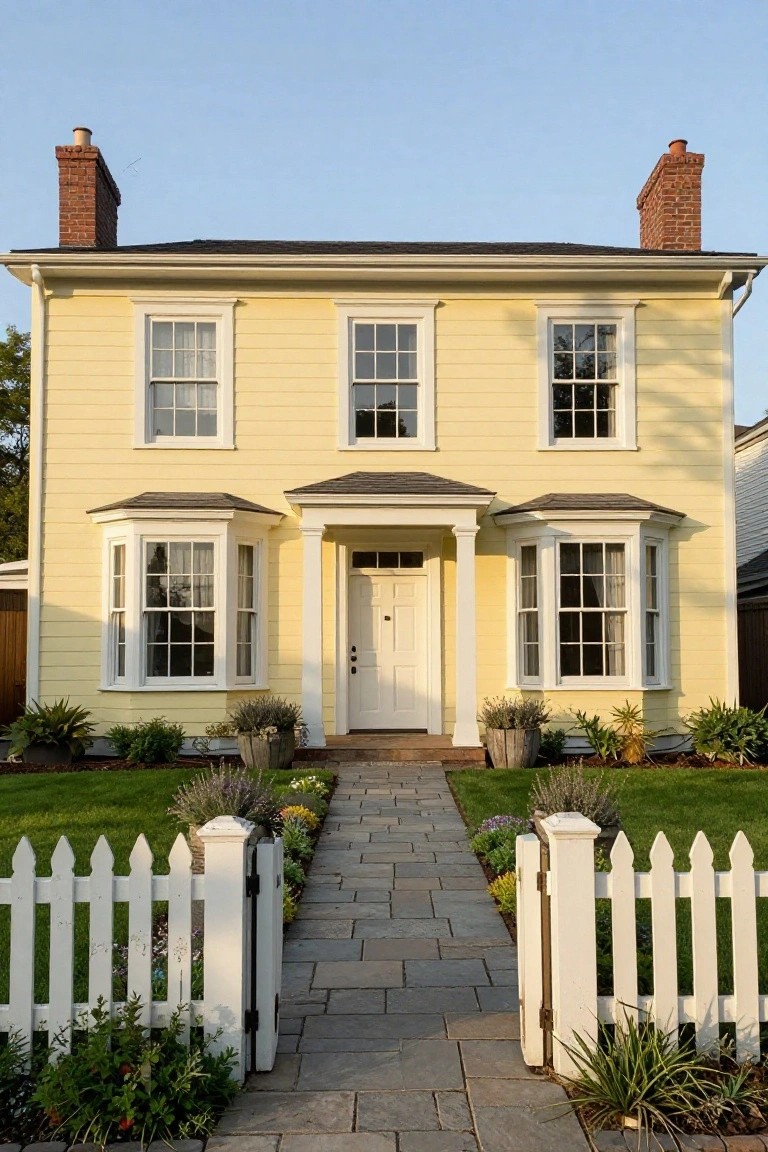
Paired brick chimneys like these anchor the roofline on both ends of the house. They stand out nicely against the yellow clapboard siding and keep the whole facade feeling balanced and rooted in colonial tradition. That symmetry draws the eye up without overpowering the rest.
Put them on homes with simple gabled roofs and painted exteriors. Brick in a classic red tone fits most anywhere from New England to the South. Just make sure they’re functional if you’re using real fireplaces… or go decorative for the look alone.
Classic Brick Chimneys on a Colonial Facade
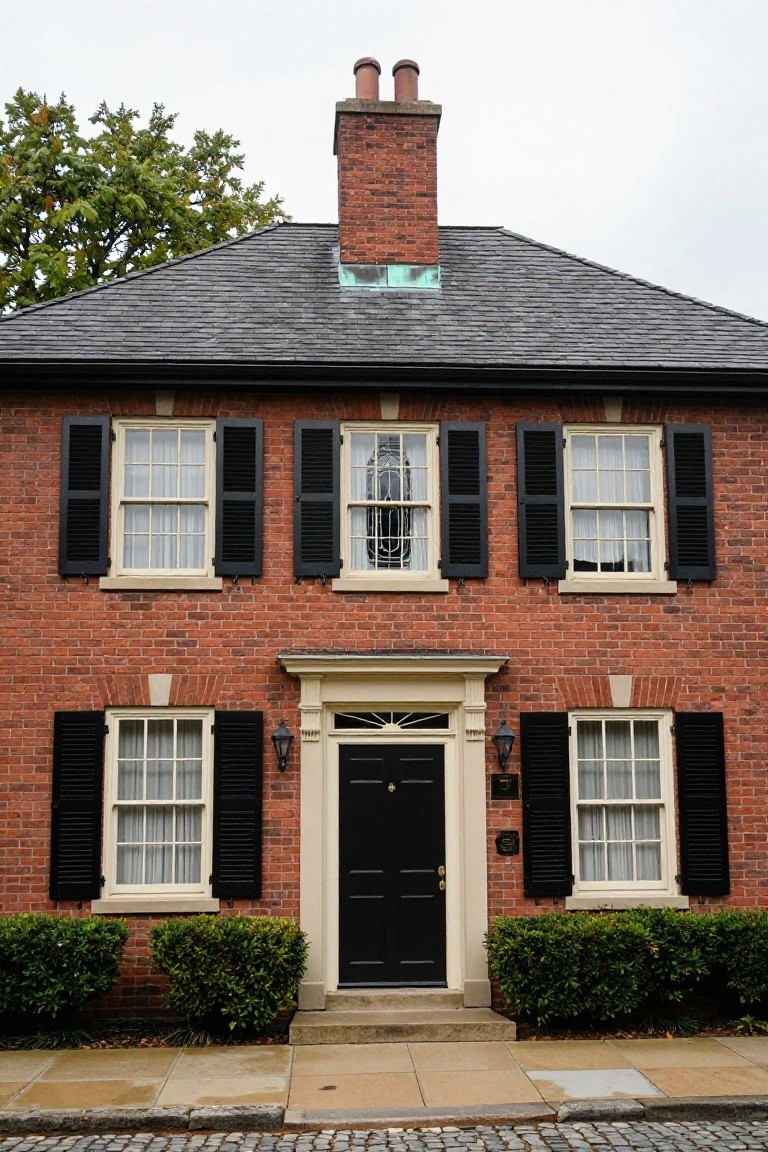
A pair of sturdy brick chimneys like these really bring out the traditional side of a colonial house. They stack right up from the red brick walls, topping off with copper flashing on the slate roof. That simple match of materials gives the front elevation a balanced, timeless look. No fuss, just solid craftsmanship that fits right into historic neighborhoods.
You can pull this off on any symmetric colonial revival or period home. Keep the bricks the same as your walls for unity, and go with copper or similar for the cap – it weathers to a nice patina. Pairs them up like here for that classic rhythm. Best on two-story facades where they draw the eye upward. Just check the flashing now and then.
White Brick Colonial with Brick Chimney
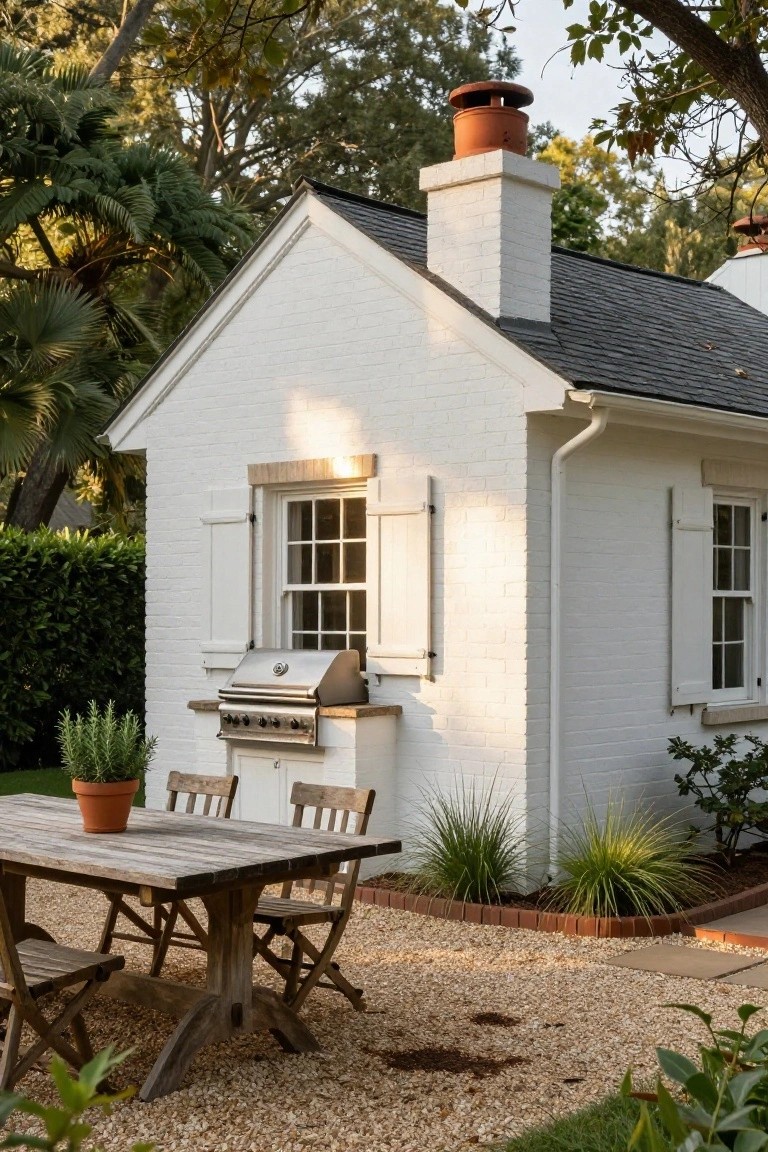
White brick gives this colonial-style house a clean, timeless look that feels right at home in a garden setting. The brick chimney stands out nicely against it, with that simple terracotta cap on top adding a bit of warm color without overdoing things. It’s a straightforward way to nod to old-school tradition while keeping the exterior bright and fresh.
This kind of setup suits compact homes or backyard cottages, especially where you want curb appeal without a lot of fuss. Stick to light mortar on the bricks for that washed effect, and keep landscaping low around the base. Watch for the chimney to draw the eye up… it makes even a small house feel more substantial.
Paired Brick Chimneys for Colonial Balance
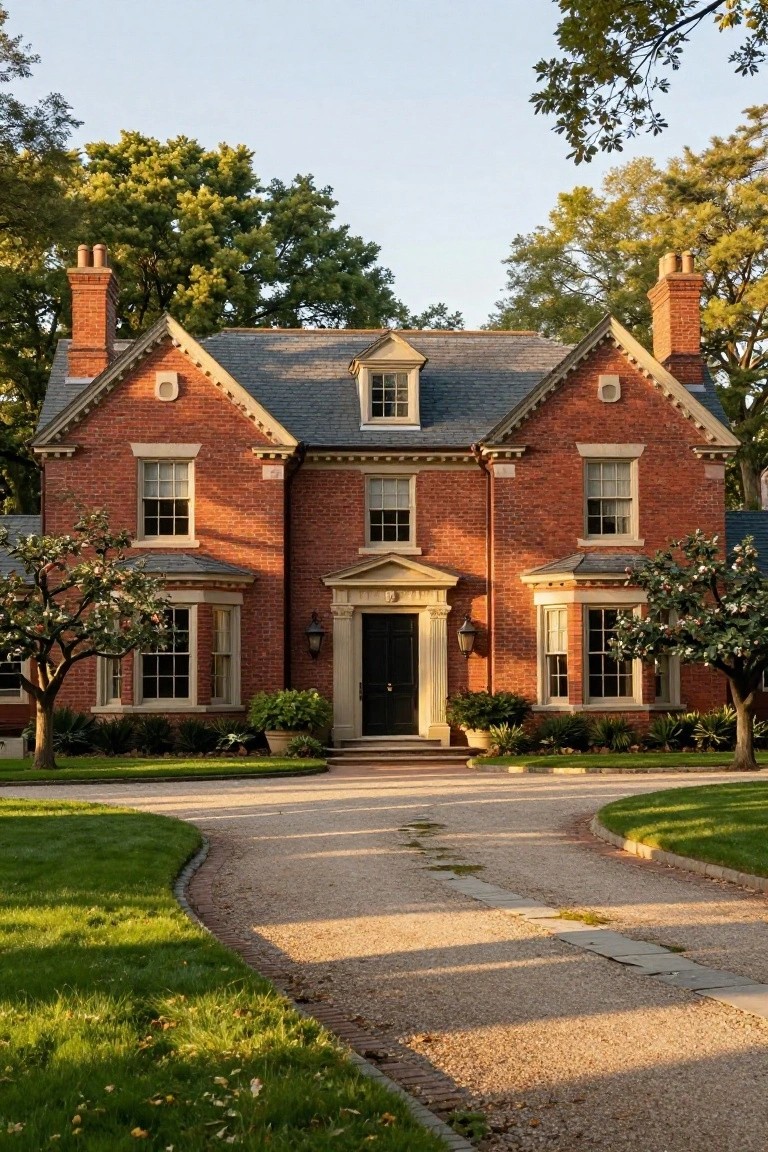
Those paired brick chimneys at each end of the house do a lot for the look. They rise straight up from the red brick walls and meet the slate roof just right, pulling the whole facade together in a way that feels steady and traditional. It’s a simple touch that nods to older Colonial homes without trying too hard.
You see this on symmetrical brick houses like Georgian styles, where the chimneys bookend the roofline and keep everything even. It suits a home on a good-sized lot with a driveway leading up. If you’re updating an exterior, think about matching chimneys in brick to tie the upper and lower parts. Just make sure they line up with the windows below.
Traditional Brick Chimney on Shingle Roof
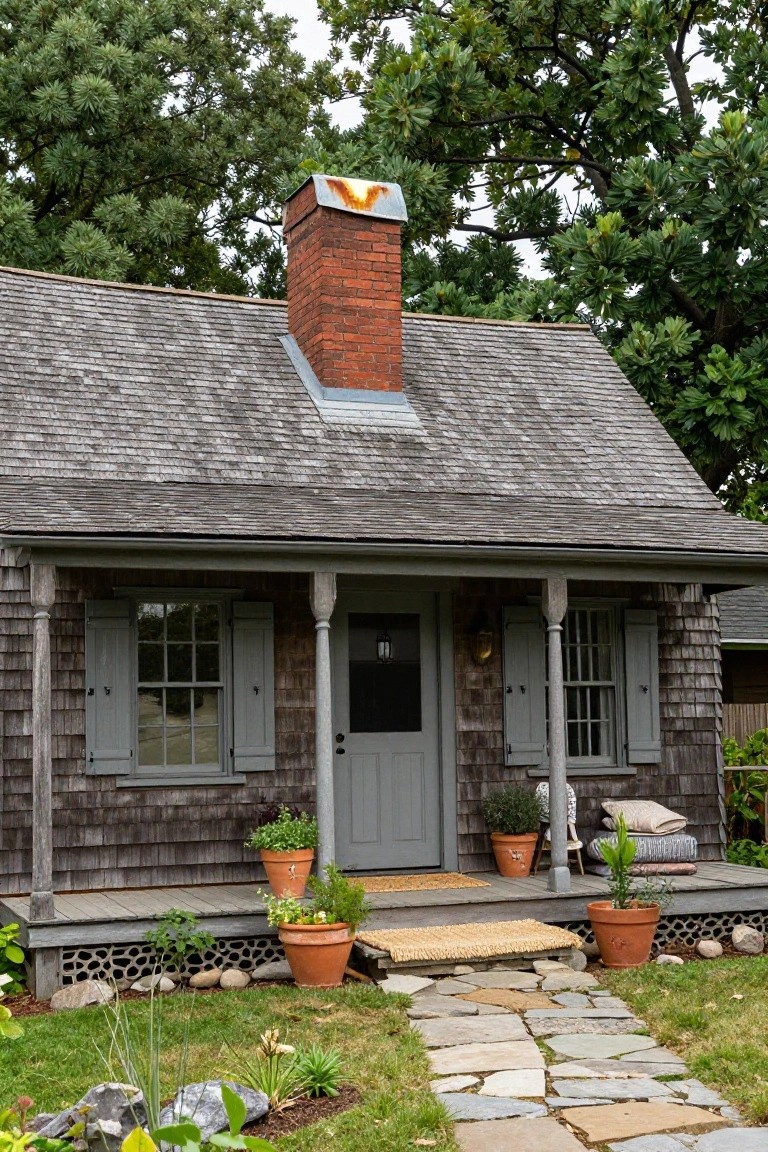
A red brick chimney like this one sits right on top of the gray shingled roof. It pulls the eye up and gives the whole house that solid colonial feel. The contrast with the soft shingles keeps things simple but rooted in old New England style.
This setup suits cozy cottages or cape homes tucked into a yard with trees. Keep the porch plain with just a few pots nearby so the chimney stays the main point. It holds up well over time too, especially if you let the shingles weather naturally.
Prominent Stone Chimney on Shingle Siding
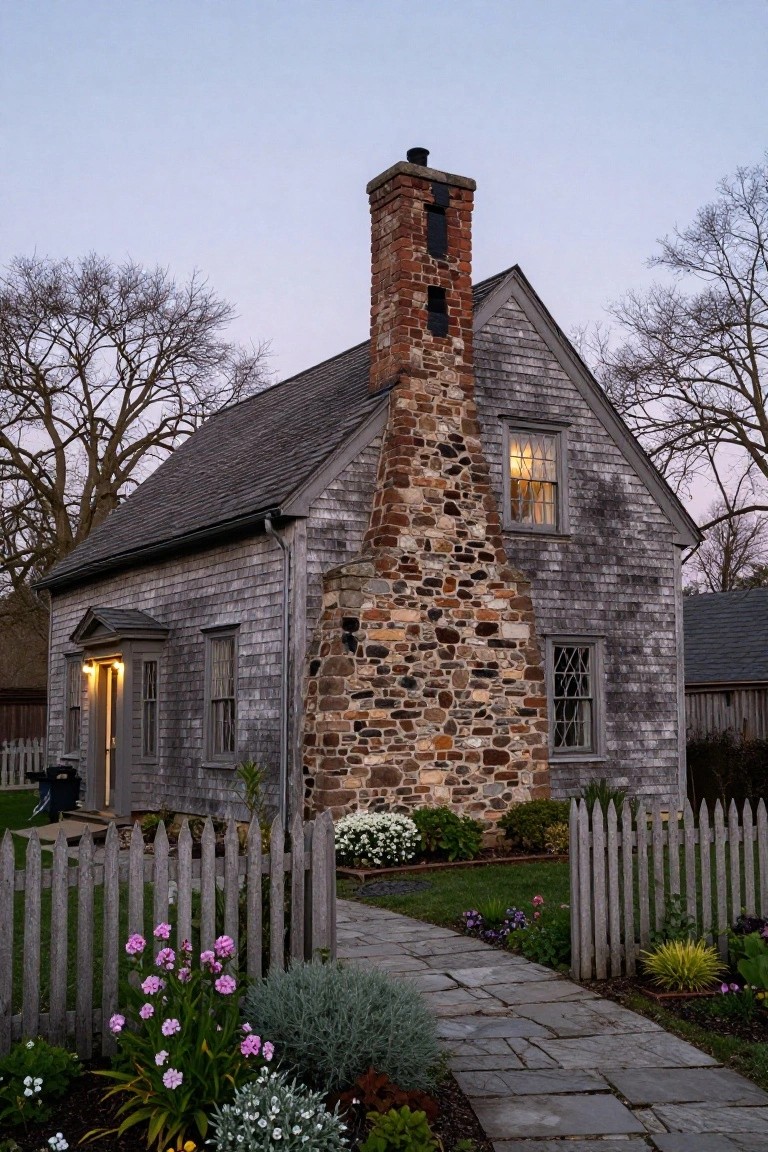
A big stone chimney like this one takes center stage on a classic colonial house. Built from varied fieldstones, it contrasts nicely with the gray shingle siding and gives the whole facade a sense of history and solidity. That warm glow from the window inside just adds to the homey tradition feel, especially at dusk.
This kind of chimney works best on older-style homes or new builds aiming for colonial charm. It suits spots with some land around it, maybe paired with a simple picket fence and path. Keep the stones natural, no fancy polish, and make sure it’s structurally sound if you’re adding one.
Frequently Asked Questions
Q: How do I match a new chimney to my colonial home’s brick?
A: Hunt for reclaimed bricks from the same period or region as your house walls.
Stack them with the classic offset pattern.
Your place instantly feels pulled from history.
Q: Can I clean these chimneys without damaging the old brick?
A: Brush off loose dirt with a soft nylon broom first.
Mix mild soap and water for gentle scrubbing.
Rinse well and let it dry slow.
Q: My chimney looks too skinny next to those big examples. What now?
A: Build it out with matching corbeling at the top.
That adds presence without messing with the roofline.
Hire a mason who knows period details.
Q: Do these traditional chimneys play nice with gas fireplaces?
But
A: Outfit the inside with a stainless liner that fits modern inserts.
Keep the outside pure colonial.
You get reliable heat and that timeless curb appeal.
