

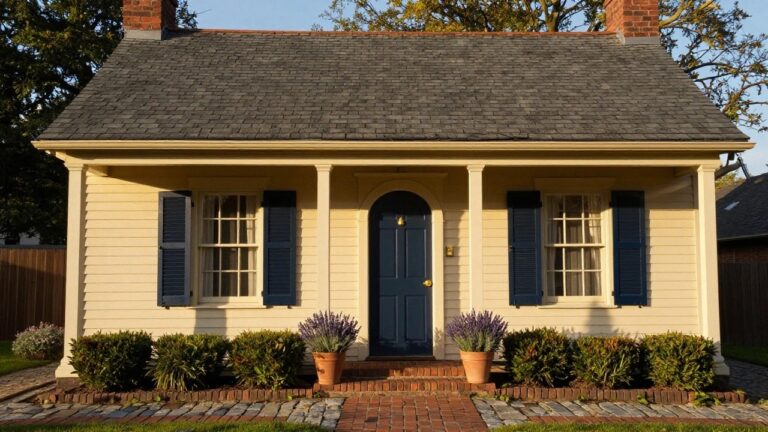
I’ve driven past plenty of small colonial houses that catch my eye because their exteriors make the most of every inch without feeling squeezed.
From the street, you notice the crisp symmetry of the facade first, along with rooflines that echo those classic gambrel shapes just enough to evoke history.
I once saw a place where they swapped vinyl for cedar shingles on the front gable, and it grounded the whole look in a way photos never capture.
Materials and entry details matter most on tight lots, where proportion keeps things from looking stubby.
These approaches give real ways to build that street presence, ones you can tweak for your own setup.
Navy Door and Shutters on Pale Siding
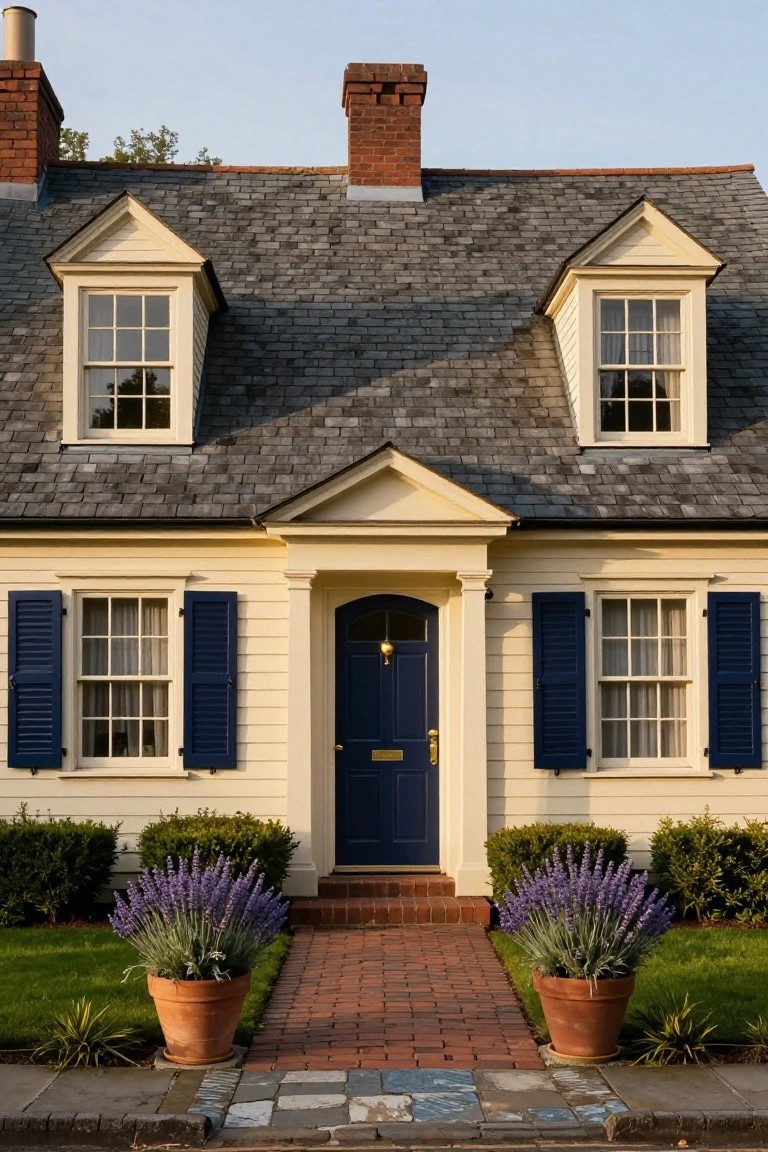
A deep navy door paired with matching shutters stands out nicely against this soft yellow siding. It’s a simple colonial trick that adds personality to a small house without much fuss. The bold color pulls your eye right to the entry. And those lavender pots nearby just make it feel more lived-in.
This setup works great on compact colonials, especially ones with slate roofs or brick paths. Navy holds up to weather and doesn’t show dirt like white might. Go for it if your home has clean lines and dormers. Skip if the siding is too bright. It keeps things classic yet fresh.
Recommended Products

Classic Design: The simple, versatile design of this wall light fixture features a classic shepherd's hook arm and metal shade that looks great with any style of decor and is...
Red Door on White Colonial Facade
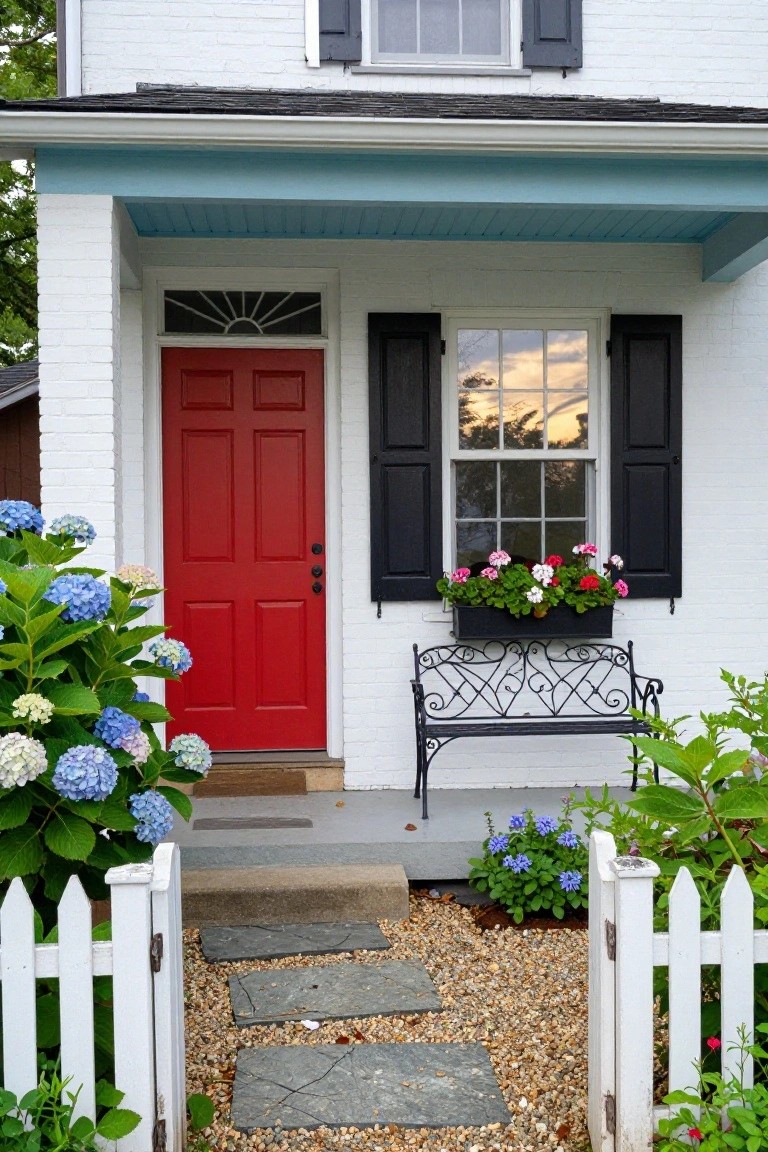
A bright red front door stands out nicely against a crisp white brick house like this. It pulls focus to the entry without messing up the simple colonial lines. That pop of color warms up the look and makes the place feel more inviting right from the street.
This setup suits small traditional homes in older neighborhoods. Flank the door with big hydrangeas for some soft planting, and keep the rest straightforward, like black shutters and a basic bench nearby. Go with good exterior paint. It holds up better over time.
Blue Door Pops on Pale Green Siding
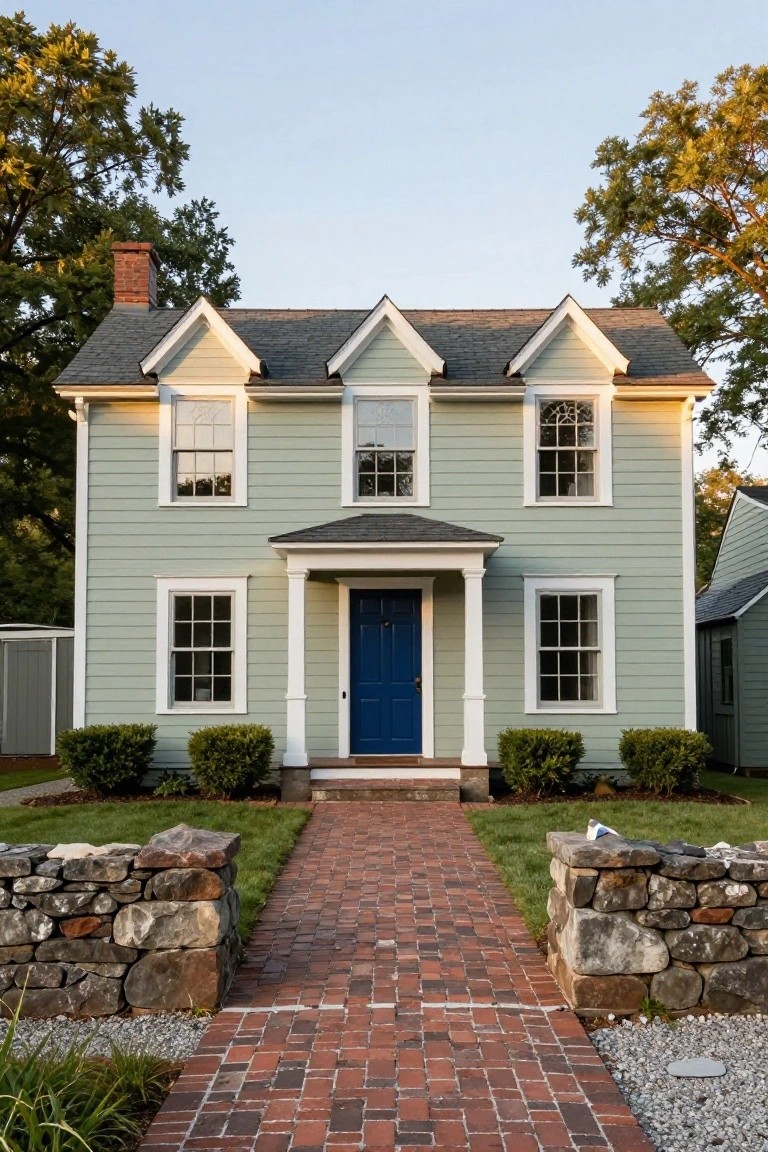
A bright blue front door stands out nicely against the soft pale green siding of this Colonial house. It keeps things classic with the white trim and multi-pane windows, but that door pulls your eye straight to the entry. Simple move that adds real charm without much fuss.
Try this on a smaller two-story home where you want curb appeal on a budget. The contrast works best with neutral landscaping like boxwoods and a brick path leading up. Just make sure the door color ties into something nearby, or it might feel too loud. Fits older neighborhoods well.
Green Door Pop on Gray Siding
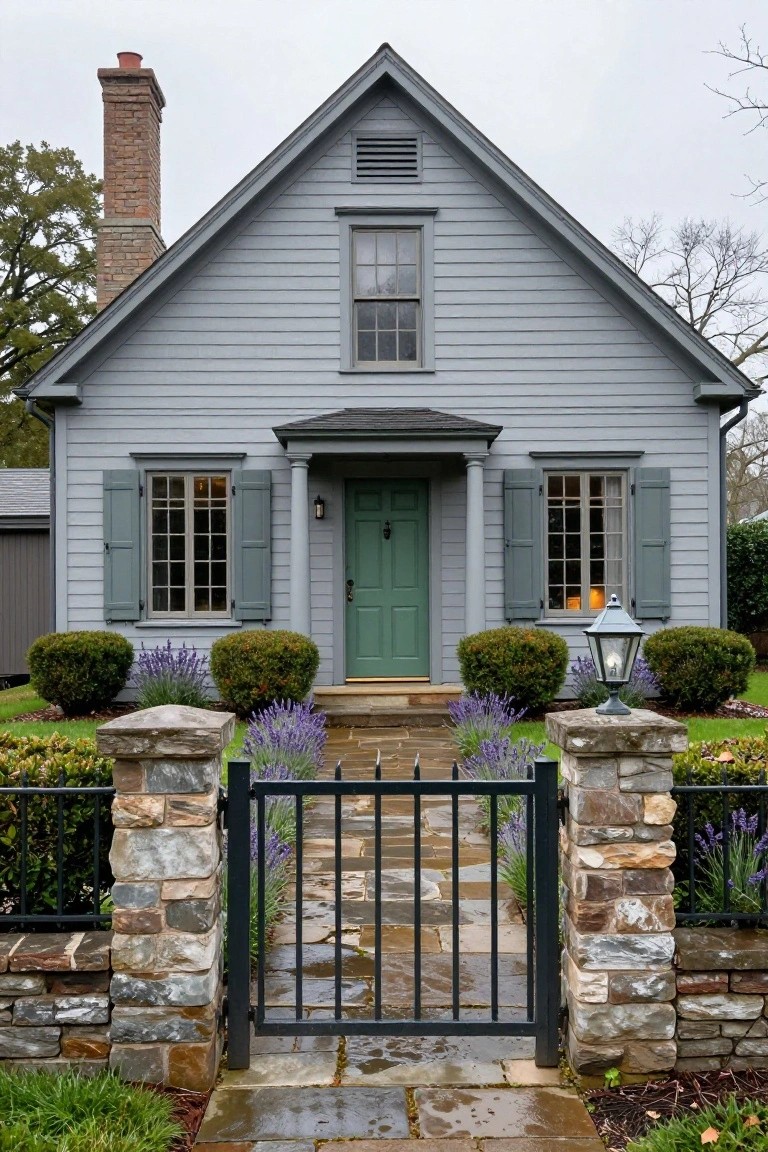
A soft gray clapboard siding gives this small Colonial house a calm, classic base. Then the green front door and matching shutters bring just enough color to make it feel lively and inviting. It’s a simple switch that perks up the whole facade without messing with the traditional shape.
This look works best on compact homes where you want quick curb appeal. Pick a green shade that echoes nearby plants, like the lavender beds here along the entry path. Keep the rest neutral so the door stays the star, and it suits most neighborhoods just fine.
Entry Flanked by Tall Topiaries
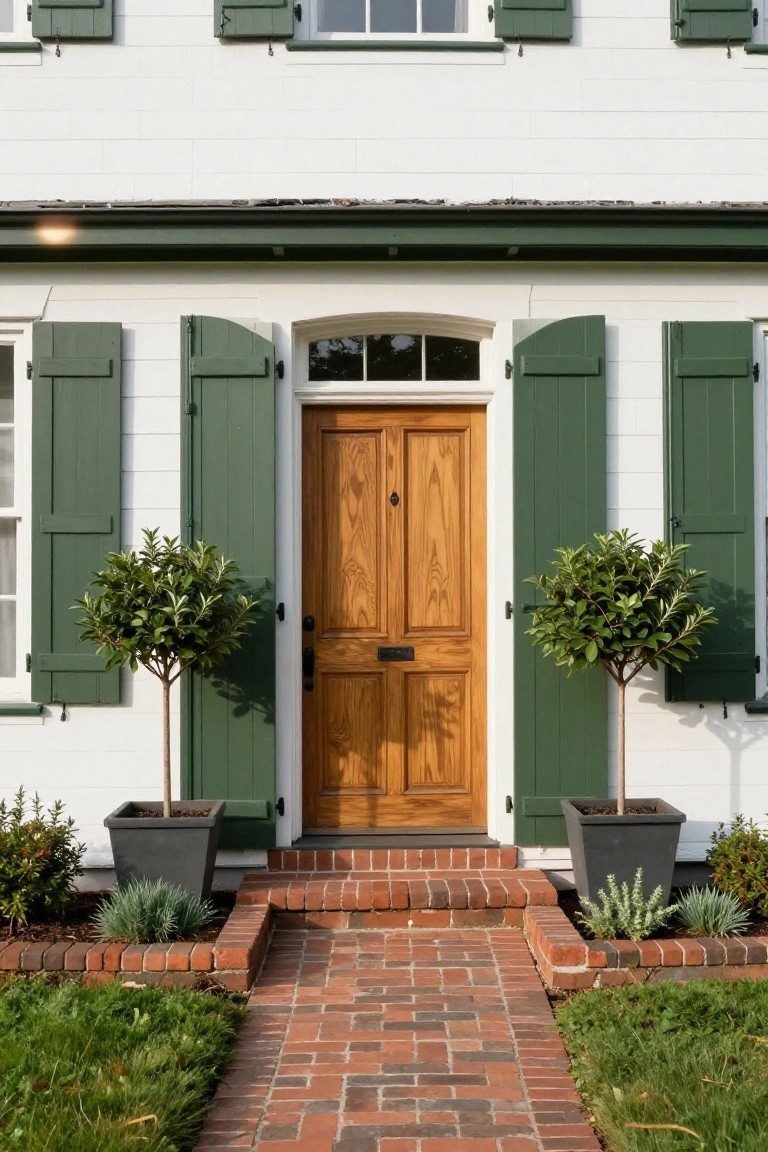
Nothing boosts a colonial front door like a pair of tall potted topiaries right on either side. On this white house, the green plants in dark pots pick up the green shutters. That makes the wooden door pop warm and inviting. It’s a clean way to add some life up close.
This setup suits small houses with simple brick paths or steps. Go for slow-growing evergreens you can trim once a year. Keep pots the same size and color for that matchy look… works on townhomes too. Just make sure they’re not blocking the walk.
Climbing Roses on the Porch
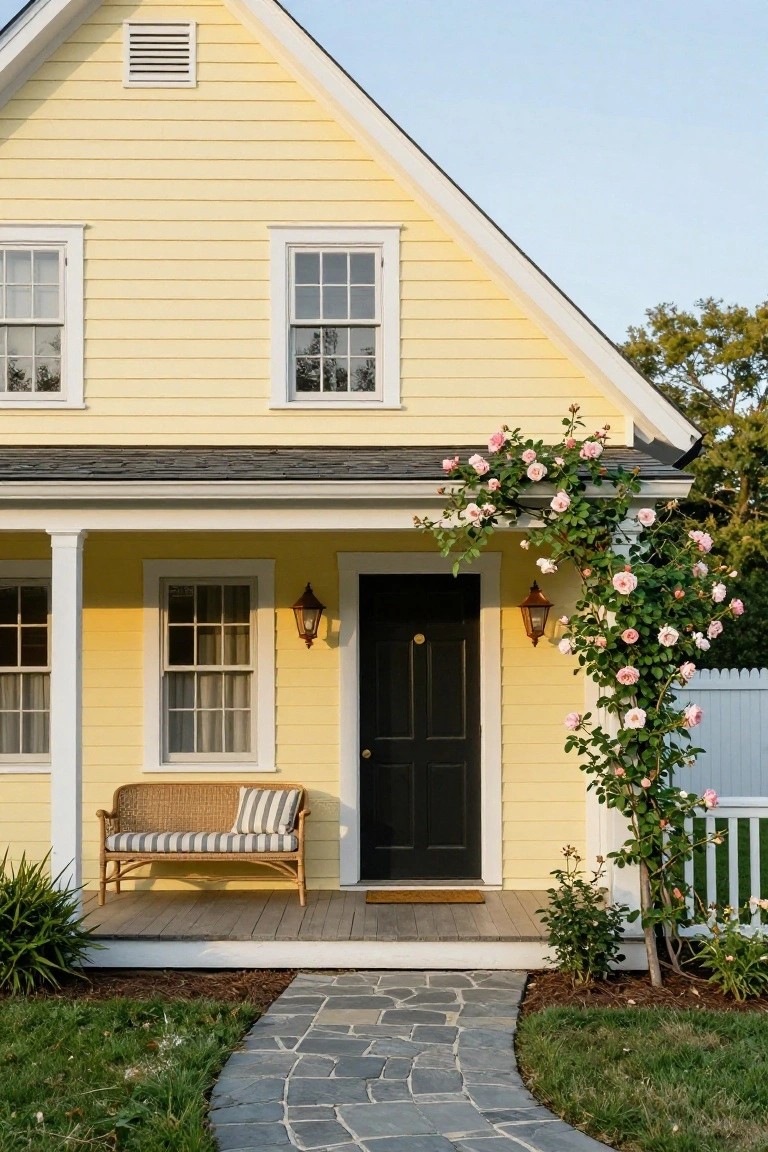
Climbing roses work so well on a front porch like this one. They trail up the columns and soften that classic colonial look without taking up yard space. On a pale yellow house, the pink blooms add a bit of romance that pulls your eye right to the entry. It’s simple charm that feels lived-in.
Try this on a smaller home where you want the porch to stand out more. Pick roses that climb easily and bloom a long time. They suit light-colored siding best, and a spot with some afternoon sun helps. Keep them trimmed so they don’t overwhelm the door or windows.
Classic Colonial Front Entry
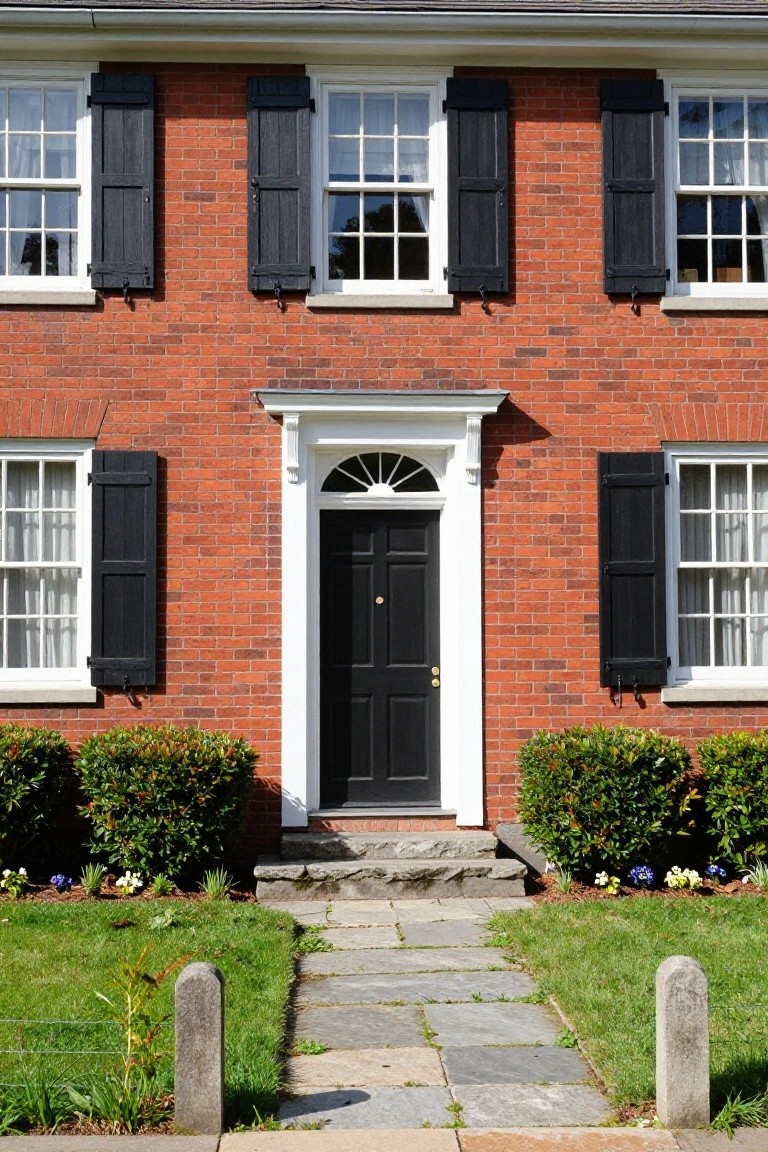
A solid black front door like this one pulls the whole facade together on a small colonial house. Set against warm red brick with crisp white trim and a curved fanlight above, it gives that instant traditional charm without trying too hard. The dark shutters on the windows echo the door color nicely.
Stone steps leading up to the entry keep it practical and grounded. This setup suits compact brick homes in older neighborhoods best. Just paint the door a true black and add simple shrubs on the sides. Skip anything fussy around the path.
Classic Portico Entry
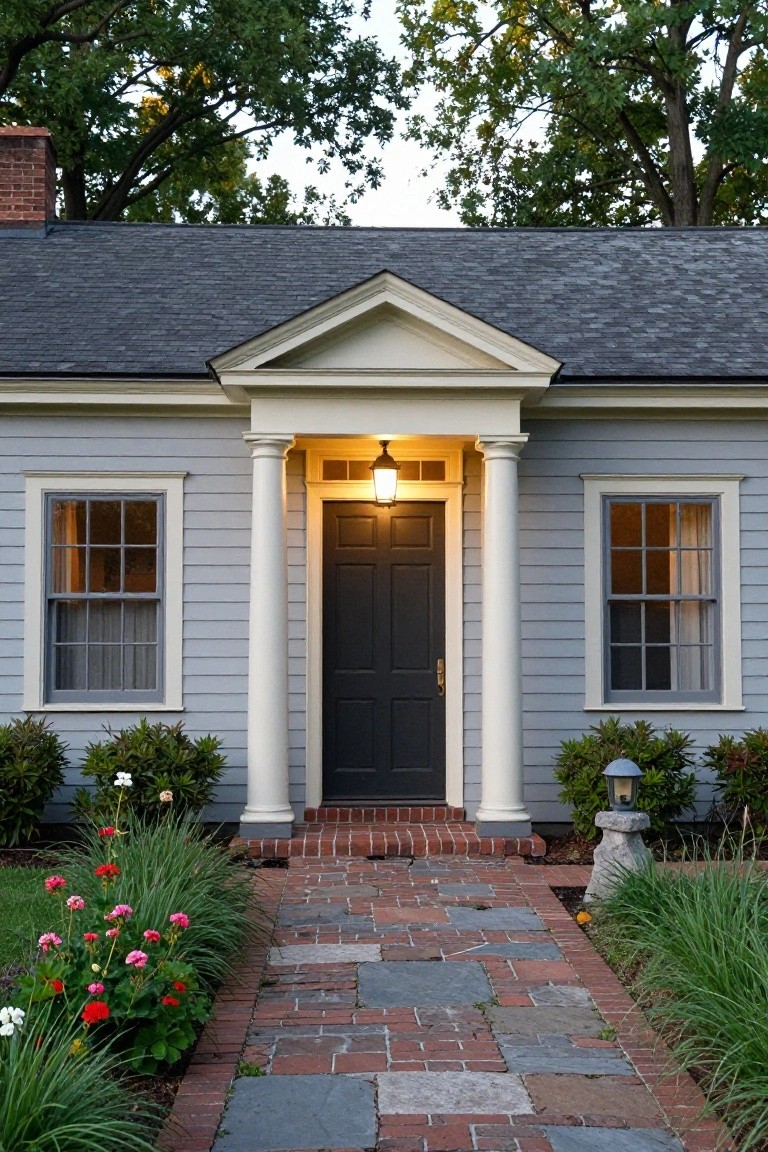
A portico like the one here frames a simple dark door with fluted white columns and a clean pediment overhead. On a small colonial house, it adds just enough formality to make the front feel special without taking over. That lantern hanging in the center pulls it all together at night.
This works great on compact homes with a little front yard space. Tuck in some low plants along the brick path to guide folks right up to the door. Steer clear if your lot is super tight, since the columns need breathing room.
Red Door on Crisp White Siding
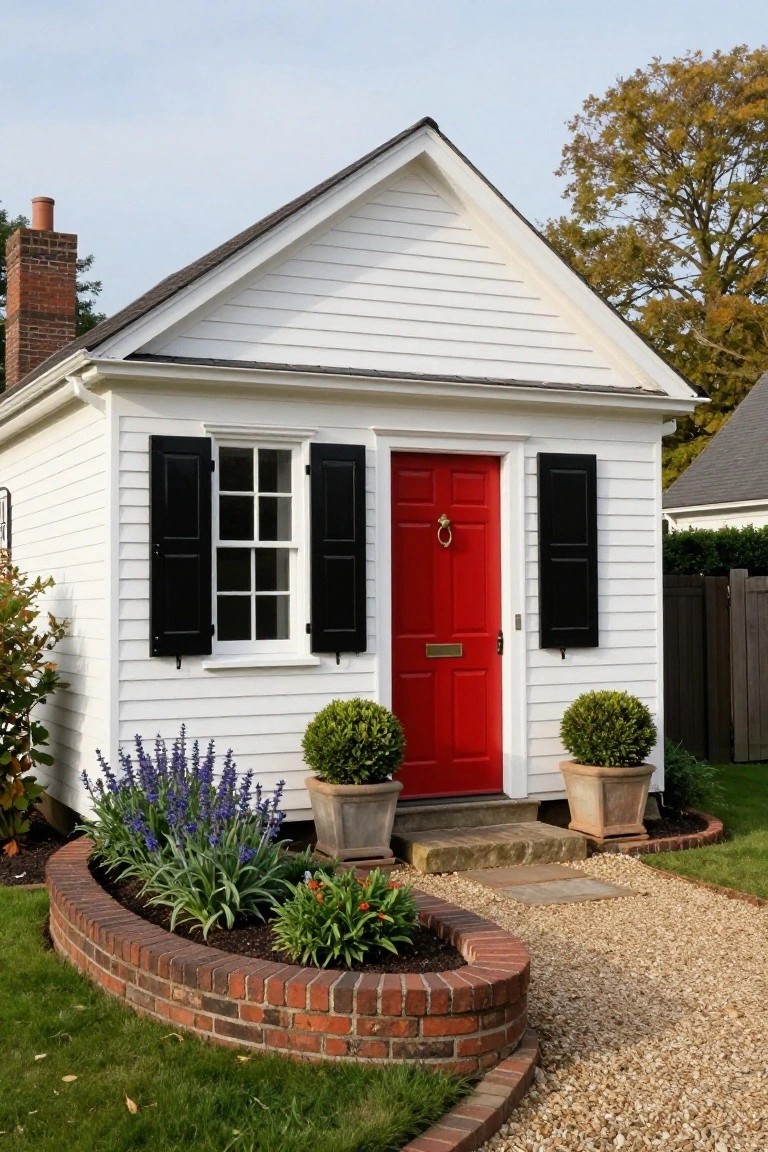
A bright red front door gives this small colonial shed real personality. The clean white clapboard siding and black shutters keep things simple and classic, but that pop of red draws your eye straight to the entry. It’s an easy way to boost curb appeal on a plain white exterior.
This look suits compact guest houses or garden sheds in any yard. Paint a sturdy door red, add black shutters if you don’t have them, and keep the landscaping neat with low plants around the base. It works on older homes too, just check the door fits the scale so it doesn’t overwhelm.
Colonial Entry Portico
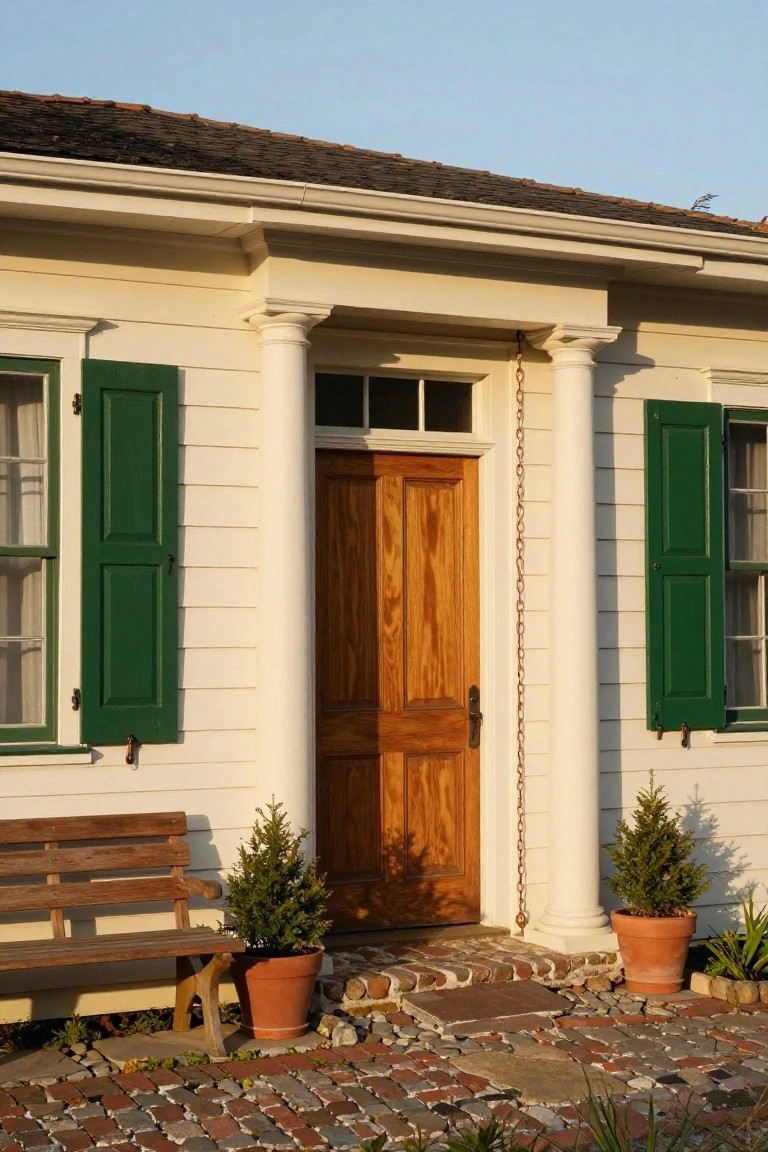
A simple portico like this one frames the front door just right. White columns rise smoothly to hold up the roof over a rich wooden door. That setup gives a small house real presence without overwhelming the facade. The hanging chain adds a folksy detail that nods to older styles.
You can pull this off on most compact colonials facing south or east. Pair the columns with green shutters and keep plants in pots nearby, like those evergreens here. Skip fancy trim. It works best where you want the door to pull folks in naturally. Watch the scale though. Too big and it looks off on a little house.
Red Door Entry Charm
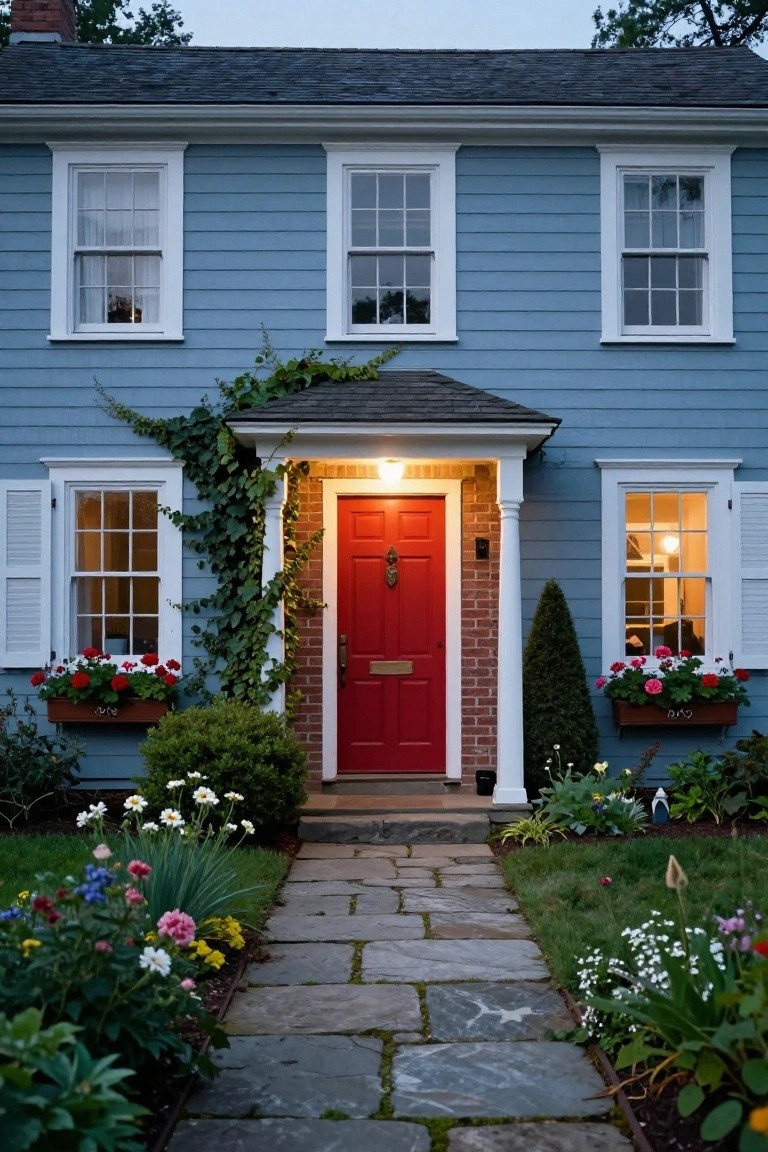
A bright red front door on a blue colonial house pulls everything together in a simple way. That pop of color against the soft blue siding makes the entry feel welcoming and full of personality. It’s especially nice at dusk when the porch light highlights it just right.
This look suits smaller colonials where you want curb appeal without big changes. Pick a glossy red paint that holds up to weather, and keep the trim white for contrast. Add matching red flowers in window boxes if you like… it ties back without overdoing it.
Red Shutters on White Colonial Siding
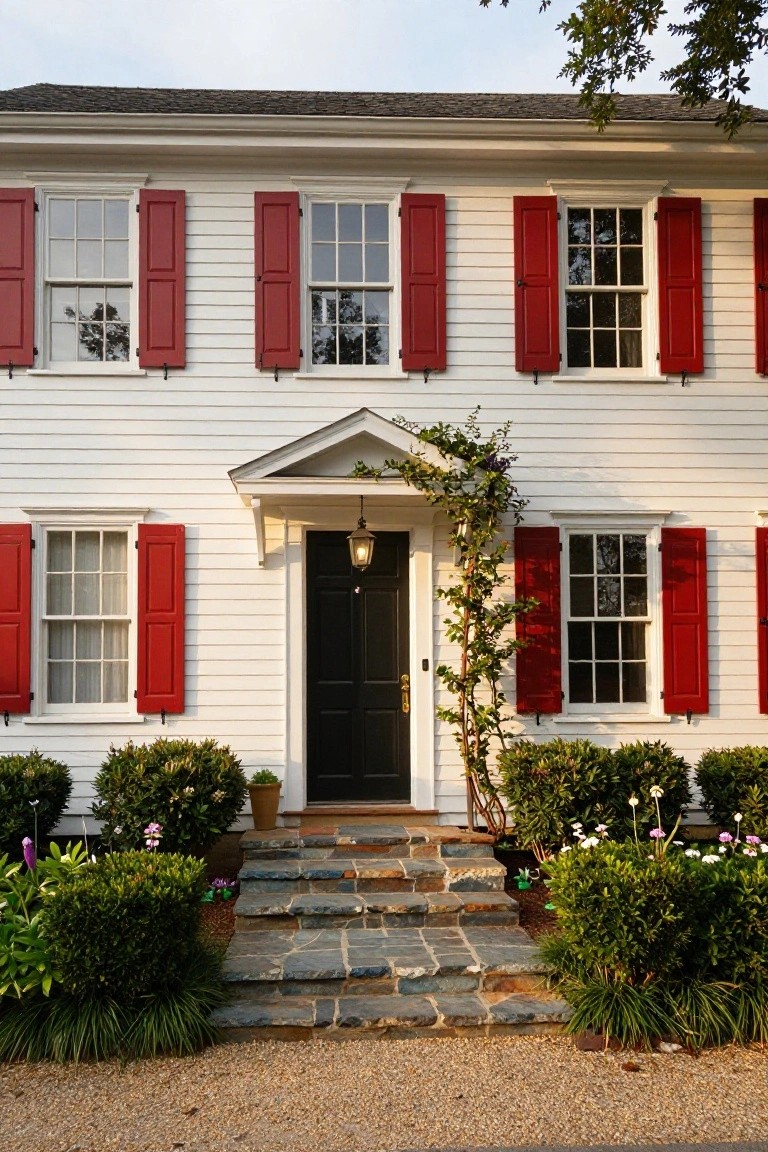
Red shutters stand out nicely against a white house like this. They give a small colonial facade that extra bit of color without overdoing it. The bold contrast keeps things classic and pulls the entry together, making the whole front feel more welcoming right away.
This look fits older homes or new builds aiming for tradition. Paint the shutters a glossy red to catch the light, and keep them symmetric on either side of the windows. Skip it if your siding is too textured, though. It shines on cleaner clapboard styles.
Mint Green Shingles Freshen Up Small Colonials
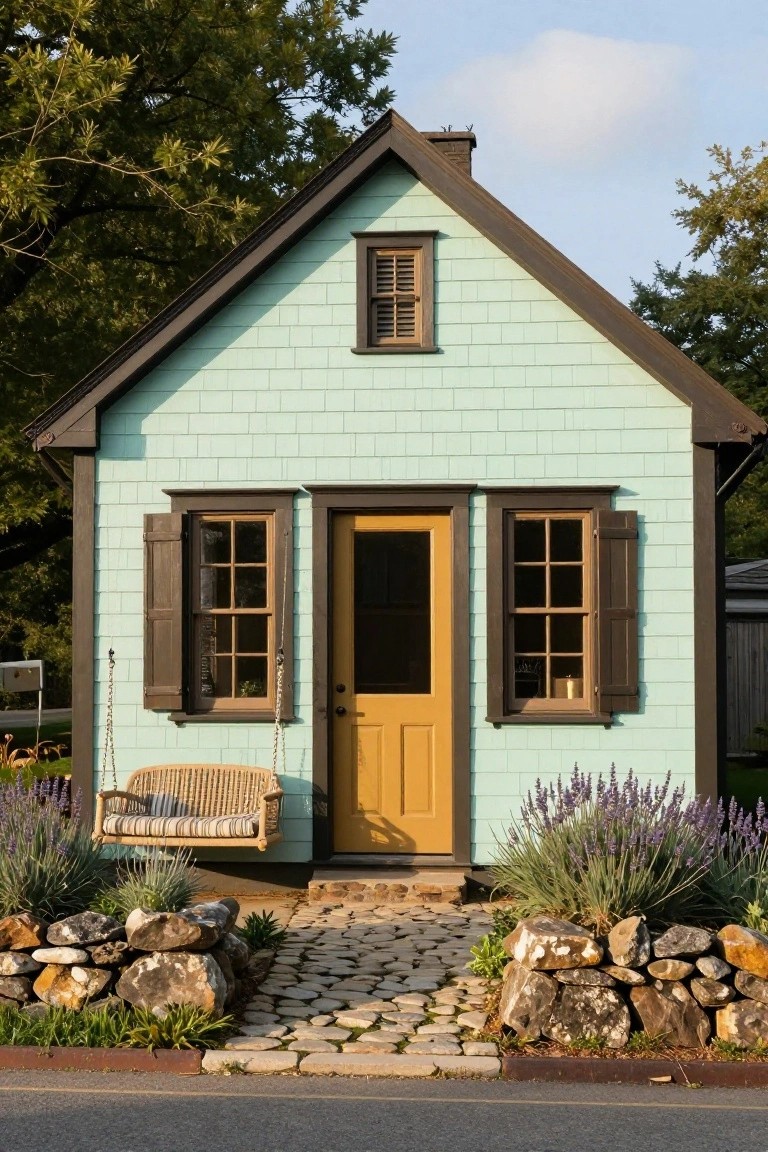
A soft mint green shingle siding gives this small colonial a light, breezy feel without losing its classic shape. The dark brown trim around the roof, windows, and door pulls it all together and makes the house stand out on a simple lot. It’s a straightforward way to add charm to older styles.
This works best on compact homes in mild climates where you want something cheerful but not flashy. Go for it if your facade has good bones like gables and shutters. Pair the siding with a sunny yellow door and a few low plants out front. Skip it if your area gets heavy winters, since shingles need some upkeep.
Classic Columned Entry
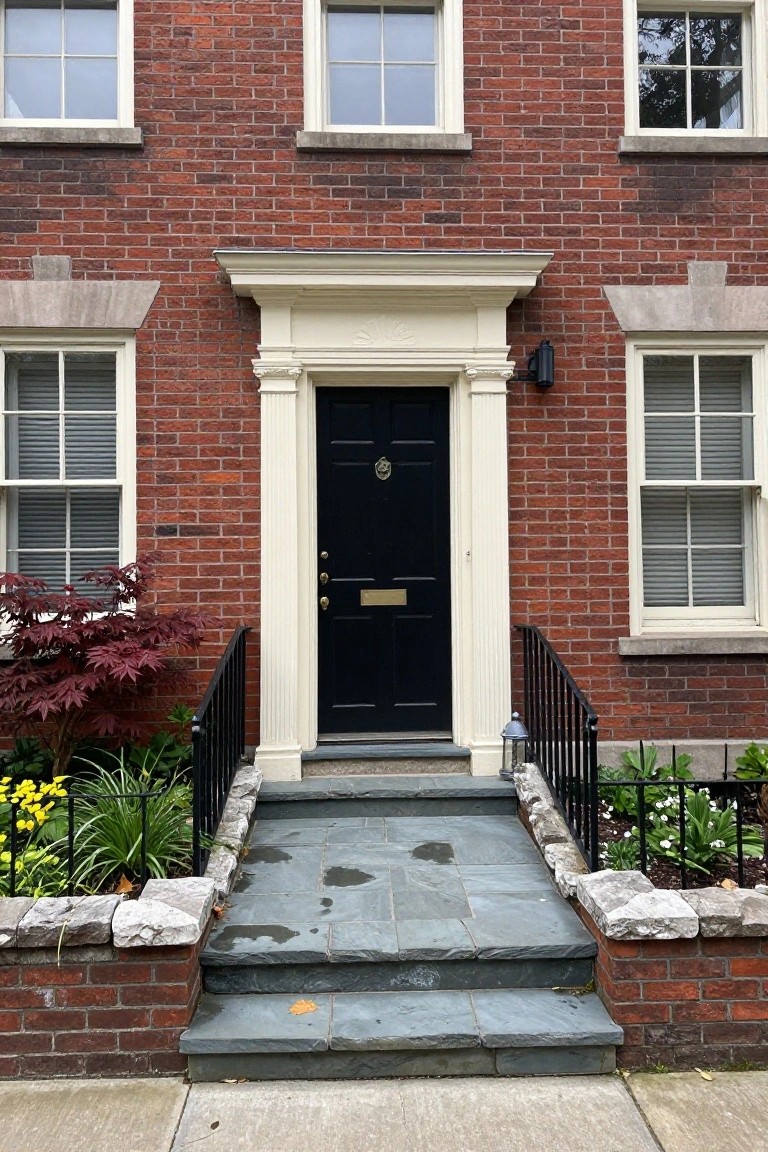
A columned entry like this one takes a plain brick facade and turns it into something with real colonial character. The white columns frame a simple black door nicely, and they stand out against the red brick without overwhelming a small house front. Stone steps lead right up to it, keeping things practical.
This works best on narrow rowhouses or semis where you want formal curb appeal on a budget. Pair the columns with black iron railing along the steps, and tuck in a few low plants at the base. Skip heavy landscaping. It suits older neighborhoods, and just watch the scale. Keep columns slim so they don’t eat up the sidewalk space.
Teal Door on Gray Shingle Colonial
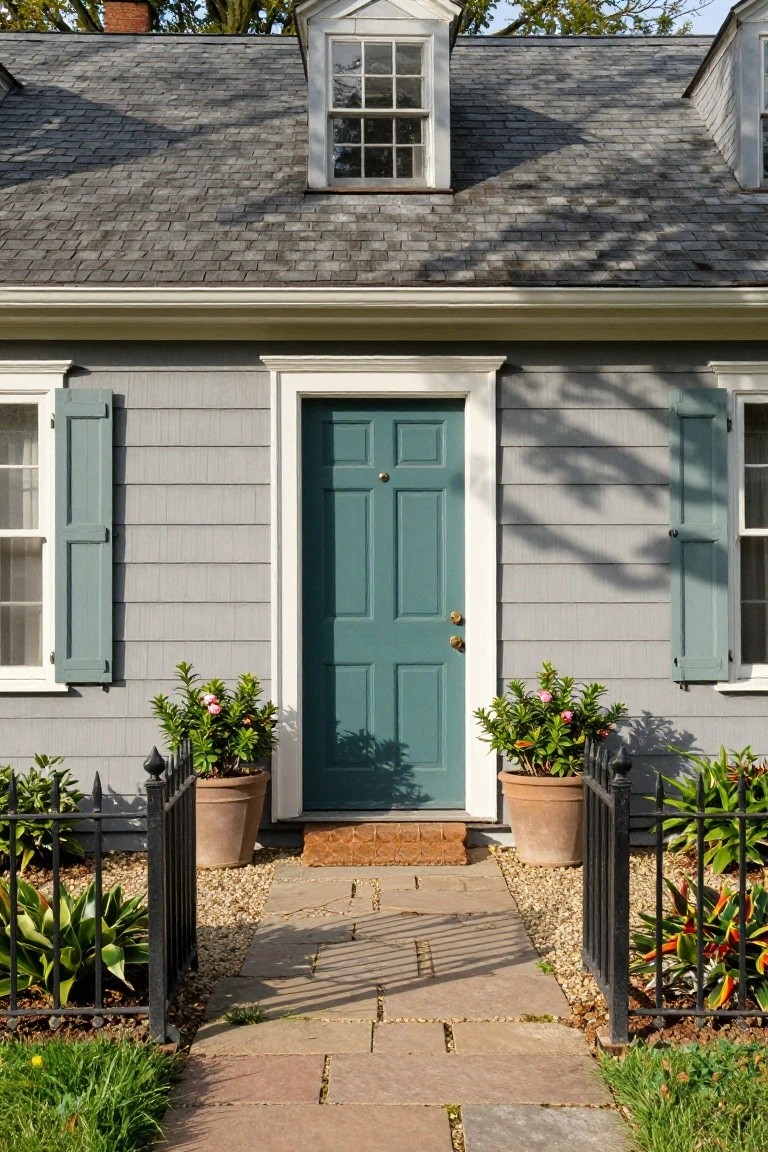
A teal front door stands out nicely against soft gray shingle siding on this small colonial. The color pulls your eye right to the entry without messing up the house’s simple lines. White trim around the door and matching shutters keep things clean and traditional.
Paint your colonial door teal if the rest of the house stays neutral. It suits older homes on the East Coast especially well. Just match the brass knob and add a couple pots nearby for planting. Skip anything too busy around the path.
Rustic Stone and Shingle Cottage Facade
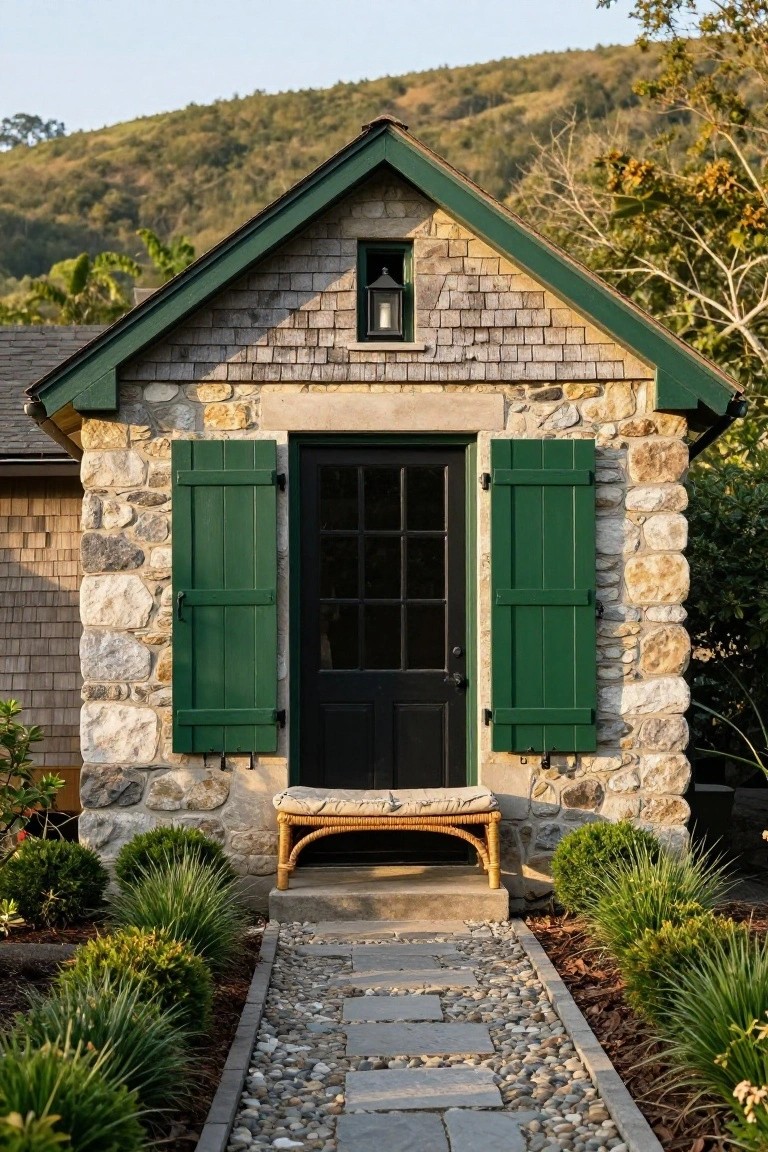
This little cottage pulls off a nice mix of rough stone walls at the base and shingled siding up top. It gives the whole thing a grounded, sturdy look that fits right into a natural spot like hills or woods. The green shutters stand out just enough to frame the door without stealing the show.
Try this on a small guest house or backyard retreat where you want colonial style that feels easy and real. Add a bench by the entry and a simple stone path edged with gravel. It suits sloped lots best. Keep the stone varied for interest, but match the shutter color to your trim so it stays cohesive.
Classic Columned Portico Entry
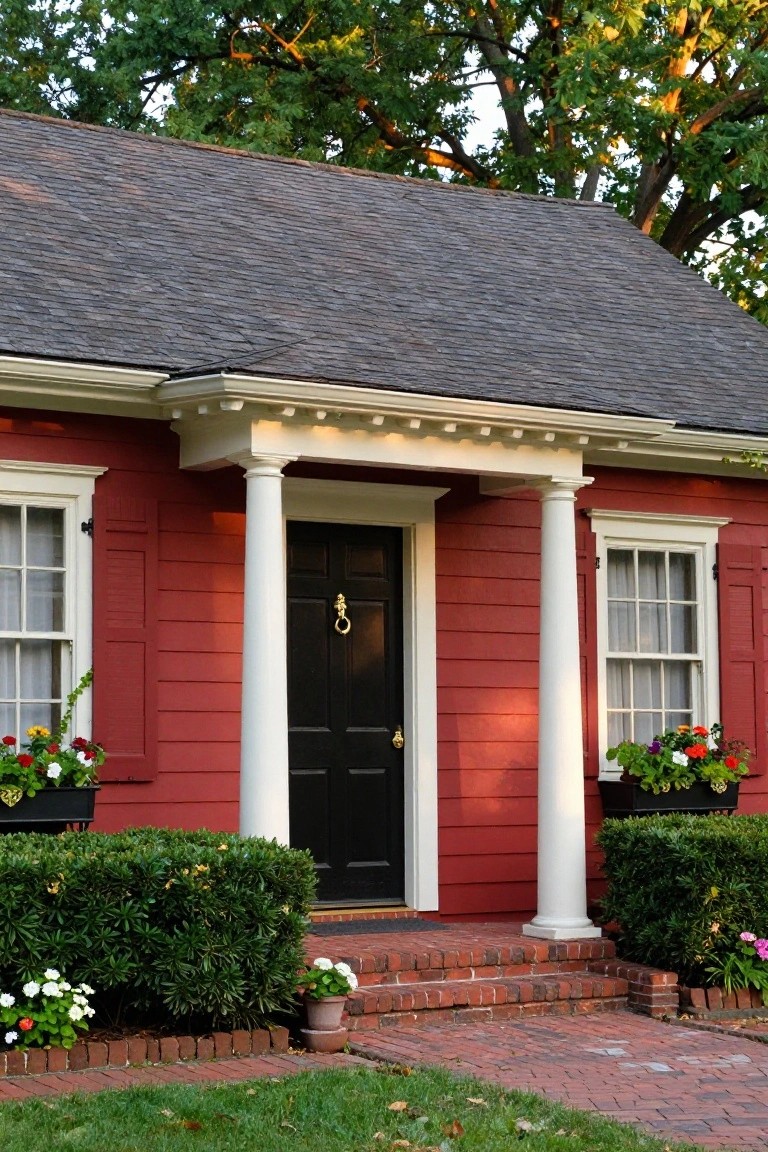
A simple portico with tall white columns frames the front door on this red colonial house. It gives the whole facade that traditional look without much effort. The black door stands out strong against the red siding, and a bit of gold hardware adds just enough polish.
This setup works best on smaller homes where you want curb appeal that feels timeless. Keep the columns plain and the plants in window boxes simple. It suits street-facing lots with a short walkway, but skip it if your front yard is too tight. Easy to add during a refresh.
Small Colonial with Navy Front Door
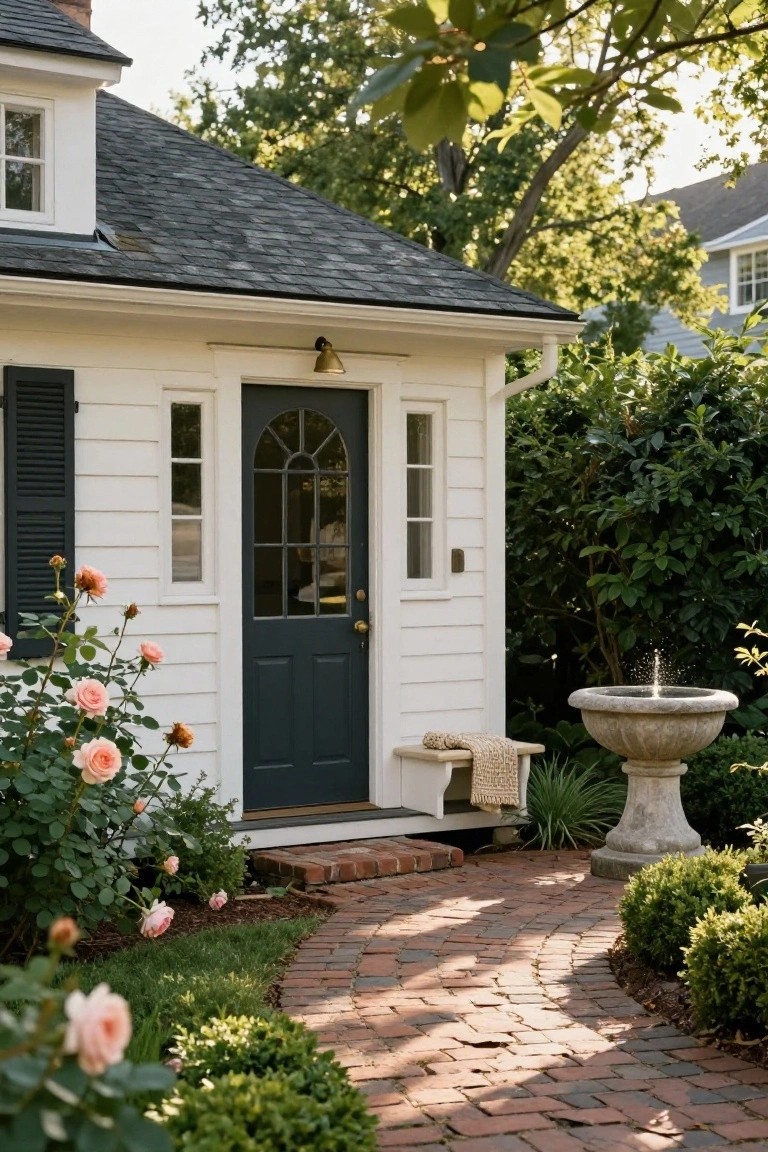
One simple way to give a small colonial house more personality is painting the front door a deep navy blue. Against the crisp white clapboard siding, it stands out without overwhelming the modest scale. That contrast draws the eye right to the entry, making the whole facade feel more welcoming and put-together.
This works best on homes with clean lines and traditional details like shutters or a fanlight window over the door. Pair it with a brick path and some roses nearby for extra charm. Just keep the rest of the trim white to let the door do its thing. It’s an easy update that fits older neighborhoods.
Classic Picket Fence Entry
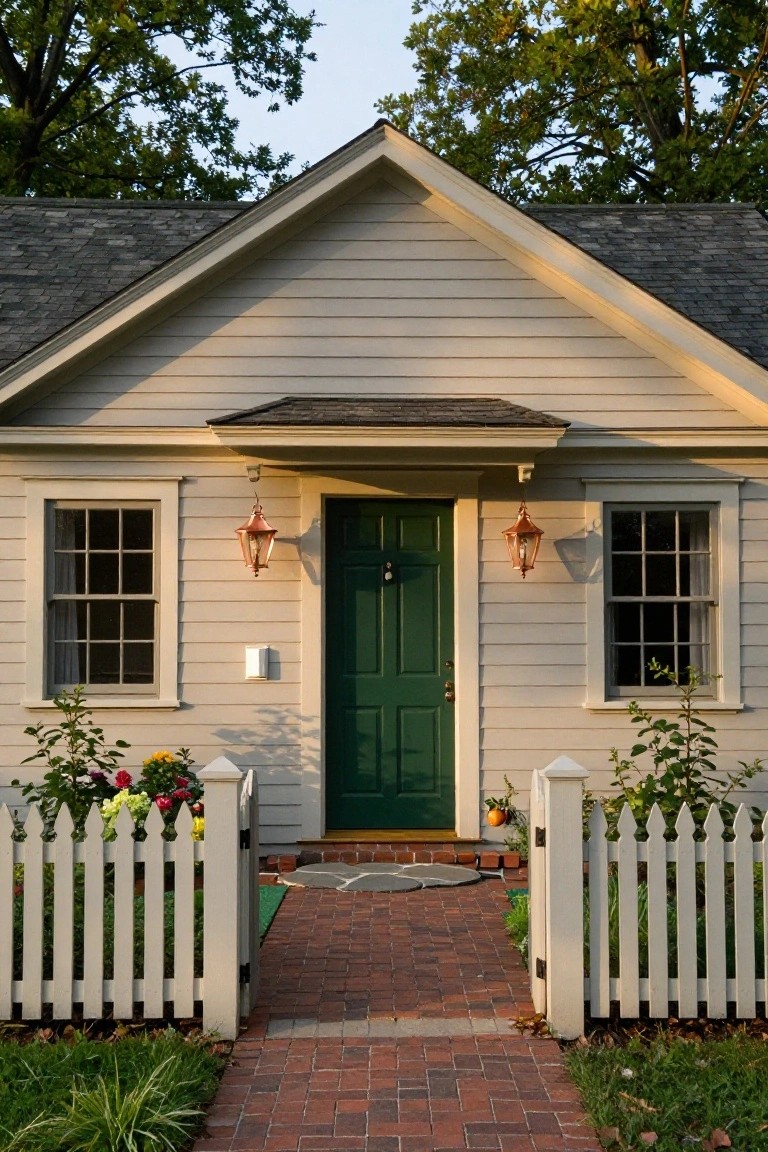
A white picket fence like this one frames the front path perfectly on small colonial homes. It adds that familiar storybook feel right at the sidewalk, drawing folks up to the door without much fuss. Here, it works alongside a brick walkway and simple gate to keep things neat and welcoming.
Try this on modest front yards where you want to highlight the entry. It suits clapboard houses with neutral siding best, especially paired with a bold green door for contrast. Just make sure the fence height stays low so it doesn’t block the house view.
White Stone Cottage Facade
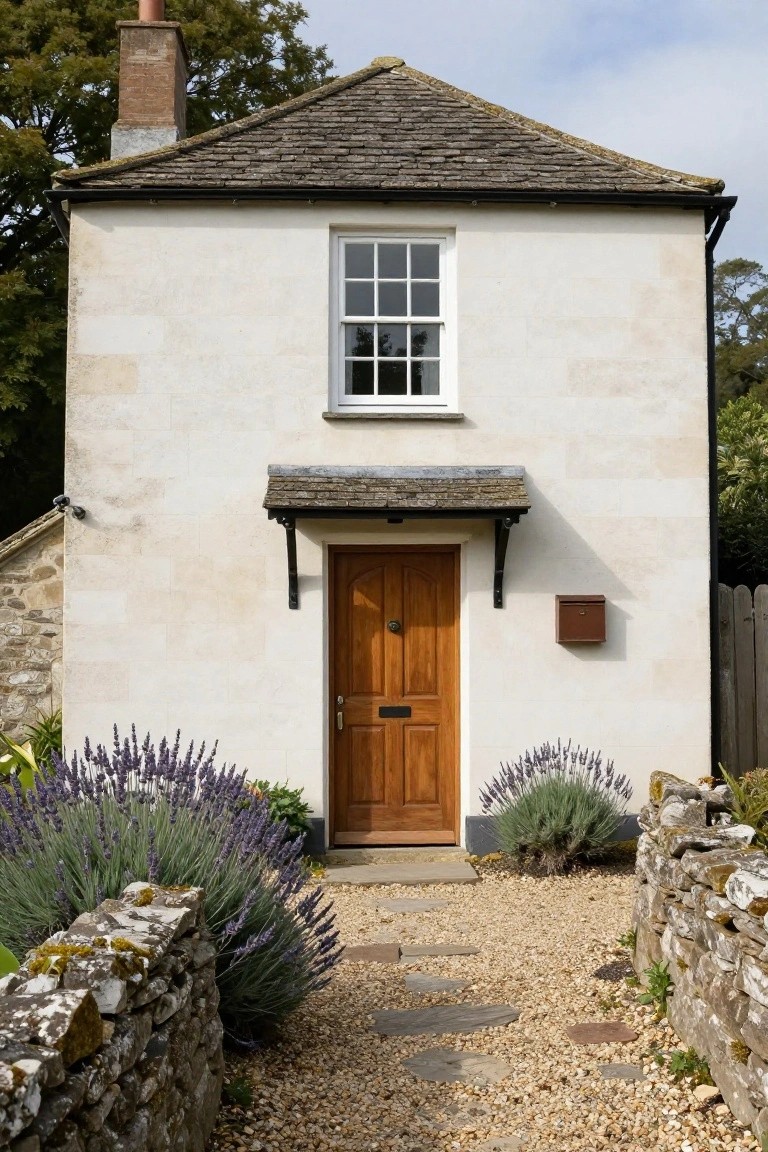
Small houses like this one pull off a lot with plain white stone walls. The soft color keeps things light and open, even on a compact build. That single sash window up top and the wooden door below give it a balanced look without trying too hard. It’s the kind of exterior that feels settled in, like it’s been there for ages.
You can use this on any modest colonial-style home facing a yard or street. Pair the stone with a simple door hood and some low plants along the path, like lavender here. It works best where you want quiet charm, not flash. Just make sure the stone render is breathable to avoid damp issues over time.
Bold Orange Front Door on a Colonial Facade
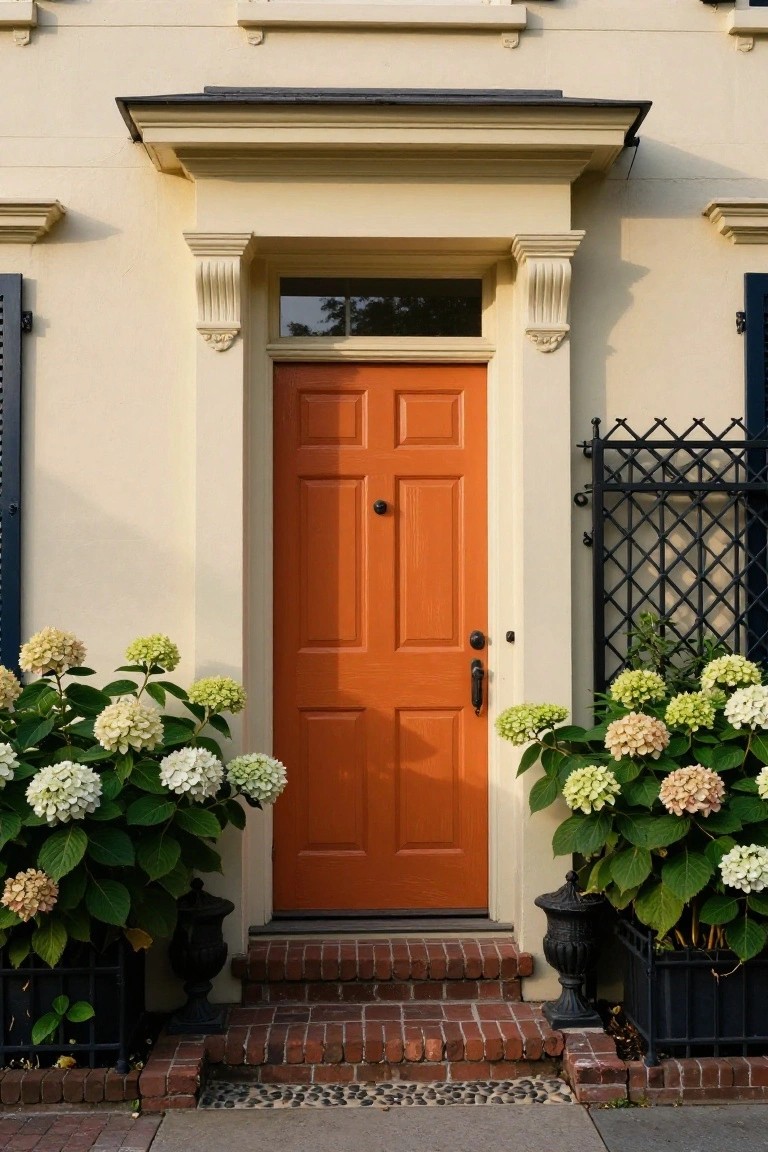
A bright orange door like this one turns a simple colonial entry into something memorable. Against the soft cream siding and black shutters, it pulls your eye right to the front without clashing. The white hydrangeas in those dark urns help tie it all together, keeping things fresh and balanced.
Try this on smaller homes where you want more personality up close. It suits classic neighborhoods, especially if the rest of the house stays neutral. Just make sure the color is a warm tone, and add some plants nearby to frame the steps. Works best on doors with clean panel lines.
Weathered Shingle Siding on Small Colonials
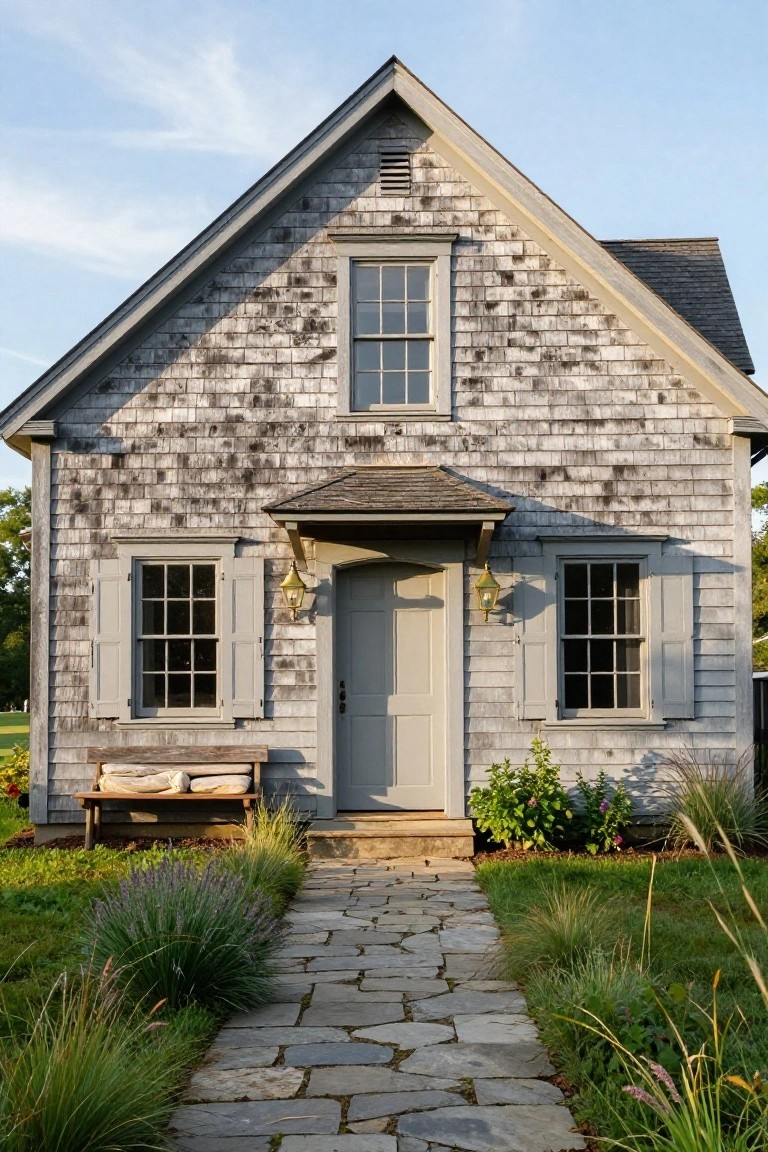
Gray shingle siding like this takes a basic colonial shape and gives it quiet personality. The uneven weathering shows up best in natural light, making the house feel settled and real instead of brand new. That front gable and simple dormer window keep the lines clean.
Try it on compact homes under 1,500 square feet, especially near water or woods where it ages gracefully. Add lanterns by the door and a rough stone path out front. Just seal the shingles at first to slow the fade if you want some control over the look.
Frequently Asked Questions
Q: Can I pull off a bold front door color on my small colonial without it looking out of place?
A: Go for it with a deep navy or brick red, but pair it with neutral siding like soft white or beige. That contrast pops the charm right up front. Frame it with symmetric planters to keep things balanced.
Q: What’s the quickest fix for faded shutters on a tiny colonial facade?
A: Swap them out for fiberglass ones that mimic wood. They install in hours and hold paint forever. Pick louvered styles in black or hunter green to frame your windows perfectly.
Q: How do I blend my attached garage into the colonial vibe?
A: Paint it the same as the house and add divided-light windows up top. Hang carriage-style lanterns on brackets. Now it feels like part of the original design… not an add-on.
Q: Do window boxes work on a small house, or will they overwhelm it?
A: They fit great if you keep them shallow and under six feet long. Stuff with trailing ivy and seasonal blooms that nod to the era. Your place gains instant warmth.
