

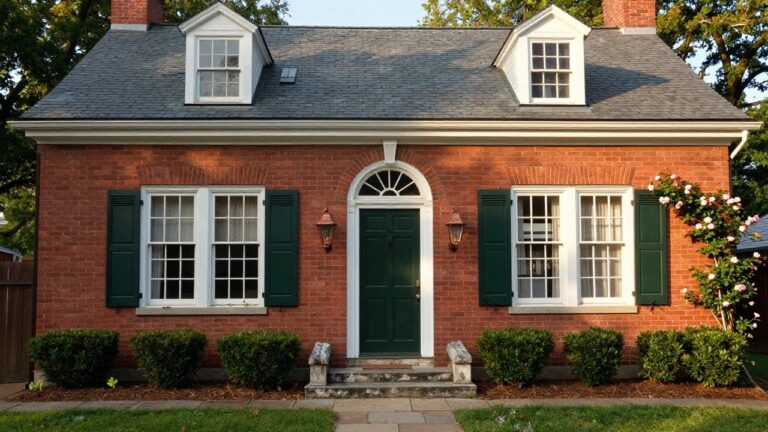
When you approach a colonial house, the windows frame the entire facade and instantly signal its character from the curb.
I once overlooked how mismatched panes on an old place made the whole front feel heavy and dated.
They work best when they echo the roofline and siding without overpowering the entry.
Symmetry pulls it all together.
A few tweaks like these can refresh your own home in ways worth sketching out for real.
Framing Windows with Green Shutters
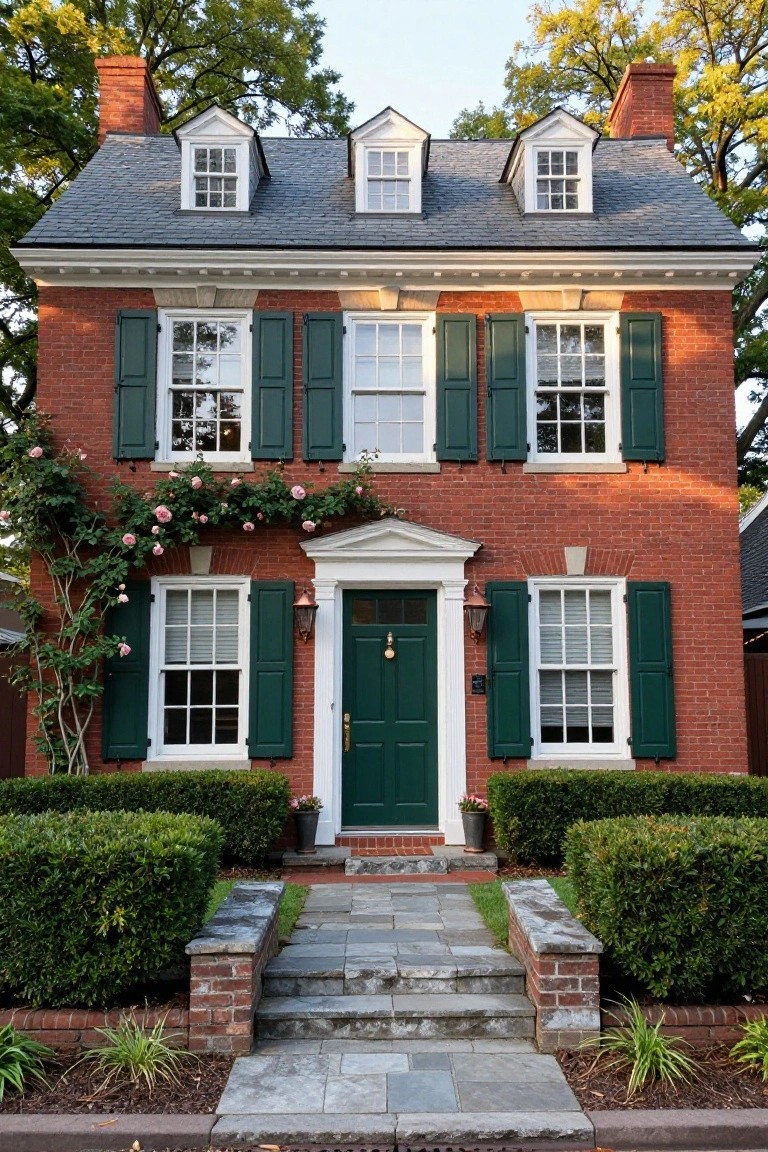
Green shutters work well on colonial homes like this one. They frame the tall multi-pane windows and pick up the door color for a pulled-together look. Against red brick, the green adds contrast without overwhelming the facade. It’s a simple way to nod to tradition while keeping things fresh.
Try this on brick or stone houses in older neighborhoods. Match shutters to your door or trim them in white for crisp lines. Just keep them board-and-batten style to stay true to colonial roots. Avoid bright shades. Stick to deep green for that lived-in feel.
Window Flower Boxes Add Simple Charm
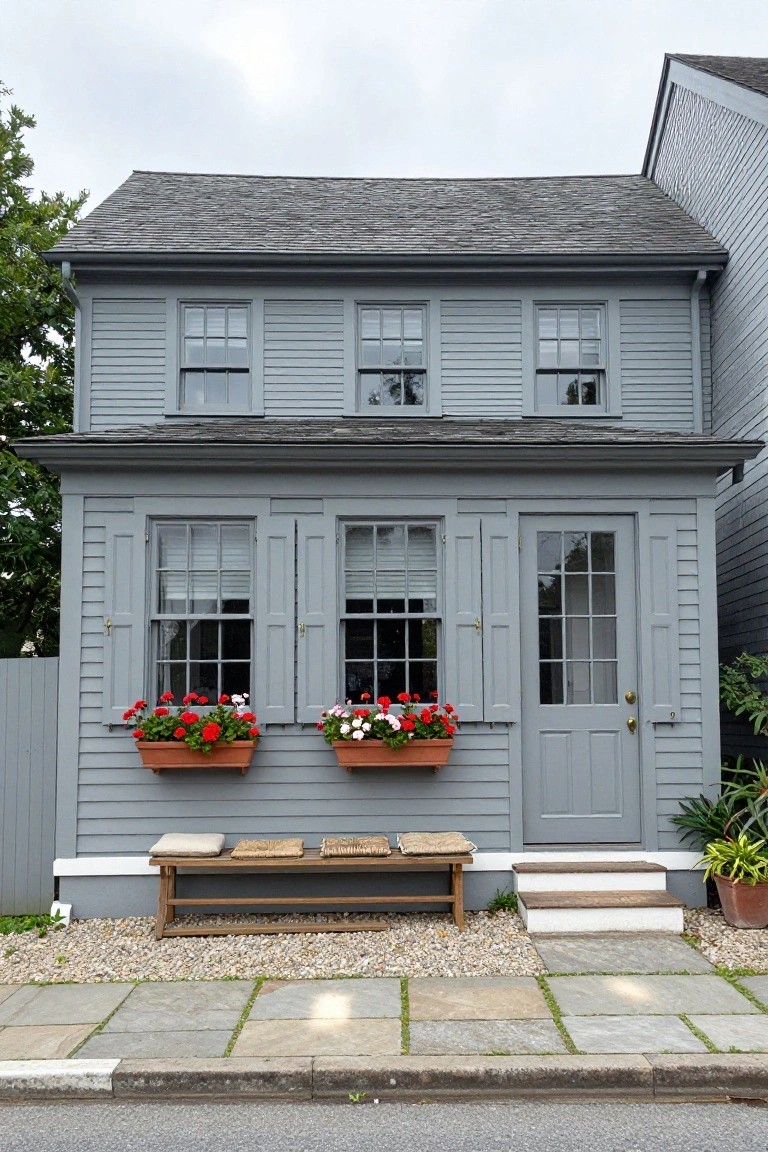
Flower boxes under the windows give this colonial house a fresh, lived-in feel. The red geraniums spilling out contrast nicely with the gray clapboard siding, drawing the eye without overwhelming the clean lines. It’s a classic touch that nods to old New England homes.
You can easily add them to your own place, especially if you have multi-pane windows like these. Go for terracotta boxes to keep it traditional, and choose plants that trail a bit for that soft drape. They work great on smaller facades facing the street… just make sure to water them regularly so they don’t wilt in the sun.
Dark Shutters Frame Multi-Pane Windows
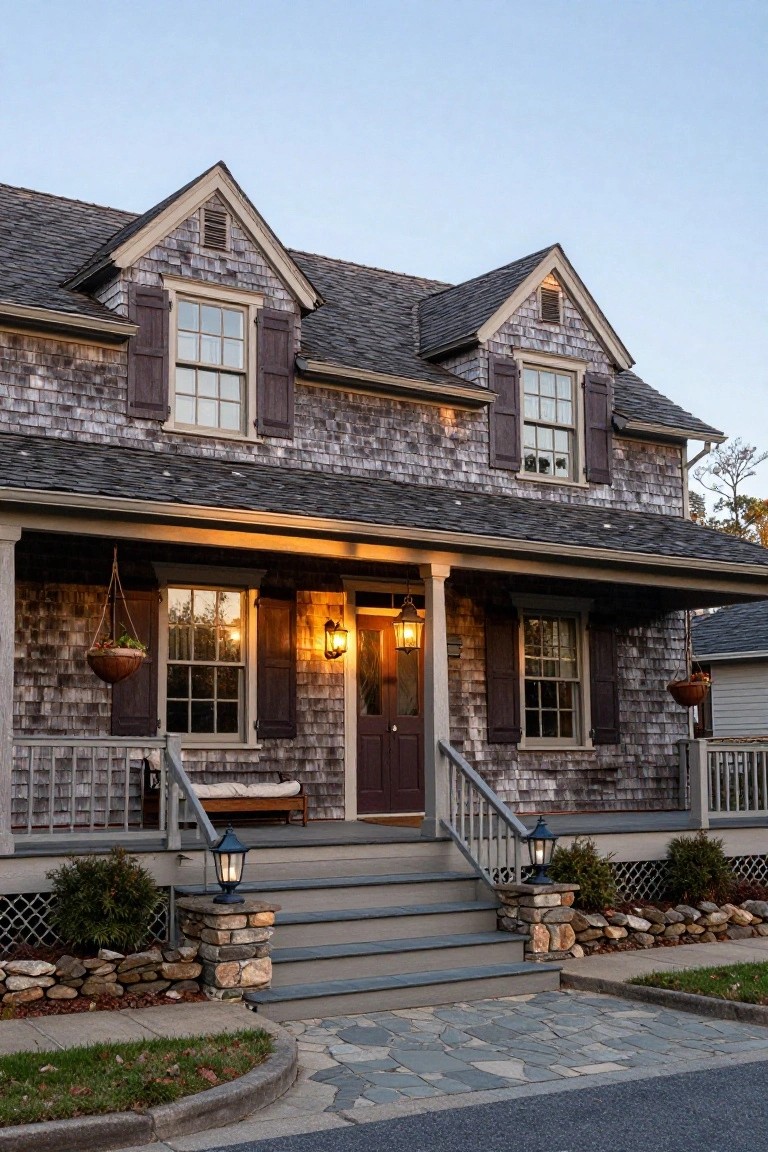
Dark shutters like these work well on shingle-style colonials. They pull focus to the multi-pane windows without overwhelming the facade. The contrast against light gray siding makes everything feel crisp and put-together. It’s a simple way to add that old-school charm folks notice right away.
Put them on homes with varied rooflines or porches. They suit coastal or country settings best, where you want subtle definition. Size them to match the windows, and skip painting if you like the weathered look. Keeps maintenance low too.
Colonial Windows with Black Shutters
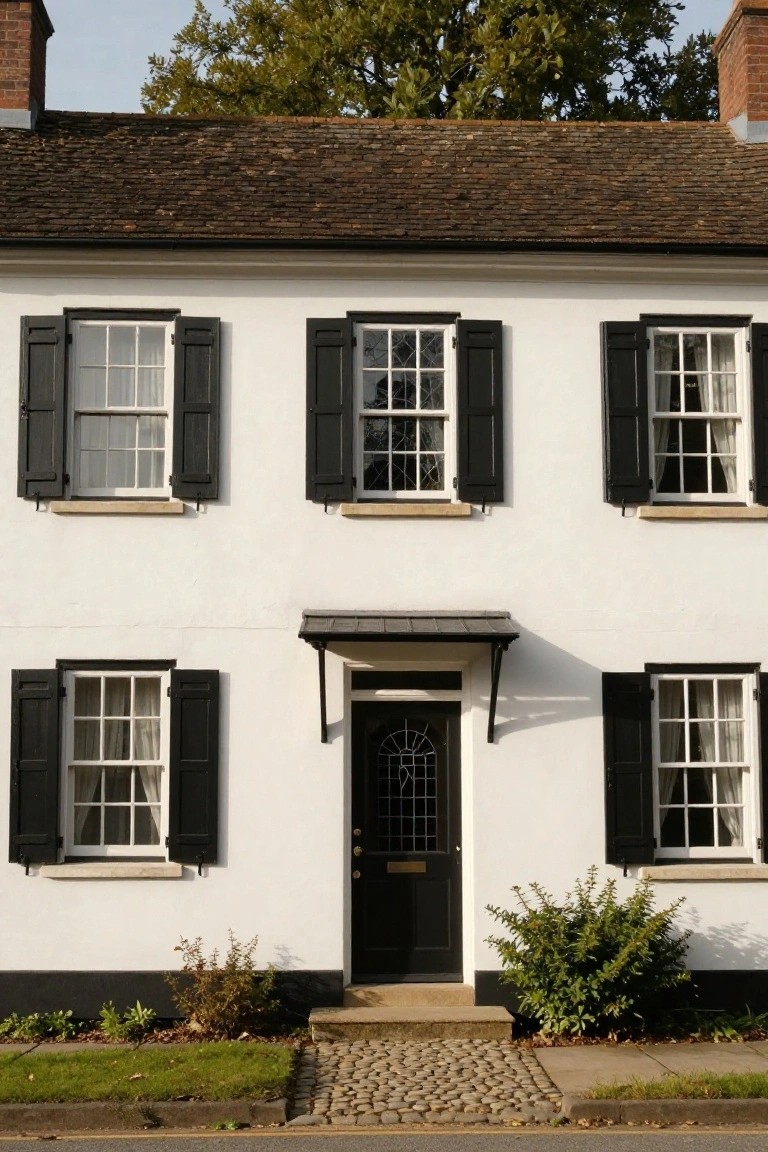
Black shutters on a white house like this one give the windows real definition. They frame those multi-pane sashes nicely and pull the whole front together. The contrast makes the place look sharp and put-together without much fuss.
You see this a lot on older colonial homes and it works just as well on updates. Pair them with a black door if you can. Keep the shutters simple, no louvers if you want that clean look. It suits narrow streets or town settings best.
Navy Shutters Frame Colonial Windows
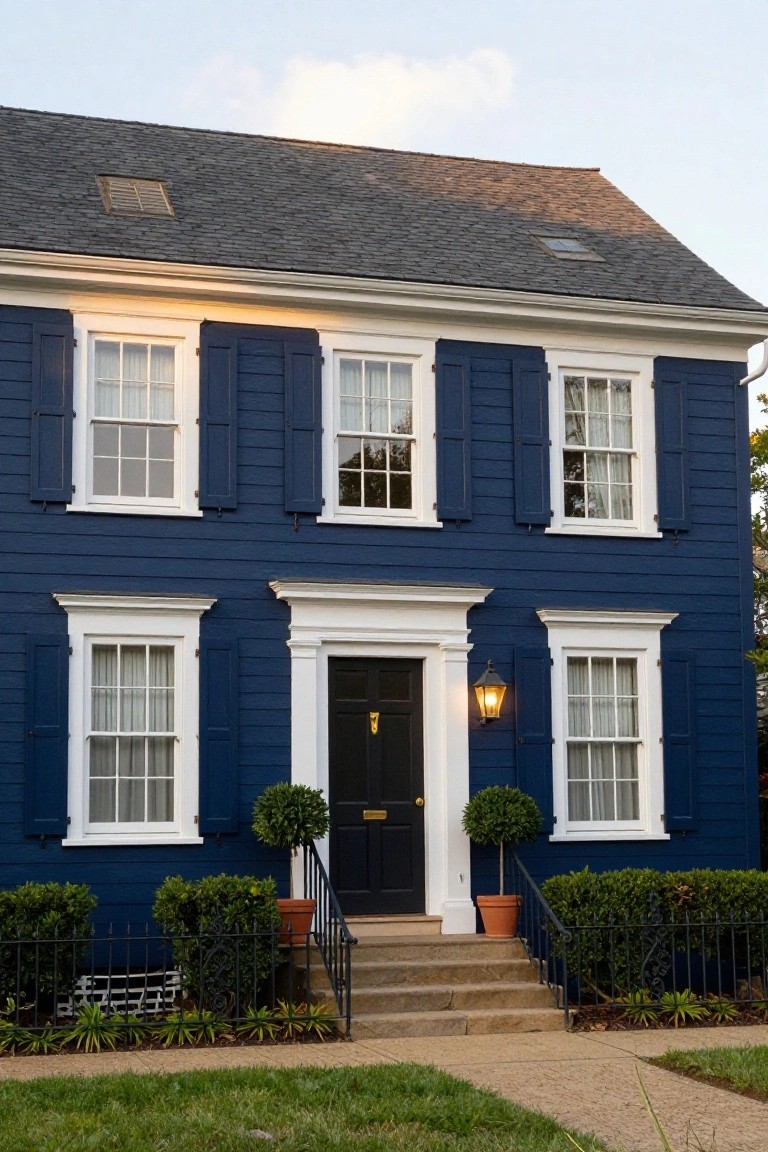
Navy shutters pulled tight against the house siding do a nice job drawing attention to these classic multi-pane windows. The dark color picks up the blue paint on the house itself, so everything ties together without much fuss. White trim around the windows keeps things crisp, and the symmetry across the front makes the whole facade feel balanced and put-together.
You can pull this off on most colonial or traditional homes where windows line up evenly. Go for shutters in a shade close to your siding for that pulled-in look, especially if your house faces north or gets partial shade. Just make sure they operate smoothly if you want the practical side too. Boxwoods by the door add a little green punch without overdoing it.
Flower Boxes for Colonial Windows
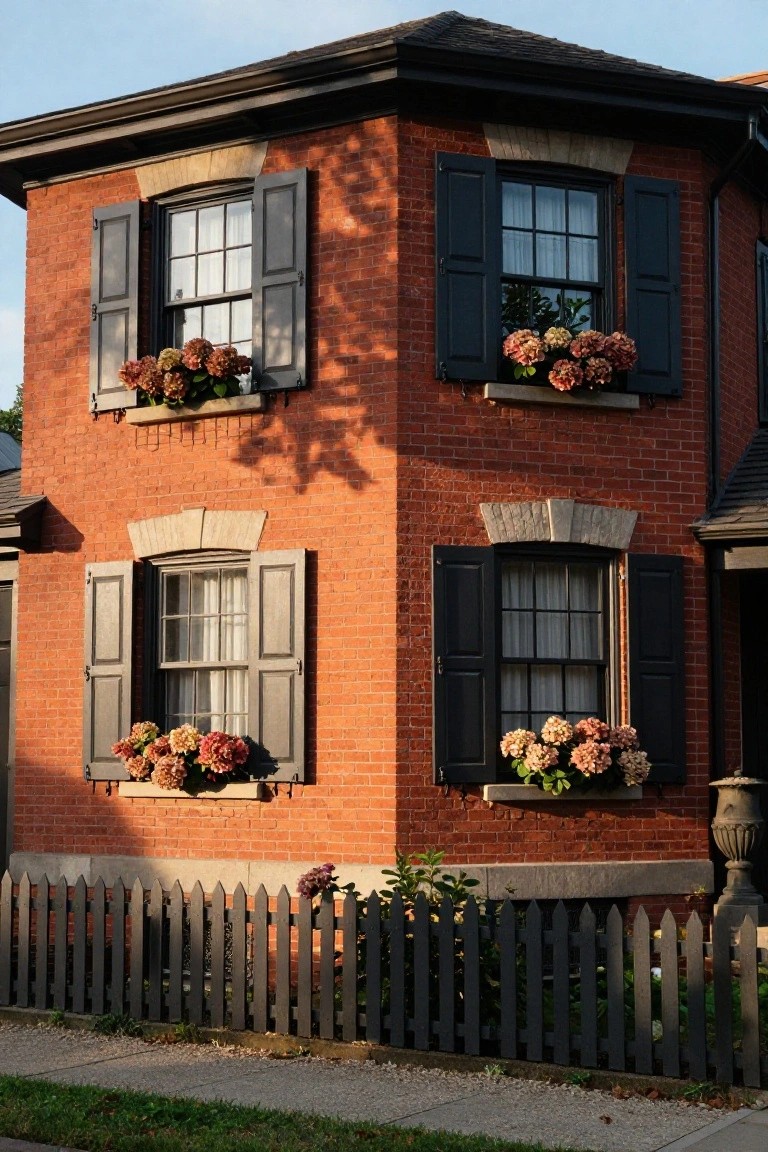
Window boxes packed with hydrangeas give this brick colonial a fresh, lived-in look. The pink and peach blooms spill over the dark shutters and red brick, pulling the eye up to those tall, narrow windows without much fuss. It’s a simple way to add color and texture to a plain facade.
Try them on upper-floor windows where they hit at street level. They suit older brick homes with classic six-over-six panes best. Go for sturdy boxes that match your trim color, and swap plants with the seasons to keep things easy. Just check they drain well so roots don’t rot.
Weathered Shutters on Colonial Windows
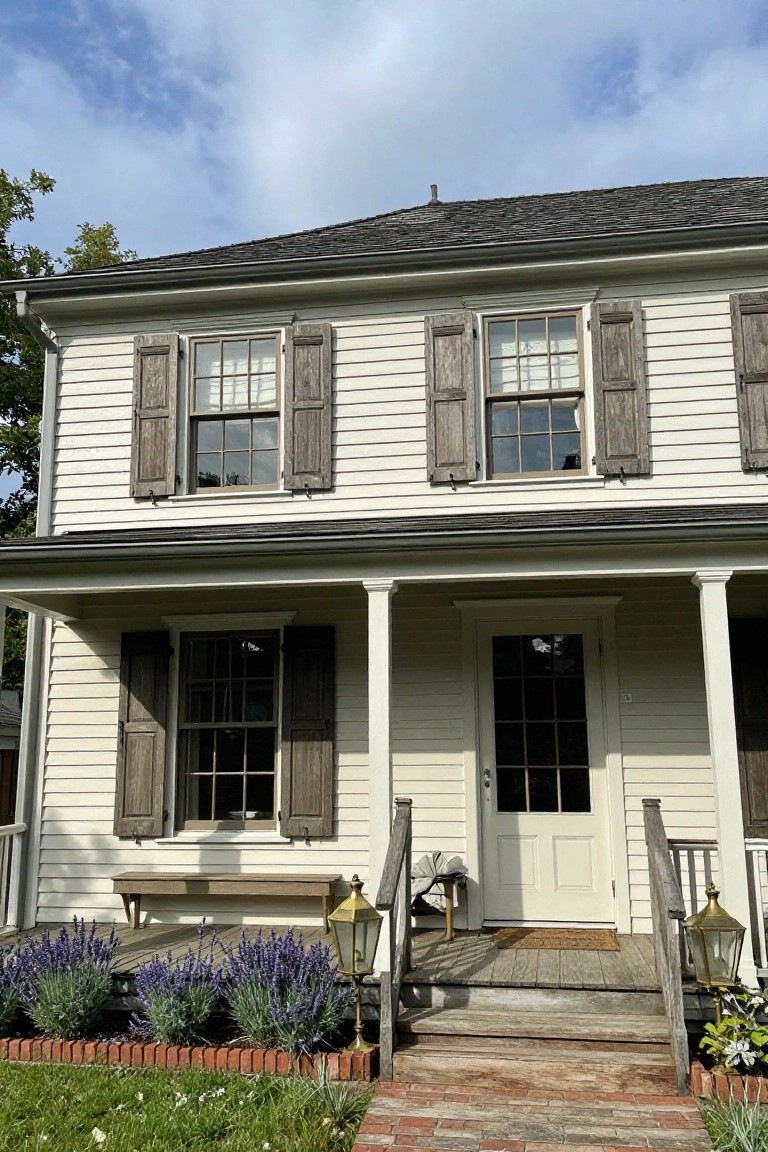
Wooden shutters like these give colonial windows that lived-in charm without much effort. They sit loose on the white clapboard siding, framing the multi-pane glass just right. It’s a look that nods to older homes but fits new ones too. The weathered finish keeps things from feeling too crisp.
You can add them to any front-facing windows for better curb appeal. They suit two-story houses with porches best, especially where you want a bit of texture against plain siding. Just make sure they match the window size, and don’t bother painting if you like the natural patina… it holds up over time.
Sash Windows with Climbing Ivy
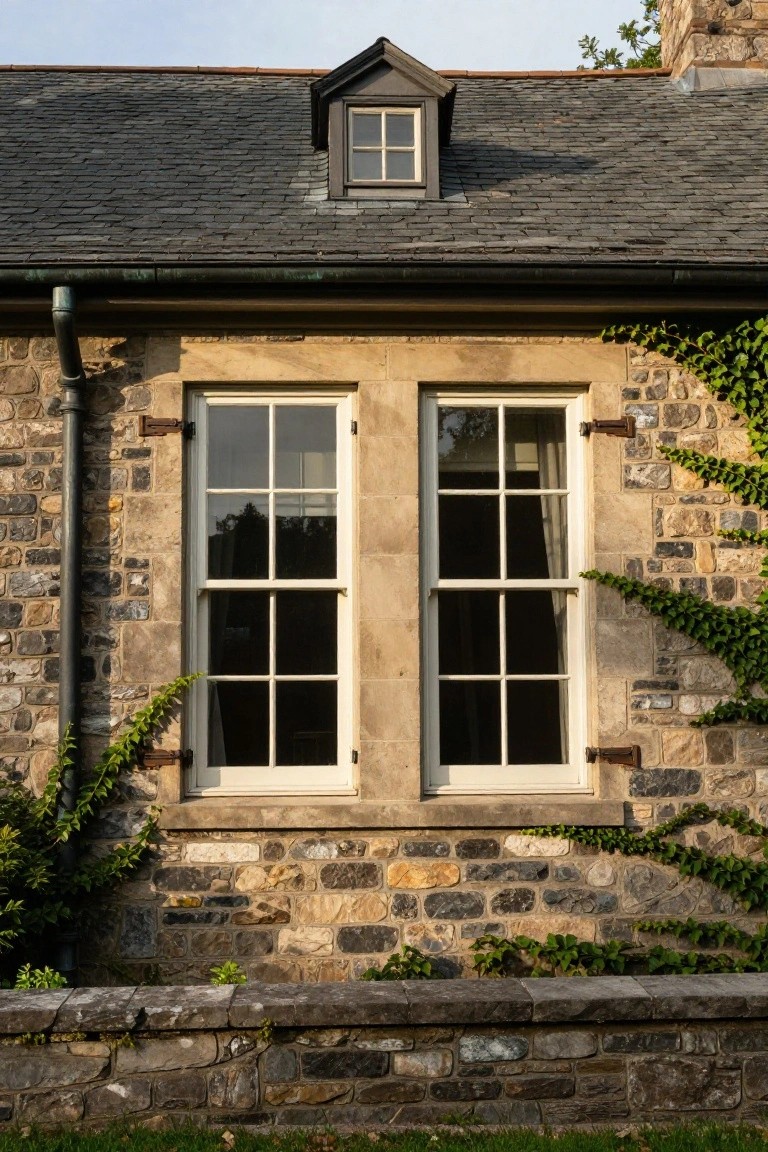
Old Colonial homes often have those tall sash windows divided into small panes. Here, the ivy grows right up around them on the rough stone walls, softening the look without hiding the windows. It gives the house a cozy, established feel that pulls you right in from the street.
You can add ivy like this to stone or brick facades for easy curb appeal. Just pick a hardy climber and guide it along the edges. It works great on homes in wooded areas or older suburbs, but trim it back yearly to keep things neat.
Classic Black Shutters on Colonial Windows
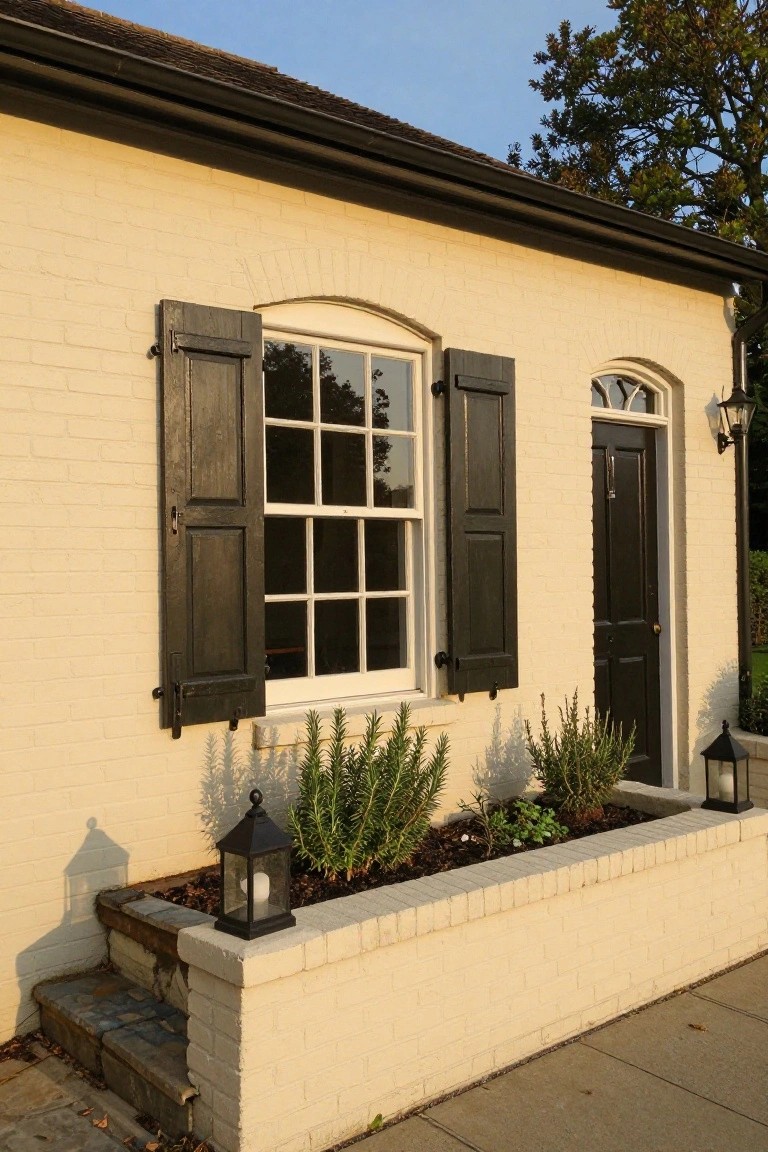
Nothing says traditional Colonial quite like black wooden shutters framing those classic multi-pane windows. They add a sharp contrast against lighter brick walls, making the facade pop without much effort. In this setup, the shutters are slightly open, hinting at that old-world feel while keeping things practical.
These work best on homes with neutral tones like soft beige or cream brick. Pair them with divided-light windows, maybe six over six, for authentic charm. They’re forgiving on maintenance if you pick durable wood or fiberglass. Just keep the hinges oiled… they swing nicely in the breeze.
Classic Porch Flower Boxes
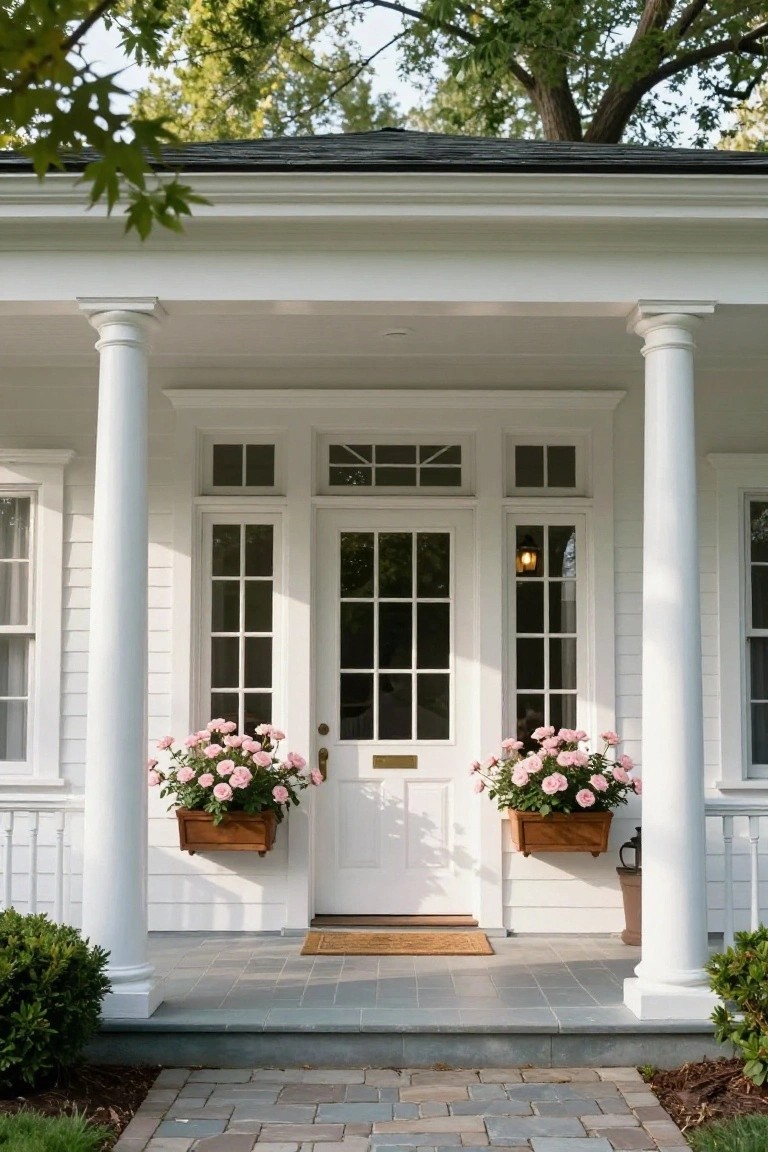
Flower boxes tucked under the porch roof on those tall white columns catch your eye right away in a colonial setup. They add a soft touch of color and life without overwhelming the clean lines of the house. Pink blooms spilling over the edges here keep things fresh and pretty, tying right into the symmetry of the multi-pane windows and door.
These work best on a front porch where you want easy curb appeal. Hang wooden boxes from the columns flanking your entry, pick flowers that nod to the season, and keep them watered. They suit traditional homes with clapboard siding, but watch the scale, smaller ones can look lost on bigger porches.
Gray Shutters Accent Colonial Windows
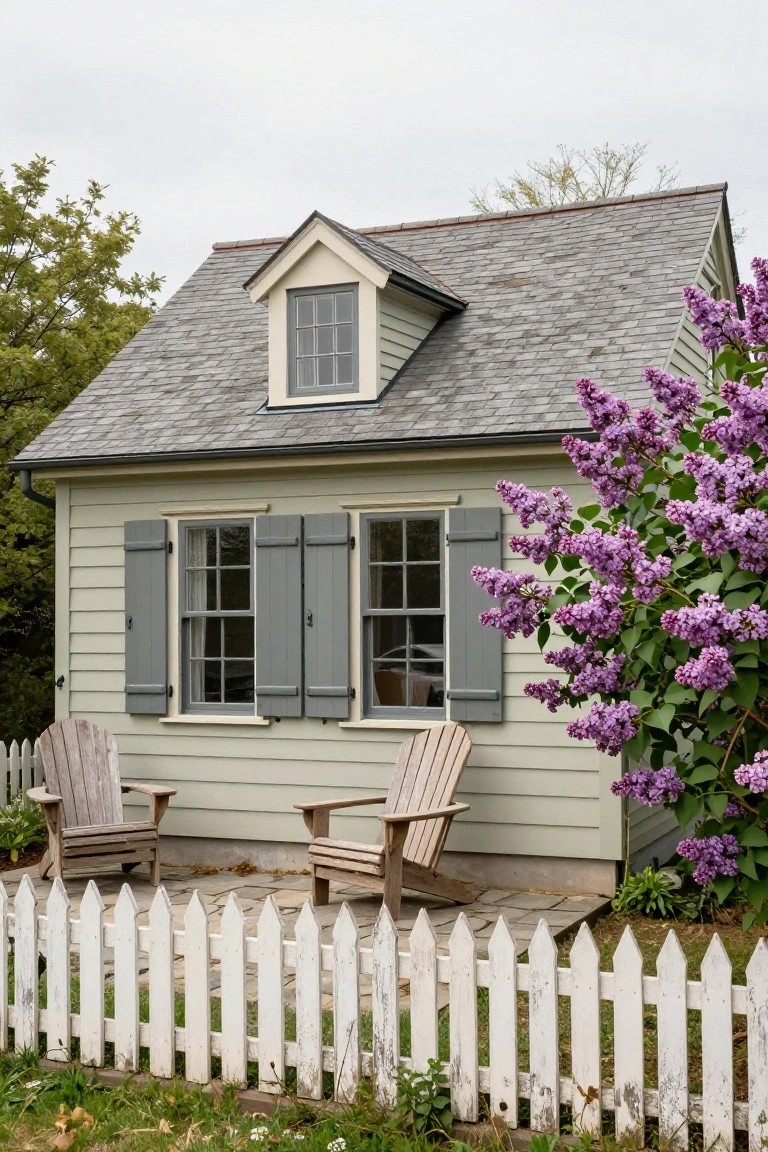
Gray shutters like these pull focus to the multi-pane windows on a colonial house. They give the facade a clean, put-together look without much fuss. The soft green siding lets the darker shutters stand out just right, making the whole side of the house feel balanced and welcoming.
You can use this on any colonial or cape-style home, especially smaller ones where windows need to shine. Stick to a shade darker than your siding, and match the window count on each shutter. It works best facing the street or side yard. Skip it if your house has super modern lines, though.
Symmetrical Windows Bring Balance to Colonial Facades
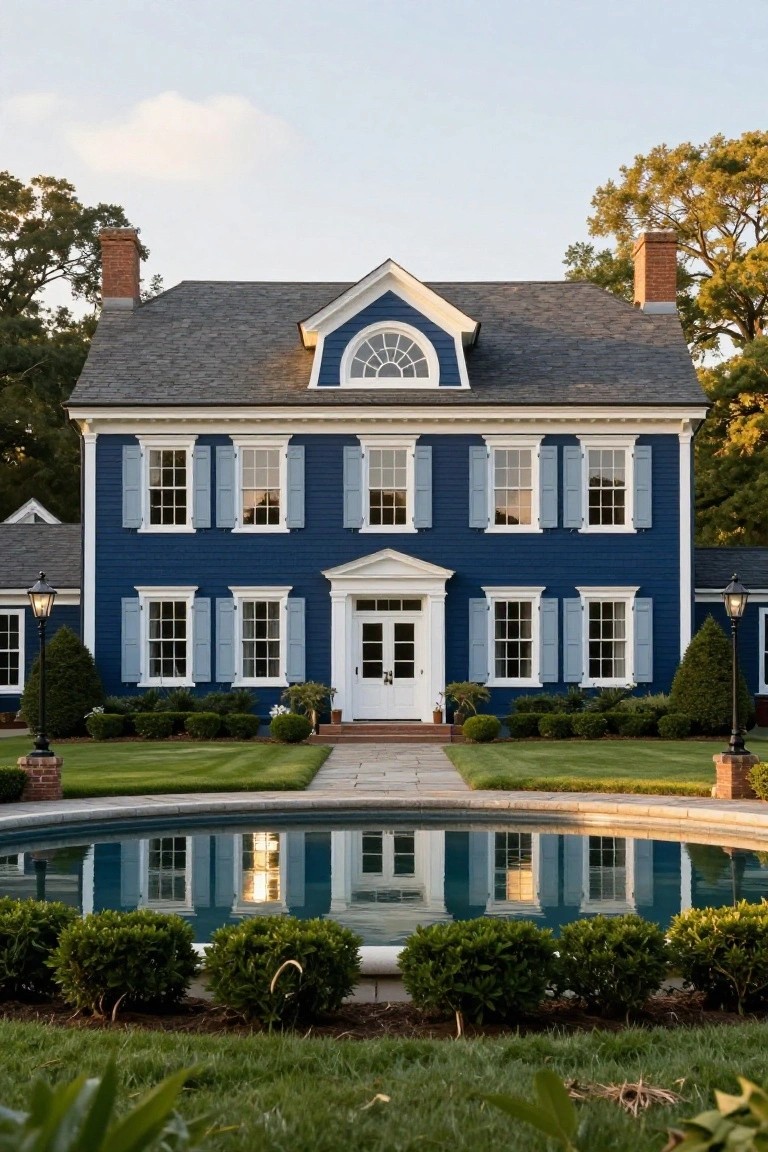
Colonial homes often shine with their even rows of tall, multi-pane windows. Here, they’re spaced perfectly across the navy blue siding, each one flanked by matching blue shutters. White trim around the frames and that half-round window up top keep everything crisp and tied together. It’s a simple setup that makes the whole front feel steady and welcoming, without any fuss.
You can pull this off on most traditional two-story homes facing the street. Pair the windows with a bold house color like navy, then match the shutters close but not exact. Just make sure the proportions fit your roofline and entry door. It works best where you want curb appeal that lasts, not trends.
Brick Window Boxes Boost Curb Appeal
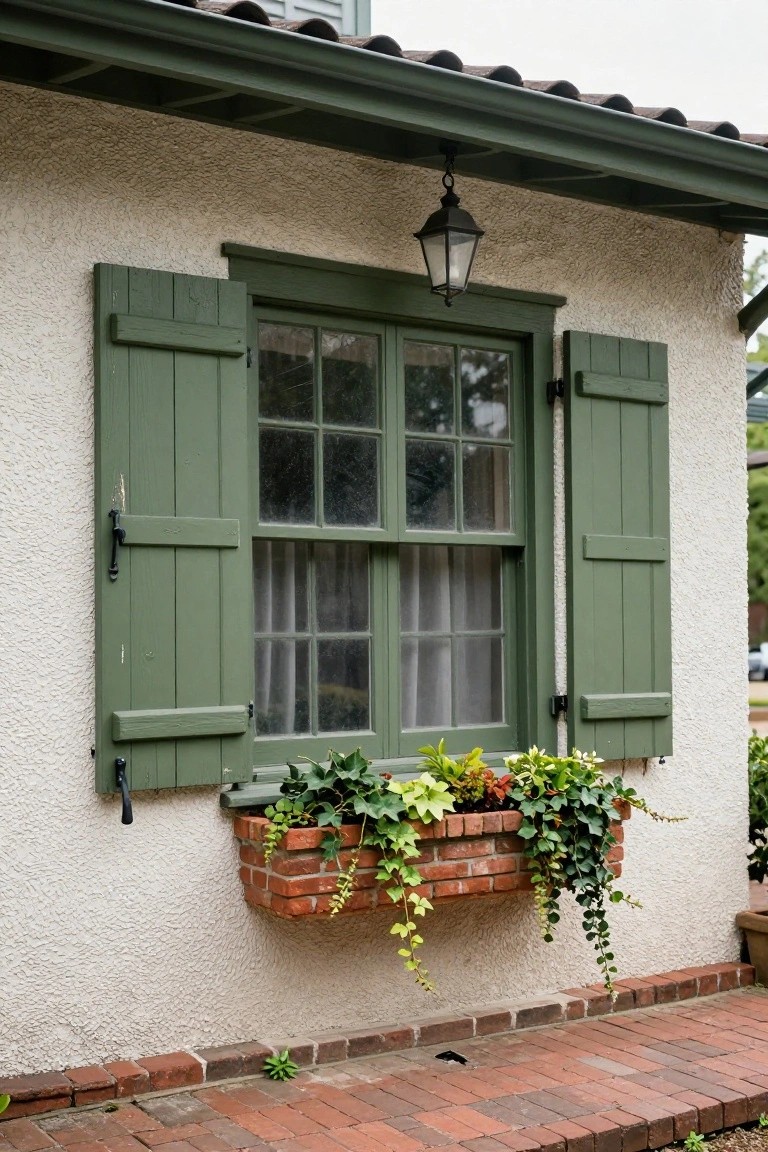
Window boxes tucked right under the sill can really wake up a colonial exterior. This brick one overflows with ivy and a mix of flowers, softening the plain stucco wall while highlighting the classic nine-over-nine window and green shutters. It’s a simple way to add life without much fuss.
Try this on homes with straightforward facades, especially where windows line up neatly. Brick holds up year-round, and trailing plants like ivy keep it looking full even as seasons change. Skip it on super-modern houses… it shines on older styles instead.
Recommended Products

Complete Mounting Hardware Included: Comes with mounting hardware (shutter loks and Zinc Coated Screws) for easy installation

MATERIAL - Industry standard sturdy Wrought Iron Metal material is used to craft this Removable Pin Pintle Hinges. Our exclusive rust resistant Black powder coating gives a classy rustic colonial finish to these offset shutter hinges. These are suitable reclaiming a wide range of internal or external windows, doors, shutters or gates.

Heavy Cast-Iron For Durability
Black Shutters Frame Colonial Windows
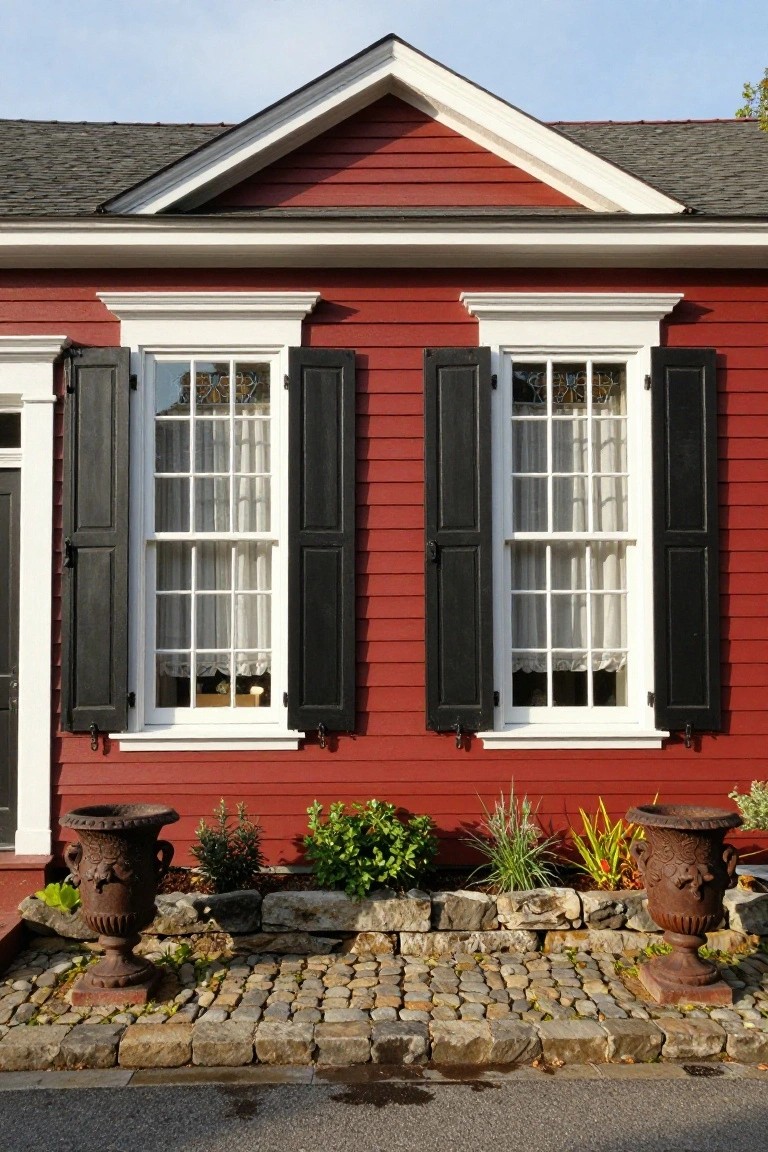
Black shutters like these pull focus to the multi-pane windows on a Colonial house. Against red siding and white trim, they create clean lines that make the whole facade feel put-together and traditional. It’s a simple way to add some punch without changing much.
This setup shines on older homes or ones with clapboard siding. Pair them with matching hardware, and keep them sized right to the windows. Skip it on super modern places, though. It suits front-facing spots where you want that classic street view.
Bay Windows with Leaded Glass
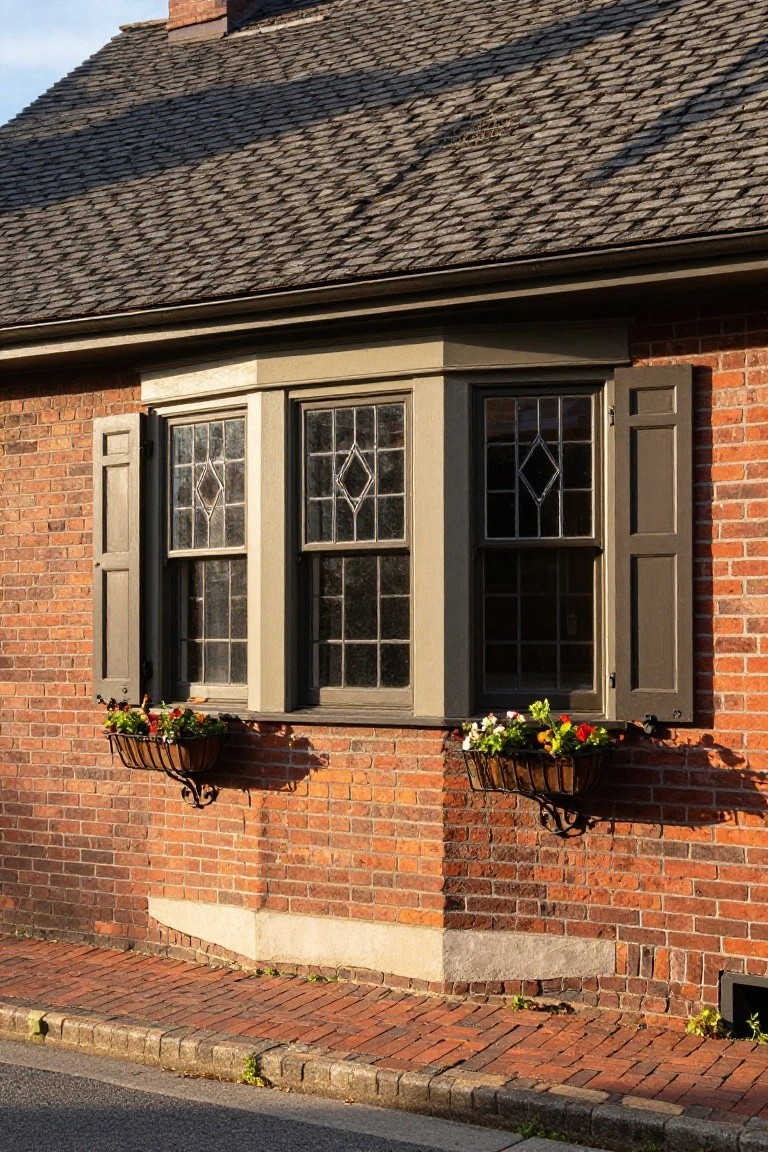
Bay windows like this one bring a touch of old-world detail to colonial homes. The diamond-patterned leaded glass catches the light just right, and paired with simple wooden shutters, it gives the facade that classic look without trying too hard. Flower boxes underneath add a bit of color and softness to the brick wall.
These work best on brick or stone houses where you want to highlight the architecture. Hang the boxes at window height with seasonal flowers to keep it fresh. They suit quieter street sides or corners, but skip them if your climate means too much upkeep… or go with low-water plants.
Navy Shutters on White Colonial Siding
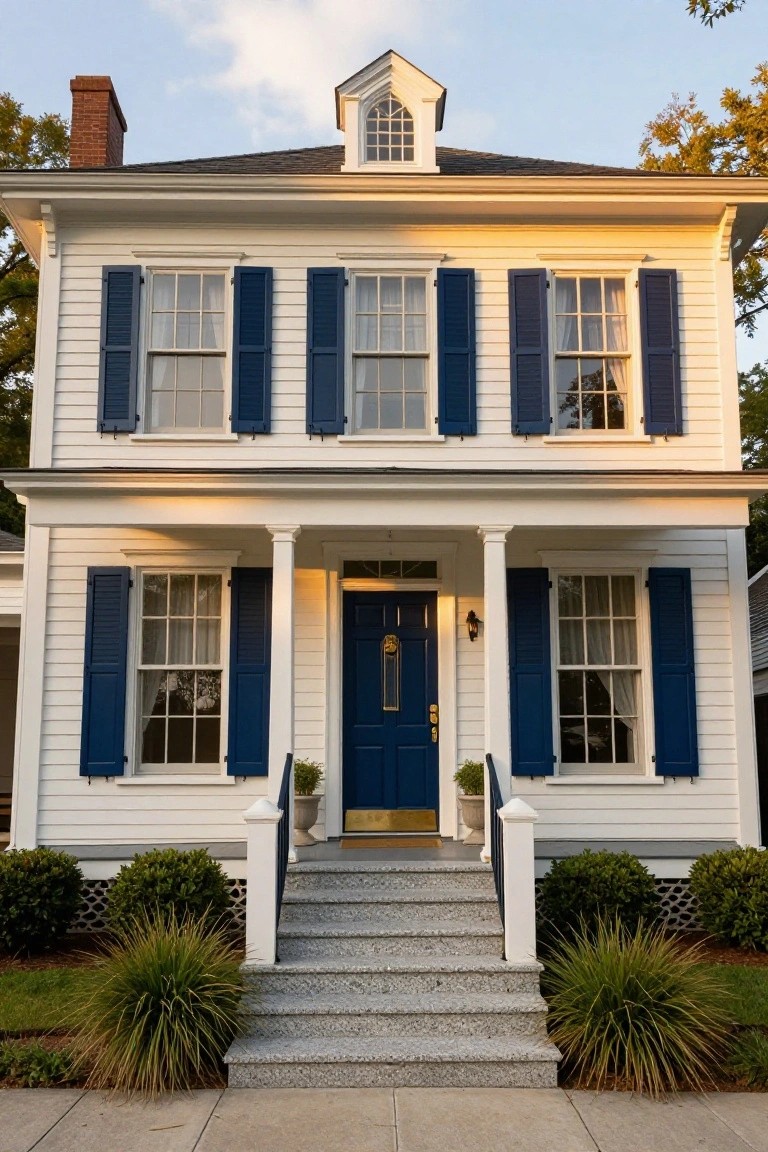
Navy blue shutters give this white colonial house a sharp, traditional edge. They frame the multi-pane windows just right, making the whole facade feel put-together without much fuss. The color pops against the clean white siding, and pulling the door in the same shade keeps things simple and strong.
You can pull this off on most two-story homes with good window placement. It suits older neighborhoods or suburbs where you want curb appeal that lasts. Just stick to one strong accent color, and skip lighter blues that might fade. Pairs well with columns or steps for that extra welcoming touch.
Classic Multi-Pane Windows with Shutters
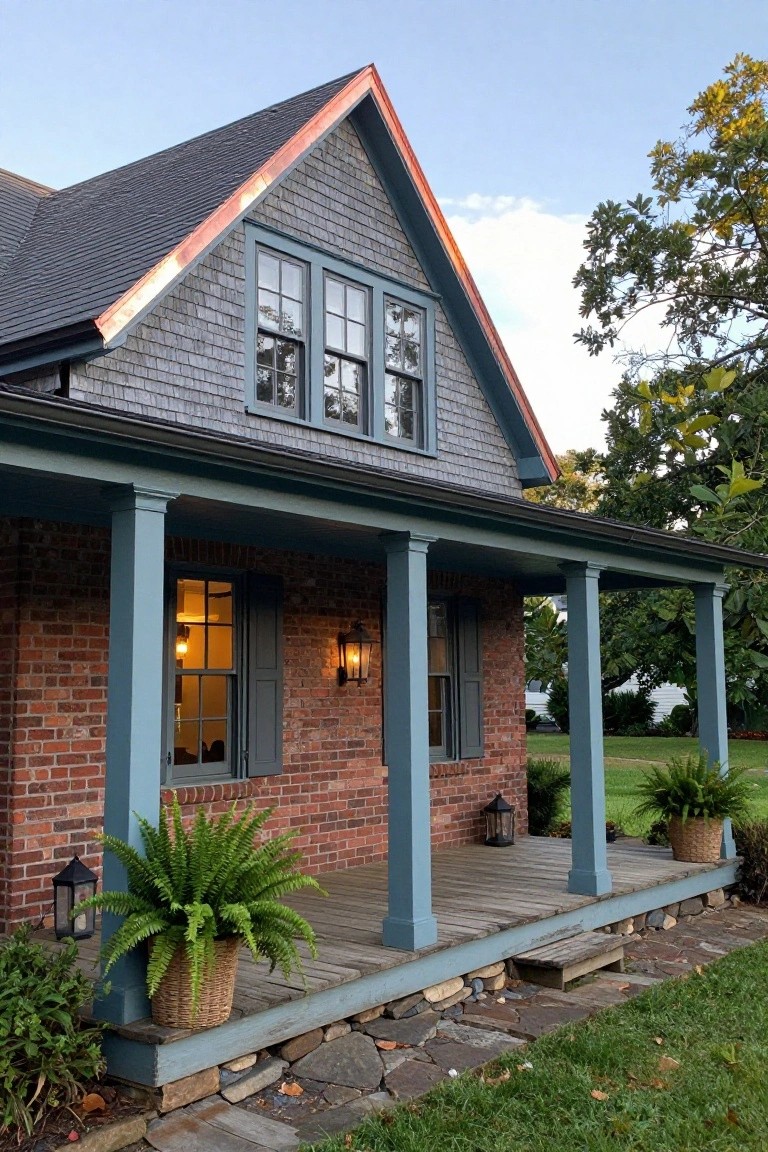
Multi-pane windows like the six-over-six style shown here give a colonial house that straightforward, timeless look. Paired with matching louvered shutters, they stand out against a brick base and shingle siding without much fuss. The blue trim pulls it all together, making the windows feel like a natural part of the porch setup. It’s a simple choice that adds character to the facade.
These windows work best on homes with porches or entryways where you want some height and proportion. Paint the trim to echo the porch columns, and keep shutters in a muted gray or green. They suit older brick or mixed-material houses in milder climates. Just make sure the glass is double-paned for energy savings.
Bay Windows Boost Colonial Curb Appeal
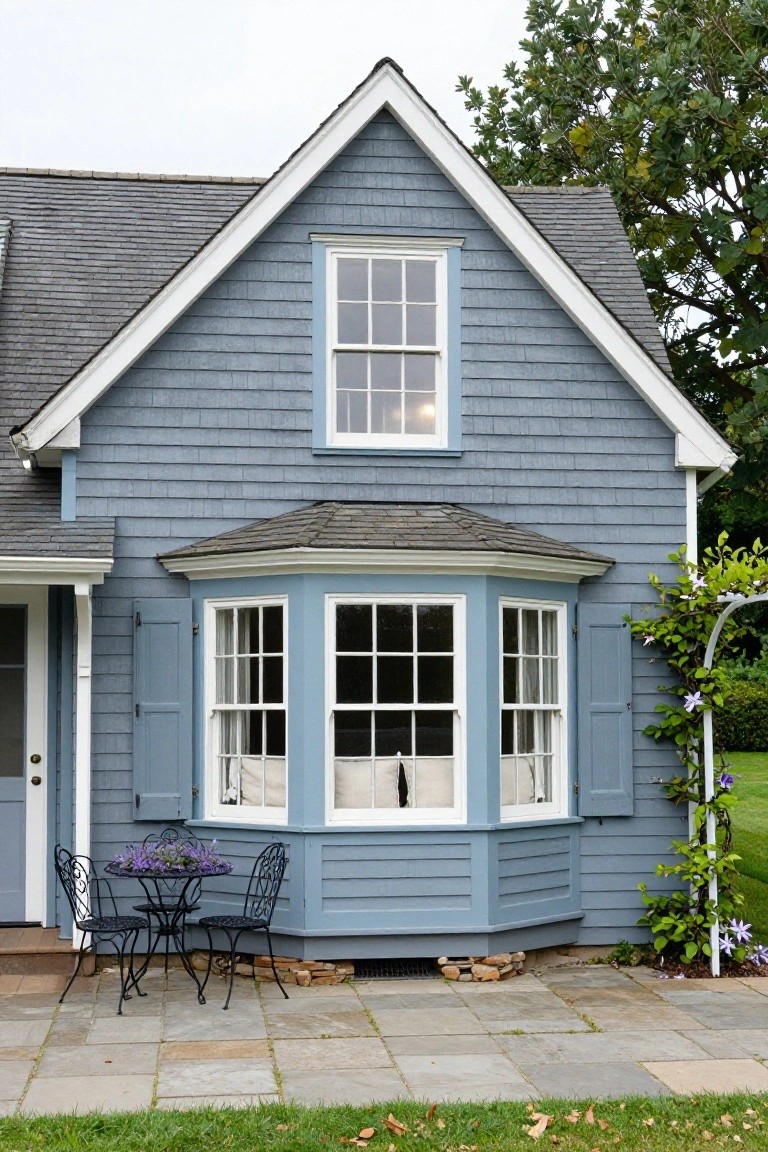
Bay windows give colonial homes that extra bit of personality without overdoing it. They push out from the wall, creating a little nook that catches the eye right away. In this setup, the three-panel design with white frames sits perfectly under a small roofline, matching the house’s shingle siding. It feels balanced, not fussy, and lets in more light while showing off the classic lines.
Try this on a side or front facade where you want some architectural interest. It works best on two-story colonials with simple roofs, especially if you add matching shutters. Keep the scale right, nothing too big for the house, and pair it with a stone patio below for easy outdoor access. Just make sure the foundation is solid underneath.
Classic Symmetrical Windows
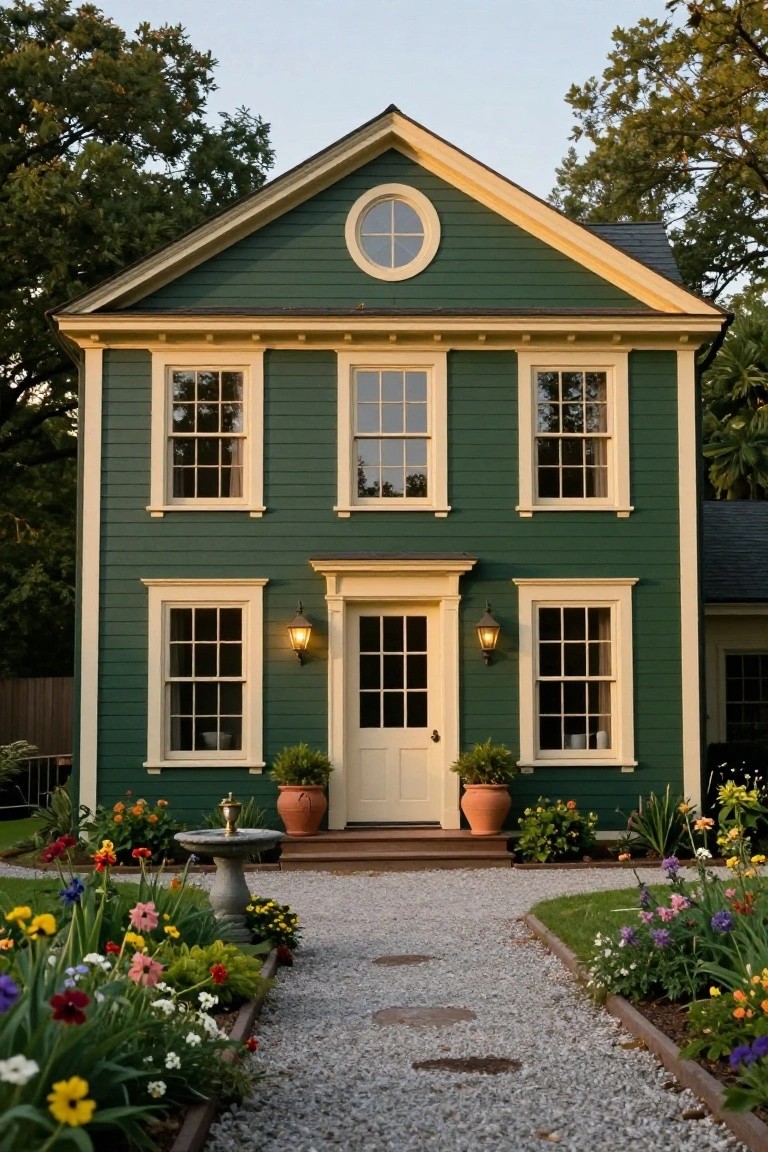
Colonial homes shine with windows placed evenly across the front. These six-over-six double-hung styles stack neatly in rows, giving the house a steady rhythm. The white trim stands out clear against the green siding here.
This setup fits two-story clapboard houses best, especially in older areas. Keep the glass clean and frames painted fresh. It pulls the entry door right into balance too. Works year-round.
Tall Windows with Black Shutters
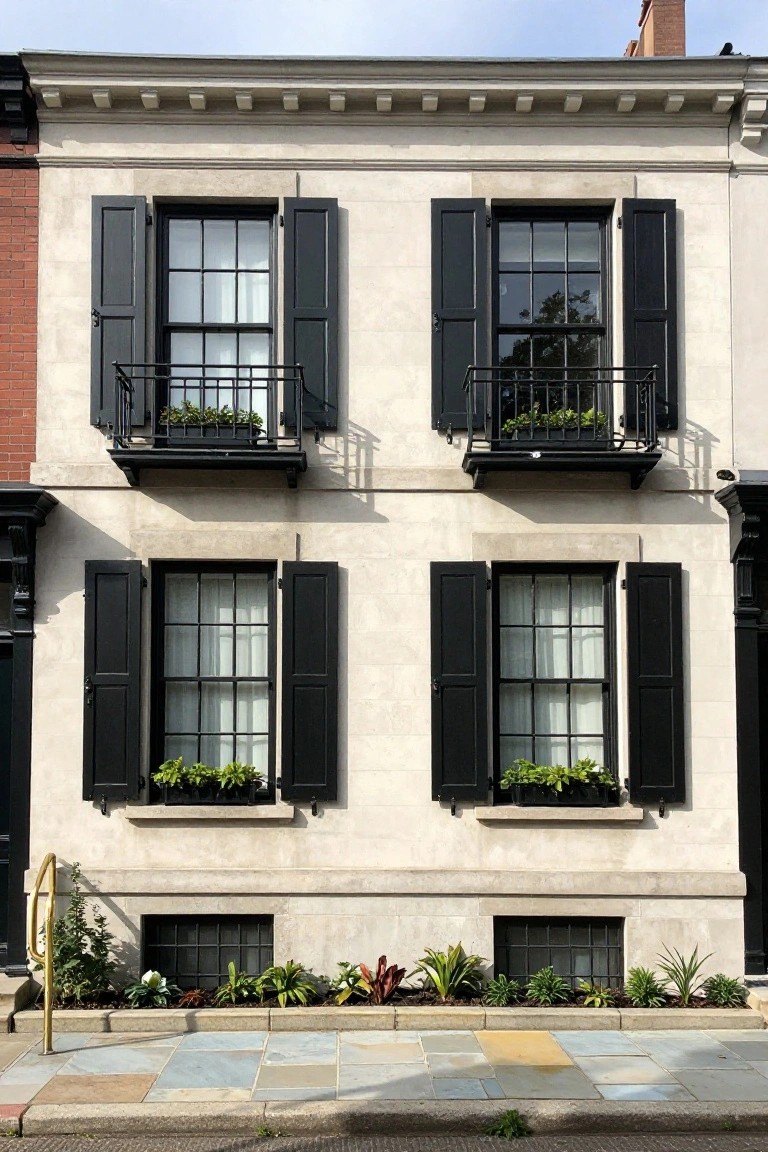
Black shutters work well on these tall multi-pane windows set against a light stucco facade. They create clean lines and pull the whole front together in a way that feels balanced and colonial. The shutters stay simple, letting the window grids do most of the talking.
This look fits older row houses or townhomes with narrow fronts. Pair them with small balconies or window boxes for plants if you have the space. Skip painting the shutters anything but black, or it loses that sharp edge.
Symmetrical Sash Windows Frame the Entry
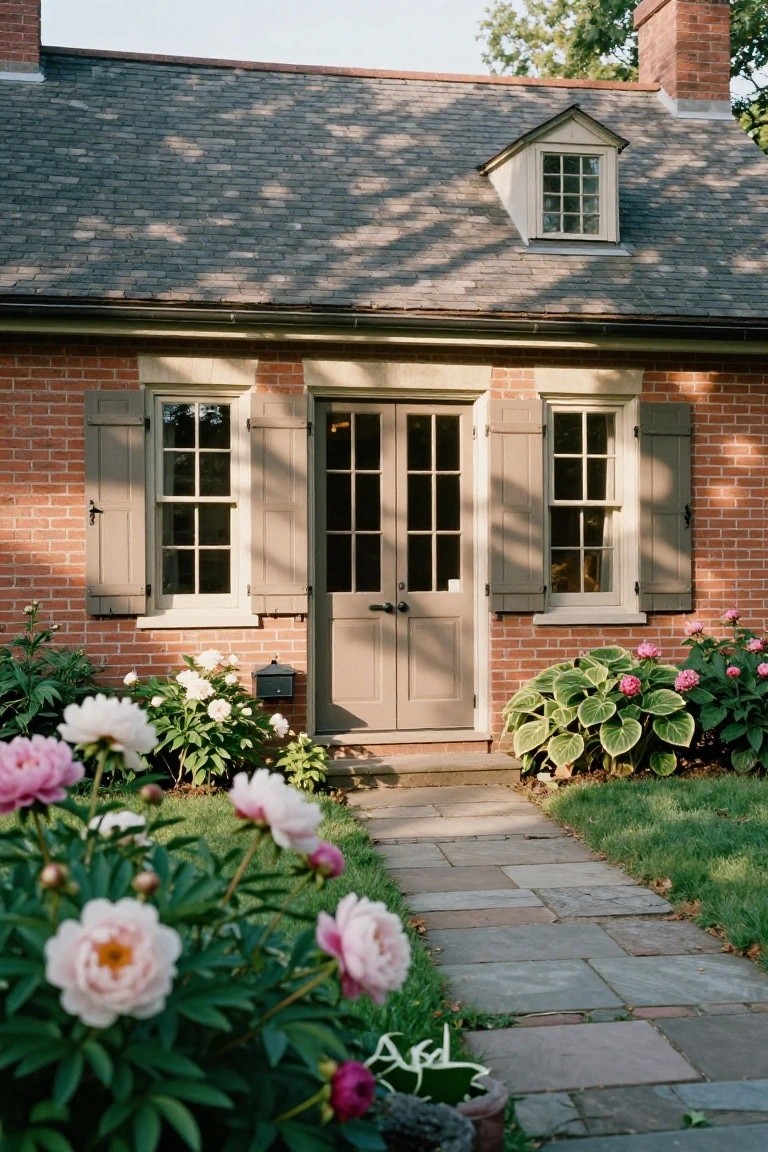
Classic multi-pane sash windows placed evenly on either side of a double door entry give this colonial house a balanced, welcoming front. The gray shutters match the trim perfectly, adding just enough detail without overwhelming the brick walls. It’s a simple way to nod to tradition while keeping things clean.
These windows work well on smaller facades where you want focus on the door. Pair them with a stone path and some flowering shrubs like peonies out front. Skip bold colors here. Stick to neutrals so the symmetry stands out on homes from the Northeast or similar brick styles.
Bright Yellow Shutters on Colonial Windows
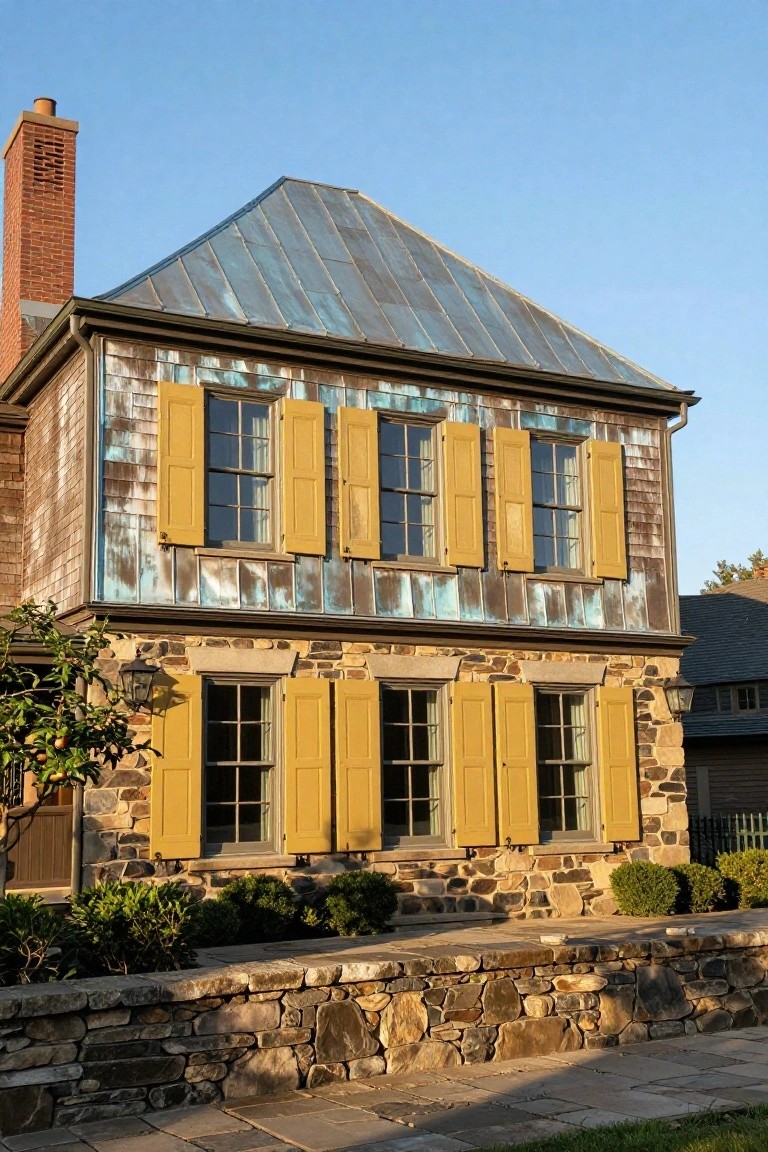
Yellow shutters like these catch your eye right away on a shingled colonial house. They pair nicely with the multi-pane windows and give a sunny lift to the faded siding and patina roof. It’s a simple change that keeps things traditional but adds real cheer to the front.
Paint your own shutters yellow if you have a classic setup with divided-light windows. This works best on older homes in the Northeast where weather gives the wood that soft gray tone. Keep an eye on peeling though… fresh paint every few years holds it together.
Black Shutters Frame Colonial Windows
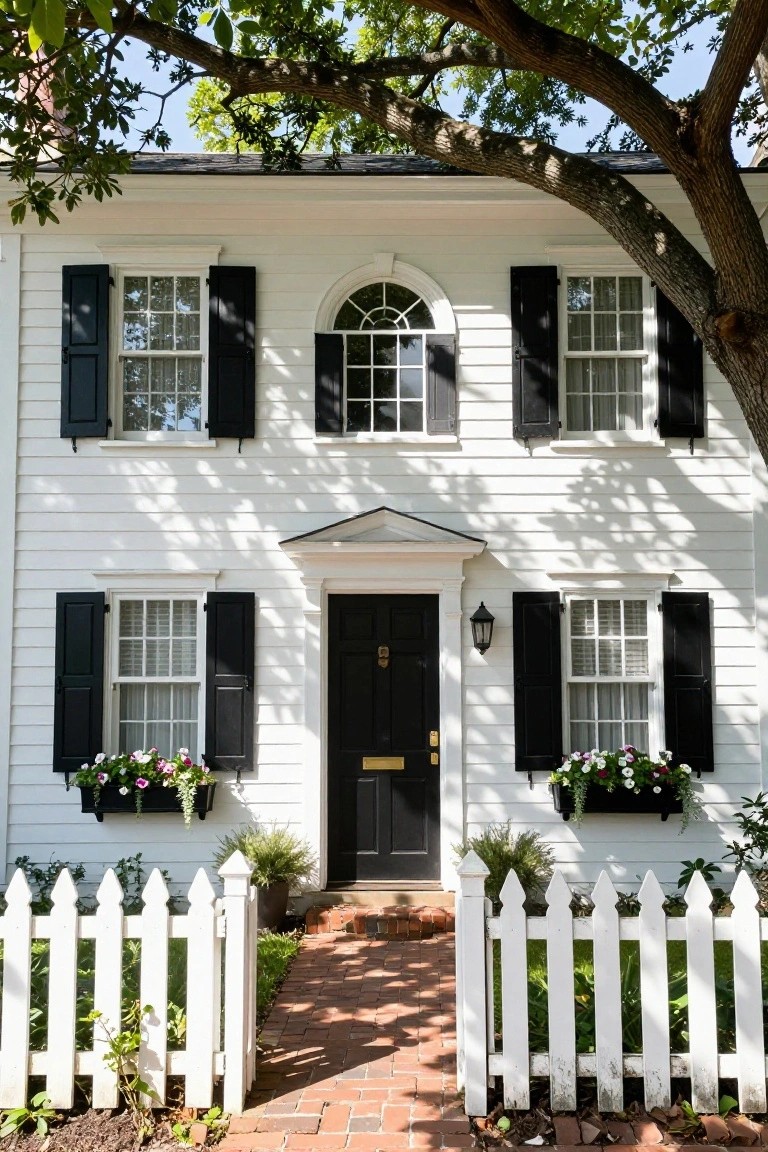
Black shutters give colonial windows that sharp, defined look against white siding. They work so well because the dark frames pull focus to the multi-pane glass without overwhelming the clean lines of the house. It’s a simple move that nods to history while keeping things fresh.
Try this on traditional two-story homes with symmetrical facades. Paint existing shutters black or replace with louvered ones for the classic vibe. Flower boxes underneath, like the ones with pink blooms here, tie it together nicely. Best in mild climates where paint holds up year-round.
Frequently Asked Questions
Q: How do I choose grids that won’t overwhelm a smaller Colonial house?
A: Measure your window openings first and opt for six-over-six or simpler patterns on compact frames. They keep the classic look without crowding the facade.
Q: Can I mix window sizes on different floors of my Colonial?
A: Repeat the same grid style across floors but bump up the size on the second story for balance. This draws the eye upward and ties everything together smoothly.
Q: Do vinyl windows ruin the traditional Colonial exterior?
A: Pick vinyl with a wood-grain texture and real divided panes. You’ll get that authentic charm minus the constant painting.
Q: What’s the quickest refresh for tired Colonial windows? And…
A: Swap the trim paint for a fresh coat of semi-gloss white. It brightens the whole front instantly.
