

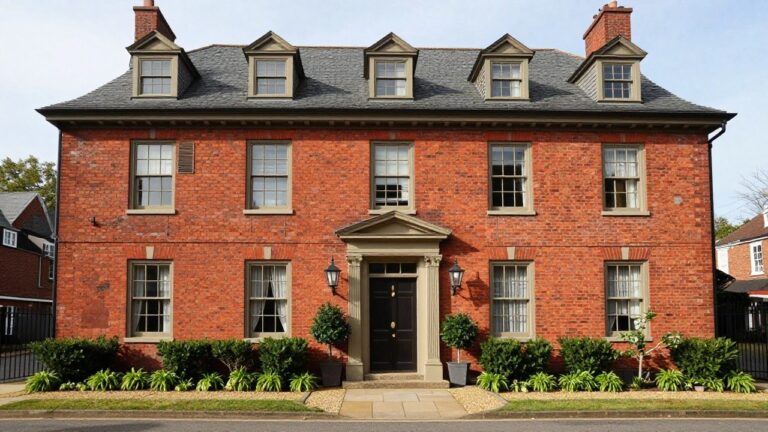
I drive past colonial homes in quiet neighborhoods and always notice how their exteriors pull you in with a sense of lived history right from the curb.
The facade’s symmetry, from rooflines sweeping down to centered entries, makes the whole house read as balanced and timeless against the street.
I thought about borrowing a few details like bracketed eaves for our own place one summer, since they add weight without overwhelming a simpler build.
Materials such as clapboard siding or fieldstone bases weather into something genuine that photos just can’t capture.
Certain styles shine when you adapt their trim or dormer shapes to fit your lot.
Symmetrical Brick Facades
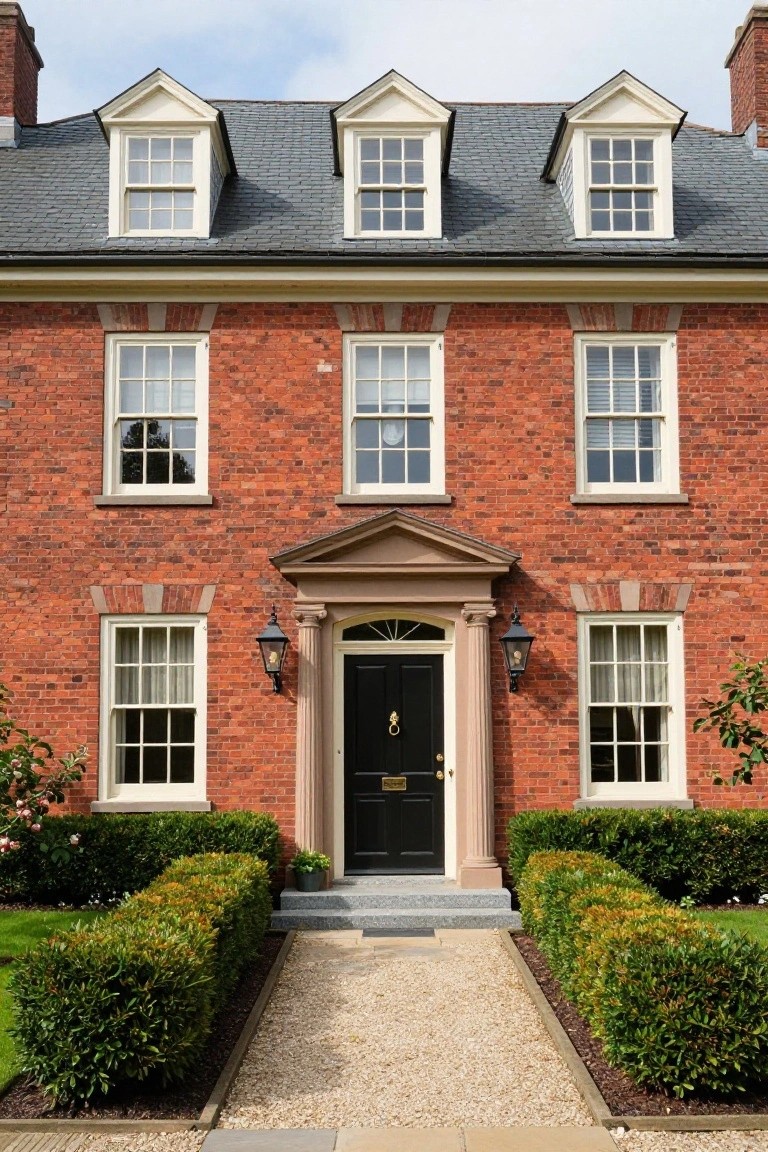
A good colonial exterior often relies on simple symmetry to feel right at home. Take this red brick house. Windows line up evenly across the front. The entry sits dead center under a clean pediment with lanterns on each side. That setup pulls everything together without trying too hard. It looks solid and timeless.
You see this a lot in Georgian styles from the 1700s. It suits older neighborhoods or revivals where you want curb appeal that lasts. Paint trim white against the brick. Add boxwood along the walk to guide the way. Just keep proportions balanced… scale the pediment to your door size.
Black Trim on Brick Row Houses
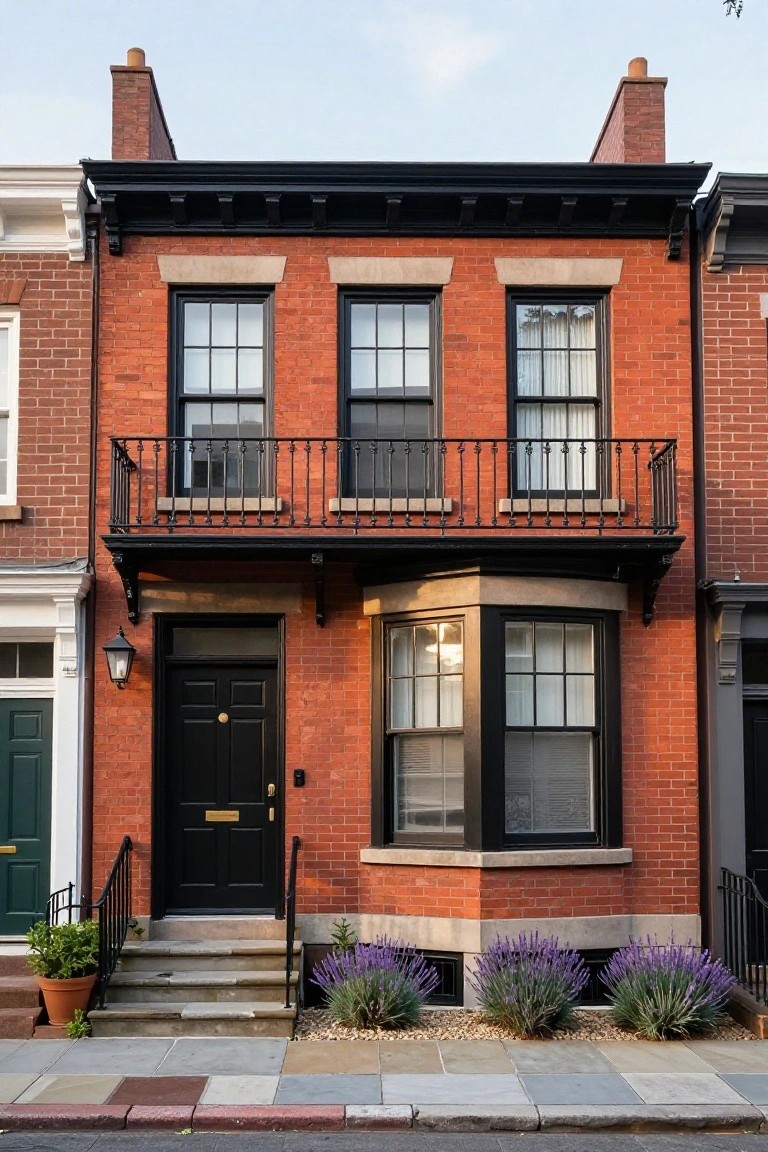
Old brick row houses like this one get a nice lift from black trim around the windows and door. The dark frames pop against the warm red brick. It keeps that historic colonial look but feels updated and sharp. No need for big changes. Just the contrast does the trick.
Try this on narrow townhomes in the city or older neighborhoods. Use matte black paint on wood trim or go for slim metal frames if replacing windows. Add low plants along the base to soften things. Skip glossy finishes. They can look too shiny next to brick.
Shingle Siding Gives Historic Texture
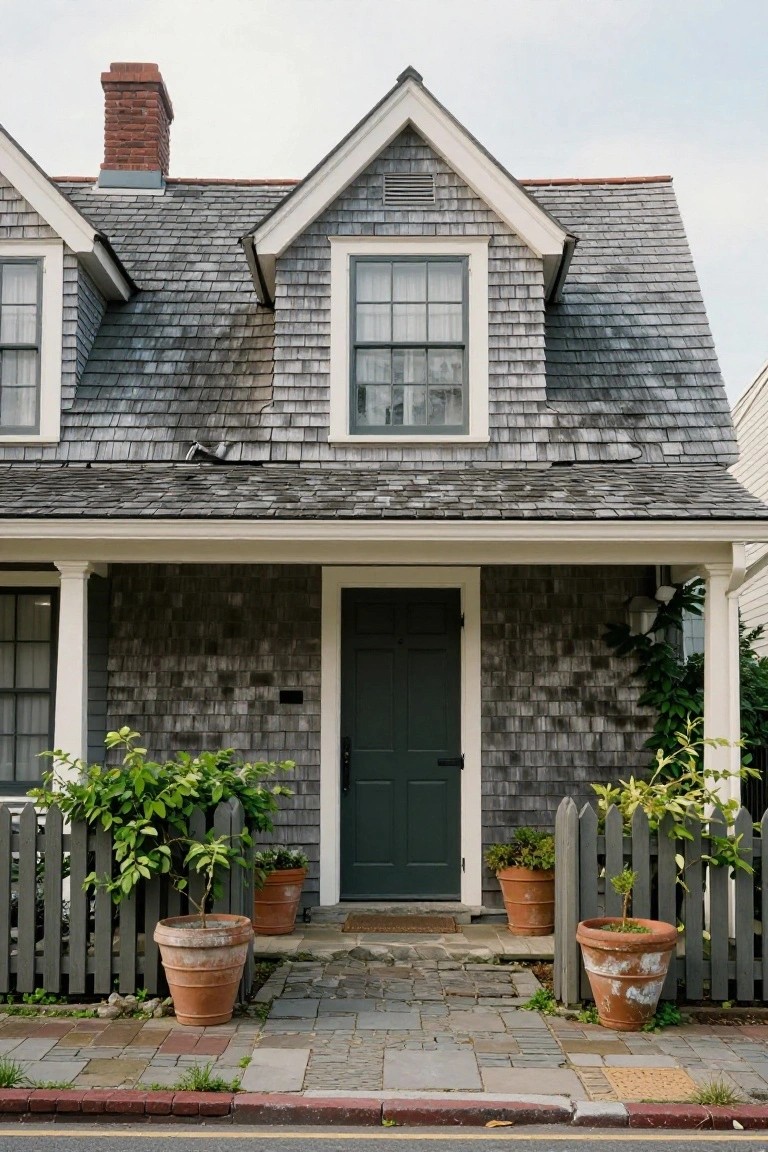
Shingle siding like this catches your eye right away on older coastal homes. The gray cedar shakes have that natural weathered look, fitting right into the landscape without trying too hard. Paired with crisp white trim around the windows and porch, it keeps things simple and true to the house’s roots. You see it a lot in New England styles, where the material weathers over time to blend with the salt air and trees.
If you’re working with a colonial or revival-style house, shingle siding works best on facades facing the street or water. Go for shakes in grays or browns, and keep the porch plain with just a few plants in pots nearby. Watch for moisture buildup though, since it needs good drainage to last. A green door like this one adds a fresh pop without overdoing it.
Gray Shingles Tell a Coastal Story
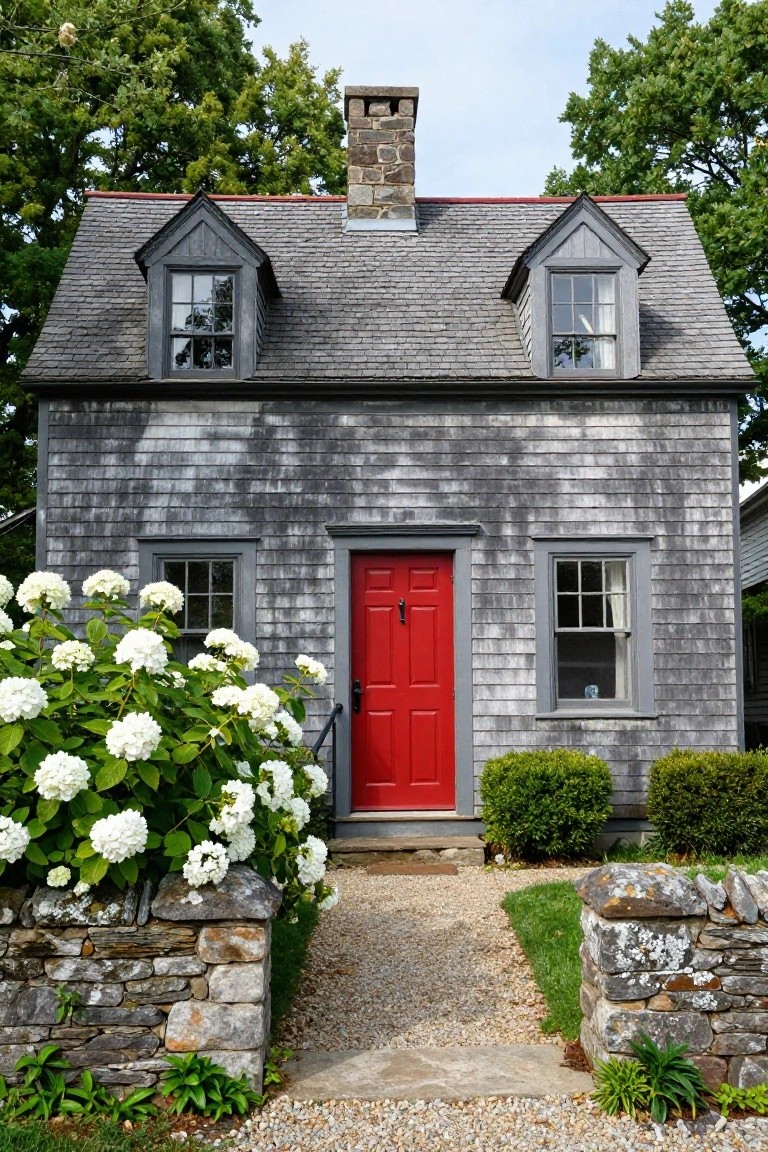
Gray shingles like these have been a go-to for colonial homes along the Northeast coast for generations. They weather to that soft, faded look over time, blending right into the landscape without much fuss. Pair them with a simple red door, and you get instant pop that draws the eye without overwhelming the quiet historic vibe. White hydrangeas nearby just settle everything into place.
These exteriors suit older homes or new builds aiming for that timeless coastal feel, especially where salt air hits the siding year-round. Let the shingles age naturally for authenticity, but keep the entry bold to make folks feel welcome. Skip paint if you want low upkeep, though sealing helps in harsher spots.
Saltbox Colonial Exteriors
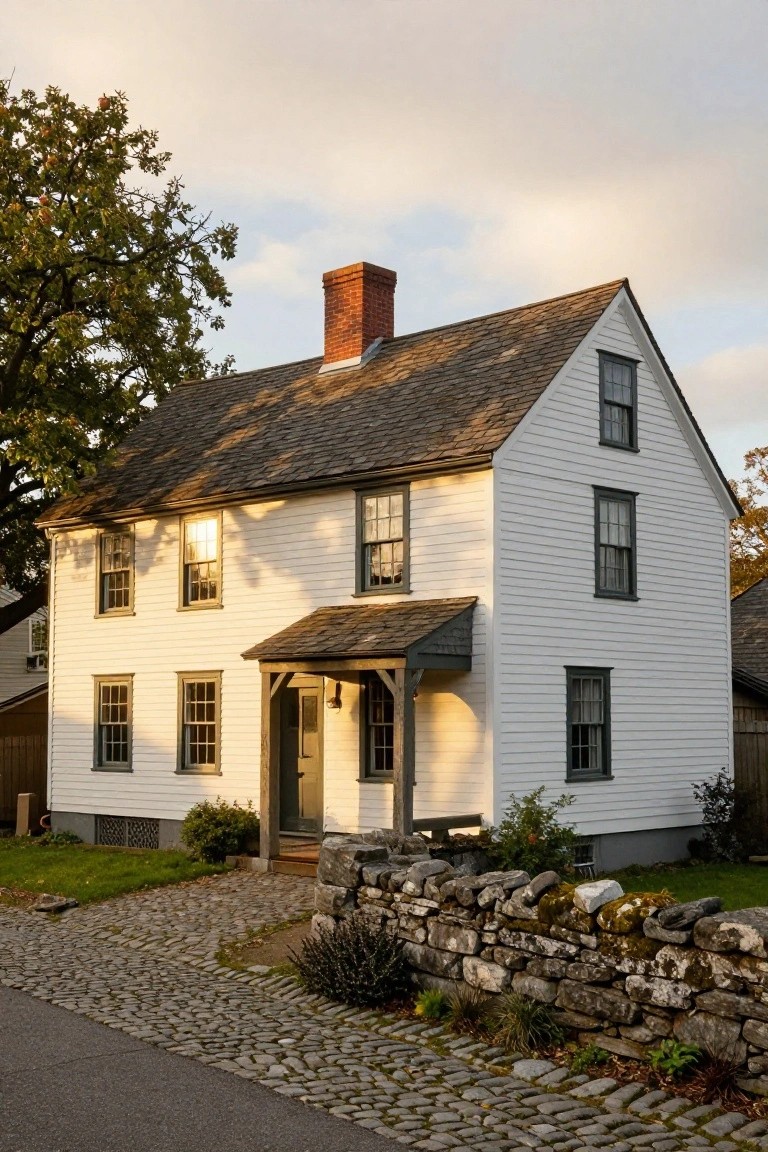
Saltbox colonials stand out with their sloped rear roof that drops low on one side. Folks added those lean-tos years ago for kitchens or storage, and it gives the house this uneven, lived-in look. White clapboard siding like on this one keeps things crisp, while the brick chimney adds a bit of color up top.
These work best on cozy lots where you want history without fuss. Stick to simple shingle roofs and keep windows balanced. A stone wall and path out front pull it all together for easy curb appeal. Just watch scale, if your lot’s too big it might look off.
Classic Columned Porch Entry
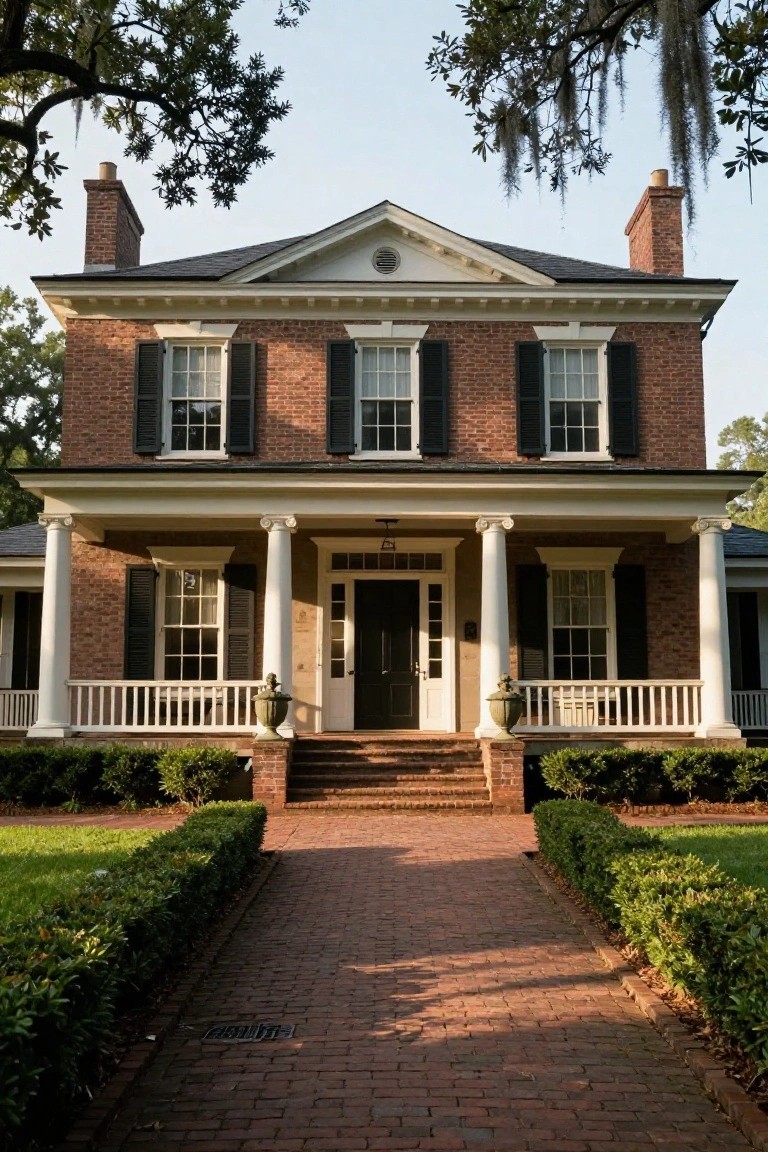
A columned porch like this one takes a simple brick house and turns it into something straight out of history. Those tall white columns frame the front door just right, with the brick walls and dark shutters keeping things balanced and sturdy. It’s a look that says welcome without trying too hard, especially under those live oak branches.
This setup works best on two-story colonials in the South or similar spots where you want curb appeal that lasts. Keep the columns plain and the porch wide enough for chairs. Skip fancy add-ons unless the house already has them… it stays cleaner that way.
Arched Entries with Colorful Tiles
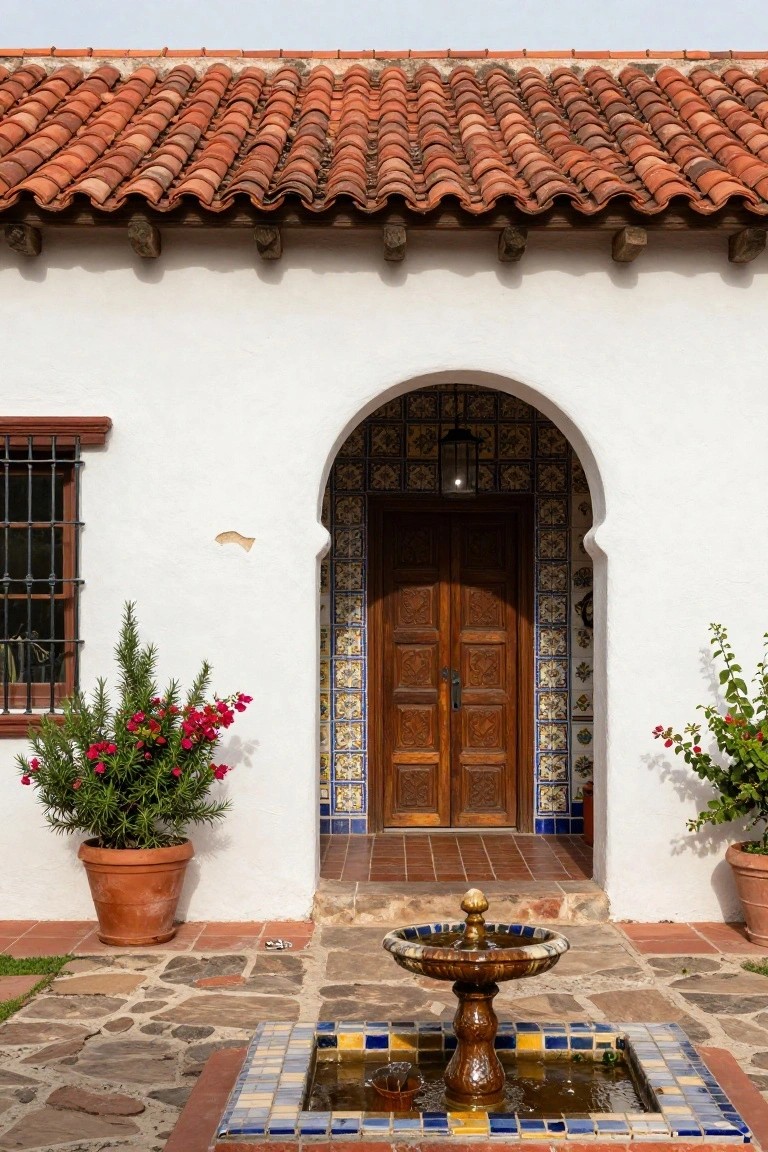
Arched doorways like this one pull from old Spanish missions and haciendas. The blue and yellow tiles around the opening add that handcrafted touch without overdoing it. Paired with a sturdy wooden door, it makes the front of the house feel solid yet open. Folks notice it right away. It tells a story of warmer places.
You can work this into a simple porch or entry alcove on ranch-style or adobe homes in the Southwest. Stick to Talavera-style tiles for the real look, but keep the colors muted if your house is plainer. Watch the scale so the arch doesn’t dwarf the door. A potted plant nearby ties it to the ground.
Hanging Ferns on the Porch
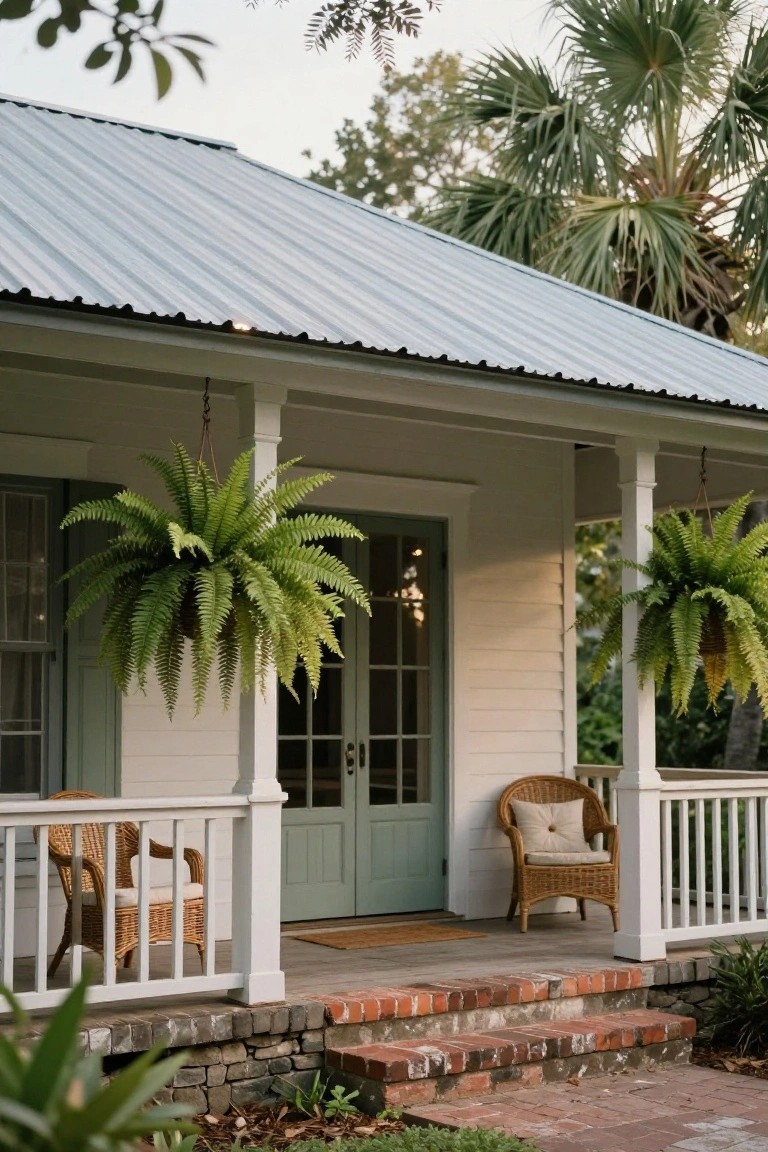
Hanging ferns like these take a plain porch and make it feel alive right away. They dangle from the columns in big baskets, their green fronds brushing close to the green doors and white siding. It’s a simple touch that nods to old Southern homes without much fuss.
Put them on porches with tall posts, especially if your house has that classic clapboard look. Boston ferns do well in shade and humidity. Add a wicker chair nearby for sitting, but keep the pots watered so they don’t droop.
Fieldstone Walls Define Early Colonial Homes
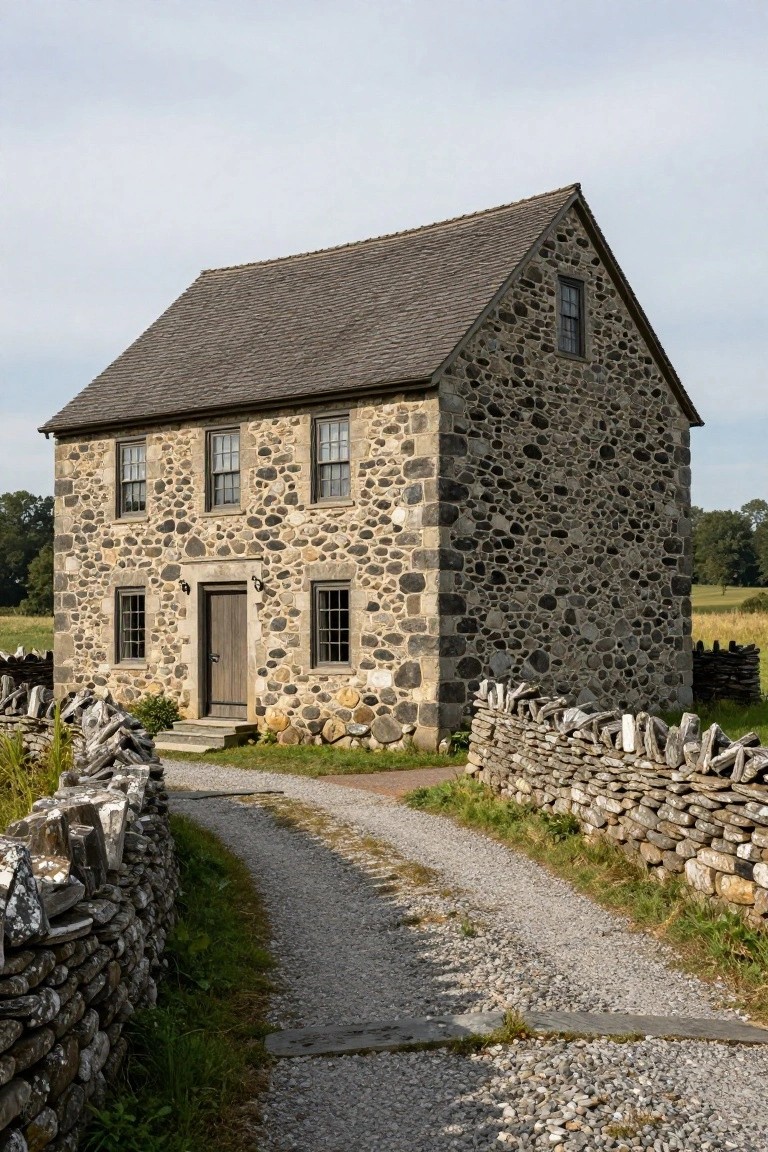
Fieldstone walls like these make a colonial house feel rooted in place. Farmers back then used whatever stones they cleared from the fields, stacking them into thick, uneven walls that look rugged but hold up for centuries. The mix of sizes and colors gives the whole facade real texture without any fuss.
This works best on homes in countryside spots where stone fits the land. Go for it on a new build or remodel by picking local fieldstones and wide mortar joints. Keep an eye on repointing every few decades… it keeps the walls tight while letting age show through.
Classic Columned Porch
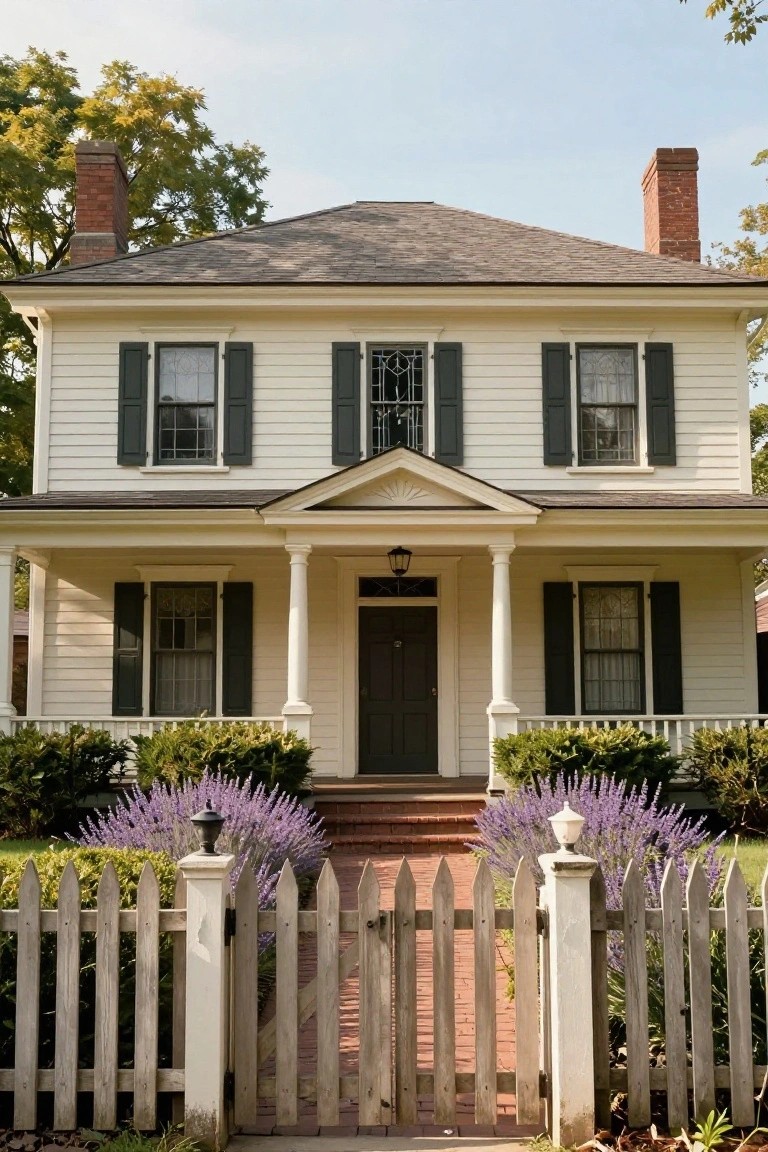
A columned porch like this one takes a simple Colonial house and makes the front door the star. White siding sets off the dark green shutters and those tall columns holding up a neat pediment roof. It pulls the eye right to the entry steps, with lavender bushes and a picket fence adding a soft touch without overdoing it.
This setup suits older homes or revivals where you want historic feel without fuss. Build it at a comfortable height for the door, maybe four or five steps up. It works on narrower lots too, as long as the columns aren’t too thick… keeps things proportional.
Symmetrical Red Brick Facade
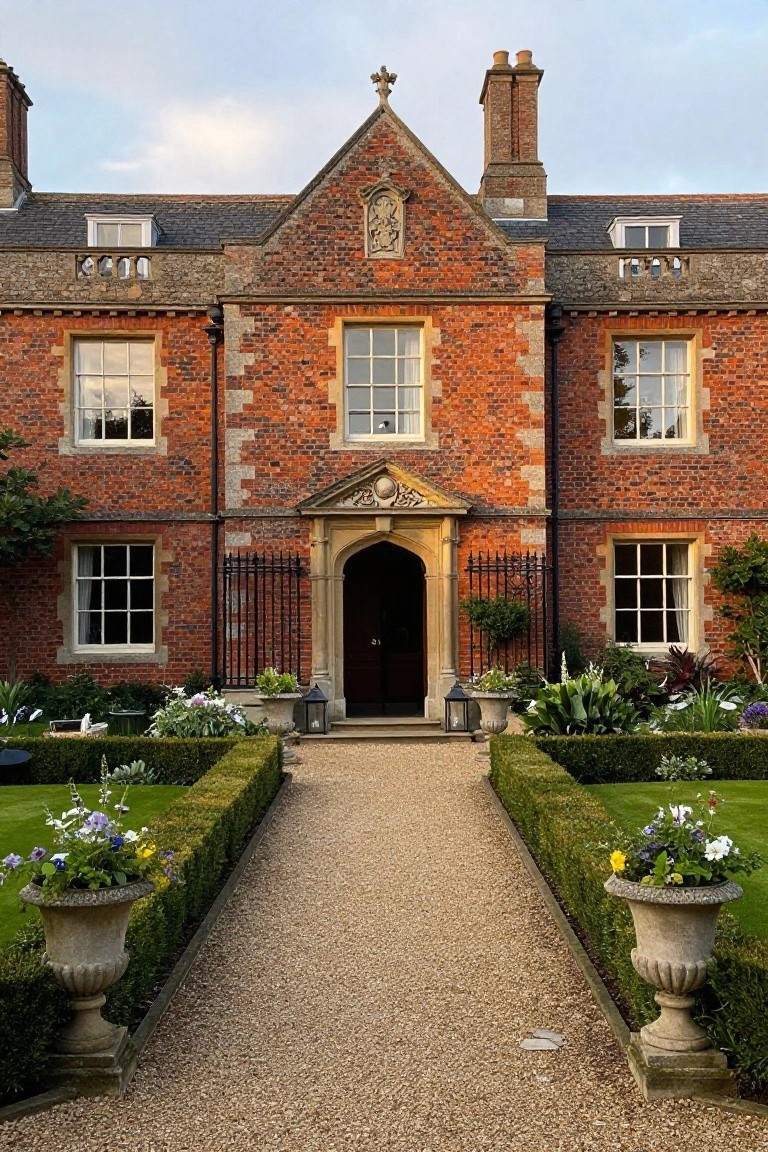
Red brick houses like this one have a way of looking settled and right at home. The symmetry pulls everything together. Tall windows line up on both sides of the central door. That arched stone entry adds just enough fancy without overdoing it. Brick gives a warm, solid feel that lasts.
This style works best on older homes or new builds aiming for history. Keep the brick clean but let some moss grow for age. Pair it with simple gravel paths and clipped hedges out front. It suits town lots or country spots. Skip bright paint. Stick to natural tones so the brick does the talking.
Shingle-Style Garages
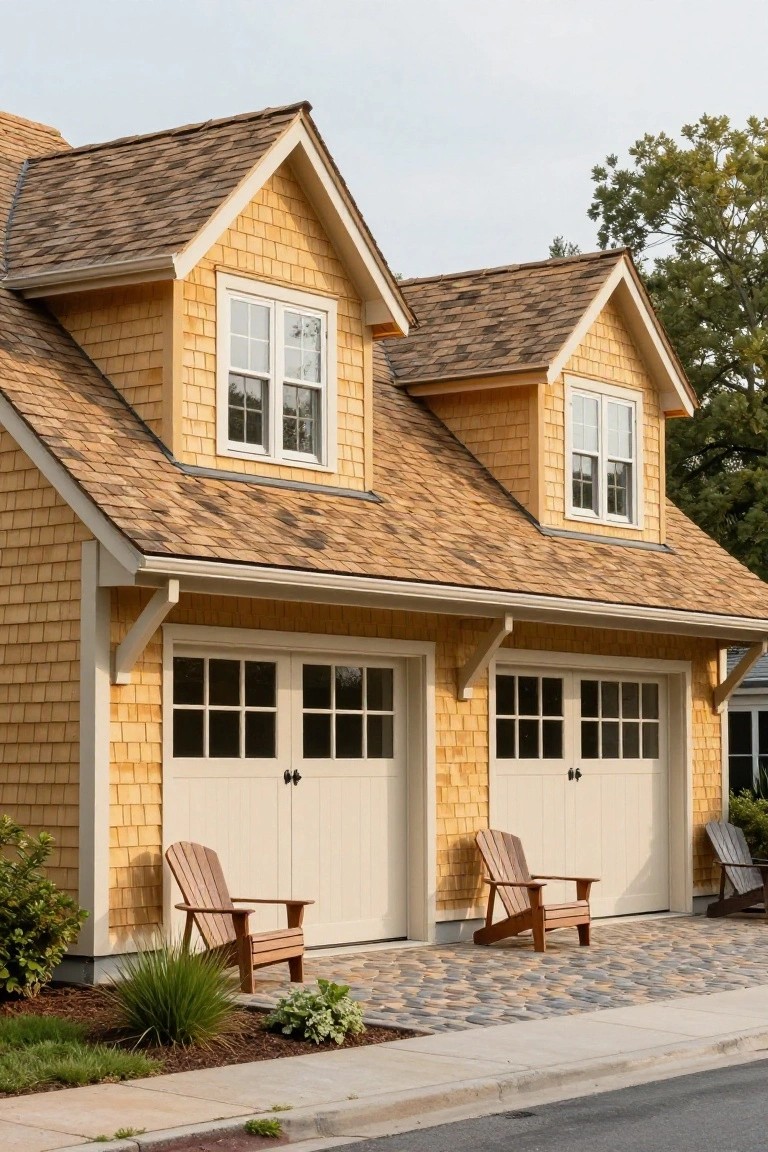
Shingle siding like this shows up a lot in older colonial homes, especially along the coast. The warm cedar shakes on the gabled garage give the whole side of the house a textured, lived-in feel that nods to historic seaside cottages. Paired with clean white trim, it keeps things simple and ties the garage right into the main structure without looking added on.
You can pull this off on attached or standalone garages where curb appeal matters. Pick natural-toned shingles that weather over time, and set out a couple wooden chairs like these Adirondacks for that welcoming touch. It suits homes with classic lines best… just make sure the roof pitch matches your house to avoid any clash.
Elevated Coastal Cottages
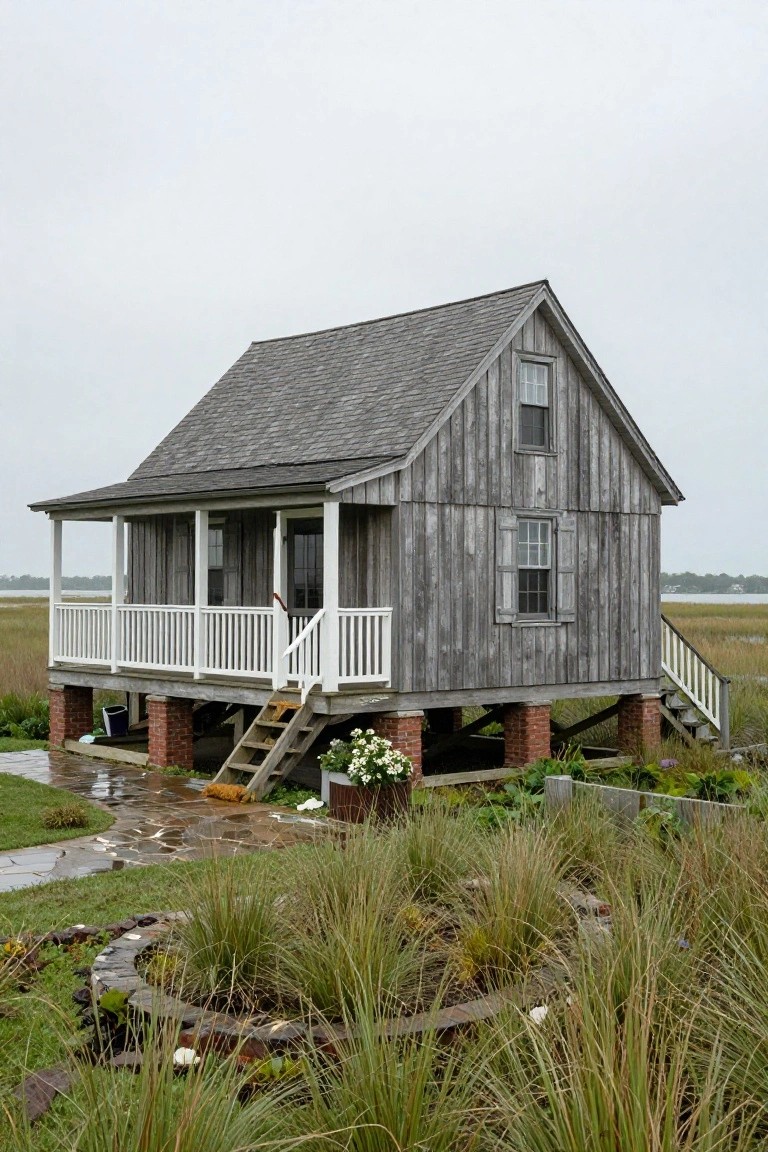
Homes like this one show how raising a cottage on sturdy piers keeps the historic look while handling floods and tides. The weathered gray wood siding fits right into the salt marsh setting, and that wraparound porch pulls you up for a view over the grasses. It’s practical colonial style that feels lived-in, not fussy.
You see this in Lowcountry spots or any waterfront where water rises. Brick piers give solid support without stealing the show. Pair simple white railings with board-and-batten walls, add stairs that match the casual vibe. Skip anything too modern here. It suits smaller homes that need to breathe with the landscape.
Stone Chimney on Colonial Exteriors
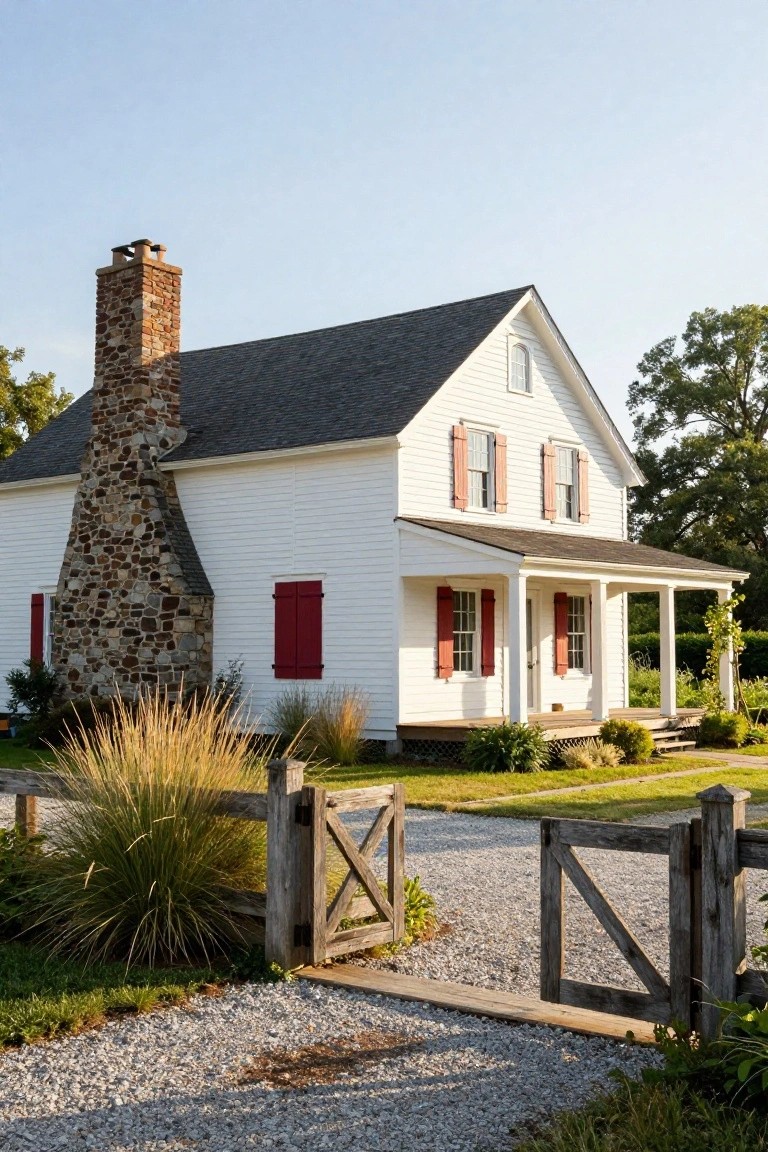
A tall stone chimney like this one catches the eye right away on a white colonial house. Built from rugged fieldstones, it rises prominently from the side, adding real weight and history to the simple clapboard siding. That contrast between the rough natural stone and the crisp painted walls feels authentic to older farmhouses in the South or Northeast.
You can pull this off on traditional two-story homes with gabled roofs and a basic porch. Source local stones for the best look, and keep the rest of the facade plain so the chimney does the talking. It suits rural spots or suburbs where you want subtle curb appeal… just avoid overdoing the stone elsewhere.
Classic Colonial Black Door Entry
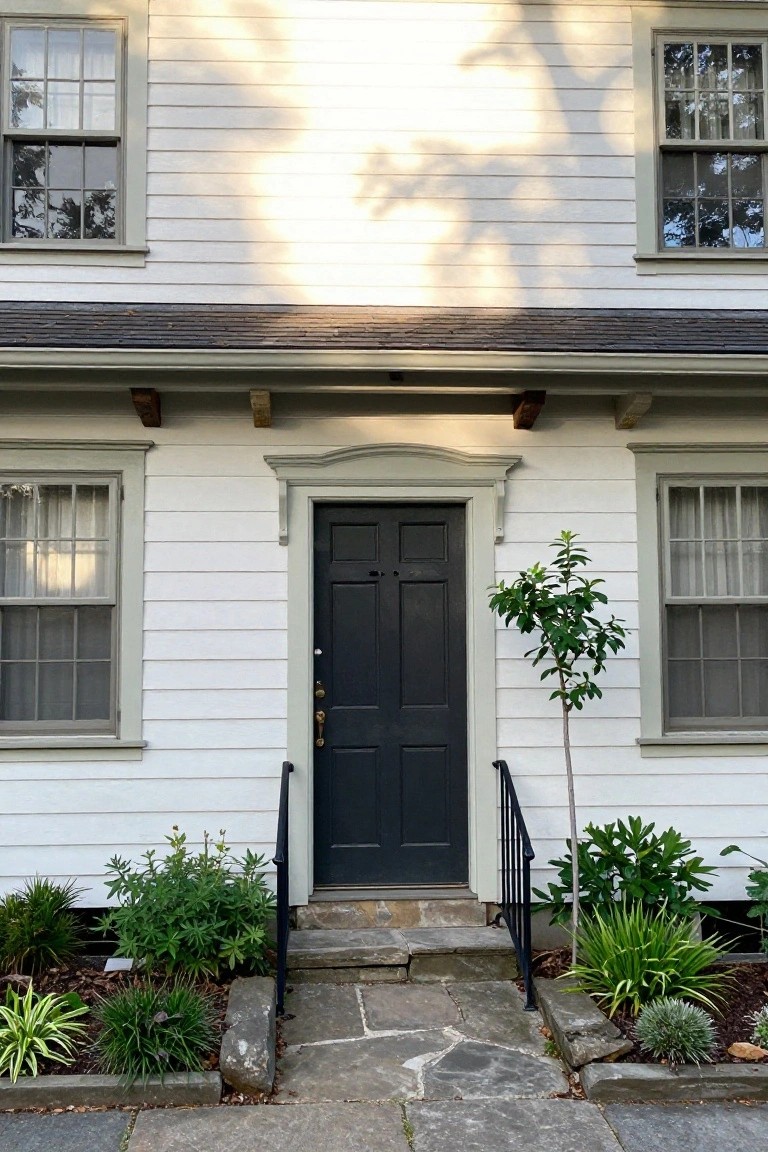
A black paneled door like this one really sets off a white clapboard Colonial house. It pulls focus to the front entrance in a straightforward way. That deep color against the light siding keeps the look historic yet fresh, and the simple brass knob adds just enough polish without overdoing it.
This setup shines on homes with balanced windows and a small porch area. Go for a matte black paint on a solid wood door, and keep the stone steps and iron railing basic. It fits older neighborhoods well, or even a modern build aiming for that timeless feel. Watch the scale though, bigger doors suit wider facades better.
Weathered Shingle Siding
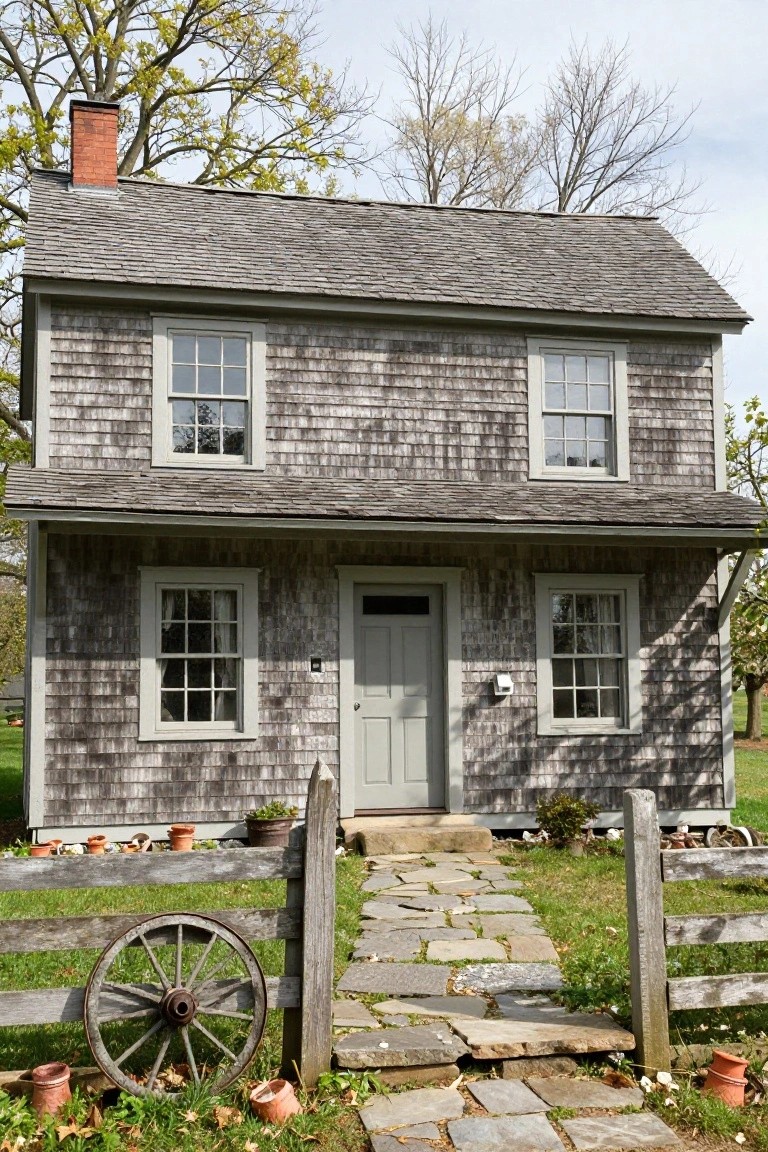
Shingle siding gives colonial homes that soft, textured look that feels like it’s been there forever. You see it here on this house, with gray cedar shakes overlapping in rows, catching light in a way flat siding never does. It tells a story of New England summers and quiet history, without trying too hard.
This style works best on homes with simple shapes like capes or saltboxes, especially in coastal spots where the wood weathers naturally. Go for untreated cedar so it grays over time, pair it with crisp trim in green or white, and keep the porch plain. Just check for rot every few years… moisture is the enemy.
Spanish Colonial Stucco Facades
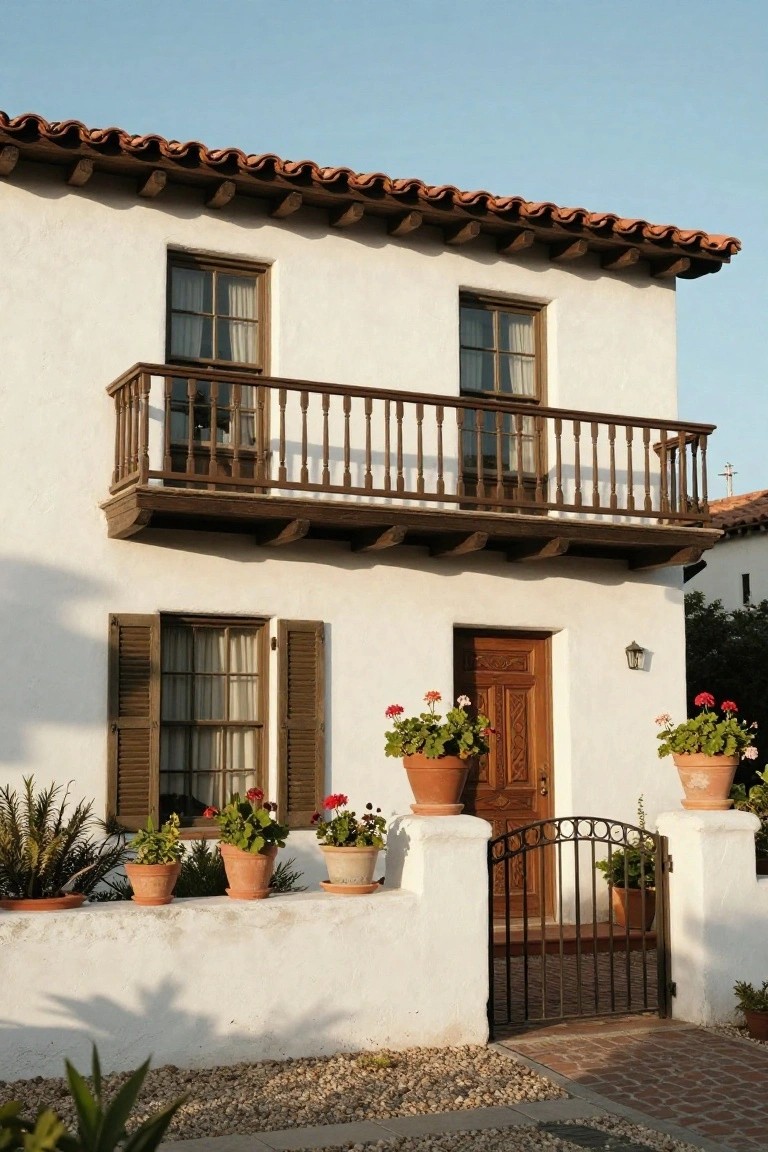
White stucco walls paired with a red tile roof make this Spanish Colonial style stand out for its clean lines and sunny vibe. The smooth stucco catches the light just right, while the curved tiles add that old-world roofline. A wooden balcony up top and carved front door keep things feeling historic without overdoing it.
This look fits warm, dry areas best, like the Southwest. Add pots of geraniums by the entry for easy color pops. It suits bungalows or two-story homes aiming for curb appeal that nods to the past.
Light Blue Siding on Coastal Colonial Homes
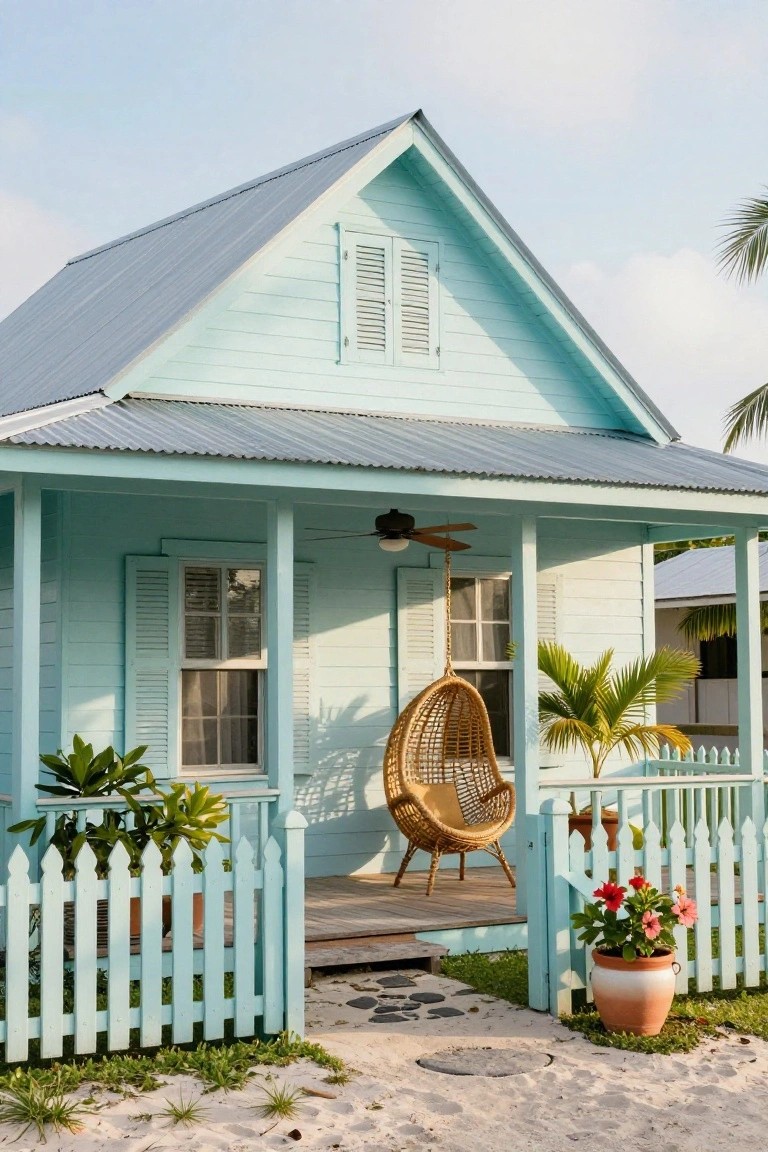
A soft light blue paint on clapboard siding freshens up the classic colonial shape without losing its historic feel. Paired with a simple gabled roof and wide porch, it nods to old island houses from the Bahamas or Keys. The color picks up the sky and sea nearby, making the place look right at home in a beach spot.
This works best on smaller homes in warm, humid areas where wood siding needs protection from salt air. Go for a durable exterior paint and keep trim white for contrast. Skip it on busier streets, though. It shines where you want that quiet, lived-in look.
Black Trim Updates Brick Row Houses
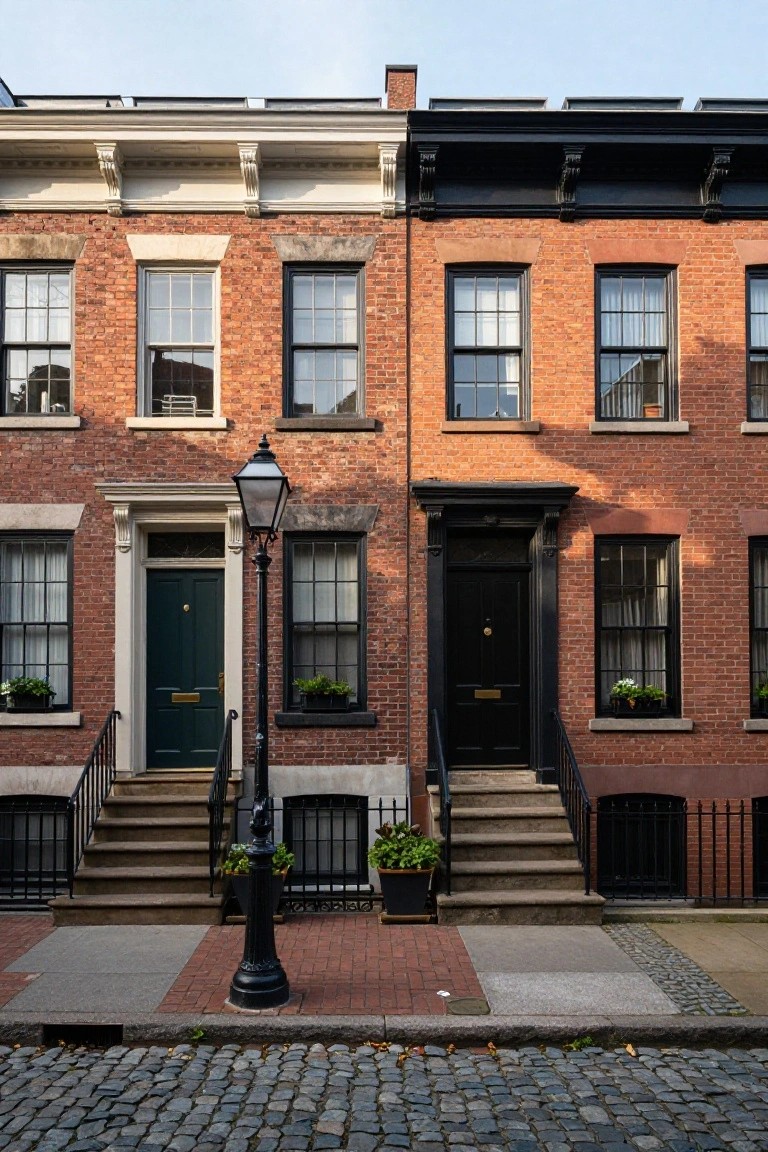
One simple way to refresh a classic red brick townhouse is by painting the trim, door, and window frames black. You see it here on the house to the right, standing crisp next to its more traditional neighbor with the green door. That dark contrast pops against the warm brick without overpowering the historic shape. It keeps the old bones but adds a bit of edge that feels current.
This works great on solid brick facades from colonial row house neighborhoods, like in Philly or Boston. Go for matte black paint on everything from the door to the railings and sills. It suits narrow urban streets where you want your place to stand out just enough. Skip it on super ornate Victorians though, it can feel too heavy there.
Shingle-Style Coastal Cottages
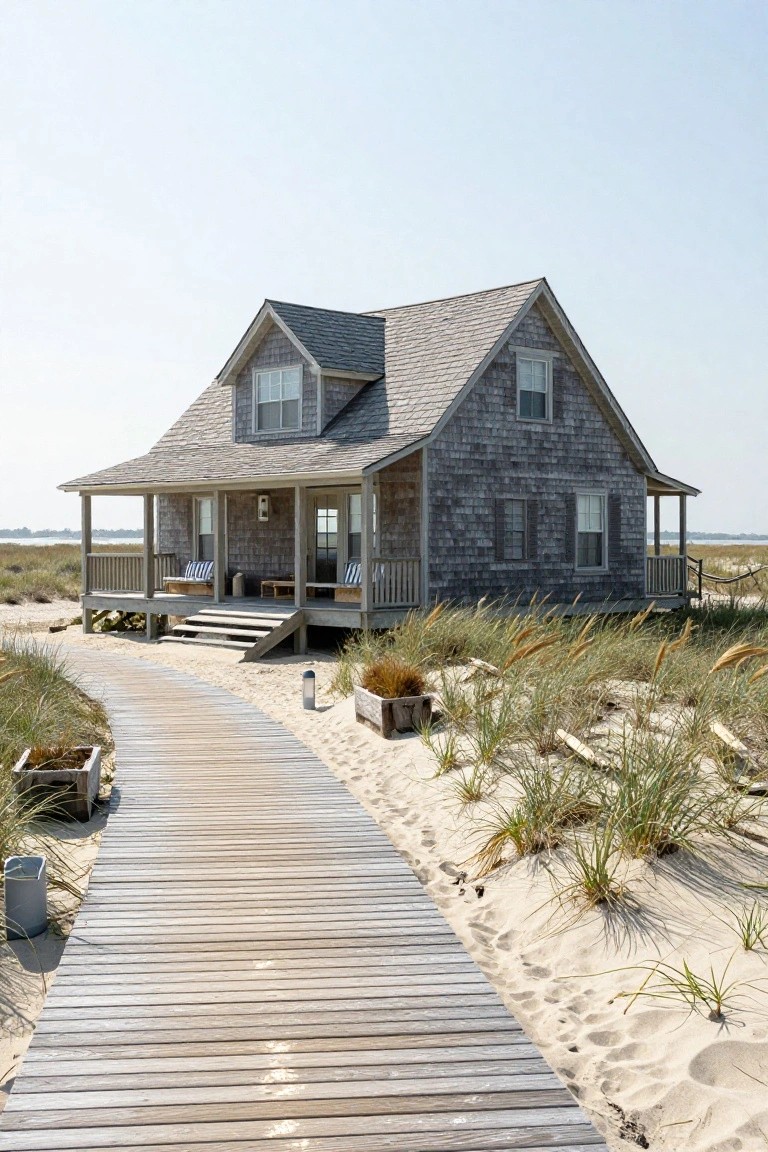
Shingle-style homes take simple wood siding and turn it into something that blends right into a beach setting. Those overlapping cedar shingles weather to a soft gray over time, making the house look like it’s always been there among the dunes. It’s a nod to older colonial designs but feels easy and relaxed on the shore.
You see this style a lot in places like the Northeast coast, where it holds up against wind and salt. Raise the whole thing on pilings with a wide porch, add a boardwalk path, and you’ve got practical curb appeal that welcomes family without fuss. Works best on low-lying lots. Just plan for regular sealing to keep the shingles healthy.
Lantern Lighting for Colonial Entries
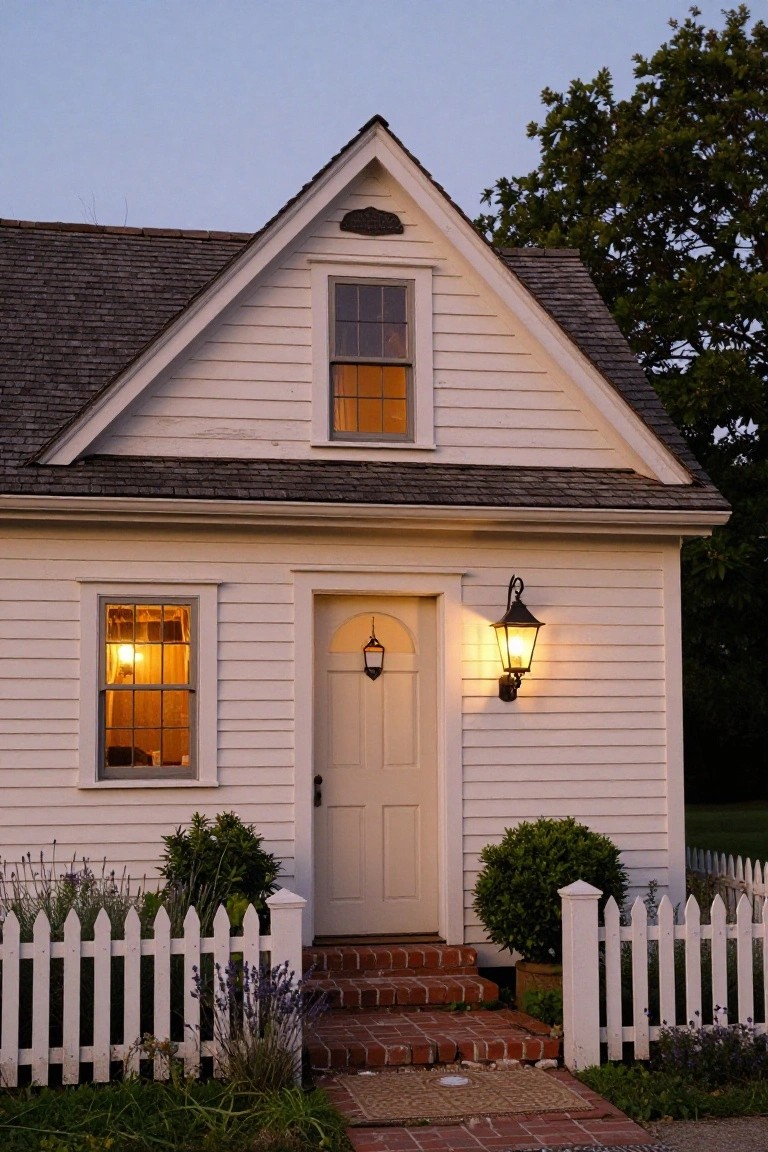
Those old-school lanterns next to the door do a lot for a colonial house. They cast a soft glow that makes the place feel lived-in and safe right at dusk. On this white clapboard facade with its simple gable, the light picks out the arched door and brick steps without overpowering the historic look.
You can add lanterns like these to most any colonial-style front. They work best on homes with clean siding and a picket fence nearby… keeps things traditional. Just mount them at eye level by the door, wire for dusk-to-dawn, and they handle the evening curb appeal year-round.
Frequently Asked Questions
Q: How do I spot my house’s specific colonial style from those 21?
A: Start with the roofline and dormers, then check window hoods and entry porches. Grab your phone and match details against the article photos right there on site. That hands-on compare nails it every time.
Q: Can I tweak the exterior for modern comfort without ruining the history?
A: Swap in energy-efficient windows that mimic the originals’ divided lights. You keep the classic frame while cutting those bills. Folks love how it blends old charm with new ease.
Q: What’s the simplest way to boost curb appeal on a tired colonial front?
A: Plant period-appropriate shrubs like boxwoods along the path. Trim them neat and let them frame the door. Instant storybook vibe, no major work needed.
Q: Should I hunt for original materials when fixing up the siding or trim?
A: Hunt them down if you can, they age right and hold stories. And cheap knockoffs fade fast. Your house deserves the real deal.
