


I’ve driven past plenty of Southern Colonial houses over the years, and the ones that truly stand out rely on strong rooflines and symmetrical facades to pull you in from the street. Those elements create instant curb appeal, especially when paired with materials like clapboard siding or brick that age gracefully in the Southern heat. In real neighborhoods, the entry porches and columns often make the biggest first impression, giving the house a sense of pride without feeling fussy. What works best is when the proportions feel balanced on the lot, so the design reads as tall and confident rather than top-heavy. A couple here with shutter details are worth sketching for your own facade tweaks.
Classic Columned Porch
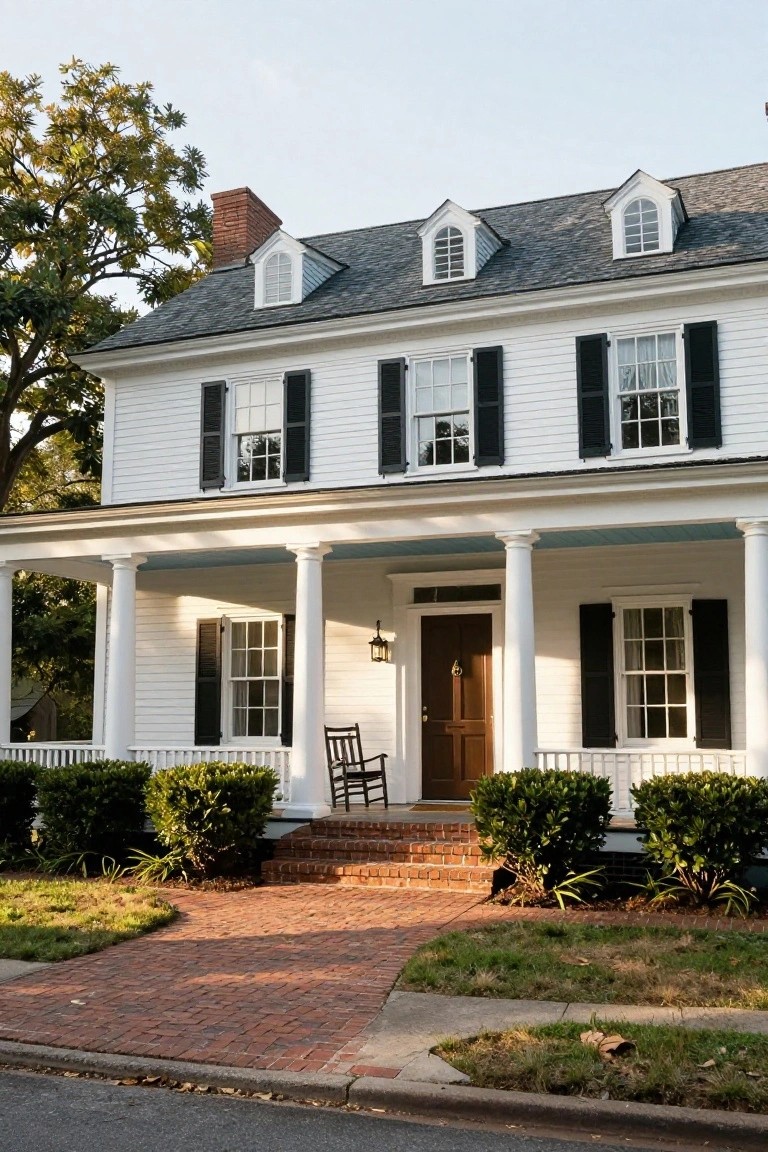
A columned porch like this one takes a Southern Colonial house and gives it real presence right from the street. Those tall white columns hold up the full-width roof, creating shade and a spot to sit out front. Paired with the white siding and black shutters, it feels balanced and timeless, the kind of look that says hospitality without trying too hard.
You see this on older homes in the South, where the porch pulls people in for a chat or a glass of tea. It works best on houses with some setback from the road so the columns can stand out. Keep the scaling right, nothing too skinny, and add a simple rocker. Just watch the upkeep on those columns, paint them regular to fend off the weather.
Classic Red Brick with Black Shutters
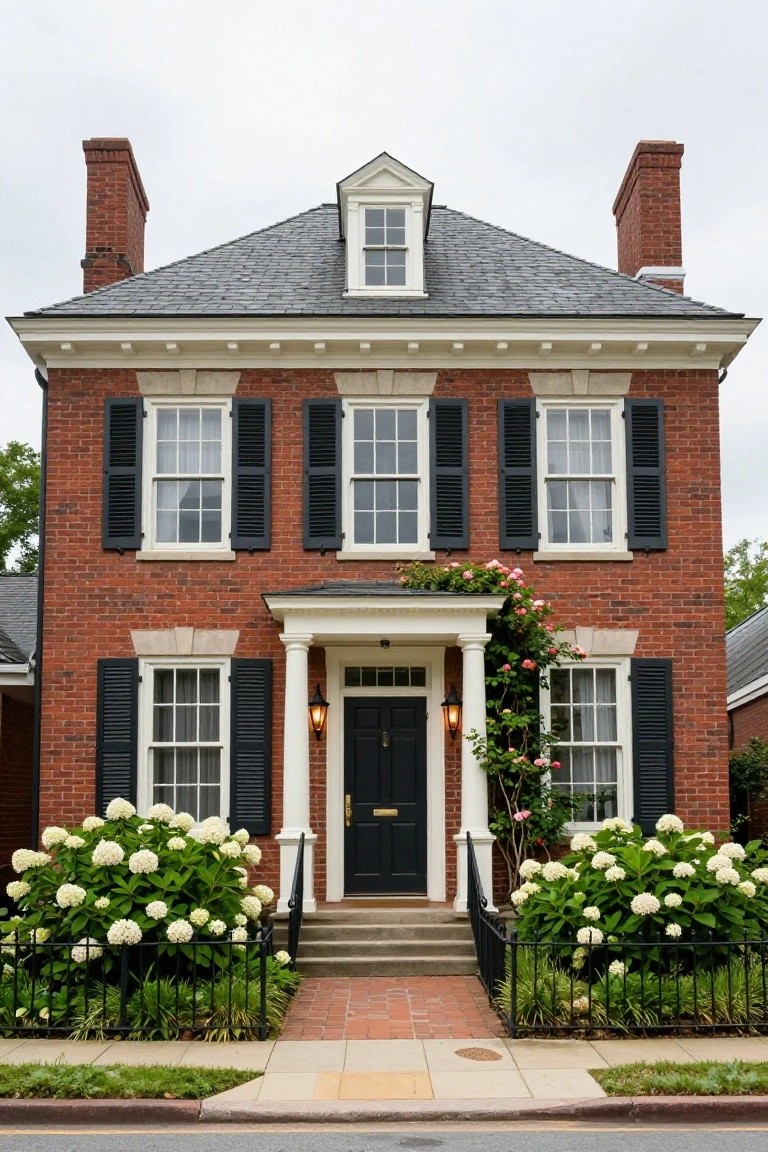
Black shutters on a red brick house like this one give the facade real definition. The dark frames make each window pop without much fuss, and they tie right into that Southern Colonial style. White trim around the edges keeps things clean and balanced, especially on a symmetrical setup.
You see this a lot on two-story homes in older neighborhoods. It works best where you want curb appeal that lasts, not something trendy. Just make sure the brick is in good shape first, or the contrast won’t hit the same. Add a few plants near the entry, and it’s welcoming without trying too hard.
Classic White Columns on Shingle Siding
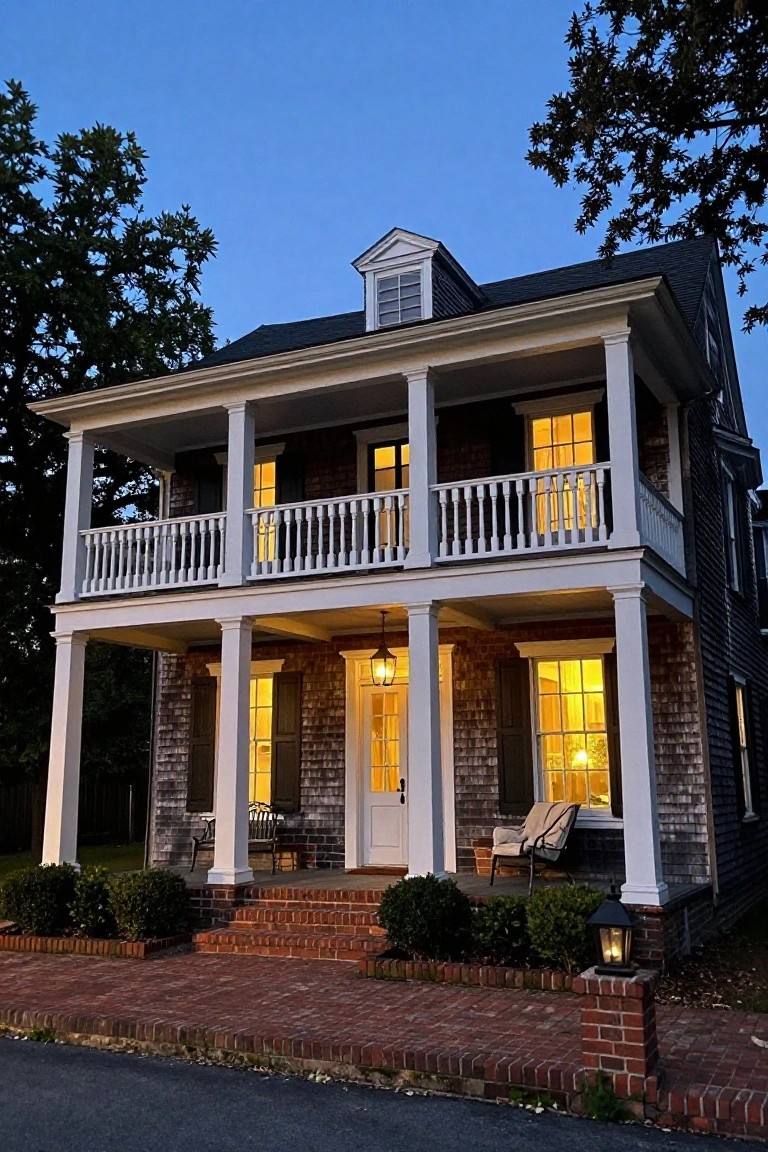
White columns like these give a shingle-sided house that solid Southern colonial backbone. The dark shakes handle the body of the home quietly while the bright columns march across the front porches, framing doors and windows just right. At dusk with lanterns glowing, it pulls the whole facade together without trying too hard.
This setup suits older neighborhoods or modest lots where you want stature but not flash. Scale the columns to match your roofline, keep paint fresh, and tuck in a couple porch chairs. It holds up year-round… low fuss, big impact on everyday curb appeal.
Recommended Products

Item Description: 12"W x 47"H Lifetime Vinyl, Standard Two Equal Panels, Raised Panel Shutters, w/Installation Shutter-Lok's & Matching Screws (Per Pair), Black
Item Description: 14 3/4"W x 43"H Lifetime Vinyl, Standard Two Equal Panels, Raised Panel Shutters, w/Installation Shutter-Lok's & Matching Screws (Per Pair), Black
Item Description: 12"W x 35"H Lifetime Vinyl, Standard Two Equal Panels, Raised Panel Shutters, w/Installation Shutter-Lok's & Matching Screws (Per Pair), Black
Light Gray Siding with Dark Metal Roof
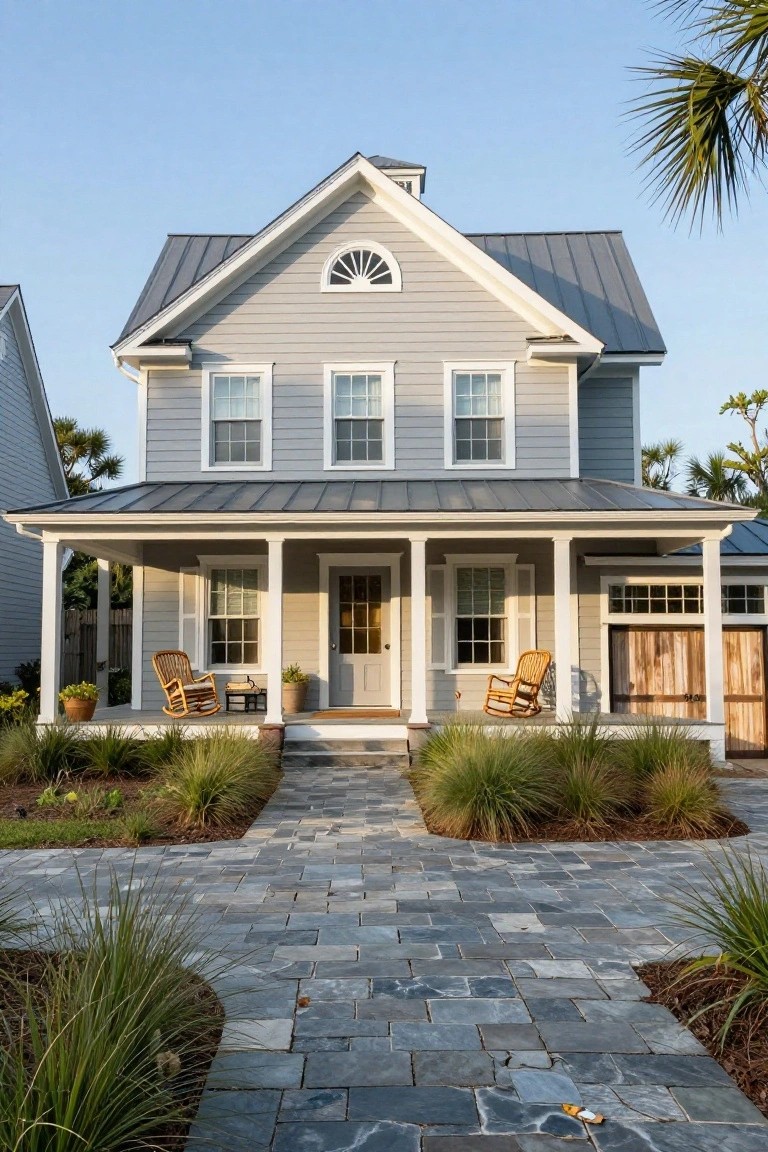
A house like this pulls off a clean look by using light gray clapboard siding topped with a dark standing-seam metal roof. That roof line stays sharp and simple. It fits right into Southern colonial style but feels fresh. The gray keeps things soft. Metal adds some weight up top without overpowering the porch below.
You see this combo a lot in coastal spots. Metal holds up to salt air and storms better than shingles. Try it on a gabled roof with white trim around windows and doors. It suits homes with big porches. Just make sure the siding gets regular cleaning to stay bright.
Columned Portico Entry
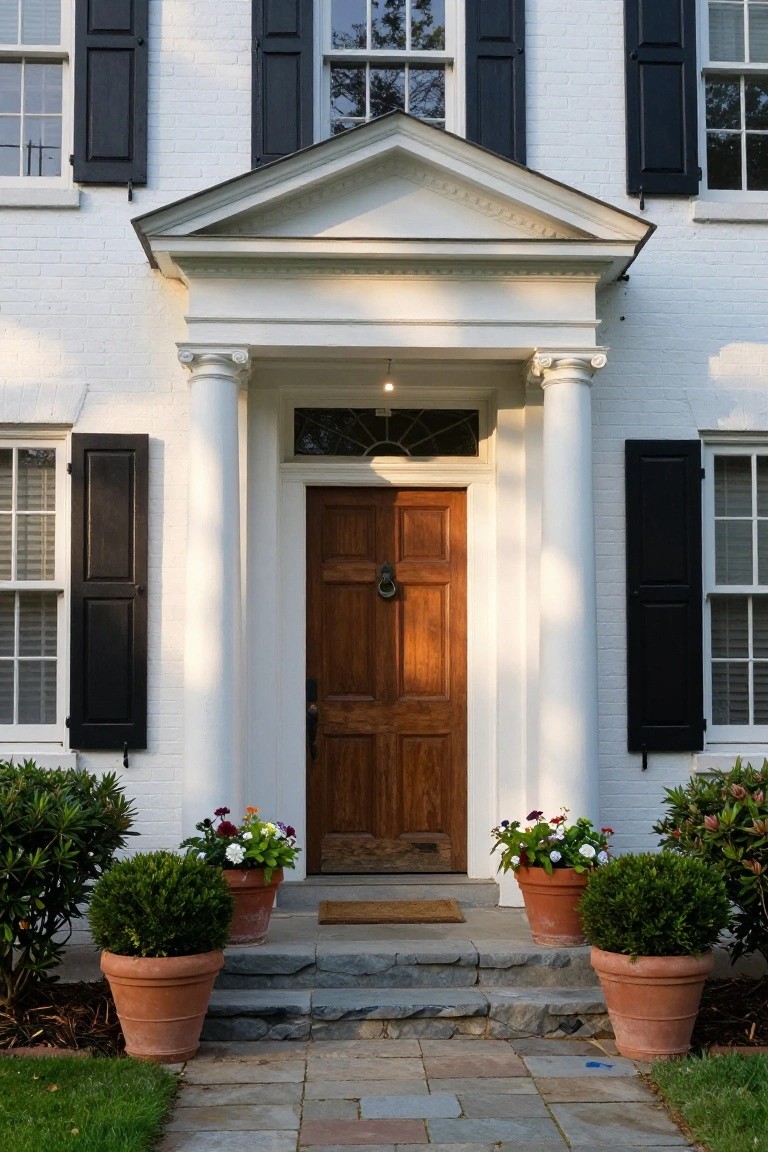
A columned portico like this one takes a simple front door and turns it into the house’s main focal point. Those fluted white columns supporting the pedimented roofline echo old Southern plantation style, while the dark wood door adds just enough contrast against the white brick. Black shutters on the flanking windows tie it all together without overdoing things.
This setup works great on homes with a bit of front setback, letting the entry breathe. Frame it with matching terra cotta pots on the steps for easy symmetry… boxwoods below and flowers above keep upkeep low. Skip it if your lot’s too tight; it needs room to shine from the street.
Columned Front Porch
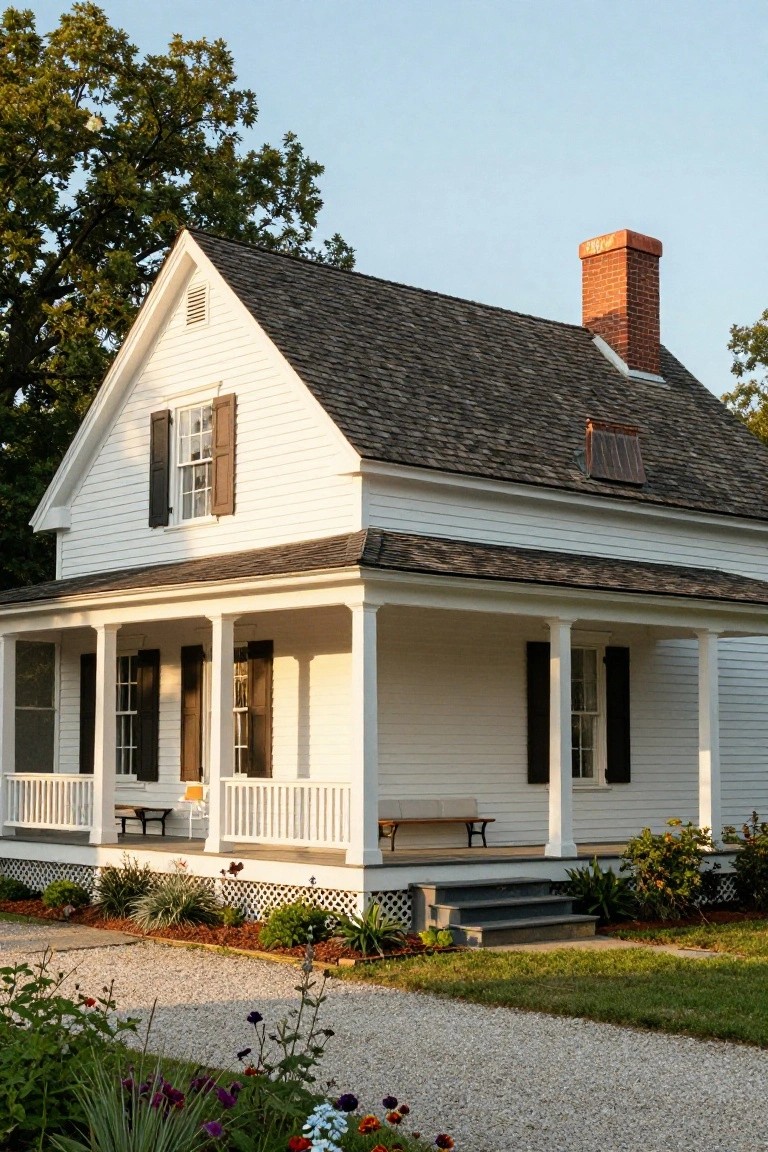
A columned front porch like this one gives a Southern Colonial house that instant sense of tradition and welcome. The tall white columns line the porch neatly, paired with the clean white siding and dark shutters for simple contrast. It pulls the eye right to the entry without any fuss.
These porches suit homes in warmer climates where you actually use the space year-round. Go for round or square columns depending on your roofline. Just make sure the foundation is solid, since they carry some weight. A plain bench keeps it practical.
Classic Wrap-Around Porch Appeal
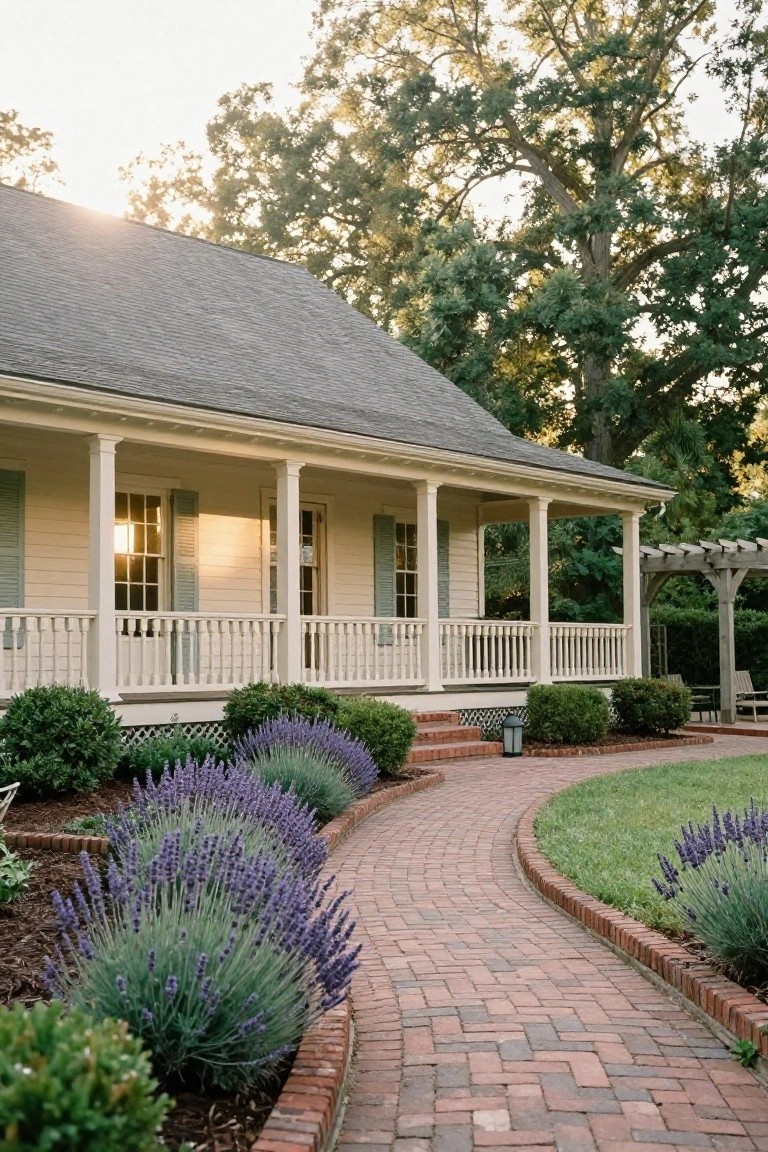
A wrap-around porch like this one gives a Southern Colonial house that timeless front porch feel folks have loved for generations. Tall columns hold up the roofline, and the simple railing keeps it open for sitting or just watching the world go by. The pale siding ties it all together without stealing the show.
Put this style on a house with enough lot depth to let the porch breathe. Lead right up to it with a curving brick path edged in lavender or boxwoods, like here, to draw eyes in soft. It suits milder spots where shade matters in summer, but watch the upkeep on those columns if you’re near the coast.
Classic Columned Porch
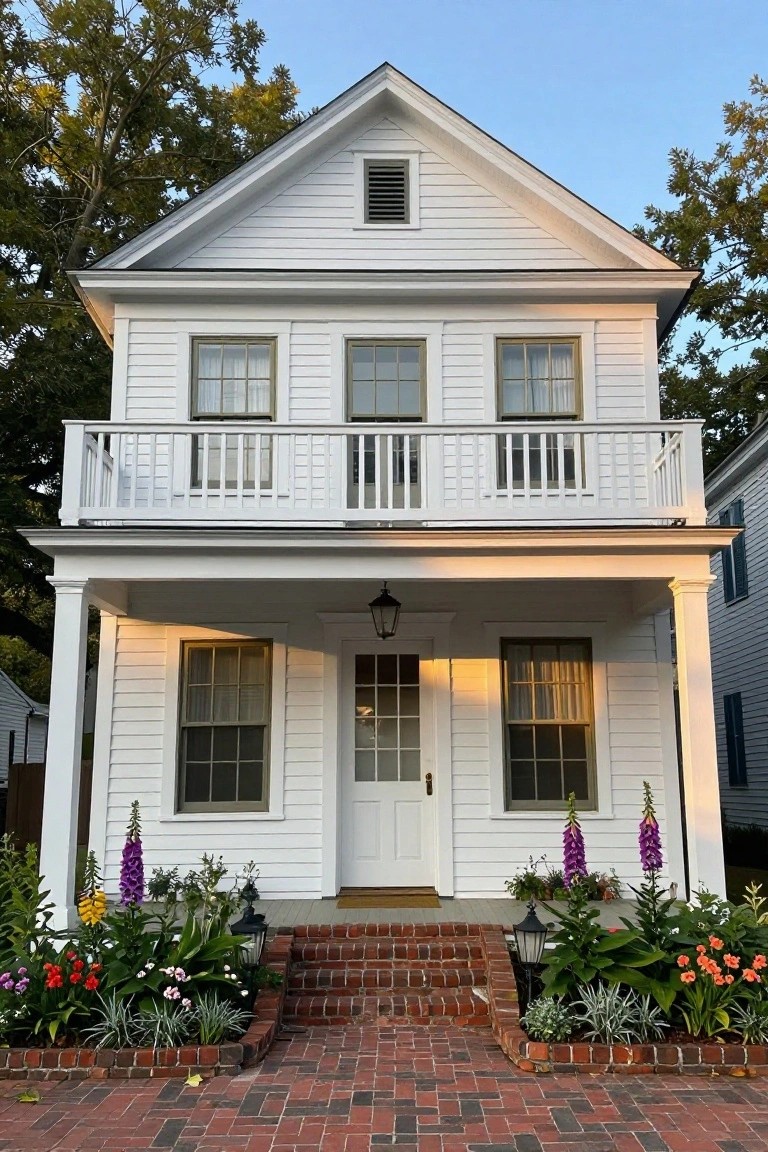
A columned front porch like this one gives a Southern Colonial house that solid, welcoming look folks have loved for generations. The tall white columns frame the entry just right, making the whole facade feel balanced and grand without trying too hard. Paired with the clean clapboard siding and those symmetrical windows, it pulls the eye straight to the door.
This setup shines on homes set back from the street a bit, where the porch can really stand out. Use brick steps to lead up to it, and add low plants along the edges for a soft touch. Skip anything too busy around the base, though. It keeps things practical for everyday comings and goings.
Classic Columned Portico Entry
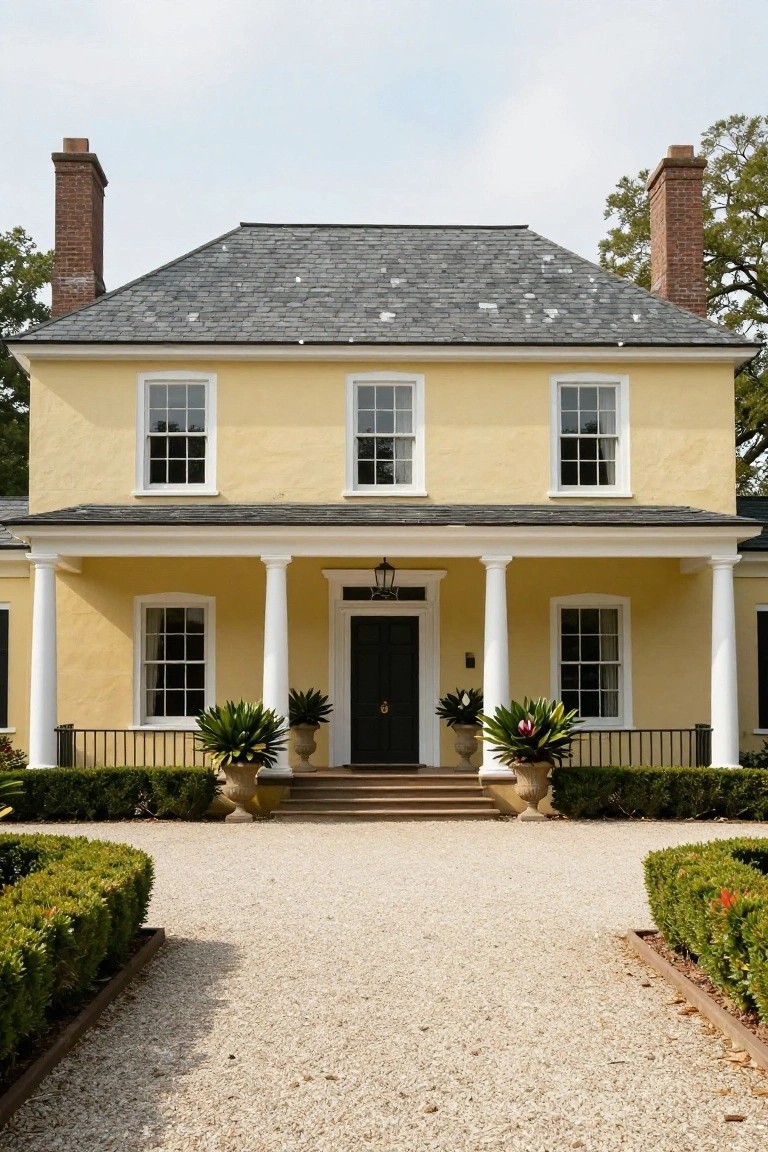
A raised portico like this one on a yellow Colonial house makes the front door the star without much fuss. Those tall white columns hold up the roofline just right, giving the whole facade a balanced, welcoming feel. Paired with simple potted plants on either side, it turns the entry into something people remember.
This setup suits older Southern homes or revivals that want that traditional porch vibe. Keep the siding pale to let the architecture shine, and use gravel for the path if your yard slopes a bit. Scale the columns to match your house height, or it can look off.
Tall Columns on the Porch
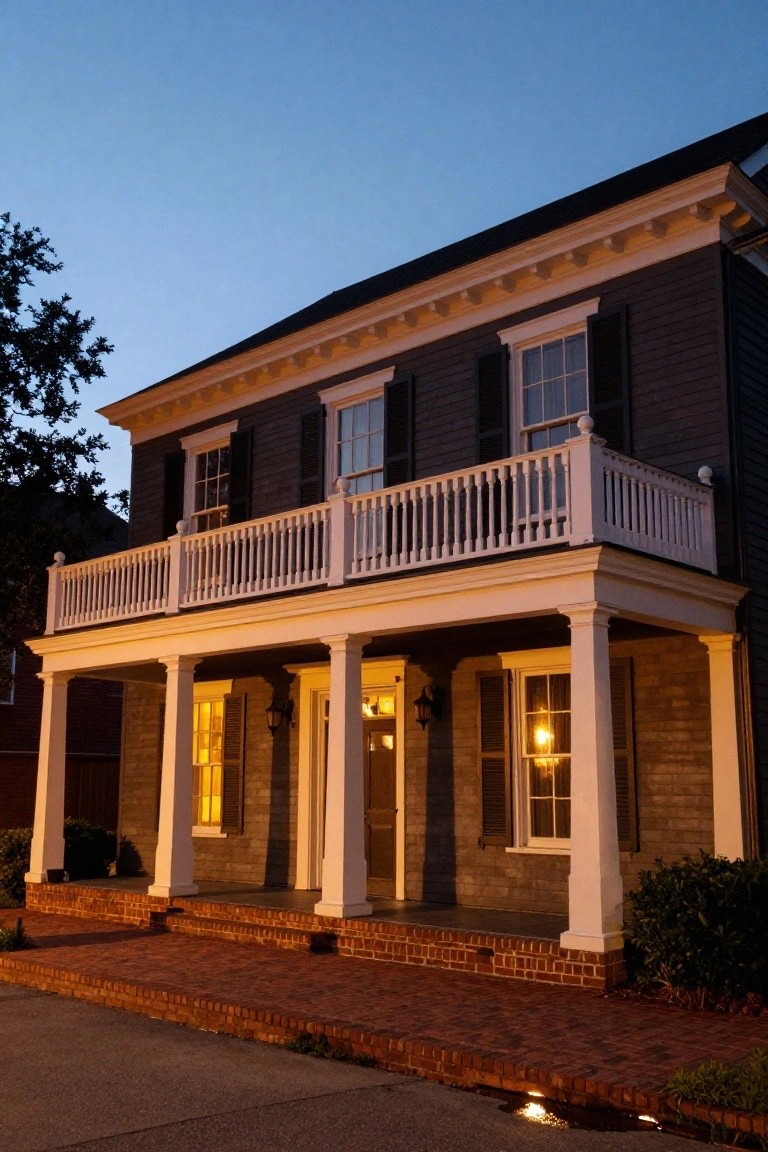
A wide porch held up by tall white columns is what gives these Southern Colonial homes their strong presence. They pull the eye up and make the house feel rooted yet lifted. Here the columns stand out crisp against dark shingle siding, with a brick base keeping things steady at ground level.
This setup suits homes on open lots where you want curb appeal that lasts year-round. Space the columns evenly across the front, maybe eight or ten for balance. Pair with simple lanterns at the entry… they glow warm at dusk and welcome folks right in.
Brick Colonial Facade with Gated Entry
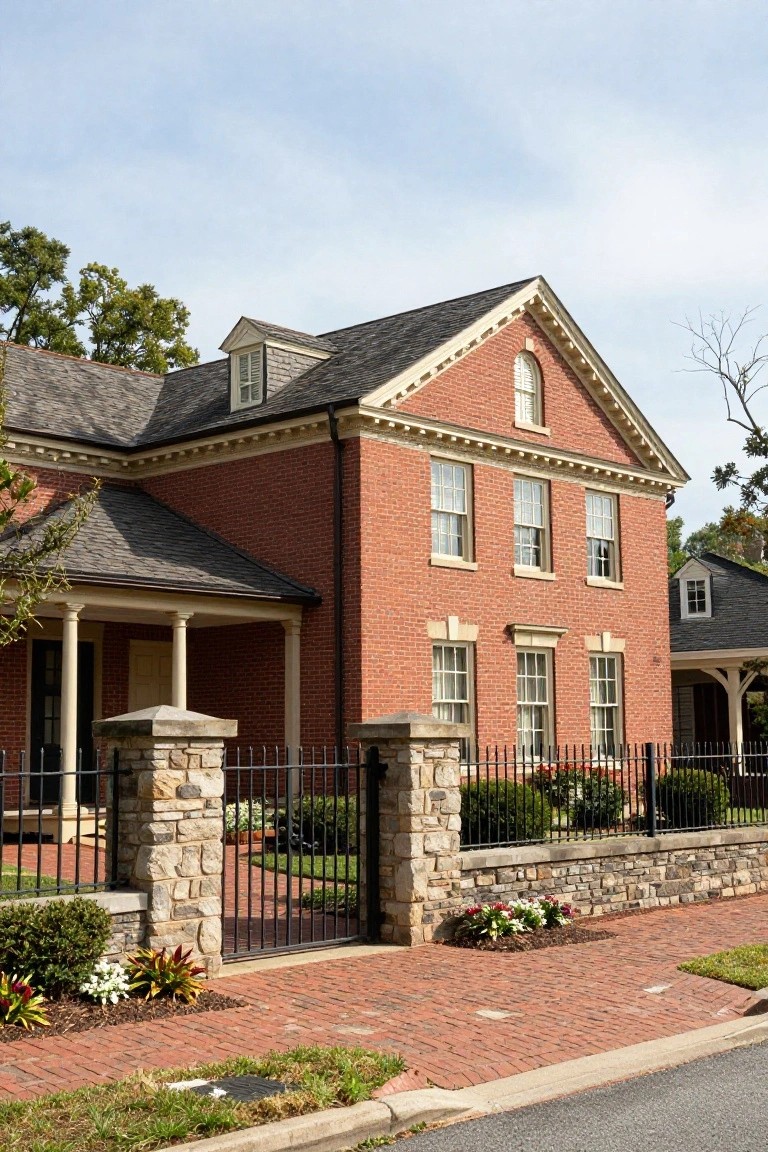
One look at this Southern Colonial exterior tells you how a simple gated entry can pull the whole front together. Tall stone pillars hold up a black wrought-iron fence right at the brick walkway, framing the columned porch without stealing the show from the red brick walls and tall windows. It gives that touch of old-world charm that makes the house feel established and proud.
You can pull this off on most any lot size, especially if your home has some classic lines already. Stick with local stone for the pillars to blend in, and keep the fence low enough to see over. Watch the spacing though. Too tight, and it crowds the path. Works best where you want subtle security along with curb appeal.
Dark Gray Siding with Black Door
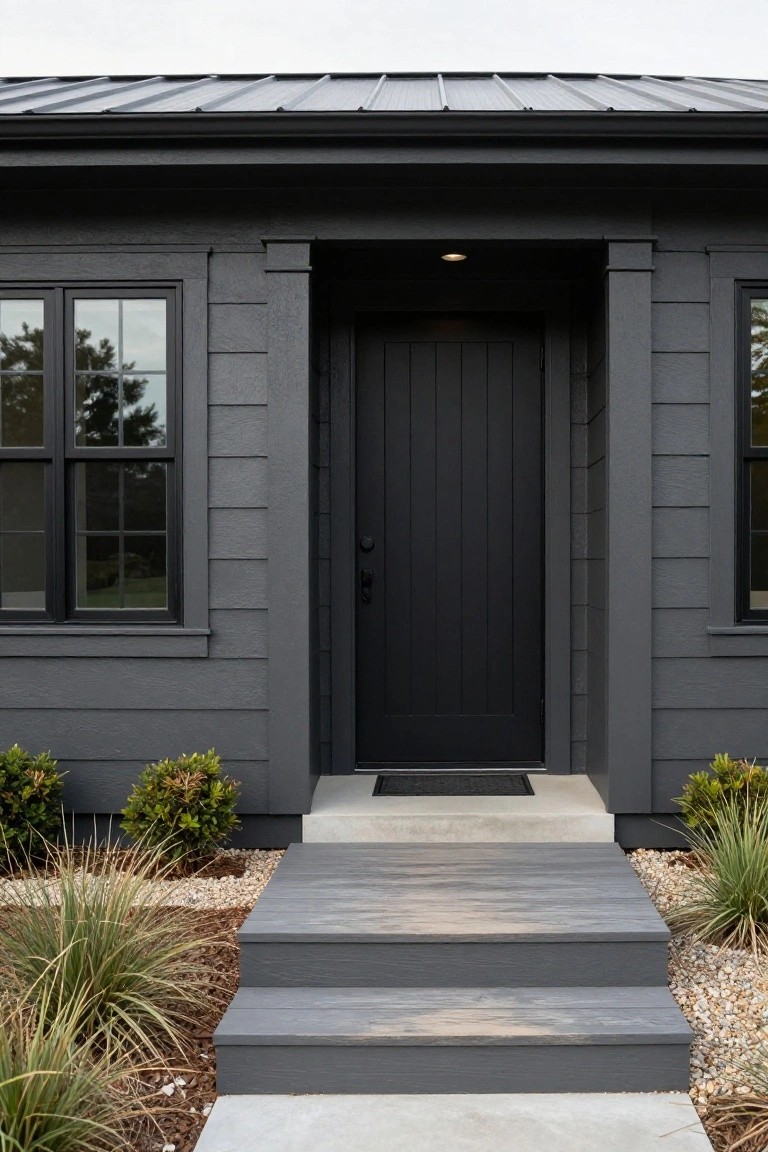
A deep charcoal gray covers this house from siding to roof edge, right down to the black paneled door and window frames. It pulls everything together into one strong, quiet look. No bright colors to distract. Just clean lines on the board-and-batten siding and a simple recessed entry that says welcome without trying too hard.
This setup suits smaller Southern colonials or farm-style homes where you want low upkeep and year-round style. Paint or use fiber cement siding in that shade, then match the door and trim in matte black. It hides dirt well and works under trees. Keep landscaping low around the steps so the house stays the focus.
Classic Porch with Turquoise Door
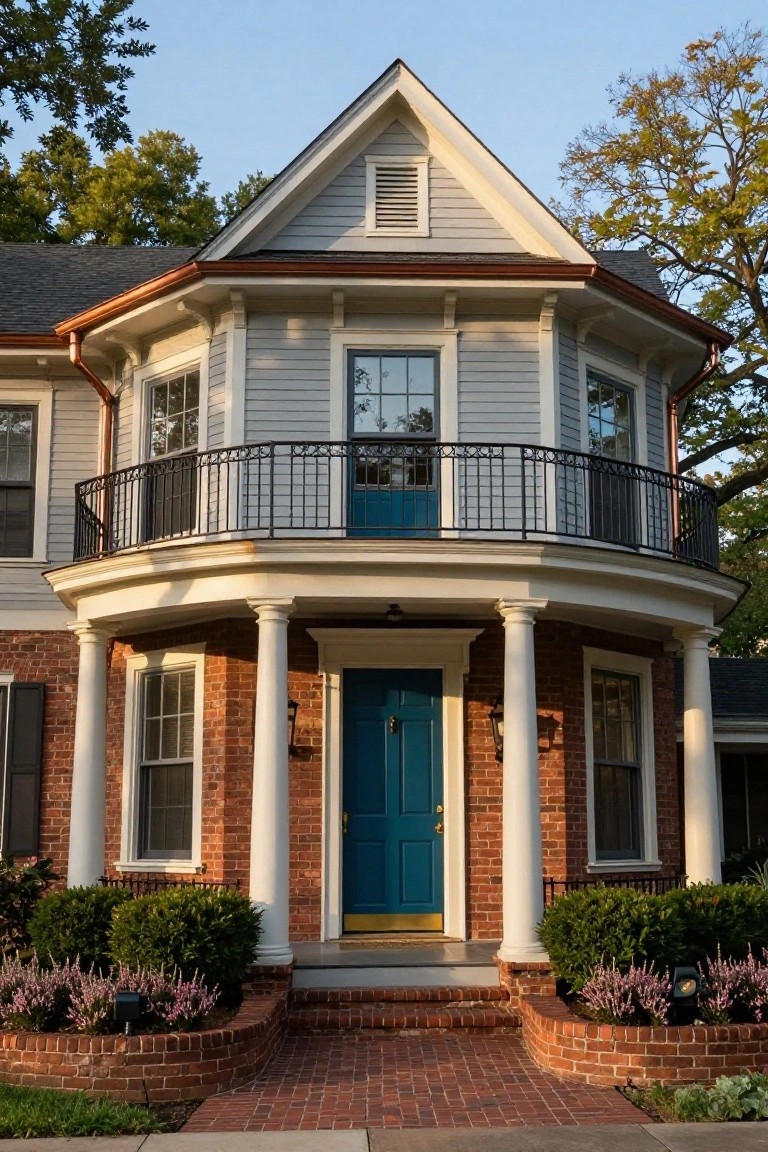
A turquoise front door like this one grabs your eye right away on a traditional porch setup. It sits there between tall white columns and red brick walls, making the whole entry feel fresh without messing up the classic lines. That pop of color works because it plays off the neutral siding and roof, keeping things balanced but lively.
You can pull this off on older homes or new builds in the South where brick bases and columns are common. Just pick a door color that echoes something nearby, like nearby plants or shutters, and pair it with simple lanterns for light. It suits family houses that want curb appeal without big changes. Watch the shade though. Too much blue might fade in full sun.
Crisp White Cottage with Columned Porch
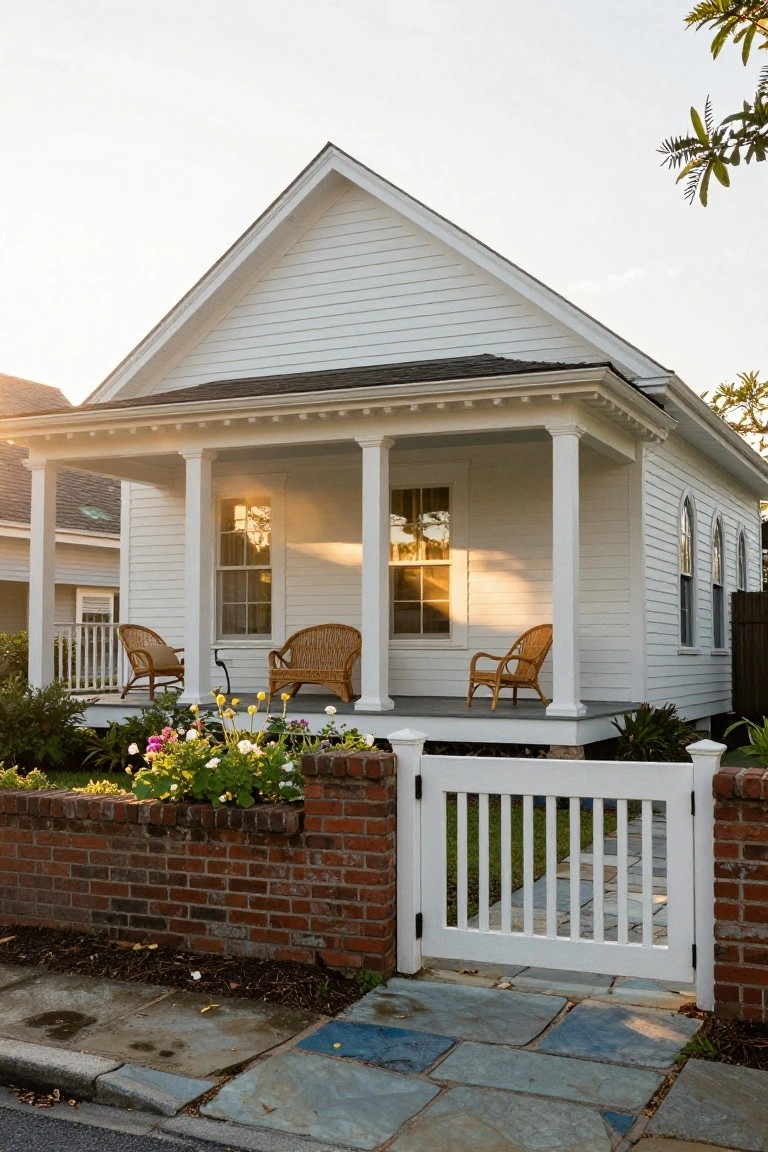
A columned porch like this one takes a simple white clapboard cottage and gives it real presence. Those tall, smooth columns frame the front door just right, making the house feel taller and more rooted in Southern tradition. The clean white siding ties it all together without any fuss, and a touch of brick at the base adds subtle grounding.
This setup suits smaller homes on narrow lots where you want curb appeal that punches above its weight. Plant some low flowers along the walk and add a couple of chairs, but keep the porch open. It shines in mild weather spots, though you might need shutters for storms.
Grand Columned Porch
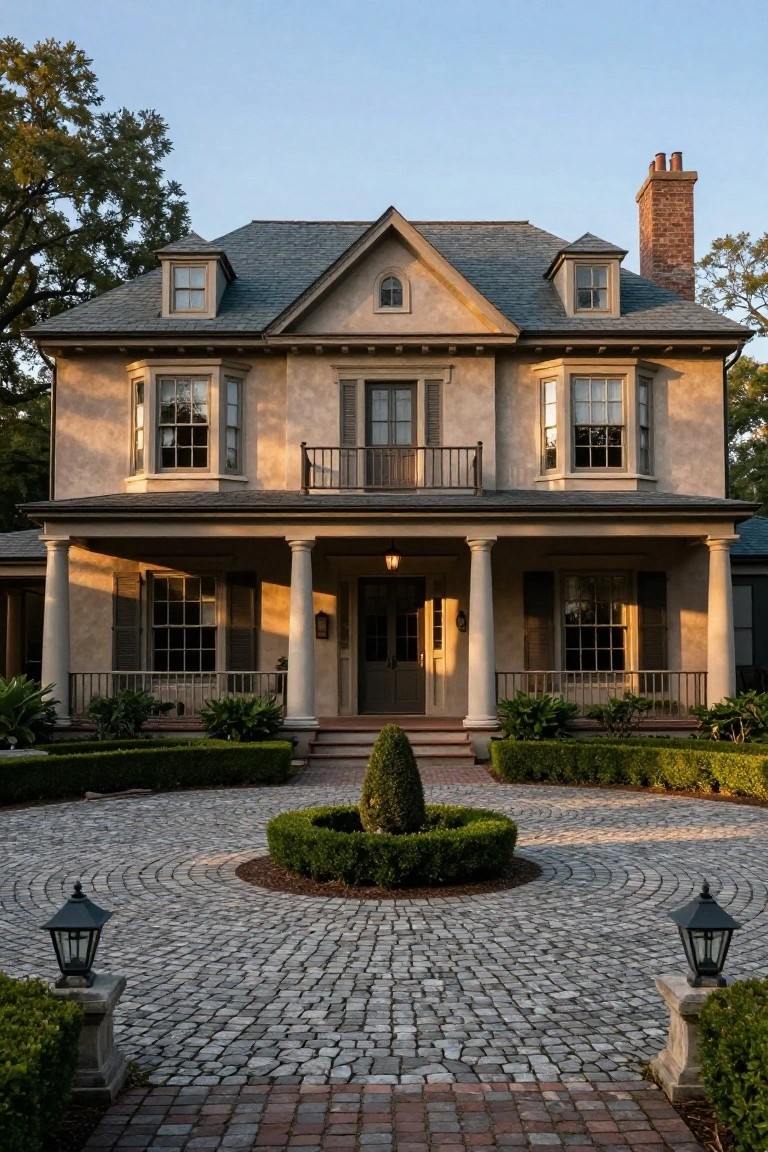
A grand columned porch like this one takes a stucco Southern Colonial house and makes it feel right at home in the South. Those tall, smooth columns frame the entry doors perfectly, with the beige walls and dark shutters adding just enough contrast. The whole front pulls together with matching dormers and bay windows up top, giving solid curb appeal that says welcome without trying too hard.
This setup works best on homes with a wide front yard and some driveway space out front. Go for it if you want classic style that holds up in humid weather, stucco handles that well. Keep the columns simple and spaced right so they support the roof without crowding the doors… one thing to skip is fussy trim that fights the clean lines.
Columned Porch Anchors Southern Style
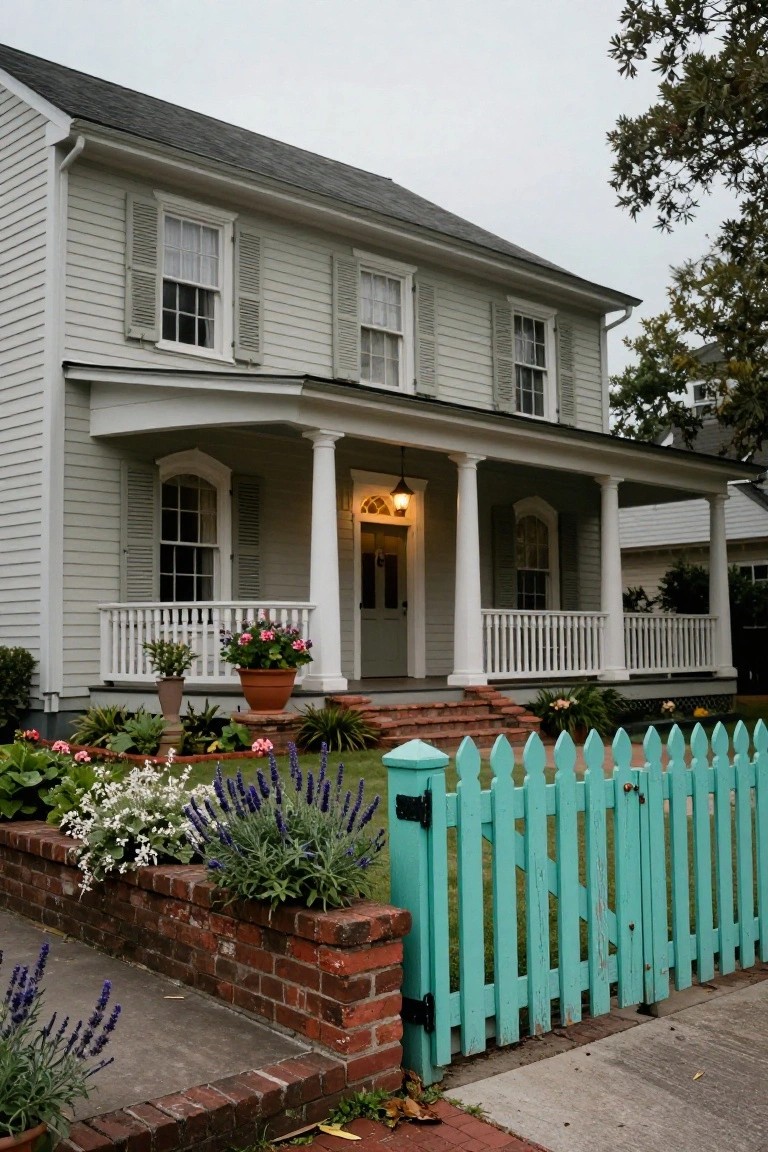
A wide front porch held up by clean white columns gives this house its strong Southern look. The columns add height and balance to the light gray siding, making the entry feel open and solid at the same time. It’s a simple way to nod to tradition without overdoing it.
These porches work best on homes with some yard space, where steps lead right up to the door. Pair them with a low fence or garden beds nearby to frame the walk-up. They suit classic neighborhoods, and even a fresh coat of paint on the columns can refresh the whole front.
Classic Columned Porch Entry
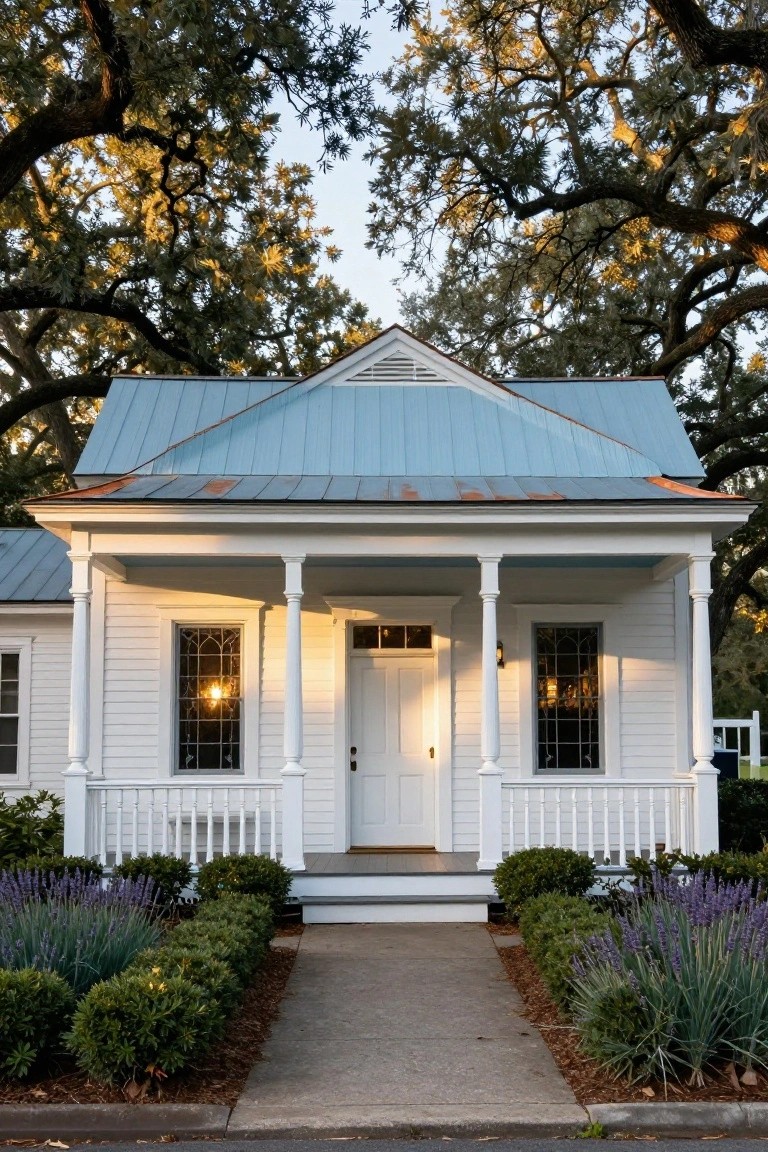
A columned porch like this one turns a small house into something that feels right at home in the South. Those tall white columns stand straight and simple, framing the front door with matching leaded glass windows on each side. The blue metal roof overhead adds a bit of aged character without taking over, and it all sits up a few steps from the path. It’s the kind of front that says welcome without trying too hard.
This setup shines on compact cottages where you want porch time but not a lot of space. It suits older neighborhoods with big trees, and the boxwood hedges out front keep things neat. Just make sure the columns match your siding color so they blend in, and add gravel for the walk-up to handle rain easy.
Columned Porch Entry
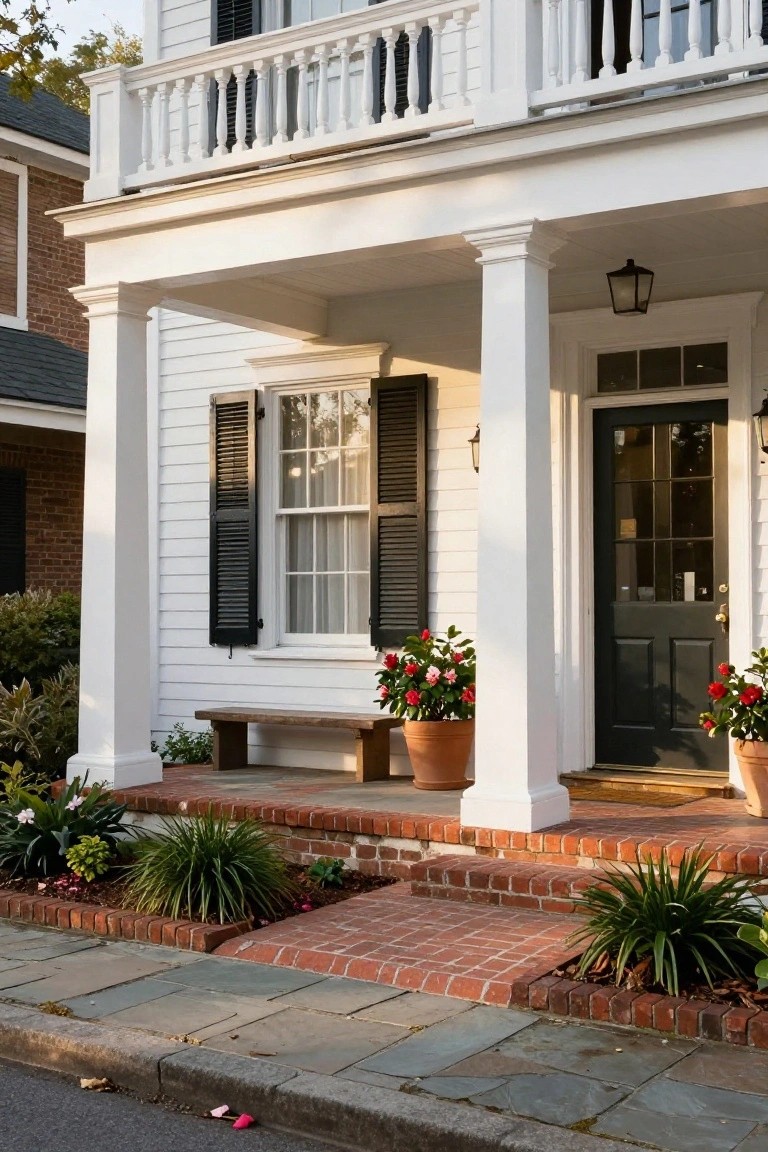
A columned front porch like this one gives Southern Colonial homes that tall, proud look right from the street. Those sturdy white columns frame the dark door perfectly, making the whole facade feel balanced and open. Brick steps lead up smoothly, tying the house to the ground without much fuss.
This setup suits homes in warmer climates with a bit of yard out front. Paint the columns bright white to match the siding, and keep plants in pots nearby for color. It holds up well over time, especially if you pick simple maintenance-free details.
Classic Wraparound Porch on a Colonial Home
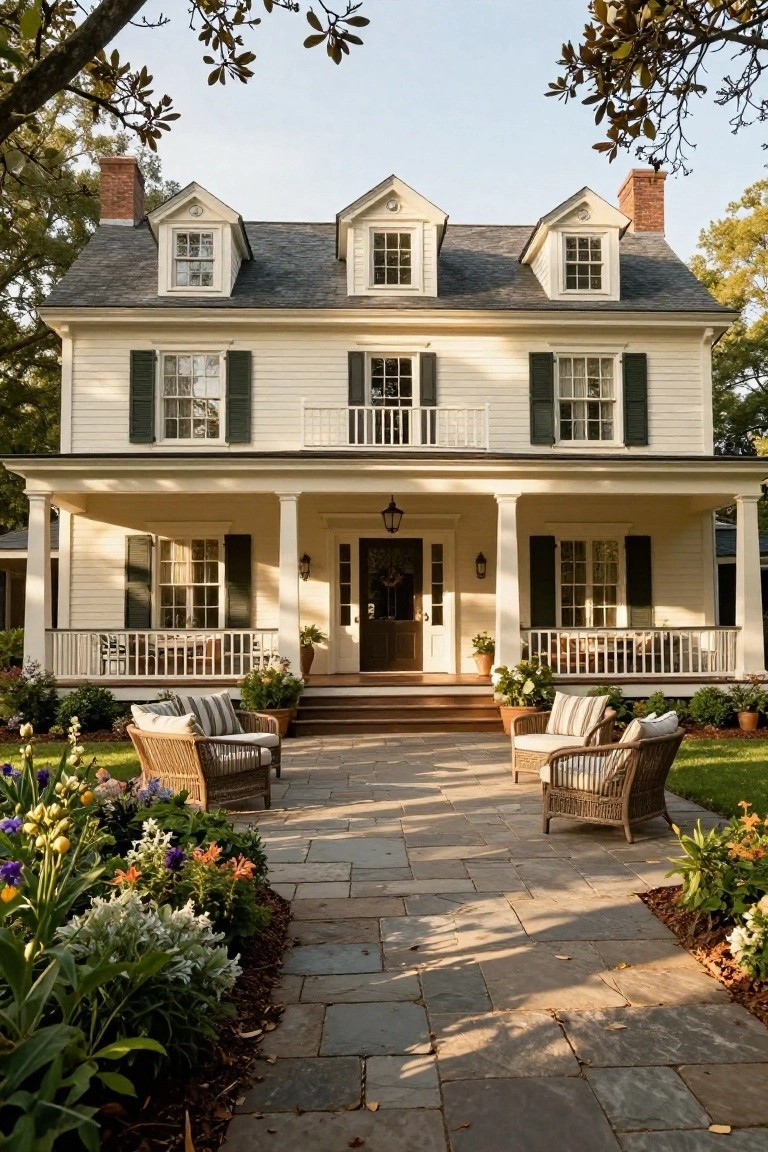
A wraparound porch like this one takes a standard two-story Colonial and turns it into something truly Southern. It runs the full width of the house, with tall columns and a simple railing that match the cream clapboard siding and dark green shutters. That setup gives the whole facade a balanced, open feel right from the street.
These porches work great on homes with enough front yard space to let them breathe. Pair one with a stone walkway and a couple of chairs out front, and you’ve got instant curb appeal for family gatherings or just sitting out after supper. Skip it if your lot’s too narrow, though. It needs room to shine.
Two-Story Wraparound Porch
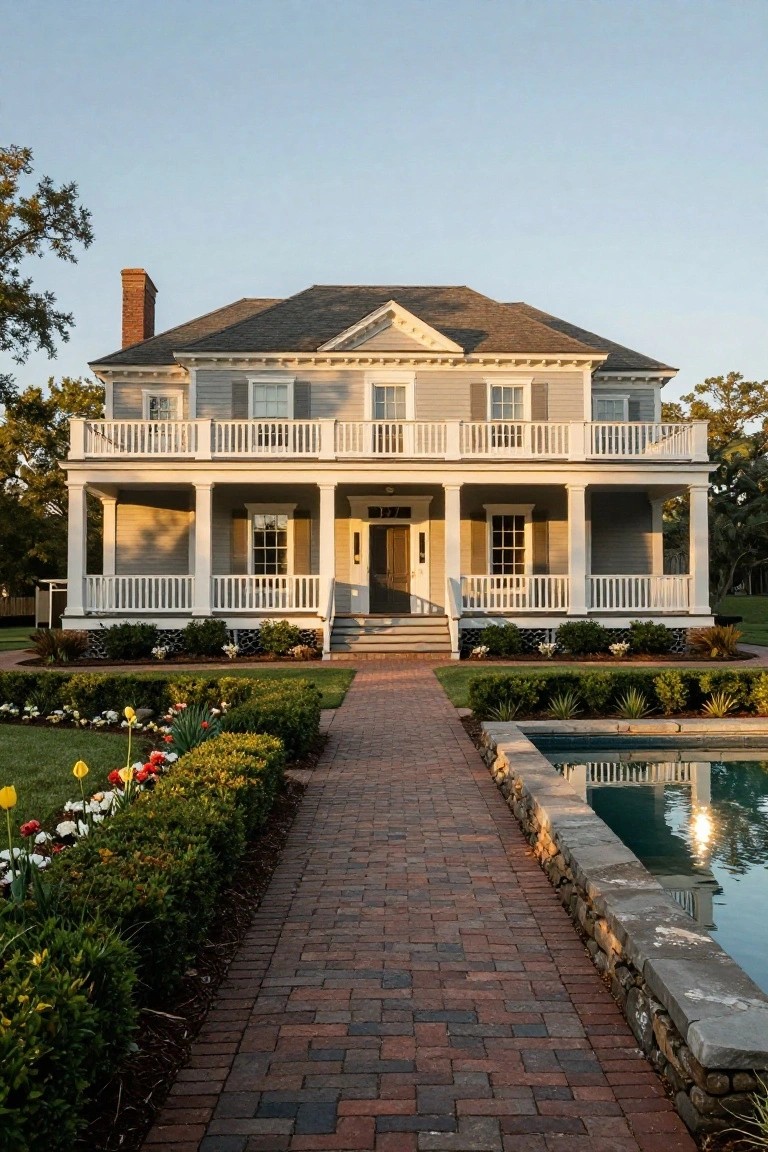
A two-story wraparound porch like this one really sets a Southern Colonial house apart. Those tall white columns hold up both the ground-level porch and the upper balcony, creating clean lines and a sense of height. The light gray siding keeps things soft while the porch railings add that extra layer of detail without overwhelming the front.
You see this style on homes with good-sized front yards, where the porch becomes the main focal point from the street. Line the approach with a simple brick path and some boxwoods or flowers on either side, like here, to guide folks right up to the door. It suits warmer climates best, since the shade helps on hot days, but watch the maintenance on those columns if you’re near the coast.
White Siding with Black Shutters
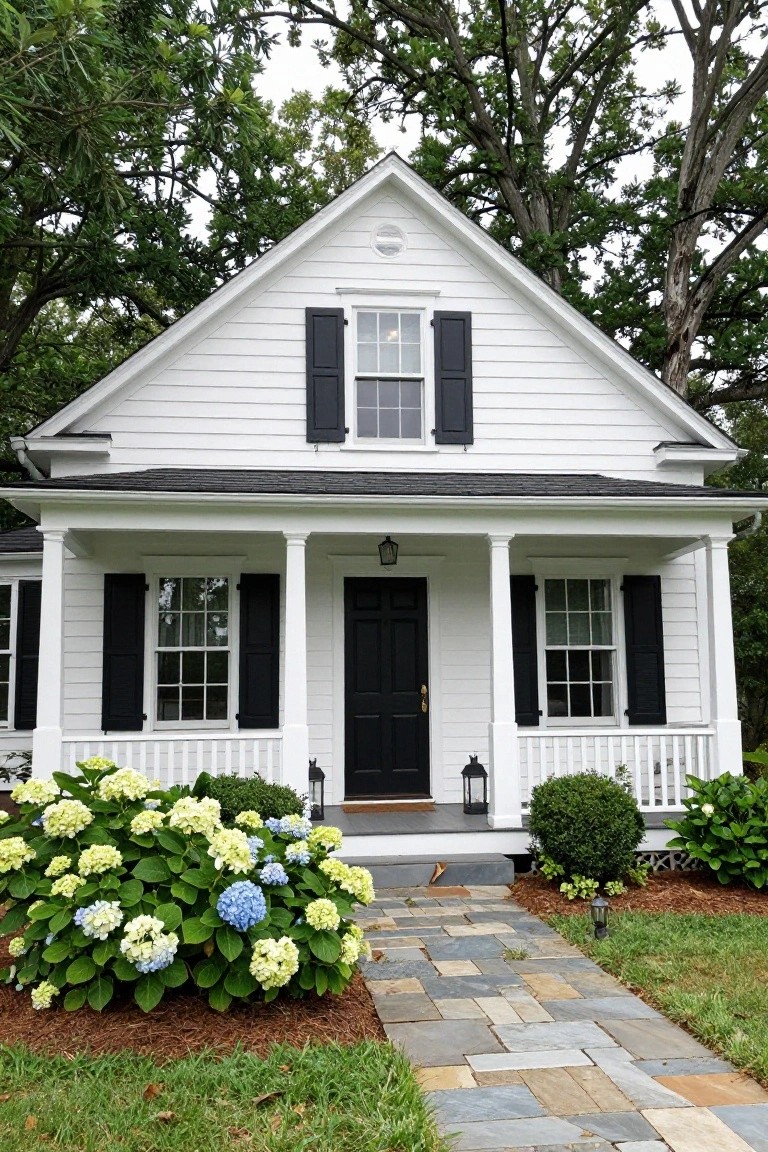
Bright white clapboard siding paired with black shutters gives this Southern colonial a clean, crisp look that turns heads. The dark accents on the windows and door stand out sharp against the white, making the whole facade feel put-together without any extra work. It’s a simple choice that fits right into shady oak-lined neighborhoods.
You see this a lot on homes with front porches and gabled roofs. Paint the trim and door black too, and it pulls everything forward. Best for houses under two stories where you want that welcoming porch to shine. Keep the white paint fresh each few years, or it’ll dull down quick.
Frequently Asked Questions
Q: How do I keep those crisp white columns looking sharp year-round?
A: Mix mild soap with warm water and tackle them twice a year with a soft-bristle brush. Work top to bottom to avoid streaks. The Southern sun does the drying for you.
Q: Can I swap out the front door for something fresh without killing the colonial vibe?
A: Pick a sturdy fiberglass door with divided-light glass that nods to tradition. Paint it a deep navy or glossy black to make it stand out. You’ll love how it punches up the whole facade.
Q: What’s a solid trim color that plays nice with red brick?
A: Creamy off-white warms up the look without clashing. Test a small patch first to see it in your light. And rinse the brick gently beforehand.
Q: How do you handle porch railings in humid spots?
A: Coat them with marine-grade paint or spar varnish every couple years. It shrugs off the dampness. Skip wood if you hate upkeep; metal spindles hold up great.
