

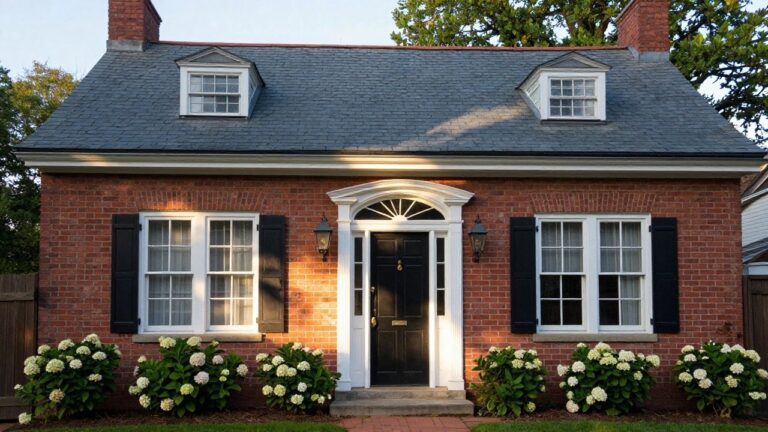
I’ve spent years admiring colonial houses from the curb, and the best ones balance their signature symmetry with updates that feel right at home.
The facade hits you first, from the gentle roof pitch to the centered entry that anchors everything.
I once helped a neighbor refresh their clapboard siding with a muted paint, and it made the whole front read as crisp and lived-in rather than frozen in time.
These remodels lean into materials like brick accents or divided-light windows that nod to history while handling real weather.
Details like that porch railing upgrade are worth sketching for your own place.
Pedimented Portico Entry
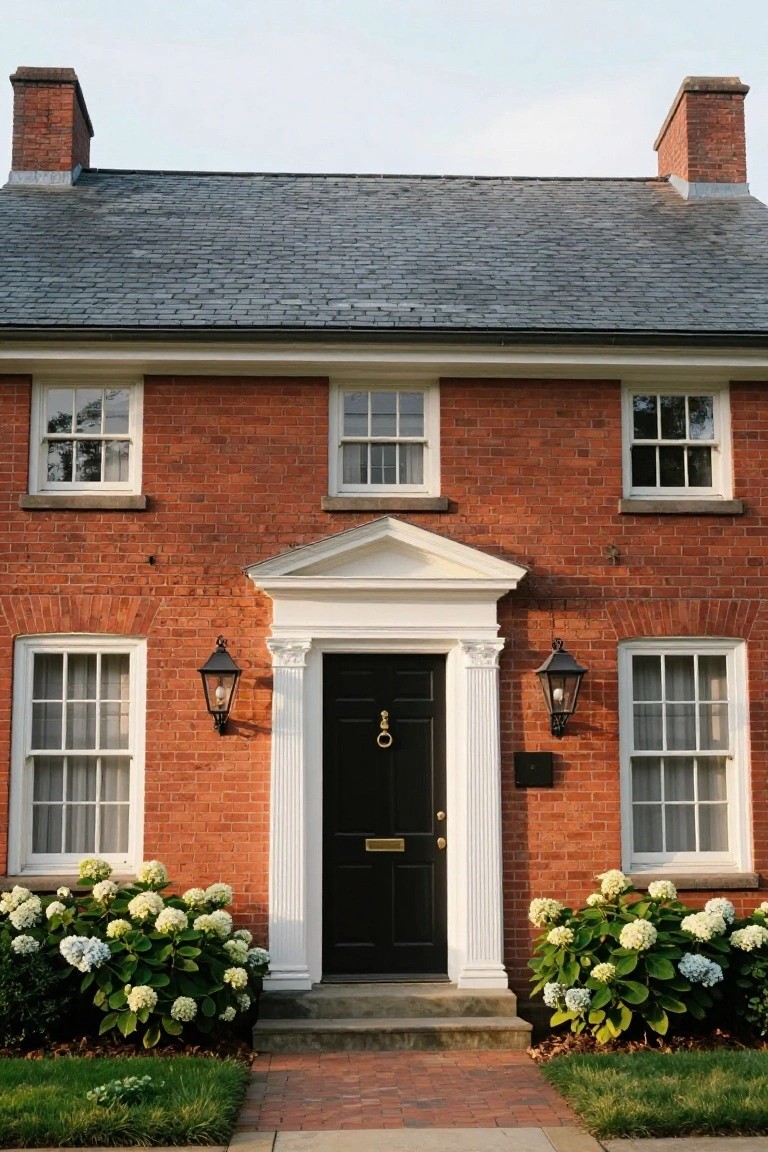
A pedimented portico like this one takes a basic brick colonial facade and turns the front door into the real focal point. Those white columns and triangular top sit right over the black door, giving the house that balanced, formal look from way back. It keeps things classic without any fussy extras.
You can add one to most two-story colonials during a remodel, especially if the brick walls are already there. Stick to clean columns and keep the door dark for contrast. Flank it with low shrubs on the sides… works best where you want curb appeal that nods to history. Just make sure the roofline matches so it doesn’t stick out funny.
Deep Green Paint Revives Colonial Siding
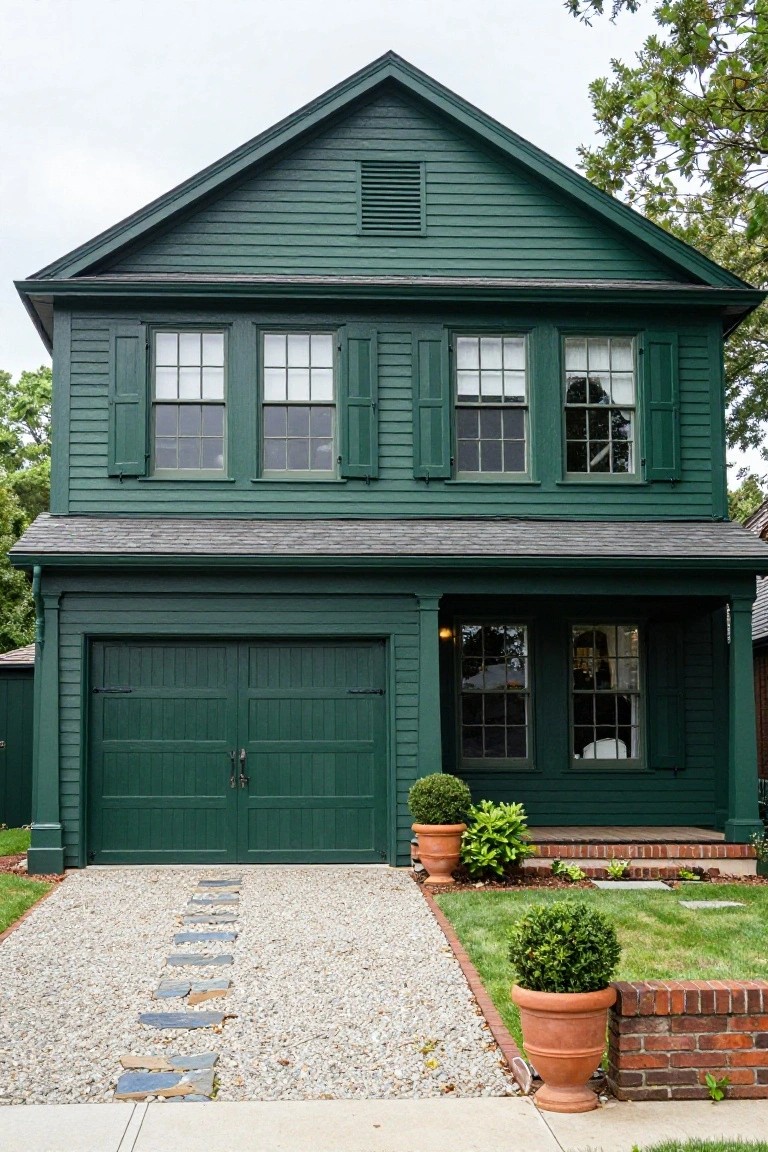
A classic Colonial house like this one gets a real lift from a deep green paint job on the clapboard siding. It keeps all the traditional lines intact, from the gabled roof to the balanced windows, but that rich color adds some quiet personality. The matching green garage door and shutters tie it together without overdoing things.
This approach suits older homes in tree-lined neighborhoods where the shade makes the green read even deeper. Stick to high-quality exterior paint for wood siding to handle weather, and keep trim crisp in white or cream. It might feel bold at first, but it settles in nicely over time.
Copper Roofs on Front Porches
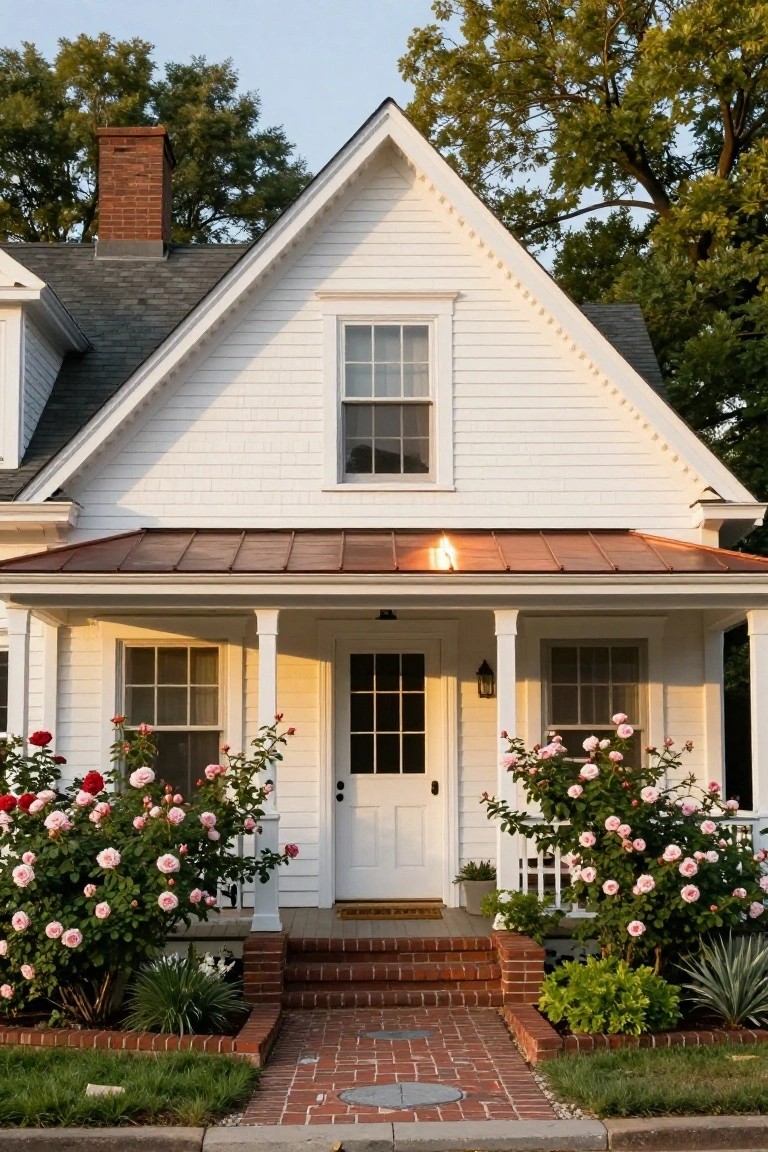
A copper roof over the porch is a simple way to update a Colonial exterior while staying true to the style. On this white clapboard house, it picks up the warm tones from the brick chimney and steps. Over time, the copper develops a patina that blends perfectly with aged siding and trim. It adds just enough detail without overwhelming the clean lines.
This works best on homes with traditional gables and columns. Go for standing seam copper to handle rain and snow. It’s pricier upfront but holds up for decades. Pair it with simple landscaping like roses at the base to keep the focus on the house.
Classic Black Door and Shutters
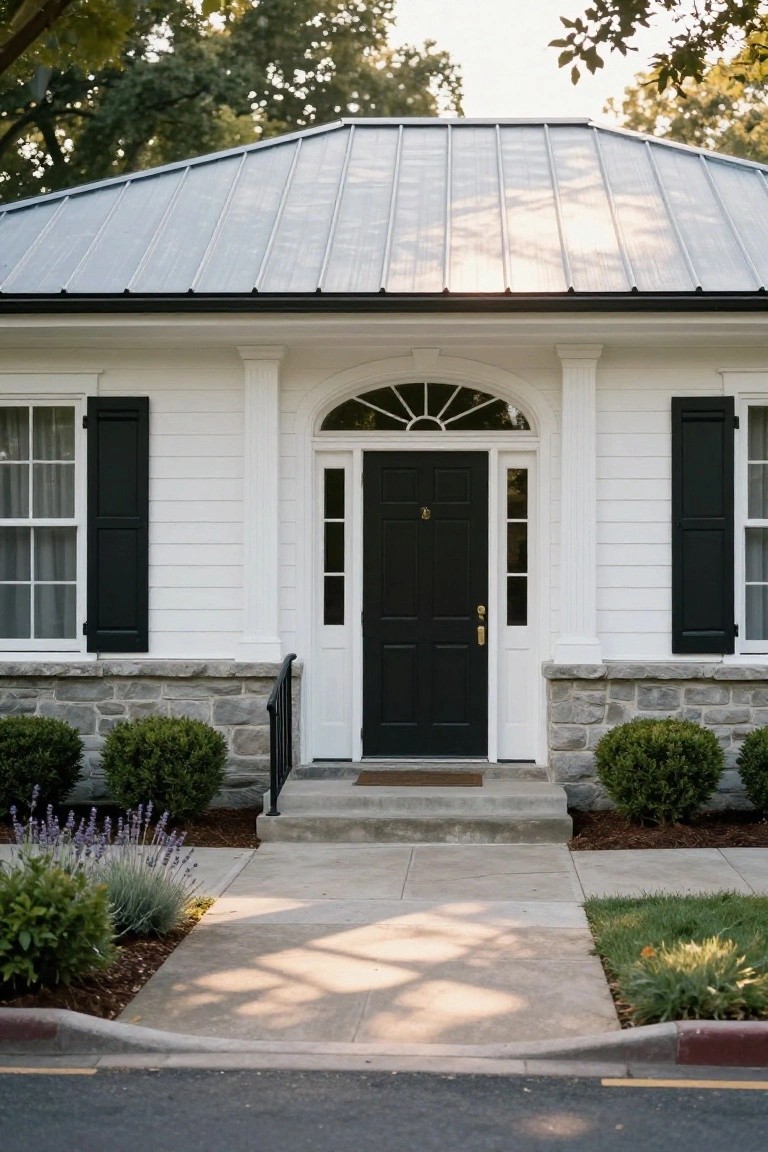
A black front door and matching shutters stand out sharp against white clapboard siding on this colonial home. That simple contrast pulls the eye right to the entry without any fuss. It feels crisp and timeless, especially with the fanlight window curving above.
Paint your door and shutters black if your colonial needs a quick refresh. It works best on homes with balanced windows and a porch like this. Bright white siding keeps it clean. Just pair it with a light roof so the dark accents don’t overwhelm.
Classic Shingle Siding Facade
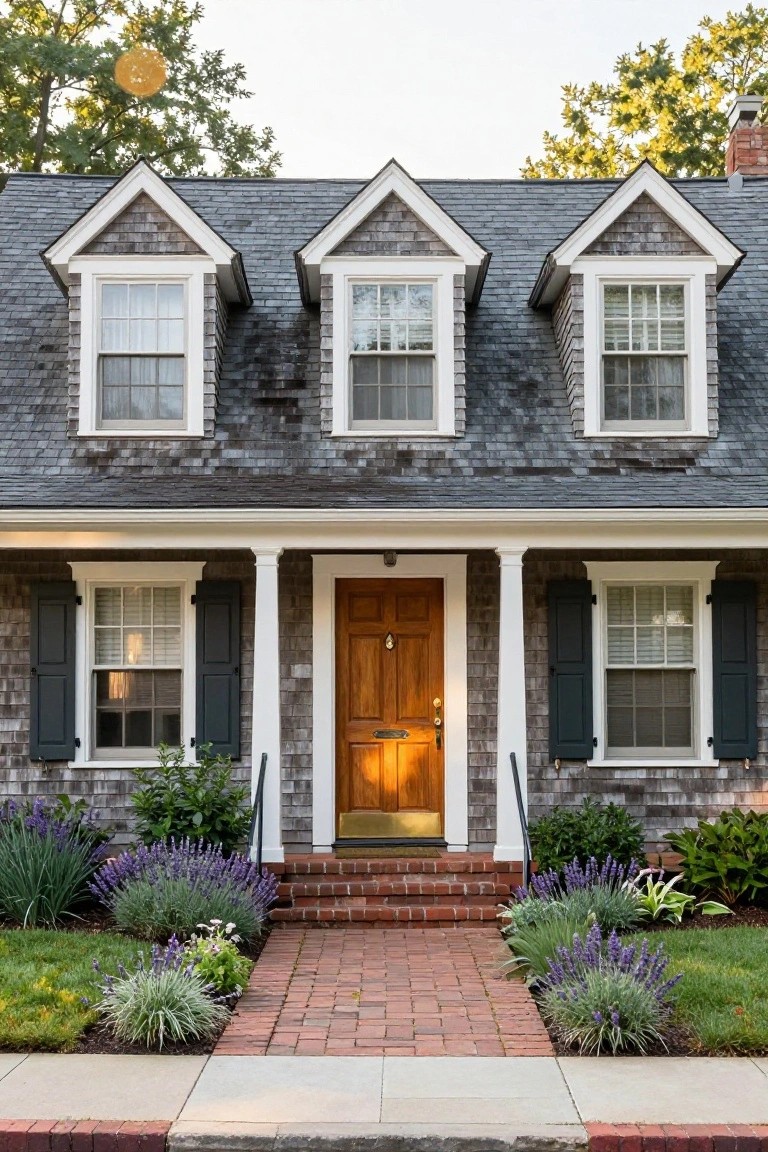
Shingle siding like this brings back that solid colonial feel without looking dated. The gray cedar shakes cover the whole front, paired with clean white trim around the windows and dormers. It gives the house a textured, layered look that stands up to weather and fits right into neighborhoods with older homes.
You can pull this off on a remodel by choosing weather-resistant shingles and keeping the trim bright. It works best on two-story colonials with a front porch, where the siding ties into the roofline. Just make sure the color stays muted, like this soft gray, so it doesn’t overpower the entry door or steps.
Classic Columned Porch
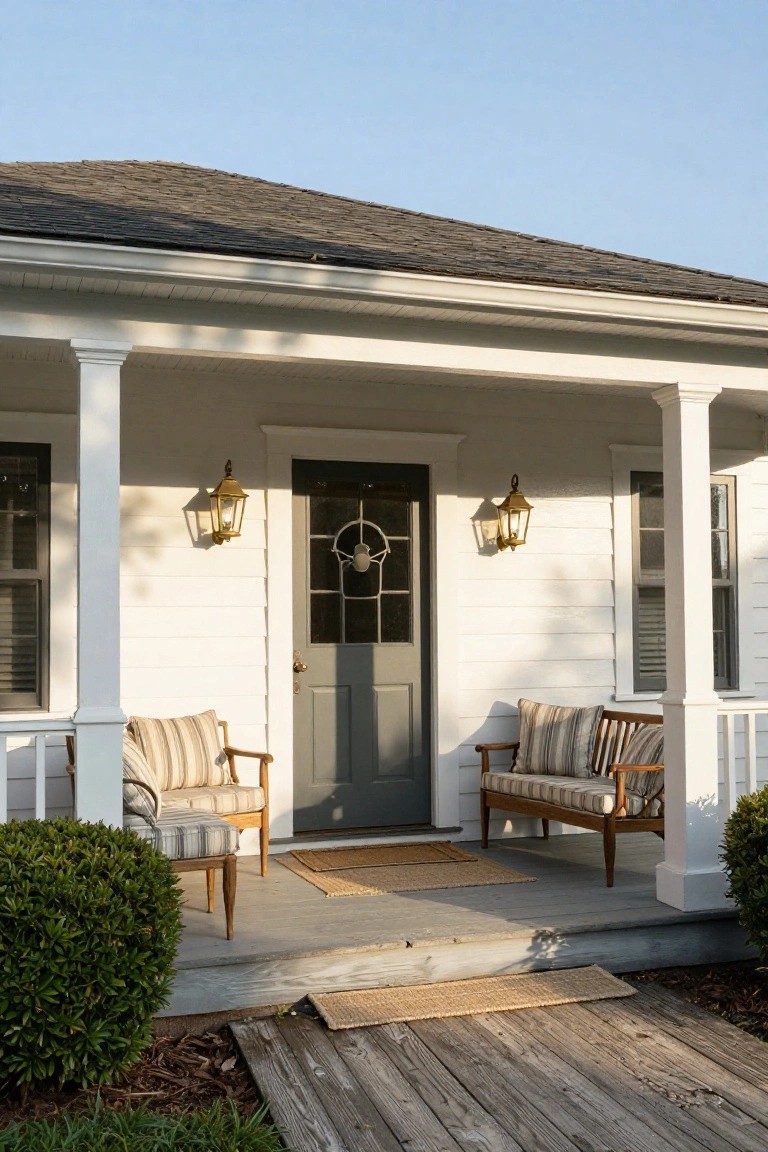
A columned front porch like this one brings back the heart of colonial style without much fuss. The white columns stand tall and simple, framing the gray door and giving the whole facade that steady, welcoming presence. It’s a look that feels right at home in older neighborhoods, holding onto tradition while letting the house breathe easy.
You can pull this off on most colonial remodels by keeping the columns smooth and spaced evenly. They suit smaller homes best, where they add height and shade up front. Toss in basic seating and low shrubs nearby, and the porch turns practical fast. Just make sure the proportions fit your roofline, or it might feel off.
Black Front Door on Brick Colonial
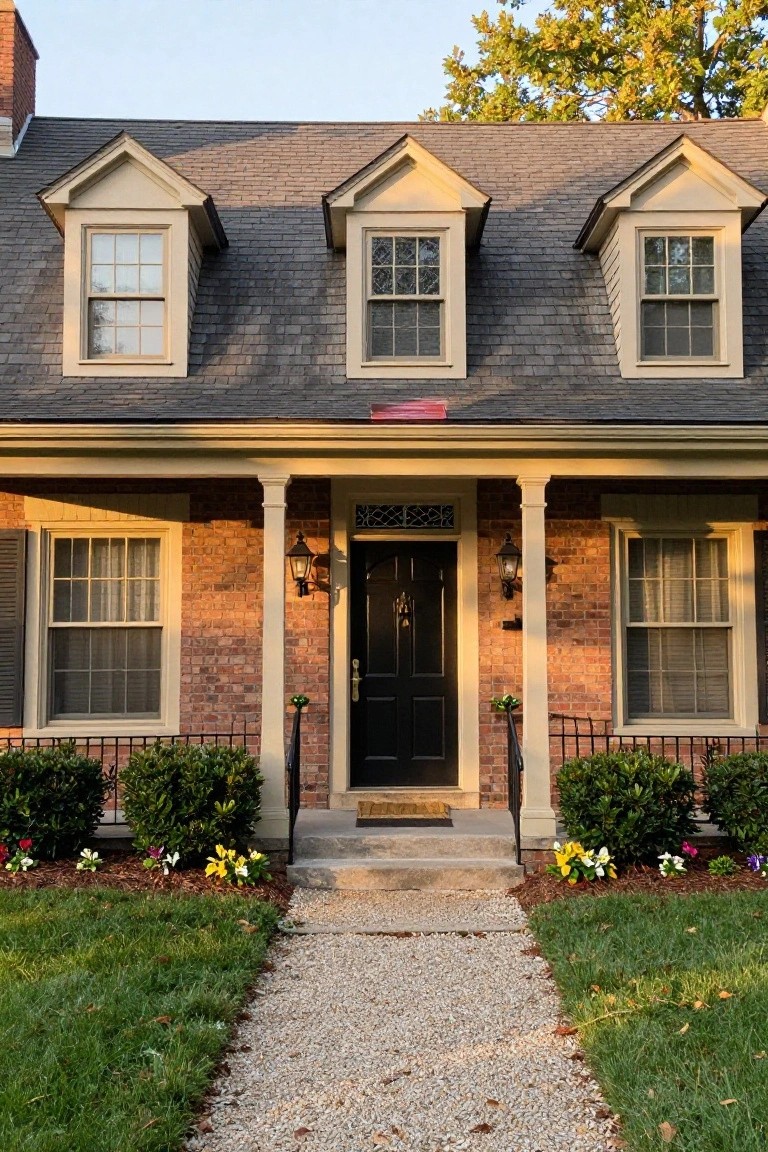
A black front door gives a colonial brick house that fresh pop without losing its traditional charm. It contrasts sharply with the warm brick and cream trim, drawing eyes straight to the entry. Flanking lanterns help too, lighting up the porch columns at dusk.
This setup suits older brick homes wanting subtle modern edge. Center the door under the porch for symmetry, add matching brass hardware, and keep plantings low around it. Avoid overwhelming with too many colors nearby. Works best where the facade already has clean lines.
Black Window Frames on White Colonial Siding
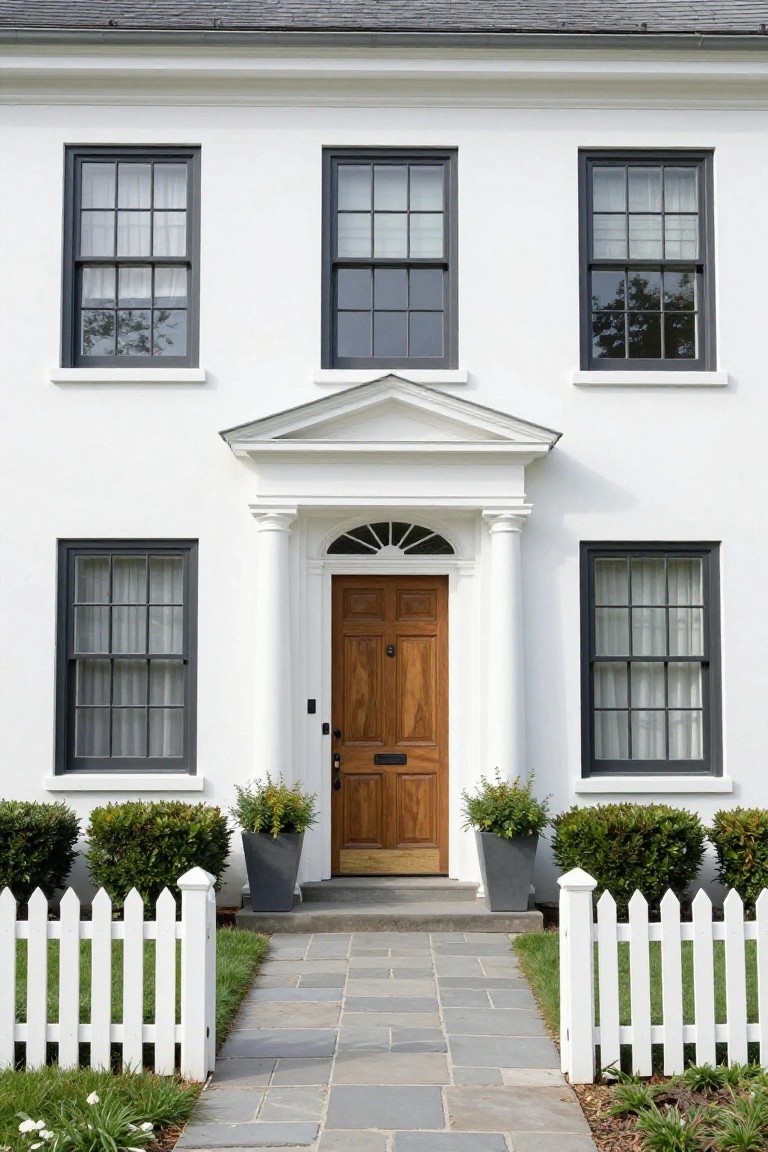
White colonial houses have that clean look everyone knows. Adding black frames to the windows sharpens things up without messing with the style. Here the dark frames stand out against the bright siding. They highlight the even rows of windows and that balanced front. It’s a simple change that feels current but still nods to the past.
This works great on homes with straight lines and good symmetry. Go for slim black frames on double-hung windows to keep it classic. A wood door in the center pulls it together. Skip it on busier facades though. It suits most neighborhoods where you want curb appeal that lasts.
Weathered Wood Door Entry
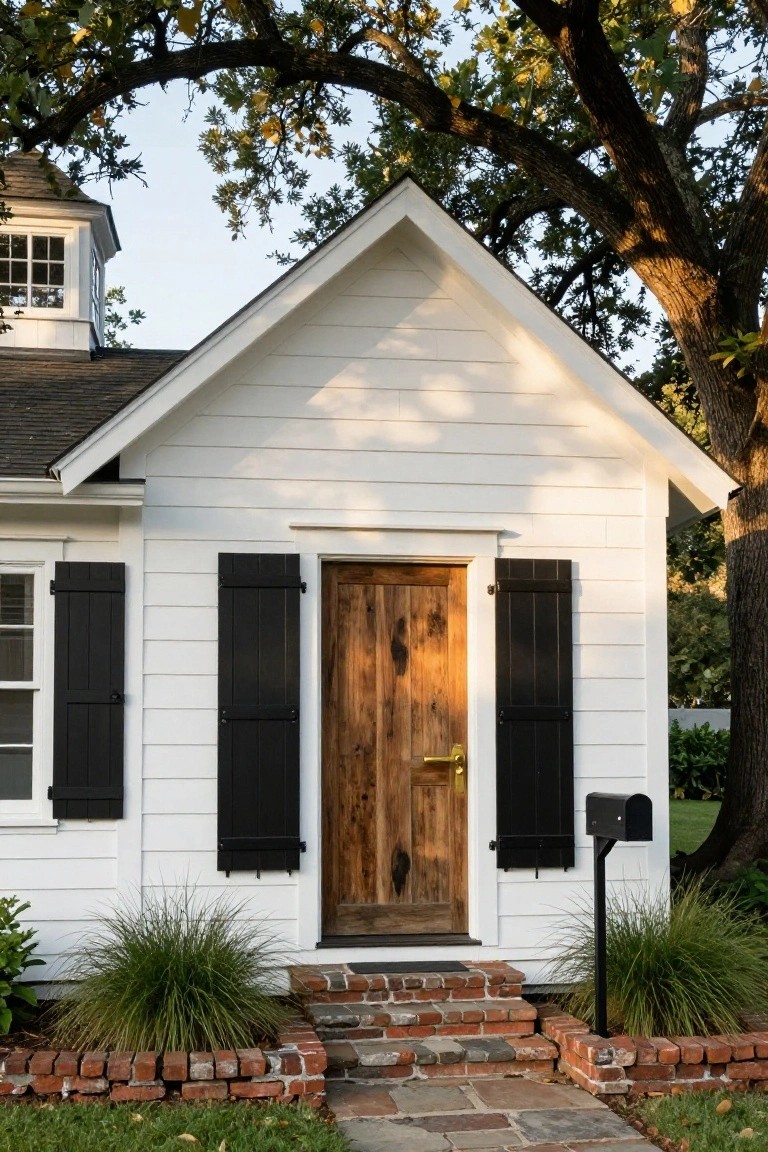
A weathered wooden door like this one brings real character to a clean white Colonial exterior. It stands out against the crisp siding and black shutters without overwhelming the classic lines. That rough texture softens things just enough. Keeps the look traditional but lived-in.
Try this on homes with simple gables and balanced windows. Pair it with brick steps for a grounded feel. It suits older neighborhoods where you want curb appeal that nods to history. Skip glossy finishes though. They fight the rustic vibe.
Classic Columned Portico Entry
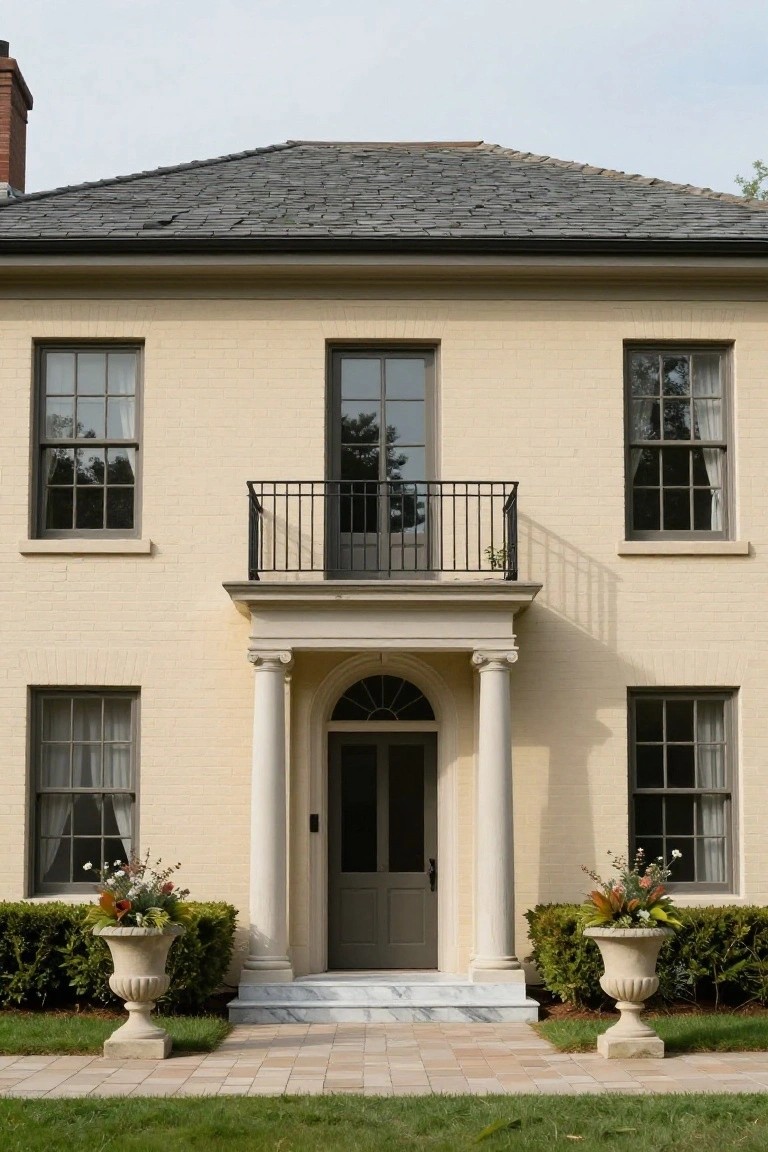
A columned portico like this one takes a colonial house front and gives it real presence. The paired columns frame the door nicely, with marble steps leading up that feel solid and right for the style. Paired with pale brick walls, it keeps things light but structured, just enough to nod to history without going overboard.
This works great on boxy, symmetrical homes where you want to highlight the entry without big changes. Flank the steps with matching urns for balance, and keep plantings low around the base. Skip it if your facade is too narrow, though. It pulls eyes right to the door every time.
Black Door on Pale Siding
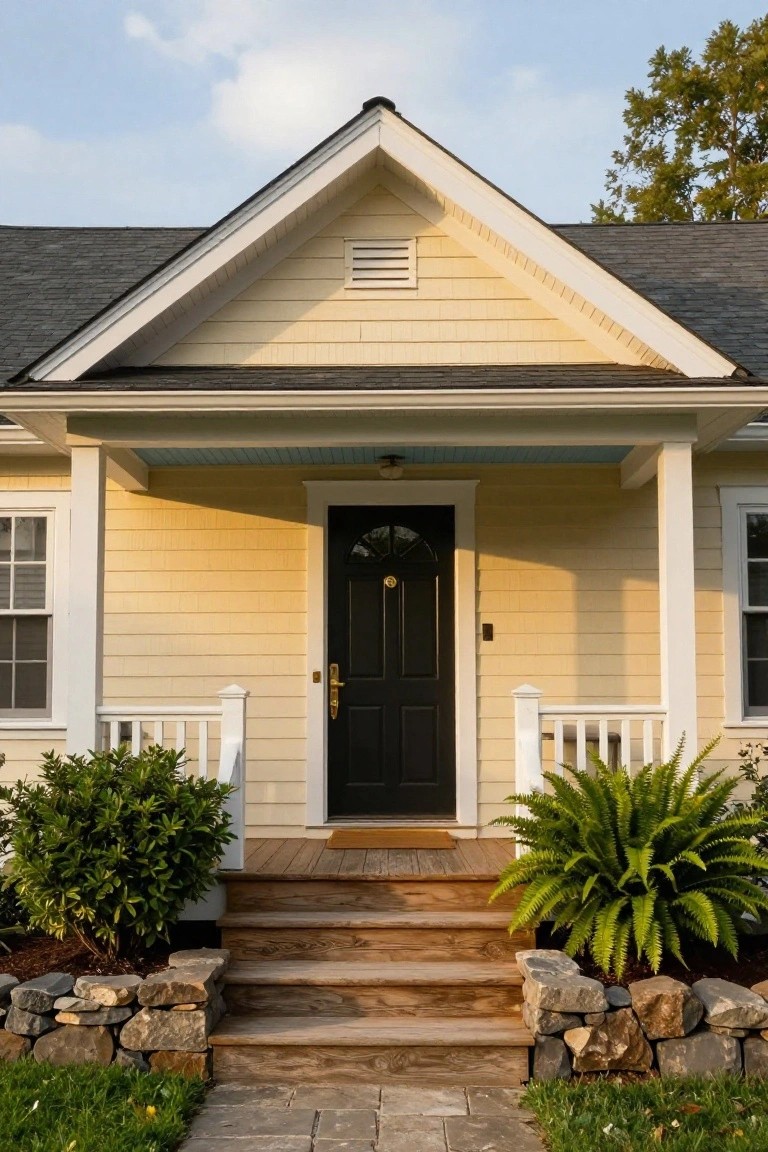
A black front door like this one really pops against soft yellow siding. It draws attention to the entry on a colonial house without changing the overall look much. That contrast keeps things classic but fresh, especially with the brass hardware and simple knocker adding a bit of shine.
This works best on lighter-colored homes where you want the door to be the focal point. It suits remodels aiming for curb appeal on older colonials. Go for a solid wood or fiberglass door that matches your porch scale, and skip anything too modern on the hardware.
Bay Window Adds Depth to Shingle Facades
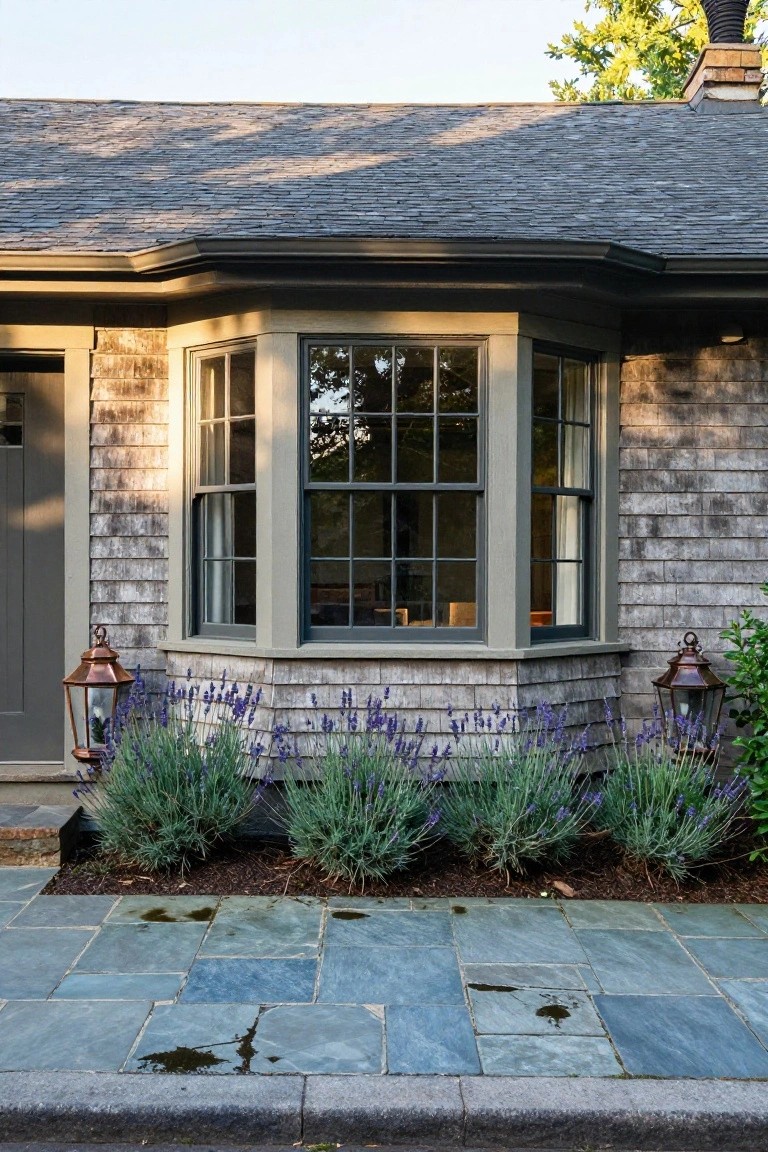
A bay window like this one pulls the eye right to the house without changing the classic shingle look. Those grid panes echo old colonial style, and the slight projection gives the flat siding some dimension. It fits naturally on a garage or side entry, making the whole front feel balanced.
Try this on homes with simple walls that need a focal point. It works best where you want more indoor light too. Just keep plantings low around the base, like these lavender bushes, so they frame without overwhelming the architecture.
Classic Pedimented Front Entry
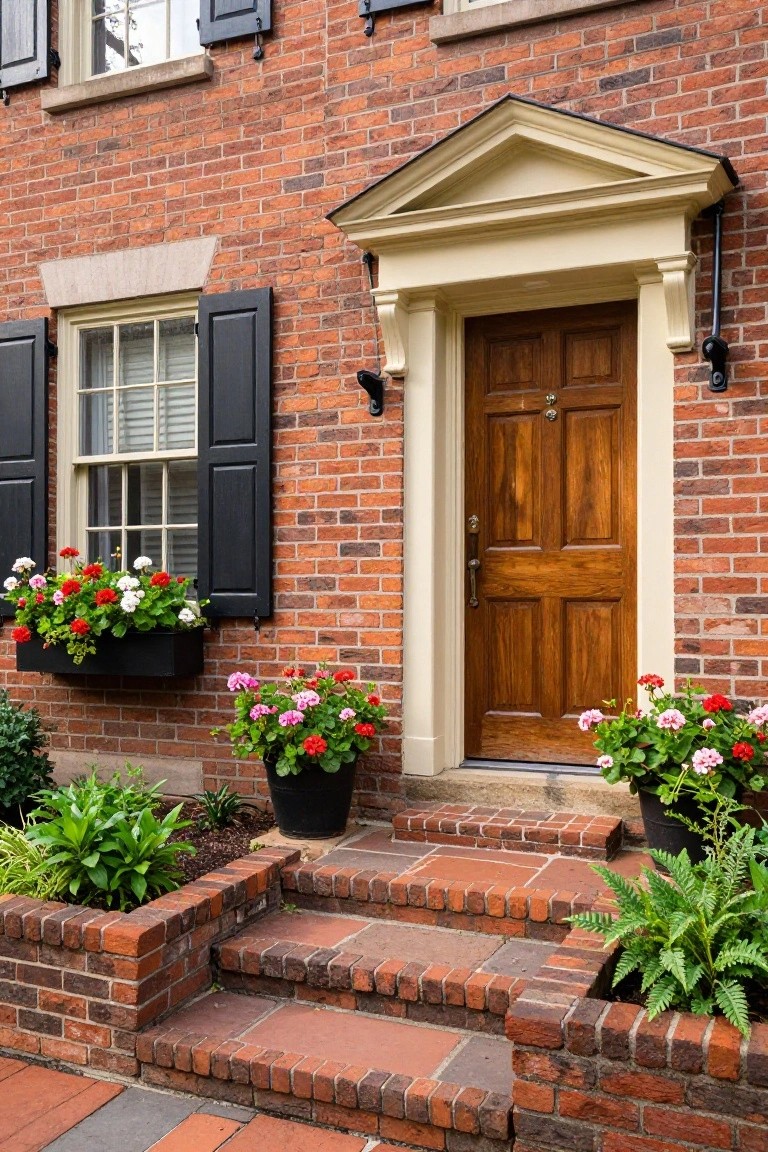
A pediment over the door gives this colonial house that authentic historic touch. It frames the wood door nicely against the brick facade, and the short brick steps make it easy to approach. Potted geraniums on both sides add a pop of color that feels right at home.
This works best on traditional brick colonials looking for a simple refresh. Match pot colors to the brick or trim, and stick to low-growing flowers for year-round appeal. Skip big planters… they can crowd the steps.
Classic Shingles with a Blue Front Door
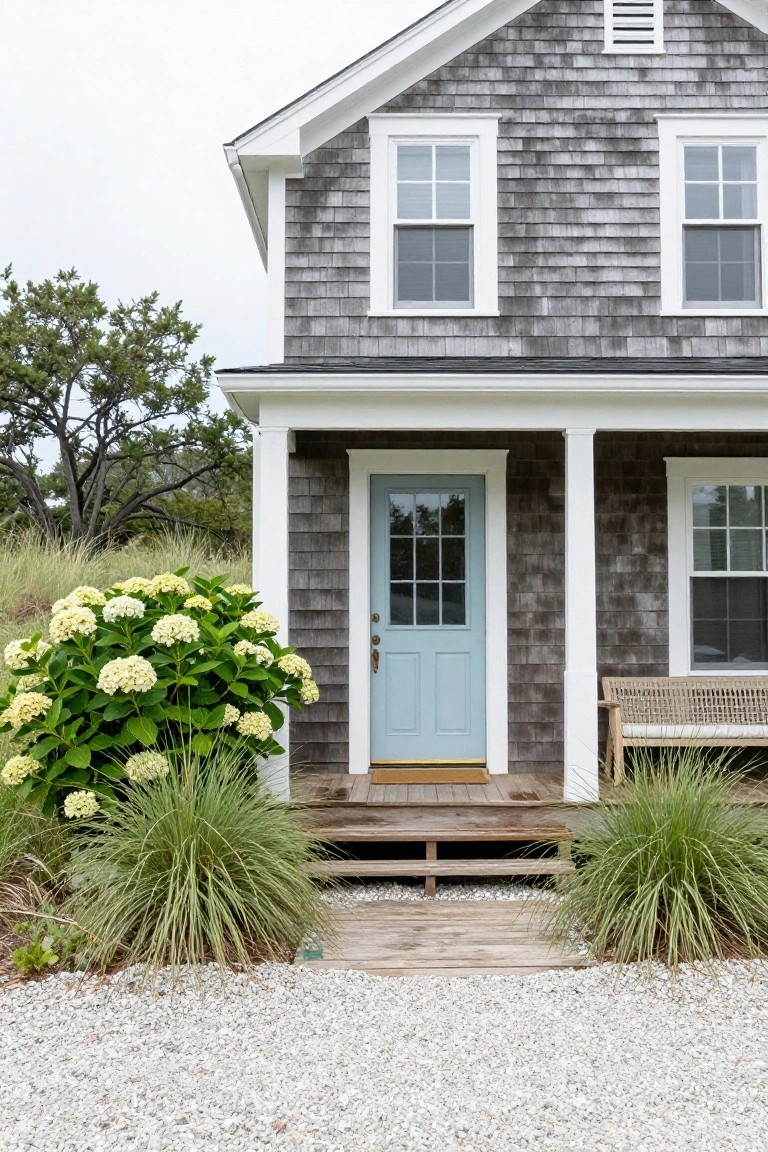
Gray shingle siding has that timeless colonial feel, especially when you pair it with white trim around the windows and porch. A soft blue door right there on the entry pulls it together without changing much. It adds just enough color to make the house stand out from the street, but keeps things simple and rooted in tradition. The big white hydrangeas nearby help too, softening the look a bit.
This works best on homes in coastal areas or anywhere with a relaxed vibe. Pick a door color like this muted blue, maybe Benjamin Moore’s Wythe Blue, and keep the porch wood natural. It suits remodels where you want curb appeal but not a full overhaul. Watch the weathering on those shingles though. They age nicely over time.
Classic Columned Portico
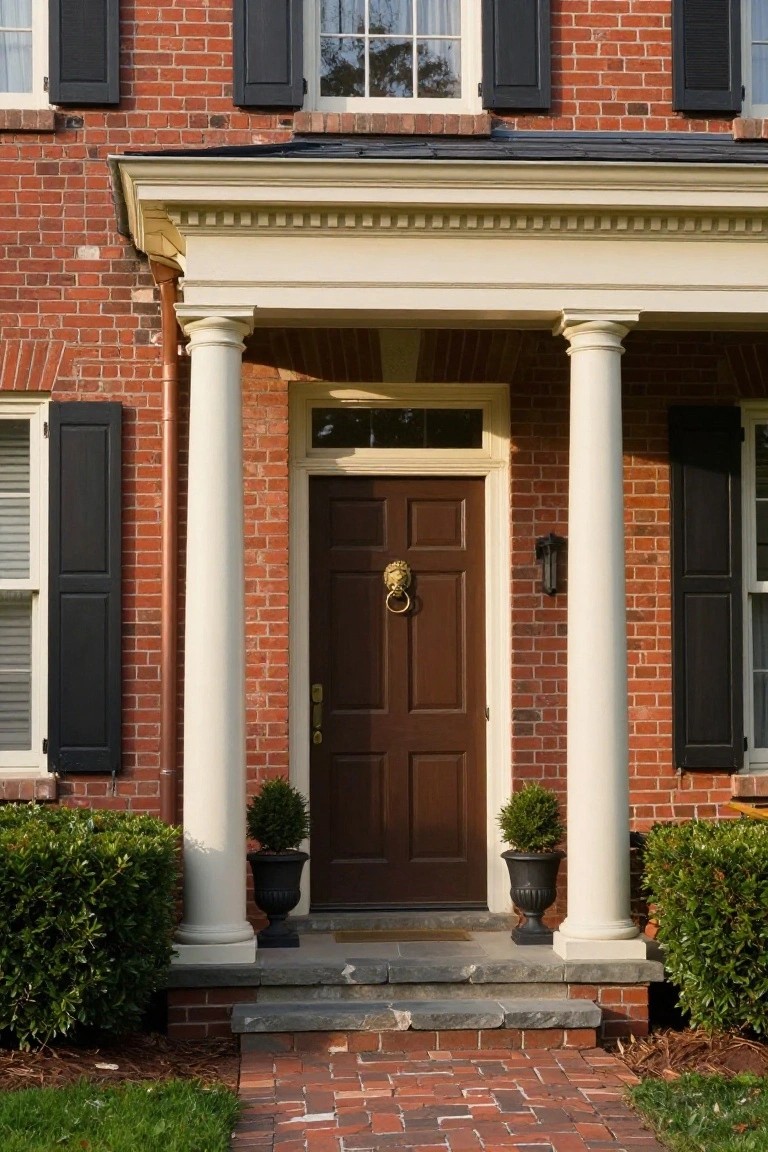
A columned portico like this one takes a simple front door and turns it into the star of the house. Those fluted white columns and the pediment overhead give off that solid Colonial vibe, framing the entry just right. On a brick facade, it pulls everything together without much fuss. The lion head knocker on the dark wood door nods to old-school detail too.
This setup shines on traditional two-story homes where you want curb appeal that lasts. Go for columns that match your trim color, and keep plants like boxwoods low around the base. It suits most suburbs fine, but measure the porch depth so folks can actually stand there comfortably. Skip it if your roofline is too low.
Crisp Black Trim on White Siding
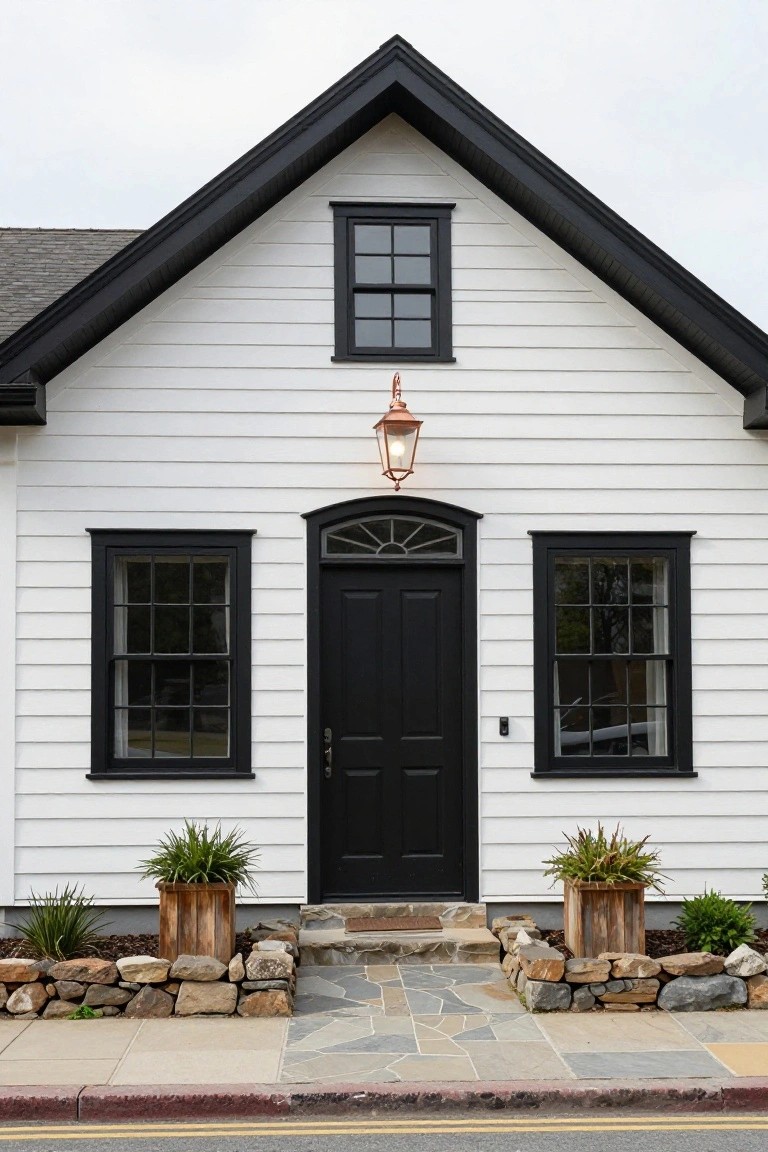
White siding gives a colonial house that clean, fresh base. Black trim around the windows, door, and roofline sharpens everything up without changing the shape. It’s a simple switch that makes the front feel more defined and pulls eyes right to the entry. That copper lantern adds just a touch of patina.
This works best on homes with straightforward gables and multi-pane windows. Paint the trim glossy black for extra pop, and keep plants simple like those pots by the door. Steer clear of busy shutters or too much stonework. It suits most neighborhoods, especially where you want classic but updated.
Timeless Columns on the Front Porch
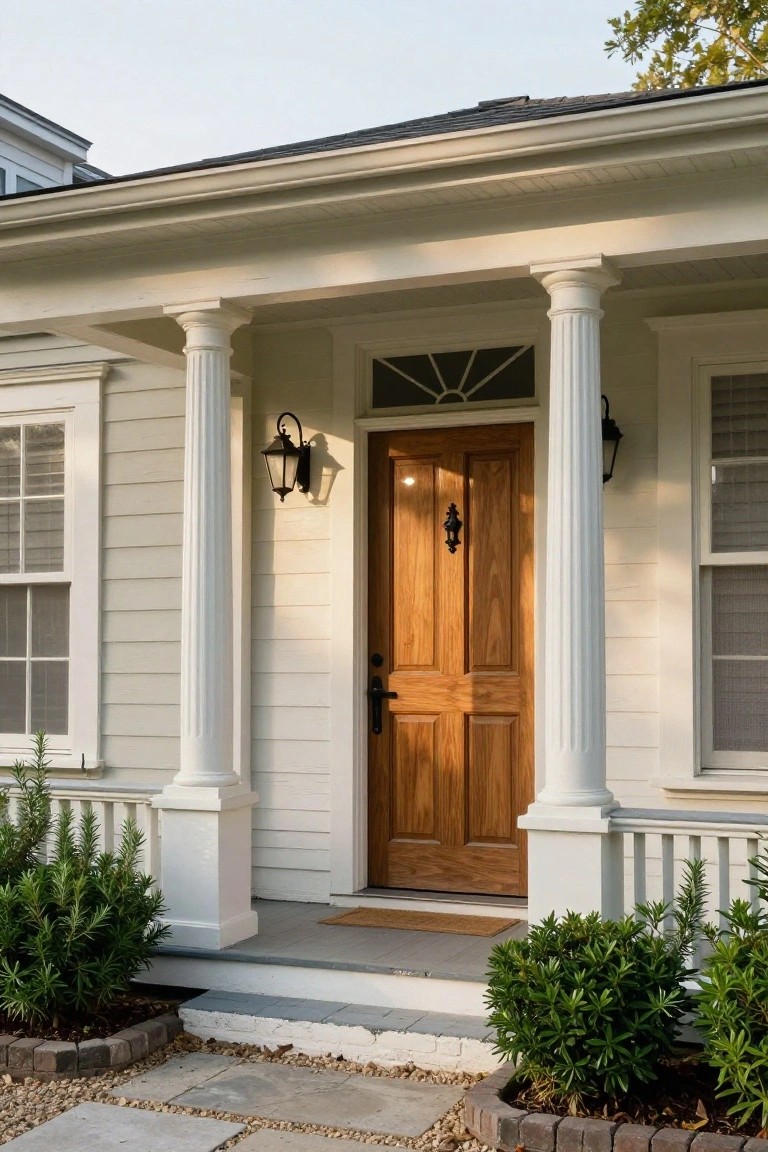
A pair of white fluted columns like these really bring back that classic colonial porch feel. They stand tall against the soft siding and frame the rich oak door just right. It’s a straightforward way to add some architectural weight without changing the whole facade.
These work best on homes with light paint colors where the columns pop. Add matching lanterns and keep plantings simple around the base. Skip anything too busy nearby. It suits most suburban remodels aiming for welcoming curb appeal.
Navy Blue Door on White Colonial Siding
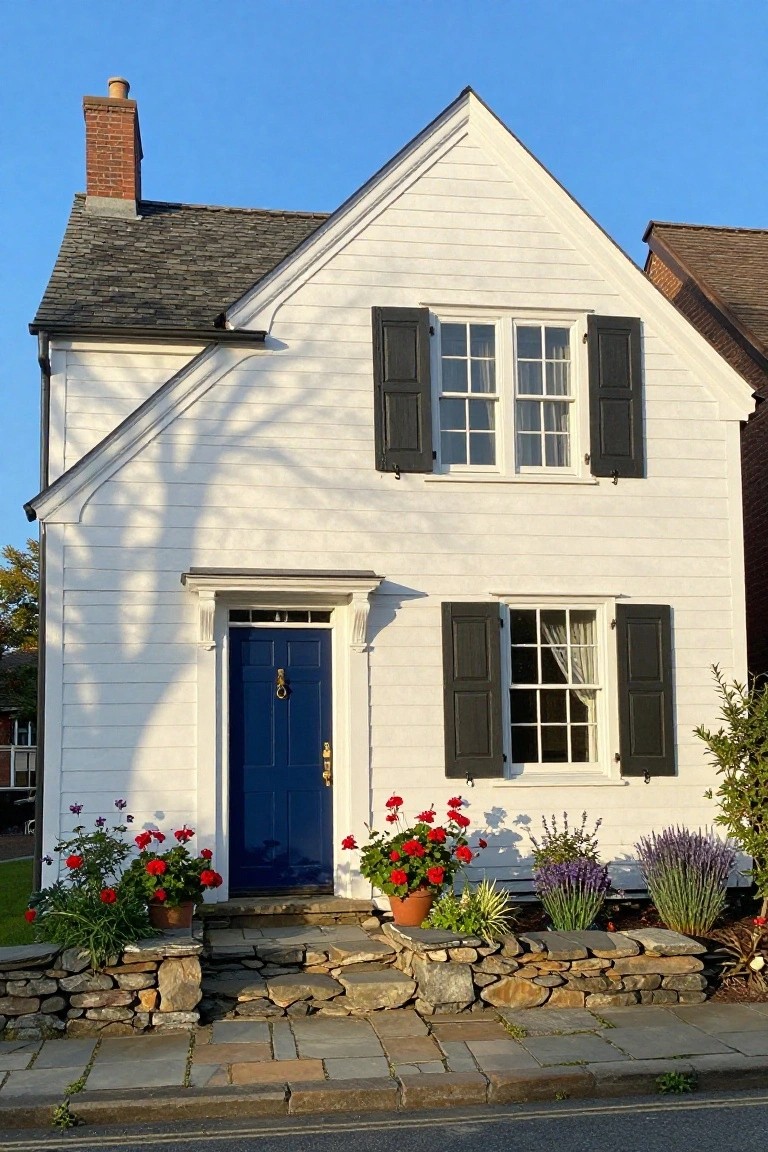
A deep navy blue front door gives this classic colonial house a fresh lift while staying true to its roots. The white clapboard siding and black shutters keep things simple and traditional. That bold door color pulls your eye right to the entry. Potted red geraniums nearby add just a bit more life without overdoing it.
Try this on compact colonials in older neighborhoods. It suits homes with clean lines and gabled roofs best. Use a glossy finish on the door for some shine, and make sure the hardware like the brass knocker fits the style. Stone steps help too. Easy update that boosts curb appeal.
Classic Porch Columns
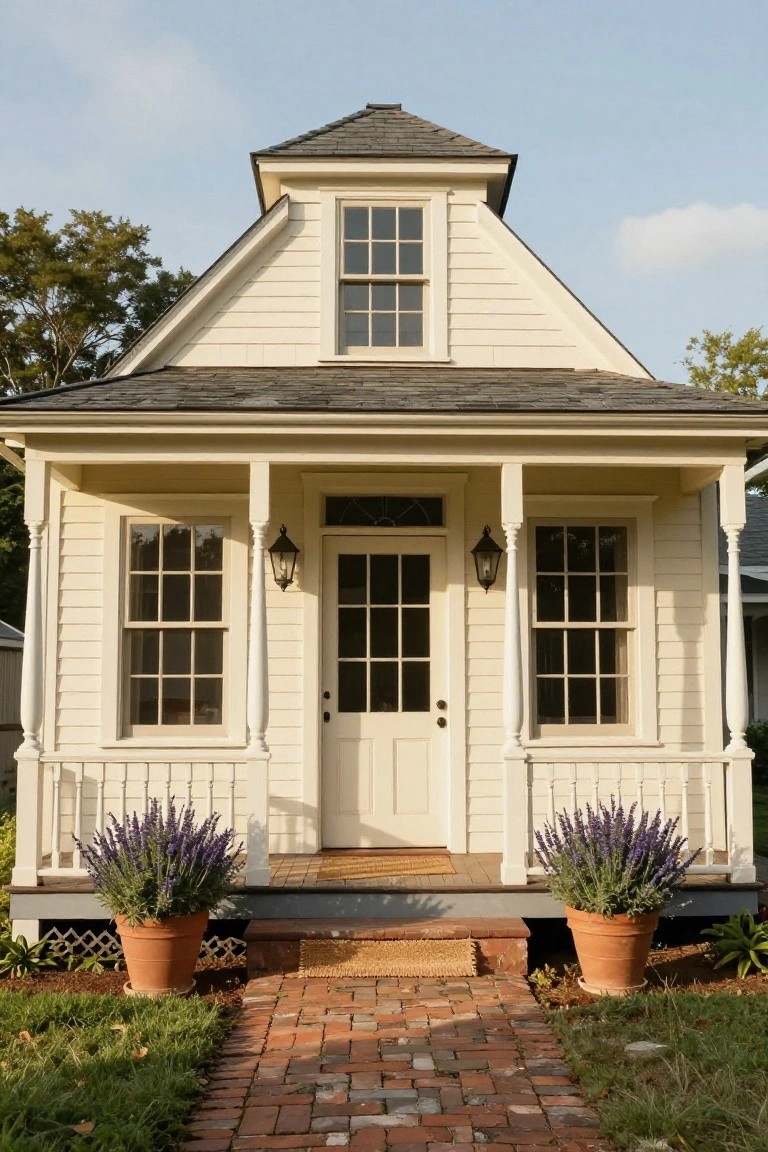
A front porch with turned columns is a straightforward way to hold onto colonial character during a remodel. These columns, painted crisp white against soft clapboard siding, frame the entry nicely and make the house feel settled and welcoming right from the street. They nod to older styles without looking fussy.
Put them on ranch homes or bungalows trying for more history, or refresh a tired colonial facade. Keep the proportions right so the porch doesn’t overwhelm. Flank the steps with a couple pots of lavender or similar, and it pulls the look together easy.
Classic Pediment Entry on Brick
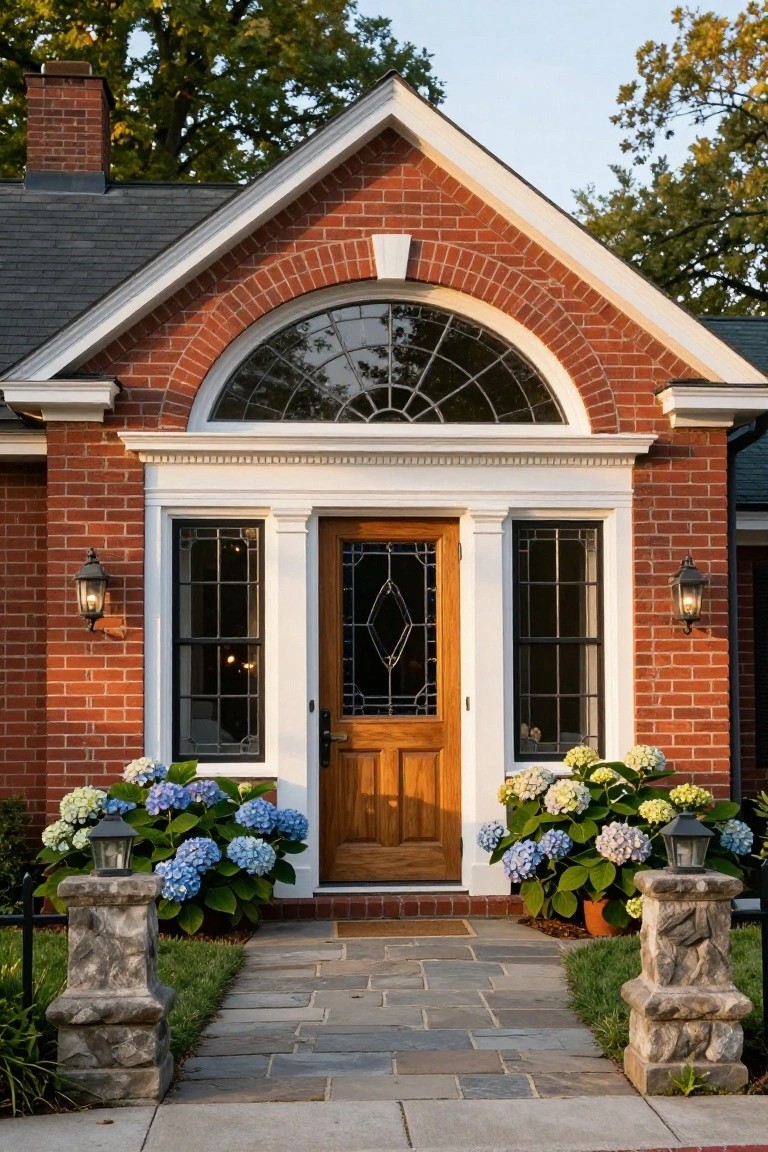
A pediment crowning the front door like this one keeps a Colonial house looking sharp and traditional. Here, crisp white trim outlines the wooden door and matching sidelights on red brick, with a subtle dentil detail under the pediment. It frames the entry neatly and draws the eye right where you want it, without any fussy extras.
This works great on compact facades where you want to highlight the door area. Start by painting trim bright white against brick for contrast, add sidelights if your door setup allows, and flank the steps with big potted plants like hydrangeas. Skip it on super modern remodels, though. It suits older neighborhoods best.
Frequently Asked Questions
Q: Can I pull off these remodels without hiring a crew?
A: Grab the easier ones like fresh paint on the trim or new shutters yourself. They refresh the look fast and save you cash. Save bigger stuff like roof tweaks for pros.
Q: What colors stick to that classic Colonial feel?
A: Lean toward soft whites, sages, or muted grays on the body. Pair them with crisp black or deep green accents on doors and shutters. Test samples in morning light to see the real vibe.
Q: How do I blend in a modern garage door?
A: Slap on wood-look panels or carriage-style hardware. It fools the eye into thinking old-school. Tuck landscaping around the edges to soften the edges…
Q: What’s the quickest win for curb appeal?
A: Swap the lighting fixtures for lantern-style ones. They light up the facade like the originals did. Done in an afternoon.
