

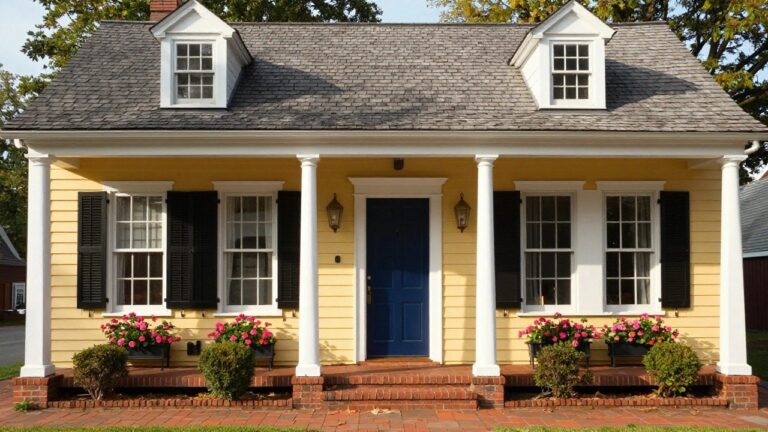
I’ve always thought colonial houses gain so much character from their exteriors, especially when a thoughtful yellow palette brings out the symmetry in those front-facing windows and steep rooflines. From the street, the first thing you notice is how the siding and trim catch the light, turning a standard facade into something that feels welcoming year-round. I remember testing a soft buttery yellow on a friend’s colonial entryway, and it instantly made the whole house read brighter against the neighborhood greenery without clashing with the stone foundation. These palettes succeed because they balance bold cheer with practical choices like durable paints that hold up to weather and fading. Some stand out enough to save for your own curb-appeal refresh.
Pale Yellow Colonial with Black Shutters
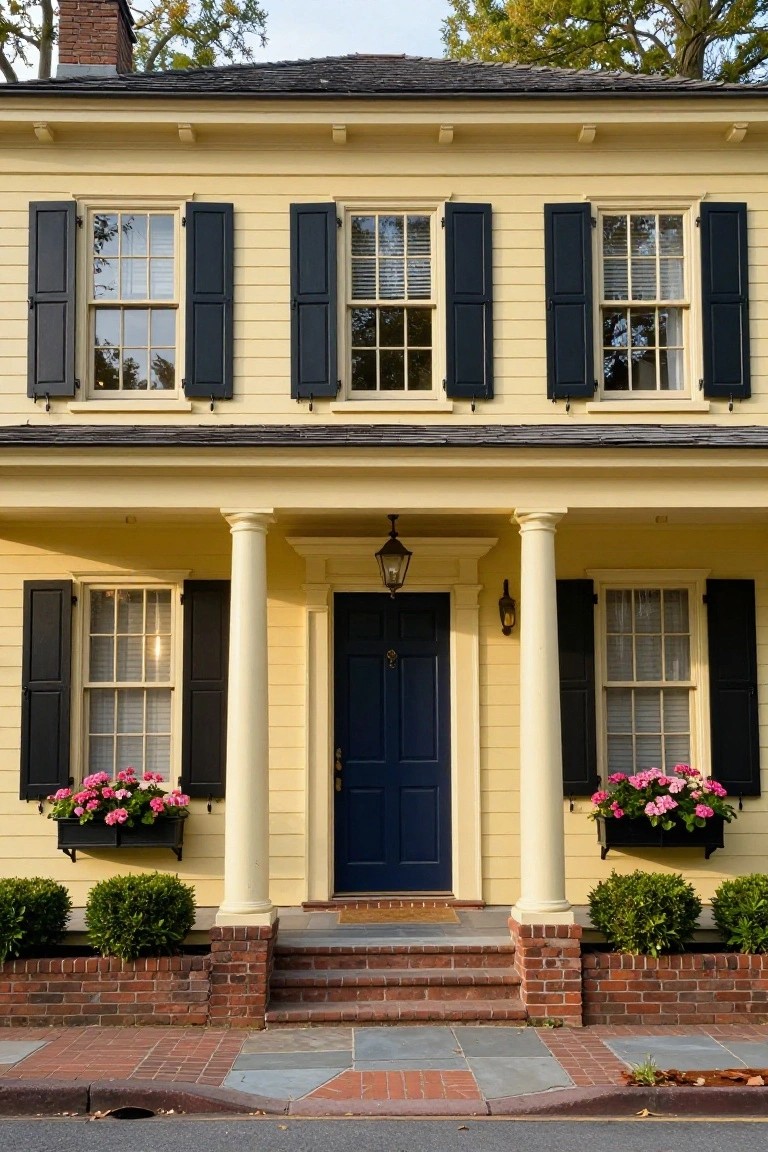
A soft pale yellow on the siding gives this classic colonial house a cheerful lift without overwhelming the traditional lines. Black shutters frame the windows nicely, and that navy front door adds just enough punch to make the entry pop. Flower boxes with pink blooms tie in extra color too.
This setup suits older homes in tree-lined neighborhoods where you want curb appeal that feels fresh year-round. Stick to matte finishes on the yellow to keep it from looking too glossy, and balance the dark accents so they don’t overpower the light body color. It holds up well against brick steps and simple shrubs.
Pale Yellow Siding with Green Shutters
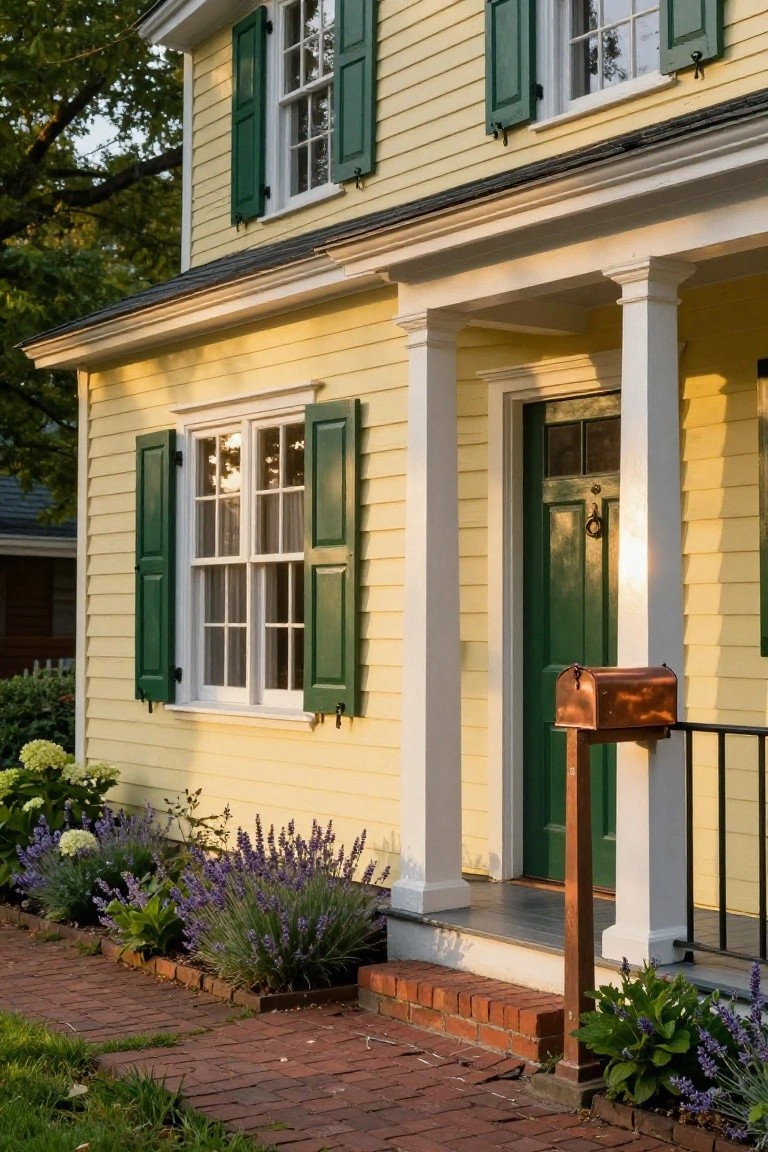
A soft pale yellow on the siding gives this colonial house a sunny lift that feels right at home in older neighborhoods. The green shutters frame the windows nicely, and that matching green door pulls everything together without overwhelming the look. It’s cheerful but stays grounded in tradition.
This palette shines on two-story homes with clean white porch columns, like you see here. It suits established areas where you want curb appeal that doesn’t shout. Go for it on clapboard siding, and pair with simple plantings along the walk to keep the focus on the house. Just avoid deeper yellows if your lot gets a lot of shade.
Pale Yellow Facade on a Classic Colonial
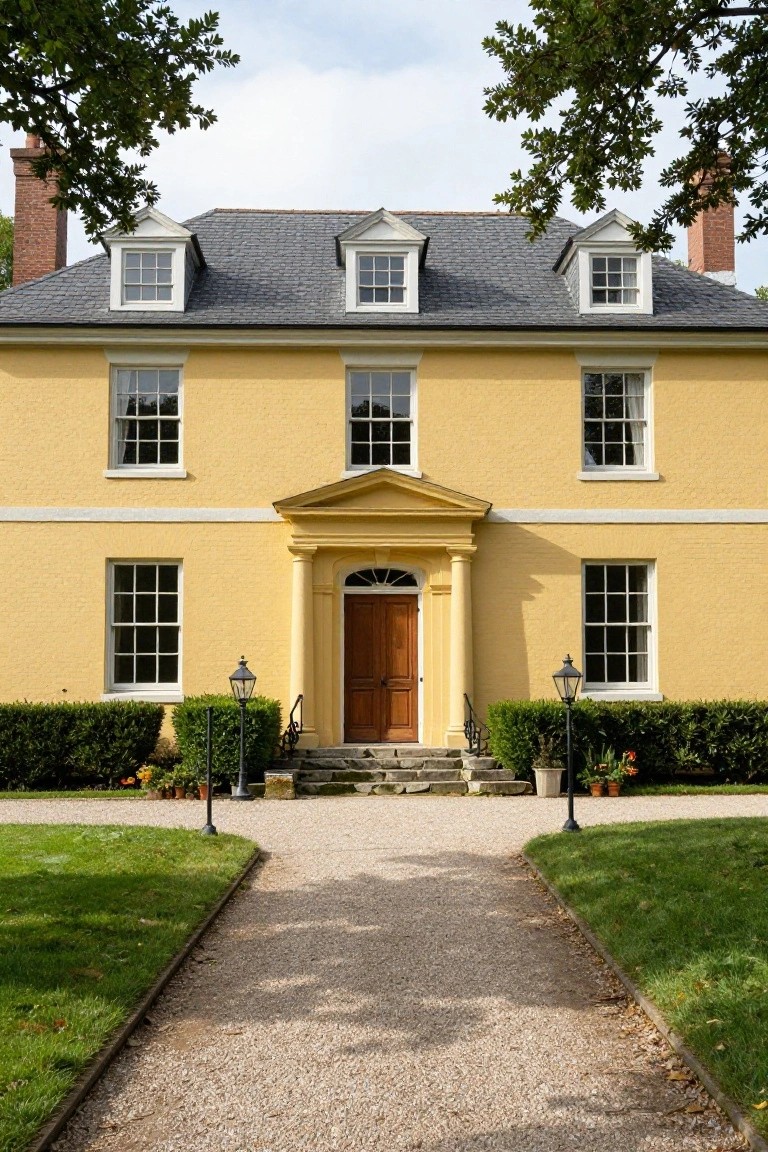
A soft pale yellow paint job turns this symmetrical colonial house into something cheerful and approachable. The color picks up the sunlight nicely, making the front yard feel brighter on overcast days. White trim around the windows and dormers keeps everything crisp, while the slate roof adds a bit of weight up top.
This look suits older homes with balanced proportions, like those from the 18th or early 19th century. Go for a buttery yellow shade that isn’t too lemony, and pair it with clean white accents. Simple lanterns by the entry pull it together without fuss.
Pale Yellow Siding with Pink Shutters
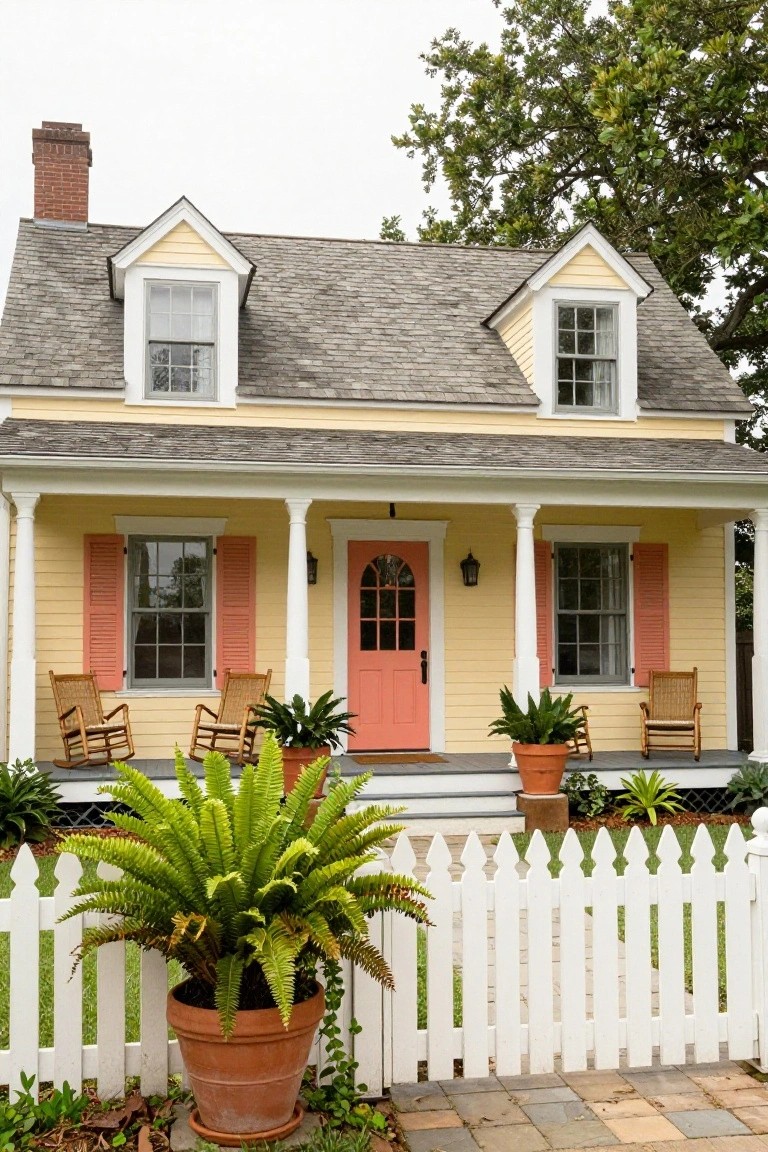
A soft pale yellow on the siding makes this colonial house feel light and happy right away. The pink shutters and door add a fun pop that ties right into the yellow without overwhelming it. White columns and trim hold everything together neat and clean. It’s a simple way to brighten up an older style home.
This look suits smaller colonials with a front porch, especially where you want curb appeal that stays cheerful year round. Pick a muted pink to match the yellow’s tone, and add a couple plants nearby for extra life. Skip it on larger homes though. Might look too sweet.
Soft Yellow Colonial Facade
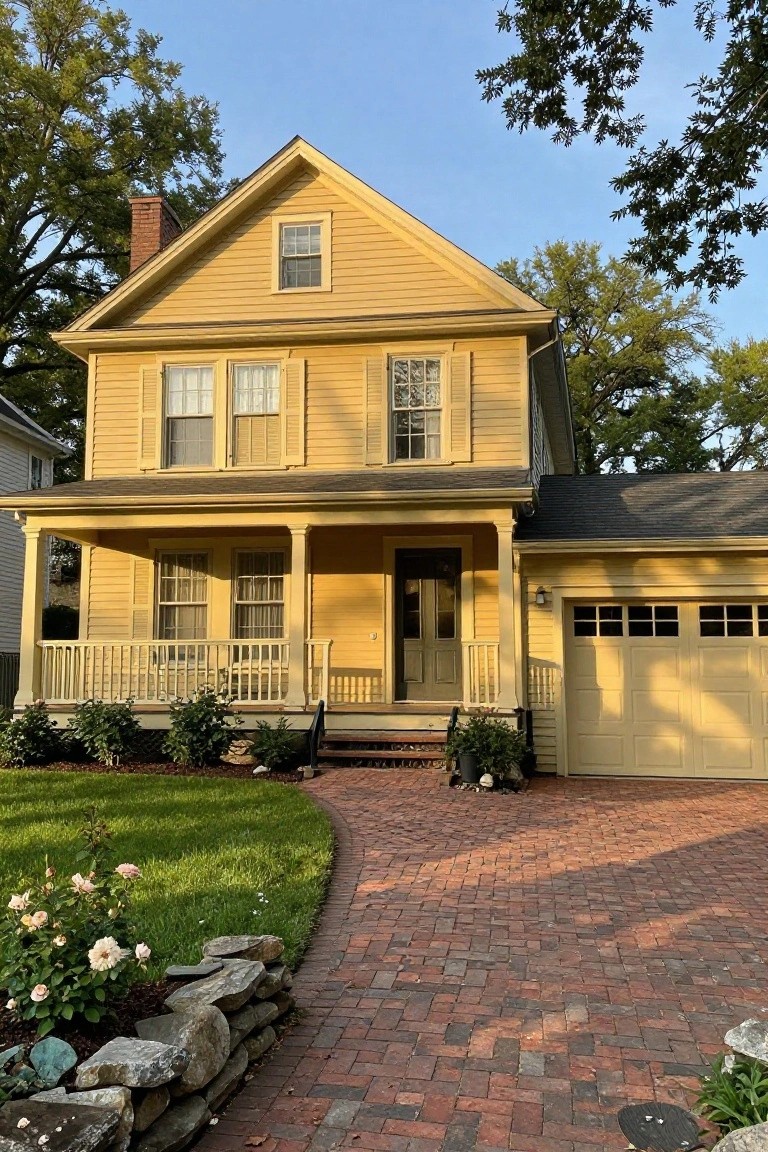
This colonial house uses a pale butter yellow on the siding that keeps things light and happy without going overboard. The white trim around the windows and porch picks up the brightness, and those dark green shutters add just enough contrast to make the whole front pop on a sunny day. It’s a simple way to update an older style house so it feels fresh from the street.
Try this palette on homes with good bone structure like gables and columns. It works best where you have some trees or green lawn to balance the yellow. Stick to matte paint to avoid glare, and pair it with neutral stone or brick paths for easy flow to the door.
Butter Yellow Colonial with Green Door Entry
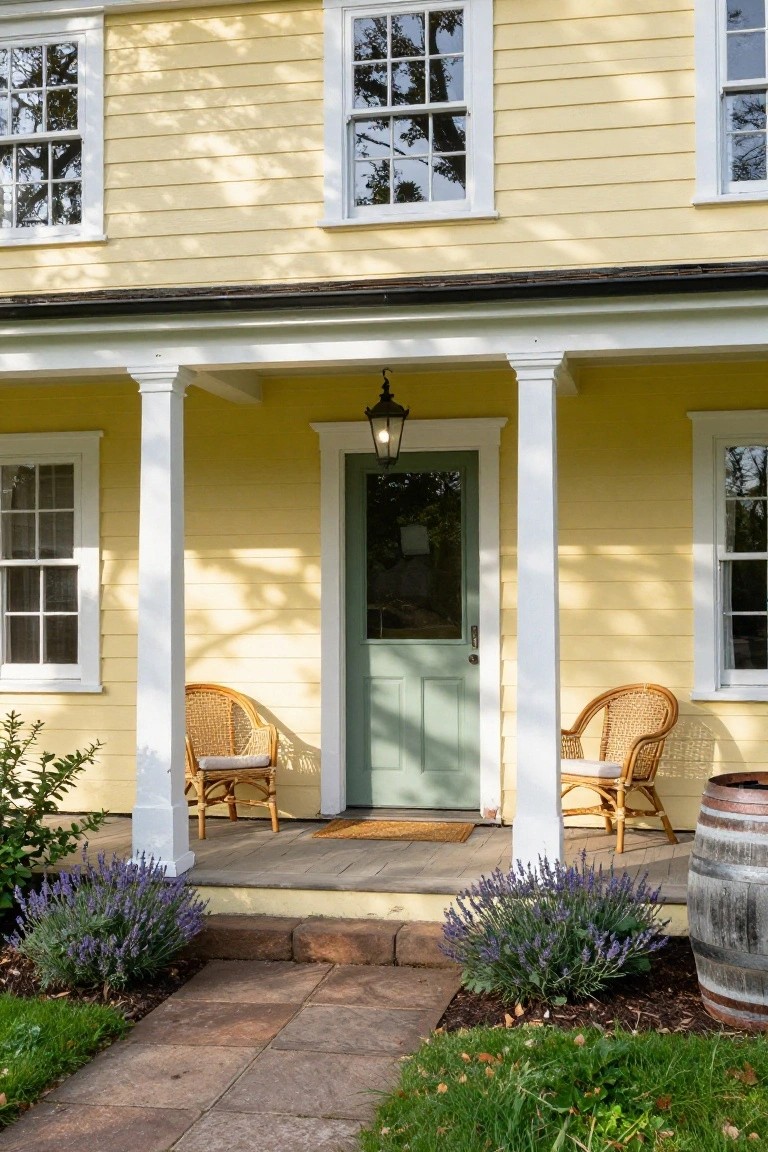
This pale butter yellow on the clapboard siding gives a colonial house that sunny, cheerful feel without going overboard. The sage green door stands out just right against it, pulling your eye to the entrance while keeping things calm and classic. White columns and a simple porch setup make the whole front feel welcoming, like a spot you’d actually want to sit on those wicker chairs.
It’s a good pick for older homes or ones with lots of trim details. Paint the siding in a soft yellow like this, then choose a muted green door that echoes any plants nearby, such as lavender beds. Works best facing south for that glow… just make sure the trim stays crisp white to let the colors breathe.
Yellow Brick Entry with Climbing Roses
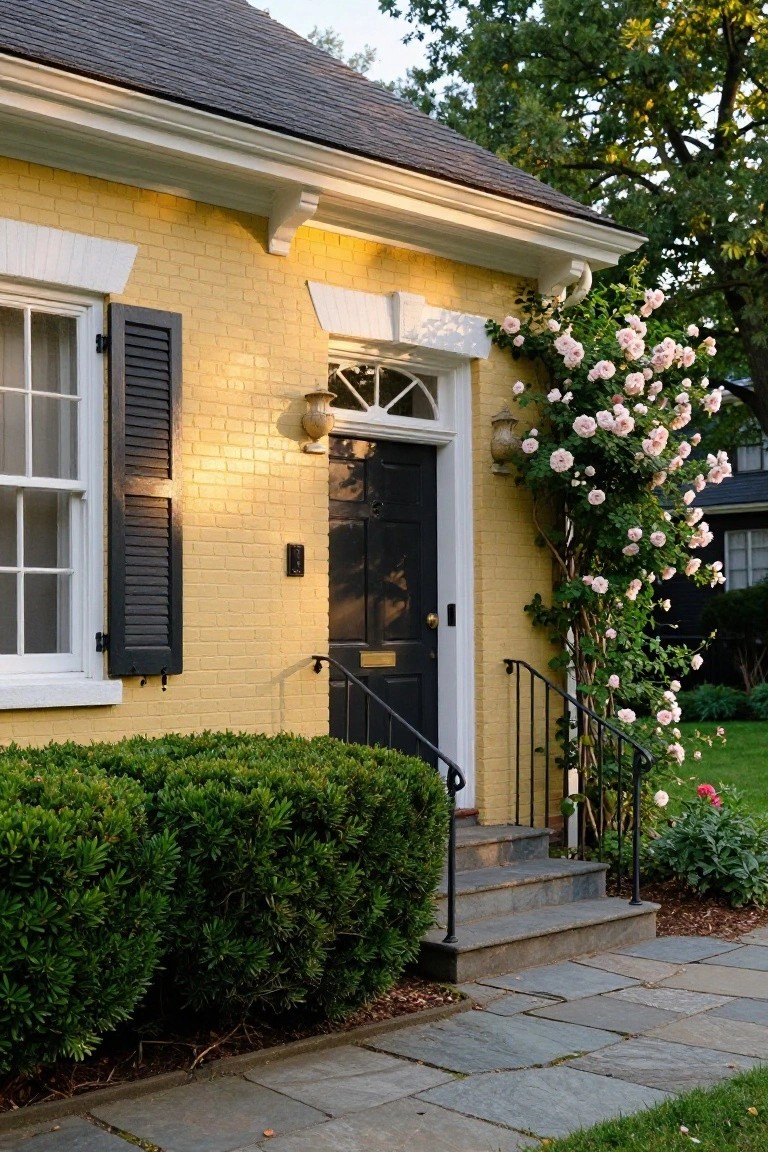
A sunny yellow brick facade like this one gets a lot of its charm from the climbing roses growing up beside the front door. The soft pink blooms add life and a bit of romance without taking over. Paired with a bold black door and neat boxwood shrubs, it keeps that classic colonial feel but makes it cheerful and approachable.
This setup works well on smaller homes or townhouses where you want quick curb appeal. Plant everblooming roses near the entry steps, train them along the wall, and trim back the shrubs yearly. It suits yellow or light brick best, and steer clear of too many vines that might damage the mortar.
Pale Yellow Clapboard on a Gabled Colonial
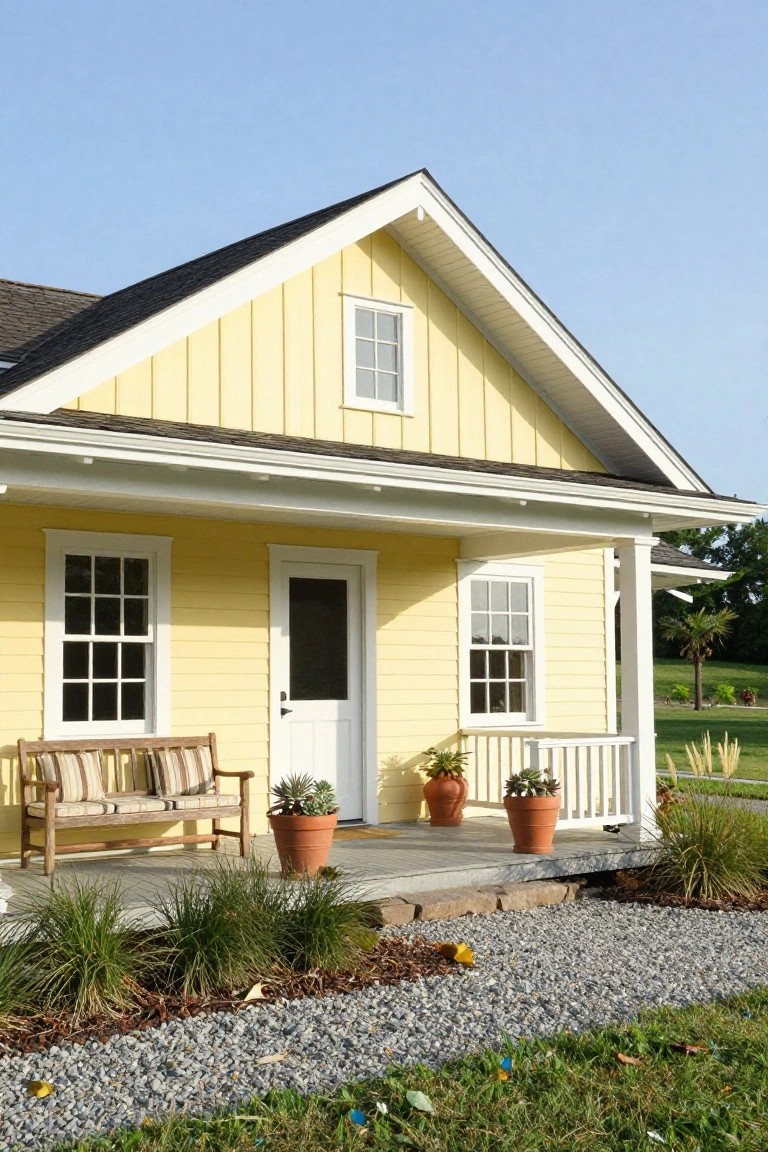
A soft pale yellow clapboard siding covers this simple gabled house. White trim outlines the windows, door, and porch posts. That combo keeps things crisp and bright. It turns a basic Colonial front into something cheerful that stands out on a clear day.
This look fits older neighborhoods or rural spots where you want easy curb appeal. Use it on one-story homes with porches. Pick a muted yellow to avoid overwhelming the trim… and toss a bench or pots out front like this for a lived-in feel.
Pale Yellow Siding on Colonial Homes
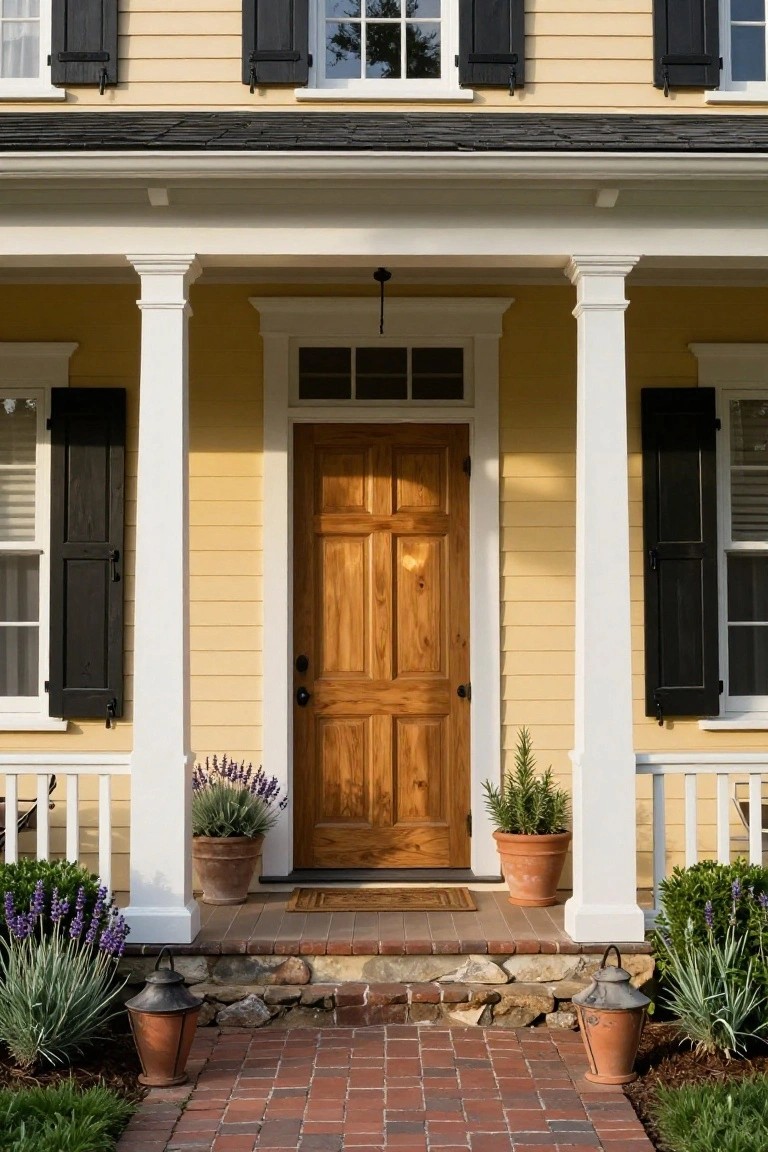
Pale yellow siding like this gives a colonial house a fresh, sunny look without going overboard. It picks up the warmth of the wood door and plays nice with black shutters for some needed contrast. White trim around the porch columns keeps things crisp and pulls the whole front together in a cheerful way that feels right at home in older neighborhoods.
This setup works best on two-story colonials where you want curb appeal that lasts year-round. Pair it with simple pots of lavender or rosemary on the steps to add life without much fuss. Just make sure the yellow isn’t too bright, or it might clash on shady lots… stick to softer tones for that easy glow.
Pale Yellow Colonial with Portico Entry
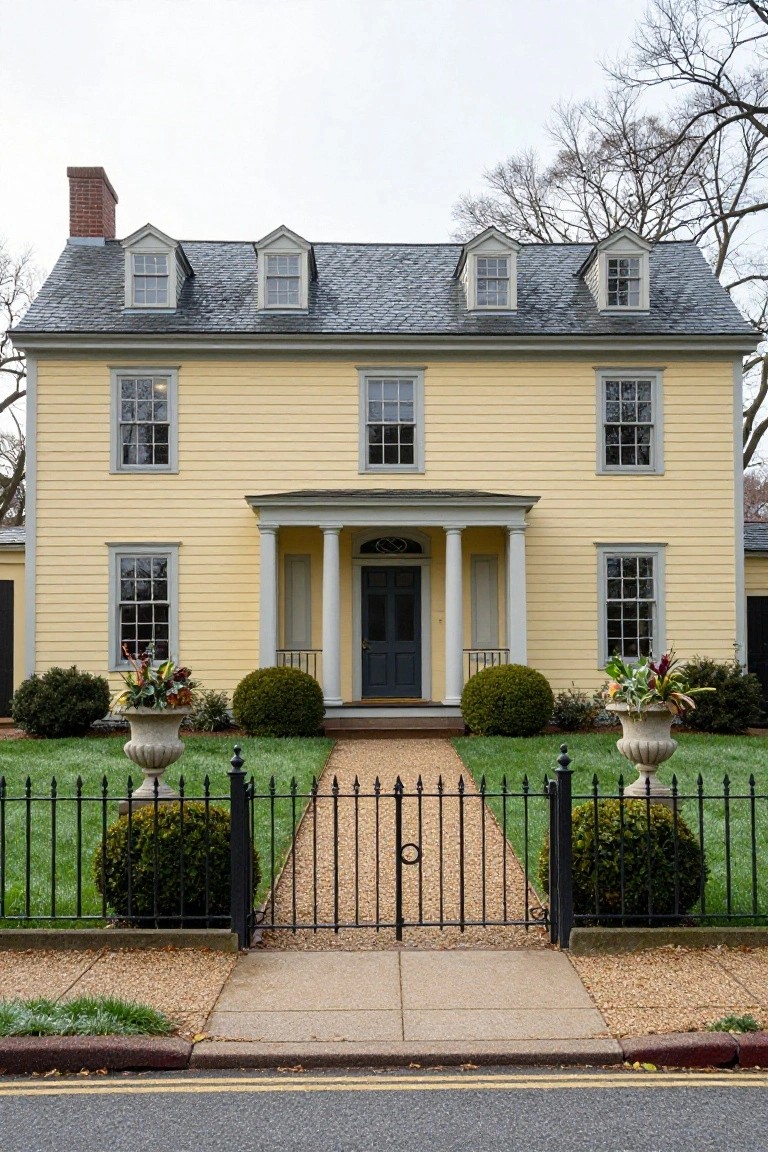
This colonial house pulls off a cheerful yellow exterior with a soft, buttery shade that feels bright but not overpowering. The symmetrical layout, with evenly spaced windows and that classic columned portico, keeps everything balanced and welcoming. It stands out on a quiet street, especially with the bare trees around in fall.
Try this palette on traditional two-story homes like this one, where white trim pops against the yellow siding and a black door adds some contrast. Flank the entry with urns and low boxwoods for simple curb appeal. It suits suburban spots with some lawn space… just make sure the yellow isn’t too creamy or it might fade fast in full sun.
Black Door on Yellow Brick Colonial
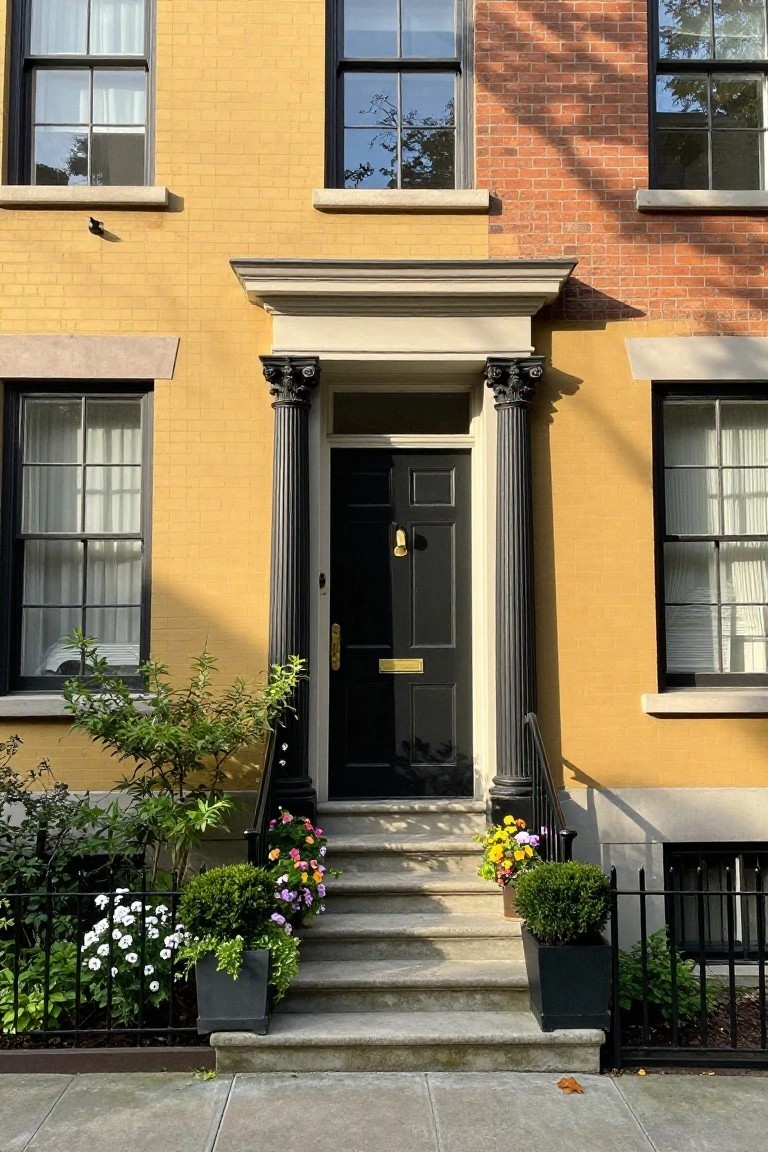
A black front door stands out sharp against yellow brick walls. It gives this Colonial townhouse a crisp, welcoming punch right at the entry. Fluted columns on each side add that classic touch, while gold hardware keeps things bright and polished.
This contrast works best on narrower urban homes where you want the facade to pop from the sidewalk. Pair it with simple potted flowers on the steps for extra cheer. Skip busy trim… the door and yellow do the main work.
Pale Yellow Siding on a Colonial Facade
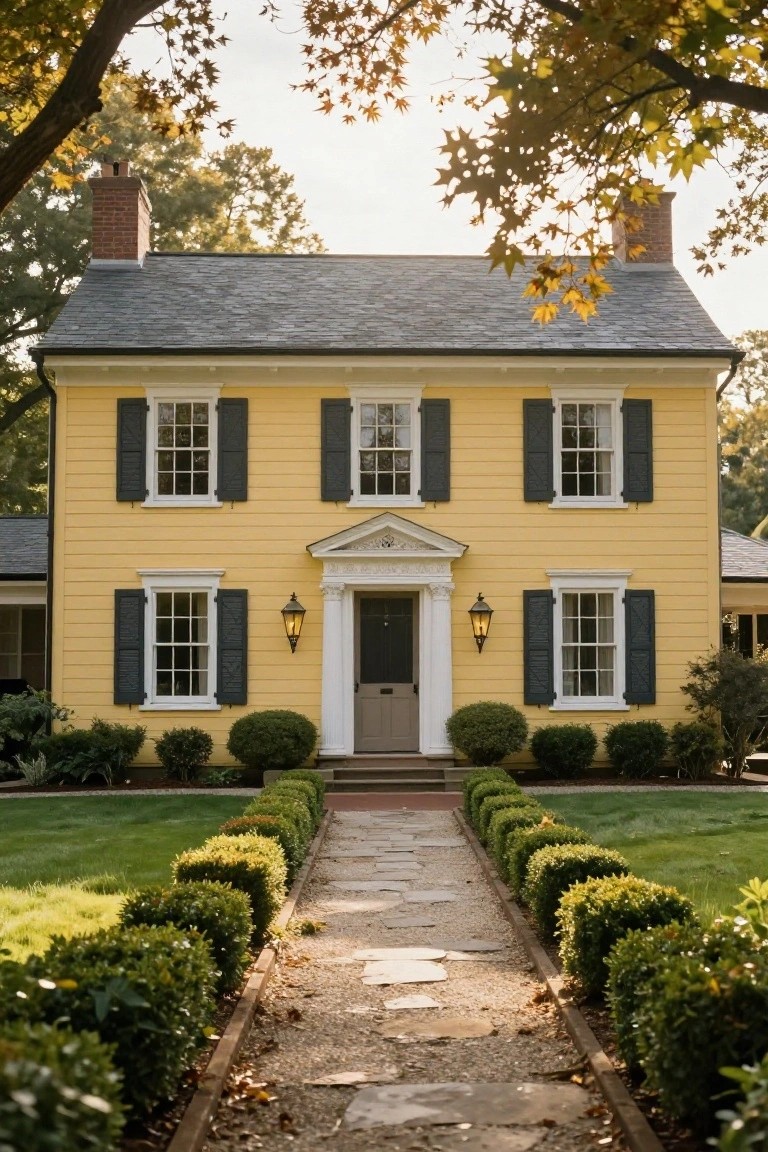
A soft pale yellow on clapboard siding brings a quiet cheer to this classic colonial house. The color picks up the warm light of fall without overpowering the simple lines. Black shutters add just enough contrast to make the windows pop, and that white pediment over the door keeps things crisp and traditional.
This look fits older homes in neighborhoods with mature trees. Use it where you want curb appeal that stays fresh year-round. Stick to glossy black shutters and keep the trim bright white. Boxwoods along the walk tie it together nicely, but skip anything too fussy.
Window Boxes Brighten Yellow Colonial Facades
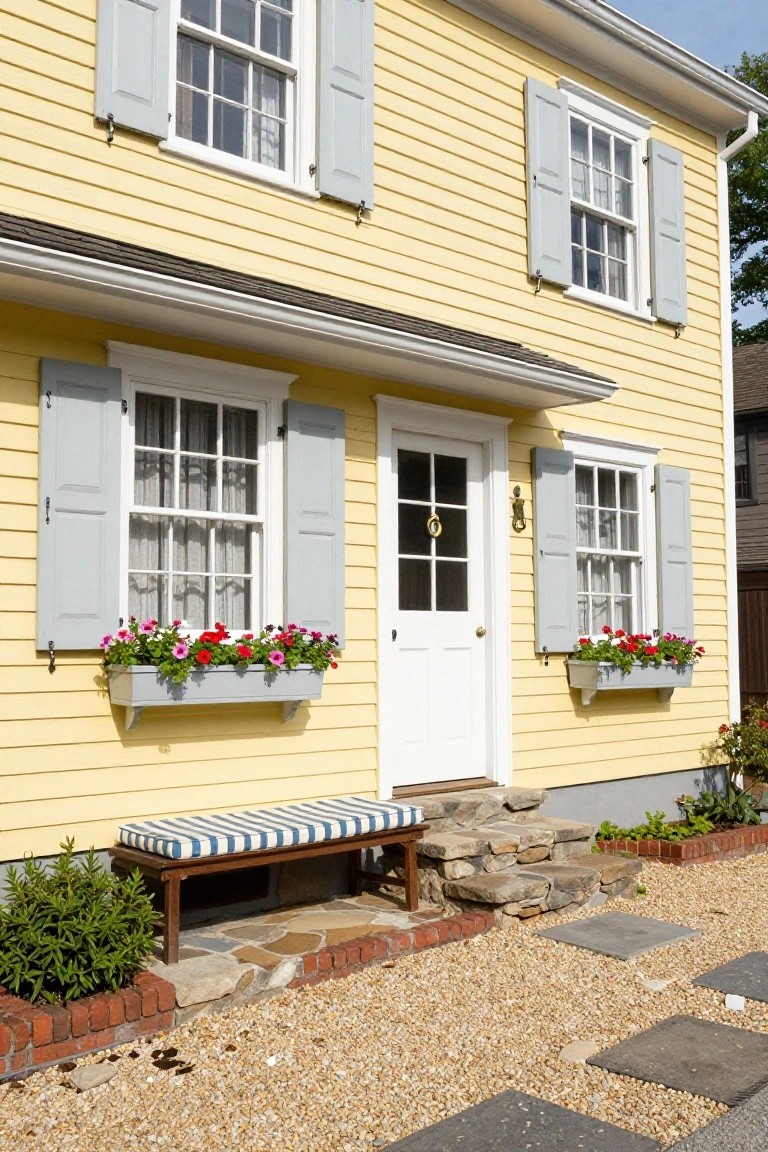
Flower boxes packed with blooms are a simple way to make a yellow house feel more alive. On this colonial exterior, the pink and red flowers stand out sharp against the pale yellow siding and blue shutters. They add that extra touch of color without much effort, turning a plain front into something friendly and bright.
Try them on two-story colonials where windows line up nicely. Go for tough plants like geraniums or petunias that take full sun. Place boxes under upper windows or right by the door… keeps the look fresh through summer. Works best on homes with some trim detail already.
Colonial Yellow Facade with Black Shutters
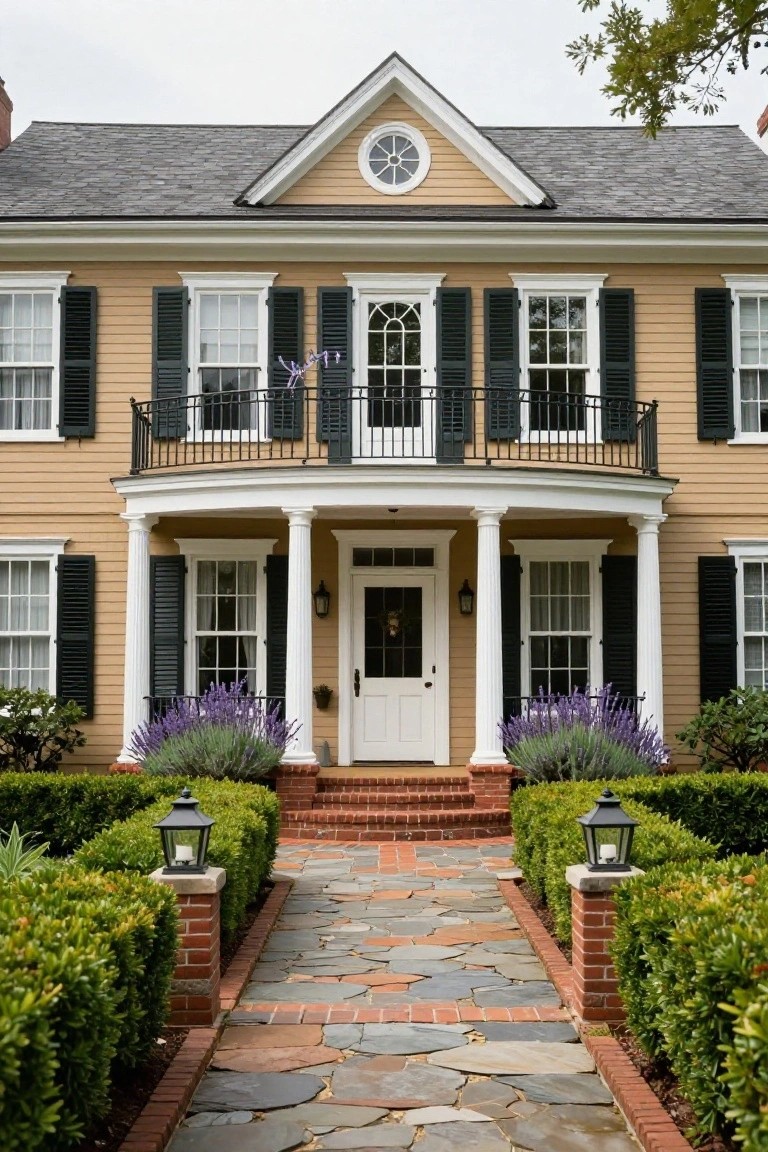
A soft yellow siding like this gives a colonial house a cheerful lift without going too bright. The black shutters stand out sharp against it, and those white columns on the porch keep things crisp and classic. Add in the purple lavender bushes by the steps, and you get a nice pop of color that feels fresh but not overdone. It’s a simple way to make the front look welcoming year-round.
This setup works best on homes with good symmetry, like two-story colonials facing the street. Paint the body in a pale butter yellow, stick with black for shutters and railings, then plant low lavender or similar along the walk. Skip bold colors elsewhere to let the yellow shine. On a smaller house, it might feel a bit much, so test a sample first.
Pale Yellow Colonial Facade
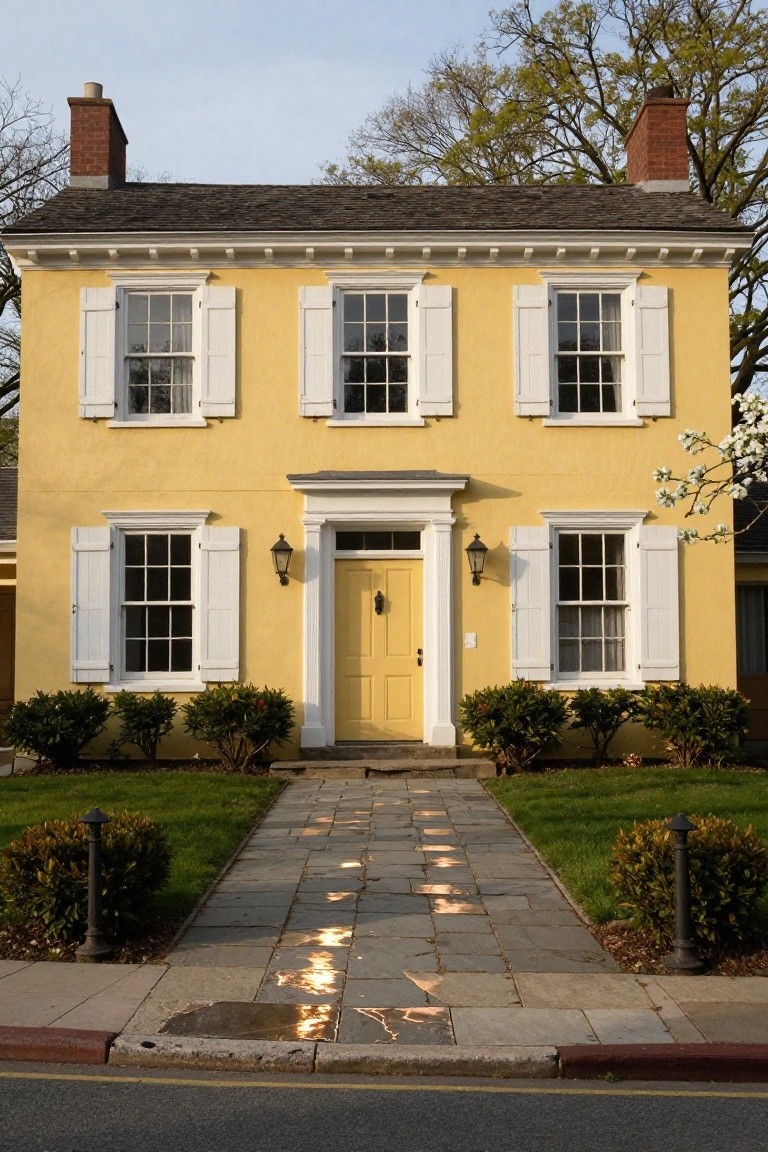
A pale yellow like this brings a quiet cheer to classic colonial homes. It softens the boxy shape of the facade while the white trim around windows and doors stands out clean and crisp. The yellow front door ties it together without much fuss, and simple shrubs along the base keep the focus on the house itself.
This shade works best on homes with good southern light or in neighborhoods full of brick and stone. Paint it on siding or stucco, then pair with white accents for contrast. Skip anything too glossy though. It can look dated fast.
Pale Yellow Colonial Porch Facade
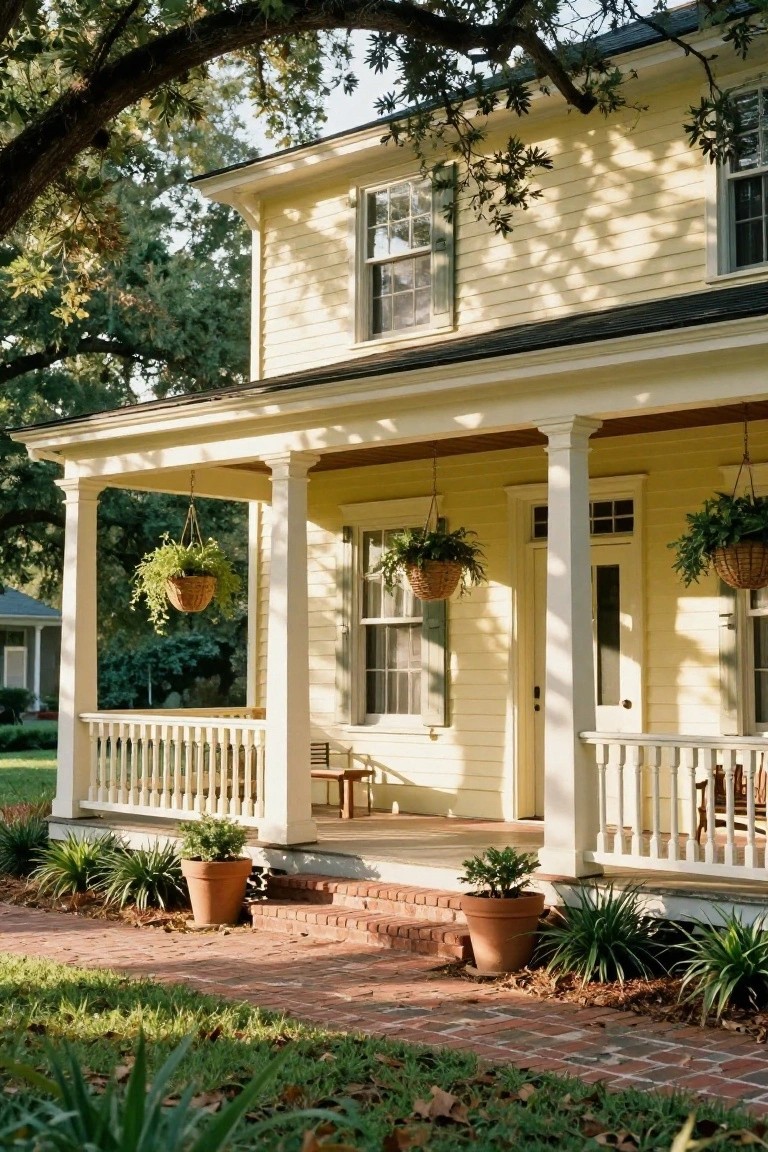
A soft pale yellow like this brings out the best in a traditional colonial house. It keeps things light and happy without going too bold. The white columns and trim stand out clean against the siding, and those hanging ferns on the porch just soften it up a bit.
This setup suits older homes with good bones, especially ones facing south for that natural glow. Stick to white or off-white accents to keep the yellow from looking dingy over time. Simple pots along the steps tie it together without much fuss.
Soft Yellow Colonial Facade
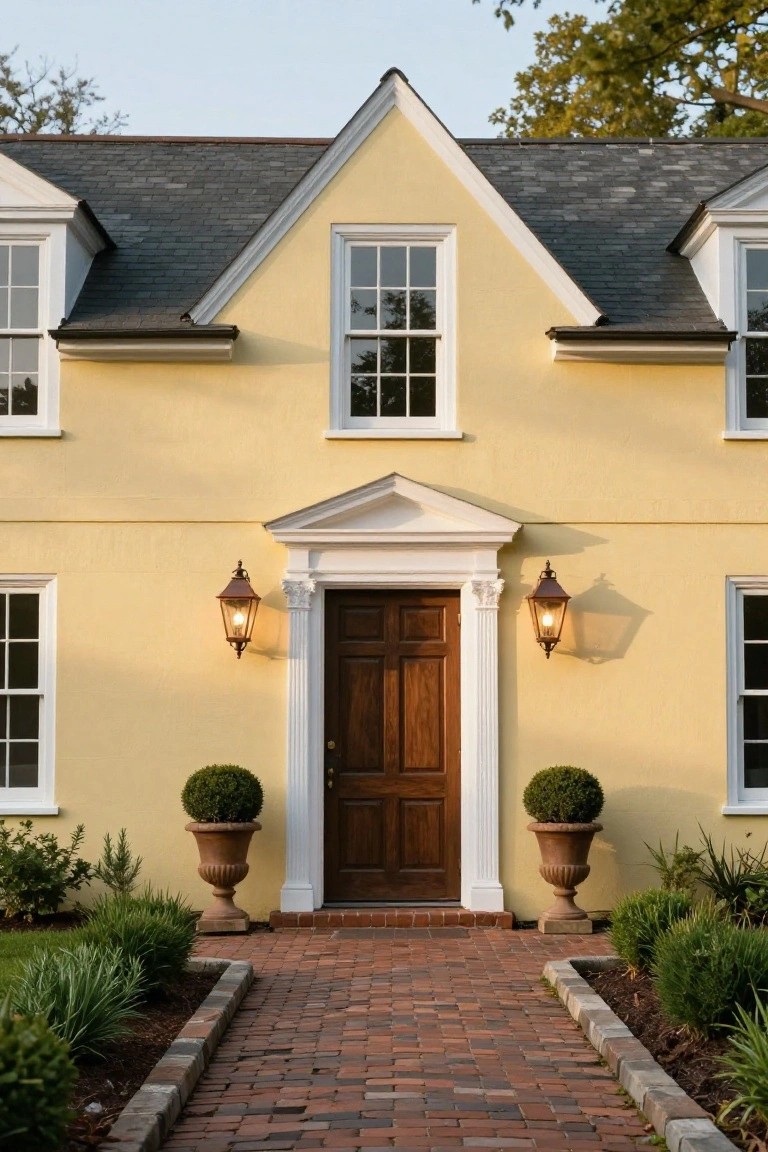
A soft yellow like this on a colonial house keeps things light and happy without going too bold. The white trim outlines the windows and that simple pediment over the door. It pulls the whole front together. Dark wood door adds some weight. Those lanterns on either side give a nice glow at dusk.
Try this palette on homes with clean lines and symmetrical windows. It suits older neighborhoods where you want cheer but not flash. Go for matte paint to avoid glare. Boxwoods in pots frame the entry without crowding. Brick path leads right up. Works best facing south.
Frequently Asked Questions
Q: How do I test a yellow palette on my colonial house before painting the whole thing?
A: Grab paint samples and slap them right on the siding facing different directions.
Paint broad swatches and check them at different times of day. Light changes everything with yellow, so live with them for a week.
Q: What trim color makes yellow exteriors pop without overwhelming?
A: Pair it with a clean, bright white.
White pulls focus to the yellow walls and keeps that classic colonial crispness. Steer clear of off-whites; they muddle the cheer.
Q: Can yellow siding handle shady spots on a colonial home?
A: Warm yellows with peachy undertones glow even without much sun… perfect for north-facing walls.
They bounce available light around and dodge that dull look. Cold yellows flop there, so skip them.
Q: How do I keep yellow looking fresh year after year?
A: Wash the siding every spring with mild soap and a soft brush.
Quality paint seals it against dirt and UV. And touch up scuffs quick; they show more on bright colors.
