

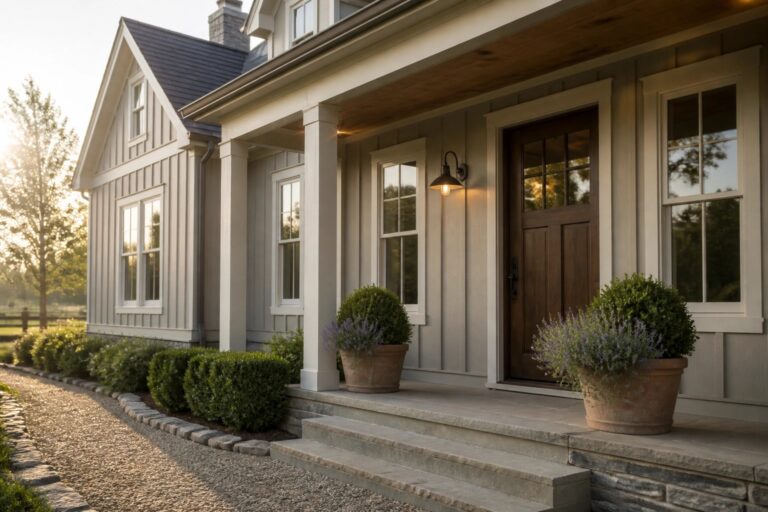
I’ve noticed that soft neutrals on a modern farmhouse exterior often change once they meet the roofline and any stone or brick details around the foundation.
When light hits them at different angles throughout the day, some shades pick up a cooler cast while others warm up against the landscaping.
Testing samples outside is essential.
Colors that seem balanced in a paint store can read too stark or too muddy after a few weeks on the siding, especially if the trim and gutters pull out unexpected undertones.
The shades that tend to work best are the ones with a touch of underlying warmth that still holds steady next to metal accents and weathered wood.
Soft Warm White Siding
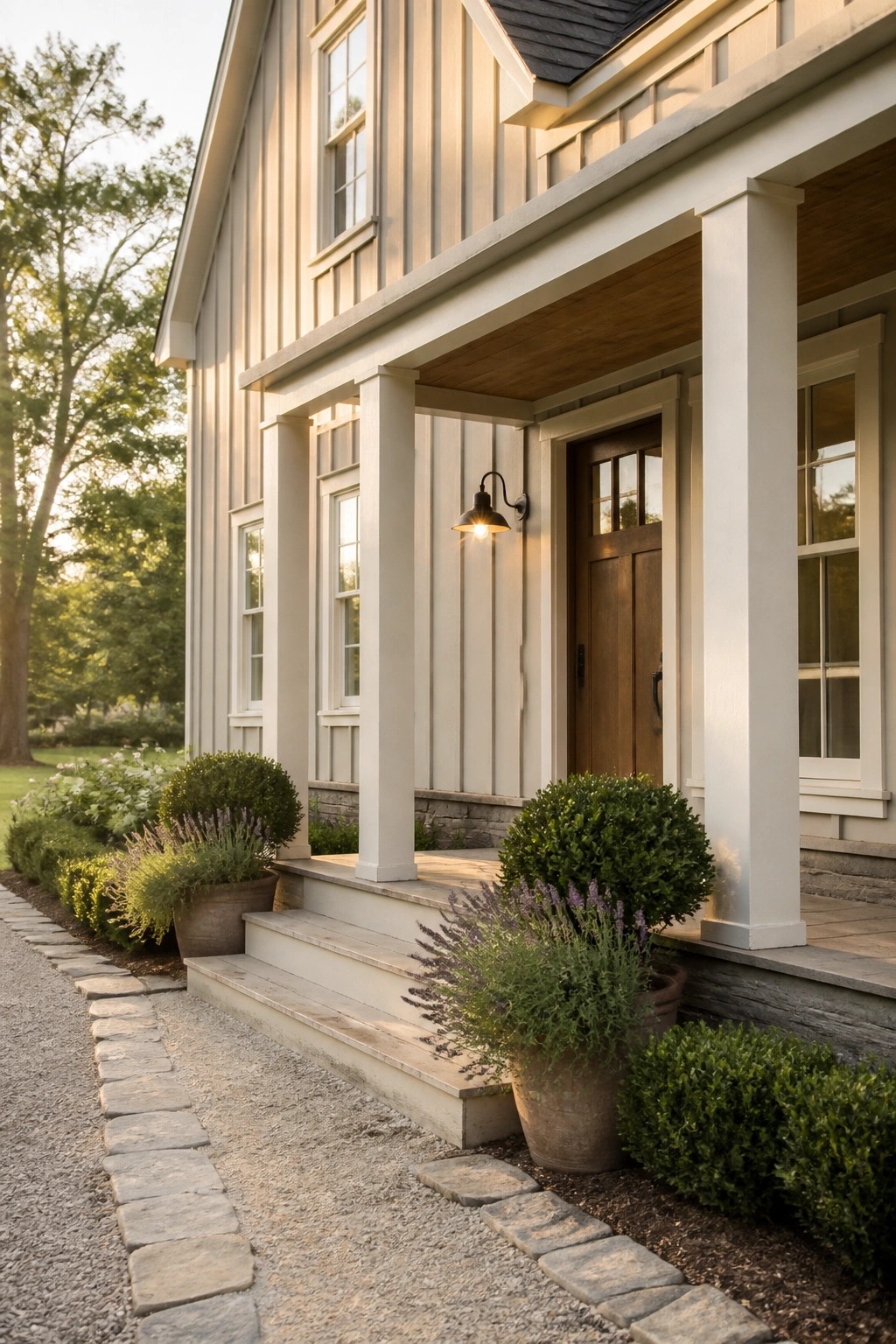
This soft warm white siding keeps the whole exterior feeling light and current. It sits somewhere between a true white and a light greige, with just enough warmth to avoid looking stark next to wood and stone.
The color holds up nicely in morning and afternoon light without shifting too cool or too yellow. It pairs easily with natural wood accents and simple trim, and it works well on modern farmhouse homes that want a clean base without going all the way to bright white.
Balanced Greige Farmhouse Exterior
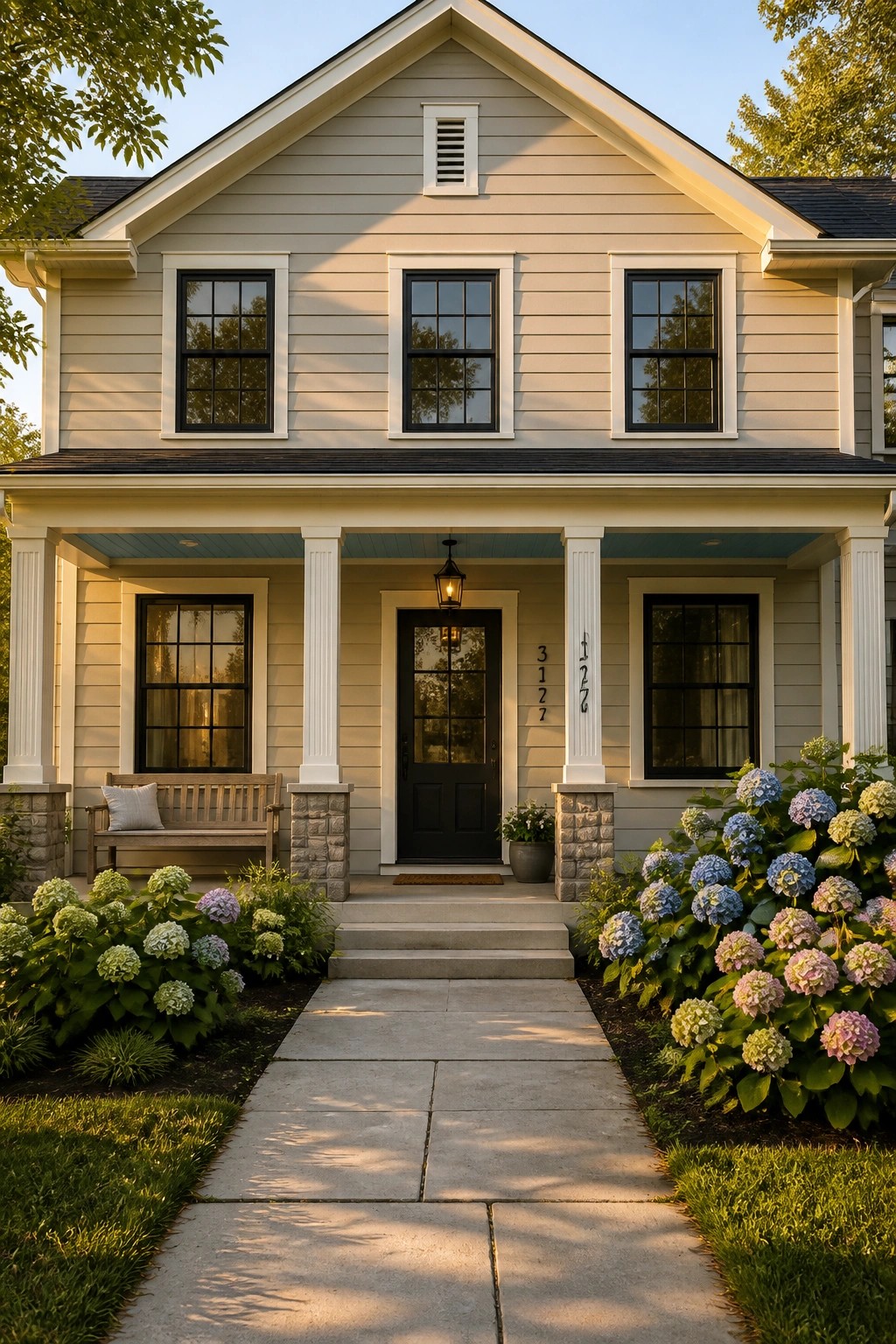
This soft greige works well on modern farmhouse exteriors because it sits between warm beige and cool gray without leaning too far either way. It reads closest to Sherwin Williams Accessible Beige, Benjamin Moore Revere Pewter, and Behr Silver Mist.
The color stays calm next to black windows and white trim, and it handles both sunny and shaded sides of the house without shifting too much. It pairs easily with stone foundations or wood accents but can look flat if the trim is also painted in a similar neutral.
Muted Sage Green Exterior
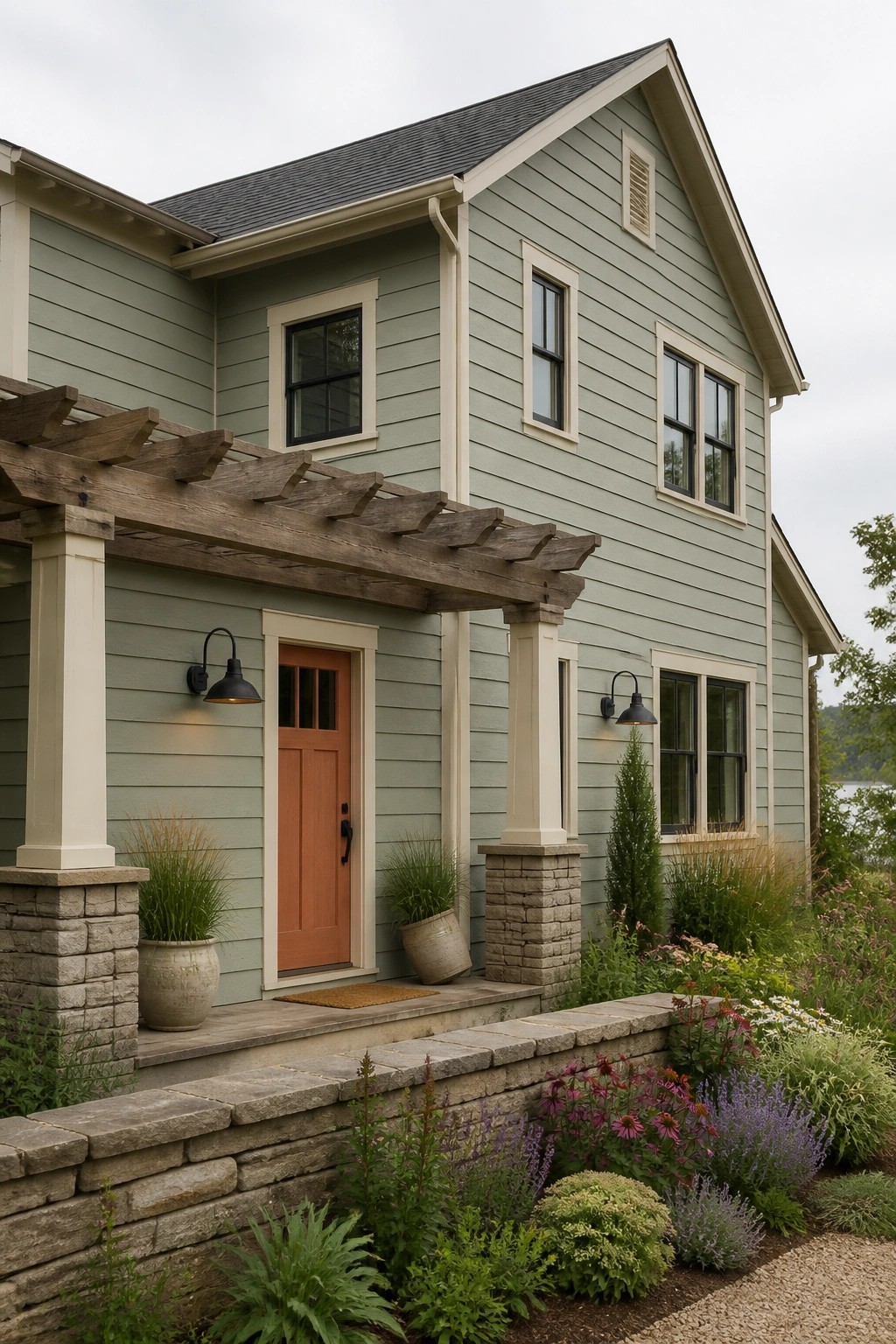
This soft sage green gives a modern farmhouse exterior a calm, lived-in look without feeling too bold. It sits between gray and green, with enough warmth to keep the house from looking cold next to stone or wood.
The color works best with white trim and dark windows, and it holds its own against a dark roof. It can read a little cooler in full sun, so testing a sample on the actual wall helps before committing.
Light Gray Farmhouse Exterior
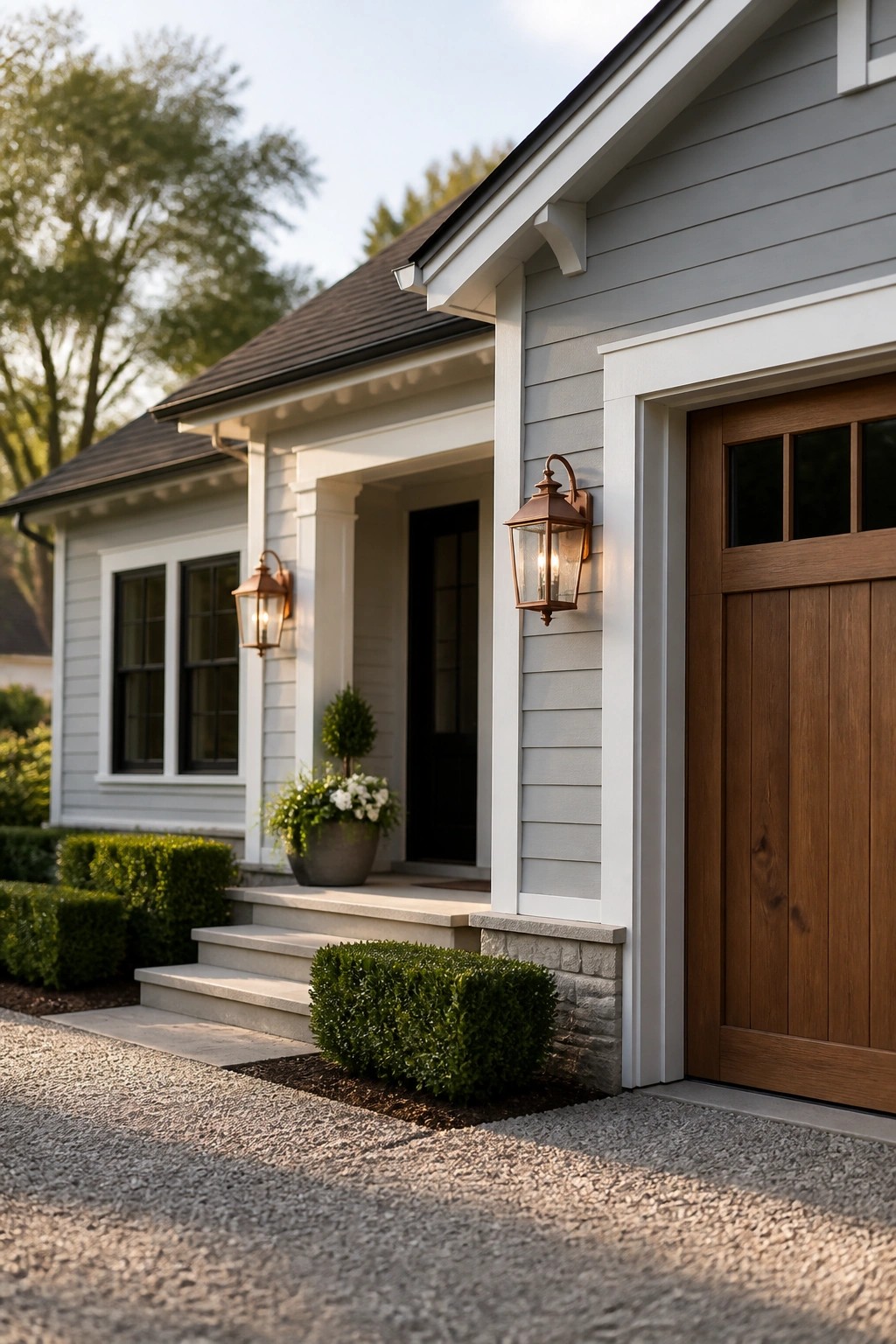
This soft gray siding gives the house a calm, updated look without going too cool or stark. It sits in a light neutral range that feels fresh next to white trim and still works with the warmer wood tones on the garage door.
The color has a slight blue undertone that shows up more in bright light. It pairs best with clean white details and natural materials like stone or wood, and it tends to hold up well on modern farmhouse exteriors where you want something softer than pure white but still simple.
White Painted Brick
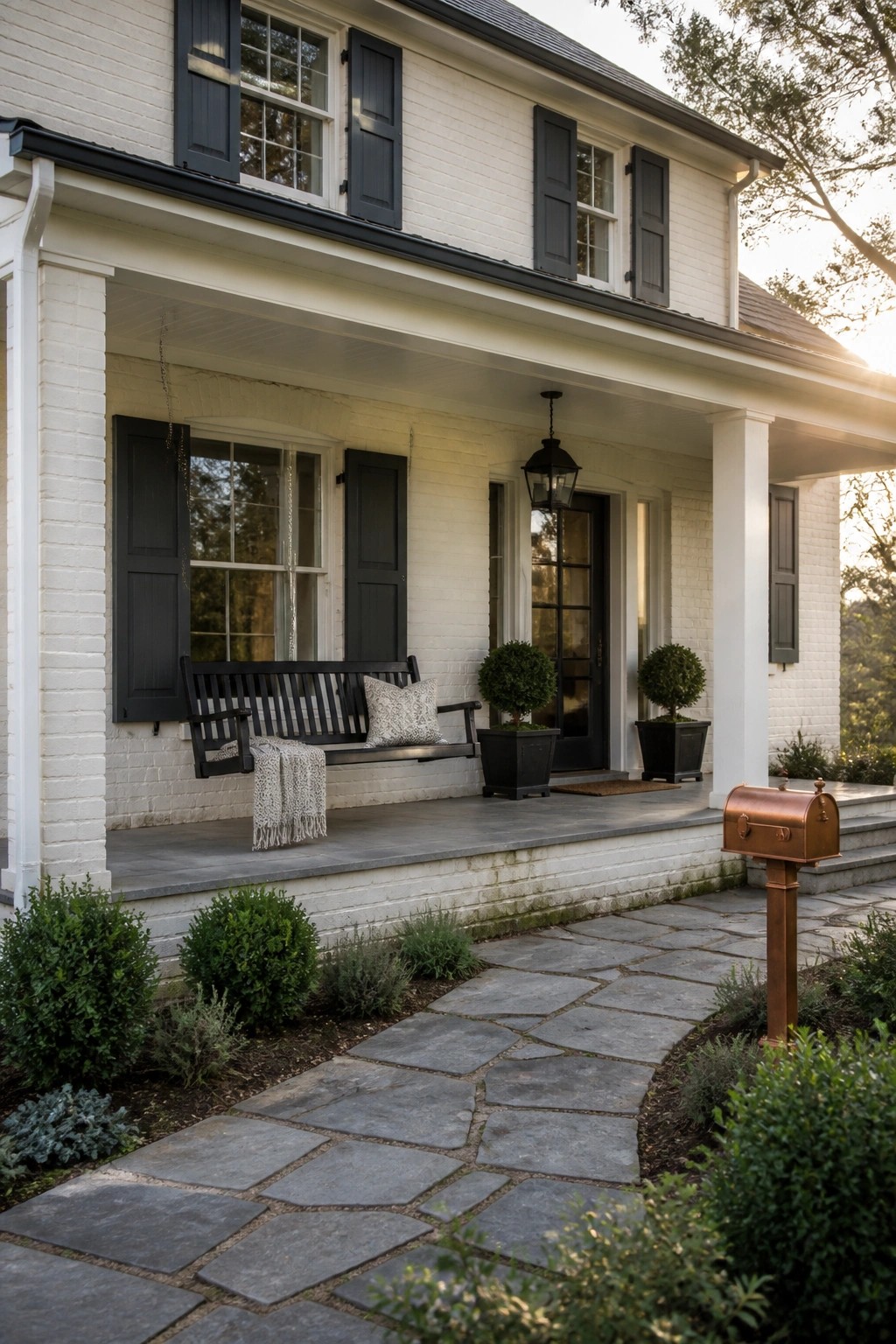
This house uses a bright white on the brick that keeps the whole exterior feeling light and open. It is a clean neutral that works especially well on modern farmhouses because it does not compete with the roof or trim.
The paint has a soft edge rather than a harsh one, so it sits comfortably next to the stone path and dark accents. It looks best with simple landscaping and holds its color nicely in full sun.
Warm Taupe Greige Siding
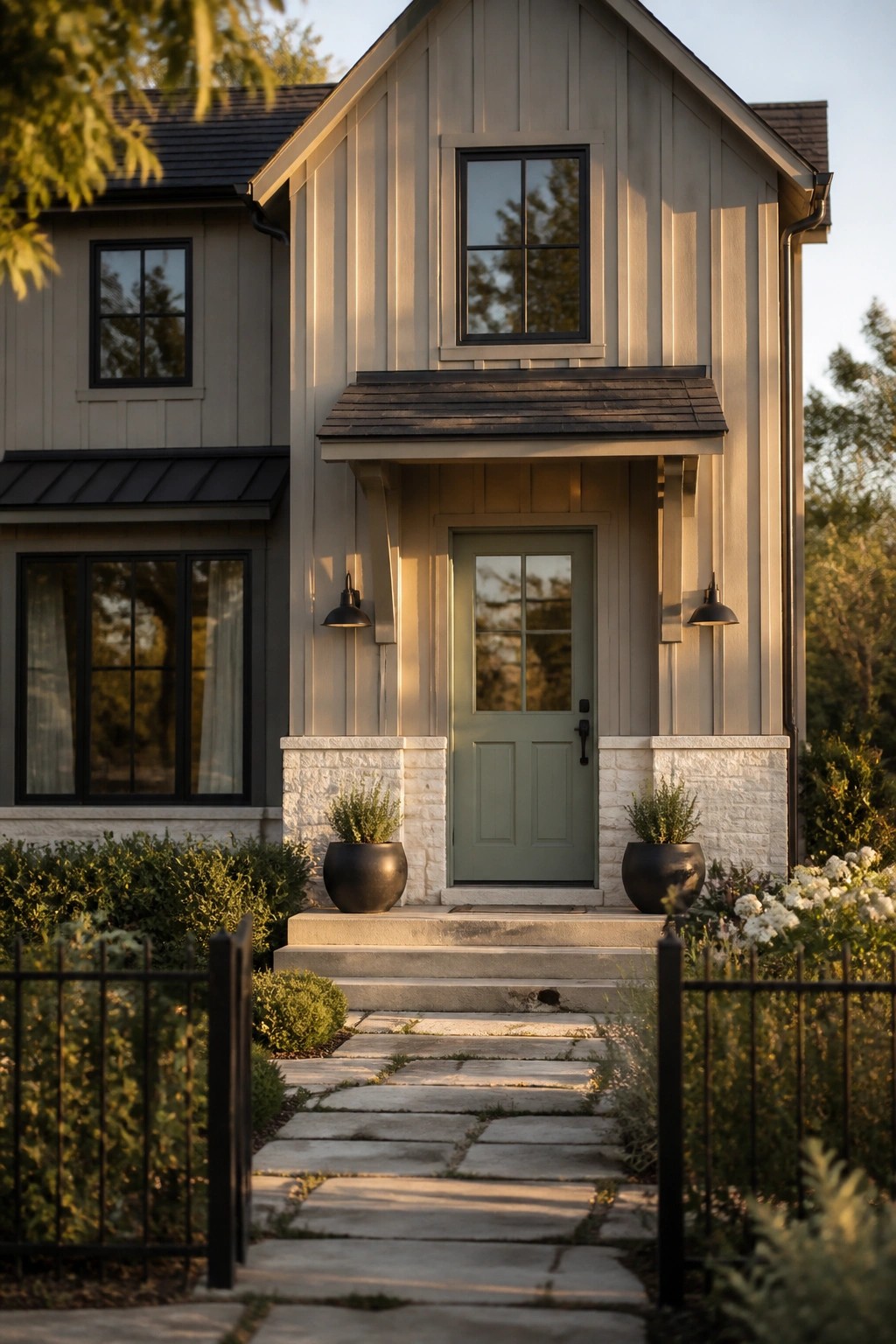
This warm greige siding sits right in that soft neutral zone between gray and beige. It gives the house a calm, updated farmhouse feel that still reads current rather than dated.
The color carries a light taupe undertone that helps it stay friendly next to stone and dark windows. It works best on homes where you want the siding to blend in quietly instead of standing out.
Light Warm Greige Exterior
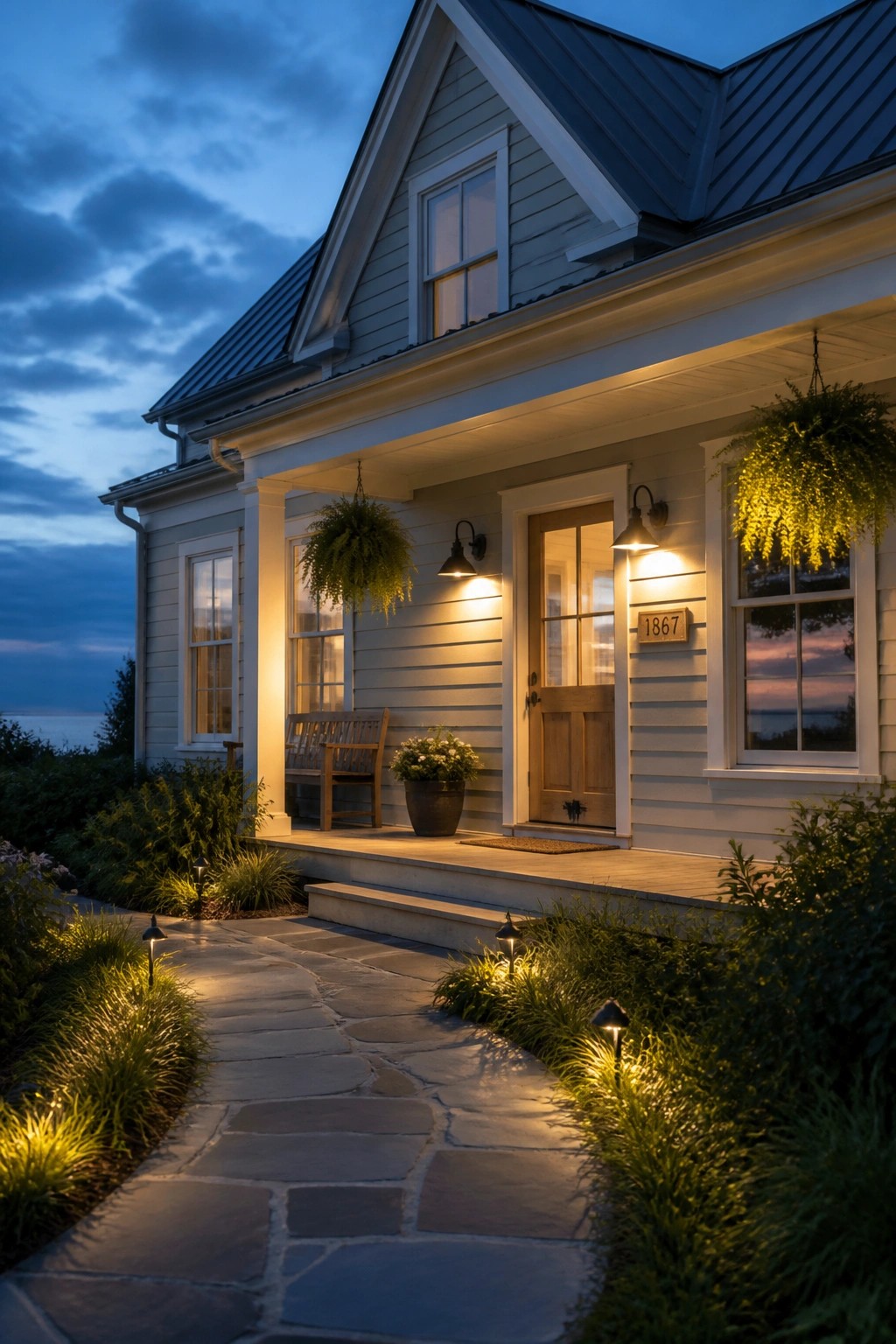
This light greige siding sits right in that soft neutral zone between gray and beige. It keeps the house looking fresh while still feeling warm and approachable on a modern farmhouse.
The color has a gentle warm undertone that works nicely with white trim and wood accents. It holds up well against darker roofs and helps the whole exterior feel balanced without standing out too much.
Earthy Sage Green Farmhouse Siding
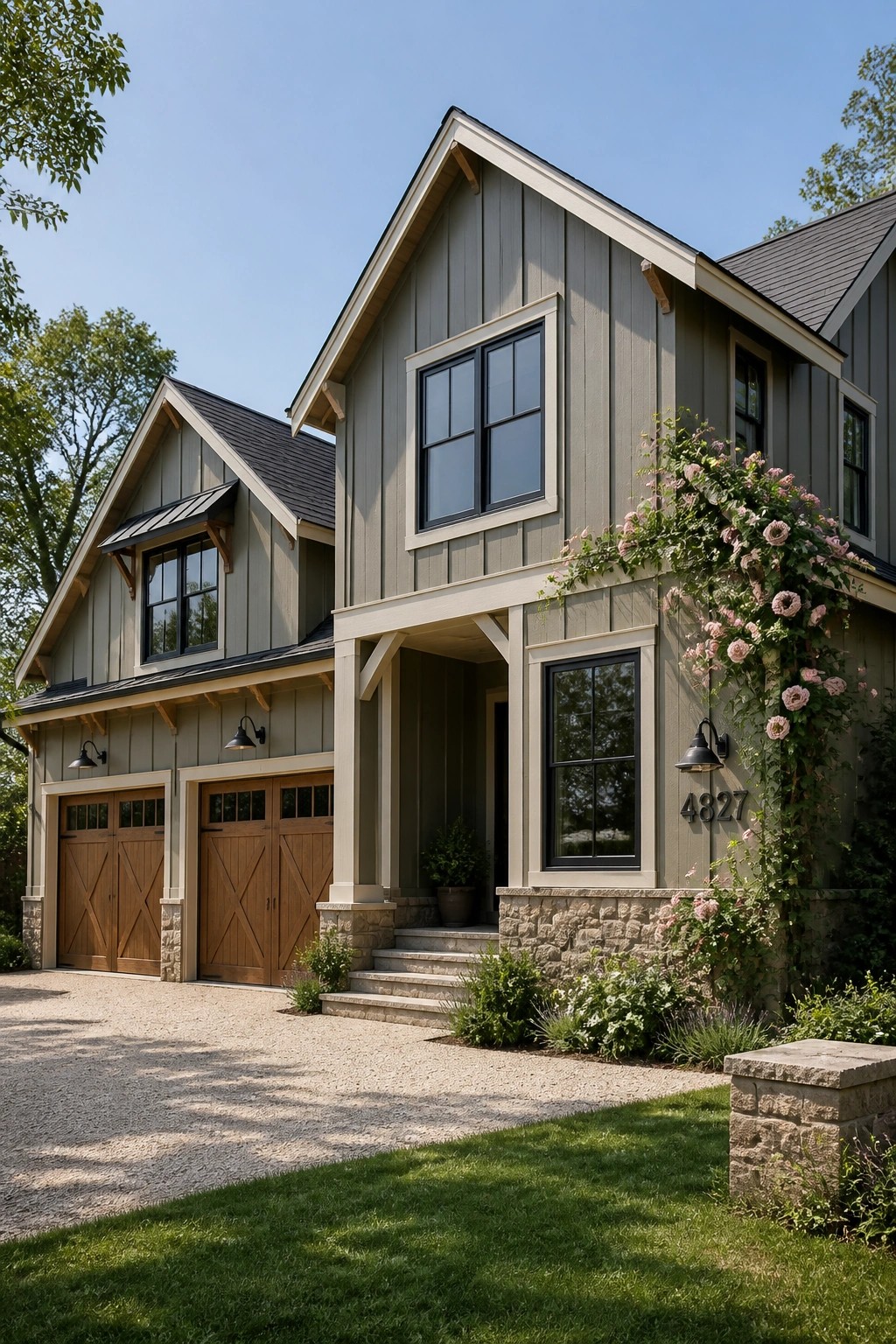
This soft sage green reads as a muted gray green that sits right between cool and warm. It gives the house a calm look without going too gray or too bright, which is why it fits modern farmhouse exteriors so well.
The color has a slight earthy undertone that works nicely next to wood and stone. It holds up in full sun but can lean a little cooler in shade, so testing a sample on the actual siding is worth doing before committing.
Soft beige siding
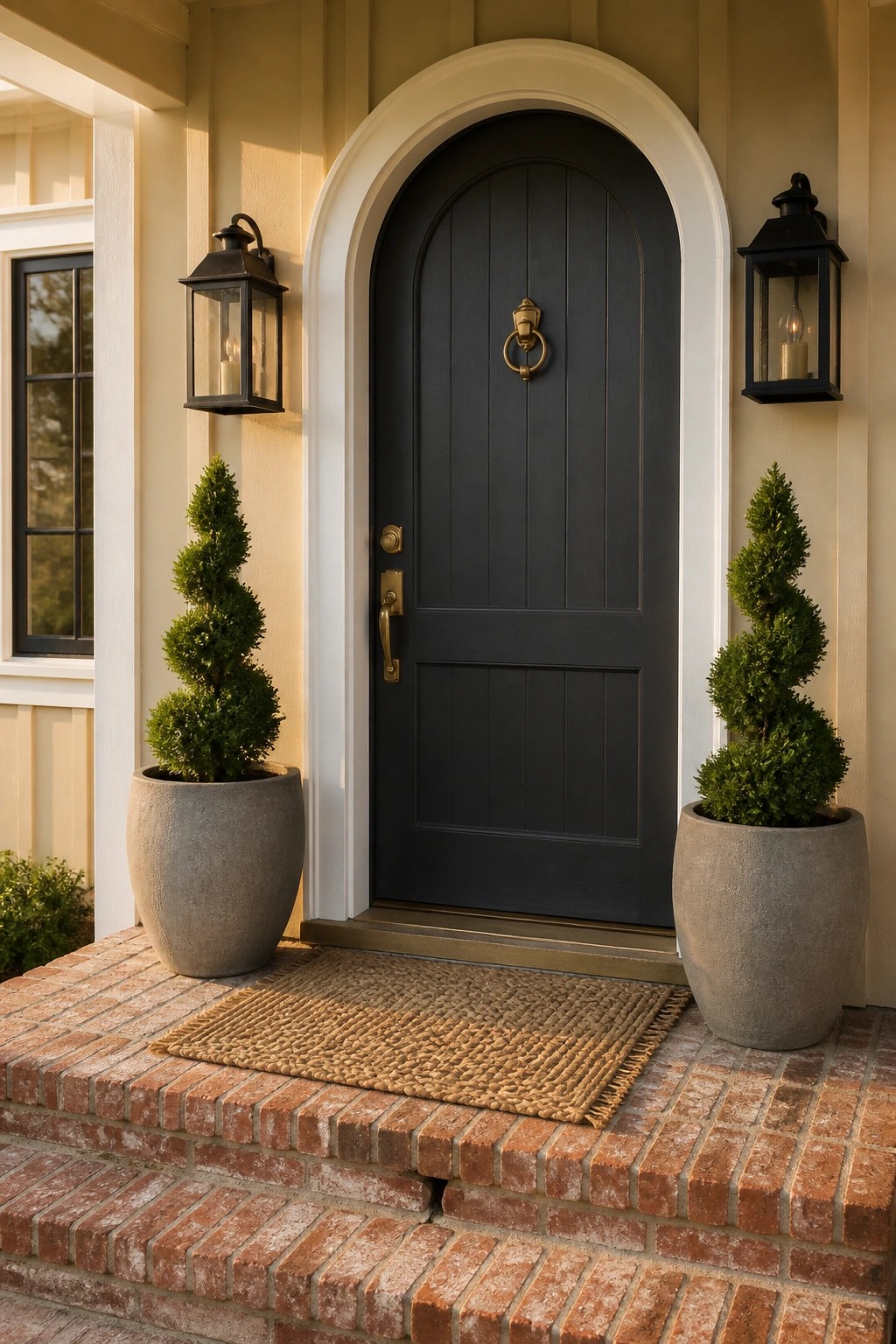
This soft warm beige brings a gentle tone to modern farmhouse exteriors. It sits between cream and greige, with a light yellow undertone that keeps the house from feeling too cool or flat. The color reads closest to Sherwin Williams Accessible Beige, Benjamin Moore Edgecomb Gray, Behr Almond Wisp, or Farrow & Ball Stony Ground.
It works best on wood siding or stucco where you want something soft but still grounded. Pair it with warm white trim and a dark door to add contrast. In strong sun it can shift a bit warmer, so test a sample on the actual wall before committing.
Soft White Siding
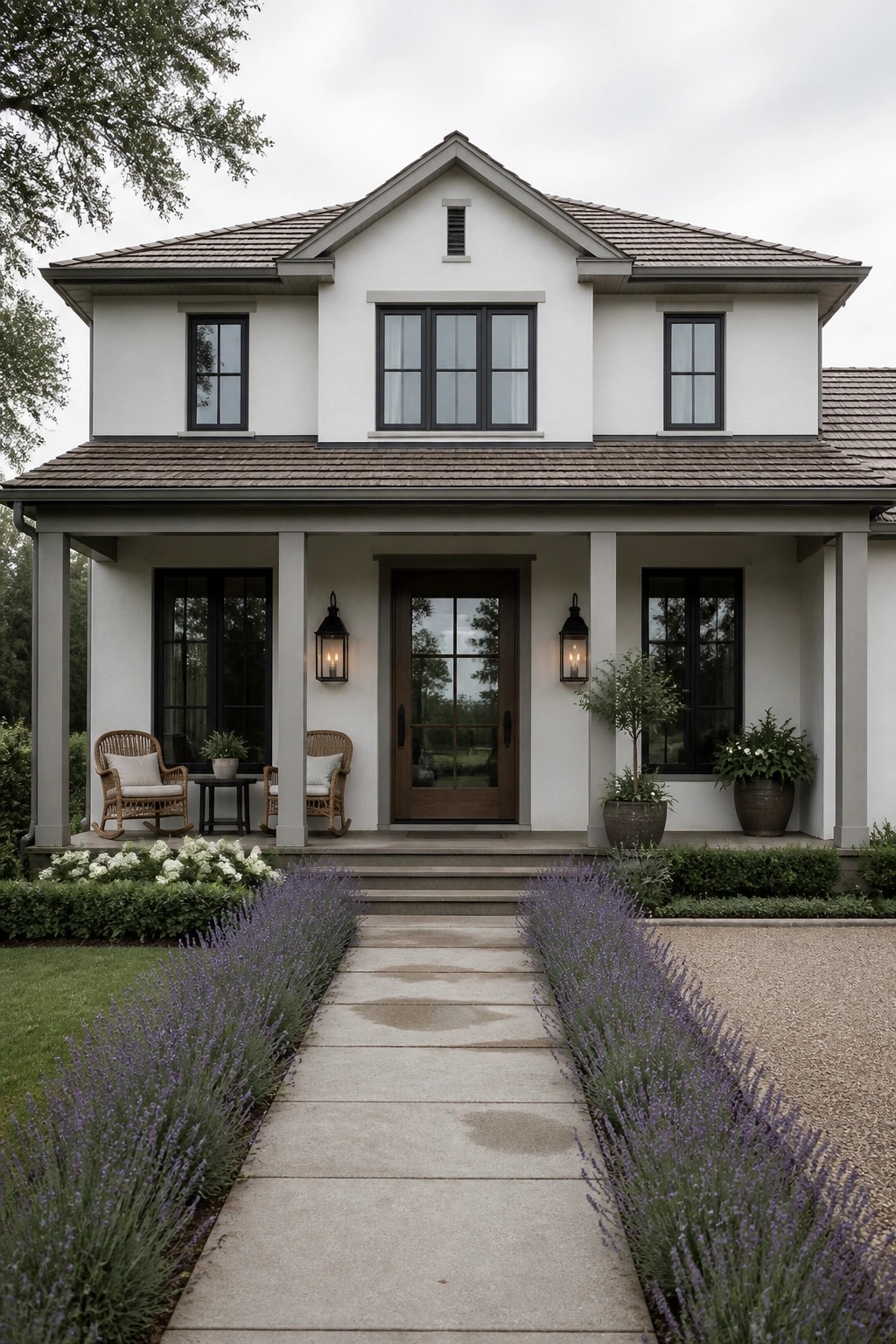
This house uses a soft white on the siding. It is a light neutral that stays clean and bright without turning stark or cold on an exterior.
The color has a slight warmth that helps it sit comfortably next to dark windows and wood tones. It works especially well on modern farmhouse homes because it keeps the look simple while still feeling current.
Stone-Friendly Greige Exterior
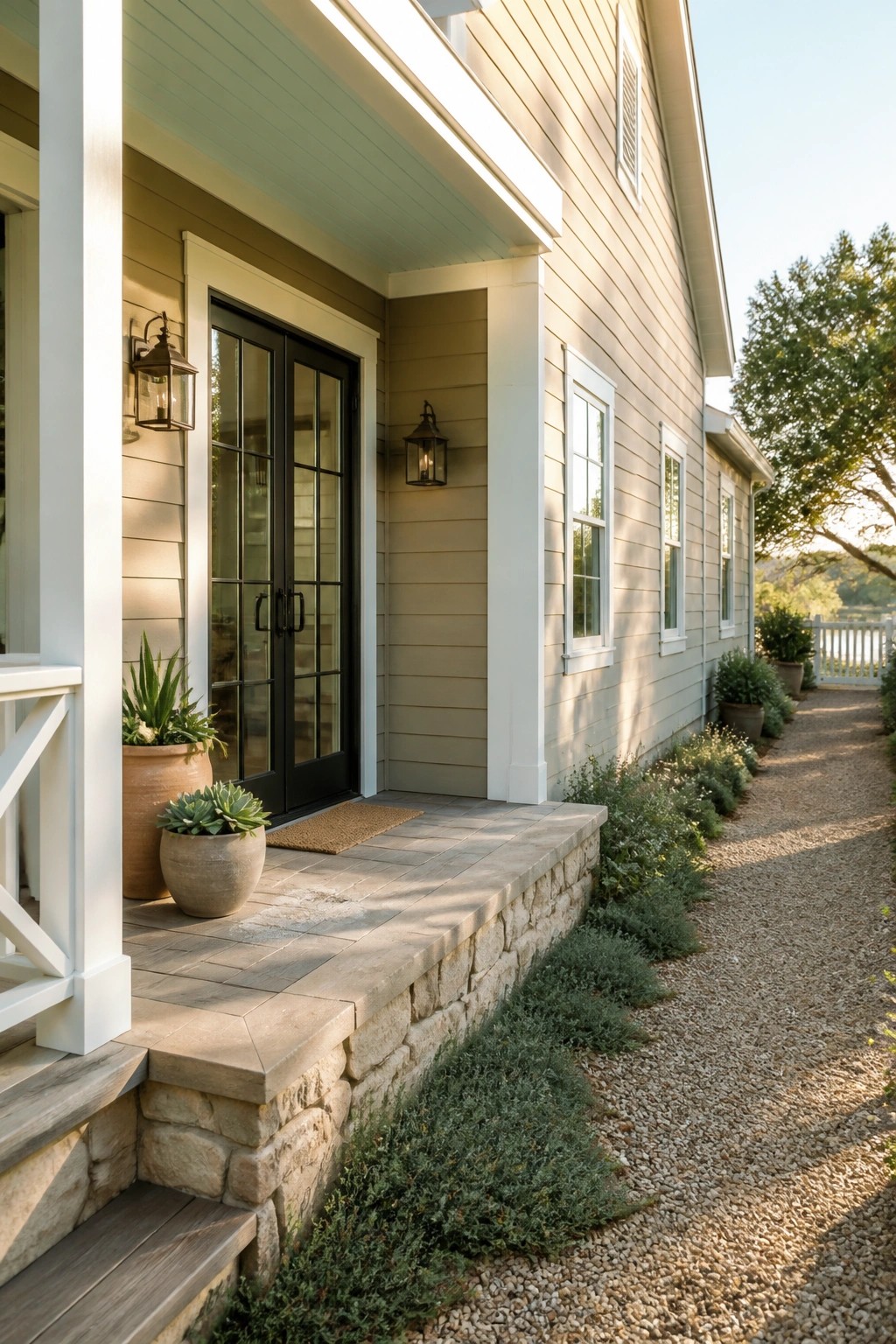
This house is painted in a soft greige that sits right between gray and beige. It has a warm undertone that keeps the exterior from feeling too cool or flat, and it works especially well on modern farmhouse siding.
The color reads best with white trim and a natural stone base. It pairs easily with wood accents or black windows without competing, and it holds up nicely in different lighting. Good matches include Sherwin Williams Accessible Beige, Benjamin Moore Edgecomb Gray, Behr Silver Satin, or Farrow & Ball Elephant’s Breath.
Warm Terracotta Siding
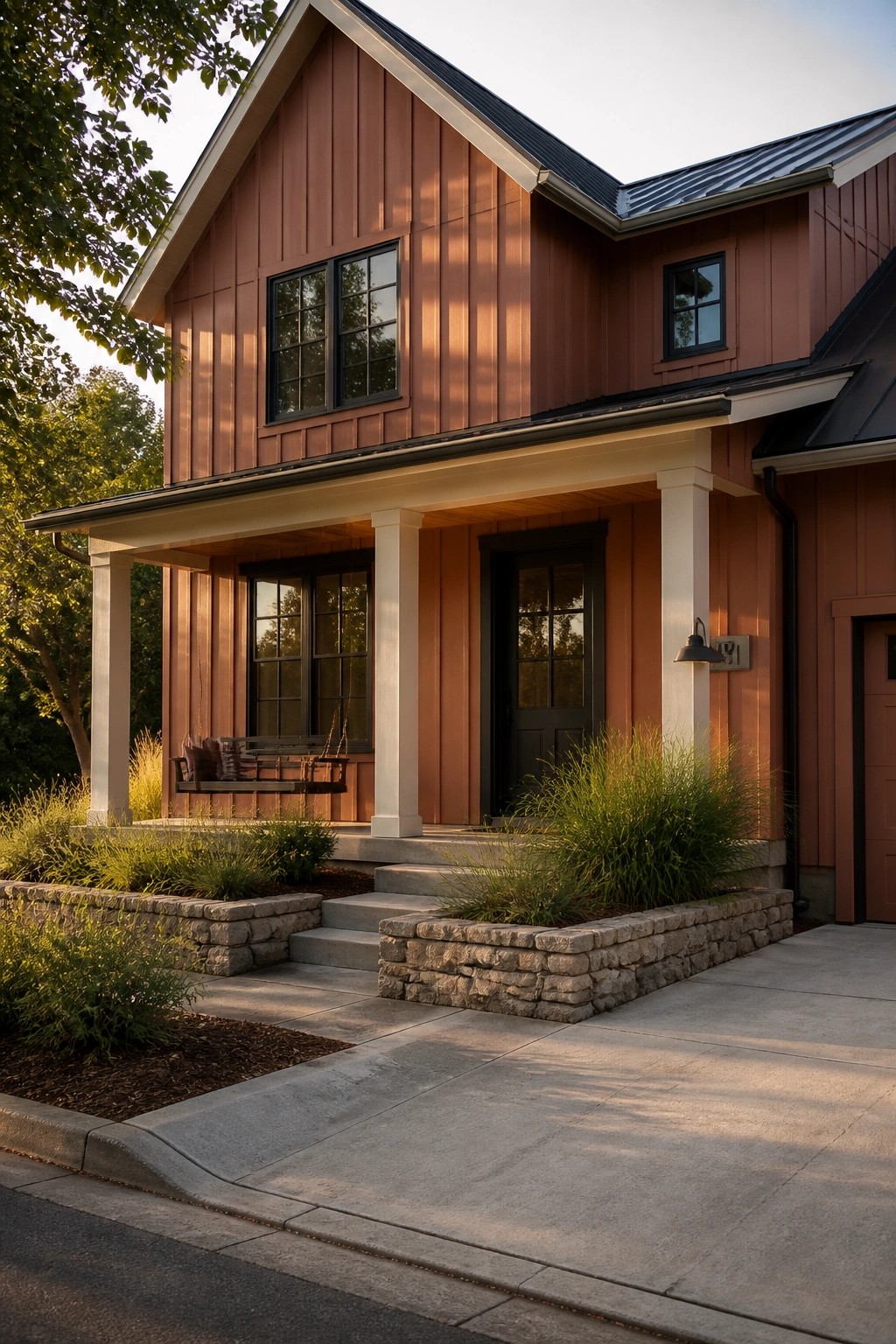
This house uses a soft terracotta color on the siding. It is a warm neutral that leans slightly red but stays muted so it does not feel too bold or dated on a modern farmhouse.
The color sits nicely next to white trim and dark windows. It works best with stone foundations or simple landscaping since the earthy tone already brings enough warmth on its own.
Warm Gray Farmhouse Siding
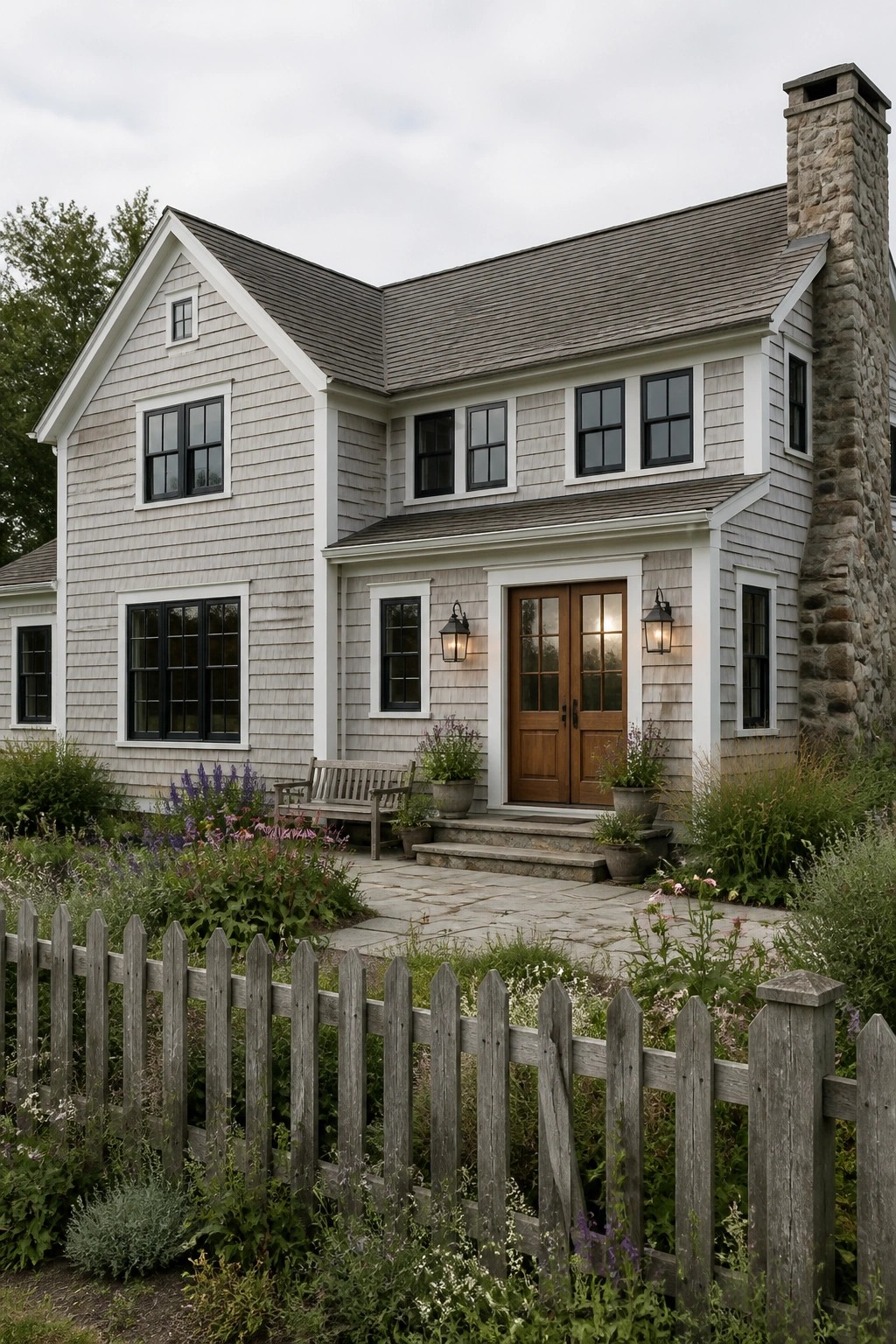
This house uses a soft warm gray on the siding. It sits between gray and greige, giving the exterior a calm look without going too cool or stark. The color works well on modern farmhouses because it feels clean but still blends with natural surroundings.
It has a slight beige undertone that shows up more in certain light. Pair it with white trim and a darker roof to keep the whole look balanced. Colors like Sherwin Williams Repose Gray, Benjamin Moore Edgecomb Gray, or Behr Silver Drop sit in the same range.
Classic Greige Farmhouse Exterior
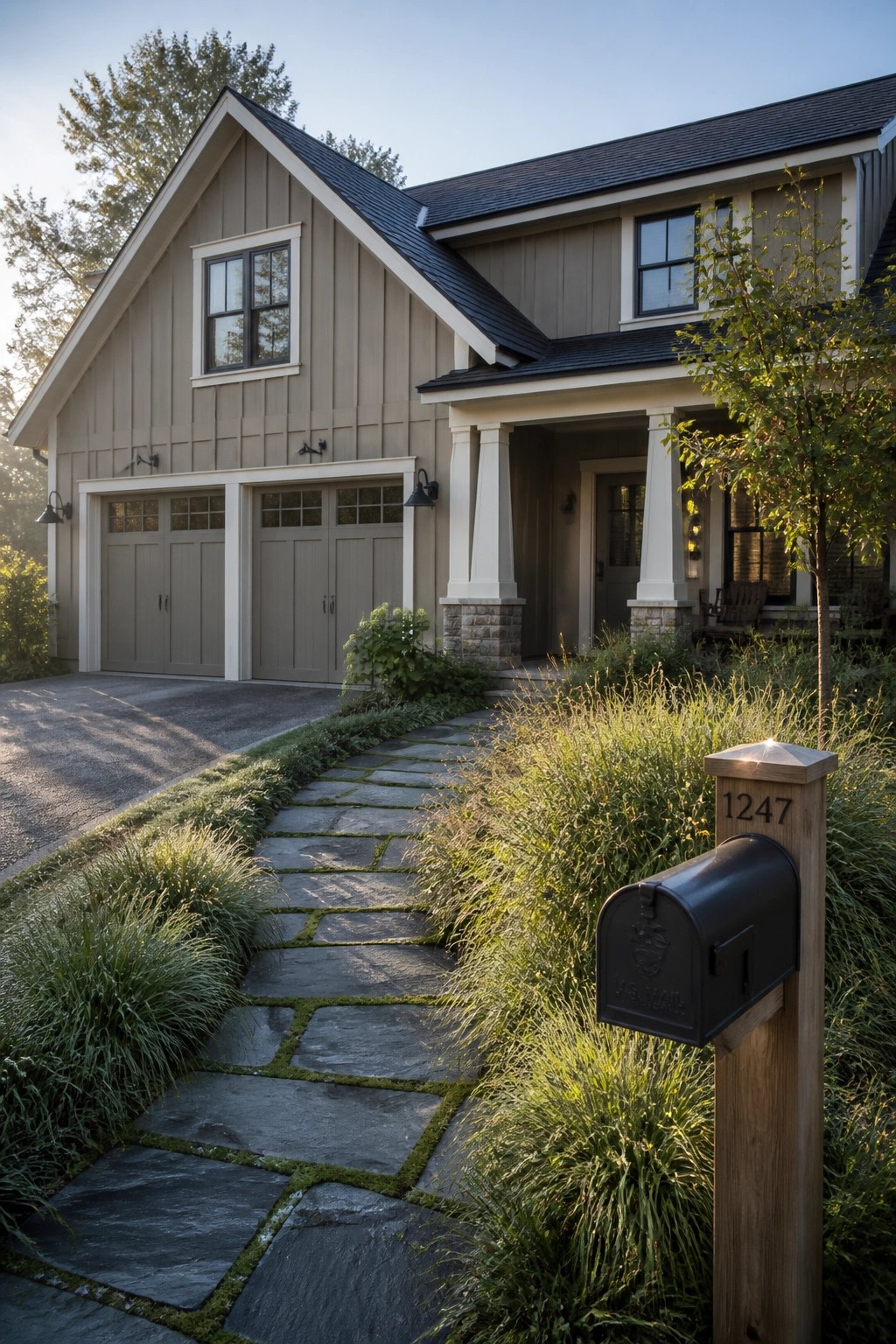
This siding color is a soft greige that sits between gray and beige without leaning too far either way. It gives the house a calm look that still feels current and works with the clean lines of a modern farmhouse. The tone stays light enough to keep the whole exterior from feeling heavy.
It has a gentle warm undertone that pairs well with white trim and stone details. The color holds up nicely in changing light and looks good next to darker roofs or natural wood. Colors close to this include Sherwin Williams Accessible Beige, Benjamin Moore Edgecomb Gray, and Behr Silver Drop.
Gray Beige Farmhouse Siding
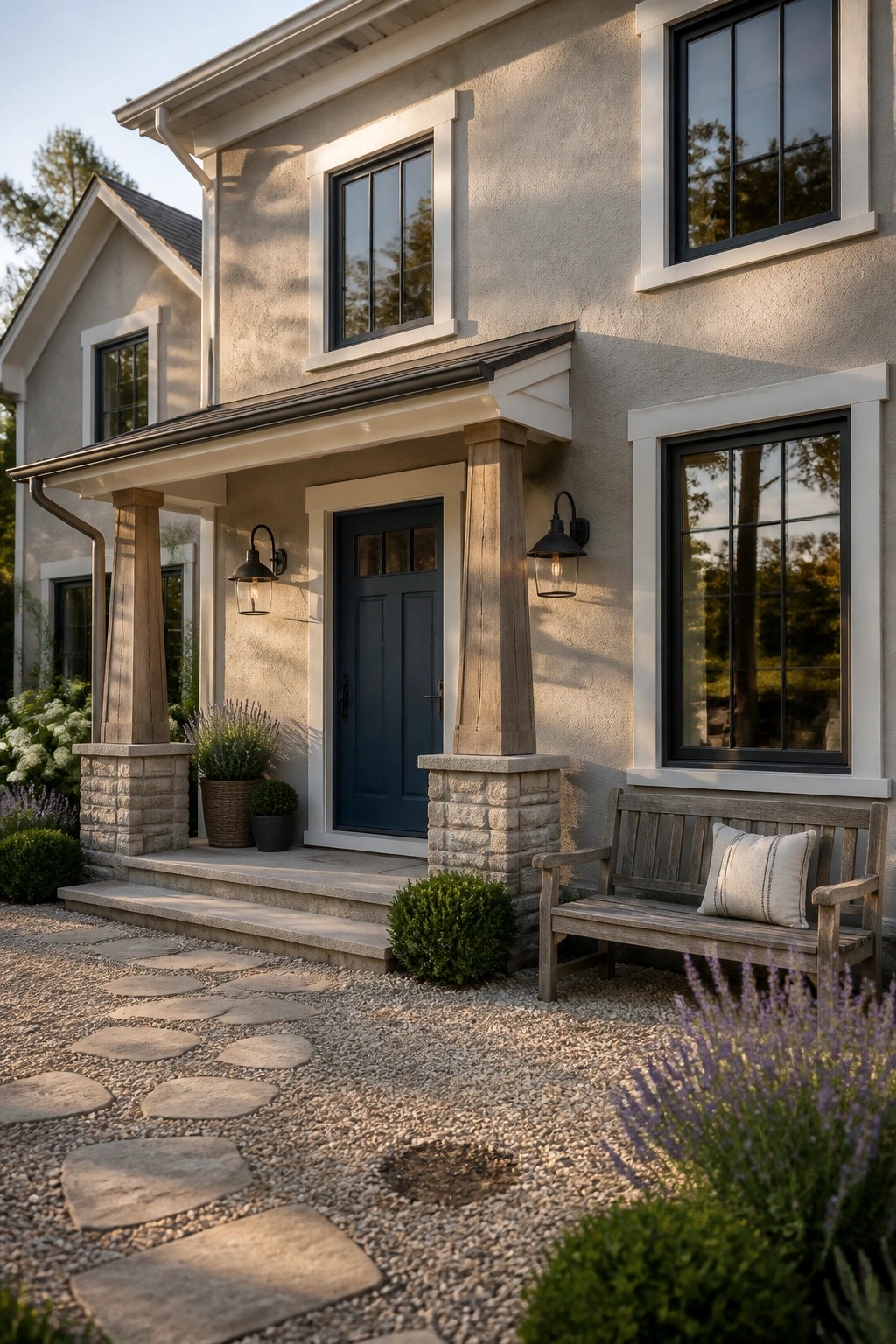
This siding is a soft greige with warm undertones. It reads as a light gray beige that sits nicely between cool and warm, which makes it easy to live with on an exterior.
It pairs well with stone bases and natural wood accents. Colors in this range work best on modern farmhouse homes when the trim stays light and the windows go dark. Watch how it shifts in full sun, since the warmth can pull stronger than it does in shade.
Soft Sage Green Doors
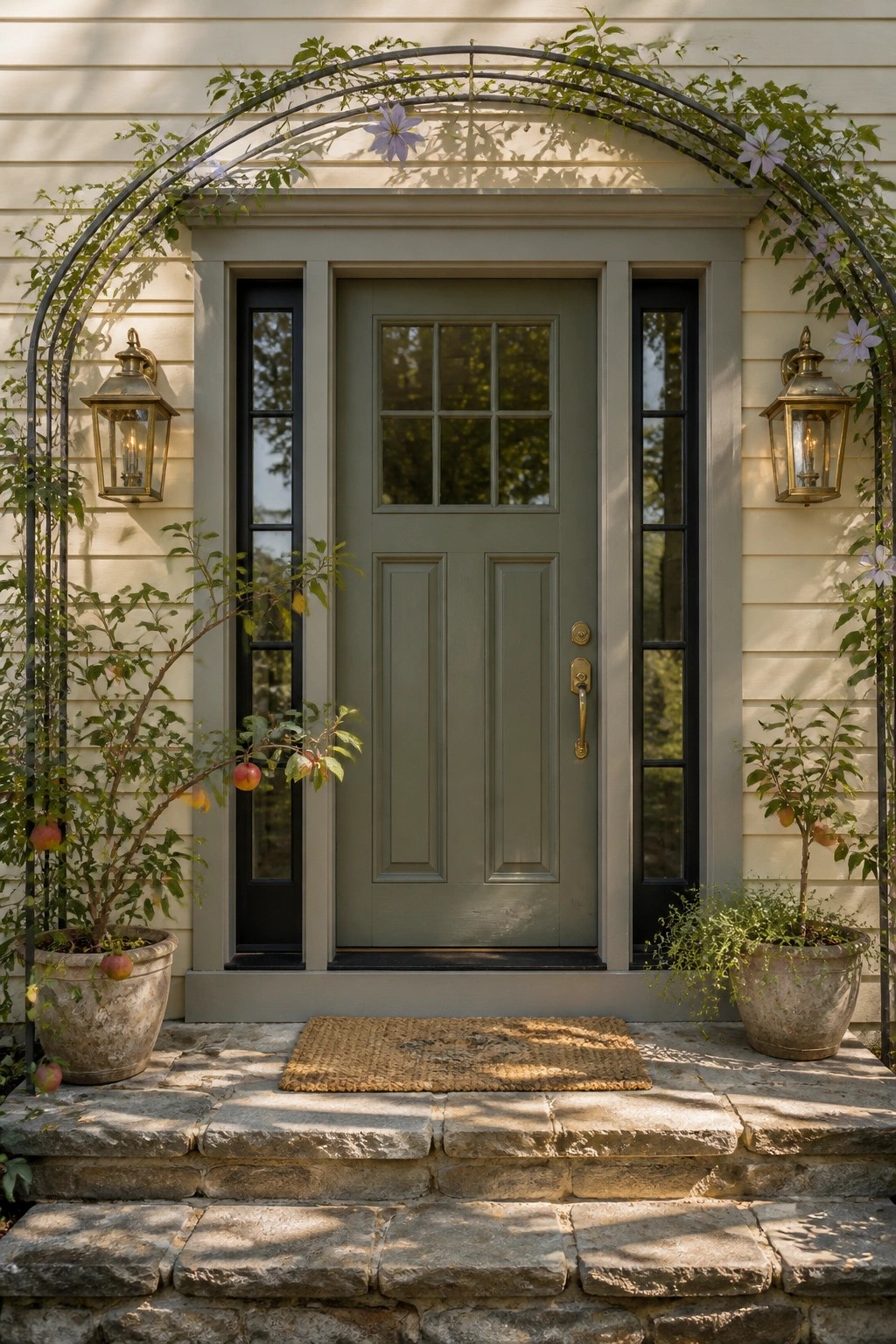
This soft sage green door brings a gentle neutral tone to a modern farmhouse exterior without feeling too bold or too washed out. It has that quiet gray-green balance that sits nicely against cream siding and stone. Colors like Sherwin Williams Evergreen Fog, Benjamin Moore Saybrook Sage, or Behr Dried Thyme read very close to this shade.
The gray undertone helps it stay calm next to warm whites and natural stone. It works best on homes with simple trim and black or brass hardware, and it tends to hold up well in changing outdoor light. Just test a sample first since greens can shift more than expected on larger surfaces.
Soft Blue Gray Siding
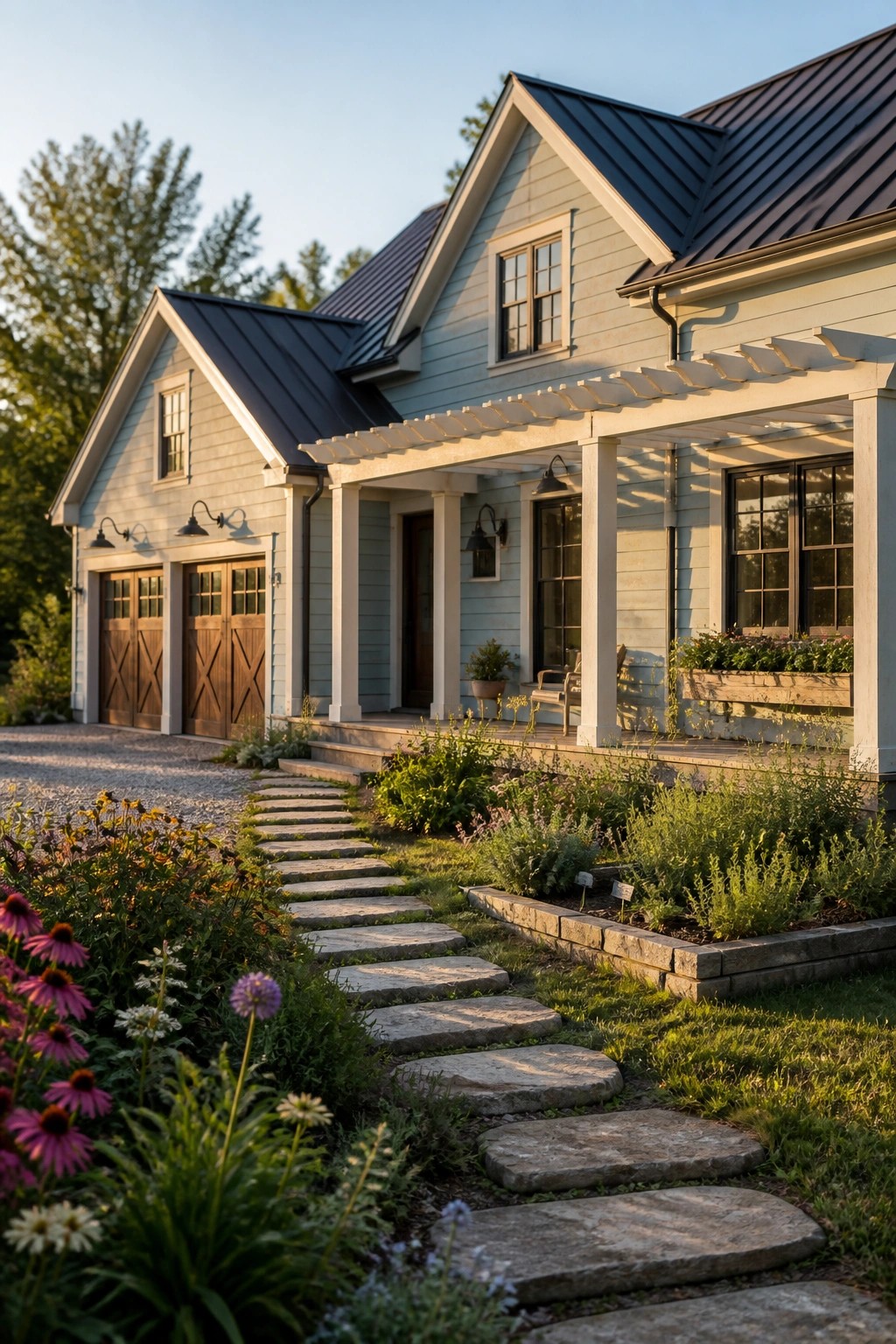
This soft blue gray siding gives the house a calm, slightly cool look that still reads neutral overall. It sits somewhere between gray and a very light blue, which helps it feel fresh without going too bold on a modern farmhouse. The color works especially well against the dark roof and warm wood tones on the garage doors.
It has a mild cool undertone that can lean a bit more blue in certain lights, so it pairs best with crisp white trim or black windows. Watch how it shifts next to greenery, since the blue hint can stand out more once plants fill in around the foundation.
Soft Sage Gray Siding
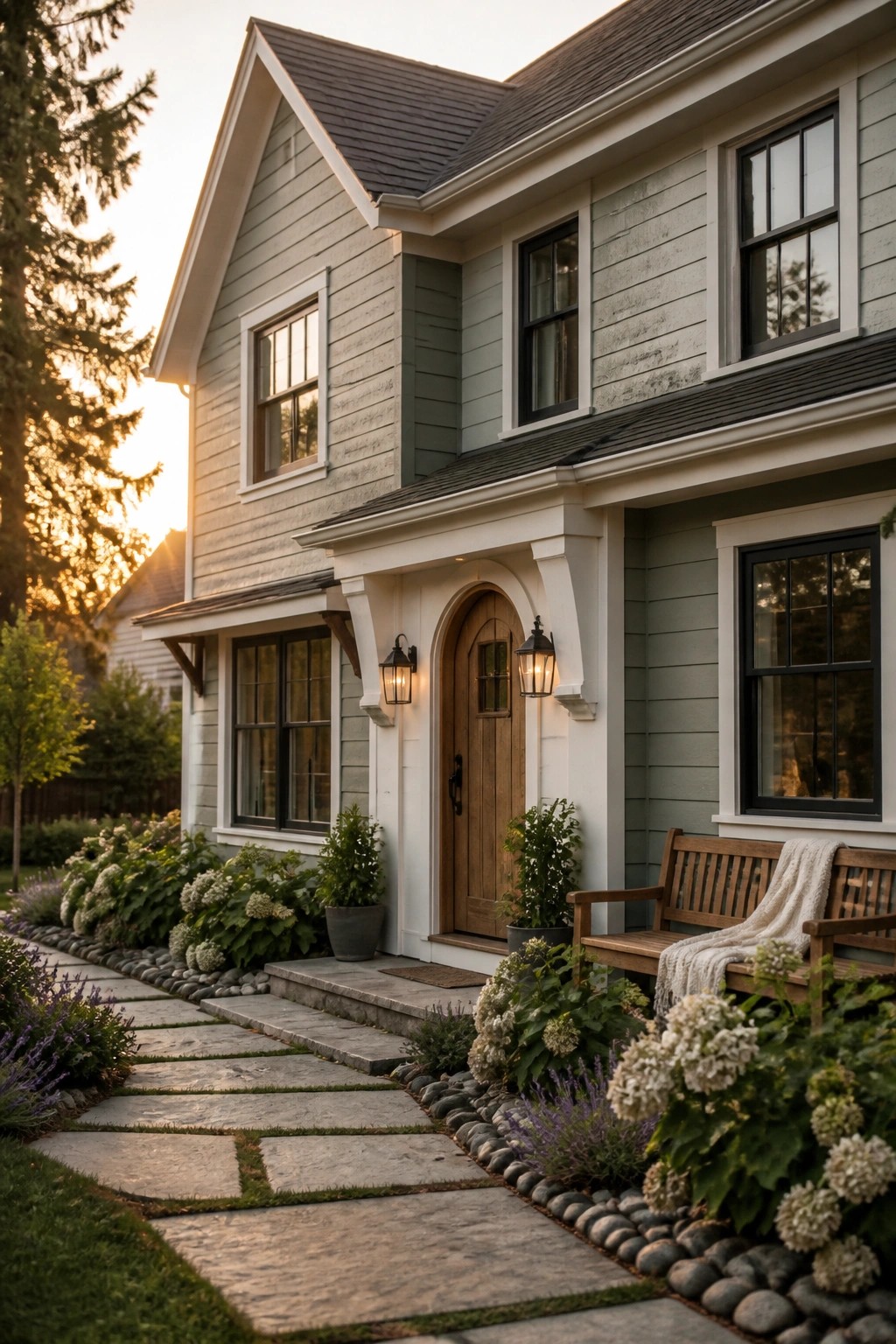
This soft sage gray gives the house a quiet, lived-in feel that still reads modern. It leans more green than pure gray but stays neutral enough to work on many farmhouse styles.
The undertone stays cool, so it looks best with warm white trim and dark window frames. It also sits nicely next to wood doors and stone paths without fighting them.
Frequently Asked Questions
Q: How do I test these soft neutrals on my house without committing right away? A: Grab a few sample quarts and paint large boards to lean against the siding. Check them at morning and afternoon light to see how they shift. This shows the true feel before you cover the whole exterior.
Q: My trim is already white. Does that limit which neutral I can pick for the main walls? A: It actually opens up most of the list since these shades sit nicely next to crisp white. Just avoid the very coolest tones if your white has any yellow undertones. The contrast stays clean and modern without extra work.
Q: Will one of these colors make my brick foundation look dated? A: Choose a neutral with a touch of taupe or greige to bridge the brick and siding. It pulls everything together so the foundation does not stand out as old. Keep the application consistent across both materials for the best flow.
