

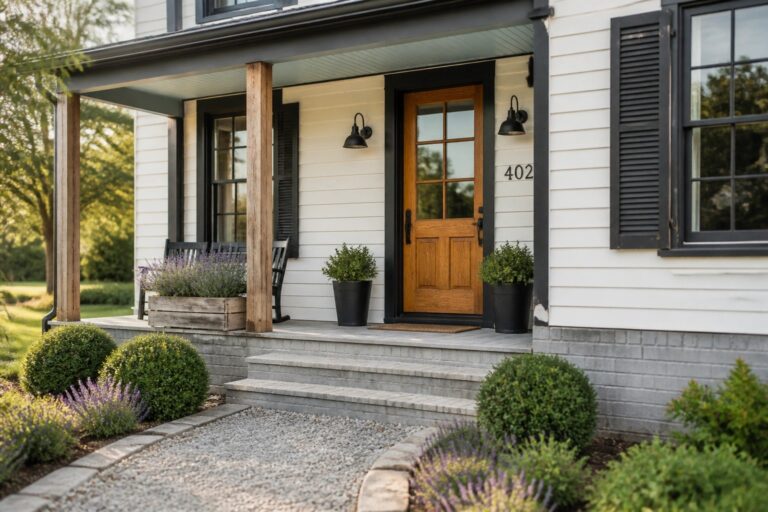
Choosing two tone colors for a farmhouse exterior requires paying attention to how they interact with the roof, windows, and any stone or brick details under varying sunlight.
What looks balanced in the morning can appear too stark or washed out by afternoon depending on the direction the house faces.
Samples help avoid that surprise.
I have seen colors that seemed perfect in the store turn muddy once applied next to landscaping and trim.
That is why I recommend checking them on the actual house at different times before making a final choice.
Crisp White Siding
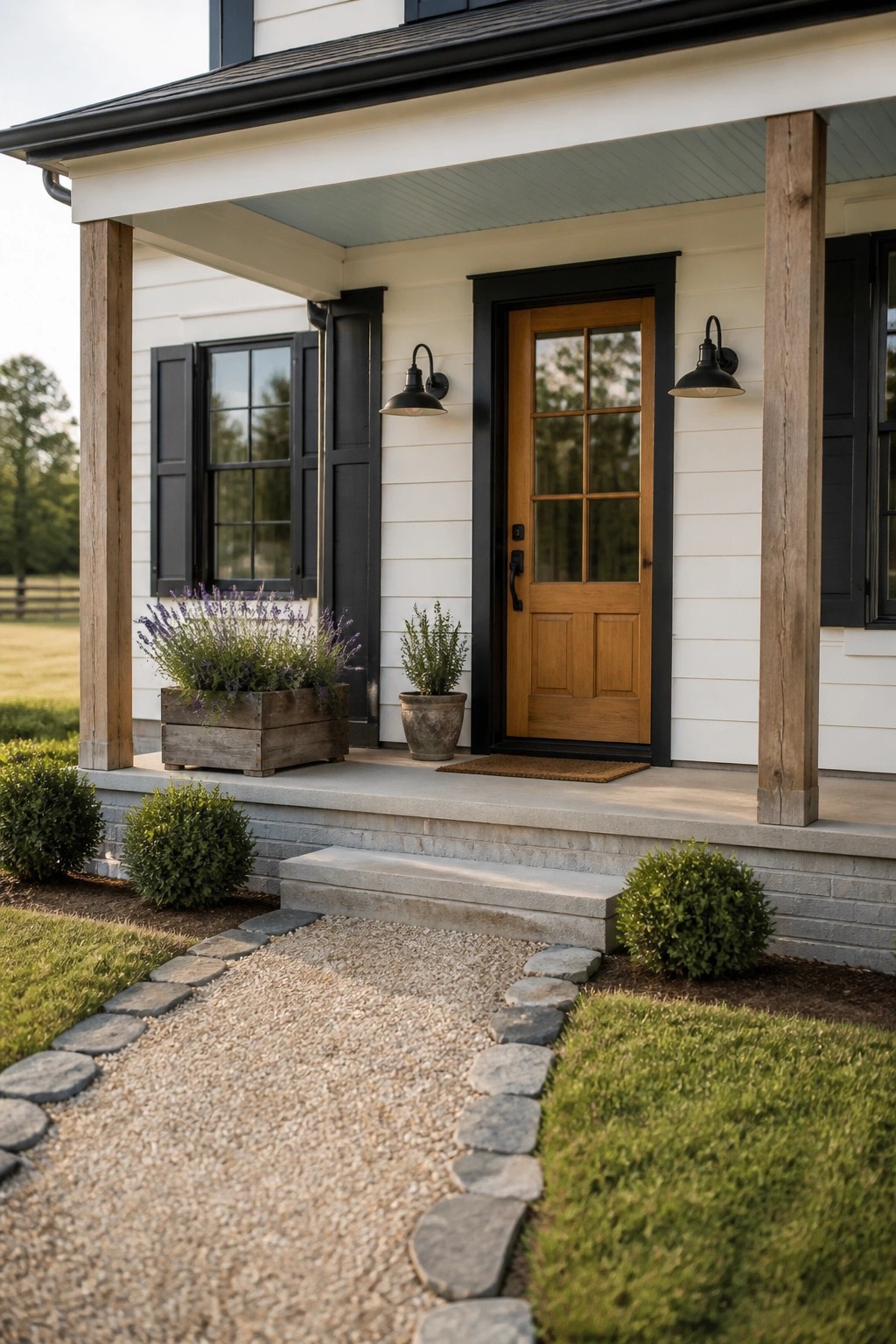
This house uses a bright white on the siding that feels clean without being harsh. It works as a simple base color for two-tone farmhouses and lets wood posts and stone stand out. Colors like Sherwin Williams Pure White or Benjamin Moore Chantilly Lace sit close to this shade.
It has a touch of warmth that keeps the white from turning blue in shade. It pairs easily with black trim and natural wood, but watch how it reads next to gray stone since the two can pull in slightly different directions.
Soft Sage Green Siding
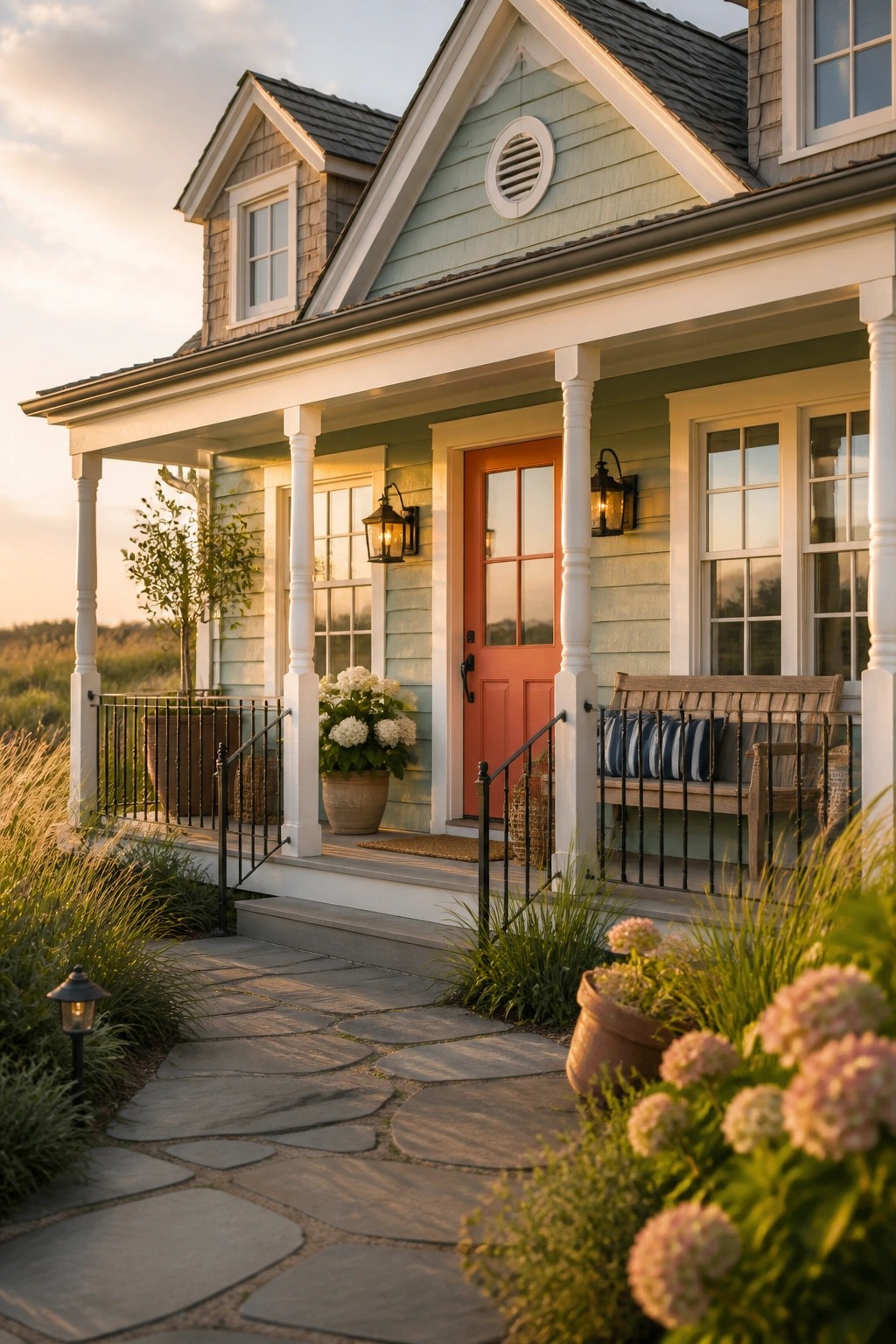
This soft sage green works well for farmhouse siding because it brings a calm, slightly blue-green tone that feels fresh but not stark. It sits in that middle ground between gray and green, which helps the color stay gentle even on larger surfaces.
The shade has cool undertones that pair best with bright white trim and natural wood details. It can shift a little greener or grayer depending on the light, so it is worth testing on the house before committing to the whole exterior.
Warm Greige Siding
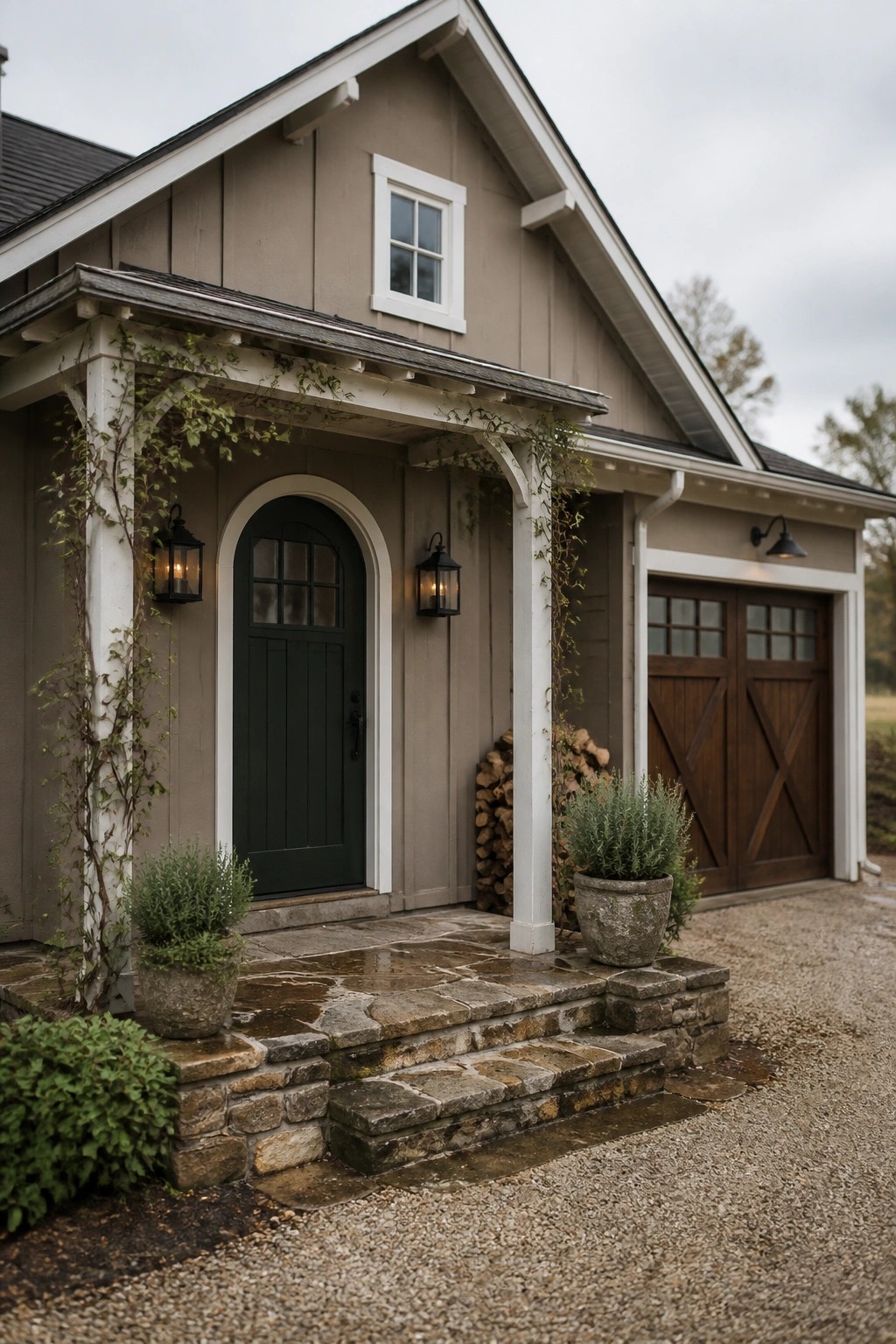
This siding color is a soft greige that leans slightly warm. It sits between gray and beige without going too far in either direction, which makes it easy to live with on a farmhouse. Colors in this range tend to feel steady next to wood and stone.
It looks closest to Sherwin Williams Accessible Beige or Benjamin Moore Revere Pewter. The warmth helps it sit nicely with white trim, though it can shift cooler in flat light so a test patch on the wall is worth doing before committing.
Pale Yellow Siding
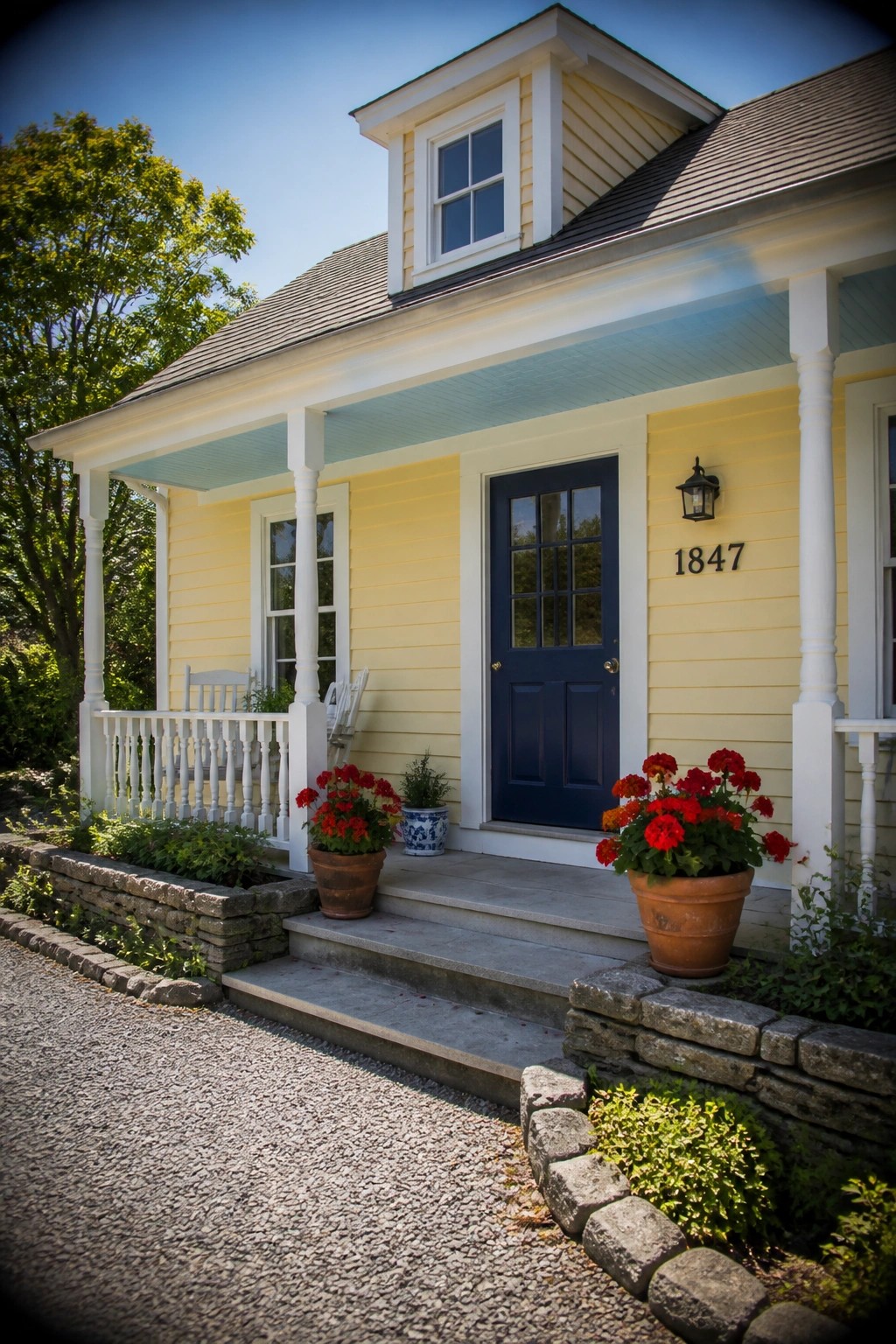
A pale yellow like this gives a farmhouse exterior a soft, sunny feel without turning too bright. It reads close to Benjamin Moore Hawthorne Yellow, Sherwin Williams Daffodil, Behr Summer House, and Farrow & Ball Yellow Ground in a lighter tone.
The color carries a gentle warm undertone that stays steady next to white trim. It works best on simple homes where the siding can pick up light from open sky rather than heavy shade.
Warm Sage Green Siding
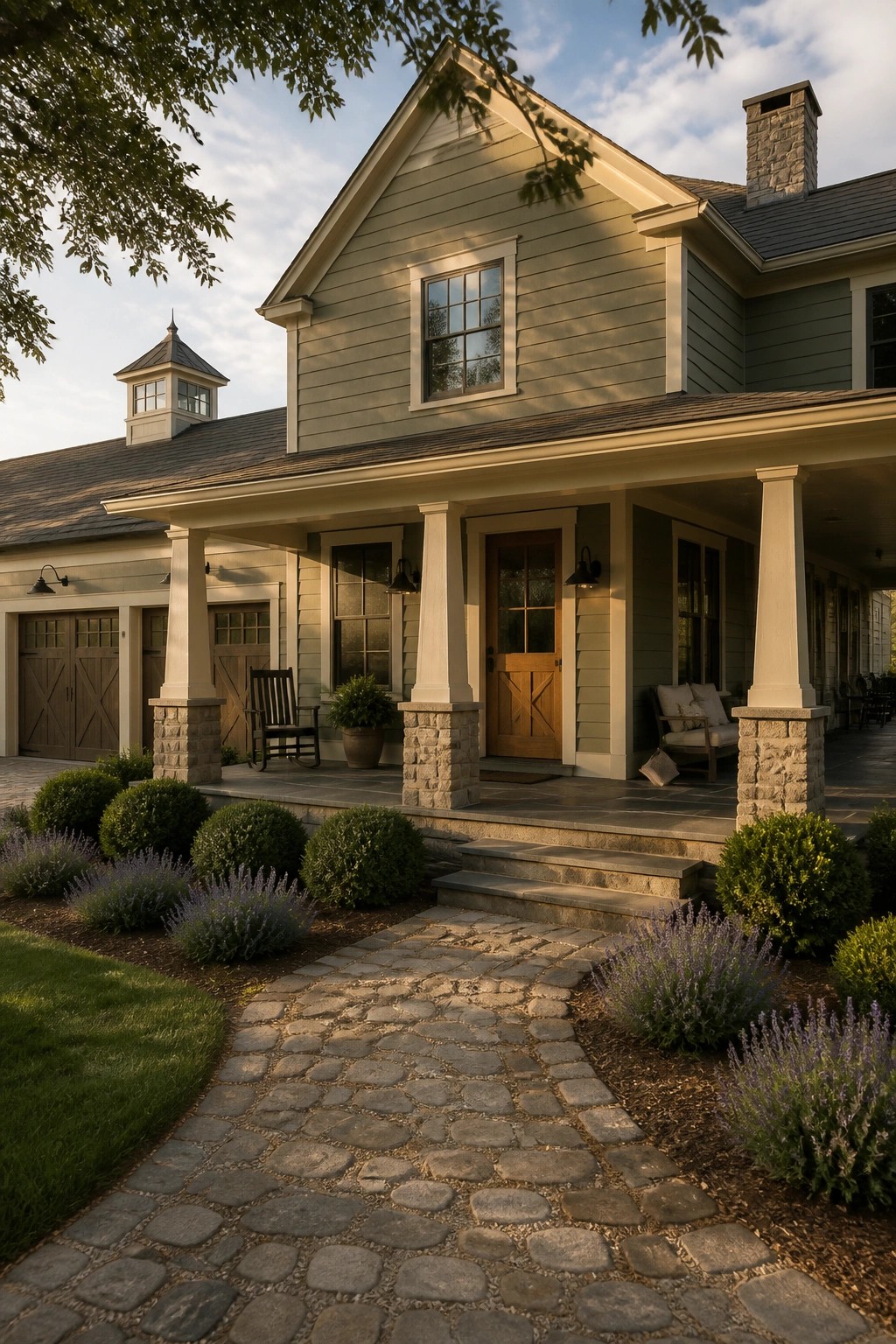
A soft sage green like this one gives farmhouse siding a calm, slightly earthy feel without looking too bold. It sits between gray and green with just enough warmth to keep the house from feeling cold or flat. Colors that come close include Sherwin Williams Evergreen Fog, Benjamin Moore Saybrook Sage, and Behr Aged Sage.
It works well with warm white trim and stone details since those keep the green from reading too cool. The color can shift a little depending on the light, so it helps to test a larger sample on the actual wall before committing.
Dark Navy Siding
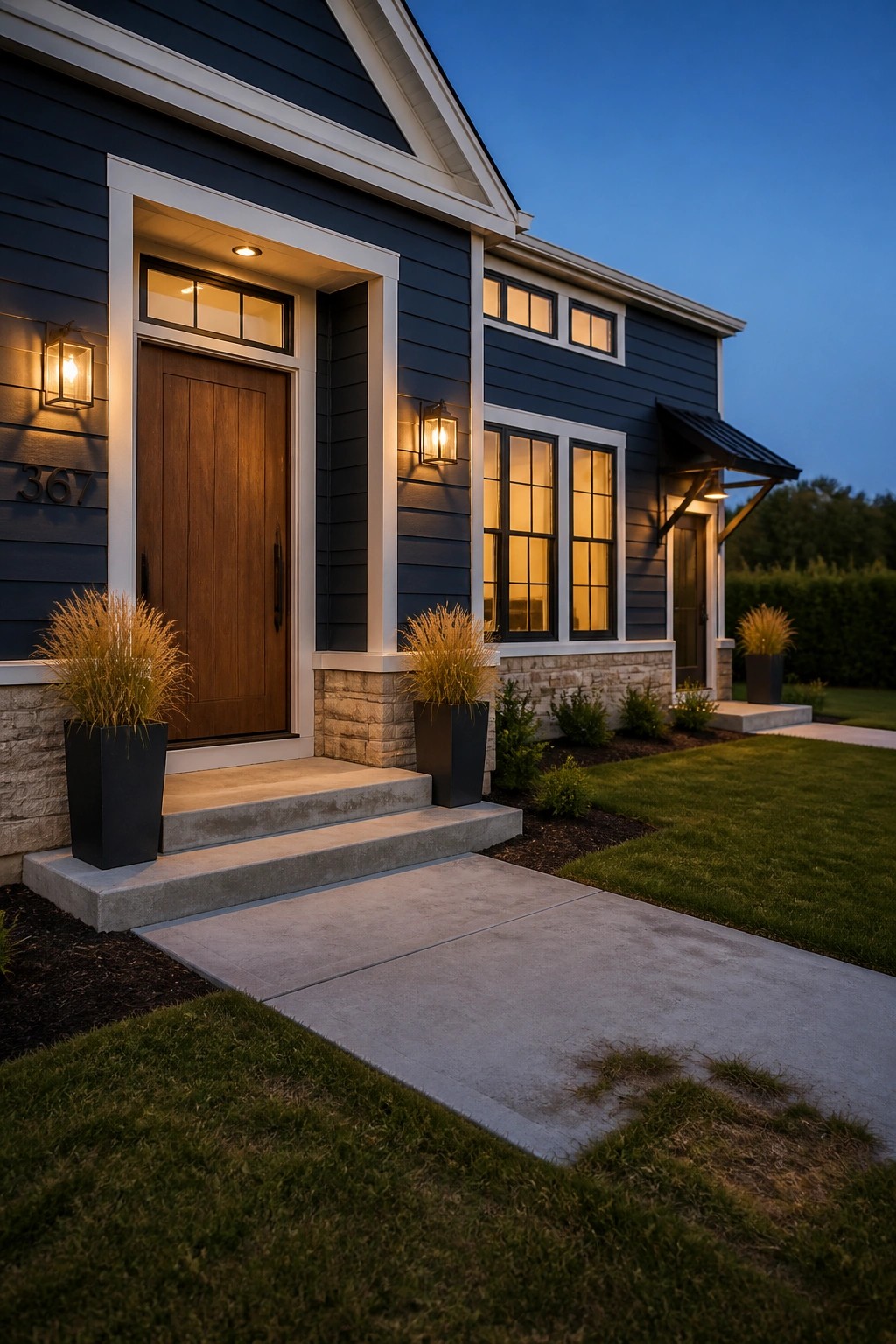
This dark navy blue siding gives the house a solid, traditional feel that still reads fresh. It sits in a cool blue family with a touch of gray that keeps it from looking too bright or flat outside.
It works best on homes with white trim and lighter stone bases. Sherwin Williams Naval, Benjamin Moore Hale Navy, Behr Midnight Blue, or Farrow & Ball Hague Blue all land close to this shade. The color holds up well next to natural wood doors and green landscaping.
Soft Blue Gray Siding
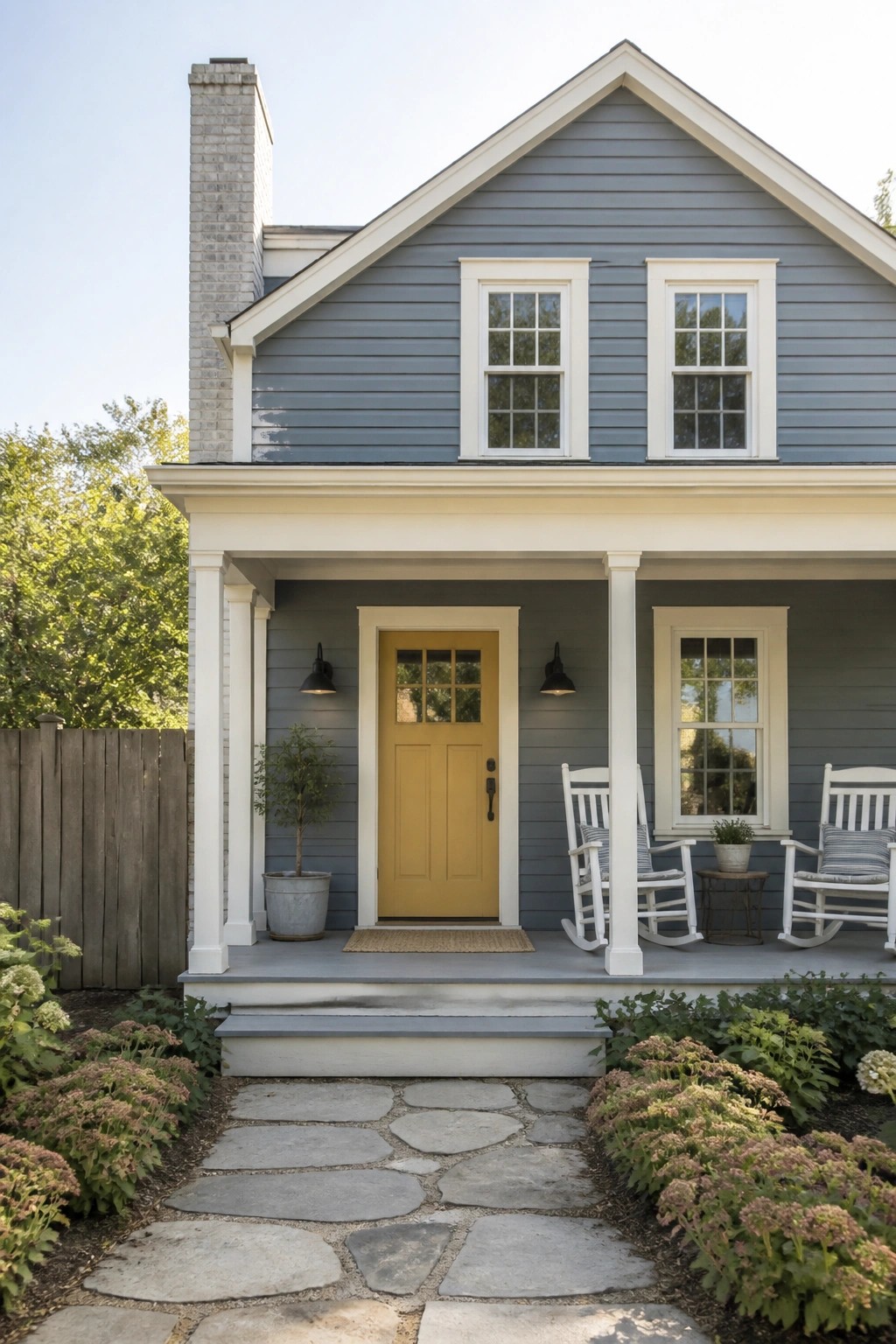
This blue gray siding gives the house a calm, steady look without feeling too cold. It sits right in the middle between gray and blue, which makes it easy to use on older farmhouses that already have some character.
The color works best with white trim and simple details around the windows and porch. It can shift a bit depending on the light, so testing a sample on the actual wall helps avoid surprises once it is up.
Soft Greige Siding
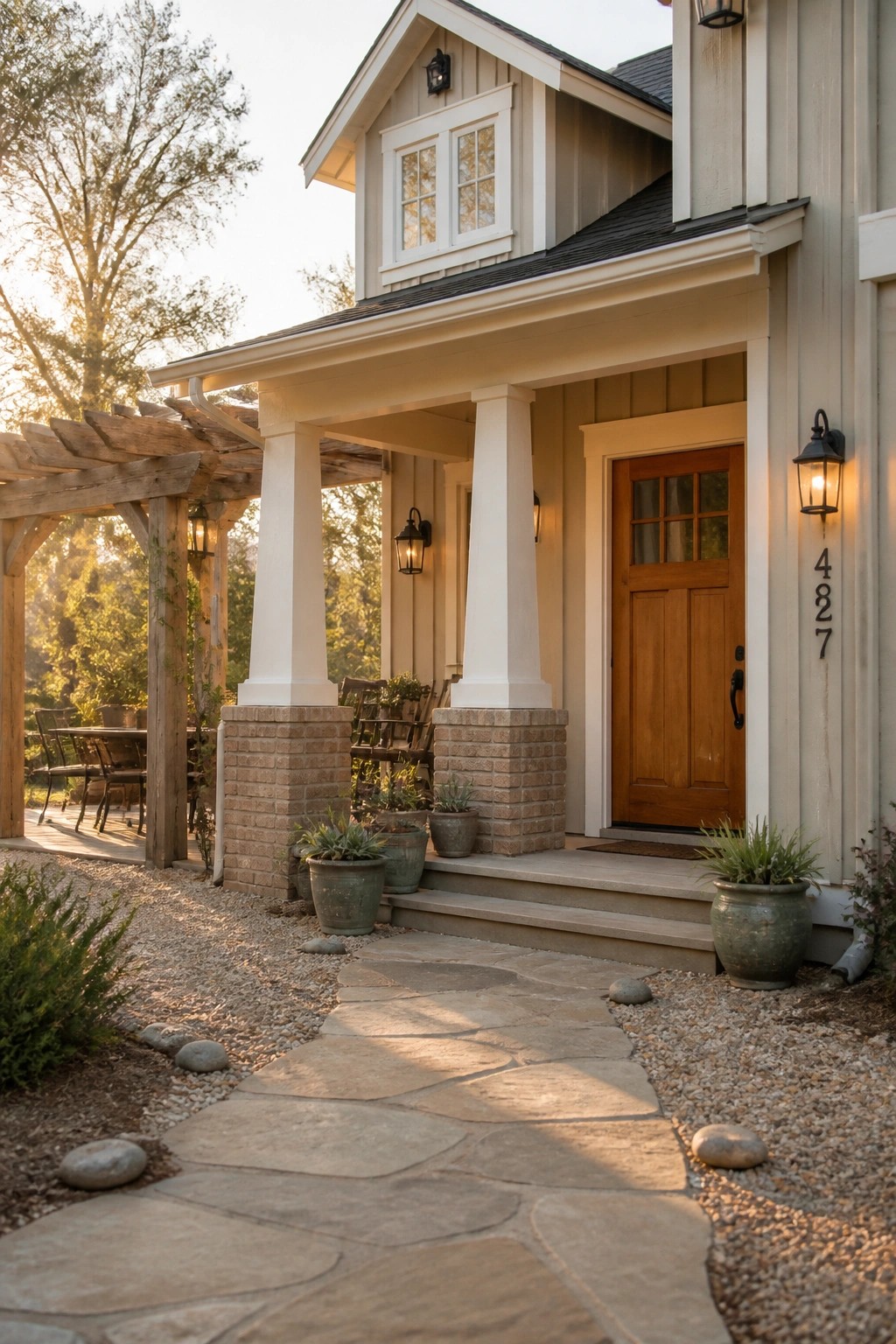
This house uses a light greige on the siding. It is a warm neutral gray with a touch of beige that keeps the whole exterior from feeling too cool or stark. Many people like it because it works well with both white trim and natural materials like stone or wood.
The color has a soft undertone that shifts a little depending on the light. It pairs nicely with white columns and brick bases without competing. Try something close to Sherwin Williams Agreeable Gray, Benjamin Moore Edgecomb Gray, or Behr Silver Strand if you want a similar look on your own house.
Bright White Siding with Black Accents
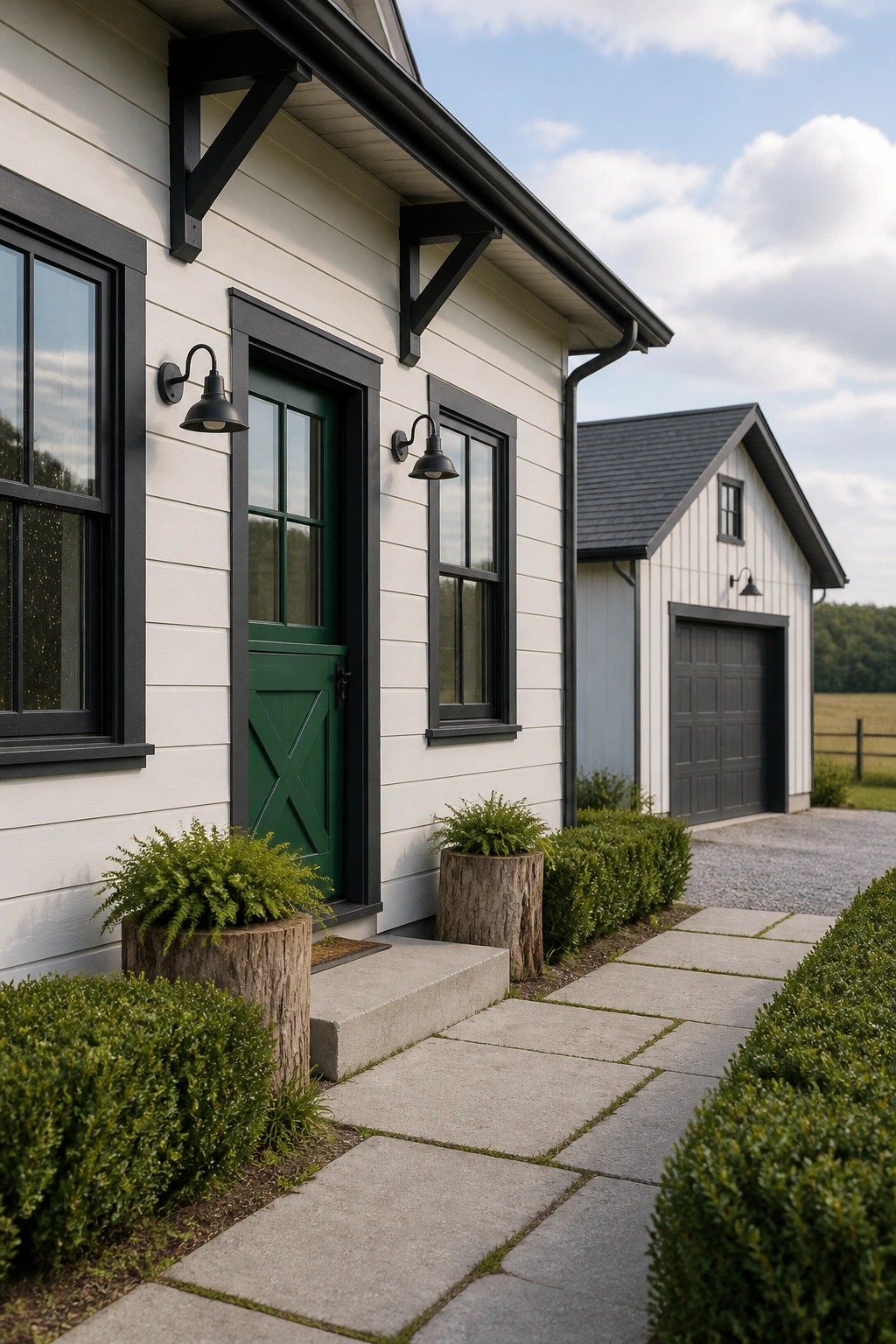
A crisp white covers the main siding here. It reads as a clean, slightly bright white that works well for two tone farmhouse exteriors because it stays light without feeling stark next to darker accents.
This shade pairs easily with black trim and windows. It also handles a charcoal roof without looking too cool, though it can show dirt faster on lower sections near the ground.
Warm Coral Siding
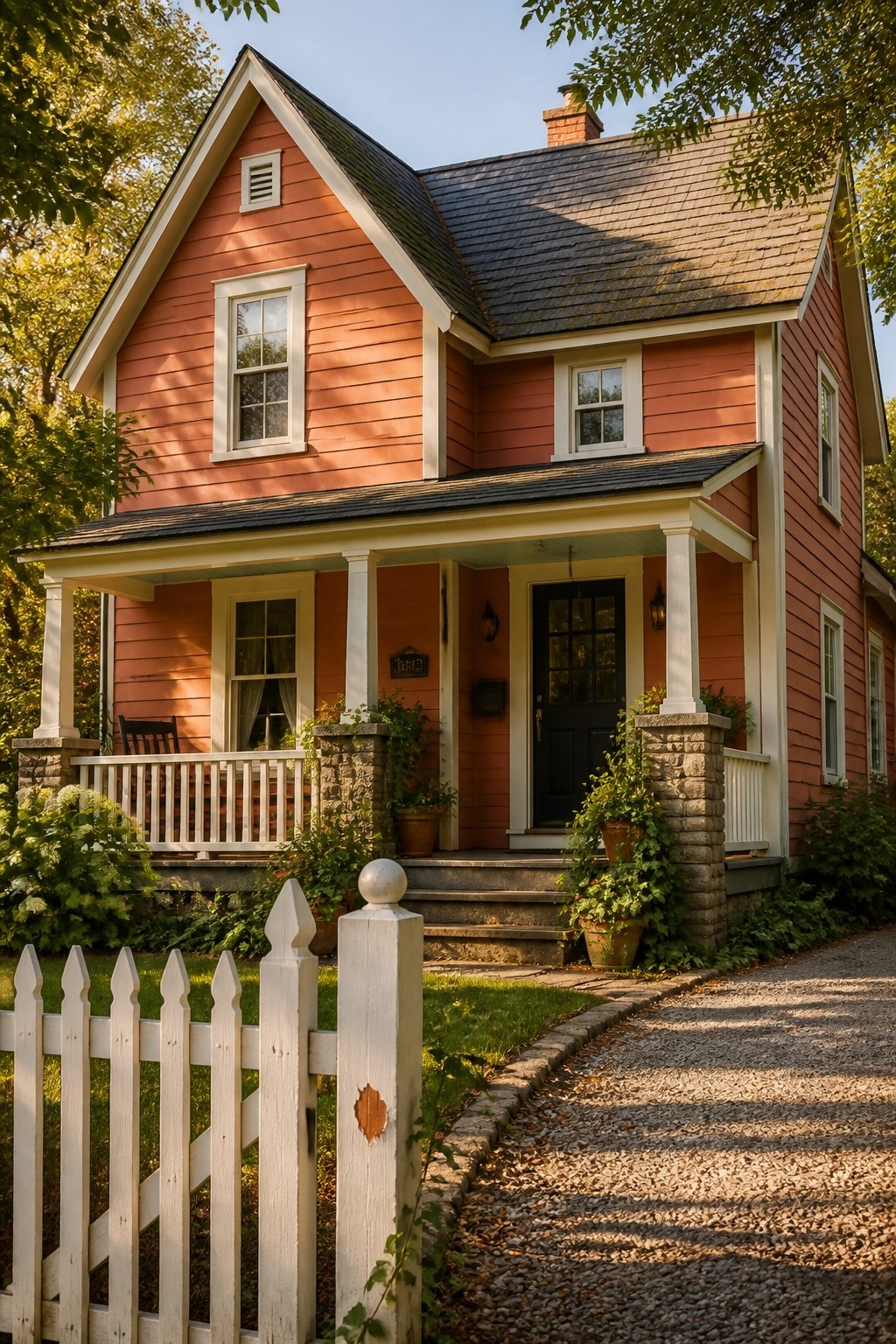
This warm coral shade on the siding sits between a soft pink and a muted orange. It gives the house a gentle, welcoming feel without looking too bright or too faded.
The color has a slight terracotta undertone that holds up well next to white trim and darker roofing. It works best on traditional farmhouses or cottages where you want something a little different from plain white or gray. Samples are worth testing because the warmth can shift depending on the light and what sits beside it.
Accessible Beige Greige Siding
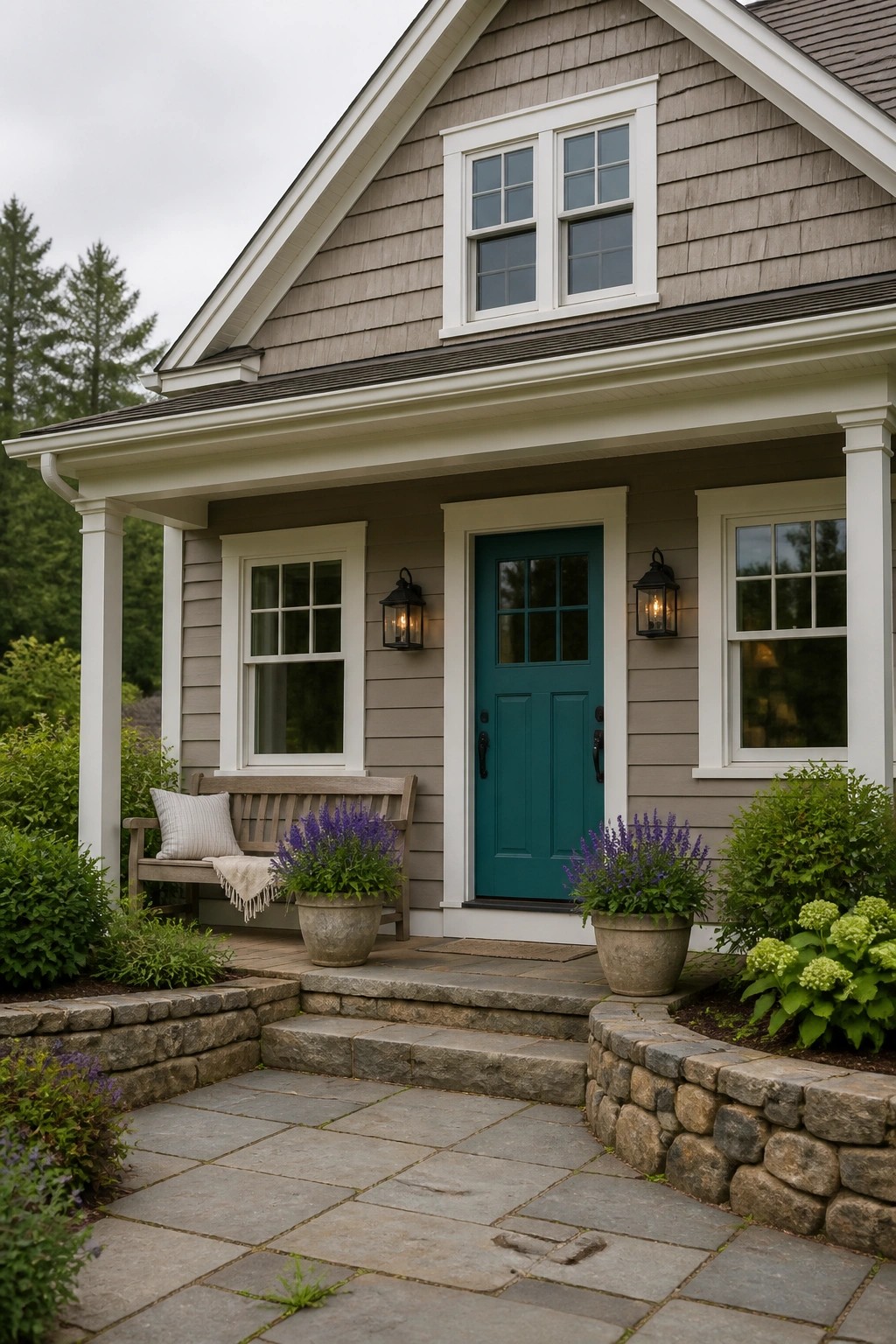
This greige siding sits in that useful middle ground between gray and beige. It gives the house a quiet, updated look that still feels grounded. Colors like Sherwin Williams Accessible Beige, Benjamin Moore Revere Pewter, or Behr Dried Thyme read very close to this tone.
The slight warmth keeps it from feeling flat next to stone and white trim. It works best on homes that already have natural textures nearby, and it holds up well in changing light.
Dark Charcoal Siding
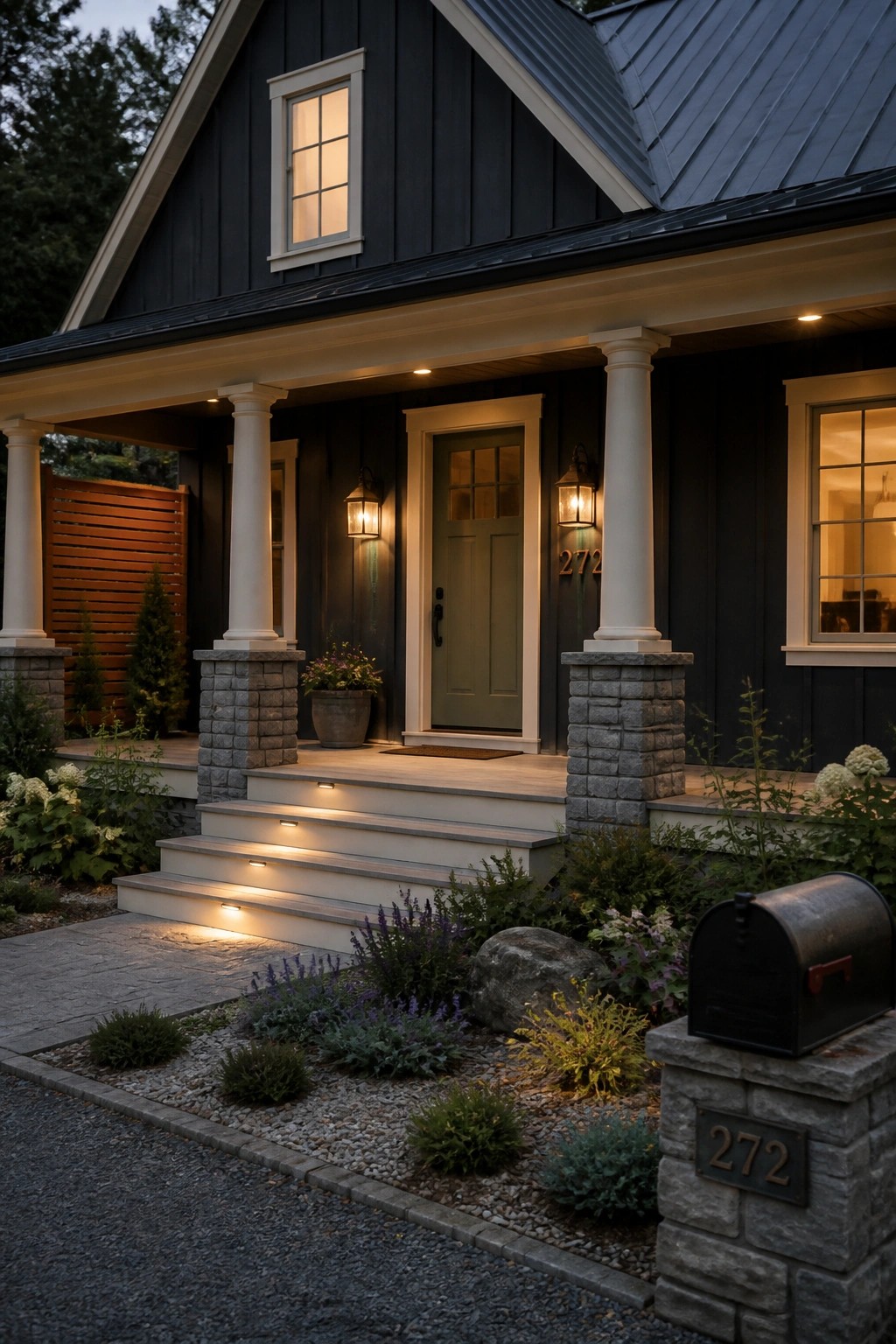
This deep charcoal on the siding gives the house a solid, grounded look. It reads closest to Sherwin Williams Tricorn Black or Benjamin Moore Black, with just enough gray in it to keep the color from turning flat in daylight.
The tone works best against light trim and stone bases. It holds up outdoors without fading fast, though it can feel heavy if the roof and accents are all dark too.
Light Blue Gray Siding
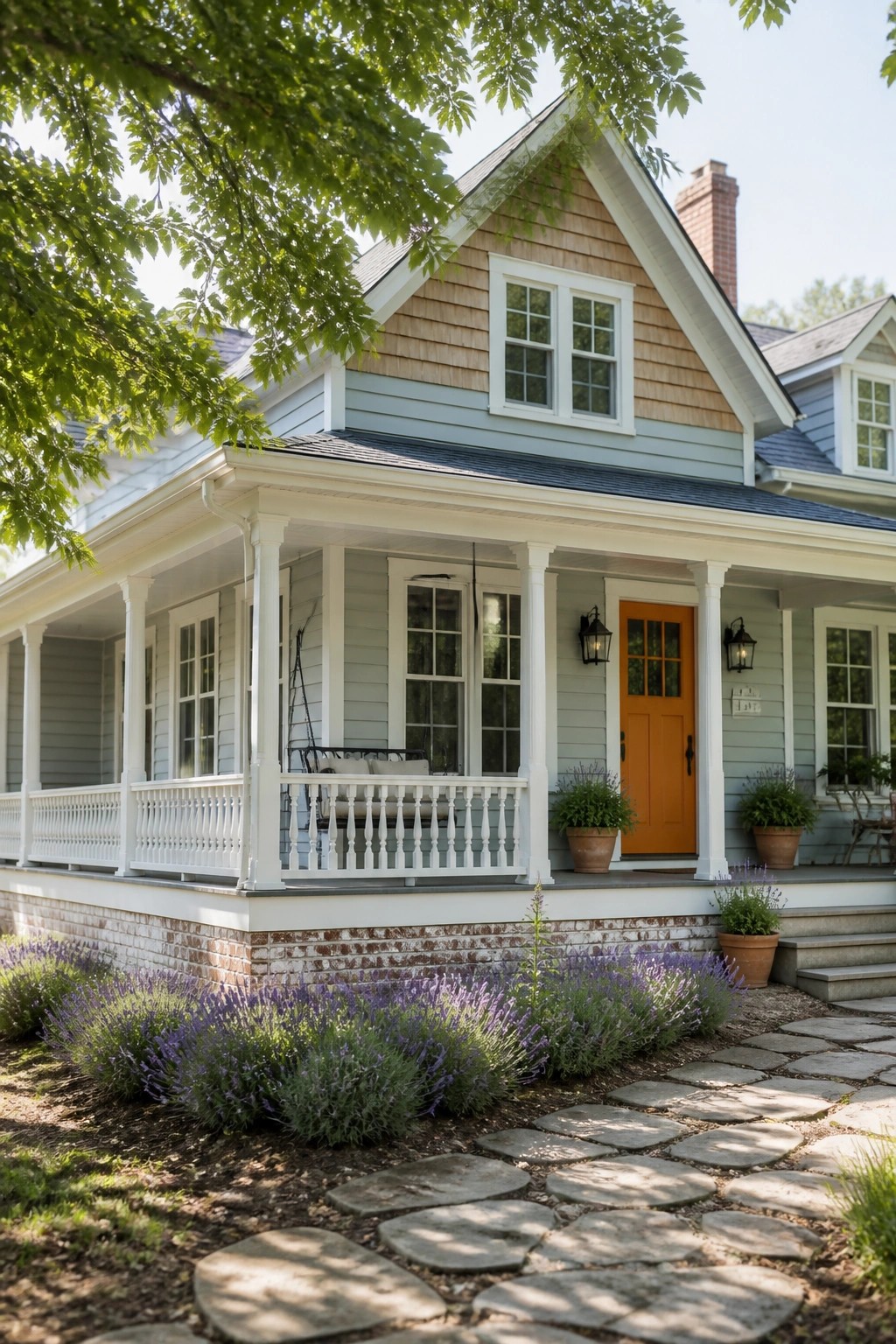
This light blue gray siding gives a farmhouse a quiet, updated look without going too dark or too stark. It reads as a cool soft gray with a hint of blue and works especially well on homes that already have white trim. It looks closest to Sherwin Williams Silver Strand or Benjamin Moore Gray Owl, with Behr Whisper as another close option.
The color stays calm next to brick and stone and does not fight with the roof. It suits older homes that need a gentle refresh rather than a full overhaul. Just test it on a large patch first since the blue can shift a little depending on the light.
Soft white siding
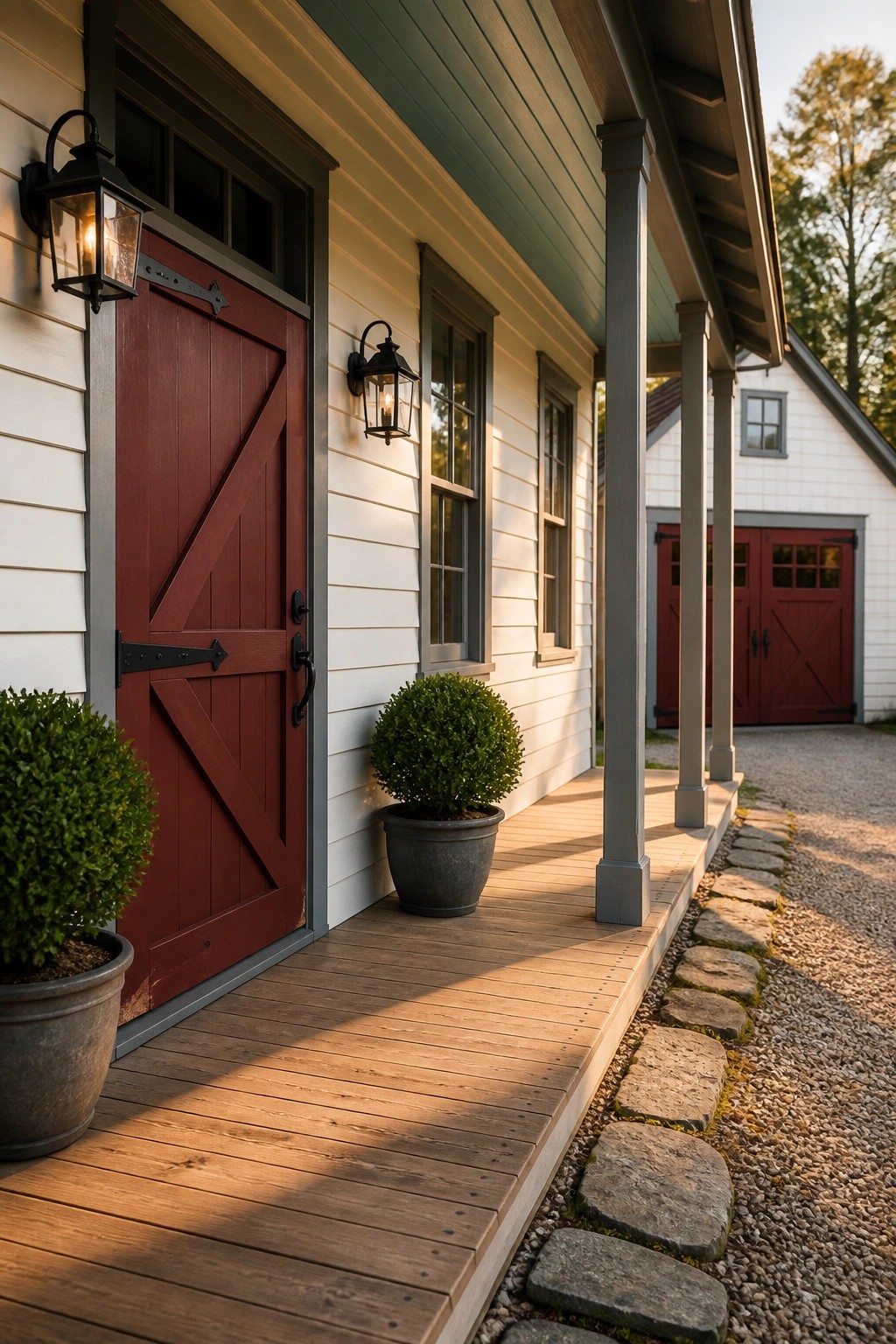
This siding color is a warm white that feels soft rather than stark. It gives the house a clean look while still working with the red door and gray trim that show up in many two-tone farmhouses. The slight warmth helps the whole exterior feel settled instead of too bright.
It sits nicely next to gray posts and wood tones without fighting them. On an overcast day it can read a touch creamier, so testing a sample on the actual wall is worth it before committing. Good matches to consider are Sherwin Williams Alabaster, Benjamin Moore Cloud White, Behr Swiss Coffee, or Farrow & Ball Wimborne White.
Soft Sage Siding
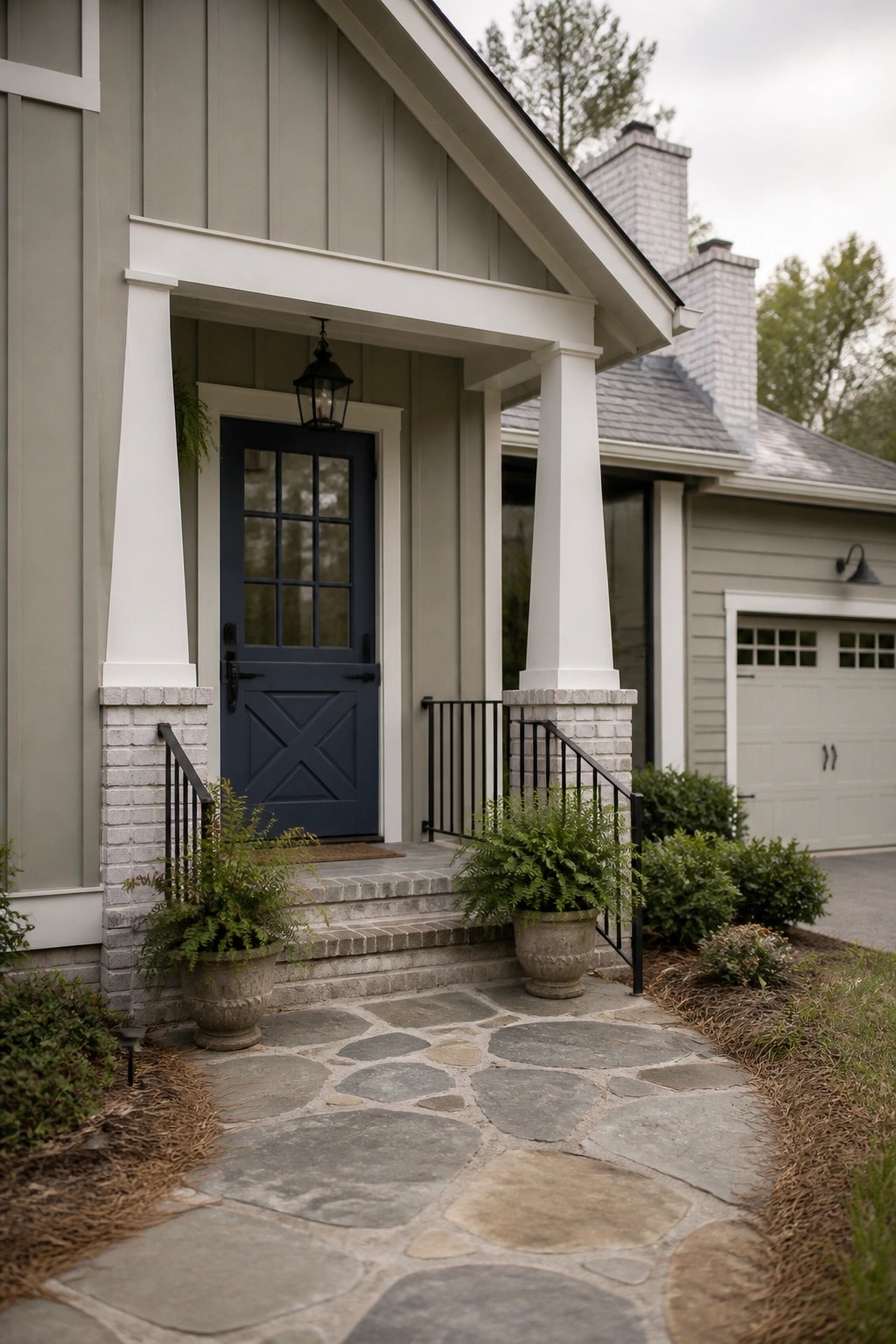
A muted sage gray works well on two tone farmhouse exteriors. This color sits in a soft green gray range and gives the house a calm look without pulling too cool or too warm.
It holds up nicely next to white trim and stone details. Sherwin Williams Evergreen Fog or Benjamin Moore Saybrook Sage come close, as does Behr Aged Sage.
Cool Blue Gray Farmhouse Siding
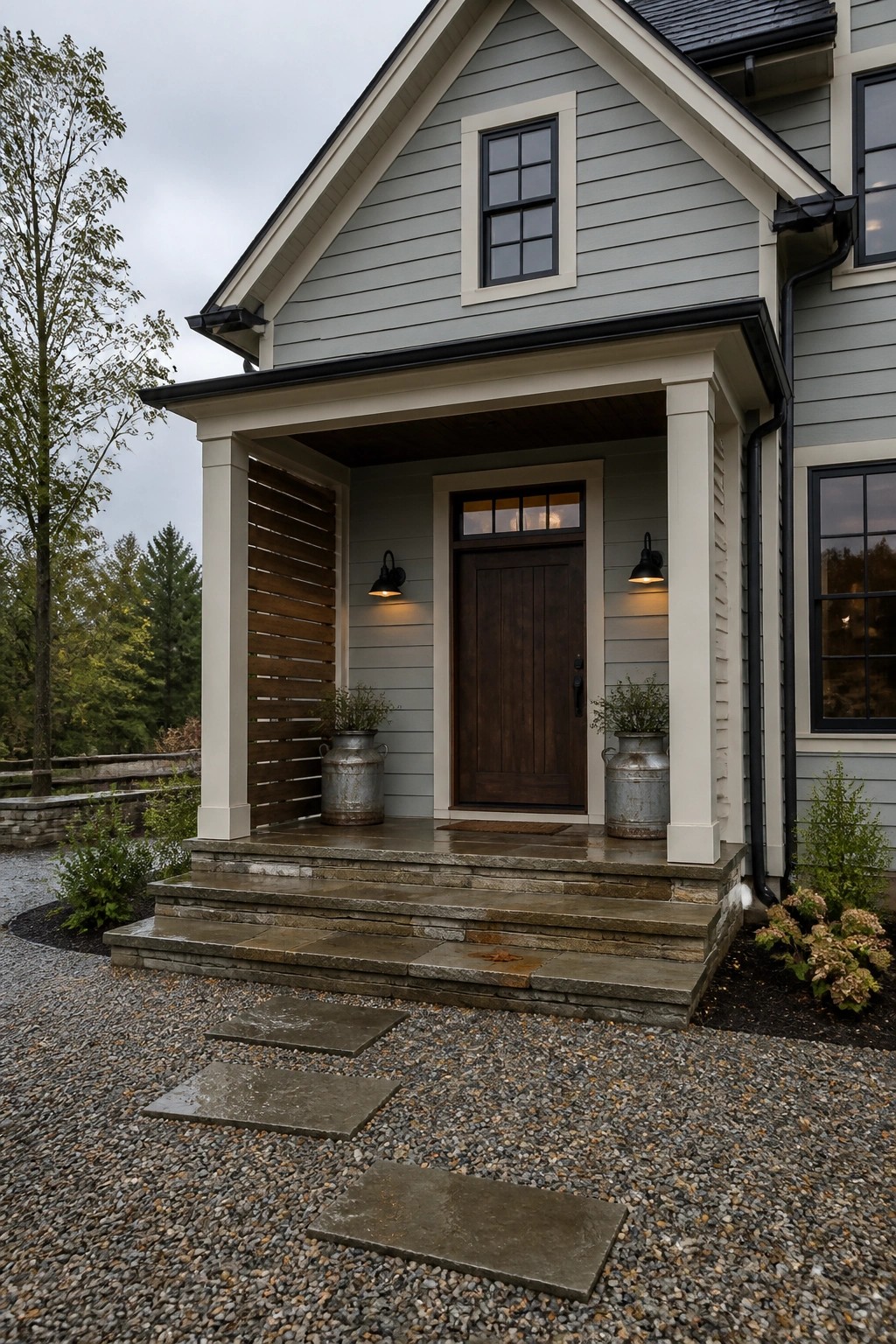
This cool gray siding has a quiet blue undertone that keeps the whole house feeling calm and a little modern. It reads as a soft blue gray rather than a flat neutral, which helps it sit nicely next to the white trim and darker roof without looking too stark.
The color works best on homes that already have some wood or stone nearby, since those warmer textures stop it from feeling chilly. It can lean a little more blue in bright light, so testing a sample on the actual wall is worth doing.
Soft Yellow Siding
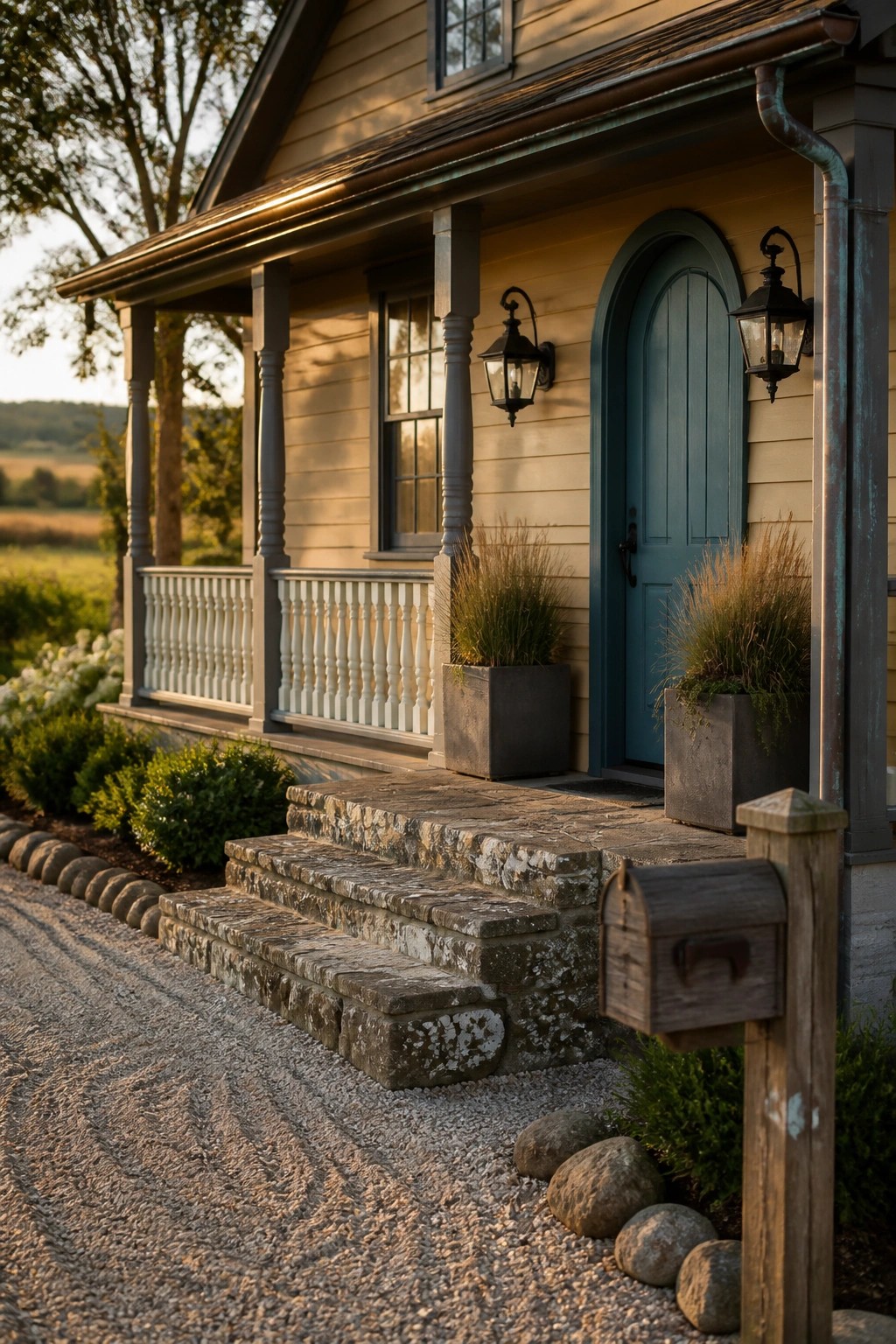
This farmhouse uses a soft yellow on the siding that sits between cream and pale gold. The color brings a gentle warmth that feels right for older homes without looking too bright or washed out.
It has a light warm undertone that works well with gray trim and stone. Try it on similar wood siding if you want something friendly that still reads as classic farmhouse. Colors like Sherwin Williams Buttercup, Benjamin Moore Hawthorne Yellow, Behr Sunflower Seed, or Farrow & Ball Yellow Ground give a close feel.
Gray Green Sage Siding
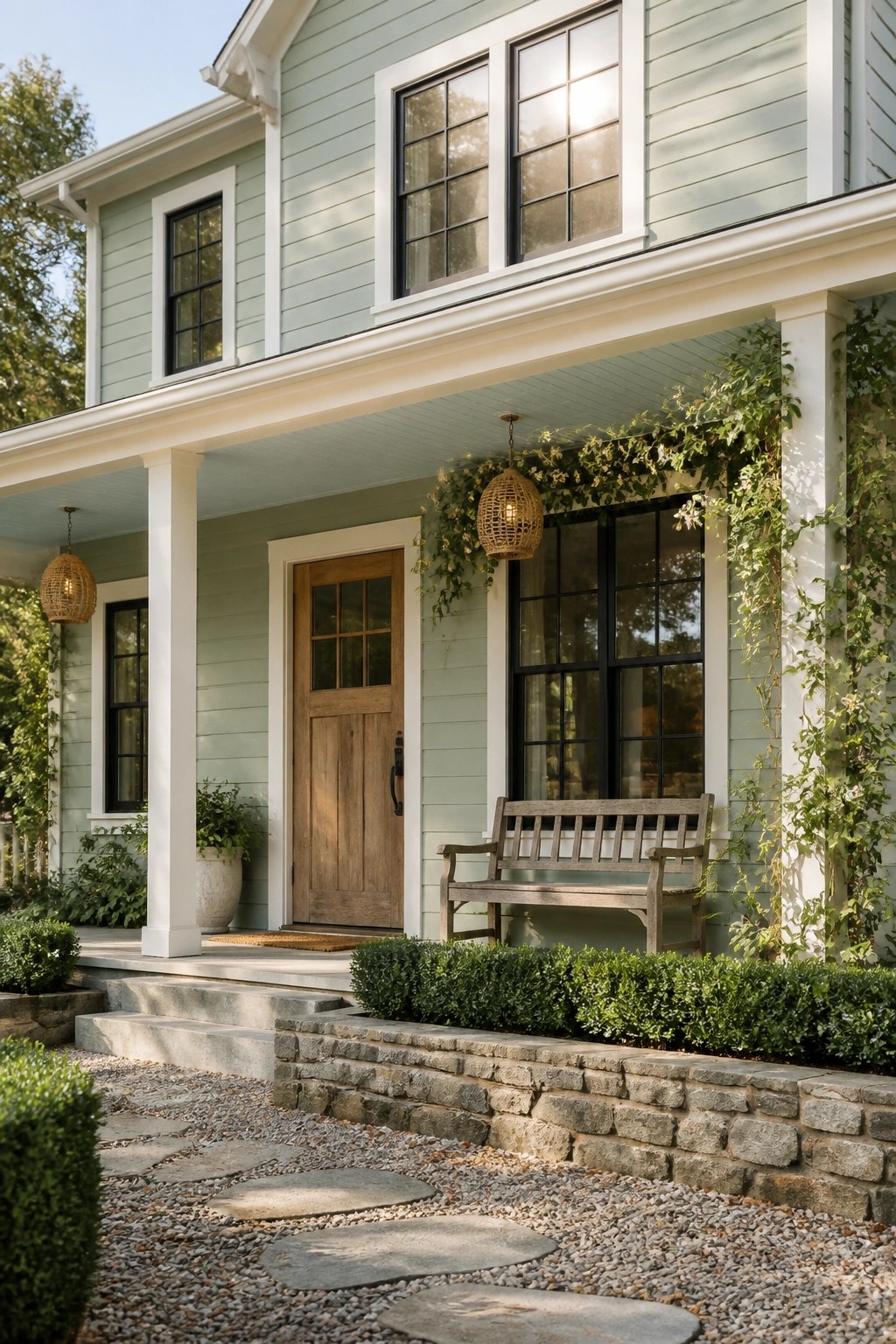
A soft sage green on the siding gives this farmhouse a calm, lived-in look. The color sits somewhere between green and gray, which keeps it from feeling too bold or too washed out. It reads closest to Sherwin Williams Clary Sage, Benjamin Moore Saybrook Sage, or Behr Aged Sage.
This shade works best on homes with white trim and natural wood accents because the gray undertone helps everything blend without clashing. It can look a little flat in deep shade, so most people use it where it gets steady daylight. Stone at the base helps ground the color even more.
Muted Gray Green Siding
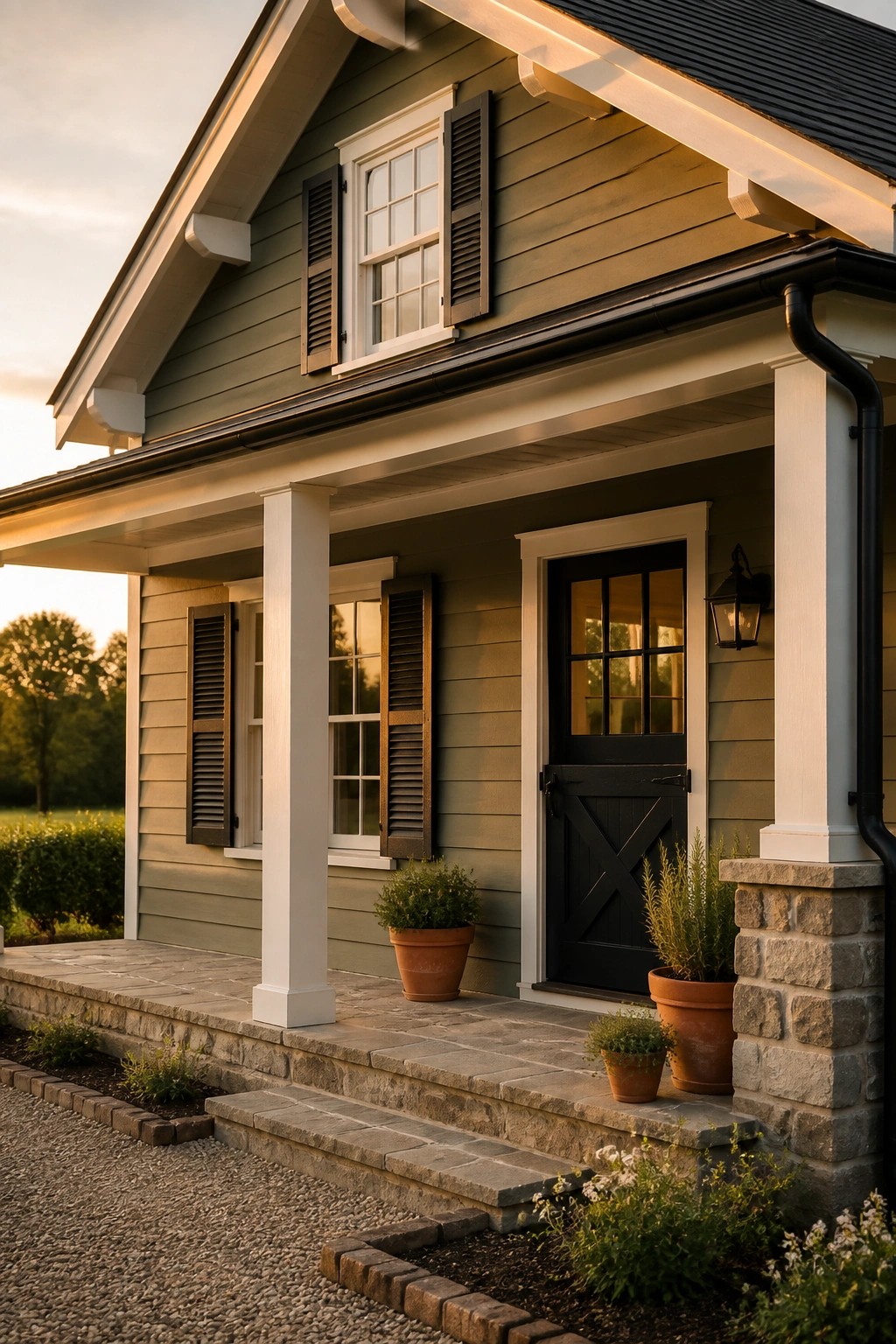
This muted sage green on the siding gives a farmhouse that settled, easy look without feeling too bold. It sits in a gray-green range that stays calm next to white trim and reads softer than a true green.
The color has a light warm undertone that helps it work with stone and dark accents. It holds up well in changing light and pairs best with simple trim and natural materials rather than busy details.
Muted Blue Gray Siding
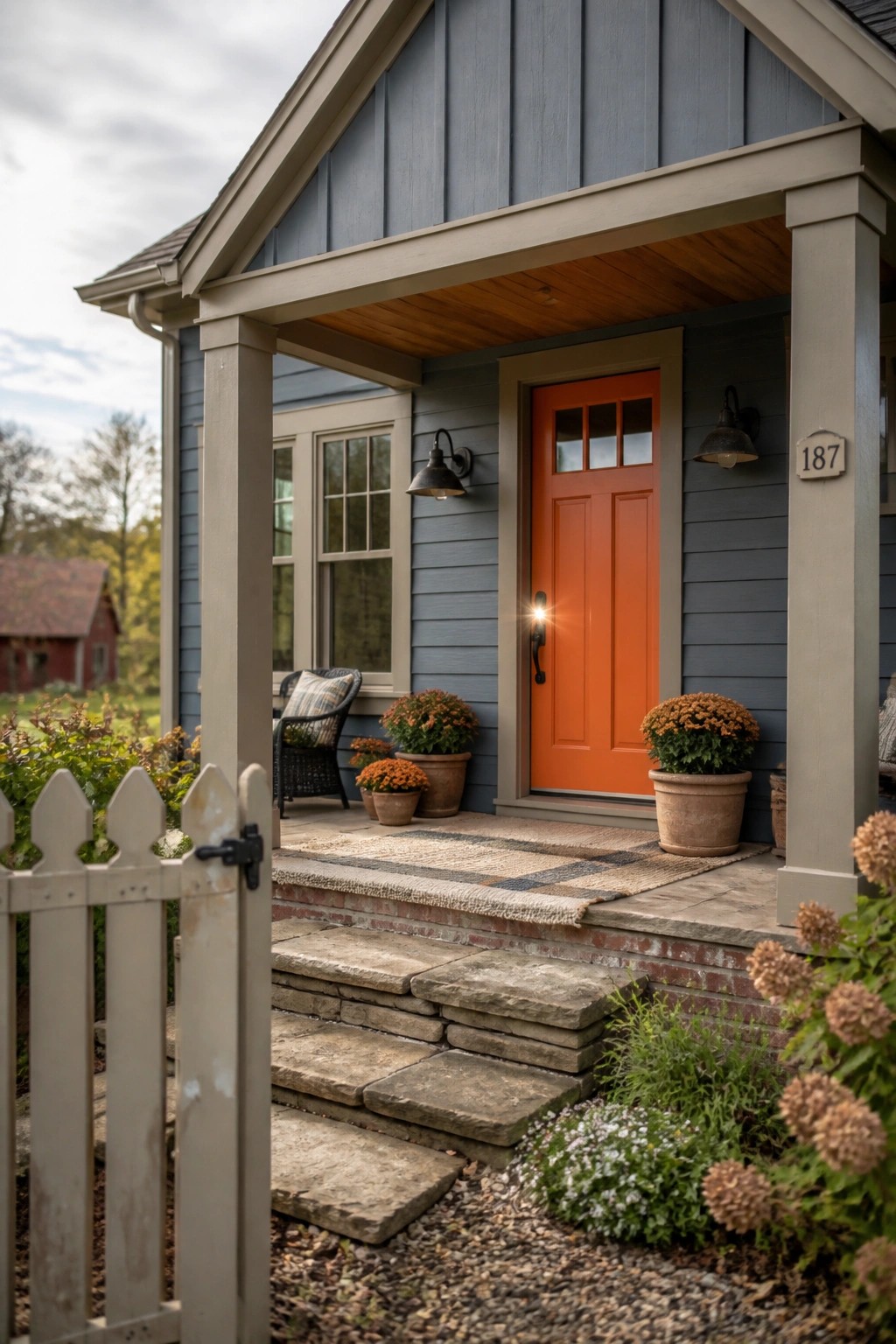
A muted blue gray works well on farmhouse siding because it feels calm without looking flat. This color family shows up in shades like Sherwin Williams Rainwashed, Benjamin Moore Wythe Blue, Behr Soft Rain, and Farrow & Ball French Gray. It sits nicely next to wood ceilings and brick steps.
The cool undertone comes through more in shade, so it helps to test it on a north facing wall first. Pair it with warm trim or natural stone to keep the whole look balanced.
Green Trim on White Siding
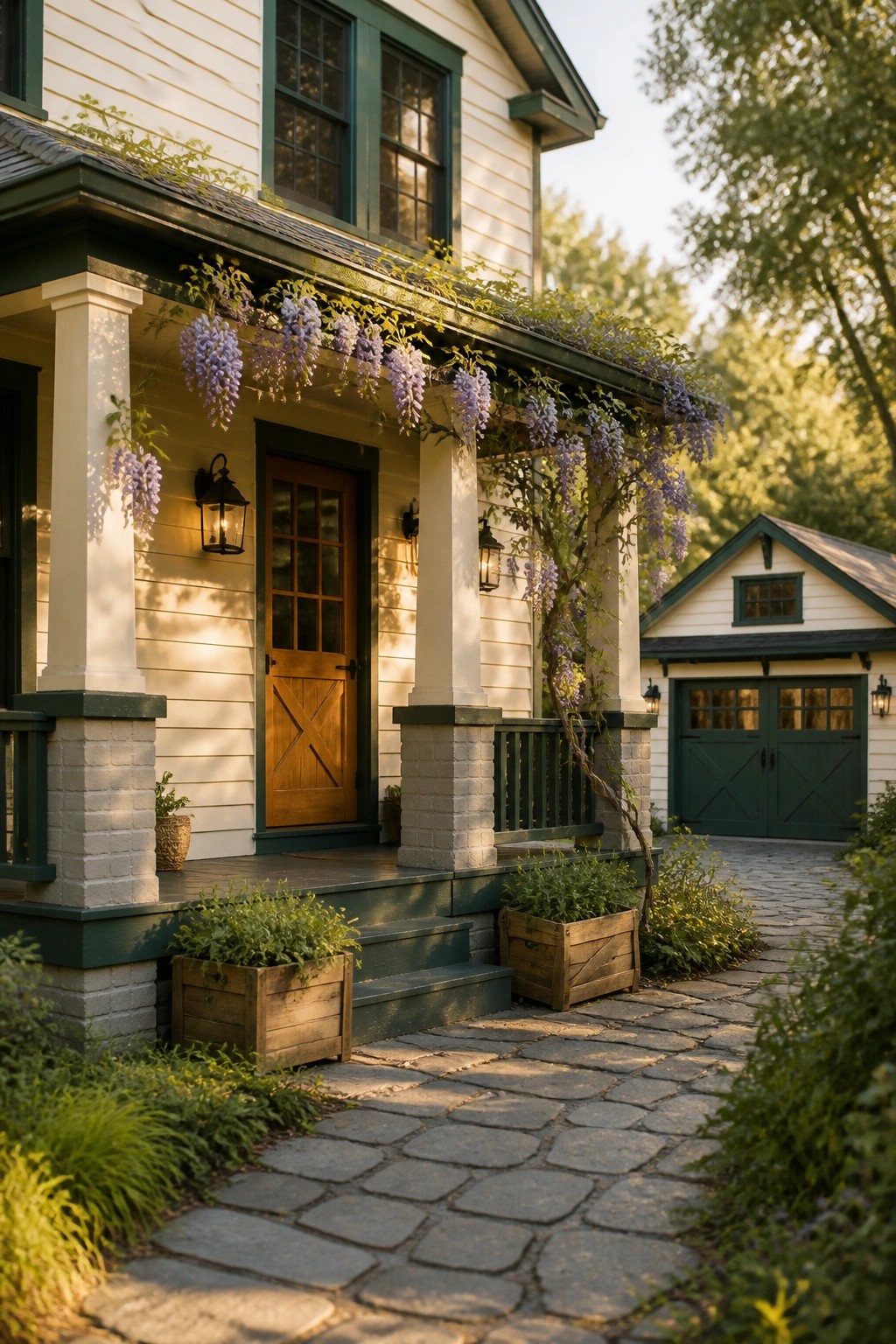
A deep forest green works well here on the trim and structural details against the white siding. It gives the house a grounded look that still feels fresh and traditional.
The color has a slight blue undertone that keeps it from reading too muddy outdoors. It pairs easily with wood doors and stone bases, though it can look heavy if the surrounding greens in the yard are too bright.
Warm peach siding
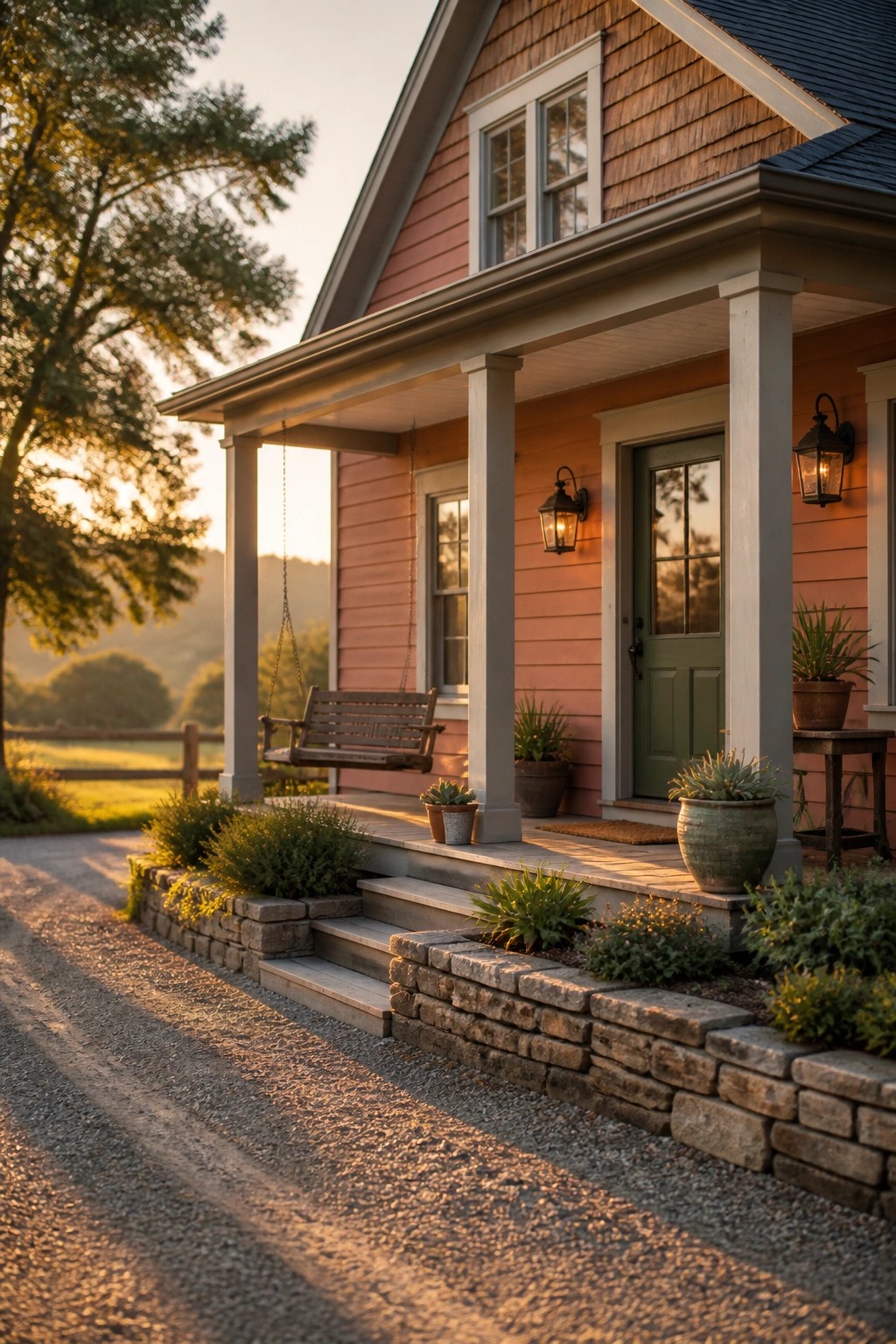
This warm peach siding gives the house a soft, friendly feel that works well on farmhouses. It falls into the light coral family and looks closest to Benjamin Moore Peach Melba or Sherwin Williams Coming Up Roses. Behr Apricot Blush sits in the same range too.
The color stays warm but never gets too orange outside. It looks good with white trim and holds up nicely next to stone or wood details. Just keep an eye on how strong the sun hits it, since the tone can shift a little through the day.
Frequently Asked Questions
Q: How do I decide which color goes on the main siding versus the accents?
A: Put the lighter shade on the biggest wall areas to keep the house bright. Use the deeper tone on trim and gables so the details stand out without overpowering the whole exterior.
Q: Will these color combos work if my house faces north and gets less light?
A: Choose warm neutrals for the main color when sunlight stays low. Add a soft gray or taupe on the accents to stop the front from looking flat or dull.
Q: Can I paint just the front in two tones and leave the sides one color?
A: That works fine on many farmhouses. Keep the side walls in the lighter shade so the two tone treatment stays focused where people see it most.
Q: What colors pair well with natural wood elements like beams?
A: Stick with soft white or greige on the siding next to the wood. Let a muted green or charcoal handle the trim so the beams stay the center of attention.
