

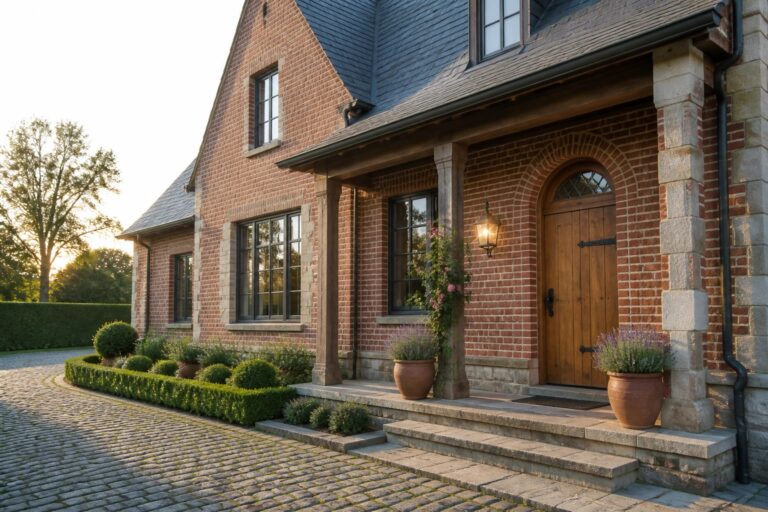
Brick farmhouses carry a certain weight that comes from the way the material interacts with light and shadow throughout the day.
I have found that the best examples balance bold brickwork with quieter elements like understated trim and classic door placements so the exterior does not feel overwhelming.
Choosing the right mortar color or brick pattern can change how the whole front reads even from a distance.
Roof overhangs and porch depths play a bigger role than most homeowners expect when they first start planning updates.
Details like these are the ones I usually sketch out first when thinking about my own place.
Mix Brick With Wood At The Entry
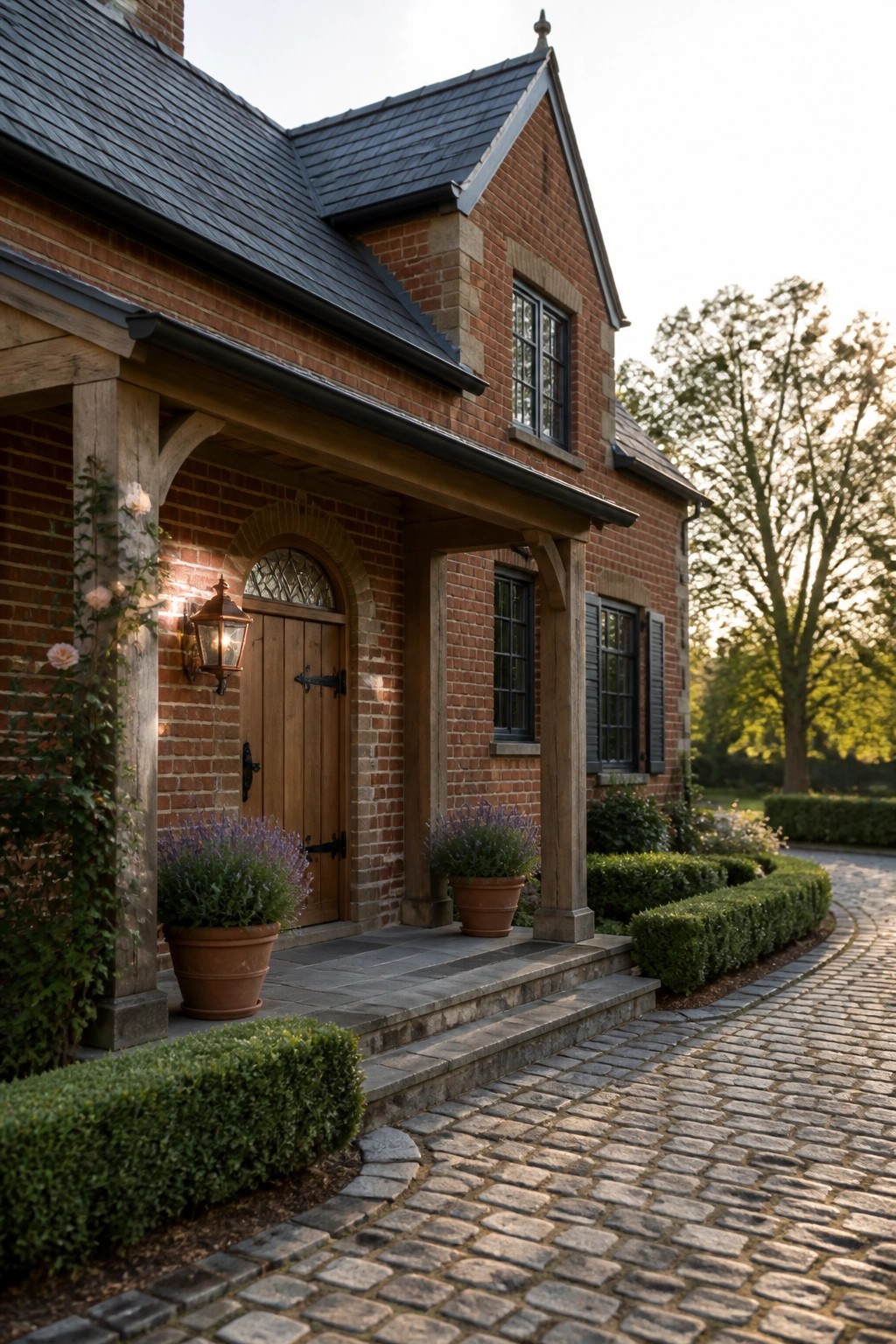
A brick farmhouse often feels more grounded when the entry mixes in some wood. The arched brick opening around a plain wooden door gives the front a bit of age without adding extra trim or decoration. A simple timber porch overhead keeps the whole thing practical and tied to older building styles.
This works best on homes that already have a straightforward brick shell. Keep the door and porch supports in a natural wood tone rather than painting them, and let the brick do most of the work. Avoid adding too many other details around the door or the look can start to feel busy.
Pair Brick With Rustic Wood Doors
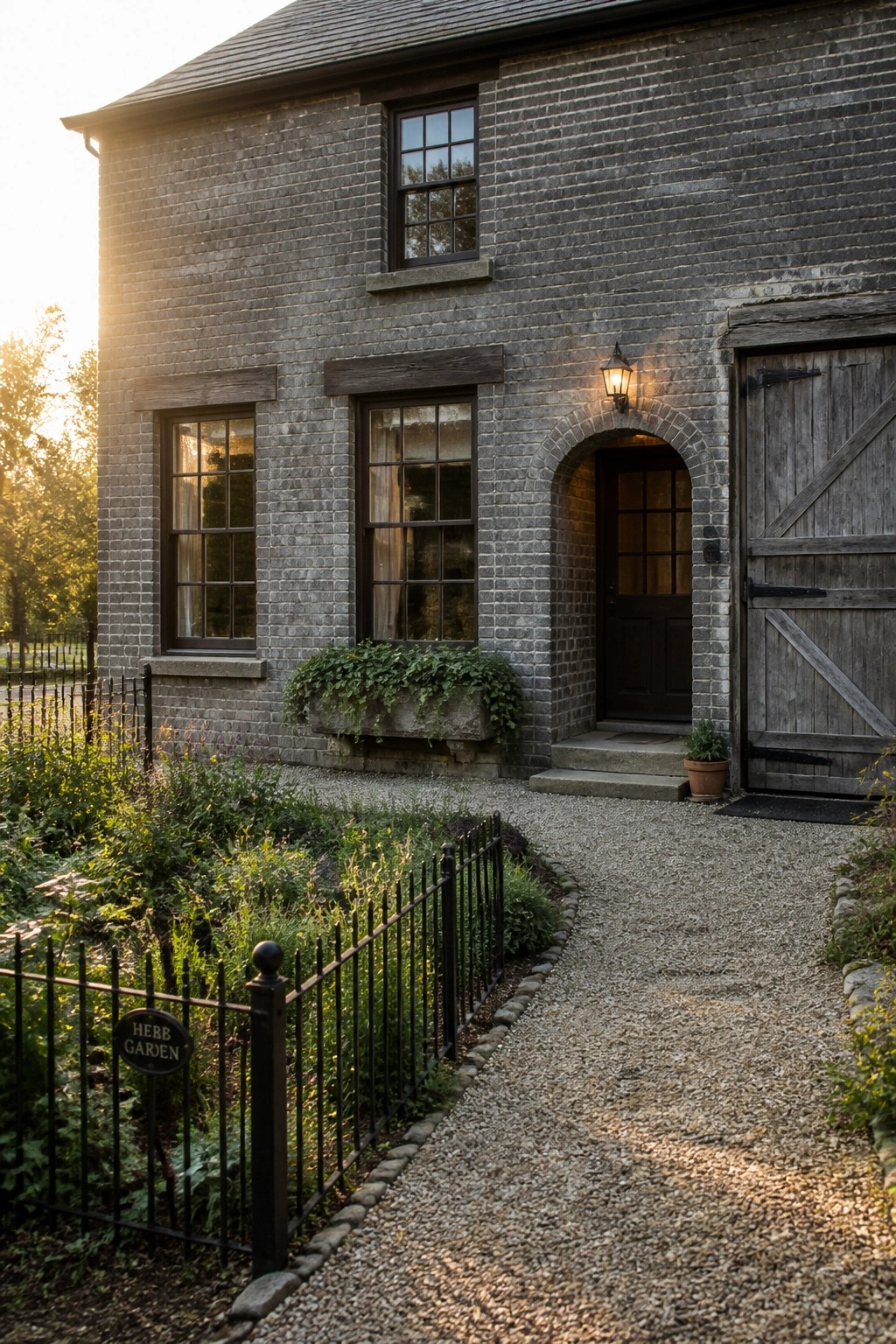
A solid brick exterior already carries weight and history. Adding a large weathered wood door next to it creates an immediate contrast that feels grounded and lived-in rather than polished. The rough texture of the wood softens the hard lines of the brick without fighting it.
This approach works best on farmhouses or homes that already lean traditional. Keep the wood finish natural or lightly grayed so it reads as reclaimed rather than brand new. Avoid matching the wood too closely to trim or shutters, since the whole point is the contrast.
Wide Covered Porches on Brick Exteriors
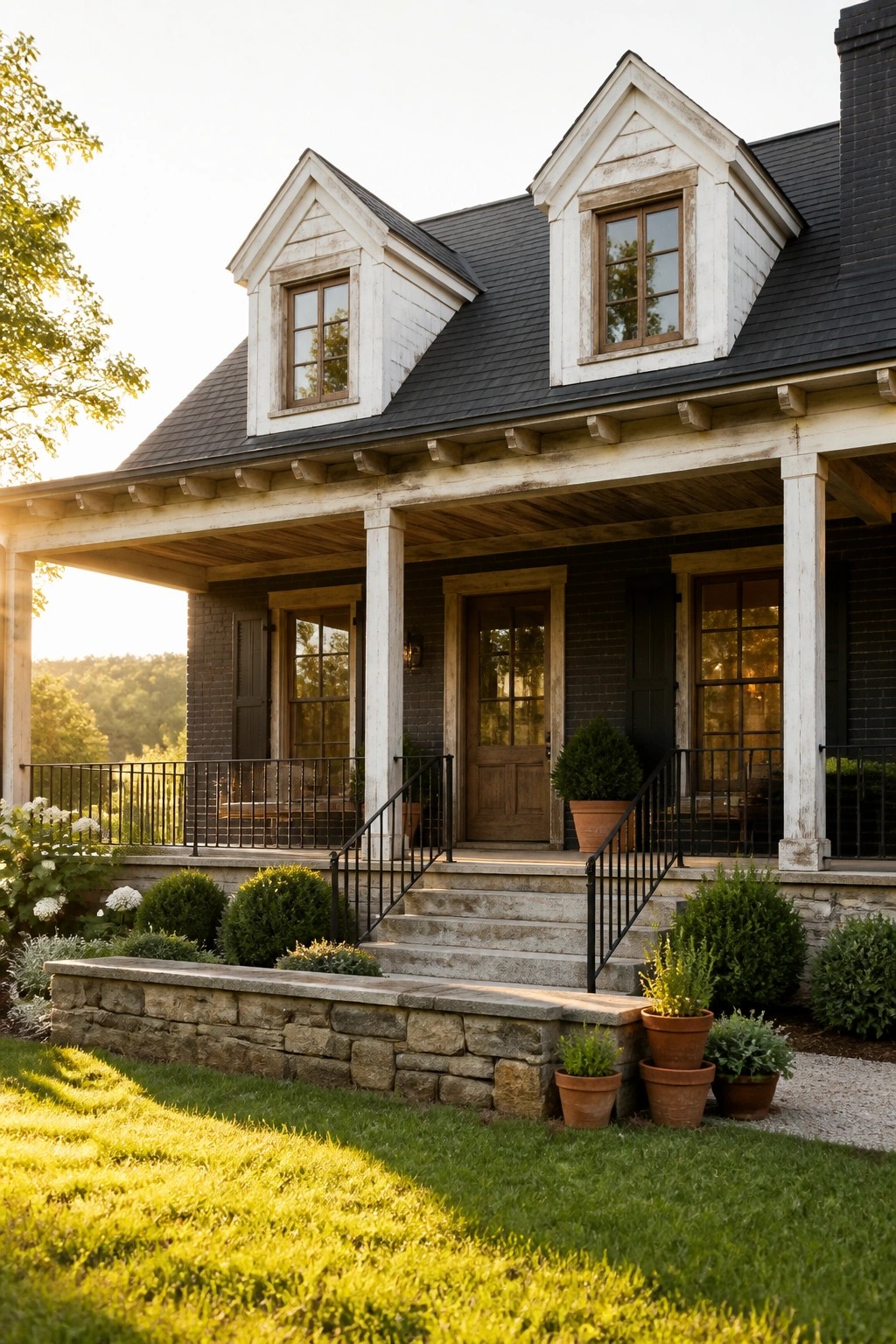
A wide covered porch works especially well on a brick farmhouse because it breaks up the solid wall of masonry and gives the whole front a more welcoming shape. The white columns stand out against the darker brick without needing a lot of extra trim or decoration. This simple contrast keeps the house feeling classic rather than busy.
It suits homes that already have a straightforward roofline and want to add presence at the entry without changing the brick itself. Keep the columns plain and the railing simple so the porch reads as part of the original structure instead of an add-on. Stone steps and a few potted plants at the base help tie the porch into the surrounding grade.
Arched Brick Entries Add Old World Character
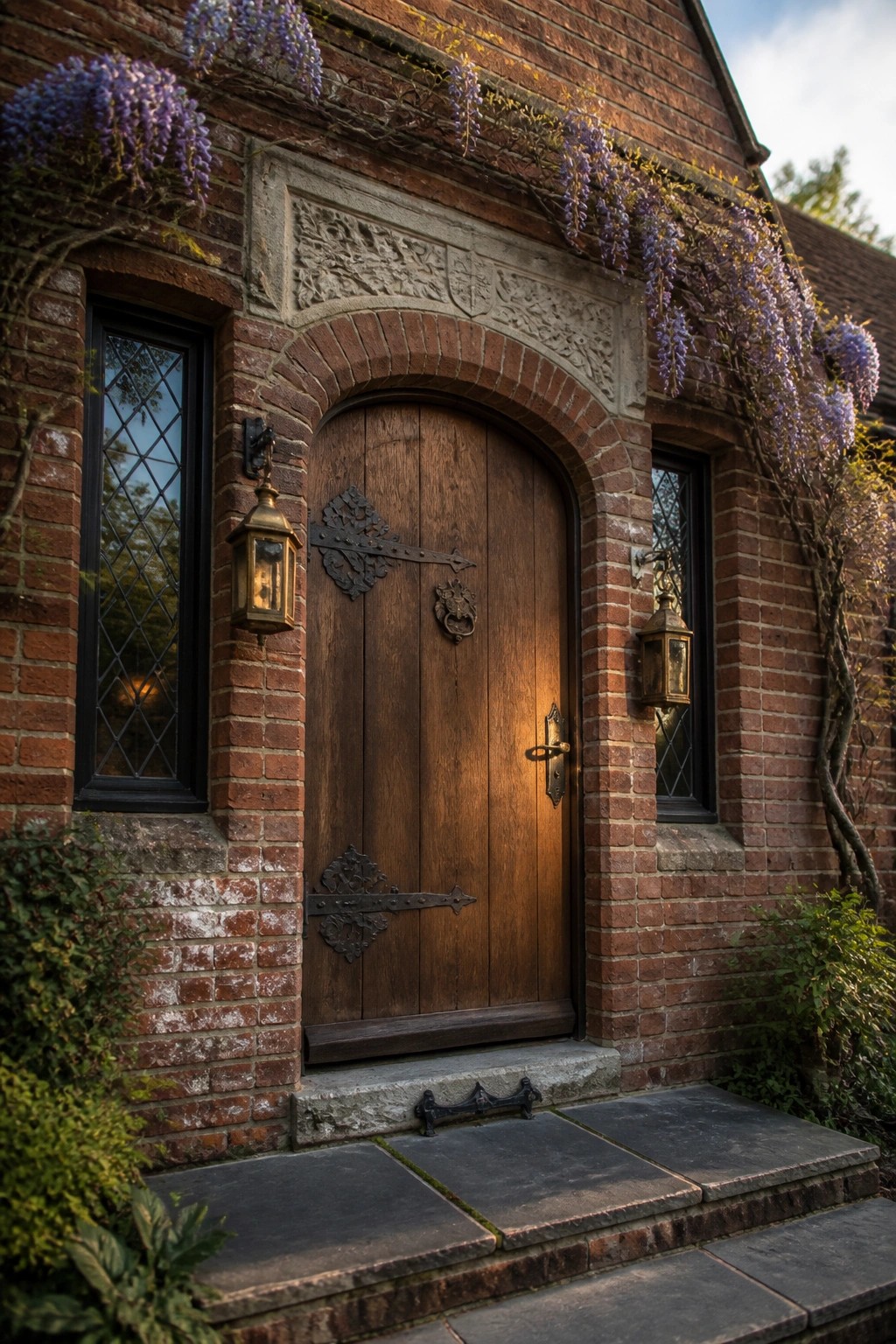
An arched brick entry gives the front door real presence without needing extra trim or ornament. The curve softens the straight lines of the brick while the heavy door and iron hardware keep the whole thing grounded.
This approach suits brick farmhouses that already have some age or texture. Match the arch to the existing brick color and keep the door in a warm wood tone so the entry feels like part of the original structure rather than something added later.
Extend The Brick House With A Pergola
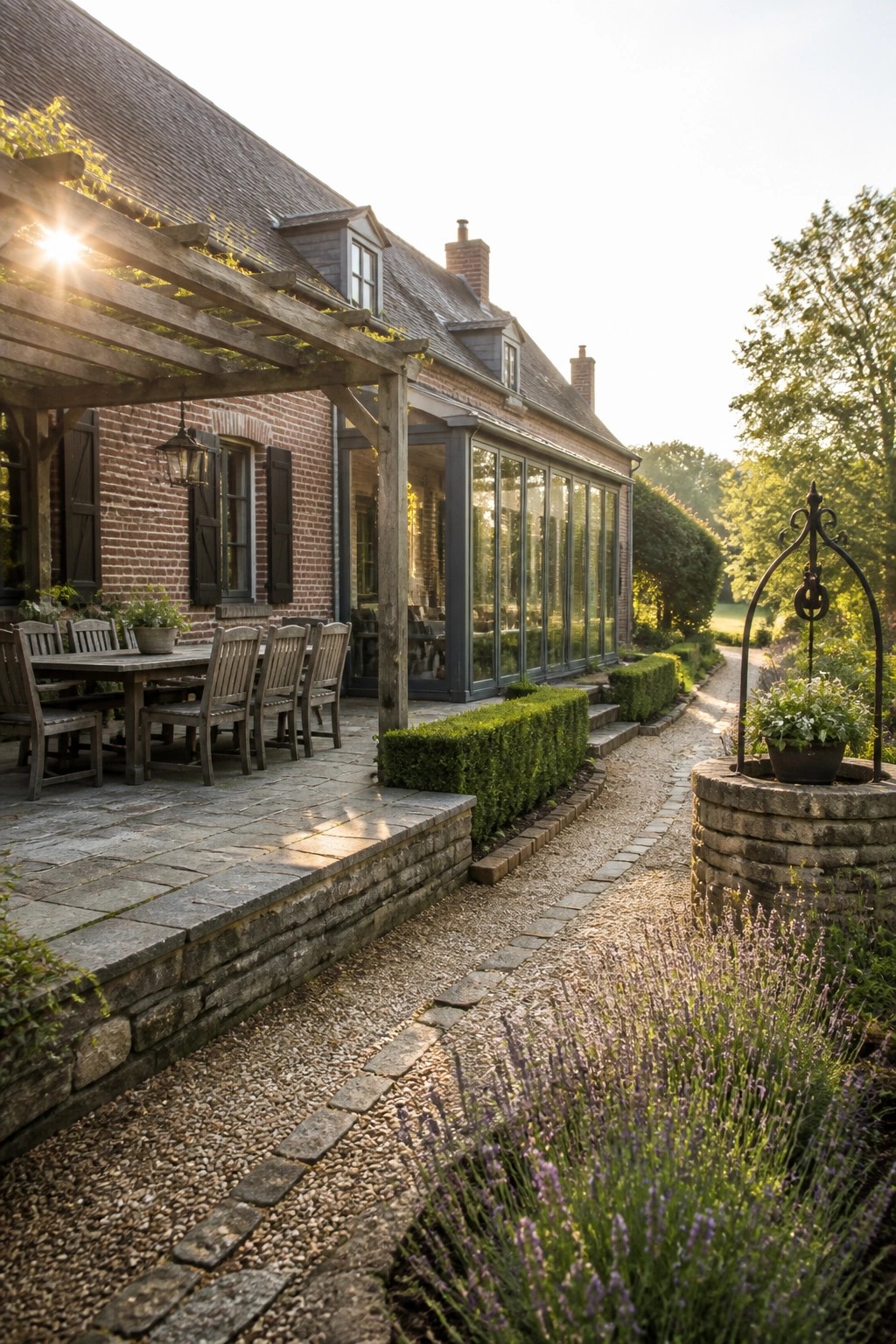
A wooden pergola attached to the side of a brick farmhouse gives you a simple way to create usable outdoor space. It adds shade and a clear spot for dining without covering up the brick or making the house feel heavier.
This setup works best on homes that already have a solid base of brick and stone. Keep the wood fairly plain and let it weather so it settles in with the rest of the exterior instead of standing out as a new addition.
Arched Stone Entries On Brick Homes
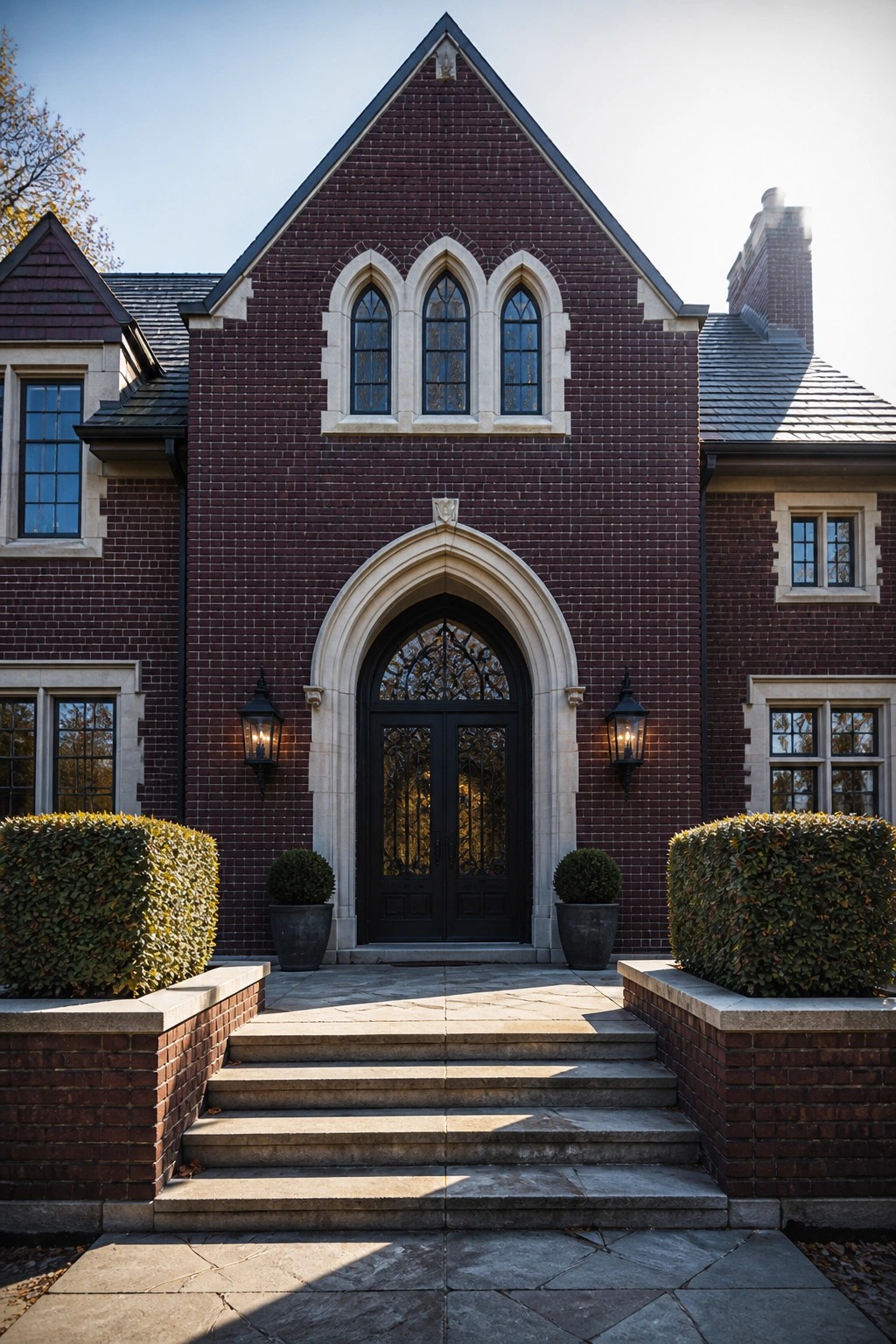
An arched stone entry gives a brick farmhouse that old-world character without much extra detail. The curve breaks up the straight lines of the brick and draws the eye right to the door in a simple way.
This works best on homes with a steep roof or gable above the entrance. Keep the stone light against the darker brick and use solid double doors so the arch stays the main feature.
Pair Brick With Dark Wood Siding
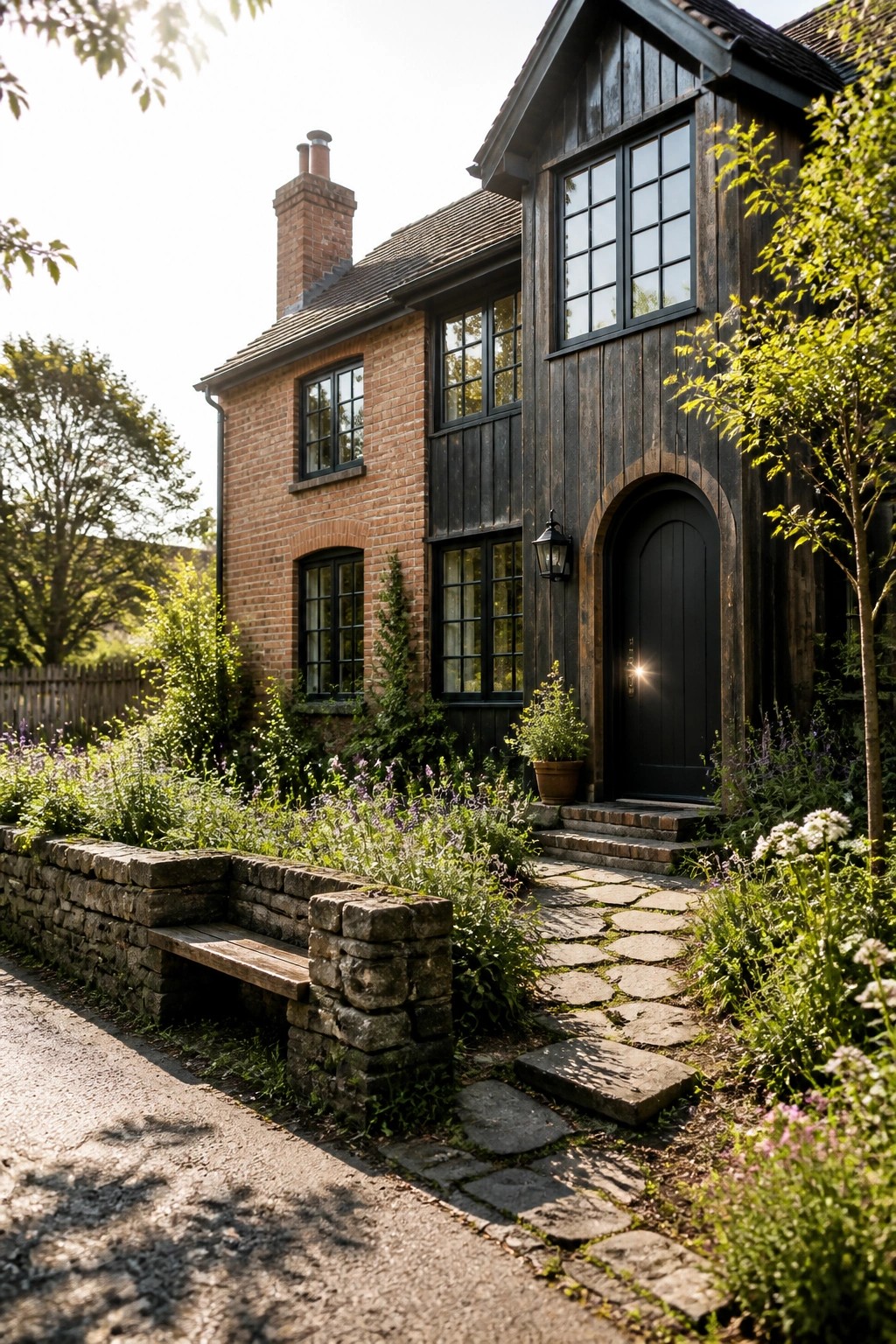
Mixing red brick with dark wood siding gives a farmhouse exterior more depth without adding extra trim or details. The two materials play off each other and keep the look grounded rather than too polished.
This approach works best on homes with simple rooflines where you want one section to stand out. Use it on a gable end or around the entry so the contrast feels intentional and not scattered.
Arched Entries Bring Old World Character
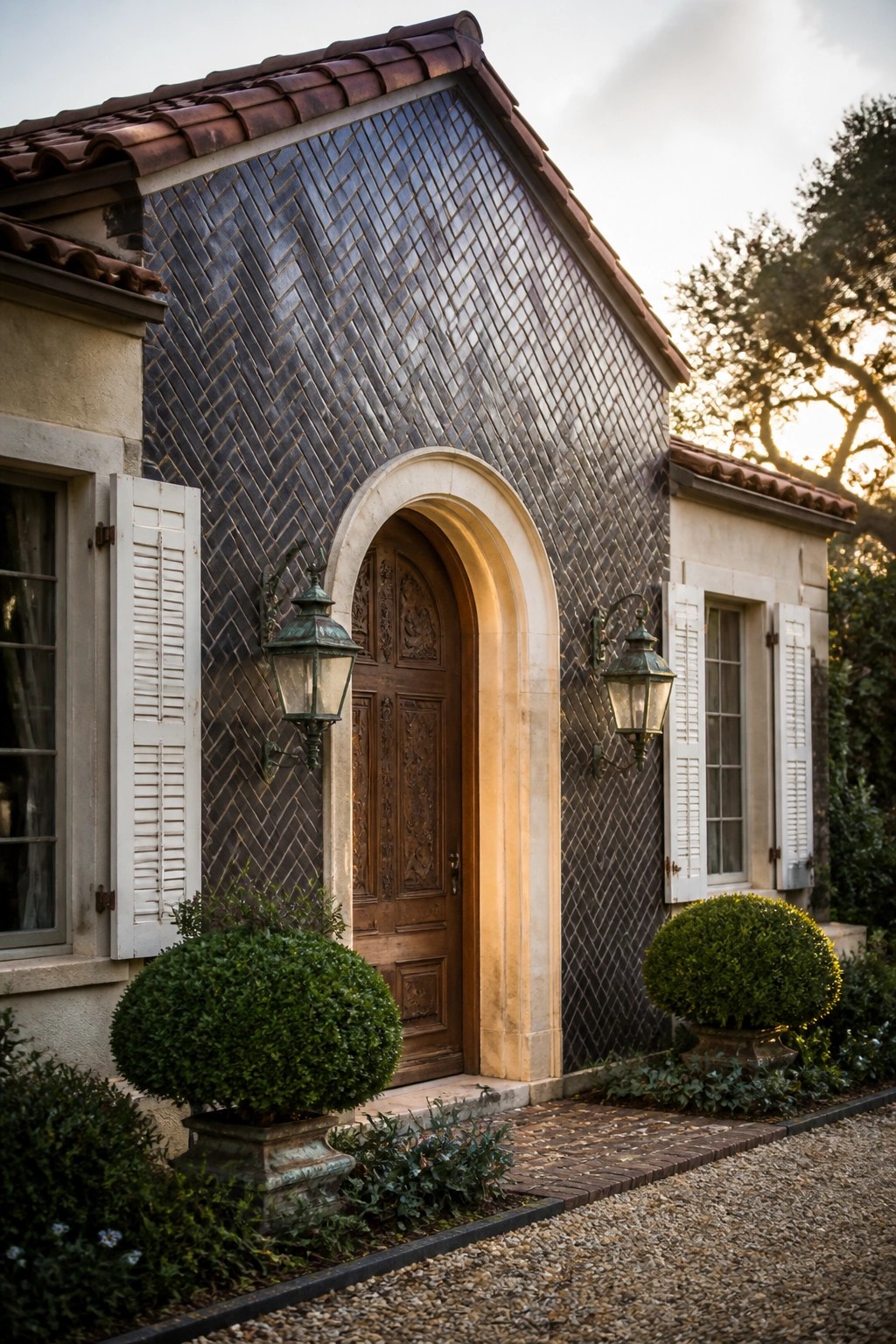
An arched entry gives a farmhouse that settled, older look without needing a lot of extra trim or detail. The curve frames the door and creates a clear focal point that feels natural with textured materials like tile or plaster.
This works best on homes with some height above the door. Keep the arch simple in stone or stucco, add a pair of lanterns for balance, and choose a solid wood door that holds its own against the surrounding pattern.
Brick Arches Add Old-World Character
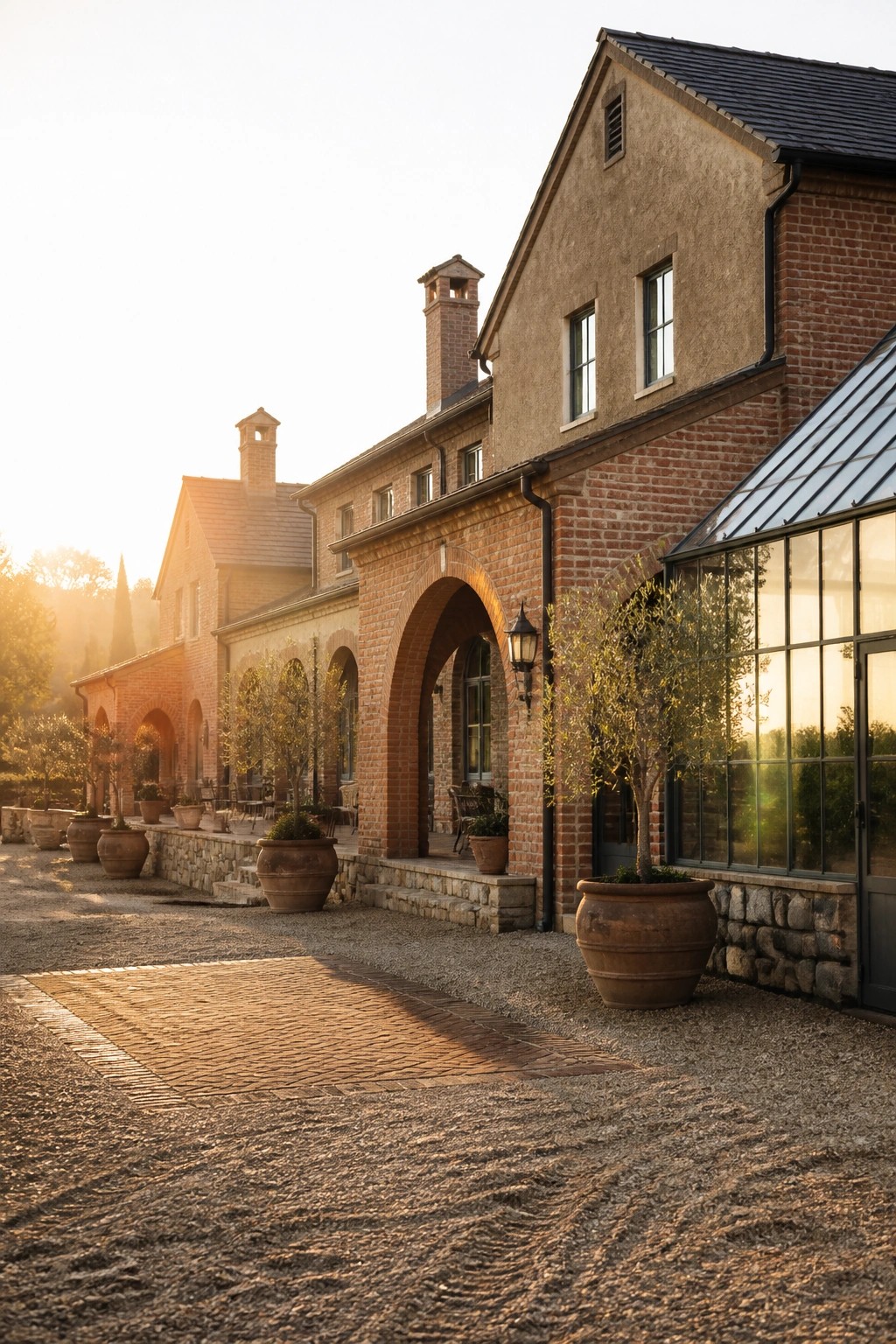
Brick arches give a farmhouse exterior that settled, historic look without needing extra trim or ornament. They create depth along the wall and make the entry feel more substantial, especially when the brick is left exposed and paired with simple windows.
This works best on homes that already lean traditional or on new builds trying to avoid a flat, modern appearance. Keep the rest of the materials straightforward so the arches stay the main feature rather than competing with too many other details.
Timber Entries On Brick Farmhouses
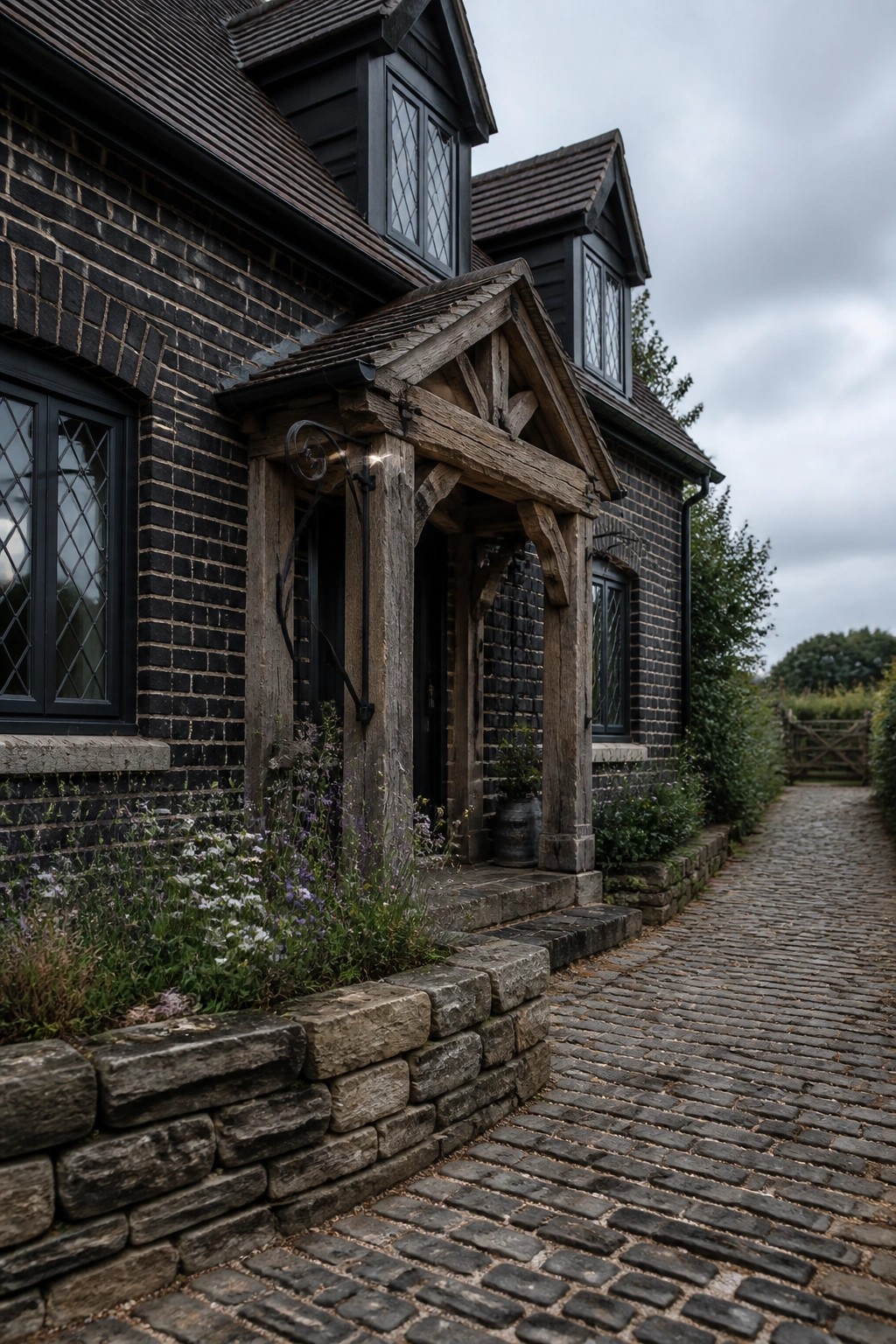
A heavy timber entry adds instant old-world weight to a dark brick facade. The contrast between rough wood beams and straight brick lines keeps the house from feeling too flat or formal. It also gives the front a clear focal point without needing extra trim or decoration.
This works best on homes that already lean traditional or farmhouse. Keep the wood in its natural state or use a light stain so it ages with the brick. Avoid painting the timber the same color as the windows, since that removes the contrast people notice first.
Arched Entries on Brick Farmhouses
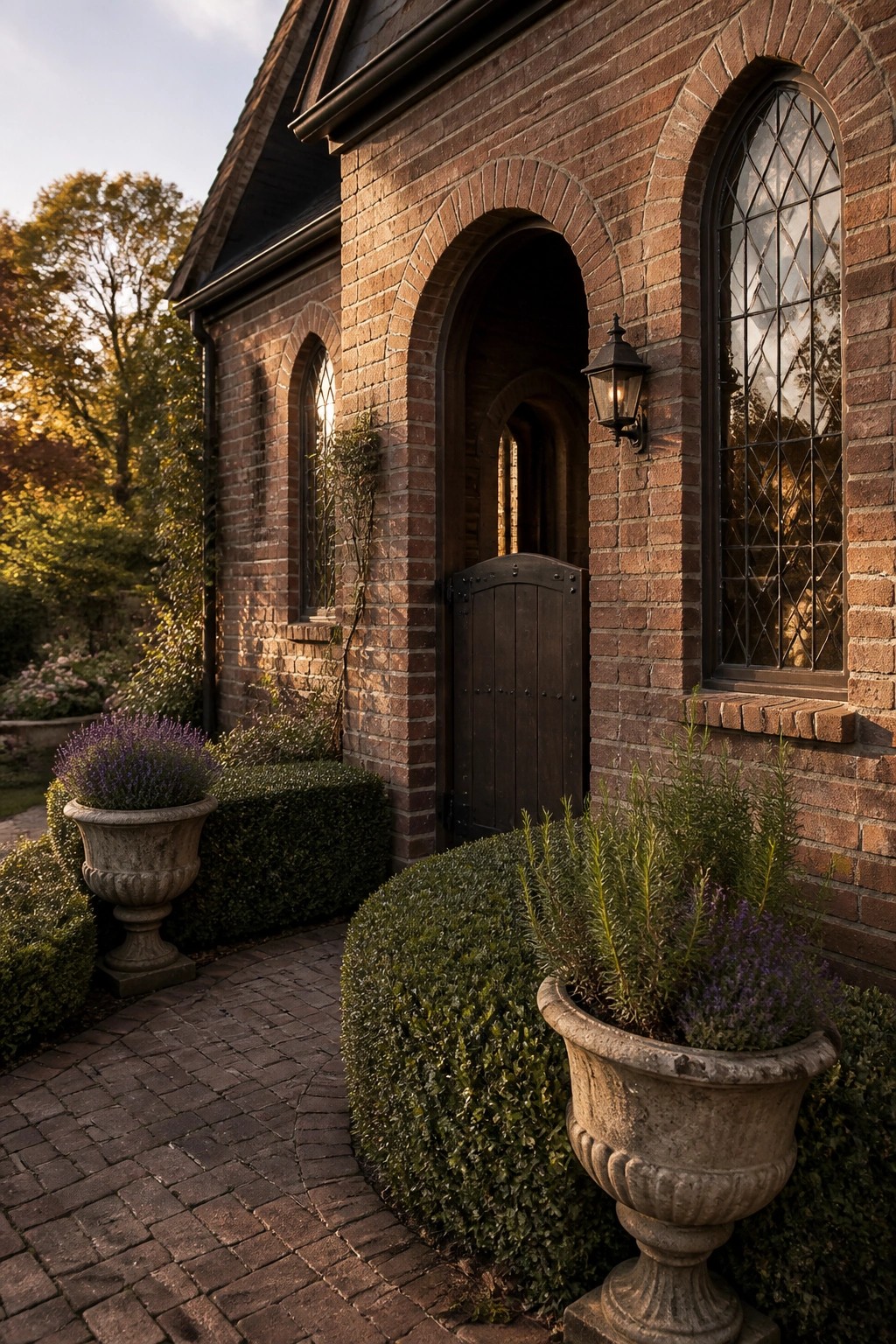
An arched entry stands out on a brick exterior because it breaks up the flat wall planes without adding much extra detail. The curve draws the eye straight to the door and gives the house a settled, older look that fits the farmhouse style.
This approach works best on homes that already have some brick texture or traditional proportions. Keep the door simple and dark so the arch itself carries the character, and avoid filling the space with too many plants or fixtures right at the threshold.
Pair Brick With Stone
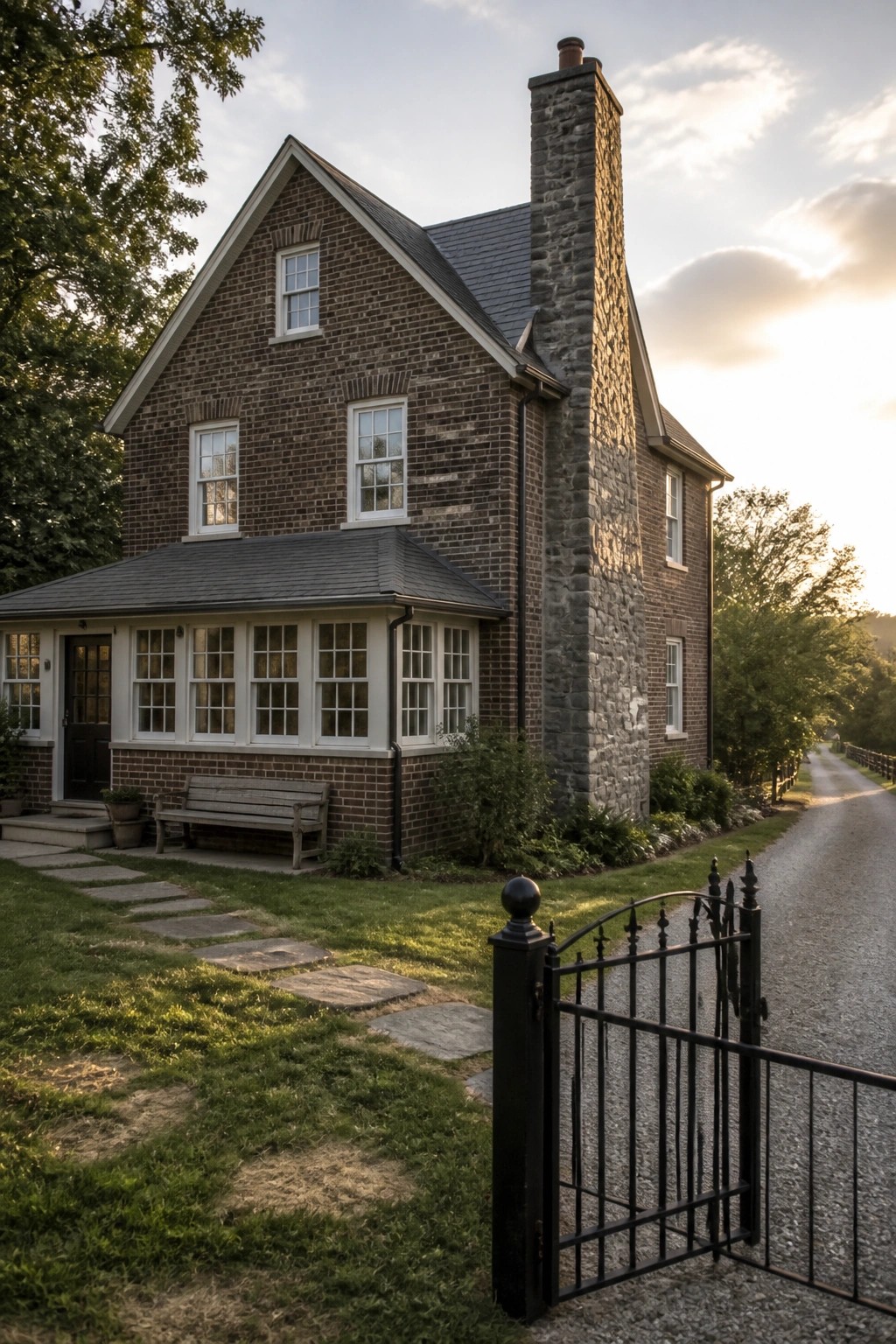
Brick already brings a lot of warmth and texture to a farmhouse, but adding stone changes the whole feel. The chimney here shows how a single stone element can add weight and age to an otherwise straightforward brick exterior without overpowering it.
This approach works especially well on homes that need a focal point or a bit more presence from the road. Keep the stone limited to the chimney or foundation so the brick stays the main material. Too much stone can start to feel heavy or busy.
Mixing Brick And Stone On The Facade
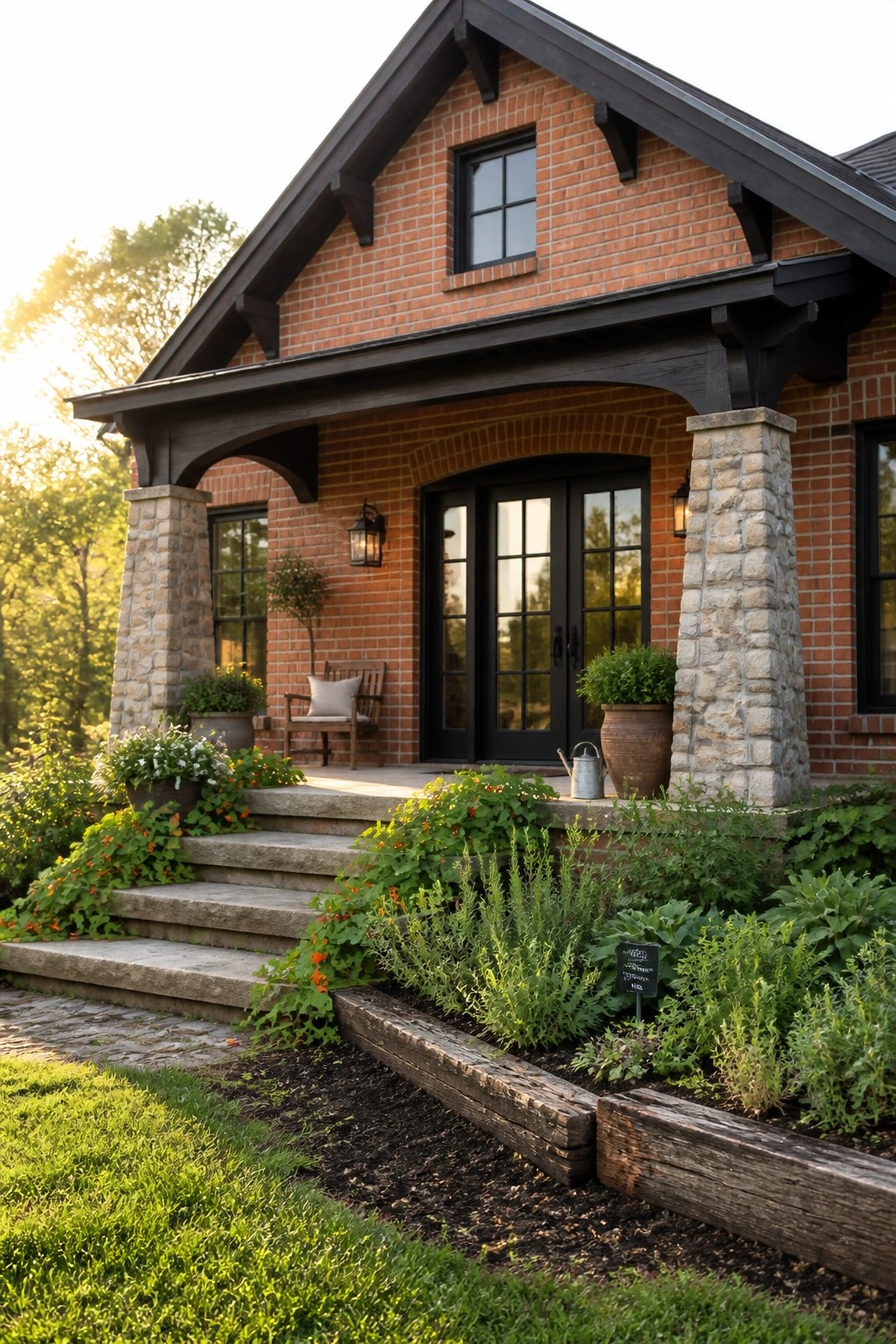
Red brick already gives a house weight and history. Adding rough stone pillars under the porch roof takes that further and keeps the whole exterior from feeling flat or one-note. The contrast makes the entry feel more solid without any extra trim or detail.
This approach works best on farmhouses that already have a simple roofline and clean window placement. Let the stone stay natural and uneven while keeping the brick straight and even. Too much of either material can tip the balance, so start small with the columns and see how it sits with the rest of the house.
Add An Arched Window Above The Front Door
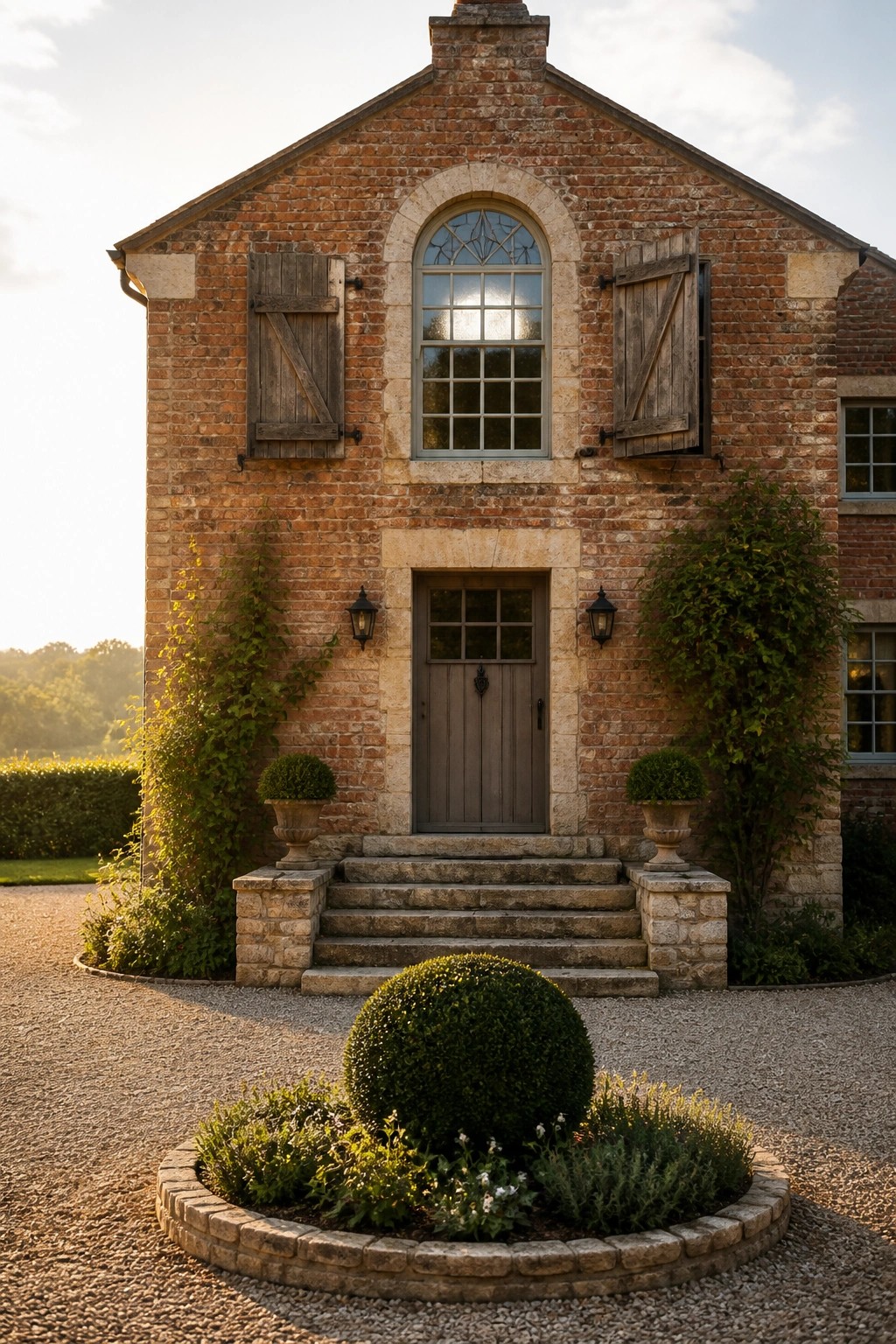
An arched window placed directly over the entry gives a brick house a clear focal point and a bit of old-world charm. The curve breaks up the flat wall and works especially well on simple, symmetrical facades where the door sits in the center.
This detail suits traditional farmhouses and homes that already use brick or stone. Keep the window divided and the frame simple so it feels like part of the original architecture rather than an added feature. Pair it with a plain wood door and minimal trim to let the shape stand out.
Outdoor Fireplaces Anchor Patio Dining Areas
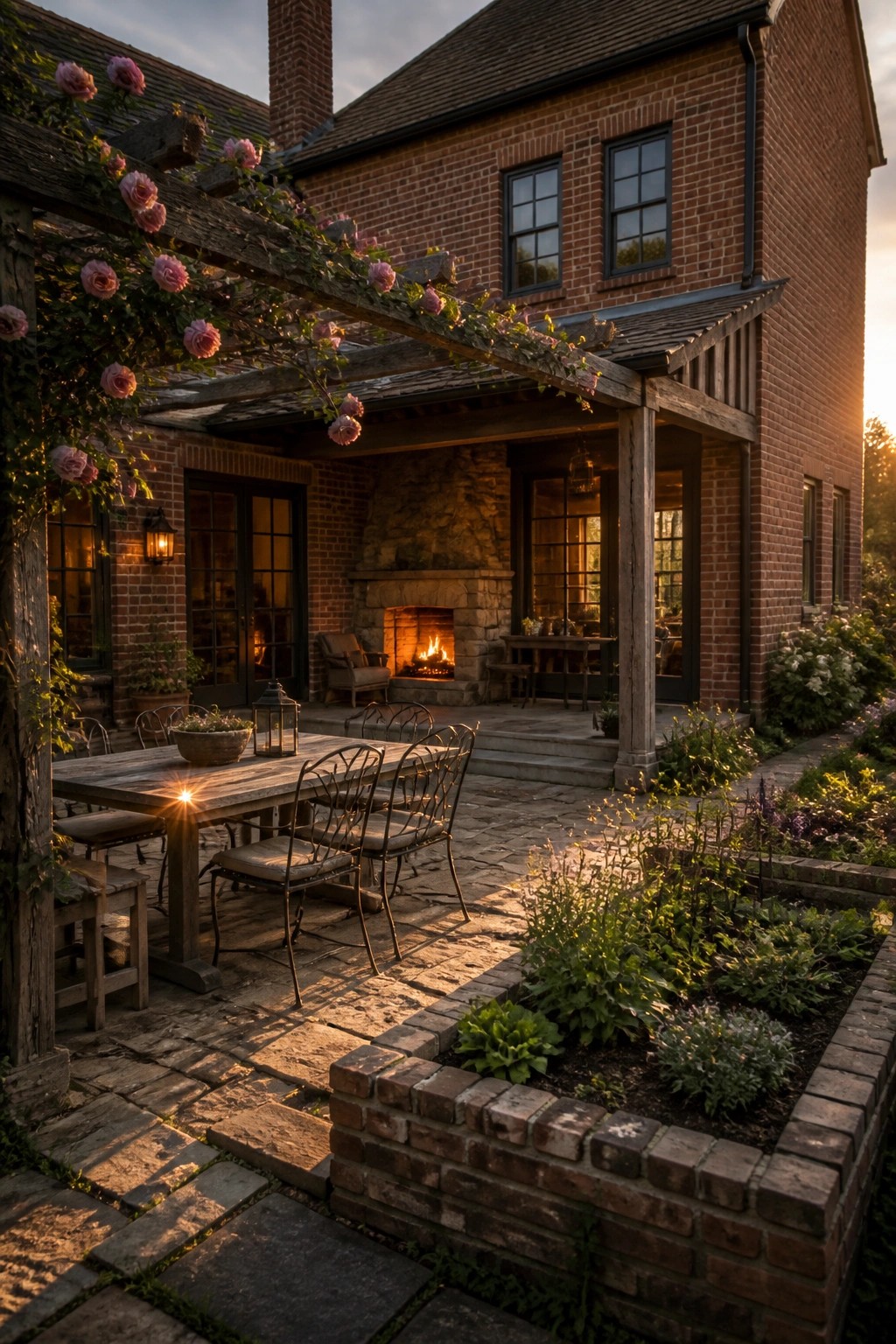
A fireplace built into the house wall gives the patio a clear reason to be used after dark. It creates a natural spot to pull chairs around and keeps the space comfortable without needing to move indoors right away.
This setup works best on homes where the patio sits right against the main structure. Match the fireplace material to the house brick so the two feel connected instead of added on later. Keep the dining table close enough that people can still talk easily over the fire.
Stone Entries On Brick Farmhouses
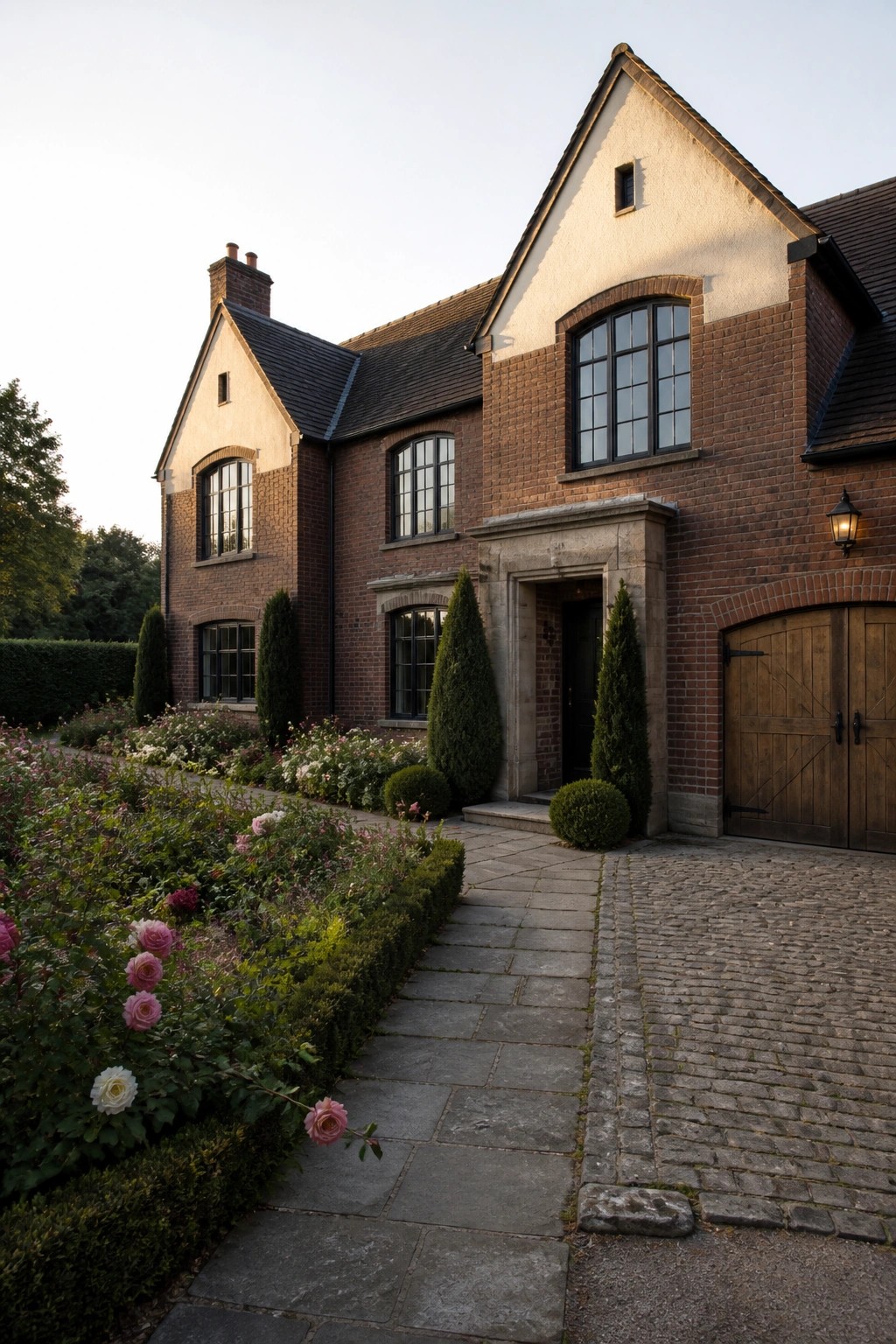
Stone around the front door gives a brick house that solid, old-world feel right away. It breaks up the brick surface and draws attention to the entrance without needing extra trim or decoration. The look works because stone feels permanent next to brick.
This approach suits homes that already have traditional windows and simple rooflines. Keep the stone color close to any other masonry details so the whole front stays balanced.
Checkerboard Brick Facades
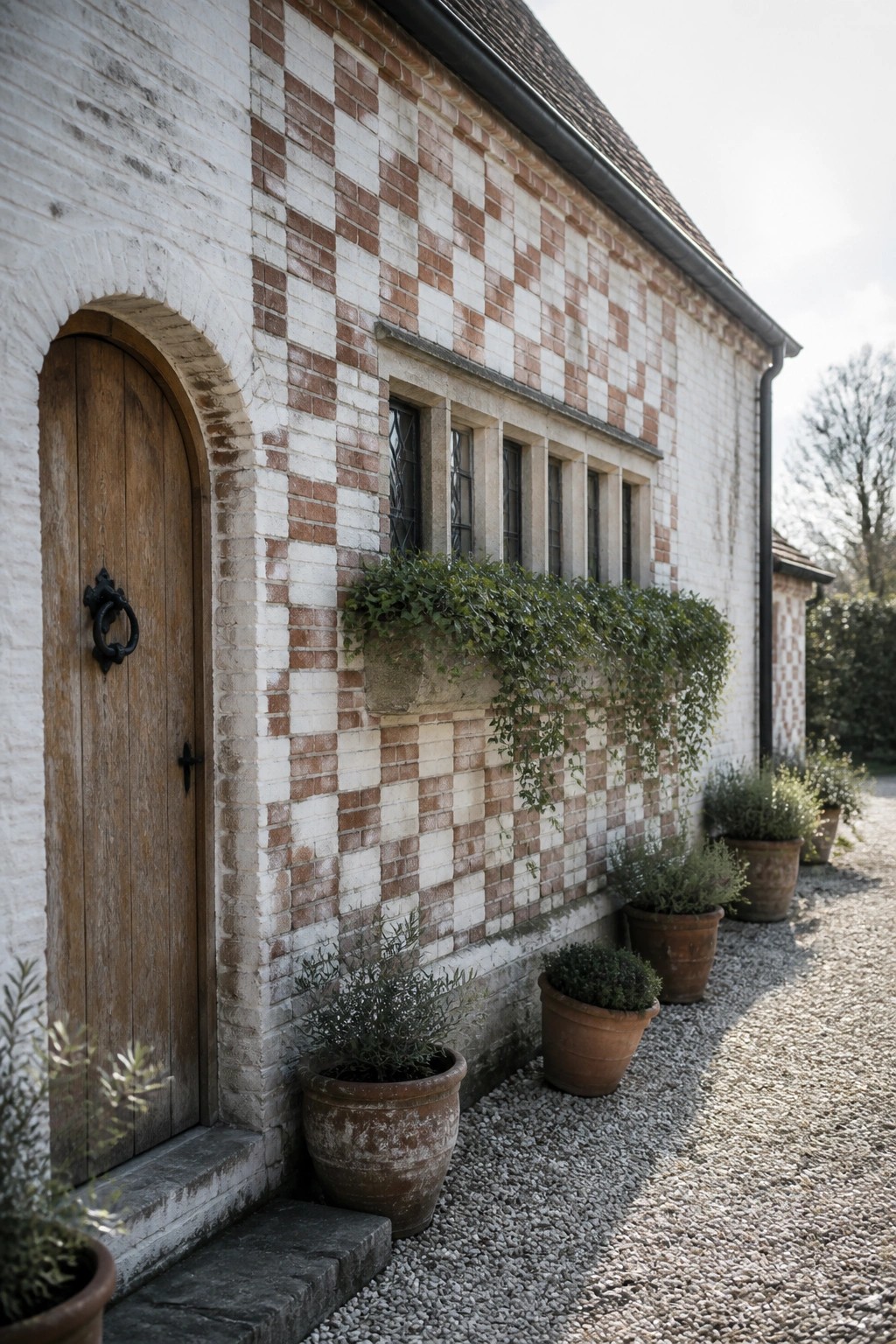
A checkerboard brick pattern gives a farmhouse exterior instant old-world character without needing extra trim or ornament. The contrast between the two tones makes the wall feel more layered and intentional than a single solid brick surface would.
This approach works best on side walls or secondary sections of the house where you want some visual interest but still need the overall look to stay simple. Keep the rest of the materials quiet, like a basic wooden door and a few large pots along the base, so the pattern does not feel overwhelming.
Frequently Asked Questions
Q: How can I choose the right shade of brick for an old world farmhouse feel?
A: Go for bricks with natural color variations instead of uniform ones. They catch the light differently throughout the day and add instant character. Reclaimed options work especially well here.
Q: Should I update my windows when refreshing the brick exterior?
A: Yes, swap in divided light styles with dark frames. They frame the brick nicely and pull the whole look together. This change makes a bigger difference than you might expect.
Q: What landscaping fits best with bold brick designs?
A: Plant climbing vines along one side. They soften the bold lines while showing off the brick texture.
